Young's Modulus in Bioelectronics: A Critical Guide to Material Stiffness for Next-Gen Biomedical Devices
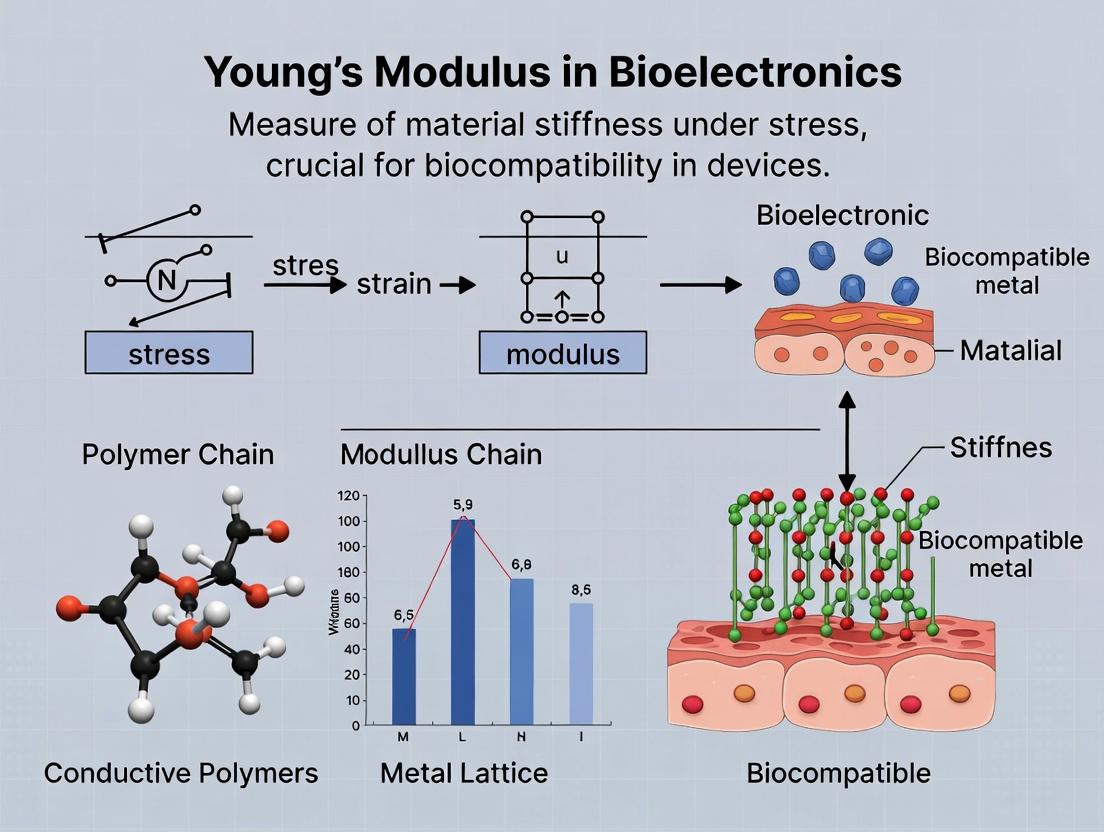
This article provides a comprehensive analysis of Young's modulus—the fundamental metric of material stiffness—and its pivotal role in bioelectronics.
Young's Modulus in Bioelectronics: A Critical Guide to Material Stiffness for Next-Gen Biomedical Devices
Abstract
This article provides a comprehensive analysis of Young's modulus—the fundamental metric of material stiffness—and its pivotal role in bioelectronics. Targeted at researchers, scientists, and drug development professionals, we explore its core definition and biophysical significance (Intent 1), detail methodologies for measurement and application in device design (Intent 2), address common challenges and optimization strategies for tissue-device compatibility (Intent 3), and validate approaches through comparative analysis of materials and in vivo performance (Intent 4). The synthesis offers actionable insights for developing more effective and biocompatible diagnostic, therapeutic, and research tools.
What is Young's Modulus? Defining Stiffness and Its Biophysical Imperative
This whitepaper elucidates the core mechanical definitions of stress and strain, which govern the linear elastic regime of materials—a foundational concept for accurately defining Young's modulus. Within bioelectronics research, a precise understanding of this regime is not merely an academic exercise; it is critical for the design and interpretation of experiments involving flexible electronics, neural interfaces, biomaterial scaffolds, and mechanobiology. The accurate measurement of Young's modulus for biological tissues and synthetic interfaces directly influences the fidelity of electrophysiological recordings, the longevity of implanted devices, and the mechanistic study of cellular response to mechanical cues in drug development. This document serves as a technical guide, providing the framework for rigorous mechanical characterization essential for advancing bioelectronic therapeutics and diagnostics.
Foundational Definitions
Stress (σ) is defined as the applied force (F) per unit cross-sectional area (A₀) over which it acts, causing deformation. Its SI unit is Pascals (Pa = N/m²). [ \sigma = \frac{F}{A_0} ]
Strain (ε) is a dimensionless measure of deformation, defined as the change in length (ΔL = L - L₀) relative to the original length (L₀). [ \epsilon = \frac{\Delta L}{L_0} ]
The Linear Elastic (Hookean) Regime is the initial region of a material's stress-strain curve where stress is directly proportional to strain. This relationship is characterized by Young's Modulus (E), the constant of proportionality. [ \sigma = E \epsilon ] Within this regime, deformation is fully recoverable upon unloading.
Young's Modulus in Bioelectronics: Significance and Applications
In bioelectronics, the linear elastic regime is paramount for several key areas:
- Neural Interface Design: The modulus mismatch between stiff silicon electrodes (∼100 GPa) and soft brain tissue (∼1 kPa) can cause chronic inflammation and signal degradation. Modulus measurement guides the development of softer conductive polymers or composites.
- Wearable and Implantable Sensors: Stretchable sensors must operate within their linear elastic range to ensure predictable, repeatable electrical response to mechanical deformation (e.g., pulse monitoring, joint movement).
- Mechanotransduction Studies: Drug development professionals investigate how cells convert mechanical stress into biochemical signals. Quantifying the substrate's modulus is essential for mimicking physiological or pathological tissue environments (e.g., stiffening in fibrosis or tumors).
Key Experimental Protocols for Characterization
Uniaxial Tensile Testing of a Hydrogel Film (Model Biomaterial)
Objective: To determine the Young's modulus of a polyacrylamide hydrogel, a common substrate for in vitro cell mechanobiology studies.
Protocol:
- Sample Preparation: Cast hydrogel between two glass plates separated by a 1 mm spacer. Polymerize according to specific chemical recipe. Cut into dog-bone shape (e.g., ASTM D638 Type V) to ensure failure occurs within the gauge length.
- Mounting: Carefully mount the sample onto a mechanical testing system (e.g., Instron, Bose ElectroForce) using pneumatic or mechanical grips. Ensure minimal pre-strain.
- Imaging: Apply fiduciary markers on the sample surface within the gauge region.
- Testing: Apply a constant displacement rate (e.g., 1 mm/min). Simultaneously record load (via load cell) and displacement (via actuator and/or optical tracking of markers).
- Data Processing: Convert load to engineering stress (force/original cross-sectional area). Convert actuator displacement to engineering strain (displacement/original gauge length). For higher accuracy, use optical strain measurement from fiduciary markers.
- Analysis: Plot stress vs. strain. Identify the linear region. Perform a linear regression on this region; the slope is Young's Modulus (E).
Atomic Force Microscopy (AFM) Nanoindentation of a Cell Monolayer
Objective: To map the local elastic modulus of a cultured epithelial cell layer for assessing the effects of a candidate drug on cellular stiffness.
Protocol:
- Probe Preparation: Use a colloidal probe (silicon nitride cantilever with a spherical polystyrene bead, typically 5-20 μm diameter). Calibrate the cantilever's spring constant (kc) using thermal tuning or Sader method.
- Sample Preparation: Culture cells on a rigid dish (e.g., glass). Perform experiment in standard culture medium at 37°C.
- Measurement: Approach the probe to the cell surface at a controlled rate (e.g., 1 μm/s). Record the cantilever deflection (d) vs. piezoelectric actuator position (z) to obtain a force-distance curve.
- Data Analysis: Fit the retraction portion of the curve with an appropriate contact mechanics model (e.g., Hertz, Sneddon) for a spherical indenter. [ F = \frac{4}{3} E{eff} \sqrt{R} \delta^{3/2} ] where F is force, R is probe radius, δ is indentation depth, and Eeff is the reduced modulus. The sample's Young's modulus (E_sample) is derived assuming a Poisson's ratio for the cell (typically ν ∼ 0.5).
Summarized Quantitative Data
Table 1: Young's Modulus of Common Materials in Bioelectronics Research
| Material Category | Example Material | Approximate Young's Modulus (E) | Relevance to Bioelectronics |
|---|---|---|---|
| Biological Tissues | Brain Tissue | 0.1 - 3 kPa | Target for neural interfaces. |
| Cardiac Muscle | 10 - 100 kPa | Substrate for cardiac patches and sensors. | |
| Skin (Epidermis) | 100 - 2000 kPa | Interface for wearable electronics. | |
| Cortical Bone | 10 - 20 GPa | Site for osseointegrated implants. | |
| Conductive Materials | Single Crystal Silicon | 130 - 188 GPa | Traditional microelectronics. |
| Gold Thin Film | 50 - 80 GPa | Conductive traces and electrodes. | |
| PEDOT:PSS (conductive polymer) | 1 - 3 GPa | Soft, conductive coating. | |
| EGaln (Liquid Metal) | ~0 GPa (liquid) | Ultra-stretchable interconnects. | |
| Substrates/Encapsulants | Polyimide | 2 - 3 GPa | Flexible substrate for microfabrication. |
| PDMS (Sylgard 184) | 0.36 - 3 MPa | Stretchable elastomer, tunable by ratio. | |
| Polyacrylamide Gel | 0.1 - 100 kPa | Tunable substrate for cell culture. | |
| SU-8 Epoxy | 2 - 4 GPa | Biocompatible photoresist for microstructures. |
Visualizations
Diagram Title: Stress-Strain Curve Key Regions
Diagram Title: AFM Nanoindentation Protocol for Cells
The Scientist's Toolkit: Research Reagent Solutions
Table 2: Essential Materials for Mechanobiology & Bioelectronics Characterization
| Item | Function & Description | Example Supplier/Catalog |
|---|---|---|
| Polyacrylamide Gel Kits | For fabricating 2D substrates with tunable, physiologically relevant stiffness (0.1-100 kPa) for cell culture. Contains acrylamide, bis-acrylamide, and initiators. | Sigma-Aldrich (A9926), Cytoskeleton, Inc. (AK02) |
| PDMS (Sylgard 184) | Two-part silicone elastomer for creating microfluidic devices, stretchable substrates, and encapsulation. Modulus tunable by base:curing agent ratio. | Dow Silicones, Ellsworth Adhesives |
| PEDOT:PSS Aqueous Dispersion | Conductive polymer for depositing soft, biocompatible electrodes on flexible/stretchable substrates via spin-coating or printing. | Heraeus (Clevios PH1000), Sigma-Aldrich (739324) |
| Functionalization Crosslinkers | Chemicals to covalently bond extracellular matrix (ECM) proteins (e.g., collagen, fibronectin) to synthetic substrates like PDMS or PA gels. | Sulfo-SANPAH (ProteoChem), (3-Aminopropyl)triethoxysilane (APTES, Sigma-Aldrich) |
| Calibrated AFM Probes | Cantilevers with known spring constants and defined tip geometries (e.g., spherical colloidal probes) for quantitative nanoindentation. | Bruker (MLCT, PNPL), Asylum Research (BL-TR400PB) |
| Fluorescent Microspheres | Used as fiduciary markers for digital image correlation (DIC) to optically measure strain in soft materials during mechanical testing. | Thermo Fisher (FluoSpheres) |
| Cell Mechanomodulation Compounds | Small molecules or drugs used to alter cellular cytoskeleton stiffness for controlled experiments (e.g., Cytochalasin D, Blebbistatin, Y-27632). | Tocris Bioscience, Cayman Chemical |
Within bioelectronics research, the precise definition and measurement of Young's modulus (E) is foundational. This intrinsic material property, defining the stiffness of a substrate as the ratio of tensile stress to tensile strain, is not merely an engineering parameter. It is a critical biophysical cue that cells sense and to which they dynamically respond, fundamentally directing cell fate and function. This whitepaper examines the mechanotransduction pathways activated by substrate stiffness, detailing experimental methodologies, key quantitative findings, and essential research tools, all framed within the imperative to rigorously characterize Young's modulus for predictive bioelectronic and therapeutic design.
Core Mechanotransduction Pathways
Cells perceive substrate stiffness via integrin-based adhesions, triggering biochemical signaling cascades that regulate gene expression. The following diagrams detail the primary pathways.
Diagram 1: YAP/TAZ Mechanotransduction Pathway (76 chars)
Diagram 2: Substrate Stiffness Directs Stem Cell Fate (68 chars)
Table 1: Cell Type-Specific Stiffness Preferences and Functional Outcomes
| Cell Type / Tissue of Origin | Physiological Stiffness Range | Optimal In Vitro Stiffness for Differentiation/Maturation | Key Functional Outcome on Optimal Stiffness |
|---|---|---|---|
| Neural Cells (Brain) | 0.1 - 1 kPa | 0.1 - 0.5 kPa | Enhanced neurite outgrowth; Synapse formation |
| Adipocytes (Fat) | ~2-4 kPa | ~2-3 kPa | Lipid droplet accumulation; Adipogenic marker expression |
| Cardiomyocytes (Heart) | 10 - 50 kPa (diastolic) | 10 - 20 kPa | Aligned sarcomeres; Synchronous beating |
| Osteoblasts (Bone) | 15 - 40 GPa (mineralized) | 25 - 40 kPa | Mineralization; Alkaline phosphatase activity |
| Fibroblasts (Skin) | 2 - 20 kPa (varies) | 10 - 20 kPa | Controlled proliferation; ECM remodeling |
| Skeletal Myoblasts (Muscle) | 10 - 12 kPa | 8 - 17 kPa | Myotube formation & alignment; Contractility |
Table 2: Young's Modulus of Common Hydrogel Substrates for Mechanobiology
| Polymer Base | Crosslinking Method | Tunable Stiffness Range | Key Advantages for Research |
|---|---|---|---|
| Polyacrylamide (PA) | Bis-acrylamide conc. | 0.1 kPa - 50 kPa | Bio-inert, covalent ECM coating, wide range |
| Polydimethylsiloxane (PDMS) | Base:Crosslinker ratio | 1 kPa - 3 MPa | Easy fabrication, optical clarity |
| Polyethylene Glycol (PEG) | Photopolymerization | 0.1 kPa - 500 kPa | Chemically defined, ligand density control |
| Alginate | Ionic (Ca²⁺) concentration | 1 kPa - 100 kPa | Shear-thinning, injectable for 3D culture |
| Collagen I | Concentration, pH, temp. | 0.1 Pa - 4 kPa (3D) | Naturally adhesive, native fibrillar structure |
| Hyaluronic Acid (HA) | Methacrylation & UV | 0.5 kPa - 30 kPa | Naturally degradable, tissue-specific |
Experimental Protocols
Protocol 1: Fabrication and Characterization of Polyacrylamide Hydrogel Substrates
Objective: To create 2D cell culture substrates with finely tuned, covalently attached ECM ligands and characterized Young's modulus.
Materials: Acrylamide (40%), Bis-acrylamide (2%), Ammonium persulfate (APS), Tetramethylethylenediamine (TEMED), 3-Aminopropyltrimethoxysilane (APTES), Glutaraldehyde, Sulfo-SANPAH, Desired ECM protein (e.g., Collagen I, Fibronectin), 22mm glass coverslips.
Procedure:
- Glass Treatment: Clean coverslips in ethanol. Treat with APTES (0.5% in ethanol) for 2 min, rinse, then treat with glutaraldehyde (0.5% in PBS) for 30 min. Rinse and dry.
- Gel Solution Preparation: For a target stiffness (e.g., ~1 kPa), mix 5% acrylamide and 0.1% bis-acrylamide in dH₂O. For ~20 kPa, mix 10% acrylamide and 0.3% bis-aclylamide. Degas for 15 min.
- Polymerization: Add APS (1/100 volume of 10% solution) and TEMED (1/1000 volume) to the degassed solution. Immediately pipette 25 µL onto a treated coverslip and quickly overlay with an 18mm clean circular coverslip. Allow to polymerize for 30-45 min.
- Ligand Coupling: Hydrate gels in PBS. For Sulfo-SANPAH method: expose gel surface to UV (365 nm) for 5 min with 0.2 mg/mL Sulfo-SANPAH solution. Rinse, incubate with ECM protein solution (e.g., 50 µg/mL Fibronectin in PBS) overnight at 4°C.
- Stiffness Validation: Perform Atomic Force Microscopy (AFM) indentation. Use a spherical tip (5-10 µm diameter) in force spectroscopy mode. Acquire force-distance curves on at least 10 random points per gel. Calculate Young's modulus (E) by fitting the retract curve to a Hertzian contact model.
Protocol 2: Traction Force Microscopy (TFM) to Measure Cellular Contractile Forces
Objective: To quantify the magnitude and direction of traction stresses exerted by a single cell on a deformable substrate of known stiffness.
Materials: Fluorescent carboxylated microbeads (0.2 µm diameter), PA hydrogel of known stiffness (as per Protocol 1), ECM protein, cells, live-cell imaging microscope, image analysis software (e.g., ImageJ with PIV/FTTC plugins).
Procedure:
- Bead Embedding: During PA gel polymerization (Step 3 of Protocol 1), add fluorescent microbeads (diluted 1:500 from stock) to the gel solution before adding APS/TEMED.
- Cell Plating: Plate cells at low density on the completed, ligand-coated gel and allow to adhere for 4-6 hours.
- Image Acquisition: Using a 60x oil objective, acquire a high-resolution z-stack of the fluorescent beads with the cell attached. Carefully trypsinize or detach the cell without moving the dish, and acquire a second reference z-stack of the relaxed, unstrained bead positions.
- Data Analysis: Register the stressed and reference bead images. Calculate the 2D displacement field of beads between the two states using particle image velocimetry (PIV). Input the displacement field and the known gel stiffness (E) and Poisson's ratio (~0.5) into a Fourier Transform Traction Cytometry (FTTC) algorithm to compute the 2D traction stress vector field (in Pascals) exerted by the cell.
The Scientist's Toolkit: Research Reagent Solutions
Table 3: Essential Materials for Cell-Substrate Mechanobiology Studies
| Item / Reagent | Function & Role in Mechanobiology Research | Example Product/Catalog Consideration |
|---|---|---|
| Tunable Hydrogel Kits (PA, PEG, HA) | Provides a standardized, reproducible platform for creating substrates with defined Young's modulus without needing custom polymer chemistry. | Sigma Cytosoft plates; Cellendes 3D Life Hydrogels; BioGelX Tunable Hydrogels. |
| YAP/TAZ Immunofluorescence Antibody Set | Primary antibodies for visualizing nucleocytoplasmic shuttling, the key readout for mechanotransduction pathway activation. | Cell Signaling Technology #8418 (YAP) & #8369 (TAZ); Santa Cruz Biotechnology sc-101199 (YAP). |
| Myosin II Inhibitor (Blebbistatin) | Small molecule inhibitor of non-muscle myosin II ATPase, used to dissect the role of actomyosin contractility in stiffness sensing. | Tocris Bioscience 1850; Sigma-Aldrich B0560. |
| Functionalized ECM Proteins (Collagen I, Fibronectin, Laminin) | Covalent coupling-grade proteins for consistent, stable surface functionalization of inert hydrogels, controlling adhesion ligand density. | Corning PureCol (E1022); MilliporeSigma Fibronectin (FC010); Cultrex Laminin I (3400-010-02). |
| Atomic Force Microscopy (AFM) Probes | Specialized cantilevers with defined tip geometry (spherical, conical) for quantitative nanomechanical mapping of hydrogel and cellular elasticity. | Bruker MLCT-Bio (soft cantilever); Novascan Pyrex-Nitride (PNP-TR) for TFM; Sphere-cone tips for Hertz model fitting. |
| RhoA/ROCK Pathway Activity Assays | FRET-based biosensors or G-LISA kits to quantitatively measure activity of Rho GTPase, a critical upstream regulator of actomyosin contractility. | Cytoskeleton RhoA G-LISA Activation Assay (BK124); Addgene FRET biosensor plasmids (e.g., pRaichu-RhoA). |
The efficacy and long-term functionality of bioelectronic devices—from neural electrodes to cardiac patches and biosensors—are fundamentally governed by the mechanical interplay at the device-tissue interface. Young's modulus (E), a measure of a material's stiffness or resistance to elastic deformation under stress, is a critical parameter in this context. The core thesis of modern bioelectronics research posits that achieving mechanical biocompatibility is as crucial as electrochemical or biological compatibility. A profound mismatch between the Young's modulus of an implantable device (often in the GPa range) and the surrounding native tissue (typically in the kPa to low MPa range) initiates a cascade of adverse biological responses. This mismatch leads to chronic inflammation, fibrotic encapsulation, neuronal degeneration, and signal degradation, ultimately compromising the device's intended function. This whitepaper provides an in-depth analysis of the modulus mismatch problem, supported by current data and methodologies for its mitigation.
Quantitative Stiffness Landscape: Devices vs. Tissues
The following tables summarize the characteristic Young's modulus ranges for biological tissues and bioelectronic materials, highlighting the core of the mismatch problem.
Table 1: Young's Modulus of Representative Biological Tissues
| Tissue / Organ Type | Young's Modulus Range | Measurement Technique (Typical) |
|---|---|---|
| Brain (Gray Matter) | 0.1 - 2 kPa | Atomic Force Microscopy (AFM), Magnetic Resonance Elastography (MRE) |
| Spinal Cord | 0.2 - 0.8 kPa | AFM |
| Liver | 0.2 - 6 kPa | Shear Wave Elastography, AFM |
| Cardiac Muscle | 10 - 100 kPa | Traction Force Microscopy, Tensile Testing |
| Skeletal Muscle | 8 - 17 kPa (resting) | AFM, Passive Microrheology |
| Skin (Epidermis/Dermis) | 4 - 40 kPa (MPa for stratum corneum) | Suction, Tensile Testing, AFM |
| Blood Vessel (Artery) | 0.1 - 1 MPa (circumferential) | Pressure-Diameter Relation, Tensile Testing |
| Cartilage | 0.5 - 1 MPa | Compression Testing |
| Cortical Bone | 7 - 30 GPa | Nanoindentation, Ultrasound |
Table 2: Young's Modulus of Common Bioelectronic Materials
| Material Class / Example | Young's Modulus Range | Primary Application |
|---|---|---|
| Conventional Rigid Materials | ||
| Silicon | 130 - 188 GPa | Microelectrode arrays, substrates |
| Platinum/Iridium | 146 - 517 GPa | Electrode contacts, leads |
| Stainless Steel 316L | 193 - 200 GPa | Encapsulation, structural support |
| Flexible/Soft Electronics | ||
| Polyimide | 2.5 - 8.5 GPa | Flexible substrate, insulation |
| Parylene-C | 2.4 - 3.2 GPa | Conformal coating |
| SU-8 Epoxy | 2 - 4 GPa | Structural layer |
| Emerging Soft/Elastic Materials | ||
| PDMS (Sylgard 184) | 0.36 - 3 MPa (tunable) | Stretchable substrate, cell culture |
| Hydrogels (e.g., PEG, Alginate) | 0.1 kPa - 1 MPa (tunable) | Tissue scaffolds, ionic conductors |
| Conducting Polymers (e.g., PEDOT:PSS) | 1 MPa - 3 GPa (film dependent) | Soft electrode coating |
| Liquid Metal (e.g., EGaIn) | ~0 (liquid) | Stretchable interconnects |
| Nanomaterial Composites | ||
| Graphene/PDMS composite | kPa - MPa range | Strain sensors, flexible electrodes |
Biological Consequences & Signaling Pathways
The foreign body response (FBR) is a direct consequence of modulus mismatch. A stiff, non-compliant implant causes sustained mechanical stress at the interface, activating mechanosensitive cells (e.g., macrophages, fibroblasts).
Diagram 1: Mechanotransduction in the Foreign Body Response
Title: Mechanotransduction Pathways in Foreign Body Response
Experimental Protocols for Modulus Characterization
Protocol 1: Atomic Force Microscopy (AFM) for Soft Tissue and Hydrogels
- Objective: To map the local, nanoscale elastic modulus of biological samples or soft polymeric materials.
- Materials: AFM with liquid cell, cantilevers with spherical or pyramidal tips (spring constant 0.01-0.1 N/m), sample substrate, appropriate buffer (e.g., PBS).
- Procedure:
- Sample Preparation: For tissues, prepare 100-300 µm thick vibratome sections. For hydrogels, polymerize on glass-bottom dishes. Maintain hydration.
- Cantilever Calibration: Perform thermal tune in fluid to determine the precise spring constant (k) of the cantilever.
- Force Curve Acquisition: Approach the sample surface at multiple points (e.g., 32x32 grid over 50x50 µm area). Acquire force-distance curves with controlled indentation depth (typically <10% of sample height or 500 nm for soft samples).
- Data Analysis: Fit the retraction curve using the Hertzian contact model (for spherical tip) or Sneddon model (for pyramidal tip) in proprietary or open-source software (e.g., AtomicJ, NanoScope Analysis) to extract Young's modulus (E) at each point.
- Statistics: Report mean ± standard deviation from >1000 indentation curves across n≥3 independent samples.
Protocol 2: Tensile Testing of Thin Polymer Films for Electronics
- Objective: To determine the bulk mechanical properties (Stress-Strain curve, Young's modulus) of free-standing device substrate films.
- Materials: Universal tensile testing machine (e.g., Instron), laser micrometer, film samples cut into "dog-bone" shapes (ASTM D1708), non-slip grips.
- Procedure:
- Sample Fabrication: Cast or spin-coat polymer (e.g., SU-8, polyimide) to desired thickness (5-100 µm). Laser-cut or punch into standardized dog-bone shapes with a defined gauge length.
- Dimensional Measurement: Precisely measure sample width and thickness within the gauge section using a micrometer or laser system.
- Mounting: Carefully mount the sample in the grips, ensuring it is aligned axially without pre-stress.
- Test Execution: Apply a constant strain rate (e.g., 1-10 mm/min) until failure. Record force (N) and displacement (mm) continuously.
- Analysis: Convert force and displacement to engineering stress (σ = Force/Initial Area) and strain (ε = ΔL/L0). Calculate Young's modulus (E) as the slope of the initial linear elastic region of the stress-strain curve (typically 0-5% strain).
Protocol 3: Electrochemical Impedance Spectroscopy (EIS) for Functional Assessment
- Objective: To evaluate the functional consequence of modulus mismatch by measuring the electrical interface impedance post-implantation in vivo or in a tissue phantom.
- Materials: Potentiostat/Galvanostat with EIS capability, 3-electrode setup (working = device electrode, reference = Ag/AgCl, counter = Pt wire), conductive gel or saline bath, temperature controller.
- Procedure:
- Baseline Measurement: Measure EIS of the device in PBS (10 mHz - 1 MHz, 10 mV RMS) before implantation to establish baseline impedance magnitude (|Z|) and phase.
- In Vivo/Phantom Test: Implant the device in the target tissue (e.g., rodent cortex) or embed it in a modulus-matched hydrogel phantom.
- Longitudinal Tracking: At regular intervals (e.g., days 1, 3, 7, 14, 28 post-implant), perform EIS measurements under anesthesia (for in vivo).
- Data Modeling: Fit EIS spectra to equivalent circuit models (e.g., Randles circuit). The charge transfer resistance (Rct) and low-frequency impedance are key indicators of fibrotic encapsulation and interface degradation.
Research Reagent Solutions & Essential Materials Toolkit
Table 3: Key Reagents and Materials for Modulus-Matching Bioelectronics Research
| Item | Function & Relevance |
|---|---|
| PDMS (Polydimethylsiloxane) | A silicone elastomer used as a soft, tunable substrate (kPa to MPa). Base:curing agent ratio controls stiffness. Essential for creating compliant devices. |
| Polyethylene Glycol (PEG) Diacrylate | A photo-polymerizable hydrogel precursor. Stiffness is tuned by molecular weight and crosslinker density. Serves as a tissue-mimicking scaffold or device coating. |
| Matrigel / Collagen Type I | ECM-derived hydrogels for 3D cell culture and tissue phantoms. Provide a biologically relevant, soft (0.1-5 kPa) microenvironment for in vitro testing. |
| PEDOT:PSS (e.g., Clevios PH1000) | A conductive polymer dispersion. Can be blended with plasticizers (e.g., DMSO, sorbitol) to create softer, more stretchable conductive films for electrodes. |
| EGaIn (Eutectic Gallium-Indium) | Room-temperature liquid metal used for ultrastretchable, self-healing interconnects. Its liquid nature (E~0) enables extreme compliance with dynamic tissues. |
| Fibronectin / Poly-L-Lysine | Cell adhesion proteins/polymers used to coat device surfaces. Promote cellular integration and can be patterned to direct cell growth on abiotic materials. |
| YAP/TAZ Inhibitor (e.g., Verteporfin) | Small molecule used to inhibit key mechanotransduction pathways in vitro. Validates the role of YAP/TAZ signaling in stiffness-driven cellular responses. |
| Blebbistatin | A myosin II ATPase inhibitor. Used in experiments to decouple cellular tension from substrate stiffness, confirming mechanobiological effects. |
Mitigation Strategies & Future Outlook
Current strategies focus on engineering materials that bridge the stiffness gap. These include:
- Structural Engineering: Creating ultrathin, flexible geometries (nanomembranes, meshes) that globally bend with minimal force, despite a high material modulus.
- Soft Material Integration: Using conductive hydrogels, liquid metals, and low-modulus elastomers as the core device components.
- Dynamic Modulus Materials: Developing materials whose stiffness changes post-implantation (e.g., stiff for surgical insertion, soft after placement).
Diagram 2: Workflow for Developing Modulus-Matched Bioelectronics
Title: Development Workflow for Mechanically Compatible Devices
In conclusion, addressing the modulus mismatch is not merely a materials challenge but a fundamental requirement for the next generation of bioelectronics. Integrating precise modulus measurement, understanding downstream mechanobiology, and innovating with soft materials are pivotal for creating devices that seamlessly integrate with the dynamic, soft architecture of the human body.
Key Biomaterials and Their Typical Young's Modulus Values
Within bioelectronics research, the Young's modulus (E), defined as the ratio of tensile stress to tensile strain in the elastic deformation regime, is a fundamental mechanical property. Its significance cannot be overstated when designing interfaces between electronic devices and biological tissues. A mismatch in Young's modulus between an implant and its surrounding tissue can lead to chronic inflammation, fibrotic encapsulation, and device failure. This guide details key biomaterials, their modulus ranges, and the experimental context for their characterization, framed within this critical design paradigm.
Foundational Principles: Young's Modulus in Biological Systems
Biological tissues exhibit a vast range of Young's moduli, from ~0.1 kPa for soft brain tissue to ~20 GPa for cortical bone. Successful biointegration requires biomaterials whose stiffness can be tuned to match this spectrum. Furthermore, substrate modulus is a potent biophysical cue, directly influencing cell adhesion, migration, proliferation, and differentiation—a process known as mechanotransduction.
Key Biomaterials and Their Mechanical Properties
The following table categorizes key biomaterials by their typical Young's modulus ranges and primary applications in bioelectronics.
Table 1: Young's Modulus of Key Biomaterials for Bioelectronics
| Material Class | Specific Material | Typical Young's Modulus Range | Key Applications in Bioelectronics |
|---|---|---|---|
| Natural Polymers | Collagen (Hydrogel) | 0.5 kPa - 5 kPa | Neural interfaces, soft tissue engineering, 3D cell culture substrates. |
| Alginate (Hydrogel) | 2 kPa - 100 kPa | Encapsulation matrices, drug delivery scaffolds, wearable sensor substrates. | |
| Fibrin | 0.1 kPa - 1 MPa | Injectable electrodes, wound healing matrices, cell delivery. | |
| Synthetic Polymers | Poly(dimethylsiloxane) (PDMS) | 0.5 MPa - 4 MPa | Microfluidic devices, flexible electrode encapsulation, stretchable electronics. |
| Poly(lactic-co-glycolic acid) (PLGA) | 1 GPa - 4 GPa | Resorbable conductive scaffolds, temporary implants, drug-eluting coatings. | |
| Polyimide | 2 GPa - 8 GPa | Flexible neural probes, thin-film transistor backplanes, insulating layers. | |
| Parylene-C | 2.8 GPa - 4 GPa | Conformal neural implant coating, moisture barrier, biocompatible insulation. | |
| Conductive Polymers | Poly(3,4-ethylenedioxythiophene): Polystyrene sulfonate (PEDOT:PSS) | 1 GPa - 3 GPa (dry) | Conductive coatings, hydrogel electrodes, organic electrochemical transistors (OECTs). |
| Inorganic/ Metals | Gold (Thin Film) | 50 GPa - 80 GPa | Conductive traces, electrode sites, nanowire sensors. |
| Silicon (Bulk) | 130 GPa - 185 GPa | Microneedle arrays, rigid substrate for microfabricated devices. | |
| Iridium Oxide (Film) | ~100 GPa - 200 GPa | High-charge-capacity neural electrode coating. |
Experimental Protocols for Modulus Characterization
Accurate measurement is critical. The following are standard protocols for different material forms.
Protocol 1: Atomic Force Microscopy (AFM) Nanoindentation for Soft Hydrogels
Objective: To measure the local, micro-scale Young's modulus of soft, hydrated biomaterials like collagen or alginate gels. Materials & Reagents:
- Atomic Force Microscope with liquid cell
- Colloidal probe or pyramidal tip (spring constant: 0.01-0.1 N/m)
- Phosphate Buffered Saline (PBS), pH 7.4
- Sample hydrogel (≈ 1 mm thick on a glass slide) Methodology:
- Calibration: Determine the precise spring constant (k) of the AFM cantilever using thermal tuning or a reference sample.
- Sample Preparation: Immerse the hydrogel in PBS for at least 1 hour prior to testing to ensure equilibrium swelling.
- Data Acquisition: Approach the probe to the sample surface at a controlled rate (0.5-1 µm/s). Record force-distance curves at multiple random locations (n > 50).
- Data Analysis: Fit the retraction curve with an appropriate contact model (e.g., Hertz, Sneddon) using specialized software (e.g., NanoScope Analysis, JPKSPM) to extract the reduced modulus (Er). Convert to Young's modulus (Esample) using Poisson's ratio (ν, typically assumed as 0.5 for hydrogels): Esample = Er * (1 - ν2).
Protocol 2: Uniaxial Tensile Testing for Polymer Films
Objective: To determine the bulk, macro-scale Young's modulus of free-standing polymer films (e.g., PLGA, Polyimide). Materials & Reagents:
- Universal tensile testing machine (e.g., Instron)
- Dog-bone or rectangular film specimens (ASTM D638 Type V)
- Non-contact video extensometer or strain gauge
- Mounting grips Methodology:
- Specimen Preparation: Cut films into standardized shapes. Measure exact width and thickness with a micrometer.
- Mounting: Secure the specimen in the grips, ensuring it is aligned without pre-tension.
- Testing: Apply a constant crosshead displacement rate (e.g., 1 mm/min). Record force and displacement (or strain) simultaneously until fracture.
- Data Analysis: Generate a stress-strain curve. Identify the initial linear elastic region. Calculate Young's modulus as the slope of this linear region (E = Δσ/Δε). Report as mean ± standard deviation from n ≥ 5 specimens.
Mechanotransduction Signaling Pathway
Diagram Title: Core Mechanotransduction Pathway from Stiffness to Cellular Response
Experimental Workflow for Biomaterial Screening
Diagram Title: Workflow for Biomaterial Screening in Bioelectronics Research
The Scientist's Toolkit: Research Reagent Solutions
Table 2: Essential Reagents and Materials for Biomaterial Mechanobiology Studies
| Item | Function/Description |
|---|---|
| Sulfo-SANPAH (N-Sulfosuccinimidyl-6-(4'-azido-2'-nitrophenylamino)hexanoate) | A heterobifunctional crosslinker used to covalently conjugate proteins (like collagen) to synthetic polymer surfaces (like PDMS), enabling control over biochemical coupling independent of stiffness. |
| Rho-associated kinase (ROCK) Inhibitor (Y-27632) | A cell-permeable compound that specifically inhibits ROCK. Used experimentally to dissect the role of cytoskeletal tension in mechanotransduction pathways triggered by substrate modulus. |
| Polyethylene glycol (PEG)-based Crosslinkers (e.g., PEGDA, PEG-SG) | Used to synthesize hydrogels with tunable stiffness. By varying molecular weight and crosslink density, a range of moduli from ~1 kPa to >100 kPa can be achieved for 3D cell culture studies. |
| Matrigel / Basement Membrane Extract | A natural ECM hydrogel with a well-defined, soft modulus (~0.5 kPa). Serves as a gold-standard substrate for studying stem cell behavior and organoid formation in a soft microenvironment. |
| Poly-L-lysine or Fibronectin Solution | Standard coating reagents used to promote cell adhesion to harder, often non-adhesive, synthetic substrates (e.g., glass, PS, PDMS) before stiffness experiments to ensure adhesion is not a confounding variable. |
| Triton X-100 & Phalloidin (Fluorescent conjugate) | Detergent (Triton) for cell permeabilization and phalloidin for staining filamentous actin (F-actin). Critical for visualizing cytoskeletal organization changes in response to substrate stiffness via fluorescence microscopy. |
The strategic selection of biomaterials based on Young's modulus is a cornerstone of modern bioelectronics design. By matching the mechanical compliance of target tissues, researchers can mitigate the foreign body response and enhance device longevity and signal fidelity. The integration of rigorous mechanical characterization with biological and functional assays, as outlined in this guide, provides a robust framework for developing the next generation of adaptive, biocompatible bioelectronic interfaces.
In bioelectronics research, the mechanical interplay between devices and biological tissues is paramount. While Young's modulus (E) has served as a foundational metric for describing material stiffness, its core assumption of ideal, time-independent linear elasticity is fundamentally inadequate for biological systems. Biological materials—from extracellular matrices to cellular membranes—exhibit pronounced time- and rate-dependent mechanical behavior. This viscoelasticity directly influences critical processes in bioelectronics: the foreign body response to an implant, the efficacy of drug-eluting scaffolds, and the electrophysiological recording fidelity of neural probes. This whitepaper posits that advancing bioelectronic integration necessitates a paradigm shift beyond static elasticity metrics toward a rigorous quantification of viscoelastic properties.
Fundamentals of Viscoelasticity in Biological Contexts
Viscoelastic materials simultaneously exhibit viscous (liquid-like, rate-dependent, energy-dissipating) and elastic (solid-like, instantaneous, energy-storing) characteristics. This behavior is governed by molecular dynamics, including the transient bonding and reptation of polymers like collagen, hyaluronic acid, and the cytoskeleton.
Key Viscoelastic Phenomena:
- Stress Relaxation: When subjected to a sudden and held strain, the required stress decays over time.
- Creep: Under a constant applied stress, the material continues to deform over time.
- Hysteresis: The loading and unloading stress-strain curves do not coincide, indicating energy dissipation.
- Rate-Dependence: The apparent stiffness (modulus) increases with the rate of deformation.
Quantitative Models and Their Biological Relevance
The time-dependent mechanical response is mathematically modeled using combinations of springs (elastic element, Hookean: σ = Eε) and dashpots (viscous element, Newtonian: σ = η dε/dt).
Table 1: Core Linear Viscoelastic Models and Parameters
| Model | Schematic Elements | Constitutive Equation | Key Parameters | Typical Biological Application |
|---|---|---|---|---|
| Maxwell | Spring & Dashpot in Series | dε/dt = (1/E) dσ/dt + σ/η | Relaxation Time (τ = η/E) | Cytoplasmic fluidity, simple stress relaxation. |
| Kelvin-Voigt | Spring & Dashpot in Parallel | σ = Eε + η dε/dt | Retardation Time (τ = η/E) | Creep in soft tissues, damped recovery. |
| Standard Linear Solid (SLS) | Spring in parallel with a Maxwell arm | σ + τε dσ/dt = ER (ε + τ_σ dε/dt) | ER (relaxed modulus), EU (unrelaxed modulus), τσ, τε | Most accurate for solid tissues (e.g., cartilage, tendon). |
Figure 1: Viscoelastic Model Schematics & Component Relationships
Experimental Protocols for Characterizing Biological Viscoelasticity
4.1. Atomic Force Microscopy (AFM) Force-Ramp/Creep Experiment
- Objective: To measure local, time-dependent compliance of a single cell or matrix region.
- Protocol:
- Functionalize AFM cantilever (see Toolkit) with a colloidal probe.
- Approach the biological sample in buffer at a defined speed.
- Upon reaching a set trigger force, halt the piezo movement and hold the cantilever at a constant height.
- Record the decay of cantilever deflection (force) over time (stress relaxation) for 10-60 seconds.
- Alternatively, apply a rapid force step and hold constant force while recording tip indentation depth over time (creep).
- Fit the relaxation or creep curve to a SLS or power-law model to extract characteristic times and moduli.
4.2. Bulk Oscillatory Rheometry of Hydrogels or Tissue Explants
- Objective: To characterize frequency-dependent viscoelastic moduli of bulk biomaterials.
- Protocol:
- Load a hydrogel or thin tissue disk onto a parallel-plate or cone-and-plate rheometer.
- Maintain a controlled temperature (e.g., 37°C) and hydration chamber.
- Perform an amplitude sweep at a fixed frequency (e.g., 1 Hz) to identify the linear viscoelastic region (LVR).
- Within the LVR, conduct a frequency sweep (e.g., 0.01 to 100 Hz).
- Measure the storage modulus (G', elastic component), loss modulus (G'', viscous component), and loss tangent (tan δ = G''/G').
- Apply a time-temperature superposition principle if exploring a broad frequency range.
Table 2: Representative Viscoelastic Data for Biological Materials
| Material | Test Method | Storage Modulus (G' or E') | Loss Modulus (G'' or E'') | Characteristic Relaxation Time | Key Reference (2023-2024) |
|---|---|---|---|---|---|
| Brain Tissue (murine, in vivo) | AFM Stress Relaxation | 0.1 - 0.5 kPa | - | 0.5 - 2.5 s | Curr. Opin. Biomed. Eng. |
| Type I Collagen Gel (5 mg/mL) | Oscillatory Rheometry | 50 Pa | 15 Pa (@1 Hz) | - | ACS Biomater. Sci. Eng. |
| Articular Cartilage | Oscillatory Indentation | 0.5 - 1.2 MPa | 0.1 - 0.3 MPa (@1 Hz) | 1500 - 2500 s | Acta Biomaterialia |
| Actin Cortex (cell) | Micropipette Aspiration | - | - | 10 - 100 s | Nature Comm. |
Signaling Pathways Linking Mechanosensing to Viscoelastic Response
Cellular perception of substrate viscoelasticity triggers specific biochemical pathways that differ from responses to pure elasticity.
Figure 2: Cellular Mechanotransduction Pathways Activated by Viscoelasticity
The Scientist's Toolkit: Key Research Reagent Solutions
Table 3: Essential Materials for Viscoelasticity Experiments in Biology
| Item | Function & Relevance | Example Product/Chemical |
|---|---|---|
| Functionalized AFM Probes | Precisely measure nanoscale forces; collagen-/RGD-coated tips for specific cell adhesion studies. | Bruker MLCT-BIO, Novascan PNPL-CTP. |
| Tunable Viscoelastic Hydrogels | Model systems with independently controllable elastic and viscous moduli. | PEG-based with hydrolyzable crosslinkers, Alginate with ionic crosslink kinetics, Hyaluronic Acid with Diels-Alder adducts. |
| Small Molecule Cytoskeletal Modulators | Perturb actin/myosin or microtubule networks to dissect contributions to cell viscoelasticity. | Latrunculin A (actin disruptor), Jasplakinolide (actin stabilizer), Blebbistatin (myosin inhibitor). |
| Live-Cell Fluorescent Tension Probes | Visualize and quantify molecular-scale forces across focal adhesions in real-time. | FRET-based tension biosensors (e.g., Vinculin, Talin). |
| Rheology Reference Fluids | Calibrate rheometers for absolute viscosity and viscoelastic modulus measurements. | NIST-traceable silicone oils, polyisobutylene solutions. |
Implications for Bioelectronics and Drug Development
Integrating viscoelasticity into bioelectronics design is critical. Neural probes with viscoelastic coatings matching the brain's stress relaxation time reduce glial scarring. Drug delivery microparticles tailored to creep under interstitial pressure can improve lymphatic uptake. In drug development, targeting the cellular mechanotransduction pathways (Fig. 2) altered by tissue viscoelasticity in fibrosis or cancer offers novel therapeutic avenues. Moving beyond the static Young's modulus to a dynamic, time-dependent material characterization framework is not merely an academic refinement but an essential step for the next generation of biointegrated devices and mechano-based therapies.
Measuring and Applying Modulus: Techniques for Bioelectronic Device Design
Within the rapidly advancing field of bioelectronics, the accurate mechanical characterization of materials—from flexible conductive polymers to neural tissue interfaces—is paramount. The central mechanical property of interest is Young's modulus, a fundamental descriptor of stiffness defined as the ratio of stress (force per unit area) to strain (proportional deformation) in the linear elastic regime. A precise understanding and measurement of Young's modulus for both implantable devices and biological substrates are critical for ensuring biomechanical compatibility, minimizing inflammatory response, and maintaining long-term device functionality. This whitepaper provides an in-depth technical guide to three principal measurement techniques: Atomic Force Microscopy (AFM), Nanoindentation, and Tensile Testing, framing their application and significance within contemporary bioelectronics research.
Atomic Force Microscopy (AFM) for Nanomechanics
AFM is a scanning probe technique that provides topographical imaging and force spectroscopy at nanometer resolution, making it ideal for heterogeneous soft materials like hydrogels or cell membranes.
Core Principle
A sharp tip on a flexible cantilever is scanned across the sample surface. Deflections of the cantilever, measured by a laser spot reflected onto a photodetector, are used to generate topographical images. For mechanical property measurement, a force-distance curve is obtained by pressing the tip into the sample and retracting it. Young's modulus is derived by fitting the retraction curve with an appropriate contact mechanics model (e.g., Hertz, Sneddon, Johnson-Kendall-Roberts).
Detailed Experimental Protocol: AFM Force Spectroscopy
- Cantilever Selection: Choose a cantilever with an appropriate spring constant (k, typically 0.01-1 N/m for soft biological samples) and tip geometry (e.g., spherical tip for Hertz model compliance).
- Spring Constant Calibration: Perform thermal tuning method in air to determine the exact k of the cantilever.
- Sample Preparation: Immobilize the sample (e.g., a hydrogel film or cell monolayer) on a rigid substrate (e.g., glass coverslip) in a fluid cell with relevant physiological buffer.
- Approach and Engagement: Approach the tip to the surface until "snap-in" contact is detected.
- Force Curve Acquisition: Program the piezoscanner to extend and retract over a defined distance (e.g., 500-2000 nm) at a controlled speed (e.g., 0.5-2 µm/s). Acquire 100s of curves at multiple locations.
- Data Analysis: For each curve, segment the indentation region. Fit the force vs. indentation data with the Hertz model: F = (4/3) * (E/(1-ν²)) * √R * δ^(3/2), where F is force, E is Young's modulus, ν is Poisson's ratio (assumed, typically 0.5 for soft materials), R is tip radius, and δ is indentation depth.
AFM Research Reagent Solutions
| Item | Function |
|---|---|
| PNP-TR Cantilevers (e.g., TL-CONT) | Silicon nitride tips with a triangular shape and reflective gold coating for reliable laser alignment and soft contact. |
| Polydopamine Coating Solution | Used to functionalize AFM tips for specific adhesion studies on bio-surfaces. |
| Cell Culture Medium (e.g., DMEM) | Maintains physiological conditions for live-cell indentation experiments. |
| Calibration Gratings (e.g., TGXYZ) | Grids with known pitch and height for lateral and vertical scanner calibration. |
| Functionalization Kits (e.g., APTES) | For covalent attachment of samples like thin polymer films to glass substrates. |
Nanoindentation
Nanoindentation is a dedicated technique for measuring hardness and elastic modulus by pressing an indenter of known geometry into a material at the nanoscale.
Core Principle
A high-precision instrument drives an indenter (Berkovich diamond tip is common) into the sample while continuously monitoring load (P) and displacement (h). The Oliver-Pharr method analyzes the unloading curve's initial slope to extract the reduced modulus (Er), which is related to the sample's Young's modulus (Es): 1/Er = (1-νs²)/Es + (1-νi²)/Ei, where subscripts s and i denote sample and indenter, respectively.
Detailed Experimental Protocol: Quasi-Static Nanoindentation
- Tip Area Function Calibration: Perform a series of indents on a fused quartz standard of known modulus to define the tip's area function (relationship between contact area and depth).
- Sample Mounting: Securely mount the sample (e.g., a polymer thin film or bone fragment) on a magnetic stub using a rigid adhesive. Ensure surface parallelism.
- Parameter Definition: Set a maximum load or depth limit to control penetration (e.g., 500 µN or 2000 nm). Define loading, holding, and unloading times (e.g., 30s load, 10s hold, 30s unload).
- Grid Indentation: Program an array of indents (e.g., 5x5 grid) with sufficient spacing (e.g., 50 µm) to avoid interaction between plastic zones.
- Measurement Execution: Run the automated sequence in a controlled environment (temperature, vibration isolation).
- Data Processing: Software automatically applies the Oliver-Pharr method to each indent, outputting Young's modulus and hardness. Statistical analysis across the grid is performed.
Nanoindentation Research Reagent Solutions
| Item | Function |
|---|---|
| Berkovich Diamond Indenter | Three-sided pyramidal tip; standard geometry for nanoindentation with a well-defined area function. |
| Fused Quartz Reference Sample | Isotropic, elastic material with known modulus (~72 GPa) for daily instrument calibration. |
| Conductive Silver Paste | For securely mounting non-magnetic or irregularly shaped samples to stubs. |
| Surface Profilometer | Used pre-indentation to measure sample roughness, which can critically affect data quality. |
| Vibration Isolation Table | Essential platform to dampen ambient floor vibrations that induce noise in displacement data. |
Tensile Testing
Tensile testing is a macroscale technique that measures the bulk mechanical properties of materials by applying uniaxial tension until failure.
Core Principle
A standardized specimen (e.g., dogbone-shaped) is gripped at both ends and stretched at a constant rate. A load cell measures the force, while an extensometer or video system measures elongation. The stress-strain curve generated yields Young's modulus (slope of the initial linear region), yield strength, ultimate tensile strength, and elongation at break.
Detailed Experimental Protocol for Bioelectronic Films
- Sample Fabrication: Prepare free-standing films (e.g., PEDOT:PSS hydrogel) using dogbone-shaped cutters (per ASTM D638 Type V).
- Dimensional Measurement: Precisely measure the width and thickness of the gauge section using a digital micrometer.
- Mounting: Carefully clamp the sample ends in the grips, ensuring alignment to avoid bending stresses. Use rubber-faced grips or sandpaper tabs to prevent slippage of soft films.
- Strain Measurement: Attach a non-contact video extensometer with markers on the gauge length or use a laser extensometer.
- Test Execution: Apply a constant crosshead displacement rate (e.g., 1 mm/min for soft polymers). Record force and displacement until sample fracture.
- Data Analysis: Convert force-displacement to engineering stress (force/initial area) and strain (elongation/initial length). Perform linear regression on the initial 0.5-1% strain to calculate Young's modulus.
Tensile Testing Research Reagent Solutions
| Item | Function |
|---|---|
| Polyimide or Sandpaper Tabs | Reinforce the gripped ends of delicate films to prevent crushing and slippage. |
| Non-Contact Video Extensometer | Accurately measures strain without contacting or influencing the soft sample. |
| Environmental Chamber | Encloses the test area to control temperature and humidity for physiological testing. |
| ASTM Standard Dogbone Cutters | Die-cutters to prepare test specimens with precise, reproducible geometry. |
| Bio-Relevant Bath Solution (e.g., PBS) | Used to submerge samples in an environmental chamber for hydrated testing. |
Quantitative Data Comparison
Table 1: Comparison of Standard Measurement Techniques for Young's Modulus in Bioelectronics Materials.
| Technique | Typical Measurement Range (Young's Modulus) | Spatial Resolution | Sample Requirements | Key Outputs Beyond Modulus | Primary Bioelectronics Application |
|---|---|---|---|---|---|
| AFM | 100 Pa - 100 GPa | Lateral: nm; Depth: <100 nm | Must be immobilized; can test in liquid. | Adhesion energy, surface topography, viscoelastic properties. | Mapping stiffness of living cells, protein layers, and ultra-thin conductive polymer films. |
| Nanoindentation | 1 kPa - 1 TPa | Lateral: µm; Depth: nm-µm | Very smooth surface; can be small volume. | Hardness, creep compliance, storage/loss moduli (with DMA add-on). | Characterizing modulus gradients in cross-sectioned implanted devices or tissue scaffolds. |
| Tensile Testing | 1 MPa - 100 GPa | Macroscopic (bulk average) | Free-standing film or component with standardized geometry. | Yield strength, ultimate tensile strength, ductility, toughness. | Evaluating the bulk mechanical integrity and stretchability of flexible electrodes and substrate materials. |
Synthesis in Bioelectronics Research
The selection of technique is dictated by the scientific question. For instance, developing a soft neural probe requires:
- Tensile Testing of the bulk polymer substrate to ensure it withstands surgical handling.
- Nanoindentation on a cross-section to measure the modulus gradient from the stiff electrode site to the soft exterior.
- AFM to map the modulus of cultured neurons interfacing with the probe, predicting stress concentrations at the cellular level.
A coherent multi-scale measurement strategy, framed by the consistent definition of Young's modulus, enables the rational design of bioelectronic devices that are both functionally robust and biomechanically compatible.
Experimental Workflow and Data Relationship Diagrams
AFM Nanomechanics Workflow
Modulus in Bioelectronics Design Logic
Soft Lithography and Polymer Engineering for Tunable Modulus Substrates
Young's modulus (E), the measure of a material's stiffness or resistance to elastic deformation, is a fundamental mechanical property in bioelectronics. The mechanical mismatch between traditional rigid electronic substrates (E in GPa range) and soft biological tissues (E in kPa to MPa range) induces adverse foreign body responses, fibrotic encapsulation, and unreliable signal transduction. This whitepaper details the integration of soft lithography and polymer engineering to fabricate substrates with a Young's modulus that is tunable across the physiological range, thereby enabling next-generation bioelectronic interfaces that are mechanically compatible with target tissues.
Core Principles and Material Systems
Polymer Engineering for Modulus Tuning
The elastic modulus of cross-linked polymer networks is governed by the polymer chain density and cross-link density, as described by the rubber elasticity theory: E ≈ 3ρRT/Mc, where ρ is density, R is the gas constant, T is temperature, and Mc is the average molecular weight between cross-links. By manipulating precursor chemistry and cross-linking conditions, modulus can be precisely tailored.
Table 1: Common Polymers for Tunable Modulus Substrates
| Polymer System | Base Modulus Range (kPa) | Tuning Method | Key Advantages | Typical Bioapplication |
|---|---|---|---|---|
| Polydimethylsiloxane (PDMS) | 500 - 3,000 | Base:Cross-linker ratio, Porogen addition | Biocompatible, gas permeable, optically clear | Cell mechanobiology, organ-on-chip |
| Polyacrylamide (PAAm) | 0.1 - 300 | Acrylamide:Bis-acrylamide ratio | Wide tunable range, easily functionalized | 2D cell culture studies, traction force microscopy |
| Poly(ethylene glycol) (PEG) Diacrylate | 1 - 1,000 | PEG molecular weight, cross-link density | Hydrophilic, modifiable with peptides | 3D cell encapsulation, drug delivery |
| Polyurethane (PU) Acrylates | 10 - 2,500 | Soft/hard segment ratio, UV cure time | Tough, elastomeric, durable | Implantable electrode coatings |
Soft Lithography: Fundamentals and Techniques
Soft lithography uses elastomeric stamps (typically PDMS) to pattern materials and create micro/nanostructures. For modulus-tunable substrates, it enables:
- Microcontact Printing (µCP): Patterning of adhesion molecules onto soft substrates to control cell attachment geometry.
- Replica Molding: Creating topographical features (e.g., grooves, pillars) on polymer surfaces to guide cell alignment.
- Micromolding in Capillaries (MIMIC): Fabricating microfluidic channels within soft polymers for organ-on-chip models.
Experimental Protocols for Fabrication and Characterization
Protocol: Fabricating a PDMS Substrate with a Graded Modulus
Objective: Create a continuous gradient of Young's modulus (10-100 kPa) on a single PDMS substrate using a porogen leaching technique. Materials: Sylgard 527 (low modulus) and Sylgard 184 (high modulus) kits, Sodium chloride (NaCl, 5-20µm crystals), Toluene, Plasma cleaner. Procedure:
- Porogen Preparation: Sieve NaCl crystals to obtain 10-15µm particles. Wash with ethanol and dry.
- Gradient Creation: Place a glass slide on a tilt stage (~15°). Pour a homogenous mixture of Sylgard 527 (1:1 base:curing agent) and 30% w/w NaCl.
- As the mixture flows down the slide, slowly sprinkle Sylgard 184 (10:1 base:cross-linker) mixture from the top edge to create a compositional gradient.
- Cure at 65°C for 4 hours. Immerse the cured slab in deionized water for 48 hours, changing water every 6 hours, to leach out NaCl, creating a porous, graded-modulus structure.
- Dry in a vacuum oven. Treat surface with oxygen plasma (50 W, 30 sec) for hydrophilicity.
Protocol: Atomic Force Microscopy (AFM) Nanomechanical Mapping
Objective: Quantify the local Young's modulus of a fabricated soft substrate. Materials: AFM with a liquid cell, Silicon nitride cantilevers (spring constant ~0.1 N/m), Colloidal probe or sharp pyramidal tip, Phosphate Buffered Saline (PBS). Procedure:
- Calibrate the cantilever's spring constant using the thermal tune method.
- Immerse the sample and tip in PBS. Approach the surface and engage in contact mode.
- Acquire force-distance curves on a defined grid (e.g., 32x32 points over 50x50 µm area). Use a trigger force < 1 nN to avoid sample damage.
- Fit the retraction curve to the Hertz contact model (for a pyramidal tip: F = (E tan(α) δ²) / (2(1-ν²))), where α is half-opening angle, δ is indentation, ν is Poisson's ratio (~0.5 for soft polymers).
- Generate a 2D modulus map from the fitted E values at each point.
Table 2: Modulus Characterization Techniques
| Technique | Measured Property | Spatial Resolution | Sample Environment | Key Considerations |
|---|---|---|---|---|
| Atomic Force Microscopy (AFM) | Elastic Modulus | ~10 nm | Liquid/Air | Model-dependent, sensitive to tip geometry |
| Instrumented Nanoindentation | Hardness, Modulus | ~200 nm | Air | Risk of substrate effects for thin films |
| Tensile Testing | Bulk Elastic Modulus, Failure Strain | N/A (bulk) | Air/Liquid | Requires dog-bone specimen, gives bulk average |
| Brillouin Light Scattering | Longitudinal Modulus | ~1 µm | Liquid | Non-contact, measures viscoelastic properties |
| Traction Force Microscopy (TFM) | Apparent Substrate Stiffness | ~1 µm (cell-scale) | Liquid | Indirect, uses embedded fluorescent beads |
The Scientist's Toolkit: Research Reagent Solutions
Table 3: Essential Materials for Fabricating Tunable Modulus Substrates
| Item | Function | Example Product/Brand |
|---|---|---|
| PDMS Kits (Sylgard 184/527) | Base elastomer for soft lithography stamps and substrates. 184 for stiff, 527 for soft formulations. | Dow Silicones |
| Polyacrylamide/Bis-acrylamide | Precursors for hydrogel substrates with widely tunable stiffness. | Bio-Rad, Sigma-Aldrich |
| PEG-Diacrylate (PEGDA) | UV-crosslinkable hydrogel precursor for photopatterning. | Laysan Bio, Sigma-Aldrich |
| SU-8 Photoresist | Master mold fabrication for soft lithography. High aspect ratio features. | Kayaku Advanced Materials |
| Trichloro(1H,1H,2H,2H-perfluorooctyl)silane | Vapor deposition for anti-adhesion treatment of silicon masters. | Sigma-Aldrich |
| Fibronectin, Collagen I | Extracellular matrix proteins for µCP onto soft substrates to promote cell adhesion. | Corning, Gibco |
| Sulfo-SANPAH | Heterobifunctional crosslinker for covalent attachment of proteins to hydrogels (e.g., PAAm). | Thermo Fisher Scientific |
| Fluorescent Microbeads (0.1-2 µm) | Embedded markers for traction force microscopy and deformation analysis. | Invitrogen, Spherotech |
Signaling Pathways in Mechanotransduction
Cell adhesion to a substrate is mediated by integrin receptors that bind to surface-printed extracellular matrix (ECM) proteins. The mechanical properties of the substrate directly influence the clustering of integrins and the formation of focal adhesions, triggering intracellular signaling cascades.
Diagram Title: Mechanotransduction Pathway from Substrate Stiffness to Cell Fate
Integrated Workflow for Bioelectronic Interface Fabrication
The complete process for creating a functional, modulus-matched bioelectronic device involves iterative design, fabrication, and validation.
Diagram Title: Workflow for Fabricating Modulus-Tuned Bioelectronic Substrates
The engineering of tunable modulus substrates via soft lithography and polymer chemistry is a cornerstone for advancing bioelectronics. By reconciling the mechanical mismatch between devices and biology, these substrates enhance signal fidelity, reduce inflammation, and improve long-term implantation outcomes. Future directions include the development of dynamic substrates with real-time, stimulus-responsive modulus changes and the integration of these materials with high-density, stretchable electrode arrays, paving the way for truly seamless human-machine interfaces.
Designing Compliant Electrodes and Conduits for Neural Interfaces
The performance and longevity of neural interfaces are fundamentally governed by the mechanical mismatch at the bioelectronic interface. The central thesis framing this guide is that Young's modulus—the quantitative measure of a material's stiffness—is the primary determinant of chronic tissue response and signal fidelity in bioelectronics. A rigid implant (e.g., silicon, ~170 GPa) embedded in soft neural tissue (brain ~0.1-1 kPa, peripheral nerve ~0.5-10 MPa) induces sustained mechanical strain, provoking gliosis, inflammation, and neuronal death. This exacerbates the "foreign body response," leading to encapsulating scar tissue that degrades electrophysiological recording and stimulation efficacy over time. The design paradigm must therefore shift from purely electronic optimization to mechanical biocompatibility, where the effective Young's modulus of the device matches that of the target tissue. This document provides a technical guide to materials, design strategies, and validation protocols for creating compliant neural electrodes and conduits.
Core Material Strategies for Compliance
The pursuit of compliant neural interfaces has led to three primary material strategies, each with distinct advantages and fabrication challenges.
2.1 Bulk Soft Materials These materials are intrinsically soft and conductive or become conductive via composites.
- Conductive Polymers (CPs): PEDOT:PSS, PPy. Their Young's modulus can be tuned from MPa to GPa via processing, but they often suffer from poor electrochemical stability and limited charge injection capacity.
- Hydrogels: Cross-linked polymer networks with high water content (e.g., alginate, PEG, gelatin-methacryloyl). Their modulus (0.1-100 kPa) is tissue-matching, but electrical conductivity is low unless blended with conductive materials.
- Liquid Metal Alloys: Eutectic Gallium-Indium (EGaIn, ~0.5 mPa·s). Effectively zero modulus, enabling ultra-stretchable circuits. Challenges include encapsulation to prevent leakage and oxidation.
2.2 Structural Engineering of Stiff Materials This approach uses geometrically engineered architectures to reduce the effective modulus of otherwise stiff materials.
- Micromesh and Nanonet Designs: Fabricating metals (Au, Pt) or silicon into porous, filamentary mesh structures. These designs allow tissue interdigitation and drastically lower effective bending stiffness.
- Serpentine Traces: Embedding thin metal traces in pre-stretched soft substrates (e.g., PDMS, silicone). Upon release, the traces buckle into serpentine shapes, allowing for extreme stretchability (>100%) without plastic deformation of the metal.
2.3 Composite and Coating Strategies Combining materials to achieve optimal electrical and mechanical properties.
- Soft Substrate + Thin Metal Film: The standard for flexible electronics (e.g., Polyimide (~2.5 GPa) or Parylene C (~2.8 GPa) with Au/Cr layers). While more compliant than silicon shanks, these are still orders of magnitude stiffer than tissue.
- Conductive Nanocomposites: Soft polymer matrices (PDMS, epoxy) loaded with conductive nanomaterials (carbon nanotubes, graphene flakes, Ag nanowires). Percolation networks provide conductivity while maintaining low modulus.
Table 1: Mechanical and Electrical Properties of Key Neural Interface Materials
| Material | Young's Modulus | Electrical Conductivity | Key Advantage | Primary Limitation |
|---|---|---|---|---|
| Silicon | 130-180 GPa | Semiconductor | Excellent microfabrication | Extreme stiffness mismatch |
| Gold (Bulk) | 79 GPa | 45.5 MS/m | Biostable, high conductivity | Stiff, non-compliant |
| Polyimide | 2.5-8.5 GPa | Insulator | Flexible, biocompatible | Modulus still high for CNS |
| PEDOT:PSS Film | 1-3 GPa* | 0.1-1 kS/cm | Conductive, moderate stiffness | Hydration-dependent properties |
| PDMS (Sylgard 184) | 0.36-3.5 MPa | Insulator | Highly elastic, tunable | Requires composite for conductivity |
| Neural Tissue (Brain) | 0.1-3 kPa | ~0.15-0.6 S/m (ionic) | Native target | N/A |
*Tunable with additives and processing.
Experimental Protocols for Characterizing Compliance and Performance
3.1 Protocol: Tensile/Compression Testing for Effective Young's Modulus
- Objective: Quantify the effective tensile/compressive modulus of fabricated electrode/conduit.
- Materials: Universal tensile tester (e.g., Instron), custom grips for soft materials, phosphate-buffered saline (PBS) bath for hydrated testing.
- Method:
- Fabricate dog-bone shaped samples or prepare intact devices of known geometry (length, cross-sectional area).
- Mount sample in grips, ensuring minimal pre-strain.
- For hydrated tests, submerge sample in 37°C PBS bath.
- Apply uniaxial strain at a constant rate (e.g., 1 mm/min) while recording force.
- Calculate stress (Force/Area) and plot vs. strain. The slope of the linear elastic region is the Young's modulus (E).
3.2 Protocol: Electrochemical Impedance Spectroscopy (EIS) for Interface Stability
- Objective: Assess the stability and charge transfer capability of the electrode-tissue interface under mechanical strain.
- Materials: Potentiostat, 3-electrode setup (working=neural electrode, counter=Pt wire, reference=Ag/AgCl), PBS or artificial cerebrospinal fluid (aCSF), mechanical bending/stretching fixture.
- Method:
- Immerse electrode in electrolyte. Perform EIS from 100 kHz to 0.1 Hz at open circuit potential with a 10 mV sinusoidal perturbation.
- Subject the electrode to cyclic bending (e.g., 5 mm radius, 1000 cycles) or static strain.
- Repeat EIS measurement post-straining.
- Key metrics: Change in impedance magnitude at 1 kHz (relevant for neural recording) and phase shift.
Table 2: Key Research Reagent Solutions for Compliant Neural Interface Development
| Reagent/Material | Function/Description | Example Supplier/Product |
|---|---|---|
| PEDOT:PSS Dispersion | High-conductivity polymer for coating electrodes, improving charge injection. | Heraeus Clevios PH1000 |
| EGaIn (Eutectic Ga-In) | Liquid metal for ultra-stretchable interconnects and soft electrodes. | Sigma-Aldrich |
| PDMS (Sylgard 184) | Silicone elastomer used as a soft, encapsulating substrate. | Dow Chemical |
| GelMA (Gelatin Methacryloyl) | Photocrosslinkable hydrogel for tissue-matching scaffolds and conduits. | Advanced BioMatrix |
| SU-8 Photoresist | Epoxy-based resist for creating high-aspect-ratio molds for soft lithography. | Kayaku Advanced Materials |
| Artificial Cerebrospinal Fluid | Ionic solution mimicking brain extracellular fluid for in vitro electrochemical testing. | Tooris Bioscience |
3.3 Protocol: In Vivo Chronic Immunohistochemical Analysis
- Objective: Quantify the neuroinflammatory response to implants of varying stiffness.
- Materials: Rodent model, compliant vs. stiff implants, perfusion setup, cryostat, antibodies for GFAP (astrocytes), Iba1 (microglia), NeuN (neurons).
- Method:
- Implant devices stereotactically into target brain region (e.g., motor cortex).
- After chronic period (e.g., 2, 4, 8 weeks), perfuse-fixate animal with 4% PFA.
- Extract brain, section tissue containing implant site.
- Perform immunohistochemistry staining for glial and neuronal markers.
- Image using confocal microscopy. Quantify glial scar thickness (GFAP+ area) and neuronal density (NeuN+ cells) as a function of distance from the implant.
Signaling Pathways in the Foreign Body Response
The mechanical mismatch initiates a complex cascade. A rigid implant chronically activates mechanosensitive ion channels (e.g., Piezo1, TRPV4) on resident microglia and astrocytes. This sustained mechanical stress triggers pro-inflammatory signaling (NF-κB pathway) and leads to the release of cytokines (TNF-α, IL-1β). This results in reactive gliosis, where astrocytes form a dense, encapsulating scar, and activated microglia phagocytose debris but also release cytotoxic factors. Ultimately, this inflammatory milieu contributes to neuronal dysfunction and death around the implant, increasing impedance and electrical noise.
Diagram Title: Signaling Pathway of Mechanically-Induced Foreign Body Response
Integrated Workflow for Compliant Device Development
A systematic approach is required to move from material selection to functional validation.
Diagram Title: Workflow for Developing Compliant Neural Interfaces
The definitive parameter for next-generation neural interfaces is effective Young's modulus. Success hinges on synthesizing intrinsically soft conductors, innovating structurally compliant architectures, and rigorously validating these designs through integrated mechanical, electrochemical, and biological assays. The future lies in dynamic, adaptive materials whose modulus evolves post-implantation to further engage with the nervous system. By mastering compliance, we can transition from disruptive probes to seamless biointegrated interfaces, enabling stable, high-fidelity communication with the nervous system for decades.
Modulus as a Design Parameter for Wearable and Implantable Sensors
The mechanical property defined by Young's modulus is a cornerstone parameter in the design of bioelectronic interfaces. This whitepaper explores the critical role of modulus matching at the biotic-abiotic interface for wearable and implantable sensors. By framing modulus within the broader thesis of its definition and significance in bioelectronics, we detail how precise control over this parameter dictates device performance, tissue integration, and long-term signal fidelity. We present current data, experimental protocols, and essential toolkits for researchers developing the next generation of conformal and minimally invasive diagnostic and monitoring devices.
Young's modulus (E), the ratio of tensile stress to tensile strain, defines material stiffness. In bioelectronics, the thesis extends beyond this fundamental definition: the significance of E lies in its role as the primary determinant of mechanical compatibility between synthetic devices and biological tissues. A mismatch in modulus generates shear stresses at the interface, leading to chronic inflammation, fibrotic encapsulation, impaired signal transduction, and device failure. Therefore, the strategic engineering of modulus is not merely a materials selection task but a foundational design principle for achieving seamless, high-fidelity biotic-abiotic integration.
The Modulus Landscape: Biological Tissues vs. Conventional Electronics
Quantitative Modulus Ranges
The following table summarizes the Young's modulus of relevant biological tissues and traditional electronic materials, highlighting the orders-of-magnitude disparity.
Table 1: Young's Modulus of Biological Tissues and Conventional Electronics
| Material / Tissue Type | Young's Modulus (E) Range | Key Characteristics & Implications |
|---|---|---|
| Neural Tissue | 0.1 - 3 kPa | Extremely soft, gelatinous. Rigid probes cause significant glial scarring. |
| Cardiac Muscle | 10 - 100 kPa | Dynamic, continuously contracting. Stiff interfaces can impede motion. |
| Epidermis/Skin | 140 - 600 kPa | Stratified, relatively tougher but requires conformality for wearables. |
| Silicone Elastomers (PDMS) | 0.5 kPa - 3 MPa | Widely used, tunable via cross-linking ratio. Can approach tissue softness. |
| Polyimide | 2 - 8 GPa | Flexible in thin films but intrinsically stiff; used in many neural arrays. |
| Silicon | 130 - 180 GPa | Ultra-rigid, standard for ICs. Causes severe mismatch when bulk. |
| Gold/Platinum | 70 - 170 GPa | Ductile conductors but high modulus; must be used in ultrathin geometries. |
Engineering Strategies for Modulus Matching
The field employs several key strategies to bridge this mechanical divide:
- Intrinsically Soft Materials: Using conductive polymers (e.g., PEDOT:PSS, E ~ 1-100 MPa), hydrogels (E ~ 1 kPa - 1 MPa), and liquid metal alloys (eutectic Gallium-Indium, E ~ liquid).
- Structural Engineering: Creating microscale, fractal, or mesh geometries from intrinsically stiff materials (Si, metals) to achieve effective low-modulus, stretchable macrostructures.
- Modulus Gradients: Designing interfaces with a gradual transition from tissue-soft exteriors to more rigid internal electronics to mitigate stress concentration.
Experimental Protocols for Modulus Characterization and Integration
Protocol: Atomic Force Microscopy (AFM) for Tissue and Thin Film Modulus Mapping
Objective: To spatially map the elastic modulus of biological tissue samples and fabricated soft sensor films. Materials: AFM with colloidal probe or sharp tip, fluid cell (for wet tissue), tissue sample (fresh or properly preserved), polymer thin film samples. Method:
- Sample Preparation: Mount tissue or film securely on a rigid substrate (e.g., glass slide). For tissue, maintain hydration with appropriate buffer.
- Calibration: Calibrate the AFM cantilever spring constant using thermal tuning or Sader method.
- Force Spectroscopy: Program the AFM to collect force-distance curves across a user-defined grid on the sample surface.
- Data Analysis: Fit the retraction curve (or a portion of the approach curve) using an appropriate contact mechanics model (e.g., Hertz, Sneddon, JKR) to extract the local reduced elastic modulus (Er). Convert to Young's modulus (E) using Poisson's ratio estimates.
- Mapping: Compile modulus values from all grid points to generate a 2D or 3D elastic modulus map.
Protocol:In VivoAssessment of the Foreign Body Response (FBR) to Implants of Varying Modulus
Objective: To correlate implant modulus with the severity of chronic inflammatory and fibrotic encapsulation. Materials: Implantable sensors/films of identical size/surface chemistry but varying modulus (e.g., 1 kPa, 100 kPa, 1 GPa PDMS), sterile surgical tools, rodent model, histological reagents. Method:
- Implantation: Surgically implant samples subcutaneously or in the target organ (e.g., brain cortex) in separate cohorts or contralateral sites. Ensure IACUC approval and aseptic technique.
- Explanation: Euthanize animals at predetermined time points (e.g., 2, 4, 12 weeks). Carefully excise the implant with surrounding tissue.
- Histological Processing: Fix tissue, dehydrate, embed in paraffin or OCT, section, and stain (H&E for general morphology, Masson's Trichrome for collagen, IHC for macrophages (CD68) and myofibroblasts (α-SMA)).
- Quantitative Analysis: Image sections. Measure capsule thickness, cell density, and collagen density adjacent to the implant using image analysis software (e.g., ImageJ, QuPath). Perform statistical comparison across modulus groups.
Research Reagent Solutions Toolkit
Table 2: Essential Materials for Soft Bioelectronic Sensor Research
| Item | Function | Example/Supplier |
|---|---|---|
| Sylgard 184 (PDMS) | Base elastomer for substrates/encapsulation; modulus tunable via base:curing agent ratio. | Dow Corning, Ellsworth Adhesives |
| Poly(3,4-ethylenedioxythiophene):Polystyrene sulfonate (PEDOT:PSS) | Conducting polymer ink for soft electrodes; can be blended with plasticizers (e.g., DMSO, ionic liquids) to enhance conductivity and stretchability. | Heraeus Clevios, Sigma-Aldrich |
| Ecoflex Series | Ultra-soft, stretchable silicone elastomers (E ~ <50 kPa), ideal for epidermal sensors and extremely compliant implants. | Smooth-On, Inc. |
| Polyacrylamide (PAAm) Hydrogel Kit | Formulable hydrogel for ionic conductors or encapsulation; modulus controlled by monomer/crosslinker concentration. | Bio-Rad Laboratories, Sigma-Aldrich |
| Eutectic Gallium-Indium (EGaIn) | Liquid metal conductor for ultra-stretchable interconnects; encapsulated in elastomer microchannels. | Rotometals, Inc. |
| SU-8 Photoresist | High-aspect-ratio epoxy for creating micromold masters for soft lithography of PDMS devices. | Kayaku Advanced Materials |
| (3-Aminopropyl)triethoxysilane (APTES) | Adhesion promoter for bonding functional layers (e.g., metals, oxides) to elastomer surfaces. | Sigma-Aldrich |
Visualizing Key Concepts and Workflows
Diagram 1: Modulus-Driven Design Logic for Biointerfaces (67 chars)
Diagram 2: High Modulus to Fibrosis Signaling Pathway (63 chars)
Diagram 3: Workflow for Modulus-Optimized Sensor Development (71 chars)
The precise definition and strategic application of Young's modulus is a central thesis in advancing bioelectronics. For wearable and implantable sensors, modulus is a non-negotiable design parameter that dictates the fundamental biological response and ultimate device efficacy. Moving beyond rigid electronics requires a paradigm shift towards material innovation and structural ingenuity focused on achieving mechanical symbiosis. The experimental frameworks and toolkit provided here offer a roadmap for researchers to rigorously engineer modulus, paving the way for a new generation of biointegrated sensors that are truly compatible with the dynamic, soft architecture of the human body.
In bioelectronics research, the mechanical properties of interfacing materials are as critical as their electrical and biochemical functionalities. Young's modulus (E), the measure of a material's stiffness or resistance to elastic deformation under stress, is a defining parameter. This whitepaper presents a technical case study on optimizing E for two critical applications: engineered cardiac patches for myocardial infarction repair and neural electrode interfaces for brain-computer interfaces (BCIs). The core thesis posits that precise matching of interfacial stiffness to native tissue modulus is not merely beneficial but essential for long-term integration, minimal foreign body response, and optimal functional output.
Quantitative Stiffness Landscape of Target Tissues and Materials
A synthesis of recent literature (2023-2024) reveals the following stiffness ranges for target tissues and common biomaterials.
Table 1: Young's Modulus of Native Tissues and Synthetic Biomaterials
| Tissue / Material Class | Typical Young's Modulus Range | Measurement Technique | Key Functional Implication |
|---|---|---|---|
| Healthy Myocardium | 10 - 20 kPa (diastolic) | Atomic Force Microscopy (AFM) | Baseline for cardiac patch compliance. |
| Infarcted Myocardium | 40 - 150 kPa | Shear Wave Elastography | Stiffer scar necessitates graduated patch design. |
| Brain Tissue (Grey Matter) | 0.5 - 2 kPa | Rheology, AFM | Ultra-soft interface required to minimize gliosis. |
| Peripheral Nerve | 0.5 - 1.5 MPa | Tensile Testing | Higher stiffness than brain, but still compliant. |
| Polyethylene Glycol (PEG) Hydrogels | 0.1 - 100 kPa | Tunable via crosslink density. | Versatile base for cardiac patches. |
| Polydimethylsiloxane (PDMS) | 0.5 kPa - 3 MPa | Tunable via base:curing agent ratio. | Common BCI substrate; requires softening. |
| Conductive Polymer (PEDOT:PSS) | 1 MPa - 2 GPa | As film; can be plasticized. | Conductivity often trades off with compliance. |
| Decellularized Extracellular Matrix (dECM) | 1 - 20 kPa (hydrated) | Source tissue dependent. | Biologically active but mechanically weak. |
Experimental Protocol: Tuning and Characterizing Hydrogel Stiffness for Cardiac Patches
Objective: To fabricate and characterize a PEG-based hydrogel patch with a spatially graded stiffness profile mimicking healthy-to-infarcted myocardium.
Materials:
- PEG-diacrylate (PEGDA, MW 6kDa) as polymer precursor.
- Lithium phenyl-2,4,6-trimethylbenzoylphosphinate (LAP) as photoinitiator.
- Phosphate Buffered Saline (PBS) for dissolution.
- A photomask with a gradient opacity pattern.
- UV light source (365 nm, 5-10 mW/cm²).
Methodology:
- Solution Preparation: Dissolve LAP (0.1% w/v) in PBS. Add PEGDA to achieve final concentrations of 5%, 10%, and 15% (w/v) for low, medium, and high stiffness precursors.
- Gradient Fabrication: Pour 10% PEGDA precursor into a mold. Place the gradient photomask above. Expose to UV light. The differential light penetration creates a crosslink density gradient, yielding a stiffness gradient from ~15 kPa (masked area) to ~50 kPa (exposed area).
- Mechanical Validation: Using a rheometer in oscillatory mode, perform a frequency sweep (0.1-10 Hz) at 0.5% strain to determine the storage modulus (G') across different regions of the gel. Confirm using AFM indentation on hydrated samples.
- In Vitro Validation: Seed neonatal rat ventricular cardiomyocytes onto the gradient patch. Assess cell adhesion (vinculin staining), alignment (phalloidin staining), and calcium transient synchrony after 7 days. Compare against homogeneous stiffness controls.
Experimental Protocol: Fabricating Ultra-Soft, Conductive Coatings for Neural Electrodes
Objective: To develop a low-modulus, conductive coating for platinum-iridium (PtIr) neural microelectrodes to improve chronic BCI performance.
Materials:
- PEDOT:PSS aqueous dispersion (Clevios PH1000).
- (3-Glycidyloxypropyl)trimethoxysilane (GOPS) as crosslinker.
- D-Sorbitol as a secondary dopant/plasticizer.
- Zirconia shear mixer.
Methodology:
- Coating Formulation: Mix PEDOT:PSS with 1% v/v GOPS and 5% w/v D-sorbitol. Shear-mix for 30 minutes.
- Electrodeposition: Use electrophoretic deposition on PtIr electrodes. Apply a constant current of 1 µA per site for 30 seconds. Anneal at 140°C for 1 hour to form a stable, crosslinked network.
- Characterization:
- Mechanical: Use nanoindentation to determine the reduced modulus (Er) of the coating. Target range: 1-5 MPa.
- Electrical: Measure electrochemical impedance spectroscopy (EIS) at 1 kHz. Target: reduction by 1-2 orders of magnitude versus bare metal.
- Electrochemical: Calculate charge storage capacity (CSC) and charge injection limit (CIL) via cyclic voltammetry.
- In Vivo Validation: Implant coated vs. uncoated electrodes in rodent motor cortex. Record signal-to-noise ratio (SNR) and single-unit yield over 12 weeks. Post-sacrifice, immunohistochemistry for GFAP (astrocytes) and Iba1 (microglia) to quantify glial scarring.
The Scientist's Toolkit: Key Research Reagent Solutions
Table 2: Essential Materials for Stiffness-Optimization Research
| Item | Supplier Examples | Function in Research |
|---|---|---|
| PEG-diacrylate (PEGDA) | Sigma-Aldrich, Laysan Bio | Photocrosslinkable polymer backbone for tunable hydrogel fabrication. |
| LAP Photoinitiator | Sigma-Aldrich, TCI Chemicals | Enables rapid, cytocompatible UV crosslinking of hydrogels. |
| Clevios PEDOT:PSS | Heraeus Electronics | Industry-standard conductive polymer for coating neural electrodes. |
| GOPS Crosslinker | Sigma-Aldrich | Improves stability and adhesion of PEDOT:PSS coatings in aqueous environments. |
| dECM Powders (cardiac, neural) | Advanced BioMatrix, Sigma | Provides tissue-specific biochemical cues; requires mechanical reinforcement. |
| Silicon Elastomer Kit (PDMS) | Dow Sylgard, Momentive | Moldable elastomer for device substrates; stiffness tunable from 0.5 kPa. |
| Atomic Force Microscopy (AFM) Probes | Bruker, Olympus | Critical for nanoscale mechanical mapping of soft tissues and materials. |
| Rheometer (with Peltier plate) | TA Instruments, Anton Paar | Gold-standard for bulk viscoelastic characterization of hydrogels. |
Visualizing Key Pathways and Workflows
Diagram 1: Cardiac patch stiffness optimization workflow
Diagram 2: Soft BCI interface development logic
Diagram 3: Mechanotransduction pathways in bioelectronics
Discussion & Future Directions
This case study underscores that a "one-size-fits-all" approach to stiffness is inadequate. The optimal modulus is application-specific: cardiac patches may benefit from anisotropic, gradient designs, while BCIs require globally ultra-soft interfaces. Future work must integrate real-time, in situ modulus monitoring and develop "smart" materials whose stiffness can evolve post-implantation. The precise definition and control of Young's modulus remains the cornerstone for the next generation of biointegrated electronic devices, directly influencing therapeutic efficacy and long-term biocompatibility.
Solving Interface Challenges: Optimizing Modulus for Biocompatibility and Function
Mitigating Foreign Body Response through Modulus Matching Strategies
Within the broader thesis on the definition and operational significance of Young's modulus in bioelectronics research, the concept of modulus matching emerges as a foundational engineering principle. Young's modulus (E), a measure of a material's stiffness or resistance to elastic deformation under stress, is not merely a passive material property. In vivo, it becomes a dynamic interface signal. The foreign body response (FBR)—a cascade of inflammation, fibrosis, and encapsulation—is significantly driven by mechanical mismatch between an implanted device and surrounding tissue. This whitepaper details the mechanistic rationale and experimental methodologies for mitigating FBR through precise modulus matching strategies, positioning mechanical compatibility as critical as biochemical compatibility in next-generation bioelectronic and drug delivery implants.
Mechanistic Basis: How Modulus Mismatch Drives the FBR
The FBR is initiated upon implantation, characterized by protein adsorption, acute inflammation, chronic inflammation, giant cell formation, and culminating in a fibrous capsule. Stiff implants (E in GPa range) disrupt the soft extracellular matrix (ECM, E in kPa range), causing sustained local strain. This strain is sensed by resident fibroblasts and immune cells (e.g., macrophages) via mechanotransduction pathways, promoting a pro-fibrotic phenotype.
Key Signaling Pathways in Mechanically-Induced Fibrosis:
Diagram 1: Mechanotransduction from modulus mismatch to fibrosis.
Quantitative Landscape: Tissue and Material Moduli
Effective modulus matching requires precise knowledge of target tissue stiffness, which is inherently viscoelastic and anisotropic. The following table summarizes benchmark values.
Table 1: Young's Modulus of Biological Tissues and Implant Materials
| Tissue / Material | Young's Modulus (Approximate Range) | Measurement Technique (Typical) | Notes for Matching Strategy |
|---|---|---|---|
| Neural Tissue | 0.1 - 2 kPa | Atomic Force Microscopy (AFM) | Critical for neural electrodes; target <1 kPa for brain interfaces. |
| Skeletal Muscle | 10 - 100 kPa | Tensile Testing, AFM | Anisotropic; modulus depends on orientation relative to fibers. |
| Skin (Dermis) | 20 - 200 kPa | Tensile Testing | Stiffer than subcutaneous fat; layered constructs may be needed. |
| Myocardium | 10 - 50 kPa | AFM, Biaxial Testing | Dynamic, cyclic loading environment. |
| Silicone Rubber (PDMS) | 0.5 kPa - 3 MPa | Tensile Testing | Tunable over wide range by crosslinking ratio & filler. |
| Polyethylene Glycol (PEG) Hydrogel | 0.1 - 100 kPa | Rheology, Compression | Highly tunable via concentration, crosslink density. |
| Polyurethane | 1 MPa - 2 GPa | Tensile Testing | Can be formulated as elastomers for lower modulus. |
| Bare Silicon | 130 - 180 GPa | Nanoindentation | Exemplar of damaging mismatch without engineering. |
Core Experimental Protocols for Modulus Matching Research
Protocol: Fabrication of Tunable Modulus Hydrogel Substrates
Objective: Create 2D or 3D substrates with controlled stiffness to test cellular responses in vitro. Materials: Polyacrylamide, bis-acrylamide, ammonium persulfate (APS), tetramethylethylenediamine (TEMED), acryloyl-PEG-silane (for glass functionalization). Method:
- Functionalize coverslips: Treat glass with bind-silane (e.g., acryloyl-PEG-silane) to promote hydrogel adhesion.
- Prepare precursor solutions: Vary the ratio of acrylamide (6-12% w/v) to bis-acrylamide (0.03-0.3% w/v). Higher bis-acrylamide increases crosslink density and modulus.
- Initiate polymerization: Add 1/100 volume of 10% APS and 1/1000 volume of TEMED to the precursor. Mix rapidly.
- Cast gel: Pipette solution onto functionalized glass, immediately place a hydrophobic treated coverslip on top to create a flat surface.
- Polymerize: Allow reaction to proceed for 30-45 minutes at room temperature.
- Verify modulus: Measure elastic modulus via AFM or rheology. A standard recipe: 7.5% acrylamide / 0.03% bis yields ~1 kPa; 7.5% / 0.3% yields ~50 kPa.
Protocol: In Vivo Implantation and Fibrotic Capsule Analysis
Objective: Quantify the FBR to implants of varying modulus in a rodent model. Materials: Polymer disks (e.g., PDMS of 1 kPa, 50 kPa, 1 MPa), sterile surgical tools, animal model (e.g., C57BL/6 mouse), fixative (4% PFA). Method:
- Implant Fabrication: Fabricate sterile, disk-shaped implants (e.g., 5mm diameter, 0.5mm thick) from materials of characterized modulus.
- Subcutaneous Implantation: Anesthetize animal. Make a small dorsal incision. Create a subcutaneous pocket. Insert one implant per pocket, ensuring sufficient spacing. Suture wound.
- Explantation: At endpoint (e.g., 2, 4, 9 weeks), euthanize animal. Excise implant with surrounding tissue.
- Histological Processing: Fix tissue in 4% PFA for 24h, paraffin embed, section (5-10 µm), mount on slides.
- Staining & Analysis: Perform H&E and Masson's Trichrome stains. Image sections. Quantify capsule thickness (mean from 8+ radial measurements per implant) and cellular density using image analysis software (e.g., ImageJ).
Table 2: Typical Capsule Thickness vs. Implant Modulus (Subcutaneous Rodent Model)
| Implant Material | Approximate Modulus | Mean Capsule Thickness at 4 Weeks (µm) | Key Histological Features |
|---|---|---|---|
| Soft PEG Hydrogel | ~2 kPa | 30 - 60 | Minimal immune infiltration, aligned collagen, vascularization. |
| Soft PDMS | ~50 kPa | 50 - 100 | Thin layer of fibroblasts, some collagen. |
| Stiff PDMS | ~2 MPa | 150 - 300 | Dense, aligned collagen, foreign body giant cells present. |
| Rigid Polystyrene | ~3 GPa | 500 - 1000 | Thick, disorganized collagen, chronic inflammation, necrosis. |
The Scientist's Toolkit: Essential Research Reagents & Materials
Table 3: Key Research Reagent Solutions for Modulus Matching Studies
| Item | Function/Application | Example Vendor/Product |
|---|---|---|
| Tunable Hydrogel Kits | Provide reproducible systems for 2D/3D cell culture with defined stiffness. | Advanced BioMatrix PureCol Collagen Kits; Cellendes MAL-PEG-SG Hydrogel Kit. |
| PDMS Sylgard Kits | Silicone elastomer kits for fabricating implants; modulus tuned by base:curing agent ratio. | Dow Sylgard 184 (typical 10:1 gives ~2 MPa; 50:1 gives ~100 kPa). |
| Atomic Force Microscope (AFM) with colloidal probes | Gold-standard for measuring local, nanoscale modulus of tissues and soft materials. | Bruker, Asylum Research. Cantilevers with 5-20 µm spherical tips. |
| Mechanosensing Pathway Inhibitors | Chemical tools to dissect signaling (e.g., YAP/TAZ, ROCK, TGF-βR). | Verteporfin (YAP inhibitor), Y-27632 (ROCK inhibitor), SB431542 (TGF-βR inhibitor). |
| α-Smooth Muscle Actin (α-SMA) Antibody | Immunohistochemical marker for activated myofibroblasts in fibrotic capsule. | Abcam ab7817, Clone 1A4. |
| CD206 Antibody | Marker for pro-fibrotic M2 macrophages. | BioLegend, Clone C068C2. |
Advanced Strategies and Future Outlook
Beyond bulk modulus matching, strategies now incorporate gradient moduli (stiff core with soft exterior) and dynamic materials whose modulus changes post-implantation. The experimental workflow for evaluating such a multi-layered device is illustrated below.
Diagram 2: Workflow for evaluating advanced modulus-matched implants.
The pursuit of modulus matching underscores a paradigm shift in bioelectronics: the mechanical phenotype of an implant is a direct, programmable determinant of its biological fate. Integrating this principle with advanced material science and precise in vivo validation is essential for creating the next generation of biointegrated devices that evade the foreign body response.
This technical guide examines the core mechanical failure modes—delamination, cracking, and electrical drift—in bioelectronic interfaces, framed within the critical context of Young's modulus definition and its significance. Effective biointegration requires devices whose mechanical properties, quantified by Young's modulus, match those of biological tissues (0.1–100 kPa) to mitigate stress-induced failure. This whitepaper details the materials science, experimental protocols, and quantitative analyses essential for developing robust, next-generation bioelectronic devices for research and therapeutic applications.
Young's modulus (E), the ratio of tensile stress to tensile strain, is the fundamental metric dictating mechanical compatibility at the bioelectronic interface. A mismatch between the high modulus of traditional electronic materials (e.g., silicon, ~180 GPa) and soft neural or cardiac tissue (~0.5–10 kPa) generates interfacial stress. This stress manifests as the primary failure modes:
- Delamination: Separation of the device from the tissue due to adhesive failure.
- Cracking: Fracture of stiff, brittle device layers under cyclic loading (e.g., from pulsation or movement).
- Drift: Changes in electrical impedance or performance due to micro-scale mechanical damage and fluid ingress.
Achieving a "mechanically neutral" design through low-modulus materials and engineered structures is paramount for chronic stability.
Quantitative Analysis of Materials and Failure Thresholds
The following tables summarize key quantitative data for materials and their performance limits relevant to bioelectronics.
Table 1: Young's Modulus of Common Bioelectronic & Biological Materials
| Material Class | Example Material | Young's Modulus (E) | Key Application/Note |
|---|---|---|---|
| Traditional Electronics | Silicon (Si) | 130–180 GPa | Rigid substrate, active layer |
| Gold (Au) | 77 GPa | Conductive trace/electrode | |
| Silicon Dioxide (SiO₂) | 70 GPa | Insulation layer | |
| Conductive Polymers | Poly(3,4-ethylenedioxythiophene):Polystyrene sulfonate (PEDOT:PSS) | 1–3 GPa (dry); can be tailored to ~10s MPa | Soft conductive coating |
| Polyimide | 2–3 GPa | Flexible substrate | |
| Hydrogels & Elastomers | Poly(dimethylsiloxane) (PDMS) | 0.36–3 MPa | Encapsulation, substrate |
| Poly(glycerol sebacate) (PGS) | 0.04–1.5 MPa | Biodegradable substrate | |
| Alginate Hydrogel | 5–100 kPa | Tissue-mimetic interface | |
| Biological Tissues | Brain (Gray Matter) | 0.5–2 kPa | Primary neural interface target |
| Cardiac Muscle | 10–100 kPa | Electrophysiology monitoring | |
| Peripheral Nerve | 0.5–5 kPa | Cuff electrode interface |
Table 2: Common Mechanical Failure Thresholds & Mitigations
| Failure Mode | Critical Stress/Strain Threshold (Typical) | Contributing Factors | Primary Mitigation Strategy |
|---|---|---|---|
| Thin Film Cracking | Strain > 1% for brittle metals (e.g., Au, Cr) | High modulus, poor adhesion, cyclic loading | Use thin, patterned metals; employ strain-relieving designs. |
| Interface Delamination | Interfacial Toughness < 1 J/m² | Moisture, poor surface chemistry, modulus mismatch | Surface functionalization (e.g., silanes), topological adhesion. |
| Conductive Polymer Crack | Strain > 20-50% (highly variable) | Drying, poor dispersion, filler content | Blending with elastomers, using compliant fillers. |
| Electrical Drift Onset | Microcracks > 10 nm width | Cyclic strain, hydrolytic degradation | Hermetic/soft encapsulation, self-healing materials. |
Experimental Protocols for Characterizing Failure
Protocol:In VitroCyclic Strain Testing for Crack Onset
Objective: Determine the number of strain cycles to conductive failure in a stretchable electrode. Materials: Custom or commercial strain stage, source meter, microscope.
- Fabrication: Pattern thin-film Au (50 nm) on a PDMS substrate (100:1 base:curing agent for low modulus).
- Mounting: Secure substrate ends to the strain stage. Connect electrode to a source meter for continuous resistance (R) monitoring.
- Testing: Apply uniaxial tensile strain (e.g., 5%, 10%, 15%) at a physiological relevant frequency (e.g., 1 Hz).
- Data Collection: Record resistance (R) vs. cycle number (N). Define failure as a ΔR/R₀ > 20%.
- Post-mortem Analysis: Use scanning electron microscopy (SEM) to image crack density and morphology.
Protocol: Interfacial Adhesion Strength via Peel Test
Objective: Quantify the adhesion energy (J/m²) between a device layer and tissue-mimetic hydrogel. Materials: Peel test fixture, hydrogel (e.g., agarose or alginate), device sample.
- Sample Prep: Laminate a bioelectronic film (e.g., PEDOT:PSS on PDMS) onto a flat, cured hydrogel slab.
- Peel Configuration: Initiate a delamination at one edge and clamp the free end into the peel tester.
- Testing: Perform a 90-degree peel test at a constant rate (e.g., 10 mm/min).
- Calculation: Adhesion energy (G) = 2F/b, where F is the steady-state peel force and b is the sample width.
Protocol: Monitoring Electrical Drift in Simulated Physiological Environment
Objective: Characterize impedance drift of an electrode under combined mechanical and chemical stress. Materials: Electrochemical workstation, phosphate-buffered saline (PBS) at 37°C, bioreactor with actuation.
- Setup: Immerse functionalized microelectrode array in PBS (37°C) within a bioreactor capable of applying cyclic bending.
- Stimulation: Apply a defined bending radius (e.g., 5 mm) at 1 Hz.
- Measurement: Perform electrochemical impedance spectroscopy (EIS) at set intervals (e.g., hourly for 72 hrs) at 1 kHz (relevant for neural recording).
- Analysis: Plot impedance magnitude and phase versus time. Correlate sharp changes with observed mechanical damage.
Visualizing Concepts and Workflows
Title: Mechanical Failure Pathway in Bioelectronics
Title: Experimental Workflow for Failure Analysis
The Scientist's Toolkit: Research Reagent Solutions
| Item | Function & Relevance to Failure Mitigation |
|---|---|
| PDMS (Sylgard 184) | Silicone elastomer for substrates/encapsulation. Varying base:curing agent ratio (e.g., 30:1 to 5:1) tunes modulus from ~0.1 MPa to ~3 MPa. |
| PEDOT:PSS Dispersion (Clevios PH1000) | Conducting polymer for soft electrodes. Adding co-solvents (e.g., DMSO, surfactants) enhances conductivity and mechanical stability on elastomers. |
| (3-Aminopropyl)triethoxysilane (APTES) | Silane coupling agent. Promotes adhesion between inorganic layers (e.g., oxide) and organic polymers/hydrogels, reducing delamination risk. |
| Polyurethane-based Encapsulants | Soft, moisture-resistant barrier coatings (E ~ 10-100 MPa). Critical for preventing hydrolytic degradation and drift in chronic implants. |
| Self-Healing Elastomer Pre-polymers | (e.g., Diels-Alder or hydrogen-bond based). Formulate matrices that autonomously repair microcracks, extending device lifetime. |
| Fibrin or Collagen Hydrogel | Tissue-mimetic, adhesive interfacial layer. Can be cast between device and tissue to distribute stress and improve integration (low E). |
| Gold Nanoparticle Inks | For printed, compliant conductors. Nanoparticle networks on elastomers sustain conductivity at higher strains than continuous thin films. |
In bioelectronics, the mechanical mismatch between conventional rigid electronic devices (Young's modulus in the GPa range) and soft biological tissues (kPa to MPa range) creates significant challenges, including inflammation, fibrotic encapsulation, and unreliable signal transduction. Young's modulus (E), the measure of a material's stiffness or resistance to elastic deformation under stress, is thus a critical design parameter. This technical guide explores material systems and methodologies where E is not static but can be dynamically adjusted in situ to match evolving biological environments or to trigger specific cellular responses, thereby enhancing biointegration and functionality.
Core Material Systems for Dynamic Modulus Tuning
Hydrogel-Based Systems
Hydrogels, crosslinked polymer networks swollen with water, form the cornerstone of dynamic modulus materials due to their inherent biocompatibility and tunable properties.
Table 1: Primary Hydrogel Systems for Dynamic Modulus Adjustment
| System Type | Stimulus | Mechanism of Modulus Change | Typical Modulus Range (kPa) | Key Polymers/Components |
|---|---|---|---|---|
| Photo-responsive | UV/Vis Light | Photo-cleavage of crosslinks (decrease) or photo-initiated polymerization (increase). | 10 - 1000 | PNIPAAm with o-nitrobenzyl groups, Methacrylated Hyaluronic Acid. |
| Thermo-responsive | Temperature | Change in polymer chain hydrophobicity/hydrophilicity alters network swelling and chain entanglement. | 1 - 500 | Poly(N-isopropylacrylamide) (PNIPAAm), Pluronic F127. |
| Ion-responsive | Ionic Strength (e.g., Ca²⁺) | Induced ionic crosslinking (increase) or competitive binding (decrease). | 5 - 2000 | Alginate, Gellan Gum. |
| Enzyme-responsive | Specific Enzymes (e.g., MMPs) | Enzyme-catalyzed cleavage or formation of crosslinks. | 2 - 500 | Peptide-crosslinked PEG hydrogels. |
| Magnetic-responsive | Magnetic Field | Alignment or forced interaction of embedded magnetic particles within polymer network. | 50 - 2000 | Polyvinyl alcohol (PVA) with Fe₃O₄ nanoparticles. |
Stimuli-Responsive Polymers and Composites
Beyond hydrogels, other polymers and composites offer dynamic stiffening or softening.
Table 2: Other Stimuli-Responsive Materials for Modulus Control
| Material Class | Stimulus | Mechanism | Dynamic Modulus Change Magnitude | Applications in Bioelectronics |
|---|---|---|---|---|
| Shape Memory Polymers (SMPs) | Heat, Light, Solvent | Glass Transition (Tg) switching; temporary shape fixation and recovery. | 3-4 orders of magnitude (MPa to GPa) | Self-fitting neural probes, deployable electrodes. |
| Liquid Crystal Elastomers (LCEs) | Heat, Light | Reorientation of mesogens induces macroscopic deformation and stiffness change. | 1-2 orders of magnitude | Micro-actuators for cell mechanobiology studies. |
| Conductive Polymer Gels | Electrical Potential | Oxidation/Reduction changes polymer chain conformation and ionic composition. | 10 - 500 kPa range | Electrically tunable cell culture substrates. |
Experimental Protocols for Key Techniques
Protocol: Photodynamic Modulus Adjustment via Photo-Cleavable Crosslinkers
Objective: To achieve light-induced softening of a hydrogel for studying cellular mechanotransduction. Materials: Methacrylated gelatin (GelMA) modified with o-nitrobenzyl (NB) photo-cleavable crosslinker, lithium phenyl-2,4,6-trimethylbenzoylphosphinate (LAP) photo-initiator, PBS, UV light source (365 nm, 5 mW/cm²). Procedure:
- Hydrogel Fabrication: Prepare a 10% (w/v) GelMA-NB precursor solution with 0.5% (w/v) LAP in PBS.
- Crosslinking: Pour solution into a mold and expose to visible blue light (405 nm, 10 mW/cm², 60 sec) to form initial covalently crosslinked network (E_initial ~15 kPa).
- Dynamic Softening: Place cell-laden or acellular hydrogel under a masked UV light source (365 nm). Irradiate at 5 mW/cm² for 0-300 seconds. The UV light cleaves the NB crosslinks, selectively softening irradiated regions.
- Modulus Verification: Perform in situ atomic force microscopy (AFM) nanoindentation or rheology on irradiated vs. non-irradiated areas to quantify the new modulus (E_final can be reduced to ~3 kPa).
Protocol: Ion-Triggered Stiffening for 3D Cell Culture
Objective: To create a hydrogel that stiffens in the presence of calcium ions, mimicking fibrosis or bone matrix development. Materials: Sodium alginate (high G-content), RGD-modified alginate for cell adhesion, D-glucono-δ-lactone (GDL), CaCO₃ nanoparticles, cell culture medium. Procedure:
- Pre-gel Solution: Mix 2% (w/v) RGD-alginate with 20 mM CaCO₃ nanoparticles and cells in suspension.
- Controlled Gelation: Add GDL (50 mM final concentration) to slowly acidify the solution. This dissolves CaCO₃, releasing Ca²⁺ ions gradually and homogeneously, forming ionic crosslinks (initial modulus ~5 kPa).
- Secondary Stiffening: At culture day 3 or 7, add a controlled volume of culture medium supplemented with additional CaCl₂ (e.g., 50 mM final concentration). This introduces a second wave of ionic crosslinking.
- Modulus Measurement: Use a bulk rheometer to perform a time-sweep experiment at 1 Hz frequency and 1% strain before and after CaCl₂ addition. Stiffness can increase from ~5 kPa to >50 kPa.
Visualizations
Title: Photopatterning Workflow for Hydrogel Modulus
Title: Key Mechanotransduction Pathway Triggered by Modulus
The Scientist's Toolkit: Essential Research Reagents & Materials
Table 3: Key Reagent Solutions for Dynamic Modulus Research
| Item | Function & Rationale | Example Product/Chemical |
|---|---|---|
| Methacrylated Hydrogel Precursor | Provides photopolymerizable groups (methacrylate) for forming tunable, covalently crosslinked networks. | GelMA (Gelatin Methacryloyl), HAMA (Hyaluronic Acid Methacrylate). |
| Photo-initiators | Generates radicals upon light exposure to initiate crosslinking polymerization. Critical for cytocompatibility. | Lithium Phenyl-2,4,6-trimethylbenzoylphosphinate (LAP, for 405 nm), Irgacure 2959 (for UV). |
| Photo-cleavable Crosslinker | Enables light-induced softening; crosslinks break upon specific wavelength irradiation. | o-Nitrobenzyl (NB) or coumarin-based crosslinkers. |
| Ionic Crosslinking Agent | Enables rapid, reversible gelation and secondary stiffening via divalent cation bridges. | Calcium Chloride (CaCl₂) for alginates. |
| Matrix Metalloproteinase (MMP) Sensitive Peptide | Creates cell-remodelable, enzyme-responsive networks that soften as cells invade. | Peptide sequence: GCRDVPMS↓MRGGDRCG (↓ = cleavage site). |
| RGD Peptide Motif | Promotes integrin-mediated cell adhesion to otherwise non-adhesive synthetic hydrogels. | Acrylated-PEG-RGD, cyclic RGD peptides. |
| Rheometer | Instrument. Measures bulk viscoelastic properties (Storage Modulus G', Loss Modulus G'') of soft materials. | Discovery Hybrid Rheometer (TA Instruments), MCR series (Anton Paar). |
| Atomic Force Microscope (AFM) | Instrument. Quantifies local, nanoscale Young's modulus via nanoindentation on hydrated samples. | Cypher ES (Asylum Research), Dimension Icon (Bruker). |
Optimizing Surface Topography Alongside Modulus for Enhanced Integration
This technical guide examines the synergistic optimization of substrate topography and elastic modulus to enhance cellular integration in bioelectronic interfaces. Framed within the thesis that Young's modulus is not merely a passive material property but a dynamic design parameter, this whiteparesents the foundational principles and experimental approaches for engineering the cell-material interface. The convergence of mechanical and topographical cues is critical for next-generation neural electrodes, biosensors, and drug-screening platforms.
Young's modulus (E), the ratio of tensile stress to tensile strain, defines a material's stiffness. In bioelectronics, the modulus mismatch between conventional rigid electronic materials (E ~ GPa) and soft biological tissues (E ~ kPa) induces fibrotic encapsulation, signal degradation, and device failure. The thesis central to modern research posits that effective modulus is a tunable, interface-defining variable. Optimizing substrate modulus alongside micro/nano-topography—a concept termed "mechanotopographical programming"—is essential for directing cell adhesion, proliferation, differentiation, and electrophysiological function.
Core Quantitative Data: Modulus and Topography Parameters
The following tables summarize key quantitative relationships from recent literature.
Table 1: Target Modulus Ranges for Biological Tissues and Common Materials
| Tissue / Material Type | Typical Young's Modulus Range | Relevance to Biointegration |
|---|---|---|
| Brain Tissue | 0.1 – 2 kPa | Target for neural probes to minimize glial scarring. |
| Cardiac Tissue | 10 – 100 kPa | Critical for myocardium-sensing electronics. |
| Skin (Epidermis/Dermis) | 10 kPa – 2 MPa | Target for wearable and epidermal electronics. |
| Poly(dimethylsiloxane) (PDMS) | 0.5 kPa – 3 MPa (tunable by crosslinking) | Ubiquitous elastomer for flexible devices. |
| Polyethylene Glycol (PEG) Hydrogels | 0.1 – 100 kPa | Tunable, biocompatible substrate for 3D culture. |
| SU-8 Photoresist | ~ 2 GPa | Stiff polymer for structural micropatterning. |
| Platinum / Gold | ~ 168 GPa / 79 GPa | Conventional electrode materials, require engineering for compliance. |
| Silicon | ~ 130 – 180 GPa | Standard microelectronics material, necessitates nano-structuring for flexibility. |
Table 2: Effective Topographical Feature Dimensions for Cell Guidance
| Cell Type | Optimal Grating/Pillar Width/Spacing | Optimal Feature Depth/Height | Primary Cellular Response |
|---|---|---|---|
| Neurons (Primary, Cortical) | 2 – 5 µm grooves | 500 – 1000 nm | Axon alignment, enhanced neurite outgrowth. |
| Schwann Cells | 10 – 20 µm grooves | 1 – 2 µm | Aligned proliferation, pro-myelination signaling. |
| Cardiomyocytes | 10 – 30 µm ridges | 1 – 5 µm | Aligned contractility, improved connexin-43 expression. |
| Fibroblasts (NIH/3T3) | 1 – 10 µm pits/pillars | 200 – 1000 nm | Contact guidance, modulation of fibroblast-to-myofibroblast transition. |
| Mesenchymal Stem Cells (MSCs) | Nanoscale random roughness (Ra ~ 300 nm) | Combined with ~ 25 kPa modulus | Osteogenic differentiation (vs. adipogenic on soft, flat). |
Experimental Protocols for Combined Modulus-Topography Studies
Protocol 3.1: Fabrication of Tunable-Modulus, Micropatterned PDMS Substrates
Objective: Create substrates with independently controlled elastic modulus and ridge/groove topography for cell integration studies.
Master Fabrication (Silicon Wafer):
- Clean a 4-inch silicon wafer with acetone, isopropanol, and oxygen plasma.
- Spin-coat SU-8 2050 photoresist at 3000 rpm for 30 s to achieve a ~100 µm thick layer.
- Soft bake at 65°C for 3 min and 95°C for 7 min.
- Expose through a chrome photomask with desired line patterns (e.g., 10 µm ridges/10 µm grooves) using a UV aligner (350-400 mJ/cm² dose).
- Post-exposure bake at 65°C for 1 min and 95°C for 5 min.
- Develop in SU-8 developer for 5-10 min, rinse with isopropanol, and hard bake at 150°C for 10 min. Silanize with (tridecafluoro-1,1,2,2-tetrahydrooctyl)-1-trichlorosilane vapor for 1 hour.
PDMS Mixing for Modulus Control:
- Standard PDMS (Sylgard 184): Mix base to curing agent at ratios: 10:1 (E ~ 1.5 MPa), 20:1 (E ~ 800 kPa), 30:1 (E ~ 300 kPa), 40:1 (E ~ 100 kPa). Lower base:agent ratio yields higher modulus.
- Soft PDMS: Use a soft kit (e.g., Sylgard 527) or dilute standard PDMS with silicone oil to achieve modulus in the 1-50 kPa range. Characterize final modulus via nanoindentation or atomic force microscopy (AFM).
Replica Molding:
- Pour degassed PDMS mixture over the SU-8 master.
- Cure at 80°C for 2 hours. For very soft PDMS (<50 kPa), cure at 60°C for 24 hours to prevent feature deformation.
- Peel off cured PDMS, creating a substrate with negative topography (channels) complementary to the master.
Surface Activation & Coating:
- Treat PDMS with oxygen plasma (50 W, 30 s) to create a hydrophilic surface.
- Immediately coat with an extracellular matrix (ECM) protein solution (e.g., 10 µg/mL laminin in PBS) for 1 hour at 37°C before cell seeding.
Protocol 3.2: Atomic Force Microscopy (AFM) for Combined Topographical and Mechanical Mapping
Objective: Quantify both the nanoscale topography and local elastic modulus of a fabricated substrate or cell-seeded interface.
- Probe Selection: Use a silicon nitride cantilever with a colloidal tip (diameter 5-20 µm) for force spectroscopy, or a sharp tip (radius < 10 nm) for high-resolution topography.
- Calibration: Determine the spring constant (k) of the cantilever using the thermal tuning method.
- Topography Scan: Operate in contact or tapping mode in PBS (for hydrated samples) to obtain a height map. Calculate roughness parameters (Ra, Rq).
- Force-Volume Imaging:
- Program the AFM to perform a force-distance curve at each pixel in a grid (e.g., 64x64 points over a 50x50 µm area).
- For each curve, approach the surface until a set trigger force (typically 1-5 nN) is reached, then retract.
- Data Analysis (Modulus Extraction):
- Fit the retraction segment of the force-indentation curve using the Hertzian contact model for a spherical indenter:
F = (4/3) * (E/(1-ν²)) * √R * δ^(3/2)where F is force, E is Young's modulus, ν is Poisson's ratio (assume 0.5 for soft materials), R is tip radius, and δ is indentation depth. - Generate a spatial modulus map co-registered with the topography image.
- Fit the retraction segment of the force-indentation curve using the Hertzian contact model for a spherical indenter:
Visualizing Signaling Pathways and Workflows
Title (97 chars): Mechanotransduction Pathway from Surface Cues to Cellular Integration
Title (100 chars): Workflow for Testing Combined Modulus and Topography on Cell Integration
The Scientist's Toolkit: Research Reagent Solutions
Table 3: Essential Materials for Mechanotopographical Research
| Item / Reagent | Function / Rationale | Example Product / Note |
|---|---|---|
| Sylgard 184 PDMS Kit | Tunable elastomer for substrate fabrication. Standard for flexible electronics and cell culture. | Dow Silicones, or alternative elastomer kits (e.g., Sylgard 527 for softer ranges). |
| SU-8 Photoresist Series | High-aspect-ratio, negative-tone resist for creating precise topographical masters. | Kayaku Advanced Materials. Choice of series (e.g., SU-8 2000, 3000) depends on desired feature height. |
| (3-Aminopropyl)triethoxysilane (APTES) | Promotes adhesion of photoresist or proteins to glass/silicon substrates during master fabrication. | Sigma-Aldrich. Used as an adhesion promoter layer. |
| Laminin, Fibronectin, or Poly-L-Lysine | ECM protein coatings to ensure cell adhesion to engineered PDMS or polymer surfaces. | Corning, Sigma-Aldrich. Critical step post-plasma treatment. |
| Fluorescent Phalloidin & DAPI | Stain F-actin cytoskeleton and nuclei to visualize cell morphology and alignment on patterns. | Thermo Fisher Scientific. Standard for immunofluorescence endpoint analysis. |
| Anti-YAP/TAZ Antibody | Immunostaining to visualize mechanotransduction pathway activation (nuclear vs. cytoplasmic). | Santa Cruz Biotechnology, Cell Signaling Technology. |
| Live/Dead Viability/Cytotoxicity Kit | Quantify cell viability and integration health on novel substrates. | Thermo Fisher Scientific (e.g., Calcein AM / Ethidium homodimer-1). |
| Atomic Force Microscope (AFM) with Colloidal Tips | Essential instrument for quantifying both nanoscale topography and local elastic modulus. | Bruker, Asylum Research. Use MLCT-Bio or similar bio-friendly cantilevers. |
| Nanoindenter | For macroscopic measurement of substrate modulus, validating AFM data on bulk properties. | KLA, Anton Paar. |
Within the evolving field of bioelectronics, a fundamental conflict arises at the interface between synthetic devices and biological tissues. This conflict is quantitatively framed by the concept of Young's modulus (E), the measure of a material's stiffness or resistance to elastic deformation under stress. The human body is a symphony of soft, dynamic structures: the brain (~1-2 kPa), peripheral nerves (~10-100 kPa), and cardiac tissue (~10-50 kPa). In stark contrast, traditional electronic materials like silicon (E ~ 130-180 GPa) and gold (E ~ 78 GPa) are orders of magnitude stiffer. This mechanical mismatch leads to poor interfacial coupling, chronic inflammation, fibrotic encapsulation, and device failure, severely limiting long-term performance and biocompatibility. Therefore, the central thesis of modern bioelectronics research is the strategic engineering of materials that reconcile two opposing demands: high electrical performance (conductivity, charge injection capacity, stability) and low mechanical modulus (softness, stretchability, compliance). This technical guide explores the material trade-offs inherent in this pursuit, providing a framework for researchers and drug development professionals to navigate this complex design space.
Material Classes and Their Inherent Trade-offs
The quest for compliant conductors has led to the development of several material classes, each with distinct advantages and limitations. The following table summarizes their key quantitative properties.
Table 1: Comparison of Material Classes for Compliant Bioelectronics
| Material Class | Representative Materials | Typical Young's Modulus | Typical Electrical Conductivity | Key Advantages | Primary Limitations |
|---|---|---|---|---|---|
| Inorganic Metals | Gold, Platinum, ITO | 50 - 180 GPa | 10⁵ - 10⁶ S/cm | Excellent bulk conductivity, electrochemical stability, established fabrication. | Very high stiffness, brittle. |
| Conducting Polymers | PEDOT:PSS, PANI, PPy | 1 MPa - 2 GPa | 1 - 10³ S/cm (thin films) | Good intrinsic compliance, biocompatible, solution-processable. | Lower conductivity, hydration-dependent properties, long-term stability issues. |
| Carbon Nanomaterials | CNTs, Graphene, Graphene Oxide | 0.1 - 1 TPa (nanoscale), Composite: kPa - GPa | 10³ - 10⁵ S/cm (CNT films) | High conductivity, high aspect ratio, mechanical strength. | Aggregation, complex processing, potential biocompatibility concerns. |
| Ionically Conductive Hydrogels | PVA, PEG, Alginate with salts | 1 kPa - 1 MPa | 0.1 - 10 S/m (ionic) | Tissue-matching modulus, high transparency, excellent biocompatibility. | Low electronic conductivity, dehydration, limited stability. |
| Metal-Elastomer Composites | EGaIn, AgNWs in PDMS/Silicone | 10 kPa - 1 MPa | 10³ - 10⁴ S/cm (comp. dependent) | Stretchable (>100%), tunable modulus, good conductivity. | Potential leakage (liquid metal), percolation threshold, hysteresis. |
Experimental Protocols for Characterizing Trade-offs
To systematically evaluate candidate materials, standardized experimental protocols are essential.
Protocol: Simultaneous Electro-Mechanical Characterization
Objective: To measure electrical properties under static and dynamic mechanical strain. Materials: Custom or commercial tensile stage with electrical probes, source-meter, LCR meter, specimen of thin-film material on elastomeric substrate (e.g., PDMS). Methodology:
- Mounting: Secure the sample onto the tensile stage, ensuring electrical contacts are connected via non-constraining, conductive paste or clamped contacts.
- Baseline Measurement: At 0% strain, measure sheet resistance (Rₛ) via four-point probe, impedance spectrum (1 Hz - 1 MHz), and charge injection capacity (CIC) using voltage transient method in PBS.
- Static Strain Sweep: Incrementally increase uniaxial strain (ε) from 0% to the target maximum (e.g., 30%) in 5% steps. At each step, allow for stress relaxation (30s), then repeat electrical measurements from Step 2.
- Cyclic Fatigue Test: Subject the sample to cyclic strain (e.g., 0-20% for 1000 cycles) at a defined frequency (e.g., 1 Hz). Monitor Rₛ continuously or at regular cycle intervals.
- Data Analysis: Calculate the gauge factor (GF = (ΔR/R₀)/ε). Plot normalized conductivity (σ/σ₀) vs. strain. Analyze impedance Nyquist plots to deconvolute interface and bulk changes.
Protocol:In VitroBiocompatibility Under Strain
Objective: Assess cell viability and inflammatory response on active materials under mechanical deformation. Materials: Cell culture (e.g., neurons, fibroblasts), bioreactor capable of applying cyclic strain to culture substrates, Live/Dead assay kit, ELISA kits for inflammatory cytokines (IL-6, TNF-α). Methodology:
- Sample Preparation: Sterilize compliant electrode substrates (UV/Ozone, ethanol). Coat with necessary adhesion molecules (e.g., poly-L-lysine, laminin).
- Cell Seeding: Plate cells at standard density onto the substrates and allow adhesion for 24-48 hours in static conditions.
- Application of Strain: Mount substrates into the bioreactor. Apply a physiologically relevant cyclic strain regimen (e.g., 10% strain, 1 Hz, simulating cardiac or lung motion) for 24-72 hours. Maintain static controls.
- Endpoint Assays: a. Perform Live/Dead staining and quantify viability via fluorescence microscopy. b. Collect conditioned media and quantify secreted inflammatory cytokines via ELISA. c. Fix cells and immunostain for cytoskeletal markers (F-actin) to visualize morphological adaptation.
- Correlation: Correlate cell health metrics with the material's modulus and its change under strain.
Material Design Strategies and Signaling Pathways
Advanced strategies focus on decoupling electrical and mechanical properties. A key approach involves creating composites or heterostructures where a conductive filler network provides the electrical path within a soft, compliant matrix that dictates the mechanical properties. The efficacy of this interface is critical.
Title: Design Strategies and Goals for Compliant Bioelectronics
The biological response to an implanted device is governed by mechanotransduction pathways. A stiff implant (E >> tissue) causes sustained local strain on adherent cells, activating pro-fibrotic signaling.
Title: Mechanotransduction Pathway from Stiff Implant to Fibrosis
The Scientist's Toolkit: Research Reagent Solutions
Table 2: Essential Materials and Reagents for Compliant Bioelectronics Research
| Item | Function/Application | Key Considerations |
|---|---|---|
| Poly(dimethylsiloxane) (PDMS) | The archetypal elastomeric substrate (Sylgard 184). Modulus tunable via base:curing agent ratio (10:1 to 30:1). | Biocompatible, transparent, gas-permeable. Surface is hydrophobic; requires plasma oxidation for bonding/hydrophilicity. |
| PEDOT:PSS Dispersion | Aqueous dispersion of the leading conducting polymer. Used for spin/soft-lithography coating, or as a conductive modifier. | Conductivity can be enhanced with co-solvents (DMSO, EG). Adhesion to substrates often requires cross-linkers (GOPS) or surfactants. |
| Multi-Walled Carbon Nanotubes (MWCNTs) | Conductive filler for nanocomposites. Provide percolation network at low loadings in polymers/hydrogels. | Require functionalization (acid treatment) for dispersion and biocompatibility. Aggregation is a major challenge. |
| Eutectic Gallium-Indium (EGaIn) | Liquid metal conductor. Used for ultra-stretchable traces and injectable electrodes. | Forms a surface oxide "skin" that stabilizes shapes. Compatible with microfluidic patterning. |
| Polyvinyl Alcohol (PVA) & Phytic Acid | Precursors for forming a highly conductive, stretchable double-network hydrogel via freeze-thaw cycles. Phytic acid acts as both cross-linker and dopant. | Represents a state-of-the-art compliant conductor design. Mechanical and electrical properties highly process-dependent. |
| Gelatin Methacryloyl (GelMA) | Photocrosslinkable, bioactive hydrogel. Serves as a soft, cell-instructive matrix for creating bioactive electrode coatings. | Modulus tunable via concentration/UV cross-linking. Can be blended with conductive materials. |
| Dimethyl Sulfoxide (DMSO) | Common conductivity-enhancing secondary dopant for PEDOT:PSS. Improves carrier mobility by reorienting polymer chains. | Also improves film uniformity and stability. Typically added at 5-10% v/v to the dispersion. |
| (3-Glycidyloxypropyl)trimethoxysilane (GOPS) | Cross-linker for PEDOT:PSS. Improves adhesion to substrates and stability in aqueous environments. | Critical for chronic in vivo implants. Added to dispersion prior to film processing (typically 1% v/v). |
Validating Performance: Comparative Analysis of Materials and In Vivo Outcomes
The development of advanced bioelectronic interfaces—for neural recording, drug delivery, biosensing, and tissue engineering—is fundamentally constrained by the mechanical mismatch between traditional electronic materials and biological tissues. The central thesis framing this analysis posits that Young's modulus is not merely a passive material property but a critical design parameter that dictates biointegration, signal fidelity, and long-term functional stability. This whitepaper provides a technical benchmark of three pivotal material classes—silicones (specifically Polydimethylsiloxane, PDMS), hydrogels, and conductive polymers—evaluating their performance within this mechanical paradigm. The goal is to guide researchers in selecting and engineering materials that achieve an optimal balance of electrical functionality, biocompatibility, and biomechanical compatibility.
Material Fundamentals and Key Properties
Polydimethylsiloxane (PDMS): A silicon-based organic polymer, PDMS is the most ubiquitous elastomer in bioelectronics due to its flexibility, optical transparency, and ease of fabrication (e.g., soft lithography). Its modulus is tunable via base-to-crosslinker ratio but typically resides in the low-MPa range, still orders of magnitude stiffer than soft tissues.
Hydrogels: Crosslinked, water-swollen polymer networks (e.g., alginate, polyethylene glycol (PEG), gelatin methacryloyl (GelMA)). Their defining feature is high water content, enabling moduli that can closely match tissues (kPa range) and facilitate molecular diffusion.
Conductive Polymers (CPs): Organic polymers with intrinsic electrical conductivity via conjugated backbones (e.g., PEDOT:PSS, polypyrrole, PANI). They are typically processed as rigid, brittle films but can be mechanically modulated via blending, copolymerization, or integration into composites.
Quantitative Benchmarking Data
Table 1: Core Material Properties Benchmark
| Property | Silicones (PDMS) | Hydrogels | Conductive Polymers (Pure) |
|---|---|---|---|
| Young's Modulus Range | 0.1 - 3 MPa | 0.1 - 100 kPa | 0.5 - 3 GPa |
| Typical Conductivity | Insulator (< 10⁻¹⁴ S/cm) | Ionic conductor (≈ 0.1 - 10 S/cm) | Electronic conductor (1 - 10⁴ S/cm) |
| Water Content / Swelling | Hydrophobic, negligible swelling | High (70-99% water), swells | Low, may swell slightly |
| Biocompatibility | Excellent (inert), can adsorb proteins | Excellent (often biomimetic) | Good, but concerns over residual monomers/dopants |
| Fabrication Complexity | Low (replica molding) | Medium (crosslinking control) | High (electropolymerization, ink formulation) |
| Stability (in vivo) | Long-term stable | Degradable or stable, based on chemistry | Moderate (can dedope, degrade) |
| Key Advantage | Durability, ease of use | Mechanical & biological match | High intrinsic conductivity |
| Primary Limitation | Mechanical mismatch, passive | Low electronic conductivity, mechanical weakness | Mechanical mismatch, processing challenges |
Table 2: Composite/Modified Material Strategies
| Material Strategy | Example | Target Young's Modulus | Achieved Conductivity | Purpose |
|---|---|---|---|---|
| CP-Hydrogel Composites | PEDOT:PSS/Alginate | 10 - 200 kPa | 0.1 - 10 S/cm | Match neural tissue for neural interfaces |
| CP Elastomer Blends | PEDOT:PSS/PDMS | 0.5 - 2 MPa | 1 - 100 S/cm | Create stretchable, conductive electrodes |
| Nanocomposite Hydrogels | PEG with Au/CNT networks | 20 - 500 kPa | 10⁻³ - 1 S/cm | Add conductivity to soft scaffolds |
| Porous/Structured PDMS | Microstructured PDMS | 10 - 500 kPa | Insulator (used with metal films) | Lower effective modulus for strain isolation |
Experimental Protocols for Key Characterization
Protocol 1: Tensile Testing for Young's Modulus (ASTM D412/D638)
- Sample Preparation: Cast material into dog-bone shaped molds. For hydrogels, maintain hydration in PBS during testing.
- Equipment: Universal tensile tester with a 10N load cell.
- Procedure: Clamp sample ends at a fixed gauge length. Apply uniaxial tension at a constant strain rate (e.g., 1 mm/min).
- Data Analysis: Calculate engineering stress (force/original cross-sectional area) vs. strain. Young's modulus (E) is the slope of the initial linear elastic region.
Protocol 2: Electrochemical Impedance Spectroscopy (EIS) for Interface Characterization
- Electrode Fabrication: Deposit or polymerize material of interest onto a metal (e.g., Au, Pt) electrode.
- Setup: Three-electrode cell in PBS (pH 7.4): working electrode (sample), platinum counter electrode, Ag/AgCl reference electrode.
- Measurement: Apply a sinusoidal voltage (10 mV amplitude) across a frequency range (0.1 Hz to 100 kHz). Measure magnitude and phase of impedance.
- Analysis: Fit Nyquist or Bode plots to an equivalent circuit model (e.g., Randles circuit) to extract charge transfer resistance and double-layer capacitance.
Protocol 3: Cytocompatibility Assessment (ISO 10993-5)
- Extract Preparation: Sterilize material samples and incubate in cell culture medium (e.g., DMEM) for 24h at 37°C.
- Cell Culture: Plate relevant cells (e.g., fibroblasts, neurons) in a 96-well plate.
- Exposure: Replace medium with material extract. Include positive (e.g., 1% Triton X-100) and negative (medium only) controls.
- Viability Assay: After 24-48h, perform MTT assay: add MTT reagent, incubate, solubilize formazan crystals, measure absorbance at 570 nm. Calculate viability relative to negative control.
Diagrammatic Representations
Material Selection Logic for Bioelectronic Interfaces
Impact of Modulus Mismatch on Biointegration
The Scientist's Toolkit: Key Research Reagent Solutions
Table 3: Essential Materials and Reagents
| Item | Function & Rationale | Example Product/Brand |
|---|---|---|
| PDMS Kit | Base elastomer for flexible substrates, microfluidics, and encapsulation. | Sylgard 184 (Dow) |
| PEDOT:PSS Dispersion | Aqueous dispersion of the most common conductive polymer for coatings, composites, and bioelectrodes. | Clevios PH1000 (Heraeus) |
| PEG-DA (Polyethylene glycol diacrylate) | Photocrosslinkable hydrogel precursor; modulus tunable via weight % and MW. | Sigma-Aldrich, various MW |
| GelMA (Gelatin Methacryloyl) | Photocrosslinkable, bioactive hydrogel derived from ECM; promotes cell adhesion. | GelMA Kit (Advanced Biomatrix) |
| LiTFSI or Ionic Liquid | Dopant/plasticizer for PEDOT:PSS to enhance both conductivity and stretchability. | 3M LiTFSI, EMIM:TFSI |
| Gold Nanowires or CNTs | Conductive nanofillers for creating percolation networks in soft hydrogels/elastomers. | Nanocomposix AuNWs, Cheap Tubes CNTs |
| ECM Proteins (Laminin, Fibronectin) | For coating materials to enhance specific cell adhesion and integration. | Corning Matrigel, Sigma Laminin |
| MTT Assay Kit | Standard colorimetric assay for quantifying cell viability and cytotoxicity of materials. | Thermo Fisher Scientific MTT Kit |
Correlating In Vitro Modulus with In Vivo Biocompatibility and Chronic Performance
Within the broader thesis of Young's modulus definition and significance in bioelectronics research, this article examines the critical role of material stiffness—a direct mechanical manifestation of modulus—in determining the long-term success of implantable devices. The foundational premise is that the elastic modulus of an implanted material must be meticulously engineered to match the dynamic mechanical environment of the target tissue. This mechanical congruence is not merely a structural concern but a fundamental biological imperative that governs the foreign body response (FBR), chronic inflammation, fibrosis, and ultimately, device functionality over time.
The Mechanobiology Link: From Modulus to Cellular Response
The core hypothesis is that substrate modulus is transduced by cells into biochemical signals via mechanotransduction pathways, dictating phenotypic outcomes. A mismatch in modulus triggers a pro-inflammatory, pro-fibrotic cascade.
Key Mechanotransduction Pathways
Diagram Title: High Modulus Triggering Fibrosis via Cell Signaling
Quantitative Data: Modulus Ranges and Biological Outcomes
Table 1: Target Tissue Moduli and Compatible Material Ranges
| Tissue Type | Approximate In Vivo Modulus (kPa) | Ideal Implant Modulus Range (kPa) | Key Cellular Players |
|---|---|---|---|
| Brain (Parenchyma) | 0.1 - 1 | 0.5 - 5 | Neurons, Microglia, Astrocytes |
| Peripheral Nerve | 1 - 10 | 1 - 50 | Schwann Cells, Fibroblasts |
| Skeletal Muscle | 10 - 100 | 8 - 50 | Myocytes, Fibroblasts |
| Skin (Dermis) | 20 - 200 | 20 - 150 | Dermal Fibroblasts, Keratinocytes |
| Cardiac Muscle | 10 - 100 | 10 - 80 | Cardiomyocytes, Fibroblasts |
| Cortical Bone | 10,000 - 20,000 MPa | 50,000 - 100,000 MPa | Osteoblasts, Osteoclasts |
Table 2: In Vitro Modulus vs. Observed Chronic In Vivo Outcomes
| Material Class | In Vitro Modulus (Measured) | In Vivo Model (Duration) | Fibrosis Thickness (vs. Control) | Chronic Inflammation Score (6 months) | Device Function Retention |
|---|---|---|---|---|---|
| PDMS (Sylgard 184) | 1.5 MPa | Rat Subcutaneous (12 mo) | 150 - 250 µm | Moderate (Lymphocytes, Giant Cells) | < 50% (Sensing/Stimulation) |
| Polyurethane (Soft) | 5 MPa | Guinea Pig Neural (9 mo) | 80 - 120 µm | Mild | ~ 70% |
| PEG Hydrogel (Tuned) | 12 kPa | Mouse Brain (6 mo) | 20 - 50 µm | Minimal (Quiescent Microglia) | > 90% (Electrode Impedance) |
| PVA Hydrogel | 50 kPa | Rat Myocardial (8 mo) | 60 - 100 µm | Mild to Moderate | ~ 80% (Mechanical Coupling) |
| Silicon (Neural Probe) | 150 GPa | Rat Cortex (12 mo) | 300 - 500 µm | Severe (Glibtic Scar) | < 20% (Single-Unit Yield) |
Detailed Experimental Protocols
Protocol 1: In Vitro Modulus Measurement via Atomic Force Microscopy (AFM)
Objective: To accurately measure the elastic modulus (Young's modulus) of polymeric substrates or thin films intended for implantation.
- Sample Preparation: Cast or spin-coat material on a rigid substrate (e.g., glass slide). Ensure uniform thickness (> 5µm). Hydrate in relevant buffer (e.g., PBS) for 24h if hydrogel.
- Cantilever Selection: Use a cantilever with a spherical tip (diameter 5-20 µm) to apply Hertzian contact mechanics model. Calibrate spring constant (k) via thermal tune method.
- Force Mapping: In fluid cell (PBS, 37°C), perform force-volume mapping over a 50x50 µm area with 64x64 points. Approach speed: 1-2 µm/s; Applied force: ≤ 5 nN to avoid plastic deformation.
- Data Analysis: For each force-indentation curve, fit the retract curve using the Hertz/Sneddon model for a spherical indenter: F = (4/3) * (E/(1-ν²)) * √R * δ^(3/2), where F=force, E=Young's modulus, ν=Poisson's ratio (assume 0.5 for soft materials), R=tip radius, δ=indentation. Generate a modulus distribution map and report mean ± SD.
Protocol 2: In Vitro Macrophage Phenotyping on Modulus Gradients
Objective: To correlate substrate stiffness with macrophage polarization, a key determinant of the foreign body response.
- Gradient Fabrication: Create a stiffness gradient hydrogel (e.g., PEGDA with a photo-initiator) using a gradient photomask or a microfluidic mixer. Characterize modulus from one end (e.g., 2 kPa) to the other (e.g., 200 kPa) using AFM (Protocol 1).
- Cell Seeding: Isolate primary bone marrow-derived macrophages (BMDMs) from C57BL/6 mice. Seed at 50,000 cells/cm² onto the gradient in serum-free medium. After 2h attachment, switch to complete medium.
- Stimulation & Staining: At 48h, fix and immunostain for polarization markers: iNOS (M1) and Arg1 (M2). Co-stain for F-actin (Phalloidin) and nuclei (DAPI).
- Quantitative Analysis: Use automated fluorescence microscopy (e.g., ImageXpress) to scan the entire gradient. Plot fluorescence intensity ratio (iNOS/Arg1) versus position (and corresponding modulus). A higher ratio indicates pro-inflammatory response.
Protocol 3: Chronic In Vivo Biocompatibility Assessment
Objective: To evaluate the long-term host response to implants of varying modulus in a subcutaneous rodent model.
- Implant Fabrication: Fabricate sterile, disk-shaped implants (⌀ 5mm, 1mm thick) of materials with characterized moduli (e.g., 1 kPa, 50 kPa, 1 MPa).
- Surgical Implantation: Anesthetize Sprague-Dawley rats (n=8 per group). Make a dorsal subcutaneous pocket. Insert one implant per pocket, with two implants per rat (left/right, randomized). Suture incision.
- Explanation & Analysis: Euthanize cohorts at 1, 4, 12, and 24 weeks. Carefully explant the implant with surrounding tissue.
- Histology: Fix in 4% PFA, paraffin-embed, section. Perform H&E staining for general morphology and Picrosirius Red for collagen.
- Quantification: Measure fibrous capsule thickness at 4 equidistant points per section under polarized light (Picrosirius Red enhances collagen birefringence). Perform immunofluorescence for CD68 (macrophages), α-SMA (myofibroblasts), and CD3 (T cells).
- Correlation: Plot capsule thickness (mean at 12 weeks) versus log(Modulus) of the implant. Perform linear regression analysis.
The Scientist's Toolkit: Key Research Reagent Solutions
| Item Name / Supplier | Function in Modulus-Biocompatibility Research |
|---|---|
| Polyethylene Glycol Diacrylate (PEGDA, MW 700) (Sigma-Aldrich, Merck) | A hydrogel precursor; crosslink density (controlled via UV light & concentration) directly tunes elastic modulus from <1 kPa to >100 kPa for in vitro correlation studies. |
| Atomic Force Microscope with Fluid Cell (Bruker BioResolve) | The gold-standard instrument for measuring the elastic modulus of soft, hydrated materials at the micro-scale, mimicking physiological conditions. |
| Live/Dead Viability/Cytotoxicity Kit (Thermo Fisher) | Provides a rapid, two-color fluorescence assay (Calcein-AM/EthD-1) to assess cell viability and proliferation on test substrates of different stiffnesses. |
| RhoA/Rho-kinase (ROCK) Activity Assay Kit (Cytoskeleton Inc.) | Quantifies activation of the key mechanotransduction pathway (RhoA/ROCK) in cells cultured on varying modulus substrates, linking mechanics to signaling. |
| α-Smooth Muscle Actin (α-SMA) Antibody (Abcam, clone 1A4) | The definitive marker for myofibroblast differentiation in tissue sections; critical for quantifying the fibrotic response to implants in vivo. |
| Picrosirius Red Stain Kit (Polysciences Inc.) | Specifically stains collagen types I and III; when viewed under polarized light, it allows for precise quantification of fibrous capsule collagen density and organization. |
| Cytokine Multiplex Assay (e.g., IL-1β, TNF-α, IL-10) (Bio-Rad, LEGENDplex) | Enables measurement of multiple inflammatory cytokines from supernatant of cells cultured on substrates or from homogenized peri-implant tissue, profiling the immune response. |
Predictive Workflow: From In Vitro to In Vivo
Diagram Title: Predictive Modulus-Biocompatibility Workflow
The correlation between in vitro modulus and in vivo chronic performance is non-linear and context-dependent, governed by complex mechanobiological principles. Successful chronic integration requires moving beyond a singular modulus value and considering the dynamic, viscoelastic, and topographical properties of the material-tissue interface. The data and protocols presented provide a framework for systematically engineering the mechanical signature of bioelectronic interfaces to mitigate the foreign body response and achieve stable, long-term functionality. This approach is central to the thesis that Young's modulus is not a mere material property but a design parameter that directly codes for biological fate.
In bioelectronics research, Young's modulus—the measure of a material's stiffness or resistance to elastic deformation under stress—serves as a foundational design criterion. The mechanical mismatch between traditional rigid electronic implants (GPa range) and soft neural tissue (kPa range) is a primary driver of chronic foreign body response, glial scarring, and signal degradation. This review rigorously compares stiff and soft electrode technologies, framing performance metrics within the critical context of modulus engineering for stable biointegration.
Material Properties & Quantitative Comparison
Table 1: Core Material Properties of Electrode Classes
| Property | Stiff Electrodes (Traditional) | Soft Electrodes (Emerging) | Significance |
|---|---|---|---|
| Typical Materials | Platinum-Iridium, Tungsten, Silicon, Stainless Steel | PEDOT:PSS, Polyimide, SU-8, Hydrogels (e.g., PEG), Graphene, Liquid Metal (EGaIn) | Dictates biocompatibility, processing, and durability. |
| Young's Modulus | 50 - 200 GPa (Metals), 130-180 GPa (Si) | 0.1 kPa - 5 GPa (Polymers/Hydrogels); often tuned to 0.1-100 kPa for brain tissue matching. | Defines mechanical compliance with tissue. Mismatch >10⁶ for stiff vs. tissue. |
| Impedance at 1 kHz | 0.1 - 1 MΩ (bare metal, micro-scale) | Can be < 10 kΩ (high surface area conductive polymers) | Lower impedance reduces thermal noise, improves signal-to-noise ratio (SNR). |
| Charge Injection Limit (CIL) | 0.05 - 0.15 mC/cm² (Pt), 0.1-0.2 mC/cm² (IrOx) | 1-10 mC/cm² (PEDOT:PSS), up to 40 mC/cm² for composites | Determines safe stimulation capacity without electrolysis. |
| Chronic In Vivo SNR | Often degrades 70-90% over 12 weeks due to fibrosis. | Can maintain <30% degradation over 12 weeks with optimized modulus. | Direct measure of long-term functional integration. |
| Typical Feature Size | 10-50 μm diameter Michigan or Utah arrays. | Can achieve < 5 μm features with nano-lithography on soft substrates. | Impacts spatial resolution and tissue damage during insertion. |
Table 2: Performance Outcomes in Neural Applications
| Metric | Stiff Electrodes | Soft Electrodes | Experimental Model (Typical) |
|---|---|---|---|
| Acute Single-Unit Yield | High (e.g., 50-100 units/array) | Lower initially, due to insertion challenges. | Rat/mouse primary motor cortex (M1), acute. |
| Chronic Single-Unit Stability | Declines sharply after 4-6 weeks. | Superior; stable recordings reported >52 weeks. | Rat auditory cortex, chronic implant. |
| Glial Fibrillary Acidic Protein (GFAP+) Scar Thickness | 100-200 μm at 12 weeks. | 20-50 μm at 12 weeks with matched modulus. | Immunohistochemistry at implant site. |
| Stimulation Threshold Voltage | Lower initially but can increase over time. | More stable long-term; may require higher initial voltage due to compliance. | Peripheral nerve stimulation, in vivo. |
| Long-term Impedance Change | Increases 2-5 fold over 8 weeks. | Remains stable or decreases slightly. | Electrochemical Impedance Spectroscopy (EIS) in vivo. |
Experimental Protocols for Critical Assessments
Protocol: Measuring Foreign Body Response (FBR)
Aim: Quantify chronic inflammation and glial scarring post-implantation.
- Implantation: Aseptically implant sterilized electrodes into target brain region (e.g., rat cortex) using standard stereotactic surgery.
- Duration: Animals are sacrificed at predetermined timepoints (e.g., 2, 4, 12, 24 weeks).
- Perfusion & Sectioning: Transcardially perfuse with PBS followed by 4% paraformaldehyde (PFA). Extract and cryoprotect brain. Section tissue (40 μm thick) using a cryostat.
- Immunohistochemistry (IHC): Stain free-floating sections with primary antibodies: anti-GFAP (astrocytes), anti-Iba1 (microglia), anti-NeuN (neurons). Use appropriate fluorescent secondary antibodies.
- Imaging & Quantification: Image using confocal microscopy. Quantify scar thickness (GFAP+ intensity profile from implant interface), microglial activation density (Iba1+ cells/mm²), and neuronal density (NeuN+ cells/mm²) in proximal vs. distal regions.
Protocol: Electrochemical Characterization of Electrodes
Aim: Determine impedance and charge injection capacity (CIC) in vitro and in vivo.
- Setup: Use a standard three-electrode cell (working=neural electrode, counter=Pt mesh, reference=Ag/AgCl) in phosphate-buffered saline (PBS, pH 7.4) at 37°C.
- Electrochemical Impedance Spectroscopy (EIS): Apply a sinusoidal voltage (10 mV RMS) from 1 Hz to 100 kHz. Fit Nyquist plot to a modified Randles circuit model to extract interface impedance (at 1 kHz) and double-layer capacitance.
- Cyclic Voltammetry (CV) for CIC: Perform CV between water window limits (-0.6 V to +0.8 V vs. Ag/AgCl) at scan rates of 50 mV/s. Calculate CIC as the total charge injected within safe voltage limits, normalized to geometric surface area.
- Voltage Transient Testing: Use biphasic, charge-balanced current pulses (0.2 ms phase width). Measure the access voltage (Va) and polarization voltage (Vp). The CIC is calculated as the maximum charge per phase before Vp exceeds the water window.
Protocol:In VivoElectrophysiology for Chronic Stability
Aim: Record single-unit and local field potential (LFP) stability over months.
- Array Implantation: Implant a micro-electrode array (MEA) into the target region (e.g., primary visual cortex V1) under anesthesia.
- Recording Sessions: Conduct weekly recordings in awake, head-fixed or freely behaving subjects.
- Signal Processing: Amplify and bandpass filter raw signals (300-5000 Hz for spikes, 0.5-300 Hz for LFPs). Use threshold detection and principal component analysis (PCA) or wavelet decomposition for spike sorting (e.g., Kilosort, Plexon Offline Sorter).
- Stability Metrics: Calculate daily single-unit yield. Use waveform cross-correlation and interspike interval histograms to track the same neuron across days. Compute SNR as (peak-to-peak spike amplitude) / (2 * RMS of background noise).
Chronic Foreign Body Response to Implant
Chronic Electrode Evaluation Workflow
The Scientist's Toolkit: Essential Research Reagents & Materials
Table 3: Key Reagents and Materials for Electrode R&D
| Item | Function/Benefit | Typical Supplier/Example |
|---|---|---|
| PEDOT:PSS Dispersion | High conductivity, low impedance conductive polymer coating for soft electrodes. | Heraeus Clevios PH1000 |
| Polyimide Precursors | Forms flexible, biocompatible substrate for microfabricated electrode arrays. | HD MicroSystems PI-2525 |
| PEG-based Hydrogels | Tunable modulus (kPa range) coating for mechanical matching; can be photopatterned. | Sigma-Aldrich Poly(ethylene glycol) diacrylate (PEGDA) |
| Liquid Metal (EGaIn) | Conductive, ultra-stretchable filler for soft composites; self-healing properties. | Gallium-Indium Eutectic (e.g., Sigma-Aldrich) |
| Iridium Oxide Sputtering Target | Forms high charge-injection capacity coating (AIROF/SIROF) for stimulation sites. | Kurt J. Lesker Company |
| Neurotrace Dyes (Nissl Stains) | Fluorescent labels for post-mortem neuronal visualization near implant site. | Thermo Fisher Scientific |
| GFAP & Iba1 Antibodies | Primary antibodies for immunohistochemical labeling of astrocytes and microglia. | Abcam, MilliporeSigma |
| Artificial Cerebrospinal Fluid (aCSF) | Ionic bath for in vitro electrochemical testing mimicking brain environment. | Tocris Bioscience, in-house preparation |
| Bioactive Anti-inflammatory Coatings (e.g., Dexamethasone) | Drug-eluting coatings to suppress acute FBR and improve integration. | Loaded into PLGA matrices or hydrogel coatings. |
| 3D Neural Cell Spheroid Kits | In vitro 3D tissue models for preliminary biocompatibility and modulus interaction studies. | STEMCELL Technologies |
Discussion & Future Directions
The transition from stiff to soft electrodes represents a paradigm shift from forcing tissue compliance to engineering device compliance. While soft electrodes demonstrate superior chronic biointegration and signal stability, challenges remain in surgical handling, reliable high-density interconnection, and long-term in vivo durability of ultra-soft polymers. The future lies in hybrid approaches: stiff, biodegradable shuttle-assisted insertion of ultra-soft mesh electrodes, or dynamically softening materials. The definitive optimization of Young's modulus remains context-dependent, balancing insertion mechanics with long-term mechanical transparency for specific targets (brain, peripheral nerve, cardiac tissue). The core thesis endures: minimizing the modulus mismatch is not merely a material choice but the central design principle for the next generation of bioelectronic interfaces.
The mechanical properties of biological materials and bioelectronic interfaces are foundational to their function. Within this domain, Young's modulus—a measure of a material's stiffness or resistance to elastic deformation—has emerged as a critical parameter in bioelectronics research. Its significance extends from ensuring the mechanical compatibility of implants with soft neural tissue to monitoring the maturation and health of engineered tissue constructs. A material's stiffness directly influences cellular behaviors such as adhesion, proliferation, and differentiation, thereby impacting drug response and overall biointegration. This whitepaper posits that electrical impedance spectroscopy (EIS) offers a powerful, non-destructive methodology for inferring local and dynamic mechanical properties, creating a vital correlation that can accelerate research and development in biomaterials and therapeutic discovery.
The Core Principle: Linking Impedance to Mechanics
Electrical impedance (Z) is a complex measure of a material's opposition to alternating current. It is sensitive to structural integrity, porosity, cell density, and extracellular matrix composition—all factors that directly influence mechanical properties like Young's modulus. The correlation is not direct but is mediated through shared structural descriptors. For instance, in a porous hydrogel or a cell monolayer, increased stiffness (higher Young's modulus) often corresponds to a denser, less porous structure, which alters ionic pathways and changes measured impedance.
Key Quantitative Relationships
Recent studies have modeled this correlation using empirical power-law relationships or effective medium theories. The table below summarizes seminal findings.
Table 1: Empirical Correlations Between Electrical Impedance and Young's Modulus
| Material System | Frequency Range | Correlation Model | R² Value | Reference Year | ||
|---|---|---|---|---|---|---|
| Agarose Hydrogels (0.5-2.0%) | 100 Hz - 1 MHz | E ∝ | Z | ¹.⁵⁴ @ 10 kHz | 0.96 | 2023 |
| Cardiac Fibroblast Monolayer | 1 kHz - 100 kHz | Δ | Z | @ 25 kHz ∝ log(ΔE) | 0.89 | 2024 |
| Collagen I Matrix (polymerizing) | 10 Hz - 10 kHz | G' (Storage Modulus) ∝ 1/(Phase Angle)² | 0.91 | 2023 | ||
| Polyacrylamide Substrata (1-50 kPa) | 1 kHz - 1 MHz | Normalized | Z | ⁻⁰.⁸ ∝ Log₁₀(E) | 0.94 | 2022 |
Abbreviations: E = Young's Modulus; |Z| = Impedance Magnitude; G' = Shear Storage Modulus.
Experimental Protocols
Protocol 1: Real-Time Stiffness-Impedance Correlation in 3D Hydrogels
This protocol is designed for in-situ monitoring of hydrogel polymerization or degradation.
- Setup: Integrate a two- or four-electrode EIS sensor into a mold or well plate. Connect to an impedance analyzer (e.g., Metrohm Autolab, Biologic SP-300).
- Sample Preparation: Prepare hydrogel precursor solution (e.g., 1% w/v alginate with 50 mM CaCl₂ crosslinker). Pipette solution to submerge electrodes.
- Mechanical Reference: Use a parallel plate rheometer (e.g., TA Instruments DHR) for concurrent measurement of shear storage modulus (G'). Convert to approximate Young's Modulus using E ≈ 3G' for incompressible materials.
- Data Acquisition:
- Initiate crosslinking.
- Simultaneously record EIS spectra (e.g., 10 Hz to 1 MHz, 10 points per decade) and oscillatory rheology time sweep (1 Hz, 1% strain) every 30 seconds for 1 hour.
- Correlation Analysis: Extract |Z| at a characteristic frequency (e.g., 10 kHz). Plot against the concurrently measured E. Perform power-law or linear regression to establish the correlation model.
Protocol 2: Impedance-Based Mapping of Local Stiffness in a Cell-Seeded Construct
This protocol uses a microelectrode array (MEA) to map spatial variations correlated with stiffness.
- Cell Culture: Seed primary fibroblasts (e.g., NIH/3T3) at confluence on a fibronectin-coated, MEA-integrated flexible polymer substrate (e.g., PDMS of known stiffness gradient).
- Impedance Mapping: 24 hours post-seeding, acquire EIS at each electrode of the MEA at a single, optimized frequency (determined from a prior full spectrum scan, typically 10-50 kHz).
- Endpoint Validation: Immediately after EIS mapping, perform Atomic Force Microscopy (AFM) nanoindentation at pre-marked locations corresponding to specific electrodes.
- Data Correlation: For each measurement point, plot the measured local Young's modulus (from AFM) against the normalized impedance magnitude or phase from the corresponding electrode. Establish a site-specific calibration curve.
Visualizing the Workflow and Relationship
The following diagrams illustrate the experimental and logical frameworks.
Title: Core Workflow for Impedance-Mechanics Correlation
Title: The Shared Structural Basis Linking Impedance and Stiffness
The Scientist's Toolkit: Key Research Reagent Solutions
Table 2: Essential Materials for Impedance-Mechanics Correlation Studies
| Item | Function & Relevance |
|---|---|
| Interdigitated Electrode (IDE) Chips (e.g., from Biomicro, MicruX) | Provide a high surface-area electrode geometry for sensitive EIS measurements on thin films or hydrogels. |
| Microelectrode Arrays (MEAs) on Flexible Substrates | Enable spatially resolved impedance mapping and correlation with local stiffness, often on PDMS of tunable modulus. |
| Tunable Stiffness Hydrogel Kits (e.g., PEG-based, HyStem-C, collagen I) | Standardized systems for creating matrices with defined, physiologically relevant Young's modulus for calibration. |
| ECM Protein Coating Solutions (e.g., Fibronectin, Laminin, Collagen IV) | Ensure consistent cell adhesion and biological activity across different mechanical substrates. |
| Impedance Analysis Software (e.g., Nova, EC-Lab, custom Python/R scripts) | For modeling equivalent circuits, extracting parameters (R, C), and performing correlation analyses. |
| Calibrated AFM Cantilevers (with spherical or conical tips) | The gold-standard for point-measurement of local Young's modulus to validate impedance-based predictions. |
| Bio-Compatible Conductive Gels/Pastes | Ensure stable, low-noise electrical contact between electrodes and analyzer, crucial for reliable data. |
The correlation of electrical impedance with mechanical properties, particularly Young's modulus, establishes a transformative framework for non-destructive, real-time characterization in bioelectronics and biomaterials science. The protocols and correlations detailed herein provide researchers and drug development professionals with a methodological foundation. By adopting this approach, the dynamics of tissue development, drug-induced fibrosis, or implant integration can be monitored with unprecedented convenience and temporal resolution, accelerating the pipeline from fundamental discovery to therapeutic application.
Emerging Standards and Best Practices for Reporting Modulus in Bioelectronics
The development of bioelectronic devices—from neural probes and biosensors to implantable drug delivery systems—demands seamless integration with biological tissues. A core material property governing this integration is the Young’s modulus (E), a measure of a material's stiffness or resistance to elastic deformation. The thesis central to this field posits that matching the modulus of an implant to that of the surrounding tissue is critical for minimizing the foreign body response, improving signal fidelity, and ensuring long-term device functionality. Discrepancies in modulus, often orders of magnitude between traditional electronics (GPa) and soft tissues (kPa), lead to mechanical mismatch, chronic inflammation, and device failure. This guide details the emerging standards for accurately measuring, calculating, and reporting this paramount parameter.
Core Definitions and Measurement Techniques
A precise definition is foundational. Young's modulus (E) is the ratio of tensile stress (σ) to tensile strain (ε) in the linear elastic region of a material's stress-strain curve: E = σ/ε. In bioelectronics, this is measured at scales from bulk materials to thin films and microstructures.
| Technique | Typical Sample Form | Modulus Range | Key Advantages | Critical Reporting Requirements |
|---|---|---|---|---|
| Macroscopic Tensile Testing | Free-standing films, strips | 100 kPa – 10 GPa | ASTM standard (D412, D638); direct stress-strain data. | Gauge dimensions, strain rate, number of replicates (n≥5), full stress-strain curve. |
| Nanoindentation (AFM) | Thin films on substrates, hydrogels | 1 kPa – 100 GPa | Spatial mapping; measures local properties. | Tip geometry/calibration, indentation depth (<10% film thickness), contact model (e.g., Hertz, Oliver-Pharr), loading rate. |
| Buckling-based Metrology | Thin films on elastomeric substrates | 1 kPa – 10 MPa | Ideal for soft, thin films; in-situ measurement possible. | Substrate modulus (PDMS mix ratio), film thickness, wrinkle wavelength from microscopy. |
| Dynamic Mechanical Analysis (DMA) | Films, gels | 1 kPa – 10 GPa | Viscoelastic properties (E', E''); temperature/frequency sweeps. | Frequency, strain amplitude, temperature, clamping method. |
| Brillouin Light Scattering | Hydrogels, tissues | kPa – GPa | Non-contact; measures hypersonic modulus in hydrated state. | Laser wavelength, scattering geometry, assumed Poisson's ratio for conversion. |
Detailed Experimental Protocol: Nanoindentation for Soft Conductive Polymers
This protocol is critical for characterizing novel soft electronic materials.
Objective: To determine the reduced modulus (Er) and calculate Young’s modulus (E) of a PEDOT:PSS hydrogel film on a glass substrate.
Materials & Reagents (The Scientist's Toolkit):
| Item | Function/Description |
|---|---|
| Atomic Force Microscope (AFM) with liquid cell | Enables force spectroscopy in physiologically relevant, hydrated conditions. |
| Colloidal Probe Cantilever (10-20 μm sphere) | Provides well-defined geometry for the Hertz model; reduces stress concentration vs. sharp tips. |
| Particle Adhesion Kit | For attaching silica or polystyrene microspheres to tipless cantilevers. |
| PEDOT:PSS Dispersion (e.g., Heraeus Clevios PH1000) | Conducting polymer precursor. |
| (3-Glycidyloxypropyl)trimethoxysilane (GOPS) | Crosslinker to stabilize PEDOT:PSS films in aqueous environments. |
| Phosphate Buffered Saline (PBS), pH 7.4 | Standard physiological electrolyte for hydration and measurement. |
| Calibration Grating (e.g., TGZ1) | For calibrating the AFM piezoelectric scanner in X, Y, and Z. |
| Reference Cantilever (known spring constant) | Required for the thermal tune method to calibrate the probe spring constant. |
Procedure:
- Sample Preparation: Mix PEDOT:PSS with 1% v/v GOPS. Spin-coat onto clean glass. Cure at 60°C for 1 hour, then hydrate in PBS for 24 hours prior to testing.
- Probe Preparation: Affix a silica microsphere (diameter
D) to a tipless cantilever using epoxy. Calibrate the cantilever's spring constant (k) using the thermal tune method. - System Calibration: Perform a deflection sensitivity calibration on a rigid, non-deformable area (e.g., bare glass) in PBS.
- Data Acquisition: In PBS, program at least 50 force-displacement curves across a 50x50 μm grid. Set parameters: loading rate = 1 μm/s, maximum trigger force = 5 nN, indentation depth limit = 500 nm (to avoid substrate effect).
- Data Analysis: For each curve, fit the retract portion of the force-indentation (δ) data using the Hertz model for a spherical indenter:
F = (4/3) * Er * sqrt(R) * δ^(3/2), whereRis the sphere radius. Obtain the reduced modulus (Er). - Calculation: Calculate the sample Young's modulus (
Esample) using:1/Er = (1-ν_sample^2)/Esample + (1-ν_tip^2)/E_tip. AssumingE_tip >> Esampleandν_tip ≈ 0.42(silica), useEsample = Er / (1-ν_sample^2). Assume a Poisson's ratio (ν_sample) of 0.45–0.49 for hydrated polymers. This assumed ν value must be explicitly reported.
Minimum Reporting Standards (Checklist)
To ensure reproducibility, all publications must include:
- Material State: Hydrated/dry, temperature, electrolyte composition.
- Measurement Technique: Exact instrument and methodology.
- Sample Prep: Detailed fabrication, curing, hydration history.
- Test Parameters: Strain/loading rate, indentation depth/trigger force, hold times.
- Data Analysis: Model used (e.g., Hertz, Oliver-Pharr), curve fitting range, number of replicates.
- Calculated Values: Mean ± standard deviation, not just standard error. Explicit statement of assumed Poisson's ratio.
- Raw Data Accessibility: Statement on availability of raw force-displacement or stress-strain data in a public repository.
Visualization of Pathways and Workflows
Title: Impact of Modulus Mismatch on Biointegration
Title: Modulus Reporting Workflow
The path toward reliable and long-lasting bioelectronic interfaces hinges on rigorous mechanical characterization. Adherence to standardized protocols and transparent, comprehensive reporting of Young's modulus—as framed by the central thesis of mechanical matching—is no longer optional but a fundamental requirement. This practice will accelerate material innovation, enable meaningful cross-study comparisons, and ultimately translate laboratory breakthroughs into clinically viable devices.
Conclusion
Young's modulus transcends a simple material property to become a central design axis in bioelectronics, directly influencing the biological response and functional longevity of devices. A foundational understanding of its role in mechanotransduction (Intent 1) informs precise measurement and application (Intent 2), while systematic troubleshooting (Intent 3) and rigorous comparative validation (Intent 4) are essential for progress. The future lies in engineered materials with spatially graded, dynamically tunable, and multifunctional mechanical properties that seamlessly integrate with living systems. For biomedical research and drug development, this enables more accurate in vitro models, reduced immune rejection of implants, and novel therapeutic platforms, ultimately bridging the mechanical divide between synthetic devices and biological tissue to unlock new clinical and diagnostic capabilities.