Vagus Nerve Bidirectional Signaling: Decoding Afferent vs. Efferent Pathways in Inflammatory Control and Therapeutic Potential
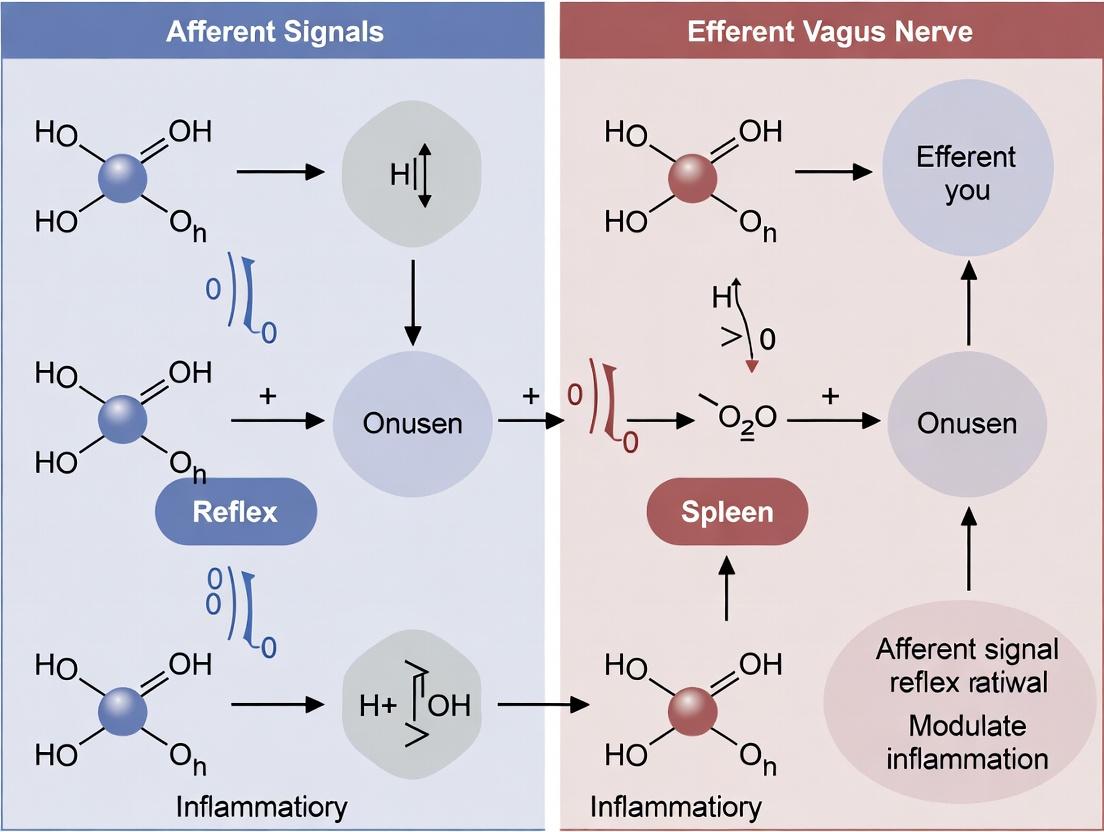
This review provides a comprehensive analysis of the distinct yet interconnected roles of afferent (sensory) and efferent (motor) vagus nerve signaling in the modulation of systemic inflammation.
Vagus Nerve Bidirectional Signaling: Decoding Afferent vs. Efferent Pathways in Inflammatory Control and Therapeutic Potential
Abstract
This review provides a comprehensive analysis of the distinct yet interconnected roles of afferent (sensory) and efferent (motor) vagus nerve signaling in the modulation of systemic inflammation. Tailored for researchers, scientists, and drug development professionals, it explores the foundational neuroanatomy and molecular mechanisms, details current methodological approaches for pathway-specific interrogation, addresses key challenges and optimization strategies in experimental models, and critically validates findings through comparative analysis of preclinical and clinical data. The synthesis aims to guide the development of targeted neuromodulation therapies for inflammatory diseases.
The Neuroimmune Circuit: Anatomy and Core Mechanisms of Afferent and Efferent Vagus Signaling
The vagus nerve (cranial nerve X) is a critical bidirectional communication pathway between the brain and visceral organs. A defining anatomical and functional feature is the predominance of afferent (sensory) fibers, constituting 80-90% of all vagal fibers, with efferent (motor) fibers making up the remaining 10-20%. This quantitative asymmetry underpins its primary role as a sensor of physiological status, informing the central nervous system (CNS) to trigger appropriate parasympathetic efferent responses. Within inflammation research, this anatomical distribution is fundamental: afferent fibers detect peripheral inflammatory cytokines and damage signals, while efferent fibers, primarily via the cholinergic anti-inflammatory pathway (CAIP), execute modulatory output to dampen immune responses.
Quantitative Anatomical & Functional Breakdown
Table 1: Comparative Summary of Afferent vs. Efferent Vagal Fibers
| Feature | Afferent (Sensory) Fibers | Efferent (Motor) Fibers |
|---|---|---|
| Estimated Proportion | 80-90% | 10-20% |
| Cell Body Location | Nodose (inferior) & Jugular (superior) Ganglia | Dorsal Motor Nucleus of the Vagus (DMN) & Nucleus Ambiguus (NA) |
| Central Projections | Nucleus Tractus Solitarius (NTS) | DMN/NA project axons peripherally |
| Primary Neurotransmitter | Glutamate (at NTS) | Acetylcholine (ACh) at effector synapses |
| Key Peripheral Receptors | TLRs, cytokine receptors, mechano-/chemo-receptors | Muscarinic ACh receptors (esp. α7nAChR on macrophages) |
| Primary Role in Inflammation | Detect cytokines (e.g., IL-1β, TNF-α), relay inflammatory state to NTS | ACh release suppresses macrophage TNF-α production via α7nAChR |
Experimental Protocols for Functional Investigation
Protocol: Selective Vagal Afferent Fiber Recording
Objective: To record action potentials from visceral afferents in response to inflammatory stimuli.
- Animal Preparation: Anesthetize rat/mouse. Cannulate trachea, femoral vein.
- Nerve Isolation: Expose the cervical vagus nerve via a ventral midline incision. Carefully dissect nerve sheath under mineral oil.
- Fiber Splitting: Using fine micro-forceps, separate a thin filament from the main vagal trunk.
- Recording: Place the filament over a platinum-iridium recording electrode. Reference electrode in nearby tissue.
- Stimulation & Data Acquisition:
- Baseline: Record spontaneous activity for 10 mins.
- Inflammatory Challenge: Administer lipopolysaccharide (LPS, 1-50 µg/kg i.v.) or recombinant cytokine (e.g., IL-1β).
- Visceral Challenge: Administer CCK (for gastric afferents) or phenylbiguanide (for pulmonary afferents).
- Analysis: Spike sorting software identifies single-unit activity. Calculate change in firing frequency (Hz) post-stimulus.
Protocol: Efferent Vagus Nerve Stimulation (VNS) and Cytokine Measurement
Objective: To activate efferent anti-inflammatory pathway and quantify suppression of systemic inflammation.
- Surgical VNS Model:
- Anesthetize animal, place on heating pad.
- Isolate left cervical vagus nerve, loop a bipolar platinum electrode.
- Stimulate (typical parameters: 1 mA, 2 Hz, 0.2 ms pulse width) for 5 minutes prior to inflammatory insult.
- Inflammatory Insult: Administer a standardized dose of LPS (e.g., 6 mg/kg i.p.) or induce septic peritonitis via cecal ligation and puncture (CLP).
- Tissue/Sample Collection: At defined endpoint (e.g., 90 min post-LPS for peak TNF-α), collect blood via cardiac puncture. Perfuse, harvest spleen/liver.
- Cytokine Quantification: Measure serum TNF-α, IL-6, IL-1β via ELISA or multiplex bead array. Compare VNS vs. sham-stimulated groups.
Protocol: Genetic Ablation of Afferent or Efferent Subpopulations
Objective: To determine the necessity of specific vagal pathways.
- Afferent Ablation (Capsaicin Method):
- Systemically administer capsaicin (50-125 mg/kg, s.c.) to neonatal rodents or adult rodents under anesthesia with respiratory support. Capsaicin selectively destroys unmyelinated C-fibers, including many vagal afferents.
- Allow 2+ weeks for recovery and full degeneration.
- Verify ablation via loss of chemoreflex response to phenylbiguanide.
- Efferent-Specific Lesion (Dichloroacetylcholine):
- Microinject dichloroacetylcholine (6 mM, 60 nL) into the Dorsal Motor Nucleus of the Vagus (stereotaxic coordinates). This selective neurotoxin destroys cholinergic cell bodies.
- Allow 7-10 days for axon degeneration.
- Functional Test: Subject lesioned animals to inflammation models (Protocol 3.2) and compare cytokine responses to sham-lesioned controls.
Signaling Pathways & Workflow Diagrams
The Scientist's Toolkit: Key Research Reagents & Materials
Table 2: Essential Reagents for Vagal Neuro-Immune Research
| Item | Function/Application | Example & Key Detail |
|---|---|---|
| α-Bungarotoxin | High-affinity antagonist for α7 nicotinic ACh receptor (α7nAChR). Used to block the efferent anti-inflammatory pathway. | Alexa Fluor 488-conjugated for imaging receptor localization. |
| Lipopolysaccharide (LPS) | TLR4 agonist; standard inflammatory challenge to trigger cytokine release and vagal afferent firing. | E. coli O111:B4, used at 0.1-10 mg/kg in vivo. |
| Capasicin | Vanilloid receptor (TRPV1) agonist; used for selective chemical ablation of unmyelinated vagal afferent C-fibers. | Administered systemically to neonates or locally to vagal ganglia. |
| Dichloroacetylcholine | Cholinergic neurotoxin; selective lesioning of efferent neuron cell bodies in the DMN. | Requires stereotaxic microinjection (nL volumes). |
| Hexamethonium Bromide | Nicotinic receptor ganglionic blocker. Verifies efferent signal travels through peripheral synapses. | Administered i.v. prior to VNS to abolish anti-inflammatory effect. |
| Recombinant Cytokines (IL-1β, TNF-α) | Direct stimulators of vagal afferent firing; used to map sensitivity and receptor expression. | Rat or mouse specific, typically administered intra-arterially. |
| Selective α7nAChR Agonists (e.g., GTS-21, PNU-282987) | Pharmacologically mimic efferent vagus output, providing a potential drug development avenue. | Used in vitro on macrophages or in vivo to suppress inflammation. |
| Nerve Recording Electrodes | For in vivo or ex vivo electrophysiology of vagal filaments. | Bipolar platinum-iridium; requires a stable amplifier/data acquisition system. |
This whitepaper provides a technical examination of the Cholinergic Anti-inflammatory Pathway (CAP) as the critical efferent arm of the inflammatory reflex. The inflammatory reflex is a neural circuit that senses and regulates the immune response. Within the broader thesis of afferent vs. efferent vagus nerve signaling, afferent fibers transmit inflammatory signals from the periphery to the brain, while the efferent CAP constitutes the brain's direct, high-speed inhibitory signal back to the immune system. This efferent pathway is a principal target for therapeutic intervention in inflammatory diseases.
Core Mechanism of the Efferent CAP
Activation of efferent vagus nerve fibers leads to the release of acetylcholine (ACh) in reticuloendothelial organs (e.g., spleen, liver, gut). ACh binds primarily to the α7 nicotinic acetylcholine receptor (α7nAChR) expressed on macrophages and other immune cells. This interaction inhibits the release of pro-inflammatory cytokines, such as TNF, IL-1β, IL-6, and HMGB1, without affecting anti-inflammatory cytokines. The intracellular mechanism involves inhibition of NF-κB nuclear translocation and activation of the JAK2-STAT3 signaling pathway.
Key Signaling Pathways and Molecular Targets
Diagram 1: Core CAP Signaling at Immune Cell
Diagram 2: Inflammatory Reflex Afferent vs. Efferent Loop
Table 1: Key Experimental Outcomes of Vagus Nerve Stimulation (VNS) or CAP Activation
| Experimental Model | Intervention | Key Cytokine Reduction (vs. Control) | Primary Measurement Method | Reference (Example) |
|---|---|---|---|---|
| LPS-induced Endotoxemia (Rat) | Cervical VNS (1V, 2ms, 5Hz) | TNF: ~80% reduction at 4h | Serum ELISA | Borovikova et al., Nature 2000 |
| LPS-induced Endotoxemia (α7nAChR KO Mouse) | Cervical VNS | TNF: No significant reduction | Serum Multiplex Assay | Wang et al., Nature 2003 |
| Cerulein-induced Pancreatitis (Rat) | VNS (0.5mA, 5Hz) | TNF: ~70%, IL-6: ~65% | Tissue Homogenate ELISA | van Westerloo et al., Gastroenterology 2006 |
| Post-Operative Ileus (Mouse) | VNS (0.5mA, 5Hz) | Intestinal IL-1β: ~60% | Luminex Multiplex | The et al., Gut 2007 |
| Collagen-Induced Arthritis (Rat) | Chronic VNS (0.25mA, 10Hz) | Clinical Score: ~50% improvement | Paw Swelling Caliper | Koopman et al., PNAS 2016 |
| Human Rheumatoid Arthritis (Pilot) | Implanted VNS device | TNF reduction: ~30-50% | Serum ELISA | Koopman et al., PNAS 2016 |
Table 2: Pharmacological Agonists of the α7nAChR
| Compound Name | Structure Class | EC50 / Binding Affinity (Ki) | Key In Vivo Effect | Development Stage |
|---|---|---|---|---|
| PNU-282987 | Benzamide derivative | Ki = 14 nM (rat brain) | Reduces inflammation in sepsis models | Preclinical Tool |
| GTS-21 (DMXBA) | Benzylidene anabaseine | Ki = 180 nM (human α7) | Cognitive enhancement; anti-inflammatory | Phase II (failed) |
| AR-R17779 | Spirocyclic amine | EC50 = 4.6 µM (functional) | Improves survival in murine sepsis | Preclinical |
| CNI-1493 | Guanylhydrazone | Acts via macrophage α7 | Suppresses endotoxin lethality | Phase II (discontinued) |
| Choline | Endogenous nutrient | Partial agonist | Dietary supplement with putative effects | Natural Product |
Detailed Experimental Protocols
Protocol 1: Standard Murine Model of VNS in Endotoxemia
Objective: To assess the anti-inflammatory effect of efferent vagus nerve stimulation.
- Animal Preparation: Anesthetize C57BL/6 mice (8-12 weeks) with ketamine/xylazine. Maintain body temperature at 37°C.
- Vagus Nerve Isolation & Stimulation: Perform a midline cervical incision. Gently dissect the left cervical vagus nerve free from the carotid artery. Place the nerve on a bipolar platinum-iridium electrode connected to a constant-current stimulator.
- Stimulation Parameters: Apply stimulation (e.g., 1V, 2ms pulse duration, 5Hz frequency) for 10 minutes. Sham controls undergo identical surgery but without electrical current.
- LPS Challenge: Immediately post-stimulation, administer lipopolysaccharide (LPS from E. coli 0111:B4) intraperitoneally at a sublethal dose (e.g., 1 mg/kg).
- Sample Collection: At a predetermined endpoint (e.g., 90 or 240 minutes post-LPS), collect blood via cardiac puncture. Centrifuge to obtain serum.
- Analysis: Quantify TNF-α, IL-1β, and IL-6 levels in serum using high-sensitivity ELISA kits.
Protocol 2: Assessing CAP via Selective α7nAChR Agonists In Vitro
Objective: To directly measure the effect of α7nAChR activation on macrophage cytokine production.
- Cell Culture: Differentiate human THP-1 monocytes into macrophages using 100 nM PMA for 48 hours, followed by 24-hour rest in RPMI-1640 + 10% FBS.
- Pre-treatment: Incubate macrophages with a selective α7nAChR agonist (e.g., PNU-282987 at 10 µM) or a specific antagonist (e.g., methyllycaconitine, MLA at 100 nM) for 30 minutes.
- Inflammatory Challenge: Add LPS (100 ng/ml) to culture wells to activate TLR4 signaling.
- Incubation: Continue incubation for 4-6 hours (for mRNA) or 18-24 hours (for secreted protein).
- Analysis:
- mRNA: Extract total RNA, perform reverse transcription, and analyze TNF and IL-6 mRNA via qPCR.
- Protein: Harvest cell culture supernatants and measure TNF and IL-6 protein via multiplex bead-based assay or ELISA.
- Mechanistic: For NF-κB analysis, perform Western blot on nuclear and cytoplasmic fractions for p65 subunit.
The Scientist's Toolkit: Research Reagent Solutions
Table 3: Essential Research Materials for CAP Investigation
| Item | Function/Application | Example Vendor/Catalog | Notes |
|---|---|---|---|
| α7nAChR Knockout Mice | In vivo model to confirm α7nAChR-specific effects of VNS or agonists. | Jackson Laboratory (Stock #003232) | B6.129S7-Chrna7 |
| Selective α7nAChR Agonist (PNU-282987) | Pharmacological tool to directly activate the CAP endpoint. | Tocris (Cat. #1026) | Highly selective; used in vitro and in vivo. |
| Selective α7nAChR Antagonist (Methyllycaconitine, MLA) | Pharmacological tool to block CAP and confirm mechanism. | Abcam (Cat. #ab120416) | Competitive antagonist. |
| Vagus Nerve Stimulation Electrodes | For precise surgical placement and stimulation in rodents. | Plastics One (MS303/1-B/SPC) | Bipolar, stainless steel or platinum. |
| Programmable Isolated Pulse Stimulator | To deliver precise electrical parameters for VNS. | A-M Systems (Model 2100) | Allows control of voltage, pulse width, frequency. |
| High-Sensitivity Cytokine ELISA/Multiplex Kits | To quantify low levels of cytokines in serum or supernatant. | R&D Systems DuoSet ELISA; Bio-Rad Bio-Plex Pro | Essential for quantifying CAP efficacy. |
| Phospho-STAT3 (Tyr705) Antibody | To assess activation of the JAK2-STAT3 pathway downstream of α7. | Cell Signaling Technology (Cat. #9145) | Used in Western blot or IHC. |
| NF-κB p65 Antibody | To evaluate inhibition of NF-κB nuclear translocation. | Santa Cruz Biotechnology (sc-8008) | For Western blot, EMSA, or immunofluorescence. |
| Lipopolysaccharide (LPS) | Standard inflammatory challenge (PAMP) for in vitro and in vivo models. | Sigma-Aldrich (L4516 from E. coli 0111:B4) | Dose must be titrated per model. |
The inflammatory reflex, a neural circuit regulating immune responses, comprises afferent (sensory) and efferent (motor) arms. This whitepaper focuses on the afferent vagus nerve signaling pathway, which transmits peripheral inflammatory information to the brain. This signaling is primarily initiated by cytokines and Danger-Associated Molecular Patterns (DAMPs) binding to receptors on visceral sensory neurons and associated cells, forming a critical "sixth sense" for systemic inflammation. Understanding this signaling is pivotal for developing neuromodulation therapies and precision anti-inflammatory drugs.
Core Signaling Pathways and Molecular Mechanisms
Afferent signaling involves specialized receptors on vagal paraganglia, nodose/jugular ganglion neurons, and glomus cells.
Key Receptors and Ligands:
- Cytokine Receptors: IL-1R1, TNF-R1, TLR4 (responsive to HMGB1).
- DAMP Receptors: P2X/P2Y purinergic receptors (for ATP), TLR2/4, RAGE.
- Ion Channels: TRPV1, ASIC3, activated downstream of receptor signaling.
The binding event leads to neuronal depolarization via intracellular second messengers (Ca2+, cAMP, p38 MAPK), culminating in action potential propagation to the nucleus tractus solitarius (NTS) in the brainstem.
Table 1: Key Afferent Signaling Ligands, Receptors, and Experimental Outcomes
| Signaling Ligand | Primary Receptor(s) on Afferent Neuron/Associated Cell | Experimental Model | Key Quantitative Outcome | Reference (Example) |
|---|---|---|---|---|
| IL-1β | IL-1R1 | Mouse, LPS-induced systemic inflammation | Vagal afferent firing rate increased by 320% within 30 min. c-Fos expression in NTS increased 12-fold. | Hosoi et al., 2005 |
| TNF-α | TNF-R1 | Rat, peritoneal inflammation | 65% of vagal afferents showed increased sensitivity; conduction velocity decreased by 15%. | Hermann et al., 2001 |
| ATP | P2X2/P2X3 heteromer | Mouse, in vitro nodose ganglion preparation | 10µM ATP induced inward current of -450 pA in 78% of neurons. | Stokes et al., 2022 |
| HMGB1 | TLR4, RAGE | Mouse, sepsis model | Vagal ablation increased serum HMGB1 by 4x and mortality by 60%. Stimulation reduced TNF by 70%. | Chavan et al., 2012 |
| LPS | TLR4 on paraganglia | Rat, intravenous injection | Fos activation in vagal paraganglia peaked at 90 min (45 cells/section vs. 3 in controls). | Goehler et al., 1999 |
Table 2: Pharmacological/Genetic Interventions on Afferent Signaling
| Intervention Target | Intervention Type | Effect on Afferent Signaling | Outcome on Systemic Inflammation | |
|---|---|---|---|---|
| IL-1R1 | Knockout (neuron-specific) | Abolished IL-1β induced NTS c-Fos | Exaggerated peripheral IL-6 response to LPS (+40%) | Weber et al., 2017 |
| P2X3 Receptor | Antagonist (AF-353) | Reduced ATP-evoked firing by >80% | Attenuated sickness behavior score by 50% in arthritis model | |
| TRPV1 Channel | Agonist (Capsaicin) | Desensitization of afferents | Potentiated endotoxin-induced fever (+1.5°C) | |
| Subdiaphragmatic Vagotomy | Surgical | Eliminates >90% of abdominal afferent signaling | Augmented hepatic TNF-α production (3-5 fold) | Bernik et al., 2002 |
Detailed Experimental Protocols
Protocol: Measuring Afferent Vagal Nerve ActivityIn Vivo
Objective: To record real-time action potential discharge from the cervical vagus nerve in response to systemic inflammatory challenge.
Materials: Anesthetized rodent, physiological temperature controller, stereotaxic frame, fine dissection tools, bipolar platinum-iridium recording electrodes, differential amplifier, high-impedance probe, data acquisition system, spike-sorting software.
Procedure:
- Anesthesia & Surgery: Anesthetize animal (e.g., urethane 1.5g/kg i.p.). Secure in supine position. Perform midline cervical incision.
- Nerve Isolation: Carefully dissect the left cervical vagus nerve free from the carotid sheath. Place on a small plastic platform. Keep moist with warm mineral oil or saline.
- Electrode Placement: Position bipolar hook electrodes under the nerve. Connect to amplifier (gain 10k, filter 300Hz-10kHz).
- Baseline Recording: Record 10 minutes of baseline multi-unit neural activity.
- Challenge Administration: Administer inflammatory agent intravenously (e.g., LPS 50µg/kg, IL-1β 2µg/kg).
- Data Acquisition: Record continuously for 60-180 minutes post-injection.
- Data Analysis: Use spike-sorting algorithms (e.g., Wave_clus) to discriminate single units. Calculate firing frequency (Hz) in bins. Express as percent change from baseline.
Protocol: Neuronal Activation Mapping via c-Fos Immunohistochemistry
Objective: To map central nervous system activation following peripheral inflammatory stimulus.
Materials: Perfused rodent brain, cryostat, floating section trays, PBS, Triton X-100, normal serum, primary anti-c-Fos antibody (e.g., rabbit anti-c-Fos, Abcam ab190289), fluorescent or HRP-conjugated secondary antibody, DAPI, mounting medium.
Procedure:
- Stimulation & Perfusion: 90 minutes post-stimulus (optimal c-Fos expression), deeply anesthetize and transcardially perfuse with 4% paraformaldehyde (PFA).
- Sectioning: Remove brain, post-fix, cryoprotect (30% sucrose). Cut 40µm coronal sections through brainstem (NTS) and forebrain using a cryostat.
- Immunostaining: Free-floating sections are incubated in: a) blocking solution (5% normal serum, 0.3% Triton), b) primary antibody (1:1000, 48h at 4°C), c) secondary antibody (1:500, 2h RT).
- Imaging & Quantification: Image using confocal or brightfield microscopy. Count c-Fos-positive nuclei within a defined region of interest (ROI, e.g., NTS) using automated software (ImageJ). Compare counts between treatment and control groups (n≥4/group).
Signaling Pathway & Workflow Visualizations
Title: Afferent Signaling Pathway from Periphery to Brain
Title: Experimental Workflow for Afferent Signaling Studies
The Scientist's Toolkit: Key Research Reagent Solutions
Table 3: Essential Reagents and Materials for Afferent Neuroimmune Research
| Item | Function & Application | Example Product / Cat. Number |
|---|---|---|
| Recombinant Cytokines/DAMPs | High-purity ligands for direct neuronal stimulation in vitro or in vivo. | rmIL-1β (R&D Systems, 401-ML), ATP disodium salt (Sigma, A7699), HMGB1 (HMGBiotech, HMG-01). |
| Selective Receptor Antagonists/Agonists | Pharmacological dissection of specific signaling pathways. | IL-1RA (Anakinra, Kineret), P2X3 antagonist (AF-353, Tocris, 6579), TLR4 antagonist (TAK-242, CLI-095). |
| c-Fos Antibody | Standard marker for neuronal activation in IHC/IF. | Rabbit anti-c-Fos [9F6] (Abcam, ab190289); Validated for IHC. |
| Vagotomy/Surgical Tools | For definitive functional studies of vagal afferent role. | Fine micro-dissection scissors (Fine Science Tools, 15000-00); 10-0 nylon suture for selective deafferentation. |
| Multi-electrode Array (MEA) System | In vitro recording from cultured nodose/jugular ganglia. | Multi Channel Systems MEA2100 system for extracellular recording. |
| Calcium/Ratio-metric Dyes | Visualizing intracellular Ca2+ flux in neurons in response to ligands. | Fura-2 AM (Invitrogen, F1221) for live-cell imaging. |
| Neuron-Specific Cre-driver Mice | Genetic targeting of vagal afferent neurons. | Phox2b-Cre (Jackson Lab, 016223) labels visceral sensory neurons. P2rx2-Cre for purinergic receptor-expressing fibers. |
| Spike-Sorting Software | Critical for analyzing in vivo nerve recording data. | Wave_clus (open-source in MATLAB); Plexon Offline Sorter. |
The inflammatory reflex is a critical neural circuit through which the nervous system senses and regulates immune function. Within this framework, the vagus nerve serves a dual role. Afferent (sensory) fibers detect peripheral inflammatory mediators (e.g., IL-1β, TNF-α) and relay this information to the brainstem, initiating systemic responses. Conversely, efferent (motor) fibers transmit action potentials from the brainstem to peripheral tissues, releasing acetylcholine (ACh) at synaptic-like connections with immune cells. This efferent arm is the "cholinergic anti-inflammatory pathway" (CAIP). The molecular axis of ACh→α7 nicotinic acetylcholine receptor (α7nAChR)→NF-κB inhibition→cytokine suppression forms the core effector mechanism of this efferent signaling, serving as a prime target for therapeutic intervention in inflammatory diseases.
Molecular Player Profiles & Quantitative Data
Table 1: Core Molecular Players in the Cholinergic Anti-inflammatory Pathway
| Molecule | Full Name & Type | Primary Role in Pathway | Key Quantitative Effects (Example Findings) |
|---|---|---|---|
| Acetylcholine (ACh) | Neurotransmitter | Efferent vagus nerve terminal release; binds to α7nAChR on macrophages. | Vagus stimulation reduces serum TNF-α by 50-80% in endotoxemia models. |
| α7nAChR | α7 nicotinic acetylcholine receptor (Ligand-gated ion channel) | Primary ACh receptor on macrophages, microglia, etc.; essential for CAIP. | α7nAChR-/- mice show complete loss of anti-inflammatory effect from vagus stimulation. |
| NF-κB | Nuclear Factor kappa-light-chain-enhancer of activated B cells (Transcription factor complex) | Master regulator of pro-inflammatory gene transcription; target of α7nAChR signaling. | ACh agonism can reduce LPS-induced NF-κB nuclear translocation by 40-70%. |
| TNF-α | Tumor Necrosis Factor-alpha (Cytokine) | Early pro-inflammatory mediator; promotes cytokine cascade. | Baseline in sepsis: 1-10 ng/mL; CAIP can reduce levels to 0.2-2 ng/mL. |
| IL-1β | Interleukin-1 beta (Cytokine) | Pyrogen; promotes leukocyte activation and tissue inflammation. | LPS challenge can induce serum IL-1β >500 pg/mL; CAIP reduces by >60%. |
| IL-6 | Interleukin-6 (Cytokine) | Pleiotropic cytokine; acute phase response inducer. | Severe inflammation: >1000 pg/mL; CAIP often shows 50-90% suppression. |
Table 2: Experimental Agonists, Antagonists, and Genetic Models
| Target | Tool Compound/Model | Effect | Common Use in Research |
|---|---|---|---|
| α7nAChR | PNU-282987 (agonist) | Activates receptor, mimicking ACh | In vitro macrophage studies; in vivo proof-of-concept. |
| α7nAChR | GTS-21 (DMXBA) (partial agonist) | Activates receptor with cognitive effects | Sepsis, arthritis models; some clinical trials. |
| α7nAChR | α-bungarotoxin, MLA (antagonists) | Blocks receptor, inhibits CAIP | Validating α7nAChR-specific effects. |
| α7nAChR | α7nAChR knockout (KO) mice | Genetic ablation of receptor | Gold standard for establishing α7nAChR necessity in vivo. |
| Vagus Nerve | Vagotomy (VX) | Cuts efferent/afferent fibers | Establishing neural circuit necessity. |
| Vagus Nerve | Vagus Nerve Stimulation (VNS) | Electrical activation of efferent fibers | Preclinical & clinical (FDA-approved) modulation of inflammation. |
Detailed Signaling Pathway & Experimental Protocols
Core Signaling Pathway: From ACh to Cytokine Suppression
The canonical pathway involves:
- Ligand-Receptor Binding: ACh released from efferent vagus nerve terminals binds to the α7nAChR on tissue macrophages.
- Intracellular Cascade: α7nAChR activation initiates a JAK2/STAT3 signaling pathway. It also modulates PI3K/Akt and facilitates the recruitment of JAK2 to the receptor complex.
- NF-κB Inhibition: Activated STAT3 and other downstream effectors (e.g., via inhibition of IκB kinase) prevent the nuclear translocation of the NF-κB p65 subunit.
- Transcriptional Suppression: Reduced NF-κB in the nucleus leads to decreased transcription of genes encoding TNF-α, IL-1β, IL-6, and other inflammatory mediators.
- Alternative Mechanism: α7nAChR activation may also directly inhibit JNK and p38 MAPK pathways, reducing cytokine production post-transcriptionally.
Diagram 1: α7nAChR signaling inhibits NF-κB translocation.
Key Experimental Protocol: Assessing the PathwayIn Vitro
Title: Macrophage Culture & α7nAChR Agonist Treatment to Measure Cytokine Output
Objective: To test the direct anti-inflammatory effect of α7nAChR activation on primary macrophages.
Materials & Reagents: See Scientist's Toolkit below.
Method:
- Cell Isolation & Culture: Isolate primary peritoneal macrophages from C57BL/6 mice (or use RAW 264.7 cell line). Plate cells in 24-well plates (2.5 x 10^5 cells/well) in complete DMEM. Adhere overnight.
- Pre-treatment: Replace medium with fresh, low-serum (0.5-1% FBS) medium. Pre-treat cells with:
- Group 1: α7nAChR agonist (e.g., PNU-282987, 10-100 µM) for 30-60 minutes.
- Group 2: Agonist + α7nAChR antagonist (e.g., methyllycaconitine (MLA), 10 nM) for specificity control.
- Group 3: Vehicle control (DMSO/PBS).
- Inflammatory Challenge: Add ultrapure LPS (e.g., from E. coli O111:B4) at 10-100 ng/mL to all wells. Incubate for 4-6 hours (for mRNA) or 18-24 hours (for protein).
- Sample Collection:
- Supernatant: Collect, centrifuge, and store at -80°C for cytokine analysis via ELISA.
- Cells: Lyse for RNA extraction (qRT-PCR for Tnf, Il1b, Il6) or protein extraction (Western blot for p-IκBα, p-p65, p-STAT3).
- Data Analysis: Normalize cytokine data to protein content. Compare groups via ANOVA. Expected: Agonist group shows significant reduction in cytokines and phospho-NF-κB pathway components vs. vehicle control, blocked by MLA.
Diagram 2: In vitro macrophage stimulation protocol workflow.
The Scientist's Toolkit: Research Reagent Solutions
Table 3: Essential Research Materials for α7nAChR/Inflammation Studies
| Reagent/Material | Supplier Examples | Function in Research |
|---|---|---|
| Ultrapure LPS (E. coli O111:B4) | InvivoGen, Sigma-Aldrich | Standardized inflammatory trigger for macrophages in vitro and in vivo (endotoxemia). |
| PNU-282987 (α7nAChR agonist) | Tocris, Sigma-Aldrich | Selective, high-potency agonist for in vitro and in vivo proof-of-concept studies. |
| Methyllycaconitine (MLA) citrate | Tocris, Abcam | Selective α7nAChR antagonist for blocking experiments to confirm receptor specificity. |
| α-Bungarotoxin, Alexa Fluor conjugates | Thermo Fisher | Fluorescent antagonist used for receptor labeling and visualization (flow cytometry, imaging). |
| Mouse TNF-α, IL-1β, IL-6 ELISA Kits | R&D Systems, BioLegend, eBioscience | Quantify cytokine protein levels in cell supernatant, serum, or tissue homogenates. |
| Phospho-NF-κB p65 (Ser536) Antibody | Cell Signaling Technology | Detect activated NF-κB via Western blot or immunohistochemistry. |
| Phospho-STAT3 (Tyr705) Antibody | Cell Signaling Technology | Detect JAK2/STAT3 pathway activation downstream of α7nAChR. |
| C57BL/6J & α7nAChR KO Mice | Jackson Laboratory | Wild-type control and genetic model to establish α7nAChR necessity in vivo. |
| Vagus Nerve Stimulation (VNS) Cuffs | MicroProbes, Tucker-Davis Tech. | Implantable electrodes for chronic or acute electrical efferent vagus nerve stimulation in rodents. |
| Luminex Multiplex Cytokine Assay Panels | Bio-Rad, Millipore | Simultaneously measure dozens of cytokines from small sample volumes. |
This whitepaper details the organ-specific neuroimmune circuits of the spleen, liver, and gut, framed within a broader thesis on afferent vs. efferent vagus nerve signaling in inflammation research. The vagus nerve serves as a critical bidirectional conduit: afferent (sensory) fibers relay peripheral inflammatory signals to the brain, while efferent (motor) fibers execute the brain's anti-inflammatory commands via the inflammatory reflex. Understanding the anatomical and molecular specificity of these pathways in key immune organs is paramount for developing targeted neuromodulation therapies.
Organ-Specific Innervation and Signaling Pathways
Spleen: The Cholinergic Anti-inflammatory Pathway
The spleen is a primary effector site for the efferent inflammatory reflex. Notably, the vagus nerve does not directly innervate splenic lymphocytes. Instead, it synapses with noradrenergic neurons of the celiac-superior mesenteric ganglion complex, which project to the spleen. These sympathetic terminals release norepinephrine (NE) in close proximity to a specialized subset of Choline Acetyltransferase (ChAT)-positive T cells. These T cells, in response to NE, synthesize and release acetylcholine (ACh). ACh then binds to α7 nicotinic acetylcholine receptors (α7nAChR) on resident macrophages, inhibiting NF-κB nuclear translocation and suppressing pro-inflammatory cytokine (e.g., TNF, IL-1β, IL-6) release.
Diagram: Spleen Neuroimmune Pathway
Liver: Dual Afferent and Efferent Hub
The liver receives direct parasympathetic (vagal) and sympathetic innervation at the portal triads and parenchyma. Afferent vagal fibers sense local inflammatory mediators (e.g., IL-1β) and metabolic signals, transmitting this information to the nucleus tractus solitarius (NTS). Efferent vagal and sympathetic inputs modulate Kupffer cells (liver macrophages), hepatic stellate cells, and hepatocyte function. The hepatic inflammatory reflex involves α7nAChR on Kupffer cells, similar to the spleen, but also integrates metabolic (e.g., glucose, bile acid) signals, creating a unique inflammatory crosstalk.
Diagram: Liver Neuroimmune Crosstalk
Gut: The Enteric Nervous System as an Integrative Center
The gut hosts the enteric nervous system (ENS), a semi-autonomous neural network that communicates bidirectionally with the central nervous system via the vagus. Afferent vagal fibers (≈90% of vagal trunks) are activated by enteroendocrine cells releasing serotonin (5-HT) or gut hormones in response to luminal content. Efferent vagal fibers modulate gut permeability, mucosal immunity, and enteric glia. Inflammatory crosstalk involves direct modulation of muscularis macrophages, interaction with gut-associated lymphoid tissue (GALT), and communication with the gut microbiota via neurotransmitter sensing.
Diagram: Gut-Brain Immune Axis
Table 1: Key Quantitative Metrics in Organ-Specific Neuroimmunity
| Organ | Key Neural Structure | Primary Neurotransmitter(s) | Key Immune Receptor | Cytokine Modulation (Fold Change with Stimulation)* | Key Experimental Models |
|---|---|---|---|---|---|
| Spleen | Celiac Ganglion-derived sympathetic fibers | Norepinephrine (NE), Acetylcholine (ACh) | α7nAChR on macrophages | TNF reduction: 50-70% | VNS in endotoxemia; α7nAChR KO mice; optogenetic CG stimulation |
| Liver | Direct vagal & sympathetic fibers | ACh, NE, Substance P | α7nAChR on Kupffer cells | IL-6 reduction: 40-60% | Hepatic vagotomy; portal vein LPS infusion; ChAT-Cre transgenic mice |
| Gut | Enteric Nervous System (ENS), Vagal afferents | 5-HT, ACh, VIP, NE | α7nAChR on muscularis macrophages | TNF reduction: 50-80% | Dextran sulfate sodium (DSS) colitis; Chemogenetic vagus stimulation; GF/gnotobiotic mice |
*Representative approximate reductions observed in preclinical models upon effective vagus nerve stimulation (VNS) or specific neuronal activation.
Table 2: Afferent vs. Efferent Signaling by Organ
| Organ | Primary Afferent Triggers | Afferent Pathway to CNS | Primary Efferent Anti-inflammatory Mechanism |
|---|---|---|---|
| Spleen | Cytokines (TNF, IL-1β) from systemic circulation (indirect) | Humoral signal -> Area postrema/NTS | Sympathetic splenic nerve -> NE -> ChAT+ T cells -> ACh -> α7nAChR on macrophages |
| Liver | IL-1β, LPS, ATP, metabolic signals | Direct hepatic vagal afferents -> NTS | Direct vagal efferents & sympathetic -> ACh/NE -> α7nAChR on Kupffer cells |
| Gut | 5-HT from EECs, microbial metabolites (SCFAs), cytokines | Direct vagal afferents in submucosa -> NTS | Direct vagal efferents to ENS & muscularis macrophages; ENS-mediated regulation of barrier |
Detailed Experimental Protocols
Protocol: Assessing the Splenic Cholinergic Anti-inflammatory Pathway in Endotoxemia
Objective: To quantify the functional role of the splenic nerve and α7nAChR in the inflammatory reflex. Materials: See "Scientist's Toolkit" below. Procedure:
- Animal Model: Anesthetize male C57BL/6 mice (8-12 weeks). Perform a midline laparotomy.
- Surgical Interventions (Group Dependent):
- Sham: Spleen exposed but no nerve transection.
- Splenic Neurectomy: Isolate the splenic nerve bundle along the splenic artery and vein; carefully transect it.
- Vagotomy (Subdiaphragmatic): Isolate and transect the ventral and dorsal branches of the vagus nerve.
- Inflammatory Challenge: Administer intraperitoneal (i.p.) injection of LPS (0.5-1 mg/kg from E. coli 055:B5).
- Vagus Nerve Stimulation (VNS): For VNS groups, implant bipolar platinum-iridium electrodes on the left cervical vagus. Deliver stimulation (0.5-1.0 mA, 1 ms pulse width, 10 Hz) for 5 minutes, 30 minutes post-LPS.
- Sample Collection: 90 minutes post-LPS, collect blood via cardiac puncture. Harvest spleen, homogenize in RIPA buffer with protease inhibitors.
- Analysis:
- Cytokines: Measure serum and splenic homogenate TNF-α and IL-6 levels via ELISA.
- Flow Cytometry: Digest spleen, stain for CD11b+F4/80+ macrophages and intracellular TNF-α. Identify ChAT+ T cells (CD3+CD44+ChAT-GFP+ in ChAT-BAC transgenic mice).
- Pharmacological Validation: Pre-treat mice with α7nAChR antagonist methyllycaconitine (MLA, 1 mg/kg, i.p.) or agonist GTS-21 (4 mg/kg, i.p.).
Protocol: Mapping Hepatic Vagal Afferent Activation
Objective: To visualize and quantify neuronal activation in the NTS following hepatic inflammatory challenge. Materials: See "Scientist's Toolkit". Procedure:
- Surgical Preparation: Anesthetize and cannulate the portal vein of a rat.
- Neuronal Labeling: Inject the transsynaptic retrograde tracer pseudorabies virus (PRV-152, expressing GFP) into the left liver lobe. Allow 4-5 days for retrograde transport to the NTS.
- Inflammatory Challenge: At time of assay, infuse IL-1β (2 µg/kg) or vehicle (saline) via the portal cannula.
- Immunohistochemistry: 90 minutes post-infusion, perfuse-fix the animal. Section brainstem (40 µm).
- Staining: Perform immunofluorescence for c-Fos (early activation marker) and NeuN (neuronal marker) on sections containing the NTS.
- Imaging & Quantification: Use confocal microscopy. Quantify the number of triple-labeled neurons (PRV-GFP+/c-Fos+/NeuN+) per NTS section as a measure of activated liver-connected afferent neurons.
The Scientist's Toolkit: Research Reagent Solutions
Table 3: Essential Reagents and Materials for Neuroimmune Research
| Item | Function/Application | Example Product/Catalog # (Hypothetical) |
|---|---|---|
| α7nAChR Agonist | Pharmacological activation of the efferent anti-inflammatory pathway. | PHA-543613 (Tocris, 2930); GTS-21 (Sigma, SML2367) |
| α7nAChR Antagonist | Validating receptor specificity in the inflammatory reflex. | Methyllycaconitine (MLA) citrate (Hello Bio, HB0895) |
| c-Fos Antibody | Detecting neuronal activation in CNS nuclei (e.g., NTS) following peripheral stimuli. | Rabbit anti-c-Fos (Cell Signaling, 2250S) |
| ChAT Reporter Mouse | Identifying cholinergic cells, including splenic T cells. | B6;129S6-Chat |
| Pseudorabies Virus (PRV) | Transsynaptic retrograde tracing of neural circuits (e.g., liver-to-NTS). | PRV-152 (GFP-expressing), PRV-614 (mRFP-expressing) |
| Vagus Nerve Cuff Electrodes | Chronic or acute electrical stimulation of the vagus nerve in vivo. | Micro Cuff Electrodes (Microprobes for Life Science) |
| LPS (Lipopolysaccharide) | Standard inflammatory challenge to induce systemic cytokine release. | E. coli O55:B5 LPS (Sigma, L2880) |
| β2-Adrenergic Receptor Antagonist | Blocking sympathetic signaling to splenic ChAT+ T cells. | ICI 118,551 hydrochloride (Tocris, 0821) |
| Cytokine ELISA Kits | Quantifying TNF-α, IL-1β, IL-6 in serum and tissue homogenates. | Mouse TNF-α ELISA (BioLegend, 430904) |
| Flow Cytometry Antibodies | Panel: CD3, CD11b, F4/80, CD44, TNF-α, ChAT (for transgenic reporters). | Anti-mouse CD3ε (BioLegend, 100306), F4/80 (BioLegend, 123116) |
Interrogating the Circuit: Techniques, Models, and Translational Applications
Within inflammation research, the vagus nerve is a critical bidirectional communication channel. The anti-inflammatory reflex is primarily mediated by efferent signals originating in the brainstem's dorsal motor nucleus (DMN), leading to splenic norepinephrine release and subsequent T-cell-driven suppression of pro-inflammatory cytokines. In contrast, afferent signals, relayed via the nodose ganglion to the nucleus tractus solitarius (NTS), convey peripheral inflammatory status to the brain. A core thesis in modern bioelectronic medicine is that selectively modulating these distinct pathways—afferent (sensory) versus efferent (motor)—can yield targeted therapeutic outcomes with minimized side effects. This guide details the technical implementation of three principal techniques for achieving such selective neuromodulation.
Vagus Nerve Stimulation (VNS): Anatomical and Parameter-Based Selectivity
Traditional VNS, while clinically approved, is often considered "non-selective" as it electrically activates all fiber types (A-, B-, and C-fibers) within the nerve bundle. However, selectivity can be approached through:
- Anatomically Targeted Electrodes: Cuff electrodes with smaller contacts can be positioned to favor fascicles with known compositions.
- Parameter Tuning: Leveraging strength-duration properties and fiber-specific activation thresholds.
Key Experimental Protocol for Efferent-Selective VNS in Murine Inflammation Models:
- Electrode Implantation: A bipolar cuff electrode (e.g., MicroProbes for mice) is surgically implanted around the left cervical vagus nerve.
- Stimulation Parameters for Efferent Bias: To preferentially activate larger, myelinated B-fibers (predominantly efferent) over unmyelinated C-fibers (afferent), use high-frequency, short-pulse-width stimulation (e.g., 10 Hz, 100 µs pulse width, 0.4-0.8 mA). This capitalizes on the lower chronaxie of myelinated fibers.
- Inflammatory Challenge: Administer LPS (1 mg/kg, i.p.) to induce systemic inflammation.
- Outcome Measurement: Collect plasma 90-120 minutes post-LPS to assay TNF-α levels via ELISA. Efferent-selective VNS should achieve >60% suppression compared to sham-stimulated controls.
- Afferent Block Verification: To confirm efferent-mediated effect, perform a sub-diaphragmatic vagotomy or administer a peripherally restricted nicotinic antagonist (e.g, chlorisondamine) prior to stimulation.
Table 1: VNS Parameter Impact on Fiber Recruitment and Functional Outcome
| Stimulation Parameter | Typical Value (Efferent Bias) | Typical Value (Afferent Bias) | Primary Fiber Type Activated | Functional Outcome in Inflammation |
|---|---|---|---|---|
| Pulse Width | 100 µs | 500 µs - 1 ms | B-fibers vs. C-fibers | Efferent: Anti-inflammatory; Afferent: Central signaling, potential HPA axis activation |
| Frequency | 10-20 Hz | 1-5 Hz | B-fibers vs. C-fibers | Higher freq. favors motor fiber fatigue resistance |
| Current Amplitude | 0.4-0.8 mA (mouse) | 0.2-0.5 mA (mouse) | Threshold-based recruitment | Titrated to just above B-fiber threshold, below full A-fiber recruitment |
| Duty Cycle | Intermittent (e.g., 30s on/5min off) | Continuous or intermittent | Modulates adaptation | Prevents nerve damage, modulates plasticity |
Optogenetics: Cell-Type-Specific Neuromodulation
Optogenetics provides superior cellular specificity by expressing light-sensitive opsins (e.g., Channelrhodopsin-2 [ChR2] for excitation, halorhodopsin [NpHR] for inhibition) in genetically defined neuronal populations.
Detailed Protocol for Afferent-Specific Optogenetic Stimulation:
- Viral Vector Delivery: Inject an AAV vector carrying a Cre-dependent ChR2-EYFP construct (e.g., AAV5-EF1α-DIO-ChR2-EYFP) into the nodose ganglion of a transgenic mouse expressing Cre recombinase under control of a sensory neuron-specific promoter (e.g., Vglut2-Cre or P2rx3-Cre).
- Optic Fiber Implantation: Unilaterally implant a chronic optic fiber ferrule (200 µm core) above the nodose ganglion or the central terminals in the NTS.
- Expression Period: Allow 3-4 weeks for opsin expression and transport.
- Stimulation & Validation: Deliver 473 nm blue light pulses (5-20 ms pulses, 10-20 Hz, 5-10 mW at fiber tip). Validate afferent activation via c-Fos immunohistochemistry in the NTS and absence of c-Fos in the DMN.
- Functional Readout: Measure the impact of afferent stimulation on central inflammatory responses (e.g., hypothalamic cytokine expression) or behavior (sickness behavior).
Key Signaling Pathway: The Cholinergic Anti-inflammatory Pathway (Efferent)
Title: Efferent Anti-Inflammatory Pathway
Chemogenetics (DREADDs): Pharmacologically Targeted Modulation
Designer Receptors Exclusively Activated by Designer Drugs (DREADDs) offer temporal control via systemic ligand administration. hM3Dq (Gq-coupled) excites neurons, while hM4Di (Gi-coupled) inhibits them.
Detailed Protocol for Efferent-Specific Chemogenetic Inhibition:
- Targeted Viral Delivery: Inject a Cre-dependent AAV encoding hM4Di-mCherry (e.g., AAV8-hSyn-DIO-hM4Di-mCherry) into the Dorsal Motor Nucleus (DMN) of a ChAT-Cre mouse (targeting cholinergic efferent neurons).
- Control Group: Use a Cre-dependent mCherry-only vector in controls.
- Validation: Confirm receptor expression via mCherry fluorescence in DMN neurons and their projections in the vagus nerve.
- Inhibition & Challenge: Administer the inert ligand Clozapine-N-Oxide (CNO) intraperitoneally (1-5 mg/kg) 30 minutes prior to LPS challenge.
- Readout: Compare plasma cytokine levels (TNF-α, IL-6) between hM4Di+CNO and control groups. Effective efferent inhibition should abolish the endogenous anti-inflammatory reflex, exacerbating cytokine levels.
Table 2: Quantitative Outcomes of Pathway-Specific Modulation in Murine LPS Model
| Technique | Target Pathway | Opsin/Receptor | Key Experimental Readout | Typical Quantitative Outcome vs. Sham | Key Validation Metric |
|---|---|---|---|---|---|
| VNS (Parametric) | Efferent | N/A (Electrical) | Plasma TNF-α (pg/mL) 90min post-LPS | ~200 pg/mL (Sham: ~500 pg/mL) >60% suppression | Ablation by sub-diaphragmatic vagotomy |
| Optogenetics | Afferent | ChR2 (Nodose) | c-Fos+ nuclei in NTS | >100 cells/section (Sham: <20) | No c-Fos in DMN |
| Optogenetics | Efferent | ChR2 (DMN) | Plasma TNF-α suppression | >70% suppression | Blocked by splenic denervation |
| Chemogenetics | Efferent (Inhibit) | hM4Di (DMN) | Plasma IL-6 (pg/mL) 3h post-LPS | ~800 pg/mL (Control+CNO: ~400 pg/mL) 100% increase | Co-localization of mCherry with ChAT+ neurons |
Experimental Workflow for Pathway-Specific Modulation
Title: Experimental Workflow for Selective Neuromodulation
The Scientist's Toolkit: Key Research Reagent Solutions
| Item | Function & Specificity | Example Product/Catalog # |
|---|---|---|
| Cre-Driver Mouse Lines | Genetically targets specific neuronal populations for opto/chemogenetics. | Chat-IRES-Cre (efferent), Vglut2-IRES-Cre (afferent), P2rx3-Cre (sensory afferents) |
| AAV Vectors (Serotyped) | Delivers opsin/DREADD genes with neuronal tropism and Cre-dependence. | AAV9-hSyn-DIO-hM4Di-mCherry, AAV5-EF1α-DIO-ChR2-EYFP |
| CNO (Clozapine-N-Oxide) | Inert ligand for activating DREADDs; control for off-target effects is critical. | HelloBio HB6149; use low dose (1-5 mg/kg, i.p.) |
| Fiber Optic Cannulas | Chronic light delivery for optogenetics in vivo. | Doric Lenses, 200µm core, NA 0.37, 4.7mm length |
| Multichannel Systems | Provides precise electrical stimulation and parameter control for VNS. | Tucker-Davis Technologies IZ2H Stimulator, or WPI A310 Accupulser |
| Miniature Cuff Electrodes | Chronic interfacing with the murine vagus nerve. | MicroProbes MSCI.5/2-1.0 (cuff) or CorTec AirRay (multichannel array) |
| Cytokine ELISA Kits | Quantifies inflammatory mediators in plasma/tissue homogenates. | R&D Systems DuoSet ELISA (Mouse TNF-α, IL-6) |
| c-Fos Antibody | Validates neuronal activation post-stimulation via IHC. | Cell Signaling Technology #2250 (Rabbit mAb) |
| α-Bungarotoxin, AF488 | Labels α7 nicotinic acetylcholine receptors for pathway validation. | Thermo Fisher Scientific B13422 |
| LPS (E. coli O111:B4) | Standardized inflammatory challenge for immune reflex studies. | Sigma-Aldrich L2630 (lyophilized, reconstituted in saline) |
1.0 Introduction & Thesis Context
The "inflammatory reflex" is a critical neural circuit wherein afferent vagus nerve signaling senses peripheral inflammation, relaying this information to the brainstem. In response, efferent vagus nerve fibers are activated to release acetylcholine (ACh) in peripheral organs, notably the spleen. This efferent signal potently inhibits the release of pro-inflammatory cytokines (e.g., TNF-α, IL-1β, IL-6) from immune cells via a mechanism dependent on the alpha-7 nicotinic acetylcholine receptor (α7nAChR). This whitepaper details the pharmacological toolkit—specific agonists and antagonists—used to dissect this efferent pathway. By selectively modulating the α7nAChR, researchers can validate its non-neuronal role, probe signaling mechanisms, and explore therapeutic potential for inflammatory diseases.
2.0 The α7nAChR as a Pharmacological Target
The α7nAChR is a ligand-gated ion channel, homopentameric and highly permeable to calcium (Ca²⁺). Its expression on macrophages and other immune cells makes it the linchpin of the efferent anti-inflammatory pathway. Agonists mimic ACh to suppress inflammation, while antagonists block the receptor to confirm mechanistic specificity in experimental models.
3.0 Key Pharmacological Agents: Data Summary
Table 1: Featured α7nAChR Agonists
| Agent | Type/Selectivity | Primary Experimental Use | Key Quantitative Effects (Example) | Reference |
|---|---|---|---|---|
| GTS-21 (DMXBA) | Partial agonist, selective for α7nAChR. | Proof-of-concept for anti-inflammatory efficacy in vivo and cognitive enhancement studies. | ~70% reduction in serum TNF-α in murine endotoxemia model (6 mg/kg, i.p.). | (Matsunaga et al., 2001) |
| CNI-1493 (Semapimod) | Tetravalent guanylhydrazone; identified as a potent macrophage-specific α7nAChR agonist. | To inhibit cytokine release in severe inflammation models (sepsis, peritonitis). | >80% suppression of TNF-α release from LPS-stimulated human macrophages in vitro (100 nM). | (Borovikova et al., 2000) |
| PNU-282987 | Full, selective agonist. | In vitro mechanistic studies of Ca²⁺ influx and signaling. | EC₅₀ ~ 0.07 µM for inducing Ca²⁺ flux in cells expressing human α7nAChR. | (Bodnar et al., 2005) |
| AR-R17779 | Full, selective agonist. | In vivo validation of anti-inflammatory effects. | Significant attenuation of colitis severity score in DSS-induced murine model. | (van der Zanden et al., 2009) |
Table 2: Featured α7nAChR Antagonists
| Agent | Type/Selectivity | Primary Experimental Use | Key Quantitative Effects (Example) | Reference |
|---|---|---|---|---|
| α-Bungarotoxin (α-BGT) | Irreversible, high-affinity peptide antagonist. | Used to block the receptor in vitro (pre-treatment) to confirm α7nAChR dependence. | Pre-incubation (1 hr, 10 nM) abolishes acetylcholine-induced TNF-α suppression. | (Wang et al., 2003) |
| Methyllycaconitine (MLA) | Competitive, selective alkaloid antagonist. | Used in vitro and in vivo to reversibly inhibit α7nAChR function. | IC₅₀ ~ 1.6 nM for inhibition of α7nAChR current. Reverses vagus nerve stimulation effects in vivo. | (Buerkle et al., 1998) |
4.0 Detailed Experimental Protocols
Protocol 4.1: In Vitro Validation of Agonist Action on Macrophages Aim: To test the direct anti-inflammatory effect of an α7nAChR agonist (e.g., CNI-1493) on primary macrophages.
- Cell Isolation & Culture: Isolate primary peritoneal macrophages from C57BL/6 mice. Plate cells at 1x10⁶ cells/well in a 24-well plate in RPMI-1640 + 10% FBS. Allow to adhere for 2 hours.
- Pre-treatment: Replace medium. Add vehicle (PBS) or CNI-1493 (e.g., 100 nM) to designated wells. For antagonist control, pre-incubate cells with α-Bungarotoxin (10 nM) for 60 minutes prior to agonist addition.
- Inflammatory Stimulation: 15 minutes post-agonist, stimulate all wells with bacterial lipopolysaccharide (LPS, 100 ng/mL).
- Sample Collection: Harvest cell culture supernatants 6 hours post-LPS stimulation.
- Analysis: Quantify TNF-α concentration via ELISA.
- Key Control: Co-treatment with α-BGT should abolish CNI-1493's inhibitory effect, confirming α7nAChR specificity.
Protocol 4.2: In Vivo Efficacy of Agonist in Endotoxemia Aim: To assess the ability of GTS-21 to suppress systemic inflammation in vivo.
- Animal Model: Use male Balb/c mice (20-25g).
- Drug Administration: Administer GTS-21 (6 mg/kg) or vehicle (saline) via intraperitoneal (i.p.) injection.
- Challenge: 30 minutes post-drug, inject LPS (1 mg/kg, i.p.) to induce systemic inflammation.
- Sample Collection: Draw blood via cardiac puncture 90 minutes post-LPS challenge.
- Analysis: Measure serum TNF-α levels by ELISA.
- Expected Outcome: GTS-21 treatment should result in a significant (~70%) reduction in serum TNF-α vs. vehicle control.
5.0 Visualization of Pathways and Workflows
Title: Inflammatory Reflex & α7nAChR Agonist Site of Action
Title: In Vivo Agonist Efficacy Workflow (Endotoxemia)
6.0 The Scientist's Toolkit: Key Research Reagents
Table 3: Essential Research Reagents for α7nAChR Inflammation Studies
| Reagent/Material | Function/Purpose | Example Vendor/Cat # (Illustrative) |
|---|---|---|
| Selective α7nAChR Agonists (GTS-21, PNU-282987) | To directly activate the receptor and suppress cytokine release in vitro and in vivo. | Tocris Bioscience (e.g., 2531, 3543) |
| High-affinity Antagonists (α-Bungarotoxin, MLA) | To pharmacologically block the receptor and confirm mechanism of action. | Alomone Labs (e.g., STA-100, STB-100) |
| α7nAChR Knockout Mice | Gold-standard genetic model to confirm receptor specificity of observed anti-inflammatory effects. | Jackson Laboratory (Stock #003232) |
| LPS (E. coli O111:B4) | Standardized inflammatory stimulus for in vitro macrophage assays and in vivo endotoxemia models. | Sigma-Aldrich (e.g., L2630) |
| Mouse/Rat TNF-α ELISA Kit | Quantitative readout of inflammatory cytokine suppression. | R&D Systems, BioLegend |
| Primary Macrophage Isolation Kits (e.g., for peritoneal cells) | To obtain primary immune cells for physiologically relevant in vitro studies. | STEMCELL Technologies (e.g., 19861) |
| Fluorescent α-Bungarotoxin (e.g., Alexa Fluor conjugates) | For visualizing α7nAChR expression and localization on immune cells via flow cytometry or microscopy. | Thermo Fisher Scientific (e.g., B35450) |
1. Introduction: A Neuroimmune Framework
Modern inflammation research is increasingly framed within the neuroimmune axis, particularly the cholinergic anti-inflammatory pathway (CAP) mediated by the vagus nerve. The foundational thesis distinguishing afferent (sensory) vs. efferent (motor) vagal signaling is critical for interpreting preclinical models. Afferent fibers detect peripheral inflammatory mediators (e.g., cytokines, DAMPs) and relay this information to the brainstem, initiating systemic reflex responses. Efferent fibers, primarily originating from the dorsal motor nucleus, directly inhibit macrophage and other immune cell activation via alpha7 nicotinic acetylcholine receptor (α7nAChR) signaling. This guide details how established preclinical models for Rheumatoid Arthritis (RA), Sepsis, Inflammatory Bowel Disease (IBD), and Metabolic Syndrome are employed to dissect this bidirectional communication, offering insights for therapeutic targeting.
2. Disease-Specific Models and Quantitative Data
Table 1: Summary of Key Preclinical Models & Readouts in Neuroimmune Research
| Disease | Primary Preclinical Models | Key Induction Method | Major Quantitative Readouts (Linked to Vagus Nerve Studies) | Relevance to Vagus Nerve Signaling |
|---|---|---|---|---|
| Rheumatoid Arthritis (RA) | Collagen-Induced Arthritis (CIA) in DBA/1 mice; K/BxN serum-transfer model in C57BL/6. | CIA: Immunization with type II collagen (CII) in CFA. K/BxN: Intraperitoneal injection of arthritogenic serum. | Clinical arthritis score (0-16), paw thickness (mm), histopathological score (0-5), serum anti-CII IgG (μg/mL), synovial TNF-α/IL-1β (pg/mL). | Efferent stimulation reduces clinical score & cytokine levels. Afferent activity correlates with pain behavior & systemic inflammation. |
| Sepsis | Cecal Ligation and Puncture (CLP); Lipopolysaccharide (LPS) challenge. | CLP: Ligation and puncture of cecum. LPS: Intraperitoneal or intravenous injection (1-10 mg/kg). | Survival (%), plasma TNF-α/IL-6 (pg/mL) at 2-4h, high-mobility group box 1 (HMGB1) at 24h, bacterial load (CFU/mL). | Efferent vagus nerve stimulation (VNS) attenuates cytokine storm & improves survival. Afferent signals trigger febrile & behavioral responses. |
| IBD | Dextran Sulfate Sodium (DSS)-induced colitis; 2,4,6-Trinitrobenzenesulfonic acid (TNBS) colitis. | DSS: 1-5% DSS in drinking water for 5-7 days. TNBS: Intrarectal instillation in ethanol sensitized mice. | Disease Activity Index (DAI: weight loss, stool consistency, bleeding), colon length (cm), histology score (0-12), MPO activity (U/mg). | VNS or α7nAChR agonists reduce DAI & histology score. Vagotomies exacerbate colitis, highlighting tonic efferent inhibition. |
| Metabolic Syndrome | High-Fat Diet (HFD) feeding; ob/ob or db/db genetically obese mice. | HFD: 45-60% kcal from fat for 8-20 weeks. Genetically deficient in leptin or its receptor. | Body weight (g), fasting glucose (mg/dL), insulin tolerance (AUC), adipose tissue TNF-α/IL-6 (pg/mg), hepatic steatosis score (0-3). | Efferent vagal tone influences hepatic glucose production & macrophage polarization in adipose tissue. Afferent signals relay nutrient status. |
3. Experimental Protocols for Neuroimmune Manipulation
Protocol 1: Assessing Efferent Vagus Nerve Function via Cervical Vagus Nerve Stimulation (VNS) in Murine LPS Challenge. Objective: To test the anti-inflammatory effect of efferent VNS.
- Anesthesia & Surgery: Anesthetize mouse (e.g., ketamine/xylazine). Secure in stereotaxic frame. Make ventral midline cervical incision.
- Nerve Isolation: Gently separate the left cervical vagus nerve from the carotid artery using micro-dissection tools.
- Electrode Implantation: Place a bipolar platinum-iridium hook electrode around the nerve. Keep moist with saline.
- Stimulation Parameters: Apply electrical stimulation (e.g., 1 mA, 1 ms pulse width, 10 Hz) for 5 minutes prior to intraperitoneal LPS injection (1 mg/kg).
- Sham Control: Perform identical surgery and electrode placement without delivering electrical current.
- Sample Collection: At 90-120 minutes post-LPS, collect blood via cardiac puncture. Measure plasma TNF-α by ELISA.
Protocol 2: Assessing Afferent Vagus Nerve Function via Subdiaphragmatic Vagotomy in DSS-Induced Colitis. Objective: To determine the role of gut-to-brain afferent signaling in colitis progression.
- Surgical Vagotomy: Anesthetize mouse. Perform laparotomy. Locate the subdiaphragmatic vagal trunks.
- Trunk Transection: For total abdominal vagotomy, transect both the anterior (left) and posterior (right) trunks. For selective deafferentation, perform a peritoneal cuff technique to selectively lesion afferent fibers.
- Sham Operation: Identify trunks but do not transect.
- Recovery: Allow 7-10 days for recovery and degeneration of severed axons.
- Disease Induction: Administer 2.5% DSS in drinking water ad libitum for 7 days.
- Analysis: Monitor Disease Activity Index daily. On day 8, measure colon length and collect tissue for histology and cytokine analysis. Compare sham vs. vagotomized groups.
4. Signaling Pathways in the Cholinergic Anti-inflammatory Pathway
5. The Scientist's Toolkit: Key Research Reagent Solutions
Table 2: Essential Reagents for Vagus Nerve-Inflammation Studies
| Reagent / Material | Function / Application | Example Use Case |
|---|---|---|
| α7nAChR Agonist (e.g., GTS-21, PNU-282987) | Pharmacologically mimics efferent vagal signaling by activating α7nAChR on immune cells. | Testing anti-inflammatory effects in CLP sepsis or CIA models without nerve stimulation surgery. |
| α7nAChR Antagonist (e.g., α-bungarotoxin, MLA) | Selectively blocks the α7nAChR to confirm mechanism of action. | Co-administration with VNS to prove VNS effects are mediated specifically via α7nAChR. |
| Selective Afferent Neurotoxin (e.g., Capsaicin) | Ablates sensory C-fibers, including afferent vagal fibers. | Studying the role of afferent signaling in disease initiation (e.g., metabolic inflammation). |
| Cytokine ELISA Kits (TNF-α, IL-6, IL-1β, HMGB1) | Quantitative measurement of key inflammatory mediators in serum, plasma, or tissue homogenates. | Primary readout for efficacy of VNS or pharmacologic CAP activation in all disease models. |
| Clinical Scoring Systems | Standardized, semi-quantitative assessment of disease severity. | Arthritis score (CIA), Disease Activity Index (DSS), monitoring progression in live animals. |
| Micro-dissection Tools & Electrodes | For precise vagus nerve isolation and stimulation/recording. | Performing cervical or subdiaphragmatic vagotomy or implanting stimulation cuffs. |
| Telemetry Systems | Records physiological parameters (heart rate variability, temperature) in freely moving animals. | Correlating vagal tone (HRV as proxy) with disease susceptibility or progression in metabolic syndrome models. |
6. Conclusion and Translational Perspective
Preclinical models of RA, Sepsis, IBD, and Metabolic Syndrome are indispensable for deconstructing the afferent-efferent vagus nerve loop in inflammation. The integration of precise surgical, pharmacological, and genetic interventions with quantitative disease readouts allows researchers to map neuroimmune circuits with high fidelity. The consistent demonstration of efferent pathway-mediated protection across these diverse conditions validates the CAP as a universal regulatory mechanism. Conversely, elucidating afferent signaling profiles provides biomarkers for disease detection. The future of bioelectronic and pharmacotherapeutic intervention hinges on the refined use of these models to develop targeted, circuit-specific therapies that modulate the inflammatory reflex.
Within the burgeoning field of bioelectronic medicine and inflammation research, precise discrimination between afferent (sensory) and efferent (motor) vagus nerve signaling is paramount. This technical guide focuses on two cornerstone methodologies—electrophysiology and fiber photometry—for the specific recording of afferent neural traffic. Understanding the directionality of neural signals is critical for developing targeted neuromodulation therapies for inflammatory diseases such as rheumatoid arthritis and Crohn's disease.
Fundamentals of Afferent Vagus Nerve Signaling
The vagus nerve is a mixed nerve, containing approximately 80% afferent and 20% efferent fibers. Afferent fibers relay visceral state information (e.g., from the spleen, gut, liver) to the nucleus tractus solitarius (NTS) in the brainstem. In inflammation research, key afferent signals originate from cytokine detection (e.g., IL-1β, TNF-α) via paraganglia and sensory ganglia, forming a neural reflex arc that modulates immune responses.
Core Recording Modalities: A Comparative Framework
Table 1: Quantitative Comparison of Recording Modalities for Afferent Traffic
| Parameter | Single-Unit Electrophysiology | Multi-Unit Electrophysiology | Fiber Photometry (GCaMP) |
|---|---|---|---|
| Temporal Resolution | < 1 ms | < 1 ms | ~50 - 1000 ms |
| Spatial Resolution | Single neuron | Neuron population (~µm to mm) | Neuron population (~µm) |
| Invasiveness | High (penetrating electrode) | High | Moderate (optical fiber implant) |
| Recording Duration | Hours to days (acute) | Hours to days (acute) | Weeks to months (chronic) |
| Primary Signal | Action potentials (spikes) | Compound action potentials | Fluorescence (ΔF/F) from Ca²⁺ transients |
| Specificity for Afferents | High (can discriminate by waveform & conduction velocity) | Moderate (requires stimulation paradigm) | High (with cell-type-specific promoters) |
| Key Metric | Firing rate (Hz), Latency | Band power (µV²/Hz) | ΔF/F (%) , Event rate |
| Typical Signal-to-Noise Ratio | 5:1 to 10:1 | 2:1 to 5:1 | 2:1 to 10:1 (dependent on expression) |
Detailed Experimental Protocols
Protocol 3.1: AcuteIn VivoElectrophysiology of Cervical Vagus Afferents
Objective: To record and identify single-unit afferent activity from the cervical vagus nerve in an anesthetized rodent model of inflammation.
Materials:
- Anesthetized rat or mouse (e.g., LPS-induced inflammation model).
- Surgical tools, stereotaxic frame.
- Insulated tungsten or platinum-iridium microelectrode (impedance: 1-5 MΩ).
- Reference and ground electrodes (silver wire).
- Differential amplifier, band-pass filter (300 Hz - 10 kHz), data acquisition system.
- Peripheral stimulator for efferent electrical stimulation (for afferent identification).
Method:
- Nerve Exposure: Perform a ventral midline cervical incision. Dissect and carefully isolate the left cervical vagus nerve from the carotid sheath. Keep the nerve moist with warm saline or mineral oil.
- Electrode Placement: Place the recording microelectrode into the vagus nerve trunk using a micromanipulator. Position reference electrode in nearby tissue.
- Signal Acquisition: Amplify (10,000x) and filter the neural signal. Sample at ≥40 kHz.
- Afferent Identification: Place stimulating electrodes on the caudal (distal) end of the vagus nerve. Deliver a single cathodal pulse (0.1 ms, 0.1-1.0 mA).
- Criteria for Afferent Unit: Orthodromic response to peripheral stimulation with a consistent latency. Calculate conduction velocity (CV): CV = Distance (between stim & record electrodes) / Latency. Afferent CV typically < 10 m/s for C-fibers, 10-20 m/s for Aδ-fibers.
- Experimental Recording: Record baseline activity for 10 min. Administer inflammatory stimulus (e.g., systemic LPS, 100 µg/kg i.p.) or cytokine (e.g., IL-1β, i.v.). Record neural activity continuously for 60-120 min post-administration.
- Spike Sorting: Use software (e.g., Spike2, Plexon Offline Sorter) to isolate single units based on waveform principal components. Analyze firing rate changes over time.
Protocol 3.2: Chronic Fiber Photometry of Nodose Ganglion Afferent Somata
Objective: To chronically record population-level calcium activity in vagal afferent neuron cell bodies within the nodose ganglion in response to peripheral inflammation.
Materials:
- Adult mouse.
- Viral vector: AAV9-syn-FLEX-jGCaMP8s (titer > 1e13 vg/mL).
- Sterotaxic injector, glass micropipette.
- Chronic implant: 400 µm core, 0.48 NA optical fiber, zirconia ferrule.
- Fiber photometry system: 465 nm & 405 nm (isosbestic control) LEDs, dichroic mirrors, photodetector.
- Data acquisition board and software (e.g., Doric Studio, Synapse).
Method:
- Targeted Viral Injection: Anesthetize and secure mouse in stereotaxic frame. Expose the skull. Using coordinates for the nodose ganglion (e.g., from lambda: AP -3.8 mm, ML ±1.3 mm, DV -4.8 mm), perform a craniotomy. Inject 300 nL of AAV9-syn-FLEX-jGCaMP8s into the ganglion at 30 nL/min. Use a Cre-driver line (e.g., Vglut2-Cre) to restrict expression to glutamatergic sensory neurons.
- Optical Fiber Implantation: Immediately following injection, implant the optical fiber ferrule tip directly above the injection site. Secure with dental acrylic.
- Recovery & Expression: Allow 4-6 weeks for viral expression and recovery.
- Photometry Recording: Tether mouse to photometry system. Record fluorescence signals (465 nm excitation, GCaMP emission) and control signal (405 nm excitation) simultaneously at 100-1000 Hz.
- Experimental Paradigm: Record baseline for 5 min. Induce localized inflammation (e.g., intra-plantar injection of CFA, 20 µL). Record continuously from nodose ganglion for 30-60 min.
- Data Processing:
- Calculate ΔF/F:
ΔF/F = (F465 - F405)/F405or use 405 nm signal for motion correction. - Detect calcium transients using a threshold (e.g., 3 x standard deviation of baseline).
- Quantify event frequency, amplitude, and area under the curve pre- and post-inflammatory challenge.
- Calculate ΔF/F:
Visualizing Key Concepts and Workflows
Diagram 1: Afferent Vagal Signaling in Inflammation
Title: Afferent Vagus Pathway from Inflammation to Brainstem
Diagram 2: Experimental Workflow for Afferent Recording
Title: Workflow for Recording Afferent Neural Traffic
The Scientist's Toolkit: Research Reagent Solutions
Table 2: Essential Materials for Afferent Activity Recording
| Item | Function & Specific Example | Key Consideration for Afferent Studies |
|---|---|---|
| Microelectrodes (Tungsten, Pt-Ir) | Records extracellular action potentials. Example: FHC Microelectrodes (2-5 MΩ). | High impedance for single-unit isolation. Use bipolar stimulation electrodes for afferent identification. |
| Data Acquisition System | Amplifies, filters, digitizes neural signals. Example: Tucker-Davis Technologies RZ series, Intan RHD. | High sampling rate (≥40 kHz) for spike waveform analysis. Multiple channels for concurrent nerve recording. |
| Fiber Photometry System | Delivers excitation light, collects fluorescence. Example: Doric FP, Neurophotometrics. | Dual-wavelength (465 nm & 405 nm) for motion correction. Low autofluorescence fibers. |
| Genetically Encoded Calcium Indicator (GECI) | Reports neuronal calcium influx as fluorescence. Example: AAV-syn-JGCaMP8s. | Use cell-type-specific promoters (e.g., Vglut2-Cre, PV-Cre) to target afferent subpopulations. |
| Chronic Optical Fiber Implants | Provides light path to and from brain tissue. Example: Doric 400 µm core, 0.48 NA. | Target nodose ganglion or NTS for afferent somata or terminals, respectively. |
| Peripheral Nerve Cuff Electrodes | For chronic in vivo nerve recording/stimulation. Example: CorTec or Microprobes cuff electrodes. | Miniaturized designs for mouse vagus; critical for long-term afferent signal stability. |
| Spike Sorting Software | Isolates single-unit activity from raw traces. Example: Kilosort, Plexon Offline Sorter. | Use conduction velocity and waveform shape to classify afferent vs. efferent units. |
| Inflammatory Agents | Evoke afferent response. Example: Lipopolysaccharide (LPS), Complete Freund's Adjuvant (CFA). | Dose and route (i.p., i.v., local) determine temporal profile of afferent firing. |
The concurrent and complementary application of electrophysiology and fiber photometry provides a powerful framework for dissecting afferent vagal traffic. Electrophysiology offers unparalleled temporal resolution for deciphering the precise timing and coding of inflammatory signals, while fiber photometry enables chronic, cell-type-specific observation of afferent populations. Integrating data from both modalities within the context of afferent vs. efferent signaling is essential for constructing accurate models of the inflammatory reflex and for the rational design of next-generation bioelectronic therapies.
The cholinergic anti-inflammatory pathway (CAP) is a neuro-immune circuit wherein the vagus nerve modulates systemic inflammation. The therapeutic application of Vagus Nerve Stimulation (VNS) hinges on understanding two distinct signaling modes:
- Afferent Signaling: Sensory fibers detect peripheral inflammatory cytokines (e.g., IL-1β, TNF-α) and relay signals to the nucleus tractus solitarius (NTS) in the brainstem, leading to a hypothalamic-pituitary-adrenal (HPA) axis-mediated anti-inflammatory response.
- Efferent Signaling: Motor fibers originating in the dorsal motor nucleus (DMN) directly innervate the celiac ganglion, leading to norepinephrine release in the spleen. This triggers acetylcholine (ACh) release from a subset of CD4+ T cells, which binds to α7 nicotinic acetylcholine receptors (α7nAChR) on macrophages, inhibiting NF-κB and suppressing pro-inflammatory cytokine release.
Current clinical trials for inflammatory diseases explore both reflexive (afferent→efferent) and direct efferent stimulation paradigms.
Table 1: Active Clinical Trials of VNS in Crohn's Disease, Rheumatoid Arthritis, and COVID-19 Cytokine Storm
| Condition | Trial Identifier & Name | Phase | Stim. Target / Device | Primary Endpoint(s) | Key Inclusion Criteria | Status (As of 2024) |
|---|---|---|---|---|---|---|
| Crohn's Disease | NCT05102574 / RESET-RA&CD | I/II | Transcutaneous Cervical VNS (tcVNS) | Safety, Feasibility; Change in Crohn's Disease Activity Index (CDAI) | Moderate CD (CDAI 220-450); inadequate response to standard therapy | Recruiting |
| Rheumatoid Arthritis | NCT05102574 / RESET-RA&CD | I/II | Transcutaneous Cervical VNS (tcVNS) | Safety, Feasibility; Change in DAS28-CRP | Active RA (DAS28-CRP ≥3.2); inadequate response to ≥1 DMARD | Recruiting |
| Rheumatoid Arthritis | NCT04539964 | II | Implantable VNS (SetPoint Medical) | Percentage achieving DAS28-CRP ≤3.2 at 12 Weeks | Active RA despite stable methotrexate dose | Active, not recruiting |
| COVID-19 Cytokine Storm | NCT04368156 / COVID-19 VNS | Observational | Implantable VNS (LivaNova PLC) | Change in CRP & other cytokines; Survival rate | Severe COVID-19 with cytokine storm (CRP > 50 mg/L) | Completed |
| COVID-19 ARDS | NCT04523570 / SAVIOR-I | II/III | Transcutaneous Auricular VNS (taVNS) | Ventilator-free days; All-cause mortality | Moderate-to-severe ARDS due to COVID-19 | Status Unknown |
Table 2: Key Quantitative Outcomes from Recent VNS Clinical Trials
| Trial / Reference | Condition | Sample Size (Active/Control) | Key Quantitative Outcome | Reported Effect Size |
|---|---|---|---|---|
| NCT04539964 (12-wk) | RA | 30 (15/15) | % Patients achieving DAS28-CRP ≤3.2 | 53% (VNS) vs. 27% (Control) |
| NCT04368156 | COVID-19 | 14 (Single-arm) | Mean reduction in CRP (Day 1-7 post-VNS) | 48% reduction (from 116±88 to 60±53 mg/L) |
| Bonaz et al., 2016 | Crohn's | 7 (Single-arm) | Mean reduction in CDAI (6 months) | 82 points reduction; 5 of 7 in clinical remission |
Detailed Experimental Protocols
3.1. Protocol for Implantable VNS in RA (SetPoint Medical Trial - NCT04539964)
- Device Implantation: A pulse generator is implanted in the left chest wall. A bipolar stimulation lead is surgically attached to the left cervical vagus nerve.
- Stimulation Parameters: Standardized open-loop paradigm. Typical settings: Constant current (0.25-1.5 mA), pulse width (250 µs), frequency (10 Hz), duty cycle (30 sec ON / 300 sec OFF). Titrated to patient tolerance.
- Blinding & Control: Sham-controlled. Control group device implanted but delivers negligible current (0 mA) for first 12 weeks.
- Assessment Schedule: DAS28-CRP, swollen/tender joint counts, serum cytokines (TNF-α, IL-1, IL-6) measured at baseline, 4, 8, and 12 weeks post-activation.
- Concomitant Therapy: Patients maintained on stable dose of methotrexate.
3.2. Protocol for Transcutaneous Auricular VNS (taVNS) in COVID-19 ARDS
- Stimulation Site: The cymba conchae of the left ear, innervated by the auricular branch of the vagus nerve (afferent fibers).
- Device: Non-invasive, FDA-cleared transcutaneous electrical nerve stimulation (TENS) unit with ear-clip electrode.
- Stimulation Parameters: As per SAVIOR-I trial: Frequency 25 Hz, pulse width 250-500 µs, amplitude set to maximum below pain threshold (typically 1-10 mA), cyclic mode (30 sec ON / 30 sec OFF).
- Treatment Regimen: Applied for 1-4 hours daily during ICU stay.
- Primary Monitoring: Daily assessment of PaO2/FiO2 ratio, Sequential Organ Failure Assessment (SOFA) score, and serum CRP/IL-6 levels.
Signaling Pathways & Experimental Workflows
Diagram 1: Afferent vs. Efferent Vagus Signaling & VNS Intervention Points
Diagram 2: Workflow for a Pivotal RA VNS Trial (e.g., NCT04539964)
The Scientist's Toolkit: Key Research Reagent Solutions
Table 3: Essential Reagents and Materials for Preclinical VNS/Inflammation Research
| Reagent/Material | Supplier Examples | Primary Function in VNS Research |
|---|---|---|
| α7nAChR Antagonist (α-Bungarotoxin, MLA) | Tocris, Sigma-Aldrich | To pharmacologically block the α7nAChR on macrophages, confirming its necessity in the efferent CAP. |
| ELISA/Multiplex Assay Kits (TNF-α, IL-6, IL-1β, CRP) | R&D Systems, Meso Scale Discovery, BioLegend | Quantification of systemic and tissue-specific inflammatory cytokine levels pre- and post-VNS. |
| Choline Acetyltransferase (ChAT) Antibody | MilliporeSigma, Abcam | Immunohistochemical identification of ACh-producing T cells in the spleen and other tissues. |
| c-Fos Antibody | Santa Cruz Biotechnology, Cell Signaling Tech | Marker for neuronal activation; used to map brainstem (NTS, DMN) activity following afferent VNS. |
| Norepinephrine ELISA/Assay | Abnova, Labor Diagnostika Nord | Measurement of norepinephrine release in the spleen following efferent vagus stimulation. |
| NF-κB Pathway Activation Assay | Cell Signaling Tech, Abcam | Assess inhibition of NF-κB nuclear translocation in macrophages post-CAP activation. |
| Precision VNS Electrodes (Rodent) | Bio Research Center, Microprobes | Chronic implantable electrodes for precise, reproducible vagus nerve stimulation in animal models. |
| LPS (Lipopolysaccharide) | Sigma-Aldrich, InvivoGen | Standard inflammatory challenge (e.g., endotoxemia model) to test the efficacy of VNS. |
Challenges and Refinements in Dissecting Bidirectional Vagus Nerve Signaling
This technical guide addresses critical methodological constraints in neuromodulation research, specifically within the framework of investigating afferent versus efferent vagus nerve signaling in the regulation of systemic inflammation. Accurate dissection of these divergent pathways is paramount for developing targeted bioelectronic therapies, yet is fundamentally confounded by interspecies physiological variation, anesthetic interference, and technical variability in nerve engagement.
I. Species Differences in Vagal Neuroanatomy and Physiology
The functional organization of the vagus nerve exhibits significant cross-species variation, directly impacting the translation of inflammatory reflex mechanisms from rodent models to human applications.
Table 1: Comparative Vagus Nerve Anatomy and Physiology
| Feature | Rodent (Rat/Mouse) | Porcine | Human | Implication for Inflammation Research |
|---|---|---|---|---|
| Nerve Diameter | ~0.2 mm (mouse) | ~2-3 mm | ~2-2.5 mm | Determines electrode compatibility & selectivity. |
| % Myelinated (A/B fibers) | ~15-20% | ~30-40% | ~40-50% | Affects stimulation parameters for A-fiber (afferent) activation. |
| Key Inflammatory Efferent Pathway | Splenic nerve via celiac-superior mesenteric ganglion | Direct splenic innervation & splenic nerve | Primarily splenic nerve | Rodents require synaptic relay; humans may have more direct pathways. |
| Cholinergic Tone (Heart Rate) | High (500-600 bpm) | Moderate (60-100 bpm) | Moderate (60-100 bpm) | Baseline autonomic state influences response to stimulation. |
| α7nAChR Expression on Macrophages | High | Moderate | Moderate/Context-dependent | Core effector mechanism of the inflammatory reflex shows species-specific efficacy. |
Experimental Protocol: Cross-Species Vagus Nerve Stimulation (VNS) & Cytokine Response
- Objective: To quantify species-specific cytokine suppression profiles following efferent-targeted VNS.
- Stimulation: Bipolar cuff electrode. Parameters: For rodents: 0.5-1.0 mA, 200 µs pulse width, 10 Hz, 30s on/180s off. For porcine/human-sized models: 1-3 mA, 250-500 µs, 10-20 Hz, cyclic.
- Challenge: Intravenous LPS injection (E. coli O55:B5, 1 mg/kg rodents, 0.5 µg/kg porcine).
- Measurement: Serial plasma TNF-α via ELISA at T0 (pre-LPS), T60, T120, T180 post-LPS. Compare area under the curve (AUC) between stimulated and sham groups.
- Key Control: Cervical vagotomy distal to stimulation site to isolate efferent effects.
Diagram 1: Cross-species VNS cytokine study workflow.
II. Anesthesia Artifacts on Autonomic Tone and Inflammatory State
Most preclinical VNS studies require anesthesia, which potently suppresses central and peripheral neural activity, confounding the natural physiology of the inflammatory reflex.
Table 2: Effects of Common Anesthetics on Key VNS Research Parameters
| Anesthetic | Mechanism | Effect on Vagus Nerve Activity | Effect on Systemic Inflammation | Recommended Use Case |
|---|---|---|---|---|
| Isoflurane (Volatile) | GABA agonist, NMDA antagonist | Profound, dose-dependent suppression of afferent & efferent traffic. | Direct immunomodulation; reduces LPS-induced TNF-α. | Chronic implant surgery; maintain at <1.5% for acute experiments. |
| Ketamine/Xylazine (Cocktail) | NMDA antagonist / α2-agonist | Severe depression of efferent vagal output; alters baroreflex. | Ketamine may attenuate LPS response. Xylazine is a potent sympatholytic. | Avoid for inflammatory reflex studies. Use only for terminal surgery. |
| Urethane | Multiple (GABA, glycine, nAChR) | Preserves cardiovascular and vagal reflexes well. | Minimal known direct immunomodulation. | Acute terminal neurophysiology studies. Carcinogen. |
| Dexmedetomidine (α2-agonist) | Central α2-adrenoceptor agonist | Preserves respiratory drive; reduces sympathetic tone (desired in some models). | Complex, dose-dependent modulation of cytokine production. | Sedation for chronic studies; can be reversed with atipamezole. |
| Awake, Behaving | N/A | Natural physiological tone. | Uncompromised inflammatory response. | Gold standard for translation, requires advanced habituation/setup. |
Experimental Protocol: Assessing Anesthetic Impact on VNS-Evoked Compound Action Potentials (CAPs)
- Objective: To quantify the suppression of specific vagus nerve fiber populations under different anesthetics.
- Setup: In vivo rodent preparation. Recording: Tripolar cuff electrode on cervical vagus. Stimulation: Bipolar hook electrode proximal to cuff.
- Stimulation Protocol: Increasing current (0-1000 µA) at 200 µs pulse width to recruit A, B, and C fibers.
- Anesthetic Protocol: Record CAPs under: 1) Isoflurane (1.5%), 2) Ketamine/Xylazine (80/10 mg/kg), 3) Dexmedetomidine (0.05 mg/kg/hr), 4) Awake (chronic implant, head-fixed).
- Analysis: Measure peak-to-peak amplitude of A-fiber (fast, low threshold) and B-fiber (slower, higher threshold) CAP components. Normalize to awake state amplitude.
Diagram 2: Protocol for anesthetic effect on vagal CAPs.
III. Surgical Precision and Selectivity in Nerve Engagement
The vagus nerve is a mixed nerve. Inflammatory reflex studies demand precise targeting of either afferent (sensory) or efferent (motor) fibers, which requires refined surgical and stimulation techniques.
Experimental Protocol: Microsurgical Dissection for Fiber-Selective Vagus Nerve Stimulation
- Objective: To physically isolate and selectively stimulate the aortic depressor nerve (ADN, afferent) or the cervical vagus efferent trunk.
- Materials: Surgical microscope (20-40x), micro-forceps (Dumont #5), spring scissors, silicone gel for nerve protection.
- Procedure (Rodent):
- Perform midline cervical incision. Retract submandibular glands.
- Identify the vagosympathetic trunk within the carotid sheath. Carefully dissect the sheath using micro-forceps.
- For ADN isolation: The ADN runs adjacent to the superior laryngeal nerve. Gently separate it from the main vagal trunk over a 3-4 mm length.
- For efferent isolation: Apply a dilute lidocaine (2%) soaked pledget to the central end of the nerve for 10 minutes to block afferent conduction. Alternatively, perform a central-end cervical vagotomy.
- Place a microscale cuff electrode (e.g., 0.3 mm inner diameter) on the target fascicle.
- Validation: Stimulate while monitoring physiological endpoints: Afferent (ADN) stimulation evokes immediate hypotension and bradycardia via central reflex. Efferent (distal vagus) stimulation evokes bradycardia without initial hypotension.
Table 3: The Scientist's Toolkit: Key Reagents & Materials
| Item | Function/Application | Key Consideration |
|---|---|---|
| Microscale Cuff Electrodes (e.g., MicroProbes, CorTec) | Selective stimulation/recording of small nerve fascicles. | Inner diameter must match nerve (50-80% of nerve diameter). |
| Dexmedetomidine HCl | Sedative for chronic studies; less suppressive of vagal tone. | Allows for reversal; preferred over ketamine/xylazine for physiology. |
| LPS (E. coli O55:B5) | Standardized inflammatory challenge to activate cytokine release. | Batch-to-batch variability; use same source/lot for a study series. |
| α-Bungarotoxin, Alexa Fluor Conjugate | High-affinity fluorescent label for α7nAChR on immune cells. | Validates target engagement of efferent cholinergic pathway. |
| Nerve Conduction Block (Liposomal Bupivacaine) | Provides prolonged local anesthesia at surgical site for awake studies. | Reduces stress confounders post-recovery from general anesthesia. |
| Piezoelectric Micromanipulator | Allows for precise electrode placement during chronic implantation. | Critical for reproducibility and minimizing nerve trauma. |
| Telemetric Biopotential Transmitter (e.g., DSI) | Records ECG, EEG, temperature in awake, behaving animals. | Gold standard for assessing autonomic effects of VNS without anesthesia artifact. |
Diagram 3: Surgical strategies for pathway-selective VNS.
Robust differentiation of afferent and efferent vagus nerve signaling in inflammation control necessitates a multifaceted approach to overcome model limitations. Researchers must explicitly account for species-specific neuroimmune wiring, minimize or quantify the confounding effects of anesthesia, and employ surgically precise techniques for fiber-type selectivity. The integration of the protocols, validation methods, and tools outlined here will enhance the fidelity and translational relevance of bioelectronic medicine research.
Research into the neural regulation of inflammation hinges on distinguishing between afferent (sensory) and efferent (motor) vagus nerve signaling. The "cholinergic anti-inflammatory pathway" represents a canonical efferent arc, where vagal efferents synapse onto the splenic nerve, ultimately leading to norepinephrine (NE) release in the spleen and subsequent suppression of pro-inflammatory cytokines by a specific T-cell subset. However, disentangling the direct neural effects from indirect, humorally-mediated effects—particularly those involving circulating catecholamines from the adrenal medulla—is a major methodological challenge. This whitepaper provides a technical guide for isolating the role of the splenic nerve and spleen-derived catecholamines from systemic adrenal effects in inflammatory models.
Key Mechanistic Pathways
Primary Efferent Anti-inflammatory Pathway
Title: Primary neural anti-inflammatory reflex pathway.
Confounding Systemic Catecholamine Pathway
Title: Systemic adrenal confounding pathways on inflammation.
Table 1: Impact of Selective Interventions on Plasma vs. Splenic Norepinephrine (NE) in Endotoxemia (LPS Model)
| Experimental Intervention | Plasma NE (% vs Control) | Splenic Tissue NE (% vs Control) | Resultant TNF-α Level (% vs Control) | Key Interpretation |
|---|---|---|---|---|
| Sham Operation | 100% | 100% | 100% | Baseline inflammatory response. |
| Bilateral Adrenal Demedullation | ~25%* | ~95% | ~80% | Systemic CA majorly reduced, splenic NE intact. Mild TNF reduction. |
| Splenic Nerve Denervation | ~110% | ~10%* | ~30%* | Splenic NE depleted, plasma NE elevated (compensation). Strong TNF suppression. |
| Complete Surgical Splanchnicectomy | ~30%* | ~5%* | ~20%* | Ablates both neural & adrenal-splenic axis. Maximal TNF suppression. |
| Peripheral β2-AR Blockade (e.g., Butoxamine) | 100% | 100% | ~60%* | Blocks catecholamine action regardless of source. |
Denotes statistically significant change (p < 0.05). Data synthesized from recent studies (2022-2024).
Table 2: Pharmacological & Genetic Probes for Disentangling Pathways
| Probe/Tool | Target | Primary Effect | Utility in Disentanglement |
|---|---|---|---|
| 6-Hydroxydopamine (6-OHDA) | Noradrenergic terminals | Chemical ablation of sympathetic terminals. | Depletes splenic nerve NE while sparing adrenal chromaffin cells (low dose, localized). |
| Dihydroxyphenylserine (DOPS) | Aromatic L-amino acid decarboxylase | Bypasses TH, directly synthesizes NE. | Can restore NE in adrenalectomized models, testing sufficiency of circulating NE. |
| ChAT-Cre x ChR2 mice | Cholinergic T-cells | Optogenetic activation of splenic T-cell ACh. | Tests the final efferent step independent of upstream neural or adrenal signals. |
| α7 nAChR knockout mice | α7 nicotinic receptor | Ablates macrophage cholinergic sensing. | Determines if any intervention's effect is mediated by the final canonical pathway. |
| Regional NE Microdialysis | Local neurotransmitter | Measures in vivo NE in spleen vs. plasma. | Gold standard for distinguishing local neural release from systemic spillover. |
Detailed Experimental Protocols
Protocol: Selective Surgical Splenic Nerve Denervation vs. Adrenal Demedullation in Murine Endotoxemia
Objective: To differentiate the anti-inflammatory contribution of the splenic nerve from that of adrenal-derived circulating catecholamines.
Materials: See Scientist's Toolkit below. Animal Model: C57BL/6J mice (10-12 weeks). Inflammatory Challenge: LPS (E. coli O111:B4, 1 mg/kg i.p.).
Groups (n≥8):
- Sham + Saline
- Sham + LPS
- Splenic Denervation (SD) + LPS
- Adrenal Demedullation (AD) + LPS
- SD + AD + LPS
Surgical Procedures:
- Splenic Denervation (SD): Anesthetize (isoflurane). Make a left subcostal incision. Isolate the splenic neurovascular bundle. Under a dissecting microscope (40x), carefully strip all visible nerve fibers from the splenic artery and vein using fine forceps. Apply a 2% phenol in ethanol solution locally for 2 minutes to destroy residual fibers, followed by saline rinse. Sham: expose bundle without manipulation.
- Adrenal Demedullation (AD): Via dorsal incision, expose adrenal glands. A small hole is pierced in the adrenal cortex. The medulla is gently extruded by pressure and removed by aspiration. Sham: similar exposure without puncture. Allow 7-10 days post-op recovery for catecholamine stabilization.
- Validation: Post-sacrifice, assess denervation efficacy via HPLC measurement of splenic NE content (expected >85% reduction in SD groups). Validate AD via plasma epinephrine assay (expected >90% reduction).
Experimental Timeline: Day -10: Perform SD/AD/Sham surgeries. Day -3: Confirm recovery (weight, activity). Day 0: Administer LPS. At T=90min post-LPS (peak TNF-α), collect blood (plasma for cytokines, catecholamines) and spleen (homogenate for cytokines, NE content).
Key Measurements:
- Primary Endpoint: Plasma TNF-α via ELISA.
- Pathway Validation: Splenic NE (HPLC), Plasma Epinephrine/NE (ELISA/LC-MS).
- Secondary: IL-1β, IL-6, IL-10.
Protocol:In VivoSplenic Microdialysis for Real-Time NE Dynamics
Objective: To measure local neurotransmitter release directly in the spleen during vagus nerve stimulation (VNS).
Procedure:
- Microdialysis Probe Implantation: Anesthetize and fix mouse. Implant a custom concentric microdialysis probe (2mm membrane, 20kDa cutoff) into the splenic parenchyma. Secure with surgical glue and anchor to abdominal muscle.
- Vagus Nerve Stimulation: Isolate the left cervical vagus nerve and place a bipolar hook electrode. Deliver parameters: 0.5-1.0mA, 1ms pulse width, 10Hz, 30s ON/90s OFF, for 30min.
- Perfusate Collection: Perfuse probe with artificial extracellular fluid at 1µL/min. Collect dialysate in 10-minute intervals: baseline (2), during VNS (3), post-VNS (2). Keep samples on dry ice.
- Analysis: Measure NE in dialysate using high-sensitivity LC-MS/MS (detection limit <1 pg/mL). Compare with simultaneous plasma samples.
- Control: Perform sham stimulation (nerve exposed, no current).
Interpretation: A rapid rise in splenic dialysate NE during VNS, preceding or exceeding changes in plasma NE, provides direct evidence for efferent splenic nerve activation.
The Scientist's Toolkit: Research Reagent Solutions
Table 3: Essential Materials for Pathway Disentanglement Experiments
| Item / Reagent | Supplier Examples | Function & Critical Notes |
|---|---|---|
| 6-Hydroxydopamine HBr (6-OHDA) | Sigma-Aldrich, Tocris | Selective chemical sympathectomy. Must be prepared fresh in ice-cold saline+ascorbate. Low systemic dose (50 mg/kg i.p.) targets terminals. |
| Butoxamine Hydrochloride | Tocris, Cayman Chemical | Selective β2-adrenergic receptor antagonist. Used to block catecholamine effects on immune cells (10-20 mg/kg i.p.). |
| Phentolamine Mesylate | Sigma-Aldrich | Non-selective α-adrenergic receptor antagonist. Controls for α-AR mediated vascular effects in spleen. |
| Methylatropine Nitrate | Sigma-Aldrich | Peripheral muscarinic antagonist. Distinguishes nicotinic (α7) from muscarinic cholinergic effects post-T-cell activation. |
| Lipopolysaccharide (LPS), O111:B4 | InvivoGen, Sigma | Standardized TLR4 agonist for systemic inflammation. Lot-to-lot variability must be controlled via pilot dose-response. |
| Mouse TNF-α Ultra-Sensitive ELISA | Thermo Fisher, R&D Systems | Quantifies low cytokine levels post-neural modulation. Superior dynamic range vs. standard ELISA. |
| Norepinephrine ELISA Kit (Plasma/ Tissue) | Abcam, Eagle Biosciences | For initial screening. Critical: Lacks sensitivity for microdialysis. Requires sample extraction. |
| HPLC-ECD or LC-MS/MS System | Waters, Agilent, Sciex | Gold Standard for tissue catecholamines (spleen) and microdialysate. Provides pg-level sensitivity and specificity. |
| Custom Splenic Microdialysis Probes | CMA Microdialysis | For in vivo real-time splenic NE monitoring. Requires custom short membrane design. |
| Optogenetic Setup: ChAT-Cre; Ai32 Mice | Jackson Laboratories | Enables specific photoactivation of cholinergic T-cells in spleen (470nm blue light). Isolates the final efferent step. |
| Stereotaxic/Microsurgical Kit | Fine Science Tools, World Precision Instruments | Essential for precise denervation and nerve stimulation surgeries. Includes forceps (Dumont #5), microscissors, and bipolar electrode. |
The therapeutic application of vagus nerve stimulation (VNS) for inflammatory diseases hinges on precise control over neural circuitry. The foundational thesis differentiating afferent (sensory, to brain) and efferent (motor, from brain) pathways is critical: unintentional co-activation can confound outcomes, triggering counterproductive immune responses. Optimizing timing, parameters, and dosing is therefore not merely an engineering challenge but a biological imperative to selectively engage the targeted anti-inflammatory pathway—typically the efferent, cholinergic anti-inflammatory pathway.
Therapeutic VNS efficacy is governed by a multidimensional parameter space. Key variables are summarized below.
Table 1: Core Vagus Nerve Stimulation Parameters and Therapeutic Ranges
| Parameter | Typical Therapeutic Range (Inflam. Models) | Afferent-Selective Bias | Efferent-Selective Bias | Key Consideration |
|---|---|---|---|---|
| Frequency | 1-30 Hz | Higher (>10 Hz) | Lower (1-10 Hz, often 5 Hz) | Lower frequencies favor efferent fiber recruitment. |
| Pulse Width | 100-500 μs | Wider (≥250 μs) | Narrower (100-200 μs) | Wider pulses recruit smaller, higher-threshold efferent fibers. |
| Current/Voltage | 0.1-1.5 mA / 0.25-5 V | Lower threshold | Higher threshold | Intensity must surpass threshold for target fiber type. |
| Duty Cycle | Intermittent (e.g., 30s ON/5min OFF) | Continuous can saturate | Intermittent is critical | Prevents nerve fatigue, mimics physiological firing. |
| Timing (Onset) | Pre-/Post-Inflammatory Challenge | Prophylactic | Prophylactic & Therapeutic | Early intervention often more potent in efferent pathway. |
Table 2: Impact of Dosing Paradigms on Inflammatory Outcomes
| Dosing Paradigm | TNF-α Reduction (Typical) | IL-1β Modulation | Key Experimental Evidence |
|---|---|---|---|
| Chronic, Low-Dose (0.25 mA, 5 Hz) | ~40-50% suppression | ~30% suppression | Sustained suppression in septic models; requires 24-48h for full effect. |
| Acute, High-Dose (0.8 mA, 10 Hz) | ~60-70% suppression | Variable | Rapid effect (<60 min) but risk of bradycardia & afferent co-activation. |
| Pulsed Ultralow (0.1 mA, 1 Hz) | ~20-30% suppression | Minimal | Minimal side effects; potentially more selective for efferent fibers. |
Detailed Experimental Protocols for Pathway Elucidation
Protocol 1: Establishing Efferent-Specific Anti-Inflammatory Effect
- Objective: To confirm VNS acts via efferent pathway, independent of central afferent signaling.
- Methodology:
- Surgical Preparation: Anesthetize rat (e.g., Ketamine/Xylazine, 80/10 mg/kg i.p.). Isolate the left cervical vagus nerve.
- Efferent-Selective Setup: Perform a distal vagotomy (cut caudal to electrode). Place bipolar hook electrode on the central (brainward) end of the nerve. This ensures stimulation activates only efferent fibers.
- Inflammatory Challenge: Administer Lipopolysaccharide (LPS, 3 mg/kg i.p.) concurrently.
- Stulation Protocol: Apply stimulation at parameters biased for efferent fibers: 5 Hz, 200 μs pulse width, 0.5 mA, in a 30 sec ON/5 min OFF cycle for 60 minutes.
- Outcome Measurement: Collect plasma 90 minutes post-LPS via cardiac puncture. Quantify TNF-α via ELISA.
- Expected Result: Significant reduction in plasma TNF-α vs. sham-stimulated LPS controls, proving an efferent-mediated mechanism.
Protocol 2: Disrupting the Efferent Pathway via α7nAChR Blockade
- Objective: To validate the final common pathway of the cholinergic anti-inflammatory response.
- Methodology:
- Subject & Stimulation: Use intact mice with cervical VNS electrodes (10 Hz, 0.5 mA, 500 μs, continuous).
- Pharmacologic Blockade: Administer methyllycaconitine (MLA), a selective α7 nicotinic acetylcholine receptor (α7nAChR) antagonist (1 mg/kg, i.p.), 15 minutes prior to VNS and LPS challenge.
- Control Groups: Include VNS+LPS+Vehicle, Sham+LPS, and Sham+Saline.
- Tissue Analysis: Harvest spleen 2 hours post-LPS. Perform western blot on splenic macrophage lysates for phospho-NF-κB p65.
- Expected Result: MLA pretreatment abrogates the VNS-induced suppression of phospho-NF-κB, confirming α7nAChR dependency.
Signaling Pathway & Experimental Workflow Visualizations
Title: Efferent VNS Anti-Inflammatory Signaling Pathway
Title: Experimental Workflow for Efferent VNS Study
The Scientist's Toolkit: Key Research Reagent Solutions
Table 3: Essential Reagents for VNS Inflammation Research
| Item | Function & Application in VNS Research |
|---|---|
| Bipolar Hook Electrode (Platinum-Iridium) | For chronic or acute nerve interfacing; provides stable, charge-balanced stimulation with minimal tissue damage. |
| Lipopolysaccharide (LPS), E. coli O111:B4 | Standard toll-like receptor 4 agonist used to induce systemic inflammation (e.g., sepsis model) for testing VNS efficacy. |
| α7nAChR Antagonist (Methyllycaconitine Citrate, MLA) | Selective pharmacologic tool to block the essential macrophage receptor, confirming pathway specificity. |
| Cytokine ELISA Kits (TNF-α, IL-1β, IL-6) | Gold-standard for quantifying inflammatory cytokine levels in plasma or tissue homogenates post-stimulation. |
| Phospho-STAT3 (Tyr705) & Phospho-NF-κB p65 (Ser536) Antibodies | For western blot or IHC to visualize activation/inhibition of key intracellular signaling nodes in spleen/macrophages. |
| Peripheral Neuronal Tracer (e.g., TrueBlue) | Injected into spleen post-VNS to retrogradely label efferent neurons in the dorsal motor nucleus (DMN), confirming anatomical connectivity. |
| Programmable Multi-Channel Stimulator (e.g., from A-M Systems, Digitimer) | Allows precise, repeatable delivery of complex stimulation protocols (frequency, pulse width, duty cycle). |
The therapeutic modulation of the vagus nerve, primarily targeting the inflammatory reflex, is a cornerstone of bioelectronic medicine. A core thesis in contemporary research posits that afferent (sensory) and efferent (motor) vagal signaling are not merely opposing pathways but form an integrated, dynamic circuit. Afferent signals from visceral organs inform the central nervous system (CNS) of inflammatory status, which in turn calibrates efferent output to spleen and other organs via cholinergic anti-inflammatory pathways. Variability in vagal tone—a composite measure of parasympathetic activity heavily influenced by efferent vagal integrity—directly impacts the efficacy of interventions targeting this circuit. This guide details how intrinsic factors (age, sex) and extrinsic factors (comorbidities) systematically alter this neural circuitry, confounding experimental outcomes and clinical translation.
Quantitative Impact of Intrinsic and Extrinsic Factors on Vagal Metrics
Table 1: Impact of Demographic & Comorbid Factors on Vagal Tone Indices
| Factor | Primary Effect on Vagal Tone/HRV | Key Quantitative Change (Approx.) | Proposed Mechanism |
|---|---|---|---|
| Aging | Progressive decline | RMSSD ↓ 3-6% per decade; HF power ↓ up to 50% (70s vs. 20s) | Neuronal loss in nucleus ambiguus; reduced acetylcholine synthesis/release; increased oxidative stress in brainstem nuclei. |
| Sex (Female) | Higher baseline tone, greater variability | HF power 20-30% higher pre-menopause; greater diurnal fluctuation | Modulatory effects of estrogen on central parasympathetic nuclei and cardiac muscarinic receptor density. |
| Metabolic Syndrome / T2D | Significant attenuation | RMSSD ↓ 25-40% vs. healthy controls; blunted respiratory sinus arrhythmia | Systemic inflammation (IL-6, TNF-α) dampens efferent vagal signaling; peripheral neuropathy affecting cardiac efferents. |
| Chronic Heart Failure (CHF) | Severe impairment, prognostic marker | SDNN < 50 ms (vs. > 100 ms healthy); very low LF/HF ratio | Elevated sympathetic drive, baroreceptor dysfunction, and physical damage to cardiac vagal afferents/efferents. |
| Major Depressive Disorder | Reduced tonic and phasic activity | LF power ↓ 20-35%; attenuated vagal rebound post-stress | Central dysregulation in prefrontal cortex-amygdala-brainstem circuit, reducing efferent vagal outflow. |
Experimental Protocols for Isolating Afferent vs. Efferent Responses
To dissect the impact of variability factors on the inflammatory reflex, protocols must differentiate afferent from efferent limb engagement.
Protocol 1: Selective Vagal Nerve Recording and Stimulation in Rodent Models of Comorbidity
- Objective: To characterize how age/sex/comorbidity alters the afferent signaling to CNS and the resulting efferent output.
- Materials: Aged or disease-model rodents (e.g., db/db mice for T2D, SHR for hypertension); bipolar cuff electrodes; neural data acquisition system; LPS or TNF-α for inflammatory challenge.
- Method:
- Implant a bipolar recording cuff on the cervical vagus to capture afferent traffic following an intravenous LPS challenge (e.g., 1 mg/kg).
- Simultaneously, record heart rate variability (HRV) via ECG as a proxy for efferent vagal cardiac tone.
- In a separate cohort, implant a stimulating cuff. Apply standardized efferent stimuli (e.g., 1 mA, 20 Hz, 0.5 ms pulses).
- Measure the anti-inflammatory outcome (e.g., plasma TNF-α levels at 90 min post-LPS) and the bradycardic response.
- Analysis: Correlate the magnitude of evoked afferent activity and the depression of efferent HRV with the dampened anti-inflammatory effect of stimulation in aged/diseased groups.
Protocol 2: Human Psychophysiological Testing with Pharmacological Blockade
- Objective: To parse central vs. peripheral contributions to vagal tone variability by age/sex.
- Materials: ECG/RSA recording; transdermal scopolamine or glycopyrrolate (muscarinic antagonist); isoproterenol (β-adrenergic agonist); cold pressor test.
- Method:
- Record baseline high-frequency heart rate variability (HF-HRV) as a measure of cardiac vagal tone.
- Perform a standard vagal challenge (e.g., deep-paced breathing, cold pressor test).
- On separate visits, administer:
- Peripheral Block: Low-dose glycopyrrolate to block peripheral muscarinic receptors without crossing BBB.
- Full Block: Higher dose or scopolamine to block central and peripheral receptors.
- Re-assess HRV response to the vagal challenge under blockade conditions.
- Analysis: Quantify the reduction in HRV response. A greater reduction with full blockade implicates central nervous system contribution to the observed demographic variability.
Signaling Pathways in the Inflammatory Reflex with Modulating Factors
The Scientist's Toolkit: Key Research Reagent Solutions
Table 2: Essential Reagents and Tools for Investigating Vagal Tone Variability
| Item | Function & Application | Example/Notes |
|---|---|---|
| Telemetric ECG/ANS Implants | Continuous, unrestrained recording of HRV (SDNN, RMSSD, HF/LF power) in rodent models, critical for longitudinal studies of aging/comorbidity. | Example: HD-X11 transmitter (DSI). Enables correlation of vagal tone with behavior and inflammation over time. |
| Cuff Electrodes (Recording/Stimulating) | Selective engagement of vagal afferent or efferent fibers in preclinical models. Micrometer-scale contacts allow for fiber-type selectivity. | Example: Micro-renathane cuff with tripolar configuration. Used in Protocol 1 to dissect the inflammatory reflex. |
| α7nAChR-Specific Agonists/Antagonists | Pharmacological tools to probe the final efferent pathway in spleen/macrophages. Determines if variability affects signaling at the immune cell receptor. | Example: PNU-282987 (agonist), methyllycaconitine (MLA, antagonist). Validate the cholinergic anti-inflammatory endpoint. |
| Cytokine Multiplex Immunoassays | Quantify a broad panel of inflammatory mediators (TNF-α, IL-1β, IL-6, IL-10) from small-volume plasma/serum/tissue samples. | Example: Luminex xMAP or MSD V-PLEX assays. Essential for measuring the functional output of vagal modulation. |
| ChAT-Cre Reporter Mice | Genetically target cholinergic neurons, including efferent vagal fibers and splenic ChAT+ T cells. Allows optical/chemogenetic manipulation of specific circuit nodes. | Example: ChATCre x Ai14 (tdTomato) mice. Visualize and selectively stimulate efferent vagal pathways. |
| Graded Dose Lipopolysaccharide (LPS) | Standardized inflammatory challenge to activate the afferent limb and assess the dynamic range of the efferent anti-inflammatory response. | Example: Ultrapure LPS from E. coli O111:B4. Low doses (0.1-1 mg/kg ip/iv) model systemic inflammation. |
| Muscarinic Receptor Antagonists | Differentiate central vs. peripheral contributions to HRV measures (see Protocol 2). Scopolamine (central+peripheral) vs. glycopyrrolate (peripheral only). | Critical for human psychophysiological studies to localize the source of observed vagal tone differences. |
Within inflammation research, the vagus nerve's anti-inflammatory reflex is a primary therapeutic target. This pathway is critically dependent on the precise anatomical and functional segregation of afferent (sensory) and efferent (motor) fibers. This technical guide details the common pitfalls in achieving specificity during neural interfacing, recording, and ablation, and provides robust experimental frameworks to ensure data integrity.
The inflammatory reflex is mediated by a canonical pathway: inflammatory cytokines activate afferent vagal fibers, signaling to the brainstem, which in turn activates efferent cholinergic fibers that suppress pro-inflammatory cytokine release in the spleen and other organs. Misattributing a recorded signal or ablation effect to the wrong limb of this circuit invalidates mechanistic conclusions and jeopardizes translational drug development.
Anatomical & Functional Confounders
- Bidirectional Bundling: Afferent and efferent fibers are co-localized within the same nerve trunk, requiring selective access.
- Fiber Heterogeneity: Differences in conduction velocity, activation threshold, and neurochemical profile must be leveraged for separation.
- Volume Conduction: Electrical signals can spread in tissue, leading to cross-talk in recording/stimulation.
Quantitative Comparison of Key Differentiating Parameters
Table 1: Differentiating Characteristics of Vagal Afferent vs. Efferent Fibers
| Parameter | Afferent Fibers | Efferent Fibers | Experimental Leverage |
|---|---|---|---|
| Cell Body Location | Nodose/Jugular Ganglia | Dorsal Motor Nucleus (DMN) / Nucleus Ambiguus (NA) | Site-specific neural tracers. |
| Primary Neurotransmitter | Glutamate (central terminals) | Acetylcholine (peripheral terminals) | Pharmacological blockade (e.g., hexamethonium for nAChR). |
| Conduction Velocity | Generally slower (C, Aδ-fibers) | Generally faster (B-fibers) | Collision testing, latency measurements. |
| Activation Threshold | Varied; chemosensitive subtypes | Consistent; electrically excitable | Graded electrical stimulation. |
| Response to Inflammation | Activated by cytokines (e.g., IL-1β) | Activated by central nuclei | Measure neural activity post-inflammatory challenge. |
Experimental Protocols for Specific Recordings & Ablations
Protocol: Fiber-Selective Recording Using Electrophysiology
Objective: To record activity specifically from afferent fibers in a mixed nerve. Materials: In vivo electrophysiology setup, fine tungsten or platinum-iridium electrodes, biphasic stimulus isolator, data acquisition system, anesthetic/analgesic regimen. Method:
- Surgical Exposure: Isolate the cervical vagus nerve, place on a mirror-backed platform.
- Electrode Placement: Place a bipolar stimulating electrode distally (toward viscera). Place a unipolar recording electrode proximally.
- Collision Test (Key for Afferent Specificity):
- Deliver a suprathreshold electrical stimulus (S1) at the recording site to activate all local fibers.
- After a precise, short delay (calculated from nerve length and conduction velocity), deliver a second stimulus (S2) at the distal site.
- Interpretation: The distal S2 will antidromically activate efferent fibers, colliding with and canceling the orthodromic efferent component evoked by S1. The remaining recorded signal is primarily afferent traffic.
- Pharmacological Verification: Administer a peripherally-restricted nicotinic antagonist (e.g., hexamethonium). Efferent-mediated end-organ responses (e.g., heart rate) should be blocked, validating efferent silencing without central or afferent effects.
Protocol: Chemogenetic Silencing for Limb-Specific Functional Ablation
Objective: To silence either afferent or efferent vagal signaling without physical ablation. Materials: Cre-dependent AAV encoding inhibitory DREADD (e.g., AAV-hSyn-DIO-hM4D(Gi)), Cre-driver mouse line (e.g., Phox2b-Cre for efferent neurons, Nav1.8-Cre or Vglut2-Cre for afferent neurons), Clozapine N-oxide (CNO), saline vehicle. Method:
- Stereotaxic Injection for Efferent Silencing: Inject AAV-DIO-hM4D(Gi) into the Dorsal Motor Nucleus (DMN) of Phox2b-Cre mice. This restricts expression to efferent cholinergic cell bodies.
- Peripheral Ganglia Injection for Afferent Silencing: Inject the same virus into the nodose/jugular ganglia of Nav1.8-Cre mice, targeting sensory neurons.
- Recovery & Expression: Allow 3-4 weeks for viral expression.
- Experimental Silencing: Administer CNO (or vehicle) prior to inducing inflammation (e.g., LPS). Measure plasma cytokines (TNF-α, IL-6).
- Specificity Controls: Verify expression via histology. Use CNO-only controls in wild-type animals.
The Scientist's Toolkit: Essential Reagents & Materials
Table 2: Key Research Reagent Solutions
| Item | Function & Specificity Role | Example/Supplier |
|---|---|---|
| Retrograde Tracers (FluoroGold, CTB) | Labels neuronal cell bodies projecting from a specific site. Differentiates afferent (nodose) vs. efferent (DMN) origin. | Thermo Fisher, Sigma-Aldrich |
| Cre-Driver Rodent Lines | Genetic access to specific neuronal populations for recording/ablation. | Phox2b-Cre (efferent), Vglut2-Cre (afferent), Chat-Cre (cholinergic). |
| DREADD/PSAM Viral Vectors | Chemogenetic or pharmacogenetic silencing/activation with ligand-dependent specificity. | AAV-hSyn-DIO-hM4D(Gi) for inhibition. |
| Peripheral Nicotinic Antagonist | Blocks efferent signaling at the end-organ without central effects, confirming efferent limb engagement. | Hexamethonium bromide, Mecamylamine. |
| Capsaicin | Neurotoxin selective for a subset of peptidergic afferent C-fibers. Can be used for selective afferent depletion. | Sigma-Aldrich |
| Isolated Stimulus Units | Deliver precise, charge-balanced pulses for fiber recruitment without tissue damage. | World Precision Instruments. |
Signaling Pathways & Experimental Workflows
Canonical Inflammatory Reflex Pathway
Workflow for Specific Neural Interfacing
Precise discrimination between afferent and efferent vagal signaling is non-negotiable for valid mechanistic research and the development of targeted neuro-modulatory therapies for inflammatory diseases. By integrating anatomical, genetic, electrophysiological, and pharmacological strategies outlined here, researchers can avoid critical technical pitfalls and generate robust, interpretable data.
Evidence Synthesis: Validating Mechanisms and Comparing Therapeutic Strategies
The inflammatory reflex, a neural circuit regulating immune function, is central to bioelectronic medicine. It comprises an afferent arm, where cytokines and inflammatory signals activate sensory fibers of the vagus nerve, and an efferent arm, where vagal efferent signals suppress pro-inflammatory cytokine release via the splenic nerve and T-cell derived acetylcholine (ACh). This efferent signaling primarily acts through the alpha-7 nicotinic acetylcholine receptor (α7nAChR) on macrophages. This whitepaper provides a technical comparison of three therapeutic strategies targeting this pathway: invasive Electrical Vagus Nerve Stimulation (VNS), Pharmacologic α7nAChR Agonists, and next-generation non-invasive Bioelectronic Devices.
Core Mechanisms and Comparative Quantitative Data
Electrical Vagus Nerve Stimulation (VNS)
Mechanism: Invasive, open-loop electrical stimulation of the cervical vagus nerve trunk. It activates both afferent (80-90% of fibers) and efferent fibers, leading to a complex integrated response. The anti-inflammatory effect is mediated by efferent activation of the celiac-splenic axis, culminating in norepinephrine release in the spleen and ACh-mediated α7nAChR activation on macrophages.
Key Efficacy Data (Recent Preclinical & Clinical):
Pharmacologic α7nAChR Agonists
Mechanism: Systemic or localized administration of small molecules (e.g., GTS-21, AR-R17779, choline) that selectively agonize the α7nAChR on immune cells, bypassing the neural circuitry to directly mimic the efferent signal's endpoint.
Key Efficacy Data (Recent Preclinical & Clinical):
Non-Invasive Bioelectronic Devices
Mechanism: Transcutaneous stimulation of vagus nerve branches (e.g., auricular cymba conchae via tragus, cervical tVNS). These devices target specific fiber populations (primarily afferent Aβ and C-fibers) to modulate brainstem nuclei, which then engage the efferent cholinergic anti-inflammatory pathway.
Key Efficacy Data (Recent Preclinical & Clinical):
Table 1: Comparative Quantitative Efficacy Summary (Preclinical Models of Systemic Inflammation, e.g., LPS Endotoxemia)
| Parameter | Electrical VNS (invasive) | Pharmacologic α7nAChR Agonist (e.g., GTS-21) | Bioelectronic Device (Auricular tVNS) |
|---|---|---|---|
| Target TNF-α Reduction (%) | 70-85% | 40-60% | 50-70% |
| Onset of Effect | Minutes | 30-60 minutes | 30-45 minutes |
| Duration Post-Stimulation | 2-4 hours | 2-6 hours (dose-dependent) | 1-3 hours |
| Spleen Dependency | Required | Not Required | Required (via central relay) |
| Key Biomarker Modulation | ↓ TNF-α, IL-6, IL-1β; ↑ ACh, NE | ↓ TNF-α, HMGB1; ↑ STAT3 phosphorylation | ↓ TNF-α; ↑ c-Fos in NTS, DMN |
| Common Model (LPS i.p.) Dosage | 0.5-1.0 mA, 20 Hz, 0.5 ms pulse | 4-10 mg/kg, i.p. | 0.5-1.0 mA, 25 Hz, 0.2-0.5 ms pulse |
| Clinical Stage (for RA/Crohn's) | Phase III/Approved (Epilepsy, Depression repurposing) | Phase II (Multiple failures in sepsis, schizophrenia) | Phase II/III (Migraine, RA, Crohn's) |
Detailed Experimental Protocols
Protocol: Assessing Anti-Inflammatory Efficacy of Cervical VNS in Murine Endotoxemia
Objective: To quantify the efficacy of invasive cervical VNS in suppressing systemic inflammation.
- Animal Model: Anesthetize C57BL/6 mice (n=8/group).
- Electrode Implantation: Isolate the left cervical vagus nerve. Place a bipolar platinum-iridium hook electrode. Secure with silicone gel.
- Stimulation Parameters: Using a constant current stimulator, deliver: 1.0 mA, 20 Hz, 0.5 ms pulse width, for 60 seconds.
- LPS Challenge: Immediately post-stimulation, administer Lipopolysaccharide (LPS from E. coli 0111:B4) intraperitoneally at 1-3 mg/kg.
- Sample Collection: At 90 minutes post-LPS, collect blood via cardiac puncture. Harvest spleen and liver.
- Analysis: Measure serum TNF-α and IL-6 via ELISA. Analyze tissue for phosphorylated STAT3 by western blot.
- Controls: Sham (electrode placed, no stimulation), LPS-only, and naive groups.
Protocol: Evaluating α7nAChR Agonist (GTS-21) in a Sepsis Model
Objective: To determine dose-dependent cytokine suppression by a selective agonist.
- Animal Model: Randomize α7nAChR WT and KO mice into groups (n=10).
- Drug Administration: Administer GTS-21 (dissolved in saline) intraperitoneally at doses of 0, 2, 4, 8 mg/kg. Use an α7nAChR antagonist (methyllycaconitine, MLA) as a specificity control.
- Challenge & Timeline: 15 minutes post-drug, induce polymicrobial sepsis via cecal ligation and puncture (CLP). Alternatively, use LPS (5 mg/kg i.p.).
- Sample Collection: Collect plasma at 2h, 6h, and 24h post-challenge.
- Analysis: Multiplex cytokine array (TNF-α, IL-1β, IL-6, IL-10). Assess HMGB1 levels at 24h by ELISA. Perform survival studies over 7 days.
- Mechanistic Validation: Splenectomy or chemical sympathectomy (6-OHDA) can be used to dissect neural vs. direct effects.
Protocol: Transcutaneous Auricular VNS (taVNS) in Human Inflammatory Biomarker Study
Objective: To measure acute modulation of inflammatory biomarkers in healthy volunteers.
- Device Setup: Use a CE-marked transcutaneous electrical nerve stimulation (TENS) unit with clip electrodes.
- Electrode Placement: Attach the cathode to the left cymba conchae (innervated by auricular branch of vagus). Place the anode on the left earlobe.
- Stimulation Parameters: 0.5 mA (adjusted to just below pain threshold), 25 Hz, 200 µs pulse width, continuous stimulation for 30 minutes.
- Study Design: Randomized, sham-controlled, crossover. Sham: electrodes on ear lobe (non-vagal site), minimal perceptible current.
- Blood Sampling: Draw venous blood at baseline (T0), immediately post-stimulation (T30), and 60 minutes post-stimulation (T90).
- Ex Vivo Immune Challenge: Isolate peripheral blood mononuclear cells (PBMCs). Stimulate with 100 ng/mL LPS for 4h.
- Outcome Measures: Primary: TNF-α production by LPS-challenged PBMCs (ELISA). Secondary: Serum cortisol, heart rate variability (HRV) analysis (LF/HF ratio).
Signaling Pathway & Workflow Diagrams
Diagram 1 Title: Inflammatory Reflex: Afferent & Efferent Signaling Pathways
Diagram 2 Title: Experimental Workflow for Three Modalities in Inflammation Models
The Scientist's Toolkit: Key Research Reagent Solutions
Table 2: Essential Reagents and Materials for Inflammatory Reflex Research
| Item Name | Supplier Examples | Function/Application |
|---|---|---|
| Lipopolysaccharide (LPS) | Sigma-Aldrich (E. coli 0111:B4), InvivoGen | Standard PAMP for inducing systemic inflammation in vivo (endotoxemia) and in vitro (immune cell challenge). |
| GTS-21 (DMXBA) | Tocris Bioscience, Abcam | Selective, brain-penetrant partial agonist of α7nAChR for in vivo pharmacologic studies. |
| Methyllycaconitine (MLA) Citrate | Hello Bio, Sigma-Aldrich | Potent and selective antagonist of α7nAChR; used for mechanistic validation of receptor specificity. |
| Mouse/Rat TNF-α ELISA Kit | R&D Systems, BioLegend, eBioscience | Gold-standard quantitative assay for measuring key pro-inflammatory cytokine in biofluids and supernatants. |
| α7 nAChR Antibody | Alomone Labs, Cell Signaling Technology | For Western blot or IHC detection of receptor expression in tissues (spleen, macrophages). |
| Phospho-STAT3 (Tyr705) Antibody | Cell Signaling Technology | Detects activated STAT3, a key downstream mediator of α7nAChR signaling in macrophages. |
| 6-Hydroxydopamine (6-OHDA) | Sigma-Aldrich | Selective sympathetic neurotoxin; used for chemical sympathectomy to dissect neural circuit involvement. |
| Platinum-Iridium Bipolar Electrode | MicroProbes, AM Systems | For precise, chronic implantation and stimulation of the murine or rat vagus nerve. |
| Transcutaneous Auricular VNS Device | tVNS Technologies, NEMOS, Cerbomed | CE-marked devices for standardized non-invasive vagus nerve stimulation in human/rodent studies. |
| ECL Plus Western Blotting Substrate | Cytiva, Thermo Fisher Scientific | High-sensitivity chemiluminescent substrate for detecting low-abundance signaling proteins. |
The "inflammatory reflex" is a neural circuit wherein afferent vagus nerve fibers sense peripheral inflammation and relay this information to the brainstem, leading to an efferent vagus nerve signal that suppresses pro-inflammatory cytokine release via the "cholinergic anti-inflammatory pathway" (CAP). This document critically examines landmark studies validating this reflex and key contradictory findings, framed within the essential distinction between afferent (sensory) and efferent (motor) vagal signaling in inflammation research.
Anatomical and Functional Basis of the Inflammatory Reflex
Diagram 1: Neural Circuit of the Inflammatory Reflex
Landmark Validating Studies
Initial Discovery of the Cholinergic Anti-inflammatory Pathway
Study: Tracey, K. J. et al. (2002). Nature. 420, 853-859. Protocol: Rats were subjected to lethal endotoxemia (i.p. LPS). Vagus nerve stimulation (VNS) was applied cervically. Serum TNF-α levels were measured by ELISA at 1, 2, and 4 hours post-LPS. In a separate set, vagotomy was performed prior to LPS challenge. Key Finding: Electrical VNS significantly attenuated serum TNF-α levels and prevented shock. Surgical vagotomy exacerbated TNF-α response. Interpretation: Established that efferent vagus nerve signals can inhibit systemic inflammation.
Identification of the α7nAChR Subunit as Essential
Study: Wang, H. et al. (2003). Nature. 421, 384-388. Protocol: Using α7nAChR knockout (KO) and wild-type (WT) mice. Mice underwent cervical VNS or sham surgery followed by i.p. LPS. Serum TNF-α was measured. In vitro, macrophages from KO and WT mice were treated with nicotine and LPS. Key Finding: The anti-inflammatory effect of VNS was completely absent in α7nAChR KO mice. Nicotine failed to inhibit LPS-induced TNF-α in KO macrophages. Interpretation: Defined α7nAChR on macrophages as the obligatory effector of the efferent CAP.
Mapping the Splenic Neuroimmune Interface
Study: Rosas-Ballina, M. et al. (2011). Science. 334, 98-101. Protocol: Mice underwent subdiaphragmatic vagotomy or sham surgery. LPS was administered. Spleen catecholamines were measured by HPLC. Adrenergic receptor blockers were used. Selective denervation of the splenic nerve was performed. Key Finding: Efferent vagus nerve signals do not synapse directly in the spleen but require the splenic nerve (sympathetic). Noradrenergic T-cells in the spleen are activated and release acetylcholine, which then acts on α7nAChR on macrophages. Interpretation: Clarified the efferent pathway requires a serial, multi-neuron, multi-cell relay to the spleen.
Human Translation: VNS in Rheumatoid Arthritis
Study: Koopman, F. A. et al. (2016). PNAS. 113, 8284-8289. Protocol: A proof-of-concept, open-label clinical trial in 17 RA patients. An implantable VNS device was attached to the left cervical vagus nerve. VNS was applied daily for 84 days. Disease activity score (DAS28-CRP) and cytokine levels were monitored. Key Finding: VNS led to significant reduction in DAS28-CRP and TNF-α levels. Effects were reversible upon stopping stimulation. Interpretation: Provided first-in-human evidence that the CAP can be therapeutically modulated.
Afferent Signaling: Sensory Detection of Inflammation
Study: Niijima, A. (1996). J. Auton. Nerv. Syst., and later work by Steinberg et al. Protocol: In anesthetized rats, single-fiber recordings were made from the hepatic branch of the vagus nerve. Intraportal injections of IL-1β or LPS were administered. Firing rates were recorded. Key Finding: IL-1β and LPS increased afferent vagus nerve firing within minutes. Interpretation: Provided direct physiological evidence that vagal afferents sense inflammatory mediators, completing the reflex arc.
Table 1: Summary of Landmark Validating Studies
| Study (Year) | Model/System | Key Intervention | Primary Readout | Key Finding Supporting Reflex |
|---|---|---|---|---|
| Tracey et al. (2002) | Rat endotoxemia | Cervical VNS vs. Vagotomy | Serum TNF-α | VNS inhibits, vagotomy exacerbates TNF. |
| Wang et al. (2003) | α7nAChR KO mouse | VNS; Nicotine on macrophages | Serum & cellular TNF-α | α7nAChR is required for CAP effect. |
| Rosas-Ballina et al. (2011) | Mouse endotoxemia | Splenic denervation; Adrenergic block | Spleen cytokine production | Efferent path requires splenic nerve & T-cell ACh. |
| Koopman et al. (2016) | Human RA patients | Implanted cervical VNS device | DAS28-CRP, TNF-α | VNS reduces disease activity and inflammation. |
| Niijima (1996) | Rat hepatic vagus | Intraportal IL-1β/LPS | Afferent nerve firing rate | Inflammatory mediators directly activate afferents. |
Contradictory and Refining Findings
Questioning the Necessity of the Vagus Nerve in Splenic Control
Study: Martelli, D. et al. (2014). Brain, Behavior, and Immunity. Protocol: Selective surgical denervation of the splenic nerve, vagus nerve, or both in rats. LPS challenge. Measurements of splenic cytokine mRNA and norepinephrine. Key Finding: Splenic nerve denervation abolished the anti-inflammatory effect of VNS. However, vagotomy alone did not enhance baseline inflammation, and the spleen's norepinephrine was unaffected by vagotomy. Contradiction/Refinement: Suggests the splenic nerve is the dominant final common pathway, and tonic vagal efferent input to the spleen under baseline conditions may be minimal or condition-dependent.
Challenging the Afferent Arm in Systemic Inflammation
Study: Komegae, E. N. et al. (2018). Brain, Behavior, and Immunity. Protocol: Used genetically engineered TRPV1Cre;ROSA26DTA mice to ablate capsaicin-sensitive vagal afferent neurons. Mice were challenged with systemic LPS. Cytokines, fever, and sickness behavior were assessed. Key Finding: Ablation of TRPV1+ vagal afferents did not alter systemic cytokine (TNF-α, IL-6) responses to LPS, though it attenuated fever. Contradiction/Refinement: Argues against a necessary role for these specific vagal afferents in modulating the systemic cytokine response to LPS, implicating other sensory pathways.
Non-essential Role of the Vagus in Post-operative Ileus
Study: The, F. O. et al. (2007). Gastroenterology. Protocol: A mouse model of intestinal manipulation-induced inflammation and ileus. Mice underwent vagotomy or sham surgery. Leukocyte infiltration and cytokine levels in the muscularis externa were measured. Key Finding: Vagotomy did not exacerbate intestinal inflammation or dysmotility. Nicotinic agonists still had anti-inflammatory effects. Contradiction/Refinement: Indicates that in certain localized inflammatory conditions, the vagus-mediated CAP may be redundant or less critical than pharmacological α7nAChR activation.
Table 2: Summary of Contradictory/Refining Studies
| Study (Year) | Model/System | Challenge to Reflex Model | Key Evidence | Proposed Interpretation |
|---|---|---|---|---|
| Martelli et al. (2014) | Rat endotoxemia | Efferent vagal-splenic link | Vagotomy alone did not alter splenic NE or baseline inflammation. | Splenic nerve is critical; vagal tone to spleen may be context-specific. |
| Komegae et al. (2018) | Mouse systemic LPS | Afferent sensing necessity | Ablation of TRPV1+ vagal afferents did not alter systemic cytokines. | Systemic LPS response may not require vagal afferents; other pathways exist. |
| The et al. (2007) | Mouse post-op ileus | Overall reflex necessity | Vagotomy did not worsen local gut inflammation. | CAP may be organ/context-specific; pharmacologic α7 activation may bypass neural need. |
Diagram 2: Integrative View of Neural Immune Control Pathways
Experimental Protocols in Detail
Protocol for Vagus Nerve Stimulation (VNS) in Rodent Endotoxemia
Objective: To assess the anti-inflammatory effect of efferent vagus nerve signaling.
- Animal Model: Anesthetize rat or mouse (isoflurane).
- Surgery: Perform a midline cervical incision. Isolate the left cervical vagus nerve.
- Stimulation: Place a bipolar platinum-iridium electrode around the nerve. Connect to a constant current stimulator.
- Parameters: Typical settings: 1.0 mA, 0.5 ms pulse width, 10 Hz frequency. Stimulate for 2 minutes at onset of endotoxemia.
- Endotoxemia: Administer LPS (e.g., 5-15 mg/kg E. coli 0111:B4) intraperitoneally.
- Sham Control: Perform identical surgery and nerve isolation but do not deliver current.
- Sample Collection: Collect blood via cardiac puncture at defined timepoints (e.g., 1, 2, 4h post-LPS).
- Readout: Measure serum TNF-α by ELISA.
- Vagotomy Control: In separate cohorts, transect the vagus nerve bilaterally prior to LPS administration.
Protocol for Assessing Afferent Vagus Nerve Activity
Objective: To record sensory vagal firing in response to inflammatory stimuli.
- Preparation: Anesthetize rodent (urethane). Secure in stereotaxic frame.
- Nerve Exposure: Perform an abdominal incision to access the hepatic branch of the vagus nerve.
- Recording: Place the nerve on a fine platinum recording electrode. Submerge in warm mineral oil.
- Signal Processing: Amplify and filter (e.g., 100-3000 Hz) the signal. Use a spike discriminator to convert action potentials to digital pulses.
- Stimulation: Cannulate the portal vein. Inject IL-1β (e.g., 1 µg/kg) or LPS (e.g., 10 µg) in saline.
- Data Analysis: Record baseline firing for 10 min. Record post-injection firing for 30-60 min. Express data as firing rate (Hz) over time.
- Control: Inject saline vehicle.
The Scientist's Toolkit: Key Research Reagent Solutions
Table 3: Essential Reagents for Inflammatory Reflex Research
| Item/Category | Specific Example(s) | Function in Research |
|---|---|---|
| α7nAChR Agonists | PNU-282987, GTS-21 (DMBX-A), AR-R17779 | To pharmacologically mimic efferent CAP signaling and test α7nAChR-dependent effects. |
| α7nAChR Antagonists | Methyllycaconitine (MLA), α-Bungarotoxin | To block the CAP at its receptor, confirming specificity of α7-mediated effects. |
| Genetic Models | α7nAChR knockout mice (B6.129S7-Chrna7tm1Bay/J), TRPV1-DTA mice | To definitively test the necessity of specific molecular components in vivo. |
| Neural Tracers | Cholera Toxin B (CTB) Subunit (488/555 conjugates), Pseudorabies Virus (PRV-152) | For anterograde/retrograde neural circuit mapping (e.g., brain to spleen). |
| Cytokine ELISA Kits | Mouse/Rat TNF-α, IL-1β, IL-6, HMGB1 ELISA | Gold-standard for quantitative measurement of inflammatory mediators in serum/tissue. |
| Vagus Nerve Cuff Electrodes | Miniature bipolar platinum-iridium cuffs (0.5-1.0 mm diameter) | For chronic or acute electrical stimulation of the vagus nerve in rodents. |
| Sympathetic/Denervation Agents | 6-Hydroxydopamine (6-OHDA), surgical splenic denervation kits | To chemically or surgically ablate sympathetic/splenic innervation. |
| Activity Markers | c-Fos antibodies, pCREB antibodies | For immunohistochemical detection of neuronal activation in brainstem nuclei (NTS, DMNX). |
The cholinergic anti-inflammatory pathway (CAP), mediated by the vagus nerve, is a critical neural regulator of the immune system. Its function bifurcates into afferent (sensory) and efferent (motor) signaling arms, which exhibit differential dominance depending on the inflammatory context. This whitepaper synthesizes current research to delineate the conditions under which afferent or efferent vagal signaling predominates in orchestrating responses during acute infection, sterile injury, and chronic inflammatory diseases. We propose a paradigm where afferent signaling is dominant for systemic immunomodulation in acute settings, while efferent signaling gains prominence in the resolution and dysregulation phases of chronic inflammation, with significant implications for bioelectronic and pharmacological therapeutic development.
The vagus nerve serves as a bidirectional communication highway between the periphery and the brain. In inflammation, afferent fibers (comprising ~80% of vagal fibers) detect peripheral inflammatory mediators via receptors like TLR4 and interleukin-1 receptors, relaying this information to the nucleus tractus solitarius (NTS) in the brainstem. In response, efferent fibers originating primarily from the dorsal motor nucleus (DMN) are activated, leading to the release of acetylcholine (ACh) in reticuloendothelial organs (e.g., spleen, gut). ACh binds to α7 nicotinic acetylcholine receptors (α7nAChR) on macrophages, inhibiting NF-κB translocation and pro-inflammatory cytokine release (e.g., TNF-α, IL-1β, IL-6).
The emerging hypothesis is that the dominance of these arms is not static but is dynamically allocated based on the phase, location, and nature of the inflammatory challenge.
Afferent Dominance in Acute Inflammation
In acute systemic inflammation—such as that induced by bacterial endotoxin (LPS)—afferent vagal signaling is the primary activator of the systemic anti-inflammatory response.
Key Mechanism: Peripheral LPS binds to TLR4 on vagal afferent terminals, triggering action potentials. This signal is integrated in the NTS, activating the hypothalamic-pituitary-adrenal (HPA) axis and the sympathetic nervous system (SNS), culminating in glucocorticoid release and splenic norepinephrine release. This complex reflex is essential for a rapid, brain-coordinated dampening of a potentially runaway cytokine storm.
Supporting Data:
Table 1: Experimental Evidence for Afferent Dominance in Acute Inflammation
| Model | Intervention | Key Outcome | Proposed Dominant Arm |
|---|---|---|---|
| LPS-induced sepsis (rat) | Vagotomy (subdiaphragmatic) | Exaggerated TNF-α response, increased mortality | Afferent (loss of sensing) |
| LPS i.p. (mouse) | Selective afferent fiber ablation (Capsaicin) | 230% increase in plasma TNF-α vs. control | Afferent |
| Cecal ligation & puncture (CLP) | Cervical vagus nerve stimulation (VNS) | 45% survival benefit; ablated by splenic denervation | Efferent (but requires afferent-initiated reflex) |
| LPS i.v. (human) | — | Correlation between vagus nerve activity (HRV) and attenuated TNF-α response | Afferent feedback tone |
Protocol 1: Assessing Afferent Activity via c-Fos Immunohistochemistry
- Induction: Administer LPS (1 mg/kg, i.p.) to experimental rodents.
- Perfusion & Fixation: At 90-120 minutes post-injection, deeply anesthetize animal and transcardially perfuse with PBS followed by 4% paraformaldehyde (PFA).
- Brainstem Sectioning: Remove brainstem, post-fix in PFA (24h), cryoprotect in 30% sucrose, and section at 40µm using a cryostat.
- Immunostaining: Incubate free-floating sections with primary antibody against c-Fos (1:1000, rabbit anti-c-Fos). After washing, incubate with fluorescent secondary antibody (e.g., Alexa Fluor 594, 1:500).
- Imaging & Quantification: Image sections containing the NTS using confocal microscopy. Count c-Fos+ nuclei in the NTS and compare between LPS-treated and saline-treated controls. A significant increase indicates afferent vagal activation.
Efferent Dominance in Chronic Inflammation
In persistent, low-grade inflammation (e.g., rheumatoid arthritis (RA), inflammatory bowel disease (IBD)), the efferent cholinergic pathway shifts from a reflex responder to a tonic regulator. Chronic conditions often involve a degree of "inflammatory reflex fatigue," where constant afferent signaling may lead to desensitization.
Key Mechanism: Tonic efferent ACh release provides a continuous brake on macrophage activation in tissues. In chronic models, direct electrical stimulation of the efferent pathway (or the intact nerve) suppresses inflammation even when the afferent loop is compromised. Efferent dominance is also linked to the resolution phase, where it promotes pro-resolving mediator release (e.g., resolvins) via α7nAChR.
Supporting Data:
Table 2: Experimental Evidence for Efferent Dominance in Chronic Inflammation
| Model | Intervention | Key Outcome | Proposed Dominant Arm |
|---|---|---|---|
| Collagen-Induced Arthritis (CIA) (mouse) | Chronic cervical VNS (0.5mA, 1ms, 10Hz) | 60% reduction in clinical arthritis score; no change in afferent ablation group | Efferent |
| DSS-Induced Colitis (mouse) | α7nAChR agonist (PNU-282987) | Reduced histopathology score by 70%; similar to VNS effect | Efferent (α7nAChR-dependent) |
| Human Rheumatoid Arthritis | Implanted VNS device (clinical trial) | Significant reduction in disease activity score (DAS28) after 84 days | Therapeutic efferent stimulation |
| Metabolic Inflammation (HFD mouse) | Vagotomy or α7nAChR-/- | Exacerbated adipose tissue inflammation and insulin resistance | Tonic efferent protective role |
Protocol 2: Measuring Efferent-Mediated Splenic Macrophage Suppression
- Stimulation: Anesthetize rat. Isolate the left cervical vagus nerve and place it on a bipolar electrode. Deliver VNS parameters (0.5-1.0 mA, 1 ms pulse width, 10 Hz) for 10 minutes.
- Splenocyte Isolation: Immediately euthanize animal. Aseptically remove spleen, homogenize, and lyse RBCs. Isolate CD11b+ macrophages via magnetic-activated cell sorting (MACS).
- Ex Vivo Challenge: Plate splenic macrophages (1x10^5/well). Stimulate with LPS (100 ng/mL) for 6 hours.
- Cytokine Analysis: Collect supernatant. Quantify TNF-α concentration using a high-sensitivity ELISA kit. Compare TNF-α levels from VNS-treated animals vs. sham-stimulated controls. A >50% reduction confirms functional efferent CAP activation.
Integrated Signaling Pathways & Contextual Switch
Diagram 1: Context-Dependent Switch in Vagus Nerve Signaling Dominance (Max 760px)
The Scientist's Toolkit: Research Reagent Solutions
Table 3: Essential Reagents and Tools for Vagus Nerve Inflammation Research
| Item | Category | Function & Application |
|---|---|---|
| Lipopolysaccharide (LPS) | Inducer | TLR4 agonist; standard agent for modeling acute systemic inflammation and activating afferent vagal pathways. |
| α-Bungarotoxin (Fluorophore-conjugated) | Probe / Inhibitor | High-affinity antagonist and labeling agent for α7 nicotinic acetylcholine receptors; used for receptor blockade or visualization. |
| PNU-282987 / GTS-21 | Pharmacological Agonist | Selective α7nAChR agonists; used to mimic efferent cholinergic signaling in vitro and in vivo. |
| Methyllycaconitine (MLA) | Pharmacological Antagonist | Selective α7nAChR antagonist; used to confirm receptor-specific effects in CAP experiments. |
| Capsaicin | Neurotoxicant | Selective ablation of unmyelinated C-fiber afferent neurons (including vagal afferents) when administered systemically at high doses. |
| c-Fos Antibody (Polyclonal, Rabbit) | Detection Reagent | Marker of neuronal activation via immunohistochemistry; quantifies afferent signal integration in NTS/DMN. |
| Wireless ECG/HRV Telemetry System | Physiological Monitor | Measures heart rate variability (HRV) as a non-invasive proxy for vagus nerve tone in conscious animals. |
| Bipolar Platinum-Iridium Nerve Electrode | Bioelectronic Tool | For precise electrical stimulation (VNS) or recording of vagus nerve activity in acute or chronic setups. |
| CD11b MicroBeads (Mouse/Rat) | Cell Isolation Kit | Magnetic separation of splenic or tissue macrophages for downstream ex vivo functional assays. |
The dichotomy of afferent vs. efferent dominance provides a refined framework for targeting the inflammatory reflex. Acute inflammatory diseases (e.g., sepsis, acute pancreatitis) may benefit from therapies that enhance afferent sensitivity or central integration to boost the endogenous reflex. In contrast, chronic inflammatory diseases (RA, IBD, Crohn's) are more directly tractable via efferent-targeted strategies, such as bioelectronic VNS or long-acting α7nAChR agonists. Future drug and device development must consider this contextual biology to achieve precise immunomodulation.
The cholinergic anti-inflammatory pathway (CAP), mediated primarily by efferent vagus nerve signaling, is a well-established neuroimmunological circuit. It culminates in the release of acetylcholine (ACh) in peripheral organs, which binds to α7 nicotinic acetylcholine receptors (α7nAChR) on macrophages to inhibit pro-inflammatory cytokine release (e.g., TNF-α, IL-1β, IL-6). Conversely, afferent vagus nerve signaling conveys peripheral inflammatory status to the brain, initiating systemic responses and modulating efferent output. This analysis dissects the commonalities and divergences in these bidirectional signaling mechanisms across distinct inflammatory conditions, providing a framework for targeted therapeutic intervention.
Commonalities in Vagus Nerve Signaling Pathways
A core set of molecular and cellular mechanisms is conserved across multiple inflammatory diseases, forming the basis of the CAP.
Table 1: Conserved Efferent Pathway Components Across Inflammatory Conditions
| Component | Role in Signaling | Key Evidence (Condition) |
|---|---|---|
| Vagus Nerve Efferent Fibers | Conduit for anti-inflammatory signals from brainstem to periphery. | Electrical stimulation (VNS) reduces inflammation in RA, IBD, sepsis. |
| α7nAChR on Macrophages | Primary molecular target of efferent ACh. Genetic knockout abolishes CAP effects. | Knocking out α7nAChR eliminates anti-TNF effect of VNS in sepsis & colitis models. |
| Spleen as a Key Relay | Site of T-cell conversion to ACh-producing ChAT+ T cells via norepinephrine release. | Splenectomy or chemical sympathectomy blocks VNS effects in endotoxemia. |
| JAK2/STAT3 Suppression | Downstream intracellular pathway inhibited by α7nAChR activation. | Phospho-STAT3 inhibition observed in macrophages post-VNS in peritonitis, pancreatitis. |
| NF-κB Translocation Block | Inhibition of this central pro-inflammatory transcription factor. | Reduced nuclear p65 in macrophages from VNS-treated colitis and arthritis models. |
Diagram 1: Core Cholinergic Anti-inflammatory Pathway (CAP)
Divergences in Signaling Across Inflammatory Conditions
While the core CAP is shared, disease-specific anatomy, immune cell subsets, and inflammatory milieus lead to significant divergences.
Table 2: Disease-Specific Divergences in Vagus Nerve Signaling
| Inflammatory Condition | Anatomic & Cellular Specificities | Divergence in Afferent vs. Efferent Balance | Key Divergent Experimental Findings |
|---|---|---|---|
| Rheumatoid Arthritis (RA) | Inflammation in synovial joints; fibroblast-like synoviocytes (FLS) express α7nAChR. | Strong afferent signaling from inflamed joint; efferent ACh acts directly on FLS. | VNS reduces clinical score in RA models; α7nAChR agonists inhibit FLS invasion. Direct synovial efferent innervation debated. |
| Inflammatory Bowel Disease (IBD) | Gut mucosal barrier; dense enteric nervous system (ENS) integration; microbial influences. | Afferent vagus detects microbial metabolites (SCFAs); ENS can act as local relay/effector. | Vagotomy worsens colitis; VNS efficacy requires intact ENS. α7nAChR+ on lamina propria macrophages is primary target. |
| Sepsis / Systemic Inflammation | Systemic cytokine storm; primary role of splenic CAP. | Overwhelming afferent signal; therapeutic window for efferent stimulation is critical. | Post-onset VNS improves survival, reduces HMGB1. Efferent effects heavily reliant on splenic integrity. |
| Obesity / Metabolic Inflammation | Low-grade chronic inflammation in adipose tissue. | Impaired vagal tone (both afferent/efferent) is a feature, not just a target. | Afferent satiety signaling is blunted. Efferent stimulation improves adipose tissue macrophage polarization. |
Diagram 2: Disease-Specific Signaling Divergences
Detailed Experimental Protocols
Protocol 1: Assessing Efferent CAP Integrity in a Murine Endotoxemia Model
- Objective: To quantify the functional output of the efferent CAP via Vagus Nerve Stimulation (VNS).
- Materials: C57BL/6 mice, LPS (E. coli O111:B4), bipolar platinum-iridium electrode, stimulator, ELISA kits for TNF-α.
- Procedure:
- Anesthetize mouse and surgically expose the left cervical vagus nerve.
- Place electrode and administer VNS (e.g., 1 mA, 2 ms pulse width, 10 Hz) for 5 minutes.
- Immediately intraperitoneally inject LPS (1 mg/kg).
- At 90 minutes post-LPS, collect blood via cardiac puncture.
- Separate serum and quantify TNF-α concentration by ELISA.
- Control Groups: Sham stimulation (nerve exposed, no current) + LPS; LPS only; Naive.
- Key Measurement: Serum TNF-α level. Successful CAP activation is indicated by >50% reduction in TNF-α in VNS+LPS vs. Sham+LPS.
Protocol 2: Mapping Afferent Signaling Using c-Fos Immunohistochemistry in Colitis
- Objective: To visualize and quantify afferent vagus nerve activation in the brainstem during intestinal inflammation.
- Materials: Mouse model of DSS-induced colitis, perfusion setup, anti-c-Fos antibody, Nissl stain.
- Procedure:
- Induce colitis with 2.5% DSS in drinking water for 7 days.
- On day 7, perfuse-fix the mouse transcardially with 4% PFA.
- Dissect and section the brainstem (medulla oblongata).
- Perform immunohistochemistry for c-Fos protein, a marker of neuronal activation.
- Counterstain with Nissl to identify nuclei.
- Image and count c-Fos+ nuclei in the nucleus tractus solitarius (NTS), the primary afferent terminus of the vagus.
- Key Measurement: Number of c-Fos+ cells per NTS section. Significant increase in colitis vs. healthy control indicates heightened afferent signaling.
The Scientist's Toolkit: Key Research Reagent Solutions
Table 3: Essential Reagents for Vagus Nerve-Inflammation Research
| Reagent / Material | Primary Function | Key Application & Rationale |
|---|---|---|
| α-Bungarotoxin (α-BGT), fluorescent conjugate | High-affinity, selective antagonist/ligand for α7nAChR. | Visualizing α7nAChR expression on immune cells via flow cytometry or microscopy. |
| PNU-282987 or GTS-21 | Selective α7nAChR agonists (small molecule). | Pharmacologically mimicking efferent CAP effects in vitro or in vivo without VNS. |
| Methyllycaconitine (MLA) | Selective α7nAChR antagonist. | Confirming α7nAChR dependency in an experimental intervention (e.g., blocks VNS effect). |
| 6-Hydroxydopamine (6-OHDA) | Chemical sympathectomy agent; selectively destroys sympathetic nerves. | Assessing the necessity of the splenic sympathetic relay in the CAP (ablates splenic NE release). |
| Retrograde Neural Tracer (e.g., CTB-488) | Labels neurons projecting to a specific site. | Mapping specific vagal efferent pathways to organs like the spleen or gut. |
| ChAT-Cre x Ai14 (tdTomato) Mice | Genetically labels cholinergic neurons (including efferent vagus) and ChAT+ cells. | Identifying ACh-producing T cells in the spleen or other cholinergic sources in tissue. |
| Custom Vagus Nerve Cuff Electrodes (micro-scale) | Chronic, stable interfacing for VNS in awake, behaving animals. | Studying long-term therapeutic VNS and its behavioral correlates in chronic disease models. |
1. Introduction and Thesis Context This whitepaper provides a technical guide for correlating direct neural activity biomarkers with systemic inflammatory signals. The work is framed within a critical thesis in neuroimmunology: delineating afferent (sensory) from efferent (motor) vagus nerve signaling in the inflammatory reflex. Accurately linking specific neural readouts to cytokine profiles is essential for developing targeted neuromodulation therapies, as confounding these signaling arms leads to misinterpretation of mechanism and therapeutic target.
2. Core Quantitative Data Summaries
Table 1: Common Neural Activity Readouts and Correlatable Cytokine Profiles
| Neural Readout Method | Measured Parameter | Temporal Resolution | Correlated Inflammatory Cytokines (Example) | Primary Vagus Arm Inferred |
|---|---|---|---|---|
| c-Fos Immunohistochemistry | Neuronal activation marker | Hours | IL-1β, TNF-α (peripheral inflammation) | Primarily Afferent |
| Electroneurography (ENG) | Compound action potential (A, B, C fibers) | Milliseconds | Real-time IL-6, TNF-α changes post-stimulation | Both (Fiber-specific) |
| Fiber Photometry (GCaMP) | Population calcium activity | Seconds | Kinetics of IL-10, TNF-α suppression | Primarily Efferent |
| RNA-seq of Nodose Ganglion | Transcriptomic profile | Days | Broad panel: IL-1β, IL-6, IFN-γ, IL-4, IL-13 | Afferent |
| Cholera Toxin B (CTB) Tracing | Neural circuit mapping | Days | Site-specific cytokine profiles (e.g., splenic vs. hepatic) | Circuit-Specific |
Table 2: Example Experimental Correlation Data (Hypothetical Study)
| Experimental Condition | Vagus ENG Activity (Δ% from baseline) | Plasma IL-6 (pg/ml) | Plasma TNF-α (pg/ml) | Hepatic IL-10 (pg/ml) |
|---|---|---|---|---|
| Lipopolysaccharide (LPS) i.p. injection | +320% (Afferent C-fibers) | 450 ± 120 | 210 ± 45 | 15 ± 5 |
| Efferent VNS (10 Hz, 0.5 mA) | +150% (Efferent B-fibers) | 80 ± 25 | 40 ± 12 | 180 ± 35 |
| α7nAChR Knockout + LPS | +310% (Afferent) | 420 ± 110 | 205 ± 40 | 20 ± 8 |
3. Detailed Experimental Protocols
Protocol 1: Simultaneous Vagus Electroneurography (ENG) and Multiplex Cytokine Profiling Objective: To record real-time afferent vagus nerve activity in response to systemic inflammation and correlate with circulating cytokine kinetics.
- Animal Preparation: Anesthetize rodent (e.g., ketamine/xylazine). Maintain core temperature.
- Vagus Nerve Isolation: Perform a midline cervical incision. Carefully isolate the left cervical vagus nerve from the carotid sheath. Place the nerve on a custom bipolar platinum-iridium recording electrode immersed in mineral oil.
- ENG Recording Setup: Connect electrodes to a differential amplifier (10k gain). Apply band-pass filtering (100-5000 Hz) to isolate neural signals. Use a spike-sorting software (e.g., Spike2) to discriminate A/B vs. C-fiber activity based on conduction velocity.
- Inflammatory Challenge: Administer LPS (1 mg/kg, i.p.) or vehicle.
- Blood Sampling: At baseline (T=0), and post-injection (T=30, 60, 90, 120 min), collect blood via indwelling catheter into EDTA tubes. Centrifuge immediately (1500xg, 10min, 4°C). Harvest plasma.
- Cytokine Analysis: Use a high-sensitivity multiplex immunoassay (e.g., Meso Scale Discovery V-PLEX) to quantify IL-1β, IL-6, TNF-α, IL-10 from 25μL plasma.
- Correlation Analysis: Perform time-lagged cross-correlation analysis between specific fiber activity bins (spikes/sec) and cytokine concentration time courses.
Protocol 2: Fiber Photometry of Efferent Cholinergic Neurons with Terminal Blood Sampling Objective: To measure calcium activity in brainstem efferent vagal neurons (e.g., DMV) and link it to suppression of specific cytokines.
- Viral Injection: Stereotactically inject AAV encoding GCaMP6f into the Dorsal Motor Nucleus of the Vagus (DMV; AP: -7.5mm, ML: ±0.5mm, DV: -4.2mm from Bregma in mouse).
- Implant Cannula: Implant an optical ferrule above the DMV for photometry recording.
- Recovery & Expression: Allow 4-6 weeks for viral expression.
- Photometry Recording: Tether mouse to photometry system (Doric Lenses). Record 405nm and 465nm fluorescence (isosbestic and calcium-dependent) at 20Hz during intraperitoneal LPS challenge.
- Terminal Blood Collection: At peak neuronal activity or predefined endpoint, perform cardiac puncture under anesthesia to collect large-volume blood for broad cytokine/chemokine panel analysis (e.g., Luminex 45-plex).
- Data Processing: Calculate ΔF/F. Correlate the magnitude and duration of calcium transients with the magnitude of suppression in pro-inflammatory cytokines (e.g., TNF-α) using linear mixed-effects models.
4. Signaling Pathways and Workflow Visualizations
Diagram 1: Inflammatory Reflex Signaling Pathway
Diagram 2: Concurrent Neural & Cytokine Profiling Workflow
5. The Scientist's Toolkit: Key Research Reagent Solutions
Table 3: Essential Materials for Biomarker Correlation Studies
| Reagent / Tool | Supplier Examples | Function in Experiment |
|---|---|---|
| High-Sensitivity Multiplex Cytokine Assay | Meso Scale Discovery (MSD), Luminex, Olink | Quantifies dozens of cytokines from low-volume (≤25µL) biological samples (plasma, serum). |
| GCaMP6/7 AAV and Fiber Photometry System | Addgene, Doric Lenses, Neurophotometrics | Enables real-time recording of population calcium activity in specific neural populations (e.g., DMV, NTS). |
| Miniaturized Electroneurography (ENG) System | Tucker-Davis Technologies (TDT), Blackrock Microsystems | Records precise, fiber-specific action potentials from the vagus nerve in awake or anesthetized subjects. |
| α7 nAChR-Specific Agonist/Antagonist | Tocris, Sigma-Aldrich | Pharmacologically manipulates the key efferent pathway endpoint to establish mechanistic causality (e.g., α7 agonist PNU-282987). |
| Cholera Toxin B Subunit (CTB), Conjugates | Invitrogen, List Labs | Retrograde (unconjugated) or transsynaptic (conjugated) tracer to anatomically define afferent vs. efferent circuits. |
| c-Fos Antibodies (Validated for IHC) | Synaptic Systems, Cell Signaling Technology | Histochemical marker for neuronal activation to map circuits post-stimulus with cellular resolution. |
| Vagus Nerve Cuff Electrodes (Chronic) | CorTec, Microprobes | Allows for long-term recording or stimulation in chronic inflammation models for longitudinal biomarker correlation. |
Conclusion
The bidirectional signaling of the vagus nerve represents a sophisticated, endogenous system for inflammatory control, where afferent and efferent arms function as an integrated sensory-motor reflex arc. Foundational research has delineated the core anatomy and the cholinergic anti-inflammatory pathway, while methodological advances now enable precise interrogation of each limb. However, significant challenges remain in optimizing specificity and translating these mechanisms into reliable therapies. Validation through comparative analysis underscores that effective therapeutic strategies will likely require context-specific targeting—either suppressing excessive efferent tone, modulating aberrant afferent signaling, or both. Future directions must focus on developing next-generation, closed-loop bioelectronic devices that intelligently integrate afferent sensing with efferent output, and on identifying patient-specific biomarkers to personalize neuromodulation for inflammatory disorders, marking a paradigm shift towards circuit-based immunotherapeutics.