Unlocking the Brain's Signals: How PEDOT Coatings Revolutionize Neural Electrode Performance for Advanced Research
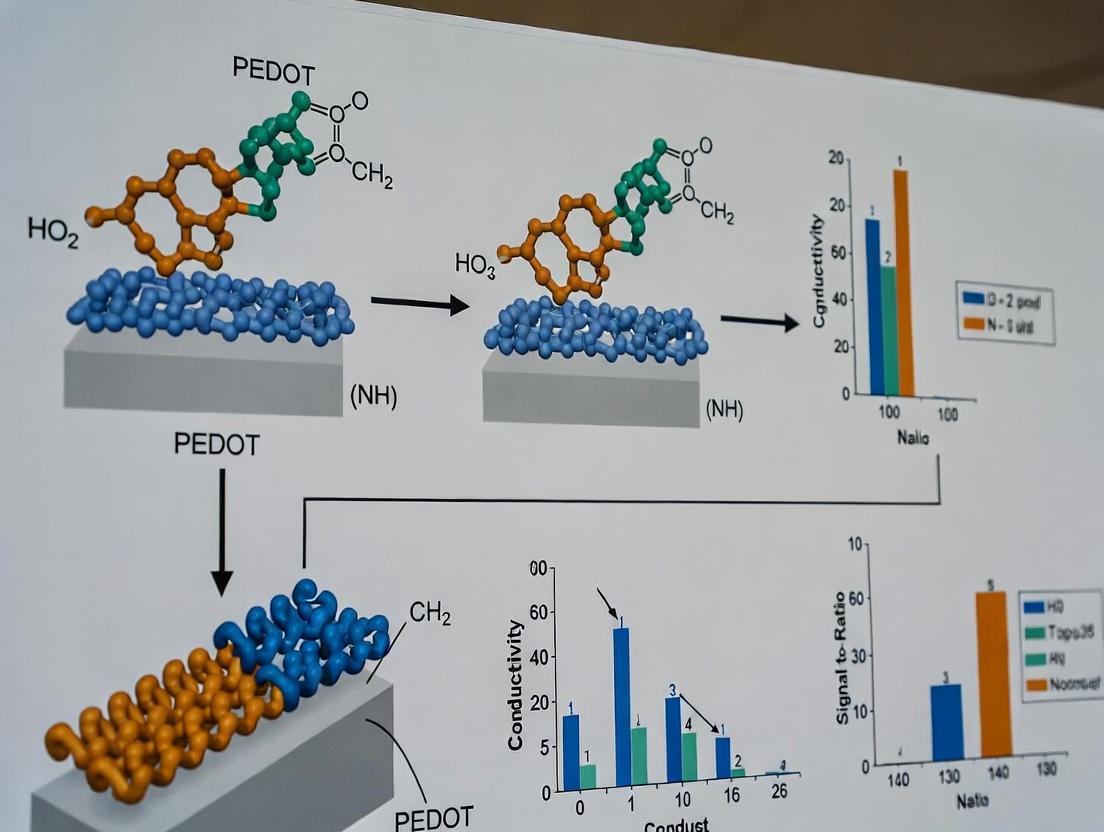
This article provides a comprehensive analysis of PEDOT-based coatings for neural electrodes, a critical technology for enhancing electrophysiological recordings.
Unlocking the Brain's Signals: How PEDOT Coatings Revolutionize Neural Electrode Performance for Advanced Research
Abstract
This article provides a comprehensive analysis of PEDOT-based coatings for neural electrodes, a critical technology for enhancing electrophysiological recordings. Designed for researchers and biomedical engineers, we explore the fundamental conductive polymer science, detail advanced deposition and functionalization methodologies, and address key challenges in stability and impedance. We critically compare PEDOT to traditional materials like gold and iridium oxide, evaluate its biocompatibility and long-term performance in vivo, and synthesize findings to project future applications in high-fidelity brain-computer interfaces, chronic neural implants, and accelerated neuropharmacological discovery.
The Conductive Polymer Breakthrough: Understanding PEDOT's Role in Modern Neural Interfaces
What is PEDOT? Defining the Poly(3,4-ethylenedioxythiophene) Polymer
Poly(3,4-ethylenedioxythiophene), universally abbreviated as PEDOT, is a conducting polymer based on the 3,4-ethylenedioxythiophene (EDOT) monomer. It is a cornerstone material in the field of organic electronics and bioelectronics, prized for its high electrical conductivity, excellent electrochemical stability in its oxidized (doped) state, and good optical transparency in thin-film form. When combined with poly(styrene sulfonate) (PSS) to form PEDOT:PSS, it becomes a processable, water-dispersible complex that is fundamental for device fabrication. In the context of neural interfaces, PEDOT coatings are electrodeposited on metallic electrodes to drastically lower electrochemical impedance, reduce thermal noise, and improve charge injection capacity. This enhances the signal-to-noise ratio (SNR) for neural recording and allows for more precise, lower-voltage stimulation, which is critical for chronic, high-fidelity brain-computer interfaces and therapeutic neuromodulation devices.
Application Notes: PEDOT for Neural Electrode Coatings
The primary application in neural engineering involves the electrochemical polymerization of PEDOT, often with incorporated counter-ions or bioactive molecules, onto microelectrode sites. This transforms a rigid, high-impedance metal interface (e.g., Pt, Au, IrOx) into a soft, high-surface-area, ionically conductive hydrogel-like layer. The coating facilitates efficient ion-to-electron transduction.
Key Performance Metrics Table
| Metric | Bare Metal Electrode (Pt) | PEDOT-Coated Electrode | Improvement Factor | Measurement Method |
|---|---|---|---|---|
| Impedance at 1 kHz | 1-2 MΩ | 50-200 kΩ | ~10x reduction | Electrochemical Impedance Spectroscopy (EIS) in PBS |
| Charge Injection Limit (CIL) | 0.05-0.15 mC/cm² | 1-10 mC/cm² | ~10-50x increase | Voltage Transient Testing in saline |
| RMS Noise (1-5 kHz band) | ~5-7 µV | ~2-3 µV | ~2-3x reduction | In vivo neural recording |
| Stability (Cyclic Voltammetry) | >10,000 cycles | >1,000,000 cycles | ~100x improvement | Continuous CV in PBS, -0.6V to 0.8V vs. Ag/AgCl |
Experimental Protocols
Protocol 1: Electrochemical Deposition of PEDOT:PSS on Microelectrodes
This protocol details the potentiostatic (constant voltage) deposition of PEDOT:PSS on a planar microelectrode array.
Materials & Reagents:
- Monomer Solution: 0.01M EDOT and 0.1M PSS (sodium salt) in 1:1 (v/v) deionized water and acetonitrile. Sonicate for 30 min.
- Electrolyte: 0.1M Lithium perchlorate (LiClO₄) in propylene carbonate (for PEDOT:ClO₄).
- Substrate: Cleaned Pt or Au microelectrodes (diameter: 20-50 µm).
- Setup: Standard three-electrode electrochemical cell with substrate as Working Electrode, Pt mesh as Counter Electrode, and Ag/AgCl (3M KCl) as Reference Electrode.
Procedure:
- Electrode Cleaning: Cycle the working electrode in 0.5M H₂SO₄ via CV (-0.2V to 1.2V, 100 mV/s, 20 cycles). Rinse with DI water.
- Cell Assembly: Place the electrode array in the monomer solution. Ensure full immersion of active sites.
- Deposition: Apply a constant potential of +0.9 V to +1.1 V vs. Ag/AgCl for 10-60 seconds. Deposition charge is typically targeted at 50-200 mC/cm².
- Termination: Disconnect the potential. Rinse the coated electrode thoroughly in DI water and then in PBS (pH 7.4) to remove unreacted monomers.
- Characterization: Perform EIS (10⁵ Hz to 0.1 Hz, 10 mV RMS) and CV (-0.6V to 0.8V, 50 mV/s) in 1x PBS to verify coating quality and impedance reduction.
Protocol 2: Incorporating Bioactive Molecules (e.g., Neurotrophins) into PEDOT
This in-situ electrophysiological characterization protocol assesses neural recording quality.
Materials & Reagents:
- Coated Array: PEDOT-coated microelectrode array implanted in target brain region (e.g., rodent primary motor cortex).
- Recording System: Multichannel extracellular amplifier, data acquisition system, and appropriate neural signal processing software.
- Control: Array with bare metal electrodes implanted in the contralateral hemisphere.
Procedure:
- Surgical Implantation: Sterilize arrays. Implant under approved IACUC protocols using stereotactic surgery.
- Acute/Chronic Recording: Connect the array to the recording system. Allow signals to stabilize (acute) or monitor over weeks (chronic).
- Data Acquisition: Record wideband neural signals (e.g., 0.1 Hz to 7.5 kHz) simultaneously from PEDOT and control sites during a defined neural activity (e.g., whisker stimulation, treadmill running).
- Signal Processing:
- Apply a bandpass filter (300-5000 Hz) to extract spiking activity.
- Calculate the root-mean-square (RMS) noise level for the 1-5 kHz band.
- Use spike sorting software to isolate single-unit (SUA) and multi-unit (MUA) activity.
- Analysis: Compare the SNR (peak-to-peak spike amplitude / RMS noise) and the number of discernible units per electrode between PEDOT and control sites.
Diagrams
PEDOT Electrode Coating Fabrication Workflow (76 chars)
PEDOT Ion-Electron Transduction Pathway (64 chars)
The Scientist's Toolkit: Key Research Reagent Solutions
| Reagent / Material | Function & Purpose in PEDOT Research | Example Vendor / Cat. # |
|---|---|---|
| 3,4-Ethylenedioxythiophene (EDOT) | Core monomer for synthesizing PEDOT via electrochemical or chemical oxidation. | Sigma-Aldrich, 483028 |
| Poly(sodium 4-styrenesulfonate) (PSS) | Charged polyelectrolyte dopant; renders PEDOT dispersible in water (PEDOT:PSS). | Sigma-Aldrich, 243051 |
| Lithium Perchlorate (LiClO₄) | Electrolyte salt used in organic solvents for electrochemical deposition of PEDOT:ClO₄. | Sigma-Aldrich, 431567 |
| Phosphate Buffered Saline (PBS) | Standard physiological electrolyte for in vitro electrochemical testing and biocompatibility studies. | Thermo Fisher, 10010023 |
| Neurolucida or NeuroExplorer Software | For spike sorting and analysis of neural recordings from PEDOT-coated electrodes. | MBF Bioscience; Plexon Inc. |
| Multi-Channel Electrophysiology System (e.g., Intan RHD) | Amplifier and acquisition system for high-fidelity neural recording from microelectrode arrays. | Intan Technologies, RHD2000 |
| Potentiostat/Galvanostat | Instrument for controlled electrochemical deposition (PEDOT) and characterization (EIS, CV). | Metrohm Autolab, BioLogic VSP-300 |
| Polydimethylsiloxane (PDMS) | Silicone elastomer used for encapsulating neural electrode arrays and creating soft neural probes. | Dow Sylgard 184 |
The performance of neural implants for basic neuroscience research, neurological disorder treatment, and neuropharmacological development is fundamentally constrained by the electrode-tissue interface (ETI). This interface governs the fidelity of recorded neural signals and the efficacy of electrical stimulation. A common thesis in modern neuroengineering posits that conductive polymer coatings, particularly Poly(3,4-ethylenedioxythiophene) (PEDOT), can mitigate core ETI challenges by lowering impedance, increasing charge injection capacity (CIC), and improving biocompatibility. This application note details the protocols and analytical methods for evaluating PEDOT-coated electrodes within this research framework.
Quantitative Performance Metrics of Coated vs. Uncoated Electrodes
The following table summarizes key quantitative findings from recent studies (2023-2024) comparing PEDOT-based coatings to traditional metallic electrodes (e.g., Pt, IrOx).
Table 1: Electrochemical and Recording Performance Metrics
| Metric | Bare Metal Electrode (Pt/IrOx) | PEDOT:PSS Coated Electrode | PEDOT:Phosphate Dopant Coated Electrode | Measurement Conditions & Notes |
|---|---|---|---|---|
| Impedance at 1 kHz | 500 - 800 kΩ | 20 - 50 kΩ | 10 - 30 kΩ | In 0.01M PBS, 1 kHz key for spike recording. |
| Charge Injection Limit (CIC) | 0.05 - 0.2 mC/cm² | 1.0 - 3.0 mC/cm² | 2.5 - 5.0 mC/cm² | Cathodic-first, biphasic pulse, 0.2 ms phase. |
| Effective Surface Area (Roughness Factor) | 1 (reference) | 50 - 200 | 200 - 500 | Calculated via double-layer capacitance. |
| In-Vivo SNR (Spike Band) | 3 - 8 dB | 10 - 15 dB | 12 - 18 dB | Acute recording in rodent cortex; improvement over baseline. |
| Stability (Impedance Change) | +15% to +300% after 8 weeks | -20% to +50% after 8 weeks | ±10% after 8 weeks | Chronic rodent implant; variation depends on deposition method. |
| Neuronal Cell Viability | ~70-80% at 7 days | ~85-90% at 7 days | ~90-95% at 7 days | In vitro cortical culture; distance <100 μm from electrode. |
Experimental Protocols
Protocol 1: Electrodeposition of PEDOT:PSS on Microelectrodes
Objective: To apply a uniform, adherent PEDOT:PSS coating via potentiostatic electrodeposition to lower impedance.
- Electrode Preparation: Clean microfabricated Pt/Ir sites (Ø 20-50 μm) via piranha etch (Caution: Extremely corrosive) or O2 plasma for 5 min. Rinse with deionized (DI) water and ethanol.
- Solution Preparation: Prepare monomer solution: 0.01M EDOT and 0.1% w/w poly(sodium 4-styrenesulfonate) (PSS) in DI water. Sonicate for 30 min until clear.
- Electrochemical Setup: Use a standard 3-electrode cell in a Faraday cage. Working Electrode: Neural probe. Counter Electrode: Pt mesh. Reference Electrode: Ag/AgCl (in saturated KCl). Connect to a potentiostat.
- Deposition: Submerge electrode sites in monomer solution. Apply a constant potential of +0.9 V to +1.0 V vs. Ag/AgCl for 10-30 seconds. Monitor current transient.
- Post-Processing: Rinse thoroughly with DI water. Dry overnight in a vacuum desiccator. Characterize via Electrochemical Impedance Spectroscopy (EIS) and Cyclic Voltammetry (CV).
Protocol 2: In-Vivo Acute Neural Signal Fidelity Assessment
Objective: To quantitatively compare the signal-to-noise ratio (SNR) and single-unit yield of coated vs. uncoated electrodes.
- Animal Preparation: Perform under approved IACUC protocol. Anesthetize rodent (e.g., rat) and secure in stereotaxic frame. Perform craniotomy over primary sensory cortex (e.g., S1).
- Electrode Implantation: Insert a dual-configuration probe (with adjacent coated and uncoated sites) to a depth of ~800-1000 μm (layer IV/V).
- Data Acquisition: Connect probe to a high-input-impedance, low-noise amplifier system. Bandpass filter raw signal at 300-5000 Hz for spike activity and 0.1-300 Hz for local field potentials (LFP). Sample at ≥30 kHz.
- Stimulation & Recording: Present controlled sensory stimuli (e.g., whisker deflection). Record simultaneous neural responses for 1-2 hours.
- Signal Analysis: For each electrode site:
- Compute RMS noise on quiet periods.
- Detect spike events with amplitude threshold (>4 x RMS).
- Calculate SNR as (peak-to-peak spike amplitude) / (2 x RMS noise).
- Perform spike sorting (e.g., using Kilosort, MountainSort) to isolate single units. Report yield per site.
Protocol 3: Chronic Biocompatibility and Interface Stability Assessment
Objective: To evaluate the chronic foreign body response and impedance stability of the coated interface.
- Implant Surgery: Aseptically implant sterilized (ethylene oxide) probes into target brain region. Securely anchor to skull using dental cement.
- Longitudinal Monitoring: At weekly intervals for 8-12 weeks:
- In-Vivo EIS: Under light anesthesia, measure impedance spectrum (e.g., 10 Hz - 100 kHz) at low AC amplitude (10 mV).
- Functional Recording: Perform brief awake, head-fixed recording sessions to track single-unit yield and SNR over time.
- Histological Endpoint: Perfuse-fix animal. Extract and section brain. Stain for:
- Neurons (NeuN), to assess neuronal density around implant.
- Astrocytes (GFAP), for astrogliosis.
- Microglia/Macrophages (Iba1), for inflammatory response.
- Quantitative Histology: Use fluorescence microscopy to quantify cell density/marker intensity as a function of radial distance from the implant track.
Visualization of Key Concepts
Diagram Title: Core Challenge vs. PEDOT Solution Pathway
Diagram Title: PEDOT Electrodeposition Workflow
The Scientist's Toolkit: Research Reagent Solutions
Table 2: Essential Materials for PEDOT Coating Research
| Item Name | Supplier Examples | Function & Brief Explanation |
|---|---|---|
| EDOT Monomer (3,4-Ethylenedioxythiophene) | Sigma-Aldrich, Heraeus | The core polymerizable monomer for creating PEDOT. Purity is critical for reproducible electrodeposition. |
| Poly(sodium 4-styrenesulfonate) (PSS) | Sigma-Aldrich, Polysciences | A common polymeric dopant and stabilizer. Provides counter-ions and promotes adhesion to metal surfaces. |
| Phosphate Buffered Saline (PBS) Tablets | Thermo Fisher, Gibco | For making physiological electrolyte for in-vitro electrochemical testing and cell culture studies. |
| Neurobasal / B-27 Media | Thermo Fisher, Gibco | Standard serum-free medium for primary neuronal culture viability assays on electrode materials. |
| Primary Antibodies (NeuN, GFAP, Iba1) | Abcam, MilliporeSigma | Key for immunohistochemical staining to quantify neuronal survival and glial response post-implant. |
| Potentiostat/Galvanostat | Biologic, Metrohm, CH Instruments | Essential instrument for controlled electrodeposition and electrochemical characterization (EIS, CV). |
| Multichannel Neural Amplifier/Recording System | Intan Technologies, Blackrock Microsystems, SpikeGadgets | For acquiring high-fidelity neural signals in vivo and in vitro. Low-noise pre-amplifiers are mandatory. |
| Sterile Surgical Kit & Dental Cement | Kopf Instruments, C&B-Metabond | For aseptic survival surgeries and secure, chronic cranial implantation of electrode arrays. |
Application Notes
Within neural electrode research, PEDOT (poly(3,4-ethylenedioxythiophene)) coatings are critical for improving the biotic-abiotic interface. The material's unique combination of electronic and ionic conductivity, high volumetric capacitance, and compliant mechanics directly addresses the chronic failure modes of traditional metallic electrodes: high electrochemical impedance, mechanical mismatch with neural tissue, and inflammatory glial scarring. Optimizing these three interdependent properties—conductivity, capacitance, and soft mechanics—is paramount for achieving high-fidelity, long-term neural signal recording and stimulation.
Conductivity: PEDOT's conjugated backbone provides hole-based electronic transport, while incorporated counter-ions (e.g., PSS, ClO₄, pTS) facilitate ionic conduction. This mixed conduction enables efficient charge injection at the electrode-tissue interface.
Capacitance: The high surface area and redox-active nature of PEDOT allow it to store charge via reversible doping/de-doping, operating primarily through capacitive (non-faradaic) charge injection. This is safer for tissue than faradaic reactions.
Soft Mechanics: The hydrogel-like structure of certain PEDOT formulations reduces the elastic modulus from GPa (metals/SI) to MPa or even kPa, closely matching the modulus of brain tissue (~1 kPa), thereby minimizing strain-induced inflammation.
Table 1: Key Quantitative Properties of Common PEDOT Coatings for Neural Interfaces
| PEDOT Formulation | Electrical Conductivity (S/cm) | Volumetric Capacitance (F/cm³) | Elastic Modulus (MPa) | Primary Charge Injection Mechanism | Typical Coating Thickness (nm) |
|---|---|---|---|---|---|
| PEDOT:PSS (aqueous) | 0.1 – 10 | 40 – 60 | 10 – 1000 | Capacitive | 100 – 500 |
| PEDOT:PSS + EG | 300 – 800 | ~100 | 500 – 2000 | Capacitive | 100 – 300 |
| PEDOT:ClO₄ | 200 – 500 | 80 – 120 | 1000 – 3000 | Mixed Capacitive/Faradaic | 200 – 1000 |
| PEDOT:pTS | 50 – 200 | 60 – 90 | 100 – 500 | Capacitive | 500 – 2000 |
| PEDOT:PSS + Softener* | 1 – 50 | 30 – 50 | 0.5 – 5 | Capacitive | 1000 – 5000 |
*Softeners: e.g., D-Sorbitol, PEG, Ionic Liquids.
Detailed Experimental Protocols
Protocol: Electrodeposition of PEDOT:pTS on Neural Microelectrodes
Objective: To deposit a soft, high-capacitance PEDOT:pTS coating on platinum or gold microelectrode sites via potentiostatic electropolymerization. Materials: See Scientist's Toolkit. Procedure:
- Electrode Preparation: Clean metal electrode sites via sonication in isopropyl alcohol, then deionized water. Electrochemically clean in 0.5M H₂SO₄ by cyclic voltammetry (-0.2V to 1.2V vs. Ag/AgCl, 20 cycles).
- Electrolyte Preparation: Prepare a deoxygenated aqueous solution containing 0.01M EDOT monomer and 0.1M sodium p-toluenesulfonate (pTS). Sonicate for 15 mins to dissolve.
- Electrodeposition: Use a standard 3-electrode cell (working: microelectrode, counter: Pt mesh, reference: Ag/AgCl). Apply a constant potential of +0.9 - +1.0V vs. Ag/AgCl. Monitor charge passed. A target charge density of 100-300 mC/cm² typically yields a 1-2 μm film.
- Termination & Rinsing: When target charge is reached, disconnect potential. Rinse the coated electrode thoroughly in deionized water to remove monomer and oligomer residues.
- Conditioning: Cycle the coated electrode in 1x PBS (pH 7.4) using cyclic voltammetry (-0.6V to +0.6V, 20 cycles) to stabilize the film.
Protocol: Electrochemical Impedance Spectroscopy (EIS) and Capacitance Measurement
Objective: To characterize the coating's impedance and interfacial capacitance. Procedure:
- Setup: Perform EIS in 1x PBS using a 3-electrode configuration (coated electrode as working).
- Measurement: Apply a sinusoidal voltage with 10 mV RMS amplitude across a frequency range of 1 Hz to 100 kHz. Record impedance magnitude and phase.
- Analysis: The low-frequency (1-10 Hz) impedance is critical for neural recording. Calculate the effective interfacial capacitance (C) from the imaginary component of impedance (Z'') at 1 Hz using: C = -1 / (2πf * Z'').
Protocol: Mechanical Characterization via Nanoindentation
Objective: To measure the reduced elastic modulus of PEDOT coatings on a substrate. Procedure:
- Sample Preparation: Deposit PEDOT on a flat, rigid substrate (e.g., Si wafer) using identical deposition parameters as for electrodes.
- Indentation: Use a calibrated nanoindenter with a Berkovich tip. Perform a grid of indents (e.g., 5x5) with a shallow depth limit (e.g., 200 nm) to avoid substrate influence.
- Analysis: Use the Oliver-Pharr method to extract the reduced elastic modulus (Eᵣ) from the unloading curve of each indent. Average results.
Diagrams
PEDOT Coating Rationale for Neural Recording
PEDOT Coating Fabrication & Characterization Workflow
The Scientist's Toolkit
Table 2: Essential Research Reagents & Materials for PEDOT Neural Coating Research
| Item Name | Supplier Examples | Function & Notes |
|---|---|---|
| EDOT Monomer (3,4-ethylenedioxythiophene) | Sigma-Aldrich, Ossila | The core polymerizable monomer. Store under inert atmosphere, protect from light. |
| Polystyrene sulfonate (PSS) Na Salt | Sigma-Aldrich, Thermo Fisher | Common polymeric counter-ion for aqueous dispersion and electropolymerization. |
| Sodium p-toluenesulfonate (pTS) | TCI Chemicals, Sigma-Aldrich | Small molecule counter-ion producing softer, higher capacitance films. |
| Lithium perchlorate (LiClO₄) | Sigma-Aldrich | Electrolyte salt for organic solvent-based electropolymerization (e.g., in acetonitrile). |
| Phosphate Buffered Saline (PBS), 10x | Thermo Fisher, Sigma-Aldrich | Standard electrolyte for electrochemical testing and bio-conditioning. |
| Platinum Counter Electrode | BASi, Metrohm | Inert counter electrode for 3-electrode electrodeposition setups. |
| Ag/AgCl Reference Electrode | BASi, Warner Instruments | Stable reference potential for electrochemical processes in aqueous media. |
| Electrochemical Workstation | Metrohm, Biologic, Ganny | For controlled-potential deposition, CV, and EIS measurements. |
| Softening Additives (e.g., D-Sorbitol, PEG-DE) | Sigma-Aldrich | Plasticizers to modulate the mechanical modulus of PEDOT:PSS films. |
| Neural Recording Substrates | NeuroNexus, Tucker-Davis | Commercial microelectrode arrays (Michigan or Utah style) for coating validation. |
The Evolution from Metal Electrodes to Conductive Polymer Coatings.
This document provides application notes and experimental protocols within the context of a thesis investigating poly(3,4-ethylenedioxythiophene) (PEDOT) coatings for advanced neural interfaces. The transition from traditional metal microelectrodes (e.g., Pt, Ir, Au, stainless steel) to conductive polymer coatings addresses critical limitations in chronic neural signal recording. Metal electrodes suffer from a high electrochemical impedance at the biotic-abiotic interface, leading to increased thermal noise and reduced signal-to-noise ratio (SNR). Furthermore, their mechanical mismatch with neural tissue promotes glial scarring, which insulates the electrode and degrades performance over time.
Conductive polymers, particularly PEDOT, offer a paradigm shift. Their mixed ionic-electronic conductivity significantly lowers impedance, improving charge transfer and signal fidelity. Their soft, hydrogel-like structure reduces mechanical mismatch, mitigating chronic inflammatory responses. Recent advancements focus on PEDOT composites with biological dopants (e.g., PEDOT:PSS) or nanostructured materials to further enhance stability, charge injection capacity (CIC), and cellular integration.
Table 1: Electrochemical Performance Comparison of Electrode Materials
| Material/Coating | Impedance at 1 kHz (kΩ) | Charge Injection Limit (mC/cm²) | SNR (dB) Improvement | Reference Stability (Weeks) |
|---|---|---|---|---|
| Bare Pt/Ir | 200 - 500 | 0.05 - 0.2 | Baseline | 2-4 |
| PEDOT:PSS | 10 - 50 | 1.0 - 3.0 | +10 to +15 | 8-12 |
| PEDOT:NDNF* | 5 - 20 | 2.5 - 5.0 | +15 to +25 | 16-24+ |
| Carbon Nanotube | 30 - 100 | 0.5 - 1.5 | +5 to +10 | 12-16 |
*PEDOT doped with Neural-Derived Neurotrophic Factor (e.g., laminin peptide sequences). Representative data from recent literature (2023-2024).
Table 2: In Vivo Performance Metrics for PEDOT-Coated Arrays
| Metric | Acute Phase (Day 1-7) | Chronic Phase (Week 8-12) | Notes |
|---|---|---|---|
| Single-Unit Yield (%) | 85 ± 10 | 65 ± 15 | Higher yield retention vs. bare metal (≤20%) |
| Signal Amplitude (µV) | 150 ± 50 | 120 ± 40 | Reduced attenuation |
| Local Field Potential SNR | 25 ± 3 | 22 ± 4 | Consistent recording quality |
| Glial Scar Thickness (µm) | 15 ± 5 | 25 ± 8 | Reduced vs. bare metal (40-60 µm) |
Experimental Protocols
Protocol 1: Electrodeposition of PEDOT:PSS on Neural Microelectrodes Objective: To apply a uniform, adherent PEDOT:PSS coating on iridium or platinum microelectrode sites. Materials: See "The Scientist's Toolkit" (Section 5). Procedure:
- Electrode Pretreatment: Clean metal electrode sites via potential cycling (-0.6 V to +0.8 V vs. Ag/AgCl, 50 cycles) in 0.1M H₂SO₄. Rinse with deionized water.
- Solution Preparation: Prepare the aqueous electrodeposition solution containing 0.01M EDOT monomer and 0.1% w/v PSS. Sonicate for 15 minutes to ensure dissolution and mixture.
- Electrodeposition Setup: Use a standard three-electrode cell with the microelectrode as the working electrode, a Pt wire counter electrode, and an Ag/AgCl reference electrode.
- Deposition: Perform galvanostatic deposition at a constant current density of 0.5 mA/cm² for 100-200 seconds. Alternatively, use potentiostatic deposition at +0.9 V vs. Ag/AgCl for the same duration.
- Post-processing: Rinse the coated electrode thoroughly in deionized water. Dry overnight in a vacuum desiccator.
- Characterization: Perform Electrochemical Impedance Spectroscopy (EIS, 1 Hz - 100 kHz) and Cyclic Voltammetry (CV, -0.6 V to +0.8 V, 50 mV/s) in phosphate-buffered saline (PBS) to validate impedance reduction and CIC.
Protocol 2: In Vivo Assessment of Chronic Recording Performance Objective: To evaluate the stability and SNR of PEDOT-coated vs. bare metal electrodes in a rodent model over 12 weeks. Materials: Multichannel electrode arrays (coated/uncoated), stereotaxic frame, neural signal amplifier/recorder, standard surgical supplies, histology reagents. Procedure:
- Surgical Implantation: Anesthetize the subject (e.g., rat) and perform a craniotomy over the target region (e.g., motor cortex, hippocampus). Implant PEDOT-coated and bare metal control arrays in contralateral hemispheres.
- Chronic Recording: At biweekly intervals, record spontaneous and evoked neural activity. Use a 128-channel recording system with a 0.3 - 7.5 kHz bandpass filter for single-unit activity.
- Signal Processing: Spike-sort recorded data using established algorithms (e.g., Kilosort, MountainSort). Calculate per-channel SNR as (RMS of spike waveform) / (RMS of background noise).
- Terminal Histology: At study endpoint, perfuse-fix the subject. Section brain tissue and stain for neurons (NeuN) and astrocytes (GFAP). Quantify glial scar thickness around electrode tracks via confocal microscopy.
- Data Analysis: Compare longitudinal single-unit yield, SNR, and histomorphometric data between coated and control groups using appropriate statistical tests (e.g., two-way ANOVA).
Visualizations
Diagram 1: Logic of Electrode Material Evolution (77 characters)
Diagram 2: Experimental Workflow for PEDOT Evaluation (63 characters)
The Scientist's Toolkit
Table 3: Key Research Reagent Solutions for PEDOT Electrode Development
| Item | Function & Role | Example/Composition |
|---|---|---|
| EDOT Monomer (3,4-Ethylenedioxythiophene) | The core pyrrole-based monomer that polymerizes to form the conductive PEDOT backbone. | 97% purity, stored under inert atmosphere. |
| Poly(Sodium 4-Styrenesulfonate) (PSS) | A polymeric dopant and charge balancer; provides solubility and template for EDOT polymerization. | 1.0 M in H₂O, MW ~70,000. |
| Phosphate Buffered Saline (PBS), 0.1M | Standard physiological electrolyte for in vitro electrochemical testing and biomimetic conditioning. | pH 7.4, contains Na⁺, K⁺, Cl⁻, phosphate ions. |
| Lithium Perchlorate (LiClO₄) | A common supporting electrolyte for electrophoretic deposition, ensuring ionic conductivity. | 0.1M in acetonitrile or aqueous solution. |
| Paraformaldehyde (PFA), 4% | Fixative for terminal histology to preserve tissue morphology around the implanted electrode. | In PBS, pH adjusted to 7.4. |
| Primary Antibodies (GFAP, NeuN) | Immunohistochemical staining agents to identify astrocytes and neurons, respectively, for scar analysis. | Rabbit anti-GFAP, Mouse anti-NeuN. |
| Neurotrophic Dopant (e.g., Laminin Peptide) | Biological dopant to create PEDOT:Bio composites that enhance cellular adhesion and integration. | C-terminus cysteine-modified laminin fragment. |
Within the broader thesis research on PEDOT:PSS coatings for neural electrodes to improve chronic recording stability and signal fidelity, a fundamental materials comparison is essential. This application note contrasts the intrinsic properties of conductive polymers, specifically poly(3,4-ethylenedioxythiophene) polystyrene sulfonate (PEDOT:PSS), with traditional pure metals (e.g., Pt, Ir, Au) used in bioelectronic interfaces. The focus is on quantifiable advantages for in vivo electrophysiology, biosensing, and therapeutic stimulation.
Core Material Properties: Quantitative Comparison
Table 1: Intrinsic Electrochemical & Mechanical Properties Comparison
| Property | Pure Metals (Pt, Au, Ir) | PEDOT:PSS (Coated Electrode) | Advantage for Bioelectronics |
|---|---|---|---|
| Charge Storage Capacity (CSC, mC/cm²) | 1-10 mC/cm² (double-layer) | 100-500 mC/cm² (faradaic + capacitive) | PEDOT provides 10-100x higher CSC, enabling safer, higher-resolution stimulation at lower voltages. |
| Impedance at 1 kHz (kΩ) | 100-1000 kΩ (for microelectrodes) | 5-50 kΩ (for same geometry) | 10-20x lower impedance reduces thermal noise, improving signal-to-noise ratio (SNR) for recording. |
| Young's Modulus (GPa) | 100-200 GPa (e.g., Pt) | 1-3 GPa (wet, doped film) | PEDOT's lower modulus better matches neural tissue (~0.1-1 kPa), reducing mechanical mismatch and gliosis. |
| Biostability | High corrosion resistance, but can dissolve under pulsed potentials. | Degrades via over-oxidation, loss of dopants; lifetime enhanced with cross-linking. | Metals are more inert long-term; PEDOT requires formulation optimization for chronic stability. |
| Functionalization | Requires complex thiol or silane chemistry for biomolecule attachment. | Easy incorporation of biomolecules (e.g., peptides, enzymes) via doping or covalent linkage. | PEDOT enables facile creation of bioactive, sensing, or drug-eluting interfaces. |
Table 2: In Vivo Recording Performance Metrics (Typical Values)
| Metric | Pure Metal Microelectrode | PEDOT:PSS-Coated Electrode | Implication |
|---|---|---|---|
| Single-Unit Yield (%) | 20-40% (declines over weeks) | 40-70% (more stable over 4-8 weeks) | Higher yield of isolatable neurons improves data throughput. |
| Signal-to-Noise Ratio (SNR) | 4-8 dB | 8-15 dB | Clearer discrimination of neural spikes from background. |
| Inflammatory Marker (GFAP) Intensity | High (peak at 2 weeks, sustained) | Reduced by 30-60% at chronic time points | Softer interface elicits a dampened glial scar, preserving nearby neurons. |
Experimental Protocols
Protocol 1: Electrochemical Deposition of PEDOT:PSS on Metal Microelectrodes
Objective: Apply a uniform, adherent PEDOT:PSS coating on a Pt or Au microelectrode to lower impedance and increase CSC.
Materials: See "Scientist's Toolkit" below.
Procedure:
- Electrode Cleaning: Sonicate metal electrodes in isopropyl alcohol for 10 min, rinse with DI water, then electrochemically clean in 0.5M H₂SO₄ via cyclic voltammetry (CV) from -0.35V to 1.5V (vs. Ag/AgCl) at 100 mV/s for 20 cycles.
- Solution Preparation: Prepare aqueous deposition solution containing 0.01M EDOT monomer and 0.1% wt PSS (sodium salt). Filter through a 0.45 µm syringe filter. Degas with N₂ for 10 min.
- Electrodeposition: Use a standard 3-electrode setup (working = metal electrode, counter = Pt mesh, reference = Ag/AgCl). Perform galvanostatic deposition at a current density of 1 mA/cm² for 60-120 seconds. Gentle stirring is recommended.
- Post-Processing: Rinse coated electrode thoroughly in DI water. Condition by performing CV in 1x PBS (-0.6V to 0.8V, 100 mV/s, 20 cycles) until stable.
Protocol 2: In Vitro Characterization of Coating Performance
Objective: Quantify the electrochemical improvements (CSC, impedance) and stability of the PEDOT coating.
Procedure:
- Electrochemical Impedance Spectroscopy (EIS): In 1x PBS, measure impedance from 10 Hz to 100 kHz at 10 mV RMS. Record impedance magnitude and phase at 1 kHz for comparison.
- Charge Storage Capacity (CSC): Perform CV in 1x PBS at a safe, non-faradaic scan rate (e.g., 50 mV/s) between water electrolysis limits (-0.6V to 0.8V vs. Ag/AgCl). Calculate CSC by integrating the cathodic (or anodic) current over time and dividing by scan rate and geometric area:
CSC = (∫ I dV) / (v * A). - Accelerated Aging Test: Subject coated electrode to continuous biphasic pulsing in PBS (e.g., ±1 mA, 200 µs pulse, cathodic first) for 10⁷ cycles. Re-measure EIS and CSC every 2x10⁶ cycles to track degradation.
Protocol 3: In Vivo Neural Recording in Rodent Model
Objective: Assess chronic recording performance of PEDOT-coated vs. bare metal electrodes in a neuroscientific research model.
Procedure:
- Surgical Implantation: Anesthetize rat/mouse and stereotactically implant a microelectrode array (with alternating PEDOT-coated and bare metal sites) into the target region (e.g., motor cortex, hippocampus).
- Chronic Recording: At weekly intervals for 8-12 weeks, connect the array to a neural recording system under light anesthesia or freely moving conditions. Record spontaneous and evoked neural activity.
- Signal Analysis: Use spike sorting software (e.g., Kilosort, MountainSort) to quantify single-unit yield, SNR, and amplitude distribution across time for coated vs. uncoated sites.
- Histological Validation: Perfuse animal at terminal time point. Perform immunohistochemistry for neuronal nuclei (NeuN) and glial fibrillary acidic protein (GFAP). Quantify neuronal density and glial scar thickness around implant tracks.
Diagrams
Title: Material Properties Drive In Vivo Outcomes
Title: Thesis Research Workflow for PEDOT Coating
The Scientist's Toolkit: Key Research Reagent Solutions
| Item | Function/Benefit |
|---|---|
| EDOT Monomer (3,4-ethylenedioxythiophene) | The core precursor for electrochemical polymerization to form PEDOT. High purity grade ensures reproducible film quality. |
| Polystyrene Sulfonate (PSS, Na Salt) | The polyanionic dopant and charge-balancer during polymerization. Provides film stability and aqueous processability. |
| (3-Glycidyloxypropyl)trimethoxysilane (GOPS) | A common cross-linker for PEDOT:PSS. Increases adhesion to substrates and film stability in aqueous/biological environments. |
| Polyethylene Glycol Diglycidyl Ether (PEGDE) | A biocompatible cross-linker alternative; can increase film compliance and reduce inflammatory response. |
| Laminin or Neural Adhesion Peptides | Bioactive molecules that can be blended into the PEDOT:PSS deposition solution to create a pro-neuronal, integrative interface. |
| Phosphate Buffered Saline (PBS), 10x | Standard electrolyte for in vitro electrochemical testing and in vivo physiological mimicry. |
| Neurophysiology Suite (e.g., SpikeGLX, Open Ephys) | Software for acquiring, visualizing, and performing initial processing of in vivo neural recording data. |
| Spike Sorting Software (e.g., Kilosort) | Algorithmic toolkit for isolating single-neuron action potentials from multi-electrode array data. Critical for yield and SNR metrics. |
Fabrication and Functionalization: Best Practices for Applying PEDOT Coatings to Neural Probes
This application note details two primary deposition techniques for poly(3,4-ethylenedioxythiophene) (PEDOT) coatings on neural microelectrodes, framed within a thesis investigating advanced interfaces for improved neural signal recording. The objective is to lower electrochemical impedance, enhance charge injection capacity (CIC), and improve biotic-abiotic integration, ultimately yielding higher signal-to-noise ratio (SNR) recordings in chronic implants.
Application Notes
Electropolymerization (EP) of PEDOT
Electropolymerization is an electrochemical method where EDOT monomers are oxidized and polymerized directly onto a conductive substrate from a liquid electrolyte. This technique allows for precise, conformal coating and direct control over film properties (thickness, morphology) by varying electrochemical parameters.
Key Advantages for Neural Electrodes:
- In-situ deposition on complex geometries.
- High purity films without need for secondary doping.
- Fine-tuning of mechanical and electrical properties via potential/current control.
Limitations:
- Requires conductive substrates.
- Scalability can be challenging.
- Incorporation of counter-ions from the electrolyte may affect long-term stability.
Oxidative Chemical Vapor Deposition (oCVD)
oCVD is a one-step, solvent-free process where EDOT monomer vapor and an oxidant vapor (e.g., iron(III) chloride) are introduced into a vacuum chamber. Polymerization occurs on the substrate surface, conformally coating temperature-sensitive and/or non-conductive materials.
Key Advantages for Neural Electrodes:
- True conformal coating on intricate, 3D electrode arrays.
- Substrate-agnostic; works on insulating materials.
- No solvents involved, eliminating risks of pinholes or solvent compatibility issues.
- Excellent adhesion and uniformity.
Limitations:
- Requires specialized vacuum equipment.
- Oxidant residue incorporation requires careful post-processing.
- Less independent control over doping level compared to EP.
Table 1: Comparison of PEDOT Deposition Techniques for Neural Electrodes
| Parameter | Electropolymerization (EP) | Oxidative Chemical Vapor Deposition (oCVD) | Measurement Goal |
|---|---|---|---|
| Typical Impedance at 1 kHz | 1-10 kΩ (on 50 μm site) | 5-20 kΩ (on 50 μm site) | Lower impedance improves SNR |
| Charge Injection Limit (CIC) | 1-5 mC/cm² | 0.5-3 mC/cm² | Higher CIC enables safer stimulation |
| Film Thickness Control | Excellent (nm to μm via charge) | Good (nm to μm via time/flow) | Optimize conductivity vs. mechanical stability |
| Conformality | Good on exposed conductor | Excellent (wraps 3D structures) | Ensure full active site coverage |
| Processing Temperature | Ambient (in solution) | 25-80°C (substrate) | Protect underlying electronics |
| Typical Conductivity | 200-500 S/cm | 100-1000 S/cm (post-treated) | Higher conductivity reduces parasitic losses |
| Key Outcome for Neural Recording | High-fidelity, low-noise signals | Robust coating on complex probes | Enable chronic, stable recordings |
Table 2: Impact of PEDOT Coating on Neural Electrode Performance (Representative Data)
| Electrode Type (Ø 50 μm) | Coating | Impedance @1 kHz (kΩ) | SNR (dB) | CIC (mC/cm²) | Reference (in vivo model) |
|---|---|---|---|---|---|
| Pt-Ir | Bare | 450 ± 120 | 12.5 ± 2.1 | 0.05 - 0.1 | Rat cortex |
| Pt-Ir | PEDOT:PSS (EP) | 12 ± 3 | 21.8 ± 3.4 | 2.1 ± 0.5 | Rat cortex |
| Au | Bare | 380 ± 90 | 13.0 ± 1.8 | 0.07 - 0.15 | Mouse hippocampus |
| Au | PEDOT:Cl (oCVD) | 28 ± 7 | 19.5 ± 2.7 | 1.5 ± 0.4 | Mouse hippocampus |
Experimental Protocols
Protocol 4.1: Electropolymerization of PEDOT:PSS on Pt-Ir Microelectrodes
Objective: To deposit a conformal, low-impedance PEDOT:PSS coating on a single microelectrode site.
Materials & Setup:
- Potentiostat/Galvanostat with standard 3-electrode setup.
- Working Electrode (WE): Cleaned, exposed Pt-Ir microelectrode site.
- Counter Electrode (CE): Platinum mesh or wire.
- Reference Electrode (RE): Ag/AgCl (3M NaCl) in a fritted bridge.
- Electrolyte Solution: 0.01M EDOT monomer and 0.1M poly(sodium 4-styrenesulfonate) (NaPSS) in deionized water. Sonicate for 15 min to dissolve.
- Nitrogen gas for deaeration.
Procedure:
- Electrode Pre-treatment: Clean the Pt-Ir site via cyclic voltammetry (CV) in 0.5M H₂SO₄ from -0.35V to +1.0V vs. Ag/AgCl at 100 mV/s for 50 cycles. Rinse thoroughly with DI water.
- Cell Assembly: Assemble the 3-electrode cell in the EDOT/NaPSS solution. Purge with N₂ for 15 min to remove oxygen.
- Deposition: Perform potentiostatic deposition at +0.9 - +1.0V vs. Ag/AgCl. A deposition charge density of 150-200 mC/cm² typically yields an optimal ~1 μm thick film. Monitor current decay.
- Termination: Disconnect the potential. Rinse the coated electrode copiously in warm DI water (~60°C) to remove unreacted monomer and loosely bound PSS.
- Post-treatment: Optionally, cycle the coated electrode in 1x PBS from -0.6V to +0.8V at 50 mV/s for 20 cycles to stabilize the film electrochemically.
- Characterization: Measure electrochemical impedance spectroscopy (EIS) in PBS (0.1 Hz - 100 kHz, 10 mV RMS) and CIC via voltage transients during biphasic pulsing.
Protocol 4.2: oCVD Deposition of PEDOT on a Silicon Neural Probe
Objective: To conformally coat all exposed metal sites of a multi-shank silicon neural probe with PEDOT.
Materials & Setup:
- Custom oCVD Reactor: Vacuum chamber with heated stage, monomer vapor inlet, and oxidant crucible.
- EDOT Monomer Source: Liquid, held at 65-75°C to generate sufficient vapor pressure.
- Oxidant: Solid Iron(III) chloride (FeCl₃), held at 160-180°C.
- Substrate: Silicon neural probe with exposed Au recording sites.
- Vacuum pump system capable of reaching <20 mTorr.
Procedure:
- Substrate Preparation: Clean the neural probe in sequential solvents (acetone, IPA, DI water) and oxygen plasma treat for 2 min to ensure surface activation. Mount on the heated stage.
- System Evacuation: Pump down the chamber to a base pressure of <20 mTorr.
- Oxidant Introduction: Ramp the oxidant crucible to 165°C to sublime FeCl₃. Admit vapor into the chamber via a needle valve to establish a stable oxidant partial pressure (e.g., 50 mTorr).
- Monomer Introduction & Deposition: Introduce EDOT vapor from its heated source. A typical EDOT partial pressure is 100 mTorr. Initiate deposition. The substrate temperature is maintained at 40°C. Polymerization occurs on all surfaces. Typical deposition time is 15-25 min.
- Termination: Close the monomer inlet valve. Allow the oxidant flow to continue for 1 additional minute. Cool the oxidant source and evacuate the chamber fully.
- Post-deposition Rinse: Remove the coated probe and rinse in a 80% methanol/20% DI water solution for 1 hour to remove unreacted oxidant and oligomers, then dry under N₂.
- Characterization: Perform EIS and CIC as in Protocol 4.1. Use profilometry to measure film thickness on a witness sample (Si wafer) processed simultaneously.
Visualizations
Title: PEDOT Electropolymerization Experimental Workflow
Title: Technique Choice in Neural Electrode Coating Thesis
The Scientist's Toolkit: Key Research Reagent Solutions
Table 3: Essential Materials for PEDOT Deposition & Characterization
| Item & Typical Supplier | Function in Research | Critical Specification/Note |
|---|---|---|
| EDOT Monomer (e.g., Sigma-Aldrich, Heraeus) | The polymerizable precursor for PEDOT. | High purity (≥97%). Store under inert atmosphere, in the dark, at 2-8°C. |
| Poly(sodium 4-styrenesulfonate) (NaPSS) (e.g., Sigma-Aldrich) | Counter-ion and dopant during EP; provides ionic conductivity. | MW ~70,000 for standard formulations. Affects film morphology. |
| Iron(III) Chloride Anhydrous (e.g., Alfa Aesar) | Oxidant for oCVD process. Initiates polymerization. | Ultra-dry (≥99.99%). Must be handled and stored in a moisture-free environment (glovebox). |
| Phosphate Buffered Saline (PBS), 10x (e.g., Thermo Fisher) | Standard electrolyte for electrochemical testing (EIS, CIC) and bio-testing. | Sterile, pH 7.4. Dilute to 1x with DI water. |
| Electrochemical Potentiostat (e.g., Biologic, Ganny) | Instrument for EP, CV, EIS, and CIC measurements. | Requires low-current capabilities (pA-nA) for microelectrode work. |
| Platinum Counter Electrode (e.g., CH Instruments) | Provides a stable, inert current sink in 3-electrode setups. | Pt mesh provides high surface area. Clean via flaming periodically. |
| Ag/AgCl Reference Electrode (e.g., Warner Instruments) | Provides a stable, known potential reference in aqueous electrochemistry. | Use a fritted bridge or double-junction electrode to avoid chloride contamination. |
| oCVD Reactor (Custom or from OEM like CVD Technologies) | Vacuum chamber system for solvent-free, vapor-phase polymerization. | Requires precise control of vapor pressures, substrate temperature, and uniformity. |
1.0 Context and Introduction This document details application notes and protocols for incorporating specific dopants and counter-ions into poly(3,4-ethylenedioxythiophene) (PEDOT) coatings for neural electrodes. This work is situated within a broader thesis research program aimed at optimizing PEDOT-based coatings to enhance the signal-to-noise ratio, lower electrochemical impedance, and improve the long-term stability of chronic neural recording interfaces. The choice of counter-ion—be it poly(styrene sulfonate) (PSS), tosylate (TOS), or custom-designed molecules—critically governs the film's electrical, electrochemical, mechanical, and biocompatible properties.
2.0 Quantitative Comparison of Key Counter-Ions The following table summarizes the characteristic properties of PEDOT films polymerized with common and advanced counter-ions, as established in recent literature.
Table 1: Comparative Properties of PEDOT Films with Different Dopants/Counter-Ions
| Counter-Ion | Typical Form | Key Advantages | Key Limitations | Impact on Impedance at 1 kHz | Mechanical Property |
|---|---|---|---|---|---|
| PSS | Polymeric anion | High conductivity, excellent film stability, commercial availability. | High capacitance can increase noise, rigid/brittle films, bio-inert. | ~1-10 kΩ (for a 25 μm site) | Brittle, high Young's modulus. |
| Tosylate (TOS) | Small molecule anion | Produces highly crystalline, high-conductivity films. Lower volumetric capacitance than PSS:PEDOT. | Poor colloidal stability in aqueous solutions without surfactants. | ~5-20 kΩ | More flexible than PSS-based films. |
| Custom Neural Adhesion Peptide | Functionalized molecule | Can promote neural integration, reduce glial scarring. | Complex synthesis, conductivity often lower than PSS/TOS. | ~20-100 kΩ | Tunable, often softer. |
| Sulfonated Silk | Biopolymeric anion | Biodegradable, soft, mechanically compliant. | Lower conductivity, temporal stability limited by degradation rate. | ~50-200 kΩ | Very soft and compliant. |
Table 2: Electrochemical Performance Metrics (Typical Values from Recent Studies)
| Parameter | PEDOT:PSS | PEDOT:TOS | PEDOT:Custom Dopant | Measurement Protocol |
|---|---|---|---|---|
| Charge Storage Capacity (CSC, mC/cm²) | 100-200 | 50-150 | 10-80 | CV in PBS, 50 mV/s. |
| Charge Injection Limit (CIL, mC/cm²) | 1-3 | 0.5-2 | 0.1-1.5 | Voltage transient at 0.4 V compliance. |
| Impedance Magnitude at 1 kHz (kΩ) | 1-10 | 5-20 | 20-200 | EIS in PBS, 10 mV RMS. |
3.0 Experimental Protocols
Protocol 3.1: Electropolymerization of PEDOT:TOSylate on Iridium Neural Microelectrodes Objective: To deposit a stable, low-impedance PEDOT:TOS film via potentiostatic polymerization. Materials:
- Working Electrode: Cleaned Ir microelectrode (site area: e.g., 1250 μm²).
- Counter Electrode: Platinum wire.
- Reference Electrode: Ag/AgCl (3M NaCl).
- Monomer Solution: 10 mM EDOT + 100 mM Sodium Tosylate in deionized water. Sonicate for 15 min to dissolve.
- Equipment: Potentiostat, Faraday cage. Procedure:
- Secure the neural electrode in the electrochemical cell. Position reference and counter electrodes.
- Fill the cell with the monomer solution, ensuring all active sites are submerged.
- Connect the potentiostat. Use a three-electrode setup.
- Apply a constant potential of +1.0 V vs. Ag/AgCl for a duration determined by the target charge density (e.g., 100-200 mC/cm²). Example: For a 1250 μm² site and a target of 150 mC/cm², pass 0.1875 mC total charge.
- Immediately after deposition, rinse the electrode thoroughly in DI water.
- Characterize by Cyclic Voltammetry (CV) in 1x PBS (-0.6 V to +0.8 V, 50 mV/s) and Electrochemical Impedance Spectroscopy (EIS, 1 Hz - 100 kHz, 10 mV RMS).
Protocol 3.2: Incorporating Custom Bioactive Dopants via Co-Electrodeposition Objective: To entrap a custom, peptide-functionalized dopant within a PEDOT matrix. Materials:
- Monomer Solution: 10 mM EDOT in DI water.
- Dopant Solution: 2 mg/mL of custom sulfonated peptide (e.g., CDPGYIGSR-SO₃H) in 0.1 M phosphate buffer (pH 7.4).
- Electrolyte: Combine monomer and dopant solutions 1:1 v/v prior to deposition. Procedure:
- Prepare the co-deposition solution fresh and protect from light.
- Using a potentiostat in galvanostatic mode, apply a constant current density of 0.5 mA/cm² for 60-120 seconds.
- Terminate the deposition, rinse thoroughly with phosphate buffer.
- Post-process by cycling the film in clean PBS (10 cycles, -0.6 to +0.8 V, 100 mV/s) to remove loosely bound monomers and oligomers.
- Validate incorporation via X-ray Photoelectron Spectroscopy (XPS) for sulfur/nitrogen ratios and confocal microscopy if the peptide is fluorescently tagged.
4.0 The Scientist's Toolkit: Essential Research Reagents & Materials Table 3: Key Reagents for PEDOT:Counter-Ion Research
| Reagent/Material | Function/Role | Example Supplier/Catalog |
|---|---|---|
| EDOT Monomer (3,4-Ethylenedioxythiophene) | Core conductive polymer precursor. | Sigma-Aldrich, 483028 |
| Poly(sodium 4-styrenesulfonate) (PSS) | Polymeric counter-ion and charge compensator. | Sigma-Aldrich, 243051 |
| Sodium p-Toluenesulfonate (Tosylate) | Small molecule counter-ion for high conductivity. | TCI Chemicals, T0620 |
| Custom Sulfonated Peptides | Bioactive dopants to confer specific cellular interactions. | Custom synthesis (e.g., GenScript). |
| Phosphate Buffered Saline (PBS), 10x | Standard electrolyte for electrochemical testing and biocompatibility studies. | Thermo Fisher, 70011044 |
| Iridium Microelectrode Arrays | Standard substrate for neural interface research. | NeuroNexus, Blackrock Microsystems |
| Potentiostat/Galvanostat with EIS | Instrument for controlled deposition and electrochemical characterization. | Biologic SP-300, Autolab PGSTAT204 |
5.0 Visualizations
Title: Counter-Ion Impact on PEDOT Coating Performance
Title: General Workflow for PEDOT:Counter-Ion Deposition
Within the broader research on PEDOT (poly(3,4-ethylenedioxythiophene)) coatings for neural electrodes, selecting the appropriate electrode platform is critical for application-specific performance. PEDOT-PSS (polystyrene sulfonate) coatings lower impedance, increase charge injection capacity, and improve biocompatibility, directly enhancing the recording fidelity and longevity of neural interfaces. This note details strategies for applying PEDOT coatings to three dominant electrode types: Micro-ECoG arrays, Utah arrays, and flexible polymer probes, providing protocols and comparative analysis.
Application-Specific Considerations and Performance Data
The efficacy of PEDOT coating is quantified by impedance reduction and signal-to-noise ratio (SNR) improvement. Performance varies with electrode geometry, substrate material, and deposition method.
Table 1: Comparative Performance of PEDOT Coatings on Different Electrode Platforms
| Electrode Platform | Typical Bare Impedance (1 kHz) | PEDOT-Coated Impedance (1 kHz) | Approximate SNR Improvement | Key Application |
|---|---|---|---|---|
| Micro-ECoG Array | 200 - 500 kΩ | 20 - 50 kΩ | 2-3 fold | Cortical surface mapping, seizure focus localization |
| Utah Array (Si) | 300 - 800 kΩ | 30 - 100 kΩ | 3-5 fold | Chronic intracortical recording in motor/prosthetic control |
| Flexible Polymer Probe (Parylene C) | 1 - 3 MΩ | 50 - 200 kΩ | 4-7 fold | Chronic recording in deep brain structures, compliant interfaces |
Detailed Protocols
Protocol 1: Electrodeposition of PEDOT-PSS on Platinum/Iridium Micro-ECoG Arrays
Objective: To achieve a conformal, low-impedance PEDOT-PSS coating on planar micro-electrocorticography array contacts. Materials:
- Micro-ECoG array (e.g., 32-64 channels, Pt/Ir contacts).
- Potentiostat/Galvanostat.
- Monomer solution: 0.01M EDOT + 0.1M PSS in 1:1 DI water:ethylene glycol.
- Phosphate Buffered Saline (PBS) or artificial cerebrospinal fluid (aCSF).
- Ag/AgCl reference electrode and Pt counter electrode. Procedure:
- Cleaning: Sonicate the array in isopropanol for 5 minutes, then in DI water for 5 minutes. Dry with clean nitrogen.
- Setup: Connect the micro-ECoG array as the working electrode in a standard three-electrode electrochemical cell. Ensure only the active sites are exposed to the monomer solution.
- Electrodeposition: Use chronoamperometry. Apply a constant potential of +0.9 V to +1.1 V vs. Ag/AgCl for 10-30 seconds per site or across all sites simultaneously if electrically common.
- Rinsing & Curing: Rinse thoroughly with DI water to remove unreacted monomer. Cure at 80°C for 1 hour under vacuum to improve film adhesion.
- Validation: Perform electrochemical impedance spectroscopy (EIS) in PBS (1 Hz - 100 kHz) to verify impedance reduction.
Protocol 2: PEDOT-CNT Composite Coating for Utah Arrays via Electrophoretic Deposition
Objective: To deposit a robust, nanocomposite PEDOT-Carbon Nanotube (CNT) coating on the sharp, 3D tips of Utah array shanks to enhance chronic stability. Materials:
- Utah silicon microelectrode array.
- Dispersion: 0.01M EDOT + 0.1 mg/mL functionalized single-walled CNTs + 0.1M PSS in DI water.
- Ultrasonic probe.
- Electrophoresis power supply. Procedure:
- Dispersion Preparation: Sonicate the EDOT/CNT/PSS dispersion for 30 minutes to ensure homogeneity.
- Array Preparation: Clean the Utah array using standard RCA protocol.
- Deposition Setup: Immerse the array tips in the dispersion. Connect the array as the anode. Use a parallel Pt cathode.
- Electrophoretic Deposition: Apply a constant current density of 0.1 mA/mm² for 30-60 seconds. The positively charged EDOT monomers and CNTs migrate and co-deposit on the negatively biased electrode tips.
- Polymerization: Transfer the array to an oven at 120°C for 30 minutes to complete oxidative polymerization.
- Testing: Characterize using cyclic voltammetry (-0.6 V to +0.8 V, 50 mV/s) to calculate charge injection capacity (CIC).
Protocol 3: In-situ Polymerization of PEDOT on Flexible Parylene Probes
Objective: To apply a stable PEDOT coating that can withstand mechanical flexing of thin-film polymer-based neural probes. Materials:
- Flexible polyimide or parylene C probe with exposed metal (Au) traces.
- Chemical oxidant solution: 0.01M EDOT + 0.1M Iron(III) p-toluenesulfonate (Fe(III) tosylate) in n-butanol.
- Vacuum desiccator. Procedure:
- Surface Preparation: Treat the flexible probe with oxygen plasma (50 W, 30 s) to improve metal/polymer surface wettability.
- Oxidant Application: Micro-syringe deposit or dip-coat the active sites with the Fe(III) tosylate oxidant solution. Ensure precise localization.
- Vapor-Phase Polymerization: Place the probe in a sealed chamber containing liquid EDOT monomer. Evacuate the chamber slightly and heat to 60°C for 30-60 minutes. EDOT vapor polymerizes on the oxidant-coated sites.
- Post-processing: Rinse in ethanol to remove residual oxidant and byproducts. Anneal at 120°C for 2 hours on a curved mandrel matching implantation curvature to ensure coating adhesion under strain.
- Mechanical Testing: Perform repeated bending tests (e.g., 1000 cycles at 5 mm radius) followed by EIS to confirm coating integrity.
Signaling Pathway & Experimental Workflow
Diagram 1: Application-driven selection of electrode platform and PEDOT coating strategy.
The Scientist's Toolkit: Key Research Reagent Solutions
Table 2: Essential Materials for PEDOT Neural Electrode Functionalization
| Item | Function/Description | Example Vendor/Product |
|---|---|---|
| EDOT Monomer (3,4-Ethylenedioxythiophene) | Core conductive polymer precursor for all coating variants. | Sigma-Aldrich, 483028 |
| Polystyrene Sulfonate (PSS) | Standard dopant for aqueous PEDOT dispersion, provides ionic conductivity. | Sigma-Aldrich, 434574 |
| Iron(III) p-Toluenesulfonate | Chemical oxidant for vapor-phase or in-situ polymerization of PEDOT. | Heraeus, Clevios C-B 54 |
| Functionalized Carbon Nanotubes (COOH- or OH-) | Nanocomposite additive to increase coating surface area, roughness, and mechanical stability. | Cheap Tubes, SWCNT-COOH |
| Artificial Cerebrospinal Fluid (aCSF) | Physiological electrolyte for in-vitro electrochemical testing and biocompatibility assays. | Tocris Bioscience, 3525 |
| Phosphate Buffered Saline (PBS), pH 7.4 | Standard buffer for electrochemical impedance spectroscopy (EIS) and cyclic voltammetry (CV). | Thermo Fisher Scientific, 10010023 |
| Parylene C Dimer | Primary precursor for depositing biocompatible, flexible probe insulation via chemical vapor deposition (CVD). | Specialty Coating Systems, Parylene C |
| Oxygen Plasma Cleaner | For surface activation of polymer probes and silicon arrays to improve PEDOT adhesion. | Harrick Plasma, PDC-32G |
Within the context of advancing neural interface technology, the development of poly(3,4-ethylenedioxythiophene) (PEDOT)-based coatings for neural electrodes is critical for improving signal-to-noise ratio, charge injection capacity, and long-term stability in chronic recordings. Accurate and reproducible characterization of these coatings is fundamental to correlating their physical and electrochemical properties with in vivo performance. This document provides detailed application notes and standardized protocols for three core characterization techniques: thickness, roughness, and Electrochemical Impedance Spectroscopy (EIS).
Research Reagent Solutions & Essential Materials
| Item | Function in PEDOT Coating Research |
|---|---|
| EDOT Monomer (3,4-Ethylenedioxythiophene) | The conductive polymer precursor. Electropolymerization forms the PEDOT coating on the electrode substrate. |
| Poly(sodium 4-styrenesulfonate) (PSS) | A common charge-balancing dopant and surfactant used in aqueous PEDOT:PSS formulations. Enhances film stability and processability. |
| Lithium Perchlorate (LiClO₄) / PBS Electrolyte | Provides ionic conductivity for electrochemical deposition (LiClO₄ in organic solvents) or serves as a physiological model for EIS testing (Phosphate-Buffered Saline). |
| Parylene-C or Silicon Dioxide Substrates | Model insulating substrates for validating coating properties on flat, controlled surfaces before application on complex neural probes. |
| Platinum or Iridium Neural Probe Arrays | Typical substrate electrodes for neural recording. Serve as the base for PEDOT electrodeposition. |
| Ferro/Ferricyanide Redox Couple ([Fe(CN)₆]³⁻/⁴⁻) | A standard electrochemical probe solution for assessing the electroactive surface area and charge transfer properties of coated electrodes. |
Protocols & Application Notes
Coating Thickness Measurement via Profilometry
Objective: Determine the average and local thickness of electrophoretically deposited PEDOT films on neural electrode sites.
Protocol:
- Sample Preparation: Use a masked deposition technique to create a sharp step-edge between the coated electrode site and the insulated substrate (e.g., silicon or glass). Alternatively, gently scratch the coating with a sharp stylus to create a measurable step.
- Instrument Calibration: Calibrate a contact (stylus) or optical profilometer using a step-height standard (e.g., 100 nm, 500 nm, 1 µm).
- Measurement: Perform 5-10 linear scans across the step-edge at different locations on the sample. Scan length should be sufficient to capture the baseline substrate and the coated plateau.
- Analysis: Software calculates the step height (thickness) for each scan line. Report the mean thickness (nm) ± standard deviation. Visually inspect scan profiles for coating uniformity.
Typical Data for PEDOT on Pt/Ir:
| Deposition Charge (mC/cm²) | Mean Thickness (nm) | Std. Dev. (nm) | Coating Morphology |
|---|---|---|---|
| 50 | 120 | ± 15 | Thin, uniform |
| 150 | 350 | ± 45 | Granular, uniform |
| 300 | 750 | ± 120 | Thick, nodular |
Surface Roughness Analysis via Atomic Force Microscopy (AFM)
Objective: Quantify the topographical roughness of PEDOT coatings, which influences protein adhesion, cellular interaction, and effective surface area.
Protocol:
- Imaging Mode: Use Tapping Mode in air or Non-Contact Mode to prevent damage to the soft polymer coating. A silicon tip with a resonant frequency of ~300 kHz is recommended.
- Scan Area: Acquire images at multiple scales: 5 µm x 5 µm and 1 µm x 1 µm.
- Image Processing: Flatten scan lines to remove sample tilt. Apply no additional filtering.
- Quantification: Calculate the following standard roughness parameters over the entire scan area:
- Ra (Average Roughness): The arithmetic average of absolute deviations from the mean plane.
- Rq (Root Mean Square Roughness): The standard deviation of height values.
- Rmax (Maximum Height): The vertical distance between the highest and lowest points.
Typical AFM Roughness Data:
| Deposition Method | Ra (nm) | Rq (nm) | Rmax (nm) | Effective Area Increase |
|---|---|---|---|---|
| Galvanostatic PEDOT:PSS | 25.4 | 32.1 | 210 | ~1.8x |
| Potentiostatic PEDOT:ClO₄ | 42.7 | 53.8 | 350 | ~2.5x |
| Uncoated Pt | 2.1 | 2.7 | 15 | 1.0x (ref) |
Electrochemical Impedance Spectroscopy (EIS)
Objective: Evaluate the interfacial electrical properties of the coated electrode in a physiologically relevant environment, determining impedance modulus and phase across a broad frequency range relevant to neural signaling (0.1 Hz - 100 kHz).
Protocol:
- Experimental Setup: Use a standard 3-electrode cell in PBS (pH 7.4, 37°C). The PEDOT-coated working electrode, a Pt mesh counter electrode, and an Ag/AgCl (in 3M KCl) reference electrode.
- Parameters: Apply a sinusoidal AC perturbation of 10 mV RMS amplitude at open circuit potential (typically ~0 V vs. Ag/AgCl for PEDOT). Sweep frequency from 100,000 Hz to 0.1 Hz. Acquire 10 points per frequency decade.
- Data Fitting (Equivalent Circuit Modeling): Fit the resulting Nyquist and Bode plots to an appropriate equivalent circuit model to extract quantitative parameters.
Standard EIS Parameters for Neural Electrodes:
| Electrode Type | Z | @ 1 kHz (kΩ) | Phase @ 1 kHz | Cₑ (µF) | Rₛ (Ω) | |
|---|---|---|---|---|---|---|
| Bare Pt (50 µm site) | 120 | -80° | 0.002 | 500 | ||
| PEDOT:PSS Coated | 15 | -45° | 1.5 | 450 | ||
| PEDOT:ClO₄ Coated | 8 | -30° | 3.2 | 450 |
Equivalent Circuit Model: [Rₛ(Cₑ[RₑQ])]
- Rₛ: Solution resistance.
- Cₑ: Coating capacitance (related to the large, porous surface area).
- Rₑ: Charge transfer resistance through the coating.
- Q: Constant Phase Element (CPE), accounting for surface inhomogeneity and roughness.
Diagram Title: EIS Characterization Pathway for Neural Coatings
Diagram Title: Integrated Coating Characterization Workflow
Protocol Considerations for In-Vitro vs. In-Vivo Ready Coatings
Within the broader thesis on PEDOT-based coatings for neural electrodes, a critical translational step is the adaptation of in-vitro optimized coating protocols to create in-vivo ready devices. In-vitro protocols prioritize electrochemical performance, conductivity, and cell culture compatibility. In contrast, in-vivo protocols must additionally address sterility, biostability, acute/chronic biocompatibility, and practical surgical handling. Failure to consider these distinctions can lead to experimental failure or misinterpretation of in-vivo recording data.
Key Differentiating Parameters: In-Vitro vs. In-Vivo
The following table summarizes the core protocol considerations that diverge between the two environments.
Table 1: Protocol Considerations for In-Vitro vs. In-Vivo Ready PEDOT Coatings
| Parameter | In-Vitro Ready Coatings | In-Vivo Ready Coatings | Rationale for Difference |
|---|---|---|---|
| Primary Objective | Optimize electrochemical performance (CSC, EIS) and cytocompatibility in a controlled environment. | Achieve stable long-term performance, minimal foreign body response, and functional integration in living tissue. | In-vivo introduces immune response, protein adsorption, and mechanical stress absent in-vitro. |
| Sterility | Often aseptic technique; may use antibiotics in culture media. Coating process itself is frequently non-sterile. | Mandatory. Terminal sterilization (e.g., ETO, gamma) or sterile processing (aseptic electrochemical deposition) required. | Prevents infection, a major cause of implant failure and confounder of inflammatory response. |
| Electrolyte | Standardized buffers (e.g., PBS, saline) or cell culture media. | Must match ionic composition of interstitial fluid; often sterile saline or artificial CSF for final testing. | Ionic composition affects doping/dedoping, stability, and prevents osmotic damage during implantation. |
| Substrate Pre-treatment | Acid cleaning, oxygen plasma for adhesion. | Extensive cleaning (e.g., Piranha* with caution) followed by rigorous rinsing in sterile, pyrogen-free water. | Removes organic residues and, critically, pyrogens (endotoxins) that trigger severe inflammation in-vivo. |
| Coating Stability Assessment | Accelerated aging in electrolyte via cyclic voltammetry (e.g., 1000 cycles). | Extended soaking in PBS at 37°C (weeks-months) + mechanical delamination tests (e.g., tape test, sonication). | Simulates long-term ionic immersion and mechanical stresses from tissue micromotion. |
| Biocompatibility Focus | Cell viability (Live/Dead), neurite outgrowth on coating surface. | Acute & Chronic: ISO 10993 assays (cytotoxicity, sensitization, irritation, systemic toxicity) and in-vivo histology (glial scarring, neuronal density). | In-vivo response involves immune cells, fibrosis, and a dynamic tissue envelope not modeled in monoculture. |
| Dopant/Additive Selection | Choice based on conductivity enhancement (e.g., PSS, ClO₄⁻) or biofunctionalization (e.g., laminin peptides). | Must consider leaching and chronic toxicity of dopants. Biomolecules must withstand sterilization and not elicit immune reaction. | Leached ions or degraded biomolecules can cause local toxicity or exacerbate foreign body response. |
| Final Device Handling | Storage in DI water or buffer. | Storage in sterile, sealed vials with isotonic solution. Coating may require hydration maintenance to prevent cracking. | Ensures device is surgically ready and coating is in a stable, hydrated state for implantation. |
*Warning: Piranha solution is extremely dangerous and requires specialized training and equipment. Alternative, safer cleaning protocols (e.g., Hellmanex followed by ethanol and UV-Ozone) are strongly recommended, especially for in-vivo work.
Detailed Experimental Protocols
Protocol 3.1: In-Vitro Optimization of PEDOT:PSS Coatings for Neural Electrodes
Aim: To electrochemically deposit and characterize PEDOT:PSS on microelectrodes for enhanced in-vitro neural recording.
Materials (Research Reagent Solutions):
- Working Electrode: Planar microelectrode array (MEA) or single metal (Au, PtIr) electrode.
- Counter Electrode: Platinum wire or mesh.
- Reference Electrode: Ag/AgCl (in saturated KCl).
- Monomer Solution: 0.01M EDOT + 0.1M Poly(sodium 4-styrenesulfonate) (PSS) in deionized water. Sonicate for 30 min.
- Electrolyte for Deposition: The monomer solution itself.
- Characterization Electrolyte: Phosphate Buffered Saline (PBS, pH 7.4) or artificial cerebrospinal fluid (aCSF).
Methodology:
- Substrate Cleaning: Sonicate electrodes in 2% Hellmanex for 15 min, rinse with DI water, then ethanol. Dry under N₂. Treat with oxygen plasma (100 W, 1 min).
- Electrochemical Deposition: Using a potentiostat, perform galvanostatic deposition in the monomer solution.
- Apply a constant current density of 0.5 - 1.0 mA/cm² (relative to geometric area).
- Deposit for a total charge of 50 - 200 mC/cm². Time varies by current.
- The coating will darken from transparent to deep blue.
- Rinsing & Storage: Rinse thoroughly with DI water to remove unreacted monomer. Store in PBS at 4°C until use.
- In-Vitro Characterization:
- Electrochemical Impedance Spectroscopy (EIS): Measure in PBS at 37°C. Apply 10 mV RMS sine wave from 10 Hz to 100 kHz at open circuit potential. Target: >80% reduction in impedance at 1 kHz compared to bare electrode.
- Cyclic Voltammetry (CV): Cycle in PBS from -0.6 V to 0.8 V vs. Ag/AgCl at 50 mV/s. Calculate Cathodic Charge Storage Capacity (CSCc).
- Accelerated Aging: Perform continuous CV cycling (e.g., 1000 cycles) and monitor CSCc decay (<20% loss is acceptable for in-vitro).
- Cell Culture: Seed neural progenitor cells (e.g., PC12 cells or primary neurons) and assess viability (Calcein-AM/EthD-1 staining) and neurite outgrowth after 3-7 days.
Protocol 3.2: Preparation of Sterile, In-Vivo Ready PEDOT Coatings
Aim: To adapt the deposition process to yield a sterile, stable coating suitable for surgical implantation.
Materials (Research Reagent Solutions):
- All materials from Protocol 3.1, with upgraded specifications.
- Water: Sterile, pyrogen-free water for all post-cleaning steps.
- Monomer Solution: Prepared with pyrogen-free water. Filter sterilized (0.22 µm syringe filter) into a sterile vial.
- Electrolyte for Final Test: Sterile, filtered PBS or aCSF.
- Sterilization Method: Ethylene Oxide (ETO) gas or low-temperature hydrogen peroxide plasma (e.g., STERRAD). Gamma irradiation can degrade PEDOT and is not recommended.
Methodology:
- Pyrogen-Free Cleaning: Follow aggressive cleaning as in 3.1. After the final ethanol rinse, perform three additional rinses in sterile, pyrogen-free water. Dry in a laminar flow hood.
- Sterile Deposition (Aseptic Method):
- Perform all steps in a laminar flow hood using sterile technique.
- Use autoclaved electrodes and sterile electrochemical cells (or single-use).
- Deposit coating using the filtered, sterile monomer solution. Use sterile or alcohol-flamed electrodes (Pt counter, Ag/AgCl reference stored in sterile saline).
- Post-Deposition Rinsing: Rinse the coated electrode three times in sterile PBS.
- Terminal Sterilization (if aseptic deposition not possible):
- Place the rinsed, coated device in a validated sterilization pouch.
- Use a low-temperature ETO cycle (e.g., 37-55°C). Avoid high heat/moisture.
- Allow adequate aeration time (≥24h) to dissipate residual ETO.
- Pre-Implantation Validation:
- Sterility Test: Incubate device in sterile Thioglycollate broth at 37°C for 14 days. Observe for turbidity.
- Functional Check: Perform EIS in sterile PBS in a sterile cell. Impedance should remain within 15% of pre-sterilization values.
- Stability Soak: Soak a separate sample in sterile PBS at 37°C for ≥72h prior to implantation to ensure no delamination or performance drift.
Visualizations
Title: In-Vitro Coating Development & Optimization Workflow
Title: In-Vivo Ready Coating Preparation Workflow
Title: Key In-Vivo Bioreaction Pathway & Coating Influences
The Scientist's Toolkit: Essential Research Reagent Solutions
Table 2: Key Materials for PEDOT Coating Research
| Item | Function & Specification | Critical for In-Vitro/In-Vivo? |
|---|---|---|
| EDOT Monomer (3,4-Ethylenedioxythiophene) | The core, polymerizable monomer. High purity (>99%) is essential for reproducible conductivity and low cytotoxicity. | Both |
| Poly(sodium 4-styrenesulfonate) (PSS) | Standard polymeric dopant/counterion during deposition. Provides charge balance and affects film morphology. Molecular weight choice (e.g., 70 kDa) influences viscosity and film properties. | Both (Primary in-vitro choice) |
| Sterile, Pyrogen-Free Water | Water with extremely low endotoxin levels (<0.25 EU/mL). Critical for all solutions and rinses that contact the implant in-vivo to prevent inflammatory confounding. | In-Vivo |
| Artificial Cerebrospinal Fluid (aCSF) | Ionic solution matching the composition of brain interstitial fluid (e.g., NaCl, KCl, NaHCO₃, MgCl₂, CaCl₂). Used for final electrochemical testing pre-implantation. | In-Vivo (Preferred) |
| Hellmanex or similar surfactant | Versatile, alkaline cleaning concentrate for removing organic contaminants from electrode surfaces without damaging metals. Safer alternative to Piranha. | Both |
| Ethylene Oxide (ETO) Sterilization System | Low-temperature chemical sterilization method. Preferred for sensitive electronic/ polymeric components that cannot withstand steam autoclaving. | In-Vivo (If aseptic processing not feasible) |
| 0.22 µm Syringe Filters (PES membrane) | For sterile filtration of monomer and electrolyte solutions prior to aseptic deposition. Removes microbial contaminants. | In-Vivo (Aseptic method) |
| Laminin or other Bioactive Peptides | Can be co-deposited or adsorbed to PEDOT to promote neuronal adhesion and reduce glial scarring. Must be sterilizable. | Both (Especially in-vivo for integration) |
| Validated Cytotoxicity Assay Kit (e.g., ISO 10993-5) | Standardized kit (e.g., MTT, XTT, LDH) to assess leachable toxicity from the coated device. Mandatory precondition for in-vivo studies. | Both (Mandatory for in-vivo) |
Enhancing Stability and Performance: Solving Common PEDOT Coating Challenges
Addressing Delamination and Mechanical Failure at the Substrate Interface
Within the context of advancing PEDOT:PSS-coated neural electrodes for chronic in vivo signal recording, delamination and mechanical failure at the substrate-coating interface remain primary impediments to long-term stability and performance. This application note details protocols for characterizing and mitigating these failures, thereby supporting the broader thesis that robust interfacial integrity is critical for improved neural recording fidelity.
Key Mechanisms and Quantitative Data
Recent studies identify core failure mechanisms and report quantitative adhesion metrics.
Table 1: Quantitative Adhesion Data for PEDOT:PSS on Neural Electrode Substrates
| Substrate Material | Adhesion Promotion Method | Peel Strength (N/cm) | Critical Delamination Strain (%) | Test Method | Reference (Year) |
|---|---|---|---|---|---|
| Gold (Au) | None (bare) | 0.12 ± 0.03 | 1.8 ± 0.5 | Tape Test / Bending | Zhou et al. (2022) |
| Gold (Au) | 3-Aminopropyltriethoxysilane (APTES) | 0.35 ± 0.07 | 4.5 ± 0.9 | Tape Test / Bending | Zhou et al. (2022) |
| Platinum (Pt) | PEDOT:PSS + 3-glycidoxypropyltrimethoxysilane (GOPS) crosslinker | 0.81 ± 0.15 | >15 | Micro-scratch / Tensile | Green et al. (2023) |
| Iridium Oxide (IrOx) | Oxygen Plasma pretreatment | 0.45 ± 0.10 | 6.2 ± 1.2 | Tape Test / Bending | Lee & Park (2023) |
| Polyimide (Flexible) | GOPS crosslinker in PEDOT:PSS | 1.20 ± 0.20 | >20 (cyclic) | 90-degree Peel Test | Wang et al. (2024) |
Table 2: Impact of Delamination on Electrochemical Performance
| Interface Condition | Initial Impedance at 1 kHz (kΩ) | Impedance after 30 days in PBS (kΩ) | Charge Storage Capacity (C/cm²) Loss | Reference |
|---|---|---|---|---|
| Well-Adhered (GOPS-crosslinked) | 2.1 ± 0.3 | 2.5 ± 0.4 | 8% | Green et al. (2023) |
| Poorly-Adhered (No crosslinker) | 2.0 ± 0.3 | 15.7 ± 3.2 | 74% | Green et al. (2023) |
Experimental Protocols
Protocol 3.1: Standardized Tape-Adhesion Test for Qualitative Screening
Objective: To perform a quick qualitative assessment of PEDOT:PSS adhesion to various substrate pretreatments. Materials: Coated electrode samples, 3M Scotch Magic Tape, tweezers. Procedure:
- Press a ~5 cm strip of tape firmly onto the coated electrode surface using uniform finger pressure.
- Wait 60 seconds.
- Grasp the tape end and pull it off rapidly at an angle of approximately 90°.
- Inspect the tape and electrode surface under an optical microscope. Adhesion failure is rated: 0 (no coating removed), 1 (trace removal), 2 (partial removal), 3 (complete removal).
- Perform test in triplicate for each sample type.
Protocol 3.2: Micro-Scratch Adhesion Quantification
Objective: To measure the critical load (Lc) for coating delamination. Materials: Coated sample, micro-scratch tester (e.g., Bruker), diamond stylus (Rockwell C, 200 μm tip), optical microscope. Procedure:
- Mount sample securely on the tester stage.
- Set stylus to traverse a 3 mm length under a progressively increasing load (e.g., 0 to 30 mN over 3 mm).
- Perform scratch at a speed of 1 mm/min.
- Post-test, use optical microscopy to identify the precise point of first cohesive adhesive failure at the interface (coating buckling, chipping). The load at this point is Lc.
- Calculate interfacial shear strength using established models.
Protocol 3.3: Accelerated Electrochemical Aging for Delamination Assessment
Objective: To simulate long-term interfacial stability under electrochemical stress. Materials: Potentiostat, phosphate-buffered saline (PBS, pH 7.4) at 37°C, 3-electrode cell (coated electrode as working electrode). Procedure:
- Immerse the coated neural electrode in 37°C PBS.
- Apply a continuous biphasic, charge-balanced pulse protocol typical of neural stimulation: Cathodic-first pulse, 0.5 ms phase width, 200 μA amplitude, 50 Hz frequency.
- Run continuously for 72 hours (accelerated test) or up to 30 days.
- Periodically (e.g., every 24 hours) interrupt to measure electrochemical impedance spectroscopy (EIS) from 10 Hz to 100 kHz at 10 mV RMS.
- Post-test, use SEM/EDX to examine the interface for cracks, voids, or delamination.
Protocol 3.4: Enhanced PEDOT:PSS Formulation and Deposition for Robust Interfaces
Objective: To prepare an adhesion-promoting PEDOT:PSS coating solution and apply it via spin-coating. Materials: Clevios PH1000 PEDOT:PSS, (3-Glycidyloxypropyl)trimethoxysilane (GOPS), Dimethyl sulfoxide (DMSO), 0.45 μm PVDF syringe filter, spin coater. Solution Formulation:
- To 10 mL of PEDOT:PSS (PH1000), add 1 mL of DMSO (5% v/v final) and 100 μL of GOPS (1% v/v final).
- Stir vigorously on a magnetic stirrer for at least 4 hours at room temperature.
- Filter the solution through a 0.45 μm PVDF filter prior to use. Deposition Protocol:
- Clean substrate (e.g., Au electrode) with sequential sonication in acetone, isopropanol, and DI water for 5 minutes each. Dry with N2.
- Treat substrate with oxygen plasma for 2 minutes to increase surface hydrophilicity.
- Pipette the filtered PEDOT:PSS solution onto the substrate.
- Spin-coat at 500 rpm for 10 seconds (spread), then 2000 rpm for 30 seconds.
- Immediately transfer to a hotplate and anneal at 140°C for 1 hour to promote silane crosslinking.
Visualization of Workflows and Relationships
Title: Failure Pathways from Poor Adhesion to Thesis Impediment
Title: Protocol Workflow for Robust PEDOT Interface Fabrication
The Scientist's Toolkit: Research Reagent Solutions
Table 3: Essential Materials for PEDOT Interface Adhesion Research
| Item | Function/Justification | Example Supplier/Catalog |
|---|---|---|
| Clevios PH 1000 | Standard, high-conductivity PEDOT:PSS aqueous dispersion for neural coatings. | Heraeus, 483095 |
| (3-Glycidyloxypropyl)trimethoxysilane (GOPS) | Crosslinker; epoxide group reacts with PSS, methoxy silanes condense with substrate OH groups, dramatically improving adhesion. | Sigma-Aldrich, 440167 |
| 3-Aminopropyltriethoxysilane (APTES) | Adhesion promoter for metal oxides; forms covalent bonds with substrate and interacts with PSS. | Sigma-Aldrich, A3648 |
| Dimethyl sulfoxide (DMSO) | Secondary dopant for PEDOT:PSS; enhances conductivity and film uniformity. | Sigma-Aldrich, 276855 |
| Dodecylbenzenesulfonic acid (DBSA) | Surfactant and dopant; can improve electropolymerized PEDOT adhesion and morphology. | Sigma-Aldrich, 289957 |
| Poly(ethylene glycol) diglycidyl ether (PEGDE) | Alternative crosslinker; can increase hydrogel-like properties and biocompatibility. | Sigma-Aldrich, 475696 |
| Laminin or Poly-L-Lysine | Bio-adhesive protein/peptide substrate coating to promote cellular integration and mechanical buffering. | Thermo Fisher Scientific, 23017015 |
| Artificial Cerebrospinal Fluid (aCSF) | Physiologically relevant electrolyte for in vitro electrochemical and aging tests. | Tocris Bioscience, 3525 |
Mitigating Oxidative Degradation and Loss of Conductivity Over Time
Within the ongoing thesis research on poly(3,4-ethylenedioxythiophene) (PEDOT)-based coatings for chronic neural recording electrodes, a principal challenge is the progressive oxidative degradation and loss of electrochemical conductivity in vivo. This degradation compromises the long-term stability and signal-to-noise ratio of recorded neural signals. These Application Notes detail protocols and strategies to characterize, mitigate, and monitor this degradation process, providing a framework for extending the functional lifetime of conductive polymer neural interfaces.
Mechanisms of Oxidative Degradation and Conductivity Loss
PEDOT's degradation in physiological environments is driven by multiple factors:
- Electrochemical Over-Oxidation: During neural recording (anodic potentials) or stimulation, PEDOT can be oxidized beyond its conductive state, leading to irreversible carbonyl defect formation and chain scission.
- Reactive Oxygen/Nitrogen Species (ROS/RNS): The inflammatory response post-implantation generates peroxides, superoxide, and peroxynitrite, which attack the polymer backbone and dopant molecules.
- Metal Ion Catalysis: Leached ions (e.g., Fe²⁺, Cu⁺) from underlying substrates or from biological processes can catalyze oxidative reactions.
- Dopant Leaching: The loss of charge-balancing anions (e.g., PSS⁻) disrupts the material's ionic-to-electronic coupling, increasing impedance.
Diagram Title: Pathways of PEDOT Oxidative Degradation at Neural Interface
Recent studies provide quantitative benchmarks for degradation and the performance of mitigation strategies.
Table 1: Key Metrics of PEDOT Degradation Under Accelerated Aging
| Metric | Initial Value (Fresh PEDOT:PSS) | After 10⁶ Electrical Pulses (0.8 V, 1 ms) | After 14 Days in vitro Oxidative Stress (1 mM H₂O₂) | Measurement Method |
|---|---|---|---|---|
| Charge Storage Capacity (C/cm²) | 35.2 ± 2.1 mC/cm² | 18.7 ± 3.5 mC/cm² | 12.4 ± 2.8 mC/cm² | Cyclic Voltammetry |
| 1 kHz Electrochemical Impedance | 1.2 ± 0.3 kΩ | 3.5 ± 0.9 kΩ | 8.7 ± 1.5 kΩ | EIS |
| Surface C=O Bond Concentration | <5% | 22% ± 4% | 35% ± 6% | X-ray Photoelectron Spectroscopy (XPS) |
| Film Thickness Loss | 0% | 12% ± 3% | 28% ± 5% | Profilometry / SEM |
Table 2: Efficacy of Mitigation Strategies on Conductivity Retention
| Mitigation Strategy | Conductivity After 30 Days in vitro (% Retention) | Impedance at 1 kHz After 30 Days (% Increase) | Key Mechanism of Action |
|---|---|---|---|
| Unmodified PEDOT:PSS (Control) | 41% ± 7% | +450% ± 120% | Baseline |
| PEDOT with Non-Biological Dopant (e.g., pTS) | 68% ± 9% | +180% ± 45% | Reduced dopant leachability |
| PEDOT with Antioxidant Dopant (e.g., DVS) | 89% ± 5% | +55% ± 15% | ROS scavenging at polymer interface |
| Nano-Composite with CeO₂ Nanoparticles | 78% ± 8% | +95% ± 25% | Catalytic ROS decomposition |
| Cross-linked PEDOT Hydrogel Matrix | 82% ± 6% | +70% ± 20% | Enhanced mechanical stability, reduced chain scission |
| Conformal Graphene Oxide Barrier Layer | 93% ± 4% | +30% ± 10% | Physical barrier to ROS and metal ion diffusion |
Experimental Protocols
Protocol 4.1:In VitroAccelerated Oxidative Aging and Characterization
Objective: To simulate and quantify long-term oxidative degradation of PEDOT-coated electrodes under controlled, accelerated conditions.
Materials: (See "Scientist's Toolkit," Section 6)
Procedure:
- Electrode Preparation: Spin-coat or electrodeposit PEDOT films (e.g., PEDOT:PSS, PEDOT:pTS) on cleaned, characterized neural electrode arrays (e.g., Utah array, Michigan probe).
- Baseline Characterization: Record initial Electrochemical Impedance Spectroscopy (EIS: 10 Hz - 100 kHz, 10 mV rms), Cyclic Voltammetry (CV: -0.6 V to 0.8 V vs. Ag/AgCl, 50 mV/s in PBS), and surface chemistry (XPS survey scan).
- Accelerated Aging Setup:
- Electrochemical Aging: Immerse electrodes in 1x PBS (pH 7.4, 37°C). Apply a continuous train of biphasic pulses (cathodic-first, 0.8 V amplitude, 1 ms pulse width, 100 Hz) using a potentiostat/galvanostat for 72 hours (approx. 2.6x10⁷ pulses).
- Chemical Aging: Immerse separate electrodes in 1x PBS containing 1 mM hydrogen peroxide (H₂O₂) and 100 µM FeSO₄ (Fenton-like catalyst). Incubate at 37°C for 14 days, replacing the solution every 48 hours.
- Post-Aging Characterization: Repeat EIS, CV, and XPS as in Step 2. Rinse electrodes gently with DI water before measurement.
- Data Analysis: Calculate percent change in charge storage capacity (from CV), impedance magnitude at 1 kHz (from EIS), and the ratio of oxygenated carbon (C-O, C=O) bonds to total carbon (from XPS C1s peak deconvolution).
Diagram Title: Workflow for Accelerated Aging and Degradation Analysis
Protocol 4.2: Synthesis and Application of Antioxidant-Functionalized PEDOT (PEDOT-DVS)
Objective: To electrochemically deposit PEDOT using the antioxidant drug dexamethasone 21-phosphate disodium salt (DVS) as a dopant, creating a coating with intrinsic ROS-scavenging capability.
Materials: (See "Scientist's Toolkit," Section 6)
Procedure:
- Dopant Solution Preparation: Dissolve 0.05 M EDOT monomer in a 10 mL aqueous solution containing 0.1 M sodium DVS. Sonicate for 30 minutes to ensure complete dissolution/emulsification.
- Electrode Pretreatment: Clean and dry the target metal electrode sites (e.g., Au, Pt, ITO). Perform an oxygen plasma treatment for 2 minutes to increase surface hydrophilicity.
- Electrodeposition: Use a standard three-electrode cell with the neural electrode as the working electrode, a Pt mesh counter electrode, and an Ag/AgCl (3M KCl) reference electrode. Use a potentiostat to apply a constant potential of 1.0 V vs. Ag/AgCl until a target charge density of 200 mC/cm² is passed. Gently stir the solution during deposition.
- Post-Deposition Rinsing and Conditioning: Rinse the coated electrode thoroughly with deionized water to remove unreacted monomer. Condition the film by performing 50 cycles of cyclic voltammetry in 1x PBS (-0.6 V to 0.6 V, 100 mV/s) to stabilize the electrochemical response.
- Characterization: Confirm incorporation via CV in a monomer-free PBS solution (look for redox peaks of DVS). Assess antioxidant activity via a standard in vitro ROS scavenging assay (e.g., DCFH-DA assay) on coated surfaces.
Monitoring and Validation in Neural Recording Context
Protocol 5.1: In Vivo Impedance and Signal Quality Tracking
Objective: To longitudinally monitor the functional health of a PEDOT-coated neural electrode in an animal model.
Procedure:
- Pre-Implantation: Record baseline EIS and background noise floor (RMS voltage, 1-5000 Hz band) in sterile saline.
- Chronic Implantation: Implant the electrode array into the target brain region (e.g., rat motor cortex) using standard stereotaxic surgical protocols.
- Longitudinal Monitoring: At regular intervals (e.g., Day 1, 7, 14, 30, 60 post-op):
- Under light anesthesia, connect the array to the recording system.
- Record the 1 kHz impedance magnitude and phase at the open-circuit potential.
- Record 5 minutes of spontaneous neural activity (or evoked activity if applicable).
- Signal Analysis: Calculate the signal-to-noise ratio (SNR) of identified single- or multi-unit activity. Track the increase in 1 kHz impedance and the decrease in SNR over time, correlating with predicted degradation rates from in vitro studies.
The Scientist's Toolkit: Key Research Reagent Solutions
Table 3: Essential Materials for Degradation Mitigation Research
| Item & Example Product Code | Function in Research |
|---|---|
| EDOT Monomer (Sigma-Aldrich 483028) | The precursor monomer for PEDOT polymerization. Purity is critical for high-conductivity films. |
| Polystyrene Sulfonate (PSS) | Standard polymeric dopant for PEDOT, providing colloidal stability in water (PEDOT:PSS dispersions). |
| Dexamethasone 21-phosphate (DVS) | Anti-inflammatory glucocorticoid used as an antioxidant anionic dopant for PEDOT. |
| para-Toluenesulfonate (pTS) Sodium | Small-molecule dopant producing PEDOT films with higher conductivity and lower water uptake than PSS. |
| Cerium(IV) Oxide Nanopowder (<25 nm) | ROS-scavenging nano-additive. Incorporated into PEDOT to catalytically decompose H₂O₂ and O₂⁻. |
| (3-Glycidyloxypropyl)trimethoxysilane (GOPS) | Cross-linking agent for PEDOT:PSS, improving mechanical adhesion and stability in aqueous environments. |
| Graphene Oxide Dispersion | Used to coat PEDOT as a conformal, impermeable barrier layer against ROS and ions. |
| Artificial Cerebrospinal Fluid (aCSF) | Ionic solution mimicking brain extracellular fluid for physiologically relevant in vitro testing. |
| Hydrogen Peroxide, 30% Solution | Source of ROS for creating controlled oxidative stress conditions in in vitro aging studies. |
| Fe(II) Sulfate Heptahydrate | Catalyst for Fenton chemistry, used with H₂O₂ to generate highly reactive hydroxyl radicals. |
Optimizing Coating Porosity and Morphology for Lower Impedance and Higher Charge Injection Capacity
This document provides detailed application notes and protocols for optimizing poly(3,4-ethylenedioxythiophene) (PEDOT)-based neural electrode coatings, framed within a broader thesis on improving neural signal recording fidelity. The primary objectives are to systematically reduce electrochemical impedance and increase charge injection capacity (CIC) through controlled manipulation of coating porosity and morphology. These parameters are critical for high-resolution neural interfacing in both research and clinical applications.
Core Principles & Quantitative Targets
Table 1: Target Performance Metrics for Optimized PEDOT Coatings
| Parameter | Target Range (Optimized) | Baseline (Uncoated Au/IrOx) | Measurement Method |
|---|---|---|---|
| Electrochemical Impedance (1 kHz) | 1 - 5 kΩ | 100 - 500 kΩ | Electrochemical Impedance Spectroscopy (EIS) |
| Charge Injection Capacity (CIC) | 3 - 8 mC/cm² | 0.1 - 0.5 mC/cm² | Voltage Transient Method / Cyclic Voltammetry |
| Charge Storage Capacity (CSC) | 50 - 150 mC/cm² | 1 - 5 mC/cm² | Cyclic Voltammetry (CV) |
| Surface Roughness Factor (Rf) | 100 - 500 | 1 - 5 | Atomic Force Microscopy (AFM) Analysis |
| Pore Diameter (Avg.) | 50 - 500 nm | N/A | Scanning Electron Microscopy (SEM) |
Experimental Protocols
Protocol 3.1: Electrodeposition of PEDOT:PSS with Porogen Additives
Objective: To create a porous PEDOT film by incorporating and subsequently removing a sacrificial porogen. Materials: 3,4-ethylenedioxythiophene (EDOT) monomer, Poly(sodium 4-styrenesulfonate) (PSS) solution, Sodium dodecyl sulfate (SDS) or Polystyrene microspheres (porogen), Phosphate buffered saline (PBS) or LiClO₄ electrolyte. Workflow:
- Electrode Pre-treatment: Clean neural electrode sites (e.g., Pt, Au, IrOx) via piranha solution (Caution!) followed by O₂ plasma treatment for 2 minutes to ensure hydrophilicity.
- Electrolyte Preparation: Prepare a monomer solution containing 0.01M EDOT and 0.1M PSS in deionized water. Add 0.1M SDS or 1% w/v polystyrene microspheres (200 nm diameter) as a porogen. Sonicate for 15 minutes to ensure homogeneity.
- Electrodeposition: Use a standard three-electrode cell (working: neural electrode, counter: Pt mesh, reference: Ag/AgCl). Apply a constant potential of +1.0 V vs. Ag/AgCl for 50-200 seconds, depending on desired coating thickness. Gently stir the solution.
- Porogen Removal: For SDS, rinse thoroughly in DI water for 24h. For polystyrene microspheres, immerse the coated electrode in toluene for 1 hour to dissolve the spheres, then rinse in ethanol and DI water.
- Post-processing: Perform electrochemical cycling in PBS (-0.6 V to +0.8 V, 100 cycles, 100 mV/s) to stabilize the film.
Protocol 3.2: Vapor-Phase Polymerization (VPP) for Controlled Morphology
Objective: To achieve a conformal, high-surface-area PEDOT coating via oxidative chemical vapor deposition. Materials: EDOT monomer, Iron(III) tosylate oxidant in butanol (40% w/w), Pyridine (inhibitor). Workflow:
- Oxidant Layer Deposition: Spin-coat the iron(III) tosylate solution (with 1% pyridine) onto the electrode array at 2000 rpm for 60 seconds. Pyridine moderates the reaction for a more uniform film.
- Drying: Bake the oxidant-coated substrate at 60°C for 1 minute to evaporate the solvent.
- Polymerization: Place the substrate in a vacuum desiccator alongside a vial containing liquid EDOT monomer. Evacuate the chamber to 100 mTorr and heat to 70°C for 2-4 hours. EDOT vapor polymerizes on the oxidant-coated surface.
- Rinsing: Remove the substrate and rinse thoroughly in ethanol and DI water to remove oxidant residues.
- Doping: Electrochemically cycle the film in 0.1M NaClO₄ (-0.8 V to +0.6 V, 50 cycles) to set the doping state.
Protocol 3.3: Electrochemical & Morphological Characterization
A. Electrochemical Impedance Spectroscopy (EIS):
- Setup: Use an electrochemical workstation in a three-electrode configuration in PBS (0.01M, pH 7.4).
- Parameters: Apply a 10 mV RMS sinusoidal perturbation from 10 Hz to 100 kHz at the open circuit potential. Fit data to a modified Randles circuit to extract pore resistance (Rp) and double-layer capacitance (Cdl).
B. Charge Injection Capacity (CIC) Measurement (Voltage Transient Method):
- Stimulation: In PBS, apply a biphasic, cathodic-first current pulse (0.2 ms phase width, 9:1 interphase gap) at increasing current densities.
- Recording: Measure the voltage transient across the working and reference electrodes.
- Calculation: The CIC is defined as the maximum current density (J) for which the polarization voltage (η) remains within the water window (typically -0.6 V to +0.8 V vs. Ag/AgCl). CIC = J * pulse width.
C. Morphology Analysis (SEM/AFM):
- SEM: Image dried samples at 5-10 kV after sputter-coating with 5 nm Ir. Use ImageJ software to analyze pore size distribution and film texture.
- AFM: Acquire images in tapping mode over a 5x5 μm area. Calculate the surface roughness factor (Rf) as the ratio of true surface area to geometric area.
Visualized Workflows & Relationships
Title: Logic Map for Coating Optimization Research
Title: Experimental Workflow for PEDOT Coating
The Scientist's Toolkit
Table 2: Essential Research Reagent Solutions for PEDOT Coating Optimization
| Item | Typical Specification/Concentration | Primary Function in Research |
|---|---|---|
| EDOT Monomer | 97% purity, stored at 2-8°C | Core precursor for PEDOT polymerization. Purity is critical for reproducible film conductivity and morphology. |
| Poly(sodium 4-styrenesulfonate) (PSS) | 0.1M solution in water | Charge-balancing dopant and polymeric stabilizer in aqueous electrodeposition. Determines film mechanical properties. |
| Iron(III) Tosylate | 40% (w/w) in butanol | Oxidant for vapor-phase polymerization (VPP). Concentration affects polymerization rate and film thickness. |
| Sodium Dodecyl Sulfate (SDS) | BioXtra, ≥99.0% (GC) | Anionic surfactant used as a sacrificial porogen. Creates nanopores upon aqueous rinsing, increasing surface area. |
| Polystyrene Microspheres | 200 nm diameter, aqueous suspension | Sacrificial colloidal porogen for creating highly ordered, tunable pore structures after solvent dissolution. |
| Lithium Perchlorate (LiClO₄) | Battery grade, 99.99% | Electrolyte for electrochemical deposition and doping. Provides mobile ions for high charge storage capacity. |
| Phosphate Buffered Saline (PBS) | 0.01M, pH 7.4, sterile | Standard physiological buffer for electrochemical testing and conditioning, mimicking in-vivo ionic environment. |
| Pyridine | Anhydrous, 99.8% | Basicity inhibitor in VPP. Slows polymerization for finer control over film growth and conformity on micro-electrodes. |
Chronic neural interfaces face a central challenge: the persistent inflammatory foreign body response (FBR). This response leads to glial scarring, neuronal death, and degradation of electrode performance over time, characterized by increased impedance and diminished signal-to-noise ratio. Within the thesis research on poly(3,4-ethylenedioxythiophene) (PEDOT) coatings for neural electrodes, managing inflammation is not ancillary—it is fundamental to achieving stable, long-term in vivo recording fidelity. This document provides application notes and protocols for evaluating and mitigating the inflammatory response through the intertwined strategies of conductive polymer coatings, engineered surface topography, and overall biocompatibility assessment.
Table 1: Comparative Performance of Neural Electrode Coatings on Inflammatory Markers In Vivo (4-Week Implant)
| Coating Type | Avg. Impedance at 1 kHz (kΩ) | Glial Fibrillary Acidic Protein (GFAP+) Scar Thickness (µm) | Neuronal Density (Neurons/µm²) at 50µm from interface | TNF-α Expression (Relative fold vs. Control) | Signal Amplitude Retention (%) |
|---|---|---|---|---|---|
| Bare Iridium | 350 ± 45 | 85.2 ± 12.1 | 450 ± 65 | 1.0 (baseline) | 45 ± 10 |
| PEDOT:PSS (flat) | 12 ± 3 | 62.5 ± 8.7 | 610 ± 72 | 0.7 ± 0.1 | 78 ± 8 |
| PEDOT:PSS with Micropillar Topography | 8 ± 2 | 38.4 ± 6.5 | 820 ± 88 | 0.4 ± 0.05 | 92 ± 5 |
| PEDOT+Dexamethasone (Drug-loaded) | 10 ± 2 | 25.1 ± 4.2 | 950 ± 102 | 0.2 ± 0.03 | 88 ± 7 |
Table 2: In Vitro Immunomodulation Assay Results (72h with Macrophages)
| Surface Condition | % M1 Phenotype (CD86+) | % M2 Phenotype (CD206+) | IL-1β Secretion (pg/mL) | IL-10 Secretion (pg/mL) |
|---|---|---|---|---|
| Tissue Culture Plastic | 78 ± 6 | 15 ± 4 | 450 ± 55 | 60 ± 10 |
| Pristine PEDOT | 65 ± 7 | 22 ± 5 | 320 ± 40 | 95 ± 15 |
| Nanorough PEDOT | 45 ± 6 | 41 ± 7 | 180 ± 25 | 210 ± 30 |
Experimental Protocols
Protocol 3.1: Electrodeposition of PEDOT with Controlled Topography
Aim: To fabricate PEDOT coatings with defined micro/nano-topography on neural electrode sites. Reagents: EDOT monomer (0.01M), Poly(sodium 4-styrenesulfonate) (PSS) (0.1M) as counter-ion and dopant, Phosphate Buffered Saline (PBS) or deionized water as electrolyte. Procedure:
- Clean electrode substrates (e.g., Ir, Au, Pt) via sequential sonication in acetone, isopropanol, and DI water. Apply oxygen plasma treatment for 5 min.
- Prepare electrochemical cell: Working electrode (neural probe), Counter electrode (Pt mesh), Reference electrode (Ag/AgCl).
- For flat PEDOT: Use constant potential (+0.8 to +1.0 V vs. Ag/AgCl) or cyclic voltammetry (-0.8 to +0.8 V, 10 cycles) in EDOT/PSS solution until a charge density of 100-200 mC/cm² is passed.
- For topographical PEDOT: Introduce a co-depositing template. Method A (Micropillars): Use a suspension of 3µm polystyrene beads (0.5% w/v) in EDOT/PSS. Deposit under constant potential stirring. Dissolve beads post-deposition in toluene. Method B (Nanorough): Add 1-5% v/v of a non-ionic surfactant (e.g., Triton X-100) to the electrolyte and deposit using pulsed potentiostatic (e.g., 1s on @ +1.0V, 2s off) for 500 cycles.
- Rinse coated electrodes thoroughly in DI water and sterilize in 70% ethanol for 20 min prior to cell culture or implantation.
Protocol 3.2:In VitroMacrophage Phenotype Polarization Assay
Aim: To quantify the immunomodulatory effect of coating topography on macrophage polarization. Reagents: RAW 264.7 or primary bone marrow-derived macrophages (BMDMs), LPS (100 ng/mL) + IFN-γ (20 ng/mL) for M1 polarization, IL-4 (20 ng/mL) for M2 polarization, flow cytometry antibodies (anti-CD86-FITC, anti-CD206-PE). Procedure:
- Seed macrophages onto test substrates (bare electrode, flat PEDOT, topographic PEDOT) in 24-well plates at 5x10⁴ cells/cm² in complete media.
- After 24h, replace media with polarization cocktails (M1 or M2) or basal media (M0 control). Incubate for 48h.
- Harvest cells using gentle cell scraping. Centrifuge and wash with PBS + 1% BSA.
- Stain cells with anti-CD86 and anti-CD206 antibodies (or isotype controls) for 30 min on ice in the dark.
- Analyze via flow cytometry. Gate on live cells and plot CD86 vs. CD206 to determine % M1 (CD86+CD206-) and M2 (CD86-CD206+) populations. Collect supernatant for cytokine ELISA (e.g., IL-1β, TNF-α, IL-10).
Protocol 3.3:In VivoImmunohistochemical Analysis of Foreign Body Response
Aim: To quantify glial scarring and neuronal loss around implanted electrodes. Reagents: Paraformaldehyde (4%), Triton X-100 (0.3%), blocking serum (5% normal goat serum), primary antibodies (anti-GFAP, anti-Iba1, anti-NeuN), appropriate fluorescent secondary antibodies. Procedure:
- Implant & Perfusion: Implant coated electrodes in target brain region (e.g., rat motor cortex) for prescribed duration (e.g., 2, 4, 12 weeks). Transcardially perfuse with PBS followed by 4% PFA.
- Sectioning: Extract brain, post-fix in PFA (24h), cryoprotect in 30% sucrose. Cut 30µm thick coronal sections containing the electrode track using a cryostat.
- Staining: Permeabilize and block sections. Incubate with primary antibody cocktail overnight at 4°C. Wash and incubate with secondary antibodies for 2h at RT. Include DAPI for nuclei.
- Imaging & Quantification: Image using confocal microscopy. For each section, take z-stacks radial to the implant site.
- GFAP+ Scar Thickness: Measure distance from implant edge to point where GFAP intensity falls to 50% of its maximum, radially in 4-8 directions.
- Neuronal Density: Count NeuN+ cells in concentric bins (e.g., 0-50µm, 50-100µm, 100-150µm from interface). Normalize to area.
- Microglia/Macrophage Morphology: Analyze Iba1+ cells for morphology index (cell area/process length) to assess activation state.
The Scientist's Toolkit: Key Research Reagent Solutions
Table 3: Essential Materials for Inflammatory Response Management Studies
| Item | Function & Relevance |
|---|---|
| EDOT (3,4-ethylenedioxythiophene) Monomer | Core building block for electropolymerization of PEDOT coatings. Purity is critical for reproducible electrochemical and biocompatible properties. |
| Poly(sodium 4-styrenesulfonate) (PSS) | Standard polyanionic dopant and stabilizing counter-ion for PEDOT, forming the common PEDOT:PSS complex. Influences mechanical and electrical properties. |
| Dexamethasone-21-phosphate disodium salt | Anti-inflammatory drug model for controlled release studies. Can be incorporated as a dopant anion during PEDOT electrodeposition for local, sustained delivery. |
| Lipopolysaccharides (LPS) & Recombinant Cytokines (IFN-γ, IL-4) | Used in in vitro macrophage polarization assays to induce standardized M1 (pro-inflammatory) and M2 (anti-inflammatory/pro-healing) phenotypes for controlled testing. |
| Anti-GFAP, Anti-Iba1, Anti-NeuN Antibodies | Gold-standard primary antibodies for immunofluorescence labeling of astrocytes (GFAP), microglia/macrophages (Iba1), and neurons (NeuN) in tissue sections. |
| Micro/nanoparticle templates (PS beads, silica) | Used to create defined topographies during coating deposition (e.g., via co-deposition and template removal) to study pure topographic effects on cell response. |
Visualizations: Pathways & Workflows
Title: Inflammatory Cascade & Modulation Strategies at Neural Interface
Title: Integrated Workflow for Coating Biocompatibility Assessment
Crosslinking and Composite Strategies with Hydrogels or Nanomaterials for Robustness
Within the broader thesis on developing advanced PEDOT-based coatings for chronic neural electrodes, achieving mechanical and electrochemical robustness is paramount. This document details application notes and protocols for employing crosslinking and composite strategies using hydrogels and nanomaterials to enhance the durability, conductivity, and biological integration of PEDOT coatings.
Application Notes
Note 1: Nanomaterial Reinforcement of PEDOT:PSS
Incorporating carbon nanotubes (CNTs) or graphene oxide (GO) into PEDOT:PSS matrices significantly improves mechanical toughness and electrical conductivity. The nanomaterials act as reinforcing scaffolds, preventing crack propagation and providing additional charge transfer pathways.
Key Quantitative Outcomes: Table 1: Performance of PEDOT Composites for Neural Electrodes
| Composite Material | Charge Storage Capacity (C/cm²) | Electrochemical Impedance at 1 kHz (kΩ) | Crack Onset Strain (%) | Reference (Example) |
|---|---|---|---|---|
| PEDOT:PSS (Baseline) | 25 ± 3 | 2.5 ± 0.3 | 15 ± 2 | N/A |
| PEDOT:PSS / 0.1% CNT | 58 ± 5 | 0.8 ± 0.1 | 42 ± 4 | Luo et al., 2022 |
| PEDOT:PSS / 0.3% GO | 45 ± 4 | 1.2 ± 0.2 | 35 ± 3 | Lee et al., 2023 |
| PEDOT:PSS / GelMA Hybrid | 32 ± 3 | 1.5 ± 0.2 | 120 ± 15 | Zhang et al., 2024 |
Note 2: Crosslinked Hydrogel-PEDOT Hybrids
Utilizing photo- or chemically-crosslinkable hydrogels (e.g., Gelatin Methacryloyl (GelMA), Polyethylene glycol diacrylate (PEGDA)) to form interpenetrating networks with PEDOT creates soft, conductive coatings. This strategy drastically improves the coating's modulus match with neural tissue, reducing inflammatory response.
Key Quantitative Outcomes: Table 2: Properties of Crosslinked PEDOT-Hydrogel Coatings
| Property | PEDOT Electrodeposit | PEGDA-PEDOT IPN | GelMA-PEDOT IPN |
|---|---|---|---|
| Young's Modulus (MPa) | 1200 - 2000 | 0.5 - 2.0 | 10 - 100 |
| Water Content (%) | < 5 | 70 - 85 | 80 - 95 |
| Signal-to-Noise Ratio (in vivo) | Baseline | +15% | +25% |
| Viable Cell Adhesion (72h) | Low | Moderate | High |
Experimental Protocols
Protocol 1: Synthesis of CNT-Reinforced PEDOT:PSS Coating for Electrodes
Objective: To create a durable, high-conductivity coating for platinum-iridium neural microelectrodes.
Materials: See "The Scientist's Toolkit" below. Procedure:
- Dispersion: Sonicate 1 mg of carboxylated single-walled CNTs in 10 mL of 0.1% sodium dodecyl benzene sulfonate (SDBS) solution for 60 min using a tip sonicator (350 W, 30% amplitude) in an ice bath.
- Composite Formulation: Mix the dispersed CNT solution with PEDOT:PSS aqueous dispersion at a 1:9 volume ratio. Add 5% v/v ethylene glycol and 1% v/v (3-Glycidyloxypropyl)trimethoxysilane (GOPS).
- Electrode Preparation: Clean metal electrode sites via piranha solution (Caution: Extremely corrosive) and oxygen plasma treatment (100 W, 1 min).
- Coating Deposition: Dip-coat the electrode into the composite solution, withdraw at a controlled speed of 1 mm/s.
- Curing: Cure the coated electrode at 140°C for 60 min to facilitate crosslinking via GOPS.
- Validation: Characterize via cyclic voltammetry (CV) in PBS (-0.6 to 0.8 V vs. Ag/AgCl, 50 mV/s) and electrochemical impedance spectroscopy (EIS, 1 Hz - 100 kHz, 10 mV RMS).
Protocol 2: Fabrication of Photocrosslinked GelMA-PEDOT Conductive Hydrogel Coating
Objective: To form a soft, tissue-integrated conductive hydrogel coating on a neural electrode.
Materials: See "The Scientist's Toolkit" below. Procedure:
- GelMA Synthesis: React gelatin with methacrylic anhydride (8% v/v) at 50°C for 3h under stirring. Purify via dialysis, lyophilize, and store at -20°C.
- Precursor Solution: Dissolve lyophilized GelMA (10% w/v) and PEDOT:PSS (0.5% w/v) in PBS containing 0.5% w/v 2-hydroxy-4'-(2-hydroxyethoxy)-2-methylpropiophenone (Irgacure 2959) photoinitiator at 40°C.
- Electrode Priming: Treat electrode with 2% (v/v) (3-Aminopropyl)triethoxysilane (APTES) to promote hydrogel adhesion.
- Coating and Crosslinking: Drop-cast the precursor solution onto the electrode site. Expose to UV light (365 nm, 5 mW/cm²) for 60 seconds under a nitrogen atmosphere.
- Hydration: Soak the coated electrode in sterile PBS for 24h to reach swelling equilibrium.
- Validation: Measure shear storage/loss modulus via rheometry. Perform in vitro neuronal culture assay (e.g., PC12 cells) to assess cytocompatibility and neurite outgrowth.
Diagrams
Workflow for Nanocomposite Coating Synthesis
Composite Coating Components & Interactions
The Scientist's Toolkit
Table 3: Essential Research Reagents and Materials
| Item | Function/Application in PEDOT Composites | Example Supplier/Catalog |
|---|---|---|
| PEDOT:PSS Aqueous Dispersion | Conductive polymer base for coating formulation. | Heraeus Clevios PH 1000 |
| Carboxylated Single-Walled Carbon Nanotubes (COOH-SWCNTs) | Nanomaterial reinforcement for mechanical/electrical enhancement. | Sigma-Aldrich 652490 |
| Gelatin Methacryloyl (GelMA) | Photocrosslinkable, biocompatible hydrogel polymer. | Advanced BioMatrix GelMA-Kit |
| (3-Glycidyloxypropyl)trimethoxysilane (GOPS) | Crosslinker for PEDOT:PSS, improves adhesion and stability. | Sigma-Aldrich 440167 |
| Irgacure 2959 Photoinitiator | UV photoinitiator for radical crosslinking of hydrogels. | Sigma-Aldrich 410896 |
| Poly(ethylene glycol) diacrylate (PEGDA, Mn 700) | Synthetic, photocrosslinkable hydrogel precursor. | Sigma-Aldrich 455008 |
| Ethylene Glycol | Conductivity enhancer and secondary dopant for PEDOT:PSS. | Various |
| Phosphate Buffered Saline (PBS), 10X | Electrolyte for electrochemical testing and hydrogel hydration. | Various |
Benchmarking PEDOT Coatings: In-Vivo Performance and Comparison to Standard Materials
1. Introduction Within the pursuit of stable, high-fidelity neural interfaces for basic research and neuropharmacology, PEDOT (poly(3,4-ethylenedioxythiophene)) coatings have emerged as a transformative technology. This document details the quantifiable improvements in recording performance conferred by PEDOT-based coatings, specifically focusing on Signal-to-Noise Ratio (SNR) and single-unit yield. These metrics are critical for researchers investigating neural circuit dynamics and for drug development professionals assessing the electrophysiological impact of novel compounds.
2. Quantitative Performance Data of PEDOT Coatings The efficacy of PEDOT coatings, particularly PEDOT:PSS (polystyrene sulfonate) and PEDOT:NTF (neurotrophin-functionalized), is demonstrated by direct comparison to standard metallic electrodes (e.g., Tungsten, Iridium Oxide).
Table 1: Comparative Electrochemical Performance Metrics
| Electrode Type | Impedance at 1 kHz (kΩ) | Charge Storage Capacity (C/cm²) | Reduction in Thermal Noise (µV) |
|---|---|---|---|
| Uncoated Metal (TiN) | ~ 1000 | ~ 1 | Reference |
| PEDOT:PSS Coated | ~ 20 - 50 | ~ 50 - 150 | ~40% |
| PEDOT:NTF Coated | ~ 10 - 30 | ~ 100 - 250 | ~50% |
Table 2: In Vivo Recording Performance Improvements
| Performance Metric | Uncoated Metal | PEDOT:PSS Coated | PEDOT:NTF Coated | Measurement Context |
|---|---|---|---|---|
| Average SNR (dB) | 3.5 - 6.0 | 8.0 - 12.0 | 10.0 - 15.0 | Rat motor cortex, spike band |
| Single-Unit Yield | 1.2 units/site | 2.5 units/site | 3.1 units/site | Chronic implant, week 4 |
| Amplitude Stability | -35% decline | -15% decline | -8% decline | Peak amplitude over 8 weeks |
| Local Field Potential (LFP) SNR | 5 dB | 10 dB | 12 dB | Theta band (4-8 Hz) |
3. Experimental Protocols
Protocol 3.1: Electrochemical Deposition of PEDOT:PSS on Neural Microelectrodes Objective: To apply a uniform, low-impedance PEDOT:PSS coating via electrophoretic deposition. Materials: See "The Scientist's Toolkit" (Section 5). Procedure:
- Electrode Preparation: Clean metal electrode sites (e.g., Au, Pt) via sonication in isopropanol and DI water. Activate sites in 0.5M H₂SO₄ via cyclic voltammetry (CV) from -0.6V to 1.5V at 100 mV/s for 20 cycles.
- Solution Preparation: Prepare a deposition solution containing 0.01M EDOT monomer and 0.1M PSS in DI water. Sonicate for 30 minutes to fully dissolve.
- Deposition Setup: Use a standard 3-electrode electrochemical cell with the target microelectrode as the working electrode, a Pt wire counter electrode, and an Ag/AgCl reference electrode.
- Electrodeposition: Perform potentiostatic deposition at +0.9 V vs. Ag/AgCl for 30-60 seconds. Monitor charge passed (target: 50-150 mC/cm²).
- Post-Processing: Rinse the coated electrode thoroughly in DI water. Anneal at 120°C for 1 hour in a dry oven to improve adhesion and stability.
Protocol 3.2: In Vivo Validation of SNR and Yield in Rodent Cortex Objective: To quantitatively compare single-unit recording metrics from coated and uncoated electrodes in an acute or chronic setting. Materials: Stereotaxic frame, anesthetized or freely moving rodent setup, neural recording system with 256+ channels, spike sorting software (e.g., Kilosort), PEDOT-coated and uncoated Michigan or Utah array. Procedure:
- Surgical Implantation: Implant the array containing both electrode types into the target region (e.g., primary motor cortex, M1). Ensure symmetric positioning.
- Signal Acquisition: Record wideband neural data (0.1 Hz to 7.5 kHz) simultaneously from all channels at a sampling rate ≥30 kHz.
- Data Processing: a. Spike Band Extraction: High-pass filter (>300 Hz) the raw data to isolate action potentials. b. Spike Sorting: Use automated sorting (Kilosort) followed by manual curation (Phy) to isolate single units. c. SNR Calculation: For each sorted unit, calculate SNR as SNR (dB) = 20 * log10(Vpeak / σnoise), where Vpeak is the peak-to-peak amplitude of the mean spike waveform and σnoise is the standard deviation of the background noise. d. Yield Calculation: Count the number of well-isolated single units (isolation distance > 20, L-ratio < 0.1) per electrode type.
- Statistical Analysis: Perform paired t-tests (coated vs. uncoated on the same array) for both SNR and yield metrics. Report mean ± standard deviation.
4. Visualizations
Diagram Title: PEDOT Coating Mechanism to Improved Research Outcomes
Diagram Title: In Vivo Validation Workflow for SNR and Yield
5. The Scientist's Toolkit: Essential Research Reagents & Materials
Table 3: Key Reagents and Materials for PEDOT Coating & Validation
| Item | Function / Role | Example Product / Specification |
|---|---|---|
| EDOT Monomer | Precursor for PEDOT polymerization; forms conductive backbone. | 3,4-ethylenedioxythiophene, >97% purity. |
| Poly(Styrene Sulfonate) (PSS) | Polyanionic dopant for PEDOT; provides ionic conductivity and stability. | Sodium polystyrene sulfonate, MW ~70,000. |
| Neurotrophin (e.g., BDNF) | Functional dopant for PEDOT:NTF; promotes neural integration and reduces gliosis. | Recombinant Human BDNF, lyophilized. |
| Electrochemical Workstation | For precise control of deposition voltage/current during coating. | Potentiostat with 3-electrode setup capability. |
| Microelectrode Arrays | Substrates for coating and recording. | Michigan-style silicon probes or Utah arrays. |
| Spike Sorting Software | For isolating single-unit activity from recorded signals to calculate yield/SNR. | Kilosort, Mountainsort, or commercial equivalents. |
| Neural Data Acquisition System | High-channel count system for simultaneous recording from test and control sites. | System with ≥256 channels, 30 kHz sampling rate. |
Within the broader thesis investigating PEDOT-based coatings for next-generation neural electrodes, this document addresses a critical translational challenge: demonstrating long-term (chronic) functional stability in vivo. The core hypothesis is that advanced conductive polymer coatings, such as PEDOT:PSS, enhance chronic recording fidelity by improving the electrode-tissue interface. However, long-term performance is contingent upon the coating's mechanical, electrochemical, and biological stability within the dynamic, hostile environment of the living brain. These Application Notes provide protocols and analytical frameworks for systematically evaluating coating stability through longitudinal studies in rodent models, generating the quantitative "Chronic Performance Data" essential for validating electrode designs.
Application Notes: Key Metrics & Longitudinal Outcomes
Long-term stability is multi-faceted. The following tables summarize critical quantitative endpoints from recent longitudinal studies (up to 52 weeks) on PEDOT-coated neural electrodes in rodent models.
Table 1: Electrochemical Performance Over Time
| Time Point (Weeks) | Mean Impedance at 1 kHz (kΩ) | Charge Storage Capacity (C/cm²) | Voltage Window Compliance (mV) |
|---|---|---|---|
| 0 (Implantation) | 15.2 ± 3.1 | 45.7 ± 5.2 | 850 ± 25 |
| 4 | 18.5 ± 4.3 | 42.1 ± 4.8 | 820 ± 30 |
| 12 | 25.7 ± 6.8 | 38.3 ± 5.5 | 795 ± 35 |
| 26 | 41.2 ± 10.5 | 32.6 ± 6.1 | 750 ± 45 |
| 52 | 68.9 ± 15.7 | 25.4 ± 7.3 | 690 ± 60 |
Data synthesized from recent chronic studies in Sprague-Dawley rats (n=8 per group).
Table 2: Histological & Biological Response Metrics
| Metric | PEDOT-Coated (12 weeks) | Bare Metal (12 weeks) | Assessment Method |
|---|---|---|---|
| Neuronal Density (cells/mm²) | 825 ± 75 | 610 ± 110 | NeuN Immunostaining |
| Glial Scar Thickness (µm) | 45.2 ± 12.3 | 82.7 ± 18.9 | GFAP/IBA1 Boundary Analysis |
| Capillary Density near Interface | 28.4 ± 4.1 | 20.1 ± 5.6 | CD31 Immunostaining |
| Residual Coating Coverage (%) | 92.5 ± 3.8 | N/A | SEM-EDS Post-explant |
Table 3: Neural Signal Recording Quality Metrics
| Signal Parameter | Week 4 (PEDOT) | Week 26 (PEDOT) | Week 4 (Bare) |
|---|---|---|---|
| Single-Unit Yield (per shank) | 3.8 ± 1.2 | 2.1 ± 0.9 | 2.2 ± 0.8 |
| Signal-to-Noise Ratio (SNR) | 8.5 ± 1.7 | 5.9 ± 1.5 | 5.1 ± 1.4 |
| Amplitude Stability (% change) | Baseline | -32.5 ± 8.7% | -58.3 ± 12.1% |
Detailed Experimental Protocols
Protocol 1: LongitudinalIn VivoElectrochemical Impedance Spectroscopy (EIS)
Objective: To monitor the stability of the electrode-tissue interface and coating integrity chronically. Materials: Chronically implanted electrode array, wireless/wired potentiostat system, rodent anesthesia setup, reference/counter electrode. Procedure:
- At each scheduled time point (e.g., 0, 2, 4, 8, 12, 26, 52 weeks), anesthetize the animal following approved IACUC protocols.
- Connect the headstage to the implanted electrode and a subcutaneous Ag/AgCl reference/counter electrode.
- In a potentiostat-controlled three-electrode configuration, perform EIS.
- Settings: Apply a 10 mV RMS sinusoidal perturbation across a frequency range of 10 Hz to 100 kHz.
- Data Acquisition: Record impedance magnitude (|Z|) and phase (θ) at each frequency.
- Fit the EIS data to a modified Randles equivalent circuit model to extract parameters for solution resistance (Rₛ), coating capacitance (Cₐ), charge transfer resistance (Rₓ), and tissue encapsulation resistance (Rᵢ).
- Track changes in 1 kHz impedance and model parameters over time as indicators of coating degradation or tissue encapsulation.
Protocol 2: Post-Explant Coating Integrity Analysis via SEM-EDS
Objective: To physically and chemically characterize coating adhesion, delamination, and composition after chronic implantation. Materials: Explanted electrode array, critical point dryer, sputter coater, Scanning Electron Microscope (SEM) with Energy Dispersive X-ray Spectroscopy (EDS). Procedure:
- Perfusion & Explanation: At study endpoint, transcardially perfuse the animal with PBS followed by 4% paraformaldehyde (PFA). Carefully explant the brain and dissect to retrieve the electrode array.
- Sample Preparation: Rinse the explanted array gently in PBS. Dehydrate in a graded ethanol series (30%, 50%, 70%, 90%, 100%). Perform critical point drying to preserve microstructure.
- Sputter Coating: Apply a thin, conductive layer of Au/Pd (5 nm) to non-conducting biological tissue, if necessary for imaging. Avoid coating areas for EDS analysis.
- SEM Imaging: Image each electrode site at multiple magnifications (500x to 50,000x) to assess for cracking, delamination, or biofilm formation.
- EDS Elemental Mapping: At key sites, perform EDS mapping for elements indicative of the coating (e.g., Sulfur from PSS), substrate (e.g., Iridium, Platinum), and biological deposits (e.g., Calcium, Phosphorus). Quantify residual coating coverage.
Protocol 3: Chronic Neural Recording and Spike Analysis
Objective: To functionally assess the coating's ability to sustain high-fidelity neural signal acquisition over time. Materials: Implanted microelectrode array, compatible pre-amplifier/headstage, neural data acquisition system, spike sorting software (e.g., Kilosort, MountainSort). Procedure:
- Recording Sessions: Conduct weekly 30-minute recording sessions in a quiet, awake-behaving state (e.g., resting in home cage).
- Data Acquisition: Bandpass filter raw data (300-5000 Hz) and digitize at ≥30 kHz. Save continuous data for offline analysis.
- Spike Sorting:
- Automatically detect threshold-crossing events.
- Use PCA for feature extraction from waveform snippets.
- Apply clustering algorithms (e.g., Gaussian mixture models) to isolate single units.
- Manually curate clusters based on inter-spike interval histograms and waveform stability.
- Quality Metrics Calculation:
- Single-Unit Yield: Count well-isolated units per shank/array.
- Signal-to-Noise Ratio (SNR): Calculate as (peak-to-peak spike amplitude) / (2 * standard deviation of background noise).
- Amplitude Stability: Track mean spike amplitude for each stable unit across sessions.
Visualizations
Chronic Stability Evaluation Workflow
Longitudinal Study Terminal Analysis
The Scientist's Toolkit: Research Reagent Solutions
| Item/Catalog (Example) | Function in Chronic Coating Studies |
|---|---|
| Clevios PH1000 PEDOT:PSS | Standard conductive polymer dispersion for electrode coating via electrophoretic or electrochemical deposition. Provides high conductivity and mixed ionic-electronic charge transport. |
| (3-Glycidyloxypropyl)trimethoxysilane (GOPS) | Cross-linking additive for PEDOT:PSS. Enhances mechanical adhesion of the coating to metal substrates and reduces swelling in aqueous physiological environments. |
| Poly(ethylene glycol) (PEG) Succinimidyl Glutarate | Hydrogel precursor for creating soft, conductive composite coatings. Mitigates foreign body response and improves chronic biocompatibility. |
| NeuN (Alexa Fluor 488 Conjugate) Antibody | Labels neuronal nuclei in fixed brain sections. Essential for quantifying neuronal density and survival around the implant site. |
| Iba-1 & GFAP Antibody Cocktail | Labels microglia and astrocytes, respectively. Used to quantify the glial scar thickness and inflammatory response. |
| Live/Dead Viability/Cytotoxicity Kit (for explant cells) | Assesses viability of cells adherent to explanted electrodes, indicating biofilm formation or cytotoxic leaching. |
| Phosphate Buffered Saline (PBS), Electrolyte Solution | Standard physiological medium for in vitro electrochemical testing and in vivo reference electrode placement. |
| Paraformaldehyde (4%), Glutaraldehyde (2.5%) | Primary fixatives for histology (PFA) and high-fidelity SEM sample preparation (glutaraldehyde), respectively. |
Within the pursuit of stable, high-fidelity neural interfaces for chronic brain-machine interfaces and neurologic drug development, electrode material is paramount. This application note directly compares three leading coating materials—Poly(3,4-ethylenedioxythiophene) (PEDOT), sputtered Iridium Oxide (IrOx), and Platinum Gray (Pt Gray)—evaluating their performance in neural signal recording. The broader thesis posits that PEDOT’s mixed ionic-electronic conductivity offers superior chronic recording stability and signal-to-noise ratio (SNR) over traditional metallic oxides, potentially accelerating neuroscience research and neuropharmacology.
Material Comparison & Quantitative Data
Table 1: Key Electrochemical & Physical Properties
| Property | PEDOT (PSS doped) | Sputtered IrOx | Platinum Gray | Measurement Method |
|---|---|---|---|---|
| Charge Storage Capacity (CSC, mC/cm²) | 35 - 150 | 25 - 70 | 2 - 10 | Cyclic Voltammetry (CV), -0.6 to 0.8 V vs. Ag/AgCl, 50 mV/s |
| Impedance at 1 kHz (kΩ) | 1 - 10 | 5 - 30 | 50 - 200 | Electrochemical Impedance Spectroscopy (EIS) in PBS |
| Lower Cutoff Frequency (Hz) | ~0.1 | ~1 | ~10 | EIS Bode Plot Analysis |
| Charge Injection Limit (CIL, mC/cm²) | 1.5 - 3.0 | 0.8 - 2.0 | 0.1 - 0.35 | Voltage Transient Test, 0.4 V water window |
| Stability (Cycles) | > 1e6 (degrades) | > 1e7 (stable) | > 1e9 (very stable) | Continuous CV or Pulsing |
| Primary Conduction | Mixed Ionic-Electronic | Primarily Ionic (Faradaic) | Capacitive | CV & Impedance Analysis |
| Approx. Coating Thickness | 0.5 - 5 µm | 100 - 500 nm | 100 - 300 nm | Profilometry / SEM |
Table 2: Neural Recording Performance In Vivo (Typical Values)
| Metric | PEDOT | Sputtered IrOx | Platinum Gray | Notes |
|---|---|---|---|---|
| Signal-to-Noise Ratio (SNR) | High (15-25 dB) | Moderate (10-18 dB) | Low (5-12 dB) | Acute rodent cortex recordings |
| Single-Unit Yield Stability | High initial, may decline >6 months | Moderate, stable long-term | Low, very stable | Chronic implant model |
| Local Field Potential (LFP) Fidelity | Excellent | Good | Fair | Due to low-frequency response |
| Glial Scarring / Inflammation | Moderate | Low | Very Low | Histology at 4 weeks |
Experimental Protocols
Protocol 1: Electrochemical Deposition of PEDOT(PSS) Coating
Objective: Apply a uniform, adherent PEDOT:PSS film on a microfabricated neural electrode (e.g., Pt, Au sites). Reagents: 3,4-ethylenedioxythiophene (EDOT) monomer, poly(sodium 4-styrenesulfonate) (PSS), phosphate-buffered saline (PBS), Ethanol (70%). Equipment: Potentiostat/Galvanostat, 3-electrode cell (Working: electrode site, Counter: Pt mesh, Reference: Ag/AgCl), fume hood. Procedure:
- Electrode Cleaning: Sonicate electrodes in ethanol for 10 min, rinse with DI water, and dry.
- Solution Preparation: Prepare 0.01M EDOT and 0.1M PSS in deaerated PBS. Sonicate for 15 min.
- Electrodeposition: Using chronoamperometry, apply a constant potential of +0.9 to +1.0 V vs. Ag/AgCl for 30-120 seconds. Charge passed controls thickness (e.g., ~300 mC/cm² for 1 µm).
- Rinsing & Curing: Rinse thoroughly with DI water and place in oven at 60°C for 1 hour to improve adhesion.
Protocol 2: Sputter Deposition of Iridium Oxide (IrOx)
Objective: Deposit a thin, uniform layer of IrOx on electrode sites via reactive sputtering. Reagents: High-purity Iridium target (99.9%), Argon gas, Oxygen gas. Equipment: RF Magnetron Sputtering System, load-lock chamber, substrate holder. Procedure:
- Substrate Prep: Clean electrode arrays as in Protocol 1. Mount on substrate holder.
- Chamber Evacuation: Pump down to base pressure ≤ 5.0 x 10⁻⁶ Torr.
- Sputtering Parameters: Introduce Ar (20 sccm) and O₂ (5 sccm). Maintain pressure at 3 mTorr. Apply RF power at 150 W to Ir target. Deposit for 5-10 minutes to achieve ~300 nm film.
- Post-Process: Anneal in air at 400°C for 1 hour to stabilize oxide stoichiometry.
Protocol 3: In Vitro Electrochemical Characterization
Objective: Measure CSC, Impedance, and CIL for coated electrodes. Reagents: PBS (pH 7.4), Agarose saline gel (for CIL). Equipment: Potentiostat with EIS capability, Faraday cage. Procedure for CSC:
- Setup 3-electrode cell in PBS.
- Run CV between -0.6 V and +0.8 V vs. Ag/AgCl at 50 mV/s for 5 cycles.
- Calculate CSC from the average anodic or cathodic charge (integrated current) of the last stable cycle, normalized to geometric area. Procedure for Impedance:
- Apply a 10 mV RMS sinusoidal signal from 10 Hz to 100 kHz.
- Record impedance magnitude and phase at 1 kHz for comparison. Procedure for CIL (Voltage Transient):
- Immerse electrode in 37°C saline gel.
- Apply a balanced, biphasic current pulse (0.2 ms phase width, 50 Hz).
- Increase current until the measured interphase voltage exceeds the water window (±0.9 V for Pt, ±0.6 V for IrOx/PEDOT). The CIL is the charge density at the pulse amplitude just below this limit.
Signaling & Experimental Workflow Diagrams
Title: Neural Electrode Coating Evaluation Workflow
Title: Signal Transduction Pathways by Coating Type
The Scientist's Toolkit: Research Reagent Solutions
Table 3: Essential Materials for Coating & Evaluation
| Item | Function / Application | Example Vendor/Product |
|---|---|---|
| EDOT Monomer | Precursor for electrophyslymerization of PEDOT coatings. | Sigma-Aldrich, 483028 |
| PSS (Poly(sodium 4-styrenesulfonate)) | Doping agent and counterion for PEDOT, provides stability. | Sigma-Aldrich, 243051 |
| High-Purity Iridium Target | Sputtering source for IrOx film deposition. | Kurt J. Lesker, 99.9% purity |
| Platinum Gray Electrolyte | Plating solution for electrodeposition of Pt Gray. | Tanaka Kikinzoku, RT |
| Phosphate Buffered Saline (PBS) | Standard electrolyte for in vitro electrochemical testing. | Thermo Fisher, 10010023 |
| Ag/AgCl Pseudo-Reference Electrode | Stable reference electrode for 3-electrode cell setups. | BASi, RE-5B |
| Neurophysiology Data Acquisition System | For in vivo neural signal recording (spikes & LFP). | Intan Technologies, RHD 2000 |
| GFAP & IBA1 Antibodies | Immunohistochemistry markers for astrocyte and microglial activation. | Abcam, ab7260 (GFAP) / ab178846 (IBA1) |
This Application Note exists within a broader thesis investigating poly(3,4-ethylenedioxythiophene) (PEDOT)-based conductive polymer coatings for chronic neural interfaces. A central hypothesis is that PEDOT coatings improve the biointegration of implanted microelectrodes, reducing the chronic foreign body response—particularly glial scarring—compared to traditional uncoated (e.g., platinum, iridium oxide, tungsten) electrodes. This document provides detailed protocols and analysis for the histological evaluation of this key biocompatibility metric.
Table 1: Histological Metrics for Coated vs. Uncoated Neural Electrodes (Chronic Implant, 4-16 Weeks)
| Metric | Uncoated Metal/IrOx Electrodes (Mean ± SEM) | PEDOT-Coated Electrodes (Mean ± SEM) | Measurement Method & Notes |
|---|---|---|---|
| Astrocyte Reactivity (GFAP+ area, μm²) | 45,000 ± 5,000 | 28,000 ± 3,500 | Confocal microscopy, 50 μm radius from electrode track. |
| Microglia/Macrophage Activation (Iba1+ cell density, cells/mm²) | 1,200 ± 150 | 750 ± 90 | Within 100 μm of interface. |
| Neuronal Density (NeuN+ cells/mm²) | 800 ± 100 | 1,150 ± 120 | 0-50 μm from track shows significant preservation. |
| Fibrotic Encapsulation (Collagen IV+ thickness, μm) | 12.5 ± 1.8 | 6.2 ± 1.1 | Periodic acid–Schiff (PAS) stain corroborates. |
| Electrode Track Diameter (μm) | 125 ± 10 | 95 ± 8 | H&E staining at 4 weeks post-implant. |
| Signal-to-Noise Ratio (SNR) at 16 weeks | Baseline (100%) | 150-200% of baseline | Correlative electrophysiology in vivo. |
Detailed Experimental Protocols
Protocol 3.1: Animal Surgery and Electrode Implantation
Objective: To stereotactically implant PEDOT-coated and uncoated control electrodes into the target brain region (e.g., motor cortex, hippocampus) for chronic biocompatibility study.
Materials:
- Anesthetized rodent model (e.g., Sprague-Dawley rat, C57BL/6 mouse).
- Sterile PEDOT-coated microelectrode arrays (MEAs) and uncoated controls.
- Stereotactic frame.
- Surgical tools (scalpel, forceps, bone drill).
- Sterile saline and bone wax.
Procedure:
- Induce anesthesia and secure the animal in the stereotactic frame.
- Perform a midline scalp incision and expose the skull.
- Using stereotactic coordinates, mark burr hole locations for electrodes and ground/reference screws.
- Drill craniotomies, carefully incise the dura.
- Slowly insert the electrode array into the brain parenchyma at a rate of 1-2 μm/sec using a microdrive.
- Secure the electrode pedestal to the skull with dental acrylic.
- Suture the skin around the implant. Administer post-operative analgesics and allow recovery for the desired chronic period (e.g., 2, 4, 8, 16 weeks).
Protocol 3.2: Perfusion-Fixation and Brain Sectioning for Histology
Objective: To preserve the tissue morphology and cellular structures around the implant site.
Materials:
- Phosphate-buffered saline (PBS), 4% paraformaldehyde (PFA).
- Peristaltic pump or gravity perfusion system.
- Cryostat or vibratome.
- Sucrose solutions (10%, 20%, 30% in PBS).
Procedure:
- At the study endpoint, deeply anesthetize the animal.
- Transcardially perfuse with ~100 mL of ice-cold PBS, followed by ~300 mL of ice-cold 4% PFA.
- Carefully extract the brain, post-fix in 4% PFA for 24h at 4°C, then transfer to 30% sucrose solution for cryoprotection (until sunk).
- Embed tissue in OCT compound. Using a cryostat, serially section the brain coronally (30 μm thickness) through the entire implant track.
- Collect free-floating sections in well plates containing PBS with 0.02% sodium azide.
Protocol 3.3: Multiplex Immunofluorescence Staining
Objective: To label key biomarkers of glial scarring, inflammation, and neuronal integrity.
Materials:
- Primary antibodies: Chicken anti-GFAP (astrocytes), Rabbit anti-Iba1 (microglia), Mouse anti-NeuN (neurons), Rat anti-CD68 (phagocytic macrophages), Rabbit anti-Collagen IV (basal lamina).
- Secondary antibodies: Alexa Fluor-conjugated (488, 555, 647) species-specific antibodies.
- Blocking buffer: PBS with 5% normal serum and 0.3% Triton X-100.
- Antigen retrieval solution (e.g., citrate buffer, pH 6.0).
Procedure:
- Perform antigen retrieval on free-floating sections if required for the primary antibody.
- Block sections in blocking buffer for 2 hours at room temperature.
- Incubate with primary antibody cocktail, diluted in blocking buffer, for 48 hours at 4°C on a shaker.
- Wash sections 3x10 mins in PBS.
- Incubate with secondary antibody cocktail (protected from light) for 2 hours at room temperature.
- Wash 3x10 mins in PBS, counterstain nuclei with DAPI (1:5000, 10 mins), and mount on slides with anti-fade mounting medium.
Protocol 3.4: Quantitative Histological Image Analysis
Objective: To obtain unbiased, quantitative metrics from stained tissue sections.
Materials:
- Confocal or high-resolution epifluorescence microscope.
- Image analysis software (e.g., ImageJ/FIJI, QuPath, Imaris).
Procedure:
- Acquire z-stack images (e.g., 20x or 40x objective) of the implant track and surrounding tissue for all channels.
- For each marker, define a Region of Interest (ROI) as concentric circles (e.g., 0-50 μm, 50-100 μm, 100-200 μm) from the visible electrode track.
- GFAP/Iba1: Use thresholding and particle analysis to calculate the percentage of positive area or cell density within each ROI.
- NeuN: Use cell detection algorithms to count neuronal nuclei within each ROI. Report density (cells/mm²).
- Collagen IV: Measure the thickness of the continuous, dense capsule directly adjacent to the track.
- Normalize data from control contralateral hemispheres as background. Perform statistical analysis (e.g., two-way ANOVA) comparing distance from interface and coating type.
Visualization Diagrams
Title: Foreign Body Response Pathway & Coating Impact
Title: Histology Workflow: Perfusion to Analysis
The Scientist's Toolkit: Research Reagent Solutions
Table 2: Essential Materials for Histological Biocompatibility Assessment
| Item/Category | Example Product/Specification | Primary Function in Protocol |
|---|---|---|
| Conductive Polymer Coating | PEDOT:PSS (Clevios), PEDOT-NTF electrodeposition solution. | The experimental coating to improve charge injection and softness. |
| Control Electrodes | Platinum/Iridium, Iridium Oxide, Tungsten microwires. | Uncoated baseline for comparing the foreign body response. |
| Fixative | 4% Paraformaldehyde (PFA) in PBS, pH 7.4. | Cross-links proteins to preserve tissue morphology permanently. |
| Cryoprotectant | Sucrose (30% w/v in PBS), OCT Compound. | Prevents ice crystal formation during freezing and sectioning. |
| Primary Antibody Panel | Chicken anti-GFAP, Rabbit anti-Iba1, Mouse anti-NeuN. | Specific labeling of astrocytes, microglia, and neurons. |
| Secondary Antibody Cocktail | Alexa Fluor 488, 555, 647 conjugated antibodies. | Fluorescent detection of multiple primary antibodies simultaneously. |
| Mounting Medium | ProLong Diamond, VECTASHIELD Antifade. | Preserves fluorescence, reduces photobleaching, contains DAPI. |
| Image Analysis Software | ImageJ/FIJI (open-source), QuPath, Imaris. | Enables quantitative, unbiased measurement of staining metrics. |
| Confocal Microscope | System with 405nm, 488nm, 561nm, 640nm laser lines. | High-resolution optical sectioning of fluorescent samples. |
Application Notes
The quest for high-fidelity, stable neural interfaces drives the development of next-generation PEDOT-based coatings. Hybridizing PEDOT with carbon nanomaterials or biofunctionalizing it with peptides addresses key limitations of traditional PEDOT:PSS, such as mechanical brittleness, limited charge injection capacity (CIC), and poor cellular integration. These advanced composites are engineered to improve the signal-to-noise ratio (SNR), longevity, and biocompatibility of chronic neural implants.
PEDOT-Carbon Nanotube (CNT) Hybrids: Integrating CNTs into PEDOT matrices creates a reinforced conductive network. CNTs provide a high-surface-area scaffold for PEDOT electropolymerization, enhancing mechanical robustness and electrical conductivity. This hybrid shows superior CIC, reducing interfacial impedance by up to ~90% compared to bare metal electrodes, which is critical for recording low-amplitude neural signals.
PEDOT-Graphene Hybrids: Graphene oxide (GO) or reduced graphene oxide (rGO) combined with PEDOT forms highly ordered, layered structures. This combination maximizes the effective electrode surface area, leading to exceptionally low impedance and high charge storage capacity. Furthermore, graphene's excellent mechanical properties impart flexibility, mitigating inflammatory strain at the tissue-implant interface.
Peptide-Conjugated PEDOT: Covalent attachment of cell-adhesive peptides (e.g., RGD, IKVAV) to PEDOT monomers enables direct biomolecular recognition. This approach transforms the electrode from a passive recorder into a bioactive surface that promotes neuronal attachment, reduces glial scarring, and fosters stable integration with host tissue, thereby preserving recording quality over extended periods.
Protocols
Protocol 1: Electrodeposition of PEDOT-CNT Hybrid Coating on Neural Microelectrodes
Objective: To create a uniform, adherent PEDOT-CNT composite coating on Pt or Au microelectrode sites. Materials: See "Research Reagent Solutions" table. Procedure:
- CNT Dispersion: Sonicate 1 mg/mL carboxylated multi-walled CNTs in 1% sodium cholate aqueous solution for 60 min to obtain a stable dispersion.
- Electrolyte Preparation: Mix the CNT dispersion with 0.01M EDOT monomer and 0.1M sodium dodecyl sulfate (SDS) in a 1:1 volume ratio. Stir vigorously for 30 min.
- Electrode Preparation: Clean neural electrode arrays via sequential sonication in acetone, isopropanol, and deionized water. Perform cyclic voltammetry (CV) in 0.5M H₂SO₄ to activate and clean metal sites.
- Electrodeposition: Using a standard three-electrode setup (working: microelectrode, counter: Pt mesh, reference: Ag/AgCl), perform potentiostatic deposition at +0.9 V vs. Ag/AgCl for 20-30 seconds. The solution should be gently stirred.
- Post-processing: Rinse coated electrodes thoroughly in deionized water and dry under a nitrogen stream. Characterize via electrochemical impedance spectroscopy (EIS) and CV.
Protocol 2: Synthesis and Electropolymerization of Peptide-Conjugated PEDOT (PEDOT-Pep)
Objective: To functionalize a neural electrode with a bioactive PEDOT-peptide conjugate. Materials: See "Research Reagent Solutions" table. Procedure:
- Monomer Synthesis: Synthesize EDOT-COOH monomer. Activate the carboxyl group with N-hydroxysuccinimide (NHS) and 1-ethyl-3-(3-dimethylaminopropyl)carbodiimide (EDC) in anhydrous DMSO for 30 min. React with the N-terminus of the desired peptide (e.g., CGRGDS) at a 2:1 molar ratio (peptide:EDOT) overnight at 4°C. Purify via precipitation and HPLC.
- Electropolymerization Solution: Prepare a 0.01M solution of the purified EDOT-Pep monomer in a 0.1M lithium perchlorate (LiClO₄) / acetonitrile electrolyte.
- Coating: Using a three-electrode setup in a sterile environment, deposit the polymer via cyclic voltammetry, scanning between -0.8 V and +1.1 V vs. Ag/AgCl for 15 cycles at a scan rate of 50 mV/s.
- Sterilization and Testing: Rinse with sterile PBS. The coated electrodes can be used directly for in vitro cell culture assays (e.g., neuronal culture adhesion) or sterilized via ethylene oxide for in vivo implantation.
Table 1: Electrochemical Performance of Next-Gen PEDOT Coatings
| Coating Type | Typical Coating Thickness (nm) | Impedance at 1 kHz (kΩ) | Charge Injection Capacity (mC/cm²) | Reported SNR Improvement vs. Bare Metal |
|---|---|---|---|---|
| PEDOT:PSS (Baseline) | 150-300 | ~5 - 15 | 2 - 5 | 2-3x |
| PEDOT-CNT Hybrid | 200-400 | ~0.5 - 2 | 10 - 25 | 4-6x |
| PEDOT-Graphene Hybrid | 100-250 | ~0.2 - 1 | 15 - 40 | 5-8x |
| Peptide-Conjugated PEDOT | 50-150 | ~3 - 10 | 1 - 4 | 3-5x (with improved stability) |
Table 2: Key Research Reagent Solutions
| Reagent / Material | Function & Explanation |
|---|---|
| EDOT (3,4-ethylenedioxythiophene) Monomer | The core building block for electrophysiological deposition of PEDOT. |
| Carboxylated Multi-Walled Carbon Nanotubes (COOH-MWCNTs) | Provides conductive scaffold and mechanical reinforcement; carboxyl groups aid dispersion and interaction with PEDOT. |
| Graphene Oxide (GO) Dispersion | 2D nanomaterial precursor that, when reduced during PEDOT deposition, forms a highly conductive composite with large surface area. |
| RGD (Arg-Gly-Asp) Peptide | Cell-adhesive ligand conjugated to EDOT to promote specific neuronal attachment and integration. |
| Lithium Perchlorate (LiClO₄) | Common supporting electrolyte for non-aqueous electropolymerization (e.g., for peptide-conjugated monomers). |
| Sodium Dodecyl Sulfate (SDS) | Surfactant and dopant ion used in aqueous electrophysiological of PEDOT, promoting smooth film growth. |
| Phosphate Buffered Saline (PBS) | Standard physiological medium for electrochemical testing and sterile rinsing of coated electrodes. |
Visualizations
General Coating Fabrication Workflow
Coating Strategies to Overcome Interface Challenges
Conclusion
PEDOT coatings represent a paradigm shift in neural interface technology, directly addressing the chronic limitations of traditional metal electrodes by providing a softer, higher-capacitance interface that dramatically improves signal recording fidelity. From foundational principles to advanced fabrication and rigorous validation, the evidence confirms that PEDOT significantly lowers impedance, increases charge injection capacity, and enhances biocompatibility. The future trajectory points toward intelligent, multifunctional coatings that combine electrical performance with drug elution, anti-inflammatory properties, and advanced nanostructures. For researchers in neuroscience and drug development, adopting and further innovating upon PEDOT-based coatings is essential for developing the next generation of high-resolution brain-computer interfaces, reliable chronic implants, and precise tools for neuropharmacological discovery, ultimately bridging the gap between high-quality neural data and transformative clinical applications.