The α7 Nicotinic Acetylcholine Receptor in Immune Cells: Mechanisms, Methods, and Therapeutic Targeting
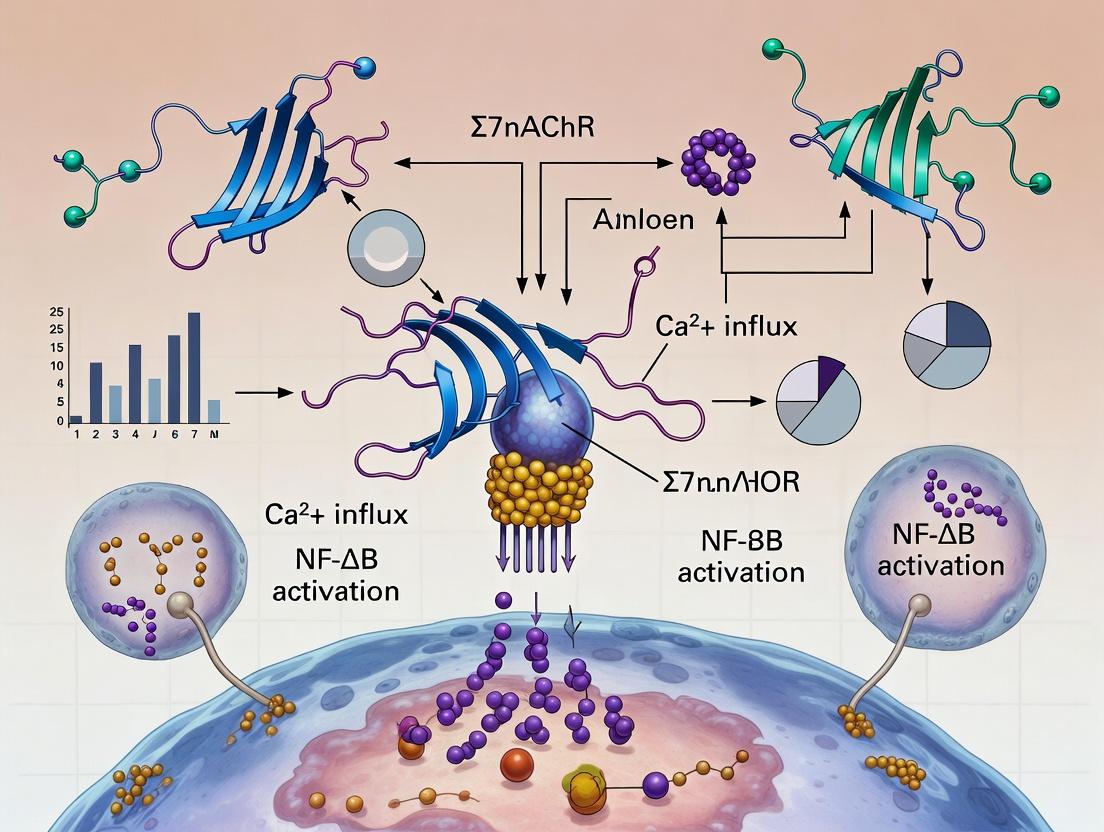
This comprehensive review synthesizes current research on the α7 nicotinic acetylcholine receptor (α7nAChR) expressed on immune cells, a critical component of the cholinergic anti-inflammatory pathway.
The α7 Nicotinic Acetylcholine Receptor in Immune Cells: Mechanisms, Methods, and Therapeutic Targeting
Abstract
This comprehensive review synthesizes current research on the α7 nicotinic acetylcholine receptor (α7nAChR) expressed on immune cells, a critical component of the cholinergic anti-inflammatory pathway. We explore the receptor's fundamental biology and signaling mechanisms in lymphocytes, macrophages, and microglia. The article details established and emerging methodologies for studying α7nAChR in immune contexts, including flow cytometry, calcium imaging, and genetic models. We address common experimental challenges in receptor detection and functional assays and provide optimization strategies. Finally, we compare α7nAChR-targeting compounds, validate their immunological effects, and critically assess preclinical and clinical evidence. This resource is tailored for researchers, immunologists, and drug developers aiming to harness α7nAChR modulation for treating inflammatory and autoimmune diseases.
Understanding the α7nAChR: Core Biology and Immune Signaling Pathways
Research into the alpha-7 nicotinic acetylcholine receptor (α7nAChR) has transcended its classical neurological domain, emerging as a cornerstone in the immunology thesis landscape. Its expression on immune cells—including macrophages, microglia, T cells, and dendritic cells—positions it as a pivotal nicotinic checkpoint in the cholinergic anti-inflammatory pathway. Understanding its unique molecular architecture and functional properties is fundamental to exploiting it as a therapeutic target for inflammatory diseases, neurodegeneration, and cancer.
Unique Structural Features
The α7nAChR is a member of the Cys-loop superfamily of ligand-gated ion channels but is distinguished by several key characteristics:
- Gene & Subunit: Encoded by the CHRNA7 gene.
- Homopentameric Assembly: Composed of five identical α7 subunits, unlike heteromeric neuronal nAChRs. This confers unique pharmacological and kinetic properties.
- Domains: Each subunit features:
- A large extracellular N-terminal domain harboring the agonist-binding site (loops A-C on the principal (+) side and loops D-F on the complementary (-) side of an adjacent subunit).
- Four transmembrane helices (M1-M4), with M2 lining the ion pore.
- A large intracellular loop between M3 and M4, critical for post-translational modifications and protein-protein interactions.
- Allosteric Sites: It possesses modulatory sites for positive allosteric modulators (PAMs) and negative allosteric modulators (NAMs), which are prime targets for drug development.
Table 1: Key Structural & Genetic Features of α7nAChR
| Feature | Description | Functional Implication |
|---|---|---|
| Subunit Composition | Homopentamer (5 x α7) | Uniform ligand-binding interfaces; high cooperativity. |
| Gene Locus | CHRNA7 (human chromosome 15q13.3) | Associated with neuropsychiatric and developmental disorders. |
| Agonist Binding Site | Interface between adjacent subunits (Loops A-C & D-F) | Targeted by nicotine, ACh, and selective agonists (e.g., GTS-21). |
| Intracellular Domain | Large M3-M4 loop | Site for phosphorylation, ubiquitination, and interaction with scaffolding proteins (e.g., RIC-3). |
Homopentameric Assembly and Trafficking
Assembly is a tightly regulated, stepwise process essential for functional surface expression, particularly in non-excitable immune cells.
- Chaperones & Assembly Factors: The receptor-associated protein RIC-3 is crucial for efficient folding, assembly, and endoplasmic reticulum (ER) export. Other chaperones include 14-3-3 proteins and Bcl-2.
- Quality Control: Misfolded or unassembled subunits are retained in the ER and degraded via the ubiquitin-proteasome system.
Diagram 1: α7nAChR Assembly & Trafficking Pathway
High Calcium Permeability and Downstream Signaling
The α7nAChR is highly permeable to calcium ions (Ca²⁺), with a PCa/PNa ratio ~10-20, rivaling that of NMDA receptors. This is the central feature linking its activation to diverse intracellular signaling in immune cells.
- Ion Selectivity: Determined by amino acid residues in the M2 pore-lining region ('intermediate ring' of Glu/Ser residues).
- Downstream Pathways: The influx of Ca²⁺ acts as a second messenger, triggering:
- Calcium-Sensing Proteins: Activation of calmodulin (CaM).
- Kinase Cascades: Subsequent activation of CaM kinase II (CaMKII), PKC, and JAK2.
- Transcription Factors: Phosphorylation and nuclear translocation of STAT3, NF-κB inhibition, and activation of CREB.
- Anti-inflammatory Outcome: Ultimately leads to suppression of pro-inflammatory cytokine (e.g., TNF-α, IL-1β, IL-6) release.
Diagram 2: α7nAChR Signaling in Immune Cells
Table 2: Quantitative Functional Properties of α7nAChR
| Property | Approximate Value/Range | Experimental Method | Significance |
|---|---|---|---|
| Calcium Permeability (PCa/PNa) | 10 - 20 | Fluorometric Ca²⁺ imaging; electrophysiology with bi-ionic potentials. | Core to signaling; similar to NMDA-R. |
| Agonist EC50 (ACh) | 100 - 300 µM | Whole-cell voltage-clamp electrophysiology. | Low affinity, fast desensitization. |
| Desensitization Time Constant (τ) | 10 - 100 ms | Rapid agonist application patch-clamp. | Rapid inactivation affects drug design. |
| Single-Channel Conductance | ~70-90 pS | Single-channel recording. | Reflects pore architecture and ion flow. |
Key Experimental Protocols
5.1. Protocol: Measuring α7nAChR-Mediated Calcium Influx in Immune Cells
- Objective: To quantify functional receptor expression via agonist-induced intracellular Ca²⁺ flux.
- Cell Preparation: Isolate primary macrophages or use a macrophage cell line (e.g., RAW 264.7). Culture and seed onto black-walled, clear-bottom 96-well plates.
- Dye Loading: Load cells with a Ca²⁺-sensitive fluorescent dye (e.g., Fluo-4 AM, 2-5 µM) in HBSS with probenecid for 30-60 min at 37°C.
- Agonist Challenge: Using a fluorometric plate reader or fluorescence microscope, establish a baseline, then add a selective α7nAChR agonist (e.g., PNU-282987, 10 µM). Include a positive control (e.g., ionomycin) and an α7-specific inhibitor (e.g., α-bungarotoxin or MLA) for blockade.
- Data Analysis: Calculate ΔF/F0 (peak fluorescence intensity minus baseline, divided by baseline). Plot kinetic traces and compare peak amplitudes under different conditions.
5.2. Protocol: Co-Immunoprecipitation of α7nAChR Assembly Complex
- Objective: To identify interacting chaperones (e.g., RIC-3) during receptor assembly.
- Cell Lysis: Lyse cells expressing α7nAChR (e.g., transfected HEK293 or immune cell line) in a mild non-ionic detergent lysis buffer (e.g., 1% Triton X-100) with protease inhibitors.
- Pre-Clearance: Incubate lysate with control IgG and protein A/G beads for 1h at 4°C to reduce non-specific binding.
- Immunoprecipitation: Incubate pre-cleared lysate with anti-α7nAChR antibody or control IgG overnight at 4°C. Add protein A/G beads for 2h.
- Wash & Elution: Wash beads stringently, elute proteins in 2X Laemmli buffer.
- Analysis: Detect co-precipitated RIC-3 via western blot using anti-RIC-3 antibody.
The Scientist's Toolkit: Essential Research Reagents
Table 3: Key Research Reagent Solutions for α7nAChR Studies
| Reagent/Material | Function/Application | Example Product/Catalog |
|---|---|---|
| Selective Agonists | Activate α7nAChR with minimal activity at other nAChR subtypes. Used in functional assays. | PNU-282987, GTS-21 (DMXBA), AR-R17779. |
| Positive Allosteric Modulators (PAMs) | Enhance agonist response without directly activating; Type I (enhance peak current) and Type II (reduce desensitization). | PNU-120596 (Type II), AVL-3288 (Type I). |
| Selective Antagonists | Block α7nAChR activity to confirm receptor-specific effects. | Methyllycaconitine (MLA), α-Bungarotoxin (α-Bgt). |
| Anti-α7nAChR Antibodies | Detect receptor protein via western blot, immunofluorescence, flow cytometry, or IP. | Santa Cruz Biotechnology (sc-58607), Abcam (ab23832). |
| Calcium Indicator Dyes | Measure intracellular Ca²⁺ flux in live cells. | Fluo-4 AM (for plate readers), Fura-2 AM (for ratio imaging). |
| RIC-3 Antibodies | Study receptor assembly and trafficking interactome. | Sigma-Aldrich (HPA019545), Proteintech (16678-1-AP). |
| Stable Cell Lines | Consistent model for high-throughput screening or electrophysiology. | Recombinant HEK293 cells stably expressing human α7nAChR + RIC-3. |
| siRNA/shRNA for CHRNA7 | Knockdown receptor expression for loss-of-function studies. | Commercially available from Dharmacon or Santa Cruz. |
The broader thesis driving current α7 nicotinic acetylcholine receptor (α7nAChR) research posits that this ion channel represents a critical, evolutionarily conserved interface between the nervous and immune systems. Its selective expression on immune cells provides a direct mechanism for the brain to modulate systemic inflammation in real-time. This whitepaper details the molecular architecture, signaling mechanisms, experimental methodologies, and therapeutic implications of this pathway, contextualizing it within the goal of developing targeted neuro-immunomodulatory drugs.
Molecular Mechanism and Signaling Pathways
The CAP is activated by vagus nerve efferents releasing acetylcholine (ACh) in organ-specific terminals. ACh binds to α7nAChR on macrophages and other innate immune cells, initiating a rapid, intracellular signaling cascade that suppresses pro-inflammatory cytokine production.
Key Signaling Events:
- Ligand Binding & Ion Flux: ACh binding opens the α7nAChR cation channel, allowing Ca²⁺ influx.
- JAK2/STAT3 Activation: Increased intracellular Ca²⁺ activates secondary messengers, leading to the phosphorylation and activation of Janus kinase 2 (JAK2). JAK2 phosphorylates Signal Transducer and Activator of Transcription 3 (STAT3).
- NF-κB Nuclear Translocation Inhibition: Phosphorylated STAT3 (pSTAT3) dimerizes and translocates to the nucleus. It does not directly inhibit NF-κB but facilitates the transcription of genes that sequester NF-κB subunits in the cytoplasm.
- Cytokine Suppression: The blockade of NF-κB nuclear translocation prevents the transcription of genes for pro-inflammatory cytokines like TNF-α, IL-1β, and IL-6.
Diagram Title: α7nAChR Signaling Cascade Suppressing NF-κB
Table 1: Efficacy of α7nAChR Agonists in Preclinical Sepsis/Inflammation Models
| Agonist | Model (Species) | Key Outcome (vs. Control) | Reference (Example) |
|---|---|---|---|
| GTS-21 (DMXBA) | Endotoxemia (Mouse) | ~50-70% reduction in serum TNF-α | Wang et al., 2003 |
| PNU-282987 | Cecal Ligation & Puncture (Rat) | ~40% increase in survival rate | Pavlov et al., 2007 |
| AR-R17779 | Pancreatitis (Mouse) | ~60% reduction in IL-6, reduced necrosis | van Westerloo et al., 2006 |
| Choline | Myocardial Ischemia (Mouse) | ~45% reduction in infarct size | Parrish et al., 2008 |
Table 2: Expression Profile of α7nAChR on Immune Cells
| Cell Type | Expression Level | Primary Functional Consequence |
|---|---|---|
| Macrophages | High (mRNA & Protein) | Primary CAP effector; cytokine suppression. |
| Dendritic Cells | Moderate | Reduced antigen presentation, altered migration. |
| T Lymphocytes | Low (Subsets) | Modulated differentiation (e.g., Treg induction). |
| B Lymphocytes | Very Low / Debated | Potential role in antibody production. |
| Mast Cells | High | Inhibition of degranulation and histamine release. |
Detailed Experimental Protocols
Protocol 4.1: In Vitro Validation of α7nAChR-Mediated Cytokine Suppression in Macrophages Objective: To test the efficacy of an α7nAChR agonist in suppressing LPS-induced cytokine release from primary murine macrophages.
- Cell Isolation & Culture: Isolate peritoneal macrophages from C57BL/6 mice via lavage. Seed cells in 24-well plates (5x10^5 cells/well) in complete RPMI medium. Allow to adhere for 2 hours.
- Pre-treatment: Replace medium. Add experimental groups: a) Vehicle control, b) α7nAChR agonist (e.g., PNU-282987, 10 µM), c) Agonist + α7nAChR antagonist (e.g., α-bungarotoxin, 100 nM). Incubate for 30 min.
- Stimulation: Add LPS (100 ng/ml) to all wells except negative controls. Incubate for 6 hours (for TNF-α measurement) or 18 hours (for IL-6).
- Analysis: Collect supernatant. Quantify TNF-α/IL-6 via ELISA. Confirm α7nAChR dependency using cells from α7nAChR knockout (Chrna7 -/-) mice as a control.
Protocol 4.2: Assessing Vagal Control of Inflammation In Vivo Objective: To measure the effect of electrical vagus nerve stimulation (VNS) on systemic inflammation.
- Animal Preparation: Anesthetize rat. Place in stereotaxic frame. Surgically expose the left cervical vagus nerve.
- Stimulation: Attach bipolar electrode to the nerve. Deliver electrical stimulation (parameters: 1 mA, 2 Hz, 0.2 ms pulse width) for 10 minutes.
- Induce Inflammation: Immediately post-VNS, administer LPS (i.p., 1 mg/kg).
- Sample Collection: Draw blood via cardiac puncture 90 minutes post-LPS.
- Outcome Measure: Measure serum TNF-α levels via ELISA. Compare to sham-stimulated (nerve exposed, no current) and unstimulated LPS controls.
The Scientist's Toolkit: Key Research Reagents
Table 3: Essential Reagents for α7nAChR Immunology Research
| Reagent/Solution | Function & Application | Key Consideration |
|---|---|---|
| Selective Agonists (e.g., PNU-282987, GTS-21) | To activate α7nAChR specifically in vitro and in vivo. | Verify selectivity over other nAChR subtypes (e.g., α4β2). |
| Antagonists (e.g., α-Bungarotoxin, Methyllycaconitine (MLA)) | To block α7nAChR and confirm on-target effects. | α-Bungarotoxin is irreversible; MLA is competitive. |
| α7nAChR Knockout Mice (Chrna7 -/-) | Gold-standard control to prove receptor-specific mechanisms. | Available on various backgrounds from Jackson Lab. |
| Phospho-STAT3 (Tyr705) Antibody | Key readout for activated CAP signaling via Western Blot or IHC. | Must distinguish pSTAT3 from total STAT3. |
| LPS (Lipopolysaccharide) | Standard toll-like receptor 4 agonist to induce pro-inflammatory response. | Source (E. coli serotype) and purity affect potency. |
| Choline | Endogenous α7nAChR selective agonist; used in dietary or supplemental studies. | Relevant for studying physiological modulation. |
Therapeutic Implications and Drug Development
The CAP via α7nAChR is a validated target for treating inflammatory diseases. Drug development focuses on:
- Selective Agonists: For sepsis, rheumatoid arthritis, and inflammatory bowel disease. Challenges include optimizing pharmacokinetics and avoiding desensitization.
- Positive Allosteric Modulators (PAMs): Enhance endogenous ACh signaling without direct receptor activation, potentially offering better safety and reduced desensitization.
- Cholinergic Enhancers: Agents that increase synaptic ACh levels (e.g., acetylcholinesterase inhibitors) can amplify the endogenous CAP.
Diagram Title: Drug Development Strategies Targeting α7nAChR
This technical whitepaper synthesizes current research on the expression profile of the alpha7 nicotinic acetylcholine receptor (α7nAChR) across key immune cell populations: macrophages, microglia, T cells, and dendritic cells. Framed within the broader thesis of the cholinergic anti-inflammatory pathway, this document provides a detailed comparative analysis, experimental protocols, and essential research tools for investigators in immunology and neuroimmunology drug development.
The α7nAChR is a ligand-gated ion channel critically implicated in the neural regulation of inflammation. Activation of this receptor on immune cells by acetylcholine or other agonists initiates intracellular signaling cascades that suppress the production of pro-inflammatory cytokines. This pathway represents a prime therapeutic target for conditions characterized by excessive inflammation, including sepsis, rheumatoid arthritis, and neurodegenerative diseases. Precise knowledge of its cell-type-specific expression is foundational for targeted therapeutic design.
Quantitative Expression Profile Across Immune Cells
Recent studies employing techniques such as flow cytometry, single-cell RNA sequencing (scRNA-seq), and western blotting have quantified α7nAChR expression. The following table summarizes key findings regarding protein and transcript presence across cell types.
Table 1: α7nAChR Expression Profile in Immune Cells
| Immune Cell Type | Subtype / Context | Expression Level (Protein) | Expression Level (Transcript) | Key Functional Consequence of Activation | Primary Citation Method |
|---|---|---|---|---|---|
| Macrophage | Peritoneal (M1-polarized) | High (Membrane) | Moderate | Suppression of NF-κB, reduced TNF-α, IL-1β, IL-6 | Flow Cytometry, WB |
| Macrophage | Peritoneal (M2-polarized) | Moderate | Moderate | Enhanced resolution response | Flow Cytometry, WB |
| Microglia | Resting (in vitro) | Low | Low | Modulation of surveillance state | scRNA-seq, IHC |
| Microglia | Activated (LPS) | Very High | High | Potent inhibition of neuroinflammation | scRNA-seq, IHC |
| T Cell | CD4+ Naïve | Very Low / Negligible | Low | Minimal direct effect | scRNA-seq, RT-qPCR |
| T Cell | CD4+ (Th1, Th17) | Low (Inducible) | Low | Possible indirect modulation via APCs | RT-qPCR |
| T Cell | Tregs | Moderate | Moderate | Potential enhancement of suppressive function | Flow Cytometry |
| Dendritic Cell | Conventional (cDC1) | Moderate | Moderate | Reduced MHC-II and co-stimulatory molecule expression | Flow Cytometry, WB |
| Dendritic Cell | Monocyte-Derived (inflammation) | High | High | Impaired maturation, tolerogenic shift | Flow Cytometry, WB |
Core Experimental Protocols
Protocol: Flow Cytometric Analysis of Surface α7nAChR on Immune Cells
Objective: To quantify cell-surface α7nAChR protein expression on isolated immune cell populations.
Materials:
- Single-cell suspension from tissue (spleen, peritoneum, brain) or culture.
- Fluorescently conjugated antibody against α7nAChR (e.g., clone mAb 306).
- Cell lineage markers: CD11b (macrophages/microglia), CD45, F4/80, CD3 (T cells), CD11c (dendritic cells).
- Flow cytometry buffer (PBS + 2% FBS + 0.1% NaN3).
- Fixation buffer (e.g., 4% PFA).
Procedure:
- Prepare single-cell suspension and count cells.
- Aliquot 1-5 x 10^5 cells per staining tube. Include fluorescence-minus-one (FMO) and isotype controls.
- Resuspend cell pellet in 100 µL flow buffer containing Fc block (anti-CD16/32).
- Add surface marker antibody cocktail (including α7nAChR Ab). Vortex gently. Incubate for 30 min at 4°C in the dark.
- Wash cells twice with 2 mL flow buffer (centrifuge at 300 x g for 5 min).
- If needed, fix cells with 200 µL fixation buffer for 20 min at 4°C. Wash once.
- Resuspend in 200-300 µL flow buffer. Acquire data on a flow cytometer.
- Analyze using gating strategy: Live cells > Singlets > Lineage marker (e.g., CD11b+) > Analyze α7nAChR median fluorescence intensity (MFI).
Protocol: Assessing Functional Response via Cytokine ELISA
Objective: To measure the anti-inflammatory effect of α7nAChR activation on LPS-stimulated macrophages.
Materials:
- Primary macrophages (bone-marrow derived or cell line).
- α7nAChR agonist (e.g., PNU-282987, GTS-21) and antagonist (e.g., α-bungarotoxin, methyllycaconitine).
- Lipopolysaccharide (LPS).
- Cell culture plates, CO2 incubator.
- TNF-α or IL-6 ELISA kit.
Procedure:
- Plate macrophages and allow to adhere overnight.
- Pre-treat cells with α7nAChR agonist (e.g., 10 µM PNU-282987) or antagonist for 30 minutes.
- Stimulate with LPS (e.g., 100 ng/mL) for 4-6 hours (for mRNA) or 18-24 hours (for protein).
- For supernatant analysis, collect cell-free supernatant by centrifugation.
- Perform ELISA according to manufacturer's instructions: a. Coat plate with capture antibody overnight. b. Block plate with assay diluent for 1 hour. c. Add standards and samples, incubate 2 hours. d. Add detection antibody, incubate 2 hours. e. Add streptavidin-HRP, incubate 20-30 minutes. f. Add substrate solution (TMB), incubate until color develops. g. Stop reaction with stop solution. Read absorbance at 450 nm.
- Calculate cytokine concentration from standard curve.
Signaling Pathways and Experimental Workflows
The Scientist's Toolkit: Key Research Reagents
Table 2: Essential Reagents for α7nAChR Immune Research
| Reagent Category | Specific Example(s) | Function in Research | Key Consideration |
|---|---|---|---|
| α7nAChR Agonists | PNU-282987, GTS-21 (DMXBA), AR-R17779 | To selectively activate the receptor and study anti-inflammatory effects in vitro/vivo. | Specificity over other nAChR subtypes; metabolic stability in vivo. |
| α7nAChR Antagonists | Methyllycaconitine (MLA), α-Bungarotoxin (α-BTX) | To block receptor activity, confirming the specificity of agonist effects. | α-BTX is irreversible; MLA is competitive and reversible. |
| Anti-α7nAChR Antibodies | Clone mAb 306 (for flow/IH), H-302 (for WB) | To detect and quantify receptor protein expression. | Critical to validate for immune cell applications; distinguish surface vs. total protein. |
| Positive Control Cell Lysate | SH-SY5Y (neuronal) or transfected HEK293 cells overexpressing α7 | To validate antibody specificity in Western blot. | Confirms antibody is detecting the correct ~55 kDa band. |
| Cholinergic Stimulators | Acetylcholinesterase inhibitors (e.g., Galantamine), Choline | To enhance endogenous cholinergic signaling. | Used to probe physiological relevance of the pathway. |
| Validated siRNA/shRNA | siRNA targeting human/mouse CHRNA7 gene | To knock down receptor expression and study loss-of-function. | Requires efficient delivery (e.g., electroporation for primary cells). |
The alpha7 nicotinic acetylcholine receptor (α7nAChR), a ligand-gated ion channel, is a pivotal component of the "cholinergic anti-inflammatory pathway." Its activation on immune cells—including macrophages, dendritic cells, and T cells—orchestrates a rapid and potent suppression of pro-inflammatory responses. This immunomodulation is primarily mediated through the precise regulation of three canonical signaling hubs: the JAK2/STAT3 pathway, the NF-κB transcription complex, and the inflammasome apparatus. This whitepaper provides a technical dissection of these mechanisms, framed within contemporary α7nAChR research, to inform targeted therapeutic development.
Core Signaling Mechanisms: A Technical Deep Dive
JAK2/STAT3 Pathway Activation
α7nAChR agonist binding (e.g., acetylcholine, GTS-21) induces a conformational change allowing Ca²⁺ influx. This elevated intracellular Ca²⁺ activates non-receptor tyrosine kinases, including JAK2, which phosphorylates STAT3. Phosphorylated STAT3 (p-STAT3) dimerizes and translocates to the nucleus, driving the transcription of anti-inflammatory and pro-survival genes (e.g., Bcl-2, SOCS3).
Key Quantitative Data: Table 1: Representative Quantitative Effects of α7nAChR Activation on JAK2/STAT3 Signaling In Vitro
| Parameter | Control (LPS only) | α7nAChR Agonist + LPS | Assay | Reference Cell Type |
|---|---|---|---|---|
| STAT3 Phosphorylation (Tyr705) | 100% (baseline) | 250-300% increase | Western Blot / Phosflow | RAW 264.7 macrophages |
| SOCS3 mRNA Level | 1.0 (fold change) | 4.5 ± 0.8 fold increase | qRT-PCR | Primary murine peritoneal macrophages |
| Nuclear p-STAT3 Localization | 15% of cells | 65% of cells | Immunofluorescence / Image Cytometry | Human monocyte-derived macrophages |
NF-κB Pathway Inhibition
The primary pro-inflammatory transcription factor NF-κB (p65/p50) is a major target of α7nAChR signaling. Activation inhibits IκB kinase (IKK), preventing the phosphorylation and degradation of the inhibitory protein IκBα. This sequestration of NF-κB in the cytoplasm blocks the transcription of TNF-α, IL-1β, IL-6, and other cytokines.
Key Quantitative Data: Table 2: α7nAChR-Mediated Suppression of NF-κB-Dependent Outputs
| Output Measure | LPS-Stimulated Control | α7nAChR Agonist + LPS | Inhibition | Assay |
|---|---|---|---|---|
| NF-κB p65 Nuclear Translocation | 100% (baseline) | Reduced by ~70% | ELISA-based Nuclear Extract | THP-1 monocytes |
| TNF-α Secretion | 1200 ± 150 pg/ml | 250 ± 50 pg/ml | ~79% reduction | ELISA (supernatant) |
| IκBα Degradation (Half-life) | ~15 min post-LPS | >60 min post-LPS | Significant stabilization | Western Blot (time course) |
NLRP3 Inflammasome Regulation
α7nAChR signaling attenuates inflammasome priming and activation via multiple mechanisms: 1) Priming: Reducing NF-κB-driven transcription of NLRP3 and pro-IL-1β. 2) Activation: Diminishing mitochondrial reactive oxygen species (mtROS) and preventing K⁺ efflux, critical for NLRP3 oligomerization. This suppresses caspase-1 activation and mature IL-1β/IL-18 release.
Key Quantitative Data: Table 3: Impact on NLRP3 Inflammasome Components & Activity
| Component/Activity | LPS+ATP Control | α7nAChR Agonist Pre-treatment | Assay Method |
|---|---|---|---|
| Caspase-1 Activation (p20 fragment) | High | Reduced by ~60% | Western Blot / FLICA Flow Cytometry |
| Mature IL-1β Release | 800 ± 100 pg/ml | 150 ± 30 pg/ml | ELISA (supernatant) |
| Mitochondrial ROS (mtROS) Flux | 100% (max signal) | 45% reduction | MitoSOX Red Flow Cytometry |
Detailed Experimental Protocols
Protocol 1: Assessing STAT3 Phosphorylation in Macrophages via Phosflow
- Cell Preparation: Differentiate THP-1 cells with PMA (100 nM, 48h) or use primary bone marrow-derived macrophages (BMDMs).
- Stimulation & Inhibition: Pre-treat cells with α7nAChR agonist (e.g., PNU-282987, 10 µM, 30 min) and/or selective antagonist (α-bungarotoxin, 100 nM, 1h pre). Stimulate with LPS (100 ng/ml, 15-30 min).
- Fixation & Permeabilization: Immediately fix cells with pre-warmed 4% PFA (10 min, 37°C). Pellet, resuspend in ice-cold 90% methanol, and incubate (-20°C, 30 min). Wash with FACS buffer (PBS + 2% FBS).
- Staining: Incubate cells with anti-p-STAT3 (Tyr705) Alexa Fluor 488 conjugate antibody (1:50, 60 min, RT in dark). Include isotype controls.
- Acquisition & Analysis: Analyze on a flow cytometer. Report geometric mean fluorescence intensity (gMFI) of the phosphorylated population.
Protocol 2: Measuring NF-κB Nuclear Translocation via Immunofluorescence
- Seeding & Stimulation: Seed macrophages on glass coverslips. Pre-treat with α7nAChR ligand, then stimulate with LPS (1h).
- Fixation & Permeabilization: Fix with 4% PFA (15 min), permeabilize with 0.1% Triton X-100 (10 min), block with 5% BSA (1h).
- Staining: Incubate with primary anti-NF-κB p65 antibody (1:200, overnight, 4°C). Wash, then incubate with fluorophore-conjugated secondary antibody (1:500, 1h). Co-stain nuclei with DAPI.
- Imaging & Quantification: Image with confocal microscope. Use image analysis software (e.g., ImageJ) to calculate the nuclear/cytoplasmic fluorescence intensity ratio for p65 in >100 cells per condition.
Protocol 3: Inflammasome Activation & IL-1β Secretion Assay
- Priming & Activation: Prime BMDMs with ultrapure LPS (100 ng/ml, 4h). Pre-treat with α7nAChR agonist during the final 30 min of priming.
- Activation: Add ATP (5 mM) for 45 min to activate the NLRP3 inflammasome.
- Sample Collection: Collect cell culture supernatant. Centrifuge to remove debris.
- Detection: Measure mature IL-1β in supernatant via specific ELISA (does not detect pro-IL-1β). Lyse cells to measure pro-IL-1β and caspase-1 p20 by Western blot as parallel readouts.
Signaling Pathway Visualizations
Title: α7nAChR Signaling in Immune Cell Regulation
Title: Core Experimental Workflow for α7nAChR Signaling
The Scientist's Toolkit: Key Research Reagent Solutions
Table 4: Essential Reagents for Investigating α7nAChR Signaling Mechanisms
| Reagent / Material | Category | Example Product (Supplier) | Key Function in α7nAChR Research |
|---|---|---|---|
| Selective α7nAChR Agonists | Pharmacological Tool | PNU-282987 (Tocris), GTS-21 (DHβE) (Sigma) | To specifically activate the receptor and mimic cholinergic input in immune cells. |
| Selective α7nAChR Antagonists | Pharmacological Tool | Methyllycaconitine (MLA) (Hello Bio), α-Bungarotoxin (Abcam) | To confirm the specificity of agonist effects by blocking the receptor. |
| Phospho-Specific Antibodies | Detection Reagent | anti-p-STAT3 (Tyr705), anti-p-NF-κB p65 (Ser536) (Cell Signaling Tech) | To measure pathway activation/inhibition via flow cytometry (Phosflow) or Western blot. |
| Cytokine ELISA Kits | Detection Reagent | Mouse/Rat TNF-α, IL-1β, IL-6 DuoSet ELISA (R&D Systems) | To quantify the functional output of NF-κB and inflammasome activity in supernatants. |
| NLRP3 Activators/Inhibitors | Pharmacological Tool | ATP, Nigericin (for activation); MCC950 (for inhibition) (InvivoGen) | To specifically trigger or block the NLRP3 inflammasome as an experimental control. |
| Intracellular Ca²⁺ Indicators | Detection Reagent | Fluo-4 AM, Fura-2 AM (Thermo Fisher) | To measure the primary signaling event (Ca²⁺ influx) following α7nAChR engagement. |
| ROS Detection Probes | Detection Reagent | MitoSOX Red (mtROS), DCFH-DA (general ROS) (Thermo Fisher) | To assess redox changes, a key mechanism in inflammasome regulation. |
| JAK/STAT Inhibitors | Pharmacological Tool | AG490 (JAK2 inhibitor), Stattic (STAT3 inhibitor) (MedChemExpress) | To dissect the contribution of the JAK2/STAT3 pathway in functional assays. |
The alpha7 nicotinic acetylcholine receptor (α7nAChR) is classically understood as a ligand-gated ion channel in neurons. However, its expression on immune cells (e.g., macrophages, microglia, T cells) positions it as a critical node in the cholinergic anti-inflammatory pathway. The broader thesis posits that α7nAChR activation in immune cells transduces signals that extend far beyond ion flux, driving non-canonical, kinase-mediated programs that fundamentally reshape immune cell behavior. This whitepaper details three core non-canonical roles—phagocytosis, migration, and metabolic reprogramming—providing technical insights into the mechanisms, experimental evidence, and research tools driving this field.
Non-Canonical Signaling Mechanisms
Activation of α7nAChR by agonists (e.g., nicotine, GTS-21, choline) initiates a metabotropic signaling cascade independent of, or complementary to, its ionotropic function. The canonical pathway involves Ca²⁺ influx and JAK2/STAT3 activation. Non-canonical pathways pivot on kinase networks.
Key Signaling Pathways:
- Phagocytosis: Involves PI3K/Akt/Rac1 GTPase activation, modulating actin cytoskeleton remodeling.
- Cell Migration: Centers on FAK/Pyk2 and Paxillin phosphorylation, regulating focal adhesion turnover and directional movement.
- Metabolic Reprogramming: Driven by AMPK/mTORC1 signaling, shifting cells from glycolysis to oxidative phosphorylation (OXPHOS).
Diagram 1: α7nAChR Non-Canonical Signaling in Immune Cells
Table 1: Impact of α7nAChR Activation on Immune Cell Functions
| Immune Cell Type | Agonist Used | Experimental Model | Effect on Phagocytosis (% Change vs. Control) | Effect on Migration (% Change vs. Control) | Key Metabolic Shift | Primary Citation (Example) |
|---|---|---|---|---|---|---|
| Bone Marrow-Derived Macrophages (BMDMs) | GTS-21 (10 µM) | In vitro, LPS challenge | +45% (pHrodo E. coli uptake) | -60% (Transwell toward CCL2) | Increased OCR/ECAR ratio | Nizri et al., 2009 |
| Microglia (BV-2 cell line) | Nicotine (100 nM) | In vitro, Aβ1-42 stimulation | +80% (Aβ42 clearance assay) | +40% (Scratch wound closure) | Increased FAO, decreased glycolysis | Sadigh-Eteghad et al., 2016 |
| Peritoneal Macrophages | PNU-282987 (1 µM) | In vivo, Sepsis model (CLP) | +110% (Apoptotic cell clearance) | Not Measured | Upregulated PDH activity | Wang et al., 2018 |
| CD4+ T Cells | GTS-21 (50 µM) | In vitro, T cell polarization | Not Applicable | -30% (Random motility) | Promoted Treg differentiation via OXPHOS | Kawashima et al., 2012 |
OCR: Oxygen Consumption Rate; ECAR: Extracellular Acidification Rate; FAO: Fatty Acid Oxidation; CLP: Cecal Ligation and Puncture.
Detailed Experimental Protocols
Protocol 1: Assessing Phagocytosis via pHrodo Bioparticle Assay
- Purpose: Quantify receptor-mediated phagocytosis in macrophages upon α7nAChR modulation.
- Materials: Primary macrophages or cell line, α7nAChR agonist/antagonist, pHrodo Red E. coli or Zymosan Bioparticles, fluorescence plate reader or flow cytometer.
- Procedure:
- Seed cells in a 96-well black-walled plate (5x10⁴ cells/well). Adhere overnight.
- Pre-treat cells with agonist (e.g., 10 µM GTS-21) or antagonist (e.g., 100 nM α-bungarotoxin) for 1 hour.
- According to manufacturer's protocol, resuspend pHrodo bioparticles in warm medium and add to cells (e.g., 20 µg/well).
- Incubate at 37°C, 5% CO₂ for 1-2 hours.
- Gently wash cells 3x with PBS to remove non-internalized particles.
- Measure fluorescence (Ex/Em ~560/585 nm) kinetically or at endpoint. For flow cytometry, detach cells gently and analyze median fluorescence intensity (MFI).
Protocol 2: Analyzing Metabolic Reprogramming via Seahorse XF Analyzer
- Purpose: Measure real-time changes in glycolysis and mitochondrial respiration.
- Materials: Seahorse XFe96 Analyzer, XF Base Medium, Seahorse XF Cell Mito Stress Test Kit, α7nAChR modulators.
- Procedure:
- Seed cells in Seahorse XF96 cell culture microplates (2-5x10⁴ cells/well). Calibrate one day prior.
- Treat cells with agonist/antagonist for desired time (e.g., 6-24h).
- Day of Assay: Replace medium with Seahorse XF Base Medium (supplemented with 10 mM glucose, 1 mM pyruvate, 2 mM L-glutamine, pH 7.4). Incubate for 1h at 37°C, non-CO₂.
- Load inhibitors into the instrument ports: Port A (Oligomycin, 1.5 µM), Port B (FCCP, 1 µM), Port C (Rotenone/Antimycin A, 0.5 µM each).
- Run the Mito Stress Test protocol. Data outputs include Basal Respiration, ATP-linked Respiration, Proton Leak, Maximal Respiration, and Spare Respiratory Capacity. Calculate OCR/ECAR ratio.
The Scientist's Toolkit: Research Reagent Solutions
Table 2: Essential Reagents for Investigating α7nAChR Non-Canonical Functions
| Reagent | Category | Example Product/Catalog # | Primary Function in Research |
|---|---|---|---|
| α7nAChR Agonists | Small Molecules | GTS-21 (DMXBA), PNU-282987, Choline Chloride | Selective activation of α7nAChR to trigger downstream signaling cascades. |
| α7nAChR Antagonists | Toxins/Small Molecules | α-Bungarotoxin, Methyllycaconitine (MLA) | Selective inhibition to confirm receptor-specific effects in functional assays. |
| Phospho-Specific Antibodies | Antibodies | Anti-phospho-FAK (Tyr397), Anti-phospho-Akt (Ser473), Anti-phospho-AMPKα (Thr172) | Detection of activated kinases in non-canonical pathways via Western blot or IF. |
| Metabolic Assay Kits | Assay Kits | Seahorse XF Cell Mito Stress Test Kit; Glucose Uptake Assay Kit (Fluorometric) | Quantitative measurement of metabolic parameters (OCR, ECAR, substrate utilization). |
| Live-Cell Imaging Dyes | Fluorescent Probes | pHrodo BioParticles; MitoTracker Deep Red FM; F-actin stains (e.g., SiR-actin) | Visualization of phagocytosis, mitochondrial networks, and cytoskeletal dynamics in real time. |
| siRNA/shRNA Libraries | Genetic Tools | SMARTpool: α7nAChR (CHRNA7) siRNA; Lentiviral shRNA particles | Knockdown of α7nAChR or downstream effectors (e.g., PI3K, FAK) for loss-of-function studies. |
Diagram 2: Experimental Workflow for Functional Validation
The non-canonical roles of α7nAChR in immune cells represent a paradigm shift, revealing it as a pleiotropic regulator of phagocytic efficiency, migratory patterns, and core metabolism. These functions are integral to its therapeutic potential in sepsis, neurodegenerative diseases, and chronic inflammation. Future research must employ high-resolution techniques (e.g., phospho-proteomics, single-cell metabolomics) to map the complete α7nAChR-driven kinome and metabolome. Furthermore, developing cell-type-specific α7nAChR modulators with biased signaling properties (favoring beneficial non-canonical pathways over ion channel activity) is a critical frontier for drug development.
Research Tools and Techniques: How to Study α7nAChR in Immune Systems
The alpha7 nicotinic acetylcholine receptor (α7nAChR) is a critical regulator of the cholinergic anti-inflammatory pathway. Its expression on immune cells—including macrophages, T cells, and dendritic cells—modulates cytokine release and immune responses. Accurate detection and quantification of these α7nAChR+ immune cell subsets are therefore paramount for research into inflammatory diseases, sepsis, and neuroimmunology. This guide details the technical frameworks for antibody-based detection, multicolor flow cytometry panel design, and transcriptional analysis via qPCR, specifically contextualized for α7nAChR immunobiology.
Antibody Selection for α7nAChR and Immune Cell Markers
Selecting high-affinity, specific antibodies is the foundational step. For the α7nAChR protein, which has low surface expression on many immune cells, clone selection and validation are crucial.
Table 1: Key Antibody Clones for α7nAChR and Immune Phenotyping
| Target | Clone(s) | Host | Isotype | Application | Notes |
|---|---|---|---|---|---|
| α7nAChR | mAb306, H-302 | Mouse IgG2b, Rabbit IgG | Flow, IHC, WB | mAb306 is well-characterized for extracellular epitope flow cytometry. | |
| CD11b | M1/70 | Rat IgG2b | Flow, IHC | Myeloid cell marker (macrophages, monocytes). | |
| CD3 | 17A2, OKT3 | Hamster, Mouse IgG2a | Flow | Pan T-cell marker. | |
| CD4 | GK1.5, RM4-5 | Rat IgG2b, Rat IgG2a | Flow | Helper T cells, some macrophages. | |
| CD8a | 53-6.7 | Rat IgG2a | Flow | Cytotoxic T cells. | |
| F4/80 | BM8, CI:A3-1 | Rat IgG2a | Flow, IHC | Mature mouse macrophage marker. | |
| CD19 | 6D5, 1D3 | Rat IgG2a | Flow | Pan B-cell marker. | |
| Ly-6G/Ly-6C (Gr-1) | RB6-8C5 | Rat IgG2b | Flow | Neutrophils, some inflammatory monocytes. |
Experimental Protocol: Validation of α7nAChR Antibody Specificity via Blocking Peptide
- Objective: Confirm signal specificity of the anti-α7nAChR antibody.
- Materials: α7nAChR antibody (e.g., Rabbit polyclonal H-302), corresponding blocking peptide, permeabilization buffer, flow cytometry buffer.
- Method:
- Cell Preparation: Harvest α7nAChR-expressing cells (e.g., LPS-treated murine peritoneal macrophages).
- Blocking: Aliquot two samples of 1x10⁶ cells. Pre-incubate the antibody (at working concentration) with a 5-10 fold molar excess of the immunizing peptide for 1 hour at 4°C for the "blocked" sample. The "test" sample uses antibody alone.
- Staining: Stain both cell samples with the pre-incubated mixtures for 30 min at 4°C in the dark. Include appropriate isotype controls.
- Analysis: Acquire on a flow cytometer. A significant rightward shift in the test sample MFI that is abolished in the peptide-blocked sample confirms specificity.
Designing Flow Cytometry Panels for α7nAChR+ Immune Cells
Multiparameter flow cytometry allows for the identification and quantification of rare α7nAChR+ immune subsets within heterogeneous populations.
Table 2: Example 10-Color Murine Panel for α7nAChR+ Myeloid Cells
| Fluorochrome | Laser | Filter | Target | Population Identified |
|---|---|---|---|---|
| BV421 | 405 | 450/50 | α7nAChR (mAb306) | Receptor expression level |
| FITC | 488 | 530/30 | CD11b | Myeloid cells |
| PE | 561 | 585/15 | F4/80 | Mature macrophages |
| PE-Dazzle594 | 561 | 610/20 | Ly-6C | Inflammatory monocytes |
| PerCP-Cy5.5 | 488 | 695/40 | MHC II (I-A/I-E) | Antigen-presenting cells |
| PE-Cy7 | 561 | 780/60 | CD64 (FcγRI) | Macrophages vs. monocytes |
| APC | 640 | 670/30 | CD24 | Cell activation status |
| Alexa Fluor 700 | 640 | 720/30 | Ly-6G | Neutrophils |
| APC-Cy7 | 640 | 780/60 | CD45 | All leukocytes (live gate) |
| Zombie NIR | 640 | 780/60 | Viability | Live/Dead discrimination |
Experimental Protocol: Surface and Intracellular Staining for Flow Cytometry
- Objective: Detect surface α7nAChR and intracellular cytokines in stimulated T cells.
- Materials: Stimulation cocktail (PMA/Ionomycin + Brefeldin A), fixation/permeabilization kit, flow antibodies.
- Method:
- Stimulation: Isolate splenocytes and stimulate with PMA (50 ng/mL) + Ionomycin (1 µg/mL) + Brefeldin A (1 µL/mL) for 4-6 hours at 37°C, 5% CO₂.
- Surface Staining: Wash cells, block Fc receptors, and stain with surface antibody cocktail (e.g., CD3, CD4, CD8, α7nAChR) for 30 min at 4°C.
- Fixation/Permeabilization: Fix cells with 4% PFA for 20 min, then permeabilize with saponin-based buffer.
- Intracellular Staining: Stain with antibodies against cytokines (e.g., IFN-γ, IL-17A) for 30 min at 4°C.
- Acquisition: Wash, resuspend, and acquire on a flow cytometer capable of detecting all fluorochromes. Use fluorescence-minus-one (FMO) controls for gating.
Title: Surface and Intracellular Cytokine Staining Workflow
qPCR Assays for Quantifying α7nAChR and Immune Gene Expression
qPCR provides sensitive quantification of Chrna7 (gene encoding α7nAChR) transcript levels alongside immune activation markers.
Table 3: Example TaqMan Assays for Mouse α7nAChR Immune Research
| Gene Symbol | Gene Name | Assay ID (Thermo Fisher) | Function in Context |
|---|---|---|---|
| Chrna7 | Cholinergic receptor nicotinic alpha 7 subunit | Mm01312211_m1 | Target of interest |
| Tnf | Tumor necrosis factor | Mm00443258_m1 | Pro-inflammatory cytokine |
| Il10 | Interleukin 10 | Mm01288386_m1 | Anti-inflammatory cytokine |
| Il1b | Interleukin 1 beta | Mm00434228_m1 | Pro-inflammatory cytokine |
| Arg1 | Arginase 1 | Mm00475988_m1 | M2 macrophage marker |
| Nos2 | Nitric oxide synthase 2 | Mm00440502_m1 | M1 macrophage marker |
| Gapdh | Glyceraldehyde-3-phosphate dehydrogenase | Mm99999915_g1 | Housekeeping control |
Experimental Protocol: RNA Isolation and qPCR from Sorted Immune Cells
- Objective: Measure gene expression in FACS-sorted α7nAChR+ vs. α7nAChR- macrophages.
- Materials: TRIzol LS reagent, cell sorter, cDNA synthesis kit, TaqMan Master Mix, 96-well qPCR plates.
- Method:
- Cell Sorting: Sort at least 10,000 cells per population (α7nAChR+ CD11b+ F4/80+ and α7nAChR- CD11b+ F4/80+) directly into 500 µL of TRIzol LS. Keep on ice.
- RNA Extraction: Add 100 µL chloroform, vortex, centrifuge. Transfer aqueous phase to fresh tube. Precipitate RNA with 250 µL isopropanol, wash with 75% ethanol, and resuspend in nuclease-free water.
- cDNA Synthesis: Quantify RNA. Use 100 ng - 1 µg total RNA in a reverse transcription reaction with random hexamers.
- qPCR Setup: Prepare reactions in duplicate: 10 µL TaqMan Master Mix, 1 µL TaqMan Assay (20X), 5 µL cDNA (diluted 1:10), and 4 µL nuclease-free water per well.
- Run & Analyze: Use standard cycling conditions (50°C for 2 min, 95°C for 10 min, followed by 40 cycles of 95°C for 15 sec and 60°C for 1 min). Calculate ΔΔCt values relative to a housekeeping gene and the control cell population.
Title: qPCR Gene Expression Analysis Workflow
The Scientist's Toolkit: Key Research Reagent Solutions
Table 4: Essential Reagents for α7nAChR Immune Cell Research
| Item | Function & Application | Example Product/Brand |
|---|---|---|
| Fc Receptor Blocking Antibody | Blocks non-specific antibody binding via Fcγ receptors on immune cells, critical for clear flow cytometry data. | Anti-Mouse CD16/32 (Clone 93), TruStain FcX |
| Cell Stimulation Cocktail | Activates T cells and induces cytokine production for intracellular staining assays. | Cell Activation Cocktail (with Brefeldin A) |
| Fixable Viability Dye | Distinguishes live from dead cells, improving accuracy in flow cytometry and sorting. | Zombie Dye, LIVE/DEAD Fixable Stains |
| Intracellular Fixation & Permeabilization Buffer Set | For fixing cells and permeabilizing membranes to allow staining of intracellular targets (cytokines, phosphorylated proteins). | eBioscience Foxp3/Transcription Factor Staining Buffer Set |
| RNA Stabilization Reagent | Preserves RNA integrity immediately after cell sorting or tissue dissection for downstream qPCR. | RNAlater, TRIzol LS |
| High-Capacity cDNA Reverse Transcription Kit | Converts RNA to cDNA with high efficiency and consistency for gene expression studies. | High-Capacity cDNA Reverse Transcription Kit (Applied Biosystems) |
| TaqMan Gene Expression Master Mix | Optimized buffer/enzyme mix for specific, sensitive detection using TaqMan probes in qPCR. | TaqMan Fast Advanced Master Mix |
| Fluorescence-Activated Cell Sorter (FACS) | Instrument for isolating highly pure populations of α7nAChR+ cells for functional or molecular analysis. | BD FACSAria, Beckman Coulter MoFlo |
This technical guide details three core functional assays utilized in the study of the alpha-7 nicotinic acetylcholine receptor (α7nAChR) in immune cells. Research into this ligand-gated ion channel, a critical component of the cholinergic anti-inflammatory pathway, relies on these methodologies to quantify receptor activity, downstream signaling, and immunomodulatory outcomes. Accurate assessment of α7nAChR function is paramount for understanding its role in inflammatory diseases and for the development of targeted pharmaceuticals.
Calcium Flux Imaging
Activation of the α7nAChR, a Ca²⁺-permeable ion channel, leads to rapid intracellular Ca²⁺ increase. This flux is a primary and immediate indicator of receptor functionality in immune cells like macrophages, microglia, and T-cells.
Detailed Protocol
- Cell Preparation: Load cells with a rationetric Ca²⁺-sensitive fluorescent dye (e.g., Fura-2 AM, 2-5 µM) in a physiological buffer for 30-60 minutes at 20-37°C.
- Baseline Acquisition: Place cells in a perfusion chamber on a fluorescence microscope equipped with a fast-switching excitation system. Record baseline fluorescence (F) at 340 nm and 380 nm excitation (510 nm emission) for 60 seconds.
- Agonist Stimulation: Perfuse cells with a selective α7nAChR agonist (e.g., PNU-282987, GTS-21, choline) at a defined concentration (typically 1-100 µM). Record for 120-180 seconds.
- Maximal Response: At the end of the experiment, perfuse with ionomycin (1-10 µM) to obtain the maximum fluorescence ratio (Rmax) and then with EGTA/MnCl₂ to obtain the minimum (Rmin).
- Data Analysis: Calculate the fluorescence ratio (R = F340/F380). Convert ratio values to intracellular [Ca²⁺] using the Grynkiewicz equation: [Ca²⁺]i = Kd * β * (R - Rmin)/(Rmax - R). Kd for Fura-2 is ~224 nM at 37°C; β is the ratio of F380 under minimum to maximum Ca²⁺ conditions.
Key Data Parameters
Quantitative data derived from calcium flux traces are summarized below.
Table 1: Key Quantitative Parameters from α7nAChR-Mediated Calcium Flux Assays
| Parameter | Typical Value/Range (Immune Cells) | Interpretation |
|---|---|---|
| Baseline [Ca²⁺]i | 50-100 nM | Resting intracellular calcium concentration. |
| Peak Δ[Ca²⁺]i | 50-300 nM above baseline | Magnitude of receptor response to agonist. |
| Time to Peak (TTP) | 5-30 seconds | Kinetics of channel opening and Ca²⁺ influx. |
| EC50 of Agonist | 3-50 µM (e.g., PNU-282987) | Potency of the agonist for α7nAChR. |
| Inhibition by α-BTX | >70% blockade | Confirms specificity of response via α7nAChR. |
Signaling Pathway
Diagram 1: α7nAChR Calcium Signaling Pathway in Immune Cells
Electrophysiology (Patch Clamp)
Patch-clamp electrophysiology is the gold standard for directly measuring α7nAChR ion channel currents, providing unparalleled detail on channel kinetics, conductance, and pharmacology.
Detailed Protocol (Whole-Cell Configuration)
- Cell Preparation: Plate cells on poly-D-lysine coated coverslips. Use cells with confirmed α7nAChR expression (e.g., transfected cell lines, primary immune cells).
- Electrode Fabrication: Pull borosilicate glass capillaries to a resistance of 3-6 MΩ. Fill with internal pipette solution (e.g., containing CsF, CsCl, EGTA, HEPES).
- Gigaseal Formation: Approach the cell membrane with positive pressure. Upon contact, release pressure to form a high-resistance seal (>1 GΩ).
- Whole-Cell Access: Apply brief suction or a voltage zap to rupture the membrane patch, achieving electrical and diffusional access to the cytosol.
- Voltage-Clamp Recording: Hold cell at a potential between -60 to -80 mV. Use a fast perfusion system to apply α7nAChR agonists (e.g., ACh, choline) for 1-2 seconds.
- Data Acquisition & Analysis: Record inward cationic currents (Na⁺, Ca²⁺). Analyze peak current amplitude, desensitization time constant (τ), and current-voltage (I-V) relationships.
Key Data Parameters
Table 2: Key Electrophysiological Parameters of α7nAChR
| Parameter | Typical Value/Range | Interpretation |
|---|---|---|
| Single Channel Conductance | ~70-90 pS | Intrinsic ion flow rate through a single open channel. |
| Mean Open Time | 0.1 - 1.0 ms | Average duration a single channel stays open. |
| Desensitization τ (fast) | 10 - 100 ms | Speed of current decline during sustained agonist. |
| Peak Current Amplitude | -50 to -500 pA (whole-cell) | Total functional channel density at the membrane. |
| IC50 for MLA | 1-10 nM | Potency of a selective α7nAChR antagonist. |
Experimental Workflow
Diagram 2: Whole-Cell Patch Clamp Experimental Workflow
Cytokine Release Profiles
The functional consequence of α7nAChR activation in immune cells is the modulation of inflammatory cytokine production. Quantifying this release is essential for assessing the receptor's anti-inflammatory role.
Detailed Protocol (LPS-Stimulated Macrophages)
- Cell Stimulation: Seed primary macrophages or cell lines (e.g., RAW 264.7, THP-1) in 96-well plates. Pre-treat cells with an α7nAChR agonist or antagonist for 15-30 minutes.
- Inflammatory Challenge: Add lipopolysaccharide (LPS, typically 10-100 ng/mL) to stimulate Toll-like receptor 4 (TLR4) signaling.
- Incubation: Culture cells for 4-24 hours (time-dependent on target cytokines).
- Supernatant Collection: Centrifuge plates and carefully collect cell culture supernatants.
- Cytokine Quantification: Analyze supernatants using ELISA or multiplex bead-based assays (e.g., Luminex) for cytokines like TNF-α, IL-1β, IL-6, and IL-10.
- Data Normalization: Express cytokine levels as concentration (pg/mL). Normalize to LPS-only control (100% response) to calculate percentage inhibition by α7nAChR activation.
Key Data Parameters
Table 3: Exemplary Cytokine Modulation via α7nAChR Activation in Macrophages
| Cytokine | LPS-Induced Level (pg/mL) | α7nAChR Agonist Effect (vs. LPS alone) | Typical Inhibition Range |
|---|---|---|---|
| TNF-α | 1000 - 5000 | Significant Suppression | 40% - 80% |
| IL-1β | 200 - 1500 | Suppression | 30% - 70% |
| IL-6 | 2000 - 10000 | Suppression | 30% - 60% |
| IL-10 | 50 - 500 | Potentiation | Increase 50% - 200% |
Logical Experimental Relationship
Diagram 3: α7nAChR Signaling to Cytokine Modulation
The Scientist's Toolkit: Key Research Reagent Solutions
Table 4: Essential Reagents for α7nAChR Functional Assays
| Reagent/Category | Example(s) | Primary Function in α7nAChR Research |
|---|---|---|
| Selective Agonists | PNU-282987, GTS-21, AR-R17779 | Pharmacologically activate α7nAChR with high specificity over other nAChR subtypes. |
| Potent Antagonists | Methyllycaconitine (MLA), α-Bungarotoxin (α-BTX) | Block α7nAChR activity to confirm receptor-specific effects in assays. |
| Ca²⁺-Sensitive Dyes | Fura-2 AM, Fluo-4 AM, Indo-1 AM | Rationetric or intensity-based indicators for imaging intracellular Ca²⁺ flux. |
| Electrophysiology Solutions | Internal (CsF/CsCl based) & External (Tyrode's) Pipette Solutions | Maintain ionic gradients and electrical properties for patch clamp recordings. |
| Cytokine Stimuli | Lipopolysaccharide (LPS), Pam3CSK4 | Activate innate immune pathways (TLR4/TLR2) to induce inflammatory cytokine production for modulation studies. |
| Detection Assays | ELISA Kits, Multiplex Bead Arrays (Luminex) | Precisely quantify specific cytokine protein levels in cell supernatants. |
| Cell Models | RAW 264.7, THP-1 (differentiated), Primary Macrophages/Microglia | Provide relevant cellular contexts expressing functional α7nAChR. |
Research into the alpha-7 nicotinic acetylcholine receptor (α7nAChR) in immune cells constitutes a critical frontier in neuroimmunology and therapeutic development. The α7nAChR is a primary mediator of the "cholinergic anti-inflammatory pathway," a neural circuit that modulates systemic and local inflammatory responses. Dysregulation of this pathway is implicated in sepsis, rheumatoid arthritis, inflammatory bowel disease, and neurodegenerative conditions. This whitepaper details the core genetic and pharmacological models—α7nAChR knockout mice, CHRFAM7A transgenic animals, and specialized cell lines—that are indispensable for dissecting the receptor's complex biology, validating its therapeutic potential, and understanding human-specific modulation.
Model Systems: Technical Specifications and Applications
α7nAChR Knockout (Chrna7-/-) Mice
This model involves the targeted disruption of the CHRNA7 gene, abolishing functional α7nAChR protein expression.
Key Genotype/Phenotype Data: Table 1: Characterized Phenotypes of α7nAChR Knockout Mice
| Phenotypic Domain | Observed Outcome in Knockout vs. Wild-Type | Key References (Examples) |
|---|---|---|
| Inflammatory Response | Exaggerated pro-inflammatory cytokine release (e.g., TNF-α, IL-6) in response to LPS; resistance to cholinergic anti-inflammatory pathway stimulation. | Wang et al., 2003; Nature |
| Neural & Cognitive | Impaired hippocampal LTP; deficits in attention, working memory, and sensory gating (P50 suppression). | Fernandes et al., 2006; J Neurosci |
| Physiological | Altered autonomic function; increased baseline heart rate variability. | Fujii et al., 2017; Sci Rep |
| Pharmacological Validation | Loss of specific α7nAChR agonist (e.g., PNU-282987, GTS-21) effects on inflammation and cognition. | de Jonge et al., 2005; J Immunol |
Detailed Genotyping Protocol:
- DNA Extraction: Isolate genomic DNA from mouse ear clip or tail biopsy using a commercial kit (e.g., DNeasy Blood & Tissue Kit, Qiagen).
- PCR Amplification: Design primers to amplify both the wild-type allele and the neomycin cassette-disrupted allele.
- Wild-Type Forward: 5'-CTG TGC TTG GCT GAC TTG AC-3'
- Common Reverse: 5'-AGC CCA GAA GCA CTG ACT TC-3'
- Mutant Forward (within neo cassette): 5'-TGG AAG TTC ATA TCG CAG GTC-3'
- PCR Reaction Mix:
- 1 µL genomic DNA (~100 ng)
- 12.5 µL 2x PCR Master Mix
- 0.5 µL each primer (10 µM)
- Nuclease-free water to 25 µL
- Thermocycling Conditions:
- 94°C for 3 min.
- 35 cycles of: 94°C for 30s, 60°C for 45s, 72°C for 60s.
- Final extension: 72°C for 5 min.
- Analysis: Run products on a 1.5% agarose gel. Wild-type band: ~500 bp. Mutant band: ~300 bp. Heterozygotes show both.
CHRFAM7A Transgenic Mice
The human-specific CHRFAM7A gene is a partial duplication fusion of CHRNA7 and FAM7A. It encodes a dupα7 protein that can form heteromeric complexes with full-length α7nAChR, acting as a dominant-negative modulator.
Key Functional Data: Table 2: Impact of CHRFAM7A Expression on α7nAChR Function
| Parameter | Effect of CHRFAM7A Co-Expression | Experimental System |
|---|---|---|
| Receptor Trafficking | Reduced surface expression of full-length α7nAChR. | Xenopus oocytes, HEK293 cells |
| Calcium Influx | Attenuated agonist-evoked Ca2+ response. | FLIPR assay in transfected cells |
| Anti-inflammatory Efficacy | Blunted response to α7nAChR agonists in reducing TNF-α. | Human macrophage cell lines, PBMCs |
| Pharmacology | Alters dose-response curves for standard agonists (e.g., nicotine). | Electrophysiology |
Protocol for Assessing Dominant-Negative Effect in vitro:
- Cell Transfection: Co-transfect HEK293 cells (devoid of native nAChRs) using lipofection (e.g., Lipofectamine 3000).
- Group 1: pcDNA3.1-hCHRNA7 (human α7) only.
- Group 2: pcDNA3.1-hCHRNA7 + pCMV-hCHRFAM7A (1:1 ratio).
- Include a fluorescent marker (e.g., GFP) for transfection efficiency.
- Surface Biotinylation Assay (48h post-transfection):
- Wash cells with ice-cold PBS-CM (PBS with 0.1 mM CaCl2, 1 mM MgCl2).
- Incubate with 1 mg/mL EZ-Link Sulfo-NHS-SS-Biotin in PBS-CM for 30 min at 4°C.
- Quench with 100 mM glycine in PBS for 10 min.
- Lyse cells in RIPA buffer.
- Incubate lysate with NeutrAvidin agarose beads for 2h at 4°C.
- Wash beads, elute protein, and perform Western blot for α7nAChR (e.g., antibody mAb306).
- Analysis: Compare the ratio of biotinylated (surface) to total α7 protein between Group 1 and 2. CHRFAM7A expression typically reduces surface α7 by 40-60%.
Cell Lines for α7nAChR Research
Stable cell lines provide a controlled system for high-throughput screening and mechanistic studies.
Table 3: Commonly Used Cell Lines in α7nAChR Research
| Cell Line | Description & Genetic Modification | Primary Research Application |
|---|---|---|
| SH-SY5Y (Human Neuroblastoma) | Endogenously express α7nAChR. Can be differentiated into neuron-like cells. | Neuroprotection, synaptic function, cytotoxicity assays. |
| RAW 264.7 (Mouse Macrophage) | Endogenously express α7nAChR. Widely used for immune modulation studies. | LPS-induced cytokine release assays; cholinergic anti-inflammatory pathway studies. |
| HEK293 stably expressing hα7 | Engineered to stably express the human CHRNA7 gene. | High-throughput screening of agonists/antagonists; radioligand binding; patch-clamp electrophysiology. |
| THP-1 (Human Monocytic) | Can be differentiated into macrophage-like cells. Endogenous α7nAChR expression. | Human-specific inflammatory signaling; CHRFAM7A interaction studies via siRNA knockdown/overexpression. |
Protocol: LPS-Stimulated Cytokine Release Assay in RAW 264.7 Cells
- Cell Seeding: Plate RAW 264.7 cells at 2.5 x 10^5 cells/well in a 24-well plate in complete DMEM. Incubate overnight.
- Pre-treatment: Add the α7nAChR agonist (e.g., PNU-282987 at 1-100 µM) or antagonist (e.g., methyllycaconitine, MLA, 10 nM) in serum-free medium. Incubate for 30 min.
- Stimulation: Add ultrapure LPS (E. coli O111:B4) at 100 ng/mL. Co-incubate for 4-6 hours.
- Sample Collection: Centrifuge culture supernatant at 1000 x g for 5 min. Collect supernatant for cytokine analysis.
- Cytokine Quantification: Use a mouse TNF-α ELISA kit per manufacturer's instructions.
- Coat plate with capture antibody overnight.
- Block with 1% BSA for 1h.
- Add samples and standards, incubate 2h.
- Add detection antibody, incubate 2h.
- Add streptavidin-HRP, incubate 30 min.
- Develop with TMB substrate, stop with acid, read at 450 nm.
- Data Analysis: Express data as % inhibition of LPS-induced TNF-α release compared to agonist-untreated, LPS-stimulated controls.
Signaling Pathways and Experimental Workflows
Diagram 1: α7nAChR JAK2 STAT3 Anti inflammatory Pathway
Diagram 2: Model Integration for α7nAChR Research
The Scientist's Toolkit: Key Research Reagent Solutions
Table 4: Essential Reagents for α7nAChR Experimental Research
| Reagent / Material | Supplier Examples | Function & Application |
|---|---|---|
| Selective α7nAChR Agonists (PNU-282987, GTS-21, AR-R17779) | Tocris, Sigma-Aldrich | Pharmacological activation of the receptor in vitro and in vivo; positive controls. |
| Selective α7nAChR Antagonists (Methyllycaconitine citrate, α-Bungarotoxin) | Tocris, Alomone Labs | Validating α7-specific effects; blocking endogenous signaling. |
| Anti-α7nAChR Antibodies (mAb306 for WB/IHC, H-302 for IHC) | Sigma-Aldritch, Santa Cruz Biotechnology | Detecting receptor expression, localization, and surface levels via Western blot, immunohistochemistry, and flow cytometry. |
| CHRFAM7A cDNA Constructs & siRNAs | Origene, Dharmacon | For overexpression or knockdown studies in human cell lines to probe the dominant-negative mechanism. |
| LPS (Ultrapure, from E. coli) | InvivoGen | Standardized inflammatory stimulus for immune cell assays (e.g., RAW 264.7, THP-1). |
| Cytokine ELISA Kits (Mouse & Human TNF-α, IL-1β, IL-6) | R&D Systems, BioLegend | Quantifying inflammatory output in cell supernatants, tissue homogenates, or serum. |
| Calcium-Sensitive Dyes (Fluo-4 AM, Fura-2 AM) | Thermo Fisher | Measuring agonist-induced Ca2+ flux in live cells as a functional readout of receptor activation. |
| Radioligands ([3H]MLA, [125I]α-Bungarotoxin) | PerkinElmer, American Radiolabeled Chemicals | For binding assays to determine receptor density (Bmax) and ligand affinity (Kd). |
Research into the alpha-7 nicotinic acetylcholine receptor (α7nAChR) has established its pivotal role as a cholinergic anti-inflammatory pathway component on immune cells, including macrophages, microglia, and T-cells. Agonists and positive allosteric modulators (PAMs) represent two key pharmacological strategies to selectively enhance receptor function. This whitepaper details the application of the prototypical agonists GTS-21 (DMXBA) and PNU-282987, alongside PAMs, as tools to probe α7nAChR-mediated immunomodulation, crucial for developing therapies for inflammatory and neurodegenerative diseases.
Pharmacological Agents: Mechanisms & Key Data
Orthosteric Agonists
These compounds bind the traditional acetylcholine site. Their partial/full agonism profile is critical for avoiding receptor desensitization, a key consideration in therapeutic design.
Table 1: Comparative Profile of Featured α7nAChR Agonists
| Agent | Chemical Name | Type / Key Feature | Primary Experimental Use | Reported EC50 / Ki (Human/ Rodent) | Key Immunomodulatory Readout |
|---|---|---|---|---|---|
| GTS-21 | 3-(2,4-dimethoxybenzylidene)-anabaseine | Partial agonist, crosses BBB | In vivo neuroinflammation, cognitive models | ~7 µM (EC50, rat α7)* | Attenuation of LPS-induced TNF-α in macrophages |
| PNU-282987 | (S)-N-(1-azabicyclo[2.2.2]oct-3-yl)(4-chlorophenyl) carboxamide | Selective full agonist | In vitro cellular assays, proof-of-concept | ~70 nM (Ki, human α7)* | Inhibition of NF-κB signaling in monocytes |
*Values are representative and can vary significantly by assay system (e.g., Ca2+ flux vs. electrophysiology).
Positive Allosteric Modulators (PAMs)
PAMs bind to distinct allosteric sites, enhancing channel opening probability and/or slowing desensitization elicited by orthosteric agonists. Type I PAMs primarily affect channel open probability; Type II PAMs additionally profoundly slow desensitization kinetics.
Table 2: Classification and Examples of α7nAChR PAMs
| PAM Type | Prototype Example | Mechanism | Experimental Utility | Notes for Immune Research |
|---|---|---|---|---|
| Type I | PNU-120596 | Increases peak amplitude, modestly affects desensitization | Rescuing function of desensitized receptors in chronic inflammation models | Can amplify endogenous cholinergic signals. |
| Type II | AVL-3288 | Dramatically increases peak amplitude and slows desensitization | Studying maximal receptor efficacy; high dynamic range assays | Risk of cytotoxic calcium overload in certain cell types. |
Detailed Experimental Protocols
Protocol: Assessing Agonist/PAM Effects on LPS-Induced Cytokine Release in Macrophages
This standard protocol evaluates the anti-inflammatory efficacy of compounds.
- Cell Culture: Differentiate human THP-1 monocytes or primary murine bone-marrow-derived macrophages (BMDMs) into adherent macrophages.
- Pre-treatment: Pre-incubate cells with α7nAChR agonist (e.g., PNU-282987, 1-10 µM), PAM (e.g., PNU-120596, 1 µM), or vehicle for 15-30 minutes. Critical Control: Co-apply a selective α7nAChR antagonist (e.g., methyllycaconitine (MLA), 10 nM) to confirm receptor specificity.
- Inflammatory Challenge: Add bacterial lipopolysaccharide (LPS, e.g., 100 ng/ml) to stimulate Toll-like receptor 4 signaling.
- Incubation: Culture for 4-6 hours (for TNF-α mRNA) or 18-24 hours (for secreted protein).
- Analysis: Quantify TNF-α levels via ELISA of supernatant or qPCR of cell lysates.
- Data Interpretation: Agonist/PAM co-treatment should significantly reduce TNF-α vs. LPS-only group, an effect blocked by MLA.
Protocol: Calcium Influx Fluorometric Assay for Potency (EC50) Determination
A functional assay to determine compound efficacy and potency.
- Cell Preparation: Use cells stably expressing human α7nAChR (e.g., SH-SY5Y-α7). Seed into black-walled, clear-bottom 96-well plates.
- Dye Loading: Load cells with a calcium-sensitive fluorescent dye (e.g., Fluo-4 AM, 2-5 µM) in HEPES-buffered saline for 1 hour at 37°C.
- Compound Preparation: Prepare serial dilutions of agonist (GTS-21, PNU-282987) in assay buffer. For PAM testing, add a fixed sub-saturating concentration of an agonist (e.g., 30 µM choline).
- Fluorometric Reading: Using a flex-station or FLIPR, record baseline fluorescence, then automatically add compound solutions. Measure fluorescence (ex/~494 nm, em/~516 nm) for 60-120 seconds.
- Data Analysis: Calculate ΔF/F0. Plot response against log[compound] and fit with a sigmoidal dose-response curve to determine EC50 and maximal response (Emax).
Visualizing Signaling Pathways & Workflows
α7nAChR Agonists Inhibit LPS-Driven Inflammation
Calcium Flux Assay Workflow for Potency
The Scientist's Toolkit: Essential Research Reagents
Table 3: Key Reagent Solutions for α7nAChR Immune Pharmacology
| Reagent / Material | Function / Purpose | Example & Notes |
|---|---|---|
| Selective α7 Agonists | Directly activate the receptor orthosteric site. | PNU-282987 (Tocris): High potency, for in vitro proof. GTS-21 (Abcam): Partial agonist, for in vivo behavioral & inflammation studies. |
| Type I/II PAMs | Enhance agonist-evoked responses; probe allosteric sites. | PNU-120596 (Type I, Hello Bio), AVL-3288 (Type II, Torris). Use with sub-saturating agonist (e.g., choline). |
| Selective Antagonist | Confirm receptor specificity of observed effects. | Methyllycaconitine (MLA) citrate (Hello Bio): High-affinity, competitive α7 antagonist. Essential control. |
| Calcium Indicator Dyes | Measure functional receptor activation via Ca2+ influx. | Fluo-4 AM (Thermo Fisher): Cell-permeant, bright fluorescence increase upon Ca2+ binding. |
| Cell Lines | Provide consistent, high-receptor-expression background. | SH-SY5Y stably expressing human α7nAChR (e.g., from Sigma). Preferable over native cells for potency screening. |
| Primary Immune Cells | Study physiologically relevant responses. | Murine Bone-Marrow-Derived Macrophages (BMDMs). Require differentiation with M-CSF (20 ng/ml, 7 days). |
| Inflammatory Inducer | Stimulate cytokine production to assay anti-inflammatory effect. | Ultrapure LPS from E. coli (InvivoGen): Specific TLR4 agonist; reduces confounding TLR2 activation. |
| Cytokine Quantification Kit | Measure key inflammatory readout. | Mouse/Rat TNF-α ELISA Kit (R&D Systems): High-sensitivity, specific quantification in supernatants. |
This whitepaper explores two advanced methodological pillars—in vivo imaging and single-cell sequencing—critical for dissecting neuroimmune communication, with a specific focus on the role of the alpha-7 nicotinic acetylcholine receptor (α7nAChR). The α7nAChR, expressed on macrophages, microglia, and other immune cells, is a pivotal component of the cholinergic anti-inflammatory pathway. Understanding its spatial-temporal dynamics and transcriptomic consequences requires the integration of real-time visualization and high-resolution molecular profiling. This guide provides a technical framework for employing these technologies to elucidate α7nAChR-mediated signaling in health and disease.
Part I:In VivoImaging of Neuroimmune Communication
Core Principles and Modalities
In vivo imaging allows for the longitudinal, real-time observation of cellular interactions within intact physiological systems. For neuroimmune research, this is essential for visualizing the behavior of immune cells within the central nervous system (CNS) and peripheral tissues in response to neural signals mediated by receptors like α7nAChR.
Key Imaging Platforms:
- Two-Photon Laser Scanning Microscopy (2P-LSM): The gold standard for deep-tissue imaging in the living brain. It enables tracking of microglial dynamics, leukocyte infiltration, and calcium signaling in neurons and glia with minimal phototoxicity.
- Intravital Microscopy (IVM): Used for imaging peripheral tissues (e.g., spleen, liver, lymph nodes) to visualize neuroimmune interactions at these sites.
- Bioluminescence Imaging (BLI): Employed for whole-body, low-resolution tracking of cellular populations (e.g., labeled immune cells) over days to weeks.
- Photoacoustic Imaging: An emerging modality for imaging deeper structures with high spatial resolution, useful for visualizing vascular changes and reporter gene expression.
Detailed Experimental Protocol: 2P-LSM of Microglial Response to Cholinergic Stimulation
Aim: To visualize real-time microglial process motility and calcium flux in response to localized cholinergic agonist delivery in a murine model.
Materials & Surgical Preparation:
- Animal Model: CX3CR1-GFP transgenic mouse (microglia labeled with GFP) crossed with an α7nAChR knockout or wild-type control.
- Cranial Window Implantation: A sterile, surgical procedure to create optical access to the brain.
- Anesthetize mouse (e.g., isoflurane).
- Perform a circular craniotomy (∼3-4 mm diameter) over the region of interest (e.g., somatosensory cortex).
- Replace the bone flap with a glass coverslip glued in place with dental acrylic.
- Allow 2-4 weeks for recovery and inflammation to subside before imaging.
- Calcium Indicator: Load cells with a red-fluorescent calcium indicator (e.g., Rhod-2 AM or express GCaMP6f in specific cell types via AAV).
- Agonist Delivery: Prepare a pipette with PNU-282987 (α7nAChR-selective agonist) or nicotine. Use a pressure injection system integrated with the microscope for focal delivery.
Imaging Protocol:
- Anesthetize the mouse with isoflurane and secure under the 2P microscope.
- Identify a field of view with clearly visible microglial somata and processes.
- Acquisition Settings: Laser tuned to 920 nm for simultaneous GFP/GCaMP excitation. Emmission filters: 500-550 nm (GFP), 575-630 nm (Rhod-2). Frame rate: 30-60 seconds per frame for motility; 5-10 Hz for calcium imaging.
- Baseline Recording: Acquire images for 10 minutes to establish baseline microglial motility and calcium activity.
- Stimulus Application: Trigger a brief (1-2 second) pressure pulse to deliver agonist (e.g., 100 µM PNU-282987 in ACSF) at a set distance (∼50 µm) from a target microglial cell.
- Post-Stimulation Recording: Continue imaging for 30-60 minutes.
- Data Analysis: Quantify microglial process extension velocity, territory surveillance, and calcium transient frequency/amplitude pre- and post-stimulation.
Quantitative Data Summary: Microglial Dynamics Post-α7nAChR Stimulation
Table 1: Example 2P-LSM Data from a Focal Cholinergic Stimulus Experiment
| Parameter | Wild-Type (Baseline) | Wild-Type (Post-PNU) | α7nAChR -/- (Post-PNU) | Units | Measurement Tool |
|---|---|---|---|---|---|
| Process Velocity | 1.8 ± 0.3 | 3.9 ± 0.5* | 2.0 ± 0.4 | µm/min | Imaris Track |
| Surveillance Area | 4500 ± 550 | 7200 ± 850* | 4800 ± 600 | µm²/30 min | MATLAB Script |
| Ca²+ Event Frequency | 0.05 ± 0.02 | 0.18 ± 0.05* | 0.06 ± 0.03 | events/min | FluoroSNNAP |
| Process Convergence Time | N/A | 8.5 ± 2.1 | 25.4 ± 6.7* | min | Manual ROI |
*Denotes statistically significant change from baseline/WT (p < 0.01). Example data is illustrative.
In VivoImaging Workflow Diagram
Diagram 1: In Vivo Imaging Workflow for Neuroimmune Studies.
Part II: Single-Cell Sequencing Analysis in Neuroimmunology
Core Principles and Technologies
Single-cell RNA sequencing (scRNA-seq) reveals the transcriptional heterogeneity of complex tissues, such as the brain and immune compartments. It is indispensable for identifying novel α7nAChR-expressing immune cell subsets, characterizing their activation states, and mapping intercellular communication networks.
Key Workflow Steps: Tissue dissociation → single-cell capture → cDNA library preparation → high-throughput sequencing → bioinformatic analysis.
Detailed Experimental Protocol: scRNA-seq of CNS-Associated Immune Cells
Aim: To profile the transcriptomes of microglia and infiltrating myeloid cells from the brain of a mouse undergoing inflammatory challenge, comparing α7nAChR-sufficient and deficient states.
Materials & Tissue Processing:
- Animal Models & Perturbation: Subject α7nAChR knockout and wild-type mice to LPS systemic challenge or a neuroinflammatory model (e.g., EAE).
- Perfusion and Dissociation: Perfuse mice transcardially with ice-cold PBS. Dissect brain and spinal cord.
- Mechanically dissociate tissue with a gentleMACS Dissociator.
- Use a neural tissue enzymatic dissociation kit (e.g., Papain-based) to create a single-cell suspension.
- Immune Cell Enrichment: Purify CD11b⁺ cells using magnetic-activated cell sorting (MACS) to enrich for microglia and macrophages.
- Viability and Quality Control: Assess viability (>90%) with Trypan Blue or AO/PI staining. Use a cell counter.
Single-Cell Capture & Library Prep:
- Platform: Use the 10x Genomics Chromium Controller for high-throughput droplet-based capture.
- Loading: Aim for 10,000 cells per sample, following the Chromium Next GEM Single Cell 3' Reagent Kit v3.1 protocol.
- cDNA Synthesis & Amplification: Perform within droplets, followed by breakage and cDNA cleanup.
- Library Construction: Fragment, A-tail, index adaptor ligate, and PCR amplify the cDNA to create Illumina-compatible libraries.
- Sequencing: Pool libraries and sequence on an Illumina NovaSeq platform (target: ~50,000 reads per cell).
Bioinformatic Analysis Pipeline:
- Raw Data Processing: Use
Cell Ranger(10x Genomics) for demultiplexing, barcode processing, alignment (to mm10 reference genome), and UMI counting. - Quality Control & Filtering (in R/Python):
- Remove cells with low unique gene counts (<500) or high mitochondrial read percentage (>10%), indicating poor viability.
- Normalization & Integration: Use
SeuratorScanpy. Normalize counts, identify highly variable genes, and integrate datasets from multiple conditions using harmony or CCA to correct for batch effects. - Dimensionality Reduction & Clustering: Perform PCA, followed by UMAP/t-SNE for visualization. Use graph-based clustering (e.g., Louvain algorithm) to identify cell populations.
- Differential Expression & Annotation: Find cluster marker genes. Annotate clusters using canonical markers (e.g., Tmem119 for microglia, Cx3cr1, Aif1/Iba1, P2ry12, Sall1). Identify α7nAChR gene (Chrna7) expression patterns.
- Advanced Analysis: Perform trajectory inference (pseudotime) with
Monocle3, cell-cell communication prediction withCellChatorNicheNet(focusing on cholinergic and inflammatory ligand-receptor pairs).
Quantitative Data Summary: scRNA-seq Cluster Analysis
Table 2: Example scRNA-seq Clusters from CNS Myeloid Compartment in EAE
| Cluster ID | Key Marker Genes | Annotation | % of Cells Expressing Chrna7 | Top DE Gene vs. Rest (log2FC) | Predicted Function |
|---|---|---|---|---|---|
| 0 | Tmem119, P2ry12, Siglech | Homeostatic Microglia | 15% | Hexb (4.2) | Surveillance, synaptic pruning |
| 1 | Apoe, Cst7, Lpl, Spp1 | Disease-Associated Microglia (DAM) | 45%* | Apoe (5.1) | Phagocytic, lipid metabolism |
| 2 | Mrc1, Cd163, Folr2 | Border-Associated Macrophage | 30% | Mrc1 (6.8) | Perivascular immune regulation |
| 3 | Cxcl10, Nos2, Il1b | Inflammatory Monocyte-Derived Mac | 60%* | Nos2 (7.5) | Pro-inflammatory effector |
| 4 | Ccr7, Cd83, Il12b | Activated Dendritic Cell | 5% | Cd83 (8.0) | Antigen presentation, T cell priming |
Note: Illustrative data. *Chrna7 expression is often elevated in activated states.
Single-Cell Sequencing Analysis Workflow Diagram
Diagram 2: Single-Cell Sequencing Analysis Pipeline.
The Scientist's Toolkit: Essential Research Reagents & Materials
Table 3: Key Reagent Solutions for α7nAChR Neuroimmune Research
| Reagent/Material | Supplier Examples | Function in Experiment | Key Considerations |
|---|---|---|---|
| PNU-282987 | Tocris, Sigma-Aldrich | Selective α7nAChR agonist for in vivo stimulation or in vitro assays. | Verify selectivity; solubility in ACSF/saline for in vivo use. |
| Methyllycaconitine (MLA) | Tocris, Abcam | Selective α7nAChR antagonist for control/blocking experiments. | High potency; toxic at high doses. |
| CX3CR1-GFP Mice | Jackson Laboratory | Transgenic model for visualizing microglia and monocytes in vivo. | Heterozygous breeding maintains health. |
| α7nAChR Knockout Mice | Jackson Laboratory | Essential genetic control for defining receptor-specific functions. | Confirm background strain for comparisons. |
| Chromium Next GEM Kit 3' | 10x Genomics | End-to-end solution for droplet-based scRNA-seq library prep. | Kit version affects gene detection sensitivity. |
| GentleMACS Dissociator | Miltenyi Biotec | Standardized mechanical dissociation of neural tissue. | Program selection is tissue-specific. |
| Anti-CD11b MicroBeads | Miltenyi Biotec | Magnetic beads for enrichment of myeloid cells prior to scRNA-seq. | Positive selection alters cell state; consider negative selection. |
| Papain Dissociation System | Worthington Biochemical | Enzymatic cocktail for gentle neural tissue dissociation. | Optimization of time/temp is critical for viability. |
| GCaMP6f AAV | Addgene, UNC Vector Core | Genetically encoded calcium indicator for cell-type-specific Ca²⁺ imaging. | Serotype (e.g., AAV9) for CNS tropism; use cell-specific promoter. |
| CellChat R Package | N/A | Tool for inferring and analyzing intercellular communication networks from scRNA-seq data. | Requires a properly formatted Seurat object as input. |
Integrated Analysis & Future Perspectives
The convergence of in vivo imaging and single-cell sequencing provides an unprecedented view of neuroimmune communication. Imaging defines the "when and where" of cellular behavior, while sequencing explains the "what and how" at a molecular level. For α7nAChR research, this integration can:
- Correlate specific microglial motility states (from imaging) with their DAM or homeostatic transcriptomic profiles.
- Identify the full repertoire of cholinergic-responsive immune subsets beyond traditional markers.
- Discover novel downstream effectors of the α7nAChR pathway in specific disease contexts.
Future advancements, such as spatial transcriptomics on imaged tissues and real-time transcriptomic reporters, will further bridge these disciplines, accelerating therapeutic targeting of the cholinergic anti-inflammatory pathway in neurodegenerative, autoimmune, and psychiatric diseases.
Overcoming Experimental Hurdles: Pitfalls in α7nAChR Immune Research
Within the broader thesis on alpha7 nicotinic acetylcholine receptor (α7nAChR) research in immune cells, a foundational challenge is the accurate detection and quantification of this receptor. Its low copy number per cell, combined with its expression in non-excitable immune cells lacking canonical neuronal partners, creates a unique set of technical hurdles. This guide provides a detailed technical framework for validating the specificity of antibodies and probes used to study low-density α7nAChR expression, a critical step for generating reliable data in immunology, neuroimmunology, and drug development.
Core Validation Strategies and Quantitative Data
| Validation Method | Primary Purpose | Key Readout | Typical Outcome for α7nAChR (Positive Validation) |
|---|---|---|---|
| Genetic Knockout/Knockdown | Confirm target specificity | Loss of signal in KO/KD vs. WT | >80% reduction in immunoreactivity or ligand binding. |
| Pharmacological Blockade | Confirm pharmacologically relevant binding | Competitive inhibition by specific antagonists | IC50 consistent with known Ki of antagonist (e.g., MLA IC50 ~1-10 nM). |
| Orthogonal Methods | Corroborate findings with a different technique | Correlation between methods (e.g., Ab staining vs. radioligand binding) | Strong positive correlation (R² > 0.8) between signal intensities. |
| Ligand Co-localization | Confirm functional binding site presence | Co-localization of antibody with fluorescent ligand (e.g., α-bungarotoxin) | High Pearson's correlation coefficient (PCC > 0.7). |
| Mass Spectrometry | Confirm identity of immunoprecipitated protein | Identification of α7nAChR peptides by MS/MS. | Detection of unique α7nAChR peptide sequences. |
Table 2: Common Pitfalls and Artifacts in Low-Density α7nAChR Detection
| Pitfall | Common Cause | Solution |
|---|---|---|
| Non-specific antibody binding | Cross-reactivity with other proteins (e.g., other nAChR subunits, mitochondrial proteins). | Use KO/KD controls; pre-adsorb antibody with blocking peptide. |
| High background in flow cytometry | Fc receptor binding on immune cells. | Use Fc block; isotype controls; secondary antibody validation. |
| Inconsistent western blot bands | Receptor aggregation, glycosylation variants. | Use fresh samples, non-reducing gels; include positive control lysate (e.g., brain or transfected cells). |
| Low signal-to-noise in imaging | Low receptor density, autofluorescence. | Use tyramide signal amplification (TSA); optimize fixation; include KO control. |
Detailed Experimental Protocols
Protocol 1: Flow Cytometry Validation Using Genetic Knockout Controls
Objective: To validate the specificity of an anti-α7nAChR antibody for surface staining in primary immune cells. Materials: Wild-type (WT) and α7nAChR global knockout (α7-KO) mouse splenocytes, validated anti-α7nAChR antibody (e.g., clone mAb 306), relevant isotype control, fluorescence-conjugated secondary antibody, flow cytometry buffer (PBS + 2% FBS + 0.1% NaN3), Fc block (anti-CD16/32). Procedure:
- Prepare single-cell suspensions from WT and α7-KO spleens.
- Fc block: Incubate cells with anti-CD16/32 antibody (1:100) on ice for 15 minutes.
- Surface staining: Incubate cells with primary anti-α7nAChR antibody or isotype control (optimized dilution, e.g., 1:200) in flow buffer for 30 minutes on ice in the dark.
- Wash cells twice with 2 mL flow buffer, centrifuge at 300 x g for 5 min.
- If using an unconjugated primary, incubate with fluorophore-conjugated secondary antibody for 20 min on ice, wash twice.
- Resuspend in flow buffer and acquire data on a flow cytometer.
- Analysis: The specific α7nAChR signal is defined as the shift in median fluorescence intensity (MFI) in the WT sample that is absent in the α7-KO sample. The isotype control defines non-specific background.
Protocol 2: Immunofluorescence Co-localization with α-Bungarotoxin (α-BTX)
Objective: To validate antibody specificity by co-localization with a high-affinity, well-characterized ligand. Materials: Cells expressing α7nAChR (e.g., transfected cell line or primary macrophages), α7-specific antibody, Alexa Fluor-conjugated α-bungarotoxin (α-BTX-555), blocking solution (5% normal goat serum + 0.3% Triton X-100), fixative (4% PFA). Procedure:
- Culture cells on glass coverslips. Fix with 4% PFA for 15 min at RT. Wash with PBS.
- Permeabilize and block with blocking solution for 1 hour.
- Incubate with primary anti-α7nAChR antibody in blocking solution overnight at 4°C.
- Wash 3x with PBS. Incubate with Alexa Fluor 488-conjugated secondary antibody for 1 hour at RT.
- Wash 3x with PBS. Incubate with α-BTX-555 (1:1000) in PBS for 30 min at RT.
- Wash 3x, mount with DAPI-containing medium.
- Analysis: Acquire high-resolution confocal images. Calculate Manders' or Pearson's correlation coefficient for the α7-Ab (green) and α-BTX (red) channels using image analysis software (e.g., ImageJ). Specific binding shows high co-localization (PCC > 0.7).
Visualizations
Diagram 1: α7nAChR Antibody Validation Workflow
Diagram 2: Key Signaling Pathways in Immune Cells Involving α7nAChR
The Scientist's Toolkit: Research Reagent Solutions
Table 3: Essential Reagents for α7nAChR Research in Immune Cells
| Reagent / Material | Supplier Examples | Primary Function in Validation |
|---|---|---|
| α7nAChR Knockout Mouse Models | Jackson Laboratory, Taconic | Definitive genetic control for antibody/probe specificity testing. |
| High-Affinity Antagonists (MLA, α-BTX) | Tocris, Sigma-Aldrich | Pharmacological controls for competitive binding assays. |
| Validated Anti-α7nAChR Antibodies | Sigma (mAb306), Santa Cruz (H-302), Cell Signaling | Key detection tools requiring rigorous validation for immune cell applications. |
| Fluorescent α-Bungarotoxin Conjugates | Thermo Fisher, Biotium | Orthogonal ligand probe for co-localization and competition studies. |
| Positive Control Cell Lysates (e.g., Rat Brain, α7-Transfected HEK293) | Alomone Labs, homemade | Essential positive control for Western blot optimization. |
| Cholinergic Agonists (PNU-282987, GTS-21) | Tocris, R&D Systems | Functional positive controls for calcium flux or signaling assays. |
| Flow Cytometry Fc Block (anti-CD16/32) | BD Biosciences, BioLegend | Critical for reducing non-specific antibody binding to immune cells. |
| Signal Amplification Kits (TSA, PLA) | Akoya Biosciences, Sigma | Enhance detection sensitivity for low-density surface or intracellular targets. |
Within the expanding field of α7 nicotinic acetylcholine receptor (α7nAChR) research in immune cells, a central experimental challenge is definitively isolating its biological effects from those mediated by other nicotinic receptor subtypes (e.g., α4β2, α3β4, muscle-type). This distinction is critical for elucidating the unique anti-inflammatory cholinergic pathway and for developing targeted therapeutics. This guide details the current methodological and pharmacological strategies to achieve this specificity.
Key Pharmacological & Molecular Properties for Distinction
The table below summarizes defining characteristics that form the basis for experimental differentiation.
Table 1: Comparative Properties of α7nAChR vs. Other Major Nicotinic Receptors
| Property | α7nAChR | α4β2*nAChR | α3β4*nAChR | Muscle-Type (α1)2β1δε |
|---|---|---|---|---|
| Primary Tissue Expression | Immune cells (macrophages, T cells), CNS neurons, glia. | CNS neurons (high-affinity). | Peripheral ganglia, CNS subsets. | Neuromuscular junction. |
| Ca²⁺ Permeability | Very High (PCa/PNa ~10-20). | Moderate. | Moderate. | High. |
| Agonist Affinity (EC₅₀ for ACh) | Low (~100-200 µM). | High (~10-100 µM). | Intermediate. | ~100 µM. |
| Desensitization Kinetics | Very Fast (milliseconds). | Slow. | Intermediate. | Slow. |
| Prototypic Selective Agonist | PNU-282987, GTS-21. | RJR-2403, A-85380. | AT-1001, Cytisine (partial). | (Not typically targeted for immune studies) |
| Prototypic Selective Antagonist | α-Bungarotoxin (irreversible), Methyllycaconitine (MLA). | Dihydro-β-erythroidine (DHβE). | Mecamylamine (non-selective), Hexamethonium. | α-Bungarotoxin, Tubocurarine. |
| Positive Allosteric Modulator (PAM) | PNU-120596, AVL-3288. | Desformylflustrabromine. | - | - |
| Key Signaling in Immune Cells | JAK2/STAT3, NF-κB inhibition. | Varied; often increases intracellular Ca²⁺. | Varied. | Not expressed. |
Experimental Protocols for Specific Identification
Pharmacological Disruption using Selective Antagonists
- Objective: To confirm that an observed effect of a nicotinic agonist is specifically mediated by α7nAChR.
- Protocol:
- Pre-treatment: Incubate cells (e.g., primary murine peritoneal macrophages) with a selective α7nAChR antagonist (e.g., Methyllycaconitine (MLA) at 10-100 nM) or vehicle control for 30 minutes prior to agonist challenge.
- Agonist Challenge: Stimulate cells with a putative α7nAChR agonist (e.g., PNU-282987 at 10 µM) or a non-selective agonist like nicotine (1 µM). Include a positive inflammatory stimulus (e.g., LPS at 100 ng/mL).
- Readout: Measure downstream effects (e.g., TNF-α release via ELISA, phospho-STAT3 via western blot) 2-24 hours post-stimulation.
- Control: Parallel experiments using selective antagonists for other nAChRs (e.g., DHβE for α4β2) to show lack of effect blockade.
Genetic Approaches: siRNA Knockdown
- Objective: To validate α7nAChR dependency at the genetic level.
- Protocol (for RAW 264.7 macrophage cell line):
- Transfection: Use Lipofectamine RNAiMAX to transfert cells with α7nAChR-specific siRNA (pool of 3-4 sequences) or non-targeting control siRNA (50 nM final).
- Incubation: Culture cells for 48-72 hours to allow for maximal protein knockdown.
- Validation: Confirm knockdown efficiency via qPCR (for Chrna7 mRNA) and/or western blot (for α7 protein, using validated antibodies).
- Functional Assay: Challenge transfected cells with agonist and inflammatory stimuli as in 3.1. A significant attenuation of the agonist's effect in siRNA-treated cells confirms α7nAChR mediation.
Calcium Influx Fluorescence Assay
- Objective: To leverage the unique high Ca²⁺ permeability of α7nAChR as a functional signature.
- Protocol:
- Cell Loading: Load cells (e.g., human monocyte-derived macrophages) with a Ca²⁺-sensitive fluorescent dye (e.g., Fluo-4 AM, 5 µM) for 45 min at 37°C.
- Baseline Recording: Using a fluorescence plate reader or imaging system, establish a baseline for 30 seconds.
- Agonist Application: Apply a high concentration of choline (a selective α7 agonist, 1-10 mM) or a specific α7 agonist. Record the rapid, transient increase in fluorescence (peak within seconds).
- Pharmacological Specificity Test: Repeat after pre-incubation with MLA. The α7-mediated Ca²⁺ flux will be blocked, while responses to other receptor agonists (e.g., ATP for P2X receptors) will remain intact.
The Scientist's Toolkit: Key Research Reagent Solutions
Table 2: Essential Reagents for α7nAChR-Specific Research
| Reagent | Category | Function & Specificity |
|---|---|---|
| PNU-282987 | Selective Agonist | High-affinity full agonist for α7nAChR (Ki ~27 nM). Used to selectively activate α7 without significant action on other nAChRs. |
| Methyllycaconitine (MLA) | Selective Antagonist | Competitive antagonist with high affinity for α7nAChR (Ki ~1-10 nM). Primary tool for pharmacological blockade. |
| α-Bungarotoxin | Irreversible Antagonist | Peptide toxin that binds with very high affinity, used for irreversible blockade or for receptor labeling. |
| PNU-120596 | Type II Positive Allosteric Modulator (PAM) | Potently amplifies α7 agonist-evoked currents and slows desensitization. Useful for detecting weak α7 responses. |
| GTS-21 (DMXBA) | Partial Agonist | Cognitive enhancer with partial agonist activity at α7nAChR; used in many in vivo immune studies. |
| Dihydro-β-erythroidine (DHβE) | Antagonist | Selective antagonist for β2-containing nAChRs (e.g., α4β2), used as a negative control to rule out their involvement. |
| Anti-CHRNA7 Antibody (Validated) | Molecular Tool | For detecting α7nAChR protein via western blot, immunohistochemistry, or flow cytometry. Validation via knockout tissue is crucial. |
| CHRNA7-Targeting siRNA | Genetic Tool | For knockdown studies to confirm receptor dependency at the gene expression level. |
Visualizing Key Methodologies and Pathways
Workflow for Pharmacological Specificity Testing
Core α7nAChR Immune Signaling Pathway
Research into the alpha7 nicotinic acetylcholine receptor (α7nAChR) on immune cells has revealed its critical role as a bridge between the nervous and immune systems, presenting a promising therapeutic target for inflammatory diseases. However, a core translational challenge—the focus of this guide—is achieving consistent, reproducible activation or inhibition of this receptor in primary immune cell cultures. Primary cells, reflecting donor variability, activation states, and culture conditions, introduce significant heterogeneity that obscures clear dose-response relationships and mechanistic insights. This inconsistency directly impedes drug development, making the standardization of experimental conditions a paramount concern.
The α7nAChR is a ligand-gated ion channel permeable to Ca²⁺. In immune cells (e.g., macrophages, monocytes, T cells), its activation typically initiates a Ca²⁺-dependent anti-inflammatory pathway involving JAK2/STAT3 and inhibition of NF-κB-mediated cytokine release. Key sources of variability in culture experiments include:
- Donor Biological Variability: Age, sex, genetics, and health status of blood donors.
- Cell Isolation & Purity: Method-dependent activation or inhibition (e.g., density gradient, positive/negative selection).
- Receptor Expression Dynamics: α7nAChR expression is not constitutive; it is modulated by inflammatory stimuli (e.g., LPS), differentiation state, and culture duration.
- Ligand Specificity & Kinetics: Agonists (e.g., GTS-21, PNU-282987) and antagonists (e.g., α-bungarotoxin, methyllycaconitine) have differing affinities, off-target effects, and desensitization profiles.
- Culture Media Composition: Autonomic neurotransmitters (ACh, catecholamines) in serum can cause unintended receptor modulation.
Table 1: Common Pharmacological Tools for α7nAChR Modulation in Immune Cells
| Reagent | Type | Typical Working Concentration (Primary Cells) | Key Considerations for Consistency |
|---|---|---|---|
| PNU-282987 | Selective agonist | 1 – 10 µM | Rapid desensitization; requires precise timing. |
| GTS-21 (DMXBA) | Partial agonist | 10 – 100 µM | Metabolized to active derivative; results can vary with culture duration. |
| Choline | Endogenous agonist | 100 – 1000 µM | Low potency; high concentrations may have off-target effects. |
| α-Bungarotoxin | High-affinity antagonist | 10 – 100 nM | Irreversible binding; requires pre-incubation (30-60 min). |
| Methyllycaconitine (MLA) | Competitive antagonist | 1 – 100 nM | Highly selective; reversible inhibition. |
| AR-R17779 | Agonist | 10 – 100 µM | Lower selectivity profile compared to PNU-282987. |
Table 2: Impact of Pre-Conditioning on α7nAChR Response in Human Monocytes
| Pre-Conditioning Stimulus | Incubation Time | Effect on α7nAChR Expression (Relative) | Resultant TNF-α Inhibition by Agonist* |
|---|---|---|---|
| None (Resting) | - | Baseline (1x) | 15% ± 12% |
| LPS (100 ng/mL) | 2 hr | 3.5x ± 0.8x | 65% ± 10% |
| IL-4 (20 ng/mL) | 24 hr | 0.5x ± 0.2x | 5% ± 8% |
| Serum-Free Media | 24 hr | 0.7x ± 0.3x | 10% ± 15% |
*Hypothetical data based on aggregated literature trends. TNF-α inhibition measured after co-stimulation with LPS and α7nAChR agonist (e.g., 10µM PNU-282987).
Detailed Experimental Protocols for Consistency
Protocol 1: Standardized Isolation & Priming of Human Monocytes for α7nAChR Studies
Objective: To obtain a consistent population of monocytes primed for robust α7nAChR-mediated responses. Materials: See "The Scientist's Toolkit" below. Procedure:
- Blood Collection & PBMC Isolation: Isolate PBMCs from healthy donor buffy coats using Ficoll-Paque PLUS density gradient centrifugation (400 x g, 30 min, room temp, no brake). Wash cells twice in PBS + 2 mM EDTA.
- Monocyte Enrichment: Use negative selection (e.g., Monocyte Isolation Kit II) per manufacturer's instructions to avoid antibody-induced activation. Resuspend cells in complete culture media (RPMI-1640, 10% heat-inactivated FBS, 1% Pen/Strep, 10 mM HEPES).
- Plating & Resting: Plate cells at 0.5-1 x 10⁶ cells/mL in tissue culture plates. Incubate in a 37°C, 5% CO₂ humidified incubator for 2 hours. Gently remove non-adherent cells (lymphocytes) by washing twice with warm media.
- Controlled Priming: Add fresh complete media containing 100 ng/mL ultrapure LPS to adherent monocytes. Incubate for 2 hours. This upregulates α7nAChR expression and synchronizes the inflammatory tone of the culture.
- Receptor Modulation: For antagonism: Add α-bungarotoxin (50 nM) or MLA (10 nM) for 30 min prior to agonist/activation. For agonism: Add the selective agonist directly, typically co-applied with a secondary challenge (e.g., fresh LPS).
Protocol 2: Calcium Flux Assay for Functional α7nAChR Validation
Objective: To quantitatively measure immediate α7nAChR activation via Ca²⁺ influx. Procedure:
- Load primed monocytes (from Protocol 1, Step 4) with 5 µM Fluo-4 AM dye in Hanks' Balanced Salt Solution (HBSS) with 20 mM HEPES for 30 min at 37°C.
- Wash cells twice and incubate in dye-free HBSS for 15 min for de-esterification.
- Place plate in a pre-warmed (37°C) fluorescence microplate reader or imaging system.
- Establish a 20-second baseline. Automatically inject a pre-determined concentration of α7nAChR agonist (e.g., 10 µM PNU-282987).
- Record fluorescence (Ex/Em ~494/516 nm) every 2 seconds for 3-5 minutes. Normalize data as ΔF/F₀.
- Critical Control: Repeat experiment in the presence of 50 nM α-bungarotoxin (30 min pre-incubation). A blocked response confirms specificity.
Signaling Pathway & Experimental Workflow Visualizations
The Scientist's Toolkit: Essential Research Reagents
| Item | Function & Rationale for Consistency |
|---|---|
| Ficoll-Paque PLUS | Density gradient medium for gentle PBMC isolation with high viability. |
| Human Monocyte Isolation Kit II (Neg. Selection) | Obtains monocytes without antibody-induced activation, critical for baseline consistency. |
| Ultrapure LPS (E. coli K12) | Highly purified TLR4 agonist for reproducible priming and α7nAChR upregulation. |
| PNU-282987 (HCl) | Selective, potent α7nAChR agonist; preferred for studies requiring strong, acute activation. |
| α-Bungarotoxin (Alexa Fluor Conjugates) | High-affinity irreversible antagonist; fluorescent conjugates allow receptor visualization/quantification. |
| Fluo-4 AM, Cell Permeant | Ratiometric calcium indicator for validating functional receptor activity in live cells. |
| Phospho-STAT3 (Tyr705) Antibody | Key downstream target for phospho-flow cytometry or Western blot to confirm pathway engagement. |
| Heat-Inactivated Fetal Bovine Serum (FBS) | Standardized serum lot must be batch-tested and aliquoted to minimize variability in background choline. |
| HEPES-buffered Culture Media | Maintains stable pH outside a CO₂ incubator during drug additions and washes. |
Within the broader thesis on alpha7 nicotinic acetylcholine receptor (α7nAChR) research in immune cells, a central paradox emerges: while α7nAChR activation is a potent anti-inflammatory pathway, sustained or repeated agonist exposure leads to receptor desensitization and functional tolerance, severely limiting therapeutic potential. This whitepaper details an optimization strategy for refining experimental and therapeutic protocols to measure, mitigate, and manipulate this desensitization process. The goal is to enable sustained receptor signaling for chronic conditions like sepsis, rheumatoid arthritis, and inflammatory bowel disease.
Core Mechanisms of α7nAChR Desensitization
α7nAChR is a homopentameric ligand-gated ion channel (Cys-loop family) with high Ca²⁺ permeability. Desensitization involves a rapid transition from an open-channel state to a closed, agonist-bound inactive state. In immune cells (e.g., macrophages, microglia, T cells), this process terminates the Ca²⁺/JAK2/STAT3 anti-inflammatory signaling cascade, leading to functional tolerance.
Key Quantitative Parameters of Desensitization:
| Parameter | Typical Value/Range | Measurement Method | Biological Impact |
|---|---|---|---|
| Desensitization Onset (τ) | 100-500 ms | Patch-clamp electrophysiology | Determines initial signal window |
| Recovery Half-time (τrec) | 1-10 minutes (agonist-dependent) | Two-pulse voltage-clamp protocol | Dictates re-sensitization potential |
| Half-maximal Desensitizing [Agonist] (IC50) | ~10-50 µM for nicotine | Concentration-response curves | Guides dosing to avoid desensitization |
| Functional Tolerance Duration | 6-24 hours (in vivo/in vitro) | Repeated LPS challenge assays | Limits chronic therapeutic efficacy |
Experimental Protocols for Assessing Desensitization
Protocol: Quantitative Electrophysiology for Desensitization Kinetics
Objective: To measure the onset and recovery time constants of α7nAChR desensitization in transfected cells or primary immune cells.
- Cell Preparation: Use HEK-293 cells stably expressing human α7nAChR or primary murine peritoneal macrophages.
- Recording Setup: Whole-cell patch-clamp configuration. Holding potential: -60 mV. Extracellular solution: NaCl 140 mM, KCl 2.5 mM, CaCl₂ 1.8 mM, HEPES 10 mM (pH 7.4).
- Agonist Application: Use a fast perfusion system (e.g., theta tube). Prepare agonist (e.g., choline, GTS-21, nicotine) in extracellular solution.
- Onset Kinetics: Apply a saturating agonist concentration (e.g., 1 mM choline) for 5 seconds. Fit the current decay phase to a mono- or bi-exponential function to derive τ.
- Recovery Kinetics: Two-pulse protocol. Apply first agonist pulse (P1), then a varying recovery interval (Δt: 1s to 300s), followed by a second identical pulse (P2). Plot normalized P2/P1 current ratio vs. Δt. Fit to exponential: Recovery = 1 - exp(-Δt/τrec).
Protocol: In Vitro Functional Tolerance Assay in Macrophages
Objective: To assess the loss of anti-inflammatory efficacy after repeated α7nAChR agonist exposure.
- Cell Culture: Differentiate THP-1 cells or isolate bone-marrow-derived macrophages (BMDMs) with M-CSF.
- Priming & Tolerance Induction: Pre-treat cells with α7nAChR agonist (e.g., 10 µM PNU-282987) or vehicle for 1 hour. Wash cells extensively. 24 hours later, re-stimulate with a fresh dose of the same agonist (10 µM, 15 min) followed by LPS (100 ng/mL, 6 hours).
- Readout: Collect supernatant for TNF-α ELISA. Assay cell lysates for phospho-STAT3 (Y705) via western blot.
- Data Analysis: Compare TNF-α suppression and pSTAT3 induction in tolerant (pre-treated) vs. naïve cells. Calculate % loss of efficacy.
Visualization of Signaling and Desensitization Pathways
Title: α7nAChR Activation and Desensitization Pathway
Title: In Vitro Functional Tolerance Assay Workflow
The Scientist's Toolkit: Key Research Reagent Solutions
| Item/Category | Example Product(s) | Function in α7nAChR Desensitization Research |
|---|---|---|
| Selective α7nAChR Agonists | PNU-282987, GTS-21 (DMXBA), Choline chloride | To activate the receptor with varying potency and kinetics; tools to induce desensitization. |
| Positive Allosteric Modulators (PAMs) | PNU-120596 (Type II PAM), NS-1738 (Type I PAM) | To probe desensitization mechanisms; Type II PAMs dramatically slow desensitization and reactivate desensitized receptors. |
| Selective Antagonists | Methyllycaconitine (MLA), α-Bungarotoxin | To confirm receptor-specific effects in control experiments. |
| Cell Lines | SH-SY5Y (endogenous α7), HEK-293 stably expressing α7nAChR | For heterologous expression and high-throughput electrophysiology/screening. |
| Primary Cell Isolation Kits | Murine Bone Marrow Macrophage (BMDM) isolation kits | To study receptor physiology in relevant immune cell types. |
| Calcium Indicators | Fluo-4 AM, Fura-2 AM (rationetric) | To indirectly monitor receptor activation/desensitization via Ca²⁺ imaging. |
| Phospho-Specific Antibodies | Anti-phospho-STAT3 (Tyr705), Anti-phospho-JAK2 | Key readouts for functional downstream signaling and its loss during tolerance. |
| Fast Perfusion Systems | theta tubing, piezoelectric-driven systems | For precise agonist application in electrophysiology to measure rapid desensitization kinetics. |
Optimization Strategies for Mitigating Tolerance
Strategy 1: PAM-Based Protocol Refinement. Co-application of a Type II PAM (e.g., PNU-120596) with an agonist prevents full desensitization, allowing sustained Ca²⁺ influx. Optimized Protocol: Use low nM concentrations of PNU-120596 paired with a sub-desensitizing agonist concentration (≤IC50). Monitor for Ca²⁺ overload toxicity.
Strategy 2: Pulsed Agonist Delivery. Model-based on τrec to design intermittent dosing schedules that allow for receptor recovery. Optimized Protocol: For an agonist with τrec = 5 min, apply 30-second pulses every 10 minutes. This maintains ~80% receptor availability in silico models.
Strategy 3: Targeting Downstream Nodes. To bypass desensitized receptors, directly activate or potentiate the JAK2/STAT3 axis. Experimental Test: Combine a sub-therapeutic α7nAChR agonist dose with a STAT3 activator (e.g., Colivelin) and measure synergy in prolonging anti-inflammatory effects.
Summary Table of Optimization Approaches:
| Strategy | Mechanism | Potential Benefit | Key Risk/Caveat |
|---|---|---|---|
| Type II PAM Co-Application | Re-opens desensitized receptors | Sustains signaling indefinitely in vitro | Cytotoxicity from Ca²⁺ overload; not all agonists are permissive |
| Intermittent Pulsing | Allows for receptor re-sensitization between doses | Mimics physiological cholinergic neurotransmission | Complex in vivo delivery; may miss critical signaling windows |
| Downstream Pathway Potentiation | Bypasses the desensitized receptor | Uncouples therapeutic effect from receptor state | Loss of receptor specificity; increased off-target effects |
Refining protocols to overcome α7nAChR desensitization is critical for translating cholinergic anti-inflammatory therapeutics. A multi-pronged strategy combining precise kinetic measurement, rational dosing paradigms, and adjunctive use of PAMs offers the most promising path. Future research must focus on in vivo validation of these optimized protocols and the development of novel "resensitizing" ligands or biased agonists that preferentially activate signaling while minimizing entry into desensitized states.
Thesis Context: This guide provides a technical framework for interpreting data and designing experiments within the broader thesis of targeting the alpha-7 nicotinic acetylcholine receptor (α7nAChR) for immunomodulation. The presence of the human-specific CHRFAM7A isoform introduces a critical confounding variable that must be controlled to validate findings and develop effective therapeutics.
The following tables consolidate key quantitative findings distinguishing the canonical α7nAChR from the human-specific CHRFAM7A-encoded dupα7 protein.
Table 1: Genetic & Structural Characteristics
| Characteristic | Canonical α7nAChR (CHRNA7) | Human-Specific dupα7 (CHRFAM7A) |
|---|---|---|
| Genomic Locus | Chromosome 15q13.3 | Chromosome 15q13.3 (partial duplication) |
| Exons | 10 exons (full-length) | Exons 5-10 of CHRNA7 fused to FAM7A exons |
| Protein Domains | Full extracellular ligand-binding domain (LBD), transmembrane domains (TMDs 1-4) | Lacks critical N-terminal ligand-binding domain (exons 1-4); retains TMDs 1-4 |
| Proposed Topology | Pentameric ion channel | Single-pass transmembrane protein |
| Allelic Co-expression | Always expressed | ~98-100% of humans are heterozygous (one allele), ~75-80% express the transcript; homozygous carriers exist. |
Table 2: Functional & Pharmacological Data
| Parameter | α7nAChR Homomer | α7nAChR:dupα7 Heteromer | Experimental System |
|---|---|---|---|
| Acetylcholine-induced Current | Robust, fast-inactivating | Reduced by 50-80% (dominant-negative effect) | Xenopus oocytes, SH-SY5Y cells |
| Ca²⁺ Influx | High | Significantly attenuated | HEK293 cells, macrophages |
| PNU-120596 (Type II PAM) Efficacy | Potently potentiates current | Blunted or abolished response | Xenopus oocytes |
| α-bungarotoxin Binding | High affinity (Kd ~1 nM) | Reduced binding by 40-60% in heteromers | Radioligand binding in transfected cells |
| Choline EC₅₀ | ~100-300 µM | Right-shifted; reduced maximal response | Xenopus oocytes |
| Anti-inflammatory Signaling (e.g., JAK2/STAT3) | Intact | Inhibited | Human primary monocytes, PBMCs |
Core Experimental Protocols
Protocol 1: Genotyping and Expression Quantification ofCHRFAM7A
Purpose: To determine CHRFAM7A allele status and relative expression levels in human samples/cell lines. Methods:
- DNA Genotyping: Isolate genomic DNA. Perform PCR using primers flanking the CHRFAM7A-specific fusion junction. Include control primers for a conserved genomic region. Analyze PCR products via gel electrophoresis (wild-type: 1 band; heterozygous: 2 bands; CHRFAM7A homozygous: 1 distinct band).
- RNA Expression (qRT-PCR): Isolate total RNA, synthesize cDNA. Use TaqMan assays with probes specific for CHRFAM7A (spanning the FAM7A-CHRNA7 junction) and canonical CHRNA7. Normalize to housekeeping genes (e.g., GAPDH, β-actin). Calculate ΔΔCt to determine relative expression ratios (dupα7:α7).
Protocol 2: Assessing Dominant-Negative Effects via Electrophysiology
Purpose: To functionally characterize the inhibitory effect of dupα7 on α7nAChR channel activity. Methods:
- Expression System: Co-transfect Xenopus oocytes or mammalian cells (e.g., GH4C1) with plasmids encoding human CHRNA7 and CHRFAM7A in controlled molar ratios (e.g., 1:0, 5:1, 1:1, 1:5).
- Two-Electrode Voltage Clamp (TEVC): For oocytes, clamp at -60 mV. Apply increasing concentrations of agonist (e.g., ACh, choline) via perfusion system. Record peak inward currents.
- Data Analysis: Generate dose-response curves. Fit data with Hill equation to determine EC₅₀ and Imax. Compare maximal current amplitudes from CHRNA7-only vs. co-expression conditions to quantify percent inhibition.
Protocol 3: Proximity Ligation Assay (PLA) for α7nAChR:dupα7 Heteromerization
Purpose: To visualize and quantify physical interaction between α7 and dupα7 proteins in situ. Methods:
- Cell Preparation: Culture primary human immune cells or transfected cells on chamber slides. Fix, permeabilize, and block.
- Antibody Incubation: Incubate with primary antibodies from different hosts targeting α7 (e.g., mouse anti-α7 extracellular) and dupα7 (e.g., rabbit anti-FAM7A domain).
- PLA Reaction: Add PLA probes (anti-mouse PLUS, anti-rabbit MINUS), ligate, and amplify with fluorescent rolling circle amplification.
- Imaging & Analysis: Acquire images via fluorescence microscopy. Each red fluorescent spot indicates a single protein-protein interaction event. Quantify spots per cell.
Signaling Pathways and Experimental Workflow
The Scientist's Toolkit: Key Research Reagent Solutions
| Reagent / Tool | Provider Examples | Function & Application |
|---|---|---|
| CHRFAM7A Genotyping Assay | Custom PCR primers; TaqMan Copy Number Assay (Thermo Fisher) | Determines allele copy number variation (0, 1, or 2 copies) of the CHRFAM7A locus. Essential for cohort stratification. |
| Isoform-Specific qPCR Probes | TaqMan Gene Expression Assays (Thermo Fisher) | Quantifies expression levels of CHRFAM7A vs. CHRNA7 transcripts independently. Key for calculating expression ratios. |
| dupα7-Specific Antibody | Anti-FAM7A (e.g., Sigma-Aldrich HPA030240) | Targets the unique FAM7A-derived N-terminal peptide of dupα7. Used for WB, PLA, IP, and immunohistochemistry. |
| α7nAChR Extracellular Antibody | Anti-CHRNA7 (e.g., Santa Cruz sc-58607) | Targets the ligand-binding domain present on α7 but absent on dupα7. Used for surface staining, IP, and functional blocking. |
| α-Bungarotoxin, Alexa Fluor Conjugates | Thermo Fisher Scientific | High-affinity antagonist that binds the α7 ligand-binding site. Fluorescent conjugates used for surface receptor visualization and quantification by flow cytometry. |
| Type II Positive Allosteric Modulator (PAM) | PNU-120596 (Tocris) | Potentiates α7nAChR currents. Used functionally to assess the presence of functional homomeric receptors, as response is blunted in heteromers. |
| CHRFAM7A siRNA/SH-SHRNA | Dharmacon, Sigma-Aldrich, custom vendors | Sequence-specific knockdown of CHRFAM7A transcript to isolate canonical α7 function in primary human cells or model cell lines. |
| Human α7nAChR/dupα7 Expression Plasmids | cDNA Resource Center, GenScript, Addgene | For controlled expression in heterologous systems (oocytes, HEK cells) to dissect stoichiometry and dominant-negative effects. |
| Proximity Ligation Assay (PLA) Kit | Duolink (Sigma-Aldrich) | Detects and visualizes α7:dupα7 protein-protein interactions in situ at single-molecule resolution in primary cells. |
From Bench to Bedside: Validating Targets and Comparing Therapeutic Agents
The alpha7 nicotinic acetylcholine receptor (α7nAChR) is a ligand-gated ion channel recognized as a pivotal modulator of the "cholinergic anti-inflammatory pathway." Within the broader thesis of α7nAChR immune cell research, targeted pharmacological intervention via agonists or antagonists presents a promising strategy for treating inflammatory, neurodegenerative, and psychiatric disorders. This guide provides a comparative analysis of the efficacy, selectivity, and mechanistic outcomes of α7nAChR agonists versus antagonists across key preclinical disease models.
Quantitative Efficacy Data in Preclinical Models
Table 1: Summary of α7nAChR Agonist Effects in Disease Models
| Disease Model | Exemplary Agonist | Key Efficacy Readout | Reported Outcome (vs. Control) | Proposed Primary Mechanism |
|---|---|---|---|---|
| LPS-Induced Sepsis (Rodent) | GTS-21 (DMXBA) | Plasma TNF-α level | ~50-70% reduction | α7nAChR-mediated inhibition of NF-κB in macrophages |
| Colitis (DSS/TNBS Rodent) | PNU-282987 | Clinical Disease Activity Index | ~40-60% improvement | Attenuation of pro-inflammatory cytokine release in gut macrophages |
| Alzheimer's (APP/PS1 Mice) | AQW051 | Contextual fear conditioning | ~30% improvement in memory retention | Enhanced hippocampal LTP & reduced microglial activation |
| Schizophrenia (MK-801 Induced) | RG3487 (MEM3454) | Prepulse Inhibition (PPI) deficit | Full reversal of deficit | Increased prefrontal glutamate/dopamine release |
Table 2: Summary of α7nAChR Antagonist Effects in Disease Models
| Disease Model | Exemplary Antagonist | Key Efficacy Readout | Reported Outcome (vs. Control) | Proposed Primary Mechanism |
|---|---|---|---|---|
| Cancer (Lung CA in vitro) | α-bungarotoxin | Cancer cell proliferation (IC₅₀) | IC₅₀ ~10-100 nM | Blockade of autocrine/paracrine α7-mediated proliferative signaling |
| Pain (Neuropathic, Rodent) | Methyllycaconitine (MLA) | Mechanical allodynia threshold | ~80% reversal of hypersensitivity | Inhibition of α7nAChR on spinal glia, reducing IL-1β/BDNF |
| Pancreatic Cancer in vivo | α-conotoxin ArIB[V11L,V16D] | Tumor volume (orthotopic) | ~65% reduction | Antagonism of α7nAChR on cancer cells & tumor-associated macrophages |
Detailed Experimental Protocols
Protocol: Assessing Agonist Efficacy in LPS-Induced Endotoxemia
- Objective: To evaluate the anti-inflammatory efficacy of an α7nAChR agonist in vivo.
- Materials: C57BL/6 mice, LPS (E. coli 055:B5), test agonist (e.g., PNU-282987), sterile PBS, ELISA kits for TNF-α.
- Procedure:
- Randomize mice into groups: Vehicle + PBS, Vehicle + LPS, Agonist + LPS.
- Pre-treat mice with agonist or vehicle (i.p. or s.c.) 30 minutes prior to LPS challenge.
- Administer LPS (1-5 mg/kg, i.p.) to induce systemic inflammation.
- Collect blood via cardiac puncture 90 minutes post-LPS injection.
- Centrifuge blood at 5,000 x g for 10 min to obtain plasma.
- Quantify TNF-α concentration in plasma using a high-sensitivity ELISA kit per manufacturer's instructions.
- Key Analysis: Compare plasma TNF-α levels between groups using one-way ANOVA. Significant reduction in the Agonist + LPS group indicates efficacy.
Protocol: Assessing Antagonist Effects on Cancer Cell ProliferationIn Vitro
- Objective: To determine the effect of α7nAChR blockade on cancer cell growth.
- Materials: Human cancer cell line (e.g., A549 lung adenocarcinoma), complete growth medium, α7nAChR antagonist (e.g., MLA), MTT or CellTiter-Glo assay kit, 96-well plates.
- Procedure:
- Seed cells in 96-well plates at 3,000-5,000 cells/well in 100 µL medium.
- After 24h, treat cells with a dose range of antagonist (e.g., 1 nM – 100 µM) in triplicate. Include vehicle-only control.
- Incubate cells for 48-72 hours under standard conditions (37°C, 5% CO₂).
- For MTT assay: Add 10 µL of 5 mg/mL MTT reagent per well. Incubate 4h. Add 100 µL solubilization buffer (e.g., SDS-HCl). Incubate overnight.
- Measure absorbance at 570 nm with a reference at 650 nm.
- Key Analysis: Calculate % viability relative to vehicle control. Generate a dose-response curve and calculate IC₅₀ values using nonlinear regression (e.g., log(inhibitor) vs. response model).
Visualizations of Signaling Pathways
- Title: α7nAChR Agonist Anti-inflammatory Signaling Cascade
- Title: α7nAChR Antagonist Blocks Cancer Proliferation Pathway
The Scientist's Toolkit: Key Research Reagents
Table 3: Essential Reagents for α7nAChR Pharmacology Research
| Reagent / Material | Function / Application | Key Consideration |
|---|---|---|
| Selective Agonists (e.g., PNU-282987, GTS-21, AR-R17779) | Tool compounds to activate α7nAChR in in vitro and in vivo models of inflammation and cognition. | Verify selectivity over other nAChR subtypes (e.g., α4β2) to confirm on-target effects. |
| Selective Antagonists (e.g., Methyllycaconitine citrate (MLA), α-bungarotoxin) | Tool compounds to inhibit α7nAChR for probing its role in cancer, pain, or as a control in agonist studies. | α-bungarotoxin binds irreversibly; MLA is reversible. Consider kinetics in experimental design. |
| α7nAChR Knockout Mice | Gold-standard genetic control to definitively link observed pharmacological effects to the α7nAChR. | Essential for confirming on-target action of novel ligands, especially in vivo. |
| JAK2 or STAT3 Inhibitors (e.g., AG490, Stattic) | Used to mechanistically dissect the downstream signaling pathways of α7nAChR activation in immune cells. | Confirm inhibition via phospho-STAT3 western blot to validate pathway blockade. |
| High-Affinity α-bungarotoxin, Fluorescent Conjugate | To label and visualize surface α7nAChR expression on immune cells (e.g., via flow cytometry). | Differentiate between surface (functional) and total receptor pools. Requires α7-KO control for specificity. |
| Lipopolysaccharide (LPS) | Standard inflammagen to induce systemic or localized inflammation in animal or cell models for testing anti-inflammatory efficacy. | Dose and serotype critically determine the severity and cytokine profile of the response. |
This whitepaper provides an in-depth technical guide on the preclinical validation of targeting the alpha-7 nicotinic acetylcholine receptor (α7nAChR) across four major inflammatory conditions. This work is framed within the broader thesis that the α7nAChR on immune cells represents a master regulatory node of the inflammatory reflex, a neural circuit that modulates systemic and local immune responses. Pharmacological activation of this receptor on macrophages, T cells, and other immune cells suppresses the release of pro-inflammatory cytokines (e.g., TNF-α, IL-1β, IL-6) and promotes the cholinergic anti-inflammatory pathway (CAP), offering a novel therapeutic strategy for immune-mediated diseases.
Core Signaling Pathway and Mechanism
The central mechanism of α7nAChR-mediated anti-inflammatory action involves agonist binding (e.g., GTS-21, PNU-282987, nicotine) to the receptor, primarily on tissue-resident macrophages and circulating monocytes. This triggers intracellular signaling cascades that converge on the inhibition of NF-κB nuclear translocation, a master regulator of pro-inflammatory gene expression.
Title: α7nAChR Signaling Inhibits NF-κB and Cytokine Release
Disease-Specific Preclinical Validation Data
| Disease Model | Species/Strain | Key α7nAChR Agonist | Dose & Route | Primary Efficacy Readout (Quantitative Result) | Key Mechanism Validated |
|---|---|---|---|---|---|
| Sepsis (LPS) | Mouse, C57BL/6 | GTS-21 | 4 mg/kg, i.p. | ↓ Serum TNF-α by ~70% at 90 min vs. control | CAP activation, macrophage deactivation |
| Sepsis (CLP) | Mouse, CD-1 | PNU-282987 | 0.8 mg/kg, i.v. | ↑ Survival rate to 65% vs. 20% (vehicle) at 7 days | HMGB1 suppression, neutrophil modulation |
| RA (CIA) | Mouse, DBA/1 | Nicotine | 200 µg/kg/day, sc. minipump | ↓ Clinical arthritis score by ~60% at day 35 | ↓ IL-6, IL-17 in synovial tissue |
| IBD (DSS) | Mouse, C57BL/6 | GTS-21 | 8 mg/kg/day, i.p. | ↓ Disease Activity Index by 55%; colon length preserved | ↓ Colonic MPO activity, ↓ IL-1β mRNA |
| Neuroinflammation (LPS i.c.) | Rat, Sprague-Dawley | AR-R17779 | 3 mg/kg, i.p. | ↓ Microglial activation (Iba1+ area) by 40% in hippocampus | ↓ COX-2, iNOS expression in glia |
Table 2: Key In Vitro Experimental Findings
| Cell Type | Stimulus | Agonist | Measured Outcome (Quantitative) | Implication |
|---|---|---|---|---|
| RAW 264.7 Macrophages | LPS 100 ng/mL | PNU-282987 (10 µM) | ↓ TNF-α secretion by 85% (ELISA) | Direct macrophage modulation |
| Human PBMCs | LPS 1 µg/mL | GTS-21 (1 µM) | ↓ IL-6 release by ~65% | Human translatability |
| CD4+ T cells (Mouse) | Anti-CD3/CD28 | Nicotine (10 nM) | ↓ IFN-γ production by 50% (Flow cytometry) | Modulation of adaptive immunity |
| Primary Microglia | Aβ42 oligomers | MLA (α7 antagonist) | Blocks anti-inflammatory effect | Confirms α7nAChR specificity |
Detailed Experimental Protocols
Protocol: In Vivo Validation in LPS-Induced Endotoxemia
Objective: To assess the systemic anti-inflammatory effect of α7nAChR agonism.
- Animals: C57BL/6 mice (8-10 weeks, male, n=8-10/group).
- Pretreatment: Administer α7nAChR agonist (e.g., GTS-21, 4 mg/kg in saline) or vehicle via intraperitoneal (i.p.) injection 15 minutes prior to LPS challenge.
- Challenge: Inject ultrapure E. coli LPS (5 mg/kg, i.p.).
- Sample Collection: At T=90 min post-LPS, collect blood via cardiac puncture under anesthesia. Centrifuge (2000 x g, 10 min, 4°C) to obtain serum.
- Analysis:
- Cytokine Measurement: Quantify TNF-α levels in serum using a high-sensitivity ELISA kit (e.g., R&D Systems DuoSet). Follow manufacturer protocol. Plate read at 450 nm with 540 nm correction.
- Statistical Analysis: Use one-way ANOVA with Tukey's post-hoc test. Data presented as mean ± SEM.
Protocol: In Vitro Macrophage Assay for NF-κB Translocation
Objective: To visualize and quantify the inhibition of NF-κB p65 nuclear translocation.
- Cell Culture: Seed RAW 264.7 macrophages onto poly-D-lysine-coated coverslips in 24-well plates (2x10^5 cells/well). Culture overnight in complete DMEM.
- Pretreatment & Stimulation: Treat cells with α7 agonist (e.g., PNU-282987, 10 µM) or vehicle for 30 min. Stimulate with LPS (100 ng/mL) for 45 min.
- Immunofluorescence:
- Fix with 4% PFA for 15 min.
- Permeabilize with 0.1% Triton X-100 for 10 min.
- Block with 5% BSA for 1 hour.
- Incubate with primary antibody against NF-κB p65 (1:500, Rabbit mAb) overnight at 4°C.
- Incubate with Alexa Fluor 488-conjugated secondary antibody (1:1000) for 1 hour at RT. Counterstain nuclei with DAPI (1 µg/mL).
- Imaging & Quantification: Acquire images using a confocal microscope. Use ImageJ software to calculate the nuclear/cytoplasmic fluorescence intensity ratio of p65 for ≥50 cells per condition.
Title: NF-κB Translocation Assay Workflow
The Scientist's Toolkit: Essential Research Reagents
Table 3: Key Reagents for α7nAChR Immunology Research
| Reagent Category | Specific Example(s) | Function & Application | Critical Note |
|---|---|---|---|
| α7nAChR Agonists | GTS-21 (DMXBA), PNU-282987, AR-R17779, Nicotine | Tool compounds for receptor activation in vitro and in vivo. | GTS-21 is a partial agonist; PNU-282987 is highly selective. |
| α7nAChR Antagonists | Methyllycaconitine (MLA), α-Bungarotoxin | Confirm on-target effects via pharmacological blockade. | MLA is selective at nanomolar concentrations. |
| Animal Models | LPS injection (endotoxemia), Cecal Ligation & Puncture (CLP, sepsis), Collagen-Induced Arthritis (CIA), DSS-induced Colitis. | Disease-specific phenotypic validation. | Dose and strain are critical variables. |
| Detection Antibodies | Anti-α7nAChR (extracellular), anti-phospho-STAT3 (Tyr705), anti-NF-κB p65. | Flow cytometry, Western blot, IHC/IF to assess expression and signaling. | Validated clones for specific species required. |
| Cytokine Kits | TNF-α, IL-1β, IL-6, IL-10 ELISA/Multiplex (MSD, Luminex). | Quantify inflammatory mediators in serum, tissue homogenate, supernatant. | High-sensitivity kits needed for mouse serum. |
| Cell Lines/Primary Cells | RAW 264.7 (mouse macrophage), THP-1 (human monocyte), primary peritoneal macrophages, microglia. | In vitro mechanistic studies. | Primary cells best reflect physiology. |
| α7nAChR Knockout Mice | B6.129S7-Chrna7 |
Gold standard for confirming receptor-specific effects. | Controls must be littermates. |
Title: Unifying Thesis of α7nAChR Targeting Across Diseases
This analysis is framed within the broader thesis that the alpha7 nicotinic acetylcholine receptor (α7nAChR) represents a critical node at the neuro-immune interface. Beyond its established role in neuronal signaling and cognition, its expression on immune cells (e.g., macrophages, microglia, T-cells) modulates the cholinergic anti-inflammatory pathway. Dysregulation of this system is implicated in the pathophysiology of schizophrenia and cognitive decline, where neuroinflammation is a key component. Therefore, clinical trials targeting the α7nAChR, whether via agonists, positive allosteric modulators (PAMs), or other mechanisms, aim to rectify both synaptic dysfunction and immune dyshomeostasis. This whitepaper provides a technical analysis of the current clinical trial landscape for these conditions, emphasizing methodologies and mechanistic insights.
Quantitative Clinical Trial Landscape Analysis
Data sourced from ClinicalTrials.gov and EudraCT (as of April 2024) reveals a focused yet evolving pipeline.
Table 1: Recent and Ongoing Clinical Trials Targeting α7nAChR or Related Pathways
| Compound / Intervention | Mechanism | Condition (Phase) | Primary Endpoints | Key Immune/Exploratory Biomarkers |
|---|---|---|---|---|
| Encenicline (EVP-6124) | α7nAChR Partial Agonist | Schizophrenia (Ph3, terminated); Cognitive Decline in Schizophrenia (Ph2) | PANSS, Cog Battery (e.g., MCCB) | CRP, IL-1β, IL-6, sTREM2 in CSF/Blood |
| ABT-126 | α7nAChR Partial Agonist | Alzheimer's Disease (Ph2, failed); Schizophrenia (Ph2, terminated) | ADAS-Cog, PANSS | Plasma Cytokine Panels, Microglial PET |
| RG3487 (MK-0777) | α7nAChR Partial Agonist | Schizophrenia (Ph2) | N-back Task, PANSS | EEG Gamma Band Power (proxy for microglial/network function) |
| JNJ-39393406 | α7nAChR Positive Allosteric Modulator (PAM) | Schizophrenia (Ph2, completed) | MATRICS Consensus Cognitive Battery (MCCB) | M1/M2 Macrophage Phenotype Markers (CD86, CD206) |
| FRM-0334 | Glucagon-like peptide-1 (GLP-1) Agonist (modulates α7nAChR expression) | Prodromal to Mild AD (Ph2) | FDG-PET, Cognitive Tests | CSF Neuroinflammation Panel (GFAP, YKL-40) |
| PHA-543613 | α7nAChR Agonist (primarily preclinical, select human challenge) | Delirium/Cognitive Impairment | Safety, Pharmacokinetics | Ex Vivo LPS-stimulated Cytokine Release from PBMCs |
Table 2: Key Quantitative Outcomes from Select Completed Trials
| Trial Identifier | Intervention vs. Placebo | Cognitive Effect Size (Primary) | Immune Biomarker Correlation (p-value) | Reported Outcome |
|---|---|---|---|---|
| NCT01714661 | Encenicline (0.27 mg) | MCCB Overall Composite: d=0.37 | Improvement inversely correlated with baseline IL-6 (p=0.04) | Positive cognitive signal; GI side effects halted Ph3. |
| NCT01969136 | ABT-126 (25 mg) | ADAS-Cog11 Change: -0.19 (ns) | No significant change in CRP or IL-6 | Failed futility analysis. |
| NCT01655680 | RG3487 (5-15 mg) | Gamma Power Increase: 15% (p=0.03) | Gamma power change predicted PANSS reduction (r=-0.41) | Proof-of-concept for target engagement. |
Detailed Experimental Protocols from Cited Trials
Protocol 1: Assessing α7nAChR Target Engagement via EEG Gamma Oscillations (Based on RG3487 trials)
- Objective: To demonstrate that α7nAChR agonism enhances neural synchrony, a prerequisite for pro-cognitive effects.
- Methodology:
- Subjects: Patients with stable schizophrenia (PANSS ≤ 90) randomized to drug or placebo.
- EEG Acquisition: 128-channel EEG recorded during an auditory steady-state response (ASSR) task (40 Hz click trains).
- Signal Processing: Time-frequency decomposition using Morlet wavelets. Gamma power (30-50 Hz) is quantified at the scalp and source-localized using sLORETA.
- Analysis: Compare baseline-to-post-treatment change in induced/evoked gamma power between groups. Correlate gamma power change with changes in cognitive task performance (N-back) and symptom scores (PANSS cognitive subscale).
Protocol 2: Exploratory Immune Profiling in α7nAChR Agonist Trials (Based on Encenicline/ABT-126 studies)
- Objective: To link clinical response to modulation of peripheral and central inflammatory tone.
- Methodology:
- Sample Collection: Plasma, serum, and PBMCs collected at baseline, Week 4, and Week 12. Optional CSF collection in biomarker sub-studies.
- Cytokine Analysis: Multiplex immunoassay (e.g., Meso Scale Discovery V-PLEX) for IL-1β, IL-6, IL-10, TNF-α.
- PBMC Functional Assay: Cells stimulated with LPS (100 ng/mL) for 24h. Supernatant analyzed for cytokine release. α-Bungarotoxin binding used to measure α7nAChR surface expression on monocyte subsets via flow cytometry.
- Statistical Integration: Linear mixed models assess drug effect on biomarker trajectories. Responder analysis (e.g., >1 SD improvement on MCCB) compares baseline biomarker profiles between groups.
Mandatory Visualizations
α7nAChR Immune Signaling Pathway
Clinical Trial Workflow for α7nAChR Drugs
The Scientist's Toolkit: Research Reagent Solutions
Table 3: Essential Reagents for α7nAChR Immune-Centric Research
| Reagent / Material | Function in Experimental Protocol | Example Vendor/Catalog |
|---|---|---|
| α-Bungarotoxin, Alexa Fluor Conjugates | High-affinity, selective labeling of surface α7nAChR for flow cytometry or imaging on live immune cells. | Thermo Fisher Scientific (B35450) |
| Selective α7nAChR Agonists (e.g., PNU-282987) & Antagonists (e.g., Methyllycaconitine, MLA) | Pharmacological tools for in vitro validation of receptor-mediated effects in immune cell cultures. | Tocris Bioscience (1030, 1029) |
| LPS (Lipopolysaccharide) from E. coli | Standard inflammogen to stimulate cytokine release from macrophages/microglia; used to test cholinergic anti-inflammatory pathway efficacy. | Sigma-Aldrich (L4516) |
| Multiplex Cytokine/Human Neuroinflammation Panels | Simultaneous quantification of key analytes (IL-6, IL-1β, TNF-α, IL-10, GFAP, etc.) from limited sample volumes (CSF/plasma). | Meso Scale Discovery (K15067G) |
| Ficoll-Paque PLUS | Density gradient medium for isolation of viable peripheral blood mononuclear cells (PBMCs) from whole blood. | Cytiva (17144002) |
| Anti-human CD14, CD11b, CD86, CD206 Antibodies | Flow cytometry panel to characterize monocyte/macrophage populations and their activation (M1/M2) states alongside α7nAChR expression. | BioLegend (301830, 101226, 305422, 321110) |
| Human α7nAChR (CHRNA7) ELISA Kit | Quantitative measurement of soluble α7nAChR fragments or expression levels in cell lysates. | MyBioSource (MBS723444) |
| JAK2/STAT3 Inhibitors (e.g., AG490) | Investigational tools to dissect alternative anti-inflammatory signaling pathways downstream of α7nAChR activation. | Cayman Chemical (13166) |
The alpha7 nicotinic acetylcholine receptor (α7nAChR) expressed on immune cells is a critical component of the cholinergic anti-inflammatory pathway. Its activation typically leads to intracellular calcium influx and subsequent suppression of pro-inflammatory cytokine release (e.g., TNF-α, IL-1β, IL-6). This positions α7nAChR agonists as promising therapeutic candidates for inflammatory and autoimmune conditions. However, two intrinsic pharmacological properties—rapid desensitization and dose-response biphasic effects—pose significant challenges for clinical translation. This whitepaper synthesizes current research to analyze these phenomena and provide a technical framework for navigating them in drug development.
Core Pharmacological Challenges
Rapid Desensitization
Following agonist binding, α7nAChR undergoes a conformational change leading to a transient open channel state, which rapidly transitions into a non-responsive desensitized state, even with continued agonist presence. This limits the window for therapeutic signaling.
Dose-Response Biphasic Effects
Many α7nAChR ligands exhibit a "bell-shaped" or U-shaped dose-response curve in vivo. Optimal efficacy is observed at an intermediate dose, with diminished or even pro-inflammatory effects at higher concentrations. This complicates dose-finding in clinical trials.
Table 1: Desensitization Kinetics of Select α7nAChR Agonists
| Agonist | EC50 for Activation (nM) | Desensitization τ (fast phase, ms) | Desensitization τ (slow phase, s) | Reference (PMID) |
|---|---|---|---|---|
| Choline | 180,000 | 5-10 | 0.5-1.0 | 12070347 |
| GTS-21 (DMXBA) | 100-300 | 50-100 | 2-5 | 15537644 |
| AR-R17779 | 5-20 | 20-50 | 10-20 | 11744619 |
| PNU-282987 | 50-100 | 30-80 | 5-15 | 15496615 |
| Positive Allosteric Modulator (PAM): PNU-120596 | N/A (shifts ACh EC50) | Increases τ (slows desensitization) | Dramatically increases τ | 16210377 |
Table 2: In Vivo Biphasic Dose-Response Examples in Inflammation Models
| Model (e.g., LPS Challenge) | Agonist | Anti-inflammatory Peak Dose | Ineffective/Harmful Higher Dose | Measured Outcome (e.g., TNF-α reduction) |
|---|---|---|---|---|
| Murine Endotoxemia | GTS-21 | 4 mg/kg | 10 mg/kg | 70% reduction at peak vs. 20% at high dose |
| DSS-Induced Colitis | PNU-282987 | 3 mg/kg | 8 mg/kg | Disease Activity Index improved by 60% vs. worsened |
| CLP-Induced Sepsis | AR-R17779 | 1 mg/kg | 5 mg/kg | Survival 80% vs. 40% |
Mechanistic Insights & Signaling Pathways
Desensitization Mechanisms
Desensitization involves phosphorylation of intracellular receptor domains (e.g., by PKC, PKA), receptor internalization, and allosteric conformational locking. The α7nAChR's high calcium permeability and low single-channel conductance predispose it to rapid desensitization.
Basis of Biphasic Effects
Proposed mechanisms include:
- Receptor Over-activation & Calcium Toxicity: Excessive Ca²⁺ influx at high agonist concentrations can trigger apoptotic pathways in immune cells or activate opposing signaling cascades.
- Desensitization-Driven Tachyphylaxis: Sustained high plasma drug levels may cause perpetual receptor desensitization, blunting the response.
- Off-Target Effects at High Concentrations: Activation of other nAChR subtypes (e.g., α4β2) or non-nicotinic receptors.
- Feedback Inhibition: Strong initial anti-inflammatory signaling may upregulate compensatory pro-inflammatory pathways.
Title: α7nAChR Signaling & Biphasic Dose Mechanism
Experimental Protocols for Key Investigations
Protocol: Measuring Desensitization Kinetics (Patch-Clamp Electrophysiology)
Objective: Quantify the rate of α7nAChR current decay in response to agonist application. Cells: Recombinant cell line (e.g., HEK293 stably expressing human α7nAChR) or primary macrophages known to express α7nAChR. Solutions:
- External: 140 mM NaCl, 2.8 mM KCl, 2 mM CaCl₂, 1 mM MgCl₂, 10 mM HEPES, 10 mM Glucose, pH 7.4.
- Internal (Pipette): 140 mM CsCl, 10 mM EGTA, 10 mM HEPES, 2 mM Mg-ATP, pH 7.3.
- Agonist Solution: Prepared in external solution (e.g., 100 µM ACh or specific agonist). Procedure:
- Establish whole-cell voltage clamp configuration at a holding potential of -60 mV.
- Using a fast perfusion system (e.g., Warner Instruments), apply agonist solution for a standardized duration (e.g., 500 ms).
- Record the peak inward current and the subsequent decay. Fit the decay phase with a double-exponential function: I(t) = Af * exp(-t/τf) + As * exp(-t/τs) + C, where τf and τs are the fast and slow desensitization time constants.
- Repeat with varying agonist concentrations or pre-application of a Positive Allosteric Modulator (PAM).
Protocol: Assessing Biphasic Effects in an Ex Vivo LPS Challenge
Objective: Determine the dose-response relationship of an α7nAChR agonist on cytokine production. Cells: Primary murine peritoneal macrophages or human PBMC-derived macrophages. Treatments:
- Seed cells and pre-treat with a range of agonist doses (e.g., 0.1, 1, 10, 50, 100 µM) for 30 minutes.
- Stimulate with LPS (100 ng/ml) for 6 hours (mRNA) or 18 hours (protein) in continued agonist presence.
- Include controls: vehicle-only, LPS-only, and a reference inhibitor (e.g., α-bungarotoxin for α7nAChR blockade). Analysis:
- Supernatant: Quantify TNF-α, IL-6 via ELISA.
- Cells: Analyze mRNA levels via qPCR or perform phospho-STAT3 Western blot.
- Expected Outcome: A clear peak of cytokine suppression at an intermediate dose, with loss of efficacy at higher doses.
Title: Ex Vivo Biphasic Dose-Response Assay Workflow
The Scientist's Toolkit: Key Research Reagent Solutions
Table 3: Essential Reagents for α7nAChR Immune Research
| Reagent Category | Specific Example(s) | Function & Rationale | Key Supplier Examples |
|---|---|---|---|
| Selective Agonists | PNU-282987, GTS-21, AR-R17779, choline | Tool compounds to activate α7nAChR with varying selectivity/potency; used for in vitro and in vivo proof-of-concept. | Tocris, Sigma-Aldrich, Abcam |
| Positive Allosteric Modulators (PAMs) | PNU-120596, AVL-3288, TBPB | Do not activate alone but potentiate agonist response and slow desensitization; critical for probing desensitization mechanisms. | Hello Bio, Tocris |
| Antagonists | Methyllycaconitine (MLA), α-Bungarotoxin | High-affinity competitive antagonists; essential controls to confirm α7nAChR-specific effects in experiments. | Alomone Labs, Tocris |
| Antibodies | Anti-α7nAChR (extracellular), anti-phospho-STAT3 (Tyr705) | For detecting receptor expression (flow cytometry/WB) and downstream signaling activation (WB). | Cell Signaling, Santa Cruz, Abcam |
| Cell Lines | SH-SY5Y (neuronal, endogenous), HEK293-hα7 (recombinant) | Reproducible models for electrophysiology and initial pharmacology screening. | ATCC, CHRONOS Pharma |
| Animal Models | α7nAChR knockout mice (B6.129S7-Chrna7 |
Gold standard control to confirm on-target effects of ligands in in vivo inflammation models. | The Jackson Laboratory |
| Cytokine Assays | Mouse/Rat TNF-α, IL-1β, IL-6 ELISA Kits | Quantify the functional anti-inflammatory outcome of α7nAChR activation. | R&D Systems, BioLegend, Thermo Fisher |
Strategic Approaches to Overcome Limitations
- Leveraging PAMs: Co-administration of a PAM with a low-efficacy agonist can produce a sustained, robust response without inducing deep desensitization, potentially widening the therapeutic window.
- Partial Agonists: Ligands with lower intrinsic efficacy may cause less profound desensitization while providing sufficient signaling for therapeutic effect.
- Drug Delivery Engineering: Pulsatile or localized delivery systems (e.g., sustained-release implants, targeted nanoparticles) could maintain drug concentrations within the optimal "therapeutic window" and avoid troughs/peaks that cause tachyphylaxis or biphasic effects.
- Biased Agonism: Developing ligands that preferentially stabilize receptor conformations leading to specific downstream pathways (e.g., favoring JAK2/STAT3 over calcium-driven pathways) may decouple therapeutic effects from desensitization.
The therapeutic promise of targeting α7nAChR on immune cells is substantial, yet it is intrinsically constrained by rapid desensitization and biphasic pharmacology. A deep mechanistic understanding of these processes, coupled with the strategic use of PAMs, advanced pharmacodynamics modeling, and innovative compound design, is essential to translate this promising immunomodulatory target into safe and effective medicines. Future research must prioritize compounds and regimens that maximize sustained signaling within the narrow therapeutic window.
Within the broader thesis on alpha7 nicotinic acetylcholine receptor (α7nAChR) immunomodulation, a paradigm shift is emerging. The traditional view of the α7nAChR as a homogeneous ion channel target is being replaced by a sophisticated understanding of its functional diversity across immune cell types (e.g., macrophages, microglia, T-cells) and its capacity for biased signaling. Future drug design must therefore pursue two intertwined goals: developing ligands that bias signaling toward therapeutic pathways (e.g., anti-inflammatory JAK2/STAT3 vs. pro-inflammatory NF-κB) and achieving cell-type specificity to minimize off-target effects in neurons. This whitepaper outlines the technical roadmap for this quest.
Core Signaling Pathways and Biased Ligand Pharmacology
Key α7nAChR Signaling Pathways in Immune Cells:
Diagram Title: α7nAChR biased signaling in immune cells.
Quantitative Data on Pathway Bias: Table 1: Reported bias coefficients (log(τ/KA) relative to ACh) for select α7nAChR ligands in immune signaling models.
| Ligand | Ca²⁺ Influx (Canonical) | JAK2/STAT3 Phosphorylation | NF-κB Inhibition | Reference Cell Type | Proposed Bias |
|---|---|---|---|---|---|
| PNU-120596 (Type II PAM) | ++ | + | +++ | Murine Macrophages | Anti-inflammatory |
| GAT107 (Ago-PAM) | +++ | ++ | +++ | Human PBMCs | Balanced |
| NS6740 (Silent Agonist) | - | + | ++ | Microglia | Metabotropic |
| A-867744 (Positive AM) | + | +++ | ++++ | T-cells | JAK2/STAT3-biased |
PAM: Positive Allosteric Modulator; Ago-PAM: Allosteric Agonist-PAM; PBMCs: Peripheral Blood Mononuclear Cells.
Experimental Protocols for Evaluating Bias and Cell-Type Specificity
Protocol: Quantifying Signaling Bias in Immortalized Immune Cell Lines
Objective: Determine ligand bias across multiple pathways in a single cell background.
- Cell Culture: Maintain human THP-1 (monocytic) or U937 cells in RPMI-1640 + 10% FBS.
- Differentiation: Differentiate into macrophage-like cells using 100 nM PMA for 48 hours.
- Parallel Pathway Assays:
- Ca²⁺ Flux: Load cells with Fluo-4 AM dye (5 µM). Measure fluorescence (λex/λem: 494/516 nm) after ligand addition using a FLIPR or plate reader. Normalize to ionomycin maximum.
- Phospho-STAT3 (pSTAT3): Treat cells with ligand for 15 min. Lyse and quantify pSTAT3 (Tyr705) via ELISA or Western Blot. Normalize to total STAT3.
- NF-κB Translocation: Use cells stably expressing GFP-p65. Image via high-content analysis after 30-60 min ligand treatment. Quantify nuclear/cytoplasmic GFP ratio.
- Data Analysis: Calculate efficacy (Emax) and potency (EC50) for each pathway. Compute bias factors (ΔΔlog(τ/KA)) relative to a reference agonist (e.g., choline) using the operational model.
Protocol: Cell-Type Specificity Screening Using Primary Immune Cell Co-Cultures
Objective: Assess compound selectivity for α7nAChR on specific immune cells over neurons.
- Cell Isolation:
- Neurons: Primary rat cortical neurons cultured in Neurobasal + B27.
- Immune Cells: Isolate CD14+ monocytes (macrophage precursors) and CD3+ T-cells from human PBMCs using magnetic-activated cell sorting (MACS).
- Co-culture Setup: Establish a transwell co-culture system. Plate neurons in the bottom well. Seed immune cells in the upper chamber insert.
- Treatment & Readout: Apply test ligand to the co-culture system for 24h.
- Neuronal Viability: Measure LDH release from the bottom well.
- Immune-Specific Response: Isolate immune cells from the insert and analyze α7nAChR-dependent anti-inflammatory markers (e.g., IL-10 release via ELISA) or receptor internalization via flow cytometry (α-bungarotoxin-AF647 staining).
- Specificity Index: Calculate ratio of [Immune EC50] / [Neuronal Cytotoxicity IC50]. Values >>1 indicate favorable immune cell specificity.
The Scientist's Toolkit: Key Research Reagent Solutions
Table 2: Essential reagents for α7nAChR immune pharmacology research.
| Reagent/Category | Example Product/Assay | Primary Function in Research |
|---|---|---|
| Selective Agonists | PNU-282987, GTS-21 | Probe canonical ion channel activation; reference for anti-inflammatory effects. |
| Biased/Allosteric Ligands | NS6740, GAT107, TGP-121 | Investigate non-canonical (metabotropic) signaling and pathway bias. |
| Antagonists | Methyllycaconitine (MLA), α-Bungarotoxin | Confirm α7nAChR-specific effects in functional assays. |
| Cell Lines | THP-1 (human monocyte), SH-SY5Y (neuronal, control) | Provide reproducible, scalable models for primary screening. |
| Primary Cell Kits | Human PBMC Isolation Kit (e.g., Miltenyi), Microglia Isolation Kit | Study cell-type specific responses in a more physiologically relevant context. |
| Pathway-Specific Assays | Phospho-STAT3 (Tyr705) ELISA, NF-κB Reporter Cell Line | Quantify activity in specific downstream signaling arms. |
| Detection Tools | Alexa Fluor 647-conjugated α-Bungarotoxin | Visualize and quantify surface α7nAChR expression via flow cytometry or imaging. |
| Critical Controls | α7nAChR Knockout (KO) Mice or siRNA | Genetically validate target engagement and specificity of pharmacological effects. |
Rational Design Workflow for Next-Generation Modulators
Diagram Title: Workflow for designing biased, cell-specific α7nAChR modulators.
The future of α7nAChR-targeted immunotherapeutics hinges on precision. The quantitative goals for a next-generation candidate are summarized below.
Table 3: Target product profile for an ideal biased, cell-type-specific α7nAChR immunomodulator.
| Parameter | Target Goal | Assay/Method | Rationale |
|---|---|---|---|
| JAK2/STAT3 Bias Factor | ΔΔlog(τ/KA) > +1.5 vs. ACh | BRET/FRET in engineered cells | Maximize anti-inflammatory pathway engagement. |
| Ion Channel Activity | < 10% of ACh efficacy | Ca²⁺ flux in neurons | Minimize excitotoxicity and desensitization. |
| Immune vs. Neuron Potency Ratio | > 100-fold (EC50 Immune / IC50 Neuron) | Primary co-culture assay | Achieve therapeutic window for systemic administration. |
| Macrophage/Microglia Selectivity over T-cells | > 10-fold difference in pSTAT3 EC50 | Parallel primary cell assay | Fine-tune response for disease-specific immune context. |
| Oral Bioavailability (Preclinical) | > 30% | Rat PK study | Enable convenient dosing for chronic conditions. |
Conclusion
The α7nAChR serves as a pivotal molecular switch at the intersection of the nervous and immune systems, offering a promising target for immunomodulation. Foundational research has elucidated its key anti-inflammatory signaling pathways, while advanced methodologies now enable precise interrogation of its function in specific immune subsets. Successful research requires navigating technical challenges related to receptor detection and functional desensitization. Comparative analyses validate the therapeutic potential of α7nAChR agonists in suppressing pathological inflammation but also highlight complexities such as the role of the CHRFAM7A isoform and the need for improved pharmacokinetics. Future directions must focus on developing next-generation, cell-selective modulators, understanding receptor dynamics in human disease contexts, and translating robust preclinical findings into effective clinical therapies for chronic inflammatory and autoimmune conditions.