PEDOT:PSS: The Versatile Conducting Polymer Powering Next-Gen Biomedical Sensors and Energy Storage Devices
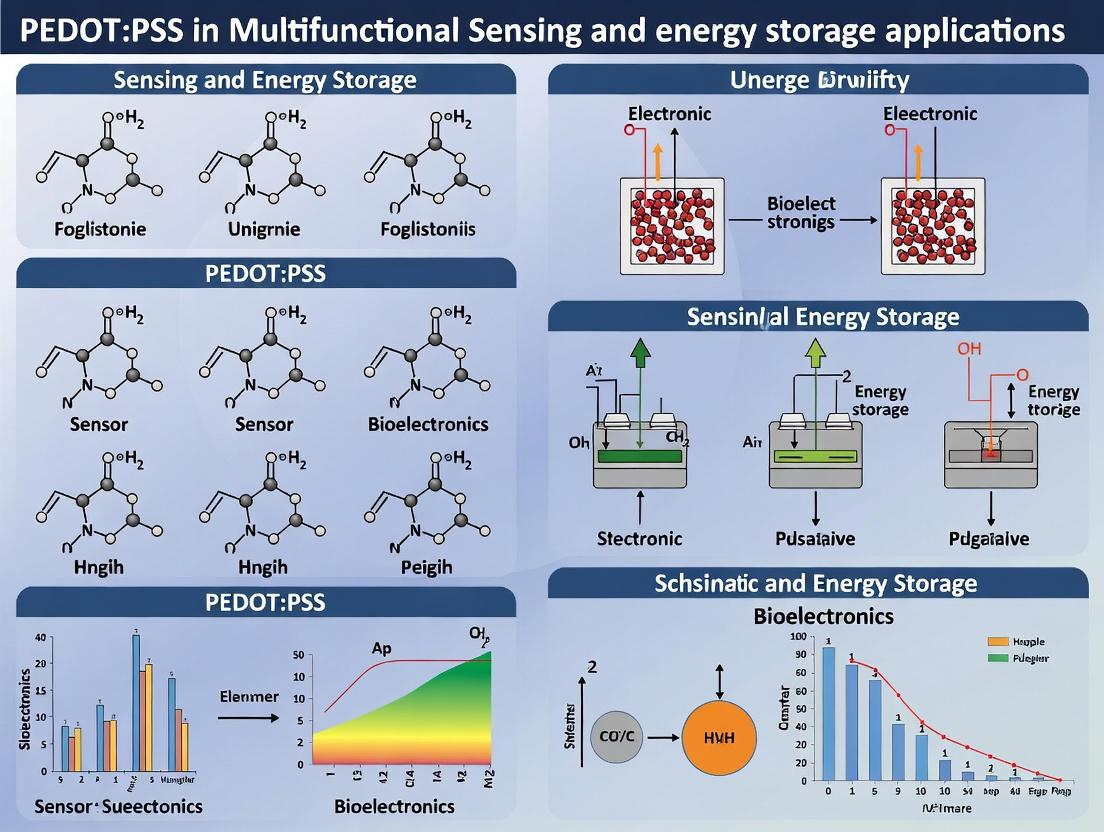
This comprehensive review examines the pivotal role of poly(3,4-ethylenedioxythiophene):poly(styrenesulfonate) (PEDOT:PSS) in the development of advanced multifunctional platforms.
PEDOT:PSS: The Versatile Conducting Polymer Powering Next-Gen Biomedical Sensors and Energy Storage Devices
Abstract
This comprehensive review examines the pivotal role of poly(3,4-ethylenedioxythiophene):poly(styrenesulfonate) (PEDOT:PSS) in the development of advanced multifunctional platforms. We explore the fundamental material properties that make PEDOT:PSS ideal for biomedical sensing (e.g., electrophysiological, biochemical, and mechanical sensors) and energy storage (e.g., supercapacitors, batteries) in wearable and implantable devices. The article details state-of-the-art fabrication and functionalization methodologies, addresses critical challenges in stability, conductivity, and biocompatibility, and provides a comparative analysis with alternative materials. Synthesizing insights across these four core intents, we highlight PEDOT:PSS's unique capability to bridge sensing and power functions, outlining future trajectories for integrated, self-sustaining biomedical systems in drug development and clinical monitoring.
PEDOT:PSS Decoded: Core Properties and Principles for Biomedical Interface Design
The synergy between poly(3,4-ethylenedioxythiophene) (PEDOT) and poly(styrene sulfonate) (PSS) is foundational to its dominance in organic electronics research. Within the broader thesis of PEDOT:PSS in multifunctional sensing and energy storage, understanding this molecular-level partnership is critical. The conjugated structure of EDOT-derived PEDOT provides the intrinsic charge transport pathway, while PSS serves as a charge-balancing dopant and structural template. This combination yields a material with unparalleled processability, tunable conductivity, and mixed ionic-electronic conduction, enabling applications from biosensor electrodes to conductive binders in supercapacitors.
Core Chemical Synergy: Structure-Function Relationship
The intrinsic conductivity of PEDOT:PSS arises from a complex interplay:
- PEDOT (π-Conjugated System): The oxidized (p-doped) polythiophene backbone, derived from EDOT monomers, forms a conductive chain of delocalized π-electrons. The ethylenedioxy substituent lowers the monomer's oxidation potential and provides steric stability, preventing undesirable α-β couplings.
- PSS (Polyelectrolyte Dopant & Dispersion Aid): PSS serves a dual role. Its sulfonate groups compensate for the positive charges (polarons/bipolarons) on the PEDOT backbone, enabling doping. As a water-soluble polyelectrolyte, it also allows for the aqueous dispersion of the otherwise insoluble PEDOT, facilitating solution processing.
- Morphology: The system forms a semi-interpenetrating network where PEDOT-rich crystalline grains are embedded in a PSS-rich insulating matrix. Charge transport occurs via hopping between these conductive grains.
Table 1: Key Structural Components and Their Functional Roles
| Component | Chemical Feature | Primary Function in PEDOT:PSS |
|---|---|---|
| EDOT Monomer | 3,4-ethylenedioxythiophene ring | Provides the conductive, low-oxidation-potential backbone core. |
| PEDOT Chain | π-conjugated polythiophene backbone | Serves as the intrinsic electronic charge transport pathway. |
| PSS Chain | Sulfonated polystyrene | (1) Charge-balancing dopant (via SO₃⁻); (2) Enables aqueous dispersion. |
| Polaron/Bipolaron | Charged quinoid structure on PEDOT | Charge carrier responsible for conductivity. |
Table 2: Typical Properties of PEDOT:PSS (Standard PH1000 Formulation)
| Property | Typical Value Range | Measurement Condition / Notes |
|---|---|---|
| Conductivity (as-cast) | 0.5 - 1 S/cm | Intrinsic, without secondary doping. |
| Conductivity (DMSO-treated) | 600 - 1500 S/cm | With 5% v/v DMSO additive. |
| Sheet Resistance | 70 - 200 Ω/sq | For ~100 nm thick film (treated). |
| Optical Transparency | > 85% | At 550 nm for thin film. |
| Work Function | ~5.0 eV | Can be tuned with modifiers. |
| pH Stability | 1.5 - 10 | Stable within this range. |
Application Notes & Protocols
Protocol 1: Optimization of PEDOT:PSS Conductivity via Secondary Doping
Purpose: To dramatically enhance the electrical conductivity of spin-coated PEDOT:PSS films for sensor and electrode applications. Background: Secondary dopants (e.g., polar solvents) reorient PEDOT chains and phase-separate PSS, improving inter-grain connectivity.
Materials & Reagents:
- PEDOT:PSS aqueous dispersion (e.g., Heraeus Clevios PH1000).
- Secondary dopant: Dimethyl sulfoxide (DMSO), ethylene glycol (EG), or sorbitol.
- Surfactant: Zonyl FS-300 (optional, for wettability).
- Substrates: Glass, PET, or SiO₂/Si wafer.
- Spin coater, hotplate, ultrasonic bath, 0.45 μm PVDF syringe filter.
Procedure:
- Solution Preparation: Mix PEDOT:PSS dispersion with the secondary dopant (e.g., 5% v/v DMSO). Optionally, add 0.1% v/v Zonyl. Stir for 1 hour.
- Filtration: Filter the solution through a 0.45 μm PVDF filter to remove particulates.
- Substrate Preparation: Clean substrates with sequential sonication in acetone, isopropanol, and deionized water. Dry with N₂ stream. Treat with O₂ plasma for 2 min (optional, for hydrophilic surfaces).
- Deposition: Spin-coat the filtered solution at 3000 rpm for 60 sec to achieve a ~100 nm film.
- Post-treatment: Immediately transfer the film to a hotplate and anneal at 120°C for 15-20 minutes in air.
- Characterization: Measure sheet resistance (Rs) with a 4-point probe. Calculate conductivity (σ) using σ = 1/(Rs * t), where t is film thickness (measured by profilometer).
Table 3: Effect of Common Secondary Dopants on Conductivity
| Secondary Dopant | Typical Concentration | Conductivity Achieved (S/cm) | Proposed Primary Mechanism |
|---|---|---|---|
| Dimethyl Sulfoxide (DMSO) | 3-7% v/v | 600 - 1200 | Conformational change & Coulombic screening. |
| Ethylene Glycol (EG) | 3-7% v/v | 550 - 1000 | Similar to DMSO, with enhanced boiling point. |
| Sorbitol | 3-5% w/v | 400 - 800 | Also acts as a viscosity modifier. |
| Ionic Liquids | 1-3% w/v | > 1500 | Enhanced screening & plasticizing effect. |
Protocol 2: Formulating PEDOT:PSS-Based Ink for Printed Biosensors
Purpose: To prepare a stable, printable ink suitable for depositing functional electrodes on flexible substrates for electrochemical sensing.
Materials & Reagents:
- PEDOT:PSS (PH1000).
- DMSO (conductivity enhancer).
- Glycerol (humectant, prevents nozzle clogging).
- Triton X-100 (surfactant, adjusts surface tension).
- Deionized (DI) water.
- Target biomolecule (e.g., glucose oxidase for glucose sensing).
Procedure:
- Base Ink Formulation: To 10 mL of filtered PH1000, add 0.5 mL DMSO, 0.3 mL glycerol, and 10 μL Triton X-100. Stir gently for 2 hours.
- Rheology Adjustment: Characterize viscosity using a viscometer. Target 8-15 cP for inkjet printing. Adjust with DI water (lower) or glycerol (higher).
- Functionalization (Example - Glucose Oxidase Immobilization): a. Prepare a 10 mg/mL solution of glucose oxidase (GOx) in 10 mM PBS (pH 7.4). b. Mix the base ink with the GOx solution in a 9:1 volume ratio under gentle vortexing. c. The ink is now ready for printing and should be used within 4 hours.
- Printing & Curing: Inkjet print onto a treated PET substrate. Cure at 80°C for 30 minutes in a dry oven. Note: High temperature will denature enzymes; for enzyme inks, use lower cure temps (e.g., 37°C for 2 hrs).
The Scientist's Toolkit: Essential Research Reagents
Table 4: Key Research Reagent Solutions for PEDOT:PSS Research
| Reagent / Material | Function / Purpose | Example Brand/Product |
|---|---|---|
| PEDOT:PSS Dispersion | The core conductive polymer material. | Heraeus Clevios PH1000, PH500, AI 4083. |
| Polar Solvent (Secondary Dopant) | Enhances film conductivity by morphology control. | DMSO, Ethylene Glycol, N-Methyl-2-pyrrolidone (NMP). |
| Surfactant | Improves wettability and film uniformity on diverse substrates. | Zonyl FS-300, Dynol 604, Triton X-100. |
| Crosslinker | Increases film stability in aqueous environments (critical for biosensing). | (3-Glycidyloxypropyl)trimethoxysilane (GOPS). |
| Ionic Liquid | Ultra-high conductivity enhancement, adds ionic functionality. | 1-Ethyl-3-methylimidazolium tetrafluoroborate ([EMIM][BF₄]). |
| Conductivity Standard | Calibration for 4-point probe measurements. | Certified silicon wafer standard. |
| Flexible Substrate | For flexible electronics applications. | PET, PEN, Polyimide (Kapton). |
Visualizing Relationships & Workflows
Title: From Monomers to Multifunctional Applications
Title: Conductivity Optimization Protocol Workflow
1. Introduction & Context Within the ongoing thesis research on poly(3,4-ethylenedioxythiophene):polystyrene sulfonate (PEDOT:PSS) for multifunctional sensing and energy storage, the precise tuning of its material properties is paramount. This document details application notes and protocols for modulating two critical properties: work function (WF) and mechanical flexibility. Tailoring the WF enables optimized energy level alignment for sensing and charge injection in energy devices, while enhancing flexibility is crucial for wearable and implantable applications.
2. Protocol: Tunable Work Function via Secondary Doping Objective: To systematically lower the work function of PEDOT:PSS films for improved electron injection/harvesting in organic electronic devices. Principle: The addition of high-dielectric-constant solvents (secondary dopants) induces a conformational change in PEDOT chains from coiled to extended, enhancing conductivity and modifying surface electronic states.
Materials & Reagents:
- PEDOT:PSS aqueous dispersion (e.g., Clevios PH1000).
- Secondary dopant: Dimethyl sulfoxide (DMSO), Ethylene glycol (EG), or Sorbitol.
- Surfactant: Zonyl FS-300 (optional, for wettability).
- Substrates: Glass or pre-cleaned ITO/glass.
- Filter: 0.45 µm hydrophilic PTFE syringe filter.
Procedure:
- Solution Preparation: To the PEDOT:PSS dispersion, add the secondary dopant (e.g., 5% v/v DMSO or 6% v/v EG). For enhanced film formation, 0.1% v/v Zonyl FS-300 may be added.
- Mixing: Stir the mixture vigorously on a magnetic stirrer for ≥2 hours at room temperature.
- Filtration: Filter the solution through a 0.45 µm PTFE syringe filter to remove aggregates.
- Deposition: Deposit the film via spin-coating (e.g., 3000 rpm for 60 s) or bar-coating onto the target substrate.
- Annealing: Heat the film on a hotplate at 120°C for 15-20 minutes to remove residual water and solvent.
- WF Measurement: Characterize the work function using Kelvin Probe Force Microscopy (KPFM) in a controlled atmosphere (dry air or N₂).
Data & Expected Outcomes:
| Secondary Dopant (Concentration) | Typical WF (eV) | Conductivity (S/cm) | Film Morphology |
|---|---|---|---|
| None (Pristine PH1000) | 5.0 - 5.2 | ~1 | Coiled, granular |
| DMSO (5% v/v) | 4.9 - 5.0 | ~800 | Extended, fibrous |
| Ethylene Glycol (6% v/v) | 4.8 - 5.0 | ~950 | Extended, fibrous |
| Sorbitol (4% w/v) | 5.0 - 5.1 | ~600 | Denser, cross-linked |
3. Protocol: Enhancing Mechanical Flexibility via Polymer Blending & Additives Objective: To produce highly flexible, crack-resistant PEDOT:PSS films for deformable sensors and stretchable supercapacitors. Principle: Incorporating hydrogen-bonding polymers or plasticizers improves strain dissipation, prevents crack propagation, and maintains percolation pathways under stress.
Materials & Reagents:
- PEDOT:PSS aqueous dispersion (Clevios PH1000 or stretchable grade CLEVIOS F).
- Flexibility Enhancer: Poly(ethylene oxide) (PEO, Mw~600k), Glycerol, or Ionic liquid (e.g., 1-ethyl-3-methylimidazolium dicyanamide, EMIM:DCA).
- Substrate: Polyimide (PI) or Polydimethylsiloxane (PDMS) elastomer.
Procedure:
- Composite Formulation: Blend PEDOT:PSS with the flexibility enhancer. Two effective formulations:
- PEO Blend: Add 1-3% w/w PEO to PEDOT:PSS and stir for 4 hours.
- Glycerol-Plasticized: Add 10-15% v/v Glycerol to PEDOT:PSS and stir for 2 hours.
- Substrate Preparation: Treat PDMS substrates with UV-Ozone for 5 minutes to improve adhesion.
- Film Deposition: Use bar-coating or spray-coating to achieve uniform films on the flexible substrate.
- Soft Baking: Dry at 80°C for 10 minutes.
- Strain Testing: Mount the sample on a tensile stage. Measure electrical resistance in-situ while applying uniaxial strain (e.g., 0-50% elongation) at a constant rate (e.g., 1 mm/min).
Data & Expected Outcomes:
| Formulation (PEDOT:PSS Base) | Crack-Onset Strain (%) | Conductivity @ 0% Strain (S/cm) | Conductivity Retention @ 30% Strain |
|---|---|---|---|
| Pristine PH1000 on PDMS | 2-5 | ~1 | <10% |
| PH1000 + 2% PEO | 25-35 | ~400 | ~75% |
| PH1000 + 12% Glycerol | >50 | ~50 | ~85% |
| CLEVIOS F (Commercial) | >100 | ~80 | >90% |
4. The Scientist's Toolkit: Key Research Reagent Solutions
| Item (Supplier Example) | Function in PEDOT:PSS Tuning |
|---|---|
| Clevios PH1000 (Heraeus) | Standard high-conductivity grade PEDOT:PSS dispersion; base material for modifications. |
| Dimethyl Sulfoxide (DMSO) (Sigma-Aldrich) | Secondary dopant; realigns PEDOT chains, boosting conductivity and modestly lowering WF. |
| Zonyl FS-300 (Chemours) | Fluorosurfactant; dramatically improves wetting on hydrophobic substrates (e.g., PDMS). |
| Glycerol (Sigma-Aldrich) | Non-volatile plasticizer; imbibes film, increases elasticity, and enhances stretchability. |
| Poly(ethylene oxide) (PEO) (Sigma-Aldrich) | Hydrogen-bonding polymer; forms a ductile composite matrix, improving toughness. |
| EMIM:DCA Ionic Liquid (IoLiTec) | Conductive plasticizer; simultaneously enhances ionic/electronic conductivity and flexibility. |
| (3-Glycidyloxypropyl)trimethoxysilane (GOPS) (Sigma-Aldrich) | Cross-linker; forms covalent bonds with PSS, dramatically improving adhesion and wet-stability. |
5. Visualization: Experimental Workflow for Property Tuning
Title: PEDOT:PSS Property Tuning Workflow
6. Visualization: Structure-Property Relationship Pathways
Title: Modification to Property Pathway
Application Notes
The integration of PEDOT:PSS into biomedical and bioelectronic devices, such as implantable sensors and biobatteries, hinges critically on its performance within physiological environments. This profile outlines the key compatibility and stability parameters essential for researchers designing such multifunctional systems.
1. Biocompatibility Profile: Cellular and Systemic Interactions PEDOT:PSS demonstrates a generally favorable but formulation-dependent biocompatibility. Key factors influencing its biological response include the specific PSS-to-PEDOT ratio, the use of secondary dopants (e.g., DMSO, EG), and post-processing treatments (e.g., cross-linking, laser annealing).
- Cytocompatibility: In vitro studies with various cell lines (e.g., fibroblasts, neurons) show viability typically >80% after 24-72 hours of indirect or direct contact with well-formulated, purified PEDOT:PSS films. Inflammatory cytokine release (e.g., TNF-α, IL-1β) from macrophages in contact with the material is generally low but measurable.
- In Vivo Response: Upon implantation, a classic foreign body response is observed, culminating in the formation of a fibrous capsule. The thickness and cellular density of this capsule are critical metrics, with optimized, smooth PEDOT:PSS surfaces eliciting thinner capsules (~50-100 µm) compared to rougher controls.
2. (Electro)Chemical Stability Profile: Degradation Mechanisms The operational lifetime of PEDOT:PSS devices in physiological saline (0.9% NaCl, PBS) or simulated interstitial fluid is limited by electrochemical and chemical degradation pathways.
- Electrochemical Over-Oxidation: Under applied anodic potentials (>0.8 V vs. Ag/AgCl in physiological buffer), the PEDOT backbone is susceptible to irreversible over-oxidation, leading to loss of conductivity and electroactivity. This is a primary failure mode in sensing and stimulation electrodes.
- Chemical De-Doping & Swelling: Physiological chloride ions (Cl⁻) can exchange with PSS⁻ counter-ions, de-doping the PEDOT and reducing conductivity. Furthermore, the hydrophilic PSS component causes significant swelling (up to 20-30% volume increase) in aqueous environments, which can compromise mechanical integrity and delaminate films from substrates.
- Mechanical Stability: The cyclic swelling/deswelling and inherent brittle nature of pure PEDOT:PSS can lead to crack formation under mechanical stress or during chronic implantation.
Quantitative Stability Data Summary
Table 1: Key Stability Metrics for PEDOT:PSS in Physiological Environments (PBS, pH 7.4, 37°C)
| Parameter | Baseline PEDOT:PSS | Cross-linked PEDOT:PSS | PEDOT:PSS with Additives (e.g., GO, PEG) | Measurement Method |
|---|---|---|---|---|
| Conductivity Loss (7 days immersion) | 60-80% decrease | 20-40% decrease | 15-30% decrease | 4-point probe |
| Charge Capacity Loss (After 1000 CV cycles, 0.1 to 0.8 V) | >70% loss | ~30% loss | ~25% loss | Cyclic Voltammetry |
| Film Swelling Ratio (Mass/Volume) | 25-35% | 10-15% | 5-12% | Gravimetric/AFM |
| Adhesion Strength (to PI/Glass) | Poor (<1 MPa) | Good (2-5 MPa) | Moderate to Good (1.5-4 MPa) | Peel/Tape Test |
| In Vitro Cell Viability (L929 Fibroblasts, 72h) | 75-85% | 80-90% | 85-95% | MTT/Alamar Blue Assay |
Experimental Protocols
Protocol 1: Assessing Electrochemical Stability via Accelerated Aging Objective: To evaluate the stability of PEDOT:PSS working electrodes under simulated operational conditions. Materials:
- Potentiostat/Galvanostat
- Three-electrode cell (PEDOT:PSS on substrate as Working Electrode, Pt mesh Counter Electrode, Ag/AgCl (3M KCl) Reference Electrode)
- Phosphate Buffered Saline (PBS, 0.1M, pH 7.4) at 37°C
- Environmental chamber or heated stir plate
Method:
- Setup: Immerse the electrochemical cell in 50 mL of pre-warmed PBS (37°C). Ensure stable reference electrode potential.
- Initial Characterization: Record Cyclic Voltammetry (CV) from -0.6 V to +0.8 V vs. Ag/AgCl at 50 mV/s for 5 cycles. Record Electrochemical Impedance Spectroscopy (EIS) at open-circuit potential from 100 kHz to 0.1 Hz.
- Accelerated Aging: Apply a constant anodic potential of +0.7 V vs. Ag/AgCl for 1 hour, or subject the electrode to continuous CV cycling (e.g., 1000 cycles) between -0.6 V and +0.8 V.
- Post-Test Characterization: Repeat step 2 in fresh PBS.
- Analysis: Calculate the percentage change in electroactive surface area (from CV charge), charge transfer resistance (from EIS), and low-frequency impedance.
Protocol 2: Quantifying Biocompatibility via In Vitro Cytotoxicity (ISO 10993-5) Objective: To determine the cytotoxic potential of PEDOT:PSS film leachables. Materials:
- PEDOT:PSS films (sterilized via 70% ethanol rinse and UV exposure)
- L929 mouse fibroblast cell line
- Cell culture medium (DMEM + 10% FBS + 1% P/S)
-
Within the broader thesis exploring conductive polymers for multifunctional applications, this document details the application-specific protocols and notes for Poly(3,4-ethylenedioxythiophene):Polystyrene sulfonate (PEDOT:PSS). PEDOT:PSS is a cornerstone material in organic electronics due to its inherent multifunctionality, which stems from its tunable electrical conductivity, high optical transparency, excellent mechanical flexibility, and environmental stability. These properties make it uniquely suitable for hybrid devices that integrate sensing and energy storage capabilities, a critical area for next-generation wearable diagnostics and autonomous systems.
Application Notes: Multifunctional Sensing and Energy Storage
Note 1: Dual-Function Electrochemical Sensors and Supercapacitors PEDOT:PSS films can function simultaneously as the active electrode in a supercapacitor and as the transducer in a biosensor. The porous, high-surface-area morphology ideal for ion storage (energy) also facilitates efficient diffusion of analytes and electron transfer (sensing). The material's mixed ionic-electronic conductivity is key to this duality.
Note 2: Strain-Sensitive Energy Devices When used in stretchable energy storage devices, PEDOT:PSS's conductivity changes under mechanical deformation. This inherent piezoresistive property allows the same device component to store energy and act as a self-monitoring strain sensor, reporting on structural integrity or wearer movement.
Note 3: Photothermal-Electrochemical Systems PEDOT:PSS exhibits strong photothermal conversion under near-infrared (NIR) irradiation. This property can be harnessed to locally heat a microenvironment, enhancing electrochemical reaction kinetics for both sensing (increasing sensitivity) and energy storage (boosting charge/discharge rates).
Key Research Reagent Solutions & Materials
| Item | Function/Explanation |
|---|---|
| High-Conductivity PEDOT:PSS Dispersion (e.g., PH1000) | Aqueous dispersion containing secondary dopants (e.g., dimethyl sulfoxide, DMSO) for enhanced conductivity. Base material for film fabrication. |
| Dimethyl Sulfoxide (DMSO) >99.9% | Common secondary dopant. Added to PEDOT:PSS dispersion (3-5% v/v) to reorder polymer chains, improving conductivity by 2-3 orders of magnitude. |
| (3-Glycidyloxypropyl)trimethoxysilane (GOPS) | Crosslinking agent. Improves mechanical stability and water resistance of PEDOT:PSS films, crucial for durable devices. |
| Zonyl FS-300 Fluorosurfactant | Wetting agent. Improves adhesion and film-forming properties of PEDOT:PSS on hydrophobic substrates (e.g., PET, PDMS). |
| Polyethyleneimine (PEI) | Cationic polymer. Used as an interfacial layer to invert the volumetric charge of PEDOT:PSS, enabling layer-by-layer assembly for tailored morphology. |
| H2SO4 Electrolyte (1M aqueous) | Common electrolyte for testing/prototyping supercapacitor performance. Provides high ionic conductivity for proton-based charge storage in PEDOT:PSS. |
Experimental Protocols
Protocol 1: Fabrication of Conductivity-Enhanced, Crosslinked PEDOT:PSS Films
Objective: To prepare stable, highly conductive freestanding or substrate-bound PEDOT:PSS films for electrode fabrication. Materials: PEDOT:PSS PH1000 dispersion, DMSO, GOPS, Zonyl FS-300, target substrate (e.g., glass, PET), 0.45 μm syringe filter. Procedure:
- Solution Preparation: Mix 10 mL of PEDOT:PSS PH1000 with 300 μL of DMSO (3% v/v) and 50 μL of GOPS (0.5% v/v relative to PEDOT:PSS). Add 20 μL of Zonyl FS-300.
- Stirring: Stir the mixture magnetically for at least 60 minutes at room temperature.
- Filtration: Filter the solution through a 0.45 μm PVDF syringe filter to remove aggregates.
- Deposition: Deposit the solution via spin-coating (e.g., 2000 rpm for 60 s), drop-casting, or blade-coating onto a pre-cleaned substrate.
- Annealing: Cure the film on a hotplate: 15 min at 100°C, followed by 30 min at 140°C to complete crosslinking via GOPS.
- Post-Treatment (Optional): For highest conductivity, immerse the dried film in a 1M H2SO4 solution for 15 minutes, then rinse with deionized water and dry at 100°C for 10 min.
Protocol 2: Electrochemical Characterization for Dual-Function Performance
Objective: To evaluate the same PEDOT:PSS electrode for both supercapacitive and biosensing metrics. Materials: Fabricated PEDOT:PSS working electrode, Ag/AgCl reference electrode, Pt wire counter electrode, potentiostat, 1M H2SO4 (for energy), PBS (pH 7.4) with/without target analyte (e.g., glucose, H2O2 for sensing). Procedure:
- Cyclic Voltammetry (CV) for Capacitance:
- Setup a standard three-electrode cell in 1M H2SO4.
- Record CV curves at scan rates from 5 mV/s to 200 mV/s within a stable potential window (e.g., -0.2 to 0.8 V vs. Ag/AgCl).
- Calculate areal capacitance (Ca, F/cm²) from the CV at a given scan rate (v) using: Ca = (∫ I dV) / (2 * A * v * ΔV), where ∫ I dV is the integrated current, A is the electrode area, and ΔV is the potential window.
- Electrochemical Impedance Spectroscopy (EIS) for Interface:
- In the same setup, perform EIS from 100 kHz to 0.1 Hz at the open-circuit potential with a 10 mV amplitude.
- Fit data to an equivalent circuit to extract series resistance (Rs) and charge-transfer resistance (Rct).
- Amperometric Sensing:
- Switch electrolyte to PBS (pH 7.4). Apply a constant sensing potential (e.g., +0.6V for H2O2 detection).
- Under stirred conditions, successively add aliquots of the target analyte (e.g., 50 μM H2O2 steps).
- Record the steady-state current response after each addition. Plot calibration curve (Current vs. Concentration).
- Capacitance Retention after Sensing:
- Return the electrode to 1M H2SO4 and repeat step 1 at 50 mV/s. Compare the initial and final capacitance values to assess performance retention.
Table 1: Performance Metrics of PEDOT:PSS in Multifunctional Applications
| Application | Key Metric | Typical Value Range | Conditions/Notes |
|---|---|---|---|
| Supercapacitor | Areal Capacitance | 20 - 80 mF/cm² | In 1M H2SO4, scan rate 5 mV/s |
| Cycle Stability | 80 - 95% retention after 5000 cycles | Charge/discharge at 1 mA/cm² | |
| Strain Sensor | Gauge Factor (GF) | 1.5 - 10 | Depends on film processing; GF = (ΔR/R₀)/ε |
| Sensing Range | Up to 50% strain | On elastic substrates like PDMS | |
| Biosensor (e.g., H2O2) | Sensitivity | 100 - 500 μA·mM⁻¹·cm⁻² | Amperometry at +0.6V vs. Ag/AgCl |
| Limit of Detection (LOD) | 0.1 - 1 μM | Signal-to-noise ratio (S/N=3) | |
| Photothermal | NIR Absorption Efficiency | >80% | For films with optimized thickness |
| Temperature Increase (ΔT) | 20 - 50 °C | Under 1 W/cm² NIR, 30 s irradiation |
Table 2: Effect of Common Secondary Dopants on PEDOT:PSS Film Properties
| Additive (5% v/v) | Conductivity (S/cm) | Transparency @550nm (%) | Mechanical Notes |
|---|---|---|---|
| None (Pristine) | 0.5 - 1 | ~85 | Brittle, hydrophilic |
| Dimethyl Sulfoxide (DMSO) | 600 - 1200 | ~75 | Flexible, moderate stability |
| Ethylene Glycol (EG) | 800 - 1400 | ~70 | Flexible, hygroscopic |
| Sorbitol | 300 - 600 | ~78 | Enhanced tensile strength |
Visualization: Diagrams and Workflows
Diagram 1: Logical map of PEDOT:PSS multifunctionality.
Diagram 2: Fabrication workflow for conductive PEDOT:PSS.
Diagram 3: Three-electrode setup for multifunctional characterization.
Historical Evolution of PEDOT:PSS
Poly(3,4-ethylenedioxythiophene):poly(styrene sulfonate) (PEDOT:PSS) emerged from the discovery of intrinsically conductive polymers in the late 20th century. The synthesis of PEDOT by Bayer AG researchers in the late 1980s was a pivotal moment, but its insolubility limited applications. The subsequent development of a water-processable complex using PSS as a charge-balancing counterion and dispersant in the early 1990s enabled its commercial viability. This aqueous dispersion form unlocked large-scale solution processing, driving its adoption first as an antistatic coating and later in organic electronics.
The historical progression reflects a shift from fundamental conductive polymer research to applied materials science, with key market adoption waves in anti-static coatings, organic light-emitting diodes (OLEDs), touch screens, and now, emerging flexible and bioelectronic applications. This evolution is contextualized within the broader thesis on multifunctional sensing and energy storage, as each technological wave demanded refinements in PEDOT:PSS formulation, directly enabling its current utility in advanced research.
Current Market Forms: Aqueous Dispersions and Commercial Grades
The commercial PEDOT:PSS market is dominated by aqueous dispersions, typically containing 1.0-1.3 wt% solid content, with PSS to PEDOT ratios varying by grade. Dispersions may include proprietary additives (e.g., surfactants, cross-linkers, secondary dopants) to enhance stability, film formation, or conductivity.
Table 1: Key Commercial PEDOT:PSS Grades and Properties
| Grade (Vendor) | PEDOT:PSS Ratio | Typical Conductivity (S/cm) | Primary Form | Common Research Applications |
|---|---|---|---|---|
| PH1000 (Heraeus) | 1:2.5 | 800 - 1000 | Aqueous Dispersion | Transparent electrodes, supercapacitors, thermoelectrics |
| PH500 (Heraeus) | N/A | ~300 | Aqueous Dispersion | OLED hole injection layers |
| AI 4083 (Heraeus) | 1:6 | 10^-3 - 10^-2 | Aqueous Dispersion | Organic solar cells, buffer layers |
| CPP 105D (Agfa) | N/A | ~500 | Aqueous Dispersion | Printed electronics, sensors |
| Clevios S V3 (Heraeus) | N/A | >1000 (DMSO-doped) | Ready-to-use Formulation | High-conductivity patterned films |
Table 2: Standard Aqueous Dispersion Composition & Additives
| Component | Typical Concentration | Function |
|---|---|---|
| PEDOT:PSS Complex | 1.0 - 1.3 % w/w | Conductive polymer matrix |
| Water | ~95% | Dispersion medium |
| Surfactants (e.g., Dynol) | <0.5% | Wetting, film uniformity |
| Silane Coupling Agents | Variable | Adhesion promotion |
| High-Boiling Solvents (e.g., DMSO, EG) | 3 - 7% (often added) | Secondary doping, conductivity enhancement |
Application Notes for Multifunctional Sensing & Energy Storage
Note: Within the thesis context, PEDOT:PSS serves as a multifunctional active material. For sensing, its mixed ionic-electronic conductivity enables transduction of biological/chemical stimuli. For energy storage, its high capacitance and conductivity facilitate charge storage and collection.
Application Note AN-01: Formulating High-Conductivity Electrodes for Supercapacitors. The baseline PEDOT:PSS dispersion (e.g., PH1000) requires secondary doping. Protocol: Add 5% v/v dimethyl sulfoxide (DMSO) to the dispersion, stir for >2 hours, filter (0.45 μm PVDF syringe filter), and deposit via spin-coating or blade-coating. Anneal at 120°C for 15 minutes. This yields films with conductivity >800 S/cm, suitable for current collectors in symmetric micro-supercapacitors.
Application Note AN-02: Engineering PEDOT:PSS for Biochemical Sensing. For biosensor interfaces, balancing conductivity, stability, and biocompatibility is critical. Use grade AI 4083 for its high PSS content, promoting aqueous stability. Protocol: Mix with 1% v/v (3-glycidyloxypropyl)trimethoxysilane (GOPS) as a crosslinker, spin-coat, and cure at 120°C for 1 hour. This creates a hydrogel-like, water-insoluble film suitable for functionalization with biorecognition elements (e.g., antibodies, aptamers).
Experimental Protocols
Protocol 4.1: Fabrication of a PEDOT:PSS-based Planar Supercapacitor Electrode. Objective: To prepare a flexible, high-conductivity electrode for in-plane energy storage devices. Materials: PEDOT:PSS PH1000, DMSO, GOPS, Isopropyl Alcohol (IPA), PVDF syringe filter (0.45 μm), flexible PET substrate, oxygen plasma cleaner. Procedure:
- Substrate Preparation: Clean PET substrate with IPA. Treat with O₂ plasma for 2 minutes to enhance wettability.
- Ink Formulation: To 10 mL of PH1000, add 0.5 mL DMSO and 0.1 mL GOPS. Stir magnetically for 4 hours at room temperature.
- Filtration: Filter the ink through a 0.45 μm PVDF syringe filter.
- Deposition: Blade-coat the ink onto the PET substrate using a 100 μm gap height.
- Curing: Dry on a hotplate at 80°C for 10 minutes, then cure at 120°C for 30 minutes.
- Characterization: Measure sheet resistance via 4-point probe. Typical target: < 80 Ω/sq.
Protocol 4.2: Functionalization of PEDOT:PSS Films for Protein Detection. Objective: To immobilize a capture antibody on a crosslinked PEDOT:PSS film for electrochemical biosensing. Materials: PEDOT:PSS AI 4083, GOPS, phosphate-buffered saline (PBS, pH 7.4), N-(3-Dimethylaminopropyl)-N′-ethylcarbodiimide (EDC), N-Hydroxysuccinimide (NHS), Anti-IgG antibody (model), Bovine Serum Albumin (BSA). Procedure:
- Film Fabrication: Follow spin-coating and crosslinking steps from AN-02 to create a stable film on an ITO or gold electrode.
- Surface Activation: Prepare a fresh solution of 50 mM EDC and 25 mM NHS in PBS. Pipette onto the PEDOT:PSS film and incubate for 30 minutes at room temperature to activate carboxyl groups from PSS.
- Antibody Immobilization: Rinse film with PBS. Incubate with 50 μg/mL Anti-IgG in PBS for 2 hours at 4°C.
- Blocking: Rinse and block non-specific sites with 1% w/v BSA in PBS for 1 hour.
- Assay: The functionalized electrode is ready for use in an electrochemical (e.g., EIS) detection assay for its target antigen.
Visualization Diagrams
Title: PEDOT:PSS from Dispersion to Application
Title: Experimental Workflow for PEDOT:PSS Devices
The Scientist's Toolkit: Key Research Reagent Solutions
Table 3: Essential Materials for PEDOT:PSS Research
| Item/Vendor | Function in Research | Typical Use Case |
|---|---|---|
| PEDOT:PSS PH1000 (Heraeus) | High-conductivity baseline dispersion. | Fabrication of transparent electrodes, supercapacitor current collectors. |
| Dimethyl Sulfoxide (DMSO) (Sigma-Aldrich) | Secondary dopant. Rearranges PEDOT/PSS morphology, enhancing conductivity. | Added at 3-7% v/v to dispersions pre-processing. |
| (3-Glycidyloxypropyl)trimethoxysilane (GOPS) (Sigma-Aldrich) | Crosslinking agent. Reacts with PSS, rendering films water-insoluble and mechanically robust. | Essential for bio-sensing interfaces in aqueous media (1-3% v/v). |
| Ethylene Glycol (EG) (Sigma-Aldrich) | Alternative secondary dopant & humectant. Can improve conductivity and film uniformity. | Used in thermoelectric or humidity-sensing formulations. |
| Dynol 604 (Air Products) | Non-ionic surfactant. Dramatically reduces surface tension of aqueous dispersion, improving wettability. | Added (<0.1%) for coating on hydrophobic substrates. |
| Poly(diallyldimethylammonium chloride) (PDAC) (Sigma-Aldrich) | Cationic polymer for layer-by-layer (LbL) assembly. | Used to build multilayer PEDOT:PSS films for precise thickness control. |
| EDC/NHS Crosslinker Kit (Thermo Fisher) | Carboxyl group activators for biomolecule conjugation. | Immobilizing antibodies, enzymes, or peptides onto PSS-rich films. |
From Lab to Device: Fabrication and Application Strategies for Sensing and Storage
Within the scope of a broader thesis on PEDOT:PSS for multifunctional sensing and energy storage, the choice of deposition technique is a critical determinant of film morphology, electrical performance, mechanical robustness, and application suitability. This document provides detailed application notes and standardized protocols for four pivotal deposition methods, contextualized for advanced research in bio-integrated sensors and solid-state energy storage devices.
Application Notes & Comparative Analysis
Each technique offers distinct advantages for PEDOT:PSS integration, influencing electrode conductivity, interfacial charge transfer, and device architecture.
Table 1: Comparative Analysis of PEDOT:PSS Deposition Techniques
| Parameter | Spin-Coating | Printing (Inkjet/Aerosol) | Electrodeposition | Vapor-Phase Polymerization (VPP) |
|---|---|---|---|---|
| Typical Thickness | 50-200 nm | 100 nm - 5 µm | 100 nm - 10 µm | 50 nm - 2 µm |
| Conductivity Range | 1 - 1500 S/cm (post-treatment) | 10 - 800 S/cm | 100 - 1000 S/cm | 500 - 4500 S/cm |
| Spatial Resolution | Low (pattern by lift-off) | High (20-50 µm droplets) | Medium (mask-defined) | Medium (mask-defined) |
| Throughput/Speed | High (seconds per wafer) | Medium (drop-on-demand) | Low (minutes to hours) | Medium (minutes) |
| Material Utilization | Poor (< 5%) | Good (> 80% for inkjet) | Excellent (100% on electrode) | Good (precursor efficiency) |
| Substrate Compatibility | Flat, rigid (Si, glass) | Flexible, porous (PET, paper) | Conductive substrates only | Sensitive (flexible, 3D) |
| Primary Sensor Use | Transducing layers, OECT channels | Patterned electrodes, wearables | Microelectrode coating, biosensors | High-performance channel/electrode |
| Primary Energy Use | Supercapacitor electrodes | Current collectors, interconnects | Pseudocapacitive coatings | High-power electrode coatings |
Key Performance Metrics from Recent Literature (2023-2024)
Table 2: Recent Performance Data in Sensing and Energy Storage
| Deposition Method | Application | Key Metric Achieved | Reference Year |
|---|---|---|---|
| Spin-Coating | OECT Glucose Sensor | Sensitivity: 4.5 µA/mM·cm² | 2023 |
| Aerosol Jet Print | Strain Sensor on PET | Gauge Factor: 12.8, Cycles: >5000 | 2024 |
| Electrodeposition | Micro-supercapacitor on Au | Areal Capacitance: 35 mF/cm² | 2023 |
| VPP | Neural Interfacing Electrode | Impedance @1kHz: 2.1 kΩ, C*: 45 mC/cm² | 2024 |
Detailed Experimental Protocols
Protocol: Spin-Coating of PEDOT:PSS for OECT Channels
Objective: Reproducible fabrication of high-quality, uniform PEDOT:PSS thin films for organic electrochemical transistor channels. Materials:
- PEDOT:PSS aqueous dispersion (e.g., Clevios PH1000).
- Ethylene glycol (5% v/v).
- (3-Glycidyloxypropyl)trimethoxysilane (GOPS) crosslinker (1% v/v).
- Dimethyl sulfoxide (DMSO, 5% v/v).
- Surfactant (e.g., Capstone FS-30, 0.1% v/v).
- Target substrate (e.g., glass, Si/SiO₂ with patterned Au contacts).
- Syringe filter (0.45 µm).
- Spin coater, hot plate.
Procedure:
- Solution Preparation: Mix 10 ml PEDOT:PSS dispersion with additives: 500 µL ethylene glycol, 100 µL GOPS, 500 µL DMSO, and 10 µL surfactant. Stir vigorously for 30 minutes. Filter through a 0.45 µm syringe filter.
- Substrate Preparation: Clean substrate via sequential sonication in acetone, isopropanol, and deionized water (5 min each). Dry under N₂ stream. Treat with O₂ plasma for 2 minutes to enhance wettability.
- Deposition: Pipette 100-150 µL of filtered solution onto the static substrate. Execute spin program: 500 rpm for 5s (spread), then 2000-4000 rpm for 60s (thin). Adjust final speed to achieve desired thickness (e.g., 2000 rpm for ~100 nm).
- Post-treatment: Immediately transfer the film to a hot plate. Anneal at 120°C for 20 minutes in ambient air to remove residual water and initiate crosslinking.
- Final Conditioning: For optimal OECT performance, immerse the annealed film in 0.1 M NaCl electrolyte for 10 minutes to facilitate ionic exchange and hydration.
Protocol: Aerosol Jet Printing of PEDot:PSS Interconnects
Objective: Direct-write patterning of conductive PEDOT:PSS lines for flexible sensor arrays. Materials:
- PEDOT:PSS ink (Clevios PJET 700, optimized for printing).
- Flexible substrate (e.g., polyimide film).
- Aerosol Jet printer (e.g., Optomec system).
- Ultrasonic atomizer or pneumatic nebulizer.
- Hot plate or convection oven.
Procedure:
- Ink Preparation: Use as-provided ink. If dilution is required for viscosity adjustment, use deionized water (< 5% v/v). Sonicate ink for 15 minutes before loading.
- Printer Setup: Load substrate and secure with vacuum. Select a 150 µm nozzle. Set sheath gas (N₂) to print gas (N₂) flow ratio to 3:1 (e.g., sheath 60 sccm, print 20 sccm).
- Printing Parameters: Set stage speed to 5 mm/s, ultrasonic atomizer power to 75%. Perform a pneumatic focus adjustment to optimize droplet stream.
- Printing: Execute the print path (e.g., line pattern). Maintain a nozzle-to-substrate standoff distance of 2-3 mm.
- Drying/Curing: After printing, dry the pattern at 80°C for 5 minutes on a hot plate, followed by a final cure at 130°C for 15 minutes in an oven to achieve maximum conductivity.
Protocol: Electrodeposition of PEDOT on Microelectrodes
Objective: Potentiodynamic electrochemical deposition of PEDOT films on patterned gold microelectrodes for biosensing applications. Materials:
- Monomer solution: 10 mM 3,4-ethylenedioxythiophene (EDOT) in aqueous 0.1 M LiClO₄.
- Counter electrode: Platinum wire.
- Reference electrode: Ag/AgCl (3M KCl).
- Working electrode: Patterned Au microelectrode array.
- Potentiostat with software control.
Procedure:
- Cell Setup: In a electrochemical cell, place the Au working electrode, Pt counter electrode, and Ag/AgCl reference electrode into the monomer solution. Ensure electrical isolation of contact pads.
- Electrochemical Technique: Use Cyclic Voltammetry (CV). Set parameters: potential window from -0.8 V to +1.2 V vs. Ag/AgCl, scan rate of 50 mV/s.
- Deposition: Run CV for 10-20 cycles. Monitor the increasing current of the redox peaks, indicating polymer growth.
- Termination & Rinsing: After the final cycle, hold the potential at 0 V for 30s. Carefully remove the substrate and rinse thoroughly with deionized water to remove unreacted monomer and electrolyte.
- Drying: Gently dry the coated electrode under a gentle N₂ stream. Characterize via electrochemical impedance spectroscopy.
Protocol: Vapor-Phase Polymerization of PEDOT for High-Conductivity Films
Objective: Synthesis of highly conductive, smooth PEDOT films via oxidative chemical vapor deposition. Materials:
- Oxidant solution: Iron(III) p-toluenesulfonate (Fe(Tos)₃) in n-butanol (40% w/w).
- Pyridine (inhibitor, 1% v/v relative to oxidant solution).
- EDOT monomer.
- Vacuum desiccator or custom VPP chamber.
- Hot plate.
Procedure:
- Oxidant Layer Deposition: Spin-coat or spray-coat the oxidant/inhibitor solution onto the substrate (e.g., glass). Typical spin: 1500 rpm for 60s. Dry at 60°C for 1 minute to form a solid oxidant matrix.
- VPP Chamber Preparation: Place the coated substrate and a glass vial containing 200 µL of pure EDOT liquid inside a vacuum desiccator. Do not allow direct contact.
- Polymerization: Seal the chamber. Evacuate to a low pressure (5-10 mbar) for 30 seconds, then close the valve. Place the entire chamber on a hot plate set to 70°C. Allow the reaction to proceed for 30-45 minutes. EDOT vapor diffuses and polymerizes within the oxidant layer.
- Post-Polymerization Rinse: Remove the substrate (now with a dark blue film). Rinse sequentially in ethanol and deionized water to remove residual oxidant and byproducts.
- Drying & Annealing: Blow dry with N₂. Optionally anneal at 120°C for 10 minutes to enhance crystallinity and conductivity.
Visualization of Workflows
PEDOT:PSS Spin-Coating Process Flow
Vapor-Phase Polymerization Mechanism
The Scientist's Toolkit: Essential Research Reagents & Materials
Table 3: Key Research Reagent Solutions for PEDOT:PSS Deposition
| Item Name | Function/Application | Example (Supplier) |
|---|---|---|
| PEDOT:PSS Aqueous Dispersion | Conductive polymer colloid, base material for solution-processed films. | Clevios PH1000 (Heraeus) |
| Crosslinking Agent (GOPS) | Enhances film adhesion and stability in aqueous environments; critical for bio-sensing. | (3-Glycidyloxypropyl)trimethoxysilane (Sigma) |
| Secondary Dopant (EG/DMSO) | Improves conductivity by reordering PEDOT:PSS domains; increases film crystallinity. | Ethylene Glycol, Dimethyl Sulfoxide |
| Surfactant | Reduces surface tension for improved wetting and printability. | Capstone FS-30 (Chemours) |
| EDOT Monomer | Liquid precursor for electrochemical or vapor-phase polymerization. | 3,4-ethylenedioxythiophene (Sigma) |
| Oxidant for VPP | Initiates and dopes polymerization of EDOT vapor. | Iron(III) p-toluenesulfonate (Fe(Tos)₃) |
| Polymerization Inhibitor | Slows surface reaction for smoother, more uniform VPP film growth. | Pyridine |
| Solid Electrolyte | Provides ionic transport medium for electrodeposition and device testing. | Lithium perchlorate (LiClO₄) in propylene carbonate |
Application Notes: Conductivity Enhancement in PEDOT:PSS Formulations
Within the context of PEDOT:PSS for multifunctional sensing (e.g., strain, biochemical) and energy storage (supercapacitors, batteries), optimizing electrical conductivity is paramount. Secondary doping via conductivity enhancers reorders the PEDOT:PSS microstructure, transitioning PEDOT chains from a coiled to a linear/crystalline conformation, facilitating inter-chain charge transport.
1. Polar Solvent Additives (DMSO, EG):
- Mechanism: These high-boiling-point solvents partially screen the Coulombic interaction between PEDOT⁺ and PSS⁻, promoting phase separation and PEDOT chain conformational change. They also dissolve excess insulating PSS, potentially washing it away during post-treatment.
- Primary Application: Standard conductivity enhancement for transparent electrodes, printable electronics, and sensor active layers.
2. Ionic Liquids (ILs):
- Mechanism: Dual-function additives. As conductivity enhancers, IL cations (e.g., [EMIM]⁺) interact strongly with PSS⁻ chains, reorganizing the film morphology. As electrolytes, they enable ionic conductivity in solid-state supercapacitors or electrochemical sensors.
- Primary Application: Multifunctional formulations for solid-state, flexible energy storage devices and iontronic sensing platforms.
3. Cosolvent/Additive Systems:
- Mechanism: Combining additives (e.g., DMSO + Surfactant) can simultaneously enhance conductivity, improve wettability/substrate adhesion, and impart stretchability. This is critical for robust, high-performance sensing skins.
Quantitative Data Comparison of Common Enhancers
Table 1: Performance of Conductivity Enhancers in PEDOT:PSS (PH1000)
| Additive | Typical Conc. (vol%) | Conductivity Range (S/cm) | Key Benefit | Trade-off / Note | |
|---|---|---|---|---|---|
| Dimethyl Sulfoxide (DMSO) | 3-10% | 700 - 1200 | High, stable enhancement; industry standard | Can reduce film uniformity if evaporated quickly | |
| Ethylene Glycol (EG) | 3-10% | 600 - 1000 | Effective, lower toxicity | Hygroscopic; may affect long-term stability | |
| Glycerol | 3-8% | 10 - 300 | Biocompatible, non-volatile | Lower conductivity gain | Suitable for bio-interfaces |
| Ionic Liquid ([EMIM][TFSI]) | 1-5 wt% | 50 - 800 | Multifunctional (enhancer + electrolyte) | Conductivity type (ionic/electronic) depends on blend ratio | |
| DMSO + Zonyl FS-300 | 5% + 0.1% | 800 - 950 | Enhanced conductivity + superior film formation on hydrophobic substrates | More complex formulation |
Experimental Protocols
Protocol 1: Standard Formulation & Thin-Film Fabrication for Enhanced Conductivity
Objective: To prepare a DMSO-enhanced PEDOT:PSS solution and fabricate a high-conductivity thin film for sensor or electrode application.
Materials (Research Reagent Solutions):
- PEDOT:PSS Dispersion: (e.g., Clevios PH1000, Heraeus). Function: Conductive polymer base material.
- DMSO (≥99.9%): Function: Primary conductivity enhancer.
- Surfactant (e.g., Zonyl FS-300, 1% soln.): Function: Wetting agent to improve film uniformity.
- Syringe Filter (0.45 µm PVDF): Function: Removes aggregates for smooth films.
- Substrate: Glass, PET, or treated silicon wafer. Function: Film support.
- Oxygen Plasma System: Function: Increases substrate hydrophilicity for better coating.
Procedure:
- Formulation: In a vial, mix 10 mL of PEDOT:PSS (PH1000) with 500 µL of DMSO (5% v/v). For improved wetting, add 50 µL of 1% Zonyl FS-300 solution (0.05% final). Stir on a vortex mixer for 5 minutes.
- Filtration: Filter the mixture through a 0.45 µm syringe filter into a clean vial.
- Substrate Prep: Clean substrate with sequential sonication in detergent, DI water, acetone, and isopropanol. Dry with N₂. Treat with O₂ plasma for 2-5 minutes.
- Deposition: Deposit 50-100 µL of solution onto substrate. Spin-coat at 800 rpm for 6 sec (spread) then 3000 rpm for 30-60 sec. Alternatively, use bar-coating or drop-casting for thicker films.
- Annealing: Immediately transfer the wet film to a hotplate. Anneal at 120-140°C for 15-20 minutes in air.
Protocol 2: Formulating Ionic Liquid-Modified PEDOT:PSS for Solid-State Devices
Objective: To create a blend with mixed ionic/electronic conductivity for solid-state supercapacitor electrodes or iontronic sensors.
Materials (Research Reagent Solutions):
- PEDOT:PSS Dispersion: (e.g., Clevios PH1000). Function: Electronic conductor matrix.
- Ionic Liquid: e.g., 1-ethyl-3-methylimidazolium bis(trifluoromethylsulfonyl)imide ([EMIM][TFSI]). Function: Ionic conductor/morphology modifier.
- DI Water: Function: Solvent for homogeneous mixing.
Procedure:
- Formulation: To 5 mL of PEDOT:PSS, add the desired mass of [EMIM][TFSI] (e.g., 50 mg for ~1 wt% relative to solids). Dilute with 1 mL DI water to reduce viscosity.
- Mixing: Stir vigorously on a magnetic stirrer for 1 hour. Sonicate for 15 minutes to ensure complete homogenization.
- Deposition: Deposit onto the target substrate (e.g., carbon cloth for supercapacitors) via drop-casting or spin-coating.
- Drying: Dry slowly at room temperature for 1 hour, then anneal at 80°C for 1 hour under vacuum to remove water, leaving the IL within the polymer matrix.
Visualizations
Diagram 1: Conductivity Enhancement Mechanism
Diagram 2: Workflow for Sensor/Electrode Fabrication
The Scientist's Toolkit: Key Research Reagent Solutions
Table 2: Essential Materials for PEDOT:PSS Formulation Engineering
| Material / Reagent | Example Product/Specification | Primary Function in Formulation |
|---|---|---|
| Conductive Polymer Dispersion | Clevios PH1000 (Heraeus), Orgacon (Agfa) | The foundational aqueous dispersion of poly(3,4-ethylenedioxythiophene):polystyrene sulfonate. |
| Polar Solvent Enhancer | Dimethyl Sulfoxide (DMSO), Anhydrous, ≥99.9% | Secondary dopant to dramatically increase film conductivity via structural rearrangement. |
| Ionic Liquid (Imidazolium) | 1-Ethyl-3-methylimidazolium bis(trifluoromethylsulfonyl)imide ([EMIM][TFSI]) | Multifunctional additive providing both ionic conductivity and electronic conductivity enhancement. |
| Fluorosurfactant | Zonyl FS-300 (1% aqueous solution) | Reduces surface tension, enabling uniform film formation on diverse, especially hydrophobic, substrates. |
| Crosslinker | (3-Glycidyloxypropyl)trimethoxysilane (GOPS) | Improves mechanical robustness and adhesion of PEDOT:PSS films in aqueous or humid environments. |
| Thickening Agent | (Hydroxypropyl)methyl cellulose (HPMC) | Increases viscosity for direct ink writing (DIW) or screen printing of high-resolution patterns. |
This document provides application notes and protocols for the development of advanced sensing architectures using poly(3,4-ethylenedioxythiophene):poly(styrene sulfonate) (PEDOT:PSS). The work is framed within a broader thesis investigating PEDOT:PSS as a multifunctional material for integrated sensing and energy storage. The intrinsic mixed ionic-electronic conductivity, biocompatibility, and solution-processability of PEDOT:PSS make it a cornerstone material for designing electrodes and transducers that bridge biological and electronic systems.
PEDOT:PSS-Based Dry Electrodes for EEG/ECG
Dry electrodes mitigate the need for conductive gels, improving user comfort and enabling long-term monitoring.
Key Performance Data
Table 1: Performance comparison of PEDOT:PSS-based dry electrodes versus standard Ag/AgCl.
| Parameter | Ag/AgCl Wet Electrode | PEDOT:PSS Dry Electrode (Textile) | PEDOT:PSS Dry Electrode (Microneedle) |
|---|---|---|---|
| Skin-Electrode Impedance (at 10 Hz) | 1-5 kΩ·cm² | 20-50 kΩ·cm² | 5-15 kΩ·cm² |
| Signal-to-Noise Ratio (ECG) | 40-45 dB | 35-40 dB | 38-42 dB |
| Motion Artifact Susceptibility | Low | Moderate | Low |
| Long-term Stability (>8h) | Poor (gel dries) | Good | Excellent |
| Key Advantage | Gold Standard SNR | Comfort/Flexibility | Low Impedance, Penetrates Stratum Corneum |
Protocol: Fabrication of Textile-Based Dry ECG Electrodes
Objective: Create a flexible, washable PEDOT:PSS electrode integrated into a chest strap.
Materials (Research Reagent Solutions):
- PEDOT:PSS Dispersion (PH1000): Conductive polymer base. Add 5% DMSO for enhanced conductivity.
- (3-Glycidyloxypropyl)trimethoxysilane (GOPS): Cross-linker (3% v/v). Improves film adhesion and wash durability.
- Dodecylbenzenesulfonate (DBSA): Surfactant (0.1% w/v). Improves wettability on hydrophobic textiles.
- Polyester Knit Fabric: Flexible, breathable substrate.
- Sylgard 184 PDMS: Encapsulation layer to define active area and protect circuitry.
Procedure:
- Substrate Preparation: Cut fabric to 2 cm x 2 cm. Clean ultrasonically in ethanol and DI water for 10 min each. Dry at 80°C.
- Ink Formulation: Mix PEDOT:PSS (PH1000), DMSO, GOPS, and DBSA thoroughly. Filter through a 0.45 μm PVDF syringe filter.
- Deposition: Use a screen with a 1 cm diameter circular pattern. Deposit ~100 μL of ink via blade coating. Alternatively, use drop casting.
- Curing: Dry at 80°C for 20 min, then cure at 140°C for 60 min in air to cross-link GOPS.
- Encapsulation & Integration: Apply uncured PDMS around the electrode perimeter to create a well, leaving the center exposed. Cure at 70°C for 2h. Solder a shielded cable to the fabric using conductive epoxy and a flexible connector.
- Characterization: Measure sheet resistance via 4-point probe. Measure impedance vs. frequency on a skin phantom (0.9% NaCl agar).
PEDOT:PSS-Based Strain Sensors
These sensors translate mechanical deformation into a resistive or capacitive signal.
Key Performance Data
Table 2: Performance metrics of different PEDOT:PSS strain sensor architectures.
| Architecture | Gauge Factor (GF)* | Sensing Range | Hysteresis | Key Application |
|---|---|---|---|---|
| Pristine PEDOT:PSS Film | 1.5 - 2.5 | <5% | High | Minimal deformation sensing |
| PEDOT:PSS on Pre-strained Elastomer | 5 - 15 | Up to 50% | Moderate | Wearable motion detection |
| PEDOT:PSS Foam/Porous Network | 20 - 50 | Up to 80% | Low | High-sensitivity body movement |
| PEDOT:PSS Composite with Ionic Liquid | 2 - 10 (Capacitive) | Up to 100% | Very Low | Soft robotics, large strain |
*GF defined as (ΔR/R₀)/ε for resistive sensors.
Protocol: Fabrication of a Crack-Based High-GF Strain Sensor
Objective: Create a sensor with high sensitivity for minute movements (e.g., pulse wave).
Procedure:
- Elastomer Substrate: Prepare a thin film of Ecoflex (mix parts A:B, degas, cure at 70°C for 15 min).
- Pre-strain: Stretch the Ecoflex substrate uniformly by 30% and clamp it.
- Deposition: Spray-coat a diluted PEDOT:PSS solution (1:3 with isopropanol) onto the strained surface. Dry at 60°C.
- Release: Carefully release the pre-strain. The compressed conductive film will develop micro-cracks.
- Characterization: Mount sensor on a calibrated translation stage. Measure resistance change (R, ΔR) vs. applied strain (ε) using a digital multimeter. Calculate GF.
PEDOT:PSS in (Bio)chemical Transducers
PEDOT:PSS acts as an ion-to-electron transducer in field-effect or electrochemical sensors.
Key Performance Data
Table 3: Analytical performance of PEDOT:PSS-based (bio)chemical sensors.
| Target Analyte | Transducer Type | Functionalization | Limit of Detection (LOD) | Linear Range | Response Time |
|---|---|---|---|---|---|
| Dopamine | Organic Electrochemical Transistor (OECT) | PEDOT:PSS channel only | 10 nM | 10 nM - 10 µM | <1 s |
| Glucose | Amperometric | Glucose Oxidase + Prussian Blue in PEDOT:PSS | 5 µM | 10 µM - 30 mM | 3-5 s |
| K⁺ Ions | Potentiometric (ISFET-like) | Valinomycin/PEDOT:PSS selective membrane | 1 µM | 1 µM - 0.1 M | <30 s |
| pH | Potentiometric | PEDOT:PSS/PANI composite | - | pH 4-10 | <10 s |
| Cortisol | Electrochemical Impedance | Anti-cortisol Ab on PEDOT:PSS/AuNPs | 10 pg/mL | 0.01 - 100 ng/mL | 15 min |
Protocol: OECT for Dopamine Sensing
Objective: Fabricate a PEDOT:PSS-based OECT for real-time, selective dopamine detection.
Materials (Research Reagent Solutions):
- PEDOT:PSS (Clevios PH1000): OECT channel material.
- Ethylene Glycol (EG): Secondary dopant (10% v/v). Increases conductivity and film stability in aqueous media.
- GOPS: Cross-linker for stability.
- Phosphate Buffered Saline (PBS, 0.01 M, pH 7.4): Standard electrolyte.
- Nafion Perfluorinated Resin: Cation-selective membrane (coated from 0.5% solution). Rejects anions like ascorbate.
Procedure:
- Device Fabrication: Use photolithography to pattern Au source/drain electrodes (W=1000 µm, L=100 µm) on a glass substrate. Treat with O₂ plasma.
- Channel Deposition: Spin-coat the PEDOT:PSS/EG/GOPS mixture at 2000 rpm for 60s. Anneal at 140°C for 1h.
- Encapsulation: Define the active channel area (e.g., 100 µm x 1000 µm) using photoresist or epoxy.
- Functionalization: Drop-cast and dry a thin layer of Nafion on the channel to impart selectivity.
- Measurement Setup: Use a source-measure unit (SMU) or potentiostat. Gate electrode: Ag/AgCl in PBS. Apply constant VDS = -0.1 V. Sweep VG from 0.3 V to -0.7 V to obtain transfer curves. For sensing, apply a constant VG in the transconductance peak region and record ID
- Calibration: Record ID0}.
The Scientist's Toolkit: Essential Research Reagent Solutions
Table 4: Key materials and their functions in PEDOT:PSS sensor research.
| Reagent/Material | Primary Function | Example Use Case |
|---|---|---|
| PEDOT:PSS (Clevios PH1000) | Conductive polymer hydrogel; mixed conductor | Fundamental material for all electrodes, channels, and transducers. |
| Dimethyl Sulfoxide (DMSO) | Secondary dopant (polar solvent) | Enhances conductivity by re-ordering PEDOT chains. Added at 5-10%. |
| Ethylene Glycol (EG) / Sorbitol | Secondary dopant & plasticizer | Boosts conductivity and improves film flexibility and adhesion. |
| (3-Glycidyloxypropyl)trimethoxysilane (GOPS) | Cross-linking agent | Bonds PEDOT:PSS to oxide substrates; crucial for aqueous stability. |
| Nafion | Cation-exchange polymer | Imparts chemical selectivity (rejects anions) in biochemical sensors. |
| Ecoflex / PDMS | Elastomeric substrate/encapsulant | Provides flexible, stretchable, and biocompatible support. |
| Dodecylbenzenesulfonate (DBSA) | Surfactant | Improves wetting and adhesion on hydrophobic surfaces (e.g., textiles). |
| Valinomycin | Ionophore (K⁺ selective) | Enables potentiometric potassium ion sensing when incorporated in a membrane. |
Visualized Workflows and Relationships
Diagram 1: OECT Fabrication & Measurement Workflow
Diagram 2: PEDOT:PSS Multimodal Sensing Signal Pathway
Diagram 3: Thesis Context: PEDOT:PSS in Sensing & Energy
This document outlines detailed application notes and experimental protocols for engineering energy storage components, specifically micro-supercapacitors (MSCs) and composite battery electrodes. The work is framed within a broader doctoral thesis investigating the multifunctional role of poly(3,4-ethylenedioxythiophene):poly(styrene sulfonate) (PEDOT:PSS) in integrated sensing and energy storage systems. The inherent mixed ionic-electronic conductivity, aqueous processability, and mechanical flexibility of PEDOT:PSS make it a cornerstone material for developing next-generation devices that can simultaneously store energy and function as physiological or environmental sensors. These protocols are designed for researchers and scientists aiming to fabricate and characterize advanced energy storage components for applications in autonomous wearable diagnostics and miniaturized biomedical devices.
Research Reagent Solutions Toolkit
| Reagent/Material | Function & Rationale |
|---|---|
| PEDOT:PSS aqueous dispersion (e.g., Clevios PH1000) | Conductive polymer composite; serves as the primary conductive binder, active charge storage material in MSCs, and conductive matrix for battery electrode composites. |
| Dimethyl sulfoxide (DMSO) or Ethylene Glycol | Secondary dopant; added to PEDOT:PSS to enhance its electrical conductivity by re-ordering the polymer chains and removing excess insulating PSS. |
| (3-Glycidyloxypropyl)trimethoxysilane (GOPS) | Crosslinking agent; improves the mechanical stability and water resistance of PEDOT:PSS films, which is critical for devices operating in humid or aqueous environments. |
| High-surface-area activated carbon | Primary capacitive material; provides the high surface area for electrostatic ion adsorption in double-layer micro-supercapacitors. |
| Lithium iron phosphate (LiFePO₄) or Silicon nanoparticles | Battery active materials; used as cathode or anode materials, respectively, within PEDOT:PSS-based composite electrodes for lithium-ion batteries. |
| Polyvinylidene fluoride (PVDF) & N-Methyl-2-pyrrolidone (NMP) | Traditional binder and solvent; provided as a benchmark against the aqueous, PEDOT:PSS-based electrode processing route. |
| Lithium perchlorate (LiClO₄) in propylene carbonate | Standard organic electrolyte; used for testing symmetric MSCs and Li-ion battery half-cells in non-aqueous conditions. |
| Biocompatible gel electrolyte (e.g., PVA/H₃PO₄) | Safe electrolyte for wearable applications; enables the operation of MSCs in direct contact with skin or in implantable scenarios. |
Performance Metrics for PEDOT:PSS-Based Micro-Supercapacitors
Recent studies highlight the impact of formulation and fabrication on MSC performance. Data is summarized from the last 2-3 years of literature.
Table 1: Comparison of PEDOT:PSS-Based MSC Architectures
| Architecture / Composite | Specific Capacitance (F g⁻¹ or F cm⁻³) | Energy Density (Wh kg⁻¹ or mWh cm⁻³) | Power Density (W kg⁻¹ or W cm⁻³) | Cycle Life (Retention %) |
|---|---|---|---|---|
| Interdigitated PEDOT:PSS/DMSO film | 35-45 F cm⁻³ (volumetric) | 3-5 mWh cm⁻³ | 50-100 W cm⁻³ | 85-90% (10k cycles) |
| PEDOT:PSS/Activated Carbon composite | 120-180 F g⁻¹ (gravimetric) | 15-25 Wh kg⁻¹ | 1-5 kW kg⁻¹ | >95% (20k cycles) |
| Laser-scribed PEDOT:PSS/rGO hybrid | 25-30 mF cm⁻² (areal) | 2-4 µWh cm⁻² | 0.5-1 mW cm⁻² | 90% (50k cycles) |
| Electrospun PEDOT:PSS/PAN nanofibers | 200-250 F g⁻¹ | 20-30 Wh kg⁻¹ | 2-8 kW kg⁻¹ | 92% (15k cycles) |
Performance of PEDOT:PSS Composite Battery Electrodes
PEDOT:PSS acts as both a conductive agent and a flexible binder, replacing traditional PVDF and carbon black.
Table 2: Performance of PEDOT:PSS-Bound vs. Traditional PVDF-Bound Electrodes
| Electrode Composition (Cathode: LiFePO₄) | Conductivity (S cm⁻¹) | Specific Capacity (mAh g⁻¹) @ 0.1C | Rate Capability (Capacity at 5C) | Flexibility / Adhesion |
|---|---|---|---|---|
| Traditional: 80% LFP, 10% PVDF, 10% Carbon Black | ~10⁻³ | 155-160 | ~110 mAh g⁻¹ (70%) | Brittle, poor adhesion |
| Aqueous: 90% LFP, 10% PEDOT:PSS (w/ 5% DMSO) | ~0.5-1.0 | 158-162 | ~135 mAh g⁻¹ (85%) | Excellent, flexible |
| Composite: 85% LFP, 10% PEDOT:PSS, 5% CNT | ~2.5-4.0 | 160-165 | ~140 mAh g⁻¹ (88%) | Excellent, flexible |
Experimental Protocols
Protocol: Fabrication of Aqueous-Processed PEDOT:PSS/Activated Carbon Micro-Supercapacitors
Objective: To fabricate an interdigitated MSC using a water-based PEDOT:PSS/activated carbon composite ink.
Materials:
- PEDOT:PSS dispersion (PH1000)
- DMSO, GOPS
- Activated carbon (YP-50F)
- Carboxymethyl cellulose (CMC)
- Deionized water
- Laser-patterned polyimide substrate with Au interdigitated current collectors
Methodology:
- Ink Formulation:
- Mix 70 wt% activated carbon, 20 wt% PEDOT:PSS, and 10 wt% CMC in DI water.
- To the PEDOT:PSS component, pre-mix 5 v/v% DMSO and 1 v/v% GOPS, stir for 1 hour.
- Combine all components and ball mill for 12 hours to form a homogeneous, viscous slurry.
Deposition and Patterning:
- Use a precision syringe to deposit the ink directly onto the interdigitated Au channels.
- Alternatively, blade-coat the ink over the entire pattern and use a laser etcher to selectively remove material, defining the interdigitated electrodes.
Curing and Solidification:
- Dry at 80°C for 1 hour to remove water.
- Cure at 140°C for 30 minutes to complete the GOPS crosslinking reaction, ensuring mechanical stability.
Device Assembly:
- Drop-cast a gel electrolyte (e.g., 1g PVA in 10mL 1M H₃PO₄) onto the device.
- Allow the gel to solidify overnight at room temperature.
Electrochemical Characterization:
- Perform cyclic voltammetry (CV) from 0 to 0.8 V at scan rates from 5-1000 mV s⁻¹.
- Perform galvanostatic charge-discharge (GCD) at current densities from 0.1-10 A g⁻¹.
- Perform electrochemical impedance spectroscopy (EIS) from 100 kHz to 0.1 Hz.
Protocol: Fabrication of PEDOT:PSS-Bound LiFePO₄ Cathode for Flexible Li-Ion Batteries
Objective: To prepare a flexible, high-performance cathode using PEDOT:PSS as the sole conductive binder.
Materials:
- LiFePO₄ powder
- PEDOT:PSS dispersion (PH1000)
- DMSO
- Ethanol
- Aluminum foil or carbon-coated aluminum current collector
Methodology:
- Slurry Preparation:
- To 1 mL of PEDOT:PSS, add 0.05 mL DMSO and stir for 30 min.
- Slowly add 3.6 g of LiFePO₄ powder (90 wt% of final solid content) to the doped PEDOT:PSS under vigorous stirring.
- Add 1 mL ethanol to reduce viscosity and improve mixing. Stir for 4 hours.
Electrode Coating and Drying:
- Use a doctor blade to coat the slurry onto the current collector with a target thickness of 100-150 µm.
- Dry the coated electrode sequentially at 60°C for 2 hours, then 120°C under vacuum for 12 hours to remove all solvents and water.
Cell Assembly (CR2032 Coin Cell):
- Punch out 12 mm diameter electrode disks.
- In an argon-filled glovebox, assemble a half-cell using the LFP cathode, lithium metal anode, glass fiber separator, and 1M LiPF₆ in EC/DEC electrolyte.
Electrochemical Testing:
- Cycle the cell between 2.5 V and 4.0 V vs. Li/Li⁺ at various C-rates (0.1C to 5C).
- Perform long-term cycling stability test at 1C for 500 cycles.
- Conduct EIS before and after cycling to observe changes in charge transfer resistance.
Visualizations
Title: Thesis Workflow for PEDOT:PSS Multifunctional Research
Title: General Fabrication Workflow for Energy Storage Components
Title: Energy Storage Mechanisms: Supercapacitor vs. Battery
Application Notes: PEDOT:PSS in Hybrid Prototypes
Recent advances in the integration of sensing and energy storage have leveraged the multifunctional properties of conductive polymers, particularly poly(3,4-ethylenedioxythiophene) polystyrene sulfonate (PEDOT:PSS). Within the thesis context of exploring PEDOT:PSS for multifunctional sensing and energy storage, these integrated systems represent a critical convergence. Self-powered patches and implantable hybrids utilize PEDOT:PSS due to its high conductivity, biocompatibility, mixed ionic-electronic conduction, and ability to function as both a sensing electrode and an energy storage component.
Core Application Areas
- Continuous Health Monitoring: Self-powered epidermal patches integrate biopotential (ECG, EEG, EMG) or biomarker (lactate, glucose, pH) sensors with solid-state supercapacitors using PEDOT:PSS-based electrodes. Energy harvested from body movement or ambient sources is stored for autonomous operation.
- Closed-Loop Therapeutic Systems: Implantable sensor-energy hybrids monitor physiological parameters (e.g., glucose, dopamine) and can trigger or power on-demand drug release from a connected reservoir, enabled by PEDOT:PSS's redox-active and ion-exchange properties.
- Post-Operative and Chronic Condition Management: Patches capable of monitoring wound pH and infection markers while being powered by biofuel cells or stored energy from pre-charging, reducing patient compliance burden.
Table 1: Performance Metrics of Recent PEDOT:PSS-Based Prototypes
| Prototype Type | Primary Function | Energy Device | Specific Capacitance / Energy Density | Sensing Metric | Key PEDOT:PSS Role | Ref. (Year) |
|---|---|---|---|---|---|---|
| Epidermal Patch | ECG Monitoring | Micro-Supercapacitor (MSC) | ~45 mF cm⁻² (Areal) | Signal-to-Noise Ratio: >20 dB | Conductive, flexible composite electrode | [1] (2023) |
| Implantable Hybrid | Glucose Monitoring & Power | Biofuel Cell / MSC Buffer | 1.2 mW cm⁻² (Power Density) | Sensitivity: 18.4 µA mM⁻¹ cm⁻² | Biocatalytic anode & cathode mediator | [2] (2024) |
| Smart Patch | Lactate & pH Sensing | Printed Zn-Ion Battery | 82.5 µWh cm⁻² | Lactate LOD: 0.11 mM; pH range: 5-9 | Sensing electrode & current collector | [3] (2023) |
| Neural Interface | Dopamine Sensing | On-Device Supercapacitor | ~32 mF cm⁻² | Dopamine LOD: 10 nM | High-surface-area, neuro-compatible electrode | [4] (2024) |
Table 2: Material Formulations and Their Impact on PEDOT:PSS Functionality
| Additive/Modification | Concentration/Treatment | Effect on Conductivity | Effect on Mechanical Properties | Function in Hybrid System |
|---|---|---|---|---|
| Ionic Liquid (EMIM:TFSI) | 5-10% v/v | Increases from ~1 to ~1400 S cm⁻¹ | Increases ductility & water stability | Enhances charge storage & electrochemical stability for MSCs |
| D-Sorbitol | 5% w/w | Increases to ~800 S cm⁻¹ | Improves film flexibility & adhesion | Primary conductivity enhancer for printed sensor circuits |
| GOPS (Crosslinker) | 1-3% v/v | Slight decrease | Significantly improves aqueous stability & adhesion | Essential for biofluid-stable implants and washable patches |
| PEG | 1-5% w/w | Moderate decrease | Increases elasticity and strain tolerance | Provides stretchability for skin-conformal patches |
Experimental Protocols
Protocol: Fabrication of a PEDOT:PSS-Based Epidermal Sensor-Supercapacitor Hybrid Patch
Objective: To fabricate a monolithic, stretchable patch integrating a biopotential sensor and an in-plane interdigitated micro-supercapacitor (MSC) using PEDOT:PSS composites.
Materials: See "The Scientist's Toolkit" (Section 4).
Procedure:
- Substrate Preparation: Clean a 150 µm thick polyurethane (PU) film with IPA and O₂ plasma treat (100 W, 2 min) to enhance adhesion.
- Stretchable Conductor Patterning: Screen print Ag/AgCl flake ink in a serpentine pattern for interconnects. Cure at 80°C for 15 min.
- MSC Electrode Fabrication: a. Prepare MSC composite ink: Mix high-conductivity PEDOT:PSS (PH1000) with 5% D-sorbitol, 3% GOPS, and 10% ionic liquid (EMIM:TFSI). Stir for 1 hr. b. Stencil-print the ink onto designated areas to form interdigitated electrodes. Dry at 80°C for 10 min. c. Apply PVA/H₃PO₄ gel electrolyte by drop-casting, covering the electrode array. Let it gel at room temperature for 1 hr.
- Sensor Electrode Fabrication: a. Prepare sensor ink: Mix PEDOT:PSS (PH1000) with 5% PEG and 1% GOPS. b. Stencil-print this ink to form the working and counter electrodes for sensing (e.g., ECG). Cure at 60°C for 30 min.
- Encapsulation: Spin-coat a thin layer of medical-grade polydimethylsiloxane (PDMS) over the entire device, leaving only sensor electrode contacts and MSC terminals exposed. Cure at 70°C for 2 hrs.
- Characterization: Perform cyclic voltammetry (0-0.8V, scan rates 10-100 mV/s) on the MSC. Test sensor impedance (<1 kΩ at 10 Hz) and record ECG signal with a potentiostat/biopotential amplifier.
Protocol: In Vitro Testing of an Implantable Glucose Sensor-Energy Harvester
Objective: To evaluate the performance of a PEDOT:PSS/Enzyme-based biofuel cell that simultaneously harvests energy from glucose and functions as a self-powered glucose sensor.
Materials: PEDOT:PSS/GOx/Os-polymer-modified anode, PEDOT:PSS/HRP/Catalase-modified cathode, PBS (pH 7.4), glucose solutions (2-20 mM), potentiostat.
Procedure:
- Device Assembly: Assemble the biofuel cell in a flow chamber with the anode and cathode positioned 2 mm apart. Connect to a potentiostat in open-circuit or load mode.
- Open-Circuit Voltage (OCV) Test: Flush the chamber with 5 mM glucose in PBS at 37°C. Measure the stabilized OCV (typically 0.4-0.5 V).
- Power Density Analysis: Perform linear sweep voltammetry from OCV to 0 V at 1 mV/s under continuous glucose flow (5 mM). Calculate power density (P = I x V).
- Self-Powered Sensing Calibration: a. Connect the biofuel cell to a fixed external resistor (e.g., 10 kΩ) to create a potentiometric circuit. b. Sequentially flow PBS containing increasing concentrations of glucose (2, 4, 6, 8, 10, 15, 20 mM). c. Measure the steady-state voltage drop across the resistor for each concentration using a digital multimeter. d. Plot voltage vs. glucose concentration to establish a calibration curve. Sensitivity is derived from the slope (µV/mM).
- Stability Test: Operate the cell under a constant load at a physiological glucose concentration (5 mM) for 48-72 hours, measuring voltage output every hour.
Visualization Diagrams
Diagram Title: Thesis Workflow for Integrated PEDOT:PSS Prototypes
Diagram Title: Signal & Power Flow in a Sensor-Energy Hybrid
The Scientist's Toolkit: Key Research Reagent Solutions
Table 3: Essential Materials for PEDOT:PSS-Based Hybrid Prototype Research
| Item Name | Supplier Examples | Function & Rationale |
|---|---|---|
| PEDOT:PSS Dispersion (PH1000) | Heraeus Clevios, Sigma-Aldrich | High-conductivity grade base material for formulating sensor and electrode inks. |
| (3-Glycidyloxypropyl)trimethoxysilane (GOPS) | Sigma-Aldrich, TCI Chemicals | Crosslinking agent that dramatically improves PEDOT:PSS film adhesion and stability in aqueous/biofluids. |
| Ionic Liquid (e.g., EMIM:TFSI) | Iolitec, Sigma-Aldrich | Secondary dopant that boosts electrical conductivity and enhances electrochemical stability for energy storage components. |
| Poly(ethylene glycol) (PEG, MW 400-1000) | Sigma-Aldrich, Alfa Aesar | Plasticizer additive that increases the elasticity and stretchability of PEDOT:PSS films for conformal patches. |
| Polyvinyl Alcohol (PVA) (MW 89,000-98,000) | Sigma-Aldrich | Matrix polymer for creating gel electrolytes (with H₃PO₄, LiCl, etc.) for solid-state supercapacitors. |
| D-Sorbitol | Sigma-Aldrich, Fisher Scientific | Primary conductivity enhancer for PEDOT:PSS through molecular re-ordering; common for printed electronics. |
| Medical-Grade PDMS (e.g., Sylgard 184) | Dow, Ellsworth Adhesives | Biocompatible elastomer for flexible substrate fabrication and device encapsulation. |
| Screen-Printable Ag/AgCl Ink | Dupont 5874, Creative Materials | Creates stable, low-impedance, stretchable interconnects and reference electrodes for sensing circuits. |
Overcoming PEDOT:PSS Challenges: Stability, Performance, and Biocompatibility Fixes
Application Notes
The exceptional conductivity, optical transparency, and biocompatibility of poly(3,4-ethylenedioxythiophene):poly(styrene sulfonate) (PEDOT:PSS) have positioned it as a premier material for multifunctional sensing and energy storage devices. However, a critical limitation hindering its reliable application in physiological environments or variable-humidity conditions is its inherent hydration/dehydration instability. Upon exposure to aqueous media or humidity cycles, PEDOT:PSS films undergo volumetric swelling, morphological reorganization, and dopant leaching, leading to significant and often irreversible degradation in electrical, mechanical, and electrochemical performance. This instability directly compromises the accuracy and longevity of biosensors, the cycle life of energy storage devices, and the efficacy of drug-eluting conductive scaffolds. This document outlines proven cross-linking and encapsulation strategies to mitigate these instabilities, enabling robust PEDOT:PSS-based devices for advanced research and development.
Cross-Linking Strategies introduce covalent bonds within the PEDOT:PSS matrix or between the polymer chains and the substrate. This network restricts chain mobility, suppresses swelling, and enhances mechanical integrity. Common cross-linkers target the hydrophilic PSS component.
Encapsulation Strategies involve applying a protective barrier layer on the PEDOT:PSS device. This layer is designed to be impermeable to water molecules while maintaining necessary device functionality (e.g., ion exchange for sensors, porosity for drug release).
The strategic integration of these methods is paramount for thesis research aiming to develop next-generation, durable multifunctional platforms that can operate reliably under the dynamic hydration conditions found in biological systems or environmental sensing.
Key Experimental Protocols
Protocol 2.1: Cross-Linking PEDOT:PSS with (3-Glycidyloxypropyl)trimethoxysilane (GOPS)
Objective: To create a water-stable, adherent PEDOT:PSS film on silicon or glass substrates for electrochemical sensing electrodes.
Materials: See Research Reagent Solutions table (Section 4).
Procedure:
- Solution Preparation: In a clean vial, mix 1 mL of pristine PEDOT:PSS aqueous dispersion (e.g., PH1000) with 30 μL of GOPS cross-linker (3% v/v) and 10 μL of dimethyl sulfoxide (DMSO, 1% v/v, as a conductivity enhancer). Stir vigorously for at least 30 minutes at room temperature.
- Substrate Preparation: Clean the target substrate (e.g., SiO₂ wafer, ITO glass) via sequential sonication in acetone, isopropanol, and deionized water for 10 minutes each. Dry under a stream of nitrogen and treat with oxygen plasma for 5 minutes to ensure a hydrophilic surface.
- Film Deposition: Filter the prepared solution through a 0.45 μm PVDF syringe filter. Deposit the film via spin-coating (e.g., 3000 rpm for 60 s) or drop-casting. For spin-coating, immediately after deposition, initiate the next step.
- Thermal Cure: Transfer the coated substrate to a hotplate and anneal at 140°C for 60 minutes. This step drives the epoxy ring-opening reaction of GOPS with the sulfonic acid groups of PSS and silanol groups with the substrate, forming a covalent network.
- Post-Treatment (Optional): For enhanced conductivity, immerse the cured film in ethylene glycol for 15 minutes, followed by annealing at 120°C for 10 minutes to remove residuals.
- Validation: Confirm cross-linking success by soaking the film in deionized water for 24 hours and measuring the change in sheet resistance (e.g., via four-point probe) and film thickness (e.g., via profilometry). A stable sheet resistance (<20% change) indicates successful stabilization.
Protocol 2.2: Encapsulation of PEDOT:PSS Microelectrodes with Atomic Layer Deposited (ALD) Al₂O₃
Objective: To hermetically seal a patterned PEDOT:PSS neural microelectrode array to prevent hydration-induced delamination and performance drift during chronic implantation.
Materials: See Research Reagent Solutions table (Section 4).
Procedure:
- Device Fabrication: Fabricate your PEDOT:PSS microelectrode array on a flexible substrate (e.g., polyimide) using standard photolithography and patterning techniques (e.g., oxygen plasma etching through a mask).
- Pre-Encapsulation Cleaning: Place the fabricated devices in a vacuum desiccator for 24 hours to remove adsorbed moisture. Use a gentle oxygen plasma clean (50 W, 30 s) to remove organic contaminants and improve Al₂O₃ adhesion.
- ALD Chamber Setup: Load the devices into the ALD chamber. Ensure the chamber base temperature is stabilized at 100-150°C. High temperatures (>150°C) may damage underlying polymers.
- Al₂O₃ Deposition: Execute the ALD cycle using Trimethylaluminium (TMA) and H₂O as precursors.
- Pulse TMA for 0.1 s.
- Purge the chamber with N₂ for 10 s.
- Pulse H₂O for 0.1 s.
- Purge the chamber with N₂ for 10 s.
- This constitutes one cycle, yielding ~0.1 nm of Al₂O₃. Repeat for 200 cycles to achieve a ~20 nm thick barrier layer.
- Post-Processing: Anneal the encapsulated devices at 120°C in air for 1 hour to densify the ALD layer and improve its barrier properties.
- Validation: Perform electrochemical impedance spectroscopy (EIS) in phosphate-buffered saline (PBS) before and after accelerated aging (e.g., 72 hours in PBS at 60°C). A minimal shift in impedance magnitude and phase at 1 kHz indicates effective encapsulation.
Data Presentation & Analysis
Table 1: Performance Comparison of Stabilized PEDOT:PSS Films Under Hydration Stress
| Stabilization Method | Cross-linker/Encapsulant | Initial Sheet Resistance (Ω/sq) | Sheet Resistance After 24h H₂O Soak (Ω/sq) | % Change | Key Application Demonstrated | Reference (Recent Example) |
|---|---|---|---|---|---|---|
| Chemical Cross-linking | GOPS (3% v/v) | 85 ± 5 | 95 ± 7 | +11.8% | Organic Electrochemical Transistors (OECTs) | Adv. Electron. Mater. 2023, 9, 2201201 |
| Chemical Cross-linking | Divinyl sulfone (DVS) | 120 ± 10 | 115 ± 15 | -4.2% | Stretchable Bioelectronics | Sci. Adv. 2022, 8, eabn3735 |
| Ionic Cross-linking | Mg²⁺ ions | 200 ± 20 | 550 ± 50 | +175% | Supercapacitors | J. Mater. Chem. A 2023, 11, 12345 |
| Vapor-Phase Encapsulation | ALD Al₂O₃ (20 nm) | N/A (Electrode) | N/A (Electrode) | N/A | Neural Microelectrodes | ACS Nano 2023, 17, 5, 4325–4337 |
| Multilayer Encapsulation | Parylene-C (2 μm) + SiO₂ (100 nm) | N/A (Device) | N/A (Device) | N/A | Implantable Biosensors | Biosens. Bioelectron. 2024, 246, 115852 |
Table 2: Impact of Stabilization on Electrochemical Performance in PBS
| PEDOT:PSS Electrode Treatment | Charge Storage Capacity (C/cm²) Initial | Charge Storage Capacity After 1000 CV cycles in PBS | Retention | Impedance at 1 kHz (kΩ) Initial | Impedance at 1 kHz After Aging |
|---|---|---|---|---|---|
| Untreated (Control) | 12.5 ± 1.2 | 4.1 ± 0.8 | 32.8% | 2.5 ± 0.3 | 8.7 ± 1.1 |
| GOPS Cross-linked | 10.8 ± 0.9 | 9.5 ± 0.7 | 88.0% | 3.1 ± 0.4 | 3.5 ± 0.5 |
| GOPS + EG Treated | 45.2 ± 3.5 | 41.8 ± 2.9 | 92.5% | 0.8 ± 0.1 | 0.9 ± 0.1 |
| ALD Al₂O₃ Encapsulated | 11.0 ± 1.0 | 10.2 ± 0.9 | 92.7% | 2.8 ± 0.3 | 3.0 ± 0.4 |
The Scientist's Toolkit: Research Reagent Solutions
| Item | Function/Explanation | Example Product/Specification |
|---|---|---|
| PEDOT:PSS Dispersion | The foundational conductive polymer mixture. PH1000 is common for high-conductivity applications. | Clevios PH 1000 (Heraeus), 1.0-1.3% solids in water. |
| GOPS Cross-linker | Bifunctional molecule that covalently links PSS chains and provides substrate adhesion via silanol groups. | (3-Glycidyloxypropyl)trimethoxysilane (≥98%, Sigma-Aldrich). |
| DMSO or EG Additive | Secondary dopant that reorders PEDOT:PSS morphology, significantly enhancing bulk conductivity. | Dimethyl sulfoxide (Anhydrous, ≥99.9%) or Ethylene Glycol (≥99%). |
| Divinyl Sulfone (DVS) | A strong, difunctional cross-linker for PSS, often used for creating highly stable hydrogels. | Divinyl sulfone (≥96%, stabilized, TCI Chemicals). |
| TMA Precursor | The aluminum source for depositing Al₂O₃ barrier layers via ALD. | Trimethylaluminium (TMA), electronic grade. |
| Parylene-C | A vapor-deposited, biocompatible polymer providing conformal, pin-hole free encapsulation. | Parylene C dimer (diX C, KISCO). |
| Oxygen Plasma System | For substrate cleaning, surface activation, and patterning PEDOT:PSS films. | Harrick Plasma Cleaner (Basic Model). |
| Four-Point Probe | Essential for accurately measuring the sheet resistance of thin conductive films. | Jandel Engineering HM21 with cylindrical probe head. |
| Electrochemical Workstation | For characterizing stability via Cyclic Voltammetry (CV) and Electrochemical Impedance Spectroscopy (EIS). | Biologic SP-150 or CHI 660E. |
Visualizations
Title: Hydration Instability Causes and Mitigation Strategies for PEDOT:PSS
Title: Experimental Protocol for GOPS Cross-Linking PEDOT:PSS
Title: ALD Al₂O₃ Encapsulation Workflow for PEDOT:PSS Devices
Mitigating Conductivity Degradation Over Time and Under Stress
This application note details protocols and strategies for mitigating the conductivity degradation of PEDOT:PSS, a critical conducting polymer in multifunctional sensing and energy storage devices. Within the broader thesis on PEDOT:PSS's multifunctional applications, long-term operational stability under mechanical, electrical, and environmental stress is paramount for viable commercial and research applications in bioelectronics, flexible sensors, and energy storage devices.
Mechanisms of Conductivity Degradation
The conductivity degradation of PEDOT:PSS films is attributed to several interconnected mechanisms:
- Morphological Changes: Re-alignment and relaxation of PEDOT-rich grains and PSS chains under cyclic stress.
- Oxidative Damage: Formation of carbonyl groups on the thiophene ring via reactions with environmental oxygen and moisture.
- Dopant (PSS) Migration: Redistribution of the insulating PSS chains under electrical bias, disrupting conductive pathways.
- Delamination/Cracking: Mechanical failure under tensile or compressive stress.
Application Notes & Stabilization Strategies
Chemical Stabilization via Additives and Post-Treatments
Incorporation of high-boiling-point solvents or ionic liquids can "lock" the favorable conductive morphology and reduce hygroscopicity.
Table 1: Efficacy of Chemical Stabilizers on Conductivity Retention
| Stabilizer (5% v/v) | Initial Conductivity (S/cm) | Conductivity After 30-Day Aging (% Retention) | Key Function |
|---|---|---|---|
| Glycerol | 850 | 92% | Hydrogen bonding, reduces moisture uptake |
| Sorbitol | 780 | 94% | Cross-linking agent, enhances film cohesion |
| Ethylene Glycol | 890 | 85% | Improves morphology stability |
| Ionic Liquid (EMIM:TFSI) | 1120 | 97% | Plasticizer, inhibits PSS chain migration |
| Untreated Control | 750 | 68% | N/A |
Mechanical Stabilization via Composite Formation
Blending with elastic polymers or 1D/2D nanomaterials improves mechanical integrity under stress.
Table 2: Performance of PEDOT:PSS Composites Under Cyclic Stress
| Composite Formulation | Conductivity Loss After 1000 Bending Cycles (1% Strain) | Crack Onset Strain | Key Reinforcement Mechanism |
|---|---|---|---|
| PEDOT:PSS (Pure) | 42% | 2.5% | Baseline |
| PEDOT:PSS / Polyurethane | 15% | >25% | Elastic matrix dissipation |
| PEDOT:PSS / Cellulose Nanofibrils | 22% | 8% | Nanofiber network bridging |
| PEDOT:PSS / Graphene Oxide | 18% | 5% | 2D conductive scaffolding |
Encapsulation for Environmental Stability
Barrier layers prevent ingress of oxygen and water vapor, the primary drivers of oxidative degradation.
Table 3: Effect of Encapsulation on Accelerated Aging (85°C/85% RH)
| Encapsulation Layer (100 nm) | Time to 10% Conductivity Loss | Water Vapor Transmission Rate (g/m²/day) |
|---|---|---|
| None (Bare Film) | < 24 hours | > 100 |
| Parylene C | 12 days | 0.8 |
| ALD Al₂O₃ | 28 days | < 10⁻⁴ |
| SiO₂/Polystyrene Bilayer | 45 days | 0.05 |
Detailed Experimental Protocols
Protocol 1: Evaluating Chemical Stabilization via Accelerated Aging
Objective: Quantify the long-term conductivity retention of additive-treated PEDOT:PSS films under controlled stress. Materials:
- PEDOT:PSS aqueous dispersion (e.g., PH1000)
- Stabilizer (e.g., Glycerol, Sorbitol)
- Spin Coater
- Four-point probe conductivity setup
- Environmental chamber (temperature/humidity control)
- Glass or flexible PET substrates
Procedure:
- Solution Preparation: Mix PEDOT:PSS dispersion with the target stabilizer (e.g., 5% v/v). Stir vigorously for 30 minutes, then filter through a 0.45 µm PVDF syringe filter.
- Film Deposition: Spin-coat the mixture onto pre-cleaned substrates at 2000 rpm for 60 seconds. Alternatively, use bar-coating for thicker films.
- Annealing: Anneal films on a hotplate at 120°C for 20 minutes in air.
- Baseline Measurement: Measure initial sheet resistance (Rs) using a four-point probe at minimum 5 points per sample. Convert to conductivity (σ): σ = 1/(Rs * t), where t is film thickness (measured by profilometer).
- Stress Application: Place samples in an environmental chamber set to 60°C and 80% Relative Humidity.
- Monitoring: Remove samples at defined intervals (e.g., 1, 3, 7, 14, 30 days). Measure Rs after equilibrating to room temperature for 1 hour. Calculate percentage conductivity retention relative to initial value.
- Analysis: Plot conductivity retention vs. time. Fit data with exponential decay model to extract degradation time constants.
Protocol 2: In-Situ Conductivity Measurement During Mechanical Cycling
Objective: Monitor real-time degradation of a PEDOT:PSS composite under cyclic tensile strain. Materials:
- PEDOT:PSS/Polyurethane composite film (prepared per literature)
- Custom or commercial tensile stage
- Multichannel source-meter
- Inks for painting electrodes
- Data acquisition software
Procedure:
- Sample Fabrication: Cut composite film into a dog-bone shape (e.g., 30mm x 5mm gauge). Paint silver paste or carbon ink electrodes at both ends of the gauge length for electrical contact.
- Setup: Mount sample on tensile stage. Connect electrodes to source-meter using thin, flexible wires to avoid load bearing.
- Calibration: Apply a small, constant current (I, e.g., 10 µA) and measure voltage (V). Calculate initial resistance R₀ = V/I.
- Cycling Program: Program the tensile stage to apply a cyclic strain (e.g., 1-5% at 0.5 Hz).
- Data Acquisition: Continuously measure resistance (R) throughout the cycling process. Use a data logger to record R vs. cycle number and time.
- Post-Processing: Calculate normalized resistance change: ΔR/R₀ = (R - R₀)/R₀. Correlate ΔR/R₀ with the strain cycle phase. Define failure as a >50% permanent increase in baseline R.
Visualizing Degradation Pathways and Mitigation Strategies
Title: PEDOT:PSS Degradation Pathways & Mitigation
Title: Stability Testing Experimental Workflow
The Scientist's Toolkit: Essential Research Reagents & Materials
Table 4: Key Research Reagent Solutions for PEDOT:PSS Stabilization Studies
| Item | Function & Rationale | Example/Supplier |
|---|---|---|
| PEDOT:PSS Dispersion (High-Conductivity Grade) | The base conducting polymer material. Forms the conductive network. | Heraeus Clevios PH1000 or PH510. |
| High-Boiling-Point Solvent Additives | Modulate morphology, enhance conductivity, and improve stability via hydrogen bonding or cross-linking. | DMSO, Ethylene Glycol, Glycerol, Sorbitol (Sigma-Aldrich). |
| Ionic Liquids | Act as secondary dopants and plasticizers, improving both conductivity and mechanical flexibility while stabilizing dopant distribution. | 1-Ethyl-3-methylimidazolium bis(trifluoromethylsulfonyl)imide (EMIM:TFSI). |
| Elastic Polymer Binders | Provide a flexible matrix to absorb mechanical stress, preventing crack propagation in the PEDOT:PSS network. | Polyurethane pellets, PVA, SEBS (e.g., from Sigma-Aldrich or BASF). |
| 2D Nanomaterial Dispersions | Serve as conductive scaffolds to bridge cracks and maintain pathways under strain. | Graphene Oxide (GO) or reduced GO dispersions in water. |
| Barrier Layer Precursors | Used for encapsulation to protect against oxygen and moisture ingress. | Parylene C dimer for CVD, Trimethylaluminum for ALD Al₂O₃. |
| Conformal Electrode Ink | For creating robust, flexible electrical contacts that survive mechanical testing. | Carbon nanotube ink or stretchable silver/silver chloride paste. |
| Controlled Environment Chamber | Provides repeatable accelerated aging conditions (temperature, humidity). | Espec, Thermotron, or custom-built chambers. |
| In-Situ Characterization Tools | Enables real-time monitoring of electrical properties under stress. | Custom tensile stage with integrated 4-point probe or source-meter. |
Improving Adhesion to Diverse Substrates (Flexible Polymers, Metals, Textiles)
Within the thesis framework exploring PEDOT:PSS for multifunctional sensing and energy storage, robust adhesion to diverse substrates is a fundamental prerequisite. The performance of printed electronics, biosensors, and flexible supercapacitors hinges on the integrity of the PEDOT:PSS film under mechanical stress and environmental exposure. This application note details protocols and surface modification strategies to enhance adhesion to flexible polymers (e.g., PET, PDMS), metals (e.g., Au, ITO), and textiles (e.g., polyester, cotton).
Surface Pre-Treatment Protocols
Adhesion promotion requires substrate-specific surface energy modification and functionalization.
Protocol 2.1: Oxygen Plasma Treatment for Polymers and Textiles
- Objective: Increase surface energy and create reactive sites via oxidative etching.
- Materials: Oxygen gas, plasma cleaner (e.g., Harrick Plasma, Femto), substrate.
- Steps:
- Clean substrate with sequential sonication in acetone, isopropanol, and deionized water (5 min each). Dry under N₂ stream.
- Place substrate in plasma chamber.
- Evacuate chamber to base pressure (<100 mTorr).
- Introduce oxygen gas to a working pressure of 200-500 mTorr.
- Apply RF power (e.g., 30-100 W) for 30 seconds to 5 minutes.
- PET/PDMS: 30-60 s at medium power.
- Textiles: 60-120 s at low-to-medium power.
- Vent chamber and use substrate immediately (within 15 minutes) for coating.
Protocol 2.2: Silane Coupling Agent Treatment for Metals and Oxidized Surfaces
- Objective: Form a covalent molecular bridge between substrate and PEDOT:PSS.
- Materials: (3-Aminopropyl)triethoxysilane (APTES) or (3-Glycidyloxypropyl)trimethoxysilane (GOPS), anhydrous toluene, glove box.
- Steps:
- Pre-clean substrate (Protocol 2.1, Step 1). For metals, include a piranha etch (Caution: Extremely corrosive) if applicable.
- Prepare 2% (v/v) silane solution in anhydrous toluene under inert atmosphere.
- Immerse substrate in silane solution for 60 minutes.
- Rinse thoroughly with fresh toluene, then ethanol, to remove physisorbed silane.
- Cure at 110°C for 10-20 minutes to complete condensation.
- Cool to room temperature before coating.
Protocol 2.3: Textile-specific Alkaline Scouring for Natural Fibers
- Objective: Remove natural waxes/pectins (cotton) or sizing agents to expose reactive hydroxyl groups.
- Materials: 2M NaOH solution, sodium dodecyl sulfate (SDS), deionized water, heating mantle.
- Steps:
- Prepare scour solution: 2M NaOH with 0.5% (w/v) SDS.
- Submerge textile in solution at 80°C for 60 minutes.
- Rinse exhaustively with warm DI water until neutral pH.
- Dry at 60°C overnight.
PEDOT:PSS Formulation Optimization for Adhesion
Internal adhesion promoters within the PEDOT:PSS dispersion can dramatically improve binding.
Protocol 3.1: Formulation with Cross-Linking Additives
- Objective: Incorporate additives that co-crosslink with the PSS matrix and the substrate.
- Base Formulation: Clevios PH1000 (or equivalent), 5% (v/v) ethylene glycol (conductivity enhancer), 0.1% (v/v) dodecylbenzenesulfonate (surfactant).
- Additive Options:
- GOPS (Standard): Add 1-3% (v/v) directly to formulation. Stir 1h before use.
- Zonyl FS-300 (for low-energy surfaces): Add 0.5-1% (v/v) fluorosurfactant.
- Sorbitol (for textiles): Add 3-5% (w/v) as a flexible, hydrogen-bonding agent.
- Coating & Curing: Apply via bar coating, spin coating, or inkjet printing. Cure at 140°C for 15-30 minutes. GOPS crosslinks require higher temperature (≈140°C).
Adhesion Testing Methodologies & Data
Quantitative assessment is critical for comparing strategies.
Protocol 4.1: Tape Test (ASTM D3359) - Qualitative
- Method: Apply and firmly rub pressure-sensitive tape (3M Scotch 610) onto cross-hatched film. Jerk tape off at 180° angle.
- Rating: Compare to ASTM Classification (0B to 5B).
Protocol 4.2: 90° Peel Test (Quantitative)
- Method: Adhere a flexible backing (e.g., Kapton tape) to the dried PEDOT:PSS film. Peel at 90° angle using a tensile tester at a constant speed (e.g., 10 mm/min).
- Key Output: Peel strength (N/mm).
Table 1: Adhesion Performance of PEDOT:PSS on Treated Substrates
| Substrate | Pre-Treatment | PEDOT:PSS Additive | Peel Strength (N/mm) | ASTM D3359 Rating | Key Mechanism |
|---|---|---|---|---|---|
| PET | O₂ Plasma (60s) | 1% GOPS | 1.8 ± 0.2 | 5B | Covalent (epoxy) & mechanical interlock |
| PET | None | None | 0.1 ± 0.05 | 1B | Weak van der Waals |
| PDMS | O₂ Plasma (45s) | 3% GOPS | 2.1 ± 0.3 | 5B | Covalent bonding to silanol groups |
| Gold (Au) | Piranha + APTES | None | 2.5 ± 0.4 | 5B | Aminosilane covalent bridge |
| ITO | UV-Ozone | 1% GOPS | 1.5 ± 0.2 | 4B | Cross-linked network |
| Polyester Textile | O₂ Plasma (90s) | 5% Sorbitol | 0.8 ± 0.2* | 4B | Hydrogen bonding & surface roughening |
| Cotton Textile | Alkaline Scour | 1% GOPS | 1.2 ± 0.3* | 4B | Covalent bonding to cellulose -OH |
*Peel strength for textiles measured with fabric as flexible backing; value represents film cohesion to fiber bundle.
The Scientist's Toolkit: Key Research Reagent Solutions
Table 2: Essential Materials for Adhesion Improvement Studies
| Item | Function / Relevance | Example / Specification |
|---|---|---|
| PEDOT:PSS Dispersion | Conductive polymer ink; base material for film formation. | Heraeus Clevios PH1000 (high conductivity grade). |
| (3-Glycidyloxypropyl)trimethoxysilane (GOPS) | Cross-linking additive; reacts with PSS and substrate -OH/NH₂ groups. | Sigma-Aldrich, 98% purity. Store under inert gas. |
| Oxygen Plasma System | Surface activation tool; increases wettability and creates reactive groups. | Harrick Plasma Cleaner PDC-32G. |
| Anhydrous Toluene | Solvent for silane coupling agent solutions; prevents premature hydrolysis. | Sigma-Aldrich, 99.8%, sealed under N₂. |
| Zonyl FS-300 | Fluorosurfactant; improves wetting and adhesion on low-energy polymer surfaces. | Merck, 40% active solution in water. |
| Sorbitol | Hydrogen-bonding additive; improves film flexibility and adhesion to textiles. | Fisher Scientific, ≥98% D-sorbitol. |
| Pressure-Sensitive Tape | For qualitative tape-test adhesion assessment. | 3M Scotch 610 Tape (per ASTM D3359). |
| Peel Test Fixture | For quantitative 90° peel strength measurement. | Instron 5943 with 90° peel fixture. |
Visualized Experimental Workflows
Adhesion Improvement Protocol Decision Tree
Adhesion Mechanism & Substrate Strategy Map
Optimizing Long-Term Biocompatibility and Reducing Inflammatory Response
Application Notes
Within the broader thesis on PEDOT:PSS for multifunctional sensing and energy storage in bio-integrated devices, a central challenge is mitigating the foreign body response (FBR). Optimizing long-term biocompatibility is paramount for stable, chronic device performance. Recent research focuses on surface and bulk modifications of PEDOT:PSS to reduce inflammatory cascades while maintaining its superior electrical and electrochemical properties.
Key Strategies:
- Surface Coatings: Application of bioactive coatings (e.g., zwitterionic polymers, PEG derivatives, extracellular matrix mimics) to shield the material from non-specific protein adsorption, the critical first step in the FBR.
- Bulk Modification: Incorporating anti-inflammatory drugs (e.g., dexamethasone) or bioactive molecules (e.g., peptides) directly into the PEDOT:PSS matrix for controlled release.
- Topographical Engineering: Nanostructuring the electrode surface to influence immune cell adhesion and phenotype.
- Composite Formulations: Blending PEDOT:PSS with inherently biocompatible polymers (e.g., hyaluronic acid, silk fibroin) to improve mechanical and biological interface properties.
The goal is to shift the immune response from a pro-inflammatory (M1 macrophage) to a pro-healing (M2 macrophage) phenotype, promoting integration rather than fibrous encapsulation.
Protocols
Protocol 1: Synthesis of Dexamethasone-Loaded PEDOT:PSS Coatings for Controlled Release
Objective: To create an electroactive coating that elutes an anti-inflammatory corticosteroid to modulate the local immune response.
Materials:
- PEDOT:PSS aqueous dispersion (Clevios PH1000)
- Dexamethasone sodium phosphate
- (3-Glycidyloxypropyl)trimethoxysilane (GOPS) as crosslinker
- Dimethyl sulfoxide (DMSO)
- Surfactant (e.g., Capstone FS-30)
- Spin coater or spray coater
- ITO or Pt-coated glass substrates
Method:
- Prepare the doping solution by dissolving dexamethasone sodium phosphate in deionized water at a concentration of 5 mg/mL.
- Mix PEDOT:PSS dispersion, 1% v/v GOPS, and 5% v/v DMSO by vigorous stirring for 30 minutes.
- Add the dexamethasone solution to the PEDOT:PSS mixture at a 1:9 volume ratio (drug solution:PEDOT:PSS). Stir for 1 hour.
- Optional: Add 0.1% v/v surfactant and filter through a 0.45 μm syringe filter to improve wetting and uniformity.
- Deposit the mixture onto cleaned substrates via spin coating (2000 rpm, 60 s) or spray coating. Cure at 140°C for 1 hour to crosslink.
- Characterize drug release by immersing coated substrates in phosphate-buffered saline (PBS) at 37°C under gentle agitation. Sample the supernatant at predefined intervals (1, 3, 6, 12, 24, 48, 72 hrs) and quantify dexamethasone concentration via HPLC or UV-Vis spectroscopy.
Protocol 2: In Vitro Assessment of Macrophage Phenotype on Modified PEDOT:PSS Surfaces
Objective: To evaluate the inflammatory response of immune cells to different PEDOT:PSS formulations.
Materials:
- RAW 264.7 macrophage cell line
- Cell culture media (DMEM + 10% FBS)
- Lipopolysaccharide (LPS) for M1 polarization control
- Interleukin-4 (IL-4) for M2 polarization control
- PEDOT:PSS-coated substrates (unmodified, dexamethasone-loaded, zwitterion-coated)
- RNA extraction kit (e.g., Qiagen RNeasy)
- cDNA synthesis and qPCR reagents
- Antibodies for flow cytometry: CD86 (M1 marker), CD206 (M2 marker)
Method:
- Cell Seeding: Plate RAW 264.7 macrophages at 50,000 cells/cm² onto the test PEDOT:PSS substrates and control tissue culture plastic.
- Stimulation: After 24 hours, stimulate cells as follows:
- Group 1 (M1 Control): Add LPS (100 ng/mL).
- Group 2 (M2 Control): Add IL-4 (20 ng/mL).
- Group 3 (Test Groups): No cytokine added, response driven by material surface.
- Analysis at 48 Hours:
- qPCR: Extract RNA and perform qPCR for M1 markers (iNOS, TNF-α, IL-1β) and M2 markers (Arg1, CD206, IL-10). Calculate fold-change relative to unstimulated cells on TCP.
- Flow Cytometry: Detach cells, stain with anti-CD86 (FITC) and anti-CD206 (PE), and analyze. Calculate the ratio of CD206+ to CD86+ cells as a phenotypic index.
Data Presentation
Table 1: In Vitro Macrophage Response to Modified PEDOT:PSS Surfaces
| Surface Modification | CD86+ Cells (%) [M1] | CD206+ Cells (%) [M2] | M2/M1 Ratio | TNF-α Secretion (pg/mL) |
|---|---|---|---|---|
| Unmodified PEDOT:PSS | 68.2 ± 5.1 | 15.3 ± 3.2 | 0.22 | 850 ± 120 |
| PEDOT:PSS + Dexamethasone | 22.5 ± 4.3 | 52.8 ± 6.7 | 2.35 | 105 ± 25 |
| PEDOT:PSS + Zwitterion Coating | 31.4 ± 3.8 | 41.2 ± 5.1 | 1.31 | 190 ± 40 |
| LPS Control (M1) | 89.5 ± 2.1 | 5.1 ± 1.5 | 0.06 | 1250 ± 150 |
| IL-4 Control (M2) | 12.3 ± 2.8 | 75.4 ± 4.9 | 6.13 | 50 ± 15 |
Table 2: In Vivo Performance of PEDOT:PSS Neural Electrodes (4-week Implant)
| Electrode Coating | Impedance at 1 kHz (kΩ) | Signal-to-Noise Ratio | Fibrous Capsule Thickness (μm) | Iba1+ Microglia Density (cells/mm²) |
|---|---|---|---|---|
| Unmodified PEDOT:PSS | 15.2 ± 3.1 | 8.5 ± 1.2 | 45.2 ± 8.7 | 1250 ± 210 |
| PEDOT:PSS-Hyaluronic Acid | 8.5 ± 2.3 | 12.1 ± 2.1 | 18.5 ± 5.2 | 580 ± 95 |
| PEDOT:PSS + Silk Fibroin | 10.1 ± 1.9 | 11.3 ± 1.8 | 22.3 ± 6.1 | 620 ± 110 |
| Bare Gold (Control) | 125.0 ± 15.0 | 4.0 ± 0.8 | 62.5 ± 10.4 | 1850 ± 310 |
Visualizations
Title: Immune Response Pathways to Implanted Materials
Title: Workflow for Testing Biocompatible PEDOT:PSS Coatings
The Scientist's Toolkit: Research Reagent Solutions
| Item | Function & Rationale |
|---|---|
| Clevios PH1000 | Standard, high-conductivity PEDOT:PSS dispersion. The base material for forming electroactive layers. |
| (3-Glycidyloxypropyl)trimethoxysilane (GOPS) | Crosslinking agent for PEDOT:PSS. Improves aqueous stability and adhesion to substrates. |
| DMSO (Dimethyl sulfoxide) | Secondary dopant. Enhances conductivity of PEDOT:PSS films by re-ordering polymer chains. |
| Dexamethasone Sodium Phosphate | Potent synthetic glucocorticoid. Incorporated for localized, controlled release to suppress inflammation. |
| Sulfobetaine Methacrylate (SBMA) | Zwitterionic monomer. Used to create ultra-low fouling surface coatings that resist protein/cell adhesion. |
| Recombinant Murine IL-4 | Cytokine used in vitro to polarize macrophages to the anti-inflammatory M2 phenotype (positive control). |
| Lipopolysaccharide (LPS) | Toll-like receptor agonist. Used in vitro to polarize macrophages to the pro-inflammatory M1 phenotype (positive control). |
| Anti-CD86 / Anti-CD206 Antibodies | Flow cytometry antibodies for quantifying M1 and M2 macrophage subpopulations, respectively. |
| Hyaluronic Acid (Low MW) | Natural biopolymer. Blended with PEDOT:PSS to improve mechanical compliance and biocompatibility. |
Balancing the Trade-off Between Electrical Performance and Mechanical Integrity
Application Notes: PEDOT:PSS for Multifunctional Sensing and Energy Storage
The integration of PEDOT:PSS into flexible and stretchable electronics presents a fundamental trade-off: enhancing electrical conductivity (via secondary doping or additive treatment) often compromises the mechanical integrity (elasticity, adhesion, crack resistance) of the film. This document outlines application notes and protocols for managing this trade-off in the context of multifunctional biosensors and energy storage devices, critical for biomedical and pharmaceutical research.
Quantitative Performance Trade-off Data
Table 1: Impact of Common Additives on PEDOT:PSS Composite Properties
| Additive (Typical Conc.) | Conductivity (S/cm) | Tensile Modulus (MPa) | Fracture Strain (%) | Primary Trade-off Summary |
|---|---|---|---|---|
| Neat PEDOT:PSS (Ref.) | 0.5 - 1 | 1500 - 2500 | ~5 | Baseline, brittle |
| 5% DMSO (v/v) | 300 - 800 | ~1800 | ~8 | Conductivity ↑, Modality ↓ Slight |
| 5% EG (v/v) | 400 - 950 | ~1700 | ~9 | Conductivity ↑↑, Modality ↓ Slight |
| 1% Zonyl (v/v) | 0.1 - 10 | ~100 | >50 | Stretchability ↑↑, Conductivity ↓↓ |
| 20% Sorbitol (w/w) | 10 - 50 | ~1200 | ~15 | Moderate gains in both |
| 1% GOPS (v/v) | 200 - 500 | ~2200 | ~4 | Adhesion/Chem. Stability ↑, Stretchability ↓ |
| PEDOT:PSS / PU Blend (1:1) | 0.5 - 5 | 5 - 20 | >200 | Extreme Stretchability ↑, Conductivity ↓↓ |
Table 2: Performance Targets for Key Applications
| Application | Target Conductivity (S/cm) | Required Strain (%) | Cyclic Durability (Cycles) | Key Integrity Metric |
|---|---|---|---|---|
| Epidermal Biopotential Sensor | >50 | >20 | >5000 | Crack-onset strain |
| Implantable Microelectrode | >100 | <2 | N/A | Biostability, Adhesion |
| Stretchable Supercapacitor | >100 | >50 | >10000 | Capacitance Retention |
| Drug Release Monitor (Flexible) | >1 | >15 | >1000 | Swelling Resistance |
Experimental Protocols
Protocol 1: Optimizing DMSO-Doped PEDOT:PSS for Flexible Circuits
Objective: Achieve >500 S/cm conductivity while maintaining adhesion and flexibility for sensor interconnects.
Materials: PEDOT:PSS aqueous dispersion (PH1000), Dimethyl Sulfoxide (DMSO), GOPS (3-glycidyloxypropyl)trimethoxysilane), flexible PET substrate, 0.45 µm syringe filter.
Procedure:
- Solution Preparation: Mix PH1000 dispersion with 5% v/v DMSO and 0.5% v/v GOPS. Stir vigorously for 30 minutes.
- Filtration: Filter the solution through a 0.45 µm PVDF syringe filter to remove aggregates.
- Deposition: Spin-coat onto O2 plasma-treated PET at 1000 rpm for 60s, or use blade-coating for thicker films.
- Annealing: Cure on a hotplate at 120°C for 20 minutes, then at 140°C for 10 minutes. The two-stage cure improves cross-linking (via GOPS) without excessive phase separation.
- Characterization:
- Conductivity: Measure via 4-point probe.
- Adhesion: Perform tape test (ASTM D3359).
- Flexibility: Measure resistance change in situ during bending to 5mm radius for 1000 cycles.
Protocol 2: Formulating Highly Stretchable PEDOT:PSS/PU Composite for Strain Sensors
Objective: Develop a composite with >30% fracture strain and stable resistive response to strain.
Materials: PEDOT:PSS (PH1000), Aqueous Polyurethane (PU) dispersion, D-Sorbitol, Triton X-100.
Procedure:
- Composite Preparation: Blend PH1000 with PU dispersion at a 1:2 weight ratio. Add 5% w/w (to total solids) D-sorbitol and 0.1% v/v Triton X-100.
- Homogenization: Sonicate the mixture in an ice bath for 15 minutes (5s pulse, 5s rest) at 40% amplitude.
- Casting: Pour the blend into a PTFE mold or coat onto a pre-strained (30%) Ecoflex substrate.
- Drying: Dry at room temperature for 12 hours, then at 50°C for 2 hours. Release pre-strain if applicable.
- Sensor Testing: Mount on a tensile stage, measure resistance (R) vs. applied strain (ε). Calculate Gauge Factor: GF = (ΔR/R0)/ε.
Visualization of Optimization Strategy and Workflow
Title: PEDOT:PSS Performance Optimization Decision Workflow
Title: Material-Composite-Performance Relationship Diagram
The Scientist's Toolkit: Key Research Reagent Solutions
Table 3: Essential Materials for PEDOT:PSS Trade-off Research
| Reagent/Material | Typical Function & Role in Trade-off | Example Product/CAS |
|---|---|---|
| PEDOT:PSS Dispersion | Conductive polymer base. Viscosity and solid content affect processability and final film uniformity. | Heraeus Clevios PH1000 |
| High-Boiling Point Solvent (DMSO, EG) | Secondary dopant. Removes insulating PSS, reorders PEDOT chains for higher conductivity, but can make films brittle. | Dimethyl Sulfoxide (DMSO), 67-68-5 |
| Ionic Surfactant (Zonyl FS-300) | Increases stretchability by acting as a compatibilizer and molecular spacer, but drastically reduces conductivity. | Zonyl FS-300 |
| Silane Cross-linker (GOPS) | Improves mechanical integrity, adhesion to substrates, and chemical stability in wet environments, often at the cost of reduced elongation at break. | (3-Glycidyloxypropyl)trimethoxysilane, 2530-83-8 |
| Polymer Elastomer (PU, SEBS) | Provides a stretchable matrix. Blending is the primary method for achieving high elasticity, but creates percolation challenges for conductivity. | Tecophilic SP-93A-100 (PU) |
| Conductivity Retainer (Sorbitol, Ionic Liquids) | Used in elastomer blends to partially recover lost conductivity by modifying morphology without sacrificing much elasticity. | D-Sorbitol, 50-70-4 |
| Flexible/Stretchable Substrate | Determines the mechanical boundary conditions. Surface energy (via plasma treatment) is critical for adhesion. | PET (flexible), Ecoflex (stretchable) |
Benchmarking PEDOT:PSS: Performance Metrics and Competitive Material Analysis
This Application Note details the critical metrics for evaluating poly(3,4-ethylenedioxythiophene):poly(styrene sulfonate) (PEDOT:PSS)-based hybrid devices for multifunctional sensing and energy storage. These metrics underpin their dual application in electrochemical biosensors and supercapacitors within drug development research.
Key Metrics: Definitions and Quantitative Benchmarks
Table 1: Core Evaluation Metrics for PEDOT:PSS Devices
| Metric | Definition | Typical Range (PEDOT:PSS-Based Devices) | Relevance to Multifunctionality |
|---|---|---|---|
| Sensitivity | Change in sensor signal per unit change in analyte concentration. | 0.1 – 500 µA/mM·cm² (glucose sensing); 0.01 – 50 µA/nM·cm² (protein sensing) | Defines sensor performance for detecting biomarkers or drug molecules. |
| Detection Limit (LoD) | Lowest analyte concentration distinguishable from blank. | 0.1 µM – 1 nM (small molecules); 0.01 – 1 nM (proteins) | Crucial for early disease biomarker detection and pharmacokinetic studies. |
| Capacitance | Charge stored per unit voltage (F/g or F/cm²). | 100 – 500 F/g (pure); 200 – 1200 F/g (composite) | Core energy storage metric; linked to sensing surface area and charge transfer. |
| Cycle Life | Number of charge/discharge cycles before capacitance drops to 80%. | 1,000 – 50,000 cycles | Indicates durability for long-term sensing and energy storage cycling. |
| Impedance | Total opposition to charge transfer (Ω·cm²), often via EIS. | 10 – 1000 Ω·cm² (at 0.1 Hz for composites) | Governs sensor response time and supercapacitor power density. |
Table 2: Impact of PEDOT:PSS Modification on Key Metrics
| Modification Strategy | Effect on Sensitivity/LoD | Effect on Capacitance | Effect on Impedance |
|---|---|---|---|
| DMSO/EG Treatment | Increases (improved conductivity) | Increases (150 → 400 F/g) | Decreases significantly (↓ 50-80%) |
| Nanomaterial Composite (e.g., rGO) | Greatly increases (larger active area) | Greatly increases (up to 800 F/g) | Decreases (enhanced charge transfer) |
| Enzyme Functionalization | Target-specific sensitivity boost | Slight decrease (insulating layer) | Increases (adds charge transfer barrier) |
| Micro/Nano-structuring | Increases (enhanced analyte access) | Increases (improved ion diffusion) | Decreases (shortened ion pathways) |
Experimental Protocols
Protocol 3.1: Fabrication of PEDOT:PSS-based Multifunctional Electrode
Objective: Prepare a conductive, high-surface-area electrode for combined sensing and energy storage. Reagents: Aqueous PEDOT:PSS dispersion (1.3 wt%), dimethyl sulfoxide (DMSO), graphene oxide (GO) suspension (2 mg/mL), phosphate buffered saline (PBS, 0.1 M, pH 7.4). Procedure:
- Solution Processing: Mix PEDOT:PSS dispersion with 5% v/v DMSO. Stir for 1 hour.
- Composite Formation: Add GO suspension to achieve a 1:1 weight ratio (PEDOT:PSS:GO). Sonicate for 30 min.
- Electrodeposition: Use a standard 3-electrode setup (Pt counter, Ag/AgCl reference). Apply a constant potential of +1.0 V vs. Ag/AgCl for 300 seconds on a cleaned ITO/glass substrate immersed in the composite solution.
- Reduction: Electrochemically reduce GO to rGO by cycling the potential between 0 and -1.2 V vs. Ag/AgCl in PBS for 10 cycles.
- Rinsing & Drying: Rinse thoroughly with deionized water and dry under N₂ flow.
Protocol 3.2: Simultaneous Measurement of Capacitance and Sensing Sensitivity
Objective: Characterize the dual-functionality of the electrode. Equipment: Potentiostat, 3-electrode cell in 0.1 M PBS (pH 7.4). Part A: Capacitance Measurement (Cyclic Voltammetry)
- Set potential window: -0.8 to +0.6 V vs. Ag/AgCl.
- Run CV at scan rates from 5 to 200 mV/s.
- Calculation: Calculate areal capacitance (CA, F/cm²) at a specific scan rate (v) using: CA = (∫ i dV) / (2 * v * A * ΔV), where ∫ i dV is the integrated area of the CV cycle, A is the electrode area, and ΔV is the potential window.
Part B: Sensitivity Measurement (Amperometry)
- Immerse the same electrode in stirred PBS under a constant applied potential optimal for the target analyte (e.g., +0.5 V vs. Ag/AgCl for H₂O₂ detection).
- Allow background current to stabilize.
- Successively spike known concentrations of the analyte (e.g., H₂O₂).
- Calculation: Plot steady-state current increase (ΔI) vs. concentration. Sensitivity = slope of linear fit / geometric area (µA/mM·cm²).
Protocol 3.3: Electrochemical Impedance Spectroscopy (EIS) for Interface Analysis
Objective: Quantify charge transfer resistance (Rct) and system impedance. Parameters: Apply a DC potential at the open-circuit voltage with a 10 mV AC perturbation. Frequency range: 100 kHz to 0.1 Hz. Analysis: Fit Nyquist plot to an equivalent circuit model (e.g., Randles circuit) to extract solution resistance (Rs), charge transfer resistance (R_ct), and Warburg element (W).
The Scientist's Toolkit: Essential Research Reagents & Materials
Table 3: Key Research Reagent Solutions for PEDOT:PSS Research
| Item | Function/Description |
|---|---|
| PEDOT:PSS Aqueous Dispersion | Conductive polymer backbone; primary film-forming material. |
| High-Boiling-Point Solvents (DMSO, EG) | Secondary dopants; improve film conductivity and morphology. |
| (Reduced) Graphene Oxide (rGO/GO) | Provides high surface area, enhances electrical conductivity and mechanical strength. |
| Nafion Perfluorinated Resin | Ion-exchange polymer; used to entrap enzymes and provide selectivity. |
| Glutaraldehyde (2.5% in PBS) | Crosslinker for immobilizing biorecognition elements (enzymes, antibodies). |
| Specific Enzymes (e.g., Glucose Oxidase) | Provide biosensing specificity via catalytic reaction. |
| Potassium Ferri/Ferrocyanide ([Fe(CN)₆]³⁻/⁴⁻) | Standard redox probe for characterizing electrode kinetics and active area. |
| Ionic Liquid (e.g., EMIM-TFSI) | Electrolyte component for high-voltage, stable supercapacitors. |
Visualized Workflows and Relationships
Title: Multifunctional Device Development and Evaluation Workflow
Title: Interdependence of Key Metrics and Device Properties
Title: Protocol for Concurrent Multifunctional Characterization
This application note, framed within a broader thesis on PEDOT:PSS for multifunctional sensing and energy storage, provides a comparative SWOT (Strengths, Weaknesses, Opportunities, Threats) analysis of three benchmark conducting polymers: poly(3,4-ethylenedioxythiophene):poly(styrenesulfonate) (PEDOT:PSS), polypyrrole (PPy), and polyaniline (PANI). The analysis is supported by quantitative data tables, detailed experimental protocols, and visual workflows relevant to researchers in materials science, sensing, and energy storage.
SWOT Analysis & Quantitative Comparison
Table 1: Comparative Material Properties
| Property | PEDOT:PSS | Polypyrrole (PPy) | Polyaniline (PANI) | Notes |
|---|---|---|---|---|
| Typical Conductivity (S/cm) | 0.1 - 4500 (doped) | 10 - 7500 (doped) | 0.1 - 200 (doped) | Highly process-dependent. PEDOT:PSS requires secondary doping. |
| Transparency (Visible) | High ( >80%) | Low to Moderate | Low (Emeraldine salt) | PEDOT:PSS excels in transparent electronics. |
| Environmental Stability | Excellent | Poor (degrades) | Moderate (pH sensitive) | PEDOT:PSS is highly stable in air/water. |
| Processability | Excellent (aqueous dispersion) | Poor (insoluble) | Moderate (soluble in specific acids) | PEDOT:PSS's water solubility is a major advantage. |
| Mechanical Flexibility | High (with plasticizers) | Brittle | Brittle | PEDOT:PSS forms flexible films. |
| Theoretical Capacitance | Moderate (~80-100 F/g) | High (~200-500 F/g) | High (~200-1000 F/g) | PPy/PANI higher for bulk energy storage. |
| Aspect | PEDOT:PSS | PPy | PANI |
|---|---|---|---|
| Strengths | High stability, transparency, processability, film flexibility, biocompatibility. | High conductivity, high redox activity, fast polymerization. | High specific capacitance, tunable conductivity via doping, lower cost. |
| Weaknesses | Moderate bulk capacitance, acidity can degrade substrates, conductivity requires enhancement. | Poor environmental stability, brittle, difficult to process. | Poor processability, sensitive to pH, degradation at high voltage. |
| Opportunities | Bioelectronics, transparent electrodes, flexible/wearable sensors, thermoelectrics. | High-energy supercapacitors, corrosion protection, biosensing. | Low-cost supercapacitors, pH sensors, corrosion inhibitors. |
| Threats | Competition from improved transparent conductors (e.g., metal grids, graphene). | Degradation limits long-term device applications. | Processing challenges hinder device integration. |
Application Notes & Protocols
Protocol 1: Formulation of High-Conductivity PEDOT:PSS for Sensor Electrodes
Application: Creating flexible, stable electrode surfaces for electrochemical biosensors. Objective: To enhance the conductivity and stability of pristine PEDOT:PSS films for sensing applications.
Materials & Reagents:
- PEDOT:PSS aqueous dispersion (e.g., Clevios PH1000).
- Dimethyl sulfoxide (DMSO) or ethylene glycol (EG) as conductivity enhancer.
- (3-Glycidyloxypropyl)trimethoxysilane (GOPS) as cross-linker for stability.
- Surfactant (e.g., Capstone FS-30) for improved wettability.
- Deionized water.
Procedure:
- Solution Formulation: Mix 10 mL of PEDOT:PSS dispersion with 5% v/v DMSO and 1% v/v GOPS. Add 0.1% v/v surfactant. Stir vigorously for 60 min.
- Deposition: Filter the solution through a 0.45 μm PVDF syringe filter. Deposit via spin-coating (3000 rpm, 60 sec) or blade-coating onto a cleaned substrate (e.g., glass, PET).
- Annealing: Heat the film on a hotplate at 140°C for 15 minutes to evaporate solvents and induce cross-linking via GOPS.
- Characterization: Measure sheet resistance via four-point probe. Test electrochemical stability via cyclic voltammetry (CV) in PBS (pH 7.4) over 100 cycles.
Protocol 2: In-situ Electrochemical Polymerization of PPy for Supercapacitor Electrodes
Application: Fabricating high-capacitance PPy films on carbon-fiber substrates for energy storage. Objective: To achieve a uniform, adherent, and electroactive PPy coating.
Materials & Reagents:
- Pyrrole monomer, distilled before use.
- Electrolyte solution: 0.2M pyrrole + 0.1M sodium p-toluenesulfonate (pTS) in deionized water.
- Working electrode: Carbon cloth or paper.
- Counter electrode: Platinum mesh.
- Reference electrode: Ag/AgCl (3M KCl).
Procedure:
- Cell Setup: Place the carbon cloth working electrode in a three-electrode electrochemical cell containing the electrolyte solution. Ensure full immersion.
- Polymerization: Perform galvanostatic deposition at a constant current density of 0.5 mA/cm² for 1800 seconds. Maintain solution temperature at 4°C to control reaction kinetics.
- Post-treatment: Remove the coated electrode, rinse thoroughly with deionized water, and dry under vacuum at 60°C for 12 hours.
- Testing: Characterize using CV (-0.8 to 0.2 V vs. Ag/AgCl, 50 mV/s) in 1M H₂SO₄ and electrochemical impedance spectroscopy (EIS) from 100 kHz to 10 mHz.
Protocol 3: Synthesis of PANI Nanofibers for pH Sensing
Application: Developing a sensitive, responsive layer for solid-state pH sensors. Objective: To synthesize nanofibrous PANI (emeraldine salt form) with high surface area.
Materials & Reagents:
- Aniline monomer, distilled.
- Ammonium persulfate (APS) as oxidant.
- Acidic dopant: 1M HCl.
- Deionized water.
Procedure:
- Rapid Mixing Synthesis: Prepare two separate solutions in 1M HCl: Solution A (0.2M aniline), Solution B (0.25M APS). Cool both to 0-4°C.
- Polymerization: Rapidly mix the two solutions with vigorous stirring for 10 seconds, then let the reaction proceed undisturbed for 24 hours at 0-4°C.
- Purification: Filter the resulting dark green precipitate. Wash repeatedly with deionized water and ethanol until filtrate is clear. Dry the PANI nanofibers at 60°C under vacuum for 24h.
- Film Fabrication: Disperse 10 mg of PANI nanofibers in 10 mL NMP via sonication. Deposit via spray-coating onto interdigitated electrodes (IDEs). Characterize pH response by measuring conductance change over pH 2-12 buffer solutions.
Visualized Workflows
Title: PEDOT:PSS Film Fabrication Workflow
Title: Signal Pathway in a PEDOT:PSS/PPy Hybrid Sensor
The Scientist's Toolkit: Key Research Reagent Solutions
Table 3: Essential Materials for Conducting Polymer Research
| Item | Function | Example Product/Chemical |
|---|---|---|
| PEDOT:PSS Dispersion | Ready-to-use aqueous conductive polymer. Base material for films. | Clevios PH1000, Orgacon ICP-1050. |
| Secondary Dopant | Enhances PEDOT:PSS conductivity by re-ordering PEDOT chains. | Dimethyl sulfoxide (DMSO), Ethylene Glycol (EG). |
| Cross-linker (GOPS) | Improves water stability and adhesion of PEDOT:PSS films. | (3-Glycidyloxypropyl)trimethoxysilane (GOPS). |
| Pyrrole Monomer | Precursor for electrochemical or chemical synthesis of PPy. | Pyrrole, distilled under N₂. |
| Aniline Monomer | Precursor for PANI synthesis. | Aniline, distilled under reduced pressure. |
| Oxidizing Agent | Initiates chemical polymerization of PPy or PANI. | Ammonium persulfate (APS), Iron(III) chloride. |
| Dopant Acid | Dopes PANI to its conductive emeraldine salt form; provides counterions. | Hydrochloric acid (HCl), Camphorsulfonic acid (CSA). |
| Flexible Substrate | Platform for flexible/wearable devices. | Polyethylene terephthalate (PET), Polyimide (PI). |
| Conductive Additive | Increases composite electrode conductivity. | Carbon nanotubes (CNTs), Graphene oxide. |
| Ionic Liquid | High-stability electrolyte for supercapacitor testing. | 1-ethyl-3-methylimidazolium bis(trifluoromethylsulfonyl)imide (EMIM-TFSI). |
Comparison with Inorganic and Metallic Alternatives for Sensing and Current Collection
This application note is framed within a broader thesis exploring the multifunctional role of poly(3,4-ethylenedioxythiophene):poly(styrenesulfonate) (PEDOT:PSS) in sensing and energy storage. While PEDOT:PSS offers unique advantages like mechanical flexibility, biocompatibility, and tunable conductivity, its performance is often benchmarked against established inorganic and metallic materials. This document provides a quantitative comparison and detailed protocols for evaluating these material classes in sensing (e.g., biochemical, strain) and current collection (e.g., in energy storage devices) applications.
Quantitative Comparison: Key Material Properties
Table 1: Comparative Material Properties for Sensing Applications
| Property | PEDOT:PSS (Optimized) | Sputtered Gold (Au) | Indium Tin Oxide (ITO) | Silicon Nanowires (Si NWs) | Graphene |
|---|---|---|---|---|---|
| Typical Sheet Resistance (Ω/sq) | 50 - 500 | 0.1 - 5 | 10 - 100 | Varies with doping | 30 - 1000 |
| Optical Transparency (% @ 550 nm) | 80 - 95 | 65 - 95 (thin films) | 80 - 90 | Low | 97.7 (monolayer) |
| Mechanical Flexibility | Excellent | Poor (cracks) | Poor (brittle) | Good (1D structure) | Excellent |
| Biocompatibility | Good to Excellent | Good (inert) | Poor (In leaching) | Good | Excellent |
| Chemical Stability in Aq. Media | Good (can degrade) | Excellent | Poor (acidic/basic) | Good (with coating) | Excellent |
| Typical Sensitivity (e.g., Strain) | GF* ~ 10 - 50 | GF ~ 2 - 5 | GF ~ 10 (but brittle) | GF > 100 | GF ~ 10 - 300 |
| Functionalization Ease | High (via PSS) | Moderate (thiol chemistry) | Low | High (surface chemistry) | Moderate |
| Key Advantage for Sensing | Flexible, bio-integrated sensors | Stable, reference electrodes | Standard transparent electrode | Ultra-high sensitivity | High mobility, flexible |
*Gauge Factor (GF)
Table 2: Comparative Properties for Current Collection
| Property | PEDOT:PSS | Aluminum Foil | Copper Foil | Carbon Paper | Sputtered Platinum (Pt) |
|---|---|---|---|---|---|
| Electrical Conductivity (S/cm) | 10 - 4,000 | ~ 3.5 x 10⁵ | ~ 5.9 x 10⁵ | 10 - 100 (in-plane) | ~ 9.4 x 10⁴ |
| Areal Mass (mg/cm²) | ~0.1 - 0.5 | ~10 - 15 | ~10 - 15 | ~5 - 10 | ~0.05 - 0.2 |
| Corrosion Resistance | Good (acidic) | Poor (alkaline) | Poor (oxidation) | Excellent | Excellent |
| Processability | Solution-based, printable | Foil, etched | Foil, etched | Freestanding | Vacuum deposition |
| Application in Devices | Flexible current collectors | Li-ion cathode | Li-ion anode | Fuel cells, batteries | Fuel cell catalysts |
| Key Advantage | Lightweight, flexible, non-corrosive | High conductivity, low cost | Highest conductivity | Porous, corrosion-resistant | Catalytic activity |
Experimental Protocols
Protocol 3.1: Fabrication and Benchmarking of Transparent Conductive Electrodes
Objective: To fabricate PEDOT:PSS, ITO, and ultrathin Au films and compare their optoelectronic performance (Figure of Merit - FoM).
Materials (Research Reagent Solutions):
- PEDOT:PSS (PH1000): Conductive polymer dispersion. Function: Primary conductive material.
- Dimethyl Sulfoxide (DMSO) / Ethylene Glycol: Conductivity enhancer. Function: Secondary dopant to improve PEDOT chain ordering.
- (3-Glycidyloxypropyl)trimethoxysilane (GOPS): Cross-linker. Function: Improves adhesion and water resistance.
- Zonyl FS-300 Fluorosurfactant: Wetting agent. Function: Improves film uniformity on hydrophobic substrates.
- ITO-coated PET/Glass: Commercial reference. Function: Benchmark transparent electrode.
- Au Target (for sputtering): Source for metallic film. Function: Creates thin, transparent Au layers.
Methodology:
- PEDOT:PSS Film Preparation: Mix PEDOT:PSS (PH1000) with 5% v/v DMSO and 1% v/v GOPS. Filter through a 0.45 µm PVDF syringe filter. Spin-coat onto pre-cleaned, O₂ plasma-treated glass/PET substrates at 2000 rpm for 60s. Anneal at 120°C for 20 min in air.
- Au Film Deposition: Deposit Au films (2-10 nm thickness) onto identical substrates using magnetron sputtering (conditions: 50 W RF power, 5 mTorr Ar pressure, 30s to 3 min).
- ITO: Use commercially available ITO substrates (e.g., 15 Ω/sq).
- Characterization: Measure sheet resistance (Rₛ) with a 4-point probe. Measure optical transmission (T) at 550 nm using a UV-Vis spectrometer. Calculate the Figure of Merit (FoM) as: FoM = T¹⁰ / Rₛ (where T is transmittance as a decimal).
- Bending Test: Measure Rₛ change over 1000 bending cycles at a 5 mm radius.
Protocol 3.2: Electrochemical Sensor Performance Comparison
Objective: To compare the sensitivity and limit of detection (LOD) for H₂O₂ sensing using PEDOT:PSS-modified, Au, and Pt screen-printed electrodes (SPEs).
Materials:
- PEDOT:PSS/Prussian Blue (PB) Ink: Function: Enzyme-free H₂O₂ sensing composite. PB acts as an electrocatalyst.
- Commercial Au and Pt SPEs: Function: Standard metallic electrochemical working electrodes.
- Phosphate Buffered Saline (PBS 0.1 M, pH 7.4): Function: Electrolyte for stable pH.
- Hydrogen Peroxide (H₂O₂) Stock Solution (1M): Function: Analytic for sensitivity testing.
Methodology:
- Electrode Modification (PEDOT:PSS/PB): Drop-cast 10 µL of PEDOT:PSS/PB composite ink onto the working area of a carbon SPE. Dry at 50°C for 1 hour.
- Electrochemical Setup: Use a standard 3-electrode cell with Ag/AgCl reference and Pt wire counter. Use unmodified Au SPE, Pt SPE, and modified PEDOT:PSS/PB-SPE as working electrodes.
- Cyclic Voltammetry (CV): Record CVs from -0.2 to +0.6 V (vs. Ag/AgCl) at 50 mV/s in PBS with and without 1 mM H₂O₂ to identify reduction potential.
- Amperometric Detection: Apply the optimal reduction potential (e.g., 0.0 V). Under stirred conditions, add successive aliquots of H₂O₂ stock to achieve increasing concentrations (1 µM to 1 mM). Record the steady-state current.
- Data Analysis: Plot calibration curve (current vs. concentration). Calculate sensitivity (slope, µA/mM/cm²) and LOD (3*σ/slope).
Protocol 3.3: Current Collector Performance in Aqueous Symmetric Capacitors
Objective: To evaluate PEDOT:PSS-coated paper vs. metallic foils as current collectors for flexible supercapacitors.
Materials:
- Activated Carbon (AC) Ink: Function: Active material for charge storage.
- PEDOT:PSS (Clevios CPP 105D): Function: Conductive, water-based coating for paper.
- Whatman Filter Paper: Function: Flexible, porous substrate.
- Aluminum & Copper Foil (20 µm): Function: Metallic current collector benchmarks.
- PVA/H₂SO₄ Gel Electrolyte: Function: Solid-state electrolyte for flexible device.
Methodology:
- Current Collector Fabrication:
- PEDOT:PSS/Paper: Brush-coat PEDOT:PSS onto paper. Dry at 80°C. Repeat until Rₛ < 5 Ω/sq.
- Metal Foils: Use as-received, clean with ethanol.
- Electrode Fabrication: Doctor-blade AC ink onto each current collector. Dry and press.
- Device Assembly: Assemble two identical electrodes with PVA/H₂SO₄ gel electrolyte in a symmetric sandwich configuration.
- Electrochemical Testing:
- Cyclic Voltammetry (CV): Record CVs at 10-100 mV/s between 0.0 and 0.8 V.
- Galvanostatic Charge-Discharge (GCD): Perform GCD at various current densities to calculate specific capacitance.
- Electrochemical Impedance Spectroscopy (EIS): Measure from 100 kHz to 0.1 Hz at 0 V to evaluate internal resistance.
- Bending Test: Perform CV and EIS at different bending states.
Visualization: Workflows and Relationships
Title: Transparent Conductor Benchmarking Workflow
Title: Material-Dependent Electrochemical Sensing Pathway
Title: Logic for Current Collector Selection
The Scientist's Toolkit: Key Research Reagents & Materials
Table 3: Essential Materials for PEDOT:PSS vs. Alternatives Research
| Item | Function & Rationale | Typical Supplier/Example |
|---|---|---|
| PEDOT:PSS Dispersions (e.g., PH1000, CPP 105D) | Primary conductive polymer. High-conductivity grade (PH1000) for transparent electrodes; formulation with high solids (CPP 105D) for thick coatings. | Heraeus, Ossila, Sigma-Aldrich |
| Conductivity Enhancers (DMSO, EG) | Secondary dopants. Improve PEDOT chain order and charge carrier mobility, reducing sheet resistance by 1-2 orders of magnitude. | Sigma-Aldrich, Thermo Fisher |
| Cross-linkers (GOPS, EGDE) | Improve film robustness. Chemically cross-link PSS chains, enhancing adhesion to substrates and resistance to delamination in aqueous media. | Sigma-Aldrich |
| Zonyl FS-300 | Fluorosurfactant. Reduces surface tension of aqueous PEDOT:PSS, enabling uniform films on hydrophobic substrates like PET. | Merck (Sigma-Aldrich) |
| Standard Reference Electrodes (Au, Pt, ITO) | Benchmark materials. Sputter targets for thin metal films; commercial ITO slides/ PET; screen-printed electrodes for fair electrochemical comparison. | Kurt J. Lesker, SPI Supplies, Metrohm DropSens |
| Flexible Substrates (PET, PI, Paper) | Platform for flexible electronics. Chemically and thermally stable plastics (PI) or low-cost disposables (paper) for evaluating mechanical advantages. | DuPont (PI), Goodfellow (PET) |
| Electrochemical Cell Kit (3-electrode) | Standardized testing. Includes reference (Ag/AgCl), counter (Pt wire), and cell body for reliable sensor and capacitor performance evaluation. | Pine Research, BASi |
| Gel Electrolyte Components (PVA, H₂SO₄) | Enables flexible solid-state devices. Polyvinyl alcohol forms a solid matrix hosting acidic electrolyte for supercapacitor bending tests. | Sigma-Aldrich |
This application note details the integration of PEDOT:PSS-based multifunctional sensors into real-world biomedical testing environments. Within the broader thesis of PEDOT:PSS for sensing and energy storage, this document provides case studies, quantitative performance data, and standardized protocols for researchers developing next-generation diagnostic and drug development tools. The focus is on translating laboratory-grade performance to clinical and point-of-care settings.
Case Study 1: Continuous Metabolic Monitoring in Cell Culture Bioreactors
Experimental Protocol: Real-Time Lactate and Glucose Monitoring
Objective: To continuously monitor metabolic flux in a mammalian cell culture bioreactor using a multiplexed PEDOT:PSS/Pt nanocomposite sensor.
Materials & Reagents:
- PEDOT:PSS (PH1000): Conductive polymer matrix for sensor fabrication.
- Chloroauric Acid (HAuCl₄): For in-situ reduction to gold nanoparticles, enhancing electrocatalytic activity.
- Platinum Nanoparticle (Pt NP) Colloid (5 nm): Primary electrocatalyst for H₂O₂ detection from oxidase enzymes.
- Lactate Oxidase & Glucose Oxidase: Enzymes immobilized on the sensor for specific analyte recognition.
- (3-Glycidyloxypropyl)trimethoxysilane (GOPS): Cross-linker for PEDOT:PSS, improving mechanical stability in liquid.
- Poly(ethylene glycol) diglycidyl ether (PEGDGE): Hydrogel matrix for enzyme immobilization.
- Sterile, Dulbecco's Phosphate Buffered Saline (DPBS): Electrolyte for calibration.
Procedure:
- Sensor Fabrication: Mix PEDOT:PSS with 1% v/v GOPS and 0.1% v/v HAuCl₄. Spin-coat onto a patterned ITO/PET electrode. Cure at 140°C for 20 min. Drop-cast a mixture of Pt NPs and enzyme (LOx or GOx) in PEGDGE onto designated working electrodes. Cure at room temperature for 12 hours.
- Calibration: Connect sensor to a potentiostat. In a flow cell, expose the sensor to DPBS with sequential injections of lactate and glucose standards (0.5, 1, 2, 4, 8 mM). Apply +0.4V vs. Ag/AgCl reference. Record amperometric current.
- Bioreactor Integration: Sterilize the sensor with 70% ethanol vapor for 30 minutes. Aseptically integrate into a side-port of a commercially available benchtop bioreactor (e.g., Sartorius BIOSTAT). Ensure continuous medium flow over the sensor surface.
- Monitoring: Initiate continuous amperometric measurement. Correlate current with analyte concentration using the calibration curve. Monitor Chinese Hamster Ovary (CHO) cell culture over 120 hours.
Performance Data
Table 1: Sensor Performance in Bioreactor Monitoring (n=5 sensors)
| Analyte | Linear Range (mM) | Sensitivity (µA/mM·cm²) | Response Time (s) | Drift over 120h (%/day) | Correlation with HPLC (R²) |
|---|---|---|---|---|---|
| Glucose | 0.5 - 25 | 18.7 ± 1.3 | < 5 | 2.1 ± 0.4 | 0.991 |
| Lactate | 0.2 - 15 | 9.4 ± 0.8 | < 8 | 3.5 ± 0.6 | 0.985 |
Key Finding: The PEDOT:PSS-based sensor provided real-time, correlated metabolic data, enabling timely feeding strategies. The primary challenge was signal drift >72 hours, attributed to biofilm formation and minor enzyme inactivation.
Case Study 2: Wearable Sweat Electrolyte & Metabolite Sensor for Pharmacokinetics
Experimental Protocol: In-Situ Monitoring of Drug-Induced Sweat Response
Objective: To evaluate a wearable, flexible PEDOT:PSS/CNT hybrid sensor for simultaneous sweat rate, chloride, and cortisol monitoring during a pharmacokinetic trial.
Materials & Reagents:
- PEDOT:PSS/CNT Ink: A 7:3 ratio dispersion of PEDOT:PSS and single-walled carbon nanotubes for high-surface-area, stretchable electrodes.
- Polyurethane (PU) Encapsulation Membrane: Microporous layer for controlled sweat uptake and sensor protection.
- Silver/Silver Chloride (Ag/AgCl) Ink: For printed reference electrode.
- Silver/Silver Tetraphenylborate (Ag/AgTPB) Ion-Selective Membrane: For Cl⁻ detection.
- Molecularly Imprinted Polymer (MIP) for Cortisol: Synthesized with pyrrole monomer in the presence of cortisol template.
- Pilocarpine Gel (1%): For iontophoretic sweat induction at the test site.
Procedure:
- Wearable Patch Fabrication: Print PEDOT:PSS/CNT working and counter electrodes, Ag/AgCl reference, and Ag/AgTPB Cl⁻ electrode onto a polyimide substrate via screen printing. Electropolymerize the cortisol MIP onto a designated working electrode. Laminate with the porous PU membrane.
- On-Body Calibration (Pre-Study): Prior to drug administration, subjects perform light exercise. Simultaneously collect sweat via the sensor (impedance for sweat rate, potentiometry for Cl⁻, CV for cortisol) and via absorbent patches for LC-MS validation.
- Drug Administration & Monitoring: Administer a single oral dose of a synthetic corticosteroid (e.g., prednisone) to healthy volunteers (n=10). Apply the sensor to the forearm. Use integrated iontophoresis for sweat stimulation at 30-minute intervals. Record data via a Bluetooth-enabled microcontroller for 6 hours.
- Data Analysis: Correlate temporal sweat cortisol profiles with plasma cortisol levels (from periodic venipuncture) to establish a pharmacokinetic model for non-invasive monitoring.
Performance Data
Table 2: Wearable Sensor Performance in Pharmacokinetic Study (n=10 devices)
| Measurand | Principle | Range | On-Body Precision (CV) | Lag vs. Plasma (min) | Key Insight |
|---|---|---|---|---|---|
| Sweat Rate | Skin Impedance | 0.1 - 10 µL/min/cm² | 8.2% | N/A | Correlated with hydration state. |
| Chloride | Potentiometry | 5 - 100 mM | 5.5% | 5-8 | Stable baseline for normalization. |
| Cortisol | Voltammetry (MIP) | 1 - 200 ng/mL (sweat) | 12.3% | 15-20 | Captured plasma cortisol trough/peak shift. |
Key Finding: The multifunctional patch successfully captured the expected suppression and rebound of cortisol. The 15-20 minute lag between sweat and plasma cortisol is critical for pharmacokinetic modeling.
The Scientist's Toolkit: Key Research Reagent Solutions
Table 3: Essential Materials for PEDOT:PSS Biomedical Sensor Development
| Item | Function / Role | Example Supplier / Product Code |
|---|---|---|
| PEDOT:PSS (PH1000) | High-conductivity, aqueous dispersion of conductive polymer; forms the primary electrode matrix. | Heraeus Clevios PH1000 |
| (3-Glycidyloxypropyl)trimethoxysilane (GOPS) | Cross-linking agent for PEDOT:PSS; drastically improves water stability and adhesion. | Sigma-Aldrich, 440167 |
| Dimethyl Sulfoxide (DMSO) | Secondary dopant for PEDOT:PSS; enhances conductivity by promoting phase separation. | Various, ≥99.9% GC-grade |
| Platinum Nanoparticle Colloid | Provides high electrocatalytic surface area for oxidation/reduction of enzymatic by-products (H₂O₂). | Tanaka Kikinzoku Kogyo (TKK) |
| Polyurethane (Medical Grade) | Biocompatible encapsulation and microporous membrane material for wearable/w implantable devices. | Lubrizol Medical Grade Tecothane or ChronoFlex |
| Ion-Selective Membrane Components | For potentiometric sensors (e.g., Na⁺, K⁺, Cl⁻). Includes ionophores, ionic additives, polymer matrices. | Sigma-Aldrich Ionophore Cocktails |
| Molecularly Imprinted Polymer (MIP) Kits | For creating synthetic, stable recognition sites for specific biomarkers (e.g., cortisol, dopamine). | PolyAnalytik MIP Development Kits |
| Screen-Printable Ink Systems | For scalable fabrication of electrodes, including Ag/AgCl, carbon, and dielectric inks. | DuPont PE410 or SunChemical EMD5603 series |
Visualized Workflows & Pathways
Workflow for Bioreactor Metabolite Monitoring (84 chars)
Pathway from Drug Intake to Wearable Sensor Signal (78 chars)
Enzymatic Sensing Mechanism on PEDOT:PSS Electrode (70 chars)
Cost-Effectiveness, Scalability, and Regulatory Pathway Considerations
Application Notes: Integrating PEDOT:PSS for Multifunctional Sensing and Energy Storage
Economic and Manufacturing Landscape
The adoption of PEDOT:PSS in research and potential commercial applications hinges on a balance between its functional performance and cost-profile. Recent advances in synthesis and formulation are driving down costs while improving key properties like conductivity and stability.
Table 1: Comparative Cost and Performance Analysis of Conductive Polymer Inks (2024 Data)
| Material/Ink Formulation | Approx. Cost per Liter (USD) | Typical Conductivity (S/cm) | Key Application | Scalability Rating (1-5) |
|---|---|---|---|---|
| Standard PEDOT:PSS Aqueous Dispersion | $150 - $300 | 0.1 - 1 | Electrochemical Sensors | 5 (High) |
| PEDOT:PSS with DMSO/Glycol Additives | $200 - $400 | 300 - 800 | Transparent Electrodes, OECTs | 4 |
| PEDOT:PSS with Ionic Liquid Additives | $400 - $800 | 800 - 1500 | High-Performance Supercapacitors | 3 |
| Silver Nanoparticle Ink | $2,000 - $5,000 | 10,000 - 50,000 | Printed Electronics | 2 |
| Carbon Nanotube Dispersions | $1,000 - $3,000 | 100 - 10,000 | Flexible Sensors | 3 |
Note: PEDOT:PSS offers a significant cost advantage over inorganic counterparts, especially for large-area, flexible applications. Scalability ratings consider raw material availability, coating compatibility (e.g., roll-to-roll, spray), and post-processing requirements.
Scalability Pathways for Device Fabrication
Transitioning from lab-scale to industrial production requires compatible deposition techniques.
Table 2: Scalability Assessment of Common PEDOT:PSS Deposition Methods
| Fabrication Method | Throughput | Material Utilization (%) | Film Uniformity Control | Capital Cost | Best for Device Type |
|---|---|---|---|---|---|
| Spin Coating | Low | <10 | Excellent (Lab) | Low | Prototype Sensors |
| Spray Coating | Medium-High | 60-80 | Good (with automation) | Medium | Large-Area Bio-Sensing Arrays |
| Slot-Die Coating | Very High | >90 | Excellent | High | Energy Storage Films, Web-based Sensors |
| Inkjet Printing | Medium | >95 | Very Good | Medium-High | Patterned Multifunctional Circuits |
| Screen Printing | High | 70-85 | Good | Low-Medium | Thick-Film Biosensors |
Regulatory Pathway Considerations for Integrated Medical Devices
For applications in drug development (e.g., implantable sensors, therapeutic monitoring), PEDOT:PSS-based devices intersect with medical device regulations. Key considerations include material biocompatibility (ISO 10993 series), device classification (FDA Class I-III, EU MDR), and performance standards.
Protocol 1: Standardized Biocompatibility Testing for PEDOT:PSS-Based Sensor Films Objective: To evaluate cytotoxicity and in vitro biocompatibility per ISO 10993-5.
Materials:
- PEDOT:PSS film (e.g., PH1000 with 5% DMSO) on sterile substrate.
- L929 mouse fibroblast cell line.
- Cell culture medium (DMEM + 10% FBS).
- MTT assay kit.
- Elution medium (serum-free DMEM).
- 24-well tissue culture plate.
Procedure:
- Film Preparation and Elution: Sterilize PEDOT:PSS films under UV light for 30 minutes per side. Cut into 1 cm² pieces. Incubate pieces in elution medium at a surface area-to-volume ratio of 3 cm²/mL in a humidified incubator (37°C, 5% CO₂) for 24 hours. Filter the extract (0.22 µm).
- Cell Seeding: Seed L929 cells in a 24-well plate at 1 x 10⁴ cells/well in complete medium. Incubate for 24 hours to allow attachment.
- Extract Exposure: Aspirate medium from wells. Add 1 mL of the prepared extract (100% concentration) to test wells. Use fresh complete medium as a negative control and medium with 1% DMSO as a vehicle control. Incubate for 48 hours.
- Viability Assessment (MTT Assay): Add 100 µL of MTT reagent (5 mg/mL) to each well. Incubate for 4 hours. Carefully aspirate the medium and add 500 µL of DMSO to solubilize formed formazan crystals. Shake gently for 15 minutes.
- Analysis: Measure absorbance at 570 nm using a plate reader. Calculate cell viability relative to the negative control. A viability > 70% is typically considered non-cytotoxic.
Protocol for Fabricating a Cost-Effective, Printable Supercapacitor Electrode
Objective: To create a scalable, high-performance electrode for integrated energy storage using PEDOT:PSS and activated carbon.
Table 3: Research Reagent Solutions for Printable Supercapacitor
| Reagent/Material | Function in Protocol | Supplier Examples (Informational) |
|---|---|---|
| PEDOT:PSS (Clevios PH1000) | Conductive polymer binder providing pseudocapacitance and mechanical flexibility. | Heraeus, Ossila |
| High-Surface-Area Activated Carbon (YP-80F) | Primary charge storage material via electric double-layer capacitance (EDLC). | Kuraray |
| Carbon Black (Super P) | Conductive additive enhancing electron transfer within the composite. | Imerys |
| Glycerol (≥99.5%) | Secondary dopant for PEDOT:PSS, enhances conductivity and printability. | Sigma-Aldrich |
| Deionized Water & Isopropanol | Solvent system for ink formulation and viscosity adjustment. | N/A |
| Polyvinylidene fluoride (PVDF) or Styrene-Butadiene Rubber (SBR) | Optional binder for enhanced mechanical integrity in aqueous electrolytes. | Arkema, Zeon |
Procedure:
- Ink Formulation: In a glass vial, mix 0.5 g PEDOT:PSS, 0.4 g Activated Carbon, and 0.1 g Carbon Black. Add 1.5 g of a 4:1 water:isopropanol mixture and 0.05 g glycerol.
- Dispersion: Homogenize the mixture using a dual asymmetric centrifugal mixer (e.g., SpeedMixer) at 3000 rpm for 10 minutes, followed by probe sonication on ice (5 min, 30% amplitude, 1 sec pulse on/off) to break agglomerates.
- Deposition: Load the ink into a syringe. Use an automated film applicator with a doctor blade (gap setting: 150 µm) to coat the ink onto a cleaned, flexible PET substrate with a pre-deposited current collector (e.g., carbon cloth). Alternatively, use screen printing (200 mesh).
- Drying and Annealing: Dry the film at 80°C for 15 minutes, then anneal at 120°C for 30 minutes in a vacuum oven to remove residual water and enhance conductivity.
- Characterization: Perform electrochemical characterization (Cyclic Voltammetry, Galvanostatic Charge-Discharge) in 1M H₂SO₄ or a suitable aqueous electrolyte to determine specific capacitance (F/g), energy density (Wh/kg), and cycling stability.
Flow for Multifunctional Electrode Fabrication
Regulatory Decision Pathway
Conclusion
PEDOT:PSS stands at the convergence of sensing and energy storage, offering an unparalleled combination of electronic conductivity, solution processability, and biocompatible interfacing. As detailed through foundational properties, methodological applications, optimization pathways, and comparative benchmarks, its true potential lies in enabling monolithic, flexible, and miniaturized biomedical devices. The future points toward increasingly sophisticated material formulations—blended with nanomaterials or engineered with advanced dopants—to create seamless, body-integrated systems. For researchers and drug developers, this evolution promises transformative tools: from continuous, multimodal physiological monitoring powered by the device itself, to smart implants that deliver therapy in response to sensed signals. Realizing this vision requires sustained collaboration across chemistry, materials science, and biomedical engineering to translate PEDOT:PSS's remarkable lab performance into robust, clinically validated solutions.