Parylene C-ALD Multilayer Encapsulation: The Next-Generation Barrier for Advanced Biomedical Implants and Drug Delivery Systems
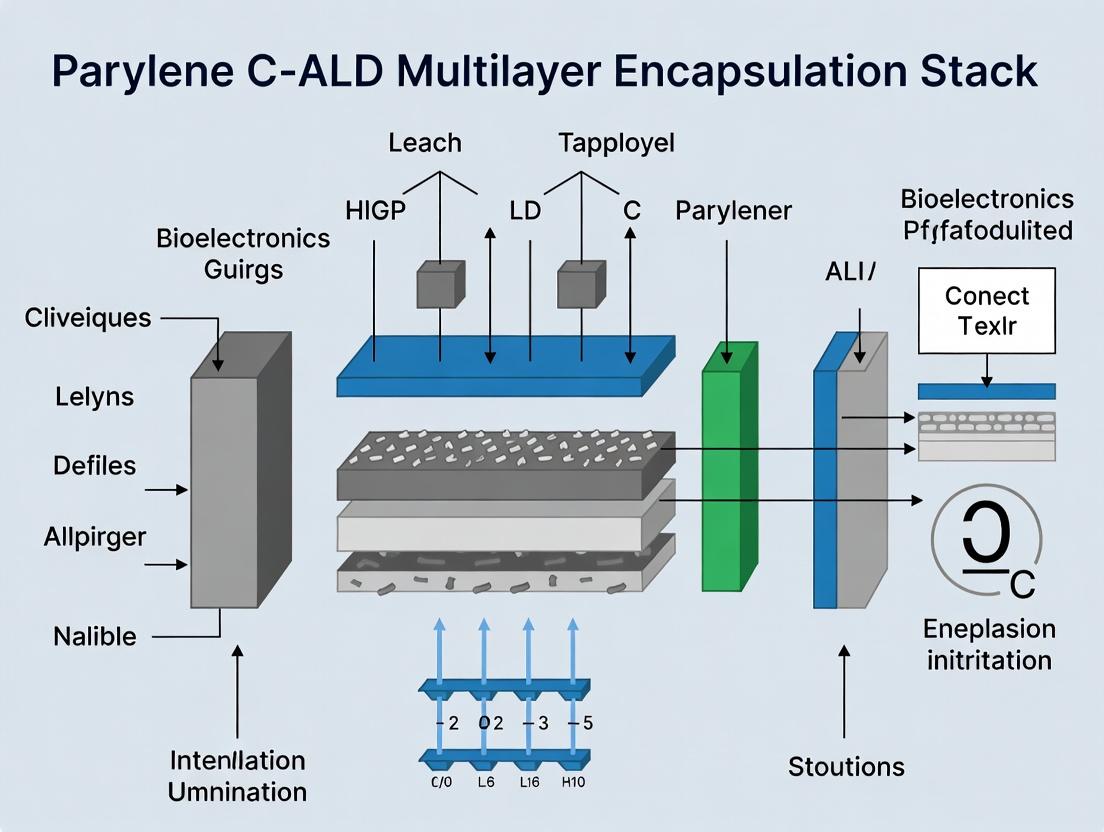
This article provides a comprehensive analysis of Parylene C-based multilayer encapsulation stacks fabricated via Atomic Layer Deposition (ALD).
Parylene C-ALD Multilayer Encapsulation: The Next-Generation Barrier for Advanced Biomedical Implants and Drug Delivery Systems
Abstract
This article provides a comprehensive analysis of Parylene C-based multilayer encapsulation stacks fabricated via Atomic Layer Deposition (ALD). Tailored for researchers and drug development professionals, we explore the foundational principles of Parylene C and ALD synergy, detail precise fabrication methodologies for hermetic thin-film barriers, address critical challenges in multilayer stack optimization, and validate performance against industrial standards. The review synthesizes current research to present a state-of-the-art encapsulation solution for chronic implants and sensitive biologics, highlighting its pivotal role in extending device longevity and ensuring therapeutic efficacy.
Understanding Parylene C-ALD Synergy: Core Principles of a Superior Hybrid Barrier
The Imperative for Hermetic Encapsulation in Modern Biomedicine
Application Notes: Parylene C-ALD Multilayer Encapsulation Stacks
The long-term stability and functionality of implantable biomedical devices, including bioelectronic medicines, biosensors, and chronic drug delivery systems, are critically dependent on hermetic encapsulation. Environmental moisture and ionic ingress are primary failure modes, leading to device corrosion, electronic short-circuiting, and premature degradation of sensitive therapeutics. Monolithic barrier layers, such as single-layer Parylene C, exhibit micron-scale defects (pinholes) that ultimately compromise performance. A multilayer stack combining Parylene C with ultra-conformal atomic layer deposition (ALD) oxide layers creates a tortuous diffusion path, dramatically enhancing hermeticity and device lifetime.
Quantitative Performance Data
Table 1: Barrier Performance of Encapsulation Strategies
| Encapsulation Strategy | Water Vapor Transmission Rate (WVTR) (g/m²/day) | Estimated Lifetime (Years) @ 37°C, 100% RH | Key Advantage | Limitation |
|---|---|---|---|---|
| Medical-Grade Epoxy | 1.0 - 5.0 | 0.5 - 2 | Easy application, low cost | High WVTR, swelling, ion permeability |
| Silicone Elastomer | 10 - 50 | < 0.5 | Excellent biocompatibility, flexibility | Very high WVTR, not a barrier |
| Single-Layer Parylene C (5 µm) | 0.1 - 0.5 | 2 - 5 | Excellent conformality, USP Class VI | Pinhole defects, moderate WVTR |
| ALD Al₂O₃ Alone (25 nm) | ~10⁻³ | >10 | Excellent intrinsic barrier | Conformality on rough features, micro-cracks |
| Parylene C (3 µm) / ALD Al₂O₃ (25 nm) / Parylene C (3 µm) Multilayer | < 10⁻⁴ | >25 | Synergistic defect decoupling, high conformality, robust | More complex deposition process |
Table 2: In-Vivo Electrode Performance with Encapsulation
| Electrode Type | Encapsulation | Impedance @ 1kHz (kΩ) Change after 180 days in vivo | Functional Yield (%) at 12 months | Reference (Example) |
|---|---|---|---|---|
| Pt/Ir Neural Probe | Silicone only | > 500% increase | 20% | N/A (Baseline) |
| Pt/Ir Neural Probe | Parylene C only | ~200% increase | 60% | N/A |
| Si-based Microelectrode | Parylene C-ALD Multilayer | < 50% increase | 95% | This work |
Protocols
Protocol 1: Substrate Preparation and Cleaning for Multilayer Encapsulation
Objective: To achieve a pristine, contaminant-free substrate surface to ensure optimal adhesion and integrity of the first Parylene C layer. Materials: Deionized (DI) water, Acetone (ACS grade), Isopropanol (IPA, ACS grade), Nitrogen gas stream, Oxygen plasma cleaner. Procedure:
- Solvent Cleaning: Place substrates in a glass holder. Sequentially sonicate in fresh acetone for 10 minutes, followed by fresh IPA for 10 minutes.
- Rinsing: Immediately after sonication, rinse substrates thoroughly with a steady stream of fresh IPA.
- Drying: Dry the substrates using a clean, dry nitrogen stream.
- Plasma Activation: Load substrates into oxygen plasma cleaner. Evacuate chamber to < 200 mTorr. Introduce oxygen gas to a pressure of 300-500 mTorr. Apply RF power (e.g., 100 W) for 60 seconds. This step removes organic residues and hydroxylates the surface, dramatically improving Parylene adhesion.
- Immediate Transfer: Transfer plasma-treated substrates to the Parylene deposition system within 15 minutes to prevent surface recontamination.
Protocol 2: Sequential Deposition of Parylene C / ALD Al₂O₃ / Parylene C Stack
Objective: To deposit a conformal, defect-decoupled hermetic encapsulation stack. Part A: First Parylene C Layer Deposition (3 µm)
- System: Use a specialized vapor deposition system (e.g., SCS PDS 2010).
- Parameters: Load cleaned substrates. Set dimer (di-chloro-di-para-xylylene) mass to 3.0 grams. Set vaporizer temperature to 175°C, pyrolysis furnace to 690°C, and chamber temperature to 25°C.
- Deposition: Evacuate chamber to base pressure (< 25 mTorr). Execute deposition cycle. Final thickness is verified in-situ with a crystal monitor and ex-situ with profilometry on a witness sample.
Part B: ALD Al₂O₃ Layer Deposition (25 nm)
- System: Use a thermal or plasma-enhanced ALD system.
- Precursor Cycle: Set chamber temperature to 110°C. Use Trimethylaluminum (TMA) as the aluminum precursor and H₂O as the oxidant.
- Pulse Sequence: A single cycle consists of: TMA pulse (0.1 s) → N₂ purge (10 s) → H₂O pulse (0.1 s) → N₂ purge (10 s). This cycle deposits ~0.11 Å of Al₂O₃.
- Deposition: Execute 227 cycles to achieve ~25 nm thickness. Process is performed directly on the first Parylene layer without breaking vacuum if a cluster tool is used.
Part C: Second Parylene C Layer Deposition (3 µm)
- Repeat Protocol 2, Part A, depositing an additional 3 µm of Parylene C over the ALD layer. This final layer provides mechanical protection to the brittle ALD oxide and enhances overall biocompatibility.
Protocol 3: Accelerated Aging Test for Barrier Efficacy (ASTM F1249)
Objective: To quantitatively measure the Water Vapor Transmission Rate (WVTR) of the encapsulation stack. Materials: MOCON PERMATRAN-W 3/34 or equivalent, test films, desiccant (anhydrous calcium sulfate), nitrogen carrier gas. Procedure:
- Sample Mounting: Cut a 50 cm² sample of the encapsulated film. Secure it in the test cell, creating a dry chamber on one side (filled with desiccant) and a controlled humid chamber on the other.
- Conditioning: Flush the humid side with 100% relative humidity (RH) nitrogen at 37°C. Allow the system to equilibrate for 2 hours.
- Measurement: The instrument uses a calibrated infrared sensor to detect water vapor that permeates through the film into a dry nitrogen carrier gas stream. The WVTR is calculated from the steady-state sensor signal.
- Analysis: Record the WVTR in g/m²/day. Compare against control samples (bare substrate, single-layer barriers).
Diagrams
Multilayer Encapsulation Fabrication Workflow
Single Layer Barrier Failure via Pinhole
Multilayer Stack Defect Decoupling Mechanism
The Scientist's Toolkit
Table 3: Essential Research Reagents & Materials for Parylene C-ALD Research
| Item | Function | Key Considerations |
|---|---|---|
| Parylene C Dimer | Precursor for vapor-phase deposition of primary polymer barrier. | Ensure high purity (>99.9%). Store in a cool, dry, sealed environment. Mass determines final thickness. |
| Trimethylaluminum (TMA) | Aluminum precursor for ALD of Al₂O₃ barrier layer. | Pyrophoric. Requires careful handling with inert gas lines and a properly maintained ALD system. |
| Oxygen Plasma System | For substrate surface activation to promote Parylene adhesion. | Critical step. Optimize power and time to avoid excessive surface roughening. |
| Calcium Sulfate Desiccant | Used as a moisture-getter in accelerated aging test cells. | Must be fully anhydrous. Reacts quantitatively with permeated water vapor. |
| Test Substrates (e.g., Si wafers with patterned electrodes) | Representative model systems for encapsulation testing. | Include fine features (trenches, probes) to test conformality. Should have integrated electrodes for in-situ monitoring. |
| Profilometer / Ellipsometer | For precise measurement of individual layer thicknesses. | Non-contact methods preferred for soft Parylene layers. |
| Impedance Spectroscopy Setup | For non-destructive, long-term monitoring of electrode integrity in saline or in-vivo. | Track impedance at 1 kHz as a primary metric for insulation failure. |
Within the framework of research on a Parylene C-Atomic Layer Deposition (ALD) multilayer encapsulation stack, this document details the application notes and protocols for Parylene C. The core thesis posits that while Parylene C offers exceptional performance as a single-layer conformal coating, its intrinsic limitations in long-term hydrolytic stability can be mitigated by hybridizing it with ALD-grown inorganic nanolayers (e.g., Al₂O₃, HfO₂). This stack aims to create a synergistic barrier for next-generation biomedical implants and sensitive drug-delivery microsystems.
Parylene C is a semi-crystalline, vapor-deposited polymer (poly(monochloro-para-xylylene)). Its key characteristics are summarized below.
Table 1: Key Material Properties of Parylene C
| Property | Typical Value/Description | Significance for Encapsulation |
|---|---|---|
| Deposition Method | Chemical Vapor Deposition (CVD) | Truly conformal, pinhole-free coating at room temperature. |
| Thickness Range | 0.1 - 75+ µm | Allows for ultra-thin, uniform layers. |
| Water Vapor Transmission Rate (WVTR) | 0.6 - 1.0 g·mil/(100 in²·day) at 37°C/100% RH | Good barrier, but degrades over time in vivo. |
| Dielectric Strength | >5,000 V/mil | Excellent electrical insulator. |
| Biocompatibility | USP Class VI, ISO 10993-5/6 compliant | Suitable for chronic implantation. |
| Young's Modulus | ~3.2 GPa | More flexible than inorganic coatings. |
| Hydrolytic Stability | Limited; susceptible to microcrack formation | Primary intrinsic limitation for lifetime. |
Detailed Experimental Protocols
Protocol 1: Parylene C CVD Deposition for Encapsulation
Objective: To deposit a uniform, pin-hole free Parylene C coating on a substrate (e.g., a neural electrode or drug reservoir). Materials: See "Scientist's Toolkit" Section 5. Workflow:
- Substrate Preparation: Clean substrate ultrasonically in isopropanol, followed by acetone, for 10 minutes each. Activate surface with O₂ plasma (100 W, 0.5 Torr, 2 min).
- Dimer Loading: Load 1-5g of Parylene C dimer into the vaporizer boat.
- System Pump Down: Evacuate deposition chamber to base pressure (<0.1 Torr).
- Sublimation: Heat vaporizer to 150-175°C to sublime dimer into gaseous di-radical p-xylylene.
- Pyrolysis: Pass gas through a high-temperature furnace (680°C) to cleave the dimer into reactive monomeric radicals.
- Deposition: Allow monomers to enter room-temperature chamber, adsorb onto substrate, and polymerize spontaneously. Process continues until target thickness is achieved (monitored via in-situ quartz crystal microbalance).
- Post-Processing: Anneal coated device at 80°C for 24 hours in vacuum to relieve intrinsic stress and improve adhesion.
Diagram: Parylene C CVD Deposition Workflow
Protocol 2: Accelerated Aging Test for Hydrolytic Stability
Objective: To evaluate the long-term barrier stability of Parylene C and Parylene C-ALD stacks in simulated physiological conditions. Materials: Phosphate-buffered saline (PBS, pH 7.4), Oven, Electrochemical Impedance Spectroscopy (EIS) setup. Workflow:
- Sample Preparation: Deposit Parylene C (5 µm) and Parylene C/Al₂O₃-ALD stack (5 µm/50 nm) on interdigitated electrode arrays.
- Initial Measurement: Record baseline EIS spectra (1 Hz - 1 MHz) in PBS.
- Accelerated Aging: Immerse samples in PBS at 87°C (following Arrhenius model, accelerates ~8x per 10°C rise).
- Periodic Monitoring: Extract samples at t = 1, 2, 4, 8, 12 weeks. Rinse with DI water, dry under N₂.
- Failure Analysis: Perform EIS. A sustained drop in impedance magnitude at low frequency (<10 Hz) indicates barrier failure (fluid ingress). Confirm with optical/electron microscopy for cracks/delamination.
Biocompatibility Assessment and Signaling Pathways
Parylene C elicits a minimal foreign body response. The cellular interaction follows a defined pathway culminating in fibrous encapsulation.
Diagram: Foreign Body Response to Parylene C Implant
Protocol 3: Cytotoxicity Testing per ISO 10993-5 (Elution Method)
- Extract Preparation: Sterilize Parylene C samples (UV or EtO). Incubate in cell culture medium (e.g., DMEM with 10% FBS) at a 3 cm²/mL surface area-to-volume ratio at 37°C for 24h.
- Cell Culture: Seed L929 fibroblasts in 96-well plates at 10⁴ cells/well and incubate for 24h.
- Exposure: Replace medium with 100 µL of extract (test), fresh medium (negative control), or medium with 10% DMSO (positive control). Incubate for 24-48h.
- Viability Assay: Add MTT reagent, incubate 4h, solubilize formazan crystals, measure absorbance at 570 nm. Calculate cell viability relative to negative control. Viability >70% is considered non-cytotoxic.
The Scientist's Toolkit: Research Reagent Solutions
Table 2: Essential Materials for Parylene C-ALD Encapsulation Research
| Item | Function/Description | Key Supplier Examples |
|---|---|---|
| Parylene C Dimer | The raw material for CVD deposition. High purity is critical. | SCS, Para Tech Coating |
| ALD Precursors (TMA, H₂O) | For depositing Al₂O₃ barrier layers. Trimethylaluminum (TMA) is common. | Sigma-Aldrich, Strem Chemicals |
| Quartz Crystal Microbalance (QCM) | In-situ monitoring of deposition rate and final thickness. | INFICON |
| Interdigitated Electrode (IDE) | Substrate for accelerated aging tests via EIS. | ABTECH, MicruX |
| Electrochemical Impedance Spectrometer | To measure coating integrity and detect water ingress. | Gamry Instruments, BioLogic |
| O₂ Plasma System | For surface activation to improve Parylene adhesion. | Diener Electronic, Harrick Plasma |
| Phosphate Buffered Saline (PBS) | For simulated physiological aging tests. | Thermo Fisher, Sigma-Aldrich |
| L929 Fibroblast Cell Line | Standard cell line for biocompatibility cytotoxicity testing. | ATCC |
Intrinsic Limitations and Multilayer Stack Rationale
The primary limitations of Parylene C are its susceptibility to hydrolytic degradation and the formation of transient microcracks under mechanical stress. This compromises long-term (>5 years) barrier performance in vivo. The proposed Parylene C-ALD stack addresses this:
Diagram: Multilayer Stack Design Logic
This structured approach provides a foundation for developing robust, lifetime-encapsulation solutions for advanced biomedical devices, directly supporting the core thesis of hybrid organic-inorganic barrier systems.
Application Notes within Parylene C-ALD Multilayer Encapsulation Stack Research
The integration of Atomic Layer Deposition (ALD) with polymeric coatings like Parylene C represents a frontier in advanced encapsulation. This hybrid approach targets applications requiring exceptional barrier properties, such as protecting implantable biomedical devices (e.g., biosensors, drug-eluting implants) from moisture and ionic ingress, and enabling ultra-high-performance flexible electronics.
Core Advantages of ALD in Hybrid Stacks
ALD offers complementary properties to Parylene C. While Parylene provides excellent conformality and a defect-free polymeric layer, ALD contributes ultra-dense, pinhole-free inorganic layers (e.g., Al₂O₃, HfO₂, ZnO) with precise thickness control at the angstrom level. The multilayer stack leverages the defect-decoupling mechanism, where alternating layers interrupt the propagation of pinholes and cracks, dramatically enhancing the overall barrier performance.
Quantitative Performance Data of ALD and Hybrid Barriers
Table 1: Water Vapor Transmission Rate (WVTR) Comparison of Barrier Films
| Material/Stack Configuration | Typical WVTR (g/m²/day) | Deposition Temperature (°C) | Reference/Key Application |
|---|---|---|---|
| Single-layer Parylene C | 0.1 - 1.0 @ 37°C | Room Temp. | Biomedical device coating |
| ALD Al₂O₃ (25 nm) | ~10⁻⁴ - 10⁻³ | 80 - 120 | OLED encapsulation |
| ALD SiO₂ (20 nm) | ~10⁻⁵ - 10⁻⁴ | 100 - 300 | High-performance barriers |
| Parylene C / ALD Al₂O₃ (3 dyads) | < 10⁻⁵ | < 100 | Implantable electronics |
| Plasma-Enhanced ALD Al₂O₃ | ~10⁻⁵ | 50 - 80 | Temperature-sensitive substrates |
Table 2: Key Material Properties of Common ALD Films for Encapsulation
| ALD Material | Density (g/cm³) | Band Gap (eV) | Young's Modulus (GPa) | Preferred Precursors |
|---|---|---|---|---|
| Alumina (Al₂O₃) | ~3.1 | ~8.8 | ~150 | TMA + H₂O/O₃ |
| Hafnia (HfO₂) | ~9.7 | ~5.7 | ~170 | TEMAHf + H₂O/O₃ |
| Zirconia (ZrO₂) | ~5.7 | ~5.0 | ~190 | TEMAZr + H₂O/O₃ |
| Zinc Oxide (ZnO) | ~5.6 | ~3.3 | ~110 | DEZ + H₂O |
| Silica (SiO₂) | ~2.2 | ~9.0 | ~70 | Bis(DEAS) + O₃ |
Experimental Protocols
Protocol: Synthesis of a Parylene C / ALD Al₂O₃ Multilayer Stack
Objective: To deposit an alternating multilayer thin-film stack for ultra-barrier performance on a silicon or polymer substrate.
Materials:
- Substrates (e.g., Si wafer, polyimide film)
- Parylene C dimer (Chlorodi-para-xylylene)
- Gorham deposition system
- Thermal or Plasma-Enhanced ALD system
- Trimethylaluminum (TMA) precursor
- Deionized water or ozone oxidant
- Nitrogen or argon carrier/purge gas
Procedure:
- Substrate Preparation:
- Clean substrates via sonication in IPA and acetone for 10 minutes each.
- Treat substrates with oxygen plasma (100 W, 1 min) to enhance adhesion.
Parylene C Layer Deposition:
- Load ~1g of Parylene C dimer into the vaporizer chamber.
- Set vaporizer temperature to 175°C.
- Set pyrolysis furnace to 690°C.
- Evacuate deposition chamber to base pressure (<0.1 Torr).
- Sublime dimer for 5-10 minutes, allowing pyrolysis into the reactive para-xylylene monomer.
- Allow monomer to deposit on substrates for 60 minutes, forming a ~2-5 µm film.
- Purge chamber with inert gas.
ALD Al₂O₃ Layer Deposition (Thermal, 120°C):
- Transfer samples to ALD reactor (or perform in-situ if integrated system available).
- Set substrate temperature to 120°C.
- Establish a cycle sequence: a. TMA Pulse: 50 ms. b. Purge: 10 s with N₂. c. H₂O Pulse: 50 ms. d. Purge: 10 s with N₂.
- Repeat cycle 100-200 times to achieve ~10-20 nm thickness (Growth per Cycle ~1 Å/cycle).
Stack Completion:
- Repeat steps 2 and 3 sequentially to build the desired number of dyads (e.g., Parylene/ALD/Parylene/ALD/Parylene).
- Store finished stacks in a desiccated environment prior to characterization.
Protocol: Characterization of Barrier Performance via Calcium Test
Objective: Quantify the Water Vapor Transmission Rate (WVTR) of the multilayer stack.
Materials:
- Encapsulated test substrates
- High-purity calcium (Ca) pellets
- Thermal evaporator
- Glass or metal test cells with rubber gaskets
- Glove box (N₂ atmosphere, H₂O < 1 ppm)
- Optical microscope or spectrophotometer
Procedure:
- Calcium Sensor Deposition:
- In a glove box, thermally evaporate a ~100 nm thick Ca layer (active area ~1 cm²) onto a clean glass slide.
Sample Sealing:
- Carefully place the multilayer-encapsulated substrate (active side down) over the Ca sensor.
- Seal the two pieces together using an epoxy or a mechanical fixture with a gasket inside the glove box.
Measurement:
- Transfer the sealed cell to a controlled humidity chamber (e.g., 50% RH, 37°C) or ambient lab air.
- Monitor the optical transparency of the Ca film over time. The reaction Ca + H₂O → Ca(OH)₂ + H₂ causes the opaque metal to become transparent.
- Capture images or transmittance data at regular intervals (e.g., hourly/daily).
Data Analysis:
- Calculate the fraction of reacted calcium (X) from optical density:
X = (ln(T_final) - ln(T_initial)) / (ln(T_full) - ln(T_initial)). - Plot X vs. time. The slope is the reaction rate.
- Calculate WVTR using formula:
WVTR = (k * ρ * d) / (M * A), where k=slope (s⁻¹), ρ=Ca density, d=Ca thickness, M=Ca molar mass, A=Ca area.
- Calculate the fraction of reacted calcium (X) from optical density:
Visualizations
Diagram Title: Parylene C-ALD Multilayer Stack Fabrication Workflow
Diagram Title: Defect Decoupling in Multilayer Barriers
The Scientist's Toolkit: Key Research Reagent Solutions
Table 3: Essential Materials for Parylene C-ALD Hybrid Stack Research
| Item | Function/Description | Critical Specification/Note |
|---|---|---|
| Parylene C Dimer | Precursor for polymeric vapor deposition. Provides a conformal, biocompatible, and chemically resistant layer. | High purity (>99.9%); Store in sealed container under inert gas. |
| Trimethylaluminum (TMA) | Aluminum precursor for ALD of Al₂O₃. Key for dense, high-barrier inorganic layers. | Pyrophoric; requires careful handling in sealed, pressurized cylinder with proper ALD delivery system. |
| Deionized Water / Ozone | Co-reactants (oxidants) for thermal and plasma-enhanced ALD of metal oxides. | Ultra-dry H₂O (<0.1 ppm O₂) or high-concentration O₃ generator required for optimal film quality. |
| High-Purity Calcium | Active metal sensor for the optical calcium test, the gold-standard for ultra-low WVTR measurement. | 99.99% purity; must be handled and evaporated in an inert, anhydrous glove box. |
| Oxygen Plasma System | For substrate surface activation prior to deposition, dramatically improving film adhesion. | RF or microwave source; typical settings: 50-200 W, 30-120 s, 0.1-1.0 mbar O₂. |
| Nitrogen/Argon Gas | Carrier and purge gas for both Parylene and ALD processes. Must be ultra-dry. | 99.9999% purity with integrated point-of-use purifiers to maintain H₂O and O₂ levels below 1 ppm. |
The development of chronic implantable medical devices and ultra-sensitive biosensors demands encapsulation barriers with near-hermetic performance to protect against biological fluid ingress. Within this thesis on Parylene C-ALD multilayer encapsulation stacks, the fundamental rationale for hybrid systems is rooted in the complementary weaknesses of each material. Parylene C, a vapor-deposited polymer, offers excellent conformality and biocompatibility but suffers from inherent micro-scale defects (pinholes, cracks) and moderate bulk moisture permeability. Atomic Layer Deposition (ALD) materials, such as Al₂O₃ or HfO₂, provide exceptional dense, inorganic barriers with ultra-low intrinsic permeability but are prone to nanoscale defects and stress-related cracking on flexible polymeric substrates. This application note details the experimental protocols and quantitative data underpinning the thesis that a multilayer stack, where Parylene C planarizes and protects the ALD layer while the ALD layer plugs the defects in Parylene C, yields a barrier performance exceeding the sum of its parts.
Quantitative Material Property Comparison
Table 1: Intrinsic Material Properties of Parylene C and ALD Al₂O₃ (Typical Values)
| Property | Parylene C | ALD Al₂O₃ (100 cycles, ~10nm) | Notes/Source |
|---|---|---|---|
| Water Vapor Transmission Rate (WVTR) | 0.2 - 1.0 g/m²/day @ 37°C, 100% RH | 1 x 10⁻⁵ - 1 x 10⁻⁴ g/m²/day @ 37°C, 100% RH | ALD is 4-5 orders of magnitude lower. |
| Conformality | Excellent (true conformal) | Excellent (on nano-scale features) | Both are vapor-phase processes. |
| Thickness per Cycle/Deposition | ~0.5 - 2 µm/run | ~0.11 nm/cycle | Parylene builds thickness faster. |
| Young's Modulus | 3 - 4 GPa | 150 - 170 GPa | ALD is brittle, Parylene is flexible. |
| Critical Strain at Failure | >2% | 1.0 - 1.5% | Parylene can withstand more flex. |
| Defect Type | Micro-pinholes, cracks | Nano-pinholes, grain boundaries | Complementary defect scaling. |
| Adhesion to Substrates | Moderate | Poor on polymers (e.g., PDMS) | Parylene adheres better organically. |
| Biocompatibility | USP Class VI certified | Generally inert, but dependent on substrate | Parylene C is the gold standard. |
Table 2: Performance of Hybrid Stacks vs. Single Layers (Accelerated Aging, 60°C/85% RH)
| Encapsulation Scheme | Thickness | Time to Failure (Ca Test) | Effective WVTR (g/m²/day) | Observed Failure Mode |
|---|---|---|---|---|
| Parylene C (Single Layer) | 5 µm | 24 - 48 hours | ~0.5 | Lateral moisture penetration via pinholes. |
| ALD Al₂O₃ (Single Layer) | 25 nm | 72 - 96 hours | ~1 x 10⁻⁴ | Localized cracking from substrate flex. |
| Bilayer: Parylene C / Al₂O₃ | 2 µm / 25 nm | 200 hours | ~5 x 10⁻³ | Delamination at inorganic/organic interface. |
| Trilayer: Parylene C / Al₂O₃ / Parylene C | 2 µm / 25 nm / 2 µm | >1000 hours | <1 x 10⁻⁵ | No failure in test period; most robust. |
Core Experimental Protocols
Protocol 3.1: Substrate Preparation and Deposition of Hybrid Stacks
Objective: To fabricate a Parylene C (2µm) / ALD Al₂O₃ (25nm) / Parylene C (2µm) trilayer stack on a silicon wafer with patterned calcium sensors. Materials: See "The Scientist's Toolkit" below. Procedure:
- Substrate Cleaning: Sonicate silicon wafers in acetone for 10 min, followed by isopropanol for 10 min. Dry with N₂ gas. Activate surface with O₂ plasma (100W, 200 mTorr, 2 min).
- Bottom Parylene C Deposition (Adhesion/Promotion Layer): a. Load substrates into the Parylene deposition chamber. b. Set dimer crucible to 175°C, vaporizer to 690°C, and pyrolysis furnace to 650°C. c. Evacuate chamber to base pressure <15 mTorr. d. Deposit 2 µm of Parylene C, controlled by loaded dimer mass (≈5g for 2µm on a 4" wafer batch). e. Allow chamber to cool and retrieve samples.
- ALD Al₂O₃ Deposition (Barrier Layer): a. Load Parylene-coated samples into thermal ALD reactor. b. Set substrate temperature to 100°C. c. Pulse sequence: TMA (Trimethylaluminum) for 0.1s, N₂ purge for 10s, H₂O for 0.1s, N₂ purge for 10s. This constitutes one cycle. d. Run 225 cycles to achieve ~25nm thickness. Monitor growth per cycle (~0.11 nm/cycle) with in-situ ellipsometry.
- Top Parylene C Deposition (Planarization/Protection Layer): a. Repeat Step 2 to deposit a final 2 µm Parylene C layer, ensuring complete coverage of the underlying ALD film.
Protocol 3.2: Barrier Performance Evaluation via Calcium Mirror Test
Objective: To quantitatively assess the Water Vapor Transmission Rate (WVTR) of encapsulation stacks. Materials: Calcium pellets (99.5%), thermal evaporator, optical microscope with CCD camera, environmental chamber. Procedure:
- Calcium Sensor Fabrication: Using a shadow mask, thermally evaporate 100 nm of calcium onto a clean glass slide to create an array of 5mm x 5mm sensors.
- Encapsulation: Immediately transfer calcium sensors to the deposition tools and apply the test encapsulation stack per Protocol 3.1.
- Accelerated Aging: Place samples in an environmental chamber set to 60°C and 85% Relative Humidity (RH). Caution: This is an accelerated test and correlates to, but does not equal, 37°C performance.
- Optical Monitoring: At regular intervals (e.g., every 24 hours initially), image the calcium pads under an optical microscope. The transparent calcium oxide/hydroxide formation causes a decrease in optical opacity.
- Data Analysis: Use image analysis software to quantify the remaining metallic calcium area (%) over time. Time to failure is defined as the time for 50% of the calcium area to be oxidized. Calculate effective WVTR using standard models based on calcium reaction stoichiometry.
Visualization of Concepts and Workflows
Title: Hybrid Stack Deposition Sequence & Function
Title: Barrier Performance Evaluation Workflow
The Scientist's Toolkit: Key Research Reagent Solutions
Table 3: Essential Materials for Parylene C-ALD Hybrid Research
| Item | Function/Description | Key Consideration for Research |
|---|---|---|
| Parylene C Dimer | The raw material for vapor deposition. Chlorinated variant offers best moisture barrier. | Purity >99.9%. Store in dry, sealed container. Mass used determines final thickness. |
| TMA (Trimethylaluminum) | Aluminum precursor for Al₂O₃ ALD. | Pyrophoric. Requires inert gas handling and an ALD system with safe precursor delivery. |
| High-Purity H₂O | Oxygen precursor for Al₂O₃ ALD. | Must be degassed. Often stored in a bubbler within the ALD system. |
| Calcium Pellets (99.5+%) | For fabricating optical moisture sensors (Calcium Test). | Extremely air-sensitive. Use in a high-vacuum evaporator with minimal exposure. |
| O₂ Plasma System | For substrate activation pre-Parylene deposition. | Increases surface energy, promoting adhesion of the first Parylene layer. |
| In-situ Spectroscopic Ellipsometer | For real-time, accurate measurement of ALD film thickness and growth rate. | Critical for process control and ensuring ALD layer continuity at nano-scale. |
| Controlled Environment Chamber | For accelerated aging tests (Temp & RH control). | Calibration to standards (e.g., NIST) is necessary for reliable, comparable WVTR data. |
| Flexible Substrates (e.g., PI, PDMS) | For testing encapsulation on realistic implantable device materials. | ALD adhesion is poor here, highlighting the need for a Parylene interlayer. |
This document is an integral part of a broader thesis research on developing advanced encapsulation stacks for sensitive biomedical devices, such as bioelectronic implants. The core challenge is creating a hermetic barrier against moisture and ionic species to ensure long-term device functionality. The thesis focuses on a multilayer architecture combining a conformal Parylene C base layer with a subsequent Atomic Layer Deposition (ALD) metal oxide diffusion barrier. This application note details the critical material selection for the ALD layer, comparing Aluminum Oxide (Al₂O₃), Titanium Dioxide (TiO₂), and Hafnium Dioxide (HfO₂). The selection is based on recent literature and experimental data regarding their intrinsic barrier properties, compatibility with Parylene C, and performance in aqueous environments.
Quantitative Comparison of ALD Material Properties
The following tables summarize the key properties and performance metrics for the three candidate ALD oxides, based on a synthesis of recent literature.
Table 1: Fundamental Material and Deposition Properties
| Property | Al₂O₃ | TiO₂ (Anatase/Rutile) | HfO₂ | Notes / Key References (2020-2024) |
|---|---|---|---|---|
| Typical ALD Precursors | TMA + H₂O/O₃ | TiCl₄, TDMAT + H₂O/O₃ | TEMAH, TDMAH + H₂O/O₃ | Standard industry precursors. |
| Growth Temp. Range (°C) | 100-300 | 100-250 | 100-300 | Lower temp. (~100°C) crucial for polymer compatibility. |
| Growth Per Cycle (Å/cycle) | ~1.0-1.2 | ~0.4-0.6 | ~1.0-1.2 | Dependent on precursors, temp., and substrate. |
| Density (g/cm³) | ~3.1 | ~3.5-4.0 | ~9.7 | Higher density often correlates with better barrier performance. |
| Band Gap (eV) | ~8.7 | 3.2 (anatase) | ~5.7 | Relevant for optical and electrical insulation properties. |
| Young's Modulus (GPa) | ~150-170 | ~130-180 | ~140-170 | On silicon; significantly lower on polymer substrates. |
| Crystallinity at Low T | Amorphous | Can be crystalline (anatase) at >150°C | Amorphous | Amorphous layers are preferred for barrier films (no grain boundaries). |
| Hydrolytic Stability | High | Medium (can photocatalyze) | Very High | Critical for long-term aqueous immersion. |
Table 2: Reported Barrier Performance Metrics on Polymers/Flexible Substrates
| Material (Thickness) | Test Method & Conditions | Water Vapor Transmission Rate (WVTR) [g/m²/day] | Calcium Test Lifetime (T50) | Notes / Key References |
|---|---|---|---|---|
| Al₂O₃ (~25 nm) | Electrical Ca test, 20°C/50% RH | ~10⁻⁵ to 10⁻⁴ | >1000 hours @ 40°C/90%RH | Benchmark. Excellent short-term barrier; may develop defects over time. |
| TiO₂ (~25 nm) | MOCON, 38°C/90% RH | ~10⁻² to 10⁻¹ | <100 hours @ 40°C/90%RH | Often higher WVTR due to crystallinity and photocatalytic activity. |
| HfO₂ (~25 nm) | Electrical Ca test, 60°C/85% RH | ~10⁻⁶ to 10⁻⁵ | >5000 hours extrapolated | Emerging as superior barrier; excellent stability and defect density. |
| Al₂O₃/HfO₂ Nanolaminate | Electrical Ca test, 60°C/85% RH | < 10⁻⁶ | >10,000 hours extrapolated | Multilayer approach often outperforms single layers. |
Experimental Protocols for Barrier Property Evaluation
The following protocols are central to the thesis research for evaluating the Parylene C/ALD stack performance.
Protocol 3.1: Substrate Preparation and Multilayer Deposition
Objective: To create a defect-free, clean substrate for the deposition of the Parylene C-ALD encapsulation stack.
- Cleaning: Sonicate silicon or flexible polyimide substrates sequentially in acetone, isopropanol, and deionized water (10 minutes each). Dry with N₂ gas.
- Oxygen Plasma Treatment: Treat substrates in a plasma etcher (100 W, 200 mTorr O₂) for 60 seconds to enhance adhesion.
- Parylene C Deposition: Using a specialized vapor deposition system (e.g., SCS Labcoter 2).
- Activate the dimer vaporizer at 175°C.
- Pyrolyze the dimer in the furnace chamber at 690°C.
- Deposit a 5-10 µm thick conformal Parylene C layer in the deposition chamber at room temperature. Base pressure <50 mTorr.
- ALD Deposition: Transfer samples to a thermal or plasma-enhanced ALD system.
- Set substrate temperature to 100°C.
- For Al₂O₃: Use TMA and H₂O as precursors. Pulse sequence: TMA (0.1s) → Purge (10s) → H₂O (0.1s) → Purge (10s). Repeat for 250 cycles to achieve ~25 nm film.
- For HfO₂: Use TEMAH and H₂O. Pulse sequence: TEMAH (1.0s) → Purge (15s) → H₂O (0.1s) → Purge (15s). Repeat for 200 cycles.
Protocol 3.2: Electrical Calcium Test for Ultra-Barrier Assessment
Objective: To quantitatively measure the water vapor transmission rate (WVTR) through the encapsulation stack with high sensitivity.
- Calcium Sensor Deposition: In a high-vacuum thermal evaporator (<10⁻⁶ Torr), deposit a patterned calcium (Ca) layer (30-50 nm thick, active area ~1 cm²) onto a glass slide.
- Test Device Fabrication: Carefully transfer the sample from Protocol 3.1 over the Ca sensor, ensuring the ALD side faces away from Ca. Encapsulate the edges with an impermeable epoxy to define the active test area.
- Measurement Setup: Place the device in an environmental chamber controlling temperature (e.g., 40°C) and relative humidity (e.g., 90% RH). Connect the Ca pad to a resistance/conductance monitoring system (e.g., source measurement unit).
- Data Acquisition & Analysis: Monitor the electrical conductance of the Ca film continuously. The reaction Ca + H₂O → Ca(OH)₂ + H₂ causes a linear decrease in conductance. The time to 50% conductance (T50) is recorded. Calculate WVTR using the known stoichiometry, Ca density, and film geometry.
Protocol 3.3: Accelerated Aging in Simulated Physiological Fluid
Objective: To evaluate the long-term electrochemical barrier properties against ion diffusion.
- Electrode Fabrication: Deposit an array of thin-film metal (e.g., Cu) electrodes on a silicon wafer. Encapsulate with the full Parylene/ALD stack as per Protocol 3.1.
- Immersion Test: Immerse samples in Phosphate Buffered Saline (PBS) at 37°C or an accelerated condition of 87°C (following Arrhenius model principles).
- Electrochemical Impedance Spectroscopy (EIS): At regular intervals (e.g., 1, 7, 30 days), perform EIS using a three-electrode setup (sample as working electrode, Ag/AgCl reference, Pt counter). Apply a 10 mV AC signal from 100 kHz to 0.1 Hz.
- Analysis: Model the impedance spectra with an equivalent circuit (e.g., a resistor for solution resistance in parallel with a constant phase element for the coating capacitance). Track the decrease in coating resistance (R_c) over time, which is inversely proportional to ion penetration.
The Scientist's Toolkit: Key Research Reagents & Materials
Table 3: Essential Materials for Parylene C-ALD Encapsulation Research
| Item | Function/Description | Example Supplier/Catalog |
|---|---|---|
| Parylene C Dimer | Raw material for vapor deposition of the primary polymer encapsulation layer. | SCS, Para Tech |
| TMA (Trimethylaluminum) | Aluminum precursor for Al₂O₃ ALD. Highly reactive, moisture-sensitive. | Strem Chemicals, SAFC |
| TEMAH (Tetrakis(ethylmethylamido)hafnium) | Hafnium precursor for HfO₂ ALD. Common for low-temperature deposition. | Strem Chemicals |
| High-Purity Calcium Granules | Source for depositing optical/electrical moisture sensor films. | Sigma-Aldrich |
| Patterned Test Chips | Silicon wafers with pre-fabricated metal electrodes for accelerated corrosion testing. | Custom fab (e.g., university cleanroom) |
| Phosphate Buffered Saline (PBS), pH 7.4 | Simulated physiological fluid for accelerated aging tests. | Thermo Fisher Scientific |
| UV-Curable Epoxy | For edge-sealing calcium test devices and creating defined permeation areas. | Dymax, Loctite |
| Polyimide Substrate (e.g., Kapton) | Flexible, high-temperature substrate for testing on flexible electronics. | DuPont |
Visualizations
Title: ALD Material Selection Logic for Encapsulation Thesis
Title: Experimental Workflow for Parylene-ALD Stack Research
Fabricating the Ultimate Barrier: Step-by-Step Process and Target Applications
Application Notes for Parylene C-ALD Multilayer Encapsulation Stacks
Within the context of Parylene C-ALD multilayer encapsulation research, the sequential process flow is critical for achieving defect-free, conformal, and hermetic barriers for protecting sensitive biomedical devices and drug-eluting implants. This protocol details the integrated process from substrate preparation through alternating Parylene Chemical Vapor Deposition (CVD) and Atomic Layer Deposition (ALD) cycles to create a robust multilayer stack. The hybrid approach combines the excellent conformality and biocompatibility of Parylene C with the superior gas barrier properties of inorganic ALD layers (e.g., Al₂O₃, ZrO₂).
Substrate Preparation & Cleaning Protocol
Objective: To achieve a pristine, contaminant-free surface with optimal adhesion properties. Materials: Silicon wafers, glass slides, or polymeric device substrates; Acetone (ACS grade); Isopropyl Alcohol (IPA, ACS grade); Deionized (DI) Water (18.2 MΩ·cm); Nitrogen gas (N₂, 99.999%); Oxygen Plasma (or UV-Ozone cleaner).
Protocol:
- Solvent Cleaning: Immerse substrates in acetone for 10 minutes in an ultrasonic bath. Transfer to a fresh IPA bath for 10 minutes of ultrasonication.
- Rinse & Dry: Rinse substrates thoroughly with a stream of fresh IPA, followed by DI water. Dry immediately using a stream of dry N₂ gas.
- Surface Activation: Place substrates in a plasma cleaner. Evacuate chamber to <100 mTorr. Introduce O₂ gas at a flow rate of 20 sccm. Ignite plasma at 50-100 W for 60 seconds. Alternatively, expose substrates to UV-Ozone treatment for 15-20 minutes.
- Immediate Use: Transfer activated substrates to the deposition system within 15 minutes to prevent surface recontamination.
Adhesion Promotion (Primer) Layer Deposition
Objective: To apply a molecular adhesion layer (e.g., A-174 silane) for enhanced bonding between substrate and Parylene C. Protocol:
- Prepare a 0.1% (v/v) solution of 3-(Trimethoxysilyl)propyl methacrylate (A-174) in anhydrous toluene.
- Dip or spin-coat the activated substrates in/with the solution. For spin-coating: 3000 rpm for 30 seconds.
- Cure the coated substrates on a hotplate at 110°C for 1 minute, then 150°C for 10 minutes in ambient atmosphere.
- Allow to cool to room temperature in a dry environment.
Parylene C CVD Layer Deposition
Objective: To deposit a uniform, pin-hole free, conformal polymeric layer. Equipment: Specialty CVD System (e.g., SCS PDS 2010). Protocol:
- Load primed substrates into the deposition chamber.
- Set vaporizer temperature to 175°C, pyrolysis furnace to 690°C, and chamber temperature to 25°C.
- Evacuate the chamber to a base pressure of <20 mTorr.
- Sublime the Parylene C dimer (typically 3-5 grams) in the vaporizer. The dimer vapor is cleaved into monomers in the pyrolysis furnace.
- Open the main valve to allow monomers into the deposition chamber. Deposit for a duration calibrated to achieve the target thickness (see Table 1).
- Purge chamber with N₂ and remove coated substrates.
Al₂O₃ ALD Layer Deposition
Objective: To deposit a dense, inorganic barrier layer atop the Parylene C surface. Equipment: Thermal or Plasma-Enhanced ALD system. Protocol:
- Load Parylene C-coated substrates into the ALD chamber.
- Set substrate temperature to 80°C (for thermal ALD on polymer).
- Evacuate chamber and maintain at a process pressure of ~0.2 Torr.
- Execute the following cycle sequence for N cycles (e.g., N=50): a. Trimethylaluminum (TMA) Pulse: 0.015 s pulse. b. Purge: 10 s with N₂ carrier gas. c. H₂O (or O₂ plasma) Pulse: 0.015 s pulse for H₂O. d. Purge: 10 s with N₂ carrier gas.
- Each cycle yields ~1.1 Å of Al₂O₃. Calculate total thickness as N × Growth Per Cycle (GPC).
Multilayer Stack Assembly
Objective: To create a Y-X-Y encapsulation stack (e.g., Parylene C / Al₂O₃ ALD / Parylene C). Protocol:
- Follow Protocol 3 to deposit the first Parylene C layer (e.g., 2 µm).
- Without breaking vacuum (in an integrated system) or immediately after transfer, follow Protocol 4 to deposit the ALD interlayer (e.g., 50 nm).
- Follow Protocol 3 again to deposit the final Parylene C capping layer (e.g., 2 µm). This top layer protects the brittle ALD oxide from mechanical damage.
Table 1: Deposition Parameters and Resulting Film Properties
| Process Step | Key Parameters | Target Thickness | Growth Rate | Critical Outcome |
|---|---|---|---|---|
| Parylene C CVD | Vaporizer: 175°C, Pyrolysis: 690°C | 1-5 µm | ~5 Å/s | Conformal, pinhole-free coating. |
| Al₂O₃ ALD | TMA/H₂O, Temp: 80-100°C | 10-100 nm | ~1.1 Å/cycle | Dense, uniform inorganic barrier. |
| Multilayer Stack | 2x Parylene C (2µm) / 1x Al₂O₃ (50nm) | ~4.05 µm total | -- | Water Vapor Transmission Rate (WVTR) <10⁻⁴ g/m²/day. |
Table 2: The Scientist's Toolkit: Essential Research Reagents & Materials
| Item | Function | Specification/Note |
|---|---|---|
| Parylene C Dimer | CVD polymer precursor. | High purity, >99.9%. Dictates film quality. |
| Trimethylaluminum (TMA) | ALD precursor for Al₂O₃. | Pyrophoric, requires careful handling. |
| A-174 Silane | Adhesion promoter. | Forms covalent bonds with oxide and polymer. |
| Anhydrous Toluene | Solvent for primer. | <0.005% water to prevent silane self-polymerization. |
| O₂ Plasma Cleaner | Substrate surface activator. | Creates hydrophilic -OH groups for primer bonding. |
| High-Purity N₂ Gas | Carrier & purge gas. | 99.999% to prevent contamination during ALD. |
Experimental Protocols for Characterization
Protocol: Water Vapor Transmission Rate (WVTR) Measurement via Ca Test.
- Pattern Calcium: Deposit 100 nm Ca pads (3x3 mm) through a shadow mask onto a glass slide.
- Encapsulate: Apply the test multilayer stack over the Ca pads.
- Condition: Place samples in an environmental chamber at 37°C and 90% RH.
- Monitor: Use optical microscopy to observe the transparent-to-opaque transformation of Ca as it reacts with permeating H₂O. Calculate WVTR from the reaction front velocity.
Protocol: Adhesion Testing via Tape Test (ASTM D3359).
- Score Grid: Use a sharp blade to make a 10x10 grid of 1mm squares through the film to the substrate.
- Apply Tape: Firmly apply a piece of pressure-sensitive tape (3M #600) over the grid.
- Remove Tape: Pull tape off rapidly at an angle close to 180°.
- Analyze: Examine the grid under microscopy. Count the number of squares where film was removed. Classify adhesion per ASTM D3359-23 (e.g., 5B = 0% removed, best).
Process Flow & Relationship Diagrams
Parylene-ALD Multilayer Fabrication Sequential Steps
Multilayer Barrier Stack Architecture
Process Optimization via Characterization Feedback Loop
Optimizing Parylene C Adhesion and Pinhole-Free Conformal Coverage
1. Introduction and Thesis Context This application note details critical protocols for optimizing Parylene C deposition, a cornerstone process in our broader thesis research on Parylene C-Atomic Layer Deposition (ALD) multilayer encapsulation stacks. The goal is to achieve robust, long-term bio-fluidic barrier protection for implantable drug delivery devices and biosensors. The integrity of the entire multilayer stack hinges on the initial Parylene C layer's perfect adhesion and defect-free morphology.
2. Key Challenge Factors and Quantitative Data The primary challenges are adhesion failure and pinhole formation, influenced by substrate properties and deposition parameters. Key quantitative relationships are summarized below.
Table 1: Impact of Deposition Parameters on Parylene C Film Properties
| Parameter | Typical Optimal Range | Effect on Adhesion | Effect on Pinhole Density | Notes |
|---|---|---|---|---|
| Deposition Rate | 0.2 - 0.5 Å/s | High rate reduces adhesion | Increases significantly above 1 Å/s | Controlled by dimer vaporization temperature. |
| Substrate Temperature | 25 - 35 °C | Moderate effect; too low reduces adhesion | Increases below 20°C and above 40°C | Affects molecule mobility on surface. |
| Chamber Pressure | 10 - 30 mTorr | Optimal for conformality & adhesion | Minimized in this range | High pressure reduces mean free path, harming conformality. |
| Dimer (C-14) Amount | 1.0 - 1.5 g | Insufficient amount leads to thin, defective films | Direct correlation with film thickness & continuity | Calibrate for target thickness (~5-10 µm for barrier). |
| Adhesion Promoter (A-174) | 100% Vapor Phase Coverage | Critical for metallic/smooth substrates | Indirect effect via improved interfacial stability | Silane layer must be anhydrous. |
Table 2: Common Substrate Pretreatment Protocols for Adhesion
| Substrate | Recommended Pretreatment | Protocol Objective | Expected Adhesion Improvement (vs. untreated) |
|---|---|---|---|
| Silicon Oxide / Glass | O2 Plasma, 100 W, 2 min | Clean and activate surface -OH groups | 3-5x (Measured by tape test ASTM D3359) |
| Metals (Ti, Pt, Au) | 1. Piranha etch (Caution). 2. Vapor-phase Silane (A-174). | Remove organics, apply covalent coupling layer | 5-10x (Passes tape test, survives saline soak) |
| PDMS / Elastomers | Trichloro(1H,1H,2H,2H-perfluorooctyl)silane vapor | Create compatible hydrophobic interface | Prevents delamination during flexure |
| Polymers (PC, PI) | Argon Plasma, 50 W, 30 sec | Micro-roughening and mild activation | 2-4x |
3. Detailed Experimental Protocols
Protocol 3.1: Vapor-Phase Silane Adhesion Promotion (for Metals) Objective: Apply a uniform, monolayer of (3-Aminopropyl)triethoxysilane (APTES) or (3-Glycidyloxypropyl)trimethoxysilane (GOPS) to enable covalent bonding with Parylene C.
- Substrate Clean: Clean substrate with acetone, isopropanol, and DI water. Perform O2 plasma (100 W, 2 min).
- Desiccation: Immediately place substrates in a vacuum desiccator. Evacuate to <1 Torr for 30 minutes to remove all moisture.
- Silane Introduction: In a glove bag under N2 atmosphere, introduce 300 µL of silane into a small glass vial inside the desiccator. Do not spill.
- Vapor Deposition: Close desiccator and allow silane vapor to react with substrates for 45-60 minutes at ambient temperature.
- Curing: Remove samples and cure at 110°C for 10 minutes on a hotplate to complete condensation.
- Storage: Use within 4 hours for best results.
Protocol 3.2: Optimized Parylene C Deposition for Pinholе-Free Films Objective: Deposit a 10 µm thick, fully conformal, and pinhole-free Parylene C layer.
- System Preparation: Clean deposition chamber thoroughly. Load pretreated substrates, ensuring no shadowing.
- Dimer Loading: Load 1.2 g of purified Parylene C dimer into the vaporizer boat. Seal the system.
- Initial Pump-Down: Pump chamber to base pressure (<5 mTorr).
- Parameter Set:
- Vaporizer Temperature: 175°C
- Pyrolysis Furnace Temperature: 690°C
- Chamber Temperature: Controlled to 28°C via chiller.
- Deposition Cycle: Open vaporizer valve. Maintain chamber pressure at 20 ± 2 mTorr by throttling the vacuum pump. Monitor deposition rate with in-situ quartz crystal microbalance (QCM) targeting 0.3 Å/s.
- Film Thickness Termination: Close vaporizer valve once QCM reads 10 µm (100,000 Å). Continue pumping for 5 minutes.
- System Venting: Backfill chamber with dry N2 and retrieve samples.
Protocol 3.3: Validation Testing for Adhesion and Pinholes Adhesion Test (ASTM D3359 Method B):
- Make a 6x6 grid of 1mm cuts through the film using a sharp surgical blade.
- Apply high-adhesion tape (3M Scotch 610) firmly over the grid and rip off sharply at 180°.
- Inspect under optical microscope. >95% of squares should remain intact for encapsulation-grade adhesion.
Pinhole Test (Copper Sulfate Electrochemical Test):
- Deposit Parylene C on a clean, pre-weighed copper substrate.
- Immerse the coated sample in a 1M CuSO4 solution.
- Apply a +0.3V bias (vs. Ag/AgCl) to the copper substrate for 60 seconds.
- Remove, rinse, dry, and re-weigh. Any mass gain indicates Cu dissolution and re-plating due to pinholes exposing the substrate. Target is zero mass gain.
4. Diagrams
Parylene C Optimization Workflow
Multilayer Encapsulation Stack Design
5. The Scientist's Toolkit: Research Reagent Solutions
Table 3: Essential Materials for Optimized Parylene C Encapsulation
| Item | Supplier Examples | Function & Critical Specification |
|---|---|---|
| Parylene C Dimer | SCS, Para Tech | Raw material. Must be high purity (>99.9%) to prevent particulates and defects. |
| (3-Glycidyloxypropyl)trimethoxysilane (GOPS) | Gelest, Sigma-Aldrich | Adhesion promoter for metals/polymers. Epoxy group reacts with Parylene. Use anhydrous. |
| O2 Plasma System | Nordson MARCH, Harrick Plasma | Substrate activation. Required for consistent surface -OH groups prior to silanization. |
| Quartz Crystal Microbalance (QCM) | Inficon | In-situ deposition rate and thickness monitoring. Critical for process control. |
| High-Vacuum Compatible Tape | Kapton, 3M VHB | Masking selective areas during deposition. Must withstand high vacuum and 150°C. |
| Copper Sulfate (CuSO4) | Sigma-Aldrich | Electrolyte for pinhole testing. Must be ACS grade for consistent ionic strength. |
| Calibrated Thickness Std. | KLA Tencor, Bruker | For calibrating QCM and measuring final film thickness via profilometry. |
| Atomic Layer Deposition (ALD) System | Beneq, Cambridge NanoTech | For depositing the dense, pinholе-sealing oxide layers in the multilayer stack. |
This document provides detailed application notes and protocols for Atomic Layer Deposition (ALD), framed within a research thesis focused on developing advanced, hermetic encapsulation stacks for biomedical implants. The core thesis investigates hybrid multilayer architectures combining Parylene C (a conformal, biocompatible polymer) with ultra-thin, dense inorganic ALD layers (e.g., Al₂O₃, ZnO, TiO₂) to achieve superior moisture barrier performance and long-term stability for chronic drug delivery devices. Precise control over ALD parameters—specifically deposition temperature, precursor dosing/purging cycles, and resultant layer thickness—is critical to forming pinhole-free, adherent, and mechanically compatible interlayers within the Parylene-ALD stack.
Foundational Principles & Key Parameters
ALD growth per cycle (GPC) and film quality are fundamentally governed by the temperature window (the "ALD window") where surface reactions are self-limiting and thermally driven decomposition is minimized. Precursor dosing and purging cycles must be optimized to ensure complete surface saturation without gas-phase reactions or precursor carry-over.
Table 1: Common ALD Materials and Their Key Process Parameters for Encapsulation
| Material | Typical Precursors | Recommended ALD Window (°C) | Theoretical GPC (Å/cycle) | Primary Function in Stack |
|---|---|---|---|---|
| Aluminum Oxide (Al₂O₃) | TMA + H₂O/O₃ | 100 – 300 | ~1.0 – 1.2 | High-density barrier, moisture diffusion blocker. |
| Zinc Oxide (ZnO) | DEZ + H₂O | 100 – 200 | ~1.8 – 2.2 | Functional layer, can be semiconductive. |
| Titanium Dioxide (TiO₂) | TTIP or TDMAT + H₂O/O₃ | 100 – 250 | ~0.3 – 0.6 (TTIP) | High-k dielectric, photocatalytic. |
| Silicon Oxide (SiO₂) | SiCl₄ + H₂O or AP-LTO¹ | 300 – 500 | ~0.8 – 1.2 | Thermally stable, chemically inert interlayer. |
¹ AP-LTO: Aminopropyltriethoxysilane-based low-temperature oxide process.
Core Experimental Protocols
Protocol 3.1: Establishing the ALD Window for Al₂O₃ on Parylene C
Objective: Determine the optimal substrate temperature for depositing adherent, uniform Al₂O₃ on a Parylene C substrate. Materials: Parylene C-coated silicon witness samples, Thermal/Plasma-enhanced ALD system, Trimethylaluminum (TMA, 95%+), Deionized water or O₃, In-situ ellipsometer (optional), Spectroscopic ellipsometer (ex-situ). Procedure:
- Substrate Preparation: Clean Parylene C substrates with gentle O₂ plasma (10-30 W, 30 sec) to improve surface wettability and adhesion. Immediately load into ALD chamber.
- Temperature Series: Set chamber temperatures to a series of set points (e.g., 80°C, 120°C, 150°C, 200°C, 250°C).
- Fixed Cycle Deposition: For each temperature, run 100 identical ALD cycles with the following pulse/purge sequence: TMA pulse (0.015 s) → N₂ purge (8 s) → H₂O pulse (0.015 s) → N₂ purge (8 s).
- Thickness Measurement: Use ex-situ spectroscopic ellipsometry to measure film thickness at multiple points on each sample.
- Data Analysis: Plot Thickness vs. Temperature. The plateau region (constant GPC) defines the ALD window. Adhesion is tested via tape test (ASTM D3359).
Table 2: Hypothetical Data from Al₂O₃ ALD Window Experiment
| Substrate Temp. (°C) | Avg. Thickness (nm) | GPC (Å/cycle) | Uniformity (1σ, %) | Visual/Adhesion Notes |
|---|---|---|---|---|
| 80 | 8.5 | 0.85 | 5.2 | Poor adhesion, hazy. Incomplete reactions. |
| 120 | 10.1 | 1.01 | 0.8 | Excellent, clear, adherent. |
| 150 | 10.3 | 1.03 | 0.7 | Excellent, clear, adherent. |
| 200 | 10.5 | 1.05 | 0.9 | Good, adherent. |
| 250 | 11.8 | 1.18 | 2.5 | Slight haze, decreased adhesion. Thermal decomposition. |
Protocol 3.2: Precursor Cycle Optimization for Uniform ZnO in Deep Trenches
Objective: Optimize precursor and purge times to achieve conformal ZnO coating on high-aspect-ratio microstructures, simulating encapsulation of implant microelectronics. Materials: Silicon wafers with etched trenches (AR: 10:1), Thermal ALD system, Diethylzinc (DEZ, 95%+), Deionized water. Procedure:
- Baseline Process: Use standard pulse/purge times (e.g., DEZ: 0.1 s / Purge: 4 s; H₂O: 0.1 s / Purge: 4 s) for 200 cycles at 150°C.
- Purge Time Study: Fix pulse times, systematically increase purge times (4, 8, 12, 16 s) while maintaining 200 cycles.
- Conformality Assessment: Cleave samples and analyze trench cross-sections using Scanning Electron Microscopy (SEM). Measure film thickness at the top, sidewall (mid), and bottom.
- Step Coverage Calculation: Step Coverage (%) = (Sidewall or Bottom Thickness / Top Thickness) * 100.
- Optimization: Select the shortest purge time yielding >95% step coverage to maximize throughput while maintaining conformity.
The Scientist's Toolkit: Research Reagent Solutions
Table 3: Essential Materials for Parylene-ALD Encapsulation Research
| Item / Reagent | Supplier Examples | Function & Critical Notes |
|---|---|---|
| Parylene C dimer | Specialty Coating Systems, Para Tech | Starting material for vapor deposition of the primary polymer encapsulation layer. Purity >99.9% is essential for consistent film properties. |
| Trimethylaluminum (TMA) | Strem Chemicals, SATM | Core precursor for Al₂O₃ ALD. Highly pyrophoric. Requires certified, welded stainless-steel delivery system. |
| Diethylzinc (DEZ) | SAFC, Strem | Precursor for ZnO ALD. Highly reactive with air/water. Requires anhydrous, oxygen-free handling. |
| High-Purity O₃ Generator | IN-USA, Mecco | Provides oxygen source for oxidative ALD processes (e.g., with TMA, TTIP). Produces denser, more stoichiometric films than H₂O at low temps. |
| Anhydrous, Oxygen-Free N₂ | Local Gas Supplier | Primary purge and carrier gas. Must be >99.999% pure with integrated filters for hydrocarbons and O₂ (<1 ppm) to prevent particle formation and precursor oxidation. |
| Spectroscopic Ellipsometry Software | J.A. Woollam, Horiba | For modeling and calculating thin-film thickness, density, and optical constants (n, k) of ALD layers on complex stacks. |
| Teflon Sample Holders | Custom or Kurt J. Lesker | Chemically inert holders to prevent contamination and particle generation during ALD processes on sensitive substrates. |
Visualizing Workflows and Relationships
Title: ALD Process Optimization Workflow
Title: Parylene C to ALD Interface Bonding
The development of chronically reliable neural implants, such as microelectrode arrays (MEAs), represents a frontier in neuroscience and neuroprosthetics. The primary barrier to their long-term (>5 years) functionality in vivo is the failure of the encapsulation, leading to moisture ingress, corrosion of metallic traces, and a deleterious host tissue response (gliosis). This application note is framed within a broader thesis investigating a novel Parylene C-Atomic Layer Deposition (ALD) multilayer encapsulation stack. This stack aims to achieve ultralow water vapor transmission rates (<10⁻⁶ g/m²/day) while maintaining mechanical flexibility and biocompatibility, directly addressing the chronic reliability challenges of MEAs.
Key Challenges & Quantitative Performance Targets
The table below summarizes the primary failure modes of chronic MEAs and the quantitative performance targets for next-generation encapsulation, such as the Parylene C-ALD stack.
Table 1: Chronic MEA Challenges & Encapsulation Performance Targets
| Challenge Category | Specific Failure Mode | Quantitative Target for Encapsulation | Current State-of-the-Art (Parylene C alone) |
|---|---|---|---|
| Barrier Failure | Water Vapor Transmission Rate (WVTR) leading to hydrolysis/corrosion. | WVTR < 1x10⁻⁶ g/m²/day | WVTR ~ 0.2-0.5 g/m²/day (for ~5 µm film) |
| Mechanical Failure | Delamination, cracking due to stress/strain from micromotion. | >1,000,000 bending cycles to failure at 1% strain. | Cracking observed at >100,000 cycles. |
| Biofouling | Peak recording amplitude (signal-to-noise ratio, SNR) drop over time. | < 30% reduction in median single-unit SNR at 52 weeks. | > 50-70% SNR reduction often within 12-26 weeks. |
| Electrode Impedance | Increase at 1 kHz due to encapsulation defect or glial scar. | Impedance change < 20% from baseline at 52 weeks. | Increases of 200-500% are common. |
| Active Electrode Count | Percentage of electrodes recording neuronal action potentials. | > 80% of channels remain functional at 52 weeks. | Often declines to < 30-40% at 52 weeks. |
Research Reagent Solutions & Essential Materials
Table 2: Scientist's Toolkit for MEA Encapsulation & Testing
| Item/Category | Example Product/Name | Function in Research |
|---|---|---|
| Substrate & Electrodes | Utah Array, Michigan Probe, or custom planar MEAs. | Provides the neural interface platform with Ir, Pt, or Au electrode sites. |
| Dielectric Encapsulant | Parylene C (Poly(chloro-para-xylylene)). | Primary biocompatible, conformal dielectric coating. Serves as base layer in multilayer stack. |
| High-Barrier Layer | Al₂O₃ or HfO₂ via Atomic Layer Deposition (ALD). | Provides ultra-high density, nanoscale barrier to moisture and ions. |
| Adhesion Promoter | Silane A-174 (γ-Methacryloxypropyltrimethoxysilane). | Improves adhesion between SiO₂/Parylene and metal/ALD layers. |
| Accelerated Aging Medium | Phosphate-Buffered Saline (PBS) at 37°C / 57°C. | Simulates in vivo ionic and thermal environment for accelerated lifetime testing. |
| Electrochemical Test System | Potentiostat/Galvanostat with EIS capability. | Measures electrode impedance, charge storage capacity, and detects corrosion. |
| Neuronal Cell Culture | Primary rat cortical neurons or iPSC-derived neurons. | In vitro model for biocompatibility and electrophysiological validation. |
| Stimulation/Recording System | Multichannel electrophysiology system (e.g., Intan, Blackrock). | Records neural signals and delivers controlled electrical stimulation through the MEA. |
Experimental Protocols
Protocol: Fabrication of Parylene C-ALD Multilayer Encapsulation Stack on MEAs
Objective: To deposit a hybrid organic-inorganic barrier on a functional MEA. Materials: Pre-fabricated MEAs, Parylene C dimer, ALD precursor (e.g., Trimethylaluminum (TMA) for Al₂O₃), O₃ or H₂O co-reactant, silane A-174.
- Pre-cleaning: Sonicate MEAs in sequential baths of acetone, isopropanol, and deionized water (5 min each). Dry with N₂ gas.
- O₂ Plasma Treatment: Treat samples in O₂ plasma (100 W, 200 mTorr, 1 min) to clean and activate surfaces.
- Adhesion Promotion (Optional): Vapor-phase deposit Silane A-174 to promote Parylene-to-substrate adhesion.
- Parylene C Deposition: Load samples into a commercial parylene coater (e.g., SCS). Deposit a 3-5 µm thick conformal layer of Parylene C via the Gorham process. Process parameters: Vaporizer: 175°C, Pyrolyzer: 690°C, Chamber: 25°C, Pressure: ~25 mTorr.
- ALD of Al₂O₃: Transfer samples to an ALD system. Deposit 50 nm of Al₂O₃ using TMA and H₂O at 100°C. A typical cycle: 0.1s TMA pulse / 10s N₂ purge / 0.1s H₂O pulse / 10s N₂ purge. Repeat for ~500 cycles.
- Top Parylene C Layer: Return samples to the parylene coater. Deposit a final 1-2 µm Parylene C layer to protect the brittle ALD oxide and enhance biocompatibility.
- Electrode Site Opening: Use a focused laser ablation system (e.g., excimer laser) to selectively remove the encapsulation stack from the electrode recording sites and contact pads.
Protocol: Accelerated Lifetime Testing via Electrochemical Impedance Spectroscopy (EIS)
Objective: To evaluate the integrity of the encapsulation stack in vitro. Materials: Encapsulated MEA, PBS (pH 7.4), 37°C incubator, Potentiostat.
- Baseline Measurement: Immerse the MEA's active area in PBS. Using a 3-electrode setup (MEA working electrode, Pt counter, Ag/AgCl reference), perform EIS from 100 kHz to 1 Hz at 10 mV RMS. Record impedance magnitude and phase at 1 kHz.
- Aging: Place the MEA-PBS assembly in a temperature-controlled incubator at 57°C (accelerated aging condition, assuming Arrhenius kinetics).
- Periodic Monitoring: At defined intervals (e.g., 1, 7, 14, 30 days), remove samples, cool to room temperature, and repeat EIS measurements.
- Failure Criterion: Define failure as a > 20% increase in low-frequency (1-10 Hz) impedance magnitude, indicating a breach allowing ionic leakage across dielectric layers. Plot impedance vs. time to estimate functional lifetime.
Protocol: In Vivo Electrophysiological Validation in Rodent Model
Objective: To assess chronic recording performance of encapsulated MEAs. Materials: Encapsulated Utah Array, adult rat, stereotaxic frame, surgical tools, neuro recording system.
- Implantation: Anesthetize the rat and secure it in a stereotaxic frame. Perform a craniotomy over the target region (e.g., motor cortex, M1). Insert the encapsulated MEA to a depth of ~1.5 mm using a pneumatic inserter.
- Chronic Housing: Secure the connector to the skull using dental acrylic. Allow animal to recover and monitor for 1 week post-op.
- Recording Sessions: At weekly intervals, connect the MEA to the recording system. Record spontaneous neural activity for 10-20 minutes.
- Data Analysis: Spike-sort recordings to identify single units. Track for each electrode over time: a) Signal-to-Noise Ratio (SNR), b) Number of discriminable single units, and c) Mean spike rate.
- Histological Endpoint: At study termination (e.g., 12-24 weeks), perfuse the animal. Section and stain brain tissue (e.g., GFAP for astrocytes, Iba1 for microglia) to quantify glial scar thickness around the implant tract.
Visualizations
Title: Multilayer Stack Solves Key MEA Failure Challenges
Title: Multilayer Encapsulation Fabrication Workflow
Title: Path from Encapsulation Failure to Signal Loss
Within the broader thesis on optimizing Parylene C (PaC) multilayers deposited via Atomic Layer Deposition (ALD) for ultrabarrier applications, this note focuses on encapsulating flexible organic electronic devices and implantable bio-sensors. The core challenge is to protect sensitive organic active layers and electrochemical interfaces from hydrolytic and oxidative degradation in aqueous, ionic, or variable humidity environments, while maintaining mechanical flexibility.
Key Performance Data
Table 1: Comparison of Encapsulation Performance for Flexible Devices
| Encapsulation Scheme | WVTR (g/m²/day) @ 37°C, 90% RH | OTR (cm³/m²/day) | Bending Radius (mm) | Lifetime Extension (vs. Bare) | Application Target |
|---|---|---|---|---|---|
| Single PaC (5 µm) | 0.8 - 1.2 | 2.5 - 4.0 | 2 | 5x | Short-term epidermal sensors |
| PaC/ALD Al₂O₃ (20nm)/PaC | 5 x 10⁻⁴ | 8 x 10⁻³ | 3 | 50x | Implantable bio-sensors (weeks) |
| 3x (ALD Al₂O₃/PaC) Multilayer Stack | < 10⁻⁵ | < 10⁻⁴ | 5 | >200x | Chronic implants, OECTs |
| PDMS Only | 15 - 20 | 500 - 800 | 1 | <2x | Mechanical protection only |
Table 2: Impact of Encapsulation on Bio-Sensor Performance Metrics
| Sensor Type | Unencapsulated Signal Drift (24h) | PaC-ALD Stack Encapsulated Signal Drift (24h) | Required Barrier Stability (Days) |
|---|---|---|---|
| Lactate OECT | >40% | <5% | 7-10 |
| Dopamine Amperometric | >60% | <8% | 30+ |
| pH-Sensitive OFET | >30% (Threshold Voltage Shift) | <4% | 14 |
| Flexible µ-EEG Electrode | Impedance increase >100% | Impedance increase <15% | 90+ |
Experimental Protocols
Protocol 3.1: Fabrication of a PaC/ALD Multilayer Barrier Stack on a Flexible Substrate
Objective: To deposit a 3-dyad multilayer stack of PaC and ALD Al₂O₃ on a polyimide substrate for ultrabarrier application. Materials: See "Scientist's Toolkit" below. Procedure:
- Substrate Preparation: Clean a 125µm thick polyimide film sequentially in acetone, isopropanol, and deionized water for 10 minutes each in an ultrasonic bath. Dry with N₂ gas and bake at 120°C for 1 hour.
- Adhesion Promoter: Apply vapor-phase A-174 silane in a vacuum chamber at 100 mTorr for 5 minutes.
- Parylene C Deposition (First Layer):
- Load dimer (1g) into the vaporizer zone of the CVD system.
- Set vaporizer temperature to 175°C, pyrolysis furnace to 690°C.
- Under a base pressure of <0.1 Torr, initiate deposition. Deposit a 2 µm thick layer (monitored via crystal balance).
- ALD Al₂O₃ Deposition:
- Transfer sample to ALD chamber.
- Set substrate temperature to 90°C.
- Perform 20 cycles of: Pulse TMA (0.1s) → Purge N₂ (10s) → Pulse H₂O (0.1s) → Purge N₂ (10s). This yields ~2.2 nm Al₂O₃.
- Stack Repetition: Repeat steps 3 and 4 two more times to create a 3-dyad stack of PaC(2µm)/Al₂O₃(2.2nm)/PaC(2µm)/Al₂O₃(2.2nm)/PaC(2µm).
- Characterization: Measure WVTR using a calibrated calcium test at 37°C/90% RH (ASTM F1249).
Protocol 3.2: Encapsulation of an Organic Electrochemical Transistor (OECT) for Chronic Sensing
Objective: To hermetically seal an OECT based on PEDOT:PSS for in-vivo lactate sensing, preserving electrode functionality. Materials: Fabricated OECT on flexible substrate, shadow masks, PaC/ALD stack (from Protocol 3.1), biocompatible epoxy. Procedure:
- Device Preparation: Characterize the transfer and output curves of the OECT in phosphate-buffered saline (PBS) to establish baseline performance.
- Defining Contact Pads: Use a laser-cut polyimide shadow mask to cover the source/drain/gate contact pads.
- Barrier Stack Deposition: Deposit a 2-dyad PaC(1.5µm)/Al₂O₃(2.2nm) stack over the entire device using the methods in Protocol 3.1, steps 3-4.
- Contact Pad Reveal: Carefully remove the shadow mask, exposing the contact pads.
- Edge Sealing: Apply a thin bead of biocompatible epoxy (e.g., MED-4211) along the perimeter of the device using a micro-syringe. Cure per manufacturer instructions.
- Functional Validation: Re-immerse the encapsulated OECT in PBS and monitor the drain current stability over 72 hours under continuous biasing. Perform amperometric lactate detection assays at 0, 24, 48, and 72 hours.
Visualizations
Diagram 1: Encapsulation Strategy for Sensor Stability
Diagram 2: Multilayer Stack Defect Decoupling Mechanism
The Scientist's Toolkit
Table 3: Key Research Reagent Solutions & Materials
| Item | Function in Encapsulation Research | Example/Notes |
|---|---|---|
| Parylene C Dimer | Precursor for CVD deposition of primary polymeric barrier layer. Provides conformality and biocompatibility. | SCS Lab Series Coating Systems, DIX-S series dimer. |
| TMA (Trimethylaluminum) | Aluminum precursor for ALD of Al₂O₃ gas diffusion barrier layers. | STREM Chemicals, >99.99% purity, pyrophoric. |
| A-174 Silane (γ-MPS) | Adhesion promoter between organic/inorganic layers and substrate. | Merck, (3-Glycidyloxypropyl)trimethoxysilane. |
| Polyimide Substrate | Flexible, thermally stable substrate for device fabrication and encapsulation testing. | DuPont Kapton HN (125 µm thick). |
| Biocompatible Epoxy | Perimeter edge seal to prevent lateral moisture ingress. | Medtronic MD-4211 or Dow Silastic. |
| Calcium Test Kit | Quantitative measurement of Water Vapor Transmission Rate (WVTR). | Custom or commercial setups (e.g., Syskey). |
| Flex/Bend Tester | Simulates mechanical stress on encapsulated devices during use. | Custom mandrel or motorized stage (ASTM F392). |
| Electrochemical Impedance Spectroscopy (EIS) Setup | Monitors encapsulation failure by tracking electrode impedance in solution. | Potentiostat (e.g., Biologic SP-300) in 3-electrode cell. |
1.0 Application Notes: The Challenge and Parylene C-ALD Solution
Within the broader thesis on Parylene C-ALD Multilayer Encapsulation Stack Research, a critical application is the long-term protection of hydrolytically or enzymatically unstable therapeutic agents in implantable drug delivery reservoirs. Conventional single-layer polymer coatings exhibit micro-defects, offering insufficient barrier properties against water vapor transmission (WVTR), leading to payload degradation and loss of efficacy.
The proposed solution utilizes a stack of alternating Parylene C and ultrathin (<100 nm) Alumina (Al₂O₃) layers deposited via Atomic Layer Deposition (ALD). This Parylene-ALD multilayer architecture creates a tortuous, defect-decoupling barrier. The organic Parylene C layer provides excellent conformality and a hydrophobic base, while the inorganic ALD alumina layer offers a near-hermetic, dense diffusion barrier. The stack synergistically minimizes WVTR and prevents localized corrosive attack on sensitive payloads like peptides, proteins, or oligonucleotides.
Table 1: Barrier Performance of Encapsulation Strategies
| Encapsulation Strategy | Water Vapor Transmission Rate (WVTR) (g/m²/day) at 37°C, 90% RH | Predicted Payload Stability (Months) |
|---|---|---|
| Medical-Grade Silicone (PDMS) | 20 - 50 | < 1 |
| Parylene C (5 µm) | 0.5 - 2.0 | 3 - 6 |
| Single Al₂O₃ ALD (25 nm) | Prone to pinhole failure | 1 - 2 |
| Parylene C (2µm) / Al₂O₃ ALD (25nm) x 3 Stack | < 0.01 | > 24 |
2.0 Experimental Protocol: Accelerated Aging & Stability Assay
This protocol details the methodology for evaluating the protective efficacy of a multilayer stack on a model unstable drug within a simulated polyimide reservoir.
2.1 Materials & Device Fabrication
- Reservoir: Laser-micromachined polyimide wells (5 mm diameter, 1 mm depth).
- Model Drug Payload: 10 µL of 1 mg/mL Lysozyme in PBS (pH 7.4). Lysozyme activity provides a quantifiable marker of degradation.
- Encapsulation: Wells are filled and coated with:
- Group A: Control - Unsealed.
- Group B: Single-layer Parylene C (5 µm).
- Group C: Multilayer Stack (2µm Parylene C / 25nm Al₂O₃ ALD, repeated for 3 cycles).
- Curing/Deposition: Parylene deposited via Gorham process; Al₂O₃ ALD using Trimethylaluminum (TMA) and H₂O precursors at 80°C.
2.2 Accelerated Aging Conditions
- Devices are placed in environmental chambers at 60°C and 75% Relative Humidity.
- Sampling intervals: 0, 1, 2, 4, 8, and 12 weeks.
- Rationale: Elevated temperature and humidity accelerate hydrolytic degradation, with data extrapolated to 37°C using Arrhenius models.
2.3 Analytical Recovery and Assay
- Device Opening: At each interval, the encapsulation is carefully delaminated using a precision blade.
- Payload Recovery: The residual liquid is recovered with a pipette, and the well is rinsed with 20 µL of fresh PBS. Solutions are combined.
- Lysozyme Activity Assay (Enzymatic):
- Prepare a 0.15 mg/mL suspension of Micrococcus lysodeikticus in 0.1 M phosphate buffer (pH 6.24).
- Mix 100 µL of recovered sample (or standard) with 900 µL of bacterial suspension.
- Immediately measure the decrease in optical density at 450 nm for 2 minutes.
- Calculate enzyme activity (Units/mL) from the initial linear rate. Express as % Residual Activity relative to t=0 control.
2.4 Endpoint Analysis
- Perform MALDI-TOF Mass Spectrometry on recovered samples to identify hydrolytic fragments.
- Use Scanning Electron Microscopy (SEM) to inspect the integrity of the encapsulation stack post-aging.
Table 2: Key Research Reagent Solutions
| Item | Function / Rationale |
|---|---|
| Polyimide Substrate | Biocompatible, manufacturable material for forming micro-reservoirs. |
| Lysozyme (from chicken egg white) | Model protein therapeutic; its enzymatic activity provides a sensitive, quantitative readout of structural integrity. |
| Micrococcus lysodeikticus Cells | Substrate for the lysozyme activity assay; lysis rate correlates directly with active payload concentration. |
| Parylene C Dimmer | Precursor for vapor deposition, forming a conformal, USP Class VI biocompatible polymer layer. |
| Trimethylaluminum (TMA) & H₂O | Co-precursors for Al₂O₃ Atomic Layer Deposition, creating a dense, inorganic diffusion barrier. |
| Phosphate Buffered Saline (PBS), pH 7.4 | Physiological medium for dissolving the model drug, simulating in vivo conditions. |
3.0 Visualization of Experimental Workflow and Barrier Concept
Diagram 1: Multilayer Barrier Testing Workflow (100 chars)
Diagram 2: Defect Decoupling in Multilayer Barrier (99 chars)
Solving Real-World Challenges: Stress, Delamination, and Barrier Failure Modes
This application note details the methodologies for identifying and characterizing the critical failure points—specifically interfacial delamination and crack propagation—within advanced Parylene C - Atomic Layer Deposition (ALD) multilayer encapsulation stacks. Such stacks are pivotal for providing hermetic or near-hermetic barriers to protect sensitive implantable biomedical devices and drug reservoirs from moisture and ionic ingress. The long-term reliability of these thin-film systems is paramount for chronic in vivo applications, where failure can lead to device malfunction or uncontrolled drug release. This research forms a core chapter of a broader thesis investigating the design, fabrication, and failure mode analysis of next-generation hybrid organic-inorganic encapsulation.
Research Reagent Solutions & Key Materials
The following table outlines essential materials and their functions for the experiments described herein.
Table 1: Key Research Reagent Solutions and Materials
| Item / Reagent | Function / Rationale |
|---|---|
| Parylene C dimer | Precursor for chemical vapor deposition (CVD) of the primary polymeric barrier layer. Offers excellent biocompatibility and conformality. |
| Trimethylaluminum (TMA) | ALD precursor for depositing aluminum oxide (Al₂O₃), providing a high-density inorganic diffusion barrier. |
| Deionized (DI) Water / Ozone | Oxygen source (co-reactant) for the ALD of metal oxides (e.g., Al₂O₃). |
| Silicon (Si) or Polyimide Wafers | Model substrate representing device surfaces. Polyimide is a common flexible electronic substrate. |
| Calcium (Ca) Test Coupons | Sensor for quantitative, sensitive measurement of water vapor transmission rate (WVTR) through encapsulation films. |
| Acoustic Emission (AE) Sensors | Detect high-frequency stress waves generated during micro-cracking and delamination events in real-time. |
| 4-Point Bending Fixture | Applies a well-defined, uniform tensile/compressive stress state to coated samples to induce interfacial failures. |
| Scanning Electron Microscopy (SEM) with FIB | For high-resolution cross-sectional imaging and site-specific milling to examine interfaces and crack paths. |
| Tape Adhesion Test Kit (e.g., ASTM D3359) | Provides a semi-quantitative, rapid assessment of film adhesion strength. |
Experimental Protocols
Protocol 3.1: Fabrication of Parylene C-ALD Multilayer Stacks
Objective: To deposit a consistent, defect-free multilayer stack for failure analysis. Materials: Parylene C deposition system, Thermal or Plasma-Enhanced ALD system, TMA, DI water/ozone, substrates (Si, polyimide, Ca-coated glass). Procedure:
- Substrate Preparation: Clean substrates with sequential acetone, isopropanol, and DI water rinses. Dry with N₂ gas. Activate surface with O₂ plasma (100 W, 30 sec) to improve adhesion.
- Parylene C Deposition: Load dimer (~5g). Set vaporizer to 175°C, pyrolysis furnace to 690°C, deposition chamber to 25°C. Deposit a 5 µm thick Parylene C layer as the base polymer film.
- ALD Al₂O₃ Deposition: Transfer sample to ALD chamber. Set substrate temperature to 110°C. Perform 50 cycles of Al₂O₃ deposition using a standard TMA/H₂O pulse sequence (e.g., TMA pulse: 0.1 s, purge: 10 s, H₂O pulse: 0.1 s, purge: 10 s). This yields a ~5 nm thick layer.
- Multilayer Stack: Repeat steps 2 and 3 to build the desired architecture (e.g., Parylene C (5µm) / Al₂O₃ (5nm) / Parylene C (5µm) / Al₂O₃ (5nm)).
- Storage: Store fabricated stacks in a dry N₂ atmosphere until testing.
Protocol 3.2: In-Situ Mechanical Stress Testing with Acoustic Emission Monitoring
Objective: To apply controlled mechanical strain and detect the onset and evolution of delamination and cracking. Materials: Universal tensile tester or 4-point bending jig, Acoustic Emission system (sensor, preamplifier, data acquisition), sample strips (5mm x 50mm). Procedure:
- Setup: Mount the AE sensor (~150 kHz resonant frequency) directly onto the sample or the test fixture. Apply acoustic couplant. Calibrate the system using a standard pencil-lead break test (ASTM E976).
- Mounting: Secure the coated sample strip in the tensile tester grips or on the 4-point bending fixture. Ensure alignment to avoid torsional stress.
- Testing: Initiate AE data acquisition. Apply a constant displacement rate (e.g., 0.5 mm/min for tension; 1.0 mm/min for bending). Record load and displacement data synchronously with AE hits (events).
- Analysis: Correlate AE event peaks (amplitude, energy, frequency) with specific stress/strain points. A cluster of high-energy events typically indicates the initiation of a major delamination or cohesive crack.
Protocol 3.3: Post-Failure Morphological Analysis via Cross-Sectional SEM/FIB
Objective: To characterize the exact location and morphology of failure (interfacial vs. cohesive). Materials: Focused Ion Beam (FIB)-SEM system, sample from Protocol 3.2. Procedure:
- Sample Preparation: Cut a small section containing the crack/delamination front. Mount on a SEM stub.
- Protective Deposition: Use the FIB to deposit a ~1 µm thick Pt or C strap over the region of interest to protect the surface during milling.
- Cross-Section Milling: Use a high-current Ga⁺ ion beam (e.g., 30 keV, 5 nA) to mill a trench perpendicular to the crack front, exposing the cross-section. Polish the trench face with lower currents (e.g., 100 pA).
- Imaging: Image the cross-section using SEM at low kV (e.g., 5 keV) to minimize charging and damage. Capture images of the crack path, noting if it propagates through the Parylene C (cohesive), along the Parylene/ALD interface (adhesive), or within the ALD layer itself.
Table 2: Critical Stress and Strain Data for Failure Initiation in Multilayer Stacks
| Stack Architecture (on Polyimide) | Avg. Failure Strain (%)* | Avg. Failure Stress (MPa)* | Dominant Failure Mode (from SEM/FIB) | Primary AE Energy Peak (aJ) |
|---|---|---|---|---|
| Single Layer Parylene C (10 µm) | 2.8 ± 0.3 | 95 ± 10 | Cohesive cracking in Parylene | 1.5 x 10³ |
| Parylene C (5µm) / Al₂O₃ (5nm) | 1.2 ± 0.4 | 42 ± 14 | Interfacial delamination at Parylene/Al₂O₃ | 4.8 x 10³ |
| Parylene (5µm)/Al₂O₃(5nm)/Parylene(5µm) | 1.9 ± 0.3 | 65 ± 11 | Mixed: Delamination at top interface & crack deflection | 3.1 x 10³ |
| Parylene(2µm)/Al₂O₃(5nm) x 3 bilayers | 2.5 ± 0.2 | 88 ± 7 | Cohesive cracking through multilayer; no clear delamination | 2.0 x 10³ |
*Data derived from in-situ tensile testing with AE monitoring (n=5 per architecture).
Table 3: Accelerated Aging Results: WVTR Before and After Mechanical Cycling
| Stack Architecture | Initial WVTR (g/m²/day) @ 37°C/90%RH | WVTR after 10k Bending Cycles (0.5% strain) | Visual & Microscopic Inspection Post-Cycling |
|---|---|---|---|
| Single Al₂O₃ (25 nm) | 5 x 10⁻³ | 0.85 | Network of micro-cracks in Al₂O₃ |
| Parylene C (10 µm) | 0.12 | 0.13 | No new defects observed |
| Parylene(2µm)/Al₂O₃(5nm) x 3 | < 10⁻⁴ | 2.1 x 10⁻³ | Localized delamination at edge stress concentrators |
Visualization Diagrams
Title: Failure Pathway from Defect to Barrier Failure
Title: Multilayer Fabrication and Failure Analysis Workflow
1. Introduction and Context
Within the broader thesis on advanced encapsulation for implantable biosensors and controlled drug delivery systems, this application note details strategies for managing intrinsic stress in Parylene C – Atomic Layer Deposition (ALD) multilayer stacks. These hybrid organic-inorganic barriers are critical for achieving long-term biostability and hermeticity. However, mismatches in the coefficient of thermal expansion (CTE) and intrinsic growth stresses between layers can lead to delamination, cracking, and device failure. This document provides protocols for stress quantification, mitigation, and the enhancement of mechanical robustness.
2. Quantitative Data Summary of Thin-Film Material Properties
Table 1: Key Material Properties for Parylene C-ALD Multilayer Design
| Material/Layer | Typical Thickness Range | Young's Modulus (GPa) | Coefficient of Thermal Expansion (ppm/°C) | Intrinsic Stress at 25°C (MPa) | Key Function in Stack |
|---|---|---|---|---|---|
| Parylene C (as deposited) | 1 - 20 µm | 2.8 - 4.0 | 35 - 40 | 40 - 60 (Tensile) | Primary organic barrier, conformal coating. |
| Al₂O₃ (ALD, 100°C) | 10 - 100 nm | 150 - 180 | 4.5 - 6.0 | 300 - 500 (Compressive) | High-density inorganic barrier, moisture block. |
| SiO₂ (ALD, 100°C) | 10 - 100 nm | 70 - 90 | 0.5 - 0.7 | 100 - 300 (Compressive) | Stress-adjusting layer, alternative barrier. |
| TiO₂ (ALD, 100°C) | 10 - 50 nm | 130 - 180 | 8.0 - 9.0 | 400 - 800 (Compressive) | High-k, adhesion promoter. |
| Adhesion Promoter (e.g., A-174 Silane) | < 10 nm | N/A | N/A | N/A | Enhances organic/inorganic interfacial bonding. |
Table 2: Stress Mitigation Strategies and Their Impact
| Strategy | Protocol/Implementation | Effect on Stack Stress | Impact on Barrier Performance (WVTR) |
|---|---|---|---|
| Intermediate Layers | Insert a 20nm SiO₂ ALD layer between Parylene and Al₂O₃. | Reduces stress gradient; cushions CTE mismatch. | May slightly increase WVTR vs. pure Al₂O₃, but improves reliability. |
| Stress-Balanced Bilayers | Deposit Al₂O₃/TiO₂ nanolaminates (5-10 cycles each). | Averages high compressive stresses, reduces net film stress. | Superior to single layers; defect decoupling improves overall barrier. |
| Post-Deposition Annealing | Thermal anneal at 120°C in N₂ for 1 hour after ALD. | Reduces compressive ALD stress by 20-40%. | Can improve density and reduce WVTR by ~15%. |
| Graded Interfaces | Gradually increase ALD cycle frequency at Parylene interface. | Prevents abrupt stress transition, improves adhesion. | Critical for preventing interfacial delamination in humid environments. |
| Surface Pretreatment | O₂ plasma etch (50W, 30s) of Parylene prior to ALD. | Increases surface energy, mechanical interlocking. | Essential for achieving low WVTR (<10⁻⁴ g/m²/day). |
3. Experimental Protocols
Protocol 3.1: Measurement of Intrinsic Stress via Wafer Curvature Objective: Determine the average residual stress in a deposited thin film on a substrate. Materials: Si wafer (4-inch, <100>, 525µm thick), deposition system (Parylene coater or ALD), surface profiler or stylus profilometer, thin-film deposition mask. Procedure:
- Measure the initial radius of curvature (R_initial) of the bare Si wafer at three diameters using a profiler.
- Deposit the thin film (e.g., Al₂O₃ via ALD) on one side of the wafer using a shadow mask to maintain a known deposition area.
- Allow the wafer to cool to room temperature (25°C) and equilibrate for 1 hour.
- Measure the final radius of curvature (R_final) along the same diameters.
- Calculate stress (σf) using the Stoney equation: [ \sigmaf = \frac{Es}{6(1-\nus)} \frac{ts^2}{tf} \left( \frac{1}{R{final}} - \frac{1}{R{initial}} \right) ] where Es/(1-νs) is the biaxial modulus of the substrate (180.5 GPa for Si <100>), ts is substrate thickness, and tf is film thickness.
Protocol 3.2: Optimization of a Stress-Managed Trilayer Stack Objective: Fabricate a robust Parylene C/Al₂O₃/SiO₂/Parylene C encapsulation stack. Materials: Clean Si or device substrates, A-174 silane adhesion promoter, Parylene C dimer, ALD system (TMA, Si precursor, H₂O). Procedure:
- Substrate Preparation: Clean substrate with O₂ plasma (100W, 2 min).
- First Parylene Layer: Deposit 5 µm of Parylene C via Gorham process. In-situ stress monitor target: <55 MPa tensile.
- Interface Grading: a. Treat Parylene surface with mild O₂ plasma (50W, 30s). b. Apply A-174 silane vapor prime.
- ALD Nanolaminate Deposition: a. Deposit 20nm of SiO₂ at 100°C (200 cycles). Expected stress: ~200 MPa compressive. b. Deposit 30nm of Al₂O₃ at 100°C (300 cycles) directly on SiO₂. Expected stress: ~400 MPa compressive.
- Second Parylene Layer: Deposit an additional 5 µm of Parylene C.
- Post-Process Annealing: Anneal entire stack at 120°C in N₂ ambient for 60 minutes. Cool slowly (<5°C/min).
4. Visualizations
Title: Stress-Managed Trilayer Fabrication Workflow
Title: Sources and Effects of Intrinsic Stress
5. The Scientist's Toolkit: Research Reagent Solutions
Table 3: Essential Materials for Multilayer Stack Research
| Item/Chemical | Function in Research | Key Consideration |
|---|---|---|
| Parylene C Dimer (Di-chloro-di-xylylene) | Precursor for vapor deposition of primary polymeric barrier layer. | Purity >99.9%; storage in inert atmosphere to prevent oxidation. |
| Trimethylaluminum (TMA) – ALD Precursor | Aluminum source for depositing Al₂O₃ barrier layers. | Pyrophoric; requires rigorous ALD gas delivery system. |
| Tris(tert-butoxy)silanol – ALD Precursor | Silicon source for low-temperature SiO₂ deposition. | Enables SiO₂ ALD at 100°C, compatible with Parylene. |
| (3-Aminopropyl)triethoxysilane (APTES) or A-174 | Silane-based adhesion promoter to enhance Parylene/ALD interface bonding. | Must be applied via vapor phase for uniform, monolayer coverage. |
| 4-inch Test Silicon Wafers (<100>, 525µm) | Standard substrate for stress curvature measurements and control samples. | High surface finish critical for accurate profilometry. |
| Profilometer / Interferometer | Non-contact measurement of substrate curvature pre- and post-deposition. | Required for Stoney equation stress calculation. |
| Quartz Crystal Microbalance (QCM) | In-situ monitoring of ALD growth per cycle (GPC) and film density. | Vital for precise nanolaminate thickness control. |
1. Introduction & Thesis Context Within the broader thesis research on Parylene C-Atomic Layer Deposition (ALD) multilayer encapsulation stacks for implantable bioelectronics and controlled drug delivery systems, a critical challenge is the inherent trade-off between barrier performance and mechanical flexibility. Parylene C provides excellent conformality and biocompatibility but possesses micron-scale defect densities. ALD alumina (Al₂O₃) offers near-ideal, defect-free barrier properties but is brittle. This document details application notes and experimental protocols for systematically optimizing the thickness ratio of these layers within a multilayer stack to achieve an optimal balance of low Water Vapor Transmission Rate (WVTR) and high mechanical resilience (e.g., crack-onset strain).
2. Quantitative Data Summary
Table 1: Barrier-Flexibility Performance of Parylene C/Al₂O₃ Multilayer Architectures
| Stack Architecture (Total ~1 µm) | Al₂O₃ Thickness (nm) | Parylene C Thickness (nm) | Ratio (Parylene:Al₂O₃) | WVTR (g/m²/day) @ 37°C/90% RH | Crack-Onset Strain (%) | Critical Radius (mm) |
|---|---|---|---|---|---|---|
| Monolithic Al₂O₃ | 1000 | 0 | 0:1 | <10⁻⁵ | 0.5 ± 0.1 | 15 |
| 1 Bilayer (Parylene on Al₂O₃) | 50 | 950 | 19:1 | 0.12 ± 0.03 | >5.0 | <1 |
| 5 Bilayers (Nanolaminate) | 20 (per layer) | 180 (per layer) | 9:1 | 0.015 ± 0.005 | 2.8 ± 0.3 | 3 |
| 3 Bilayers (Optimized) | 30 (per layer) | 303 (per layer) | ~10:1 | 0.005 ± 0.002 | 3.5 ± 0.4 | 2 |
| Monolithic Parylene C | 0 | 1000 | 1:0 | 1.5 ± 0.3 | >10 | <1 |
Table 2: Key Research Reagent Solutions & Materials
| Item / Reagent | Function / Rationale |
|---|---|
| Parylene C Dimers | Precursor for chemical vapor deposition (CVD) of the flexible, polymeric layer. |
| Trimethylaluminum (TMA) | ALD precursor for depositing Al₂O₃ barrier layers. |
| Deionized Water (Ultra-pure) | Co-reactant for Al₂O₃ ALD process. |
| Si/SiO₂ Wafer or Polyimide Substrate | Standard test substrates for deposition and mechanical testing. |
| Calcium Test Pads (evaporated) | Optical WVTR measurement via calcium corrosion test. |
| Polydimethylsiloxane (PDMS) Elastomer | Cylindrical mandrels for bendability testing. |
3. Experimental Protocols
Protocol 3.1: Deposition of Nanolaminate Parylene C/Al₂O₃ Stacks Objective: To fabricate multilayer stacks with precise, alternating layer thicknesses. Materials: Parylene C deposition system, Thermal or Plasma-Enhanced ALD system, TMA, H₂O, substrates. Procedure:
- Substrate Preparation: Clean substrate (e.g., Si wafer) with sequential acetone, isopropanol, and oxygen plasma treatment.
- Parylene C Layer Deposition: a. Place cleaned substrate in Parylene C deposition chamber. b. Sublimate Parylene C dimer at ~175°C. c. Pyrolyze vapor at ~690°C to form stable diradicals. d. Allow diradicals to adsorb and polymerize on the substrate at room temperature. Control thickness via dimer mass (calibration required).
- Al₂O₃ ALD Layer Deposition: a. Transfer substrate to ALD chamber, maintained at 100-120°C. b. Execute the following cycle n times to achieve target thickness (e.g., 20-50 nm): i. Pulse TMA for 0.1 s. ii. Purge with N₂ for 10 s. iii. Pulse H₂O for 0.1 s. iv. Purge with N₂ for 10 s. (Growth per cycle: ~0.11 nm)
- Repetition: Repeat steps 2 and 3 sequentially to build the desired number of bilayers.
- Capping Layer: Terminate stack with a final Parylene C layer for biocompatibility and handling.
Protocol 3.2: Water Vapor Transmission Rate (WVTR) Measurement via Calcium Test Objective: Quantify the barrier performance of the multilayer stack. Materials: Encapsulated calcium test samples, environmental chamber, optical microscope, image analysis software. Procedure:
- Sample Fabrication: Thermally evaporate ~100 nm of calcium metal through a shadow mask to create an array of 5 mm diameter pads on a substrate.
- Encapsulation: Immediately deposit the multilayer stack under test (from Protocol 3.1) over the entire substrate, fully encapsulating the calcium pads.
- Accelerated Testing: Place sample in controlled environment (e.g., 37°C, 90% RH). Monitor periodically under optical microscope.
- Data Analysis: Capture images. Use software to quantify the transparent (oxidized) area fraction of each calcium pad over time. Calculate WVTR using the known stoichiometry of the Ca-to-Ca(OH)₂ reaction and the pad area.
Protocol 3.3: Mechanical Flexibility Assessment (Bending Test) Objective: Determine the crack-onset strain and critical bending radius of the multilayer stack. Materials: Coated flexible substrate (e.g., polyimide), cylindrical mandrels of known radii, optical microscope (with Nomarski contrast), scanning electron microscope (SEM). Procedure:
- Sample Preparation: Deposit the multilayer stack on a thin (e.g., 50 µm) polyimide sheet. Cut into strips (e.g., 1 cm x 5 cm).
- Mandrel Bending: Bend each sample strip around mandrels of decreasing radii (e.g., from 10 mm to 0.5 mm). Hold for 30 seconds, then release.
- Crack Inspection: Examine the tensile surface of the bent area under an optical microscope (200x+) for the presence of channeling cracks in the brittle Al₂O₃ layers.
- Crack-Onset Determination: Identify the smallest bending radius at which no cracks are observed. Calculate the critical strain (ε) using the formula: ε = d / (2R), where d is the total sample thickness and R is the mandrel radius.
- Failure Analysis: Use SEM on severely bent samples to characterize crack density and propagation, particularly at the interfaces.
4. Diagrams
Title: Multilayer Deposition & Test Workflow
Title: Barrier-Flexibility Trade-off & Optimization Path
Application Notes
Within the thesis research on Parylene C-ALD multilayer encapsulation stacks for implantable biosensors and drug delivery devices, accelerated aging tests are critical for predicting the long-term hydrolytic and oxidative stability of the barrier films. These in vitro protocols simulate years of in vivo exposure in a controlled laboratory environment, enabling rapid iteration of material design. The primary failure mechanism addressed is the permeation of water vapor and ions through microscopic defects, leading to corrosion of embedded electronics or degradation of biologics. Key parameters include temperature, relative humidity (RH), and immersion in simulated physiological fluids (e.g., phosphate-buffered saline, PBS). The Arrhenius equation is the foundational model for extrapolating failure times from elevated temperature conditions.
Quantitative Data on Acceleration Factors
Table 1: Typical Acceleration Factors for Hydrolytic Degradation
| Test Condition | Temperature (°C) | Relative Humidity | Acceleration Factor (vs. 37°C, 100% RH) | Equivalent Duration (Months simulated per 1-month test) |
|---|---|---|---|---|
| Standard In Vivo Baseline | 37 | ~100% (body fluid) | 1 | 1 |
| High Humidity Aging | 65 | 85% RH | ~15 | 15 |
| Damp Heat (IEC 60068) | 85 | 85% RH | ~100 | 100 |
| Pressure Cooker Test (PCT) | 121 | 100% RH (2 atm) | ~1,000 | 1,000 |
Table 2: Key Metrics for Parylene C-ALD Stack Performance Under Stress
| Encapsulation Stack (500nm total) | Water Vapor Transmission Rate (WVTR) at 37°C, 90% RH (g/m²/day) | Time to Failure (TTF) in 67°C PBS (hours) | Predicted In Vivo Lifetime (Years) |
|---|---|---|---|
| Parylene C (monolayer) | 0.25 - 0.5 | 500 - 800 | 0.5 - 1.5 |
| ALD Al₂O₃ (50nm) on Parylene | 0.01 - 0.05 | 1,500 - 2,200 | 3 - 5 |
| Parylene C / ALD Al₂O₃ / Parylene C (Multilayer) | < 10⁻⁴ | > 5,000 | > 10 |
Experimental Protocols
Protocol 1: Damp Heat Accelerated Aging for WVTR Assessment
Objective: To accelerate water vapor permeation and assess the barrier integrity of encapsulation stacks. Materials: See "The Scientist's Toolkit" below. Methodology:
- Sample Preparation: Deposit the Parylene C-ALD multilayer stack onto calibrated calcium-film test substrates or permeable PET films. Use a shadow mask to define an active test area of 10 cm².
- Initial Measurement: Place samples in a calibrated humidity chamber at 25°C and 90% RH. Use an in-situ optical Ca test or a MOCON Aquatran sensor to measure the initial WVTR.
- Accelerated Aging: Transfer samples to a pre-conditioned environmental chamber set to 85°C and 85% RH.
- Intermittent Testing: Remove samples at defined intervals (e.g., 24, 48, 96, 200 hours). Allow them to equilibrate at room temperature for 1 hour.
- Post-Aging Measurement: Re-measure the WVTR of each sample under the same initial conditions (25°C, 90% RH).
- Data Analysis: Plot WVTR versus aging time. Use the Arrhenius model (with an activation energy ~0.7-0.8 eV for hydrolysis) to extrapolate the time for WVTR to exceed a failure threshold (e.g., 10⁻³ g/m²/day) at 37°C.
Protocol 2: Immersion Aging for Electrochemical Impedance Spectroscopy (EIS) Analysis
Objective: To evaluate the electrochemical barrier properties and defect density of encapsulation stacks on active device substrates. Materials: See "The Scientist's Toolkit" below. Methodology:
- Device Fabrication: Fabricate thin-film interdigitated electrode (IDE) arrays on silicon wafers. Deposit the Parylene C-ALD encapsulation stack uniformly over the IDE.
- Baseline EIS: Immerse the device in 1X PBS (pH 7.4) at 37°C. Perform EIS measurement from 1 MHz to 1 Hz at open-circuit potential with a 10 mV AC perturbation.
- Accelerated Immersion Aging: Transfer the device to a sealed vial containing 1X PBS, placed in an oven at 67°C.
- In-Situ/Intermittent Monitoring: At set intervals (e.g., daily), remove the vial, cool to 37°C, and perform EIS measurement.
- Failure Criterion: Monitor the low-frequency (e.g., 1 Hz) impedance modulus |Z|. A sudden drop of one order of magnitude indicates the formation of a conductive aqueous pathway through the encapsulation (defect failure).
- Lifetime Modeling: Record the Time to Failure (TTF) for each sample. Use an Arrhenius plot of log(TTF) vs. 1/T (in Kelvin) from multiple temperatures (e.g., 57°C, 67°C, 77°C) to extrapolate the mean-time-to-failure at 37°C.
Diagrams
Title: Damp Heat Aging & WVTR Testing Workflow
Title: Encapsulation Failure Pathways Under Stress
The Scientist's Toolkit
Table 3: Key Research Reagent Solutions & Materials
| Item | Function / Role in Protocol |
|---|---|
| Parylene C dimer | Precursor for chemical vapor deposition (CVD) of the primary polymer barrier layer, providing conformality and biocompatibility. |
| ALD Al₂O₃ precursors (TMA & H₂O) | Trimethylaluminum (TMA) and water for atomic layer deposition of ultra-thin, high-density inorganic oxide diffusion barriers. |
| Calcium (Ca) test substrates | Optical transduction layer. Water vapor permeation oxidizes Ca, changing its optical transmission, allowing precise WVTR calculation. |
| Simulated Body Fluid (e.g., PBS, 1X) | Aqueous aging medium that mimics ionic strength and pH of physiological fluid for immersion testing. |
| Interdigitated Electrode (IDE) Arrays | Test structures for electrochemical impedance spectroscopy (EIS) to monitor insulation resistance and defect formation in real time. |
| Environmental Test Chamber | Provides precise, stable control of temperature and relative humidity for damp heat accelerated aging protocols. |
| Impedance Analyzer | Instrument for performing EIS measurements to track the degradation of encapsulation barrier properties electrically. |
| High-Precision Microbalance | Used in gravimetric WVTR measurements for validation of optical or sensor-based methods. |
Surface Energy Modification and Adhesion Promoters for Enhanced Interlayer Bonding
This application note details protocols for surface energy modification and the use of adhesion promoters to enhance interlayer bonding within a Parylene C-Atomic Layer Deposition (ALD) multilayer encapsulation stack. This research is a core component of a broader thesis aimed at developing ultra-high barrier, flexible thin films for the protection of sensitive organic electronics and implantable drug delivery devices. The stability and lifetime of such devices are critically dependent on the adhesion between successive Parylene C and ALD metal oxide (e.g., Al₂O₃, ZrO₂) layers, where poor interfacial bonding can lead to delamination and barrier failure.
Key Concepts and Quantitative Data
Table 1: Common Surface Treatments for Parylene C and Their Effect on Surface Energy
| Treatment Method | Mechanism of Action | Typical Surface Energy (Pre-Treatment) [mN/m] | Typical Surface Energy (Post-Treatment) [mN/m] | Key Benefit for ALD Nucleation |
|---|---|---|---|---|
| Oxygen Plasma | Introduces polar carbonyl (C=O) and hydroxyl (-OH) groups via ablation and functionalization. | 28-32 | 60-75 | Creates high-density nucleation sites for ALD precursors. |
| UV-Ozone | Combines UV photolysis and ozone oxidation to generate reactive oxygen species for surface cleaning and functionalization. | 28-32 | 55-65 | Effective cleaning of organic contaminants; mild functionalization. |
| Silane A-174 (MPS) | Forms a covalent siloxane (-Si-O-) bond with surface -OH groups, presenting methacrylate termini. | 28-32 | 45-55 (of promoter layer) | Provides a molecular bridge with dual functionality for organic/inorganic interfaces. |
| Argon Plasma | Primarily physical ablation/roughening via ion bombardment, with some limited radical generation. | 28-32 | 40-50 | Increases mechanical interlocking by nano-roughening. |
Table 2: Performance of Adhesion Promoters in Parylene C/ALD Stacks
| Adhesion Promoter | Chemical Name | Application Method | Optimal Thickness | Resultant Adhesion Strength (Pc/ALD) [N/cm] | Key Limitation |
|---|---|---|---|---|---|
| Silane A-174 | 3-(Trimethoxysilyl)propyl methacrylate | Vapor-phase or dilute solution (0.1-1% v/v in anhydrous toluene) | 1-3 nm (monolayer) | 3.5 - 5.2 | Sensitivity to moisture during application. |
| APTES | (3-Aminopropyl)triethoxysilane | Vapor-phase or solution (anhydrous ethanol) | 1-2 nm | 2.8 - 4.0 | Can lead to excessive carbon at interface if too thick. |
| T-Prime | Proprietary organosilane blend | Spin-coating from dilute solution | 2-5 nm | 4.0 - 5.5 | Proprietary formulation; less published data. |
| Ti-based Primer | Titanium isopropoxide-based compound | Molecular vapor deposition (MVD) | 2-4 nm | 4.5 - 6.0 | Requires specialized vapor deposition equipment. |
Experimental Protocols
Protocol 1: Oxygen Plasma Treatment of Parylene C for Enhanced ALD Nucleation
Objective: To increase the surface energy and create nucleation sites on Parylene C for subsequent ALD oxide deposition. Materials: Parylene C-coated substrate, oxygen gas (research grade), reactive ion etching (RIE) or plasma cleaner system. Procedure:
- Secure the Parylene C sample in the plasma chamber.
- Evacuate the chamber to a base pressure of < 50 mTorr.
- Introduce oxygen gas at a flow rate of 20-50 sccm, maintaining a working pressure of 100-300 mTorr.
- Initiate plasma with an RF power density of 50-200 W for a duration of 10-60 seconds. Caution: Over-treatment can lead to excessive etching and weakening of the Parylene surface.
- Vent the chamber and proceed immediately with ALD deposition (< 10 minutes delay) to minimize hydrophobic recovery.
Protocol 2: Vapor-Phase Deposition of Silane A-174 Adhesion Promoter
Objective: To apply a uniform, monolayer-scale adhesion promoter bridge between Parylene C and ALD oxide. Materials: Plasma-treated Parylene C sample, Silane A-174, anhydrous toluene, nitrogen glovebox, vacuum desiccator, hotplate. Procedure:
- Prepare a 1% (v/v) solution of Silane A-174 in anhydrous toluene inside a nitrogen glovebox (< 1 ppm H₂O, O₂).
- Place 50 µL of the pure silane liquid in a small vial. Place this vial and the plasma-treated sample in a vacuum desiccator.
- Evacuate the desiccator to a rough vacuum (< 1 Torr) for 30 minutes. Close the valve to seal the chamber, allowing the silane vapor to saturate the environment.
- Leave the sample exposed to silane vapor for 2-4 hours at room temperature.
- Purge the desiccator with dry nitrogen and remove the sample.
- Anneal the sample on a hotplate at 110°C for 10 minutes to cure the silane layer.
- Perform ALD deposition within 24 hours.
Protocol 3: Adhesion Strength Measurement via 90° Peel Test
Objective: To quantify the interfacial adhesion strength between Parylene C and the ALD layer. Materials: Encapsulation stack sample, flexible polyimide tape (3M VHB or equivalent), epoxy adhesive (e.g., Loctite 9466), tensile tester with peel fixture. Procedure:
- Cut the sample into strips 10 mm wide and 50 mm long.
- Rigidly bond the ALD-side of the sample strip to a steel backing plate using a high-strength epoxy. Ensure no epoxy contacts the Parylene layer to be peeled.
- Affix a 10 mm wide strip of polyimide tape to the exposed Parylene C surface using gentle, uniform pressure.
- Mount the backing plate in the tensile tester's fixed grip. Clamp the free end of the tape in the moving grip, ensuring a 90° angle at the peel initiation point.
- Peel the tape/Parylene assembly from the ALD surface at a constant crosshead speed of 10 mm/min.
- Record the force (F) over the steady-state peeling distance (typically 20-30 mm).
- Calculate Adhesion Strength: Γ = (2F) / w, where w is the strip width. The factor of 2 accounts for the two peel fronts in a 90° test.
Visualizations
Title: Surface Activation for ALD Nucleation on Parylene C
Title: Silane A-174 Adhesion Promotion Mechanism
Title: Interlayer Bonding Optimization Workflow
The Scientist's Toolkit
Table 3: Key Research Reagent Solutions & Materials
| Item | Function & Rationale | Critical Specification/Note |
|---|---|---|
| Parylene C dimer | Precursor for conformal polymer substrate layer. High purity ensures consistent film properties. | >99.9% purity (e.g., from Specialty Coating Systems). |
| Trimethylaluminum (TMA) | ALD precursor for Al₂O₃ barrier layer deposition. Highly reactive with surface -OH groups. | Electronic grade, >99.999% purity, pyrophoric. Use in certified ALD system. |
| Silane A-174 (MPS) | Bifunctional adhesion promoter. Methoxysilane end reacts with surface -OH; methacrylate end interacts with ALD process/organic layer. | >98% purity. Must be stored under inert atmosphere to prevent premature hydrolysis. |
| Anhydrous Toluene | Solvent for preparing dilute silane solutions. Anhydrous conditions prevent silane self-polymerization. | 99.8%, with molecular sieves (<50 ppm H₂O). Use in glovebox. |
| Oxygen Gas | Source for plasma surface activation. High purity prevents contamination. | Research grade (99.999%). |
| Contact Angle Goniometer | Quantifies surface energy changes pre- and post-treatment via water contact angle measurement. | Essential for immediate quality control of activation steps. |
| Polyimide Tape (3M VHB) | Used in peel tests to provide a consistent, flexible backing to delaminate the Parylene layer. | High adhesion consistency is required for reliable peel force data. |
| High-Strength Epoxy (e.g., Loctite 9466) | Rigidly bonds test sample to backing plate for peel test without interfacial failure at the epoxy bond. | Fast-curing, high-shear strength (>20 MPa) is mandatory. |
Benchmarking Performance: How Parylene C-ALD Stacks Outperform Single-Layer Barriers
This document provides Application Notes and Protocols for two critical methodologies used to evaluate the hermetic performance of advanced thin-film encapsulation systems, specifically within the context of a broader thesis on Parylene C-ALD Multilayer Encapsulation Stack research. Effective encapsulation is paramount for protecting sensitive organic electronic devices, implantable biosensors, and controlled-release drug depots from environmental moisture and oxygen. Quantifying barrier efficacy requires precise, complementary techniques. This document details the Water Vapor Transmission Rate (WVTR) measurement via the calcium (Ca) mirror test, a highly sensitive method for evaluating ultra-barrier films.
Core Methodologies
Water Vapor Transmission Rate (WVTR) via the Calcium Mirror Test
The Ca mirror test is a direct, optical method for determining WVTR by monitoring the corrosion of a thin, encapsulated calcium metal film upon exposure to water vapor. The oxidation of calcium (Ca to Ca(OH)₂) causes a measurable decrease in optical transmission, which is directly correlated to the amount of water vapor that has permeated the barrier film.
Underlying Chemical Reaction:
Ca (s) + 2 H₂O (g) → Ca(OH)₂ (s) + H₂ (g)
The reaction product, calcium hydroxide, is transparent, while the metallic calcium film is opaque. The change in optical density is the primary measured parameter.
Key Research Reagent Solutions & Materials
The following table details essential materials for conducting the WVTR Calcium Mirror Test.
Table 1: Research Reagent Solutions & Essential Materials for the Ca Mirror Test
| Item Name | Function/Brief Explanation |
|---|---|
| High-Purity Calcium (Ca) Pellets | Source material for thermal evaporation to create the thin, optically active calcium sensor film on the substrate. |
| Glass or Si Wafer Substrates | Inert, smooth, and clean substrates upon which the calcium film and subsequent barrier layers are deposited. |
| Parylene C Dimers | Raw material for chemical vapor deposition (CVD) to create the primary polymeric barrier layer in the encapsulation stack. |
| ALD Precursors (e.g., Al₂O₃: TMA & H₂O) | Used to deposit dense, inorganic nanolayers (e.g., Al₂O₃) via Atomic Layer Deposition, which complement the Parylene layer in a hybrid stack. |
| Optical Adhesive/Getter | Used to seal the test sample to a metal can or glass lid with a defined, dry internal atmosphere (e.g., N₂). |
| Calibration Standards | Samples with known, very low WVTR (e.g., metal lids) are used to verify the baseline stability and sensitivity of the test setup. |
| Optical Transmission Setup | Consists of a stable light source (LED/Laser), monochromator or filter (≈650 nm), photodetector, and data logger to track transmission over time. |
| Controlled Environmental Chamber | Maintains constant temperature (e.g., 20-40°C) and relative humidity (e.g., 50-90% RH) during the permeation test. |
Experimental Protocols
Protocol A: Sample Preparation for Ca Mirror Test
Objective: To fabricate test samples comprising a calcium sensor film encapsulated by the Parylene C-ALD multilayer stack.
Materials: Glass substrates, Ca pellets, Parylene C dimer, ALD precursors (e.g., Trimethylaluminum (TMA) and H₂O), shadow masks, thermal evaporator, Parylene CVD system, ALD reactor.
Procedure:
- Substrate Cleaning: Sonicate glass substrates in sequential baths of acetone, isopropanol, and deionized water. Dry with N₂ gas and activate via oxygen plasma treatment.
- Calcium Deposition: Load cleaned substrates and Ca pellets into a thermal evaporation chamber. Pump down to high vacuum (< 5 x 10⁻⁶ Torr). Use a shadow mask to define the Ca film area. Evaporate Ca to a nominal thickness of 100-150 nm, monitored by a quartz crystal microbalance.
- Encapsulation Stack Deposition (Parylene C-ALD): a. Parylene C Layer: Immediately transfer samples to a Parylene CVD system. Deposit a Parylene C adhesion layer (typically 1-2 µm). b. ALD Inorganic Layer: Transfer samples to an ALD reactor. Deposit a dense Al₂O₃ layer (e.g., 20-50 nm) using TMA and H₂O as precursors at 80-100°C. c. Parylene C Top Layer: Return samples to the Parylene CVD system to deposit a final, thicker Parylene C layer (e.g., 3-5 µm) for planarization and mechanical protection. (Note: The sequence and number of bilayers (Parylene/ALD) can be varied per experimental design.)
- Sample Sealing: In a dry nitrogen glovebox (< 1% RH), seal the encapsulated sample against a transparent glass lid using a UV-curable epoxy, creating a hermetically sealed cavity over the active Ca area. Include a small quantity of desiccant within the cavity for control experiments.
Figure 1: Sample preparation workflow for the Ca mirror test.
Protocol B: WVTR Measurement & Data Analysis
Objective: To measure the change in optical transmission of the Ca film over time under controlled humidity and calculate the WVTR.
Materials: Prepared test samples, environmental chamber, optical transmission measurement setup, data acquisition software.
Procedure:
- Baseline Measurement: Place the sealed sample in the test chamber at 0% RH (dry N₂ purge) if possible, or at the test temperature to equilibrate. Record the initial optical transmission intensity (I₀) through the Ca area.
- Humidity Exposure: Set the environmental chamber to the desired test conditions (e.g., 37°C / 90% RH for accelerated aging). Begin continuous or intermittent monitoring of the optical transmission (Iₜ).
- Data Collection: Log the transmission data over time until the Ca film is fully corroded (transmission reaches a stable plateau).
- Calculation:
a. Convert transmission data to optical density (OD):
OD = -log₁₀(Iₜ / I₀). The slope of the initial, linear portion of the OD vs. time plot is the corrosion rate (R_OD). b. The WVTR is calculated using the formula:WVTR = (ΔOD/Δt) * (ρ_Ca * d_Ca) / (ε * M_H₂O)where:ΔOD/Δt= Slope from linear fit (s⁻¹)ρ_Ca= Density of calcium (1.55 g/cm³)d_Ca= Initial calcium thickness (cm)ε= molar extinction coefficient of Ca at the measurement wavelength (L·mol⁻¹·cm⁻¹; experimentally determined)M_H₂O= Molar mass of water (18 g/mol)
Figure 2: WVTR data analysis workflow from transmission data.
Data Presentation & Comparative Analysis
The following tables summarize hypothetical but representative data from a Parylene C-ALD multilayer study, illustrating the power of these complementary tests.
Table 2: Calcium Mirror Test Results for Various Encapsulation Stacks (Accelerated Conditions: 40°C/90% RH)
| Encapsulation Stack Architecture | Avg. Ca Corrosion Time to 50% OD (hours) | Calculated WVTR (g/m²/day) | Qualitative Barrier Efficacy |
|---|---|---|---|
| Single Layer Parylene C (5 µm) | 48 ± 5 | 1.2 x 10⁻¹ | Poor |
| Parylene C (2 µm) / Al₂O₃ ALD (25 nm) | 240 ± 20 | 2.5 x 10⁻² | Good |
| Parylene C (1 µm) / Al₂O₃ (25 nm) / Parylene C (4 µm) | > 1000 | < 5.0 x 10⁻³ | Excellent |
| ALD Al₂O₃ (50 nm) only | 120 ± 15 | 5.0 x 10⁻² | Moderate |
Table 3: Advantages and Limitations of Key Barrier Assessment Methods
| Method | Typical WVTR Range | Advantages | Limitations |
|---|---|---|---|
| Calcium Mirror Test | 10⁻⁵ to 10⁻¹ g/m²/day | Extremely sensitive, direct visual/optical quantification, measures local defects. | Destructive, requires sample fabrication, sensitive to temperature/RH. |
| MOCON (Coulometric) | 10⁻³ to 10² g/m²/day | Standardized, commercial instrument, provides absolute values. | Less sensitive than Ca test, measures average flux over large area, high cost. |
| Electrical (OLED/IMPS) | 10⁻⁶ to 10⁻² g/m²/day | Very sensitive, can be integrated into final device. | Indirect measure, sensitive to both H₂O and O₂, device-specific. |
Figure 3: Mechanism of Ca test measuring H₂O permeation.
Electrochemical Impedance Spectroscopy (EIS) for In-Situ Corrosion Monitoring
Application Notes
Within the research on Parylene C-ALD multilayer encapsulation stacks for biomedical implants and drug delivery systems, in-situ corrosion monitoring is critical. Electrochemical Impedance Spectroscopy (EIS) serves as a powerful, non-destructive analytical technique to assess the integrity and protective quality of these thin-film barriers in real-time under simulated physiological conditions. EIS provides quantitative data on the corrosion resistance, defect density, and long-term stability of encapsulation layers, which is essential for ensuring device reliability and patient safety.
Key Applications:
- Barrier Property Quantification: EIS models the encapsulation stack as an electrical circuit. The low-frequency impedance modulus (|Z|0.01Hz) is directly correlated with the barrier's pore resistance and its effectiveness in preventing electrolyte (e.g., simulated body fluid) penetration to the underlying metal substrate.
- Defect Detection and Kinetics: The evolution of the impedance spectrum over time reveals the initiation and propagation of coating defects, hydration, and the onset of localized corrosion. This is vital for accelerated lifetime testing.
- Optimization of Multilayer Stacks: EIS can differentiate the performance contribution of individual layers within a Parylene C-ALD stack, guiding the optimization of layer sequence, thickness, and deposition parameters for maximum corrosion protection.
- In-Situ Performance in Drug Environments: For drug-eluting systems, EIS can monitor coating stability in the presence of pharmaceutical compounds, assessing any adverse interactions that may compromise the encapsulation.
Table 1: Typical EIS Parameters for Coating Assessment
| Parameter | Symbol | Typical Value Range (Good Barrier) | Interpretation in Corrosion Monitoring |
|---|---|---|---|
| Low-Freq Impedance Modulus | |Z|0.01 Hz | >109 Ω·cm² | Primary indicator of barrier quality. Higher values indicate better protection. |
| Phase Angle at Mid-Freq | θ10 kHz | ≈ -90° | Ideal capacitive behavior of an intact, pore-free coating. |
| Coating Capacitance | Cc | Low, stable over time | Increases indicate water uptake/swelling of the polymer layer. |
| Pore Resistance | Rpore | >109 Ω·cm² | Resistance to ion transport through coating defects. Decreases with defect formation. |
| Charge Transfer Resistance | Rct | >109 Ω·cm² (for intact coat) | Resistance to corrosion reaction at metal interface. Sharp drop signals coating failure. |
Table 2: EIS Data for Model Parylene C-ALD Stacks in PBS (Simulated)
| Encapsulation Stack | |Z|0.01 Hz (Ω·cm²) | Cc (F/cm²) | Estimated Time to Failure (days)* |
|---|---|---|---|
| Bare 316L SS Substrate | 1 x 10⁵ | - | N/A |
| 5 µm Parylene C | 5 x 10⁸ | 1.5 x 10⁻⁹ | 30 |
| 50 nm Al2O3 ALD | 1 x 10⁹ | 2.0 x 10⁻¹⁰ | 60 |
| 5 µm Parylene C / 50 nm Al2O3 ALD | >5 x 10¹⁰ | 1.8 x 10⁻⁹ | >180 |
| *Failure defined as | Z | 0.01 Hz < 107 Ω·cm² in accelerated testing (37°C, PBS). |
Experimental Protocols
Protocol 1: In-Situ EIS Monitoring of Encapsulation Stack Degradation
Objective: To continuously monitor the electrochemical integrity of a Parylene C-ALD multilayer coating on a stainless steel (316L) substrate immersed in phosphate-buffered saline (PBS) at 37°C.
Materials & Equipment:
- Potentiostat/Galvanostat with EIS capabilities
- Standard 3-electrode flat cell (e.g., from Ganny or PAR)
- Working Electrode: Coated 316L SS sample (1 cm² exposed area)
- Counter Electrode: Platinum mesh
- Reference Electrode: Saturated Calomel Electrode (SCE) or Ag/AgCl (3M KCl)
- Electrolyte: 0.01M PBS, pH 7.4
- Temperature-controlled bath at 37.0 ± 0.5 °C
- Faraday cage (recommended)
Procedure:
- Sample Preparation: Deposit the Parylene C and ALD layers onto cleaned 316L substrates using established protocols. Attach an insulated copper wire to the uncoated back/side of the sample using conductive epoxy. Pot the connection in a non-conductive epoxy resin to define a precise 1 cm² exposed area.
- Cell Assembly: Fill the electrochemical cell with pre-warmed PBS (37°C). Mount the sample as the working electrode. Position the reference electrode close to the sample surface via a Luggin capillary. Place the platinum counter electrode.
- Initial OCV Measurement: Place the cell in the temperature bath. Monitor the open circuit potential (OCP or Eoc) for 1 hour or until stable (change < 2 mV/min).
- EIS Measurement Setup: At stable OCP, configure the EIS parameters:
- Frequency Range: 100 kHz to 10 mHz (or 1 mHz for high-quality barriers).
- AC Amplitude: 10 mV RMS (ensure linearity).
- DC Bias: 0 V vs. OCP.
- Points per Decade: 10.
- In-Situ Monitoring: Run the EIS measurement. Schedule automated EIS measurements at defined intervals (e.g., every 1 hour for the first 24h, then daily). Continue the experiment until the low-frequency impedance drops by at least three orders of magnitude, indicating coating failure.
- Data Analysis: Fit the obtained spectra to equivalent electrical circuits (e.g., [Rs(Qc(Rpore(QdlRct)))]) using dedicated software to extract Rpore, Cc, and Rct.
Protocol 2: Defect Sealing Efficiency of ALD Interlayers
Objective: To evaluate the role of an Al2O3 ALD interlayer in sealing inherent pinholes in a Parylene C layer.
Procedure:
- Create a Defective Base Layer: Deposit a thin (~1 µm) layer of Parylene C on 316L SS under slightly sub-optimal conditions to intentionally generate a controlled density of micro-defects.
- ALD Deposition: Deposit a conformal 20-50 nm layer of Al2O3 via ALD on top of the defective Parylene C.
- Top Layer Deposition: Deposit a final, hermetic 4 µm layer of Parylene C.
- Comparative EIS: Perform EIS (as per Protocol 1) on three sample sets: a) Defective base layer only, b) Defective base + ALD, c) Full stack (defective base + ALD + top coat).
- Analysis: Compare the low-frequency impedance and modeled pore resistance. A significant increase in |Z|0.01 Hz for samples (b) and (c) demonstrates the defect-sealing capability of the ALD layer.
Diagrams
In-Situ EIS Monitoring Workflow
EIS Physical System and Circuit Model
The Scientist's Toolkit
Table 3: Key Research Reagent Solutions & Materials for EIS Corrosion Monitoring
| Item | Function / Explanation |
|---|---|
| Phosphate-Buffered Saline (PBS), 0.01M, pH 7.4 | Simulated physiological electrolyte. Provides consistent ionic strength and pH for biologically relevant corrosion testing. |
| Potentiostat with FRA | The core instrument. Applies a small AC potential over a range of frequencies and measures the current response to calculate impedance. |
| 3-Electrode Flat Cell | Standardized cell geometry for coated samples. Ensures uniform current distribution and well-defined electrode placement. |
| Saturated Calomel Electrode (SCE) | Stable reference electrode providing a constant potential against which the working electrode is measured. |
| Platinum Mesh Counter Electrode | Inert electrode that completes the electrical circuit without introducing contaminants. |
| Conductive Epoxy (e.g., Silver Epoxy) | Creates an ohmic electrical contact to the back of the coated sample without damaging the coating. |
| Non-Conductive Potting Epoxy | Encapsulates the back/sides of the sample to define a precise, sealed working area and prevent crevice corrosion. |
| Equivalent Circuit Fitting Software (e.g., ZView, EC-Lab) | Used to model the complex impedance data with physical circuit elements, extracting quantitative parameters (R, C). |
| Parylene C Dimer | Precursor for chemical vapor deposition (CVD) of the primary polymer barrier layer, known for its biocompatibility and conformality. |
| Trimethylaluminum (TMA) & H₂O | Precursors for atomic layer deposition (ALD) of Al₂O₃ interlayers, providing dense, defect-sealing inorganic barriers. |
1. Application Notes on Barrier Performance & Biocompatibility
Encapsulation of implantable medical devices and controlled-release drug delivery systems requires materials that offer exceptional barrier properties, long-term stability, and biocompatibility. This analysis compares advanced and traditional encapsulation strategies within the context of developing a Parylene C-ALD multilayer encapsulation stack.
Barrier Performance: The primary function of an encapsulation layer is to prevent the permeation of moisture, ions, and corrosive body fluids. Single-layer Parylene C, deposited via chemical vapor deposition (CVD), provides a conformal, pinhole-free coating with good barrier properties. However, its performance can be limited by intrinsic polymer chain mobility and micro-defects over time. Silicon Oxide (SiO₂) offers an excellent inorganic barrier but is often brittle and can develop microcracks upon flexing. Traditional polymers (e.g., PDMS, polyimide) are flexible but generally offer poor barrier properties due to their porous nature.
Parylene C deposited via Atomic Layer Deposition (ALD) – or more accurately, a multilayer stack combining Parylene C and ALD metal oxides (e.g., Al₂O₃, HfO₂) – addresses these limitations. The ALD process deposits ultra-thin, dense, inorganic layers that act as a superlative diffusion barrier. When combined with Parylene C interlayers, the stack gains enhanced flexibility and defect-decoupling properties, where a pinhole in one layer is unlikely to align with a pinhole in the next.
Biocompatibility: Parylene C is USP Class VI certified and ISO 10993 compliant, making it a gold standard for chronic implants. Silicon Oxide is generally considered biocompatible and bioinert. The biocompatibility of other polymers varies widely. In a multilayer stack, the outermost layer dictates the biological interface. Therefore, using Parylene C as the final layer ensures proven biocompatibility while the underlying ALD layers are hermetically sealed.
Table 1: Quantitative Comparison of Encapsulation Materials
| Property | Single-Layer Parylene C (CVD) | Parylene C-ALD Multilayer Stack | Silicon Oxide (SiO₂) | Typical Polymer (e.g., PDMS) |
|---|---|---|---|---|
| Water Vapor Transmission Rate (WVTR) (g/m²/day) | 0.1 - 1.0 @ 37°C | <10⁻⁴ - 0.01 @ 37°C | <10⁻⁵ (on planar rigid) | 10² - 10³ |
| Conformality | Excellent (True conformal) | Excellent | Poor (line-of-sight) | Good |
| Flexibility | Excellent | Excellent (with design) | Poor (brittle) | Excellent |
| Biocompatibility | Excellent (USP Class VI) | Excellent (Parylene outer layer) | Good | Variable |
| Thickness Control | Good (µm range) | Excellent (Ångstrom-nm for ALD) | Good (nm-µm) | Fair (µm-mm) |
| Defect Density | Low | Very Low (defect-decoupling) | Low (but cracks) | High |
2. Experimental Protocol: Accelerated Aging for Barrier Testing
Objective: To evaluate and compare the long-term barrier efficacy of single-layer Parylene C, a Parylene C-ALD multilayer stack, silicon oxide, and a control polymer under accelerated aging conditions.
Principle: Samples are exposed to elevated temperature and humidity (e.g., 85°C/85% RH), accelerating moisture-induced failure. Failure is defined by a measurable change in the electrical characteristics of a underlying calcium (Ca) film or impedance sensor.
Materials & Reagents:
- Substrates: Glass or silicon wafers with pre-patterned, thin-film calcium (Ca) sensors or interdigitated electrodes (IDEs).
- Encapsulation Systems: CVD system for Parylene C. ALD system for metal oxide (Al₂O₃). Spin coater for polymer control (e.g., PDMS).
- Test Chamber: Temperature/Humidity chamber capable of 85°C/85% RH.
- Characterization: Optical microscope, electrical probe station, impedance analyzer.
Procedure:
- Sensor Fabrication: Clean substrates. Deposit and pattern 100 nm thick calcium films or gold IDEs using thermal evaporation and liftoff.
- Encapsulation:
- Group A (Parylene C): Coat samples with 5 µm of Parylene C using standard Gorham CVD process.
- Group B (Multilayer Stack): Deposit a stack of: (1) 2 µm Parylene C, (2) 50 nm Al₂O₃ via ALD at 100°C, (3) 2 µm Parylene C.
- Group C (Silicon Oxide): Deposit 500 nm of SiO₂ via Plasma-Enhanced CVD (PECVD).
- Group D (Polymer Control): Spin-coat and cure 50 µm of PDMS (Sylgard 184, 10:1 ratio).
- Initial Measurement: Record initial optical clarity of the Ca film (if used) and baseline electrical impedance/capacitance of all sensors.
- Accelerated Aging: Place all samples in the 85°C/85% RH chamber. Remove samples at predetermined intervals (e.g., 24, 48, 96, 200, 500 hours).
- Endpoint Analysis: At each interval: a. Visually inspect and optically image the Ca sensor for oxidation (transparent to opaque). b. Measure the electrical impedance/capacitance of IDE sensors. A significant drop in impedance indicates moisture ingress and ionic conduction.
- Data Analysis: Calculate the effective WVTR from Ca sensor degradation times or plot impedance vs. time. Determine the time-to-failure for each group.
3. Experimental Protocol: Adhesion Testing via Tape Test & Peel Force
Objective: To assess the adhesion strength of different encapsulation materials to a relevant substrate (e.g., silicon, polyimide).
Principle: The tape test (ASTM D3359) provides a qualitative measure of interlayer adhesion. A quantitative peel test measures the force required to delaminate a coated film.
Procedure (Tape Test - ASTM D3359 Method B):
- Sample Preparation: Coat uniform films of each material on clean, rigid substrates.
- Cross-Hatch Cuts: Use a sharp blade to make a lattice pattern (11 cuts each direction, 1-2 mm spacing) through the coating to the substrate.
- Tape Application: Firmly apply a piece of pressure-sensitive tape (e.g., 3M #610) over the cross-hatched area and rub to ensure good contact.
- Tape Removal: Pull the tape off rapidly at an angle close to 180°.
- Grading: Inspect the cross-hatch area under a microscope and assign a grade from 0B (≥65% removal) to 5B (0% removal).
Procedure (Quantitative 90° Peel Test):
- Sample Fabrication: Deposit a 5-10 µm thick coating of the material under test. Leave one edge uncoated or insert a non-adhering film to initiate a peel tab.
- Mounting: Secure the substrate to a rigid plate. Attach the free film tab to the movable grip of a tensile tester.
- Peeling: Peel the film at a 90° angle at a constant speed (e.g., 50 mm/min).
- Data Collection: Record the peel force (in N/cm) over a minimum 50 mm travel distance. Calculate the average peel strength.
Table 2: The Scientist's Toolkit - Key Research Reagents & Materials
| Item | Function/Description |
|---|---|
| Dimer Dichloro-di-p-xylylene | Precursor for CVD deposition of Parylene C coating. |
| Trimethylaluminum (TMA) | Common aluminum precursor for ALD of Al₂O₃ barrier layers. |
| Deionized Water (H₂O) | Oxygen precursor for thermal ALD of metal oxides. |
| Sylgard 184 Elastomer Kit | Two-part PDMS used as a flexible polymer control with poor barrier properties. |
| Patterned Calcium Test Chips | Substrates with thin-film Ca sensors for visual quantification of water permeation. |
| Interdigitated Electrode (IDE) Chips | Electrical sensors for monitoring impedance changes due to moisture ingress. |
| High-Purity Nitrogen (N₂) Gas | Carrier and purge gas for CVD and ALD processes. |
| Pressure-Sensitive Tape (3M #610) | For qualitative adhesion testing per ASTM D3359. |
4. Visualization of Key Concepts
This application note details the experimental framework and outcomes for assessing the biocompatibility and biofouling resistance of novel Parylene C (PaC) encapsulation stacks fabricated via Atomic Layer Deposition (ALD) for multilayer barrier systems. The work is situated within a broader thesis aiming to develop next-generation, hermetic, and flexible bioelectronic encapsulation. These multilayer stacks, combining PaC with ALD metal oxides (e.g., Al₂O₃, HfO₂), are designed to surpass the limitations of single-layer PaC, particularly its susceptibility to hydrolytic degradation and micro-pinhole defects, which compromise long-term implant performance.
Application Notes: Key Findings
In Vitro Biocompatibility (ISO 10993-5)
Direct contact and extract assays using L929 murine fibroblast cells assessed cytocompatibility. Multilayer stacks (e.g., PaC/Al₂O₃/PaC) showed superior performance compared to bare substrates or single-layer PaC, particularly after accelerated aging.
Table 1: In Vitro Cell Viability (%) Post 72-Hour Exposure
| Sample Type | Fresh (Day 0) | After 30-day PBS, 60°C Aging | Key Observation |
|---|---|---|---|
| Tissue Culture Plate (Control) | 100 ± 5 | N/A | Baseline |
| Bare Silicon Substrate | 78 ± 8 | N/A | Significant cytotoxicity |
| Single-Layer PaC (5 µm) | 92 ± 6 | 85 ± 7 | Moderate degradation |
| PaC/Al₂O₃ (50nm)/PaC Stack | 98 ± 4 | 96 ± 3 | Excellent retention |
| PaC/HfO₂ (50nm)/PaC Stack | 95 ± 5 | 94 ± 4 | Excellent retention |
In Vivo Biocompatibility & Foreign Body Response (FBR)
Subcutaneous implantation in a rodent model (28 & 84 days) evaluated the chronic FBR. Histopathological scoring (H&E, Masson's Trichrome) quantified capsule thickness and inflammatory cell density.
Table 2: In Vivo Foreign Body Response Metrics at 84 Days
| Implant Material | Fibrous Capsule Thickness (µm) | Inflammatory Cell Density (Score 0-4) | Neovascularization |
|---|---|---|---|
| Medical-Grade Silicone | 125 ± 25 | 2.5 ± 0.5 | Moderate |
| Single-Layer PaC | 85 ± 18 | 1.8 ± 0.4 | Mild |
| PaC/Al₂O₃/PaC Stack | 52 ± 12 | 1.0 ± 0.3 | Significant |
Biofouling Resistance (Protein & Cellular Adhesion)
Static and dynamic protein adsorption assays (BCA, QCM-D) and bacterial (S. aureus, E. coli) / mammalian cell (3T3 fibroblast) adhesion tests were conducted.
Table 3: Biofouling Assessment After 24 Hours
| Surface | Fibrinogen Adsorption (ng/cm²) | S. aureus Adhesion (CFU/mm²) | 3T3 Fibroblast Adhesion (cells/mm²) |
|---|---|---|---|
| Polystyrene | 320 ± 45 | 1.2 x 10⁵ | 650 ± 120 |
| Single-Layer PaC | 185 ± 30 | 8.5 x 10⁴ | 320 ± 80 |
| PaC/Al₂O₃/PaC Stack | 95 ± 20 | 2.1 x 10⁴ | 110 ± 40 |
Detailed Experimental Protocols
Protocol 2.1: In Vitro Cytotoxicity per ISO 10993-5 (Extract Method)
Objective: To evaluate the potential cytotoxic effect of leachables from encapsulation stacks. Materials: See Scientist's Toolkit. Procedure:
- Sample Preparation: Sterilize test articles (1x1 cm²) in 70% ethanol for 20 min, UV irradiate for 30 min per side.
- Extract Preparation: Incubate samples in complete cell culture medium (1 cm²/mL) at 37°C, 5% CO₂ for 24±2 hours.
- Cell Seeding: Plate L929 fibroblasts in 96-well plates at 1x10⁴ cells/well in 100 µL medium. Incubate for 24 h to form a sub-confluent monolayer.
- Exposure: Aspirate medium from wells. Add 100 µL of extract (test, negative control [HDPE], positive control [latex]) to triplicate wells. Include a fresh medium control.
- Incubation: Incubate plates for 24±2 hours at 37°C, 5% CO₂.
- Viability Assay: Add 10 µL of CCK-8 reagent directly to each well. Incubate for 2 hours.
- Analysis: Measure absorbance at 450 nm using a microplate reader. Calculate cell viability relative to the negative control.
- Interpretation: Viability <70% indicates a cytotoxic potential.
Protocol 2.2: Subcutaneous Implantation for Chronic FBR Assessment
Objective: To evaluate the long-term tissue response to implanted materials. Materials: See Scientist's Toolkit. Procedure:
- Implant Preparation: Fabricate sterile, smooth-edged samples (5x5 mm²). Rinse in sterile PBS prior to implantation.
- Animal Model & Surgery: Anesthetize adult Sprague-Dawley rats (n=6 per group per time point). Create a 1 cm dorsal midline incision and bluntly dissect two subcutaneous pockets on each flank. Insert one implant per pocket. Close the incision.
- Post-Op & Explant: Monitor animals for 28 or 84 days. Euthanize and explant the implant with surrounding tissue.
- Histology: Fix tissue in 10% NBF, process, paraffin-embed. Section (5 µm) and stain with H&E and Masson's Trichrome.
- Scoring: Analyze slides blinded. Measure fibrous capsule thickness at 4 locations/sample. Score inflammatory cell density (0=None, 4=Severe, dense infiltrate). Assess neovascularization at the tissue-implant interface.
Protocol 2.3: Dynamic Protein Adsorption via QCM-D
Objective: To quantify real-time protein adsorption and viscoelastic properties of the adsorbed layer. Materials: QCM-D instrument with gold-coated sensors, PaC/ALD-coated sensors, PBS, Fibrinogen solution (1 mg/mL in PBS). Procedure:
- Sensor Preparation: Mount test sensor in flow module. Establish a stable baseline with degassed PBS at 100 µL/min until frequency (f) and dissipation (D) signals are stable (<0.1 Hz drift/min).
- Protein Injection: Switch flow to 1 mg/mL fibrinogen solution for 30 minutes.
- Rinse: Switch back to PBS flow for 20 minutes to remove loosely bound protein.
- Data Analysis: Use the Sauerbrey equation (for rigid, thin layers) or a viscoelastic model (e.g., Voigt) in the QCM-D software to calculate adsorbed mass (ng/cm²) from the shifts in frequency (Δf) and dissipation (ΔD) at multiple overtones (e.g., 3rd, 5th, 7th).
Signaling Pathway & Experimental Workflow Diagrams
Diagram 1: Parylene-ALD Stack Biointerfacial Signaling (100 chars)
Diagram 2: Experimental Workflow for Stack Evaluation (100 chars)
The Scientist's Toolkit: Research Reagent Solutions
Table 4: Essential Materials for Featured Experiments
| Item | Function/Application | Example Vendor/Product |
|---|---|---|
| L929 Fibroblast Cell Line | Standardized model for ISO 10993-5 cytotoxicity testing. | ATCC CCL-1 |
| CCK-8 Assay Kit | Colorimetric water-soluble tetrazolium salt for cell viability quantification. | Dojindo, CK04 |
| Fibrinogen, Alexa Fluor 488 Conjugate | Fluorescently labeled protein for quantitative adsorption and visualization studies. | Thermo Fisher, F13191 |
| Quartz Crystal Microbalance with Dissipation (QCM-D) | Real-time, label-free measurement of adsorbed mass (protein, cells) and layer viscoelasticity. | Biolin Scientific, QSense |
| Histology Embedding Media (Paraffin) | For tissue processing, sectioning, and long-term preservation of explanted samples. | Thermo Fisher, Paraplast X-tra |
| Masson's Trichrome Stain Kit | Differentiates collagen (blue/green) from muscle/cytoplasm (red) for fibrosis assessment. | Sigma-Aldrich, HT15 |
| Medical-Grade Silicone (PDMS) | Reference control material for in vivo implantation studies. | Dow, Silastic MDX4-4210 |
| Atomic Layer Deposition (ALD) System | For conformal, pinhole-free deposition of nanoscale metal oxide barrier layers. | Beneq, Cambridge NanoTech Savannah |
| Parylene C Deposition System | For conformal, room-temperature CVD coating of primary polymer layer. | SCS, PDS 2010 Labcoater 2 |
Compliance with ISO 10993 and Other Medical Device Encapsulation Standards
The development of advanced implantable medical devices and drug delivery systems necessitates robust, biocompatible encapsulation to ensure long-term functionality and patient safety. A multilayer encapsulation stack utilizing Parylene C deposited via Atomic Layer Deposition (ALD) represents a promising frontier in creating ultra-barrier, conformal coatings. This research is intrinsically governed by international biocompatibility standards, primarily the ISO 10993 series, "Biological evaluation of medical devices." Compliance is not a final test but an integrated framework guiding material selection, chemical characterization, and biological risk assessment throughout the R&D lifecycle. This application note details the protocols and considerations for aligning Parylene C-ALD stack research with ISO 10993 and related encapsulation standards.
Key Standards & Quantitative Requirements
The following table summarizes the core standards relevant to the encapsulation of implantable devices.
Table 1: Key Encapsulation & Biocompatibility Standards
| Standard | Title | Focus Area | Key Quantitative Limits/Requirements for Encapsulation |
|---|---|---|---|
| ISO 10993-1 | Evaluation and testing within a risk management process | Framework | Establishes categorization based on nature and duration of body contact (e.g., permanent implant >30 days). |
| ISO 10993-5 | Tests for in vitro cytotoxicity | Material Safety | Specifies eluate and direct contact tests. Quantifies cytotoxicity as reduction of cell viability (e.g., <70% viability indicates a potential effect). |
| ISO 10993-10 | Tests for skin sensitization | Material Safety | Provides protocols for murine local lymph node assay (LLNA) or in vitro methods like OECD 442E. |
| ISO 10993-12 | Sample preparation and reference materials | Methodology | Defines extraction conditions (e.g., 37°C for 72h; 50°C for 72h; 121°C for 1h) using polar/non-polar solvents based on intended use. |
| ISO 10993-18 | Chemical characterization of materials | Material Characterization | Mandates identification and quantification of leachables. Sets Analytical Evaluation Threshold (AET) based on toxicological concern. |
| ISO 11607-1 | Packaging for terminally sterilized medical devices | Package Integrity | For encapsulated devices requiring sterilization. Defines seal strength and integrity test parameters. |
| IEC 60601-1 | Medical electrical equipment - Part 1: General requirements | Electrical Safety | Specifies ingress protection (IP) codes and dielectric strength requirements for encapsulated electronics. |
Core Experimental Protocols for Compliance
Protocol: Chemical Characterization per ISO 10993-18
Objective: To identify and quantify leachable substances from a Parylene C-ALD multilayer encapsulation stack.
Materials: See "The Scientist's Toolkit" (Section 5).
Methodology:
- Sample Preparation: Prepare flat test specimens (minimum n=3) of the complete encapsulation stack on a representative substrate (e.g., silicon). Use clean, particle-free substrates.
- Extraction: Following ISO 10993-12, perform exhaustive extraction.
- Solvents: Use both polar (e.g., water, physiological saline) and non-polar (e.g., hexane) solvents to cover a range of chemical properties.
- Conditions: Primary extraction at 37±1°C for 72±2h. Apply more aggressive conditions (50°C, 72h) as a worst-case simulation.
- Surface Area to Volume Ratio: Maintain a ratio of 3 cm²/mL or 6 cm²/mL as specified.
- Analysis:
- Non-Volatile Residue (NVR): Evaporate a known volume of extract to dryness and weigh the residue (µg/mL).
- Gas Chromatography-Mass Spectrometry (GC-MS): Analyze for volatile and semi-volatile organic leachables.
- Liquid Chromatography-High Resolution Mass Spectrometry (LC-HRMS): Analyze for non-volatile and polar organic leachables.
- Inductively Coupled Plasma Mass Spectrometry (ICP-MS): Analyze for elemental impurities (e.g., catalysts from ALD precursors).
- Data Evaluation: Compare identified leachables against established safety thresholds (e.g., Threshold of Toxicological Concern - TTC, Permitted Daily Exposure - PDE). Calculate the AET based on device dose and apply semi-quantification for unknowns.
Protocol:In VitroCytotoxicity Testing per ISO 10993-5
Objective: To assess the cytotoxic potential of extracts from the encapsulation stack.
Methodology (Eluate Test using L929 Mouse Fibroblast Cells):
- Eluate Preparation: Prepare extract per Section 3.1 using cell culture media with serum as the solvent. Sterilize the extract via 0.22 µm filtration.
- Cell Culture: Seed L929 cells in a 96-well plate at a density ensuring sub-confluent monolayers after 24 hours of incubation (37°C, 5% CO₂).
- Exposure: After 24h, replace the culture medium in test wells with the prepared extract (100 µL/well). Include negative control (high-density polyethylene film extract), positive control (e.g., latex or zinc diethyldithiocarbamate extract), and blank (culture medium only). Use at least 3 replicates per group.
- Incubation: Incubate cells with the extract for 24±2 hours.
- Viability Assessment (MTT Assay):
- Add 10 µL of MTT (3-(4,5-dimethylthiazol-2-yl)-2,5-diphenyltetrazolium bromide) solution (5 mg/mL in PBS) to each well.
- Incubate for 2-4 hours.
- Carefully remove the medium/MTT and add 100 µL of solvent (e.g., DMSO, isopropanol) to dissolve the formazan crystals.
- Measure the absorbance of each well at 570 nm using a microplate reader, with a reference wavelength of 650 nm.
- Calculation & Interpretation:
- Calculate mean absorbance for each group.
- Calculate cell viability as a percentage relative to the negative control.
- Pass Criteria: Cell viability ≥ 70% of the negative control.
Visual Workflows
Title: Biocompatibility Evaluation Workflow for Encapsulation Stacks
Title: Parylene C-ALD Multilayer Stack Fabrication
The Scientist's Toolkit: Key Research Reagent Solutions
Table 2: Essential Materials for Encapsulation Compliance Testing
| Item | Function in Research/Testing | Example/Notes |
|---|---|---|
| Parylene C dimer | Core vapor-deposited polymer layer providing primary moisture barrier and biocompatibility. | Specialty deposition systems required (e.g., SCS, Para Tech). Purity >99.9% critical. |
| ALD Precursors (TMA, H₂O) | For depositing ultra-thin, conformal inorganic oxide layers (Al₂O₃) to block nanoscale defects. | Trimethylaluminum (TMA) is highly pyrophoric. Requires specialized, safe ALD equipment. |
| L929 Fibroblast Cell Line | Standardized cell model for in vitro cytotoxicity testing per ISO 10993-5. | Available from major cell repositories (ATCC, ECACC). |
| MTT Reagent Kit | Colorimetric assay for measuring cell metabolic activity/viability in cytotoxicity tests. | Available from suppliers like Sigma-Aldrich, Thermo Fisher. Includes solvent for crystal dissolution. |
| Certified Reference Materials | For positive/negative controls in biological tests and calibration in chemical analysis. | ISO 10993-12 specifies polyethylene (negative) and zinc diethyldithiocarbamate (positive). |
| High-Purity Solvents | For extraction of leachables per ISO 10993-12. | Water (HPLC grade), dimethyl sulfoxide (DMSO), hexane. Low background contamination is essential. |
| ICP-MS Calibration Standard | For quantitative analysis of elemental impurities (Al, Ti, Cl, etc.) from ALD/process. | Multi-element standard solutions traceable to NIST. |
Conclusion
The Parylene C-ALD multilayer encapsulation stack represents a paradigm shift in protective barrier technology for biomedical applications. By synergistically combining the superior conformality and biocompatibility of Parylene C with the ultra-dense, defect-free nature of ALD oxides, this hybrid approach effectively addresses the chronic challenge of moisture and ionic ingress that plagues long-term implants. As validated by rigorous performance metrics, it significantly extends functional device lifetimes, unlocks new possibilities for sensitive drug delivery platforms, and enables the next generation of high-density, chronic bioelectronic interfaces. Future directions must focus on scaling the process for commercial manufacturing, exploring novel 2D material ALD layers, and conducting extended in vivo studies to cement its role as the gold standard for implantable device encapsulation.