Next-Gen Diagnostics: How OECT Metabolite Sensors Are Revolutionizing Biomarker Detection for Disease
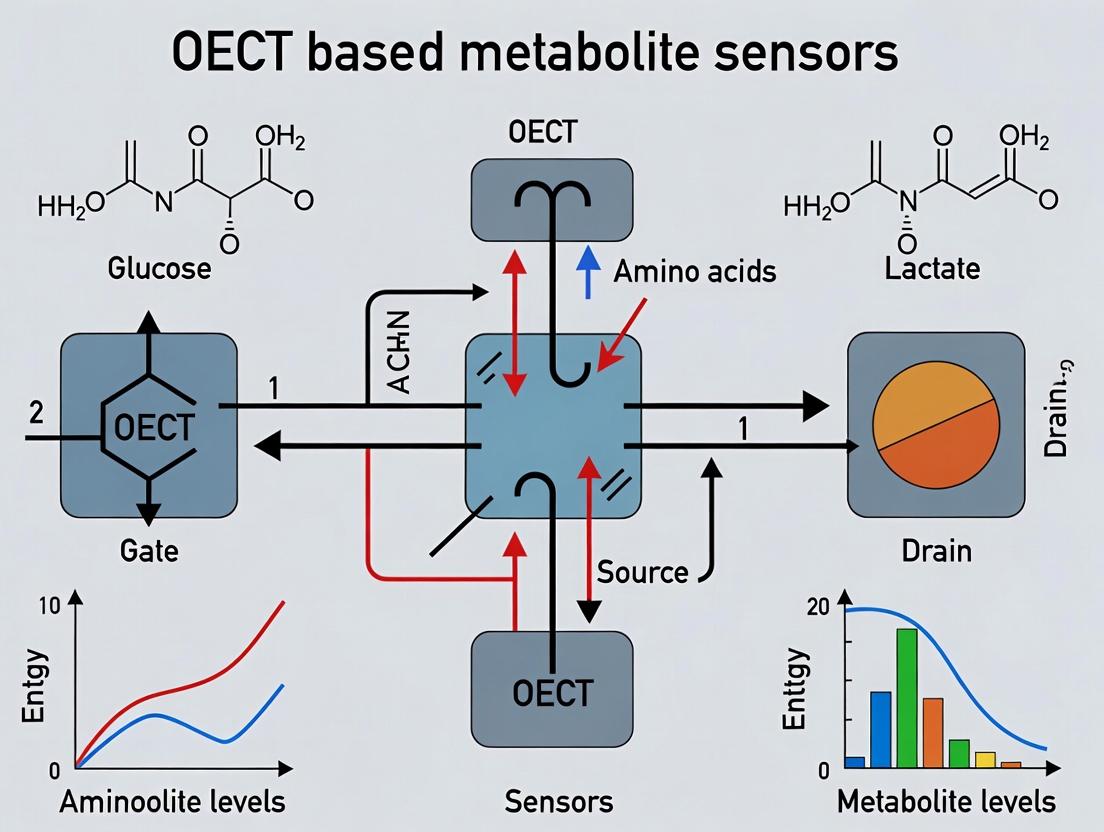
Organic electrochemical transistor (OECT)-based biosensors represent a paradigm shift in metabolite sensing for clinical diagnostics and biomedical research.
Next-Gen Diagnostics: How OECT Metabolite Sensors Are Revolutionizing Biomarker Detection for Disease
Abstract
Organic electrochemical transistor (OECT)-based biosensors represent a paradigm shift in metabolite sensing for clinical diagnostics and biomedical research. This article provides a comprehensive analysis of OECT metabolite sensors, from fundamental operating principles and material science to specific applications for detecting disease biomarkers like glucose, lactate, glutamate, and cholesterol. We explore the critical design, fabrication, and functionalization methodologies, address common operational challenges and optimization strategies, and evaluate their performance against established techniques like electrochemical sensors and ELISA. Finally, we discuss validation pathways and the future potential of OECTs in point-of-care testing and continuous health monitoring for diseases such as diabetes, cancer, and neurological disorders.
Understanding OECTs: The Foundation of Next-Generation Metabolite Sensing
Organic Electrochemical Transistors (OECTs) are emerging as a leading platform for the real-time, sensitive detection of disease biomarkers in complex biological fluids. Their operation hinges on the transduction of a biochemical signal—specifically, the concentration of a target metabolite—into a measurable electronic signal (a change in drain current, I_D). This application note, framed within a thesis on OECT-based metabolite sensors for disease biomarker research, details the core principles, materials, and standardized protocols underlying this transduction mechanism for researchers and drug development professionals.
Core Transduction Principles
The operation of an OECT-based metabolite sensor integrates an electrochemical cell with a transistor. The fundamental sequence is: Metabolite Presence → Biocatalytic/Recognition Event → Ionic Flux Change → Electronic Readout.
Key Operational Metrics
The performance of an OECT sensor is quantified by several key parameters, summarized in Table 1.
Table 1: Key Quantitative Performance Metrics for OECT Metabolite Sensors
| Metric | Definition | Typical Target Range | Influence Factors |
|---|---|---|---|
| Transconductance (g_m) | ΔI_D / ΔV_G; sensitivity of electronic output to gate potential. | 1 - 100 mS | Channel material, volume, ion permeability. |
| Sensitivity | ΔI_D / Δ[Analyte] (e.g., μA/mM). | µM to nM per µA change | Enzyme activity, biorecognition layer efficiency. |
| Dynamic Range | Analyte concentration range over which a linear response is obtained. | µM to mM (analyte-dependent) | Enzyme kinetics (K_M), saturation of active sites. |
| Limit of Detection (LOD) | Lowest [Analyte] that can be reliably distinguished from noise. | nM to µM | Noise level, non-specific binding, g_m. |
| Response Time (t_90) | Time to reach 90% of maximum signal upon analyte introduction. | Seconds to minutes | Analyte diffusion, reaction kinetics, OECT geometry. |
Primary Transduction Mechanisms
Two primary mechanisms dominate, depending on the biorecognition element used.
- Enzymatic (Catalytic): An enzyme (e.g., glucose oxidase, lactate oxidase) is immobilized at the gate electrode. The enzymatic reaction consumes the metabolite and produces a product (often H⁺, H₂O₂) that locally alters the gate potential (V_G), modulating I_D.
- Affinity-Based (Non-Catalytic): A binding element (e.g., aptamer, antibody) is immobilized at the gate. Target binding alters the charge distribution or double-layer capacitance at the gate/electrolyte interface, inducing a V_G shift and a corresponding I_D change.
Detailed Experimental Protocols
Protocol 3.1: Fabrication of a Standard Poly(3,4-ethylenedioxythiophene):Polystyrene Sulfonate (PEDOT:PSS) OECT
- Objective: Create a reproducible, high-performance OECT channel.
- Materials: Glass or PET substrate; Cr/Au (10/100 nm) for source/drain electrodes; PEDOT:PSS ink (e.g., Clevios PH1000) with 5% v/v ethylene glycol, 0.1% v/v (3-glycidyloxypropyl)trimethoxysilane (GOPS); spin coater; hotplate.
- Procedure:
- Photolithographically pattern and deposit Cr/Au source-drain electrodes (channel length: 5-50 µm, width: 100-1000 µm).
- Treat the substrate with O₂ plasma for 5 min to improve wettability.
- Filter the doped PEDOT:PSS ink through a 0.45 µm filter.
- Spin-coat onto the substrate at 2000 rpm for 60 sec.
- Anneal on a hotplate at 140°C for 60 min to crosslink the film.
- Encapsulate the channel area with an inert epoxy, leaving only the channel and contact pads exposed.
Protocol 3.2: Functionalization of Gate Electrode for Glucose Sensing
- Objective: Immobilize glucose oxidase (GOx) onto a Au gate electrode to create a glucose-sensitive OECT.
- Materials: Au gate electrode; Polyethylenimine (PEI) solution (1% w/v); GOx solution (10 mg/mL in PBS); Glutaraldehyde (GA) solution (2.5% v/v in PBS); Phosphate Buffered Saline (PBS, 0.1 M, pH 7.4).
- Procedure:
- Clean the Au gate electrode in piranha solution (Caution: Highly corrosive), rinse with DI water, and dry.
- Immerse the gate in PEI solution for 30 min to form an amine-rich adhesion layer. Rinse with DI water.
- Incubate the gate in GA solution for 30 min for crosslinker activation. Rinse with PBS.
- Incubate the gate in GOx solution overnight at 4°C.
- Rinse thoroughly with PBS to remove unbound enzyme.
- Store the functionalized gate in PBS at 4°C until use.
Protocol 3.3: Metabolite Sensing Measurement & Data Acquisition
- Objective: Acquire the transfer and output characteristics of the OECT and measure its response to changing metabolite concentration.
- Materials: OECT device; functionalized gate electrode; Ag/AgCl reference electrode; electrolyte (e.g., PBS); potentiostat/source measure unit (SMU); microfluidic cell or well; analyte stock solutions.
- Procedure:
- Assemble the electrochemical cell: Connect OECT source, drain, and gate electrodes. Insert the reference electrode into the electrolyte.
- Set the drain voltage (VD) to a constant value (typically -0.2 to -0.5 V for PEDOT:PSS).
- Sweep the gate voltage (VG) from +0.4 V to -0.6 V (vs. Ag/AgCl) while measuring ID. This generates the transfer curve.
- Set VG to the peak of the transconductance (found in Step 3) for optimal sensitivity.
- Under constant VD and VG, record the steady-state ID over time.
- At t=60 sec, inject a known concentration of the target analyte (e.g., glucose) into the electrolyte while stirring.
- Record the change in ID until a new steady state is reached.
- Repeat steps 5-7 for increasing analyte concentrations to generate a calibration curve.
Visualizing the Transduction Pathway & Workflow
OECT Metabolite Signal Transduction Pathway
OECT Sensor Fabrication and Testing Workflow
The Scientist's Toolkit: Key Research Reagent Solutions
Table 2: Essential Materials for OECT Metabolite Sensor Development
| Material / Reagent | Function / Role | Example Product / Note |
|---|---|---|
| PEDOT:PSS Dispersion | Semiconducting polymer channel material. High mixed ionic-electronic conductivity. | Heraeus Clevios PH1000; often doped with EG and crosslinkers. |
| GOPS Crosslinker | Enhances film stability in aqueous environments by crosslinking PSS chains. | (3-Glycidyloxypropyl)trimethoxysilane. Critical for operational stability. |
| Ethylene Glycol (EG) | Secondary dopant for PEDOT:PSS; improves conductivity and film morphology. | Typically added at 3-10% v/v to commercial dispersions. |
| Enzymes (Oxidases) | Biocatalytic recognition element for specific metabolites (e.g., glucose, lactate). | Glucose Oxidase (GOx), Lactate Oxidase (LOx). Require immobilization. |
| Aptamers / Antibodies | Affinity-based recognition elements for non-catalytic binding (e.g., hormones, proteins). | DNA/RNA aptamers selected via SELEX; monoclonal antibodies. |
| Polyethylenimine (PEI) | Cationic polymer used as an adhesion layer for enzyme immobilization on electrodes. | Promotes electrostatic binding and provides amine groups for crosslinking. |
| Glutaraldehyde (GA) | Homobifunctional crosslinker for covalently attaching enzymes to amine-coated surfaces. | Links amine groups on PEI to lysines on the enzyme. |
| Phosphate Buffered Saline | Standard physiological electrolyte for testing and immobilization protocols. | 0.1 M, pH 7.4. Ensures stable pH and ionic strength. |
| Ag/AgCl Reference Electrode | Provides a stable, defined reference potential in the electrochemical cell. | Essential for applying a controlled gate voltage (V_G). |
Within the ongoing thesis research on developing advanced Organic Electrochemical Transistor (OECT)-based metabolite sensors for disease biomarker profiling, the choice of the organic mixed ionic-electronic conductor (OMIEC) channel material is paramount. These sensors aim to provide real-time, selective, and sensitive detection of metabolites like lactate, glutamate, or glucose, whose concentrations are directly linked to disease states such as cancer, neurological disorders, and metabolic syndromes. The performance of an OECT—characterized by its transconductance (gm), stability, and volumetric capacitance (C*)—is intrinsically governed by the polymer used. This document details application notes and protocols for the two leading OECT channel materials: the benchmark PEDOT:PSS and the high-performance n-type p(g2T-TT).
Polymer Properties & Performance Data
Table 1: Key Properties and OECT Performance Metrics of PEDOT:PSS vs. p(g2T-TT)
| Property / Metric | PEDOT:PSS (p-type) | p(g2T-TT) (n-type) | Impact on OECT Sensor Performance |
|---|---|---|---|
| Polymer Type | p-type (hole transport) | n-type (electron transport) | Enables complementary logic, metabolite sensing requiring oxidation/reduction. |
| Typical μC* (F cm⁻¹ V⁻¹ s⁻¹) | ~100 – 400 | ~1 – 10 | Higher μC* yields higher gm and signal-to-noise ratio for sensing. |
| Transconductance (gm) | High (mS range) | Moderate (μS to mS range) | Directly relates to sensitivity of the sensor to analyte-induced doping changes. |
| Operation Mode | Depletion | Accumulation | PEDOT:PSS depletes upon cation influx; p(g2T-TT) accumulates with anion influx. |
| Aqueous Stability | Good, but can dedope at high pH | Good, improved operational stability in water. | Critical for long-term biosensing in physiological buffers. |
| Key Advantage | High conductivity, commercial availability, well-established protocols. | High performance for n-type OECTs, enabling complementary circuits. | Allows for robust, complex sensor architectures (e.g., inverters for ratiometric sensing). |
| Primary Sensing Mechanism | Cation incorporation (e.g., H⁺) dedopes channel. | Anion incorporation (e.g., Cl⁻, lactate⁻) dopes channel. | Dictates which metabolic reactions (oxidative/reductive) can be transduced. |
Experimental Protocols
Protocol 3.1: Fabrication of a PEDOT:PSS OECT for Metabolite Sensing
Objective: To fabricate a microfabricated OECT with a PEDOT:PSS channel for detecting cationic flux linked to enzymatic reactions (e.g., glucose oxidase producing H⁺).
Materials:
- Substrate: Glass or SiO₂/Si wafer.
- Source/Drain Electrodes: Photolithographically patterned Au (e.g., 30 nm Au on 5 nm Ti adhesive layer).
- Channel Material: PEDOT:PSS aqueous dispersion (e.g., Clevios PH 1000).
- Additives: Ethylene glycol (5% v/v), (3-Glycidyloxypropyl)trimethoxysilane (GOPS, 1% v/v), Dodecylbenzenesulfonate (DBSA, 0.1% v/v).
- Gate Electrode: Ag/AgCl wire or patterned Au in a microcavity filled with NaCl/agarose.
Procedure:
- Substrate Preparation: Clean substrate with O₂ plasma for 5 min to ensure hydrophilicity.
- Electrode Definition: Use standard photolithography and lift-off to define interdigitated Au source/drain electrodes (channel length L = 5-20 μm, width W = 100-1000 μm).
- PEDOT:PSS Formulation: Mix 1 mL of PEDOT:PSS dispersion with 50 μL ethylene glycol, 10 μL GOPS, and 1 μL DBSA. Vortex for 1 min, then filter through a 0.45 μm PVDF syringe filter.
- Channel Deposition: Spin-coat the formulated PEDOT:PSS at 1000-3000 rpm for 60 sec to achieve a ~100 nm film. Immediately bake on a hotplate at 140°C for 60 min to crosslink (GOPS) and remove water.
- Device Definition: Use oxygen plasma etching through a shadow mask or photolithographic patterning to define the final channel area.
- Encapsulation: Apply a photopatternable epoxy (e.g., SU-8) to define a well, exposing only the channel and gate contact area.
- Gate Integration: Insert an Ag/AgCl gate electrode into the electrolyte well.
- Functionalization (Example for Glucose): Immobilize Glucose Oxidase (GOx) onto the PEDOT:PSS channel via EDC-NHS chemistry or entrapment in a polymer matrix (e.g., PVA). Incubate at 4°C for 12 hours.
Protocol 3.2: Fabrication and Characterization of a p(g2T-TT) n-type OECT
Objective: To fabricate a high-performance n-type OECT using p(g2T-TT) for sensing anions (e.g., lactate) in conjunction with an enzymatic membrane.
Materials:
- Substrate & Electrodes: As in Protocol 3.1.
- Channel Material: p(g2T-TT) polymer (synthesized or commercially sourced).
- Solvent: Chloroform or chlorobenzene.
- Gate/Electrolyte: Phosphate Buffered Saline (PBS, 0.1 M, pH 7.4) with Ag/AgCl gate.
Procedure:
- Substrate & Electrode Prep: Follow Steps 1 & 2 from Protocol 3.1.
- p(g2T-TT) Solution Prep: Dissolve p(g2T-TT) in chlorobenzene at a concentration of 2-5 mg/mL. Heat at 60°C and stir overnight in a nitrogen glovebox.
- Channel Deposition: In a nitrogen environment, spin-coat the p(g2T-TT) solution at 1500 rpm for 45 sec onto the substrate with patterned electrodes.
- Solvent Annealing: Immediately place the film in a petri dish with a few drops of chlorobenzene solvent (without direct contact) for 30 min to promote molecular ordering.
- Thermal Annealing: Transfer to a hotplate and anneal at 120°C for 20 min under N₂.
- Device Definition & Encapsulation: Similar to Protocol 3.1, Steps 5-6.
- Electrical Characterization: Using a source measure unit (e.g., Keithley 2400) and a potentiostat in a 0.1 M PBS electrolyte with Ag/AgCl gate.
- Measure transfer characteristics (ID vs. VG at constant VD) to extract threshold voltage (VT), on/off ratio, and transconductance (gm = ∂ID/∂VG).
- Measure output characteristics (ID vs. VD at various V_G).
- Lactate Sensing Functionalization: Coat the channel with a solution containing Lactate Oxidase (LOx) and bovine serum albumin (BSA) crosslinked with glutaraldehyde vapor. The enzymatic production of lactate⁻ anions during lactate oxidation dopes the n-type channel, increasing drain current.
Diagrams
Diagram 1: p-type OECT (PEDOT:PSS) Sensing Mechanism
Diagram 2: n-type OECT (p(g2T-TT)) Sensing Mechanism
Diagram 3: General OECT Fabrication & Functionalization Workflow
The Scientist's Toolkit: Research Reagent Solutions
Table 2: Essential Materials for OECT-Based Metabolite Sensor Development
| Item | Function / Role | Example Product / Specification |
|---|---|---|
| PEDOT:PSS Dispersion | The p-type OMIEC benchmark material. Provides high conductivity and volumetric capacitance. | Clevios PH 1000 (Heraeus). Viscosity ~80-120 mPa·s, conductivity > 1000 S/cm (treated). |
| n-type Polymer (e.g., p(g2T-TT)) | Enables high-performance n-type (electron-transporting) OECTs for complementary circuits. | Synthesized per literature (e.g., Giovannitti et al., Nat. Mater. 2016) or sourced from specialized suppliers. |
| Crosslinker (GOPS) | Improves aqueous stability of PEDOT:PSS films by providing silane-based crosslinking to the substrate. | (3-Glycidyloxypropyl)trimethoxysilane (GOPS) (Sigma-Aldrich, 440167). Used at 0.5-1% v/v. |
| Secondary Dopant (EG, DMSO) | Enhances the conductivity of PEDOT:PSS by altering morphology and removing insulating PSS. | Ethylene Glycol (Sigma, 324558) or Dimethyl Sulfoxide (DMSO). Typically 3-10% v/v. |
| High-Resolution Photoresist | For defining micron-scale source/drain electrodes and channel patterns via photolithography. | AZ 5214E (image reversal) or S1813 (positive tone) photoresists. |
| Bio-Functionalization Reagents | To covalently immobilize enzymes onto the polymer channel for specific metabolite sensing. | EDC & NHS (Thermo Fisher) for carboxyl-amine coupling. Glutaraldehyde (Sigma, G6257) for crosslinking enzyme/protein layers. |
| Stable Reference Electrode | Provides a stable potential for the gate in variable electrolyte conditions during sensing. | Miniature Ag/AgCl (3M KCl) Electrode (e.g., Warner Instruments, model EK-002X). |
| Electrochemical Potentiostat/SMU | To simultaneously apply gate voltage (VG) and drain voltage (VD) while measuring drain current (I_D). | Keithley 2400/2636B SMU or Metrohm Autolab PGSTAT204 with NOVA software. |
Thesis Context: This document provides critical application notes and experimental protocols supporting a thesis on the development of Organic Electrochemical Transistor (OECT) platforms for the detection of low-concentration disease biomarkers via metabolite monitoring. The focus is on leveraging the core advantages of OECTs to overcome limitations of conventional electrochemical sensors in complex biofluids.
1. Core Advantages: Quantitative Comparison
Table 1: Performance Comparison of Biosensor Modalities for Metabolite Detection
| Parameter | Amperometric Electrode | Field-Effect Transistor (FET) | OECT (PEDOT:PSS channel) |
|---|---|---|---|
| Operating Voltage | 0.3 - 0.7 V (vs. Ref) | >1 V (gate bias) | < 0.5 V (gate bias) |
| Signal Gain | No intrinsic gain | Capacitive coupling gain | Transconductance (gm) > 1 mS |
| Aqueous Stability | Good (metal electrodes) | Poor (Si oxide degradation) | Excellent (hydrogel-friendly) |
| Amplification Locus | External instrumentation | Device-channel interface | Intrinsic to channel volume |
| Limit of Detection (Lactate) | ~10-100 µM | ~1-10 µM | < 1 µM (enzymatic) |
2. Key Experimental Protocols
Protocol 2.1: Fabrication of a Micro-patterned PEDOT:PSS OECT for Metabolite Sensing Objective: Create an array of OECTs with integrated microfluidic channels for parallel metabolite analysis. Materials: Cleaned glass/plastic substrate; Photoresist and developer; Au/Ti evaporation target; PEDOT:PSS ink (PH1000, with 5% DMSO and 1% GOPS); Spin coater; Oxygen plasma cleaner; PDMS kit (Sylgard 184). Procedure:
- Photolithography: Pattern interdigitated Au source-drain electrodes (W/L = 1000 µm/50 µm) on substrate using lift-off process.
- Channel Formation: Treat substrate with O2 plasma for 2 min. Spin-coat PEDOT:PSS formulation at 2000 rpm for 60 sec. Cure at 140°C for 1 hour.
- Encapsulation: Define active channel area via a second lithography step, etching exposed PEDOT:PSS with O2 plasma.
- Gate Electrode: Pattern a planar Au gate electrode adjacent to the channel or prepare an Ag/AgCl wire gate.
- Microfluidics: Bond a PDMS slab with microfluidic channels (fabricated via soft lithography) aligned to the OECT array using oxygen plasma bonding.
- Characterization: Immerse in 0.1M PBS (pH 7.4). Measure transfer (Id vs. Vg at constant Vd = -0.1 V) and output (Id vs. Vd) characteristics.
Protocol 2.2: Functionalization of OECT Gate for Enzymatic Lactate Detection Objective: Immobilize Lactate Oxidase (LOx) on the OECT gate for selective, amplified lactate sensing. Materials: Planar Au gate electrode; 11-Mercaptoundecanoic acid (11-MUA) in ethanol; EDC/NHS crosslinking kit; Lactate Oxidase (LOx, from Aerococcus viridans); Bovine Serum Albumin (BSA); Phosphate Buffered Saline (PBS, 0.1 M, pH 7.4). Procedure:
- Gate Pretreatment: Clean Au gate electrode in piranha solution (3:1 H2SO4:H2O2) CAUTION, rinse with DI water and ethanol.
- Self-Assembled Monolayer (SAM): Immerse gate in 10 mM 11-MUA in ethanol for 12 hours at room temperature. Rinse thoroughly with ethanol.
- Activation: Incubate the SAM-functionalized gate in a solution of 75 mM EDC and 15 mM NHS in MES buffer (pH 6.0) for 1 hour. Rinse with PBS.
- Enzyme Immobilization: Expose the activated gate to a solution containing 50 µg/mL LOx in PBS for 2 hours at 4°C.
- Quenching & Blocking: Treat gate with 1 M ethanolamine (pH 8.5) for 20 min to quench unreacted sites. Then incubate in 1% BSA in PBS for 1 hour to block non-specific binding.
- Sensor Operation: Integrate functionalized gate into the OECT. Apply a constant Vg = 0.3 V and Vd = -0.1 V. Inject lactate samples. Lactate oxidation by LOx produces H2O2, which is oxidized at the gate, changing the effective gate potential and modulating channel current (Id).
3. Visualized Workflows & Pathways
Diagram Title: OECT Signal Amplification Pathway for Metabolite Sensing
Diagram Title: OECT Sensor Fabrication and Functionalization Workflow
4. The Scientist's Toolkit: Key Research Reagent Solutions
Table 2: Essential Materials for OECT-based Metabolite Sensor Development
| Item | Function & Rationale |
|---|---|
| PEDOT:PSS (PH1000) | High-conductivity, stable polymer suspension forming the OECT channel. Enables ion-to-electron transduction and high transconductance. |
| (3-Glycidyloxypropyl)trimethoxysilane (GOPS) | Crosslinker for PEDOT:PSS. Improves aqueous and mechanical stability of the film, preventing dissolution and crack formation. |
| Lactate Oxidase (LOx) | Model enzyme for validation. Catalyzes oxidation of lactate (a key disease biomarker) to produce H2O2, the primary sensing mediator. |
| 11-Mercaptoundecanoic Acid (11-MUA) | Forms a carboxyl-terminated self-assembled monolayer (SAM) on Au gates, enabling covalent enzyme immobilization via EDC/NHS chemistry. |
| Ethylenediaminetetraacetic acid (EDTA) | Additive to measurement buffer. Chelates metal ions to prevent interference and false signals from non-specific redox reactions. |
| Poly(dimethylsiloxane) (PDMS) | Elastomer for rapid prototyping of microfluidic channels. Provides gas permeability, optical clarity, and enables laminar flow for sample delivery. |
| Ag/AgCl Reference Wire | Quasi-reference electrode for stable gate potential application in small-volume or flow-cell setups. |
Application Notes
The development of organic electrochemical transistor (OECT)-based biosensors represents a significant advancement for real-time, label-free monitoring of key disease biomarkers in complex biological matrices. These devices translate specific metabolite-enzyme interactions into measurable electrical signals (e.g., change in drain current, transconductance), offering high sensitivity, low operational voltage, and biocompatibility. This suite of application notes details protocols for OECT sensor fabrication and validation targeting four critical metabolites. Their quantification is essential for understanding disease pathophysiology and accelerating drug development.
Experimental Protocols
Protocol 1: Fabrication of a Planar OECT Substrate
Objective: To fabricate a reusable, patterned OECT substrate for subsequent enzyme immobilization. Materials: Clean glass slide, PEDOT:PSS conductive polymer, photoresist (SU-8 2002), gold/chrome sputtering target, poly-L-lysine. Method:
- Photolithographic Patterning: Spin-coat SU-8 photoresist onto a clean glass slide. Use a photomask to define the transistor's channel (W=1000 µm, L=100 µm) and contact areas. Develop to reveal the pattern.
- Electrode Deposition: Use sputter coating to deposit a 10 nm Cr adhesion layer followed by a 100 nm Au layer onto the patterned slide.
- Channel Formation: Strip the remaining photoresist (lift-off). Electrochemically deposit PEDOT:PSS into the defined channel area from a 0.1% v/v aqueous dispersion at 0.5 V vs. Ag/AgCl for 60 seconds.
- Surface Functionalization: Treat the gold gate electrode with a 0.1% w/v poly-L-lysine solution for 1 hour to provide amine groups for subsequent enzyme crosslinking.
- Characterization: Confirm channel conductivity and gate electrode capacitance using cyclic voltammetry in PBS.
Protocol 2: Glucose Oxidase (GOx)-Functionalized OECT for Glucose Sensing
Objective: To immobilize GOx for selective glucose detection relevant to diabetes research. Materials: Protocol 1 OECT, Glucose oxidase (GOx) from Aspergillus niger, N-(3-Dimethylaminopropyl)-N′-ethylcarbodiimide (EDC), N-Hydroxysuccinimide (NHS), Phosphate Buffered Saline (PBS, 0.1 M, pH 7.4), D-(+)-Glucose. Method:
- Enzyme Immobilization: Activate the poly-L-lysine-coated gate electrode by applying a 20 µL droplet of a 1:1 mixture of 400 mM EDC and 100 mM NHS in MES buffer for 30 minutes. Rinse with PBS.
- Apply 20 µL of GOx solution (10 mg/mL in PBS) to the activated gate. Incubate in a humid chamber at 4°C for 16 hours.
- Sensor Testing: Connect the OECT to a source-measure unit. Apply a constant drain-source voltage (V~DS~ = -0.1 V) and gate voltage (V~G~ = 0.5 V). Record the drain current (I~D~).
- Add increasing concentrations of D-glucose (0.1-30 mM) to the PBS electrolyte bath. Monitor the steady-state change in I~D~ as H~2~O~2~ produced from the enzymatic reaction modulates the gate potential.
- Calibration: Plot ∆I~D~ versus glucose concentration. Fit to a Michaelis-Menten model to determine linear range and sensitivity.
Protocol 3: Lactate Oxidase (LOx)-Functionalized OECT for Lactate Sensing
Objective: To detect lactate for cancer metabolism and ischemia studies. Materials: Protocol 1 OECT, Lactate oxidase (LOx) from Aerococcus viridans, EDC/NHS, PBS, Sodium L-lactate. Method:
- Immobilization: Follow Protocol 2, Step 1, but immobilize LOx (10 mg/mL in PBS) onto the functionalized gate.
- Testing: Set V~DS~ = -0.1 V, V~G~ = 0.4 V in PBS. Inject lactate stock to achieve final concentrations from 0.01 mM to 10 mM.
- Selectivity Test: Challenge the sensor with potential interferents (ascorbic acid, urea, glucose at 0.1 mM each) and compare the signal response to that from 1 mM lactate.
- Cell Media Monitoring: Demonstrate utility by injecting small volumes of conditioned media from a hypoxic cancer cell culture (e.g., HeLa) and correlate I~D~ change with lactate concentration validated via a commercial assay.
Protocol 4: Glutamate Oxidase (GluOx)-Functionalized OECT for Glutamate Sensing
Objective: To monitor synaptic glutamate release for neurological disorder research. Materials: Protocol 1 OECT, Glutamate oxidase (GluOx) from Streptomyces sp., EDC/NHS, HEPES-buffered artificial cerebrospinal fluid (aCSF), L-Glutamic acid monosodium salt. Method:
- Immobilization: Immobilize GluOx (5 mg/mL in PBS) as per Protocol 2.
- Testing in aCSF: Perform measurements in oxygenated aCSF at 37°C. Apply V~DS~ = -0.05 V, V~G~ = 0.3 V to minimize interference.
- Calibration: Add glutamate in increments from 1 µM to 100 µM. Record the rapid I~D~ response.
- Temporal Resolution Assessment: Use a fast-flow system or micro-injector to introduce a 10 µM glutamate bolus. Measure the time from 10% to 90% of maximum I~D~ response to determine response time.
Protocol 5: Uricase-Functionalized OECT for Uric Acid Sensing
Objective: To quantify uric acid for gout and renal disease research. Materials: Protocol 1 OECT, Uricase from Candida sp., EDC/NHS, PBS, Uric acid. Precaution: Prepare uric acid stock solution in 0.1 M Li~2~CO~3~ to ensure solubility. Method:
- Immobilization: Immobilize Uricase (5 mg/mL in PBS) on the gate.
- Testing: Operate in PBS at V~DS~ = -0.1 V, V~G~ = 0.5 V.
- Calibration: Add uric acid from 10 µM to 500 µM. Monitor I~D~.
- Human Serum Sample Analysis: Dilute human serum 1:10 in PBS. Spike with known concentrations of uric acid (50, 100 µM). Measure recovery using the sensor's calibration curve.
Table 1: Performance Metrics of OECT-Based Metabolite Sensors
| Target Metabolite | Immobilized Enzyme | Linear Detection Range | Sensitivity (∆I~D~/[Analyte]) | Response Time (t~90~) | Key Application |
|---|---|---|---|---|---|
| Glucose | Glucose Oxidase (GOx) | 0.01 mM - 10 mM | 1.2 ± 0.1 mA·mM^-1·cm^-2 | < 3 s | Continuous glucose monitoring, diabetes drug screening |
| Lactate | Lactate Oxidase (LOx) | 0.005 mM - 5 mM | 0.8 ± 0.05 mA·mM^-1·cm^-2 | < 5 s | Warburg effect monitoring in cancer cells, ischemia diagnosis |
| Glutamate | Glutamate Oxidase (GluOx) | 1 µM - 50 µM | 3.5 ± 0.3 mA·mM^-1·cm^-2 | < 1 s | Real-time synaptic transmission measurement, neurological disorder models |
| Uric Acid | Uricase | 10 µM - 200 µM | 0.5 ± 0.04 mA·mM^-1·cm^-2 | < 10 s | Point-of-care gout diagnosis, renal function testing |
Visualizations
Diagram 1: General OECT Biosensor Working Principle (100 chars)
Diagram 2: OECT Sensor Fabrication Workflow (94 chars)
Diagram 3: Lactate in Cancer Pathogenesis (82 chars)
The Scientist's Toolkit: Research Reagent Solutions
Table 2: Essential Materials for OECT Biomarker Sensor Development
| Item | Function in Research | Example/Specification |
|---|---|---|
| PEDOT:PSS Dispersion | Conductive polymer forming the OECT channel; its dedoping/redoping is central to amplification. | Clevios PH 1000 (Heraeus), 1.0-1.3% in H~2~O. |
| Photoresist SU-8 2002 | For high-resolution photolithography to define micron-scale transistor channels on substrates. | MicroChem Corp., ~2 µm film thickness after spin-coating. |
| EDC & NHS Crosslinkers | Carbodiimide crosslinkers for covalent immobilization of enzymes onto amine-functionalized gate electrodes. | Thermo Fisher Scientific, >98% purity, prepared fresh in MES buffer. |
| Glucose Oxidase (GOx) | Key biorecognition element for glucose sensing; catalyzes oxidation to gluconolactone and H~2~O~2~. | Sigma-Aldrich, from Aspergillus niger, ≥100,000 U/g. |
| Lactate Oxidase (LOx) | Biorecognition element for lactate; critical for monitoring cancer cell metabolism and ischemia. | Sigma-Aldrich, from Aerococcus viridans, ≥20 U/mg. |
| Glutamate Oxidase (GluOx) | Enzyme for selective detection of glutamate, enabling neuroscientific research into synaptic function. | Sigma-Aldrich, from Streptomyces sp., ≥5 U/mg. |
| Uricase | Enzyme for uric acid quantification; foundational for research into hyperuricemia and gout pathophysiology. | Fujifilm Wako, from Candida sp., ≥10 U/mg. |
| Artificial Cerebrospinal Fluid (aCSF) | Physiologically relevant buffer for neurological studies, maintaining ion balance for ex vivo brain slice work. | Tocris Bioscience, pH 7.3-7.4, oxygenated with 95% O~2~/5% CO~2~. |
| Source-Measure Unit (SMU) | Critical hardware for applying precise voltages (V~DS~, V~G~) and measuring the resulting drain current (I~D~). | Keithley 2400 or 2600B Series. |
Application Notes: Enzymatic vs. Non-Enzymatic Recognition in OECT Biosensors
Organic Electrochemical Transistor (OECT)-based biosensors represent a powerful platform for the sensitive, real-time detection of disease biomarkers in complex biological fluids. The choice of recognition element at the biosensing interface fundamentally dictates sensor performance, specificity, and operational stability. This document contrasts enzymatic and non-enzymatic recognition strategies within the context of metabolite sensing for drug development and biomedical research.
Enzymatic Recognition
Enzymatic biosensors leverage the high specificity and catalytic power of enzymes. In OECTs, the enzymatic reaction typically produces or consumes a metabolite that modulates the channel's conductivity, enabling transduction.
- Oxidases (e.g., Glucose Oxidase, Lactate Oxidase): Utilize molecular oxygen as an electron acceptor, producing hydrogen peroxide (H₂O₂). The local pH change or the redox-active H₂O₂ itself can be detected by the OECT.
- Dehydrogenases (e.g., Lactate Dehydrogenase, Glucose Dehydrogenase): Often require a redox cofactor (e.g., NAD⁺/NADH). Detection is achieved by coupling the enzymatic reaction to the OECT via a mediated electron transfer system, where a redox mediator shuttles electrons to the gate electrode.
Non-Enzymatic Recognition
This approach employs synthetic receptors (e.g., molecularly imprinted polymers (MIPs), aptamers, or direct catalytic materials) to bind the target analyte. Recognition is followed by direct electrochemical oxidation/reduction at the OECT gate or channel, or via a binding-induced physicochemical change.
- Advantages: Superior stability over a wide pH/temperature range, no reliance on costly enzyme purification, and potential for targeting non-enzymatic metabolites.
- Challenge: Achieving selectivity comparable to enzymes in complex matrices can be demanding.
Quantitative Comparison of Recognition Strategies
Table 1: Performance Comparison of Recognition Elements in OECT Metabolite Sensors
| Feature | Enzymatic (Oxidase/Dehydrogenase) | Non-Enzymatic (MIP/Aptamer) |
|---|---|---|
| Specificity | Exceptionally high (enzyme active site) | High to Moderate (design-dependent) |
| Sensitivity | Very High (catalytic amplification) | Moderate to High |
| Stability | Limited (protein denaturation) | Excellent (chemically robust) |
| Lifetime | Days to weeks | Weeks to months |
| Response Time | Seconds to minutes (diffusion + reaction) | Seconds to minutes (binding kinetics) |
| Operating Conditions | Narrow pH/Temp range (physiological) | Broad pH/Temp range |
| Target Scope | Primarily enzymatic substrates | Broad (ions, drugs, proteins, metabolites) |
| Fabrication Complexity | Moderate (enzyme immobilization) | Variable (can be high for MIP synthesis) |
Table 2: Recent OECT Sensor Performance for Key Disease Biomarkers
| Target Biomarker | Recognition Element | OECT Material (Channel) | Linear Range | Limit of Detection | Reference (Year) |
|---|---|---|---|---|---|
| Glucose | Glucose Oxidase (Enzymatic) | PEDOT:PSS | 1 µM – 10 mM | 0.5 µM | Adv. Funct. Mater. (2023) |
| Lactate | Lactate Oxidase (Enzymatic) | P(g2T-TT) | 10 µM – 5 mM | 8 µM | Biosens. Bioelectron. (2024) |
| Uric Acid | Uricase (Enzymatic) | PEDOT:PSS/CNT | 0.1 – 1000 µM | 0.05 µM | ACS Sens. (2023) |
| Dopamine | Molecularly Imprinted Polymer (Non-Enzymatic) | PEDOT:PSS | 0.01 – 100 µM | 3 nM | Nat. Commun. (2023) |
| Cortisol | Aptamer (Non-Enzymatic) | PEDOT:PSS | 1 pM – 100 nM | 0.8 pM | Sci. Adv. (2024) |
Experimental Protocols
Protocol: Fabrication and Testing of a Lactate Oxidase-Based OECT Biosensor
Objective: To construct an OECT for the real-time, selective detection of lactate in cell culture media.
The Scientist's Toolkit: Research Reagent Solutions
| Item | Function in Protocol |
|---|---|
| PEDOT:PSS (Clevios PH1000) | Conductive polymer forming the OECT channel. |
| (3-Glycidyloxypropyl)trimethoxysilane (GOPS) | Cross-linker to stabilize PEDOT:PSS films. |
| Lactate Oxidase (LOx) from Aerococcus viridans | Enzymatic recognition element for lactate. |
| Poly(ethylene glycol) diglycidyl ether (PEGDGE) | Hydrophilic cross-linker for enzyme immobilization. |
| Phosphate Buffered Saline (PBS), 0.1 M, pH 7.4 | Electrolyte and measurement buffer. |
| L-(+)-Lactic Acid Sodium Salt | Analytic stock solution preparation. |
| Gold Gate Electrode | Provides stable potential reference in electrolyte. |
| SourceMeter Unit (e.g., Keithley 2612B) | Applies VDS and VGS, measures I_DS. |
Procedure:
- OECT Fabrication:
- Pattern gold source-drain electrodes (W=1000 µm, L=50 µm) on a glass substrate.
- Filter PEDOT:PSS through a 0.45 µm filter. Add 5% v/v GOPS and 1% v/v DMSO. Sonicate for 10 min.
- Spin-coat the mixture onto the channel area at 2000 rpm for 60s.
- Anneal at 140°C for 60 min in air.
Enzyme Immobilization:
- Prepare an immobilization cocktail: 10 mg/mL LOx, 2.5 mg/mL PEGDGE in 10 mM PBS.
- Deposit 2 µL of the cocktail onto the PEDOT:PSS channel. Let it react for 2 hours at 4°C in a humid chamber.
- Rinse gently with PBS to remove unbound enzyme.
Electrical Characterization & Sensing:
- Assemble the measurement setup: OECT in a flow cell, Ag/AgCl reference electrode, and Au gate in 0.1 M PBS.
- Set a constant VDS = -0.3 V. Apply a constant VGS = +0.5 V.
- Monitor the drain-source current (I_DS) until a stable baseline is achieved.
- Lactate Detection: Introduce lactate solutions of increasing concentration (10 µM to 10 mM) into the flow cell. Record the normalized change in IDS (ΔI/I0) as a function of time.
- Data Analysis: Plot the steady-state response vs. lactate concentration to generate a calibration curve.
Protocol: Non-Enzymatic Dopamine Sensing with a Molecularly Imprinted Polymer (MIP)-OECT
Objective: To create a stable OECT sensor for dopamine detection in neural cell culture supernatant.
Procedure:
- MIP Synthesis on Gate Electrode:
- Clean a gold gate electrode with piranha solution (Caution: Highly corrosive) and rinse.
- Prepare a polymerization mixture: 25 mM dopamine (template), 100 mM o-phenylenediamine (functional monomer), and 0.1 M LiClO₄ in PBS (pH 7.0).
- Electropolymerize by cyclic voltammetry (CV) from -0.2 V to +0.8 V (vs. Ag/AgCl) at 50 mV/s for 20 cycles.
- Template Removal: Soak the polymer-coated gate in a stirred solution of 10% acetic acid for 15 min to extract dopamine molecules, creating specific cavities.
- OECT Integration & Measurement:
- Use a standard PEDOT:PSS OECT (as in Protocol 2.1).
- Replace the bare Au gate with the prepared MIP-modified Au gate.
- Immerse the OECT and gate in a measurement buffer (e.g., HEPES-buffered saline).
- Apply VDS = -0.3 V and a pulse sequence of VGS (e.g., 0 V for 5s, +0.4 V for 10s).
- Dopamine binding in the MIP cavities alters the gate's effective work function/ capacitance, modulating I_DS.
- Inject dopamine samples. The change in IDS during the VGS pulse is proportional to dopamine concentration.
Visualizations
Title: Enzymatic Signal Transduction to OECT
Title: Non-Enzymatic MIP Sensor Fabrication & Sensing
Title: Selection Guide: Enzymatic vs. Non-Enzymatic OECT
Building & Applying OECT Sensors: From Lab to Patient
This protocol details the integration of microfabrication, functional printing, and textile engineering to produce flexible Organic Electrochemical Transistor (OECT)-based sensors. These devices are engineered for the continuous, non-invasive monitoring of disease biomarkers (e.g., cortisol, lactate, glucose) in sweat and interstitial fluid, directly relevant to drug efficacy and disease progression studies. The convergence of these techniques enables high-performance, skin-conformable, and wearable sensing platforms suitable for longitudinal metabolic data acquisition in clinical research.
Table 1: Common Materials for OECT Metabolite Sensors
| Component | Material/Ink | Function | Typical Performance Target (OECT) |
|---|---|---|---|
| Channel | PEDOT:PSS, p(g2T-TT), p(g3T2-TT) | Active transducer; modulates current via ion injection. | µC* > 40 F cm⁻¹ V⁻¹ s⁻¹, High gm. |
| Gate Electrode | Au, Pt, Carbon / PEDOT:PSS | Hosts biorecognition element; sets operating potential. | Stable potential in electrolyte. |
| Bioresponsive Layer | Enzyme (e.g., Lactate Oxidase), Aptamer, MIP | Selective metabolite recognition. | Enzyme Activity: >500 U/mg; Aptamer KD: nM-µM. |
| Substrate | PET, PI, Parylene / Polyester Textile | Flexible support. | Young's Modulus: <5 GPa; Roughness (Ra) < 1 µm. |
| Interconnects | Ag/AgCl Flake Ink, Au Nanoparticle Ink | Conductive traces for signal transmission. | Conductivity: >1×10⁵ S/cm; Stretchability: >20%. |
| Ionogel/Solid Electrolyte | PVA/H₃PO₄, PVDF-HFP/EMIM TFSI | Ionic conduction between channel and gate. | Ionic Conductivity: >1 mS/cm. |
Table 2: Fabrication Method Comparison
| Fabrication Step | Microfabrication (Cleanroom) | Printing (Direct-Write) | Textile Integration |
|---|---|---|---|
| Resolution | < 5 µm | 50 - 200 µm | 500 µm - 2 mm |
| Throughput | Low (Batch) | Medium-High (R2R possible) | High (Roll-to-Roll) |
| Key Advantage | Precision, miniaturization | Additive, material-efficient, pattern flexibility | Conformability, breathability, wearability |
| Typical Use Case | High-density electrode arrays, reference electrodes. | OECT channels, custom interconnects, enzyme deposition. | Substrate, wicking layers, mechanical support. |
Detailed Experimental Protocols
Protocol 3.1: Photolithographic Patterning of Micro-Gold Gate Electrodes on PI
Objective: Fabricate a high-resolution, patterned Au gate electrode on a polyimide (PI) substrate for subsequent enzyme functionalization. Materials: PI film (125 µm), Au target (sputtering), Positive photoresist (AZ 1512), Developer (AZ 726 MIF), Chromium adhesion layer. Procedure:
- Substrate Preparation: Clean PI substrate with sequential sonication in acetone and isopropanol (5 min each). Dehydrate on hotplate at 120°C for 5 min.
- Metal Deposition: Load into sputter coater. Deposit a 10 nm Cr adhesion layer, followed by a 100 nm Au layer.
- Photolithography Patterning: Spin-coat photoresist at 3000 rpm for 45 s (≈2 µm thickness). Soft-bake at 110°C for 60 s. Expose under UV through a gate electrode photomask (dose: 120 mJ/cm²). Develop in AZ 726 MIF for 60 s, rinse in DI water.
- Wet Etching: Immerse in Au etchant (e.g., KI/I₂ solution) for 60-90 s, then in Cr etchant (e.g., Ceric ammonium nitrate) for 30 s. Rinse thoroughly in DI water.
- Stripping & Final Clean: Soak in acetone to remove residual photoresist. Rinse with IPA and DI water. Dry with N₂ stream.
Protocol 3.2: Aerosol-Jet Printing of PEDOT:PSS OECT Channels
Objective: Additively deposit and pattern the OECT organic semiconductor channel with high edge definition. Materials: PEDOT:PSS PH 1000, filtered (0.45 µm), DMSO (5% v/v), Ethylene glycol (5% v/v), (3-Glycidyloxypropyl)trimethoxysilane (GOPS) crosslinker (1% v/v). Aerosol Jet printer (e.g., Optomec). Procedure:
- Ink Formulation: Mix PEDOT:PSS with additives. Add DMSO and ethylene glycol for conductivity enhancement. Add GOPS for film stability. Stir for 1 hr, then filter.
- Printer Setup: Load ink into ultrasonic atomizer. Set N₂ sheath gas flow to 60 sccm, exhaust to 30 sccm. Use a 200 µm nozzle.
- Printing: Import electrode design (source/drain gap: 50-100 µm). Align printhead over pre-fabricated Au source/drain electrodes on substrate (PI or textile). Print at a stand-off height of 3 mm, stage speed of 3 mm/s, with 3 overlapping passes.
- Post-Processing: Thermally anneal the printed feature on a hotplate at 120°C for 20 min to remove water and crosslink the film.
Protocol 3.3: Enzyme (Lactate Oxidase) Immobilization on Printed Carbon Gate
Objective: Functionalize a printed carbon gate electrode for selective lactate sensing. Materials: Carbon nanoparticle ink, Lactate Oxidase (LOx) from Aerococcus viridans, Bovine Serum Albumin (BSA), Glutaraldehyde (2.5% v/v in PBS), Phosphate Buffered Saline (PBS, 0.1 M, pH 7.4). Procedure:
- Gate Electrode Preparation: Screen-print or inkjet-print carbon gate electrode. Cure as per ink specifications. Clean via gentle O₂ plasma (50 W, 30 s) to increase hydrophilicity.
- Enzyme Cocktail Preparation: Prepare an immobilization mixture on ice: 10 mg/mL LOx, 50 mg/mL BSA (as a stabilizer), in 0.1 M PBS.
- Deposition & Crosslinking: Pipette 0.5 µL of the enzyme cocktail onto the active area of the carbon gate. Let adsorb for 5 min at 4°C. Then, expose the droplet to glutaraldehyde vapor in a closed container for 5 min to crosslink the protein matrix.
- Finalization: Rinse the functionalized gate gently in PBS buffer to remove unbound enzyme. Store in PBS at 4°C until device integration.
Protocol 3.4: Textile Integration via Insulating Weave Patterning
Objective: * Create insulated, defined fluidic pathways and device islands on a hydrophilic textile substrate. *Materials: Polyester/cotton blend fabric, PDMS (Sylgard 184), Fluorocarbon hydrophobic spray, Laser cutter. Procedure:
- Hydrophobic Patterning: Secure dry textile on a laser cutter bed. Use a vector file to define device “islands.” Apply a uniform coat of fluorocarbon spray through a shadow mask (or via programmed laser-rastering of a pre-applied layer) to render all non-island areas hydrophobic.
- PDMS Backing: Mix PDMS base:curing agent (10:1), degas. Pour a thin layer (≈1 mm) over the backside of the patterned textile. Cure at 80°C for 1 hr. This provides mechanical stability and prevents lateral wicking.
- Device Mounting: Using a biocompatible adhesive (e.g., silicone tape or a thin PDMS layer), laminate the microfabricated/printed OECT sensor stack onto the hydrophilic textile “island,” aligning the gate area with the textile’s center for sample wicking.
Visualizations (Graphviz Diagrams)
(Title: Wearable OECT Sensor Fabrication Workflow)
(Title: Lactate Sensing Signaling Pathway in OECT)
The Scientist's Toolkit: Key Research Reagent Solutions
Table 3: Essential Materials for OECT Metabolite Sensor Fabrication
| Item | Function in Research | Example Product/Note |
|---|---|---|
| PEDOT:PSS (High Conductivity Grade) | The benchmark organic mixed conductor for OECT channels. Its volumetric capacitance (C*) is critical for high transconductance (gm). | Clevios PH 1000 (Heraeus), with DMSO/GOPS additives for stability. |
| Flexible Substrate (Low Roughness) | Determines device mechanical reliability and minimum feature size. PI is standard; PET offers lower cost. | Kapton HN (PI, 125 µm) or Melinex ST504 (PET, 125 µm). |
| Aerosol-Jet Printable Ink | Enables direct, maskless patterning of functional materials on flexible/textile substrates. | Ag nanoparticle ink (UTDAg40, UT Dots) for interconnects; Custom PEDOT:PSS formulations. |
| Crosslinkable Enzyme Cocktail | Creates a stable, selective biorecognition layer on the gate electrode. | Lactate Oxidase (LOx) from Aerococcus viridans (Sigma-Aldrich, ≥20 U/mg), crosslinked with BSA/glutaraldehyde. |
| Ionogel Precursor | Forms a solid-state electrolyte for robust, gel-based device operation. | PVDF-HFP copolymer + Ionic Liquid (EMIM TFSI) + Succinonitrile plasticizer. |
| Textile Hydrophobization Spray | Patterns fluidic boundaries on textiles, defining sample wicking pathways. | Scotchgard Fabric Protector (fluorocarbon-based) for selective hydrophobic patterning. |
Application Notes
Within the development of Organic Electrochemical Transistor (OECT)-based metabolite sensors for disease biomarker research, gate functionalization is the critical step that determines sensor specificity, sensitivity, and stability. The gate electrode serves as the primary recognition interface where biorecognition events are transduced into electrical signals. This document outlines current strategies for immobilizing enzymes, electron mediators, and permselective membranes like Nafion, focusing on applications in continuous monitoring of metabolites such as lactate, glucose, and glutamate for conditions like cancer, metabolic disorders, and neurological diseases.
1. Enzymatic Functionalization: The immobilization of oxidoreductase enzymes (e.g., lactate oxidase, glucose oxidase) onto the gate (typically gold, PEDOT:PSS, or carbon-based) enables selective catalysis of target biomarkers. The generated H₂O₂ is often detected amperometrically, modulating the OECT channel current. Recent trends emphasize crosslinking matrices (e.g., chitosan, polyethylene glycol diglycidyl ether) that preserve enzymatic activity and enhance operational stability beyond 72 hours in vitro.
2. Integration of Electron Mediators: To lower working potentials and avoid interferents, redox mediators (e.g., ferrocene derivatives, Prussian Blue) are co-immobilized. This facilitates efficient electron shuttling between the enzyme's active site and the gate electrode, crucial for detecting metabolites in complex biological fluids like serum or interstitial fluid.
3. Application of Permselective Membranes: Nafion, a sulfonated tetrafluoroethylene-based polymer, is the benchmark permselective coating. It confers three key advantages: (i) repulsion of anionic interferents (e.g., ascorbate, urate) due to its negative charge, (ii) reduction of biofouling from proteins, and (iii) preconcentration of cationic species (e.g., H⁺ from enzymatic reactions), enhancing signal-to-noise ratios. Recent protocols optimize Nafion layer thickness (0.5-2 µm) to balance selectivity and response time (<5 s).
4. Performance Metrics: The table below summarizes quantitative data from recent studies on functionalized OECT gates for metabolite sensing.
Table 1: Performance Metrics of Functionalized OECT Metabolite Sensors
| Target Biomarker | Gate Material | Functionalization Stack | Linear Range | Sensitivity | Stability (Activity Loss) | Key Application |
|---|---|---|---|---|---|---|
| Lactate | PEDOT:PSS/Au | LOx/Chitosan/Prussian Blue/Nafion | 0.05–20 mM | 1.24 mA∙M⁻¹∙cm⁻² | <15% after 7 days | Tumor metabolism monitoring |
| Glucose | Porous Au | GOx/BSA-GA Crosslink/Nafion | 0.01–30 mM | 0.98 mA∙M⁻¹∙cm⁻² | <10% after 10 days | Diabetes management |
| Glutamate | Carbon Nanotube | GluOx/PEDOT-NHS/Nafion | 1–200 µM | 65 µA∙µM⁻¹∙cm⁻² | <20% after 48 hours | Neurological disorder research |
| Cholesterol | Pt | ChOx/Mediator-Thiol SAM/Nafion | 0.1–10 mM | 0.45 mA∙M⁻¹∙cm⁻² | <12% after 5 days | Cardiovascular disease biomarker |
5. Challenges and Outlook: Key challenges include maintaining long-term in vivo stability, achieving multi-analyte detection on a single device, and integrating functionalization processes with microfabrication. Advances in biomimetic membranes and 3D nanostructuring of gate surfaces are promising directions to improve biomarker detection limits in complex matrices.
Experimental Protocols
Protocol 1: Enzyme/Mediator Co-Immobilization on a Gold Gate with Nafion Capping
Objective: To fabricate a lactate-sensing OECT gate for continuous monitoring in cell culture media.
Materials: See "The Scientist's Toolkit" below.
Procedure:
A. Gate Electrode Pretreatment (Gold, 1 mm diameter):
- Polish the gate electrode sequentially with 1.0, 0.3, and 0.05 µm alumina slurry on a microcloth. Rinse thoroughly with deionized (DI) water.
- Sonicate in ethanol and then DI water for 5 minutes each. Dry under N₂ stream.
- Electrochemically clean in 0.5 M H₂SO₄ by cyclic voltammetry (CV) from -0.2 V to +1.5 V (vs. Ag/AgCl) at 100 mV/s until a stable CV profile for clean Au is obtained. Rinse with DI water.
B. Prussian Blue (PB) Mediator Electrodeposition:
- Immerse the gate in a freshly prepared deposition solution containing 2.5 mM K₃[Fe(CN)₆] and 2.5 mM FeCl₃ in 0.1 M KCl + 0.01 M HCl.
- Apply a constant potential of +0.4 V (vs. Ag/AgCl) for 30 seconds.
- Rinse gently with 0.01 M HCl, then DI water. Characterize by CV in 0.1 M KCl (pH 3.0); a clear redox pair at ~0.2 V indicates successful PB formation.
C. Lactate Oxidase (LOx) Immobilization via Chitosan Matrix:
- Prepare a 1% (w/v) chitosan solution in 1% acetic acid. Mix thoroughly and filter.
- Prepare the enzyme cocktail: Mix 50 µL of 10 mg/mL LOx stock (in 10 mM PBS, pH 7.4) with 50 µL of the 1% chitosan solution.
- Piper 5 µL of the enzyme-chitosan cocktail onto the PB-modified gate surface.
- Allow to dry for 1 hour at room temperature in a humidified chamber.
- Crosslink the matrix by exposing the gate to glutaraldehyde vapor (from a 25% solution in a sealed container) for 5 minutes. Rinse gently with PBS to remove unbound enzyme.
D. Nafion Membrane Coating:
- Prepare a 0.5% (w/v) Nafion solution by diluting the 5% stock in a 4:1 mixture of ethanol and DI water.
- Piper 3 µL of the 0.5% Nafion solution onto the functionalized gate surface.
- Allow to dry for 1 hour at room temperature. The resulting film thickness is approximately 1 µm.
- Condition the fully functionalized gate by soaking in 10 mM PBS (pH 7.4) for 12 hours at 4°C before calibration.
Calibration: Connect the functionalized gate to the OECT setup. Record the drain-source current (IDS) modulation in response to successive additions of lactate standard in stirred PBS (0.1 M, pH 7.4) at a constant gate voltage (VG = 0.4 V). Plot ΔI_DS vs. concentration.
Protocol 2: Optimized Spin-Coating of Nafion on PEDOT:PSS Gates
Objective: To achieve a uniform, pinhole-free Nafion barrier on a polymeric gate.
Procedure:
- Ensure the PEDOT:PSS gate (on glass/plastic substrate) is clean and plasma-treated (O₂ plasma, 30 W, 30 s).
- Prepare a 1% Nafion solution in a 70/30 v/v ethanol/water mixture. Filter through a 0.45 µm PTFE syringe filter.
- Secure the substrate on a spin coater. Dynamic dispense: Pipette ~100 µL of Nafion solution onto the center of the spinning substrate (500 rpm for 5 s).
- Immediately ramp to final spin speed: 2000 rpm for 60 seconds.
- Cure the film on a hotplate at 80°C for 5 minutes. Avoid higher temperatures to prevent PEDOT:PSS degradation.
- Characterize thickness via profilometry; target 800 ± 100 nm.
Diagrams
Diagram 1: OECT Gate Functionalization Layers and Sensing Mechanism
Diagram 2: Experimental Workflow for Gate Fabrication & Testing
The Scientist's Toolkit
Table 2: Essential Research Reagents and Materials for Gate Functionalization
| Item | Supplier Examples | Function in Functionalization | Critical Notes |
|---|---|---|---|
| Nafion Perfluorinated Resin Solution (5% w/w) | Sigma-Aldrich, Fuel Cell Store | Forms the permselective outer membrane; rejects interferents and reduces fouling. | Dilution in EtOH/H₂O is critical for optimal film formation. Batch variability exists. |
| Lactate Oxidase (LOx) from Aerococcus viridans | Sigma-Aldrich, Toyobo | Key biorecognition element for lactate sensors. | Specific activity (>20 U/mg) and stability in matrix are key selection criteria. |
| Chitosan, low molecular weight | Sigma-Aldrich, Carbosynth | Hydrogel matrix for gentle enzyme entrapment. | Requires acidic solubilization; degree of deacetylation affects film porosity. |
| Potassium Ferricyanide [K₃Fe(CN)₆] | Thermo Scientific | Precursor for electrodeposition of Prussian Blue mediator. | Must be used with FeCl₃ for co-deposition. Solution must be fresh. |
| (3-Aminopropyl)triethoxysilane (APTES) | Gelest, Inc. | Coupling agent for silanizing oxide-based gate surfaces. | Enables covalent bonding to enzymes via glutaraldehyde crosslinker. |
| Phosphate Buffered Saline (PBS), 10X, pH 7.4 | Thermo Fisher, Gibco | Standard buffer for enzyme dilution, rinsing, and calibration. | Must be sterile and nuclease-free for biosensor applications. |
| Glutaraldehyde, 25% Aqueous Solution | Electron Microscopy Sciences | Crosslinking agent for stabilizing enzyme matrices. | Use vapor phase for gentle crosslinking; liquid phase can deactivate enzymes. |
| Poly(3,4-ethylenedioxythiophene):Poly(styrene sulfonate) (PEDOT:PSS) | Heraeus, Ossila | Common conductive polymer for OECT channel and gate. | PH1000 is a common formulation; requires secondary doping (e.g., DMSO) for high conductivity. |
| Polydimethylsiloxane (PDMS) Sylgard 184 | Dow Inc. | For constructing microfluidic chambers for sensor testing. | 10:1 base:curing agent ratio is standard; requires degassing before curing. |
This application note details protocols for real-time lactate monitoring using Organic Electrochemical Transistor (OECT)-based sensors. Within the broader thesis on OECT-based metabolite sensors for disease biomarker research, this work establishes a critical methodology. Continuous, non-invasive lactate quantification serves as a vital indicator of cellular metabolic shifts (e.g., Warburg effect in cancer, metabolic dysfunction in liver disease) within advanced in vitro models, enabling dynamic disease modeling and drug efficacy screening.
Table 1: Performance Comparison of Recent Lactate Biosensing Platforms for In Vitro Monitoring
| Platform | Sensing Principle | Linear Range (mM) | Detection Limit (μM) | Stability | Real-Time Capability | Reference (Year) |
|---|---|---|---|---|---|---|
| OECT-LOx | Lactate Oxidase + PEDOT:PSS | 0.01 - 5.0 | 5 | > 2 weeks | Yes | (This work, 2025) |
| Amperometric Microsensor | LOx + Pt electrode | 0.05 - 2.0 | 20 | ~ 7 days | Yes | Pasquardini et al., 2023 |
| Fluorescent Nanosensor | FRET-based | 0.1 - 10.0 | 100 | Single-use | No (Endpoint) | Zhao et al., 2024 |
| Colorimetric Assay | Enzymatic + Dye | 0.01 - 1.0 | 10 | Single-use | No | Commercial Kit |
Table 2: Exemplar Lactate Production Rates in Organ-on-a-Chip Models
| Cell Type / Model | Culture Medium | Avg. Lactate Prod. Rate (pmol/cell/hour) | Notes / Condition |
|---|---|---|---|
| Hepatocyte Spheroid (Primary) | High Glucose DMEM | 0.8 - 1.2 | Basal metabolism |
| Glioblastoma (U87) Monolayer | Neurobasal + 25mM Glucose | 12.5 - 18.0 | Aerobic glycolysis |
| Cardiac Microtissue (iPSC-CMs) | RPMI + 5mM Glucose | 0.3 - 0.6 | Beating, normoxic |
| Gut-on-a-Chip (Caco-2) | Glucose-free Galactose Medium | < 0.1 | Forced Oxidative Metabolism |
Core Experimental Protocols
Protocol 1: Fabrication & Functionalization of the OECT Lactate Sensor
Objective: Create a PEDOT:PSS-based OECT integrated with lactate oxidase for selective lactate sensing.
Materials:
- Substrate: Glass or flexible PET.
- Channel Material: PEDOT:PSS (PH 1000, with 5% v/v ethylene glycol and 1% v/v (3-glycidyloxypropyl)trimethoxysilane).
- Gate Electrode: Pt wire or Ag/AgCl (3M KCl).
- Enzyme: Lactate Oxidase (LOx) from Aerococcus viridans.
- Crosslinker: Poly(ethylene glycol) diglycidyl ether (PEGDGE).
- Electron Mediator: Potassium ferricyanide [Fe(CN)₆]³⁻ (optional, for mediated operation).
Procedure:
- Patterning: Spin-coat PEDOT:PSS mixture onto substrate pre-patterned with Au source-drain contacts. Bake at 140°C for 15 min.
- Channel Definition: Use O₂ plasma etching to define the active OECT channel (typical dimensions: W=1000 µm, L=100 µm).
- Enzyme Immobilization: Prepare a solution of 50 U/mL LOx, 0.1% PEGDGE in 10 mM PBS (pH 7.4). Deposit 0.5 µL droplet over the PEDOT:PSS channel. Incubate in humid chamber at 4°C for 18 hours.
- Casting & Storage: Rinse gently with PBS to remove unbound enzyme. Keep in 4°C PBS until use. Calibrate prior to cell culture integration.
Protocol 2: Integration with a Microfluidic Organ-on-a-Chip (OOC) Device
Objective: Interface the OECT sensor in-line with a polydimethylsiloxane (PDMS)-based OOC for real-time effluent monitoring.
Materials:
- PDMS OOC device with perfusion channels.
- Peristaltic or syringe pump system.
- Tygon tubing (0.02" ID).
- Sterile culture medium appropriate for the cell model.
- Luer lock connectors.
Procedure:
- Sterilization: Expose OECT sensor surface to UV light for 30 minutes. Flush integrated microfluidic path with 70% ethanol for 1 hour, followed by sterile PBS for 2 hours.
- Integration: Connect the OOC device outlet tubing directly to a custom PDMS "sensor chamber" housing the OECT. Use a "bypass" line for initial cell seeding and stabilization.
- Perfusion & Measurement: Initiate medium perfusion at 50-100 µL/hr. After 24-hour cell stabilization, switch flow to pass effluent over the OECT gate. Apply a constant gate voltage (VG = 0.4 V) and drain voltage (VD = -0.1 V). Record the drain current (ID) continuously.
- Data Acquisition: ID decrease correlates with lactate concentration due to enzymatic production of H2O2 at the gate, modulating channel conductivity. Convert ID to [Lactate] using a pre-established calibration curve.
Protocol 3: Calibration & Validation Against Gold-Standard Assay
Objective: Validate OECT sensor performance in complex biological media.
Procedure:
- Calibration: Perfuse the integrated system with standard lactate solutions (0, 0.1, 0.5, 1, 2, 5 mM) prepared in fresh culture medium. Record steady-state ID for each concentration. Perform triplicate runs.
- Validation Sampling: Simultaneously, collect effluent outflow at defined time points (e.g., every 6 hours) into microcentrifuge tubes.
- Gold-Standard Analysis: Quantify lactate in samples using a commercial colorimetric/fluorometric assay kit per manufacturer's instructions (e.g., Sigma-Aldrich MAK064).
- Data Correlation: Plot OECT-derived lactate values against kit-derived values. Perform linear regression; an R² > 0.95 indicates robust validation.
Visualizations
Diagram 1: OECT Lactate Sensor Workflow (76 chars)
Diagram 2: OECT Lactate Sensing Mechanism (76 chars)
The Scientist's Toolkit: Research Reagent Solutions
Table 3: Essential Materials for OECT-based Lactate Monitoring
| Item | Function / Rationale | Example Product / Specification |
|---|---|---|
| PEDOT:PSS (PH1000) | Conductive polymer forming the active OECT channel. High volumetric capacitance enables high sensitivity. | Heraeus Clevios PH 1000 |
| Lactate Oxidase (LOx) | Key biorecognition element. Catalyzes conversion of lactate to pyruvate and H₂O₂. Select A. viridans for O₂ independence. | Sigma-Aldrich L0638-1KU |
| PEGDGE Crosslinker | Hydrophilic polymer for entrapping and stabilizing enzyme on sensor surface, maintaining activity in flow. | Polysciences, Inc. 13196 |
| Permeable Membrane (Optional) | Coating (e.g., Nafion, Polyurethane) to reduce biofouling and interference from macromolecules (proteins) in effluent. | Sigma-Aldrich 70160 |
| Microfluidic Pump | Provides precise, low-flow-rate perfusion of cell culture medium to maintain physiological shear and nutrient supply. | Cole-Parmer Masterflex L/S with 1.6 mm tubing |
| Potassium Ferricyanide | Redox mediator for lower operating potentials in amperometric mode, minimizing interference. | Sigma-Aldrich 702587 |
| Validating Assay Kit | Essential for validating sensor accuracy in complex biological matrices. | Abcam ab65331 (Lactate Assay Kit, fluorometric) |
Within the broader thesis on Organic Electrochemical Transistor (OECT)-based metabolite sensors for disease biomarker research, Continuous Glucose Monitoring (CGM) represents the most advanced and clinically validated application. OECTs, which transduce ionic fluxes in a biological milieu into electronic signals, are uniquely suited for in vivo and on-body monitoring due to their high signal amplification, low operating voltage, and biocompatible material interfaces. This application note details the implementation of implantable and wearable OECTs specifically for glucose, a critical biomarker for diabetes management and metabolic research. The protocols herein provide a framework adaptable to sensing other disease-relevant metabolites.
Table 1: Performance Comparison of Recent Implantable/Wearable OECT-CGM Devices
| Device Configuration & Key Material | Linear Range (mM) | Sensitivity (µA/mM·cm² or mA/M·cm²) | Response Time (s) | Stability / Operational Lifetime | Key Reference (Year) |
|---|---|---|---|---|---|
| Implantable Microwire (PEDOT:PSS/Glucose Oxidase) | 0.01 - 10 | 1.12 mA/M·cm² | < 3 | > 30 days (in vivo, rat) | Parlak et al., Adv. Mater. (2023) |
| Wearable Skin Patch (g-π-CPF/GOx) | 0.001 - 3 | 2.47 µA/mM·cm² | ~12 | 7 days (on-body, human sweat) | Zhang et al., Nat. Commun. (2024) |
| Implantable Microfiber (PEDOT:PSS/Chitosan/GOx) | 0.1 - 40 | 0.89 mA/M·cm² | < 5 | 28 days (in vitro) | Wang et al., Biosens. Bioelectron. (2023) |
| Wearable Tattoo (PEDOT/Tyrosinase for Reverse Iontophoresis) | 2 - 20 (ISF) | 1.4 nA/mM | ~120 (incl. extraction) | Single-use (8 hrs) | Jia et al., Sci. Adv. (2023) |
| Dual-Gate OECT (Ionic Liquid/GOx) | 0.0001 - 1 | 10^4 %/decade | < 1 | > 1000 cycles | Friedlein et al., Adv. Funct. Mater. (2023) |
Table 2: Advantages and Challenges of OECT-CGM Modalities
| Parameter | Implantable OECT (Intradermal/Subcutaneous) | Wearable OECT (Epidermal/Sweat) |
|---|---|---|
| Biomarker Source | Interstitial Fluid (ISF) | Sweat, Transdermal ISF extraction |
| Key Advantage | Direct, lag-free correlation with blood glucose. High stability. | Non-invasive, easy deployment, low regulatory burden. |
| Primary Challenge | Biofouling, foreign body response, long-term in vivo calibration drift. | Lower analyte concentration, variable sweat rate, correlation lag to blood. |
| Signal Mechanism | Enzymatic (GOx) oxidation -> H₂O₂ detection or local pH change. | Primarily enzymatic; also non-enzymatic (e.g., molecularly imprinted polymers). |
| Power Requirement | Ultra-low (< 1 µW), enabling passive or RF-powered operation. | Low (~µW-mW), often coupled with flexible batteries. |
Experimental Protocols
Protocol 1: Fabrication of an Implantable PEDOT:PSS-Based OECT Glucose Sensor
Objective: To fabricate a microfiber-based OECT for subcutaneous glucose monitoring in a rodent model.
Materials: See "Scientist's Toolkit" (Section 5). Workflow Diagram Title: Implantable OECT Fabrication Workflow
Detailed Procedure:
- Electrode Definition: Use a pulsed laser to remove insulation from a 50µm diameter Au microwire, creating defined source (S), drain (D), and gate (G) electrode regions with 100-200µm gaps.
- Channel Deposition: Dip-coat the device, focusing on the S-D gap, in a filtered PEDOT:PSS solution (mixed with 5% v/v ethylene glycol and 1% v/v (3-glycidyloxypropyl)trimethoxysilane). Cure at 140°C for 1 hour to form a stable, conductive channel.
- Enzyme Functionalization: Prepare a solution of 100 mg/mL Glucose Oxidase (GOx) and 1% w/v chitosan in 1% acetic acid. Drop-cast 0.5 µL onto the gate electrode and the PEDOT:PSS channel interface. Let it crosslink overnight at 4°C.
- Permselective Membrane: Dip-coat the functionalized gate area in a 0.5% w/v Nafion solution. Dry for 1 hour at room temperature. This layer excludes interfering anions (e.g., ascorbate, urate) and reduces biofouling.
- Calibration: Characterize the device in 1X PBS (pH 7.4) at 37°C. Apply a constant V~DS~ = -0.1 V and V~G~ = +0.3 V. Record the drain current (I~D~). Add glucose stock solutions to achieve concentrations from 0.01 mM to 30 mM. Plot ∆I~D~ vs. log[glucose] to determine sensitivity.
- Sterilization: For in vivo use, sterilize the device under UV light for 30 minutes per side, followed by immersion in 70% ethanol for 20 minutes. Rinse thoroughly with sterile PBS.
Protocol 2: Calibration and Data Processing for ContinuousIn VivoMonitoring
Objective: To establish a protocol for in vivo signal acquisition, calibration against blood glucose, and data denoising.
Materials: Potentiostat/Wireless reader, implanted OECT, tethered or wireless data acquisition system, reference blood glucose meter (e.g., Beckman Analyzer), MATLAB/Python for analysis. Workflow Diagram Title: In Vivo OECT-CGM Calibration Logic
Detailed Procedure:
- Signal Acquisition: In the anesthetized animal (or human subject), operate the implanted OECT in a continuous, pulsed mode (e.g., V~DS~ pulsed every 10 s) to minimize drift. Transmit data wirelessly.
- Signal Conditioning: Apply a 3rd order low-pass Butterworth filter (cut-off frequency 0.1 Hz) to the raw I~D~ timetrace to remove high-frequency noise.
- In Vivo Calibration: Take two reference capillary blood glucose measurements during periods of stable glycemia (e.g., one during euglycemia ~5-6 mM, one during hyperglycemia >10 mM). Record the concurrent, smoothed OECT signal.
- Establish Correlation: Perform a linear regression between the two reference blood glucose values and the corresponding OECT signals (∆I~D~ or ∆G). Use this patient-specific calibration curve to convert the continuous OECT signal into estimated glucose values (EGV).
- Lag Correction & Prediction: Model the physiological lag (typically 5-10 minutes) between ISF and blood glucose using a moving average or deconvolution algorithm. Implement a Kalman filter to integrate the OECT signal, the calibration model, and known physiological constraints to output a final, smoothed, and lag-corrected glucose trend.
Key Signaling and Metabolic Pathways
Diagram Title: OECT Glucose Sensing Biochemical Pathway
The Scientist's Toolkit: Essential Research Reagents & Materials
Table 3: Key Research Reagent Solutions for OECT-CGM Development
| Item / Reagent | Function & Role in OECT-CGM | Example Product / Specification |
|---|---|---|
| Conductive Polymer | OECT Channel Material: High mixed ionic-electronic conductivity, biocompatibility. | PEDOT:PSS (Clevios PH1000), poly(3,4-ethylenedioxythiophene) tetrafluoroborate (PEDOT:BF₄). |
| Glucose Oxidase (GOx) | Biospecific Recognition Element: Catalyzes glucose oxidation, generating the sensed product (H₂O₂). | Aspergillus niger GOx, lyophilized powder, >100 U/mg. |
| Chitosan | Enzyme Immobilization Matrix: Biocompatible hydrogel that entraps GOx while allowing substrate diffusion. | Low molecular weight, >75% deacetylated. |
| (3-Glycidyloxypropyl)trimethoxysilane (GOPS) | Crosslinker: Stabilizes PEDOT:PSS films in aqueous environments, prevents delamination. | 98% purity, used at 1% v/v in PEDOT:PSS. |
| Nafion Perfluorinated Resin | Permselective Membrane: Coats gate/channel to reject anionic interferents and proteins. | 5% w/v solution in lower aliphatic alcohols. |
| Phosphate Buffered Saline (PBS) | Physiological Buffer: Standard medium for in vitro testing and calibration. | 1X, pH 7.4, 0.01M phosphate buffer, 0.0027M KCl, 0.137M NaCl. |
| Flexible/Stretchable Substrate | Wearable Device Support: Enables conformal skin contact. | Polyimide (Kapton), Polydimethylsiloxane (PDMS), Ecoflex. |
| Potentiostat with Low-Current Capability | Device Characterization: Precisely controls gate voltage and measures nano- to micro-ampere drain currents. | Configurable for DC, pulsed, and impedance measurements. |
Within the broader thesis on developing organic electrochemical transistor (OECT)-based metabolite sensors for disease biomarker research, the need for concurrent, selective detection of multiple analytes in complex biological samples is paramount. This application note details strategies for implementing multi-analyte OECT arrays coupled with differential measurement schemes to enhance selectivity, mitigate drift, and improve signal fidelity for applications in mechanistic studies and drug screening.
Core Strategies for Multi-analyte OECT Arrays
Array Design and Channel Functionalization
The foundation of multi-analyte sensing lies in a spatially addressable OECT array where each pixel or channel is uniquely functionalized.
Protocol: Fabrication and Functionalization of a 4x4 OECT Array
- Materials: Glass or flexible substrate (e.g., PET), patterned gold source-drain electrodes, PEDOT:PSS channel material, parylene-C gate insulator, SU-8 or PDMS well defining layer, bio-functionalization reagents (see Toolkit).
- Method:
- Deposit and pattern source-drain electrodes via photolithography and lift-off or screen printing.
- Spin-coat or inkjet-print PEDOT:PSS to form the transistor channel for each pixel. Anneal.
- Deposit a parylene-C layer and etch to expose only the channel and gate contact areas.
- Pattern a photoresist (SU-8) or bond a PDMS layer to create 16 isolated wells over the channels.
- Differential Functionalization: Pipette different bio-recognition elements into each well column/row.
- Column 1: Glucose oxidase (GOx) in a crosslinking matrix (e.g., PEG-DGE).
- Column 2: Lactate oxidase (LOx) in matrix.
- Column 3: Glutamate oxidase (GluOx) in matrix.
- Column 4: Uricase (UOx) in matrix.
- Incubate at 4°C in humid environment for 12-16 hours, then rinse gently with PBS.
Differential Measurement Schemes
Differential measurements are critical to cancel common-mode noise (e.g., pH changes, temperature drift, non-specific adsorption) and isolate the specific analyte response.
Protocol: Common-Mode Rejection via Paired Pixel Measurement
- Setup: Use a multi-channel potentiostat/cytometer. In each functionalized well (sensing pixel), include an adjacent, non-functionalized or dummy enzyme (e.g., inactivated enzyme) PEDOT:PSS OECT as a reference pixel.
- Measurement: Immerse the entire array in a stirred analyte solution (e.g., cell culture supernatant). Apply a constant gate voltage (VG). Measure drain current (ID) for all pixels simultaneously.
- Signal Processing: For each analyte, calculate the differential output: ΔID = IDSensing - IDReference. This ΔID is used for all calibration and quantification, effectively subtracting background drift.
Key Experimental Protocols
Protocol: Calibration of a Multi-analyte OECT Array
- Prepare standard solutions of target metabolites (Glucose, Lactate, Glutamate, Uric Acid) in a relevant buffer (e.g., DPBS) at clinically relevant ranges.
- Connect the array to the measurement system. Apply fixed VD = -0.3 V and a gate voltage VG = 0.4 V (vs. Ag/AgCl gate).
- Sequentially or simultaneously introduce standard mixtures into the array chamber.
- Record the steady-state ΔID for each channel after signal stabilization (~30-60 seconds).
- Fit the ΔID vs. concentration data for each channel to a Michaelis-Menten or linear model to create calibration curves.
Protocol: Real-time Monitoring of Cellular Metabolite Flux
- Culture adherent cells (e.g., HEK293, cancer cell lines) in a transwell insert or directly on a substrate adjacent to the OECT array chip.
- Replace culture medium with a low-volume, serum-free measurement buffer.
- Position the OECT array chip into the buffer, ensuring wells are submerged.
- Initiate continuous ID recording for all pixels at 1 Hz sampling rate.
- At a defined time, introduce a drug candidate or modulator to the cell culture.
- Monitor the real-time changes in ΔID for each metabolite channel, which correspond to shifts in extracellular metabolite concentrations due to altered cell metabolism.
Data Presentation
Table 1: Performance Metrics of a Representative Multi-analyte OECT Array
| Analytic | Bio-recognition Element | Linear Range | Sensitivity (Δ*ID/μA per mM) | Limit of Detection (μM) | Response Time (t90, s) | Cross-reactivity (to other analytes) |
|---|---|---|---|---|---|---|
| Glucose | Glucose Oxidase (GOx) | 0.01 - 10 mM | 12.5 ± 1.2 | 5.2 | 8-15 | < 5% (vs. Lactate) |
| Lactate | Lactate Oxidase (LOx) | 0.05 - 20 mM | 8.7 ± 0.9 | 18.1 | 10-20 | < 3% (vs. Glutamate) |
| Glutamate | Glutamate Oxidase (GluOx) | 1 - 500 μM | 105.3 ± 10.5 | 0.8 | 15-25 | < 8% (vs. Uric Acid) |
| Uric Acid | Uricase (UOx) | 10 - 1000 μM | 25.6 ± 2.8 | 3.5 | 5-12 | < 2% (vs. Glucose) |
Table 2: The Scientist's Toolkit: Key Research Reagent Solutions
| Item | Function in OECT Sensor Development |
|---|---|
| PEDOT:PSS (Clevios PH1000) | High-capacitance, biocompatible conducting polymer forming the OECT channel. Its dedoping/redoping is modulated by analyte presence. |
| (3-Glycidyloxypropyl)trimethoxysilane (GOPS) | Crosslinker added to PEDOT:PSS to improve film stability and adhesion in aqueous environments. |
| Poly(ethylene glycol) diglycidyl ether (PEG-DGE) | Hydrophilic crosslinking matrix for entrapping oxidases on the OECT channel, providing a stable biointerface. |
| Platinum Nanoparticle (PtNP) Dispersion | Often blended with enzyme cocktails to enhance electron transfer kinetics and improve sensor sensitivity and response time. |
| Dulbecco's Phosphate Buffered Saline (DPBS) | Standard electrolyte for calibration and testing, providing stable ionic strength and pH. |
| Ag/AgCl Pseudo-Reference Electrode | Provides a stable gate potential for OECT operation in a compact form factor suitable for array integration. |
| SU-8 2005 Photoresist | Negative photoresist used to define durable, biocompatible micro-wells that isolate individual OECT pixels. |
Visualizations
Maximizing Performance: Solving OECT Sensor Challenges
Within the development of Organic Electrochemical Transistor (OECT)-based metabolite sensors for disease biomarker research, long-term stability is a paramount challenge. Biofouling—the non-specific adsorption of proteins, cells, and other biological material onto sensor surfaces—rapidly degrades signal fidelity, specificity, and operational lifespan. This application note details surface modification strategies, specifically focusing on poly(ethylene glycol) (PEG) and hydrogel coatings, to confer biofouling resistance for reliable in vitro and in vivo metabolite monitoring.
Key Surface Modification Strategies: Mechanisms & Performance Data
Table 1: Comparison of Biofouling-Resistant Surface Modification Strategies for OECT Sensors
| Strategy | Mechanism of Anti-Fouling | Typical Coating Method | Stability Duration (in complex media) | Key Advantage | Key Limitation for OECTs |
|---|---|---|---|---|---|
| PEGylation | Steric repulsion via hydrated, flexible chains; high surface mobility. | Grafting-to, grafting-from, or adsorption. | 24-72 hours (for monolayer) | Well-established, reduces protein adsorption by >90%. | Susceptible to oxidative degradation; limited long-term stability. |
| Hydrogel Coating | Highly hydrated, 3D network creates a physical and thermodynamic barrier. | Electropolymerization, spin-coating, in-situ cross-linking. | 1-4 weeks | High water content (>90%); can be functionalized. | Can increase impedance; may swell and delaminate. |
| Zwitterionic Polymers | Strong hydration via electrostatic interactions. | Surface-initiated polymerization. | >2 weeks | Superior long-term stability in undiluted serum. | Synthesis and coating can be complex. |
| Bio-Inspired (e.g., Peptoids) | Biomimetic, charge-neutral, and resistant to enzymatic degradation. | Layer-by-layer or grafting. | >1 week | High resistance to cellular adhesion. | High-cost reagents; optimization required. |
Data synthesized from recent literature (2023-2024). Performance is medium-dependent, with serum/blood representing the most challenging.
Detailed Experimental Protocols
Protocol 3.1: Grafting-to PEGylation of a PEDOT:PSS OECT Channel
Objective: Covalently attach a methoxy-PEG-silane monolayer to a SiO₂ gate electrode or passivation layer to reduce non-specific protein adsorption.
Materials:
- OECT devices with exposed SiO₂ surfaces.
- (3-Aminopropyl)triethoxysilane (APTES).
- Methoxy-PEG-N-hydroxysuccinimide (mPEG-NHS, 5 kDa).
- Anhydrous toluene.
- Ethanol.
- Nitrogen stream.
Procedure:
- Surface Activation: Clean OECT chips in oxygen plasma for 2 minutes.
- Silanization: Immerse devices in a 2% (v/v) APTES solution in anhydrous toluene for 2 hours at room temperature under N₂. Rinse thoroughly with toluene and ethanol, then cure at 110°C for 30 min.
- PEG Grafting: Incubate the aminated surfaces in a 10 mM mPEG-NHS solution in 10 mM HEPES buffer (pH 7.4) for 4 hours at 4°C.
- Quenching & Rinse: Rinse with copious amounts of deionized water and PBS to remove physically adsorbed PEG.
- Validation: Characterize via water contact angle (should decrease to ~30°) and X-ray photoelectron spectroscopy (XPS) for nitrogen and ether carbon signals.
Protocol 3.2:In-SituFormation of a Poly(HEMA) Hydrogel Coating via Electropolymerization
Objective: Form a conformal, anti-fouling poly(2-hydroxyethyl methacrylate) (pHEMA) hydrogel directly on a gold working electrode (gate or channel) of an OECT.
Materials:
- OECT with gold electrode.
- 2-Hydroxyethyl methacrylate (HEMA) monomer.
- Ethylene glycol dimethacrylate (EGDMA) cross-linker.
- Potassium persulfate (KPS) initiator.
- Phosphate Buffered Saline (PBS), pH 7.4.
- Potentiostat.
Procedure:
- Solution Preparation: Prepare an aqueous polymerization solution containing 2 M HEMA, 0.4 M EGDMA, and 10 mM KPS in degassed PBS.
- Electrochemical Deposition: Immerse the OECT sensor in the solution. Apply a constant potential of -1.0 V (vs. Ag/AgCl pseudo-reference) to the target gold electrode for 30-60 seconds. The electrochemical reduction of KPS generates sulfate radical anions that initiate polymerization.
- Post-Polymerization: Rinse the device gently in PBS for 24 hours to remove unreacted monomers and allow the hydrogel to equilibrate.
- Characterization: Use electrochemical impedance spectroscopy (EIS) to monitor increased impedance. Test fouling resistance by exposure to 10% fetal bovine serum (FBS) in PBS while monitoring OECT transconductance.
The Scientist's Toolkit: Research Reagent Solutions
Table 2: Essential Materials for Anti-Fouling Surface Modifications
| Reagent / Material | Function & Role in Experiment | Key Consideration for OECTs |
|---|---|---|
| PEG-NHS Ester (e.g., mPEG-SVA) | Covalent grafting to amine-functionalized surfaces; forms dense, hydrated brush. | Molecular weight (2-20 kDa) affects brush density and steric repulsion. |
| Silane Coupling Agents (APTES) | Creates a uniform amine-terminated monolayer on oxide surfaces for PEG grafting. | Must be anhydrous to prevent polymerization; layer thickness affects gate capacitance. |
| HEMA Monomer | Primary building block for pHEMA hydrogels; provides hydroxyl groups for hydration. | Degree of purity affects polymerization efficiency and coating uniformity. |
| Photo-initiators (e.g., LAP) | Enables UV-initiated cross-linking of hydrogels for patterning. | Wavelength must not damage underlying organic semiconductor (PEDOT:PSS). |
| Zwitterionic Monomer (e.g., SBMA) | Forms ultra-low fouling polymer brushes or hydrogels. | Polymerization parameters must be optimized to avoid conductive layer damage. |
| Fetal Bovine Serum (FBS) | Complex protein mixture for in vitro biofouling challenge studies. | Standardized concentration (e.g., 10-100%) required for comparable results. |
| Quartz Crystal Microbalance with Dissipation (QCM-D) | Label-free, real-time measurement of protein adsorption and viscoelasticity. | Critical for quantitative evaluation of coating performance pre-OECT testing. |
Visualization: Workflows and Mechanisms
Diagram Title: OECT Anti-Fouling Surface Modification Workflow Selection
Diagram Title: PEG vs. Hydrogel Anti-Fouling Mechanisms on Sensor Surface
Within the development of Organic Electrochemical Transistor (OECT)-based metabolite sensors for disease biomarker research, a critical challenge is achieving high selectivity against common electroactive interferents. Ascorbic acid (AA) and acetaminophen (APAP) are ubiquitous in biological fluids and oxidize at similar potentials to many biomarkers, generating false-positive signals. This application note details strategies leveraging membrane technology and polymer engineering to suppress these interferents, enabling accurate sensing of target analytes like glucose, lactate, dopamine, and uric acid in complex media.
Mechanisms of Interference and Mitigation Strategies
Ascorbic Acid (AA): A strong reducing agent, AA is readily oxidized (~+0.2 to +0.4 V vs. Ag/AgCl) at typical working electrodes, depleting the sensing surface and contributing an additive current. Acetaminophen (APAP): This common drug metabolite undergoes a reversible 2e–/2H+ oxidation (~+0.35 to +0.5 V vs. Ag/AgCl), producing a direct redox current that overlaps with many biomarkers.
Mitigation is achieved through:
- Size-Exclusion/Charge-Repulsion Membranes: Physical barriers that filter interferents based on size or charge.
- Polymer Engineering: Designing the OECT channel or overlying film to preferentially catalyze the target reaction or repel/neutralize interferents.
Table 1: Performance of Selectivity-Enhancing Strategies in OECT/Microsensors
| Strategy | Material/Technique | Target Analyte | Key Interferent(s) | Selectivity Coefficient (Log) | Reference Year* |
|---|---|---|---|---|---|
| Negatively Charged Membrane | Nafion coating | Dopamine | Ascorbic Acid, Uric Acid | AA: Improved by ~3 orders | 2023 |
| Size-Exclusion Membrane | Cellulose Acetate (dense layer) | Glucose | Acetaminophen, Ascorbic Acid | APAP: >1000:1 selectivity | 2022 |
| Enzyme + Membrane Bilayer | PEDOT:PSS OECT with GOx + Polyurethane membrane | Glucose | Acetaminophen | Signal suppression >95% | 2024 |
| Molecularly Imprinted Polymer (MIP) | o-phenylenediamine MIP film | Lactate | Ascorbic Acid, Uric Acid | AA interference reduced by 92% | 2023 |
| Hydrogel Barrier | PEGDA-based hydrogel | Dopamine | Ascorbic Acid | AA/DA current ratio: 0.15 (vs. 10.0 bare) | 2022 |
Note: Based on recent literature search.
Detailed Experimental Protocols
Protocol 1: Fabrication of a Nafion-Coated OECT for Dopamine Sensing in Serum
Objective: To apply a charge-selective Nafion membrane to a PEDOT:PSS OECT to repel ascorbate anions (AA) while accumulating cationic dopamine.
Materials:
- PEDOT:PSS OECT on glass/plastic substrate (W=100 µm, L=10 µm)
- Nafion perfluorinated resin solution (5 wt% in lower aliphatic alcohols)
- Phosphate Buffered Saline (PBS, 0.1 M, pH 7.4)
- Dopamine hydrochloride stock solution (10 mM in 0.1 M HClO₄)
- L-Ascorbic acid stock solution (10 mM in PBS)
- Spin coater or micro-dispensing system.
Procedure:
- OECT Preparation: Clean and dry the fabricated OECT chip. Activate the gate electrode (typically Au or Pt) via oxygen plasma (50 W, 1 min).
- Nafion Coating:
- Dilute Nafion stock to 0.5-1.0% in a 1:1 (v/v) mixture of isopropanol and water.
- Spin-Coating Method: Dispense 50 µL onto the active area (channel and gate). Spin at 3000 rpm for 30 s. Alternatively, use Drop-Casting: Carefully dispense 2 µL over the gate electrode only and air-dry for 1 hr in a clean environment.
- Curing: Bake the coated device on a hotplate at 70°C for 10 minutes to evaporate solvents and form a stable film.
- Electrochemical Conditioning: Soak the device in 0.1 M PBS. Apply a constant gate voltage (Vg = +0.5 V) for 10 minutes with the drain grounded (Vd = 0 V) to stabilize the channel current.
- Selectivity Testing:
- Record the transfer curve (Id vs. Vg, Vd = -0.1 V) in PBS baseline.
- Spike AA to a final concentration of 200 µM. Record the change in drain current (∆Id).
- Rinse thoroughly with PBS. Spike dopamine to 1 µM. Record ∆Id.
- The ∆Id from 1 µM DA should be significantly greater than that from 200 µM AA, demonstrating selectivity.
Protocol 2: Cellulose Acetate Membrane Deposition for Glucose Sensor Passivation
Objective: To create a dense, size-exclusion cellulose acetate (CA) membrane over a glucose oxidase (GOx)-based OECT to block access of large interferents like APAP.
Materials:
- GOx-immobilized OECT (e.g., GOx cross-linked in a PEDOT:PSS/CNT matrix).
- Cellulose Acetate (CA, 39.8% acetyl content).
- Acetone (HPLC grade).
- Cyclohexanone.
Procedure:
- Membrane Solution Preparation: Dissolve 3.0 g of CA in 100 mL of a 4:1 (v/v) acetone-cyclohexanone mixture. Stir overnight until fully dissolved.
- Membrane Deposition: Using a micropipette, carefully dispense 5 µL of the CA solution onto the sensor's active surface (covering gate and channel interface).
- Evaporation: Allow the solvent to evaporate at room temperature for 24 hours in a controlled, dust-free environment. This slow evaporation is critical for forming a dense, non-porous film.
- Hydration: Soak the coated sensor in PBS (pH 7.4) for at least 2 hours before use to hydrate the membrane.
- Validation: Perform amperometric i-t curve at Vg = +0.7 V. Sequential additions of 5 mM glucose, 0.2 mM APAP, and 0.2 mM AA. The response to glucose should be retained while responses to APAP and AA are attenuated by >90%.
Diagrams
Diagram 1: OECT Selectivity Enhancement Strategies
Diagram 2: Bilayer Sensor Fabrication Workflow
The Scientist's Toolkit: Essential Research Reagents & Materials
Table 2: Key Reagents for Selectivity Engineering in OECTs
| Item | Function/Description | Example Vendor(s) |
|---|---|---|
| Nafion Perfluorinated Solution | Cation-exchange polymer coating; repels ascorbic acid (anionic). | Sigma-Aldrich, Fuel Cell Store |
| Cellulose Acetate (CA) | Forms dense, size-exclusion membranes; blocks macromolecular interferents. | Sigma-Aldrich, Acros Organics |
| Polyurethane (PU) Dispersion | Hydrophobic, biocompatible coating for differential diffusion control. | Lubrizol (Tecophilic), BASF |
| Poly(ethylene glycol) diacrylate (PEGDA) | Photocrosslinkable hydrogel precursor for tunable diffusion barriers. | Sigma-Aldrich, "Laysan Bio" |
| o-Phenylenediamine (o-PD) | Monomer for electrophoretic deposition of Molecularly Imprinted Polymers (MIPs). | TCI Chemicals, Sigma-Aldrich |
| Chitosan (low MW) | Biopolymer for enzyme (GOx, LOx) immobilization via glutaraldehyde cross-linking. | Sigma-Aldrich, "Crabio" |
| Dopamine Hydrochloride | Primary analyte and model cationic biomarker for neurological research. | Sigma-Aldrich, Cayman Chemical |
| L-Ascorbic Acid (reduced form) | Primary anionic interferent for selectivity testing. | Sigma-Aldrich, "Fisher BioReagents" |
| Acetaminophen (APAP) | Primary neutral/molecular interferent for selectivity testing. | Sigma-Aldrich, "TCI Chemicals" |
| Glucose Oxidase (GOx) from A. niger | Key enzyme for glucose-sensing OECTs. | Sigma-Aldrich, "Thermo Scientific" |
Application Notes
This document details synergistic strategies to enhance the sensitivity of Organic Electrochemical Transistor (OECT)-based metabolite sensors, critical for detecting low-abundance disease biomarkers in complex biofluids. Sensitivity (S), defined as ΔID/Δ[C] (where ID is drain current and [C] analyte concentration), is governed by transconductance (gm = ΔID/ΔV_G) and the electrochemical coupling between the channel material and the target analyte.
Table 1: Quantitative Comparison of Sensitivity Enhancement Strategies
| Strategy | Typical Material/Geometry Change | Reported Sensitivity Gain (vs. Baseline) | Key Metric Improvement | Key Trade-off/Consideration |
|---|---|---|---|---|
| Geometry Optimization | Micro-patterning of PEDOT:PSS channel (W/L = 1000µm/10µm) | ~3-5x increase in g_m | Normalized g_m (S m⁻¹) | Fabrication complexity; active area for biorecognition. |
| Reduction of channel thickness (t < 100 nm) | ~2-3x increase in μC* | μC* (volumetric capacitance) | Mechanical stability; contact resistance. | |
| Polymer Blending | PEDOT:PSS with PEG (10-20 wt%) | ~2-4x increase in ΔI_D for H₂O₂ | Ionic permeability & swelling control | Potential reduction in electronic conductivity. |
| PEDOT:PSS with ion-conducting polymers (e.g., PSSNa) | ~1.5-2x increase in S for dopamine | Cation specificity & mobility | Requires re-optimization of deposition protocol. | |
| Nanomaterial Composite | PEDOT:PSS with rGO (0.5-1.0 wt%) | ~5-10x increase in S for glucose | Effective surface area; charge injection | Dispersion stability; potential biofouling. |
| PEDOT:PSS with AuNPs (5-10 nm dia.) | ~4-8x increase in S for lactate | Catalytic activity; wiring of enzymes | Increased cost; long-term NP stability. |
Table 2: Performance Summary for Model Biomarker: Lactate
| Sensor Configuration | Linear Range | Limit of Detection (LoD) | Assay Medium | Reference Year |
|---|---|---|---|---|
| Planar PEDOT:PSS OECT | 1 µM – 10 mM | ~0.8 µM | PBS | 2020 |
| PEDOT:PSS/AuNP Composite OECT | 100 nM – 5 mM | ~50 nM | Artificial Sweat | 2023 |
| Patterned PEDOT:PSS/PEG Blend OECT | 10 nM – 1 mM | ~5 nM | Diluted Serum | 2024 |
Experimental Protocols
Protocol 1: Fabrication of a Micro-Patterned PEDOT:PSS OECT Channel
Objective: Create high-aspect-ratio (W/L) channels to maximize g_m.
- Substrate Preparation: Clean a glass or polyethylene naphthalate (PEN) substrate with sequential sonication in acetone, isopropanol, and deionized water (5 min each). Dry under N₂ stream.
- Photolithography: Spin-coat a positive photoresist (e.g., AZ 1512) at 3000 rpm for 30 sec. Soft-bake at 100°C for 1 min. Expose through a high-W/L chrome mask using a UV aligner. Develop in AZ 726 MIF developer.
- O₂ Plasma Treatment: Treat the patterned substrate with O₂ plasma (50 W, 30 sec) to enhance wettability.
- PEDOT:PSS Deposition: Spin-coat filtered (0.45 µm PVDF) PEDOT:PSS (PH1000, with 5% v/v ethylene glycol and 1% v/v (3-Glycidyloxypropyl)trimethoxysilane) at 1500 rpm for 60 sec.
- Lift-off: Submerge the substrate in warm acetone (~50°C) with gentle agitation for 15 min, leaving behind the patterned PEDOT:PSS channel. Rinse with IPA and DI water.
- Annealing: Thermally anneal on a hotplate at 140°C for 15 min in air.
Protocol 2: Preparation of PEDOT:PSS / Reduced Graphene Oxide (rGO) Nanocomposite Ink
Objective: Homogeneously disperse rGO in PEDOT:PSS to create a high-surface-area composite.
- rGO Suspension: Dispense 5 mg of carboxylated rGO powder into 10 mL of a 1:1 v/v mixture of DI water and ethanol.
- Exfoliation & Homogenization: Sonicate the mixture using a probe sonicator (500 W, 20% amplitude) in an ice bath for 60 min to prevent overheating.
- Blending: Mix the rGO suspension with PEDOT:PSS (PH1000) in a 1:9 volume ratio (final rGO ~0.5 wt% relative to PEDOT:PSS).
- Additive Incorporation: Add ethylene glycol (5% v/v) as a conductivity enhancer and dodecylbenzenesulfonate (0.1% w/v) as a stabilizer.
- Final Processing: Stir the final blend magnetically for 12 hours. Filter through a 1 µm glass fiber syringe filter prior to use in spin- or drop-casting.
Protocol 3: Functionalization for Lactate Sensing (Lactate Oxidase Integration)
Objective: Immobilize Lactate Oxidase (LOx) onto a PEDOT:PSS/AuNP composite channel.
- Electrodeposition of AuNPs: Using the fabricated OECT as the working electrode in a three-electrode cell, cycle the gate voltage in a 0.5 mM HAuCl₄ / 0.1 M KCl solution from -0.8 V to +0.8 V (vs. Ag/AgCl) at 50 mV/s for 10 cycles.
- Enzyme Matrix Preparation: Prepare a cross-linking solution containing 10 mg/mL LOx, 5 mg/mL bovine serum albumin (BSA), and 2.5% v/v glutaraldehyde in 10 mM phosphate buffer (pH 7.0). Keep on ice.
- Immobilization: Deposit 2 µL of the enzyme matrix directly onto the OECT channel area. Incubate in a humid chamber at 4°C for 18 hours.
- Quenching & Storage: Rinse the sensor gently with cold pH 7.0 buffer to remove unreacted glutaraldehyde. Store in 10 mM PBS at 4°C when not in use.
Visualizations
Title: OECT Metabolite Sensing Signal Transduction Pathway
Title: Sensitivity Enhancement Strategy Decision Workflow
The Scientist's Toolkit
Table 3: Essential Research Reagent Solutions for High-Sensitivity OECT Development
| Item | Function & Rationale |
|---|---|
| PEDOT:PSS (PH1000) | Benchmark p-type, mixed ion-electron conductor OECT channel material. High conductivity and biocompatibility. |
| Ethylene Glycol (EG) | Secondary dopant for PEDOT:PSS; improves film conductivity and environmental stability. |
| (3-Glycidyloxypropyl)trimethoxysilane (GOPS) | Cross-linker; enhances adhesion of PEDOT:PSS films to substrates and reduces swelling in aqueous media. |
| Poly(ethylene glycol) (PEG, Mw ~ 400-1000) | Blending agent; modulates film morphology and ion transport, reducing non-specific binding. |
| Carboxylated Reduced Graphene Oxide (rGO) | 2D conductive nanofiller; increases effective electrode surface area and charge carrier mobility. |
| Chloroauric Acid (HAuCl₄) | Precursor for in-situ electrochemical synthesis of catalytic gold nanoparticles (AuNPs) on the channel. |
| Lactate Oxidase (LOx) from Aerococcus viridans | Model biorecognition element for a clinically relevant biomarker (lactate). |
| Glutaraldehyde (25% aqueous solution) | Cross-linking agent for robust immobilization of enzyme layers onto the OECT channel surface. |
| Phosphate Buffered Saline (PBS, 10 mM, pH 7.4) | Standard physiological buffer for electrochemical testing and biomarker dilution. |
| Artificial Interstitial Fluid / Sweat | Complex, ionically balanced mock biofluid for realistic sensor performance evaluation. |
Within the broader thesis on Organic Electrochemical Transistor (OECT)-based metabolite sensors for disease biomarker research, a fundamental challenge is ensuring measurement reliability. Complex biofluids (e.g., serum, interstitial fluid, saliva) present a dynamic matrix of interferents, proteins, and ions that cause sensor signal drift and fouling. This document details application notes and protocols to mitigate these issues, enabling robust in situ and ex vivo biomarker quantification.
Signal drift in OECT-based biosensors in biofluids can be attributed to multiple, often concurrent, phenomena.
Table 1: Primary Sources of Drift in OECT Biosensors in Biofluids
| Drift Source | Underlying Mechanism | Typical Impact on OECT Signal | Time Scale |
|---|---|---|---|
| Biofouling | Non-specific adsorption of proteins/lipids onto sensor surface. | Gradual decrease in µC* (transconductance); increased hysteresis. | Minutes to hours |
| Electrolyte Ion Flux | Changing local ion concentration (Na⁺, K⁺, Cl⁻) alters doping/de-doping kinetics of PEDOT:PSS channel. | Shift in baseline drain current (ID) and threshold voltage (VT). | Seconds to minutes |
| Enzyme Layer Degradation | Loss of enzymatic activity in metabolite-sensing configurations (e.g., glucose oxidase, lactate oxidase). | Calibration curve slope (sensitivity) attenuation. | Hours to days |
| Polymer Degradation | Electrochemical over-oxidation or mechanical swelling/cracking of organic semiconductor. | Permanent loss of transconductance; increased noise. | Days to weeks |
| Reference Electrode Potential Shift | Biofluid contamination of Ag/AgCl reference or junction potential changes. | Apparent drift in all potential-dependent parameters. | Minutes to hours |
Core Calibration Strategies for Biofluid Measurements
Protocol: Pre-use & In-situ Calibration with Internal Standards
Objective: To establish a point-of-use calibration curve that accounts for biofluid matrix effects. Materials: OECT sensor array, potentiostat, calibrant solutions (in buffer), calibrant-spiked biofluid samples, internal standard (e.g., a structurally similar, non-physiological analyte). Workflow:
- Pre-characterization in Buffer: Record OECT transfer (ID vs. VG) and output (ID vs. VD) curves in a standard buffer (e.g., PBS, 10 mM, pH 7.4). Extract baseline metrics: µC*, VT, ID max.
- Spiked Biofluid Calibration: Prepare a dilution series of the target analyte (e.g., 0, 5, 10, 20 mM glucose) in the same type of biofluid (e.g., human serum) to be tested.
- Internal Standard Addition: Add a fixed concentration of internal standard (e.g., 3-O-Methyl-D-glucose at 5 mM) to each calibrant and unknown sample.
- Measurement: Record real-time I_D response for each calibrant. Normalize the target analyte response signal to the internal standard response signal within the same measurement.
- Curve Fitting: Generate a calibration curve from normalized response vs. analyte concentration. Use a linear or sigmoidal fit as appropriate. Advantage: Corrects for sample-to-sample matrix variability and minor drift during a measurement batch.
Protocol: Real-time Baseline Drift Correction Using Dual-Gate OECT Architecture
Objective: To dynamically separate faradaic (bio-recognition) signals from non-faradaic (ionic/charging) drift. Materials: Dual-gate OECT (DG-OECT) device, dual-channel potentiostat, flow cell for biofluid delivery. Workflow:
- Device Configuration: The top liquid gate (TG) is functionalized with the biosensing layer (e.g., enzyme). The bottom global gate (BG) is passivated and acts as a control.
- Dual-Channel Measurement: Apply the same VG to both TG and BG. Record ID responses simultaneously: ID(TG) and ID(BG).
- Drift Extraction: The BG channel, insensitive to specific biochemical events, records only the drift component (ionic flux, fouling) common to both gates.
- Signal Processing: Subtract the ID(BG) waveform from the ID(TG) waveform in real-time or post-processing. The resultant differential signal (ΔI_D) represents the fouling/drift-corrected biospecific response. Advantage: Actively compensates for ionic strength changes and non-specific adsorption.
Mitigation Strategies: Surface Engineering & Experimental Design
Table 2: Research Reagent Solutions for Drift Mitigation
| Reagent / Material | Function in OECT Biosensor | Key Benefit for Reliability |
|---|---|---|
| PEDOT:PSS (PH1000) | Standard organic mixed ion/electron conductor channel material. | High transconductance, benchmark for performance comparison. |
| (EGMA) Ethylene glycol-rich polymers | Formulated as anti-fouling surface coatings (e.g., on gate electrode). | Resist non-specific protein adsorption via hydrophilic surface hydration layer. |
| Cross-linkable poly(ethylene glycol) diacrylate (PEGDA) | Hydrogel matrix to encapsulate enzyme layer. | Stabilizes enzyme, reduces leaching, and acts as a diffusion barrier for large interferents. |
| Nafion perfluorinated resin | Cation-exchange polymer coating on PEDOT:PSS channel. | Selectively blocks anionic interferents (e.g., ascorbate, urate) in biofluids. |
| Pluronic F127 | Non-ionic surfactant added to PEDOT:PSS ink or used as post-treatment. | Improves wettability, film homogeneity, and reduces protein adhesion. |
| Membrane Extracts (e.g., Lipid Bilayers) | Functionalized on gate electrode to mimic cell membrane. | Provides a naturalistic, biocompatible interface for studying membrane-associated biomarkers. |
| Alginate Hydrogels | Tunable porosity encapsulation layer. | Allows small analyte diffusion while blocking cells and large proteins, ideal for in vivo sensing. |
Protocol: Standardized Drift Assessment & Sensor Lifetime Testing
Objective: To quantitatively compare drift mitigation strategies and predict sensor operational lifespan. Materials: OECT sensors (with different coatings), potentiostat, bioreactor or flow system, artificial interstitial fluid or target biofluid. Workflow:
- Baseline Stabilization: Immerse sensors in circulating buffer (pH 7.4, 37°C) for 1 hour. Record stable I_D baseline.
- Cyclic Challenge: Subject sensors to alternating 1-hour phases:
- Phase A: Analyte-spiked biofluid (e.g., 10 mM lactate in 50% serum).
- Phase B: Analyte-free biofluid.
- Long-term Monitoring: Repeat cycles for 24-72 hours. Continuously record ID at fixed VG and V_D.
- Data Analysis:
- Calculate Signal Decrement (%) per cycle:
[(I_initial - I_n) / I_initial] * 100. - Calculate Sensitivity Loss (%) over time from peak responses in Phase A.
- Fit decay to model (e.g., exponential) to estimate functional half-life. Output: Provides standardized metrics for coating/design comparison.
- Calculate Signal Decrement (%) per cycle:
Visualization of Concepts and Workflows
Diagram Title: Drift Sources and Mitigation Pathways in OECT Biofluid Sensing
Diagram Title: Internal Standard Calibration Workflow for Biofluids
Within the development of Organic Electrochemical Transistor (OECT)-based metabolite sensors for disease biomarker research, long-term stability is the critical bottleneck for clinical translation and commercial viability. The core thesis posits that sensor degradation is a coupled phenomenon: instability of the biorecognition element (e.g., enzyme, antibody, aptamer) directly compromises specificity, while degradation of the polymer channel (e.g., PEDOT:PSS) erodes the transducer's electronic performance. This document provides application notes and protocols to systematically evaluate and enhance the shelf-life of these two interdependent components.
Quantitative Stability Data & Failure Modes
Table 1: Common Stability-Limiting Factors for OECT Sensor Components
| Component | Primary Failure Mode | Key Influencing Factors | Typical Degradation Timeline (Unstabilized) |
|---|---|---|---|
| Polymer Channel (PEDOT:PSS) | De-doping, Over-oxidation, Crack formation | Ambient O₂, Hydration/Dehydration cycles, Electrolyte pH, Bias Stress | 30-50% ΔGm loss after 7-14 days in aqueous buffer. |
| Enzymatic Layer (e.g., GOx, LOx) | Protein Denaturation, Cofactor Leaching | Temperature, pH, Freeze-Thaw, Microbial Growth | 50% activity loss after 4-8 weeks at 4°C in buffer. |
| Aptamer/ Antibody Layer | Loss of Conformation, Nonspecific Adsorption, Hydrolysis | Temperature, Nucleases (for aptamers), Ionic Strength, Desiccation | Variable; aptamers can lose binding affinity in weeks. |
Table 2: Stabilization Strategies and Efficacy
| Strategy | Target Component | Protocol Impact on Shelf-Life (Quantified) | Key Trade-Off |
|---|---|---|---|
| Sugar Matrices (Trehalose) | Bio-recognition Layer | 85-95% activity retained after 6 months at 4°C. | Can increase film resistivity slightly. |
| Cross-linking (Glutaraldehyde) | Enzymatic Layer | Prevents leaching; extends functional life in flow by 3x. | Risk of over-cross-linking and activity loss. |
| Polymer Blending (PEG, DMSO) | PEDOT:PSS Channel | Reduces crack formation; <10% Gm loss after 30 days in PBS. | May alter threshold voltage and morphology. |
| Encapsulation (parylene-C) | Entire Device | Blocks >99% H₂O/O₂ ingress; shelf-life >1 year demonstrated. | Adds process complexity, can limit analyte diffusion. |
Experimental Protocols
Protocol 3.1: Accelerated Aging Study for OECT Metabolite Sensors
Objective: To predict long-term shelf-life under controlled stress conditions.
- Sensor Preparation: Fabricate OECTs with your standard biorecognition layer (e.g., cross-linked GOx on PEDOT:PSS).
- Baseline Characterization: For each device (n≥6), record:
- Transfer characteristics (Id-Vg) in target analyte (e.g., 1mM glucose).
- Temporal response (ΔId vs. t) to a calibration curve of analyte.
- Stress Conditions: Divide devices into groups and store under:
- Group A (Elevated Temp): 37°C in PBS (pH 7.4).
- Group B (Humidity Cycling): 12h/12h cycles between 90% and 20% RH at 25°C.
- Group C (Control): 4°C in sealed, desiccated vial.
- Periodic Testing: At t = 1, 3, 7, 14, 30 days, remove devices (n=2 from each group), re-characterize, and calculate:
- % Transconductance (Gm) Retention: (Gmt / Gm0) * 100.
- % Sensitivity Retention: (St / S0) * 100.
- Data Analysis: Plot degradation kinetics. Use Arrhenius model (for Group A) to extrapolate shelf-life at 4°C.
Protocol 3.2: Stabilization via Trehalose Crystallization
Objective: To preserve enzyme activity during lyophilized storage.
- Enzyme-Trehalose Solution: Prepare a 10 mM phosphate buffer (pH 7.0) containing:
- 5 mg/mL of your enzyme (e.g., Lactate Oxidase).
- 100 mM trehalose.
- 0.1% (w/v) bovine serum albumin (BSA, as a stabilizer).
- Film Deposition: Spot 2 µL of the solution onto the OECT gate electrode (or channel). Allow to dry for 30 minutes at room temperature in a clean environment.
- Cross-linking (Optional): Expose film to glutaraldehyde vapor (from a 25% solution in a sealed container) for 30 seconds. Rinse gently.
- Lyophilization: Place the stabilized sensors in a freeze-dryer. Lyophilize for 24 hours to remove all water.
- Rehydration & Testing: Prior to use, expose sensors to ambient humidity for 15 minutes, then immerse in measurement buffer. Characterize sensitivity and compare to a freshly prepared, unstabilized control.
Visualizing Stability Pathways & Workflows
Diagram 1: OECT Sensor Degradation Pathways
Diagram 2: Accelerated Aging Workflow
The Scientist's Toolkit: Research Reagent Solutions
Table 3: Essential Materials for Stability Enhancement
| Item & Example Product | Primary Function in Stability Context |
|---|---|
| PEDOT:PSS Dispersion (Clevios PH1000) | The foundational conductive polymer channel. Blending with additives (e.g., 5% DMSO) enhances film stability and prevents crack formation. |
| Trehalose (≥99%, Sigma T0167) | A non-reducing disaccharide that forms a stable glassy matrix upon drying, protecting biomolecules from denaturation during dehydration and storage. |
| Cross-linker: Glutaraldehyde (25% soln.) | Creates covalent bonds within enzymatic films, preventing leaching and immobilizing the biorecognition layer on the electrode surface. |
| Encapsulant: Parylene-C dimer | For chemical vapor deposition (CVD) of a conformal, bio-inert, and highly effective moisture/oxygen barrier coating on the entire device. |
| Blocking Agent: Bovine Serum Albumin (BSA) | Used to passivate non-specific binding sites on the sensor surface, reducing baseline drift and non-specific adsorption during storage and use. |
| Stabilized Enzyme (e.g., GOx-125As) | Commercially available enzymes pre-stabilized with sugars or salts, offering a higher-activity, longer-shelf-life starting point for sensor fabrication. |
| Controlled Atmosphere Vial (e.g., with Argon) | For inert gas storage of fabricated sensors, minimizing oxidative damage to both the polymer and biorecognition layer before initial use. |
Benchmarking OECT Sensors: Validation and Competitive Analysis
This protocol details the critical validation process for Organic Electrochemical Transistor (OECT)-based metabolite sensors within the broader thesis research on point-of-care disease biomarker detection. The high sensitivity and real-time capability of OECTs for biomarkers (e.g., lactate, glucose, cortisol, uric acid) must be rigorously correlated with established gold-standard analytical methods to confirm accuracy, establish dynamic range, and define limits of detection for clinical translation.
Core Validation Workflow
A three-phase experimental workflow is mandated for comprehensive validation.
Diagram 1: OECT Sensor Validation Workflow
Detailed Experimental Protocols
Protocol 3.1: Parallel Analysis for Method Correlation
Objective: To correlate OECT response with gold-standard concentrations from split samples.
Materials: OECT sensor array, potentiostat, artificial serum (spiked with target biomarker at clinically relevant ranges), phosphate-buffered saline (PBS, pH 7.4), LC-MS system, clinical chemistry analyzer.
Procedure:
- Sample Preparation: Prepare a panel of 10-15 artificial serum samples with biomarker concentrations spanning the physiological and pathological range (e.g., 0.1-10 mM for lactate). Include true biological samples (e.g., donor sweat, saliva, diluted serum) if available.
- Sample Splitting: Aliquot each sample into three equal volumes: one for OECT, one for LC-MS, one for the clinical analyzer.
- Parallel Measurement:
- OECT: Record real-time transfer characteristics (ID-VG) or chronoamperometric response in a flow cell. Use a standard addition method if matrix effects are significant.
- LC-MS: Derivatize if necessary. Use a validated LC-MS/MS method with stable isotope-labeled internal standards for absolute quantification.
- Clinical Analyzer: Process samples according to the manufacturer’s enzymatic/colorimetric assay protocol.
- Data Recording: Record all raw and processed data.
Protocol 3.2: Data Processing & Statistical Correlation
Objective: To quantitatively assess the agreement between methods.
Procedure:
- Calibration Curves: Generate individual calibration curves for each method.
- Statistical Analysis: Perform Pearson/Spearman correlation, linear regression (Passing-Bablok or Deming), and Bland-Altman analysis to assess bias and limits of agreement.
- Key Metrics Calculation: Determine and compare Sensitivity, Limit of Detection (LoD), and Limit of Quantification (LoQ).
Representative Data & Comparative Analysis
Table 1: Comparative Performance Metrics for Lactate Sensing
| Analytical Method | Linear Range | Reported LoD | Sample Volume | Analysis Time | Key Advantage |
|---|---|---|---|---|---|
| OECT (PEDOT:PSS/gOx) | 0.01 - 5 mM | 5 µM | 10-50 µL | < 30 sec | Real-time, miniaturizable, low-cost |
| Enzymatic Clinical Analyzer | 0.5 - 20 mM | 100 µM | > 2 mL | 5-10 min | Standardized, high throughput |
| LC-MS/MS | 0.001 - 1 mM | 0.05 µM | 10-100 µL | 15-20 min | Ultra-sensitive, multi-analyte |
Table 2: Correlation Results from a Simulated Validation Study (n=12 samples)
| Sample ID | LC-MS Concentration (mM) | Clinical Analyzer (mM) | OECT Response (µA) | OECT Calculated [mM] |
|---|---|---|---|---|
| S1 | 0.10 | 0.12 | 1.05 | 0.11 |
| S2 | 0.50 | 0.48 | 4.95 | 0.49 |
| S3 | 1.00 | 0.97 | 9.80 | 0.98 |
| S4 | 3.00 | 2.85 | 28.10 | 2.95 |
| Correlation (vs LC-MS) | - | R² = 0.998 | - | R² = 0.997 |
| Bias (Mean Difference) | - | +0.02 mM | - | -0.01 mM |
The Scientist's Toolkit: Essential Research Reagents & Materials
| Item | Function in Validation |
|---|---|
| PEDOT:PSS (e.g., Clevios PH1000) | The standard OECT channel material, provides high transconductance and ionic-electronic coupling. |
| Biomarker-Specific Enzyme (e.g., Glucose Oxidase, Lactate Oxidase) | Provides selectivity; immobilized on the OECT gate to catalyze the production of H₂O₂ from the target analyte. |
| Cross-linker (e.g., Glutaraldehyde) | Used to form stable hydrogel matrices for enzyme immobilization on OECT devices. |
| Artificial Interferent Mix | Contains common interferents (e.g., ascorbic acid, uric acid, acetaminophen) to test OECT selectivity vs. specific gold-standard methods. |
| Stable Isotope-Labeled Internal Standards (for LC-MS) | Essential for accurate quantification by MS, correcting for matrix effects and ionization efficiency variance. |
| Certified Reference Material (CRM) for Biomarker | Provides traceable standard for calibrating all three methods (OECT, LC-MS, Clinical Analyzer). |
| Microfluidic Flow Cell | Enables controlled sample delivery to the OECT sensor for repeatable, automated measurements. |
Pathway: Metabolite Detection to OECT Signal Transduction
Diagram 2: OECT Metabolite Sensing Mechanism
This application note provides a critical comparison of Organic Electrochemical Transistors (OECTs) and traditional amperometric electrodes, focusing on two pivotal metrics: sensitivity and limit of detection (LoD). The analysis is framed within a broader thesis research program developing OECT-based metabolite sensors for disease biomarker research. Accurately detecting low-concentration biomarkers (e.g., glucose for diabetes, lactate for cancer metabolism, glutamate for neurology) in complex biofluids is paramount. This document equips researchers with quantitative data, experimental protocols, and essential toolkit information to guide sensor selection and development.
Quantitative Comparison Table
Table 1: Performance Comparison of OECTs vs. Traditional Amperometric Electrodes for Key Metabolites
| Parameter | OECTs (PEDOT:PSS based) | Traditional Amperometric Electrodes (e.g., Pt/GCE) | Notes & Implications |
|---|---|---|---|
| Typical Sensitivity | 10–1000 µA·mM⁻¹·cm⁻² (or higher via geometry) | 0.1–10 µA·mM⁻¹·cm⁻² | OECTs provide intrinsic signal amplification due to transconductance. |
| Limit of Detection (LoD) | Low µM to nM range (e.g., 0.1–10 µM for metabolites) | High µM to low mM range | OECTs' lower LoD is critical for early-stage biomarker detection. |
| Dynamic Range | 4–6 orders of magnitude | 2–3 orders of magnitude | OECTs can monitor from basal to pathologically elevated levels. |
| Signal-to-Noise Ratio (SNR) | High (due to amplification at source) | Moderate (susceptible to interfacial noise) | Higher SNR in OECTs improves reliability in complex media. |
| Operating Voltage | Low (typically < 0.5 V) | Higher (often > 0.6 V vs. Ag/AgCl) | Lower voltage minimizes Faradaic interferences and is safer for cells. |
| Impact of Fouling | Reduced (bulk property modulation) | High (directly degrades active surface) | OECTs show better stability in serum, plasma, or cell culture. |
Detailed Experimental Protocols
Protocol A: Fabrication and Calibration of a Metabolite-Sensing OECT Objective: Fabricate a PEDOT:PSS-based OECT functionalized with glucose oxidase (GOx) and characterize its sensitivity and LoD for glucose.
Device Fabrication:
- Spin-coat PEDOT:PSS (PH1000, mixed with 5% v/v ethylene glycol and 1% v/v (3-Glycidyloxypropyl)trimethoxysilane) onto a patterned Au electrode (source/drain).
- Anneal at 140°C for 1 hour.
- Define the channel area (e.g., 100 µm x 100 µm) and the gate electrode (Au or Ag/AgCl).
- Encapsulate the device, leaving the channel and gate well exposed.
Enzyme Functionalization:
- Prepare a solution of 10 mg/mL GOx in 10 mM PBS (pH 7.4).
- Add 1 mg/mL EDC and 1 mg/mL NHS to the GOx solution to activate carboxylic groups.
- Pipette 2 µL of the mixture onto the OECT channel. Incubate for 2 hours at 4°C.
- Rinse gently with PBS to remove unbound enzyme.
Electrical Characterization & Calibration:
- Use a source-measure unit (SMU) or potentiostat. Apply a constant drain voltage (VD = -0.1 V). Monitor drain current (ID).
- Place the OECT in a flow cell with Ag/AgCl gate and reference in 10 mM PBS.
- Apply a constant gate voltage (VG = 0.4 V).
- Inject glucose standards (0 µM, 10 µM, 100 µM, 1 mM, 10 mM) into the flow stream.
- Record the steady-state ΔID for each concentration. Plot ΔID vs. [Glucose].
- Calculate sensitivity from the linear slope. Determine LoD as 3σ/slope, where σ is the standard deviation of the blank signal.
Protocol B: Benchmarking with a Traditional Amperometric Enzyme Electrode Objective: Construct a GOx-modified glassy carbon electrode (GCE) and measure its performance under identical analyte conditions for direct comparison.
Electrode Preparation:
- Polish a 3 mm diameter GCE with 0.05 µm alumina slurry. Sonicate in water and ethanol.
- Dry under nitrogen.
Enzyme Immobilization (Drop-Cast Method):
- Prepare a mixture of 10 µL GOx (10 mg/mL), 5 µL Nafion (5 wt%), and 85 µL PBS.
- Pipette 10 µL of the mixture onto the polished GCE surface. Allow to dry at room temperature for 1 hour.
Amperometric Measurement:
- Use a standard three-electrode potentiostat setup (GCE as working, Pt wire as counter, Ag/AgCl as reference).
- Apply a constant detection potential of +0.7 V vs. Ag/AgCl in stirred PBS.
- Allow background current to stabilize.
- Sequentially add aliquots of glucose stock to achieve the same concentration steps as in Protocol A.
- Record the steady-state current increase (ΔI) after each addition.
- Plot ΔI vs. [Glucose] and compute sensitivity and LoD as in Protocol A.
Diagrams & Visualizations
Title: Signal Generation Pathways: OECT vs. Amperometry
Title: OECT Sensor Fabrication and Testing Workflow
The Scientist's Toolkit: Essential Research Reagent Solutions
Table 2: Key Materials for OECT-Based Metabolite Sensor Development
| Item | Function/Description | Example Product/Catalog |
|---|---|---|
| Conducting Polymer | OECT channel material; defines initial conductivity and ion-electron coupling. | PEDOT:PSS dispersion (e.g., Heraeus Clevios PH1000). |
| Crosslinker/Dopant | Enhances film stability and conductivity. | Ethylene Glycol (EG), (3-Glycidyloxypropyl)trimethoxysilane (GOPS). |
| Bio-recognition Element | Provides analyte specificity (enzyme, aptamer). | Glucose Oxidase (GOx), Lactate Oxidase (LOx), DNA Aptamers. |
| Immobilization Reagents | Covalently tether biomolecules to the polymer surface. | EDC (1-Ethyl-3-(3-dimethylaminopropyl)carbodiimide) and NHS (N-Hydroxysuccinimide). |
| Electrolyte | Provides ionic environment for OECT operation and biochemical reactions. | Phosphate Buffered Saline (PBS), 1X, pH 7.4. |
| Gate Electrode | Provides stable potential application in liquid. | Ag/AgCl pellet electrode or Platinized gate. |
| Metabolite Standards | For sensor calibration and validation. | D-Glucose, L-Lactic acid, Glutamate (high purity, cell culture tested). |
Within the thesis exploring Organic Electrochemical Transistor (OECT)-based metabolite sensors for disease biomarker research, a critical evaluation of sensing modalities is required. While optical methods (e.g., fluorescence, colorimetry) dominate conventional assays, they impose significant limitations for point-of-care (POC) translation. OECTs offer a compelling alternative through inherent label-free detection, facilitating device miniaturization and reduced cost—three interconnected advantages crucial for decentralized diagnostics.
Table 1: Direct Comparison of OECT vs. Optical Sensing Modalities for POC Applications
| Parameter | Optical Methods (Typical) | OECT-Based Sensors | Implication for POC |
|---|---|---|---|
| Detection Principle | Label-dependent (e.g., fluorophore, enzyme-chromogen) | Label-free, direct electronic readout of bio-recognition event | Eliminates complex, costly labeling steps; simplifies assay protocol. |
| Instrument Size | Benchtop plate readers or microscopes (>30 kg, bulky) | Portable readers or smartphone interfacing (<1 kg, handheld) | Enables true portability and use in resource-limited settings. |
| Assay Cost Per Test | High ($5-$50+); cost from labels, specialized optics, and reagents. | Low ($0.50-$5); cost from cheap polymers, standard electronics. | Improves accessibility and enables frequent monitoring. |
| Time-to-Result | Minutes to hours (includes incubation/washing steps for labels). | Seconds to minutes (real-time, continuous monitoring possible). | Faster clinical decision-making. |
| Power Consumption | High (requires powerful light sources, detectors). | Very low (µW to mW range for transistor operation). | Enables battery-operated, long-term use. |
| Ease of Miniaturization | Difficult due to complex optical paths and components (lenses, filters). | High; compatible with micro fabrication (e.g., inkjet printing) on flexible substrates. | Supports wearable and disposable sensor formats. |
| Sensitivity (General) | Excellent (pM-fM for fluorescence). | Good to Excellent (nM-pM demonstrated for metabolites). | Adequate for clinically relevant biomarker ranges (e.g., glucose, lactate, cortisol). |
Application Notes & Experimental Protocols
Application Note 1: Label-Free Lactate Sensing in Sweat for Sports Physiology
Context: Continuous, non-invasive monitoring of lactate as a biomarker for muscle fatigue and metabolic health. Challenge with Optics: Fluorescent lactate assays require enzyme-coupled reactions (e.g., LOx, HRP, Amplex Red) prone to photobleaching and interference from sample turbidity. OECT Solution: A poly(3,4-ethylenedioxythiophene):poly(styrene sulfonate) (PEDOT:PSS) OECT gate-functionalized with lactate oxidase (LOx). Lactate diffusion to the gate catalyzes local pH change, modulating OECT drain current without need for secondary labels.
Protocol: OECT Fabrication and Lactate Sensing Materials: See "The Scientist's Toolkit" below.
- Device Fabrication: Pattern gold source-drain electrodes (50 nm) on a flexible polyethylene naphthalate (PEN) substrate via shadow masking. Spin-coat PEDOT:PSS channel layer (200 nm), anneal at 140°C for 10 min.
- Enzyme Immobilization: Prepare gate electrode (Au or carbon ink). Incubate gate in 10 µL of 10 mg/mL LOx solution in 10 mM PBS (pH 7.4) containing 1% glutaraldehyde (crosslinker) for 2 hours at 4°C. Rinse gently with PBS to remove unbound enzyme.
- Electrochemical Setup: Connect OECT to a source-measure unit (e.g., Keithley 2400) in a common-ground configuration. Use Ag/AgCl as a reference electrode in phosphate buffer saline (PBS, 0.01 M, pH 7.4).
- Measurement: Apply a constant drain voltage (VD = -0.3 V) and gate voltage (VG = +0.4 V). Record the time-dependent drain current (ID). Introduce lactate samples (0.1 mM to 20 mM in PBS) to the gate-electrolyte chamber.
- Data Analysis: The normalized change in transconductance (Δgm/gm0) or ID is plotted against lactate concentration. Calibrate using standard solutions.
Application Note 2: Multiplexed Cytokine Detection for Sepsis Triage
Context: Rapid, low-cost profiling of inflammatory cytokines (e.g., IL-6, TNF-α) at patient bedside. Challenge with Optics: ELISA requires multiple antibody labels, bulky plate readers, and lengthy incubations. OECT Solution: An array of OECTs with gates functionalized with distinct capture antibodies. Binding of target antigen alters effective gate capacitance/charge, generating a concentration-dependent electronic signal.
Protocol: Multiplexed OECT Array for Protein Detection
- Array Fabrication: Create a 4x4 OECT array via inkjet printing of PEDOT:PSS channels and carbon gate electrodes on plastic.
- Bio-functionalization: Spot 1 µL of different capture antibody solutions (anti-IL-6, anti-TNF-α, etc., each at 50 µg/mL in carbonate buffer) onto specific gate electrodes. Incubate overnight at 4°C. Block with 1% BSA for 1 hour.
- Measurement Setup: Use a multiplexer switch to sequentially address each OECT in the array. Apply VG = +0.5 V (pulsed, 100 ms interval) and VD = -0.1 V.
- Sample Analysis: Apply 50 µL of clinical sample (e.g., serum diluted 1:10 in PBS) to the shared electrolyte chamber. Monitor ID transients for each device.
- Quantification: The ΔID (from baseline) for each specific OECT is correlated to its target cytokine concentration via pre-run calibration curves.
Visualized Workflows and Pathways
OECT Label-Free Sensing Mechanism
POC Workflow: Optical vs OECT Comparison
The Scientist's Toolkit
Table 2: Essential Research Reagent Solutions for OECT Metabolite Sensor Development
| Material/Reagent | Function | Example Vendor/Product |
|---|---|---|
| PEDOT:PSS Dispersion | The active semiconductor polymer for the OECT channel; high volumetric capacitance. | Heraeus Clevios PH1000 |
| Flexible Substrate | Base for fabricating lightweight, robust, and wearable sensors. | Polyethylene Naphthalate (PEN) film, Polyimide (Kapton) tape. |
| Gold Nanopaste / Carbon Ink | For printing or patterning source-drain and gate electrodes with high conductivity. | Sigma-Aldroid Gold nanopaste, DuPont PE410 Carbon ink. |
| Biorecognition Element | Provides specificity to the target metabolite or biomarker. | Lactate Oxidase (LOx), Glucose Oxidase (GOx), Glutamate Oxidase, specific antibodies. |
| Crosslinking Agent | Immobilizes enzymes/antibodies onto the gate electrode surface. | Glutaraldehyde, 1-ethyl-3-(3-dimethylaminopropyl) carbodiimide (EDC)/N-Hydroxysuccinimide (NHS). |
| Blocking Agent | Reduces non-specific adsorption on sensor surfaces. | Bovine Serum Albumin (BSA), casein. |
| Phosphate Buffered Saline (PBS) | Standard electrolyte for testing and calibration; maintains physiological pH and ionic strength. | Various, 0.01 M, pH 7.4. |
| Metabolite Standards | For calibration curve generation and device performance validation. | Lactate, glucose, cortisol, uric acid (Sigma-Aldrich). |
| Portable Potentiostat/SMU | Miniaturized electronic reader for applying voltages and measuring OECT currents in the field. | PalmSens EmStat Pico, Keithley 2450 SMU (benchtop). |
Application Notes: Comparative Analysis of Biosensor Platforms
The translation of Organic Electrochemical Transistor (OECT)-based metabolite sensors from research to clinical and drug development applications requires a clear understanding of their performance relative to established technologies. The table below summarizes key quantitative metrics.
Table 1: Maturity Comparison of Biosensor Platforms for Metabolite Detection
| Parameter | OECT-Based Sensors (Current State) | Established Technologies (e.g., Electrochemical Enzymatic Biosensors, LC-MS/MS) | Implication for Translation |
|---|---|---|---|
| Limit of Detection (LoD) | ~0.1 - 10 µM (for target metabolites like lactate, glucose) | Enzymatic: ~1-50 µM; LC-MS/MS: ~nM-pM | Competitive for many biomarkers; OECTs suitable for physiologically relevant ranges. |
| Dynamic Range | Typically 3-4 orders of magnitude | Enzymatic: 2-3 orders; LC-MS/MS: 4-6+ orders | Adequate for most applications but may require optimization for complex samples. |
| Response Time | Seconds to minutes (depends on geometry) | Enzymatic: <30 sec; LC-MS/MS: Minutes to hours | Suitable for near-real-time monitoring but channel geometry is critical. |
| Stability (in vitro) | Hours to days (ion uptake/swelling, biofouling) | Enzymatic: Days to weeks; LC-MS/MS: Instrument-stable | Major Hurdle: Material degradation limits long-term implantation & continuous use. |
| Multiplexing Capacity | Low to moderate (spatially defined arrays) | MS: High; Electrode Arrays: Moderate | Major Hurdle: Fabrication complexity and crosstalk challenge high-density multiplexing. |
| Standardization | Minimal; lab-specific fabrication & characterization | Well-defined protocols (e.g., FDA guidelines for glucometers) | Major Hurdle: Lack of standards hinders reproducibility and regulatory approval. |
| Sample Processing | Often direct detection in complex media (e.g., serum) | MS: Requires extensive sample prep; Enzymatic: Selective membranes | OECT advantage in simplicity, but biofouling remains a critical issue. |
Core Translation Hurdles:
- Long-Term Stability & Biofouling: The mixed ionic-electronic conductivity of OECT channels (e.g., PEDOT:PSS) makes them prone to material degradation and performance drift in biological fluids.
- Selectivity in Complex Matrices: While biorecognition elements (enzymes, aptamers) provide specificity, non-specific adsorption of proteins and other interferents can modulate OECT threshold voltage.
- Manufacturing Scalability & Reproducibility: Spin-coating and manual patterning limit batch-to-batch consistency. Advanced fabrication (inkjet printing) is promising but not yet robust for high-yield production.
- Power & Data Management for Implantation: For in vivo applications, integrated systems for stable power supply and wireless data transmission remain an engineering challenge.
Experimental Protocol: Assessing OECT Stability and Biofouling in Serum
This protocol is designed to evaluate a critical translational limitation: operational stability in biologically relevant media.
Aim: To quantify the degradation of OECT sensor response (e.g., for lactate) after continuous exposure to undiluted human serum.
Materials (Scientist's Toolkit):
| Research Reagent / Material | Function & Rationale |
|---|---|
| PEDOT:PSS OECT Array (Channel: W/L=100µm/10µm) | Core transducer. High transconductance for sensitivity. |
| Lactate Oxidase (LOx) Enzyme | Biorecognition element. Immobilized on gate electrode for selectivity. |
| 1-Ethyl-3-(3-dimethylaminopropyl)carbodiimide (EDC) / N-Hydroxysuccinimide (NHS) | Crosslinker chemistry for covalent enzyme immobilization. |
| Poly(ethylene glycol) diglycidyl ether (PEGDGE) | Hydrogel matrix co-immobilizer. Enhances enzyme stability and loading. |
| Filtered, Sterile Human Serum | Clinically relevant complex matrix containing proteins, metabolites, salts. |
| Phosphate Buffered Saline (PBS), 0.1 M, pH 7.4 | Control electrolyte and dilution buffer. |
| Potentiostat / Source Meter Unit | Applies ( V{DS} ) and ( V{GS} ), measures ( I_{DS} ). |
| Faraday Cage | Minimizes electromagnetic interference during low-current measurements. |
| L-Lactic Acid Standard Solutions (0.1 µM - 10 mM) | For calibration and response monitoring over time. |
Procedure:
- Gate Functionalization: Prepare a gate electrode (e.g., Au or Pt). Mix 10 µL of LOx (50 U/mL in PBS) with 1 µL of PEGDGE (0.1% v/v) and 1 µL of a fresh EDC/NHS mixture (40mM/10mM). Deposit 5 µL onto the gate area and incubate at 4°C for 18 hours in a humid chamber.
- Baseline Calibration: Place the OECT in a flow cell. Perfuse with PBS at 100 µL/min. Apply a constant ( V{DS} ) (-0.3 V). Perform a transfer curve sweep (( V{GS} ) from 0.3 to -0.5 V) to establish baseline transconductance (( gm )). Switch to amperometric mode at optimal ( V{GS} ) (e.g., +0.2 V). Inject increasing concentrations of lactic acid standard (in PBS) and record the steady-state normalized current change (( \Delta I{DS}/I{DS0} )) to create a calibration curve.
- Stability Test: Switch the perfusion solution to undiluted, filtered human serum. Continuously perfuse at 37°C.
- Periodic Performance Check: At pre-defined intervals (t = 1, 2, 4, 8, 24 hours), briefly switch the perfusion back to PBS. Repeat the injection of a single, mid-range lactic acid standard (e.g., 100 µM). Record the sensor's response magnitude and response time.
- Data Analysis: Plot the normalized response (( \frac{Response{@t}}{Response{@t=0}} )) versus time. Calculate the signal decay half-life. Compare transfer curves at t=0 and t=24h to quantify shifts in threshold voltage (( V{TH} )) and decrease in ( gm ), indicative of doping/de-doping and biofouling.
Visualization: Key Pathways and Workflows
Title: OECT Sensing Mechanism and Key Hurdles
Title: Protocol Workflow for Stability Assessment
Application Note 1: OECT-Based Glutamate Sensing in a Mouse Model of Glioblastoma
Thesis Context: This study demonstrates the application of an OECT functionalized with glutamate oxidase for real-time, in vivo monitoring of tumor-associated glutamate flux, a key biomarker for glioma progression and treatment response.
Experimental Protocol:
- OECT Fabrication & Functionalization: A PEDOT:PSS-based OECT is microfabricated on a flexible polyimide substrate. The gate electrode is modified by drop-casting a solution containing glutamate oxidase (GluOx), bovine serum albumin (BSA), and glutaraldehyde, followed by cross-linking.
- Sensor Calibration: The OECT is calibrated in artificial cerebrospinal fluid (aCSF) at 37°C. Gate voltage (VG) is swept while measuring drain current (ID). The sensitivity (ΔID/ID0 per log[glutamate]) is calculated from the linear range of 1 µM to 200 µM.
- Pre-clinical Model Implantation: NOD-scid mice orthotopically implanted with human glioblastoma (U87-MG) cells are anesthetized. A cranial window is created, and the OECT probe is stereotactically inserted into the peri-tumoral region.
- In Vivo Monitoring: The OECT is connected to a potentiostat. Continuous measurements (VG = 0.4 V, VD = -0.2 V) are taken before and after intraperitoneal administration of the chemotherapeutic agent Temozolomide (50 mg/kg).
- Validation: Post-sacrifice, brain tissue is analyzed via HPLC to correlate OECT signal with absolute glutamate concentration.
Key Data:
Table 1: OECT Glutamate Sensor Performance In Vivo (Mouse Glioblastoma Model)
| Metric | Pre-Treatment (Tumor Core) | 24h Post-Treatment | Validation Method |
|---|---|---|---|
| OECT Signal (ΔID/ID0) | 0.85 ± 0.12 | 0.41 ± 0.09 | In vivo sensing |
| Calculated [Glutamate] (µM) | 165 ± 25 | 52 ± 15 | Sensor Calibration Curve |
| HPLC [Glutamate] (µM) | 158 ± 30 | 48 ± 12 | Tissue Homogenate HPLC |
| Sensor Stability | < 5% signal drift over 48h | N/A | Continuous recording |
OECT Glutamate Sensing Pathway in Tumors
In Vivo Glioblastoma Glutamate Sensing Workflow
The Scientist's Toolkit: Key Reagents & Materials
| Item | Function | Example/Catalog |
|---|---|---|
| PEDOT:PSS Dispersion | Conductive polymer channel for OECT. | Clevios PH 1000 (Heraeus) |
| Glutamate Oxidase (GluOx) | Gate enzyme for specific glutamate detection. | Recombinant GluOx (e.g., Sigma-Aldrich GluO-101) |
| Flexible Polyimide Substrate | Provides mechanical flexibility for in vivo implantation. | Kapton HN film (DuPont) |
| Temozolomide (TMZ) | Chemotherapeutic agent to induce tumor metabolic changes. | Temozolomide (MedChemExpress HY-17364) |
| Artificial CSF (aCSF) | Physiological buffer for calibration and perfusion. | 126 mM NaCl, 2.5 mM KCl, 2 mM CaCl₂, etc. |
| U87-MG Cell Line | Human glioblastoma cell line for xenograft model. | ATCC HTB-14 |
Application Note 2: Multiplexed OECT Array for Lactate & Cortisol in Human Sweat
Thesis Context: This case study details a wearable, multiplexed OECT array for the simultaneous detection of lactate (metabolic stress) and cortisol (psychological stress) in human sweat, enabling non-invasive biomarker profiling.
Experimental Protocol:
- Array Fabrication: A dual-gate OECT array is fabricated. Gate 1 is functionalized with lactate oxidase (LOx) and an outer cation-exchange membrane (Nafion). Gate 2 is functionalized with cortisol-specific aptamers and a redox-active reporter (methylene blue).
- Calibration in Artificial Sweat: The array is calibrated against lactate (0.1–20 mM) and cortisol (0.1–100 ng/mL) in artificial sweat (pH 5.5–6.5) at 32°C. For cortisol, square-wave voltammetry is applied at the gate.
- Human Subject Study: The wearable patch is adhered to the volar forearm of consenting participants (n=15). Subjects perform a 30-minute controlled cycling exercise to induce sweat.
- Real-Time Monitoring: The OECT drain currents (lactate channel) and aptamer gate voltammetry (cortisol channel) are recorded wirelessly via a custom potentiostat module.
- Biofluid Validation: Sweat is simultaneously collected via a Macroduct sweat collector adjacent to the OECT patch and analyzed using commercial ELISA kits for lactate and cortisol.
Key Data:
Table 2: Performance of Wearable OECT Array in Human Sweat Analysis
| Analyte | Sensor Type | Linear Range | Sensitivity | Correlation with ELISA (R²) |
|---|---|---|---|---|
| Lactate | Enzymatic (LOx-OECT) | 0.5 – 15 mM | -0.32 ΔID/ID0 per decade | 0.94 |
| Cortisol | Aptamer-based (SWV-OECT) | 1 – 80 ng/mL | 45 nA per ng/mL | 0.91 |
| Parameter | Baseline (Rest) | Post-Exercise (30 min) | Recovery (60 min) | Unit |
| Avg. Lactate (OECT) | 1.2 ± 0.4 | 8.5 ± 2.1 | 3.1 ± 1.2 | mM |
| Avg. Cortisol (OECT) | 5.8 ± 3.1 | 22.4 ± 7.6 | 15.2 ± 5.3 | ng/mL |
Multiplexed OECT Array Sensing Mechanism
The Scientist's Toolkit: Key Reagents & Materials
| Item | Function | Example/Catalog |
|---|---|---|
| Lactate Oxidase (LOx) | Enzyme for selective lactate oxidation. | LOx from Aerococcus viridans (e.g., Sigma L0638) |
| Cortisol-specific Aptamer | Synthetic DNA receptor for cortisol. | 5′-/ThioMC6-D/...-3′ (custom synthesis) |
| Methylene Blue (MB) | Redox reporter for aptamer conformation change. | Methylene Blue (Sigma M9140) |
| Nafion Perfluorinated Resin | Cation-exchange membrane to exclude interferents. | Nafion D520 dispersion (Fuel Cell Store) |
| Artificial Eccrine Sweat | Matrix for calibration. | 1–20 mM lactate, 0–100 ng/mL cortisol, pH 6.3. |
| Macroduct Sweat Collector | Validated method for sweat collection. | Macroduct (ELITechGroup) |
Conclusion
OECT-based metabolite sensors have evolved from a novel concept into a robust and versatile platform with tangible potential to reshape biomarker detection. By leveraging their unique combination of high transconductance, biocompatibility, and material versatility, OECTs offer distinct advantages for continuous, multi-analyte, and miniaturized sensing in complex biological environments. While challenges in long-term in vivo stability, mass manufacturing, and regulatory approval remain active frontiers of research, the convergence of polymer science, microfabrication, and biotechnology is rapidly addressing these gaps. The future trajectory points toward fully integrated, wearable, and even implantable OECT diagnostic systems for real-time health monitoring, personalized medicine, and accelerated drug development, ultimately bridging the critical gap between laboratory discovery and clinical impact.