Mastering Signal Stability: A Complete Guide to Drift Correction in Long-Term Electrophysiology Recordings
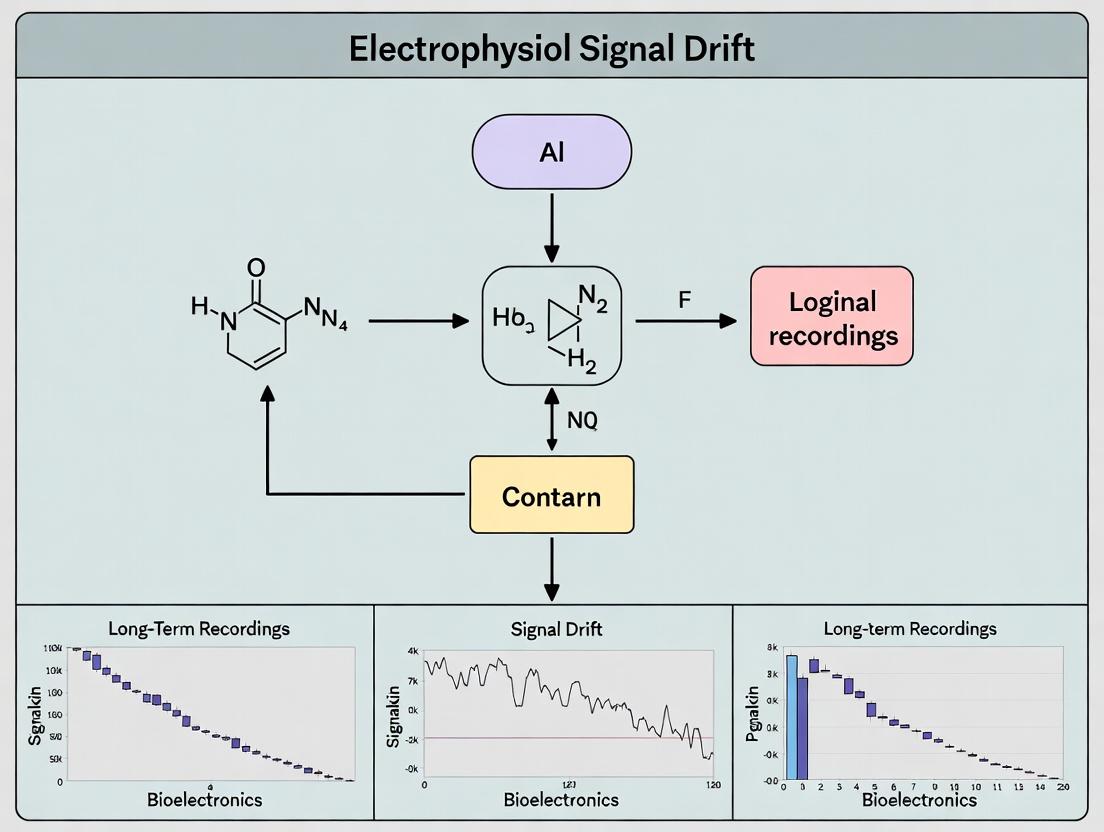
This comprehensive article addresses the pervasive challenge of electrophysiological signal drift during extended recordings, a critical issue for researchers and drug development professionals.
Mastering Signal Stability: A Complete Guide to Drift Correction in Long-Term Electrophysiology Recordings
Abstract
This comprehensive article addresses the pervasive challenge of electrophysiological signal drift during extended recordings, a critical issue for researchers and drug development professionals. It explores the fundamental biological and technical causes of drift, from biofouling and electrode degradation to environmental fluctuations. The guide details current methodological solutions, including hardware innovations, algorithmic corrections (adaptive filtering, reference subtraction), and robust experimental protocols. Practical troubleshooting strategies for identifying and minimizing drift sources are provided, alongside frameworks for validating correction methods and comparing their efficacy in different experimental models. The synthesis offers a clear pathway to achieving reliable, high-fidelity data in long-term neuroscience and cardiac safety studies.
Understanding the Drift: Root Causes and Impact on Long-Term Electrophysiology Data
Troubleshooting Guides & FAQs
Q1: During a long-term EEG recording in a rodent model, the baseline voltage gradually shifts upward over several hours, distorting event-related potential (ERP) measurements. What is this called and what are the most common causes?
A: This is a classic manifestation of DC drift or slow potential drift. In EEG, it is often categorized as a type of non-physiological artifact arising from the electrode interface.
- Primary Cause: Changes at the skin-electrode or tissue-electrode interface. This includes electrolyte gel drying, polarization of electrodes, or changes in skin impedance due to sweat or movement.
- Secondary Causes: Temperature fluctuations affecting amplifier circuits or minor imbalances in the differential amplifier's input offset voltage over time.
- Troubleshooting Steps:
- Pre-experiment: Use high-quality, non-polarizable electrodes (e.g., Ag/AgCl). Ensure consistent electrolyte gel application and secure electrode placement.
- Hardware Check: Verify amplifier specifications for input offset voltage drift (typically given in μV/°C or μV/hour). Ensure stable ambient temperature.
- Post-processing: Apply a high-pass filter (cutoff typically at 0.1-1 Hz) to remove the ultra-slow drift. Note: This will also remove genuine very low-frequency neural signals.
Q2: In chronic LFP recordings using silicon probes over days, we observe a slow, steady change in the amplitude of recorded oscillations (e.g., theta band). Is this signal drift, and how can we distinguish it from biological plasticity?
A: This is amplitude drift, a critical challenge in longitudinal LFP studies. Distinguishing it from neuroplasticity requires controlled analysis.
- Likely Technical Causes: Gliosis and tissue encapsulation around the implant, leading to increased impedance and signal attenuation. Electrode material degradation (e.g., corrosion of metal contacts) can also cause progressive signal loss.
- Distinction Protocol:
- Reference to Stable Signals: Monitor the amplitude of a biologically stable reference, such as auditory evoked potentials to a consistent stimulus presented daily. Drift in this reference signal suggests a technical origin.
- Impedance Tracking: Regularly measure electrode impedance (in vivo if possible). A steady increase correlates with gliosis-related amplitude drift.
- Cross-Channel Correlation: Drift often affects neighboring channels similarly, while plasticity may be more region-specific.
- Normalization: Calculate daily amplitude relative to a baseline period (e.g., first recording day) for the evoked potential. Use this factor to normalize the LFP amplitude of interest.
Q3: During whole-cell patch-clamp recordings, the holding current at a fixed voltage shows an unending linear drift, compromising measurement of slow synaptic currents. What mechanisms underlie this, and how can it be minimized?
A: This is seal resistance drift or access resistance (Ra) drift, fundamentally different from extracellular drift. It originates from the pipette-cell interface.
- Mechanisms: Slow changes in the gigaohm seal quality or clogging/unclogging of the pipette tip, altering Ra and series resistance (Rs). This causes a proportional drift in the recorded current (I = V/R).
- Minimization Protocol:
- Pipette Solution & Pressure: Use filtered, clean internal solutions. Apply consistent positive pressure before entering the bath and until seal formation.
- Seal Enhancement: After cell attachment, apply gentle negative pressure. Use electrodes coated with Sylgard to reduce capacitance and stabilize the pipette wall.
- Monitoring & Compensation: Continuously monitor Ra/Rs during the experiment using a small test pulse. Apply 60-80% series resistance compensation but beware of introducing instability.
- Post-hoc Correction: If drift is linear, it can be modeled and subtracted offline using the baseline period before the stimulus of interest.
| Recording Modality | Drift Term | Primary Manifestation | Main Technical Causes | Typical Timescale |
|---|---|---|---|---|
| EEG / Surface | DC Drift / Slow Potential Drift | Baseline voltage shift | Electrode-skin interface changes, amplifier drift | Minutes to hours |
| Chronic LFP / Probes | Amplitude Drift | Change in oscillation power | Tissue encapsulation (gliosis), electrode degradation | Days to weeks |
| Intracellular (Patch) | Access Resistance (Ra) Drift | Linear drift in holding current | Seal instability, pipette tip clogging | Seconds to minutes |
Experimental Protocol: Distinguishing LFP Amplitude Drift from Plasticity
Objective: To ascertain whether changes in LFP band power over days are biological or technical. Materials: Chronically implanted rodent with electrode in target region (e.g., hippocampal CA1 for theta). Auditory or sensory stimulus generator. Procedure:
- Daily Recording Sessions: For each of N days post-implant, conduct two recording blocks.
- Block A (Experimental State): Record 10 minutes of LFP during the behavioral task of interest (e.g., running wheel).
- Block B (Control Stimulus): Present 50 standardized auditory clicks (1 ms, 70 dB). Record the averaged auditory evoked potential (AEP) from the same electrode.
- Impedance Measurement: Measure electrode impedance at 1 kHz at the start of each session.
- Analysis: a. Extract the peak-to-peak amplitude of the AEP for each day. b. Extract the root mean square (RMS) power of the theta band (6-10 Hz) during running for each day. c. Normalize both AEP amplitude and theta power to Day 1 values. d. Plot normalized theta power against normalized AEP amplitude across days. A strong positive correlation (Spearman's r > 0.8) indicates technical drift is a major contributor.
Visualization: Workflow for Drift Identification & Mitigation
Title: Signal Drift Diagnosis & Mitigation Workflow
The Scientist's Toolkit: Key Research Reagent Solutions
| Item | Function in Addressing Drift |
|---|---|
| Ag/AgCl Electrodes | Non-polarizable electrodes for stable DC potential recording, minimizing baseline drift at the interface. |
| Electrolyte Gel (KCl-based) | Provides stable ionic conduction between skin and electrode; preventing dryness is critical for long EEG sessions. |
| Sylgard 184 | Polydimethylsiloxane used to coat patch pipettes, reducing capacitive noise and stabilizing the pipette wall. |
| Artificial Cerebrospinal Fluid (aCSF) | Standardized, filtered extracellular solution for stable recordings; prevents pH/Osmolarity-induced biological changes. |
| Protease (e.g., Papain) | Enzyme used in ex vivo slice preparations to clean neuronal surfaces, improving seal formation and stability. |
| Neuro-compatible Coating (e.g., PEDOT:PSS, IrOx) | Conductive polymer or oxide coatings on chronic implants to lower impedance and improve signal stability over time. |
| Lipid Bilayer Seal Enhancer | Solutions containing lipids to promote and stabilize gigaohm seals in patch-clamp recordings. |
Troubleshooting & FAQ Center
Q1: What are the earliest experimental indicators of signal drift caused by the foreign body response (tissue encapsulation)? A: The earliest indicators are a gradual increase in electrode impedance (typically >20% rise from baseline over 24-48 hours) and a low-frequency shift in the local field potential (LFP) power spectrum. Action potential amplitudes may decrease, and waveform shapes can broaden. Histology typically shows a dense layer of activated microglia and astrocytes within 50-100 µm of the implant interface within the first week.
Q2: How can I differentiate between signal drift from biofouling versus ionic concentration changes (e.g., perineuronal net degradation) at the recording site? A: Key differentiators are the temporal profile and electrophysiological signature.
| Driver | Temporal Onset | Key Electrophysiological Signature | Confirmed by |
|---|---|---|---|
| Protein Biofouling | Minutes to Hours | Rapid, sustained increase in 1 kHz impedance; increased thermal noise. | Post-explant SEM/EDS showing protein aggregates. |
| Glial Scar Encapsulation | Days to Weeks | Slow, monotonic impedance rise; attenuation of all signal frequencies. | Immunohistochemistry (GFAP, Iba1) post-explant. |
| Ionic Concentration Change | Variable, can be rapid | Shift in resting membrane potential of recorded cells; change in spike threshold. | Microdialysis or ion-selective microelectrodes at the site. |
Q3: What is a validated protocol for pre-implant electrode coating to mitigate biofouling-driven drift? A: PEG-Based Hydrogel Coating Protocol.
- Surface Activation: Clean electrode in O2 plasma for 2 min. Immerse in 2% (v/v) (3-Aminopropyl)triethoxysilane (APTES) in anhydrous toluene for 1 hour. Rinse with toluene and ethanol, cure at 110°C for 10 min.
- PEGylation: React APTES-functionalized surface with 2 mM heterobifunctional PEG (e.g., NHS-PEG-Maleimide, 3.4 kDa) in 0.1 M sodium bicarbonate buffer (pH 8.5) for 4 hours at room temperature.
- Hydrogel Formation: Crosslink with a 4-arm PEG-thiol (10 kDa, 5% w/v) solution via Michael addition for 1 hour.
- Rinse & Sterilization: Rinse thoroughly in sterile PBS and store in PBS at 4°C until implantation. Do not allow to dry. Outcome: In vivo studies show this coating reduces protein adsorption by ~70% at 24 hours post-implant and delays significant glial scarring.
Q4: Which signaling pathways are most implicated in the tissue response that leads to recording instability? A: The dominant pathways are the sustained activation of the NF-κB and MAPK (p38, JNK) pathways in microglia and astrocytes, triggered by damage-associated molecular patterns (DAMPs). This leads to a pro-inflammatory cytokine release (IL-1β, TNF-α), perpetuating the response.
Title: Key Signaling Pathways Linking Implant Injury to Signal Drift
Q5: What is a reliable method to monitor local ionic concentration changes (e.g., [K+]o) in real-time alongside my recordings? A: Concurrent Use of Ion-Selective Microelectrodes (ISMs). Protocol:
- ISM Fabrication: Pull a double-barreled glass capillary. Silanize one barrel with dimethyldichlorosilane vapor (for ion-sensing). The other barrel serves as a reference.
- Backfilling: Fill the ion-sensing barrel with a 100 mM KCl solution, then with a liquid ion exchanger (e.g., Potassium Ionophore I - Cocktail B for K+). Fill the reference barrel with 150 mM NaCl.
- Calibration: Calibrate the ISM in a set of standard solutions (e.g., 3, 10, 30 mM KCl) before and after the experiment. The slope should be >50 mV per decade change in [K+].
- Implantation: Co-implant the ISM within 200 µm of your recording electrode. Record the ISM potential differential (vs. reference) simultaneously with neural signals. Data Interpretation: A steady rise in extracellular [K+] (>1-2 mM from baseline) correlates with increased neuronal excitability and signal waveform distortion.
Q6: What are the essential reagent solutions for studying these biological drivers in a controlled in vitro model? A: Research Reagent Solutions Toolkit
| Reagent / Material | Function / Purpose | Example Product / Formulation |
|---|---|---|
| Polyethylene Glycol (PEG) | Anti-fouling surface coating; hydrogel formation. | mPEG-Silane, 4-arm PEG-Acrylate. |
| Laminin | Promotes neuronal attachment and health in co-cultures. | Mouse natural laminin, from Engelbreth-Holm-Swarm sarcoma. |
| Lipopolysaccharide (LPS) | Positive control to induce robust microglial inflammatory response. | E. coli O111:B4, purified. |
| ATP / HMGB1 | Damage-Associated Molecular Pattern (DAMP) molecules to simulate injury. | Adenosine 5'-triphosphate, Disodium Salt; Recombinant HMGB1 Protein. |
| Cytokine ELISA Kits | Quantify IL-1β, TNF-α, TGF-β levels in culture media or tissue lysate. | DuoSet ELISA Kits (R&D Systems). |
| Fluorescent Albumin (e.g., FITC-BSA) | Visualize and quantify protein adsorption on electrode surfaces. | Albumin from bovine serum, FITC conjugate. |
| Ionophore Cocktails | For fabricating ion-selective electrodes (K+, Ca2+, Na+). | Sigma Selectophore ionophores. |
| GFAP, Iba1 Antibodies | Immunostaining for astrocytes and microglia, respectively. | Chicken anti-GFAP, Rabbit anti-Iba1. |
Q7: Describe an experimental workflow to systematically identify the primary driver of drift in a long-term in vivo study. A: A multi-modal, longitudinal assessment workflow is required.
Title: Workflow for Diagnosing Primary Drift Driver In Vivo
Troubleshooting Guides & FAQs
Section 1: Electrode Impedance Instability
Q1: During a long-term recording, my signal amplitude progressively decreases and becomes noisier. What is the most likely cause and how can I diagnose it? A1: This is a classic symptom of increasing electrode impedance, often due to biofilm formation, protein fouling, or electrode dissolution. Diagnose by performing periodic electrochemical impedance spectroscopy (EIS) sweeps (e.g., from 1 Hz to 10 kHz) before and during the experiment. A consistent increase in impedance magnitude, particularly at lower frequencies (1-100 Hz), indicates fouling.
Q2: How can I stabilize impedance for chronic microelectrode array recordings? A2: Use surface modification techniques. Recent studies (2023) show that coating platinum-iridium electrodes with PEDOT:PSS doped with laminin peptides reduces impedance drift by ~70% over 28 days compared to bare metal. Apply a 20-30 µm coating via electrochemical deposition at 1.0 V for 30 seconds in a monomer solution.
Experimental Protocol: Daily Impedance Monitoring for Chronic Studies
- Setup: Use a potentiostat connected to your recording system.
- Stimulus: Apply a 10 mV RMS sinusoidal wave across a frequency range of 1 Hz to 10 kHz.
- Timing: Perform a sweep immediately after implantation (baseline), then at 24-hour intervals.
- Data: Record the magnitude (|Z|) and phase (θ) at 1 kHz. Plot trends over time.
- Action Threshold: A >20% increase in |Z| at 1 kHz from baseline warrants intervention (e.g., electrical cleaning).
Table 1: Common Causes and Solutions for Impedance Instability
| Cause | Primary Effect | Diagnostic Test | Mitigation Strategy |
|---|---|---|---|
| Biofilm Fouling | Low-freq. impedance ↑, noise ↑ | EIS, SEM imaging | Coat with antifouling polymers (e.g., PEG); use sterile flow cells. |
| Electrode Dissolution | Impedance ↑ at all frequencies | ICP-MS of medium | Use more inert materials (e.g., Pt-Ir vs. Ag); lower stimulation voltages. |
| Insulation Failure | Impedance ↓, signal crosstalk | Optical microscopy, EIS | Improve encapsulation (e.g., Parylene-C with Al₂O₃ barrier layer). |
| Interface Degradation | High-freq. phase shift changes | EIS Nyquist plot | Stable coatings (e.g., sputtered IrOx); regular electrochemical activation. |
Section 2: Thermal Fluctuations
Q3: My baseline potential drifts slowly over hours, correlating with lab temperature changes. How significant is this effect? A3: Very significant. The Nernst potential has a temperature coefficient of approximately 0.2 mV/°C per unit pH change. For a Ag/AgCl electrode, a 1°C change can induce a ~0.5 mV drift. In a typical laboratory with ±2°C daily fluctuation, this can cause >1 mV baseline drift, obscuring small physiological signals.
Q4: What are the best practices for thermal management in a recording chamber? A4: Implement a multi-layer isolation strategy: 1) Enclose the entire setup in a thermally insulated box. 2) Use a feedback-controlled in-line solution heater/cooler before the chamber. 3) Place a small, shielded thermistor probe within 5 mm of the recording electrode for direct monitoring. 4) Use materials with low thermal expansion coefficients for chamber construction.
Experimental Protocol: Characterizing Thermal Drift
- Calibration: In a mock setup (no cells), fill chamber with standard saline (e.g., PBS).
- Perturbation: Use a Peltier device to cycle bath temperature between 35°C and 37°C over 2 hours.
- Recording: Record DC potential from your working and reference electrode pair at 10 Hz.
- Analysis: Plot potential vs. temperature. The slope (mV/°C) is your system's thermal drift coefficient.
Section 3: Reference Electrode Issues
Q5: My recordings show sudden, large potential jumps or increased 60 Hz noise. Could the reference be at fault? A5: Yes. Sudden jumps often indicate a clogged or unstable liquid junction in the reference electrode. Increased 60 Hz/50 Hz noise suggests a high impedance reference, making the system susceptible to electromagnetic interference.
Q6: What is the best way to construct a stable, low-noise reference electrode for a tissue bath? A6: A low-impedance, free-flowing Ag/AgCl electrode is optimal. Use a 1-2 mm diameter glass capillary with a porous Vycor or ceramic frit. Fill with 3M KCl saturated with AgCl. Maintain a positive pressure (>2 cm H₂O) of the filling solution to ensure a steady, clog-free junction flow.
Table 2: Reference Electrode Troubleshooting Guide
| Symptom | Probable Cause | Immediate Fix | Long-term Solution |
|---|---|---|---|
| Slow Baseline Drift (>0.1 mV/min) | Junction potential instability, [Cl⁻] depletion | Check/refill electrolyte reservoir. | Use a double-junction design; larger reservoir volume (>5 mL). |
| Sudden Potential Jumps | Air bubble or debris in junction | Gently tap electrode; apply brief back-pressure. | Use a gel-filled or free-flowing junction; add a particulate filter. |
| Increased AC Noise (60 Hz) | High reference impedance | Shield the electrode lead with foil. | Use a larger Ag/AgCl surface area; ensure junction is not clogged. |
| Non-reproducible Potentials | Unstable Ag/AgCl coating | Re-chloride the wire. | Electroplate AgCl galvanostatically (0.5 mA/cm² for 30 min in 1M HCl). |
The Scientist's Toolkit: Key Research Reagent Solutions
| Item | Function & Rationale |
|---|---|
| PEDOT:PSS (with Laminin Peptide) | Conductive polymer coating for electrodes. Reduces impedance, improves charge injection capacity, and enhances neural cell adhesion for stable long-term interfaces. |
| Vycor Glass Frit (Code 7930) | High-porosity glass membrane for reference electrodes. Provides a stable, low-flow-rate liquid junction with minimal clogging. |
| 3M KCl with 1-5 mM AgCl Saturation | Standard filling solution for Ag/AgCl references. High [Cl⁻] minimizes junction potential shifts and provides a stable Cl⁻ ion source for the redox reaction. |
| Parylene-C with Al₂O₃ (Atomic Layer Deposition) | Bilayer insulation for chronic implants. Parylene provides conformal coating; Al₂O₃ acts as a hermetic moisture barrier to prevent hydration and insulation failure. |
| PEG-Silane (e.g., mPEG-Silane, MW 2000) | Antifouling self-assembled monolayer. Reduces nonspecific protein adsorption and biofilm formation on recording surfaces. |
| Iridium Oxide (Sputtered or Activated) | High-charge-capacity electrode coating. Enables safe charge injection at low voltages, minimizing Faradaic reactions and dissolution that increase impedance. |
Experimental Workflow & Pathway Diagrams
Technical Support Center
Troubleshooting Guides & FAQs
Q1: During a 72-hour hiPSC-CM recording, we observe a gradual negative shift in the field potential duration (FPD). Is this biological adaptation or instrumental drift? A: This is a classic symptom of electrode polarization drift. First, perform an impedance check at 1 kHz. An impedance increase >20% from baseline indicates fouling. Implement a daily 5-minute, 100 mV depolarizing hold protocol to recondition Ag/AgCl electrodes. Always include a daily 10 µM E-4031 (hERG blocker) control in a separate well. If the FPD shortening correlates perfectly with the control well's drift, the signal is compromised. A true biological effect should manifest differently from the pharmacological control's drift profile.
Q2: Our multi-electrode array (MEA) action potential amplitude steadily decreases over days in a neural culture model. How can we isolate the cause? A: Follow this diagnostic workflow:
- Check Electrolyte Evaporation: Measure medium osmolarity at start and end. A >15 mOsm/kg increase confirms evaporation, requiring an automated perfused system or periodic, controlled medium addition.
- Assess Biofouling: Use a fiduciary marker (e.g., a non-excitable bead) under phase contrast. If the electrode outline becomes obscured, implement a dual-bath setup: one for recording, one for maintenance, with periodic transfer.
- Validate with a Chemical Test: Apply 1 mM GABA at 0h and 48h. If the amplitude of the evoked response decreases proportionally to the spontaneous signal, drift is a major factor. If the evoked response remains stable, the change may be biological.
Q3: In impedance-based cardiomyocyte beating assays, the Cell Index drifts upward, obscuring drug-induced toxicity. How do we mitigate this? A: Upward drift in label-free assays often stems from proteinaceous coating dissolution or cellular rearrangement. Use this protocol:
- Pre-coat Stabilization: Coat plates with fibronectin (or your chosen substrate) and incubate in serum-free medium at 37°C for 24h prior to cell seeding. This allows uncontrolled dissolution to occur before baseline measurement.
- Dynamic Baseline Correction: Establish a 24-hour pre-treatment recording period. Use the final 4-hour window as a dynamic, moving baseline. All subsequent drug responses should be normalized to this immediately preceding period, not to time zero.
- Include a Drift Control Well: Maintain a well with no cells but with complete coating and medium. Subtract its drift profile from experimental wells computationally.
Quantitative Data on Drift Impact
Table 1: Impact of Uncorrected Drift on Drug Safety Assay False Positives/Negatives
| Assay Type | Drift Magnitude | False Positive Rate Increase | False Negative Rate Increase | Key Compromised Parameter |
|---|---|---|---|---|
| hERG Channel Inhibition (Patch Clamp) | >2 mV/day Series Resistance | Up to 35% | 15% | Action Potential Prolongation |
| Proarrhythmia (MEA, hiPSC-CMs) | FPD -5% drift over 48h | 22% | 18% | Field Potential Duration (FPD) |
| Neural Toxicity (Microelectrode Array) | Spike Amplitude -10% drift | 28% | 12% | Network Burst Frequency |
| Impedance Cardiomyopathy (RTCA) | Cell Index +0.5 unit drift | 30% (Cytotoxicity) | 25% (Hypertrophy) | Beat Amplitude, Cell Index |
Table 2: Efficacy of Common Drift Mitigation Strategies
| Mitigation Technique | Reduction in Signal Drift | Additional Cost/Time | Best Suited For |
|---|---|---|---|
| Daily Internal Pharmacological Control (e.g., E-4031) | 60-80% | 10-15% reagent cost | MEA, Fluorescence assays |
| Automated Perfusion Systems | 70-90% | High initial setup | All chronic recordings >24h |
| Dynamic Baseline Normalization | 40-60% | Computational overhead | Impedance, Extracellular recording |
| Reference Electrode Conditioning Holds | 50-70% (for electrode drift) | No cost, requires protocol mod | Patch clamp, sharp microelectrodes |
| Biofouling-Resistant Coatings (e.g., PEG) | 30-50% | 20-25% coating cost | In vivo implants, chronic MEA |
Experimental Protocols
Protocol 1: Daily Electrode Conditioning and Pharmacological Validation for Chronic MEA Objective: To distinguish true electrophysiological changes from instrumental drift in week-long hiPSC-CM studies.
- Plate cells on a 24-well MEA plate. Include 4 wells for drift controls (no cells, medium only).
- Baseline Recording: At culture day 7, record spontaneous beating for 10 minutes (37°C, 5% CO2).
- Daily Protocol: For each 24-hour interval: a. Conditioning: Apply a 100 mV DC offset to all electrodes for 5 minutes, then return to normal recording configuration. b. Impedance Check: Measure single-frequency (1 kHz) impedance for each electrode. c. Pharmacological Control: Apply 10 µM E-4031 to one designated "validation well." Record response for 15 minutes. d. Experimental Recording: Record from all experimental and test compound wells for required duration.
- Data Analysis: Normalize all FPD values to the daily E-4031 response in the validation well. Correct beat rate for any temperature fluctuation using the no-cell control wells.
Protocol 2: Impedance-Based Assay Drift Correction using Moving Baseline Objective: To obtain stable Cell Index (CI) readings for a 96-hour cardiotoxicity assay.
- Seed H9C2 cardiomyocytes or hiPSC-CMs in an E-plate. Monitor CI every 15 minutes.
- Establish Dynamic Baseline: At the time of drug addition (e.g., 48h post-seeding), define the baseline CI as the average CI over the 6 hours immediately prior to dosing.
- Apply Compound: Add drug or vehicle. Continue recording.
- Normalization: For each time point post-dosing (t), calculate: Normalized CI(t) = [CI(t) - CI(vehicle control, t)] / [Baseline CI - CI(vehicle control at baseline)] Where vehicle control values are from wells containing only cells and vehicle, accounting for systemic drift.
Visualization
Title: Data Integrity Decision Tree in Chronic Recordings
Title: Primary Causes and Ultimate Cost of Signal Drift
The Scientist's Toolkit: Research Reagent Solutions
Table 3: Essential Materials for Drift Mitigation in Electrophysiology
| Item | Function in Drift Mitigation | Example Product/Type |
|---|---|---|
| Ag/AgCl Pellets | Stable, non-polarizable reference electrodes. Minimize voltage offset drift. | In Vivo Metric, Warner Instruments |
| Pluronic F-127 | Non-ionic surfactant. Reduces biofouling on electrode surfaces in chronic implants. | Sigma-Aldrich P2443 |
| Electrode Storage Solution | Maintains hydration and ion stability of microelectrodes between uses. | PBS with 0.05% Azide, or commercial storage gel. |
| Daily Control Compound (E-4031) | Selective hERG blocker. Provides a consistent pharmacological response to normalize daily system performance. | Tocris Bioscience 1480 |
| Saline-based Electrolyte (Ames'/Ringer's) | Consistent, buffered solution for bath recordings. Reduces pH and osmolarity drift vs. cell culture medium. | Custom formulation or commercial aCSF. |
| PEGylated Electrode Coatings | Create a hydrophilic, protein-resistant barrier to minimize biofouling. | Multi Channel Systems MCS coating kits. |
| Impedance Tracking Software Module | Enables real-time monitoring of electrode health for proactive conditioning. | Axon Instruments pCLAMP, Multi Channel Systems SW. |
FAQs & Troubleshooting Guides
Q1: During a 24-hour neuronal recording from a prefrontal cortex slice, our baseline firing rate appears to steadily increase, mimicking a suspected drug effect. What could cause this? A: This is a classic symptom of electrode drift. The most common cause is instability at the electrode-tissue interface. As the microelectrode settles or the tissue relaxes, the impedance can decrease, leading to an increased amplitude of recorded signals that can be misinterpreted as increased firing. First, check for mechanical stability: ensure your slice anchor is secure and there are no vibrations. Second, validate by briefly pausing perfusion; if the "increase" halts immediately, it is flow-related drift, not neuronal activity.
Q2: How can I definitively distinguish between a true pharmacological potentiation of synaptic strength and drift-induced changes in field EPSP (fEPSP) slope? A: Implement an internal control pathway. Record from two independent synaptic pathways in the same preparation—one treated with the drug and one left untreated. True pharmacological effects should be pathway-specific, while drift artifacts (e.g., due to overall tissue movement or bath level change) will affect both pathways concurrently. A sample experimental protocol is below.
Protocol 1: Dual-Pathway Control for fEPSP Drift Discrimination
- Preparation: Maintain rodent hippocampal or cortical brain slice in standard interface or submerged recording chamber.
- Electrode Placement: Position two independent bipolar stimulating electrodes (S1, S2) to activate non-overlapping afferent pathways converging on the same neuronal population. Place one recording electrode in the target dendritic layer.
- Baseline: Stimulate S1 and S2 alternately at 0.033 Hz for at least 20 minutes to establish stable baseline fEPSP slopes.
- Intervention: Apply pharmacological agent to the bath perfusion. Continue alternating stimulation for 60-90 minutes.
- Analysis: Plot fEPSP slope versus time for both pathways. Normalize data to the pre-drug baseline period. Compare the trajectories.
Q3: Our impedance and baseline voltage are stable, but we see slow oscillations in local field potential (LFP) power in our in vivo implant. What should we check? A: This often points to environmental or physiological drift. Systematically investigate:
- Temperature: Fluctuations in animal core or brain temperature (even ±0.5°C) can alter firing properties. Ensure heating pad feedback is stable and the recording environment is draft-free.
- Reference Electrode Stability: A drifting reference potential is a prime suspect. Verify the integrity and stability of your skull screw or intracranial reference. Consider using a headstage with a built-in reference check.
- Electrolyte Balance: For glass or porous electrodes, gradual changes in electrolyte concentration can alter junction potentials. Use a stable, high-concentration electrolyte (e.g., 2M NaCl) and sealed electrodes for long-term recordings.
Protocol 2: Pre-Recording Stability Checklist for In Vivo Studies
- Mechanical: Allow 10 minutes after inserting the microdrive/electrode to settle. Check holding potential on amplifier.
- Electrical: In cell-attached or whole-cell mode, monitor seal resistance or series resistance for 5 minutes pre-baseline. Drift >10% suggests instability.
- Biological: Monitor a stable, evoked response (e.g., sensory evoked potential) for 15 minutes prior to drug application to establish biological baseline stability.
- Control Recording: If possible, run a vehicle control recording session of identical duration to characterize system-specific drift profiles.
Q4: What are the key quantitative indicators of signal drift versus neuroplasticity in spike-sorted data? A: Monitor the following metrics over time. True plasticity typically shows a rapid onset and stable plateau following induction, while drift is often more linear or monotonic.
Table 1: Differentiating Drift Artifacts from Neuroplasticity
| Metric | True Long-Term Potentiation (LTP) | Drift Artifact |
|---|---|---|
| Onset Kinetics | Rapid following induction (minutes). | Slow, continuous change over hours. |
| Stability | Stable plateau after induction. | Often a monotonic increase/decrease. |
| Unit Isolation | Stable cluster boundaries in PCA space. | Progressive movement of clusters, changing waveform shape. |
| Noise Level | Unchanged. | May increase (if impedance drops) or decrease (if electrode moves away). |
| Cross-Channel Correlation | Unchanged or specific to active channels. | Highly correlated across multiple channels on the same probe/shank. |
The Scientist's Toolkit: Key Research Reagent Solutions
| Item | Function & Rationale |
|---|---|
| Agarose Slice Stabilizer | A small bed of low-melting-point agarose under the slice reduces mechanical sway from perfusion flow. |
| Stable Reference Electrodes | Chlorided silver wires or Ag/AgCl pellets provide non-polarizable, stable reference potentials critical for DC recordings. |
| High-Density Electrolyte (2M NaCl) | Minimizes liquid junction potential drift within recording pipettes compared to standard 1M or physiological solutions. |
| Interface Chamber with Humidified Gas | Maintains slice health and surface stability for very long-term recordings (>8 hours) by preventing osmotic stress. |
| Protease Inhibitors (e.g., Leupeptin) | Added to ACSF to slow enzymatic degradation of tissue at the recording site, preserving seal integrity. |
| Thermistor & Feedback Heater | Precisely monitors and controls bath temperature to within ±0.2°C, eliminating thermal drift. |
Title: Troubleshooting Workflow for Signal Change Analysis
Title: Dual-Pathway Experimental Design to Isolate Drift
Proven Solutions: Hardware, Software, and Protocol Strategies for Drift Mitigation
Technical Support Center: Troubleshooting Long-Term Neural Recordings
FAQs & Troubleshooting Guides
Q1: Our chronic recordings using PEDOT:PSS-coated microelectrodes show a gradual increase in impedance and signal amplitude attenuation after 2-3 weeks. What is the likely cause and how can we mitigate this? A: This is a classic sign of PEDOT:PSS film degradation in vivo. The primary mechanisms are electrochemical over-reduction/oxidation and delamination due to mechanical mismatch. To mitigate:
- Pre-conditioning: Implement a gentle electrochemical conditioning protocol post-implantation. Apply a low-voltage, cyclic bias (e.g., ±0.2 V vs. Ag/AgCl at 10 mHz for 30 cycles) to stabilize the polymer's redox state before recording.
- Hydration Control: Ensure the coating is fully hydrated in saline before implantation to prevent osmotic stress. Use a 0.01% (v/v) surfactant like Triton X-100 in the storage solution to improve wettability.
- Cross-linking: Incorporate 1-3% (v/v) of a cross-linker like (3-glycidyloxypropyl)trimethoxysilane (GOPS) into your PEDOT:PSS formulation and cure at 140°C for 1 hour to enhance mechanical stability.
Q2: We are using iridium oxide (IrOx) electrodes for stimulation and recording. We observe unstable charge storage capacity (CSC) and increased stimulation voltage compliance over time. How do we diagnose and address this? A: This indicates degradation of the IrOx film's porous structure, often due to aggressive stimulation protocols.
- Diagnosis: Perform regular Cyclic Voltammetry (CV) in PBS (pH 7.4) between -0.6V to +0.8V vs. Ag/AgCl at 50 mV/s. Monitor changes in the cathodic charge storage capacity (CSCc).
- Protocol: If CSCc drops >15%, perform an in situ reactivation.
- Disconnect from neural tissue.
- Apply a series of potential-controlled pulses in 0.1M H2SO4: +0.8V for 10s, then -0.6V for 10s. Repeat 5 times.
- Rinse thoroughly with sterile PBS. Re-characterize CSCc. This protocol can often restore the hydrated, porous oxide layer.
Q3: Our novel, flexible polymer probe exhibits significant local field potential (LFP) drift during 24-hour continuous recordings, but spike signals remain stable. What could be the source? A: LFP drift (typically low-frequency, <0.1 Hz) in flexible probes is often related to interfacial biofouling and strain-induced capacitance changes, not material failure.
- Troubleshoot: Coat the probe (excluding active sites) with a thin, hydrophilic Parylene C layer (∼500 nm) via chemical vapor deposition. This creates a bio-inert, mechanically conformal barrier that reduces protein adhesion and stabilizes the electrode-tissue capacitance.
- Reference Electrode: Ensure your reference (e.g., Ag/AgCl wire) is stable and placed in a stable compartment (e.g., over the dura, not in muscle). LFP is highly sensitive to reference potential shifts.
Q4: During simultaneous stimulation and recording on adjacent iridium oxide sites, we see post-stimulation artifacts that last for hundreds of milliseconds, obscuring neural signals. How can we minimize this? A: This is caused by the slow discharge of the electrode-tissue interface capacitance. Implement a "current-bleedback" circuit in your headstage or use biphasic, charge-balanced pulses with an interphase delay of ∼200 µs. For critical experiments, use a switched headstage design that physically disconnects the recording amplifier during the stimulation pulse and for a short blanking period immediately after.
Experimental Protocols
Protocol 1: Accelerated Aging Test for Electrode Stability Objective: Quantify the electrochemical stability of PEDOT:PSS or IrOx coatings under simulated physiological stress.
- Setup: Use a 3-electrode cell in 1X PBS at 37°C. Working electrode: your coated microelectrode. Counter: Platinum mesh. Reference: Ag/AgCl.
- Stressing: Apply a continuous square wave potential between the safe water window (typically -0.6 to +0.8 V vs. Ag/AgCl) at 100 Hz for 12 hours.
- Monitoring: Every hour, pause stressing and perform Electrochemical Impedance Spectroscopy (EIS) from 1 Hz to 100 kHz at 10 mV RMS. Also run a CV at 100 mV/s.
- Analysis: Track changes in impedance at 1 kHz and Cathodic Charge Storage Capacity (CSCc).
Protocol 2: In Vivo Electrochemical Characterization of Chronic Implants Objective: Monitor the health of electrode materials in a chronic preparation without explantation.
- Pre-implantation: Characterize each electrode's CSC via CV and impedance via EIS in sterile saline.
- Post-implantation (Chronic): At weekly intervals, under light anesthesia, disconnect from the headstage. Connect the implanted electrode to a potentiostat via a custom adaptor.
- Measurement: In a two-electrode configuration (using the implant's own integrated reference), perform a brief EIS scan (100 Hz - 10 kHz) and a single CV cycle at 50 mV/s.
- Data Normalization: Compare to Week 0 baselines. A >30% increase in 1-kHz impedance or a >25% decrease in CSCc indicates significant material degradation or biofouling.
Data Presentation
Table 1: Comparative Electrode Material Properties for Long-Term Stability
| Property | PEDOT:PSS (with GOPS) | Sputtered Iridium Oxide Film (SIROF) | Activated Iridium Oxide (AIROF) | Platinum Grey |
|---|---|---|---|---|
| Typical 1 kHz Impedance | 1-10 kΩ @ 50µm⌀ | 20-50 kΩ @ 50µm⌀ | 5-20 kΩ @ 50µm⌀ | 200-500 kΩ @ 50µm⌀ |
| Charge Storage Capacity (CSC) | 1-5 mC/cm² | 20-50 mC/cm² | 50-150 mC/cm² | 1-3 mC/cm² |
| Stability Mechanism | Cross-linked polymer matrix | Robust crystalline oxide | Hydrated, porous oxide | Reversible adsorption |
| Key Failure Mode | Electrochemical over-reduction, delamination | Cracking, dissolution at high voltage | Dehydration, pore collapse | Dissolution, tissue encapsulation |
| Typical Functional Lifespan | 4-12 weeks | 6-24 months | 12-36 months | 3-9 months |
Table 2: Troubleshooting Guide for Common Signal Drift Issues
| Symptom | Possible Cause (Hardware-First) | Diagnostic Test | Corrective Action |
|---|---|---|---|
| Gradual increase in signal amplitude | Insulation failure (crack), lowering impedance | EIS: Check for impedance drop at all frequencies. | Re-insulate site or replace probe. |
| Gradual decrease in signal amplitude | Biofouling, Material degradation (PEDOT over-oxidation) | In vivo CV: Check CSCc. Post-explant SEM. | Use anti-fouling coatings (PEG, peptide). Optimize stimulation parameters. |
| Low-frequency LFP drift (>0.1 Hz) | Unstable reference electrode, Thermal fluctuations | Measure reference potential drift vs. distant ground. | Use a stable, large-surface-area reference (e.g., low-leakage Ag/AgCl). |
| Very slow baseline drift (<0.01 Hz) | Protein adsorption, Glial encapsulation changing local pH/ions | Histology post-explant. Microdialysis for ions. | Implement local drug elution (anti-inflammatory) from the probe. |
Mandatory Visualizations
Causes of Signal Drift in Chronic Recordings
Electrode Material Stability Testing Protocol
The Scientist's Toolkit: Research Reagent Solutions
| Item | Function & Rationale |
|---|---|
| GOPS (Glycidoxypropyltrimethoxysilane) | Cross-linker for PEDOT:PSS. Forms covalent bonds within polymer, dramatically improving aqueous & mechanical stability. |
| Triton X-100 (or DBSA) | Surfactant/Dopant. Improves wettability and film homogeneity of PEDOT:PSS, ensuring uniform coating adhesion. |
| H2SO4 (0.1 M Solution) | Electrolyte for in situ reactivation of IrOx electrodes. Re-hydrates and re-establishes the porous oxide structure. |
| Parylene C (Dimmer) | Vapor-deposited polymer coating. Provides a conformal, biocompatible, dielectric barrier for insulation and biofouling resistance. |
| PEG-Silane (e.g., mPEG-silane) | Anti-fouling monolayer. Creates a hydrophilic, protein-repellent surface on probe shanks to delay encapsulation. |
| Laminin or Poly-D-Lysine | Coating for flexible probes. Promotes neuronal adherence and closer integration of tissue with the device, reducing micromotion. |
| Artificial Cerebrospinal Fluid (aCSF) | Standard electrolyte for in vitro testing. Provides ionic consistency with in vivo conditions for reliable pre-implantation data. |
| Fluorinated Ethylene Propylene (FEP) Tubing | Insulating material for creating stable, low-leakage Ag/AgCl reference electrodes, crucial for LFP stability. |
Technical Support Center
Troubleshooting Guides & FAQs
Q1: My recording baseline shows a slow, persistent drift over several hours, obscuring the signal of interest. What is the most likely cause and initial action? A: The most likely cause is a gradual change in the impedance of your primary recording electrode or a drift in the reference electrode potential. The initial action is to verify the stability of your auxiliary electrode setup. Ensure the auxiliary (or "drift") electrode is placed in an electrically quiet, nearby region (e.g., a site with no spiking activity) and that its connection is secure. Check for bubbles in your electrolyte or movement at the electrode-tissue interface.
Q2: After implementing the auxiliary subtraction, I see large, sharp artifacts in my subtracted signal that were not present in the raw trace. What went wrong? A: This indicates a mismatch in the common-mode rejection. The auxiliary electrode is likely picking up a local signal not perfectly shared with your primary electrode. First, recalibrate the scaling factor (α) used in the subtraction (Vcorrected = Vprimary - α * V_auxiliary) on a segment with artifact but no desired signal. If the problem persists, reconsider auxiliary electrode placement. It must be close enough to share the same drift but in a location with minimal independent neural activity.
Q3: Can I use a Local Field Potential (LFP) channel from the same array as my auxiliary signal for baseline stabilization? A: Yes, this is a common and effective technique, especially for chronic implants. The LFP from a "silent" channel, after high-pass filtering (e.g., <0.1 Hz) to isolate the ultra-slow components, serves as an excellent estimate of the shared drift. Ensure this LFP channel is referenced to the same, stable reference as your spiking channels.
Q4: My corrected signal shows increased high-frequency noise. How can I mitigate this? A: This occurs if the auxiliary electrode itself is noisier than the primary. Apply a low-pass filter (e.g., 1-5 Hz) to the auxiliary signal before performing the subtraction. This filter should only target the drift components. Do not apply this low-pass filter to the final, corrected signal if you are analyzing higher frequency components like spiking activity.
Q5: For a multi-day chronic recording in a freely moving animal, what is the best practice for maintaining a stable baseline? A: A combination approach is recommended:
- Use a stable, low-impedance intracranial reference (e.g., a skull screw over cerebellum).
- Implement real-time software referencing using an LFP-based auxiliary channel from your probe.
- Regularly (e.g., daily) calculate and update the scaling factor (α) for subtraction during quiet behavioral states (like slow-wave sleep) to account for long-term impedance changes.
Experimental Protocols
Protocol 1: Calibrating the Auxiliary Subtraction Scaling Factor (α)
- Record: Simultaneously acquire data from your primary electrode (Vprimary) and your auxiliary/LFP electrode (Vauxiliary) during a period of stable drift with minimal desired neural activity (e.g., an inter-trial interval or anesthesia).
- Segment: Select a 30-60 second segment of this data.
- Filter (Optional): Apply an identical low-pass filter (0-5 Hz) to both signals to isolate drift.
- Calculate α: Perform a linear regression (Vprimary = α * Vauxiliary + β). The slope of the regression line is the optimal scaling factor α. The intercept β represents any static offset.
- Apply: Use this α in the subtraction formula for subsequent data: Vcorrected = Vprimary - α * V_auxiliary.
Protocol 2: Establishing an LFP-Based Drift Estimate for Chronic Recordings
- Electrode Selection: Identify a channel on your chronic probe that is in a region with stable, low-amplitude LFP and minimal unit activity.
- Reference: Ensure this channel and all others are referenced to a common, stable intracranial reference.
- Signal Processing: Offline, apply a 2nd order Butterworth high-pass filter with a cutoff of 0.1 Hz to this chosen LFP channel. This isolates the ultra-slow voltage fluctuations constituting the shared drift.
- Validation: Visually inspect that the filtered LFP signal correlates with the slow drift observed in other channels but lacks fast neural events.
- Subtraction: Use this processed signal as V_auxiliary in the subtraction procedure outlined in Protocol 1.
Table 1: Efficacy of Different Baseline Stabilization Methods in Long-Term Recordings
| Method | Avg. Baseline Drift Reduction* | Best Use Case | Key Limitation |
|---|---|---|---|
| Skull Screw Reference | 40-60% | Acute & chronic in vivo recordings | Susceptible to fluid leakage & tissue encapsulation over weeks |
| Auxiliary Electrode Subtraction | 70-85% | Acute recordings, slice physiology | Requires precise placement & scaling |
| LFP-Referenced Subtraction | 80-90% | Chronic multi-electrode array recordings | Relies on a "quiet" LFP channel |
| Common-Average Referencing (CAR) | 60-75% | Dense multi-electrode arrays (e.g., Neuropixels) | Can subtract true global neural signals |
| Online Digital High-Pass Filtering | 95%+ (for >1Hz) | All recordings, real-time processing | Does not restore true DC potential |
*Reduction in peak-to-peak slow drift (<0.1 Hz) over a 4-hour recording period, based on published benchmarks.
Table 2: Recommended Filter Settings for Drift Isolation & Removal
| Signal Purpose | Processing Step | Filter Type | Cut-off Frequencies | Order | Comment |
|---|---|---|---|---|---|
| Auxiliary (Drift) Signal | Pre-Subtraction Isolation | High-Pass | 0.1 - 0.5 Hz | 2nd | Extracts only the ultra-slow drift component. |
| Auxiliary (Drift) Signal | Noise Reduction | Low-Pass | 5 - 10 Hz | 2nd | Removes HF noise from auxiliary before subtraction. |
| Final Corrected Signal | For LFP Analysis | Band-Pass | 0.5 - 300 Hz | 4th | Standard LFP band after drift removal. |
| Final Corrected Signal | For Spike Analysis | High-Pass | 300 Hz | 4th | For unit detection post-drift correction. |
Diagrams
Title: Auxiliary Electrode Subtraction Workflow for Drift Removal
Title: Electrical Schematic of Auxiliary Referencing Circuit
The Scientist's Toolkit: Research Reagent Solutions & Essential Materials
| Item | Function in Baseline Stabilization | Example/Notes |
|---|---|---|
| Low-Impedance Auxiliary Electrode | Provides a stable, low-noise signal that correlates with non-neuronal drift. | Platinized platinum-iridium wire, saline-filled glass capillary. |
| Stable Intracranial Reference | Serves as a common electrical ground point. | Gold-plated skull screw over cerebellum or olfactory bulb. |
| Agarose or Saline Bridge | Maintains stable ionic connection between reference and tissue, reducing junction potentials. | 3% Agarose in saline for chronic headcaps. |
| Conductive Electrode Gel/Paste | Ensures low-impedance connection between skull screws and amplifier headstage. | SignaGel, Ten20 paste. |
| Programmable Filter Amplifier | Allows real-time high-pass filtering of auxiliary channel and scaling before subtraction. | Tucker-Davis Technologies RZ series, Intan Technologies RHX software. |
| Chronic Microelectrode Array | Provides multiple channels for selecting an optimal LFP-based auxiliary signal. | Neuropixels, Michigan probes, Cambridge Neurotech arrays. |
| Biocompatible Insulating Coating | Prevents fluid leakage and tissue encapsulation that cause drift on reference electrodes. | Parylene-C, silicon nitride. |
| Grounding Wire/Screw | A large, secure system ground to dissipate environmental noise. | Connected to animal frame/table and amplifier chassis. |
Troubleshooting Guides & FAQs
Q1: My high-pass filtered neural signal shows severe attenuation of slower, physiologically relevant oscillations (e.g., theta band). What's wrong? A: This is often caused by an incorrectly set cutoff frequency. A too-high cutoff (e.g., >5 Hz) will attenuate these bands. Verify your filter type; a Butterworth filter with a low cutoff (0.1-1 Hz) and high order can have a very sharp transition band, unintentionally affecting nearby frequencies. Solution: Re-process with a lower cutoff (e.g., 0.1 Hz for local field potentials). Always visualize the filter's frequency response. For critical applications, use a zero-phase filter (filtfilt) to avoid phase distortion.
Q2: The adaptive baseline tracker (e.g., moving median/percentile) fails during periods of intense, sustained neuronal bursting, incorrectly classifying burst activity as the new baseline. A: The issue is the window length. If the tracking window is shorter than the burst event, the baseline will adapt upward. Solution: Increase the window size to be significantly longer than the longest expected burst duration (e.g., 30-60 seconds for many preparations). Alternatively, switch to a robust percentile method (e.g., 5th-10th percentile instead of median) which is less sensitive to high-activity outliers.
Q3: After applying Kalman filtering for drift removal, my output signal appears overly smooth and temporally delayed compared to the raw input. A: This indicates a mismatch between the Kalman filter's process model and the true signal dynamics. The assumed process noise (Q) is likely too high, causing the filter to over-trust its internal model and under-trust new measurements. Solution: Re-tune the Kalman parameters. Reduce the Q matrix values (process noise covariance) relative to the R matrix (measurement noise covariance). Validate by ensuring the filter's innovations (prediction errors) are a white noise sequence.
Q4: Implementing a real-time version of these algorithms causes buffer overflows and latency on my acquisition system. A: This is a computational load issue. High-order IIR filters and Kalman filters are recursive and computationally intensive. Solution: For high-pass filtering, consider using a simpler FIR filter or optimizing IIR implementation with fixed-point arithmetic. For baseline tracking, implement a rolling window buffer that updates incrementally rather than recalculating on the entire window. For the Kalman filter, assess if a lower-dimensional state vector can be used.
Q5: How do I objectively choose between a high-pass filter, an adaptive baseline tracker, and a Kalman filter for my specific recording? A: The choice depends on the drift characteristics and your signal of interest. See the decision table below.
Table 1: Algorithm Selection Guide for Drift Correction
| Drift Type | Recommended Primary Method | Key Parameter to Tune | When to Avoid |
|---|---|---|---|
| Slow, Linear Drift | High-Pass Filter | Cutoff Frequency | If signal of interest has very low-frequency components (<1 Hz). |
| Rapid, Non-Linear Shifts | Adaptive Baseline Tracker | Window Length & Percentile | If recording has sparse, high-amplitude spikes that could be misclassified as baseline. |
| Complex, State-Dependent Drift with Known Dynamics | Kalman Filter | Process (Q) & Measurement (R) Noise Covariances | If the system's state-space model is unknown or too complex to define. |
| Combined Slow & Rapid Drift | Cascade: High-Pass -> Adaptive Tracker | Order of Operations | Always apply high-pass filter first to remove slow drift before adaptive tracking. |
Experimental Protocols
Protocol 1: Validating High-Pass Filter Performance on Simulated Drift
Objective: To quantify signal distortion introduced by high-pass filtering.
- Generate Signal: Synthesize a test signal
S(t) = D(t) + C(t) + N(t), where:D(t)is a slow linear or exponential drift.C(t)is a known physiological signal (e.g., 5 Hz sine wave for theta, simulated spike waveform).N(t)is white Gaussian noise.
- Apply Filter: Process
S(t)with a 2nd-order Butterworth high-pass filter (zero-phasefiltfilt) at varying cutoffs (0.1, 0.5, 1, 5 Hz). - Quantify: Calculate the Mean Squared Error (MSE) and cross-correlation lag between the extracted
C'(t)(filtered result) and the originalC(t). - Output: A plot of MSE/Lag vs. Cutoff Frequency to identify the optimal, minimally distorting cutoff.
Protocol 2: Benchmarking Adaptive Baseline Subtraction Methods
Objective: To evaluate the accuracy of baseline estimation during episodic high-activity events.
- Prepare Data: Use a recorded neuronal signal with identified quiet periods and burst events. Manually annotate the "true" baseline.
- Apply Estimators: Implement three moving-window estimators over the same signal:
- Moving Mean (window L)
- Moving Median (window L)
- Moving 10th Percentile (window L)
- Vary Window: Test multiple window lengths
L(e.g., 1s, 5s, 30s). - Measure Error: Calculate the Root Mean Square Error (RMSE) between each estimated baseline and the manually annotated "true" baseline, specifically during burst events.
- Output: A table of RMSE (mean ± std) for each method/window combination.
Protocol 3: Tuning a Kalman Filter for Drift Removal
Objective: To optimize Kalman filter parameters for tracking baseline drift without over-smoothing.
- Define State-Space Model: Use a simple model where the state vector
x = [baseline; drift_velocity]. The measurement is the raw signalz = baseline + neural_activity + noise. - Initialize: Set initial state
x0and error covarianceP0. Make an initial guess forQ(process noise) andR(measurement noise). - Filter & Analyze: Run the Kalman filter on a training data segment. Analyze the innovation sequence (difference between predicted and actual measurement).
- Tune: Adjust
QandRuntil the innovation sequence approximates white noise (zero autocorrelation). - Validate: Apply the tuned filter to a held-out test data segment. Measure baseline tracking error and the preservation of high-frequency neural activity power.
Signaling Pathways & Workflows
Title: Algorithm Selection Workflow for Drift Correction
Title: Cascaded Filtering and Baseline Subtraction Protocol
The Scientist's Toolkit: Research Reagent Solutions
Table 2: Essential Computational Tools for Electrophysiological Drift Correction
| Item/Software | Function & Role in Experiment | Key Consideration |
|---|---|---|
| Python SciPy/NumPy | Core library for implementing filters (signal.butter, lfilter, filtfilt) and adaptive algorithms. | Use filtfilt for zero-phase filtering to avoid distorting event timing. |
| MATLAB Signal Processing Toolbox | Industry-standard environment with built-in functions for filter design, Kalman filtering (ss, kalman), and spectral analysis. | Ideal for rapid prototyping and algorithm validation with intuitive visualization. |
| Open-Source Kalman Libraries (e.g., PyKalman, FilterPy) | Provide pre-built, tested frameworks for state estimation, simplifying complex Kalman filter implementation. | Requires careful definition of the state transition and observation matrices for your specific drift model. |
| High-Resolution Data Acquisition System (e.g., Intan, SpikeGadgets, Open Ephys) | Hardware for stable, low-noise signal digitization. The first line of defense against physical drift. | Ensure system has programmable hardware high-pass filters (e.g., 0.1 Hz) to block DC electrode offset at the source. |
| Visualization Suite (e.g., Plotly, Matplotlib) | Critical for diagnosing filter effects, visualizing baseline fits, and validating correction quality across long time-series. | Must handle plotting large datasets efficiently and allow interactive zooming to inspect specific epochs. |
Technical Support Center
Troubleshooting Guides & FAQs
Q1: Our recorded neural signal amplitudes show a gradual, systematic decline over several days/weeks. What are the primary causes and corrective actions?
A: This is classic electrophysiological signal drift. The primary causes and actions are:
| Potential Cause | Diagnostic Check | Corrective Action |
|---|---|---|
| Biofouling & Glial Encapsulation | Post-hoc histology; rising impedance over time. | Use bioactive coatings (e.g., PEDOT, laminin); consider anti-inflammatory drug elution. |
| Electrode Impedance Increase | Daily impedance monitoring at 1 kHz. | Implement voltage transient or EIS monitoring; schedule cleaning pulses (e.g., -0.5V vs. Ag/AgCl for 10s). |
| Mechanical Micromotion | Signal loss correlates with animal movement. | Improve mechanical stabilization: use flexible probes, compliant coatings, and advanced skull-anchoring (dental cement, mesh). |
| Reference Electrode Instability | Check drift of low-frequency (LF) components. | Use a stable, low-impedance reference (e.g., Ag/AgCl wire with KCl gel); ensure it is secured in a stable location (e.g., over cerebellum). |
| Environmental Fluctuations | Correlate signal with temperature/humidity logs. | Implement rigorous environmental control (see Protocol 1). |
Q2: How frequently should we monitor electrode impedance, and what magnitude of change warrants intervention?
A: Based on current literature for chronic arrays, the following schedule is recommended:
| Recording Phase | Recommended Impedance Check Frequency | Typical Acceptable Range | "Red Flag" Threshold |
|---|---|---|---|
| Acute (Day 0-1) | Pre-implantation and immediately post-surgery. | 0.3 - 1.5 MΩ at 1 kHz. | >2.0 MΩ or <0.2 MΩ. |
| Stabilization (Day 2-7) | Daily, at the same time each day. | May increase 20-50% from baseline. | Doubling of baseline impedance on >30% of channels. |
| Chronic (Week 2-8+) | Every 48-72 hours. | Should stabilize ±20% of Week 1 average. | Sustained increase >100% over stable baseline. |
Q3: What are the critical environmental factors to control in a long-term recording vivarium, and what are the optimal setpoints?
A: Tight control is non-negotiable. Target the following parameters:
| Environmental Factor | Optimal Setpoint & Range | Impact of Deviation on Signal | Control Method |
|---|---|---|---|
| Ambient Temperature | 22 ± 0.5 °C | Thermal drift alters transistor properties & tissue physiology. | HVAC with room-level control; probe-mounted thermistors. |
| Relative Humidity | 50 ± 5% | Low humidity increases static; high humidity risks electrical shorts. | Humidifier/dehumidifier with closed-loop control. |
| Barometric Pressure | Monitor for trends (e.g., storms). | Can affect fluid shifts and intracranial pressure. | Log data; consider a sealed headcap if severe. |
| Light/Dark Cycle | Strict 12h/12h with no light leaks. | Disrupts animal state, affecting neural activity patterns. | Programmable timers, red light for husbandry. |
| Vibration & Noise | Minimize < 1g RMS. | Causes motion artifacts and mechanical instability. | Vibration-damping tables, isolate from building noise. |
Q4: During chronic probe implantation, what surgical best practices minimize initial tissue trauma and promote long-term signal stability?
A: Follow this optimized protocol:
Pre-Surgical Preparation:
- Sterilize Probe: Use approved cold sterilization (e.g., ethylene oxide, hydrogen peroxide plasma). Do NOT autoclave standard polymer probes.
- Coating Hydration: If using hydrogel coatings, hydrate in sterile artificial cerebrospinal fluid (aCSF) for 30 minutes prior to implantation.
- Animal Prep: Administer systemic anti-inflammatory (e.g., dexamethasone, 0.2 mg/kg, I.P.) 1 hour pre-op.
Implantation Core Steps:
- Perform a clean, large enough craniotomy to avoid dura strain.
- Incise dura sharply and fully, removing any fragments to prevent dimpling.
- Maintain hydration with warm, sterile aCSF irrigation.
- Insertion: Use a controlled, motorized insertion system at an optimal speed of 50-100 µm/sec. Pause for 2-5 minutes after initial penetration to allow tissue relaxation.
- Anchoring: Do not rely solely on dental cement. First, secure the probe base to the skull with 3-4 sterile stainless steel bone screws. Apply a thin layer of cyanoacrylate to the screw heads and probe connector base before covering with layers of dental acrylic.
- Closure: Suture muscle and skin carefully to minimize tension on the implant.
Detailed Experimental Protocols
Protocol 1: Standardized Environmental Monitoring and Control for a Chronic Recording Vivarium
Objective: To establish a stable external environment that minimizes confounding variables contributing to electrophysiological signal drift.
Materials:
- Data-logging environmental monitor (for Temp, RH, Pressure)
- Precision HVAC system with room-level control
- Stand-alone humidifier/dehumidifier with hygrostat
- Vibration sensor (accelerometer)
- Light-tight housing with programmable LED lighting
Methodology:
- Place environmental sensors at cage-level near the animal housing racks.
- Calibrate all sensors against NIST-traceable standards before the study.
- Program HVAC to maintain 22.0°C with alarms for deviations >±0.5°C.
- Set humidifier/dehumidifier feedback loop to maintain 50% RH (±5%).
- Install vibration sensors on the rack and recording setup. Establish a baseline vibration profile. Any new source increasing RMS vibration by >10% must be mitigated.
- Enforce a strict 12:12 light cycle. All experimental interventions during the dark phase must be conducted under infrared illumination only.
- Log all parameters continuously with timestamps synchronized to the neural recording system. Embed these logs as metadata in the recording file.
Protocol 2: Daily Impedance and Functional Health Monitoring for Chronic Electrode Arrays
Objective: To proactively identify failing or degrading recording sites and take corrective action to preserve data quality.
Materials:
- Neural recording system with impedance checking capability (e.g., Intan RHS, Blackrock NeuroPort).
- Software for analyzing voltage transients (e.g., SpikeGLX, custom Python/Matlab scripts).
Methodology:
- Schedule: Perform checks daily for the first week, then bi-daily thereafter, always at the same time of day (e.g., 1 hour after light cycle onset).
- Measurement: Use a 1 kHz, 10 nA sinusoidal current injection to measure impedance magnitude. Record for all channels.
- Data Logging: Record the mean and standard deviation for each electrode in a dedicated spreadsheet. Calculate percentage change from the post-implantation baseline (Day 1).
- Functional Check: Record 5 minutes of wideband neural data (e.g., 0.5 Hz to 7.5 kHz) while the animal is resting. Inspect the root-mean-square (RMS) noise level on each channel (typical target: ~5-7 µV for a 300-6000 Hz bandpass).
- Corrective Action Protocol:
- If impedance rises above the "Red Flag" threshold (see Table 2) on multiple channels, apply a gentle cleaning pulse (e.g., -0.5 V vs. on-probe reference for 10 seconds).
- If RMS noise is abnormally high (>15 µV), check for electrical shorts (loose connectors, moisture) or open circuits (broken wire).
- If a channel shows zero impedance or signal, it is likely an open circuit and should be flagged as unavailable.
Signaling Pathways in Neural Electrode Interface Degradation
Pathway from Implantation to Signal Degradation
Chronic Recording System Health Monitoring Workflow
Daily Health Check Protocol for Stable Recordings
The Scientist's Toolkit: Key Research Reagent Solutions
| Reagent/Material | Primary Function | Example Product/Composition |
|---|---|---|
| PEDOT:PSS Conductive Coating | Reduces electrode interfacial impedance, improves charge transfer capacity, enhances signal-to-noise ratio. | Heraeus Clevios PH1000; applied via electrodeposition. |
| Laminin or Poly-L-Lysine Coatings | Promotes neuronal attachment and neurite outgrowth near the electrode site, improving integration. | Sigma-Aldrich L2020; used as a dip coating prior to implantation. |
| Dexamethasone (Anti-inflammatory) | Suppresses acute inflammatory response and glial activation post-implantation. | Administered systemically (I.P.) or locally via eluting coatings. |
| Artificial Cerebrospinal Fluid (aCSF) | Maintains tissue hydration and ionic balance during surgery; used to hydrate probes. | Contains (in mM): 126 NaCl, 2.5 KCl, 1.25 NaH₂PO₄, 2 MgCl₂, 2 CaCl₂, 10 Glucose. |
| KCl-based Electrolyte Gel (for Reference) | Provides a stable ionic interface for Ag/AgCl reference electrodes, minimizing drift. | 3M KCl in 1-2% agarose or polyacrylamide gel. |
| Cyanoacrylate Surgical Adhesive | Provides a sterile, waterproof initial seal between the probe base and the skull. | Vetbond or Krazy Glue (sterilized). |
| Dental Acrylic Cement | Creates a durable, protective headcap that anchors the implant to the skull. | Metabond or Paladur. |
| Sterile Silicone Elastomer (Kwik-Cast) | Used to fill and seal the craniotomy after probe insertion, protecting the brain surface. | World Precision Instruments Kwik-Cast. |
Integrating Drismfnt into Standard Operating Procedures (SOPs) for GLP-Compliant Studies
Technical Support Center: Troubleshooting Electrophysiological Signal Drift
FAQ & Troubleshooting Guide
Q1: During a 72-hour patch-clamp experiment, we observe a gradual negative drift in resting membrane potential (RMP). What are the most likely causes and corrective actions?
A: A negative drift in RMP is often indicative of a developing junction potential or electrode blockage.
- Primary Cause: Clogging of the microelectrode tip, leading to an increase in resistance and a shift in liquid junction potential.
- Corrective Actions:
- Prevention (SOP): Implement a pre-recording electrode conditioning protocol. Include a step for applying positive pressure before entering the bath and using a Ag/AgCl pellet bath ground instead of a wire.
- Troubleshooting: If drift occurs, gently apply a brief, low positive pressure pulse via the pipette filler. Re-measure the offset potential immediately after breakthrough.
- SOP Documentation: The SOP must mandate recording the initial pipette resistance and offset potential, and logging any adjustments made during the experiment.
Q2: Our long-term extracellular field recordings show low-frequency baseline wander (>0.1 Hz) that corrupts amplitude measurements. How do we isolate the source?
A: This low-frequency drift is often physical or environmental.
- Systematic Diagnosis Protocol:
- Test 1: Environmental Noise. Place the setup in a Faraday cage with vibration isolation. Monitor temperature and humidity logs. Drift correlating with lab temperature cycles indicates inadequate thermal stabilization.
- Test 2: Electrode Stability. Perform a "dummy cell" calibration recording for 24 hours. If drift is absent, the source is biological or preparation-based. If drift persists, the issue is in the electrode or amplifier.
- Test 3: Perfusion System. Measure pH and temperature of the perfusate directly at the chamber outlet at hourly intervals. Gradual changes indicate insufficient buffer capacity or heating instability.
Q3: What are the validated in-line solution filtration protocols to prevent particulate-induced drift in multi-channel systems?
A: Particulates clogging manifold inlets are a common source of parallel channel resistance changes.
| Filter Pore Size | Recommended Use Case | GLP-Compliant Change Schedule |
|---|---|---|
| 5.0 µm | Pre-filtration of stock buffers/saline | With every new solution batch |
| 0.45 µm | Final filtration before reservoir | Weekly, or per study if < 1 week |
| 0.22 µm | Sterilization of culture media components | With every new solution batch |
| 0.1 µm | In-line, immediately upstream of recording chamber | Replace after every 168 hours of continuous use |
Experimental Protocol: Daily Drift Audit for High-Content Screening
- Prepare Audit Solution: Use a standardized "drift audit" internal solution matching intracellular ionic composition.
- Configure System: Mount a "dummy recording chamber" with a sealed electrode model cell.
- Execute Audit: At the start of each recording day, perform a 60-minute continuous recording from the model cell across all channels.
- Data Analysis: Calculate the baseline slope (µV/min or pA/min) for each channel.
- Acceptance Criteria: Any channel with a drift slope exceeding ±5 µV/min or ±2 pA/min must be flagged for maintenance before experimental use. The audit log is attached to the study's raw data.
The Scientist's Toolkit: Key Research Reagent Solutions
| Item | Function in Drift Management | Example/Best Practice |
|---|---|---|
| Ag/AgCl Pellets | Provides stable, non-polarizable ground connection. Minimizes junction potential drift. | Use large surface area pellets (>5 mm diameter). Re-chloride before each study. |
| Electrode Glass with Filament | Promotes complete and stable filling of the microelectrode, reducing resistance variability. | Use borosilicate glass. SOP should specify glass type, OD/ID, and pulling parameters. |
| Hepes-Buffered Extracellular Solution | Maintains stable pH without CO2 incubation, reducing pH-dependent drift in ion channels. | Use 10 mM HEPES. Validate osmolarity for each batch. |
| Sealing Aid (e.g., Perfluoroalkyl) | Applied to electrode tip to facilitate gigaseal formation, reducing mechanical drift from seal instability. | Apply via controlled syringe. Document lot number and dilution. |
| Enzymatic Papain Solution | For tissue preparation; consistent digestion reduces variability in tissue health, a source of biological drift. | Titrate to minimum effective activity (e.g., 20 U/mL). Aliquot and single-use freeze. |
Visualizations
Diagram 1: Signal Drift Source Identification Workflow
Diagram 2: Key Pathways Influencing Electrophysiological Signal Stability
Diagnosing and Solving Drift: A Step-by-Step Troubleshooting Guide for Researchers
Signal drift in long-term electrophysiological recordings presents a major challenge, obscuring genuine biological activity with artifactual baseline shifts. Effective troubleshooting begins with systematic source isolation, categorizing the root cause as Biological, Technical, or Environmental.
Troubleshooting Guides & FAQs
Q1: My extracellular or intracellular recording shows a slow, monotonic baseline drift over several hours. What is the most likely initial culprit? A1: This pattern strongly suggests Technical drift, often from electrode instability. For glass micropipettes in intracellular recordings, check for partial clogging or changes in electrode resistance. For extracellular arrays, assess the integrity of the electrode-tissue interface. Begin by verifying all physical connections and amplifier grounding.
Q2: I observe cyclic or sporadic drift that correlates with the building's HVAC cycle or time of day. What should I investigate? A2: This points to an Environmental source. Temperature fluctuations are a prime suspect, as they affect fluid levels in baths, electrode potentials, and amplifier circuitry. Implement continuous temperature logging near your preparation. Ensure your Faraday cage or recording enclosure is stable and away from vents.
Q3: My recording shows a rapid, large-amplitude shift coinciding with a planned pharmacological application. Is this biological? A3: Not necessarily. While the drug's biological action is a target, first rule out a Technical artifact from the application method itself. A change in fluid level, temperature, or ionic composition of the perfusate can cause junction potential shifts at the reference electrode. Always include a vehicle control application.
Q4: How can I distinguish true neuronal hyperpolarization from a technical baseline drift? A4: Employ a Biological control. If recording from a multi-cell preparation, check if other, independent channels show a simultaneous, identical shift. A true biological event in one cell is unlikely to be perfectly synchronous across multiple, unrelated cells. A simultaneous shift points to a common technical or environmental source.
Key Experimental Protocols for Source Isolation
Protocol 1: The "Open Circuit" Test for Technical System Drift
- Disconnect the working electrode from the headstage or amplifier input.
- Replace it with a precision test resistor (e.g., 1 MΩ) provided by the amplifier manufacturer.
- Submerge the reference electrode in the bath solution as normal.
- Record the "signal" in the acquisition software for a duration equal to your typical experiment.
- Analysis: Any observed drift in this configuration is inherent to the amplifier, digitizer, or grounding system and must be characterized and subtracted from experimental data.
Protocol 2: Temperature Correlation Analysis
- Place a calibrated thermistor probe within 1 cm of the recording electrode tip in the bath.
- Connect the thermistor to a separate data acquisition channel synchronized with your electrophysiology system.
- Conduct your long-term recording while logging temperature at a minimum of 0.1 Hz.
- Analysis: Perform cross-correlation analysis between the temperature trace and the recorded signal's baseline. A high correlation coefficient (>0.7) indicates environmental sensitivity.
Protocol 3: Junction Potential Stability Assessment
- Prepare a mock experimental setup using standard bath solution and your typical reference electrode (e.g., Ag/AgCl pellet).
- Using a fresh, open-tip electrode filled with bath solution, measure the DC offset between the working and reference electrode.
- Over 12-24 hours, log this DC offset while simulating experimental conditions (e.g., slow perfusion, no cells present).
- Analysis: Quantify the rate and variance of DC offset drift. This establishes the lower limit of detectable biological signal stability for your setup.
Table 1: Typical Drift Magnitudes by Source Category
| Source Category | Specific Source | Typical Drift Magnitude | Time Scale |
|---|---|---|---|
| Technical | Amplifier Input Offset Drift | 0.1 - 10 µV/°C | Hours |
| Technical | Ag/AgCl Electrode Polarization | Up to 10 mV | Minutes to Hours |
| Technical | Microelectrode Clogging | >100 MΩ increase | Minutes |
| Environmental | Bath Temperature Change | ~0.2 mV/°C (Junction Potential) | Minutes to Hours |
| Environmental | Solution Evaporation | Variable, can be large | Hours |
| Biological | Cellular Health/Die-off | Gradual amplitude decrease | Hours to Days |
| Biological | Glial Encapsulation (Chronic) | Increased impedance | Days to Weeks |
Table 2: Diagnostic Tests and Expected Outcomes
| Diagnostic Test | If Drift Disappears, Source is: | If Drift Persists, Source is: |
|---|---|---|
| Open Circuit Test | Biological or Environmental | Technical (Amplifier/Digitizer) |
| Short Headstage Inputs | Technical (Electrode/Interface) | Technical (Amplifier) or Environmental |
| Replace Reference Electrode | Technical (Reference) | Biological, Environmental, or Working Electrode |
| Halt Perfusion/Flow | Environmental (Flow Artifact) | Biological or Other Technical |
The Scientist's Toolkit: Research Reagent Solutions
Table 3: Essential Materials for Drift Isolation Experiments
| Item | Function in Troubleshooting |
|---|---|
| Low-Noise, Low-Drift Amplifier | Foundation of recording; specified input offset drift is critical for long-term stability. |
| Non-Polarizable Ag/AgCl Pellets | Stable reference electrodes that minimize junction potential drift compared to bare wire. |
| 3M KCl Agar Bridges | Isolates reference electrode from bath, reducing ionic contamination and potential shifts. |
| Calibrated Thermistor & DAQ | Quantifies environmental temperature fluctuations for correlation analysis. |
| Electrode Test Resistors | Used in open-circuit tests to isolate amplifier system performance. |
| Chemical Junction Potentiometer | Device to directly measure and monitor junction potential stability over time. |
| Peristaltic Pump with Dampener | Provides consistent, pulsation-free perfusion to minimize fluid mechanical artifacts. |
| Faraday Cage & Line Conditioner | Shields from electromagnetic interference and stabilizes power supply voltage. |
Visualizations
Title: Systematic Decision Tree for Isolating Drift Source
Title: Signal Path and Drift Source Interactions
Technical Support Center: Troubleshooting Electrophysiological Signal Drift
Troubleshooting Guides & FAQs
Q1: My recorded neural signals appear attenuated or have lost high-frequency components over a multi-hour recording. Am I over-filtering? A: This is a classic symptom of over-filtering. Excessive low-pass filtering, often applied to remove 50/60 Hz line noise, can inadvertently remove vital physiological signal components. For local field potentials (LFPs), relevant information can extend beyond 300 Hz. Always inspect your raw, unfiltered signal first.
- Diagnostic Protocol:
- Record a known test signal (e.g., a sinusoidal wave from a calibrator) through your entire acquisition chain.
- Apply your standard online filter settings.
- Compare the amplitude and phase of the filtered output to the original. A roll-off starting below your expected highest frequency of interest confirms over-filtering.
- Solution: Increase your low-pass filter cutoff frequency online, or record raw wideband (e.g., 0.1 Hz to 10 kHz) and apply filtering offline during analysis.
Q2: I observe a slow, continuous drift in my DC or very low-frequency potential measurements. Could this be a reference electrode issue? A: Yes, incorrect reference placement or instability is a primary cause of DC drift. A non-ideal reference can create a fluctuating half-cell potential.
- Diagnostic Protocol:
- Verify your reference electrode is in a stable, electrically neutral compartment (e.g., cerebrospinal fluid, subcutaneous tissue away from muscle or heart) and is not subject to mechanical movement or local chemical changes.
- Use a Ag/AgCl electrode with a stable chloride coating for DC recordings. Ensure the junction potential is stable.
- Implement a differential recording: Use a second "quiet" electrode near your recording site as a dedicated reference for the amplifier, instead of a distant body ground.
- Solution: Re-implant or reposition the reference electrode. For in vitro work, frequently check and replenish bath grounding agar bridges.
Q3: My recordings have pervasive 50/60 Hz noise and its harmonics, which worsens in certain environments. Is this a grounding problem? A: Almost certainly. Poor grounding creates a loop that acts as an antenna for ambient electromagnetic noise.
- Diagnostic Protocol:
- Check for a "ground loop": Ensure all equipment (amplifier, manipulators, microscope, Faraday cage) is connected to a single, common earth ground point. Daisy-chaining grounds creates loops.
- Isolate the subject/recording chamber ground from the building earth via a low-noise, dedicated ground electrode.
- Use shielded cables for all signals and ensure shields are grounded only at the amplifier end.
- Solution: Implement a "star grounding" topology. Disconnect all grounds and reconnect them radially to one central point connected to earth.
Key Data on Filtering Effects on Signal Integrity
Table 1: Impact of Low-Pass Filter Cutoff on Amplitude Attenuation of Common Neural Signals
| Neural Signal Type | Typical Frequency Range | Attenuation at 50% of Cutoff | Attenuation at 80% of Cutoff | Recommended Minimum Online Cutoff |
|---|---|---|---|---|
| Local Field Potential (LFP) | 1 - 300 Hz | ~20% | ~5% | 500 Hz |
| Action Potential (Spike) | 300 - 6000 Hz | ~45% | ~15% | 10 kHz |
| DC / Slow Potential | 0 - 1 Hz | N/A | N/A | Use DC mode with stable reference |
Table 2: Common Grounding Schemes and Their Noise Performance
| Grounding Scheme | Description | Typical 60Hz Noise (Peak-to-Peak) | Risk of Ground Loops |
|---|---|---|---|
| Daisy-Chained | Equipment grounded to each other in series | High (> 200 µV) | Very High |
| Star Topology | All grounds meet at a single point | Low (< 50 µV) | Low |
| Floating Ground | System ground isolated from building earth | Variable | Moderate (risk of static buildup) |
Experimental Protocol: Validating Reference Electrode Stability
Title: Protocol for Assessing Reference Electrode Drift in Long-Term Recordings.
Objective: To quantify the DC drift contribution from the reference electrode in an electrophysiological setup.
Materials: See "The Scientist's Toolkit" below.
Methodology:
- Prepare two identical, stable Ag/AgCl electrodes (Electrode A and B).
- Immerse both electrodes in a standard physiological saline solution (e.g., 0.9% NaCl) at a constant temperature (37°C ± 0.5°C).
- Connect the setup: Electrode A to the amplifier's positive input, Electrode B to the negative (reference) input. Set amplifier to DC recording mode.
- Record the differential voltage between the two identical electrodes for a minimum of 24 hours. This signal represents the inherent drift of the reference system, as any potential difference should be zero in a stable, identical environment.
- Continuously log temperature and solution level.
- Analysis: Calculate the slope (µV/hour) and total deviation (µV) of the recorded potential over time. A slope > 10 µV/hour indicates an unstable reference system unsuitable for prolonged DC recordings.
The Scientist's Toolkit: Essential Materials for Stable Recordings
Table 3: Research Reagent Solutions for Drift Mitigation
| Item | Function & Importance |
|---|---|
| Chlorinated Silver Wire (Ag/AgCl) | Provides a non-polarizable, stable half-cell potential essential for DC and low-frequency recordings. The chloride layer must be fresh and uniform. |
| Zero-Current Junction Bridge (e.g., 3M KCl-Agar) | Creates a stable, high-conductivity ionic connection between the reference electrode and the tissue/bath while minimizing liquid junction potential drift. |
| Phosphate-Buffered Saline (PBS) for Soaking | Used to precondition and stabilize Ag/AgCl electrodes before implantation, ensuring stable impedance. |
| Medical-Grade Silicone Elastomer | For creating a stable, biocompatible seal around electrode connections at the implant site, reducing mechanical strain and fluid ingress. |
| Low-Temperature Solder & Flux | Ensures reliable, low-resistance electrical connections that are less prone to oxidation and create minimal thermal noise. |
Signal Integrity Assessment Workflow
Title: Signal Integrity Troubleshooting Decision Tree
Proper Grounding Topology for Recording Setup
Title: Star Grounding Topology for Low-Noise Recording
Technical Support Center
Troubleshooting Guides
Guide 1: Diagnosing and Mitigating Low-Frequency Drift in Long-Term Recordings
Symptoms: Baseline wander obscuring slow potential changes, saturation of amplifier, inconsistent signal amplitude measurements over time.
Step-by-Step Diagnosis:
- Check Physical Setup: Ensure electrode stability, junction potential stability, and that the preparation is physiologically stable (e.g., temperature, pH).
- Isolate Source: Temporarily switch to a calibration signal or a resistive test circuit. If drift persists, the issue is in the acquisition hardware or settings.
- Analyze Settings:
- High-Pass Filter: Verify the high-pass (AC coupling) filter setting is appropriate. For DC or very slow potential recordings, ensure you are in DC mode or using a sufficiently low cut-off (e.g., 0.1 Hz).
- Sampling Rate: Confirm the sampling rate is at least 100x the highest frequency of interest (Nyquist criterion) but not excessively high, which can amplify low-frequency noise.
- Gain: Assess if the gain is too high for the signal amplitude, causing amplifier saturation with small baseline shifts.
Resolution Protocol:
- Apply a digital high-pass filter post-hoc (e.g., 0.01-0.1 Hz) if DC offset is not critical, preserving raw data.
- For DC recordings, implement a baseline subtraction protocol at regular intervals if physiologically permissible.
- Re-optimize gain so the expected signal uses 30-70% of the analog-to-digital converter (ADC) range, leaving headroom for drift.
Guide 2: Resolving 50/60 Hz Noise and High-Frequency Artifact Contamination
Symptoms: Prominent sinusoidal noise at power line frequency, sharp transients, or aliased high-frequency noise appearing as lower-frequency components.
Step-by-Step Diagnosis:
- Check Grounding & Shielding: Ensure the Faraday cage is properly grounded, all equipment shares a common ground point, and cables are shielded.
- Test Filter Settings: Disable or assess the low-pass (anti-aliasing) filter setting. Noise exceeding half the sampling rate will alias.
- Test Sampling Rate: Increase the sampling rate temporarily. If the morphology of the noise changes, aliasing is likely.
Resolution Protocol:
- Always apply an appropriate hardware low-pass (anti-aliasing) filter before digitization. The cut-off should be set to the highest biological frequency of interest.
- Set the sampling rate to at least 2.5x the low-pass filter cut-off frequency (oversampling) to improve resolution and minimize aliasing risk.
- Use a 50/60 Hz notch filter sparingly (preferably digitally, post-acquisition), as it can distort nearby physiological frequencies.
Frequently Asked Questions (FAQs)
Q1: What is the single most important setting to prevent drift amplification? A: The high-pass filter (AC coupling) cut-off is critical. Using an inappropriately high cut-off (e.g., 1 Hz vs. 0.1 Hz) can severely attenuate or distort slow potentials and exaggerate drift by removing the true DC component. The choice must be dictated by the lowest frequency component of the biological signal under investigation.
Q2: How do I balance sampling rate and data file size for long-term experiments? A: Follow this principle: Sample as high as necessary, not as high as possible. Determine the highest frequency component in your signal (fmax). Apply a hardware low-pass filter at 1.1 * fmax. Set your sampling rate to 5-10 times f_max. This oversampling provides safety against aliasing and improves digital filtering without creating excessively large files.
Q3: My signal is "spiky" and the baseline seems noisy. Should I increase the low-pass filter cut-off? A: Not necessarily. First, try reducing the gain. A very high gain amplifies both the signal and high-frequency noise, making the baseline appear noisy and spikes clipped. Reduce the gain so the signal occupies the optimal range of your ADC, then apply appropriate low-pass filtering.
Q4: What is "aliasing" and how do my settings cause it? A: Aliasing occurs when frequencies higher than half the sampling rate (the Nyquist frequency) are misrepresented as lower-frequency artifacts in your recorded data. It is caused by insufficient low-pass filtering before digitization. Always ensure your hardware low-pass filter is active and set correctly to remove frequencies above your Nyquist limit.
Data Presentation: Optimal Setting Ranges for Common Recordings
Table 1: Recommended Acquisition Parameters for Electrophysiological Recordings
| Recording Type | Key Signal Frequency | High-Pass Filter | Low-Pass Filter | Sampling Rate | Gain (Typical) | Primary Drift Control |
|---|---|---|---|---|---|---|
| Local Field Potential (LFP) | 0.5 - 300 Hz | 0.1 - 1.0 Hz | 300 - 500 Hz | 1000 - 2000 Hz | 1000x | AC Coupling (0.1-1Hz) |
| Extracellular Spiking | 300 - 6000 Hz | 300 - 500 Hz | 6000 - 10000 Hz | 25000 - 40000 Hz | 10000x | AC Coupling (300Hz) |
| Intracellular DC Potential | DC - 100 Hz | DC (0 Hz) | 200 - 500 Hz | 5000 - 10000 Hz | 50-200x | Stable electrodes, low-pass filtering |
| EEG/ECoG (Slow Waves) | 0.1 - 40 Hz | 0.01 - 0.1 Hz | 100 - 200 Hz | 500 - 1000 Hz | 5000-20000x | Very low AC coupling or DC with subtraction |
| Electrocardiography (ECG) | 0.5 - 100 Hz | 0.05 - 0.5 Hz | 100 - 150 Hz | 500 - 1000 Hz | 1000-5000x | AC Coupling (0.05-0.5Hz) |
Experimental Protocols
Protocol: Systematic Optimization of Settings to Minimize Drift
Objective: To empirically determine the optimal combination of sampling rate, filter cut-offs, and gain for a specific recording setup that minimizes baseline drift.
Materials: Electrophysiology setup, signal generator, test cell or electrode in saline, data acquisition system with adjustable settings.
Methodology:
- Baseline Characterization:
- Connect a signal generator to the acquisition system input.
- Output a known, stable DC voltage with a small superimposed sinusoidal wave (simulating a biological signal).
- Record for 1 hour using default settings (e.g., 1 kHz, 1 Hz HPF, 5 kHz LPF, high gain).
- Measure baseline drift (peak-to-peak change) and calculate signal-to-noise ratio (SNR).
Sampling Rate & Anti-Aliasing Test:
- Fix the LPF at 100 Hz.
- Record the test signal while sequentially lowering the sampling rate: 1000 Hz, 500 Hz, 250 Hz, 100 Hz.
- Observe the output for distortion or the appearance of low-frequency artifacts (aliasing).
High-Pass Filter Optimization:
- Set a low sampling rate (e.g., 500 Hz) and LPF at 200 Hz.
- Apply a slow, ramping voltage from the generator to simulate drift.
- Record the same simulated bio-signal while switching the HPF between DC (0 Hz), 0.1 Hz, 1 Hz, and 10 Hz.
- Quantify the attenuation of the simulated drift and the preservation of the low-frequency component of the bio-signal.
Gain Staging:
- Set filters and sampling rate to preliminary optimal values.
- Adjust the amplitude of the test signal.
- Vary the amplifier gain until the signal peak-to-peak amplitude utilizes 30-70% of the ADC's maximum input range. Record the resultant SNR.
Validation on Biological Preparation:
- Apply the optimized settings from steps 2-4 to a stable biological preparation (e.g., resting membrane potential recording).
- Record for the target experiment duration (e.g., 6 hours).
- Measure final drift and compare to baseline characterization.
Mandatory Visualization
Diagram 1: Signal Pathway & Drift Sources in Electrophysiology Setup
Diagram 2: Anti-Aliasing & Sampling Rate Decision Workflow
The Scientist's Toolkit: Research Reagent & Essential Materials
Table 2: Key Materials for Stable Long-Term Recordings
| Item | Function & Relevance to Drift Control |
|---|---|
| Ag/AgCl Pellets | Low-impedance, non-polarizable electrodes that minimize junction potential drift at the electrode-electrolyte interface. Essential for DC recordings. |
| Agar-Salt Bridges | Used to create stable electrical connections between chambers, isolating the preparation from ground loop currents and ionic diffusion potentials that cause drift. |
| Faraday Cage | A grounded metallic enclosure that shields the sensitive electrophysiology setup from external electromagnetic interference (e.g., 50/60 Hz noise). |
| Vibration Isolation Table | Dampens mechanical vibrations from the environment that can cause micro-movements of electrodes, leading to low-frequency baseline instability. |
| Perfusion System (with inline heater) | Maintains constant temperature and pH of the bathing solution. Temperature fluctuation is a major source of slow drift in physiological signals. |
| Signal Generator & Calibration Box | Allows for periodic validation of the entire acquisition pathway, differentiating biological drift from instrumental drift. |
| Electrode Holder with Silver Wire | Completes the chlorided silver chain for stable potential. Loose or corroded connections here are a common source of intermittent noise and drift. |
| High-Quality, Shielded Cables | Minimize capacitive coupling and pickup of environmental noise, which can be misinterpreted as signal drift or activity. |
Technical Support Center: Troubleshooting Electrophysiological Drift
Frequently Asked Questions (FAQs)
Q1: During a long-term extracellular recording, I observe a gradual decrease in spike amplitude over 12 hours. Is this signal drift, and what are the primary causes? A: Yes, a progressive decline in spike amplitude is a classic indicator of electrophysiological drift. The primary causes are:
- Biofouling: Protein adsorption and cellular accumulation on the electrode surface, increasing impedance.
- Electrode Degradation: Mechanical instability or chemical degradation of the recording site.
- Tissue Response: Microglia and astrocyte activation leading to encapsulation of the electrode tip.
- Reference Electrode Potential Shift: KCl leaching or clogging of a liquid junction.
Q2: My real-time drift detection software has triggered an alert for "Impedance Shift." What immediate steps should I take? A: Follow this protocol:
- Pause Stimulation: Immediately halt any electrical stimulation protocols to prevent tissue damage.
- Verify Metric: Check if the impedance change is abrupt (likely a technical fault) or gradual (suggests biofouling).
- Inspect Ground/Reference: Confirm the reference electrode remains properly immersed and connected.
- Initiate Intervention Protocol: If using an advanced system, authorize the delivery of a pre-programmed anti-fouling intervention (e.g., a brief -0.5V DC bias or a pressure flush of the perfusion line).
- Document: Log the event time, magnitude, and any intervention applied.
Q3: What are the recommended metrics and thresholds for setting drift alarms in a live in vivo experiment? A: Configure alarms based on these common baseline metrics:
| Metric | Normal Range | Warning Threshold | Critical Threshold (Intervention) | Measurement Method |
|---|---|---|---|---|
| Electrode Impedance | 0.5 - 2 MΩ (at 1 kHz) | ±15% from baseline | ±30% from baseline | Electrochemical Impedance Spectroscopy (EIS) |
| Noise Floor (RMS) | 5 - 15 µV | Increase to 25 µV | Increase to 40 µV | Continuous time-domain analysis |
| Single-Unit Amplitude | Variable (µV to mV) | -20% from baseline | -40% from baseline | Spike sorting & waveform tracking |
| Local Field Potential (LFP) Power | Band-specific (e.g., 1-100 µV²/Hz) | ±30% in delta/theta bands | ±50% in delta/theta bands | Spectral analysis (FFT) |
Q4: How can I differentiate between true neuronal signal drift and physiological changes due to the drug I am testing? A: This requires a multi-metric approach:
- Control Channels: Monitor unused/reference electrodes for parallel drift.
- Broad-Spectrum Analysis: Drug effects are often frequency-band specific (e.g., increased beta power), while drift affects all signals uniformly.
- Waveform Shape: Drift primarily attenuates amplitude; drug effects may alter spike duration or repolarization slope.
- Intervention Test: Apply a validated, non-pharmacological intervention (e.g., impedance-checking pulse). If metrics partially recover, drift is implicated.
Troubleshooting Guides
Issue: Sudden Loss of Signal on All Channels
- Step 1: Check the physical integrity of the headstage and cable connection. Gently reseat the connector.
- Step 2: Verify the amplifier is powered and not in saturation. Check the input voltage range.
- Step 3: Confirm the animal ground wire is securely attached to the skull screw or implant.
- Step 4: Inspect the perfusion system (if used) for leaks causing short circuits.
Issue: Gradual, Correlated Increase in Noise Across Multiple Electrodes
- Step 1: Assess the reference electrode. Replace or refill the electrolyte if it is a fluid-filled type.
- Step 2: Check for environmental electrical noise. Ensure all equipment is on a common, proper ground.
- Step 3: Review perfusion solution conductivity and temperature, as fluctuations can increase thermal noise.
Issue: Successful Drift Detection, But Automated Intervention Fails to Correct Signal
- Step 1: Calibrate the intervention delivery system (e.g., voltage source, pump) independently of the experiment.
- Step 2: Evaluate if the intervention parameters (magnitude, duration) are sufficient. Consult the table below.
- Step 3: The drift may be irreversible (e.g., severe glial scarring). Consider terminating the recording session and initiating a post-experiment electrode cleaning protocol.
Detailed Experimental Protocol: Real-Time Impedance Monitoring & DC Bias Intervention
Objective: To detect biofouling-induced drift via continuous impedance measurement and apply a stabilizing DC bias.
Materials & Reagents:
- Multichannel electrophysiology rig with programmable real-time processor (e.g., Intan RHD, Open Ephys).
- Chronic implanted electrode (e.g., Michigan array, Utah probe, or tetrode).
- Ag/AgCl reference electrode.
- Artificial Cerebrospinal Fluid (aCSF) perfusion system.
- Software with custom scripting (e.g., MATLAB, Python with Bonsai, or custom FPGA code).
Procedure:
- Baseline Measurement: At experiment start (T=0), apply a 10ms, 1 kHz, 10 nA sinusoidal current pulse through each electrode. Measure the voltage response and compute impedance (Z) for all channels. Store as baseline Z0.
- Continuous Monitoring: Every 60 seconds, repeat the impedance measurement.
- Threshold Check: In real-time, calculate ΔZ = (Zt - Z0) / Z0. If ΔZ > 0.15 for two consecutive checks, trigger a "Warning" flag. If ΔZ > 0.30, trigger an "Intervention" flag.
- Automated Intervention: Upon "Intervention" flag, the system automatically applies a -0.4 V DC bias to the affected electrode (vs. the reference) for 60 seconds. Note: Parameters must be validated for your specific electrode material.
- Post-Intervention Check: Re-measure impedance. If ΔZ falls below 0.25, resume normal recording. If not, log a failure and alert the researcher.
The Scientist's Toolkit: Research Reagent & Material Solutions
| Item | Function in Drift Mitigation |
|---|---|
| PEDOT:PSS Coating | Conductive polymer coating on electrodes lowers impedance and improves charge transfer capacity, reducing sensitivity to biofouling. |
| Anti-Inflammatory Drug (e.g., Dexamethasone) | Released locally from the implant or infused via perfusion to suppress glial activation and the foreign body response. |
| Protease Inhibitors (e.g., Aprotinin) | Added to aCSF to slow protein adsorption (biofouling) on the electrode surface. |
| Self-Assembled Monolayers (SAMs) | Molecular coatings (e.g., PEG) on electrodes that create a biocompatible, protein-resistant barrier. |
| Conductive Hydrogel | Used as an interface material to improve mechanical stability and ionic coupling between tissue and electrode. |
| Nano-Porous Gold Electrodes | Provide massive surface area, resulting in lower baseline impedance and reduced impact of surface fouling. |
Visualizations
Diagram Title: Real-Time Drift Detection and Intervention Workflow
Diagram Title: Primary Causes and Measurable Effects of Signal Drift
Technical Support Center: Troubleshooting Long-Term Electrophysiological Recordings
Troubleshooting Guides
Q1: After applying a baseline correction algorithm to my 24-hour local field potential (LFP) recording, I notice sharp, unnatural transitions at the splice points between processed segments. What went wrong and how can I fix it? A: This is a classic artifact from non-overlapping window processing.
- Root Cause: Applying high-pass filtering or DC correction in discrete, non-overlapping time windows creates edge artifacts at the boundaries.
- Solution: Implement a forward-reverse (zero-phase) filtering approach before segmenting data for analysis. For post-hoc correction of already segmented data, use a windowing function (e.g., Hanning) with generous overlap (e.g., 50%) between segments before processing, then blend the overlaps during reconstruction.
- Protocol: Use the following workflow:
- Load the continuous raw data.
- Apply a zero-phase high-pass Butterworth filter (e.g., 0.5 Hz cutoff, 8th order) using the
filtfiltfunction (in MATLAB/Python's SciPy). - If segmentation is necessary, segment the filtered data with 50% overlap.
- Perform subsequent analysis (e.g., power spectral density) on individual segments.
Q2: My drift removal tool (like scipy.signal.detrend) successfully removes slow drift but also attenuates the amplitude of my low-frequency signal of interest (e.g., delta waves). How can I separate drift from biological signal?
A: This indicates the cutoff or model order is too aggressive.
- Root Cause: Polynomial or high-pass detrending does not discriminate between unwanted instrumental drift and genuine low-frequency neural oscillations.
- Solution: Use a piecewise linear drift model fit to "quiet" or non-task periods, rather than a global fit. Alternatively, switch to a model-based approach.
- Protocol - Piecewise Linear Baseline Estimation:
- Identify periods of minimal neural activity (e.g., from video or accelerometer data) or use inter-trial intervals.
- For each channel, fit a low-order polynomial (order 1-3) only to these baseline periods.
- Interpolate (linearly or cubically) this fitted model across the entire recording timeline to create the estimated drift signal.
- Subtract this estimated drift from the raw signal.
Q3: When using common average referencing (CAR) post-hoc on data with a single broken channel, the artifact from the bad channel contaminates all others. What is the proper correction sequence? A: Always identify and remove bad channels before running any re-referencing step.
- Root Cause: CAR calculates the average signal across all included channels. A saturated or extremely noisy channel dominates this average, injecting its artifact into every channel upon subtraction.
- Solution: Implement a pre-referencing artifact detection and channel exclusion pipeline.
- Protocol:
- Calculate Noise Metrics: For each channel, compute the standard deviation, kurtosis, and amplitude range over a stable, non-task period.
- Flag Bad Channels: Flag channels where any metric exceeds 5-6 median absolute deviations (MAD) from the median across all channels.
- Interpolate (Optional): Replace the data on bad channels via spatial interpolation from neighboring good channels (only for dense arrays).
- Apply CAR: Compute the average reference signal using only good channels.
- Subtract this clean average from each good channel.
Frequently Asked Questions (FAQs)
Q: What is the most critical rule for applying post-hoc corrections without artifacts? A: Preserve the original raw data. Always apply corrections on a copy and document every processing step and all parameters used (e.g., filter type, cutoff, order). The sequence of operations is also critical: typically, bad channel removal > high-pass filtering (for drift) > notch filtering (for line noise) > re-referencing.
Q: When should I apply a notch filter (e.g., 50/60 Hz) versus use regression-based line noise removal? A:
- Use a sharp notch filter (e.g., 2nd order IIR) only when line noise is stable and you are not interested in frequencies near the notch (e.g., 58-62 Hz). It is simple but can create ringing artifacts.
- Use regression-based removal (like
cleanlinefrom EEGLAB) when the line noise frequency wanders or has harmonics, or when you need to preserve power in adjacent frequency bins. This method is preferred for precision but is computationally heavier.
Q: How do I validate that my correction method hasn't introduced artifacts or distorted genuine signals? A: Employ both quantitative and visual checks:
- Visual Inspection: Always plot the signal before and after correction across multiple timescales (full session, minutes, seconds).
- Residual Analysis: Plot the subtracted component (e.g., the removed drift). It should appear smooth and lack structure resembling neural activity.
- Spectral Check: Compare power spectral density (PSD) plots pre- and post-correction in log-log space. The correction should not create dips or bumps outside the intended frequency range (e.g., below 0.5 Hz for drift removal).
- Test on Synthetic Data: Inject known simulated neural signals and drift into a flatline recording. Apply your pipeline and assess the recovery rate of the simulated neural signal.
Table 1: Comparison of Post-Hoc Drift Correction Methods
| Method | Principle | Best For | Risks/Artifacts | Key Parameter |
|---|---|---|---|---|
| High-Pass Filtering | Attenuates frequencies below cutoff. | Simple, constant drift. | Attenuation of genuine low-freq. oscillations; edge effects. | Cutoff Frequency (e.g., 0.1-1 Hz) |
| Polynomial Detrending | Fits & subtracts n-th order polynomial. | Smooth, non-linear drift over known epochs. | Over-fitting to neural signals; under-fitting complex drift. | Polynomial Order (e.g., 1-5) |
| Piecewise Linear Fit | Fits linear segments to baseline periods. | Drift with changing slope; task-based data. | Incorrect baseline period selection. | Baseline Period Definition |
| Wavelet Decomposition | Removes approximation coefficients. | Complex, non-stationary drift. | Choice of wavelet and level can distort signal. | Wavelet Type & Decomposition Level |
Table 2: Typical Artifact Metrics and Rejection Thresholds
| Artifact Type | Detection Metric | Calculation | Typical Rejection Threshold (Channel) |
|---|---|---|---|
| High-Frequency Noise | Spectral Kurtosis | Kurtosis of PSD in 250-5000 Hz band | > 3 Standard Deviations from mean |
| Drift/Saturation | Amplitude Range | Max - Min value in a 10s window | > ±10 mV for intracranial EEG |
| Flatline/Dead Channel | Signal Variance | Std. dev. over a 60s window | < 0.1 µV |
| Inconsistent Signal | Correlation with Neighbors | Mean correlation with adjacent channels | < 0.4 (for dense arrays) |
Experimental Protocol: Validating a Drift Correction Pipeline
Objective: To assess the impact of a post-hoc drift correction method on the recovery of simulated theta oscillations (4-8 Hz) in the presence of synthetic low-frequency drift.
Materials: See "The Scientist's Toolkit" below. Procedure:
- Synthetic Data Generation (Python):
- Generate a 1-hour signal at 2 kHz sampling rate containing:
- Biological Signal: A 6 Hz sinusoidal theta oscillation, amplitude = 100 µV.
- Drift: A superposition of two slow sine waves (0.01 Hz, 0.03 Hz) with amplitudes of 500 µV.
- White Noise: Add Gaussian noise with 20 µV standard deviation.
- Generate a 1-hour signal at 2 kHz sampling rate containing:
- Apply Correction Pipeline:
- Process the synthetic data with your chosen method (e.g., 0.5 Hz high-pass zero-phase filter).
- Quantitative Validation:
- Calculate the Root Mean Square Error (RMSE) between the corrected signal and the original, pure 6 Hz theta oscillation (without drift or noise).
- Compute the Power Ratio in the theta band (4-8 Hz) before and after correction, expecting a ratio close to 1 if correction is ideal.
- Plot the PSD (0-30 Hz) of the raw synthetic data, the corrected data, and the pure theta signal for visual comparison.
The Scientist's Toolkit: Research Reagent Solutions
Table 3: Essential Materials for Long-Term Recording & Analysis
| Item | Function & Relevance |
|---|---|
| Agarose Gel (3-5%) | Stabilizes the electrode-brain interface post-implantation, reducing mechanical drift and movement artifacts over days/weeks. |
| Medical-Grade Silicone Elastomer (e.g., Kwik-Sil) | Provides a hermetic seal for cranial implants, preventing fluid leakage and tissue encapsulation that can cause impedance changes and signal drift. |
| Phosphate Buffered Saline (PBS) & Protease Inhibitors | Used for post-experiment brain slice recovery to verify recording sites; inhibitors prevent protein degradation that can alter electrode surface properties. |
| Artificial Cerebrospinal Fluid (aCSF) | Standard bath solution for in vitro validation of recording system stability and electrode performance before in vivo use. |
| Conductive Silver Paint or Gel | Ensures stable electrical connection between the headstage and implanted electrode, preventing intermittent noise that can be mistaken for drift. |
| Digital Temperature Logger | Monitors local temperature at the implant site; critical for correlating and regressing out thermal drift components from the signal. |
Visualization: Workflows and Relationships
Title: Essential Post-Hoc Correction Sequence
Title: Root Causes of Electrophysiological Signal Drift
Benchmarking Stability: Validating Correction Methods and Comparing Performance Across Platforms
Troubleshooting Guides & FAQs
Q1: My recorded signal amplitude is progressively decreasing over a 12-hour period. The baseline appears stable, but the neural spike amplitude is dropping. What metrics should I calculate to confirm this is drift and not increased noise?
A: This pattern is characteristic of signal drift. Calculate the following metrics:
- Long-Term Signal-to-Drift Ratio (SDR):
SDR = Peak Spike Amplitude (µV) / Absolute Baseline Drift (µV/hour). An SDR below 3 suggests drift is critically degrading signal integrity. - Signal-to-Noise Ratio (SNR) over Time: Segment your recording into hourly bins. A stable SNR with declining amplitude points to drift, while a declining SNR indicates increasing noise.
- Baseline Variance Rolling Window: Compute the standard deviation of the baseline in a 5-minute rolling window. A stable, low variance confirms the baseline is not becoming noisier.
Q2: I am observing intermittent, high-amplitude "pop" artifacts in my extracellular recordings, which skew my baseline variance calculations. How can I mitigate this?
A: These are likely micro-motion artifacts. Follow this protocol:
- Real-time: Apply a hardware 300 Hz high-pass filter on the amplifier to attenuate low-frequency pops.
- Post-hoc Analysis: Use a median filter (e.g., 5 ms window) to remove the artifact before calculating baseline variance.
- Experimental Fix: Ensure all connections are clean and secure. Apply a silicone elastomer (e.g., Kwik-Cast) over the craniotomy to stabilize the interface.
Q3: When calculating SNR for my local field potential (LFP) recordings, what is the standard bandwidth for defining the "signal" vs. the "noise"?
A: There is no universal standard; it depends on your hypothesis. Common practice is:
- For Gamma/Beta Oscillations: Signal = 30-100 Hz bandpass filtered. Noise = the residual from 1-100 Hz after removing the signal band.
- For Slow Cortical Potentials: Signal = 0.1-5 Hz. Noise = 50/60 Hz line noise and high-frequency components (>20 Hz). Always report your defined bandwidths alongside your SNR values.
Q4: My Signal-to-Drift Ratio is worsening over multi-day recordings. What are the primary experimental factors I should check?
A: Systematically troubleshoot using this checklist:
| Factor | Symptom | Diagnostic Check |
|---|---|---|
| Electrode Impedance | Gradual SNR & SDR drop | Measure impedance daily. A >20% increase indicates encapsulation. |
| Reference Electrode Stability | Slow baseline wander | Verify reference is secure in a stable medium (e.g., saline, agar). |
| Headstage Temperature | Drift correlating with lab cycles | Log ambient temperature. Use an insulated, temperature-stable chamber. |
| Electrolyte Depletion | Signal attenuation over days | Use gel or polymer electrolytes, or check reservoir level for fluid-filled systems. |
Key Experiment Protocol: Quantifying Long-Term Drift
Objective: To systematically measure the Long-Term Signal-to-Drift Ratio (SDR) for an intracortical microelectrode over 72 hours.
Materials & Setup:
- Chronic implant in rodent motor cortex.
- High-impedance (>1 MΩ) silicon probe.
- Data acquisition system with DC-capable amplifiers.
- Temperature-controlled recording chamber (37°C ± 0.5°C).
- Periodic sensory stimulus (e.g., controlled whisker deflection) every 30 minutes.
Procedure:
- Record continuous wideband (0.1 Hz to 7.5 kHz) data.
- Hour 0: Administer stimulus. Define
Peak Signal (S)as the average evoked potential amplitude (µV). - Each Hour: For the 10 minutes preceding the stimulus, calculate the
Baseline Drift (D)as the slope (µV/hr) of a linear fit to the low-pass filtered (<1 Hz) signal. - Calculate Hourly SDR:
SDR(t) = S(t) / |D(t)|. - Calculate Baseline Variance: For each hour, compute the variance (σ²) of the 1 Hz high-pass filtered signal to assess noise stability.
- Plot SDR, Signal Amplitude, and Baseline Variance versus time.
The Scientist's Toolkit: Research Reagent Solutions
| Item | Function & Rationale |
|---|---|
| Poly(3,4-ethylenedioxythiophene) (PEDOT) Coating | Conductive polymer coating that lowers electrode impedance, reduces thermal noise, and improves charge injection capacity, mitigating signal attenuation. |
| Phosphate Buffered Saline (PBS) with Antioxidants (e.g., Ascorbic Acid) | Electrolyte for fluid-filled electrodes. Antioxidants reduce oxidative degradation at the electrode surface, slowing impedance rise over time. |
| Silicone Elastomer (e.g., Kwik-Sil) | Used to seal craniotomies. Provides mechanical stabilization, dampens micro-motion, and isolates the recording site from fluid flux. |
| Ag/AgCl Pellets | Low-noise, non-polarizable reference electrodes. Essential for stable DC potential measurements and minimizing baseline drift. |
| Conductive Silver Epoxy | Used for securing electrical connections. Maintains a stable, low-resistance contact, preventing intermittent noise "pops". |
Visualizations
Diagram 1: Electrophysiology Drift Assessment Workflow
Diagram 2: Key Factors Influencing Signal Stability
Table 1: Impact of Electrode Coating on Stability Metrics (48-Hour Recording)
| Electrode Type | Initial SNR | SNR at 48 hrs | Avg. Drift Rate (µV/hr) | SDR at 48 hrs | Baseline Variance (σ²) |
|---|---|---|---|---|---|
| Uncoated Tungsten | 8.5 | 3.2 | 12.5 | 1.8 | 15.4 |
| PEDOT-Coated | 12.1 | 10.5 | 4.2 | 6.9 | 9.8 |
| Hydrogel-Coated | 9.8 | 8.1 | 2.8 | 8.5 | 11.2 |
Table 2: Troubleshooting Outcomes for Common Drift Scenarios
| Observed Issue | Probable Cause | Corrective Action | Resulting SDR Improvement |
|---|---|---|---|
| Slow, Monotonic Baseline Shift | Unstable Reference | Re-seat Ag/AgCl pellet in fresh electrolyte. | +2.5 to +4.0 |
| Rapid, Large Amplitude Drops | Loose Headstage Connection | Clean and secure with conductive epoxy. | +5.0 (artifacts removed) |
| Gradual Signal Attenuation | Rising Electrode Impedance | Switch to polymer-coated electrode for chronic use. | +3.5 to +5.5 |
| Cyclic Drift with Lab Temperature | Thermal Sensitivity | Implement temperature-controlled Faraday cage. | +2.0 |
Troubleshooting Guides & FAQs
Q1: During a week-long recording with a flexible polymer array, I observe a gradual decline in single-unit yield. What are the most likely causes and solutions?
A: This is characteristic of biological drift (tissue displacement) and/or progressive encapsulation. First, verify the mechanical tethering; use a lighter, more flexible cable or integrated headstage to minimize pull. Second, ensure the implant is truly floating; a skull-anchored base can cause micromotion. Administer an anti-inflammatory (e.g., Dexamethasone) at implantation to suppress acute glial response. Post-hoc, apply drift correction algorithms (e.g., Kilosort 2.5's drift_correct).
Q2: My CMOS probe recordings show sudden, large amplitude shifts in the recorded signal baseline, unlike typical slow drift. What could cause this?
A: This points to an electrical or hardware issue. Troubleshoot in this order:
- Reference Electrode: Check the integrity and stability of your Ag/AgCl reference wire or skull screw. Re-seat the connection.
- Headstage Connection: Clean the connector contact points with isopropanol. Ensure the headstage is firmly seated and the ZIF socket is not damaged.
- Power/Ground Noise: Ensure the recording system and animal housing are on a common, clean ground. Sudden shifts can come from shared equipment (heat lamps, pumps).
- Probe Failure: A single shank failure on a multi-shank CMOS probe can manifest as a shift on associated channels.
Q3: For tetrode recordings, how can I minimize drift within a single session to maintain unit isolation?
A: Implement active drive systems. Use a microcontroller-driven microdrive to adjust tetrode depth in 5-10 µm steps during quiet periods to compensate for brain pulsation and sag. Use the waveform stability (peak amplitude, width) as real-time feedback. Ensure the drive assembly is lightweight and well-balanced to avoid torque on the implant.
Q4: What post-processing computational methods are most effective for correcting drift across these three probe types?
A: The method must match the drift type.
- CMOS Probes (High-density): Non-rigid registration methods like
Kilosort 2.5/3orIronClustare optimal. They leverage the high channel count to track feature movement across the array. - Tetrodes: Manual or automated adjustment of cluster boundaries in principal component space over time is common. Tools like
MountainSortwithisosplitclustering can be robust to slow drift. - Flexible Arrays: Due to lower site count, focus on motion artifact detection and subtraction. Use a dedicated channel (e.g., in CSF or over cerebellum) to track bulk motion for subtraction.
Q5: How do I differentiate between biological signal drift and probe failure in a chronic polymer array experiment?
A: Monitor impedance and local field potential (LFP) coherence.
- Probe Failure: A sudden, permanent drop in impedance on a channel (short circuit) or a rise to open-circuit levels (>5 MΩ) with complete loss of both spike and LFP signal.
- Biological Drift: Impedance slowly increases over weeks (encapsulation). LFP band coherence (e.g., theta/gamma) between nearby channels remains high even as unit isolation degrades. Signal loss is often gradual and recoverable with minor adjustments.
Table 1: Quantitative Drift Characteristics by Probe Type
| Probe Type | Typical Drift Magnitude (Day 7) | Primary Drift Source | Correctable via Post-Processing? | Chronic Yield (>4 weeks) |
|---|---|---|---|---|
| CMOS (Silicon) | 20-50 µm (vertical) | Brain sag, mechanical constraint | Excellent (Non-rigid) | Low-Moderate (15-30%) |
| Tetrode (Movable) | Adjustable (via drive) | Tissue damage, gliosis | Good (Cluster-based) | High (with adjustment) |
| Flexible Polymer | 10-30 µm (vertical) | Tissue integration, micromotion | Moderate (Motion artifact removal) | High (40-60%) |
Table 2: Recommended Stabilization Protocols
| Intervention | CMOS Probes | Tetrodes | Flexible Polymer Arrays | Primary Effect |
|---|---|---|---|---|
| Anti-inflammatory Coating | Dexamethasone / PEDOT | Limited use | Polyethylene glycol (PEG) | Reduces acute glial scar |
| Mechanical Strategy | Floating, gel-based release | Microdrive adjustment | Ultra-flexible, thin tether | Decouples probe from motion |
| Surgical Adhesive | Silicone elastomer (Kwik-Sil) | Dental acrylic pedestal | Bio-inert epoxy (Epo-tek) | Secure, stable craniotomy seal |
Experimental Protocols
Protocol 1: Longitudinal Drift Assessment in Rodent Cortex
- Objective: Quantify signal drift over 28 days.
- Subjects: Adult Thy1-GCaMP6s mice (n=8/group).
- Implant: Probe type (CMOS, tetrode bundle, polymer) implanted in primary visual cortex (V1).
- Stimulation: Weekly presentation of standardized drifting grating stimuli.
- Recording: Chronic, continuous head-fixed recordings during stimulus sessions.
- Metrics: Calculate daily: 1) Single-unit yield, 2) Amplitude stability, 3) Signal-to-noise ratio, 4) LFP spectral power.
- Histology: Perfuse at endpoint. Immunostain for GFAP (astrocytes), Iba1 (microglia), and NeuN (neurons) to quantify glial scar and neuronal density.
Protocol 2: Acute Drift Compensation via Microdrive
- Objective: Actively stabilize single-unit isolation.
- Setup: Tetrode bundle (4x twisted 12µm NiCr) loaded into a 3D-printed microdrive.
- Procedure: During recording, monitor waveform shape and isolation distance. Upon observed degradation, advance tetrode by 5-15 µm. Wait 10 minutes for signal stabilization before resuming data collection.
- Analysis: Compare unit isolation stability (Isolation Distance, L-ratio) pre- and post-adjustment across 50+ adjustments.
Diagrams
Title: Sources and Effects of Chronic Electrophysiological Drift
Title: Long-Term Drift Evaluation Experimental Workflow
The Scientist's Toolkit: Research Reagent Solutions
| Item | Function & Rationale |
|---|---|
| Parylene-C Coated Probes | Standard insulation. Provides biocompatibility and electrical insulation for metal microelectrodes. |
| Poly(3,4-ethylenedioxythiophene) (PEDOT) | Conducting polymer coating. Drastically lowers impedance, increases charge injection capacity, improves SNR. |
| Dexamethasone Sodium Phosphate | Anti-inflammatory. Released locally at implant site to suppress acute glial response and encapsulation. |
| Polyethylene Glycol (PEG) Hydrogel | Soft interfacial coating. Cushions rigid probes, mimics tissue modulus, reduces chronic glial scar. |
| Kwik-Sil Silicone Elastomer | Surgical sealant. Creates a compliant, waterproof seal around the implant, allowing some float. |
| Phosphate Buffered Saline (PBS) + Antibiotic | Irrigation solution. Used during surgery to keep tissue hydrated and prevent infection. |
| Isoflurane / Ketamine-Xylazine | Anesthetic agents. For acute and chronic surgical implantation procedures. |
| Perfusion Fixative (4% PFA) | Tissue fixation. For post-experiment histology to analyze probe-tissue interface. |
Troubleshooting Guides & FAQs
Q1: After applying my drift correction algorithm to a synthetic dataset, the corrected signal amplitude appears over-damped. What could be the cause? A: This is often a result of over-fitting. Your algorithm's parameters (e.g., regularization strength, filter cut-off) may be too aggressive for the synthetic drift profile you generated. Reduce the complexity of the correction model or adjust smoothing parameters. Validate against a synthetic dataset with a simpler, known drift function first.
Q2: My ground-truth recordings show intermittent, step-like shifts, but my synthetic drift model only generates smooth, continuous drift. How can I improve my validation framework? A: Your synthetic drift model is insufficiently complex. Incorporate step-function generators and Poisson-distributed event simulators to mimic abrupt impedance changes (e.g., from bubble formation or electrode displacement). The validation framework must test algorithms against both continuous and discontinuous drift types.
Q3: When benchmarking against ground-truth data, what quantitative metric should I use to conclusively state one algorithm outperforms another? A: Rely on multiple metrics presented in a comparative table. The most common and informative are:
- Normalized Root Mean Square Error (NRMSE) between corrected signal and ground truth.
- Spectral coherence in key frequency bands (e.g., theta, gamma) pre- and post-correction.
- Spike sorting fidelity: Percentage of reliably identified single units post-correction that match the ground-truth unit catalog.
Q4: I am observing residual low-frequency noise after correction that correlates with environmental temperature logs. How should I proceed? A: This indicates your primary drift correction algorithm may not account for all drift sources. Integrate temperature data as a covariate in your correction model. Use your framework to test this enhanced model: generate synthetic drift that is a composite of slow electrochemical drift and temperature-correlated drift.
Q5: How critical is the temporal alignment between synthetic drift/ground truth and the corrupted signal during validation? A: It is paramount. A misalignment of even a few seconds can invalidate quantitative results. Always use precise timestamping and synchronize data streams at the sample-clock level. In your workflow diagram, highlight synchronization as a mandatory, explicit step.
Table 1: Performance Metrics of Three Drift Correction Algorithms on a Standard Synthetic Dataset.
| Algorithm | NRMSE (Mean ± SD) | Theta Band Coherence (vs. Ground Truth) | Computation Time (per 1 hr recording) | Spike Sorting Fidelity Recovery |
|---|---|---|---|---|
| Adaptive Filter | 0.15 ± 0.03 | 0.92 | 45 sec | 89% |
| Piecewise Linear Detrend | 0.22 ± 0.07 | 0.87 | 5 sec | 76% |
| Model-Based (with Temp.) | 0.09 ± 0.02 | 0.96 | 120 sec | 94% |
Table 2: Key Reagents & Materials for Ground-Truth Validation Experiments.
| Item Name | Function in Experiment | Critical Specification |
|---|---|---|
| Multi-electrode Array (MEA) / Neuropixels Probe | Primary recording device for neural signals. | Stable baseline impedance; integrated reference electrode. |
| Signal Generator w/ Isolated Output | Produces clean, known "ground-truth" waveforms injected into the system. | High precision (µV resolution); battery-powered to avoid ground loops. |
| Artificial Cerebrospinal Fluid (aCSF) | Electrolyte solution maintaining physiological ionic environment for in vitro or ex vivo recordings. | pH 7.4, osmolality ~300 mOsm/kg; continuously oxygenated. |
| Programmable Thermal Stage | Induces controlled, measurable thermal drift in the recording environment. | Precision of ±0.1°C; logging capability. |
| Data Acquisition (DAQ) System | Synchronously records neural data, injected signals, and environmental covariates (temp, humidity). | Common sample clock for all channels; high analog-to-digital resolution (≥16-bit). |
Experimental Protocols
Protocol 1: Generating and Applying Synthetic Drift for Benchmarking
- Acquire a Clean Baseline Recording: Record 1 hour of neural activity (in vivo, in vitro, or using a signal generator) in a highly stable environment.
- Characterize Drift Profiles: Analyze long-term (>24 hr) recordings from your lab to model drift. Fit common functions: linear, exponential, saturating exponential, and step-changes.
- Synthesize Drift Signal: Using software (e.g., Python, MATLAB), generate a time-series signal summing your modeled drift functions. Amplitude should be based on typical observed drift (e.g., 50-200 µV).
- Corrupt the Baseline Signal: Add the synthetic drift signal to the clean baseline recording to create the "corrupted test dataset."
- Apply Correction Algorithms: Run your target correction algorithms on the corrupted dataset.
- Quantify Performance: Calculate NRMSE and spectral coherence between the algorithm's output and the original clean baseline.
Protocol 2: Validating with Hardware-Ground-Truth Recordings
- Setup: Arrange an in vitro brain slice or cell culture on a MEA. Simultaneously, connect a calibrated signal generator to the MEA's reference line.
- Dual Signal Injection: During the neural recording, periodically (e.g., every 5 minutes) inject a known, complex waveform (e.g., a chirp signal or simulated spike train) from the signal generator. This serves as the immutable ground-truth signal.
- Induce Natural Drift: Allow the recording to proceed for 12-24 hours, letting electrochemical drift accumulate. Optionally, use a thermal stage to induce controlled temperature fluctuations.
- Data Segmentation: Isolate the periods containing the injected ground-truth signals from the continuous recording.
- Alignment and Analysis: Precisely align the recorded injected signals with the original generator template. Apply your drift correction algorithm to the entire recording, including these segments.
- Fidelity Assessment: Measure the difference between the corrected, recorded injected signal and its original template. This directly measures the algorithm's accuracy in restoring known content.
Experimental Workflow & Pathway Diagrams
Title: Synthetic Drift Validation Workflow
Title: Ground Truth Validation Protocol
Title: Thesis Context: Drift Problem to Solution
Troubleshooting Guide & FAQs
Q1: What are the primary sources of signal drift in in vitro MEA recordings versus in vivo chronic implants?
A: The sources differ significantly due to the recording environment.
- In Vitro MEA Drift: Primarily caused by electrochemical instability at the electrode-electrolyte interface. Key factors include protein/fatty acid adsorption (fouling) from the culture medium, dissolution of electrode coating materials (e.g., PEDOT:PSS, platinum black), and changes in local pH or ion concentration near the electrode surface. Minor mechanical drift can occur from bubbles or medium evaporation.
- In Vivo Implant Drift: Dominated by the biological foreign body response (FBR). This includes protein biofouling, glial scarring (astrogliosis), microglia activation, and neuronal death/dampening around the implant. Chronic micromotion between the implant and brain tissue also degrades the electrical interface. Electrochemical drift (as seen in vitro) also occurs but is often secondary to the biological encapsulation.
Q2: Our chronic implant signals are degrading over weeks. How can I determine if it's biological encapsulation or electrode failure?
A: Follow this diagnostic protocol to isolate the cause:
- Post-mortim Electrochemical Impedance Spectroscopy (EIS): Extract the implant and perform EIS in saline. Compare to pre-implantation baselines. A significant, irreversible increase in impedance at 1 kHz suggests severe biofouling or physical damage to the electrode sites.
- Histological Analysis: Perfuse-fix the brain and section the tissue around the implant. Stain for:
- GFAP/Iba1: To assess astrocyte and microglia activation (glial scar).
- NeuN: To quantify neuronal density/depletion near the electrode tracks.
- Functional Check: If possible, test the explanted device in a known electrolyte solution to rule out outright electronic failure.
Q3: We observe sudden, large amplitude shifts in spike waveforms in vitro. Is this drift or unit instability?
A: This is likely acute drift, not chronic unit drift. Follow this guide:
- Immediate Action: Check for environmental disturbances. Look for bubbles on the electrode surface, changes in perfusion flow rate, or temperature fluctuations (> 0.5°C). Gently tap the setup to dislodge bubbles.
- Data Analysis: Use a principal component analysis (PCA) plot of spike waveforms over time. Acute drift will show a sudden, non-reversible jump in PC space. True biological unit instability shows more gradual migration.
- Protocol Note: Implement a 30-minute post-setup stabilization period before recording. Use a closed, humidified incubation chamber to minimize evaporation and thermal drift.
Q4: What are the best practices for establishing a stable baseline impedance for chronic implants before recording?
A: A pre-conditioning protocol is critical.
- Electrochemically Activate Coatings: For polymer-coated electrodes (e.g., PEDOT), cycle the electrode potential in a relevant electrolyte (e.g., PBS) prior to sterilization. This stabilizes the polymer's ionic/electronic charge transport.
- Pre-implantation "Soaking": Sterilize the device, then soak it in warm, sterile saline or artificial cerebrospinal fluid (aCSF) for at least 24 hours. This allows the coating to hydrate fully and reach electrochemical equilibrium, preventing initial drift phases post-insertion.
- Baseline EIS: Record a full EIS spectrum (e.g., 10 Hz to 100 kHz) in sterile solution immediately before implantation. This is your time-zero reference.
Quantitative Data Comparison
Table 1: Characteristics and Mitigation of Signal Drift
| Parameter | In Vitro MEA (Planned Experiment, Days-Weeks) | In Vivo Chronic Implant (Unpredictable Environment, Months-Years) |
|---|---|---|
| Primary Drift Driver | Electrochemical & Interface Instability | Biological Foreign Body Response & Micromotion |
| Typical Impedance Change | Gradual increase of 20-50% over 4 weeks (highly coating-dependent). | Rapid initial rise (2-4 weeks), then may plateau; can increase 200-500% at scar sites. |
| Signal-to-Noise Ratio (SNR) Trend | Generally stable or slowly decaying if culture health is maintained. | Peak SNR at 1-2 weeks post-implant, followed by exponential decay for single units; LFP more stable. |
| Key Mitigation Strategy | Electrode coating (PEDOT, IrOx), serum-free media, periodic calibration pulses. | Biomimetic coatings (e.g., laminin), anti-inflammatory drug elution, soft/flexible probe designs. |
| Reversible Component | Often high; can be partially reset via electrochemical pulsing or cleaning. | Very low; biological encapsulation is largely irreversible without intervention. |
Table 2: Diagnostic Metrics for Drift Analysis
| Metric | How to Measure | Indicates In Vitro Issue | Indicates In Vivo Issue |
|---|---|---|---|
| 1 kHz Impedance | Electrochemical Impedance Spectroscopy (EIS). | Coating degradation, fouling from media components. | Thickening of glial scar, persistent inflammation. |
| Noise Floor (RMS) | Calculate root-mean-square voltage on a quiet channel. | Increased dielectric noise from coating delamination. | Increased biological noise from immune cell activity. |
| Single-Unit Yield | Count of isolatable single units per array/shank. | Culture health decline, acute detachment. | Neuronal loss/dampening, increased tissue impedance. |
| LFP Power Spectrum | Fourier transform of low-frequency signal (< 300 Hz). | Changes may indicate pH or ion concentration shifts. | Attenuation of high-frequency LFP components suggests insulating scar formation. |
Experimental Protocols
Protocol 1: Weekly In Vitro MEA Stability Check Purpose: To monitor and correct for electrochemical drift in long-term cultures.
- Transfer the MEA plate to the recording headstage inside the incubator.
- Acquire 10 minutes of spontaneous activity data.
- Run Impedance Check: Using the amplifier's built-in function, apply a 10 mV, 10 Hz sinusoidal wave to each electrode and measure impedance. Log values.
- Apply Stabilization Pulse (if supported): Deliver a biphasic, cathodic-first pulse train (e.g., ±0.5 V, 200 µs/phase, 50 pulses) to electrodes showing >30% impedance increase. This can re-hydrate/re-organize polymer coatings.
- Return to culture. Note: This protocol assumes a closed, sterile system can be maintained.
Protocol 2: Post-Recording In Vivo Electrode-Tissue Interface Assessment Purpose: To correlate final electrophysiology data with histology.
- Terminal Recording: Perform a final, high-quality recording session under anesthesia.
- Marker Lesion (Optional): Pass a small DC current (e.g., 10 µA for 10 sec) through one electrode to create a small iron deposit for later localization.
- Transcardial Perfusion: Deeply anesthetize the animal. Perfuse with 0.9% saline followed by 4% paraformaldehyde (PFA).
- Brain Extraction & Sectioning: Extract the brain, post-fix in PFA for 24h, then cryoprotect in 30% sucrose. Section the tissue (40 µm thick) containing the electrode track.
- Immunohistochemistry: Stain sections for GFAP (astrocytes), Iba1 (microglia), and NeuN (neurons). Image using confocal microscopy.
- Quantification: Use image analysis software to calculate glial scar thickness and neuronal density as a function of distance from the electrode track.
The Scientist's Toolkit: Key Reagent & Material Solutions
| Item | Function & Relevance to Drift Mitigation |
|---|---|
| PEDOT:PSS Coating | Conductive polymer electrode coating. Reduces impedance, improves charge injection capacity in vitro and in vivo. Can degrade with electrical pulsing over time. |
| Laminin/PEG Hydrogel Coatings | Biomimetic surface modifications for implants. Reduce acute protein fouling and modulate inflammatory cell adhesion, slowing glial scar formation. |
| Serum-Free Neuronal Medium | For in vitro MEAs. Eliminates variable proteins that foul electrodes, providing a more electrochemically stable baseline. |
| Dexamethasone-Eluting Polymer | Anti-inflammatory drug delivery system for implants. Local elution suppresses chronic foreign body response, prolonging functional unit recordings. |
| Flexible Polyimide/Silicon Probes | Mechanical mismatch solution. Flexible substrates reduce chronic micromotion damage to tissue, attenuating signal degradation. |
| Artificial Cerebrospinal Fluid (aCSF) | Ionic standard for pre-implantation soaking and in vitro testing. Ensures a stable, physiologically relevant chemical interface for calibration. |
Visualizations
Diagram 1: Drift Sources and Pathways in MEA vs Implant
Diagram 2: Stability Check Workflow for Chronic Implants
Technical Support Center: Troubleshooting Electrophysiological Signal Drift
FAQs & Troubleshooting Guides
Q1: My long-term patch-clamp recording shows a gradual, monotonic shift in baseline current. What are the most likely causes and immediate steps? A: This is typically indicative of electrode drift or seal instability.
- Immediate Troubleshooting Steps:
- Check the bath fluid level and perfusion rate to ensure the recording chamber is stable and not causing meniscus movement.
- Verify the stability of the headstage and manipulator for mechanical drift.
- If in cell-attached or whole-cell mode, apply gentle positive pressure to see if the seal resistance (if measurable) improves.
- Long-term Solution: Implement and report the use of an automated, software-based baseline tracking algorithm to correct for this offline, and document the exact algorithm and parameters used.
Q2: In multi-electrode array (MEA) recordings, we observe low-frequency signal wander that obscures slow synaptic events. How do we differentiate true biological drift from instrumental artifact? A: Follow this diagnostic protocol: 1. Control Recording: Run an identical experimental protocol in a cell-free system (e.g., PBS or culture medium alone) using the same MEA chip. 2. Compare Power Spectra: Calculate the power spectral density (PSD) for both the experimental and control recordings in the 0-1 Hz band. 3. Analyze: If the PSD magnitude in the experimental condition is not significantly greater than the control (using a paired t-test), the drift is likely instrumental. Correct using a common-average reference or high-pass filtering, and report the control data and statistical comparison.
Q3: After applying a digital high-pass filter to remove drift, our action potential waveforms are distorted. What went wrong and how can we correct it properly? A: This is caused by phase distortion from an inappropriate filter. Use a zero-phase (forward-reverse) filter for all drift correction steps.
- Recommended Protocol (MATLAB example): Always report the filter type, order, cutoff frequency, and software/function used.
Q4: What minimal parameters must be reported for a drift correction algorithm in a methods section to ensure reproducibility? A: The table below summarizes the mandatory reporting checklist.
Table 1: Mandatory Reporting Checklist for Drift Correction Methodology
| Category | Specific Parameters to Report | Example |
|---|---|---|
| Data Acquisition | Amplifier model, filter settings (hardware), sampling rate, reference electrode type. | "Multiclamp 700B, low-pass Bessel at 10 kHz, sampled at 50 kHz, Ag/AgCl pellet reference." |
| Correction Algorithm | Name/type of algorithm, software (name & version), key parameters. | "Linear detrend (scipy.signal.detrend, SciPy v1.11.1)." |
| Filtering (if used) | Filter type, order, cutoff frequency(s), phase behavior. | "Zero-phase 2nd order Butterworth high-pass at 0.5 Hz." |
| Reference & Control | Method for establishing baseline, duration of baseline, control experiments for artifact. | "Baseline defined as mean current during 60 s pre-stimulus period; artifact assessed in cell-free recordings." |
| Validation Metrics | Quantitative measure of correction efficacy. | "Drift reduced from 50 pA/min to 2 pA/min (mean ± SD)." |
Experimental Protocol: Validating Drift Correction in Whole-Cell Recordings
Objective: To quantify and correct for access resistance (Ra)-related drift in whole-cell voltage-clamp recordings of cultured neurons.
Materials & Workflow:
Title: Experimental Workflow for Ra-Based Drift Correction
Detailed Steps:
- After achieving whole-cell access, note the initial access resistance (Rainitial). Accept only recordings with Rainitial < 20 MΩ.
- Throughout the recording, command a repetitive, small hyperpolarizing step (e.g., -5 mV, 50 ms) every 30 seconds without disrupting the experiment. This is the "test pulse."
- Proceed with the experimental voltage-clamp or current-clamp protocol.
- Offline Analysis: For each test pulse, calculate the instantaneous current. Ra at time t is calculated as: Rat = ΔV / Itest_pulse, where ΔV is the applied step (-0.005 V).
- Correction: For voltage-clamp data, multiply the raw current trace at each time point t by the correction factor (Rainitial / Rat) to compensate for changes in voltage error.
- Reporting: The manuscript must state: Ra_initial, the mean ± SD of Ra drift over the recording, the frequency of test pulses, and the exact correction formula used.
The Scientist's Toolkit: Research Reagent Solutions
Table 2: Essential Materials for Stable Long-Term Recordings
| Item | Function in Mitigating Drift |
|---|---|
| Ag/AgCl Pellets (sintered) | Provides a stable, non-polarizable reference electrode interface, reducing junction potential drift. |
| Agar-KCl Salt Bridge (3M KCl, 4% Agar) | Isolates the reference electrode from bath solution changes, stabilizing the reference potential. |
| Seal Enhancing Solution (e.g., with high divalents) | Improves gigaseal formation and stability, reducing one major source of baseline drift. |
| Perfusion Rate Controller (e.g., syringe pump) | Maintains constant bath level and meniscus position, preventing fluid-based electrode drift. |
| Vibration Isolation Table | Mitigates mechanical disturbances transmitted to the micromanipulator and recording setup. |
| Patched Pipette Holder with Pressure Port | Allows for precise application of positive/negative pressure to maintain seal and access. |
Signaling Pathways in Stretch-Induced Drift
Title: Pathway of Mechanical Stress to Signal Drift
Conclusion
Effectively addressing electrophysiological signal drift is not a singular task but a multifaceted strategy encompassing material science, experimental design, real-time monitoring, and post-processing. A foundational understanding of drift origins enables the selection of appropriate hardware and methodological corrections, while robust troubleshooting and validation protocols ensure data reliability. For the research and drug development community, mastering these aspects is paramount for the integrity of long-term studies, from basic neural circuit investigations to critical cardiac safety pharmacology (CiPA) assays. Future directions point toward smarter, closed-loop recording systems with embedded drift correction and the development of universally accepted benchmarking standards, ultimately accelerating discovery by ensuring that observed signals reflect true biology, not technical instability.