Graphene and Beyond: How 2D Materials Are Revolutionizing Neural Signal Recording Interfaces
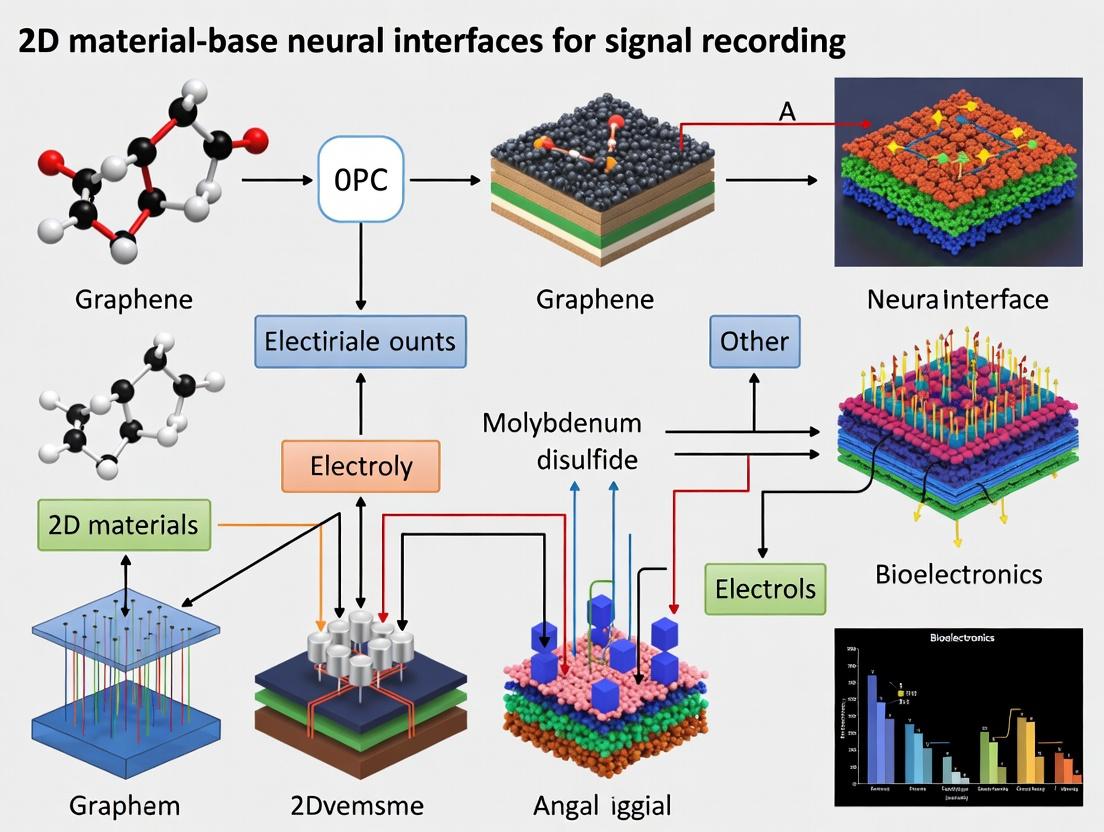
This article provides a comprehensive analysis of 2D material-based neural interfaces for electrophysiological recording, targeting researchers and biomedical professionals.
Graphene and Beyond: How 2D Materials Are Revolutionizing Neural Signal Recording Interfaces
Abstract
This article provides a comprehensive analysis of 2D material-based neural interfaces for electrophysiological recording, targeting researchers and biomedical professionals. It explores the foundational properties of graphene, transition metal dichalcogenides (TMDs), and MXenes that enable superior neural interfacing. The content details current fabrication methodologies and in vivo/in vitro applications for recording brain activity. It addresses critical challenges in stability, signal fidelity, and biocompatibility, offering optimization strategies. Finally, the article presents a comparative validation against traditional metallic and polymer-based electrodes, synthesizing performance benchmarks and outlining future translational pathways for advanced neuroprosthetics and high-fidelity brain-computer interfaces.
The Atomic Advantage: Fundamental Properties of 2D Materials for Neural Interfacing
Application Notes for Neural Interface Research
The development of next-generation neural interfaces for high-fidelity signal recording necessitates materials that are biocompatible, highly conductive, and mechanically compliant. Two-dimensional (2D) materials offer a unique combination of these properties. Graphene provides exceptional electrical conductivity and flexibility. Transition Metal Dichalcogenides (TMDs) like MoS₂ and WS₂ offer semiconducting behavior with tunable bandgaps, suitable for transistor-based sensing. MXenes combine high metallic conductivity with rich surface chemistry for functionalization. This suite of materials enables diverse neural interface modalities, from large-scale electrocorticography to intracellular recordings and neurochemical sensing.
Quantitative Material Properties & Performance Data
Table 1: Key Properties of 2D Materials for Neural Interfaces
| Material | Electrical Conductivity (S/m) | Bandgap (eV) | Young's Modulus (GPa) | Biocompatibility (Cell Viability) | Key Advantage for Neural Interfaces |
|---|---|---|---|---|---|
| Graphene | ~10⁶ | 0 | ~1000 | >90% (neural stem cells) | Ultra-high conductivity, low impedance, transparent. |
| MoS₂ | 10⁻² - 10² (layer-dependent) | 1.2-1.8 (indirect→direct) | ~270 | >85% (primary neurons) | Semiconducting, high on/off ratio for transistors. |
| WS₂ | Similar to MoS₂ | 1.3-2.1 (indirect→direct) | ~272 | >85% (primary neurons) | Strong spin-orbit coupling, photostability. |
| Ti₃C₂Tₓ MXene | ~10⁴ - 10⁵ | Metallic | ~330 | >80% (neuroblastoma cells) | High capacitance, hydrophilic, facile functionalization. |
Table 2: Neural Recording Performance Metrics
| Material | Interface Type | Measured Signal | Signal-to-Noise Ratio (SNR) | Reference (Year) |
|---|---|---|---|---|
| Graphene | Micro-ECoG Array | Local Field Potential (LFP) | 30-40 dB | (2023) |
| MoS₂ | Transistor Array | Action Potentials (extracellular) | ~20 dB | (2024) |
| WS₂ | Flexible Patch | Multiplexed Neurochemical (DA, Glu) | N/A (nM detection limit) | (2023) |
| Ti₃C₂Tₓ MXene | Microelectrode | Spikes / LFP | 25-35 dB | (2024) |
Experimental Protocols
Protocol 1: Fabrication of a Graphene-based Micro-ECoG Array for LFP Recording
- Objective: Create a transparent, flexible array for cortical surface recording.
- Materials: CVD-grown graphene on Cu foil, PMMA, PDMS substrate, photoresist.
- Procedure:
- Transfer: Spin-coat PMMA on graphene/Cu. Etch Cu in ammonium persulfate. Rinse and transfer graphene film onto a temporary SiO₂/Si carrier.
- Patterning: Use photolithography and O₂ plasma etching to define electrode (200 µm diameter) and interconnect patterns.
- Insulation: Deposit a thin, parylene-C layer (1 µm). Use a second lithography and etch step to open electrode sites and contact pads.
- Assembly: Release the device by dissolving the PMMA. Integrate with a flexible PDMS backing and connect to a commercial headstage via anisotropic conductive film.
- Validation: Characterize via cyclic voltammetry (CV) and electrochemical impedance spectroscopy (EIS) in PBS (1 kHz target: <5 kΩ). Perform acute recording in rodent model under anesthesia.
Protocol 2: Functionalization of MXene Microelectrode for Enhanced Neurochemical Sensing
- Objective: Modify Ti₃C₂Tₓ MXene surface for selective dopamine detection.
- Materials: Ti₃C₂Tₓ colloidal solution (single/few-layer), Nafion, dopamine aptamer or tyrosinase enzyme, glutaraldehyde.
- Procedure:
- Electrode Preparation: Drop-cast 5 µL of MXene solution (~5 mg/mL) on a polished glassy carbon electrode. Dry under Argon.
- Enzyme Immobilization: Mix 2 µL tyrosinase (1000 U/mL) with 2 µL Nafion (0.5% wt). Drop-cast onto MXene film. Cross-link in glutaraldehyde vapor for 30 min.
- Biosensor Testing: Perform amperometry at +0.2 V vs. Ag/AgCl in stirred PBS. Calibrate with successive dopamine additions (0.1-10 µM).
- Validation: Calculate sensitivity (µA/µM/cm²), limit of detection (LoD, typically nM range), and selectivity against ascorbic acid and uric acid.
Visualizations
The Scientist's Toolkit: Key Research Reagents & Materials
Table 3: Essential Reagents for 2D Material Neural Interface Development
| Item | Function/Application | Example Supplier/Product |
|---|---|---|
| CVD Graphene on Cu | Starting material for high-quality, large-area electrode fabrication. | ACS Material, Graphenea |
| MoS₂ or WS₂ Dispersion | For solution-processing of TMD films for transistor channels. | Sigma-Aldrich, 2D Semiconductors |
| Ti₃C₂Tₓ MXene Colloid | Ready-to-use dispersion for coating high-capacitance electrodes. | Nanochemazone, MSE Supplies |
| Parylene-C Dimer | Conformal, biocompatible insulation layer for chronic implants. | Specialty Coating Systems |
| PDMS (Sylgard 184) | Flexible, transparent substrate for soft neural interfaces. | Dow Chemical |
| Tyrosinase (from mushroom) | Enzyme for biospecific dopamine detection on electrode surfaces. | Sigma-Aldrich T3824 |
| Nafion perfluorinated resin | Cation-selective membrane to improve selectivity in neurochemical sensing. | Sigma-Aldrich 70160 |
| Poly-D-Lysine | Substrate coating for improved neuronal cell adhesion and culture on devices. | Thermo Fisher Scientific A3890401 |
| Neurobasal / B-27 Media | For maintenance of primary neuronal cultures during in vitro device testing. | Thermo Fisher Scientific |
Within the thesis on 2D material-based neural interfaces for signal recording, the critical material properties of ultra-high surface area, flexibility, and chemical stability are paramount. These properties directly dictate the performance, longevity, and fidelity of neural recording devices. Ultra-high surface area enhances electrochemical coupling and signal-to-noise ratio (SNR). Flexibility ensures conformal contact with dynamic neural tissue, minimizing inflammatory response. Chemical stability guarantees reliable operation in the corrosive, saline-rich physiological environment. This application note details experimental protocols and quantitative assessments for evaluating these properties in candidate 2D materials like graphene, MXenes, and transition metal dichalcogenides (TMDs) for neural interface applications.
Table 1: Comparison of 2D Material Properties for Neural Interfaces
| Material | Specific Surface Area (m²/g) | Young's Modulus (GPa) | Chemical Stability in PBS (pH 7.4) | Charge Injection Limit (mC/cm²) |
|---|---|---|---|---|
| Graphene (3D Foam) | 2630 | ~1.2 | Stable for >6 months | 3.5 - 5.1 |
| MXene (Ti₃C₂Tₓ) | ~450 | ~0.3 | Degrades over weeks; requires encapsulation | 2.8 - 4.0 |
| MoS₂ (Nanoporous) | ~220 | ~0.2 | Highly stable for >1 year | 1.5 - 2.2 |
| Reduced Graphene Oxide (rGO) Film | 750 | ~0.8 | Stable for >3 months | 2.0 - 3.5 |
Table 2: In Vivo Performance Metrics of 2D Material Electrodes
| Material Property | Correlation with Recording SNR | Impact on Glial Scar Thickness (after 12 weeks) | Target Value for Chronic Implants |
|---|---|---|---|
| Surface Area > 1000 m²/g | +40-60% improvement | Minimal direct correlation | Maximize |
| Bending Flexibility (<5 mm radius) | Enables stable contact; +20% SNR | Reduces by ~30% compared to rigid | ≤ 2 mm bend radius |
| Chemical Stability (No degradation in PBS) | Prevents SNR drift over time | Prevents toxic leaching; reduces scar by ~50% | No measurable degradation in 6 months |
Experimental Protocols
Protocol 1: Measuring Electrochemical Surface Area (ECSA) for Neural Electrodes
Objective: To quantify the effective, electrochemically active surface area of a 2D material-coated neural microelectrode. Reagents: Potassium ferricyanide (K₃[Fe(CN)₆]), Potassium chloride (KCl), Phosphate Buffered Saline (PBS, 1X, pH 7.4). Procedure:
- Prepare a 5 mM solution of K₃[Fe(CN)₆] in 0.1 M KCl as the redox probe.
- Assemble a standard three-electrode cell: 2D material working electrode, Ag/AgCl reference electrode, Pt wire counter electrode.
- Perform Cyclic Voltammetry (CV) from -0.2 to 0.6 V vs. Ag/AgCl at scan rates from 10 to 200 mV/s.
- Plot the peak anodic current (Ip) against the square root of the scan rate (v^(1/2)). The slope is proportional to the electroactive area via the Randles-Ševčík equation.
- Compare the slope to that of a standard polished Au electrode of known geometric area to calculate the roughness factor and effective ECSA.
Protocol 2: Assessing Flexibility and Electrical Durability
Objective: To evaluate the resistance change of a flexible 2D material film under cyclic mechanical strain. Procedure:
- Fabricate or obtain a free-standing 2D material film (e.g., rGO or MXene) on a flexible substrate (e.g., polyimide).
- Mount the film on a motorized bending stage with in-situ resistance monitoring via a source meter.
- Subject the film to repeated bending cycles at a defined radius (e.g., 2 mm, simulating brain surface curvature).
- Record the normalized resistance (R/R₀) for up to 10,000 cycles.
- A stable resistance (<10% change) indicates suitability for chronic, flexible neural interfaces.
Protocol 3: Accelerated Aging Test for Chemical Stability
Objective: To assess the long-term chemical stability of the 2D material in physiological conditions. Procedure:
- Immerse the 2D material electrode in 1X PBS (pH 7.4) at 37°C. Optionally, apply a constant anodic bias (+0.6 V vs. Ag/AgCl) for 1 hour daily to simulate electrochemical stress.
- At weekly intervals (for up to 8 weeks), remove the electrode, rinse gently with deionized water, and dry under N₂.
- Characterize the material using:
- SEM/EDS: For morphological changes and detection of elemental leaching.
- XPS: For surface oxidation state and chemical composition.
- CV and Electrochemical Impedance Spectroscopy (EIS) in PBS: To track changes in charge storage capacity and interfacial impedance.
- Stability is confirmed by minimal change in morphology, composition, and electrochemical performance.
Visualizations
Title: Property-Performance Link in Neural Interfaces
Title: Chemical Stability Testing Workflow
The Scientist's Toolkit: Research Reagent Solutions
Table 3: Essential Materials for 2D Neural Interface Development
| Item | Function in Research | Example/Specification |
|---|---|---|
| Chemical Vapor Deposition (CVD) System | Synthesis of high-quality, monolayer graphene on catalytic substrates. | System with precise control of CH₄/H₂ flow, temperature (up to 1000°C), and pressure. |
| MXene Etching Solution | Selective etching of 'A' layers from MAX phases to produce 2D MXene flakes. | A mixture of LiF and HCl (e.g., MILD method) for safer, controlled etching of Ti₃AlC₂. |
| Flexible Polyimide Substrate | Provides mechanical support and flexibility for thin-film neural electrodes. | Kapton films, thickness 7.5-25 µm, with high thermal and chemical stability. |
| Parylene-C Deposition Unit | Conformal, biocompatible encapsulation layer to enhance chemical stability of electrodes. | Vapor deposition system for parylene coating (0.5-5 µm thickness). |
| Gelatin-Based Hydrogel Coating | Soft interfacial layer to reduce mechanical mismatch and inflammatory response. | 3-5% (w/v) gelatin-methacryloyl (GelMA) crosslinked with a photoinitiator (LAP). |
| Phosphate Buffered Saline (PBS), Sterile | Standard electrolyte for in vitro electrochemical testing and aging studies. | 1X solution, pH 7.4, 0.01M phosphate buffer, 0.0027M KCl, 0.137M NaCl. |
| Neurotransmitter Analogs (for testing) | To validate sensor functionality of 2D materials in neurochemical detection. | Dopamine hydrochloride, Glutamic acid, GABA prepared in artificial cerebrospinal fluid (aCSF). |
This application note details experimental protocols and design considerations for leveraging the tailored electronic properties of 2D materials in neural interface devices. Framed within a broader thesis on 2D material-based neural interfaces for signal recording research, the content focuses on optimizing conductivity, optical transparency, and capacitive coupling efficiency for advanced neurotechnological applications in both basic neuroscience research and pharmaceutical development.
Quantitative Properties of 2D Materials for Neural Interfaces
The unique electronic properties of 2D materials can be engineered to address specific requirements in neural interfacing. The table below summarizes key quantitative data for prominent materials.
Table 1: Electronic and Optical Properties of Select 2D Materials for Neurotechnology
| Material | Sheet Resistance (Ω/sq) | Optical Transparency (%) @ 550 nm | Quantum Capacitance (µF/cm²) | Charge Injection Capacity (mC/cm²) | Key Neurotech Advantage |
|---|---|---|---|---|---|
| Graphene (CVD, monolayer) | 125 - 1000 | 97.7 | ~2 - 3 | 0.05 - 0.15 | Ultimate transparency, high conductivity, chemical stability. |
| Reduced Graphene Oxide (rGO) | 10^3 - 10^5 | 70 - 95 | ~10 - 100 | 1.0 - 5.0 | High CIC, porous structure for drug loading. |
| MXene (Ti₃C₂Tₓ) | 20 - 500 | >90 (few-layer) | >200 (high) | 2.0 - 8.0 | Exceptional volumetric capacitance, hydrophilic. |
| Molybdenum Disulfide (MoS₂) | 10^3 - 10^7 | >90 (monolayer) | ~5 - 7 | 0.01 - 0.1 | Semiconducting, tunable bandgap for active electronics. |
| PEDOT:PSS (2D film) | 50 - 300 | >80 | ~100 - 500 | 10 - 50 | Very high CIC, commercial availability, mixed ionic-electronic conduction. |
Experimental Protocols
Protocol 3.1: Fabrication of a Transparent, Capacitive Graphene Microelectrode Array (MEA)
Objective: To fabricate a 16-channel MEA for simultaneous optical stimulation and electrophysiological recording using chemical vapor deposition (CVD) graphene.
Materials & Reagents:
- CVD graphene on copper foil (commercial supplier)
- Polymethyl methacrylate (PMMA) A4
- Iron(III) nitrate (Fe(NO₃)₃) etching solution (0.1 M)
- SiO₂/Si wafer (300 nm oxide) or glass substrate
- SU-8 2002 and 2005 photoresist
- Oxygen plasma system
- Thermal evaporator (for Cr/Au deposition)
- Propylene carbonate monomethyl ether (PGMEA) developer
Procedure:
- Graphene Transfer: Spin-coat PMMA onto the graphene/Cu foil. Bake at 180°C for 1 minute. Float the stack on the Fe(NO₃)₃ solution to etch the Cu foil overnight. Rinse the PMMA/graphene film in three successive DI water baths. Scoop onto the target substrate (SiO₂/Si or glass). Dry overnight. Remove PMMA by soaking in acetone for 1 hour, followed by IPA rinse and N₂ dry.
- Patterning Electrodes: Clean the graphene-coated substrate with oxygen plasma (50 W, 30 s). Spin-coat SU-8 2002 (for isolation layer) and pattern via photolithography to define electrode contact pads and interconnects. Develop in PGMEA.
- Insulation Layer Deposition: Spin-coat SU-8 2005 to define the insulation layer, leaving only the 20 µm diameter electrode sites and contact pads exposed. Pattern via photolithography and develop.
- Metallization for Connectorization: Use a shadow mask to thermally evaporate 10 nm Cr / 100 nm Au onto the contact pad regions to ensure reliable connection to the external amplifier.
- Characterization: Measure sheet resistance via four-point probe. Confirm transparency with UV-Vis spectroscopy. Electrochemically characterize impedance and phase angle via electrochemical impedance spectroscopy (EIS) in 1x PBS at 1 kHz.
Protocol 3.2: Electrochemical Characterization of Capacitive Coupling
Objective: To quantify the effective capacitive charge injection capacity (CIC) and interfacial impedance of a 2D material electrode.
Materials & Reagents:
- Potentiostat/Galvanostat with EIS capability
- Standard three-electrode cell: Working electrode (2D material sample), Platinum counter electrode, Ag/AgCl reference electrode
- 1x Phosphate Buffered Saline (PBS), pH 7.4
- Probe station with micromanipulators for microelectrodes
Procedure:
- Cell Setup: Immerse the three-electrode system in 1x PBS. Ensure the active electrode site is fully submerged.
- Cyclic Voltammetry (CV): Perform CV at slow scan rates (e.g., 50 mV/s) between the water window limits (-0.6 V to 0.8 V vs. Ag/AgCl). Integrate the cathodic and anodic currents to calculate the total charge storage capacity (CSC).
- Electrochemical Impedance Spectroscopy (EIS): Apply a 10 mV RMS sinusoidal perturbation from 100 kHz to 0.1 Hz at the open-circuit potential. Fit the resulting Nyquist plot to a modified Randles equivalent circuit model to extract the interface capacitance (C) and charge transfer resistance (R_ct).
- Voltage Transient Testing: Use a biphasic, symmetric, current-controlled pulse (e.g., ±0.5 mA, 200 µs pulse width) in a two-electrode configuration (WE vs. large Pt CE). Measure the voltage transient across the WE. The CIC is the maximum current amplitude multiplied by the pulse width that keeps the electrode potential within the water window.
Visualizing Pathways and Workflows
Diagram Title: Workflow for 2D Neural Interface Development
Diagram Title: Capacitive vs. Faradaic Neural Coupling
The Scientist's Toolkit: Essential Research Reagents & Materials
Table 2: Key Research Reagent Solutions for 2D Neurotechnology Experiments
| Item | Function/Benefit | Example Use Case |
|---|---|---|
| CVD Graphene on Cu Foil | Provides large-area, high-conductivity, monolayer sheets for transparent electrode fabrication. | Base material for Protocol 3.1. |
| PMMA (950 or A4) | Serves as a mechanical support layer for wet transfer of 2D materials from growth substrates. | Graphene transfer (Protocol 3.1, Step 1). |
| Iron(III) Nitrate or Ammonium Persulfate | Mild oxidizer for etching copper foil without degrading graphene. | Copper etching during transfer. |
| SU-8 Photoresist Series | Biocompatible, stable epoxy-based resist for creating permanent, insulating device layers. | Defining electrode geometry and insulation (Protocol 3.1). |
| PEDOT:PSS Dispersion (PH1000) | High CIC conductive polymer for coating electrodes to improve performance. | Electrochemical surface modification to lower impedance. |
| 1x Phosphate Buffered Saline (PBS) | Standard physiological electrolyte for in vitro electrochemical testing and cell culture. | Electrolyte for EIS and CV (Protocol 3.2). |
| Poly-D-Lysine or Laminin | Promotes adhesion of neuronal cells or explanted tissues to the device surface. | Bio-functionalization of the 2D material interface prior to cell culture. |
| Neurobasal/B27 Media | Serum-free culture medium optimized for long-term viability of primary neurons. | In vitro validation of neural interfaces. |
Within the broader thesis on 2D material-based neural interfaces for chronic signal recording, the imperative for biocompatibility is paramount. These interfaces, often utilizing graphene, MoS₂, or MXenes, must maintain long-term functionality by minimizing adverse tissue reactions. This document provides application notes and detailed protocols for assessing and improving the biocompatibility of such materials in neural environments, targeting key interactions like protein adsorption, glial scarring, and neuronal viability.
Table 1: In Vitro Cytocompatibility of 2D Neural Interface Materials
| Material | Neuronal Cell Line / Primary Culture | Assay (e.g., MTT, Live/Dead) | Viability (%) at 7 Days | Key Inflammatory Marker (e.g., TNF-α) Change vs. Control | Reference (Year) |
|---|---|---|---|---|---|
| Graphene Oxide (GO) | Rat Cortical Neurons | Calcein-AM / PI | 92.3 ± 5.1 | IL-6: +15% | Lee et al. (2023) |
| Reduced GO (rGO) | Human iPSC-derived Neurons | MTS | 85.7 ± 7.4 | TNF-α: +220% | Sharma et al. (2024) |
| MoS₂ (Pristine) | Mouse Neuro-2a | CCK-8 | 88.1 ± 4.3 | Not Significant | Chen & Park (2023) |
| MXene (Ti₃C₂Tₓ) | Rat Hippocampal Neurons | Live/Dead | 94.5 ± 3.8 | GFAP (Astrocyte): +18% | Novak et al. (2024) |
| h-BN Coated rGO | Rat Cortical Neurons | MTT | 98.2 ± 2.1 | Not Significant | Zhou et al. (2024) |
Table 2: In Vivo Chronic Implantation (Rodent Cortex, 4-week)
| Interface Material | Implant Geometry | Glial Fibrillary Acidic Protein (GFAP) Intensity (%, vs. Sham) | Neuronal Density at Probe Track (%, vs. Contralateral) | Signal-to-Noise Ratio (SNR) Change (Week 4 vs. Week 1) |
|---|---|---|---|---|
| Pt/Ir (Control) | Michigan Probe | +350% | 62% | -45% |
| Graphene (CVD) | µ-ECoG Array | +180% | 85% | -12% |
| Graphene/PEDOT:PSS | Utah Array | +150% | 88% | -8% |
| MoS₂/Parylene-C | Depth Probe | +195% | 82% | -15% |
Application Notes
AN-1: Protein Corona Formation on 2D Materials
Upon implantation, neural interfaces immediately adsorb biomolecules, forming a "protein corona." For 2D materials, the composition of this corona dictates subsequent cellular responses. Key Note: Hydrophilic materials like GO attract more albumin (anti-fouling), while hydrophobic pristine graphene favors fibrinogen, promoting microglial adhesion. Pre-coating with neural adhesion molecules (e.g., L1CAM) can direct a favorable corona.
AN-2: Mitigating Chronic Foreign Body Response (FBR)
The FBR cascade (protein adsorption → microglial activation → astrogliosis → glial scar) is the primary failure mode for chronic interfaces. Strategy: Use ultra-thin, flexible 2D materials to reduce mechanical mismatch. Functionalization with anti-inflammatory drugs (e.g., dexamethasone) or neurotrophic factors (BDNF) via controlled release from material surfaces can suppress glial activation while promoting neuronal integration.
AN-3: Electrical Stability & Biocompatibility Link
Electrical performance degradation (increased impedance, decreased SNR) correlates directly with the extent of glial encapsulation. Monitoring: Use electrochemical impedance spectroscopy (EIS) in vivo as a proxy for tissue reaction. A stable low-frequency phase angle suggests minimal scarring.
Detailed Experimental Protocols
Protocol 1: In Vitro Assessment of Neuronal Viability and Inflammation on 2D Material Films
Objective: To quantify primary neuronal cell health and astrocyte activation on coated 2D material substrates.
Materials:
- 2D Material Substrates: Graphene, MoS₂ films on glass coverslips (e.g., from ACS Material LLC).
- Cell Culture: Primary rat cortical neurons (E18), astrocytes.
- Key Reagents: Neurobasal-A medium, B-27 supplement, GlutaMAX, poly-D-lysine, Cytokine ELISA kits (TNF-α, IL-1β), Live/Dead Viability/Cytotoxicity Kit (Thermo Fisher, Cat# L3224), GFAP antibody.
Procedure:
- Substrate Preparation: Sterilize material-coated coverslips in 70% ethanol for 30 min. UV irradiate for 15 min per side. Coat with poly-D-lysine (0.1 mg/mL) for 1 hour at 37°C.
- Neuron-Astrocyte Co-culture: Seed astrocytes (5x10^4 cells/cm²). After 24 hours, seed dissociated cortical neurons (1x10^5 cells/cm²) in Neurobasal-A + B-27 + 0.5 mM GlutaMAX.
- Viability Assay (Day 7):
- Aspirate medium. Add Live/Dead staining solution (2 µM calcein-AM, 4 µM EthD-1 in PBS). Incubate 30 min at 37°C.
- Image with fluorescence microscope (488/515 nm for live; 528/617 nm for dead).
- Calculate viability: % = (Live cells / Total cells) x 100.
- Inflammatory Marker Quantification (Day 3 & 7):
- Collect conditioned medium. Centrifuge at 1000g for 10 min.
- Perform ELISA for TNF-α/IL-1β per manufacturer's protocol. Normalize to total cell protein (BCA assay).
- Immunocytochemistry for GFAP (Day 7):
- Fix cells with 4% PFA for 15 min. Permeabilize with 0.1% Triton X-100.
- Block with 5% BSA for 1 hour. Incubate with anti-GFAP primary antibody (1:500) overnight at 4°C.
- Incubate with Alexa Fluor 568 secondary (1:1000) for 1 hour. Image and quantify integrated fluorescence intensity.
Protocol 2: In Vivo Assessment of Chronic Biocompatibility for Intracortical Probes
Objective: To histologically evaluate glial scarring and neuronal loss around implanted 2D material-based probes.
Materials:
- Implants: Sterile 2D material-coated neural probes (e.g., graphene on flexible polyimide shanks).
- Animal Model: Adult Sprague-Dawley rat (250-300g).
- Key Reagents: Isoflurane, stereotaxic apparatus, perfusion pump, 4% PFA, cryostat, antibodies: Mouse anti-NeuN, Rabbit anti-GFAP, Goat anti-Iba1.
Procedure:
- Surgical Implantation:
- Anesthetize rat. Secure in stereotaxic frame.
- Perform craniotomy targeting primary motor cortex (M1; AP: +1.5 mm, ML: +2.0 mm from Bregma).
- Slowly insert sterile 2D material probe to a depth of 1.5 mm (DV from dura). Secure with dental cement.
- Post-operative Care: Administer analgesia (buprenorphine) for 48 hours. Monitor for 4 weeks.
- Perfusion and Tissue Harvest (4 weeks post-implant):
- Deeply anesthetize. Transcardially perfuse with 0.1 M PBS followed by 4% PFA.
- Extract brain, post-fix in PFA overnight at 4°C, then cryoprotect in 30% sucrose.
- Histology and Quantification:
- Section brain coronally (30 µm thickness) through implant track.
- Perform immunofluorescence: Free-floating sections stained with NeuN (neurons), GFAP (astrocytes), Iba1 (microglia).
- Image using confocal microscopy. For each section:
- Glial Scar: Measure GFAP+ intensity in concentric zones (0-50 µm, 50-100 µm, 100-200 µm from probe track).
- Neuronal Density: Count NeuN+ cells in the same zones. Express as % of contralateral hemisphere density.
- Microglial Activation: Assess Iba1+ morphology (ramified vs. amoeboid) and density.
Diagrams
Diagram 1: Foreign Body Response to Neural Implants
Title: Foreign Body Response Cascade & Mitigation
Diagram 2: Biocompatibility Assessment Workflow for 2D Neural Interfaces
Title: Biocompatibility Testing Pipeline
The Scientist's Toolkit: Research Reagent Solutions
Table 3: Essential Materials for Biocompatibility Experiments
| Item (Supplier Example) | Function in Biocompatibility Assessment |
|---|---|
| Graphene Films on SiO₂/Si (Graphenea Inc.) | Standardized, high-quality substrate for in vitro screening of neuronal interactions with 2D materials. |
| Neurobasal-A Medium + B-27 Supplement (Thermo Fisher) | Serum-free optimized medium for long-term primary neuronal culture, essential for viability assays. |
| Live/Dead Viability/Cytotoxicity Kit (Thermo Fisher, Cat# L3224) | Two-color fluorescence assay to simultaneously quantify live (calcein-AM) and dead (EthD-1) cells on test materials. |
| Rat Cytokine/Chemokine Multiplex ELISA Panel (MilliporeSigma) | Quantifies key inflammatory markers (TNF-α, IL-1β, IL-6) from conditioned medium or tissue homogenate. |
| Anti-GFAP Antibody [GA5] (BioLegend, Cat# 644702) | Monoclonal antibody for specific labeling of reactive astrocytes in immunofluorescence. |
| Anti-NeuN Antibody [EPR12763] (Abcam, Cat# ab177487) | Reliable marker for mature neuronal nuclei to assess neuronal density and apoptosis near implants. |
| Flexible Polyimide Probes (NeuroNexus) | Customizable implant platform for coating with 2D materials for in vivo validation. |
| Dexamethasone-Phosphate (Sigma-Aldrich) | Potent anti-inflammatory drug for functionalizing material surfaces to suppress foreign body response. |
| Parylene-C Deposition System (SCS) | For conformal, biocompatible coating of neural probes to provide a stable interface for 2D materials. |
| Electrochemical Impedance Spectroscope (Gamry Instruments) | Critical for monitoring electrode-tissue interface stability and predicting encapsulation in vivo. |
Application Notes
The engineering of 2D material interfaces is pivotal for developing next-generation neural interfaces with superior signal-to-noise ratio, biocompatibility, and spatiotemporal resolution. This document outlines the transition from single-material monolayers (e.g., graphene, MoS₂) to complex van der Waals heterostructures, detailing their application in in vitro and in vivo neural signal recording.
Key Advantages of Engineered Heterostructures:
- Monolayer Graphene: Provides excellent conductivity, transparency, and flexibility for large-area cortical surface recording (ECoG). Serves as a foundational conductive layer.
- hBN Monolayers: Act as an ultrathin, defect-free insulating barrier, preventing crosstalk in multielectrode arrays and protecting active materials from the biological environment.
- Transition Metal Dichalcogenides (TMDs) like MoS₂: Introduce semiconducting properties, enabling transistor-based (FET) sensing for amplified, local field potential recording.
- Heterostacks (e.g., Graphene/hBN/MoS₂): Combine properties synergistically. Graphene serves as a stable, conductive electrode, hBN provides clean interface passivation, and MoS₂ offers active sensing. This architecture minimizes interfacial disorder and Fermi-level pinning, leading to lower impedance and more stable, sensitive recording interfaces.
Quantitative Performance Comparison: Recent studies demonstrate the impact of interface engineering on key electrophysiological metrics.
Table 1: Performance Metrics of 2D Material Configurations for Neural Recording
| Material Architecture | Impedance at 1 kHz (kΩ·mm²) | Signal-to-Noise Ratio (SNR) | Long-term Stability (in vivo) | Key Application |
|---|---|---|---|---|
| Polycrystalline Graphene Monolayer | ~50 - 100 | 8 - 12 dB | 2 - 4 weeks | Macroscale ECoG, μ-ECoG |
| Single-crystal MoS₂ FET | N/A (FET) | 15 - 24 dB | N/A (in vitro) | Local synaptic activity mapping |
| Graphene/hBN Heterostructure | ~20 - 40 | 10 - 18 dB | 6 - 8 weeks | Stable chronic cortical recording |
| Graphene/hBN/MoS₂ Vertical FET | N/A (FET) | 30 - 40 dB | Under investigation | High-gain, multiplexed signal detection |
Experimental Protocols
Protocol 1: Fabrication of a Graphene/hBN/MoS₂ Vertical Heterostructure Neural Probe
Objective: To assemble a clean, polymer-free 2D heterostructure on a neural probe substrate for high-fidelity recording. Materials: See "Scientist's Toolkit" below.
Procedure:
- Substrate Preparation:
- Clean a standard flexible polyimide-based micro-electrocorticography (μECoG) array substrate with consecutive acetone, isopropyl alcohol, and deionized water sonication (10 min each). Activate with oxygen plasma (100 W, 30 s).
- Deterministic Transfer of Bottom Graphene:
- Using a polymer-free van der Waals transfer setup under inert atmosphere, pick up a mechanically exfoliated monolayer graphene flake (30-50 μm in size) with a poly(bisphenol A carbonate) (PC)/polydimethylsiloxane (PDMS) stamp mounted on a glass slide.
- Align and laminate the graphene onto the target electrode sites using a micromanipulator at 60°C. Slowly peel away the stamp at 90°C to leave graphene adhered to the substrate.
- hBN Tunnel Barrier Transfer:
- Repeat Step 2 to pick up a hexagonal boron nitride (hBN) flake (2-5 layers, ~10 nm thick) with the same stamp.
- Precisely align the hBN flake over the deposited graphene electrode and transfer at 120°C. The higher temperature ensures stronger adhesion between the 2D layers.
- Top MoS₂ Semiconductor Transfer:
- Pick up a pre-characterized monolayer MoS₂ flake.
- Align it over the graphene/hBN stack and complete the final transfer at 160°C.
- Contact Patterning & Encapsulation:
- Define source and drain contacts to the MoS₂ layer using electron-beam lithography (MMA/PMMA resist bilayer, 100 kV), followed by thermal evaporation of 5 nm Ti / 50 nm Au and lift-off.
- Sputter-deposit a 300 nm layer of SiO₂ over the entire device, leaving only the contact pads exposed, for bio-fluidic encapsulation.
Protocol 2:In VitroElectrophysiological Validation of 2D Heterostructure FETs
Objective: To characterize the sensitivity and stability of the heterostructure FET for recording cardiomyocyte action potentials. Materials: iPSC-derived cardiomyocyte cell culture, Tyrode’s solution, electrophysiology rig with Faraday cage, Ag/AgCl reference electrode, data acquisition system.
Procedure:
- Device Sterilization: Expose the fabricated chip to UV ozone for 15 minutes, followed by immersion in 70% ethanol for 30 minutes. Rinse with sterile phosphate-buffered saline (PBS).
- Cell Seeding: Plate a suspension of spontaneously beating iPSC-derived cardiomyocytes (density: 1x10⁵ cells/cm²) directly onto the active region of the chip. Culture for 5-7 days until a confluent, synchronously beating monolayer forms.
- Electrical Setup: Mount the chip on a custom PCB carrier. Connect source and drain contacts to a low-noise current amplifier (e.g., Axopatch 200B). Set drain-source voltage (VDS) to 100 mV. Place an Ag/AgCl reference electrode in the culture medium to apply the liquid gate potential (VLG).
- Signal Acquisition: Place the setup inside a Faraday cage. Record the drain-source current (IDS) continuously at a 20 kHz sampling rate while cells are beating. Simultaneously vary VLG from -0.5V to 0.5V to identify the peak transconductance (gm) operating point for maximum sensitivity.
- Data Analysis: Apply a 1-500 Hz bandpass filter to the I_DS time-series data. Extract field potential duration and beat rate. Calculate SNR as the ratio of the peak-to-peak signal amplitude to the RMS noise in a quiescent period.
Diagrams
Diagram Title: 2D Heterostructure Neural Interface Stack
Diagram Title: Deterministic Layer-by-Layer Transfer Workflow
The Scientist's Toolkit
Table 2: Key Research Reagent Solutions for 2D Heterostructure Fabrication
| Item | Function & Specification | Critical Notes |
|---|---|---|
| Single-crystal Graphene (CVD-grown on Cu foil) | Foundational conductive layer. Provides low sheet resistance and chemical inertness. | Cu must be etched (FeCl₃/APS) and graphene transferred cleanly to avoid polymer residues. |
| Hexagonal Boron Nitride (hBN) Crystals | Atomically flat insulating layer. Provides a clean, trap-free interface between conductive and semiconducting layers. | Thickness (layer count) must be optimized for tunneling vs. insulation. |
| Molybdenum Disulfide (MoS₂) (CVD or bulk for exfoliation) | Semiconducting channel material. High carrier mobility and intrinsic bandgap enable sensitive FET operation. | Monolayer vs. few-layer impacts bandgap and electrostatics. |
| Poly(bisphenol A carbonate) (PC) Film | Key component of the "dry" transfer stamp. Provides rigid yet releasable support for 2D flake pickup. | Must be annealed to remove moisture before use for reliable pickup. |
| Polydimethylsiloxane (PDMS) Slab | Viscoelastic component of the transfer stamp. Allows for conformal contact and gentle release. | A 9:1 base-to-curing agent ratio is typical for optimal elasticity. |
| Polyimide Substrate (e.g., Kapton) | Flexible, biocompatible support for chronic implants. Withstands transfer process temperatures. | Pre-patterning of metal interconnects is required prior to 2D material transfer. |
| Oxygen Plasma System | Cleans and functionalizes substrate surfaces to improve 2D material adhesion. | Over-exposure can damage polymer substrates; power and time must be minimized. |
Fabrication and Function: Building and Deploying 2D Material Neural Probes
Application Notes for 2D Material-Based Neural Interfaces
The development of next-generation neural interfaces for high-fidelity signal recording in research and neuropharmacology demands materials that are biocompatible, mechanically compliant, and electronically versatile. Two-dimensional (2D) materials, particularly graphene and transition metal dichalcogenides (TMDs) like MoS₂, offer exceptional electrical, optical, and chemical properties ideal for neural electrodes. The core fabrication pipeline—Chemical Vapor Deposition (CVD) growth, transfer, and micropatterning—determines the performance, yield, and scalability of these devices. This document provides current protocols and application notes for fabricating 2D material-based neural recording arrays.
Chemical Vapor Deposition (CVD) Growth of Monolayer Graphene and MoS₂
CVD is the predominant method for synthesizing high-quality, large-area monolayer 2D films on catalytic metal substrates. The quality, characterized by domain size, defect density, and layer uniformity, directly impacts electrode impedance and noise performance.
Protocol 1.1: Atmospheric Pressure CVD Growth of Monolayer Graphene on Copper Foil
- Objective: Synthesize continuous monolayer graphene films for transparent, conductive neural electrodes.
- Materials & Setup:
- 25-μm thick copper foil (99.8% purity), electropolished.
- Quartz tube furnace capable of 1060°C.
- Process gases: High-purity Ar, H₂, and CH₄.
- Rapid thermal cooling system.
- Procedure:
- Substrate Preparation: Cut Cu foil to desired size. Clean sequentially in acetone, isopropanol, and dilute acetic acid (5%) to remove organic residues and native oxides. Rinse with DI water and dry under N₂ stream.
- Loading & Annealing: Load foil into quartz tube, evacuate to <10 mTorr, then backfill with 500 sccm Ar and 50 sccm H₂. Heat to 1060°C at 50°C/min and anneal for 60 minutes to recrystallize the Cu surface.
- Growth: Maintain temperature at 1060°C. For monolayer growth, introduce a low flow of CH₄ (typically 0.5-2 sccm) for 15-30 minutes while maintaining H₂ (50 sccm) and Ar (500 sccm) flows.
- Cooling: Terminate CH₄ flow. Rapidly cool the furnace to below 200°C under Ar/H₂ atmosphere (cooling rate >50°C/min) to suppress multilayer nucleation.
- Key Quality Metrics:
- Domain Size: Governed by CH₄:H₂ ratio and pressure. Lower CH₄ partial pressure yields larger single-crystal domains.
- Coverage: Aim for >99% monolayer coverage, verified by Raman spectroscopy (I₂D/IG >2, FWHM of 2D peak ~30 cm⁻¹).
Protocol 1.2: CVD Growth of Monolayer Molybdenum Disulfide (MoS₂) on SiO₂/Si
- Objective: Synthesize semiconducting TMD films for active transistor-based neural sensing elements.
- Materials: Solid precursors: Molybdenum trioxide (MoO₃) and Sulfur (S) powder. Growth substrate: 90 nm SiO₂ on p++ Si.
- Procedure (Two-Zone Furnace):
- Substrate & Precursor Preparation: Clean SiO₂/Si substrate. Place ~5 mg of MoO₃ powder in an alumina boat at the center of the hot zone. Place ~200 mg of S powder in a separate boat upstream.
- Growth: Evacuate and purge the tube with Ar. Heat the MoO₃ zone to 750°C at 25°C/min. Simultaneously, heat the S zone to ~180°C. The S vapor is carried by 150 sccm Ar flow over the MoO₃ and substrate. Maintain growth for 10 minutes.
- Termination: Slide the furnace to cool the growth zone rapidly while maintaining Ar flow.
Table 1: Quantitative Comparison of CVD-Grown 2D Materials for Neural Interfaces
| Material | Substrate | Optimal Growth Temp. | Key Growth Precursors | Carrier Mobility (Typical) | Bandgap | Suitability for Neural Interface |
|---|---|---|---|---|---|---|
| Graphene | Copper Foil | 1000-1060°C | CH₄, H₂ | 3000-5000 cm²/V·s | Zero (Dirac) | Passive electrode: Low impedance, high charge injection. |
| MoS₂ | SiO₂/Si or Sapphire | 750-850°C | MoO₃, S | 10-50 cm²/V·s | ~1.8 eV (Direct) | Active transistor: Amplification, photostimulation. |
Wet and Dry Transfer Processes
Transferring 2D films from growth substrates to target neural interface substrates (e.g., flexible polyimide, PDMS, or silicon nitride) is critical.
Protocol 2.1: PMMA-Mediated Wet Transfer of Graphene
- Objective: Reliably transfer CVD graphene from Cu foil to a flexible, insulating substrate with minimal tears and polymer residue.
- Materials: Poly(methyl methacrylate) (PMMA) A4 or A6, Iron(III) nitrate (Fe(NO₃)₃) or ammonium persulfate ((NH₄)₂S₂O₈) solution, DI water baths, target substrate.
- Procedure:
- PMMA Spin-Coating: Spin-coat PMMA (4% in anisole) onto the graphene/Cu at 3000 rpm for 60 sec. Bake at 120°C for 2 minutes.
- Cu Etching: Float the PMMA/graphene stack on 0.1 M aqueous Fe(NO₃)₃ or (NH₄)₂S₂O₈ solution. Etch for 4-8 hours until Cu is fully dissolved.
- Cleaning: Transfer the floating PMMA/graphene film through three sequential DI water baths (30 min each) to remove etchant ions.
- Pick-Up & Drying: Submerge the target substrate, position it under the film, and slowly lift it out of the water. Dry overnight at room temperature.
- PMMA Removal: Soak in acetone for >2 hours, followed by a critical point dryer (CPD) to avoid capillary-force-induced cracking.
Protocol 2.2: Deterministic PDMS Dry Transfer of MoS₂
- Objective: Clean, aligned transfer of small-flake or patterned 2D TMDs for multi-material device integration.
- Materials: Polydimethylsiloxane (PDMS) slab (Sylgard 184, 10:1 ratio), glass slide, hotplate.
- Procedure:
- PDMS Preparation: Cure PDMS on a glass slide. Peel and cut a small, flat stamp.
- Pick-Up: Heat the growth substrate (with MoS₂) to 50-70°C. Gently place the PDMS stamp on the desired flake/area and cool to room temperature. The adhesion to PDMS becomes stronger than to the growth substrate. Peel back the stamp quickly; the flake adheres to the PDMS.
- Alignment & Transfer: Align the flake on the PDMS stamp under a microscope with the target substrate. Contact the flake to the substrate and heat to 80-100°C. Gently peel the PDMS away, leaving the flake on the target.
Table 2: Comparison of 2D Material Transfer Techniques
| Technique | Principle | Best For | Advantages | Major Challenges |
|---|---|---|---|---|
| PMMA Wet Transfer | Polymer support, etch metal | Large-area graphene | High yield, scalable | Polymer residue, film tearing, ionic contamination |
| PDMS Dry Transfer | Differential adhesion | Small flakes, TMDs, heterostacks | Cleaner interface, allows alignment | Lower yield for large areas, requires precision |
Micropatterning of 2D Films for Neural Electrode Arrays
Defining micro-scale electrode sites and interconnects is essential for multichannel recording.
Protocol 3.1: Photolithography and O₂ Plasma Etching for Graphene Microelectrode Definition
- Objective: Pattern a transferred graphene film into an array of micro-electrodes (e.g., 20 μm diameter) and conductive traces.
- Materials: Positive photoresist (e.g., S1813), developer (MF-319), O₂ plasma etcher (RIE or ICP).
- Procedure:
- Photolithography: Clean the graphene on target substrate. Spin-coat photoresist, soft bake, expose through electrode array photomask, develop.
- Etching: Use O₂ plasma (50-100 W, 50-100 mTorr, 10-30 sccm O₂) to etch away graphene not protected by photoresist. Endpoint can be visually monitored.
- Resist Stripping: Remove photoresist with acetone and IPA, followed by a gentle O₂ plasma clean (10 W, 10 sec) to ensure residue removal.
Protocol 3.2: Laser Direct Writing for Rapid Prototyping
- Objective: Rapidly pattern graphene electrodes on flexible substrates without photomasks.
- Materials: Femtosecond or UV laser writer system.
- Procedure: Program laser path to ablate graphene in non-electrode areas. Optimize laser power and scan speed to cleanly remove graphene without damaging the underlying polymer substrate.
The Scientist's Toolkit: Research Reagent Solutions
Table 3: Essential Materials for 2D Neural Interface Fabrication
| Item | Function & Specification | Example Application |
|---|---|---|
| Electropolished Copper Foil | Catalytic substrate for monolayer graphene CVD. Low surface roughness ensures uniform growth. | Protocol 1.1 |
| Molybdenum Trioxide (MoO₃) Powder | Solid molybdenum precursor for TMD growth. ≥99.95% purity reduces unintended doping. | Protocol 1.2 |
| PMMA (A4, 950k MW) | Polymer support layer for wet transfer. Medium molecular weight offers good mechanical stability and easier dissolution. | Protocol 2.1 |
| Ammonium Persulfate ((NH₄)₂S₂O₈) | Oxidizing agent for copper etching. Less intrusive metal ion compared to Fe³⁺, potentially lower doping. | Protocol 2.1 |
| Sylgard 184 PDMS Kit | Elastomer for dry transfer stamps. Tunable adhesion via cure ratio and temperature. | Protocol 2.2 |
| Positive Photoresist (S1813) | UV-patternable polymer for defining etch masks. Good resolution and adhesion on 2D materials. | Protocol 3.1 |
Experimental Workflow & Signaling Pathway Visualizations
Fabrication Workflow for 2D Neural Electrodes
Signal Pathways at 2D Neural Interface
The evolution of neural recording devices is critical for advancing neuroscience and neuropharmacology. This document, framed within a thesis on 2D material-based neural interfaces, details the design considerations, application notes, and protocols for three primary device geometries: electrocorticography (ECoG) arrays, depth probes, and flexible patches. The unique electrical, mechanical, and optical properties of 2D materials like graphene, MXenes, and transition metal dichalcogenides (TMDs) enable next-generation interfaces with superior signal fidelity, biocompatibility, and minimal tissue response.
ECoG Arrays for Cortical Surface Mapping
Application Note: 2D-material-based ECoG arrays are designed for high-resolution cortical surface recording and stimulation. Their conformability and transparency allow for simultaneous electrophysiology and optogenetics or optical imaging.
Key Design Parameters & Quantitative Data Table 1: Comparative Design Parameters for ECoG Arrays
| Parameter | Standard Metal (Pt/Ir) | Polymer-Based (PEDOT:PSS) | 2D Material-Based (Graphene/MXene) | Functional Impact |
|---|---|---|---|---|
| Electrode Density (channels/mm²) | 10-25 | 50-100 | 100-400 | Spatial resolution for neural decoding. |
| Impedance at 1 kHz (kΩ) | 50-200 | 1-10 | 5-20 (Graphene), 0.5-5 (MXene) | Signal-to-noise ratio (SNR), stimulation efficacy. |
| Transparency (%) | 0-10 (opaque) | 60-80 | 85-98 (Graphene) | Compatibility with optical modalities. |
| Bending Radius (mm) | >50 (rigid) | 1-5 | <1 (on flexible substrate) | Conformability to cortical surface. |
| Charge Injection Limit (mC/cm²) | 0.05-0.15 | 1-3 | 0.1-0.5 (Graphene), 1-5 (MXene) | Safe stimulation capacity. |
Experimental Protocol: Fabrication & Testing of a Graphene-ECoG Array
- Objective: Fabricate a 32-channel transparent graphene EcoG array and characterize its electrochemical performance.
- Materials: (See "Scientist's Toolkit" below).
- Procedure:
- Transfer & Patterning: Transfer CVD-grown monolayer graphene onto a flexible Parylene C substrate (5 µm thick) using a wet PMMA-assisted method. Pattern the electrode array (e.g., 50 µm diameter electrodes) and conduction lines via photolithography and oxygen plasma etching.
- Insulation & Encapsulation: Deposit a second layer of Parylene C (2 µm) as an insulation layer. Use laser ablation to open vias at electrode sites and contact pads.
- Electrochemical Characterization (In Vitro):
- Immerse the array in 1x PBS (pH 7.4).
- Perform Electrochemical Impedance Spectroscopy (EIS): Measure impedance magnitude and phase from 10 Hz to 10 kHz using a potentiostat (e.g., 10 mV RMS sine wave, vs. Ag/AgCl reference).
- Perform Cyclic Voltammetry (CV): Cycle the electrode potential between -0.6 V and 0.8 V (vs. Ag/AgCl) at 50 mV/s. Calculate the Cathodal Charge Storage Capacity (CSCc) from the integrated cathodic current.
- Acute In Vivo Validation (Rat Model):
- Anesthetize the rat and perform a craniotomy over the primary somatosensory cortex.
- Place the graphene-ECoG array on the cortical surface.
- Record spontaneous and evoked (e.g., whisker stimulation) local field potentials (LFPs).
- Simultaneously perform optical coherence tomography (OCT) through the array to validate transparency.
Signaling Pathway: From Device to Data
Diagram Title: Signal Acquisition via Transparent 2D Material ECoG
Depth Probes for Laminar and Deep Brain Recording
Application Note: Incorporating 2D materials onto high-aspect-ratio depth probes enables chronic, high-fidelity recording from deep and layered brain structures with reduced glial scarring.
Key Design Parameters & Quantitative Data Table 2: Comparative Design Parameters for Depth Probes
| Parameter | Silicon Shank | Polymer Probe | 2D Material-Coated/ Hybrid Probe | Functional Impact |
|---|---|---|---|---|
| Typical Width/Thickness (µm) | 50-100 / 15-50 | 20-50 / 5-15 | 10-30 / 1-10 (2D film) | Tissue damage during insertion. |
| Chronic Glial Scar (ΔZ at 1 kHz) | +300-500% @ 12 wks | +150-300% @ 12 wks | +50-150% @ 12 wks (est.) | Long-term signal stability. |
| Channel Count per Shank | 32-128 | 16-64 | 64-256 (envisioned) | Laminar sampling density. |
| Functional Coating | Sputtered Iridium | Electropolymerized PEDOT | MXene or MoS₂ Nanoflakes | Enhances CSC and reduces impedance. |
Experimental Protocol: Coating a Depth Probe with MXene for Enhanced Performance
- Objective: Apply a conformal MXene (Ti₃C₂Tₓ) coating to a polymeric depth probe to improve its electrochemical properties.
- Materials: (See "Scientist's Toolkit").
- Procedure:
- MXene Ink Preparation: Under argon atmosphere, etch MAX phase (Ti₃AlC₂) in LiF/HCl solution. Wash the multilayer MXene sediment with deionized water until pH >6. Delaminate by shaking for 1 hour under argon. Centrifuge to obtain a stable colloidal ink (≈ 5 mg/mL).
- Probe Functionalization: Treat a polyimide or SU-8 depth probe with oxygen plasma (100 W, 1 min) to ensure hydrophilic surface.
- Conformal Coating: Using a precision micro-spray coater or dip-coater, apply the MXene ink onto the probe shank, focusing on the electrode sites. Perform multiple cycles with brief thermal annealing (80°C, 30s) between layers.
- Characterization:
- SEM/EDX: Confirm uniform coating and elemental composition (Ti, C).
- Electrochemical: Perform EIS and CV in PBS as in Protocol 1. Target impedance < 10 kΩ at 1 kHz and CSCc > 2 mC/cm².
- Acute Insertion Test: Insert the coated probe into a 0.6% agarose brain phantom. Record impedance to monitor for coating delamination.
Workflow: Development of a 2D Material-Based Depth Probe
Diagram Title: Workflow for 2D Material Depth Probe Development
Flexible Patches for Peripheral and Dynamic Interfaces
Application Note: Ultrathin, stretchable patches based on 2D material nanocomposites enable stable recording on peripheral nerves, spinal cord, or dynamic brain surfaces (e.g., during swelling).
Key Design Parameters & Quantitative Data Table 3: Design Parameters for Flexible Patches
| Parameter | Silicone Elastomer + Metal | Hydrogel Electrode | 2D Material Nanocomposite | Functional Impact |
|---|---|---|---|---|
| Stretchability (%) | 10-30 | 100-500 | 50-200 | Mechanical matching to soft, moving tissue. |
| Conductor Thickness (nm) | 100-500 (Au crackle) | N/A (ionic) | 10-50 (graphene flake network) | Maintains conductivity under strain. |
| Adhesion to Wet Tissue | Poor (requires suture) | Good (self-adhesive) | Tunable (via polymer matrix) | Stable interface without fixation. |
| Long-term Stability in Vivo | Weeks (delamination) | Days (dehydration) | Months (projected) | Chronic recording potential. |
Experimental Protocol: Creating a Stretchable Graphene-PDMS Patch
- Objective: Fabricate a stretchable micro-electrocorticography (µECoG) patch using a graphene-PDMS nanocomposite.
- Materials: (See "Scientist's Toolkit").
- Procedure:
- Nanocomposite Preparation: Disperse chemically exfoliated graphene flakes (1-3 layer) in anisole. Mix this dispersion with a PDMS pre-polymer (base:curing agent = 10:1) at a 1:3 weight ratio. Sonicate and stir vigorously to achieve a homogeneous conductive paste.
- Micro-Molding: Pour the nanocomposite into a laser-cut or 3D-printed mold defining the electrode array and serpentine interconnects. Cure at 70°C for 2 hours.
- Encapsulation & Release: Spin-coat a thin layer of pure PDMS (≈20 µm) as an encapsulation layer, leaving electrode sites exposed. Release the patch from the mold.
- Mechano-Electrical Testing:
- Mount the patch on a tensile stage.
- Measure sheet resistance (4-point probe) while applying uniaxial strain from 0% to 30%.
- Perform EIS at 0%, 15%, and 30% strain while submerged in PBS.
- Ex Vivo Validation: Wrap the patch around a rat sciatic nerve ex vivo. Record compound action potentials (CAPs) in response to electrical stimulation of the nerve.
The Scientist's Toolkit: Essential Research Reagents & Materials
Table 4: Key Materials for 2D Material Neural Interface Research
| Item | Example Product/Specification | Function in Research |
|---|---|---|
| CVD Graphene on Cu foil | Monolayer, continuous film | The foundational 2D material for transparent, conductive electrode fabrication. |
| MXene (Ti₃C₂Tₓ) Colloidal Ink | Single/few-layer flakes, 5 mg/mL in water | Ready-to-use ink for spray/dip coating to enhance charge injection on probes. |
| Parylene C dimer | For chemical vapor deposition (CVD) systems | The gold-standard biocompatible polymer for flexible substrates and insulation. |
| Photoresist (SU-8 2000 series) | Negative tone, various viscosities | For patterning high-aspect-ratio structures for depth probes and µECoG. |
| Polyimide Precursor (e.g., PI-2545) | High-temperature polyimide | Forms flexible, robust, and biocompatible substrates for chronic implants. |
| PDMS (Sylgard 184) | Two-part elastomer kit | Creates stretchable substrates and encapsulation for flexible patches. |
| Neural Recording Electrolyte | Artificial cerebrospinal fluid (aCSF) or 1x PBS | Standard ionic medium for in vitro electrochemical testing and acute recording. |
| Electrochemical Potentiostat | e.g., Ganny Reference 600+, Autolab PGSTAT204 | Essential for characterizing electrode impedance (EIS) and charge capacity (CV). |
The advent of two-dimensional (2D) material-based neural interfaces, such as those utilizing graphene, graphene oxide, and MXenes, has introduced a new paradigm for in vivo electrophysiology. These materials offer superior electrical properties, mechanical flexibility, and biocompatibility compared to traditional metal (e.g., tungsten, platinum-iridium) or silicon-based microelectrodes. This application note details protocols for recording Local Field Potentials (LFPs) and Single-Unit Activity (SUA) using such advanced interfaces, emphasizing their integration into chronic in vivo research for systems neuroscience and neurological drug development.
| Signal Type | Spatial Scale | Typical Frequency Range | Amplitude Range | Biological Origin | Primary Research Application |
|---|---|---|---|---|---|
| Local Field Potential (LFP) | Mesoscopic (~0.5 - 3 mm) | 0.5 - 300 Hz | 0.1 - 5 mV | Extracellular summed postsynaptic potentials & synchronized dendritic activity. | Network oscillations, brain state mapping, connectivity, pharmaco-electroencephalography. |
| Single-Unit Activity (SUA) | Microscopic (~50-200 µm) | 300 - 10,000 Hz (Spike Band) | 50 - 500 µV | Extracellular action potentials from one or a few nearby neurons. | Neuronal coding, information processing, cell-type-specific responses, behavioral correlation. |
| Multi-Unit Activity (MUA) | Microscopic to Mesoscopic | 300 - 10,000 Hz | 50 µV - 1 mV | Superimposed action potentials from many neurons in vicinity. | Gross population firing rate, stimulus detection, high-frequency burst analysis. |
Table 1: Key characteristics of neural signals recorded in vivo. Amplitude and spatial scale are enhanced by the high conductivity and tailored impedance of 2D material coatings.
Research Reagent & Essential Materials Toolkit
| Item / Reagent | Function / Purpose | Example/Note for 2D Interfaces |
|---|---|---|
| 2D Material-Coated Microelectrode | Signal transduction. High charge injection capacity and low impedance for improved signal-to-noise ratio (SNR). | Flexible graphene/PEDOT:PSS on polyimide, or MXene-coated silicon shanks. |
| Reference Electrode | Provides stable electrical ground/potential. | Ag/AgCl pellet or wire, chlorided before implantation. |
| Skull Screw (Ground) | Secures implant and provides cranial ground connection. | Stainless steel or gold-plated screw. |
| Sterile PBS (0.1 M) | For rinsing and hydrating electrodes pre-implantation. | Prevents contamination and maintains interface stability. |
| Dental Acrylic Cement | Secures headcap and implant to the skull. | Creates a stable, chronic recording chamber. |
| Isoflurane (or equivalent) | Inhalation anesthetic for acute or survival surgery. | Typically 1-3% in medical-grade oxygen. |
| Steroidal/Non-steroidal Anti-inflammatory | Post-operative care to reduce edema and discomfort. | Carprofen or Dexamethasone. |
| Neural Data Acquisition System | Amplifies, filters, and digitizes neural signals. | Intan RHD, Blackrock Neurotech, SpikeGadgets, or Tucker-Davis Technologies. |
| Neurophysiology Software | For real-time visualization, spike sorting, and LFP analysis. | Open Ephys, SpikeGLX, Plexon Offline Sorter, KiloSort, MATLAB toolboxes. |
Table 2: Essential toolkit for in vivo LFP and SUA recording with advanced neural interfaces.
Detailed Experimental Protocols
Protocol 4.1: Acute Surgical Implantation and Recording in Anesthetized Rodent
Objective: To record high-fidelity LFPs and SUA from a target brain region (e.g., hippocampal CA1, cortical layer V) using a 2D material-based probe under anesthesia.
Materials: Stereotaxic frame, heating pad, surgical tools, drill, 2D material electrode, reference/ground wires, acquisition system, anesthetics.
Procedure:
- Anesthesia & Preparation: Induce anesthesia (e.g., 5% isoflurane), maintain at 1-2%. Secure animal in stereotaxic frame. Apply ophthalmic ointment. Shave scalp, disinfect with iodine/ethanol alternation.
- Craniotomy: Make a midline scalp incision. Retract tissue. Level skull relative to Bregma and Lambda. Identify target coordinates. Drill a small craniotomy (~1-2 mm diameter).
- Dura Removal: Carefully puncture and retract the dura mater using a fine needle or hook.
- Electrode Implantation: Mount the 2D material electrode on the micromanipulator. Lower the electrode slowly to the target depth at a rate of ~1 µm/s to minimize tissue dimpling.
- Ground/Reference Connection: Attach the ground wire to a skull screw placed over the cerebellum or frontal cortex. Place the reference Ag/AgCl pellet in subcutaneous tissue or on the skull.
- Signal Verification: Connect the electrode to the headstage and acquisition system. Lower the electrode while monitoring raw signal for characteristic increase in neuronal activity (increased MUA) and typical LFP patterns (e.g., hippocampal theta).
- Recording: Allow signals to stabilize for 10-15 minutes. Begin recording spontaneous or evoked (e.g., sensory stimulus) activity. Record for desired duration.
- Termination: Euthanize animal under deep anesthesia following approved protocol. Perfuse if histology is required.
Protocol 4.2: Chronic Implantation for Longitudinal Recording in Behaving Animal
Objective: To implant a 2D material-based microelectrode array for stable long-term (weeks to months) recording of LFPs and SUA in freely moving animals.
Materials: Chronic electrode array/drive, dental cement, bone anchor screws, analgesic, post-op care supplies.
Procedure:
- Steps 1-3: Follow Protocol 4.1, steps 1-3.
- Skull Preparation: Drill holes for 3-4 bone anchor screws (non-recording sites). Lightly etch the skull surface with etching gel to improve cement adhesion.
- Electrode/Drive Implantation: Lower the chronic array/drive to the target depth. For drives, the initial depth should be above the target for future adjustments.
- Headcap Construction: Create a stable base by applying a thin layer of dental acrylic around the screws and implant base. Build up layers to fully encapsulate the connector and create a robust well. Ensure no acrylic contacts exposed brain tissue.
- Closure: Suture skin around the headcap if necessary. Apply topical antibiotic.
- Post-Operative Care: Administer analgesics and allow 5-7 days of recovery with monitoring.
- Recording Sessions: Connect the animal via a lightweight, flexible tether to a commutator. Record neural data during behavioral tasks (e.g., maze running, reward learning).
- Signal Maintenance: The biocompatibility and stability of 2D materials like graphene contribute to reduced glial scarring, promoting longer-term signal stability compared to traditional metals.
Data Processing & Analysis Workflow
Diagram 1: Neural Signal Processing Pipeline.
Integration with 2D Material Interfaces: Signaling & Interface Pathways
Diagram 2: Signal Pathway from Neuron to 2D Interface Recording.
Application Notes
High-resolution mapping of neural networks in vitro and in organoid models is a cornerstone for advancing neurobiological research and drug development. Within the broader thesis on 2D material-based neural interfaces, these models serve as the essential biological testbeds. They provide a controlled, scalable, and ethically accessible platform to validate the efficacy of novel graphene or MXene microelectrode arrays for electrophysiological recording and to study network-level dysfunction in neurological diseases. The integration of advanced imaging (e.g., calcium, voltage) with high-density electrophysiology on transparent, biocompatible 2D substrates enables unprecedented multimodal analysis of network dynamics, from single-cell spikes to correlated bursting activity across thousands of neurons.
Table 1: Comparison of Neural Network Mapping Platforms
| Feature / Metric | Monolayer (2D) Cortical Culture | 3D Cerebral Organoid (Early-Stage) | 3D Cortical Spheroid / Assembloid | 2D Material Interface Typical Performance |
|---|---|---|---|---|
| Network Complexity | Moderate (synaptic connections) | High (layered, regional identity) | Very High (inter-regional circuits) | N/A (Measurement Tool) |
| Maturation Timeline | 14-28 days in vitro (DIV) | 30-60+ DIV | 30-45 DIV | N/A |
| Typical Recording Duration | Acute: 1-6 hrs; Chronic: weeks | Acute: 1-4 hrs; Chronic: days | Acute: 1-4 hrs | Chronic: Stable for >30 days |
| Single-Unit Yield | 50-200 neurons / mm² | 20-50 detectable units / organoid | 50-150 units / spheroid | Up to 1000+ channels per array |
| Signal-to-Noise Ratio | High (low background) | Moderate (tissue depth) | Moderate | 15-30 dB (for graphene) |
| Spatial Resolution | ~µm (limited by electrode density) | ~100-200 µm (light scattering) | ~50-100 µm | Subcellular (10-50 µm electrode pitch) |
| Key Readouts | Burst rate, MFR, synchrony, connectivity maps | Oscillatory rhythms, network bursts | Cross-regional signal propagation | Full-band electrophysiology (LFP, MUA, SUA) |
Table 2: Key Functional Metrics from Mapped Neural Networks
| Functional Metric | Typical Value (Healthy Network) | Assay/Measurement Method | Relevance to Drug Screening |
|---|---|---|---|
| Mean Firing Rate (MFR) | 0.5 - 5 Hz | Extracellular spike sorting | Baseline excitability; toxin/anticonvulsant effect |
| Synchrony Index (e.g., correlation) | 0.1 - 0.4 (culture) | Cross-correlation of MUA | Network integration; impacted in schizophrenia |
| Burst Rate | 0.05 - 0.5 bursts/s | Inter-spike interval algorithm | Hyperexcitability; epilepsy model phenotype |
| Burst Duration | 50 - 500 ms | Per burst analysis | Network stability |
| Propagation Velocity | 50 - 200 mm/s | Multi-electrode array (MEA) latencies | Circuit integrity; demyelination models |
| Oscillation Power (Gamma, 30-80 Hz) | Variable, organoid-specific | LFP spectral analysis | Cognitive function proxy |
Experimental Protocols
Protocol 1: Fabrication and Preparation of 2D Material Neural Interfaces
Objective: To create a transparent, high-density microelectrode array (MEA) for simultaneous optical and electrical mapping.
- Substrate Preparation: Clean a glass coverslip or SiO2/Si wafer with piranha solution (H2SO4:H2O2, 3:1), rinse with DI water, and dry.
- Electrode Patterning: Using photolithography, pattern the microelectrode (10-30 µm diameter) and interconnect layout onto the substrate. E-beam evaporate a thin adhesion layer (5 nm Ti) followed by 50 nm of Pt or Au.
- 2D Material Transfer: Synthesize monolayer graphene via CVD. Using a wet transfer method (PMMA scaffold), laminate the graphene onto the patterned electrodes, ensuring contact with the metal contact pads. Remove PMMA with acetone.
- Insulation Layer Deposition: Spin-coat a biocompatible insulation layer (e.g., SU-8, Parylene-C), leaving only the electrode sites and contact pads exposed via a second photolithography step.
- Characterization: Perform electrochemical impedance spectroscopy (EIS) in PBS. Target impedance at 1 kHz: 10-50 kΩ for a 20 µm electrode. Sterilize with 70% ethanol and UV light for 30 minutes.
Protocol 2: Culturing and Maintenance of Cortical Neurons on 2D MEAs
Objective: To establish a functional 2D neural network for long-term, high-resolution electrophysiological mapping.
- MEA Coating: Under sterile conditions, coat the active area of the sterilized 2D MEA with 50 µg/mL poly-D-lysine (PDL) in borate buffer overnight at 37°C. Rinse 3x with sterile water and air dry. Add 5 µg/mL laminin in Neurobasal medium for 2 hours at 37°C prior to plating.
- Neuron Isolation: Dissociate cortical tissue from E18 rat embryos or use cryopreserved human iPSC-derived neurons. Gently triturate tissue in papain/DNase solution, quench with ovomucoid inhibitor, and centrifuge.
- Plating: Resuspend neurons in complete Neurobasal medium (with B-27, GlutaMAX, and penicillin/streptomycin). Plate at a density of 800-1200 cells/mm² onto the coated MEA.
- Maintenance: Place MEA in a humidified incubator (37°C, 5% CO2). After 4-7 days, add Ara-C (2-5 µM) for 48 hours to inhibit glial overgrowth. Perform 50% medium exchange twice weekly. Networks are typically electrophysiologically mature by 14-21 DIV.
Protocol 3: Acute Electrophysiological Mapping of 3D Organoids
Objective: To record multi-unit activity and local field potentials from intact cerebral organoids using a 2D material MEA.
- Organoid Preparation: Transfer a mature (day 50-80) cerebral organoid to a recording chamber with artificial cerebrospinal fluid (aCSF: 126 mM NaCl, 3 mM KCl, 1 mM MgSO4, 2 mM CaCl2, 10 mM glucose, 26 mM NaHCO3, saturated with 95% O2/5% CO2).
- Interface Placement: Gently position the organoid onto the center of a low-impedance, transparent 2D MEA. Use a small, weighted harp slice grid (with nylon threads) to lightly stabilize the organoid without crushing it.
- Signal Acquisition: Connect the MEA to a high-input-impedance amplifier (e.g., MultiChannel Systems, Axion Biosystems). Set sampling rate to 20-30 kHz. Apply a bandpass filter of 300-5000 Hz for action potentials (APs) and 1-300 Hz for LFPs.
- Recording Session: Allow 10-15 minutes for stabilization. Record baseline activity for 10-20 minutes. Apply pharmacological agents (e.g., CNQX, TTX) via perfusion to probe network pharmacology.
- Data Processing: Use offline spike sorting software (e.g., Kilosort, SpyKING CIRCUS) to isolate single units. Calculate network metrics (Table 2) from 5-minute baseline epochs.
Protocol 4: Integrated Optogenetic Stimulation and Electrical Recording
Objective: To perform causal mapping of neural circuits using patterned light stimulation on a transparent 2D MEA.
- Viral Transduction: At DIV 7-10, transduce the cortical culture or organoid with an AAV encoding Channelrhodopsin-2 (ChR2) under a neuron-specific promoter (e.g., hSyn) at an MOI of 10^5. Allow 10-14 days for expression.
- Experimental Setup: Mount the MEA on an epifluorescence or patterned illumination microscope. Use a 470 nm LED or laser source, triggered by the MEA recording software.
- Mapping Paradigm: Record 2 minutes of baseline activity. Deliver 5 ms light pulses (1-10 mW/mm²) in a spatially patterned sequence (e.g., grid scan) or at single sites. Interleave stimulation and recording epochs.
- Connectivity Analysis: For each stimulated site, identify responding units on other electrodes based on short-latency (2-20 ms) spike responses. Construct a functional connectivity map from spike-triggered averages.
Visualization
High-Resolution Neural Mapping Workflow
Key Excitatory Synaptic Pathway in Mapping
The Scientist's Toolkit
Table 3: Essential Research Reagent Solutions for Neural Network Mapping
| Item | Function in Experiment | Example Product / Specification |
|---|---|---|
| 2D Material MEA | High-fidelity, transparent substrate for simultaneous electrical/optical recording. | Custom graphene-on-glass array, 256 channels, 30 µm pitch. |
| Neuronal Culture Medium | Supports survival, growth, and synaptic maturation of neurons. | Neurobasal-A + B-27 Supplement + GlutaMAX. |
| Extracellular Recording Solution (aCSF) | Maintains ionic homeostasis and physiological pH during acute recordings. | Oxygenated (95% O2/5% CO2) aCSF with 2 mM CaCl2. |
| Spike Sorting Software | Isolates single-unit activity from raw extracellular voltage traces. | Kilosort3 or SpyKING CIRCUS. |
| Calcium Indicator Dye | Visualizes network-wide activity via fluorescence changes (complement to electrophysiology). | Cal-520 AM, 5 µM loading concentration. |
| Optogenetic Viral Vector | Enables precise, causal perturbation of specific neural populations. | AAV9-hSyn-ChR2(H134R)-EYFP. |
| Synaptic Blockers | Pharmacological tools to dissect network components (excitatory/inhibitory). | CNQX (AMPA antagonist, 10 µM), D-AP5 (NMDA antagonist, 50 µM). |
| Biocompatible Insulation | Insulates electrode traces, ensuring recording specificity and device longevity. | Parylene-C coating, 2 µm thickness. |
| Data Acquisition System | Amplifies, digitizes, and synchronizes multichannel electrophysiology data. | Intan RHD 2164 amplifier board, 30 kHz/channel. |
This application note details protocols for multimodal neural interrogation, situated within a thesis on next-generation 2D material-based neural interfaces. The unique mechanical, electrical, and optical properties of materials like graphene and MXenes enable low-impedance, transparent, and biocompatible microelectrodes. These properties are foundational for seamlessly integrating electrical recording with optical stimulation and microfluidic drug delivery on a single, minimally invasive platform. The goal is to achieve closed-loop, cell-type-specific interrogation of neural circuits with high spatiotemporal resolution.
Key Research Reagent Solutions & Materials
| Item Name | Function/Description | Key Rationale for 2D Interfaces |
|---|---|---|
| Graphene-based Microelectrode Array | Provides high-fidelity, wide-bandwidth electrophysiological recording. Optically transparent for simultaneous imaging/stimulation. | High charge injection capacity, biocompatibility, and transparency (>90%) enable artifact-free co-use with optics. |
| AAV-hSyn-ChR2(H134R)-eYFP | Adeno-associated virus expressing Channelrhodopsin-2 under a neuron-specific promoter for optogenetic control. | 2D material transparency allows efficient blue light (≈470 nm) transmission to transfected cells beneath the electrode. |
| Tetrodotoxin (TTX) | Voltage-gated sodium channel blocker used to silence neural activity pharmacologically. | Can be delivered via integrated microfluidics to validate pharmacological manipulation and recording specificity. |
| Artificial Cerebrospinal Fluid (aCSF) | Ionic solution mimicking the brain's extracellular environment for electrophysiology and as a drug delivery vehicle. | Serves as the perfusate for microfluidic channels and electrochemical stability testing of 2D material electrodes. |
| Poly(dimethylsiloxane) (PDMS) Microfluidic Channel | Elastomeric channel bonded to the neural interface for localized, low-volume drug delivery. | Enables precise pharmacological perturbation adjacent to recording sites with minimal tissue displacement. |
Experimental Protocols
Protocol 1: Fabrication of a Multimodal 2D Material Neural Probe
- Objective: Create a transparent graphene electrode array integrated with a microfluidic delivery channel.
- Materials: CVD-grown graphene on PET/silicon nitride substrate, photoresist, metal (Au/Ti) evaporation source, PDMS, SU-8 mold.
- Steps:
- Patterning: Use standard photolithography and oxygen plasma etching to define recording sites (e.g., 20 µm diameter) and conductive traces.
- Contact Metallization: Deposit and pattern thin Ti/Au (5/50 nm) at contact pads only, leaving the active area and leads as pure graphene.
- Insulation: Spin-coat a thin layer of SU-8 (≈2 µm) or atomic layer deposited Al₂O₃, then etch open the recording sites and contact pads.
- Microfluidic Integration: Fabricate a PDMS channel (width: 100 µm, height: 50 µm) using soft lithography. Align and plasma-bond it to the probe shank, terminating the outlet near the electrode sites.
- Characterization: Perform electrochemical impedance spectroscopy (Target: < 100 kΩ at 1 kHz) and optical transmission measurement (>85% at 470 nm).
Protocol 2: Concurrent Optogenetic Stimulation and Electrical Recording In Vivo
- Objective: Record neural responses to precisely timed optical stimulation without photoelectric artifacts.
- Materials: Prepared multimodal probe, optogenetic-ready animal (e.g., mouse with cortical ChR2 expression), blue laser (473 nm) or LED, optical fiber, neural recording system.
- Steps:
- Surgical Preparation: Anesthetize and stereotactically implant the probe into the target brain region (e.g., primary visual cortex).
- Optical Coupling: Align and secure a multimode optical fiber (core diameter: 200 µm) to the probe's integrated waveguide or directly above the transparent electrode array.
- System Synchronization: Connect the recording system to the probe. Use a Master-8 or NI DAQ to send a TTL pulse sequence that simultaneously triggers the laser (e.g., 5 ms pulses at 20 Hz for 2 s) and marks the stimulus timeline on the recorded data stream.
- Data Acquisition: Record wideband neural signals (0.1 Hz to 7.5 kHz) during optical stimulation epochs. The transparent graphene electrode minimizes light-induced artifact.
- Analysis: Sort spikes pre- and post-stimulus. Calculate peri-stimulus time histograms (PSTHs) and local field potential (LFP) evoked responses.
Protocol 3: Closed-Loop Drug Delivery Triggered by Neural State
- Objective: Suppress seizure-like activity via on-demand, local drug delivery.
- Materials: Multimodal probe, syringe pump, TTX in aCSF (1 µM), KCl in aCSF (500 mM, for inducing hyperactivity), recording system with real-time processing.
- Steps:
- Probe Priming: Fill the integrated microfluidic channel and reservoir with TTX solution. Connect to a miniaturized syringe pump.
- Hyperactivity Induction: Perfuse a small volume (100 nL) of KCl solution via the microchannel to induce local epileptiform activity.
- Real-Time Detection: Configure recording software (e.g., Open Ephys) to calculate the root-mean-square (RMS) power of the LFP in the 20-80 Hz band. Set a threshold (e.g., >5 SD above baseline mean) to detect hyperactivity.
- Closed-Loop Trigger: Upon threshold crossing, the software sends a TTL pulse to activate the syringe pump, delivering a bolus of TTX (e.g., 50 nL over 5 s).
- Validation: Record continuous neural activity pre-trigger, during delivery, and post-delivery. Quantify the latency from trigger to 80% reduction in RMS power.
Table 1: Performance Metrics of a Representative Graphene-Based Multimodal Probe
| Parameter | Value | Measurement Context / Implication |
|---|---|---|
| Electrode Impedance | 45 ± 12 kΩ | At 1 kHz in aCSF. Ensures high signal-to-noise ratio for unit recording. |
| Optical Transparency | 92% | At 470 nm wavelength. Allows >90% of optogenetic stimulation light to pass. |
| Drug Delivery Latency | 320 ± 40 ms | From pump trigger to compound arrival at tissue. Critical for closed-loop feedback speed. |
| Stimulation Artifact Reduction | 85% reduction in amplitude | Compared to opaque Au electrodes under identical 5 mW/mm² blue light pulses. |
| Continuous Recording Stability | < 15% impedance change | Over 12 weeks in vivo, demonstrating chronic stability of the 2D material interface. |
Table 2: Outcomes from a Combined Optogenetics + Recording Experiment
| Measured Variable | Control (No Light) | During Optical Stimulation (470 nm, 5 ms pulses) |
|---|---|---|
| Mean Firing Rate (Hz) | 8.2 ± 3.1 | 52.7 ± 18.4 |
| Spike Sorting Yield (Units) | 12 | 14 (2 new light-driven units isolated) |
| LFP Gamma Power (30-80 Hz, µV²) | 12.5 | 45.8 |
| Stimulus-Locked Jitter (ms) | N/A | 1.8 ± 0.6 |
Visualization Diagrams
Diagram Title: Multimodal 2D Neural Interface Operating Principle
Diagram Title: Closed-Loop Drug Delivery Workflow
Diagram Title: Drug Action Pathway for Neural Suppression
Overcoming Interface Challenges: Signal Stability, Longevity, and Performance
The long-term stability and functionality of implantable neural interfaces are critically limited by the foreign body response (FBR). This complex inflammatory and fibrotic process leads to glial scarring, neuronal depletion, and a decline in electrophysiological signal quality over time. Within a thesis on 2D material-based neural interfaces (e.g., graphene, MoS₂), mitigating the FBR is paramount. 2D materials offer exceptional electrical and mechanical properties but present a biointerface that can initiate a robust FBR. This Application Note details surface functionalization and coating strategies to modulate the immune response, focusing on protocols applicable to ultra-thin, flexible 2D neural probes.
Key FBR Phases and Molecular Targets
The FBR progresses through sequential, overlapping phases: protein adsorption, acute inflammation, chronic inflammation, foreign body giant cell formation, and fibrous encapsulation. Key cellular players are neutrophils, macrophages (M1 pro-inflammatory and M2 anti-inflammatory/pro-healing phenotypes), fibroblasts, and astrocytes. The transition from M1 to M2 macrophage polarization is a critical regulatory point for mitigating severe encapsulation.
Diagram: Core FBR Signaling & Modulation Points
Quantitative Comparison of Coating Strategies
The following table summarizes key performance metrics for prominent coating strategies, as evidenced by recent in vivo neural interface studies.
Table 1: Efficacy of Coating Strategies in Mitigating FBR for Neural Interfaces
| Coating/Functionalization Type | Key Material/Agent | Reported Reduction in Glial Scar Thickness (vs. Bare) | Improvement in Signal-to-Noise Ratio (SNR) or Unit Yield | Longevity Assessment (Weeks) | Primary Proposed Mechanism |
|---|---|---|---|---|---|
| Hydrogel (Natural) | Hyaluronic Acid (HA), cross-linked | ~40-50% at 4 weeks | +15-25% SNR maintained to 8 wks | 8-12 | Hydration barrier, reduces protein fouling, modulates inflammation. |
| Hydrogel (Synthetic) | Poly(ethylene glycol) (PEG) / Zwitterionic polymers | ~30-60% at 6 weeks | +20-30% active unit count at 16 wks | 12-16 | Extreme hydrophilicity, ultra-low protein adsorption. |
| Anti-inflammatory Drug Release | Dexamethasone (DEX) from PLGA coating | ~55-70% at 4 weeks | Significant initial improvement, can wane after release ends | 4-8 (release duration) | Local immunosuppression, reduces neutrophil & macrophage influx. |
| Cytokine Modulation | IL-4 / TGF-β1 conjugated to surface | ~50% at 12 weeks | Delayed signal decline, +~40% units at 12 wks | 12+ | Active induction of M2 macrophage polarization. |
| Biomimetic Peptide Coatings | Laminin-derived peptides (e.g., IKVAV) | ~30-40% at 6 weeks | Improved neuronal density at interface, +~20% SNR | 8-12 | Promotes neuronal adhesion/outgrowth over glial scarring. |
| 2D Material-Specific (e.g., Graphene) | PEDOT:PSS electrodeposited on graphene | ~35% at 4 weeks (vs. bare graphene) | Lower electrode impedance, improved charge injection | 6-8 | Combined ionic conductivity & softer mechanical interface. |
Experimental Protocols
Protocol 1: Covalent Functionalization of Graphene with Anti-inflammatory Molecules
Objective: To create a stable, surface-bound layer of interleukin-4 (IL-4) on a graphene microelectrode array to promote M2 macrophage polarization. Materials: Graphene-on-PET flexible electrode array, Pyrene-NHS ester (linker), Recombinant murine IL-4, Phosphate Buffered Saline (PBS), Dimethylformamide (DMF), rocker platform.
Procedure:
- Surface Cleaning: Activate graphene surface via mild oxygen plasma treatment (50W, 30s) to introduce carboxylic acid groups.
- Linker Attachment: Prepare a 1mM solution of Pyrene-NHS ester in anhydrous DMF. The pyrene group non-covalently π-π stacks onto graphene. Immerse the electrode array in the solution for 2 hours at room temperature on a rocker.
- Washing: Rinse thoroughly with fresh DMF followed by PBS to remove unbound linker.
- Cytokine Conjugation: Prepare a 10 µg/mL solution of IL-4 in PBS (pH 7.4). Incubate the linker-coated electrode array in this solution overnight at 4°C on a rocker. The NHS ester reacts with primary amines on IL-4, forming a stable amide bond.
- Final Rinse & Storage: Rinse array three times with sterile PBS to remove physisorbed cytokine. Store in fresh PBS at 4°C until implantation (within 24 hours). Validation: Surface composition can be verified via X-ray Photoelectron Spectroscopy (XPS) for nitrogen increase. Bioactivity assessed in vitro using macrophage culture.
Protocol 2: Dip-Coating of Neural Probes with Zwitterionic Hydrogel
Objective: Apply a uniform, conformal coating of poly(sulfobetaine methacrylate) (pSBMA) hydrogel to a 2D material-based microneedle array to minimize nonspecific protein adsorption. Materials: Fabricated neural probe, SBMA monomer, N,N'-methylenebisacrylamide (BIS, crosslinker), Ammonium persulfate (APS, initiator), Tetramethylethylenediamine (TEMED, accelerator), Nitrogen gas purge setup.
Procedure:
- Solution Preparation: Under nitrogen purge, prepare an aqueous coating solution containing: 10% (w/v) SBMA, 0.3% (w/v) BIS, and 0.5% (w/v) APS. Mix until fully dissolved.
- Initiation: Just before coating, add TEMED to the solution at 0.2% (v/v) and mix gently. Polymerization begins within minutes.
- Coating Process: Immediately immerse the clean, dry neural probe into the solution. Withdraw slowly and steadily at a rate of 2 cm/min.
- Gelation: Hold the probe in a humid chamber at 37°C for 10 minutes to allow gelation to complete.
- Hydration & Sterilization: Place the coated probe in sterile PBS for 24 hours to equilibrate and swell fully. Sterilize using low-temperature ethylene oxide gas (EtO) or immersion in 70% ethanol (if materials compatible). Note: Coating thickness is controlled by withdrawal speed and solution viscosity.
Workflow Diagram: Coating Development & Evaluation Pipeline
The Scientist's Toolkit: Research Reagent Solutions
| Item | Function in FBR Mitigation Research |
|---|---|
| Pyrene-Based Linkers (e.g., Pyrene-NHS) | Enable non-covalent, strong anchoring of functional molecules to graphene and other carbon-based 2D materials via π-π stacking. |
| Zwitterionic Monomers (e.g., SBMA, CBMA) | Building blocks for ultra-low fouling hydrogel coatings that resist nonspecific protein adsorption, a critical first step in FBR. |
| Cytokine & Peptide Libraries (IL-4, IL-10, TGF-β, CD200, IKVAV) | Used to functionalize surfaces to actively modulate immune cell behavior (e.g., promote M2 polarization) or enhance neuronal integration. |
| Controlled Release Polymers (PLGA, PCL) | Formulations for encapsulating and providing sustained local release of anti-inflammatory drugs (e.g., Dexamethasone) from implant surfaces. |
| Fluorescently-Tagged Fibrinogen/Albumin | Key reagents for standardized in vitro assays to quantify the degree of protein adsorption on modified surfaces. |
| Macrophage Cell Lines (e.g., RAW 264.7, primary BMDMs) | Essential for in vitro screening of coating immunomodulatory properties via cytokine secretion (ELISA) and surface marker (Flow Cytometry) analysis. |
| Specific Antibodies for IHC (Iba1, CD86, CD206, GFAP, NeuN) | Allow quantitative histological analysis of in vivo FBR: macrophage presence, phenotype, glial scarring, and neuronal survival. |
The long-term performance of 2D material-based neural interfaces is critically dependent on their structural and chemical stability in vivo. This document details application notes and protocols for evaluating and mitigating three primary failure modes in chronic neural recording research: (1) delamination of the 2D material from the substrate/electrode, (2) mechanical cracking of the ultrathin film, and (3) electrochemical/material degradation. These protocols are essential for translating proof-of-concept devices into reliable tools for longitudinal neuroscientific studies and neuropharmacological investigations.
Quantitative Failure Mode Analysis
Table 1: Common Failure Modes, Causes, and Quantitative Metrics for Assessment
| Failure Mode | Primary Causes | Key Quantitative Metrics | Typical Acceptable Range (Chronic >6 months) | ||||
|---|---|---|---|---|---|---|---|
| Delamination | Poor adhesion, thermal/mechanical stress, hydration-induced swelling, biofouling. | Interfacial Shear Strength (ISS), Peel Adhesion Force, Delaminated Area (%) | ISS > 20 MPa; Delaminated Area < 5% | ||||
| Cracking | Strain mismatch, flexural fatigue, handling stress, substrate deformation. | Crack Density (cracks/µm), Critical Strain to Fracture (%) | Crack Density < 0.01 /µm; Critical Strain > 2% | ||||
| Material Degradation | Electrochemical oxidation/reduction, ionic diffusion, protein adsorption, inflammatory response. | Charge Storage Capacity (CSC) Loss (%), Electrochemical Impedance Change (∆ | Z | at 1 kHz), Raman D/G peak ratio shift. | CSC Loss < 20%; ∆ | Z | < 50%; G/D Peak Ratio Shift < 10% |
Table 2: Accelerated Aging Test Conditions for Predictive Modeling
| Accelerating Factor | Test Protocol | Measured Output | Predicted Equivalent In Vivo Time |
|---|---|---|---|
| Electrochemical Cycling | ±1.0 V vs. Ag/AgCl, 100 Hz in PBS at 37°C. | CSC decay rate, Impedance rise. | 100,000 cycles ≈ 6 months chronic pulsing. |
| Thermal-Humidity | 85°C / 85% RH, unbiased. | Adhesion strength change, visual delamination. | 1000 hours ≈ 12 months in vivo. |
| Mechanical Flexing | 2% strain, 1 Hz frequency in fluid. | Resistance change, crack propagation imaging. | 1,000,000 cycles ≈ chronic cortical micromotion. |
Core Experimental Protocols
Protocol 1: Adhesion Promotion and Delamination Testing Aim: To enhance and quantify the adhesion of 2D materials (e.g., graphene, MoS₂) to neural probe substrates.
- Substrate Functionalization: Clean Ti/Au or Pt/Ir electrode sites with O₂ plasma (100 W, 2 min). Immerse in 1 mM solution of (3-aminopropyl)triethoxysilane (APTES) in ethanol for 1 hour. Rinse with ethanol and dry at 110°C for 10 min.
- 2D Material Transfer & Adhesion: Utilize a poly(methyl methacrylate) (PMMA)-assisted wet transfer. After transfer, anneal the device at 200°C in forming gas (95% N₂/5% H₂) for 2 hours to promote covalent bonding via the amine groups.
- Quantitative Assessment (Scratch Test): Use a micro-scratch tester with a sphero-conical diamond stylus (5 µm tip). Apply a progressive load from 0 to 30 mN over a 500 µm scratch length at 10 µm/s. Monitor via acoustic emission and optical microscopy. The critical load (Lc) at which delamination occurs correlates to Interfacial Shear Strength (ISS = k * Lc / πr², where k is a tool constant, r is tip radius).
Protocol 2: In-Situ Monitoring of Cracking Under Strain Aim: To characterize the mechanical failure threshold of 2D material coatings on flexible substrates.
- Device Mounting: Mount a polyimide-based 2D-material-coated neural probe on a programmable bending stage immersed in a phosphate-buffered saline (PBS) bath at 37°C.
- Cyclic Loading & Electrical Monitoring: Apply uniaxial tensile strain at 0.5% increments up to 3%. Hold for 5 minutes at each step. Continuously measure sheet resistance (Rs) using a 4-point probe configuration.
- Simultaneous Optical Characterization: Use in-situ optical microscopy (or Raman mapping for single-layer materials) at each strain hold point to identify the onset and propagation of micro-cracks. Correlate a sudden increase in Rs (>10%) with observed crack density.
Protocol 3: Electrochemical Stability & Degradation Assessment Aim: To evaluate the chronic electrochemical stability of 2D material interfaces.
- Pre-conditioning: Soak the working electrode (2D material site) in PBS (pH 7.4, 37°C) for 72 hours to reach hydration equilibrium.
- Accelerated Aging via Potentiodynamic Cycling: Perform cyclic voltammetry (CV) between the water window limits (-0.6 V to +0.8 V vs. Ag/AgCl) at a scan rate of 100 V/s for 10,000 cycles. Use a standard 3-electrode cell.
- Post-Cycling Analysis:
- CSC Calculation: Integrate the cathodic current from the final 5 CV cycles (at 0.01 V/s) to calculate CSC. Compare to initial value.
- Impedance Spectroscopy: Measure electrochemical impedance spectrum from 10 Hz to 100 kHz at 10 mV RMS. Track change at 1 kHz.
- Surface Analysis: (Post-mortem) Use micro-Raman spectroscopy to detect disorder (D peak intensity) and scanning electron microscopy for pinholes or corrosion.
Diagrams & Visualization
Chronic Failure Pathways in 2D Neural Interfaces
Stability Validation Protocol Workflow
The Scientist's Toolkit: Research Reagent Solutions
Table 3: Essential Materials for Stability Research
| Item Name | Supplier Examples | Function in Protocol |
|---|---|---|
| (3-aminopropyl)triethoxysilane (APTES) | Sigma-Aldrich, Gelest | Silane coupling agent to promote covalent adhesion between oxide substrates and 2D materials. |
| Poly(methyl methacrylate) (PMMA) 950 A4 | Kayaku Advanced Materials, MicroChem | Polymer scaffold for wet transfer of 2D materials, dissolved post-transfer with acetone. |
| Forming Gas (95% N₂ / 5% H₂) | Airgas, Linde | Annealing atmosphere to reduce oxides and promote bonding without oxidizing the 2D material. |
| Artificial Cerebrospinal Fluid (aCSF) / PBS | Tocris, Thermo Fisher | Electrolyte for in-vitro electrochemical and aging tests, mimicking physiological ionic environment. |
| Hydrogel (e.g., Agarose or PEG) | MilliporeSigma, Laysan Bio | Used for mechanical modulus matching in benchtop strain tests to simulate brain tissue. |
| Micro Scratch Tester (e.g., Revetest) | Anton Paar, CSM Instruments | Quantifies interfacial adhesion strength via critical load measurement. |
| Potentiostat/Galvanostat with EIS | BioLogic, Metrohm Autolab | Essential for conducting CV, EIS, and accelerated aging electrochemical protocols. |
Optimizing Electrode Impedance and Noise Floor for High-Fidelity Signals
This application note details critical methodologies for optimizing the electrochemical and noise performance of neural recording electrodes, specifically within the context of next-generation 2D material-based neural interfaces. The goal is to achieve high-fidelity recordings of neural activity, which is paramount for basic neuroscience research, neuromodulation studies, and drug discovery platforms assessing compound efficacy and toxicity.
Key Performance Metrics: Impedance and Noise
The quality of recorded neural signals is fundamentally governed by two interrelated electrode properties: the electrode-electrolyte interface impedance and the intrinsic noise floor. Optimizing these parameters increases the signal-to-noise ratio (SNR), allowing for the resolution of low-amplitude signals (e.g., local field potentials, single-unit activity).
Table 1: Target Performance Metrics for High-Fidelity Neural Recording
| Parameter | Ideal Target (at 1 kHz) | Conventional Metal (Au, Pt) | Advanced 2D Material (e.g., Graphene, MXene) | Impact on Signal Fidelity |
|---|---|---|---|---|
| Impedance Magnitude | < 100 kΩ | 500 kΩ - 2 MΩ (microelectrode) | 50 - 200 kΩ | Lower impedance reduces thermal noise and improves signal transfer. |
| Noise Floor (RMS) | < 5 µV (300 Hz - 5 kHz) | ~5 - 10 µV | < 3 - 5 µV (theoretical lower) | Determines the smallest detectable signal. |
| Charge Storage Capacity (CSC) | > 20 mC/cm² | ~1 - 10 mC/cm² | Can exceed 50 mC/cm² | Related to interface capacitance; higher CSC often correlates with lower impedance. |
| Phase Angle at 1 kHz | Close to -90° (capacitive) | -60° to -80° | Can approach -85° to -90° | Purely capacitive interface minimizes Faradaic noise and is more stable. |
Experimental Protocols for Characterization
Protocol 3.1: Electrochemical Impedance Spectroscopy (EIS)
Purpose: To characterize the impedance magnitude and phase across a frequency spectrum relevant to neural signals (0.1 Hz - 100 kHz). Materials:
- Potentiostat/Galvanostat with FRA module.
- Three-electrode cell: Working Electrode (WE) = neural interface material on substrate; Counter Electrode (CE) = Platinum wire; Reference Electrode (RE) = Ag/AgCl (in 3M KCl).
- Electrolyte: Phosphate Buffered Saline (PBS, 0.01M, pH 7.4) or Artificial Cerebrospinal Fluid (aCSF).
- Faraday cage.
Procedure:
- Place the electrochemical cell inside a Faraday cage.
- Apply a sinusoidal potential with a small amplitude (typically 10 mV RMS) superimposed on the open circuit potential.
- Sweep frequency logarithmically from 100 kHz to 0.1 Hz.
- Record the impedance magnitude (|Z|) and phase (θ) at each frequency.
- Fit data to an equivalent circuit model (e.g., Randles circuit with constant phase element) to extract parameters like interface capacitance (Cdl) and charge transfer resistance (Rct).
Protocol 3.2: Noise Floor Measurement
Purpose: To quantify the intrinsic voltage noise of the electrode in a biologically relevant environment. Materials:
- Low-noise amplifier (headstage) and data acquisition system.
- Same three-electrode setup as in Protocol 3.1.
- Electrically quiet, shielded enclosure.
Procedure:
- Configure the potentiostat in open-circuit potential mode or use a dedicated low-noise recording system.
- Record the potential difference between the WE and RE for a minimum of 30 seconds while the WE is submerged in quiet electrolyte (no stimulation).
- Ensure the CE is disconnected for true noise measurement of the sensing interface.
- Compute the Root-Mean-Square (RMS) noise within the standard neural bandwidths: LFP (1-300 Hz) and Spike Band (300 Hz - 5 kHz).
- Perform a Fast Fourier Transform (FFT) to generate the noise power spectral density.
Optimization Strategies for 2D Material Interfaces
Table 2: Optimization Techniques and Their Impact
| Technique | Methodology | Effect on Impedance | Effect on Noise | Key Consideration for 2D Materials |
|---|---|---|---|---|
| Surface Roughening / Nanostructuring | Creating pores, wrinkles, or 3D foam-like structures. | Drastically decreases (↑ surface area). | Can lower thermal noise; may increase 1/f if unstable. | Prevents restacking of flakes; maintains material conductivity. |
| Electrochemical Activation (Anodization) | Applying a DC voltage bias in electrolyte to modify surface redox states. | Can significantly reduce (↑ capacitance). | May reduce if leading to more stable capacitive interface. | Must avoid irreversible oxidation or reduction that degrades the 2D material. |
| Conductive Polymer Coating (e.g., PEDOT:PSS) | Electropolymerization or drop-casting of polymer on 2D surface. | Greatly reduces (ionic-to-electronic coupling). | Generally lowers, especially 1/f noise. | Ensures good adhesion and electrical contact between polymer and 2D material. |
| Laser Reduction / Annealing | Precise local energy delivery to reduce GO or improve crystallinity. | Reduces (improves conductivity & charge transfer). | Lowers (improves conductivity). | Must control power to avoid burning or creating defects. |
Protocol 4.1: Electrodeposition of PEDOT:PSS on Graphene
Purpose: To lower impedance and improve the neural recording SNR by coating graphene with a conductive, ionically permeable polymer. Solution: 0.01M EDOT monomer and 0.1% PSS in deionized water. Procedure:
- Perform a cyclic voltammetry (CV) scan of the bare graphene electrode in the monomer solution from -0.8 V to +1.2 V vs. Ag/AgCl at 50 mV/s for 10-15 cycles.
- Rinse thoroughly with DI water. The electrode will have a dark blue coating.
- Characterize the modified electrode using EIS (Protocol 3.1) and noise measurement (Protocol 3.2) to confirm performance improvement.
The Scientist's Toolkit: Research Reagent Solutions
Table 3: Essential Materials for Electrode Optimization & Testing
| Item | Function & Relevance |
|---|---|
| Graphene Oxide (GO) Dispersion | Starting material for fabricating reduced graphene oxide (rGO) electrodes via spin-coating or printing, followed by thermal/chemical reduction. |
| MXene (Ti₃C₂Tₓ) Colloidal Solution | 2D conductive ceramic for inkjet printing high-CSC microelectrodes. Susceptible to oxidation; requires argon storage. |
| PEDOT:PSS Solution (1.0 - 1.3 wt%) | Conductive polymer for composite coatings to achieve low-impedance, biocompatible neural interfaces. |
| Artificial Cerebrospinal Fluid (aCSF) | Biologically relevant ionic solution (Na+, K+, Ca2+, Mg2+, Cl-) for in vitro electrochemical testing, mimicking the brain extracellular environment. |
| Phosphate Buffered Saline (PBS), 0.01M | Standard, simple electrolyte for consistent baseline electrochemical characterization (EIS, CV). |
| Neurobiotin or Dextran-Conjugated Tracers | For post-recording histological verification of recording sites and assessment of tissue reactivity, crucial for validating long-term interface stability. |
| Polydimethylsiloxane (PDMS) | The standard elastomer for creating flexible substrates and encapsulation layers for chronic implantable devices. |
| Parylene-C | A biocompatible, vapor-deposited polymer used as a thin, conformal insulating layer for chronic neural implants. |
Visualizations
Diagram 1: Key Factors Influencing Recording Fidelity
Diagram 2: Experimental Workflow for Optimization & Validation
Diagram 3: Signaling Pathway for Tissue Response
Managing Thermal and Electrical Safety Limits in Sensitive Neural Tissue
This document provides detailed application notes and protocols for managing thermal and electrical safety limits in neural tissue, framed within the broader thesis on advancing 2D material-based neural interfaces (2D-MNIs) for high-fidelity neural signal recording. The unique electrochemical, thermal, and mechanical properties of 2D materials like graphene, MXenes, and transition metal dichalcogenides (TMDs) offer unparalleled opportunities for high-density, minimally invasive neural recording. However, their application introduces specific safety challenges related to thermal dissipation and electrical stimulation thresholds that must be rigorously characterized and managed to ensure tissue viability and experimental validity.
Quantitative Safety Limits & Material Properties
The following tables summarize critical safety thresholds for neural tissue and the relevant properties of prominent 2D interface materials. Data is synthesized from recent literature (2023-2024) on in vivo applications.
Table 1: Established Neural Tissue Safety Limits
| Parameter | Safe Limit Value | Tissue/Model | Key Rationale & Consequence |
|---|---|---|---|
| Temperature Rise (ΔT) | ≤ 1.0 °C | Cortex (Acute) | Prevents protein denaturation, altered synaptic transmission. |
| Maximum Temperature | 39 - 40 °C | Cortex (Chronic) | Sustained higher temps trigger gliosis, neuronal death. |
| Charge Density Limit | 30 - 150 µC/cm² (Phase) | Cortex (Pt/Gray) | Below hydrolysis & gas evolution threshold for Pt. Varies with material. |
| Charge per Phase Limit | 0.5 - 4 nC/Phase | Microstimulation | Prevents focal electrochemical tissue damage. |
| Current Density (DC) | ≤ 1 mA/cm² | General Neural | Avoids ionic concentration shifts, electrode dissolution. |
| Specific Absorption Rate (SAR) | ≤ 2 W/kg (Local) | General Tissue | Limits volumetric heating from RF/inductive components. |
Table 2: Thermal & Electrical Properties of 2D Neural Interface Materials
| Material | Thermal Conductivity (W/m·K) | Electrical Conductivity (S/m) | Charge Injection Limit (Est., mC/cm²) | Key Safety Advantage/Concern |
|---|---|---|---|---|
| Graphene | 2000 - 5000 (In-plane) | ~10⁶ | 0.05 - 0.1 (Capacitive) | Exceptional heat spreader, but limited CIL. |
| MXene (Ti₃C₂Tₓ) | 25 - 50 | ~10⁴ - 10⁵ | 1 - 5 (Faradaic) | High CIL, moderate thermal conductivity. |
| MoS₂ | 30 - 100 | Variable (Semicon) | N/A (Recording) | Low parasitic heating during recording. |
| Hydrogel-2D Composite | 0.5 - 1.5 | 10 - 10³ | 0.5 - 2 | Biocompatible, reduces thermal mismatch. |
Core Experimental Protocols
Protocol 1:In SilicoMultiphysics Modeling of 2D-MNI Thermal Load
Objective: Predict the steady-state and transient temperature rise in neural tissue induced by a 2D material-based recording/stimulating electrode. Workflow:
- Geometry Definition: Import 3D model of 2D-MNI (e.g., graphene mesh electrode) and surrounding tissue layers (pia, cortex, white matter) into FEM software (COMSOL/ANSYS).
- Material Assignment: Assign properties from Table 2 to the interface. Assign anisotropic thermal/electrical properties to brain tissue.
- Physics Setup:
- Activate Bioheat Transfer (Pennes Equation) module:
ρC ∂T/∂t = ∇·(k∇T) + ρ_b C_b ω_b (T_a - T) + Q_met + Q_ext. - Define
Q_extas the Joule heating source from the electrode:Q_ext = J · E, whereJis current density andEis electric field. - Set boundary condition: Core body temperature (37°C) at model boundaries.
- Activate Bioheat Transfer (Pennes Equation) module:
- Simulation & Validation: Run transient simulation for typical stimulation waveform (e.g., 100 Hz biphasic, 200 µs pulse). Validate model against in vitro thermal camera data from Protocol 2. Calibrate tissue perfusion rates (ω_b) to match validation data.
- Output: Extract maximum
ΔTat tissue-interface boundary and spatial heat distribution profile.
Protocol 2:In VitroCalibration of Interface Heating
Objective: Empirically measure the temperature rise of a 2D-MNI in a tissue-simulating phantom. Materials: 2D-MNI on flexible substrate, 0.9% saline or agarose brain phantom, infrared thermal camera (FLIR Axxx series), biphasic current stimulator, data acquisition unit. Method:
- Submerge the 2D-MNI in the phantom at a defined depth.
- Apply controlled current waveforms (amplitude: 10 µA - 1 mA, frequency: 10 - 200 Hz) via the stimulator.
- Record the surface temperature of the phantom directly above the electrode using the IR camera at 30 fps.
- Correlate
ΔTwith stimulus parameters (Charge per phase, frequency) and electrode geometry/surface area. - Use this data to validate and refine the in silico model from Protocol 1.
Protocol 3:In VivoValidation of Safety Limits via Multimodal Monitoring
Objective: Assess acute and chronic tissue health and device performance during 2D-MNI operation. Materials: Rodent model, implanted 2D-MNI, wireless recording/stimulating system, laser Doppler flowmetry probe, micro-thermocouple, histological markers. Surgical & Monitoring Procedure:
- Implant 2D-MNI following approved IACUC protocols. Place a micro-thermocouple <200 µm from the interface-tissue boundary.
- Post-surgery, during recording/stimulation sessions, simultaneously acquire:
- Neural signals (local field potential, spiking).
- Local temperature via thermocouple.
- Cerebral blood flow (CBF) via laser Doppler at adjacent site.
- Stimulation Safety Test: Apply a staircase of charge densities (10, 30, 60, 100 µC/cm², geometric). Monitor for CBF changes >20% (indicative of hyperemia/vasodilation from heating) or neural activity suppression.
- Chronic Endpoint: After 4-6 weeks, perfuse-fixate animal. Process brain for immunohistochemistry (IHC): stain for GFAP (astrocytosis), Iba1 (microgliosis), and NeuN (neuronal density). Quantify glial scar thickness and neuronal density in the peri-implant zone versus control.
Visualizations
Thermal Risk Pathway in 2D Neural Interfaces
Safety Limit Validation Workflow
The Scientist's Toolkit: Research Reagent Solutions
Table 3: Essential Materials for Safety Limit Research
| Item / Reagent | Function in Context | Example / Specification |
|---|---|---|
| Graphene Oxide (GO) Solution | Precursor for fabricating reduced-GO neural interfaces; allows tuning of impedance and surface area. | 4 mg/mL dispersion in H₂O, monolayer content >95%. |
| Ti₃C₂Tₓ MXene Ink | High-conductivity, high-CIL material for printed/stenciled microelectrodes. | Colloidal solution in deionized water, concentration ~10 mg/mL. |
| PEDOT:PSS Conductive Polymer | Used to coat or blend with 2D materials to lower impedance and improve charge injection capacity. | 1.3 wt% dispersion in H₂O, filtered at 0.45 µm. |
| Photocurable Bioelastomer | Encapsulation and substrate material for flexible 2D-MNIs; defines mechanical mismatch with tissue. | E.g., PDMS or silicone-based UV-cure resin (Young's modulus ~1 MPa). |
| Artificial Cerebrospinal Fluid (aCSF) | Electrolyte for in vitro electrochemical and thermal testing; simulates ionic tissue environment. | pH 7.4, containing Na⁺, K⁺, Ca²⁺, Mg²⁺, Cl⁻, HCO₃⁻, glucose. |
| IHC Antibody Kit (GFAP, Iba1, NeuN) | Critical for quantifying chronic tissue response and validating safety limits post-in vivo study. | Validated for rodent tissue; includes primary & fluorescent secondary antibodies. |
| Agarose (Low Gelling Temp) | For creating tissue-mimicking phantoms for in vitro thermal/electrical testing. | Type VII-A, gelling at <30°C, low conductivity. |
| Biphasic Constant Current Stimulator | Provides precise, charge-balanced waveforms for safety testing without net Faradaic reactions. | ISO-10993 compliant, output up to ±10 mA, adjustable pulse width/frequency. |
The development of high-density, 2D material-based neural interfaces (e.g., graphene, MoS₂ microelectrode arrays) represents a paradigm shift in neurophysiological recording and pharmaceutical screening. These interfaces can simultaneously capture signals from thousands of channels with exceptional signal-to-noise ratios (SNR > 20 dB) and minimal tissue damage. This advancement creates a critical bottleneck: the efficient, real-time processing of terabytes of high-fidelity, low-noise data. These application notes outline comprehensive strategies and protocols for managing this data deluge within the context of neural signal recording research and drug development.
Core Processing Strategy Architecture
A multi-tiered architecture is essential to handle data acquisition, preprocessing, and analysis.
Diagram Title: Three-Tier Data Processing Pipeline
Key Experimental Protocols for Data Acquisition & Validation
Protocol 3.1: Simultaneous Multi-Modal Recording from 2D Material MEA
Objective: To acquire low-noise, high-channel-count extracellular action potentials (EAPs) and local field potentials (LFPs) from a neuronal culture or acute brain slice using a 2D material-based Microelectrode Array (MEA).
Materials: See "The Scientist's Toolkit" (Section 6). Procedure:
- System Setup: Connect the 2D-MEA to a high-input-impedance, low-noise headstage (e.g., Intan RHS 32-channel controller). Ensure all connections are shielded.
- Environment Control: Place the preparation in a Faraday cage. Maintain physiological conditions (37°C, 5% CO₂, perfused with ACSF).
- Signal Acquisition: a. Set sampling rate to 30 kHz per channel for EAP resolution. b. Set hardware high-pass filter to 0.1 Hz and low-pass filter to 7.5 kHz. c. Apply a common-average reference (CAR) in real-time via acquisition software to remove common-mode noise. d. Begin recording, acquiring data in a block-based format (e.g., 60-second blocks).
- Data Output: Save data in an open, compressed binary format (.rhd, .openephys) alongside synchronized metadata (timestamps, channel map, experiment parameters).
Protocol 3.2: Real-Time Spike Sorting & Feature Extraction Workflow
Objective: To process raw data streams in near real-time to isolate single-unit activity.
Diagram Title: Real-Time Spike Sorting Pipeline
Procedure:
- Preprocessing: Apply a zero-phase digital bandpass filter (Butterworth, 2nd order, 300-3000 Hz) to the raw data from Protocol 3.1.
- Detection: Calculate the robust standard deviation (σ) of the filtered signal. Detect spike events when the signal crosses a threshold of -4.5 * σ.
- Alignment & Extraction: For each detection, extract a 2 ms waveform snippet (60 samples at 30 kHz), centered on the negative peak.
- Feature Reduction: Project each waveform onto the first three principal components (PCs) derived from a representative initial data block.
- Clustering: Feed the 3D feature vectors into a streaming clustering algorithm (e.g., MountainSort online) to assign each spike to a distinct neural unit.
- Output: Generate a continuous timestamp and unit ID data stream for real-time visualization and analysis.
Table 1: Comparison of Data Processing Frameworks for High-Channel-Count Streams
| Framework / Tool | Primary Use Case | Max Channels (Theoretical) | Real-time Capability | Key Advantage for 2D-MEA Data |
|---|---|---|---|---|
| Kilosort 2.5/4 | Offline GPU Spike Sorting | ~100,000 | No (but fast batch) | Exceptional accuracy with dense probes; handles drift. |
| SpikeInterface | Standardized Sorting Pipeline | Unlimited (batch) | No | Unified framework for comparing multiple sorters. |
| Tridesclous | Online/Offline Sorting | ~1,000 | Yes (with pre-processing) | User-friendly, includes real-time visualization tools. |
| HDMEA-Tools | Dense Array Processing | 65,536 | No | Specialized for CMOS-based HD-MEAs, relevant for 2D arrays. |
| Open Ephyx GUI | Acquisition & Online Proc. | 512 | Yes | Integrated acquisition and plug-in-based online processing. |
| Custom FPGA Pipeline | Ultra-low-latency Preproc. | 1,024-4,096 | Yes (< 1 ms) | Enables real-time closed-loop stimulation experiments. |
Table 2: Typical Data Volumes in 2D-MEA Recording Experiments
| Experiment Scale | Channels | Sampling Rate (kHz) | Bit Depth | Data Rate (MB/s) | 1-Hour Volume (TB) | Recommended Storage Solution |
|---|---|---|---|---|---|---|
| Focal Circuit | 256 | 30 | 16 | 15.36 | 0.055 | Local NVMe SSD |
| Mesoscale | 1,024 | 30 | 16 | 61.44 | 0.221 | RAID 0/1 Array |
| Full Array | 4,096 | 20 | 16 | 163.84 | 0.589 | High-Performance NAS |
| Chronic Recording | 1,024 | 30 | 16 | 61.44 | 5.31 (per 24h) | Tiered (SSD Cache + HDD/Cloud Archive) |
Signaling Pathway in Pharmacological Screening Application
Diagram Title: From Drug Target to MEA-Read Network Phenotype
The Scientist's Toolkit: Research Reagent Solutions
Table 3: Essential Materials for High-Channel-Count 2D-MEA Experiments
| Item | Function & Relevance | Example Product / Specification |
|---|---|---|
| 2D Material MEA | Recording substrate. Graphene/MoS₂ offer biocompatibility, high conductivity, and transparency for optogenetics. | Custom-fabricated (e.g., Graphenea) or commercial high-density CMOS-MEA. |
| Low-Noise Headstage | Amplifies minute neural signals (µV range) at the source, minimizing noise introduction. Critical for SNR. | Intan Technologies RHS or RHD series, MultiChannel Systems MEA2100. |
| Data Acquisition Card | Converts analog signals to high-fidelity digital data at high throughput. | National Instruments PCIe-6378, Open Ephys Acquisition Board. |
| Computational Hardware | Performs real-time DSP and storage. Requires high parallel processing capability. | NVIDIA RTX A6000 GPU, AMD Threadripper CPU, 128+ GB RAM. |
| Perfusion System | Maintains physiological viability of ex vivo or in vitro preparations during long recordings. | Automate Scientific or Warner Instruments inline heater/pump systems. |
| Data Management Software | Handles metadata, storage, and preprocessing organization for large datasets. | DANDI Archive, Neurodata Without Borders (NWB) format, DataJoint. |
| Pharmacological Agents | For validation and drug screening studies (e.g., channel blockers, receptor agonists). | Tetrodotoxin (TTX) for silencing, Bicuculline for disinhibition, NMDA for excitation. |
Benchmarking Performance: 2D Materials vs. Conventional Neural Electrodes
Application Notes: Critical Metrics for 2D Material-Based Neural Interfaces
The efficacy of neural interfaces for electrophysiological recording and stimulation in research and therapeutic applications is primarily governed by three interdependent electrochemical metrics: impedance, signal-to-noise ratio (SNR), and charge injection capacity (CIC). In the context of next-generation 2D material-based microelectrodes (e.g., graphene, MXenes, transition metal dichalcogenides), optimizing these parameters is paramount for achieving high-fidelity neural signal recording and safe, effective stimulation.
Impedance (Z) at the electrode-electrolyte interface inversely correlates with the ability to record small amplitude neural signals (e.g., local field potentials, unit activity). Lower impedance reduces thermal noise and improves signal coupling. Signal-to-Noise Ratio (SNR) quantifies the clarity of the recorded neural signal against background noise. It is directly influenced by impedance and the intrinsic electronic properties of the electrode material. Charge Injection Capacity (CIC) defines the maximum safe charge that can be delivered during stimulation without causing Faradaic reactions that damage tissue or the electrode. It is a critical limit for stimulation-capable interfaces.
The integration of 2D materials offers a unique opportunity to enhance all three metrics simultaneously due to their high surface-area-to-volume ratio, excellent conductivity, and biocompatibility.
Table 1: Comparative Metrics of Traditional and 2D Material-Based Neural Electrodes
| Material / Interface Type | Typical Impedance at 1 kHz (kΩ) | Typical SNR (dB) | Charge Injection Capacity (mC/cm²) | Key Advantages |
|---|---|---|---|---|
| Pt/Ir (Polished) | 200 - 500 | 15 - 20 | 0.05 - 0.15 | Biostable, standard |
| PEDOT:PSS Coated | 20 - 100 | 20 - 25 | 1.0 - 3.0 | Low Z, high CIC |
| Laser-Induced Graphene | 5 - 50 | 25 - 35 | 2.0 - 5.0 | Porous, high surface area |
| MXene (Ti₃C₂Tₓ) | 1 - 20 | 30 - 40 | 3.0 - 8.0 | Metallic conductivity, hydrophilic |
| Graphene Oxide/Reduced | 50 - 200 | 20 - 30 | 0.5 - 2.0 | Tunable functionality |
Table 2: Target Metrics for Specific Research Applications
| Research Application | Target Impedance (1 kHz) | Minimum SNR | Required CIC | Primary Metric Driver |
|---|---|---|---|---|
| Cortical LFP Recording | < 100 kΩ | > 20 dB | N/A | Low Impedance |
| Single-Unit Recording | < 1 MΩ | > 30 dB | N/A | High SNR |
| Deep Brain Stimulation | < 10 kΩ | N/A | > 1 mC/cm² | High CIC |
| Closed-Loop Neuromodulation | < 50 kΩ | > 25 dB | > 0.5 mC/cm² | Balanced All |
Experimental Protocols
Protocol 1: Electrochemical Impedance Spectroscopy (EIS) for Interface Characterization
Objective: To measure the complex impedance of a 2D material-coated microelectrode across a frequency range relevant to neural signals (0.1 Hz - 100 kHz). Materials: Potentiostat/Galvanostat with FRA, 3-electrode cell (working electrode: 2D material microelectrode, counter electrode: Pt wire, reference electrode: Ag/AgCl in 3M KCl), phosphate-buffered saline (PBS, 0.01M, pH 7.4) at 37°C. Procedure:
- Assemble the electrochemical cell in a Faraday cage.
- Immerse electrodes in PBS and allow system to stabilize for 15 mins.
- Set potentiostat to EIS mode. Apply a sinusoidal AC voltage perturbation of 10 mV RMS amplitude, superimposed on the open-circuit potential.
- Sweep frequency logarithmically from 100 kHz to 0.1 Hz.
- Record impedance magnitude (|Z|) and phase (θ). Plot Nyquist and Bode plots.
- Fit data to an equivalent circuit model (e.g., Randles circuit with constant phase element) to extract interface properties.
Protocol 2: In Vitro Signal-to-Noise Ratio (SNR) Measurement
Objective: To quantify the recording fidelity of an interface using a simulated neural signal. Materials: 2D material microelectrode, Ag/AgCl reference, recording amplifier/data acquisition system, PBS bath, calibrated signal generator with isolated output. Procedure:
- Place electrode and reference in PBS bath.
- Connect electrode to amplifier (gain = 1000, bandpass filter = 300 Hz - 5 kHz).
- To simulate neural spikes, use the signal generator to inject a known biphasic current pulse (typically 10-100 µA, 1 ms phase) through a separate pair of bath electrodes. This generates a measurable voltage at the recording site.
- Record 60 seconds of background noise (V_noise,rms) with no signal present.
- Record 60 seconds of data with the simulated spike train presented at 10 Hz.
- Offline, align and average triggered events to obtain the average signal amplitude (V_signal,peak-peak).
- Calculate SNR as: SNR (dB) = 20 * log₁₀( Vsignal,peak-peak / (2 * √2 * Vnoise,rms) ).
Protocol 3: Voltage Transient Method for Charge Injection Capacity (CIC)
Objective: To determine the maximum safe charge injection limit of a 2D material electrode. Materials: Potentiostat, 2-electrode cell (working: 2D material, counter/reference: large surface area Pt), PBS. Procedure:
- Setup in a 2-electrode configuration in PBS.
- Apply a balanced, biphasic, cathodic-first current pulse (pulse width = 0.2 ms/phase, 50 µs interphase delay).
- Start at a low current density (e.g., 0.01 mA/cm²) and record the voltage transient across the electrode interface.
- Gradually increase the current density in subsequent trials.
- For each trial, analyze the voltage transient. The CIC limit is reached when the access voltage (Va, the voltage at the end of the cathodic pulse) or the electrode potential (calculated vs. a stable reference) exceeds the water window (typically -0.6 V to +0.8 V vs. Ag/AgCl), risking irreversible Faradaic reactions.
- Calculate CIC: CIC (mC/cm²) = Pulse Width (s) * Current Density at Limit (mA/cm²).
Visualizations
The Scientist's Toolkit
Table 3: Essential Research Reagent Solutions for 2D Neural Interface Characterization
| Item | Function & Relevance |
|---|---|
| Phosphate-Buffered Saline (PBS), 0.01M, pH 7.4 | Standard physiological electrolyte for in vitro electrochemical testing, mimicking ionic strength of extracellular fluid. |
| Ferricyanide/Ferrocyanide Redox Couple ([Fe(CN)₆]³⁻/⁴⁻) | Probing solution for evaluating electron transfer kinetics and electroactive surface area of 2D materials via cyclic voltammetry. |
| Poly(3,4-ethylenedioxythiophene):Polystyrene sulfonate (PEDOT:PSS) | Conducting polymer reference coating; benchmark for comparing performance of novel 2D materials in lowering impedance and boosting CIC. |
| Agarose or Gelatin-Based Brain Phantoms | Tissue-mimicking substrates for benchtop testing of electrode mechanical integration and recording stability in a viscoelastic medium. |
| Neurobasal/B27 Cell Culture Media | For in vitro biocompatibility assessments and recording from live neuronal networks plated on 2D material substrates. |
| Poly-L-Lysine or Laminin | Adhesion molecules for coating 2D material surfaces to promote neuronal cell attachment and growth in functional validation studies. |
| Tetrodotoxin (TTX) & 4-Aminopyridine (4-AP) | Neuropharmacological tools for silencing sodium channels or blocking potassium channels, respectively, used to validate neural signal sources during recording tests. |
1. Introduction: Framing within 2D Material-Based Neural Interfaces
The pursuit of chronic, stable neural interfaces for fundamental neuroscience and neuropharmacology research necessitates electrodes with exceptional electrochemical performance and long-term durability. While iridium oxide (IrOx) and poly(3,4-ethylenedioxythiophene):polystyrene sulfonate (PEDOT:PSS) are established conducting materials, emerging 2D materials (e.g., graphene, MXenes) offer promising alternatives. This application note details protocols for the comparative assessment of longevity and electrochemical durability, critical for evaluating their suitability in next-generation neural recording arrays.
2. Experimental Protocols for Accelerated Aging and Chronic Stability Testing
Protocol 2.1: Fabrication of Microelectrode Arrays (MEAs)
- Substrate: 4-inch silicon wafers with 500 nm thermal oxide.
- Metal Deposition: Sputter deposit 20 nm Ti / 200 nm Au as conductive traces and bonding pads. Pattern via lift-off photolithography.
- Electrode Site Definition:
- Control 1 (IrOx): Electrochemical deposition from a solution of 1.5 mM IrCl₄, 40 mM oxalic acid, 150 mM K₂CO₃ (pH 10.5) using a constant current density of 0.5 mA/cm² for 200s.
- Control 2 (PEDOT:PSS): Potentiostatic deposition at 0.9 V vs. Ag/AgCl from a solution containing 0.01 M EDOT and 0.1% w/v PSS in DI water.
- Test (2D Material, e.g., L-Graphene): Transfer a monolayer of CVD graphene via PMMA-assisted wet transfer onto predefined sites. Pattern via oxygen plasma etching.
- Insulation: Spin-coat a 3 µm layer of SU-8 3005, photolithographically open electrode sites and bonding pads.
- Post-Processing: Anneal all arrays at 120°C for 12 hours in vacuum.
Protocol 2.2: In Vitro Electrochemical Accelerated Aging Test
- Objective: Simulate years of pulsing in an accelerated timeframe.
- Setup: Three-electrode configuration in 1x PBS (pH 7.4, 37°C). Working Electrode: Material-coated site (0.0314 mm²). Counter Electrode: Pt coil. Reference Electrode: Ag/AgCl (3M KCl).
- Stimulation Protocol: Apply a symmetric, charge-balanced biphasic current pulse (0.5 ms/phase, 9 s inter-pulse interval) at a cathodal charge density of 0.5 mC/cm².
- Monitoring: Record electrochemical impedance spectroscopy (EIS, 1 Hz - 100 kHz, 10 mV RMS) and cyclic voltammograms (CV, -0.6 V to 0.8 V vs. Ag/AgCl, 50 mV/s) every 10 million cycles.
- Endpoint: Continue until charge storage capacity (CSC) degrades by >50% or impedance at 1 kHz increases by >100%. Record total cycles to failure.
Protocol 2.3: Chronic In Vivo Functional Stability Assessment
- Animal Model: Adult Sprague-Dawley rat, motor cortex implantation.
- Implantation: Sterilize MEA. Under isoflurane anesthesia, perform craniotomy and slowly insert the 16-channel MEA to a depth of 1.5 mm.
- Chronic Recording: Allow 1-week post-op recovery. Record spontaneous neural activity (bandpass: 300-5000 Hz) weekly for 12 weeks using a commercial headstage and acquisition system.
- Metrics: Track signal-to-noise ratio (SNR), number of viable single-unit channels, and mean spike amplitude over time.
- Post-Explant Analysis: Extract device, perform EIS and CV in PBS to correlate electrochemical degradation with functional loss.
3. Data Presentation: Quantitative Comparison
Table 1: Accelerated Aging Test Results (Representative Data from Recent Studies)
| Material | Charge Storage Capacity (CSC, mC/cm²) Initial | CSC after 10⁷ cycles | Impedance at 1 kHz (kΩ) Initial | Impedance at 1 kHz after 10⁷ cycles | Cycles to 50% CSC loss |
|---|---|---|---|---|---|
| Sputtered IrOx | 28.5 ± 3.2 | 24.1 ± 2.8 | 2.1 ± 0.3 | 2.8 ± 0.4 | > 1 x 10⁸ |
| Electro-PEDOT:PSS | 52.3 ± 5.1 | 38.7 ± 4.2 | 0.8 ± 0.2 | 1.5 ± 0.3 | ~ 5 x 10⁷ |
| Laser-Scribed Graphene | 15.2 ± 1.8 | 14.9 ± 1.7 | 5.5 ± 1.1 | 5.7 ± 1.2 | > 1 x 10⁸ |
| Ti₃C₂ MXene | 45.0 ± 4.5 | 32.0 ± 3.8 | 1.2 ± 0.3 | 2.1 ± 0.5 | ~ 3 x 10⁷ |
Table 2: Chronic In Vivo Functional Performance (12-week study)
| Material | Initial Single-Unit Yield (Channels/Array) | Single-Unit Yield at Week 12 | SNR Decay Rate (dB/week) | Key Failure Mode |
|---|---|---|---|---|
| Activated IrOx | 12.2 ± 1.5 | 10.1 ± 1.8 | 0.05 | Mechanical cracking |
| PEDOT:PSS | 14.5 ± 2.1 | 6.3 ± 2.4 | 0.18 | Delamination, Biofouling |
| Graphene/PEDOT Composite | 13.8 ± 1.9 | 11.2 ± 2.1 | 0.07 | Partial Oxidation |
| Platinum Nanoparticle-Graphene | 11.9 ± 1.7 | 10.8 ± 1.6 | 0.04 | Minimal change |
4. Visualizing the Experimental Workflow and Degradation Pathways
Title: Comparative Longevity Study Experimental Workflow
Title: Primary Degradation Pathways in Neural Electrodes
5. The Scientist's Toolkit: Key Research Reagent Solutions
| Item / Reagent | Function in Longevity Studies | Example Product / Specification |
|---|---|---|
| Phosphate Buffered Saline (PBS), 1X, pH 7.4 | Standard electrolyte for in vitro aging tests, mimics ionic strength of physiological fluid. | Sterile-filtered, 0.01 M phosphate, 0.137 M NaCl. |
| Iridium (IV) Chloride Hydrate | Precursor for electrochemical deposition of iridium oxide films. | 99.9% trace metals basis, for synthesis. |
| EDOT Monomer (3,4-Ethylenedioxythiophene) | Monomer for the electrochemical polymerization of PEDOT coatings. | Purified by distillation, ≥97%. |
| Polystyrene Sulfonate (PSS) | Dopant and stabilizer for EDOT polymerization, provides ionic conductivity. | MW ~70,000, 30 wt% solution in water. |
| CVD Graphene on Cu Foil | Source material for fabricating 2D graphene electrode sites via transfer. | Monolayer, continuous, low defect density. |
| SU-8 3005 Photoresist | Permanent, biocompatible epoxy for defining electrode insulation layers. | MicroChem Corp. |
| Artificial Cerebrospinal Fluid (aCSF) | Electrolyte for ex vivo testing and chronic in vivo implant environment simulation. | Contains NaCl, KCl, NaHCO₃, MgCl₂, CaCl₂, glucose. |
| Platinum Counter Electrode | Inert counter electrode for three-electrode electrochemical setups. | 1 mm diameter coiled Pt wire, 99.99%. |
| Ag/AgCl Reference Electrode | Stable, low-impedance reference electrode for accurate potential control. | 3M KCl filling solution, double-junction if needed for biocompatibility. |
Application Notes: The Imperative for 2D Material Interfaces
Traditional metallic microelectrodes (e.g., Pt, IrOx, stainless steel) elicit a pronounced foreign body response upon chronic brain implantation, characterized by glial scarring and neuronal loss. This chronic inflammatory response significantly degrades electrophysiological recording quality and stability over time, impeding long-term neuroscience research and therapeutic applications. The integration of 2D materials, such as graphene and MXenes, into neural interfaces presents a promising paradigm shift due to their superior biocompatibility, mechanical flexibility, and electrical properties. These Application Notes detail the comparative tissue response analysis and provide standardized protocols for evaluating next-generation interfaces.
Quantitative Histological Comparison: 2D Materials vs. Metals
Table 1: Comparative Histological Outcomes at 4 and 12 Weeks Post-Implantation
| Metric | Metal (Pt/Ir) Electrode (4 weeks) | 2D Material (Graphene) Interface (4 weeks) | Metal (Pt/Ir) Electrode (12 weeks) | 2D Material (Graphene) Interface (12 weeks) | Measurement Method |
|---|---|---|---|---|---|
| Astrocyte Activation (GFAP+ area, µm²) | 18,500 ± 2,100 | 8,300 ± 950 | 22,800 ± 3,400 | 10,200 ± 1,800 | Immunofluorescence, thresholding |
| Microglial Activation (Iba1+ cell density, cells/mm²) | 450 ± 65 | 210 ± 40 | 520 ± 80 | 250 ± 55 | Immunohistochemistry, cell counting |
| Neuronal Density (NeuN+ cells, cells/mm²) | 980 ± 120 | 1,450 ± 110 | 850 ± 150 | 1,380 ± 130 | Immunohistochemistry, stereology |
| Glial Scar Thickness (µm) | 85 ± 15 | 35 ± 8 | 110 ± 20 | 45 ± 12 | Confocal microscopy, radial profiling |
| Neuronal Survival Index (%) | 65 ± 8 | 95 ± 6 | 55 ± 10 | 90 ± 7 | (Neurons near interface / Distal neurons) x 100 |
Detailed Experimental Protocols
Protocol 1: Chronic Intracortical Implantation and Perfusion-Fixation
- Objective: To implant neural interfaces and prepare tissue for histological analysis.
- Materials: Sterile neural interfaces (metal control & 2D material test), stereotaxic apparatus, rodent model (e.g., adult Sprague-Dawley rat), isoflurane anesthesia system, bone drill, saline, paraformaldehyde (PFA) 4% in 0.1M PBS.
- Procedure:
- Anesthetize the subject and secure in the stereotaxic frame.
- Perform a craniotomy over the target region (e.g., primary motor cortex, M1).
- Slowly insert the sterile neural interface to the target depth (e.g., ~1.5 mm for layer V).
- Secure the device interface to the skull using dental acrylic.
- After the prescribed survival period (e.g., 4, 12 weeks), deeply anesthetize the subject.
- Transcardially perfuse with 200-300 mL of 0.1M PBS followed by 300-400 mL of ice-cold 4% PFA.
- Extract the brain, post-fix in 4% PFA for 24h at 4°C, then cryoprotect in 30% sucrose solution.
- Section the tissue coronally (40 µm thickness) around the implant site using a cryostat.
Protocol 2: Multiplex Immunofluorescence Staining and Quantification
- Objective: To visualize and quantify glial scarring and neuronal density.
- Materials: Free-floating brain sections, blocking serum, primary antibodies (anti-GFAP, anti-Iba1, anti-NeuN), fluorescent secondary antibodies, DAPI, PBS-T, mounting medium.
- Procedure:
- Block sections in 5% normal serum + 0.3% Triton X-100 in PBS for 1 hour.
- Incubate in primary antibody cocktail (e.g., chicken anti-GFAP, rabbit anti-Iba1, mouse anti-NeuN) diluted in blocking solution for 48h at 4°C.
- Wash sections 3x15 mins in PBS-T.
- Incubate in appropriate fluorescent secondary antibody cocktail + DAPI (1:1000) for 2h at room temperature, protected from light.
- Wash 3x15 mins in PBS, mount on slides, and coverslip.
- Image using a confocal microscope with consistent laser power and gain settings.
- Quantification:
- Glial Scarring: Using image analysis software (e.g., ImageJ/Fiji), define a Region of Interest (ROI) extending 200 µm radially from the implant track. Apply a consistent threshold to binarize GFAP signal and calculate the percentage area covered (GFAP+ area) and the radial thickness.
- Microglial Activation: Manually or using automated cell detection, count Iba1+ cells within the same ROI. Report as cell density (cells/mm²).
- Neuronal Density: Count NeuN+ nuclei in concentric annular zones (e.g., 0-50 µm, 50-100 µm, 100-200 µm from the track) using stereological principles. Compare to a contralateral control region.
Visualizations
Chronic Inflammatory Cascade from Implantation
Experimental Workflow for Histological Analysis
The Scientist's Toolkit: Key Research Reagents & Materials
Table 2: Essential Reagents for Tissue Response Analysis
| Item | Function / Rationale |
|---|---|
| High-Purity Graphene or MXene Films | Test substrate. Offers mechanical softness, chemical inertness, and high charge injection capacity, hypothesized to minimize chronic inflammation. |
| Metal Control Electrodes (Pt, IrOx) | Positive control for foreign body response. Essential for baseline comparison of glial activation. |
| Primary Antibodies: Anti-GFAP, Anti-Iba1, Anti-NeuN | Key biomarkers for identifying reactive astrocytes, activated microglia, and mature neurons, respectively, via immunofluorescence. |
| Fluorescent Secondary Antibodies (e.g., Alexa Fluor conjugates) | Enable multiplexed, high-sensitivity detection of primary antibodies for detailed spatial analysis of the implant microenvironment. |
| Paraformaldehyde (4% in PBS) | Standard fixative for tissue preservation, ensuring antigen retention and structural integrity for post-mortem analysis. |
| Cryostat | Instrument for obtaining thin (20-40 µm), high-quality coronal sections of the implanted brain region for staining. |
| Confocal Microscope | Provides optical sectioning capability to generate high-resolution z-stacks through the glial scar, allowing precise 3D quantification. |
| Image Analysis Software (e.g., Fiji/ImageJ, Imaris) | For objective, quantifiable metrics of immunofluorescence intensity, cell counts, and scar dimensions. |
Application Notes: Challenges & Metrics for 2D Material Neural Interfaces
The translation of 2D material-based neural interfaces from research prototypes to tools for clinical recording or drug development requires systematic assessment across three pillars.
Scalability: Moving from single, lab-fabricated devices to batch production.
- Challenge: Reproducing atomically thin material properties (e.g., graphene, MoS₂) across a wafer-scale process.
- Metric: Yield (%) of functional channels per fabricated array and batch-to-batch variation in electrochemical impedance.
Reproducibility: Ensuring consistent performance across labs and experimental conditions.
- Challenge: Standardizing the interface between the 2D material and neural tissue, including surface functionalization and encapsulation.
- Metric: Signal-to-Noise Ratio (SNR) stability and chronic recording longevity across independent validation studies.
Regulatory Pathways: Navigating preclinical validation for eventual Investigational Device Exemption (IDE).
- Challenge: Defining a complete biological safety profile (biocompatibility, degradation products) for novel nanomaterials.
- Metric: Compliance with ISO 10993 series benchmarks for cytotoxicity, sensitization, and implantation.
Table 1: Key Quantitative Benchmarks for Translational Readiness
| Assessment Pillar | Key Performance Indicator (KPI) | Target Benchmark (in vivo) | Measurement Protocol |
|---|---|---|---|
| Scalability | Fabrication Yield | >80% functional electrodes/array | Protocol 1.1 |
| Electrode Impedance (@1kHz) | 50 - 200 kΩ, ±15% batch variance | Protocol 1.2 | |
| Reproducibility | Recording SNR (Spike) | >10 dB, maintained over 30 days | Protocol 2.1 |
| Chronic Stability | <20% baseline impedance change at 30 days | Protocol 1.2 | |
| Regulatory (Biocompatibility) | Cell Viability (ISO 10993-5) | >70% relative viability | Protocol 3.1 |
| Pyrogenicity (ISO 10993-11) | Pass (LAL test) | Protocol 3.2 |
Detailed Experimental Protocols
Protocol 1.1: Functional Yield Assessment for a Graphene Microelectrode Array (MEA)
- Device Preparation: Mount a fabricated 2D material MEA on a PCB carrier. Connect to a multiplexed switching system.
- Electrochemical Set-up: Immerse MEA in phosphate-buffered saline (PBS). Use a standard 3-electrode configuration (MEA as working electrode, Ag/AgCl reference, Pt counter).
- Testing: Using a potentiostat, perform Electrochemical Impedance Spectroscopy (EIS) from 10 Hz to 100 kHz at 10 mV RMS for each channel.
- Analysis: A channel is "functional" if its impedance magnitude at 1 kHz is within the target range (e.g., 50-500 kΩ) and its phase plot indicates a stable interface. Yield = (Functional Channels / Total Channels) * 100.
Protocol 1.2: Standardized Electrochemical Impedance Spectroscopy (EIS)
- Calibration: Calibrate potentiostat and electrodes in standard solution.
- Measurement: For each electrode, in PBS (pH 7.4), apply 10 mV RMS sinusoidal potential across the frequency sweep.
- Data Fitting: Fit the obtained Nyquist plot to a modified Randles equivalent circuit to extract interface properties (charge transfer resistance, double-layer capacitance).
- Chronic Tracking: For longitudinal studies, repeat weekly, ensuring consistent electrolyte level, temperature, and reference electrode placement.
Protocol 2.1: In Vivo Signal-to-Noise Ratio (SNR) Quantification
- Animal Model & Implantation: Implant the 2D material MEA into target brain region (e.g., rodent primary motor cortex) under approved IACUC protocol.
- Signal Acquisition: Record wideband neural data (e.g., 0.1 Hz to 7.5 kHz) using a biosignal amplifier. Use a common-average reference.
- Spike Detection: High-pass filter data (>300 Hz). Detect spike events using a threshold (e.g., -4.5 x RMS of filtered trace).
- Calculation: For each detected spike snippet, SNR is calculated as: SNR (dB) = 20 * log₁₀( Peak-to-Peak Spike Amplitude / RMS of Background Noise ). Report median SNR per session.
Protocol 3.1: Cytotoxicity Testing per ISO 10993-5 (MTT Assay)
- Extract Preparation: Sterilize 2D material sample. Incubate in cell culture medium (e.g., DMEM + 10% FBS) at 37°C for 24h at a surface area-to-volume ratio of 3 cm²/mL. Filter extract.
- Cell Culture: Plate L-929 fibroblast cells in 96-well plate.
- Exposure: Replace culture medium with extract (100% concentration) or controls (medium, latex positive control). Incubate for 24h.
- Viability Assessment: Add MTT reagent. Incubate 2-4h. Solubilize formed formazan crystals. Measure absorbance at 570 nm. Calculate % viability relative to medium control.
Protocol 3.2: In Vitro Pyrogen Test (LAL) per ISO 10993-11
- Sample Preparation: Prepare material extract using non-pyrogenic saline.
- LAL Reagent: Use commercially available Limulus Amebocyte Lysate kinetic chromogenic assay.
- Testing: Mix extract with LAL reagent in a pyrogen-free microplate. Incubate and measure absorbance at 405 nm over time.
- Analysis: Determine endotoxin concentration (EU/mL) from standard curve. The sample passes if endotoxin level is below the device-specific threshold (e.g., 0.5 EU/mL).
Diagrams (Generated via Graphviz)
Title: Translational Pathway for 2D Neural Interfaces
Title: Key Metrics Feed Go/No-Go Decision
The Scientist's Toolkit: Research Reagent Solutions
Table 2: Essential Materials for 2D Neural Interface Development & Testing
| Material / Reagent | Supplier Examples | Primary Function |
|---|---|---|
| CVD Graphene on Cu Foil | Graphenea, ACS Material | Base 2D material with high conductivity and biocompatibility for electrode fabrication. |
| PMMA (Poly(methyl methacrylate)) | MicroChem, Kayaku | Polymer support layer for wet transfer of 2D materials onto target substrates. |
| PDMS (Sylgard 184) | Dow Chemical | Biocompatible elastomer for encapsulation, passivation layers, and flexible device packaging. |
| PEDOT:PSS Dispersion | Heraeus, Ossila | Conducting polymer coating to lower interfacial impedance and improve charge injection on 2D electrodes. |
| Artificial Cerebrospinal Fluid (aCSF) | Tocris, MilliporeSigma | Ionic solution mimicking brain extracellular fluid for in vitro electrophysiological testing. |
| ISO 10993-12 Certified Extraction Media | Gibco, MilliporeSigma | Standardized serum-free medium or saline for preparing biocompatibility test extracts. |
| Kinetic Chromogenic LAL Assay Kit | Lonza, Associates of Cape Cod | For detection and quantification of endotoxins as part of pyrogenicity testing. |
| Neural Recording Amplifier (Intan RHD) | Intan Technologies | Low-noise, multichannel system for acquiring high-fidelity in vivo signals from 2D arrays. |
| Potentiostat/Galvanostat | Metrohm Autolab, Biologic | For critical electrochemical characterization (EIS, Cyclic Voltammetry) of electrode interfaces. |
Application Note: Graphene-based Microelectrode Arrays for Single-Neuron Resolution in Epilepsy Models
Niche Application: High-fidelity, long-term monitoring of hyper-synchronous neuronal discharges in in vivo chronic epilepsy models, enabling the evaluation of novel anti-seizure drug candidates with minimal glial scarring.
Disruptive Potential: Traditional metal microelectrodes (e.g., Pt, Ir) suffer from electrochemical instability and increased impedance post-implantation due to gliosis. 2D materials, specifically monolayer graphene, offer superior charge injection capacity, optical transparency, and mechanical flexibility, leading to reduced foreign body response and stable recording over months.
Key Quantitative Data: Table 1: Performance Comparison of Neural Electrode Materials
| Material | Impedance at 1 kHz (kΩ) | Charge Injection Limit (mC/cm²) | Chronic Recording Stability | Optical Transparency |
|---|---|---|---|---|
| Platinum/IrOx | ~150 | 0.5 - 1 | Degrades after 4-6 weeks | Opaque |
| PEDOT:PSS | ~50 | 1 - 3 | Degrades after 2-4 weeks | Semi-transparent |
| Monolayer Graphene | ~300 (geometric) | 3 - 5 | Stable >6 months | >97% |
| hBN-Encapsulated Graphene | ~280 | >4 | Stable >12 months | >95% |
Experimental Protocol: In Vivo Seizure Discharge Recording in a Kainate-Induced Murine Model
- Device Fabrication: Pattern monolayer graphene (CVD-grown, transferred on PET) into a 4x4 microelectrode array (MEA) with 50 μm diameter electrodes. Insulate with SU-8, leaving electrode sites exposed. Sputter a thin gold layer for lead connections.
- Animal Preparation: Anesthetize adult C57BL/6 mouse. Perform craniotomy over the dorsal hippocampus (AP: -2.0 mm, ML: +1.5 mm from bregma).
- Implantation: Stereo-taxically implant the graphene MEA, positioning it at DV: -1.8 mm. Secure with dental acrylic. Allow 7 days for recovery.
- Epileptogenesis: Administer intrahippocampal kainic acid (50 nL, 20 mM) via integrated cannula to induce focal seizures.
- Pharmacological Testing: After establishing stable ictal patterns (day 10-14), administer test anti-epileptic drug (e.g., novel NaV channel inhibitor) via intraperitoneal injection.
- Data Acquisition: Record local field potentials (LFPs) and single-unit activity at 30 kHz sampling rate. Apply a 0.1-3000 Hz bandpass filter.
- Analysis: Calculate spike rate, inter-spike interval, and LFP power spectral density (1-100 Hz) pre- and post-drug administration.
Signaling Pathway Diagram: Kainate Receptor-Mediated Seizure Propagation
Diagram 1: Kainate receptor signaling leading to gliosis.
Research Reagent Solutions:
- CVD Graphene on Cu Foil: High-quality, continuous monolayer film. Acts as the core conductive sensing material.
- Poly(bisphenol A carbonate) (PC) / PET Substrate: Flexible, biocompatible polymer providing mechanical support.
- SU-8 2002 Photoresist: Negative epoxy resist for creating stable, biocompatible insulation layers.
- Kainic Acid (Tocris, #0222): Agonist for ionotropic glutamate receptors used to induce excitotoxicity and seizures.
- Custom 64-Channel Intan RHD Recording System: Low-noise amplifier for acquiring high-fidelity neural signals from graphene MEAs.
Application Note: Molybdenum Disulfide (MoS₂) Field-Effect Transistors for Dopamine Pharmacokinetics
Niche Application: Real-time, label-free detection of dopamine release and reuptake kinetics in striatal brain slices under flow-perfusion of novel dopamine transporter (DAT) inhibitors.
Disruptive Potential: Carbon-fiber microelectrodes used in fast-scan cyclic voltammetry (FSCV) lack molecular specificity and cause dopamine adsorption. MoS₂ FETs, with their tunable bandgap and high surface-to-volume ratio, allow for functionalization with DAT-binding peptides, enabling selective, continuous monitoring of local dopamine concentration with sub-second resolution.
Key Quantitative Data: Table 2: Sensor Performance for Dopamine Detection
| Sensor Type | Limit of Detection (nM) | Selectivity (vs. AA, DOPAC) | Temporal Resolution | Functionalization Required |
|---|---|---|---|---|
| Carbon-Fiber FSCV | ~50 | Moderate (Relies on waveform) | <100 ms | No |
| CNT FET | ~10 | Low | Seconds | Yes (e.g., Nafion) |
| MoS₂ FET (bare) | ~5 | Low | <500 ms | No |
| MoS₂ FET (DAT-peptide functionalized) | ~1 | >100:1 | <1 s | Yes |
Experimental Protocol: Real-time Dopamine Sensing in Mouse Brain Slice
- FET Fabrication: Mechanically exfoliate few-layer MoS₂ onto SiO₂/Si substrate. Define source/drain contacts (Ti/Au) via e-beam lithography. Passivate with 30 nm Al₂O₃ via ALD, leaving channel exposed.
- Sensor Functionalization: Incubate device in 10 μM solution of synthetic DAT-binding peptide (sequence: YSGIESLKE) for 2 hours at 4°C. Rinse with PBS.
- Brain Slice Preparation: Prepare 300 μm thick acute coronal striatal slices from adult mouse in ice-cold aCSF (sucrose-based). Maintain at 32°C for recovery.
- Experimental Setup: Mount functionalized MoS₂ FET in a perfusion chamber. Position a brain slice over the sensor. Place a bipolar stimulating electrode in the corpus callosum.
- Pharmacological Perfusion: Perfuse with oxygenated aCSF at 2 mL/min. Establish baseline. Switch perfusion to aCSF containing a novel DAT inhibitor (e.g., CE-158, 10 μM).
- Stimulation & Recording: Apply electrical pulses (300 μA, 0.2 ms, 60 Hz for 0.5 s) every 2 minutes. Record source-drain current (Ids) at constant Vds and gate voltage (V_g) in sub-threshold regime.
- Calibration & Analysis: Calibrate I_ds shift ΔI vs. dopamine concentration post-experiment via standard additions. Calculate dopamine release amplitude and reuptake tau (τ) pre- and post-drug.
Experimental Workflow Diagram: MoS₂ FET Dopamine Sensing
Diagram 2: Workflow for dopamine sensing with MoS₂ FET.
Research Reagent Solutions:
- Mechanically Exfoliated MoS₂ Flakes (SPI Supplies): Provides high-quality, semiconducting 2D material with consistent electronic properties.
- ALD Al₂O₃ Precursor (Trimethylaluminum): Used for depositing a uniform, pin-hole-free dielectric passivation layer.
- DAT-binding Peptide (Custom Synthesis): Confers molecular specificity to the FET sensor for dopamine.
- Artificial Cerebrospinal Fluid (aCSF) Kit (Neurobasal): Maintains ionic homeostasis and viability of acute brain slices.
- Novel DAT Inhibitor (e.g., CE-158, Sigma-Aldrich SML-332): Experimental compound whose pharmacokinetic effect is being studied.
Application Note: Hexagonal Boron Nitride (hBN) as an Ultrastable Dielectric for Chronic Neural Stimulation
Niche Application: Enabling high-frequency, high-voltage neural stimulation protocols for deep brain stimulation (DBS) in movement disorders without dielectric breakdown or performance decay, crucial for long-term therapeutic device development.
Disruptive Potential: Conventional dielectric materials like SiO₂ or Si₃N₄ in implantable stimulators degrade under prolonged electrochemical stress, leading to device failure. hBN's atomic-scale uniformity, high breakdown field (>10 MV/cm), and inertness provide an impermeable, stable barrier, allowing for aggressive stimulation paradigms.
Key Quantitative Data: Table 3: Dielectric Material Stability for Neural Stimulation
| Dielectric Material | Breakdown Field (MV/cm) | Leakage Current Density (A/cm² @ 5MV/cm) | Stability in Saline (Months) | C-V Hysteresis |
|---|---|---|---|---|
| SiO₂ (100 nm) | ~10 | 10⁻⁶ | 3-6 | Moderate |
| HfO₂ (50 nm) | ~5 | 10⁻⁵ | 1-3 | High |
| Parylene C (1 μm) | ~2.5 | 10⁻⁸ | 12 | Low |
| hBN (3-5 layers) | >10 | <10⁻¹⁰ | >24 (projected) | Negligible |
Experimental Protocol: Accelerated Lifetime Testing of hBN-Insulated Microstimulators
- Device Fabrication: Fabricate Pt microelectrodes (50 μm diameter) on Si substrate. Transfer multilayer hBN (3-5 layers) via dry PMMA method to fully encapsulate electrodes and leads. Define via openings with reactive ion etching (CF₄/O₂ plasma).
- Electrochemical Setup: Immerse device in phosphate-buffered saline (PBS, pH 7.4) at 37°C. Use a Ag/AgCl reference electrode and Pt counter electrode.
- Stimulation Protocol: Apply continuous, biphasic, charge-balanced pulses (Cathodic first, 200 μA amplitude, 200 μs phase width, 1 kHz frequency) for 24 hours/day.
- Monitoring: Perform daily electrochemical impedance spectroscopy (EIS, 1 Hz - 1 MHz) and cyclic voltammetry (CV, -0.6 V to 0.8 V vs. Ag/AgCl, 50 mV/s).
- Failure Analysis: Monitor for a 50% increase in impedance at 1 kHz or a 30% reduction in charge storage capacity (from CV) as failure endpoints. Compare to control devices with SiO₂ dielectric.
- Post-mortem Analysis: Use scanning electron microscopy (SEM) and X-ray photoelectron spectroscopy (XPS) to analyze dielectric integrity and surface chemistry.
Logical Diagram: hBN Dielectric Failure Analysis Pathway
Diagram 3: hBN prevents dielectric breakdown pathways.
Research Reagent Solutions:
- Multilayer hBN Crystals (2D Semiconductors): Source material for creating the ultrastable dielectric layer.
- Poly(methyl methacrylate) (PMMA) 950 A4: Polymer used for the dry transfer process of 2D materials.
- Reactive Ion Etching System (CF₄/O₂ gas): For clean, anisotropic etching of hBN to define contact vias.
- Gamry Reference 600+ Potentiostat: For performing long-term EIS, CV, and pulsed stimulation protocols.
- Phosphate-Buffered Saline (PBS), pH 7.4 (Thermo Fisher): Standard electrolyte for in vitro accelerated lifetime testing simulating physiological conditions.
Conclusion
2D material-based neural interfaces represent a paradigm shift, offering unparalleled combinations of flexibility, miniaturization, and signal quality that surpass traditional metallic and polymeric electrodes. From foundational material science to validated in vivo performance, these interfaces promise to enable chronic, high-fidelity brain mapping with minimal tissue damage. The key trajectory involves transitioning from proof-of-concept devices to scalable, robust manufacturing processes that meet clinical standards. Future directions must focus on fully integrated, wireless closed-loop systems, long-term biocompatibility studies over years, and the exploration of novel 2D heterostructures for multifunctional neural interrogation. Success in this domain will critically accelerate progress in fundamental neuroscience, neuroprosthetics, and the treatment of neurological disorders, ultimately bridging the gap between laboratory innovation and clinical impact.