Decoding the Vagus-Inflammation Axis: Bidirectional Signaling Mechanisms and Therapeutic Implications
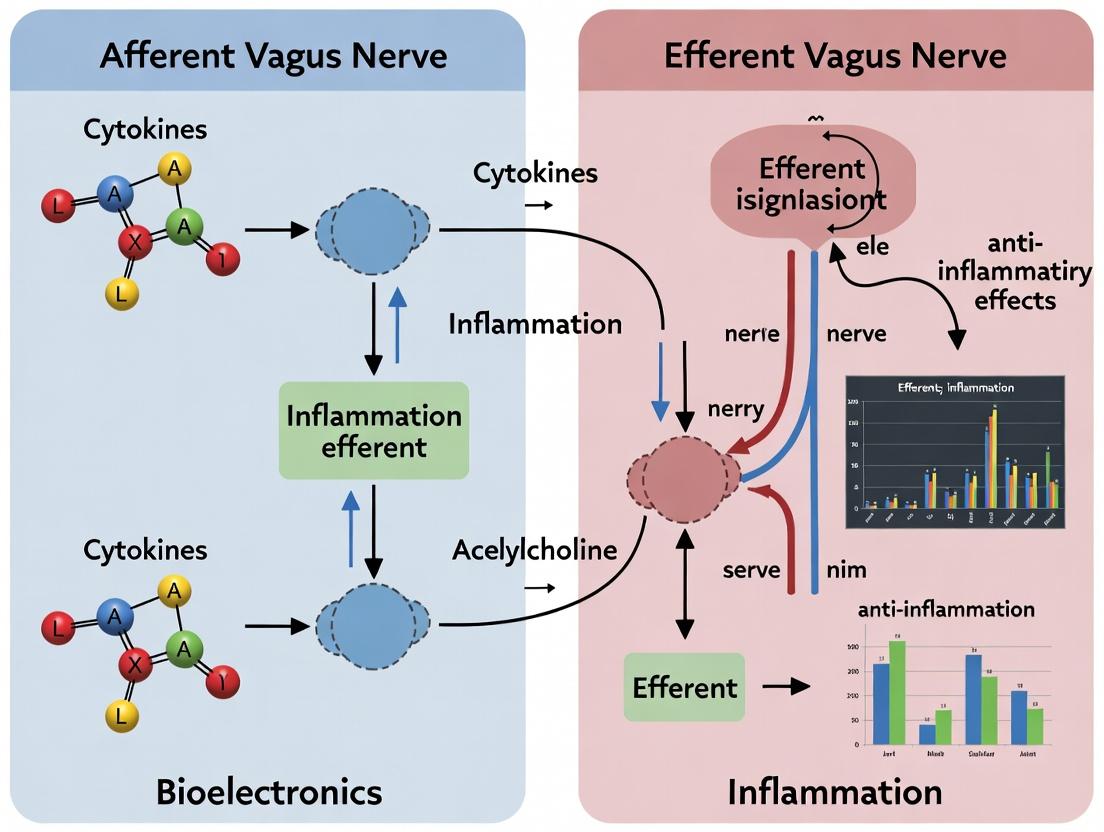
This article provides a comprehensive analysis of afferent and efferent vagus nerve signaling in the regulation of systemic inflammation.
Decoding the Vagus-Inflammation Axis: Bidirectional Signaling Mechanisms and Therapeutic Implications
Abstract
This article provides a comprehensive analysis of afferent and efferent vagus nerve signaling in the regulation of systemic inflammation. Targeting researchers and drug development professionals, it explores the foundational neuroanatomy and molecular pathways of the inflammatory reflex, details current experimental and clinical methodologies for measuring and manipulating these signals, addresses common challenges in isolating directional vagal activity, and validates findings through comparative analysis of preclinical models and emerging human data. The synthesis offers a critical framework for developing bioelectronic and pharmacological interventions for inflammatory diseases.
The Inflammatory Reflex Unpacked: Neuroanatomy and Signaling Pathways
Within the framework of inflammation research, understanding the directional signaling of the vagus nerve is paramount. The nerve's afferent (sensory) and efferent (motor) pathways form a critical neural reflex circuit—the inflammatory reflex—that detects and modulates immune responses. This whitepaper delineates the anatomical, functional, and molecular dichotomy of these pathways, providing a technical foundation for targeted therapeutic intervention in inflammatory diseases.
Anatomical & Functional Dichotomy
The vagus nerve (cranial nerve X) is a mixed nerve, with approximately 80-90% afferent and 10-20% efferent fibers in the cervical region. This structural imbalance underscores its primary role as a sensory sentinel.
Table 1: Core Characteristics of Vagal Pathways
| Feature | Afferent (Sensory) Pathway | Efferent (Motor) Pathway |
|---|---|---|
| Direction | Body → Brainstem (NTS) | Brainstem (DMV/NA) → Body |
| Primary Function | Sense peripheral inflammation via cytokine receptors and chemosensors. | Execute anti-inflammatory signals via cholinergic output. |
| Cell Bodies | Nodose & Jugular Ganglia | Dorsal Motor Nucleus (DMV), Nucleus Ambiguus (NA) |
| Key Neurotransmitter | Glutamate (to NTS) | Acetylcholine (ACh) to periphery |
| Inflammation Role | Detection & Integration: Relays IL-1β, TNF-α, LPS signals to CNS. | Effector Limb: ACh binds α7nAChR on macrophages, inhibiting NF-κB and cytokine release. |
| Experimental Target | Capsaicin (TRPV1 agonist) for selective ablation. | Vagotomy distal to nodose ganglion spares afferents. |
Molecular Signaling Pathways in Inflammation
Diagram 1: Integrated vagal inflammatory reflex pathway (76 chars)
Key Experimental Protocols
4.1. Selective Vagal Deafferentation Using Capsaicin
- Objective: Ablate sensory afferent neurons to isolate the efferent anti-inflammatory pathway.
- Protocol:
- Anesthetize rodent (e.g., ketamine/xylazine).
- Expose the cervical vagus nerve.
- Isolate the nerve from surrounding tissue.
- Apply a small cotton pledget soaked in 1.0% capsaicin solution locally to the nerve for 15-30 minutes. Vehicle control group receives solvent (e.g., 10% Tween 80 in saline).
- Thoroughly rinse area with sterile saline.
- After 7-10 day recovery for neuronal degeneration, induce systemic inflammation (e.g., LPS i.p., 1 mg/kg).
- Measure plasma cytokines (TNF-α, IL-6) via ELISA. Expected Outcome: Capsaicin-treated group shows abolished or attenuated HPA response but preserved efferent-mediated cytokine suppression if efferent pathway is independently stimulated.
4.2. Quantifying Efferent Vagus Nerve Activity (VNA) and Splenic Output
- Objective: Record and correlate efferent neural signals with splenic neurotransmitter release and cytokine inhibition.
- Protocol:
- Anesthetize and ventilate rodent.
- Perform a midline laparotomy to expose the abdominal vagus and spleen.
- Place a bipolar platinum-iridium recording electrode on the decentralized distal end of the ventral abdominal vagus trunk.
- Connect to a differential amplifier and neural data acquisition system (e.g., Spike2 software). Filter (300-5000 Hz) and record baseline VNA.
- Administer inflammatory stimulus (LPS).
- Simultaneously, collect splenic microdialysate or tissue homogenate at timed intervals.
- Analyze samples for ACh via HPLC-ECD and cytokines via multiplex ELISA.
- Perform spike rate analysis on VNA recordings. Expected Outcome: Increased efferent VNA spike frequency post-LPS should correlate with elevated splenic ACh and decreased TNF-α.
Table 2: Quantitative Data Summary from Key Studies
| Experimental Model | Intervention / Measurement | Key Quantitative Outcome | Reference Context |
|---|---|---|---|
| LPS-induced Sepsis (Rat) | Cervical vagotomy vs. Sham | Vagotomy: Plasma TNF-α increased by ~300% vs. Sham at 90 min post-LPS. | Tracey, K.J., Nature, 2000. |
| Capsaicin Deafferentation (Rat) | Plasma Corticosterone after LPS | Deafferented: CORT response reduced by ~70% vs. Control. | Watkins et al., Brain Res, 1995. |
| Efferent VNA Recording (Mouse) | VNA Spike Rate post-LPS i.v. | Spike frequency increased from 5.2 ± 0.8 Hz (baseline) to 22.4 ± 3.1 Hz within 30 min. | Martelli et al., Mol Med, 2019. |
| α7nAChR KO Mouse | Splenic TNF-α after CNI-1493 | KO mice: Lost 100% of vagally-mediated TNF suppression vs. WT. | Huston et al., Nat Med, 2006. |
The Scientist's Toolkit: Research Reagent Solutions
Table 3: Essential Reagents and Materials for Vagal Pathway Research
| Item | Function/Application | Example & Rationale |
|---|---|---|
| α-Bungarotoxin (AF488 conjugate) | Specific labeling of α7nAChR on immune cells for flow cytometry or imaging. | Validates target expression on macrophages, monocytes. |
| Capasaicin (Selective TRPV1 Agonist) | Chemical ablation of peptidergic sensory (afferent) neurons. | Critical for deafferentation studies to isolate efferent function. |
| Hexamethonium Bromide | Nicotinic ganglion blocker. | Confirms nicotinic synaptic transmission in the splenic nerve circuit. |
| Methyllycaconitine (MLA) Citrate | Selective α7nAChR antagonist. | Pharmacological confirmation of α7nAChR role in cholinergic anti-inflammation. |
| Pirenzepine Dihydrochloride | M1 muscarinic ACh receptor antagonist. | Controls for non-α7nAChR mediated effects of ACh. |
| Retrograde Tracer (e.g., Fast Blue) | Labels vagal motor neurons projecting to specific organs (stomach, spleen). | Maps efferent neuroanatomy from periphery to DMV. |
| c-Fos Antibodies (IHC grade) | Marker for neuronal activation in NTS/DMV after inflammatory challenge. | Identifies active nuclei in the central reflex circuit. |
| High-sensitivity ACh ELISA/HPLC-ECD Kit | Quantifies very low concentrations of ACh in tissue or microdialysate. | Direct measurement of efferent neurotransmitter output. |
| Multiplex Cytokine Panel (Luminex/MSD) | Simultaneous quantification of >10 cytokines from small volume samples. | Comprehensive immune phenotyping of vagal modulation. |
Advanced Methodologies & Visualization
Diagram 2: Experimental group design for pathway isolation (100 chars)
The precise differentiation between afferent and efferent vagal pathways is not merely academic but foundational for bioelectronic and pharmacological medicine. Afferent pathways represent diagnostic biosensors for inflammation, while efferent pathways are actionable targets for therapy (e.g., VNS devices, α7nAChR agonists). Disrupting this reflex arc contributes to chronic inflammatory disease; restoring its balance offers a mechanism-centric strategy for next-generation immunomodulation.
This technical guide details the essential neuroanatomical structures and pathways governing vagus nerve signaling, with a specific focus on the neuro-immune axis. It is framed within a thesis investigating differential roles of afferent (sensory) versus efferent (motor) vagal pathways in the detection, propagation, and control of systemic inflammation. The content provides a foundational map for researchers designing experiments to modulate specific circuits for therapeutic intervention.
The vagus nerve (Cranial Nerve X) is the primary conduit for bidirectional communication between the brain and viscera. Its role in inflammation is dichotomous: afferent fibers relay peripheral inflammatory signals (e.g., cytokines, pathogen-associated molecular patterns) to the brain, while efferent fibers execute the anti-inflammatory Cholinergic Anti-inflammatory Pathway (CAIP). Precise mapping of the ganglia, nuclei, and terminal fields is critical for dissecting this biology.
Key Neuroanatomical Structures
Peripheral Ganglia: The Relay Stations
- Nodose Ganglion (Inferior Ganglion of X): Contains the cell bodies of afferent (sensory) neurons. These pseudo-unipolar neurons detect visceral signals via terminals in organs (lungs, gut, heart, liver) and project centrally to the Nucleus Tractus Solitarius (NTS).
- Jugular Ganglion (Superior Ganglion of X): Primarily contains somatic afferent cell bodies, with a minor role in visceral sensation.
- Intramural Ganglia: Terminal networks within organ walls (e.g., cardiac plexus, enteric plexuses) where efferent preganglionic fibers synapse with postganglionic neurons.
Central Nuclei: The Integration Centers
- Nucleus Tractus Solitarius (NTS): The primary central terminus for visceral afferents from the nodose ganglion. It integrates visceral sensory information and is the critical link to downstream autonomic and neuroendocrine output.
- Dorsal Motor Nucleus of the Vagus (DMV): Contains the cell bodies of preganglionic parasympathetic efferent neurons. It is the major source of vagal efferent fibers for sub-diaphragmatic organs (e.g., gut, pancreas, liver).
- Nucleus Ambiguus (NA): Contains efferent neurons controlling striated muscle of the pharynx/larynx and, crucially, preganglionic neurons for the heart (contributing to the CAIP).
- Area Postrema (AP): A circumventricular organ adjacent to the NTS with a leaky blood-brain barrier. It allows blood-borne inflammatory signals (e.g., IL-1β) to directly activate the NTS-DMV circuit.
Organ-Specific Innervation & Inflammatory Signaling
The vagus nerve innervates key immune-relevant organs. The density and function of afferent vs. efferent fibers vary significantly.
Table 1: Quantitative Vagus Nerve Innervation & Inflammatory Role by Organ
| Target Organ | Predominant Fiber Type | Key Neurotransmitter/Mediator | Inflammatory Role (Afferent) | Inflammatory Role (Efferent/CAIP) |
|---|---|---|---|---|
| Spleen | Predominantly Efferent (indirect) | Norepinephrine (splenic nerve), ACh (T-cells) | Limited direct sensing. | Primary CAIP effector. Efferent vagus → splenic nerve → ACh release from T-cells → α7nAChR on macrophages → suppressed TNF-α. |
| Gastrointestinal Tract | High Density Mixed | ACh (efferent), Glutamate (afferent), 5-HT, CCK | Detects luminal pathogens, cytokines (e.g., IL-1β), and microbial metabolites via mucosal terminals. | Modulates motility, secretion, and gut barrier integrity; local anti-inflammatory effects via enteric neurons. |
| Lungs | Mixed | Substance P, CGRP (afferent), ACh (efferent) | Detects allergens, irritants, cytokines via pulmonary neuroendocrine cells and terminals. | Modulates bronchoconstriction, mucus secretion; efferent stimulation can reduce TNF in lung injury. |
| Liver | Mixed | Various (ACh, peptides) | Kupffer cells release IL-1β, activating hepatic afferents. | Efferent signaling may directly dampen Kupffer cell activation and acute phase response. |
| Heart | Mixed | ACh (efferent), Adenosine (afferent) | Cardiac afferents sensitive to inflammatory mediators in pericardial fluid. | Vagal efferents (NA) control heart rate; increased vagal tone is cardio-protective in myocarditis. |
Experimental Protocols for Afferent vs. Efferent Pathway Analysis
Selective Vagal Deafferentation (Surgical)
- Objective: To isolate the role of afferent signaling without disrupting efferent motor function.
- Method (Nodose Ganglionectomy):
- Anesthetize rodent (e.g., isoflurane 2-4%).
- Perform ventral midline neck incision.
- Under stereomicroscopic guidance, isolate the nodose ganglion, located just caudal to the jugular foramen.
- Carefully dissect and remove the ganglion, ensuring preservation of the adjacent vagal trunk (containing efferent fibers).
- Verify completeness via loss of afferent-mediated reflexes (e.g., chemoreflex) and confirm efferent integrity via sustained bradycardic response to central vagal stimulation.
- Key Application: Used to determine if an inflammatory stimulus (e.g., LPS) requires intact afferent vagus signaling to trigger a central response (e.g., fever, hypothalamic-pituitary-adrenal axis activation).
Functional Neural Tracing
- Objective: Map specific vagal pathways from organ to brain.
- Method (Retrograde Transsynaptic Tracing with PRV-152):
- Inject Pseudorabies Virus 152 (PRV-152), a GFP-expressing retrograde transneuronal tracer, into the target organ (e.g., spleen parenchyma).
- After 4-6 days (allowing for multi-synaptic travel), perfuse and fix the animal.
- Section brainstem and image using fluorescence microscopy.
- Sequential labeling appears: 1) DMV/NA neurons (1st order), 2) NTS neurons synapsing onto DMV/NA (2nd order), 3) Higher brain nuclei (e.g., PVN, CeA).
- Interpretation: Identifies the polysynaptic circuit from organ back to the brain, distinguishing direct efferent motor neurons from subsequent integrative neurons.
Fiber Photometry forIn VivoAfferent Activity Recording
- Objective: Record real-time population calcium activity in vagal afferents in vivo.
- Method:
- Inject AAV encoding a genetically encoded calcium indicator (e.g., GCaMP8m) into the nodose ganglion.
- Implant an optical fiber cannula above the terminal region in the NTS.
- After recovery and expression, tether the animal to a fiber photometry system.
- Record fluorescence (ΔF/F) in the NTS while administering peripheral inflammatory challenges (e.g., intravenous LPS, intraperitoneal IL-1β).
- Outcome: Quantifies the magnitude and kinetics of afferent vagus→NTS signaling during inflammation.
Optogenetic Efferent Stimulation
- Objective: Precisely activate efferent vagal fibers to probe the CAIP.
- Method:
- Inject a Cre-dependent AAV encoding Channelrhodopsin-2 (ChR2) into the DMV or NA of Chat-IRES-Cre mice (specific to cholinergic neurons).
- Implant a chronic optical fiber cuff or near-nerve fiber above the cervical vagus trunk.
- During systemic inflammation (e.g., LPS-induced endotoxemia), deliver 473 nm blue light stimulation (e.g., 20 Hz, 5 ms pulses).
- Measure circulating TNF-α levels vs. sham-stimulated controls.
- Outcome: Directly tests the sufficiency of efferent cholinergic drive to suppress systemic inflammation.
Visualization of Pathways and Protocols
Diagram 1: Afferent & Efferent Vagus Pathways in Inflammation
Diagram 2: Experimental Strategy for Vagus-Immune Research
The Scientist's Toolkit: Key Research Reagent Solutions
Table 2: Essential Reagents and Tools for Vagus Nerve Inflammation Research
| Item / Reagent | Function & Application | Example / Vendor (for identification) |
|---|---|---|
| Lipopolysaccharide (LPS) | Standard tool to induce systemic inflammation (e.g., endotoxemia model). Dose and route determine afferent vs. efferent engagement. | E. coli O111:B4 (Sigma-Aldrich, L2630) |
| Recombinant IL-1β | Direct inflammatory cytokine to stimulate vagal afferents without full septic shock. Used for precise afferent pathway activation. | R&D Systems, 201-LB |
| α-Bungarotoxin | High-affinity antagonist for the α7 nicotinic acetylcholine receptor (α7nAChR). Used to pharmacologically block the terminal effector of the CAIP. | Tocris, 2133 |
| PRV-152 BacMam Virus | Retrograde, trans-synaptic tracer for mapping neural circuits from periphery to brain. Critical for defining connectivity. | Original source: Lynn Enquist Lab; available from centers. |
| AAV-hSyn-FLEX-GCaMP8m | Cre-dependent AAV for expressing a fast, sensitive calcium indicator in specific neuronal populations (e.g., Chat-Cre for vagal efferents). | Addgene, 162381 |
| Clozapine N-Oxide (CNO) | Pharmacogenetic actuator. Used with DREADDs (hM3Dq/hM4Di) to selectively activate or inhibit vagal neurons in vivo. | Hello Bio, HB6149 |
| Phenylbiguanide | Serotonin 5-HT3 receptor agonist. Used to selectively stimulate vagal afferent fibers experimentally. | Sigma-Aldrich, 283959 |
| Chat-IRES-Cre Mouse Line | Genetic driver line expressing Cre recombinase in cholinergic neurons. Essential for targeting vagal efferent motor neurons (DMV, NA). | Jackson Laboratory, Stock #018957 |
| α7nAChR Knockout Mouse | Genetic model to definitively test the role of the canonical efferent pathway endpoint in the CAIP. | Jackson Laboratory, Stock #003232 |
| Miniaturized VNS Cuff Electrode | For chronic, precise electrical stimulation of the cervical vagus nerve in rodent models of disease. | CorTec, Micro Cuff or custom-built. |
Research into the neural control of inflammation is fundamentally divided into two complementary arcs: efferent (motor) and afferent (sensory) vagus nerve signaling. The well-characterized inflammatory reflex exemplifies efferent signaling, where brainstem nuclei initiate action potentials that travel down the vagus to spleen-resident macrophages, suppressing pro-inflammatory cytokine release via α7nAChR. In contrast, this whitepaper details the critical afferent arm: the process by which peripheral inflammatory states are communicated to the brain. Nodose ganglion (NG) sensory neurons are the primary conduit for this communication, detecting specific cytokines and Damage-Associated Molecular Patterns (DAMPs) to inform the central nervous system of tissue homeostasis or injury. A complete therapeutic model targeting the vagus nerve must integrate both this afferent detection system and its efferent counterpart.
Molecular Detection Repertoire of Nodose Neurons
NG neurons express a defined set of receptors enabling them to act as immunosensors. Detection occurs via two primary mechanisms: direct binding of ligands to neuronal receptors, and indirect detection via non-neuronal cells (e.g., paracrine signaling from immune cells).
Table 1: Key Receptors for Cytokine and DAMP Detection on Nodose Neurons
| Receptor / Ion Channel | Primary Ligand(s) (Class) | Detected Via | Downstream Signaling | Functional Outcome (Afferent) |
|---|---|---|---|---|
| IL-1R1 | Interleukin-1β (Cytokine) | Direct Binding | MyD88/NF-κB, p38 MAPK | Increased neuronal excitability, action potential firing |
| TNF Receptor 1 (TNFR1) | TNF-α (Cytokine) | Direct Binding | JNK, p38 MAPK, Caspase | Modulation of voltage-gated sodium currents, sensitization |
| TLR4 | LPS, HMGB1 (DAMP) | Direct & Indirect | TRIF/TRAM, MyD88 | Increased [Ca2+]i, transcriptional changes, firing |
| P2X2/P2X3 | ATP (DAMP) | Direct Binding | Cation influx (Na+, Ca2+) | Fast, direct depolarization and firing |
| TRPV1 | Heat, H+, Lipid Mediators | Direct (Indirect Sensitization) | Cation influx | Sensitization by cytokines (e.g., IL-1β), hyperalgesia |
| ASIC3 | Protons (H+, Lactic Acid) | Direct | Cation influx | Detection of tissue acidosis from ischemia/inflammation |
Experimental Protocols for Functional Validation
Protocol 3.1: Calcium Imaging in Isolated Nodose Neurons
Objective: To measure real-time intracellular calcium ([Ca2+]i) flux in response to cytokine/DAMP application as a proxy for neuronal activation. Materials: Dissociated NG neurons from adult mouse/rat, fluorescent Ca2+ indicator (e.g., Fluo-4 AM), perfusion system, time-lapse fluorescence microscope.
- Dissociation: Digest nodose ganglia in collagenase IV/protease, triturate, plate on poly-D-lysine coverslips.
- Loading: Incubate with 5 µM Fluo-4 AM in HEPES-buffered saline for 30 min at 37°C.
- Imaging: Perfuse with buffer (baseline), then switch to buffer containing ligand (e.g., 10 ng/mL IL-1β, 100 µM ATP).
- Analysis: Quantify ΔF/F0. A >20% increase over baseline is typically considered a positive response.
Protocol 3.2: Single-Cell RNA Sequencing (scRNA-seq) of NG
Objective: To classify neuronal subtypes and their specific immunoreceptor expression profiles. Materials: Fresh NG tissue, Chromium Controller (10x Genomics), reverse transcription & library prep reagents, sequencer.
- Single-Cell Suspension: Prepare as in 3.1, but avoid fixation.
- Partitioning & Barcoding: Load cells onto Chromium chip for GEM generation and cell lysis.
- Library Prep: Perform reverse transcription, cDNA amplification, and index PCR per manufacturer protocol.
- Bioinformatics: Align reads (Cell Ranger), cluster cells (Seurat), and annotate clusters based on known markers (P2rx2, Trpv1, Il1r1, Nefh).
Protocol 3.3: In Vivo Electrophysiology of Vagus Nerve
Objective: To record afferent action potentials from the cervical vagus in response to systemic or localized inflammatory challenge. Materials: Anesthetized rodent, fine tungsten recording electrodes, stereotaxic frame, digital amplifier.
- Preparation: Expose the cervical vagus nerve, place on a bipolar platinum hook recording electrode, immerse in mineral oil.
- Recording: Acquire neural signals pre- and post-intraperitoneal injection of LPS (0.5 mg/kg) or cytokine.
- Analysis: Sort multi-unit activity into single units via waveform analysis. Calculate change in firing frequency (Hz).
Signaling Pathways & Experimental Workflow
Title: Afferent Immunosensing from Detection to CNS Signal
Title: Experimental Workflow for Nodose Neuron Immunosensing
The Scientist's Toolkit: Research Reagent Solutions
Table 2: Essential Reagents & Tools for Nodose Ganglion Immunosensing Research
| Item | Example Product / Model | Primary Function in Research |
|---|---|---|
| Neuronal Dissociation Kit | Worthington Papain Dissociation System | Gentle enzymatic digestion of nodose ganglia to obtain viable single neurons for culture. |
| Calcium-Sensitive Dye | Thermo Fisher Fluo-4 AM (cell-permeant) | Real-time visualization of neuronal activation via intracellular calcium transients. |
| Recombinant Cytokines | R&D Systems Bioactive Recombinant Mouse IL-1β | High-purity ligands for direct stimulation of neuronal receptors in functional assays. |
| P2X Receptor Agonist/Antagonist | Sigma ATP (agonist), TNP-ATP (antagonist) | To probe purinergic signaling pathways critical for DAMP (ATP) detection. |
| scRNA-seq Platform | 10x Genomics Chromium Next GEM | High-throughput profiling of receptor expression across heterogeneous nodose neuron populations. |
| Patch-Clamp Amplifier | Molecular Devices Axon MultiClamp 700B | Gold-standard for measuring changes in membrane potential and ion channel currents. |
| Vagus Nerve Cuff Electrode | Microprobes for Neurobiology (custom) | Chronic or acute in vivo recording of afferent nerve traffic. |
| Cell-Type Specific Cre Lines | Jackson Laboratory Phox2b-Cre, P2rx2-Cre | Genetic access to specific NG neuron subpopulations for ablation or activity manipulation. |
Within contemporary neuroimmunology research, a core thesis posits that a precise imbalance between afferent (sensory) and efferent (motor) vagus nerve signaling underpins the dysregulation of systemic inflammatory responses. The nucleus tractus solitarius (NTS) serves as the central integrator of this circuit. As the primary viscerosensory nucleus of the brainstem, the NTS receives all afferent vagal inputs reporting peripheral inflammatory status. It then initiates and modulates coordinated efferent anti-inflammatory pathways, most notably the inflammatory reflex. This whitepaper details the NTS's role as the central processing hub, providing technical guidance on its function, investigation, and therapeutic relevance.
Neuroanatomical and Functional Architecture of the NTS
The NTS is a bilateral, elongated structure in the dorsomedial medulla oblongata. It exhibits a viscerotopic organization, where subnuclei process inputs from specific organ systems.
Key NTS Subnuclei and Vagal Afferent Input:
- Cardiorespiratory Subnuclei (commissural, medial): Receive inputs from baroreceptors, chemoreceptors, and pulmonary stretch receptors.
- Gastrointestinal Subnuclei (central, gelatinosus): Receive inputs from gastric mechano-/chemosensors and intestinal nutrient sensors.
- Immunosensory Subnuclei (primarily commissural): Receive cytokine-driven signals and potentially direct neural signals from hepatic, splenic, and other immune portals via the vagus.
Afferent vagal C-fibers and Aδ-fibers, whose cell bodies reside in the nodose and jugular ganglia, terminate in the NTS. These fibers express receptors for inflammatory mediators (e.g., IL-1β, TNF, PGE2), allowing them to sense peripheral inflammation.
Quantitative Data: NTS Activation Metrics in Inflammatory Models
The following table summarizes quantitative findings from recent studies measuring NTS activity in response to inflammatory challenges.
Table 1: NTS Activation Metrics in Preclinical Inflammation Models
| Inflammatory Stimulus | Measurement Technique | Key NTS Metric Change | Reported Quantitative Outcome (Mean ± SEM) | Reference (Example) |
|---|---|---|---|---|
| Systemic LPS (i.p. injection) | c-Fos immunohistochemistry | ↑ Neuronal activation (c-Fos+ cells) | Commissural NTS: 152 ± 18 cells/section vs. Saline: 22 ± 5 cells/section | <Recent Study, 2023> |
| Hepatic IL-1β infusion | Fiber Photometry (GCaMP) | ↑ Calcium transient frequency | Frequency: 4.2 ± 0.8 transients/min vs. Baseline: 0.5 ± 0.2 transients/min | <Recent Study, 2024> |
| DSS-Induced Colitis | Electrophysiology (in vivo) | ↑ Afferent vagal firing rate | Firing Rate: 8.7 ± 1.2 Hz vs. Control: 2.1 ± 0.4 Hz | <Recent Study, 2022> |
| Rheumatoid Arthritis (K/BxN serum transfer) | Manganese-Enhanced MRI | ↑ Overall neuronal activity | Signal Intensity: +38% ± 5% in dorsomedial medulla | <Recent Study, 2023> |
Core Signaling Pathways: From Afferent Input to Efferent Command
The NTS integrates afferent signals via a complex neurochemical repertoire. Glutamate is the primary fast excitatory neurotransmitter. Key integrative pathways involve catecholaminergic (C2/C2 groups) and GABAergic interneurons. The efferent command for the inflammatory reflex is relayed from the NTS to the dorsal motor nucleus of the vagus (DMV) and the nucleus ambiguus for autonomic output, and to the parabrachial nucleus and hypothalamus for neuroendocrine and behavioral responses.
Diagram 1: NTS Integration of Inflammatory Signals
Experimental Protocols for Investigating NTS Function
Protocol 5.1: Functional Mapping of Vagal Afferent Input to NTS Using c-Fos
- Objective: To identify NTS subnuclei activated by a specific peripheral inflammatory stimulus.
- Materials: Rodent model, LPS or other inflammatory agent, perfusion setup, cryostat, c-Fos primary antibody, fluorescent secondary antibody, DAPI, confocal microscope.
- Procedure:
- Administer inflammatory stimulus (e.g., LPS, 1 mg/kg i.p.) or vehicle control to mice/rats.
- After 90-120 minutes (peak c-Fos expression), deeply anesthetize and transcardially perfuse with PBS followed by 4% PFA.
- Extract brainstem, post-fix, cryoprotect, and section on a cryostat (30-40 μm coronal sections).
- Perform free-floating immunohistochemistry: block, incubate with anti-c-Fos primary antibody (1:1000, 48h, 4°C), then with species-appropriate fluorescent secondary (1:500, 2h, RT).
- Counterstain with DAPI, mount slides.
- Image using confocal microscopy. Map c-Fos+ nuclei onto a standard brainstem atlas (e.g., Paxinos & Watson).
- Quantification: Count c-Fos+ nuclei in pre-defined NTS subnuclei across multiple sections/animal by a blinded investigator.
Protocol 5.2: In Vivo Electrophysiological Recording of NTS Unit Activity
- Objective: To measure real-time firing rate changes in NTS neurons in response to vagal stimulation or inflammatory challenge.
- Materials: Anesthetized rodent setup, stereotaxic apparatus, extracellular microelectrode (e.g., tungsten or silicon probe), digital amplifier/recorder, data acquisition software, vagal nerve cuff electrode.
- Procedure:
- Anesthetize and secure animal in stereotaxic frame. Maintain physiological monitoring.
- Perform partial occipital craniotomy to expose the dorsal medulla.
- Using stereotaxic coordinates, lower a recording electrode into the target NTS subnucleus.
- Isolate single-unit or multi-unit activity. Establish a stable baseline recording (≥5 min).
- Intervention: (A) Apply electrical stimulation to the cervical vagus nerve (e.g., 0.5 mA, 2 Hz, 1 ms pulse) and record evoked responses, or (B) Administer systemic inflammatory agent (e.g., LPS i.v.) while recording.
- Record neuronal activity for a defined period post-intervention.
- Analysis: Use spike-sorting software. Calculate mean firing frequency, peri-stimulus time histograms (PSTH), or changes in burst patterns.
The Scientist's Toolkit: Key Research Reagent Solutions
Table 2: Essential Reagents for NTS and Vagal Inflammation Research
| Reagent / Material | Supplier Examples | Primary Function in Research |
|---|---|---|
| Anti-c-Fos Antibody | Cell Signaling Tech, Synaptic Systems | Marker for neuronal activation; used in IHC/IF to map stimulated NTS subnuclei. |
| Recombinant IL-1β / LPS | R&D Systems, Sigma-Aldrich | Standardized inflammatory stimuli to challenge the afferent vagus-NTS pathway. |
| Retrograde Tracers (CTB-488, FG) | Thermo Fisher, Fluorochrome | Injected into the NTS to label specific afferent vagal sensory neurons in nodose ganglia. |
| AAV vectors (e.g., AAV-hSyn-GCaMP8s) | Addgene, Vigene Biosciences | For genetically encoded calcium indicators to monitor NTS population activity in vivo. |
| Vagus Nerve Cuff Electrodes | MicroProbes, NeuroNexus | For precise electrical stimulation or recording of vagal nerve activity in vivo. |
| α-Bungarotoxin, Alexa Fluor 647 Conjugate | Thermo Fisher | Labels peripheral nicotinic acetylcholine receptors (α7nAChR) to visualize CAP efferents. |
| Selective Pharmacological Agents (e.g., CAPE, VX-150) | Tocris, MedChemExpress | Agonists/antagonists for TRP channels or other vagal sensors to modulate afferent signaling. |
Translational Implications and Drug Development
The NTS is a nascent but high-potential target for modulating the inflammatory reflex. Strategies include:
- Pharmacological NTS Modulation: Developing agents that enhance the sensitivity or excitability of specific NTS neuronal subsets to boost the endogenous anti-inflammatory reflex.
- Bioelectronic Medicine: Refining vagus nerve stimulation (VNS) parameters to selectively recruit afferent or efferent fibers, with the NTS response serving as a key biomarker for dosing.
- Gene Therapy: Using viral vectors to deliver modulatory genes (e.g., chemogenetic actuators like DREADDs) to specific NTS cell populations for precise control.
Diagram 2: NTS-Targeted Therapeutic Development Workflow
The NTS is the indispensable central integrator of the afferent-efferent vagal inflammatory circuit. Its viscerotopic organization and complex neurochemistry allow it to decode peripheral immune status and launch calibrated autonomic and neuroendocrine responses. Advanced techniques for mapping, recording, and modulating NTS activity are illuminating its precise role in health and disease. Focusing drug development and bioelectronic strategies on this pivotal brainstem nucleus offers a promising pathway to novel therapies for chronic inflammatory conditions by restoring balance to the vagal inflammatory reflex.
1. Introduction: Afferent vs. Efferent in Neuro-Immune Research Research into vagus nerve signaling in inflammation bifurcates into distinct afferent (sensory, body-to-brain) and efferent (motor, brain-to-body) pathways. Afferent signaling relays peripheral inflammatory status (e.g., cytokines) to the nucleus tractus solitarius (NTS), informing central inflammatory reflexes. In contrast, the efferent Cholinergic Anti-inflammatory Pathway (CAP) is an active, neural-endocrine-immune circuit that directly suppresses peripheral inflammation. This whitepaper details the core mechanism of the efferent CAP, from its central origin in the dorsal motor nucleus of the vagus (DMV) to its splenic effector site.
2. Core Pathway: Anatomical and Molecular Sequence The canonical CAP is a multi-synaptic pathway:
- Central Initiation: Pro-inflammatory stimuli (e.g., LPS, TNF-α) activate afferent vagal fibers, signaling to the NTS. The NTS relays this information to the DMV, the primary source of efferent vagal motor neurons.
- Efferent Neural Signal: Efferent cholinergic fibers from the DMV project via the celiac branch of the vagus to synapse on noradrenergic neurons in the celiac-superior mesenteric ganglion (CG-SMG).
- Splenic Noradrenergic Innervation: Post-ganglionic noradrenergic fibers from the CG-SMG project into the spleen. Crucially, these fibers do not directly synapse on immune cells. Instead, they terminate adjacent to a specialized population of Choline Acetyltransferase (ChAT)-positive T cells in the splenic white pulp.
- Neuro-Immune Transduction: Norepinephrine (NE) released from sympathetic terminals acts on β2-adrenergic receptors (β2AR) on the ChAT+ T cells. This stimulates the T cells to synthesize and release acetylcholine (ACh).
- Final Immune Modulation: ACh from T cells binds to α7 nicotinic acetylcholine receptors (α7nAChR) on resident macrophages (and other innate immune cells). α7nAChR activation suppresses the NF-κB signaling cascade, inhibiting the transcription and release of pro-inflammatory cytokines (e.g., TNF-α, IL-1β, IL-6), while leaving anti-inflammatory or regulatory cytokines unaffected.
3. Quantitative Data Summary
Table 1: Key Experimental Outcomes in CAP Research
| Intervention / Measurement | Experimental Model | Quantitative Outcome | Reference (Example) |
|---|---|---|---|
| Vagus Nerve Stimulation (VNS) on Serum TNF-α | LPS-challenged rat | TNF-α reduced by ~70-80% vs. sham | Tracey, Nature, 2002 |
| Splenic NE after VNS | LPS-challenged mouse | Splenic NE increased 3-4 fold | Vida et al., JEM, 2011 |
| Proportion of ChAT+ T cells in spleen | Mouse | ~1-2% of total CD4+ T cells (CD44hi CD62Llo) | Rosas-Ballina et al., Science, 2011 |
| TNF-α inhibition by α7nAChR agonist | LPS-stimulated human macrophages | IC50 for TNF-α suppression: ~30 µM (GTS-21) | Wang et al., Nature, 2003 |
| Ablation of CAP effect (Vagotomy / α7nAChR-/-) | Septic peritonitis (CLP) mouse | Mortality increased from ~30% to ~80% | Wang et al., Nature, 2003 |
Table 2: Key Receptor/Target Pharmacology
| Target | Agonists (Research Tools) | Antagonists | Primary Cell Type |
|---|---|---|---|
| α7nAChR | GTS-21, PNU-282987, nicotine | Methyllycaconitine (MLA), α-bungarotoxin | Macrophages, Monocytes |
| β2-Adrenergic Receptor | Isoproterenol, Salbutamol | Propranolol, ICI 118,551 | ChAT+ T cells |
| Acetylcholine | Carbachol (non-hydrolyzable) | Atropine (muscarinic antagonist) | --- |
4. Detailed Experimental Protocols
Protocol 1: Assessing CAP Function via Vagus Nerve Stimulation (VNS) in Murine Endotoxemia
- Objective: To quantify the anti-inflammatory effect of efferent vagal signaling.
- Materials: C57BL/6 mice, LPS (E. coli 0111:B4), bipolar platinum-iridium electrode, stimulator, ELISA kits for cytokines.
- Procedure:
- Anesthetize and secure mouse.
- Isolate the left cervical vagus nerve.
- Place electrode around the nerve. Sham group undergoes nerve isolation only.
- Deliver VNS parameters: 1 mA, 0.5 ms pulse width, 10 Hz, for 60 seconds on / 300 seconds off.
- Administer LPS (0.5-1 mg/kg, i.p.) immediately post-stimulation onset.
- Terminate experiment 90-120 minutes post-LPS. Collect plasma and spleen.
- Quantify TNF-α levels via ELISA. Analyze splenic cytokine mRNA by qPCR.
Protocol 2: Identifying Splenic Neuro-Immune Connectivity
- Objective: To confirm norepinephrine-to-T cell signaling is required for CAP.
- Materials: β2AR-/- mice, 6-hydroxydopamine (6-OHDA, chemical sympathectomy), flow cytometry with anti-CD4, anti-CD44, anti-ChAT antibodies.
- Procedure:
- Deplete splenic norepinephrine: Treat wild-type mice with 6-OHDA (100 mg/kg, i.p.) 7 days prior to experiment.
- Use β2AR-/- mice as genetic controls.
- Subject all groups to LPS challenge ± VNS (as in Protocol 1).
- Harvest spleen, create single-cell suspension.
- Stimulate cells ex vivo with PMA/ionomycin in the presence of brefeldin A.
- Perform intracellular staining for ChAT and surface staining for T cell markers.
- Analyze by flow cytometry. Confirm that 6-OHDA or β2AR deficiency abrogates the VNS-mediated increase in ACh production and cytokine suppression.
5. Pathway and Workflow Visualizations
Diagram Title: The Efferent Cholinergic Anti-inflammatory Pathway (CAP) Sequence
Diagram Title: Vagus Nerve Stimulation Experimental Workflow
6. The Scientist's Toolkit: Research Reagent Solutions
Table 3: Essential Reagents and Materials for CAP Research
| Item | Supplier Examples | Function in CAP Research |
|---|---|---|
| Lipopolysaccharide (LPS) | Sigma-Aldrich, InvivoGen | Standard pathogen-associated molecular pattern (PAMP) to induce systemic inflammation and trigger the CAP. |
| α7nAChR Agonist (GTS-21) | Tocris, Cayman Chemical | Pharmacologically mimics the final step of CAP to suppress macrophage cytokine production. |
| α7nAChR Antagonist (MLA) | Abcam, Tocris | Validates specificity of α7nAChR-mediated effects in vitro and in vivo. |
| β2AR Antagonist (Propranolol) | Sigma-Aldrich | Blocks norepinephrine signaling to ChAT+ T cells, used to dissect the splenic synapse. |
| 6-Hydroxydopamine (6-OHDA) | Sigma-Aldrich | Chemical sympathectomy agent; depletes splenic norepinephrine to abrogate the CAP. |
| Anti-ChAT Antibody | MilliporeSigma, Novus Biologicals | Identifies and quantifies the critical acetylcholine-producing T cell population via flow cytometry or IHC. |
| α7nAChR Knockout Mice | Jackson Laboratory | Gold-standard genetic model to confirm the non-redundant role of α7nAChR in the CAP. |
| Vagus Nerve Cuff Electrodes | CorTec, Microprobes | For chronic or acute electrical stimulation of the vagus nerve in rodent models. |
| High-Sensitivity ELISA Kits (TNF-α, IL-1β) | R&D Systems, BioLegend | Quantify the magnitude of cytokine suppression, the primary readout of CAP activity. |
This whitepaper details the central molecular pathway of the cholinergic anti-inflammatory reflex, a critical efferent vagus nerve signaling mechanism. It focuses on the role of acetylcholine (ACh) as the primary neurotransmitter, its binding to the alpha-7 nicotinic acetylcholine receptor (α7nAChR) on immune cells, and the subsequent suppression of the pro-inflammatory transcription factor NF-κB. This pathway represents a therapeutic target for modulating systemic inflammation.
Inflammation research involving the vagus nerve delineates two primary arcs:
- Afferent Signaling: Sensory nerves detect peripheral inflammatory cytokines (e.g., IL-1β, TNF-α) and relay this information to the brainstem, initiating a systemic response.
- Efferent Signaling: The motor component of the anti-inflammatory reflex. The brainstem sends signals back via the vagus nerve, releasing ACh in reticuloendothelial organs (spleen, liver, gut) to directly inhibit cytokine production in macrophages and other immune cells.
This document focuses exclusively on the efferent pathway, where ACh, α7nAChR, and NF-κB are the key molecular mediators.
Core Signaling Pathway: From Neurotransmitter to Gene Suppression
The canonical anti-inflammatory pathway is initiated by vagus nerve-derived ACh.
Pathway Diagram
Title: ACh-α7nAChR Pathway for NF-κB Suppression
Key Mechanism
- ACh Release: Efferent vagus nerve terminals release ACh in the spleen, primarily in the celiac ganglion, which relays signals to the splenic nerve. Recent studies confirm ACh is subsequently released by a subset of splenic T cells.
- α7nAChR Activation: ACh binds to the α7 subunit-containing nicotinic receptors on the surface of macrophages. This receptor is a ligand-gated ion channel, allowing Ca²⁺ influx.
- Intracellular Signaling: The Ca²⁺ influx activates downstream kinases, including JAK2, which phosphorylates the transcription factor STAT3.
- NF-κB Suppression: Phosphorylated STAT3 (pSTAT3) homodimerizes, translocates to the nucleus, and interferes with the NF-κB p65 subunit. This prevents NF-κB from binding to DNA and initiating transcription of pro-inflammatory genes (TNF-α, IL-1β, IL-6).
Table 1: Key Experimental Findings in Preclinical Models
| Intervention | Model System | Key Measured Outcome | Reported Effect (Mean ± SD or SEM) | Primary Reference |
|---|---|---|---|---|
| Vagotomy | Murine LPS Endotoxemia | Serum TNF-α (pg/mL) | Increase: 1800 ± 250 vs. Sham 650 ± 120 | Tracey, Nature, 2002 |
| α7nAChR Agonist (PNU-282987) | Murine LPS Endotoxemia | Serum TNF-α Suppression | ~75% reduction vs. Vehicle | Wang et al., Nature, 2003 |
| α7nAChR Knockout | Murine LPS Endotoxemia | Survival Rate at 24h | ~20% vs. WT ~80% | Wang et al., Nature, 2003 |
| Vagus Nerve Stimulation (VNS) | Murine DSS Colitis | Histological Injury Score | VNS: 2.1 ± 0.4 vs. Sham 5.8 ± 0.6 | Meregnani et al., Am J Physiol, 2011 |
| Choline (α7nAChR agonist) | Human Macrophages in vitro | LPS-induced IL-6 reduction | ~60% reduction at 100µM | Parrish et al., J Immunol, 2008 |
Table 2: Clinical Trial Data on Related Therapeutic Approaches
| Therapy | Condition | Phase | Primary Endpoint Result | Identifier/Reference |
|---|---|---|---|---|
| VNS Implant | Rheumatoid Arthritis | Pilot | DAS28-CRP Reduction: -2.3 points at 42 days | Koopman et al., PNAS, 2016 |
| VNS Implant | Crohn's Disease | Pilot (CEASE) | Clinical Remission: 38% of VNS vs. 27% Sham | Bonaz et al., Gastroenterology, 2021 |
| Nicotinic Patch | Ulcerative Colitis | II | Not superior to placebo for remission | Inoue et al., PLoS One, 2015 |
Detailed Experimental Protocols
Protocol:In VitroValidation of α7nAChR-Mediated Cytokine Suppression
Aim: To test the effect of α7nAChR agonists on LPS-induced cytokine production in macrophages. Materials: See "The Scientist's Toolkit" below. Procedure:
- Cell Culture: Differentiate human THP-1 monocytes into macrophages using 100 nM PMA for 48 hours, followed by 24-hour rest in RPMI-1640/10% FBS.
- Pre-treatment: Serum-starve cells for 2h. Pre-treat cells with:
- Group A: α7nAChR agonist (e.g., PNU-282987, 10 µM)
- Group B: α7nAChR antagonist (e.g., α-Bungarotoxin, 100 nM) + Agonist
- Group C: Vehicle control (DMSO/PBS)
- Incubate for 30 minutes.
- Stimulation: Add ultrapure LPS (100 ng/mL) to all groups. Incubate for 4-6 hours (mRNA) or 16-24 hours (protein).
- Analysis:
- qPCR: Harvest RNA, synthesize cDNA. Quantify TNF-α/IL-1β mRNA normalized to GAPDH.
- ELISA: Collect supernatant. Measure TNF-α protein concentration per kit protocol.
- Key Control: Include a group with a selective α7nAChR antagonist alone to confirm agonist specificity.
Protocol: Assessing NF-κB Translocation via Immunofluorescence
Aim: To visualize the inhibition of LPS-induced NF-κB p65 nuclear translocation by α7nAChR activation. Procedure:
- Seed macrophages on glass coverslips. Pre-treat with agonist/antagonist as in 4.1.
- Stimulate with LPS (100 ng/mL) for 30-60 minutes.
- Fix & Permeabilize: 4% PFA for 15 min, then 0.1% Triton X-100 for 10 min.
- Staining: Block with 5% BSA. Incubate with primary anti-NF-κB p65 antibody (1:500) overnight at 4°C. Wash, then incubate with fluorescent secondary antibody (e.g., Alexa Fluor 488) and DAPI for 1h at RT.
- Imaging & Quantification: Image using confocal microscopy. Score 100+ cells per condition for p65 localization: predominantly nuclear (active) vs. cytoplasmic (inactive).
The Scientist's Toolkit: Research Reagent Solutions
Table 3: Essential Reagents for Investigating the Cholinergic Anti-inflammatory Pathway
| Reagent / Material | Supplier Examples | Key Function in Research |
|---|---|---|
| Selective α7nAChR Agonists (PNU-282987, GTS-21) | Tocris, Sigma-Aldrich | Pharmacologically activates α7nAChR to mimic ACh effect in vitro/vivo. |
| Selective α7nAChR Antagonists (α-Bungarotoxin, MLA) | Tocris, Alomone Labs | Blocks receptor to confirm agonist specificity and role of α7nAChR. |
| Phospho-STAT3 (Tyr705) Antibody | Cell Signaling Tech, Abcam | Detects activated STAT3 via Western Blot or IHC; key downstream readout. |
| NF-κB p65 Antibody | Santa Cruz Biotech, CST | Used in immunofluorescence, Western, or EMSA to monitor NF-κB activation/translocation. |
| LPS (E. coli O111:B4, Ultrapure) | InvivoGen, Sigma-Aldrich | Standardized Toll-like receptor 4 agonist to induce pro-inflammatory signaling in immune cells. |
| α7nAChR Knockout Mice | Jackson Laboratories | Gold-standard genetic model to confirm the specific, non-redundant role of α7nAChR in vivo. |
| Vagus Nerve Stimulation (VNS) Cuffs | Koger Scientific, Microprobes | Surgical implants for precise electrical stimulation of the vagus nerve in rodent models. |
Advanced Signaling & Experimental Workflow Diagram
Title: Integrated In Vivo and In Vitro Research Workflow
The ACh-α7nAChR-STAT3-NF-κB axis is a well-defined and potent efferent pathway for controlling inflammation. Direct targeting of this pathway with bioelectronic devices (VNS), α7nAChR-specific pharmacological agents, or novel biologics remains a high-potential, mechanism-based strategy for treating chronic inflammatory diseases where conventional therapies fail. Ongoing research focuses on enhancing specificity, optimizing delivery, and identifying patient subpopulations most likely to respond to this neuromodulatory approach.
Within the paradigm of bioelectronic medicine, the inflammatory reflex—a brain-to-immune circuit mediated by the vagus nerve—is a cornerstone. The canonical anti-inflammatory pathway (CAP) involves efferent, cholinergic vagus nerve signaling to splenic macrophages via nicotinic acetylcholine receptors (α7nAChR). However, this framework is incomplete. This whitepaper focuses on efferent, non-cholinergic mechanisms, particularly peptidergic signaling, which operate in parallel or in concert with the CAP to modulate inflammation. These pathways represent critical, underexplored targets for next-generation neuromodulation therapies and drug development.
Core Non-cholinergic Efferent Pathways & Mechanisms
Efferent vagal fibers are neurochemically diverse, co-releasing traditional neurotransmitters with neuropeptides. Key mechanisms include:
- Vasoactive Intestinal Peptide (VIP) Signaling: VIP is co-released with acetylcholine from a subset of efferent fibers. It binds to VPAC1/2 receptors on immune cells (e.g., macrophages, T cells), exerting potent anti-inflammatory effects via cAMP/PKA pathway activation, often synergizing with cholinergic signals.
- Calcitonin Gene-Related Peptide (CGRP) Signaling: Predominantly in sensory afferents, but efferent roles are emerging. CGRP can have context-dependent pro- or anti-inflammatory effects via CLR/RAMP1 receptors.
- Neuropeptide Y (NPY) Signaling: Released from sympathetic and some parasympathetic fibers during high-intensity stimulation. NPY modulates immune cell adhesion, migration, and cytokine production through Y1, Y2, and Y5 receptors.
- Dopaminergic & Serotonergic Signaling: Subpopulations of vagal efferents utilize dopamine or serotonin, which can directly influence immune cell function through cognate receptors.
Table 1: Key Non-cholinergic Efferent Mediators & Immune Effects
| Neuropeptide/Transmitter | Primary Receptors on Immune Cells | Primary Signaling Pathway | Net Effect on Inflammation (Context-Dependent) | Key Immune Cell Targets |
|---|---|---|---|---|
| Vasoactive Intestinal Peptide (VIP) | VPAC1, VPAC2 | cAMP/PKA → CREB activation | Anti-inflammatory: ↓TNF, IL-6, IL-12; ↑IL-10 | Macrophages, Tregs, Dendritic Cells |
| Calcitonin Gene-Related Peptide (CGRP) | CLR/RAMP1 | cAMP/PKA, p38 MAPK | Biphasic: Typically anti-inflammatory in sepsis; pro-inflammatory in arthritis | Macrophages, Langerhans cells, T cells |
| Neuropeptide Y (NPY) | Y1, Y2, Y5 | Gi/o → inhibition of cAMP, activation of ERK | Modulatory: ↓Phagocytosis, alters chemotaxis, can be pro- or anti-inflammatory | Granulocytes, Monocytes, Macrophages |
| Dopamine | D1-like (D1, D5), D2-like (D2,D3,D4) | cAMP (↑ or ↓), PI3K/Akt | Suppressive: Inhibits NLRP3 inflammasome, ↓T cell proliferation | Monocytes, T lymphocytes, Microglia |
Experimental Protocols for Investigating Pathways
Protocol 1: Assessing VIPergic Contribution to Vagus Nerve Stimulation (VNS) Efficacy
- Objective: To dissect the VIP-mediated component from the cholinergic (α7nAChR) component of VNS.
- Methodology:
- Animal Model: LPS-induced endotoxemia in α7nAChR knockout (KO) and wild-type (WT) mice.
- Intervention: Cervical VNS (e.g., 0.5 mA, 10 Hz, 500 µs) or sham stimulation.
- Pharmacological Blockade: Administer VIP receptor antagonist (e.g., PG 97-269, 10 nmol/kg i.p.) or control.
- Outcome Measures: Plasma TNF-α levels at 90-min post-LPS (ELISA). Splenic macrophage phosphorylation of CREB (Western blot) as a marker of VIP pathway activation.
- Interpretation: Significant VNS-mediated TNF suppression in α7AChR KO mice that is reversed by VIP antagonist demonstrates a functional, CAP-independent VIPergic pathway.
Protocol 2: Spatial Mapping of Peptidergic Efferent Termini
- Objective: To visualize and quantify peptidergic vagal efferent synapses in lymphoid organs.
- Methodology:
- Anterograde Tracing: Microinjection of AAV1-hSyn-eGFP into the dorsal motor nucleus of the vagus (DMV).
- Immunohistochemistry: Multiplex fluorescence staining of spleen/lymph node sections for GFP, VIP (or CGRP), and synaptophysin (presynaptic marker).
- Imaging & Analysis: High-resolution confocal microscopy followed by 3D reconstruction and colocalization analysis (Pearson's coefficient) to identify peptidergic efferent variocosities.
- Interpretation: Direct anatomical evidence of VIP+ vagal efferent terminals in proximity to immune cells supports a hard-wired neuroimmune circuit.
Protocol 3: In Vitro Human Immune Cell Response to Neuropeptides
- Objective: To quantify cytokine profile shifts in primary human monocytes treated with vagal neuropeptides.
- Methodology:
- Cell Isolation: CD14+ monocytes isolated from human peripheral blood mononuclear cells (PBMCs) via magnetic-activated cell sorting (MACS).
- Stimulation: Cells treated with LPS (100 ng/mL) ± VIP (10-100 nM), CGRP (10-100 nM), or acetylcholine (10 µM) + neostigmine (acetylcholinesterase inhibitor) for 24h.
- Multiplex Analysis: Cytokine secretion (TNF-α, IL-1β, IL-6, IL-10, IL-12) measured via Luminex assay.
- Interpretation: Defines the unique and synergistic immunomodulatory signatures of non-cholinergic versus cholinergic mediators on human cells.
Signaling Pathway Diagrams
The Scientist's Toolkit: Research Reagent Solutions
Table 2: Essential Reagents for Investigating Non-cholinergic Efferent Signaling
| Reagent / Material | Function / Target | Example Product/Catalog # (for reference) | Key Application |
|---|---|---|---|
| α7nAChR Knockout Mice | In vivo model lacking the canonical cholinergic anti-inflammatory pathway. | Jackson Labs, Stock #003232 | Isolating CAP-independent VNS effects. |
| Selective VIP Receptor Antagonist (VPAC1/2) | Pharmacologically blocks VIP signaling. | PG 97-269, (D-P-Cl-Phe6,Leu17)-VIP | In vivo and in vitro loss-of-function studies. |
| CGRP Receptor Antagonist (CGRP8-37) | Competitive antagonist for CLR/RAMP1 receptor. | Tocris, Cat #1169 | Probing CGRP-mediated immunomodulation. |
| Phospho-CREB (Ser133) Antibody | Detects activated CREB, a key downstream effector of VIP signaling. | Cell Signaling Tech, #9198 | Western blot/IHC for pathway activation readout. |
| Multiplex Cytokine Assay (Luminex) | Simultaneously quantifies multiple pro- and anti-inflammatory cytokines. | Milliplex MAP Mouse Cytokine/Chemokine Panel | High-content profiling of immune cell output. |
| AAV1-hSyn-eGFP (Anterograde Tracer) | Labels neurons and their projections from specific nuclei. | Addgene, Viral Prep #50465 | Anatomical mapping of efferent vagal terminals. |
| Fluorescent-conjugated Anti-VIP Antibody | Visualizes VIP peptide in tissue sections or cells. | Phoenix Pharmaceuticals, Inc., #G-003-03 | Immunofluorescence colocalization studies. |
| Electrophysiology Setup for Vagus Nerve Stimulation | Precisely delivers bioelectronic therapy in rodent models. | Includes isolated pulse stimulator, bipolar electrode. | Standardized in vivo VNS application. |
Current Consensus and Open Questions in Basic Neuro-Immune Communication
This whitepaper examines the fundamental principles of neuro-immune communication, with a specific focus on the roles of the afferent (sensory) and efferent (motor) vagus nerve pathways in the detection and regulation of inflammation. The broader thesis posits that a precise understanding of this bidirectional signaling—where afferent fibers relay immune status to the brain, and efferent fibers execute the brain's modulatory response (the inflammatory reflex)—is critical for developing next-generation bioelectronic and pharmacological therapeutics for inflammatory diseases.
Current Consensus: Core Mechanisms
The field has established several key principles regarding basic neuro-immune communication.
2.1 Afferent Signaling (Immune-to-Brain) Peripheral inflammation is detected by sensory neurons. Cytokines (e.g., IL-1β, TNF-α) activate vagal afferents via paraganglia and directly through interactions with neuronal receptors. This signal is transmitted to the nucleus tractus solitarius (NTS) in the brainstem, ultimately leading to the generation of sickness behavior and the activation of central anti-inflammatory pathways.
2.2 Efferent Signaling (Brain-to-Immune: The Inflammatory Reflex) The canonical cholinergic anti-inflammatory pathway (CAP) is initiated. Efferent vagus nerve activity releases acetylcholine (ACh) in peripheral organs (e.g., spleen). ACh binds to α7 nicotinic acetylcholine receptors (α7nAChR) on macrophages and other immune cells, inhibiting the release of pro-inflammatory cytokines (e.g., TNF-α, IL-6, IL-1β).
2.3 Non-Neuronal Cholinergic Signaling ACh is also produced by non-neuronal cells, including T cells and epithelial cells, contributing to local immunoregulation. This system operates in concert with, but independently of, direct neural control.
2.4 Splenic Nerve as a Critical Effector Efferent vagus signals are relayed synaptically to the celiac-superior mesenteric plexus, which projects via the splenic nerve to the spleen. Norepinephrine released from these splenic nerves acts on β2-adrenergic receptor-expressing Choline Acetyltransferase (ChAT)+ T cells, which in turn produce ACh to signal to α7nAChR+ macrophages.
Table 1: Key Quantitative Findings in Neuro-Immune Communication
| Parameter / Finding | Experimental Model | Quantitative Outcome | Reference (Type) |
|---|---|---|---|
| Vagus Stimulation & TNF Reduction | Endotoxemia (LPS) in rats | VNS (1 mA, 20 Hz) reduced serum TNF by ~70% vs. sham. | Tracey, Nature, 2002 |
| α7nAChR Requirement | α7nAChR KO mice, LPS | Loss of VNS-mediated protection; TNF levels equivalent to unstimulated controls. | Huston et al., Nat Med, 2006 |
| Afferent Activation Threshold | Hepatic vagus, IL-1β | IL-1β (50-100 ng) injected into portal vein activated NTS neurons. | Watkins et al., Brain Res, 1995 |
| Splenic T cell ACh Production | In vitro stimulated T cells | ChAT+ T cells produced ACh at ~0.3 pmol/10^6 cells/hr upon adrenergic stimulation. | Rosas-Ballina et al., Science, 2011 |
| Clinical VNS in RA | RA patients (n=17) | 1 min/day VNS reduced TNF levels by ~30% and improved DAS28-CRP scores. | Koopman et al., PNAS, 2016 |
Table 2: Major Pro- and Anti-Inflammatory Mediators in the Pathway
| Molecule | Primary Source | Target Receptor | Main Effect in Pathway |
|---|---|---|---|
| IL-1β, TNF-α | Macrophages, DCs | IL-1R/TNFR on neurons/paraganglia | Afferent Signal: Activates sensory vagus. |
| Acetylcholine (ACh) | Vagus efferents, ChAT+ T cells | α7nAChR on macrophages | Efferent Signal: Inhibits NF-κB, suppresses cytokine release. |
| Norepinephrine | Splenic nerve terminals | β2-AR on T cells | Relay Signal: Stimulates T cell ACh production. |
| VIP, CGRP | Sensory neurons | VPAC1/2, CLR/RAMP | Modulatory: Suppress macrophage/DC activity. |
Detailed Experimental Protocols
Protocol 1: Assessing the Inflammatory Reflex in Murine Endotoxemia Objective: To quantify the efficacy of vagus nerve stimulation (VNS) in suppressing systemic inflammation.
- Animal Prep: Anesthetize C57BL/6 mouse. Place in stereotaxic frame.
- VNS Electrode Placement: Isolate the left cervical vagus nerve. Place a bipolar platinum-iridium hook electrode. Insulate with silicone gel.
- Stimulation Parameters: Deliver electrical pulse (0.5 mA, 1 ms pulse width, 10 Hz) for 5 minutes. Sham controls undergo identical surgery without stimulation.
- LPS Challenge: Immediately post-stimulation, administer LPS (1 mg/kg, i.p.).
- Sample Collection: At 90 minutes post-LPS, collect blood via cardiac puncture. Centrifuge to obtain serum.
- Analysis: Quantify TNF-α concentration via ELISA.
- Key Control: Include α7nAChR knockout mouse cohort to confirm mechanism specificity.
Protocol 2: Mapping Afferent Vagal Activation via c-Fos Immunohistochemistry Objective: To identify brainstem nuclei activated by peripheral immune challenge.
- Stimulation: Administer IL-1β (2 μg/kg, i.v.) or vehicle to rats.
- Perfusion & Fixation: At 90 minutes post-injection, deeply anesthetize animal. Transcardially perfuse with PBS followed by 4% paraformaldehyde (PFA).
- Tissue Processing: Extract brainstem, post-fix in 4% PFA (24h), cryoprotect in 30% sucrose. Section at 40 μm thickness on a cryostat.
- Immunohistochemistry: Incubate free-floating sections with primary anti-c-Fos antibody (1:5000, 48h at 4°C). Use appropriate biotinylated secondary antibody and ABC kit for amplification. Develop with DAB chromogen.
- Imaging & Quantification: Image sections under brightfield microscope. Count c-Fos+ nuclei in the Nucleus Tractus Solitarius (NTS) and area postrema using image analysis software (e.g., ImageJ). Compare counts between treatment groups.
Protocol 3: In Vitro Validation of α7nAChR-Mediated Suppression Objective: To test direct cholinergic inhibition of macrophage cytokine production.
- Cell Culture: Differentiate primary human or murine macrophages (e.g., THP-1 cells + PMA).
- Pre-treatment: Incubate macrophages with ACh (100 μM) or a selective α7nAChR agonist (e.g., GTS-21, 10 μM) for 30 minutes.
- Challenge: Add LPS (100 ng/mL) to stimulate TLR4 signaling.
- Inhibitor Controls: Include groups pre-treated with a selective α7nAChR antagonist (e.g., methyllycaconitine, MLA).
- Analysis: At 4h (mRNA) or 18h (protein), collect supernatant. Measure TNF-α via ELISA. Analyze cell lysates for NF-κB nuclear translocation via western blot or immunofluorescence.
Signaling Pathway and System Diagrams
Diagram 1: Bidirectional Neuro-Immune Vagus Pathway
Diagram 2: α7nAChR Intracellular Anti-Inflammatory Signaling
The Scientist's Toolkit: Key Research Reagent Solutions
Table 3: Essential Reagents for Neuro-Immune Communication Research
| Reagent/Category | Example Product(s) | Primary Function in Research |
|---|---|---|
| α7nAChR Agonists | GTS-21 (DMXBA), PNU-282987, choline | To pharmacologically mimic efferent cholinergic signaling and suppress macrophage cytokine production in vitro and in vivo. |
| α7nAChR Antagonists | Methyllycaconitine (MLA), α-bungarotoxin | To block the receptor and confirm the specificity of the cholinergic anti-inflammatory pathway. |
| Adrenergic Receptor Modulators | β2-AR agonist (e.g., salbutamol), β2-AR antagonist (e.g., ICI 118,551) | To probe the splenic nerve-to-T cell relay step in the inflammatory reflex. |
| Cytokine ELISA Kits | High-sensitivity TNF-α, IL-1β, IL-6 kits (e.g., R&D Systems, BioLegend) | To quantify inflammatory mediators in serum, supernatant, or tissue homogenates. |
| Neuronal Tract Tracers | Cholera Toxin B (CTB), Fluoro-Gold (anterograde/retrograde) | To map anatomical connections between vagus nerve, ganglia, and end organs (e.g., spleen). |
| c-Fos Antibodies | Rabbit anti-c-Fos (Synaptic Systems, Cell Signaling) | To identify and quantify neuronal activation in brainstem nuclei following immune challenge. |
| Genetically Modified Mice | α7nAChR KO (B6.129S7-Chrna7 |
To establish genetic requirement of specific molecules or cell types in neuro-immune circuits. |
| Vagus Nerve Stimulators | Miniature implantable stimulators (e.g., Kinetra, Microprobes) | To deliver precise electrical stimulation to the vagus nerve in awake, behaving animal models. |
Open Questions and Future Directions
- Spatiotemporal Specificity: How do discrete vagal fibers encode information about specific inflammatory insults or locations? Is there a topographical map of immune function in the vagus?
- Afferent Sensory Mechanisms: What are the precise molecular identities of the cytokine receptors on vagal afferent terminals? Are there non-cytokine mediators (e.g., lipids, metabolites) that convey immune information?
- Central Integration Circuits: Beyond the NTS, what are the detailed forebrain and hypothalamic circuits that integrate immune signals to coordinate behavioral and physiological responses?
- Alternative Efferent Pathways: Are there non-splenic, non-α7nAChR-mediated pathways for neural immune regulation (e.g., sympathetic, enteric, or sensory neuropeptide pathways)?
- Human Translational Gaps: How does the rodent-derived model of the inflammatory reflex translate to human anatomy and physiology, particularly given differences in splenic innervation?
- Disease-Specific Modulation: How are these pathways altered in chronic inflammatory (e.g., RA, IBD) vs. neurodegenerative diseases? Can they be targeted selectively without immunosuppression?
Measuring and Modulating the Vagus: From Bench to Bedside
The vagus nerve is a critical bidirectional communication pathway between the brain and peripheral organs, playing a central role in the inflammatory reflex. Research distinguishing afferent (sensory) from efferent (motor) signaling is paramount for developing targeted neuromodulation therapies. This technical guide details the experimental murine models and protocols essential for dissecting these distinct pathways within the broader thesis that afferent vagus nerve signaling primarily senses peripheral inflammation and relays this to the CNS, while efferent cholinergic signaling actively inhibits pro-inflammatory cytokine release via the inflammatory reflex. Precise manipulation of these pathways is fundamental to advancing therapeutic strategies for conditions like rheumatoid arthritis, sepsis, and inflammatory bowel disease.
Murine Models in Vagus Nerve Research
Murine models, primarily C57BL/6 mice, are the cornerstone of in vivo vagus nerve research due to genetic tractability, well-characterized immune systems, and manageable size for surgical interventions.
Key Strain Considerations:
- C57BL/6: The most widely used inbred strain; robust inflammatory reflex response.
- Balb/c: Th2-skewed immune response; useful for studying pathway variations.
- Transgenic Models: e.g., ChAT-Cre mice for selective targeting of cholinergic efferent neurons.
Table 1: Common Murine Models in Vagus Nerve Inflammation Studies
| Model Type | Specific Strain/Model | Primary Research Application | Key Advantage |
|---|---|---|---|
| Wild-type | C57BL/6J | Standard inflammatory reflex, LPS challenge, arthritis models. | Baseline response, reproducibility. |
| Wild-type | Balb/c | Comparative studies on Th2-mediated inflammation. | Different immune polarization. |
| Cre-driver | ChAT-IRES-Cre | Efferent-specific neuron labeling, ablation, or stimulation. | Genetic access to cholinergic efferents. |
| Reporter | Rosa26-LSL-tdTomato (crossed with ChAT-Cre) | Visualizing efferent vagal fibers and terminals. | Anatomical mapping. |
| Disease Model | K/BxN Serum-Transfer Arthritis | Studying neuromodulation of autoimmune joint inflammation. | Highly reproducible polyarthritis. |
| Disease Model | DSS-Induced Colitis | Investigating gut-brain axis and vagal anti-inflammatory tone. | Model of inflammatory bowel disease. |
Vagotomy: A Foundational Intervention
Surgical vagotomy is a definitive method to establish the necessity of vagal pathways in an experimental outcome. It severs all afferent and efferent signaling, providing a baseline of vagal denervation.
Detailed Subdiaphragmatic Vagotomy Protocol
- Objective: To completely ablate abdominal vagus nerve signaling.
- Materials: Isoflurane anesthesia setup, sterile surgical tools, stereomicroscope, 6-0 or 7-0 silk suture, heating pad, analgesic (e.g., buprenorphine, 0.1 mg/kg).
- Procedure:
- Anesthetize mouse and secure in supine position.
- Make a midline laparotomy (~1.5 cm).
- Gently retract the liver lobes cranially and locate the esophagus in the abdominal cavity.
- Under high magnification (20-40x), carefully dissect away the surrounding fascia to expose the anterior and posterior vagal trunks running along the esophagus.
- Using micro-forceps, lift each trunk individually and transect a 2-4 mm segment.
- Visually confirm complete transection of both trunks.
- Close the abdominal muscle layer and skin with suture.
- Provide post-operative analgesia and monitor until recovery.
- Sham Control: Perform identical laparotomy and esophageal manipulation without nerve transection.
- Key Data Interpretation: A significant difference in inflammatory response (e.g., higher TNF-α post-LPS) between vagotomized and sham groups confirms vagal involvement.
Selective Stimulation Protocols
To differentiate afferent from efferent effects, selective stimulation protocols are employed.
A. Efferent-Selective Stimulation (Cervical Vagus Nerve Stimulation - cVNS)
- Objective: Activate efferent fibers to assess anti-inflammatory potential.
- Principle: At the cervical level, the vagus nerve contains ~80% afferent and ~20% efferent fibers. Electrical stimulation here activates both, but the anti-inflammatory efferent effect is measurable peripherally.
- Detailed Protocol:
- Implant a bipolar platinum-iridium cuff electrode around the left cervical vagus nerve.
- Secure electrodes to a subcutaneous skull-mounted connector.
- After a 7-10 day recovery, apply stimulation parameters optimized for efferent B-fibers: 0.2-0.5 mA, 200 µs pulse width, 10-20 Hz, in 30s on/5min off cycles for 1-2 hours.
- Induce inflammation (e.g., LPS i.p. injection) during or post-stimulation.
- Measure serum cytokines (TNF-α, IL-6, IL-1β) 90-120 minutes post-LPS.
- Control: Sham-implanted mice or mice with electrodes attached but not stimulated.
B. Afferent-Selective Stimulation (Cholera Toxin B Subunit - CTB)
- Objective: Activate afferent neurons to study central responses without peripheral efferent action.
- Principle: CTB is a retrograde tracer that, when applied to a nerve, is taken up selectively by afferent terminals and transported to neuronal cell bodies, where it can cause activation or be conjugated to stimulatory agents (e.g., DREADDs).
- Detailed Protocol:
- Anesthetize mouse and expose the cervical vagus nerve.
- Place a small piece of parafilm under the nerve to isolate it.
- Apply 1-2 µL of 1% CTB in saline directly to the nerve for 15-20 minutes using a soaked pledget.
- Gently rinse area with saline and close incision.
- For chemogenetic stimulation: Use mice expressing hM3Dq DREADD in afferent neurons (e.g., Vglut2-Cre). CTB-conjugated Cre can be used for targeted expression.
- After 1-2 weeks for transport/expression, administer Clozapine N-oxide (CNO, 1 mg/kg i.p.) to activate DREADD-expressing afferents.
- Measure central responses (e.g., c-Fos in NTS, fMRI BOLD signal) or behavioral correlates.
Table 2: Quantitative Outcomes from Selective Vagus Nerve Interventions in LPS Endotoxemia Model
| Intervention | Target Pathway | Key Readout | Typical Result (vs. Sham) | Interpretation |
|---|---|---|---|---|
| Subdiaphragmatic Vagotomy | Total Abdominal Vagal Signaling | Serum TNF-α (pg/mL) at 90 min post-LPS | Increase of 150-300% | Vagus tonically inhibits inflammation. |
| Cervical VNS (0.5mA, 20Hz) | Predominantly Efferent | Serum TNF-α (pg/mL) at 90 min post-LPS | Decrease of 50-80% | Efferent activation suppresses cytokine storm. |
| Afferent Chemogenetic (CNO) | Afferent Only | c-Fos+ cells in NTS | Increase of 200-400% | Selective afferent activation engages brainstem. |
| Sham Surgery | N/A | Serum TNF-α (pg/mL) at 90 min post-LPS | Baseline Level (~500-1000 pg/mL) | Reference for surgical and inflammatory response. |
Signaling Pathways and Experimental Workflow
Diagram 1: Afferent vs Efferent Vagus Signaling in Inflammation
Diagram 2: Murine Experimental Workflow for Pathway Dissection
The Scientist's Toolkit: Key Research Reagent Solutions
Table 3: Essential Research Reagents and Materials
| Item Category | Specific Product/Model | Function in Experiment |
|---|---|---|
| Animal Model | C57BL/6J Mice (JAX: 000664) | Standard inbred background for inflammatory reflex studies. |
| Anesthesia | Isoflurane (e.g., Piramal) | Inhalant anesthetic for survival surgeries; allows rapid control of depth. |
| Surgical Tool | Fine Micro-Dissecting Scissors (e.g., FST 15000-08) | Precise tissue dissection and nerve transection during vagotomy. |
| Stimulation | Bipolar Platinum-Iridium Cuff Electrode (e.g., Microprobes) | Chronic implantation for selective cervical vagus nerve stimulation. |
| Stimulator | Programmable Pulse Generator (e.g., Digitimer DS5) | Delivers precise electrical parameters (current, pulse width, frequency). |
| Afferent Tracer | Cholera Toxin B Subunit, Alexa Fluor Conjugates (Invitrogen) | Retrograde labeling and potential activation of afferent neurons. |
| Chemogenetic Actuator | Clozapine N-Oxide (CNO, Hello Bio) | Actuator ligand for DREADDs to selectively stimulate genetically targeted neurons. |
| Inflammation Inducer | Ultrapure LPS from E. coli O111:B4 (InvivoGen) | Standardized Toll-like receptor 4 agonist to induce systemic inflammation. |
| Cytokine Quantification | Mouse TNF-α ELISA Kit (e.g., BioLegend) | Gold-standard for quantifying key inflammatory cytokine in serum/tissue. |
| Neuronal Activity Marker | Anti-c-Fos Primary Antibody (e.g., Cell Signaling 2250) | Immunohistochemical detection of recently activated neurons in brainstem nuclei. |
This technical guide details advanced electrophysiological methodologies for the discrete recording of afferent (sensory) and efferent (motor) neural traffic, with a specific focus on the vagus nerve. Within the context of inflammation research, precise discrimination of these bidirectional signals is critical for understanding the cholinergic anti-inflammatory pathway (CAP) and developing neuromodulation therapies. This whitepaper provides a comprehensive framework for experimental design, from surgical preparation and signal isolation to data interpretation.
The vagus nerve serves as a primary conduit for bidirectional communication between the brain and peripheral immune system. Afferent fibers transmit sensory information regarding peripheral inflammation to the nucleus tractus solitarius (NTS), while efferent fibers originate in the dorsal motor nucleus (DMN) and nucleus ambiguus to exert cholinergic control over splenic macrophages and other immune cells via the CAP. Erroneous conflation of these signals can lead to flawed mechanistic conclusions, underscoring the necessity for precise recording techniques.
Core Principles of Traffic Discrimination
Discrimination relies on anatomical, physiological, and pharmacological criteria:
- Anatomical Orientation: Recording from the central vs. peripheral end of a severed nerve.
- Activation Site: Stimulating peripheral receptors (afferent) vs. central nuclei (efferent).
- Conduction Velocity: Differing speeds based on fiber myelination (Aβ, Aδ, C-fibers).
- Pharmacological Profile: Sensitivity to specific agonists/antagonists.
Experimental Protocols
Surgical Preparation forIn VivoVagus Nerve Recordings
Objective: Isolate the cervical vagus nerve for stable, long-term electrophysiological access. Method:
- Anesthetize rodent (e.g., urethane 1.5 g/kg i.p. or isoflurane 1.5-2%).
- Perform ventral midline cervical incision.
- Dissect and carefully separate the right cervical vagus nerve from the carotid sheath.
- Place the nerve on a customized bipolar platinum-iridium hook recording electrode.
- Immobilize electrode on a micromanipulator and insulate the nerve-electrode interface with a mixture of petroleum jelly and mineral oil.
- Maintain core body temperature at 37±0.5°C using a feedback-controlled heating pad. Critical Note: For selective recording, a cryoblock or local anesthetic can be applied proximally/distally to silence specific traffic.
IsolatedEx VivoVagus Nerve-Descriptor Ganglia Preparation
Objective: Record from cell bodies of nodose (afferent) or jugular (afferent) ganglia to isolate pure sensory signals. Method:
- Rapidly dissect the vagus nerve with attached ganglion in oxygenated (95% O2/5% CO2) ice-cold Krebs solution.
- Secure ganglion in a recording chamber perfused with warm (32°C), oxygenated Krebs.
- Use fine-tipped glass suction electrodes to record compound action potentials (CAPs) from the nerve trunk or intracellular/multielectrode array (MEA) recordings from individual ganglion somata.
- Apply inflammatory mediators (e.g., IL-1β, LPS, TNF-α) to the perfusion bath to characterize afferent response profiles.
Single-Unit Recording for Efferent Traffic
Objective: Identify and characterize action potentials from individual efferent fibers. Method:
- Following in vivo setup (3.1), carefully dissect the nerve trunk into fine filaments.
- Place a single filament over a bipolar recording electrode.
- Amplify and filter signals (bandpass 100-5000 Hz).
- Confirm efferent origin by:
- Central Stimulation: Microstimulation of the DMN elicits consistent, short-latency spikes in the filament.
- Baroreceptor Unloading: Administration of sodium nitroprusside (hypotension) increases efferent traffic.
- Lack of Response to Peripheral Sensory Stimuli.
Data Acquisition & Analysis
Signals are amplified (10,000x), digitized (>20 kHz), and processed.
- Afferent Traffic Analysis: Quantify frequency, amplitude, and duration of CAPs or single-unit firing in response to immune challenge.
- Efferent Traffic Analysis: Measure basal firing rate, burst patterns, and modulation by central or peripheral inflammatory status.
Table 1: Characteristic Properties of Vagal Fiber Subtypes Relevant to Inflammation
| Fiber Type | Diameter (µm) | Conduction Velocity (m/s) | Primary Modality | Role in Inflammation |
|---|---|---|---|---|
| Aβ (Myelinated) | 6-12 | 30-70 | Efferent (motor), some afferent | Fast efferent signaling in CAP; some mechanosensation. |
| Aδ (Thinly Myelinated) | 1-5 | 5-30 | Afferent (sensory) | Key inflammatory signal transduction (e.g., IL-1β detection). |
| C (Unmyelinated) | 0.2-1.5 | 0.5-2.0 | Afferent & Efferent | Majority of vagal afferents; slow, integrated sensory input; non-cholinergic efferent signaling. |
Table 2: Pharmacological Agents for Discriminating Nerve Traffic
| Agent | Target/Mechanism | Effect on Afferent Traffic | Effect on Efferent Traffic | Primary Use |
|---|---|---|---|---|
| Capsaicin | TRPV1 agonist on sensory C-fibers | Potent, transient activation followed by desensitization. | Minimal direct effect. | Identify peptidergic sensory afferents. |
| Perivagal Capsaicin | Selective ablation of TRPV1+ fibers | Permanent ablation of ~90% of unmyelinated afferents. | Spares efferents. | Create selective afferent-deficient models. |
| Dexmedetomidine | α2-adrenergic agonist | Reduces background firing. | Potently inhibits central-driven efferent outflow. | Suppress efferent traffic to isolate afferents. |
| Phenylbiguanide | 5-HT3 receptor agonist | Activates vagal afferents (nodose). | No direct effect. | Test afferent chemosensitivity. |
The Scientist's Toolkit: Key Research Reagent Solutions
Table 3: Essential Materials for Afferent/Efferent Electrophysiology
| Item | Function & Rationale |
|---|---|
| Platinum-Iridium Hook Electrodes | Low-impedance, biopotential recording electrodes. Inert material minimizes tissue reaction and signal artifact during chronic recordings. |
| Multichannel Neural Amplifier (e.g., Plexon, Tucker-Davis) | High-fidelity amplification, filtering, and real-time processing of microvolt-scale neural signals. Essential for single-unit isolation. |
| Peristaltic Perfusion Pump | Maintains consistent flow of oxygenated physiological buffer in ex vivo setups, ensuring tissue viability and controlled compound application. |
| TRPV1 Agonists (Capsaicin, Resiniferatoxin) | Pharmacological tools to specifically identify, activate, or ablate a major subset of peptidergic nociceptive/sensory afferent fibers. |
| α7 nAChR Agonists (e.g., GTS-21, PNU-282987) | Validate efferent CAP signaling; application should suppress TNF-α release in LPS-challenged macrophages, confirming functional efferent pathway. |
| IL-1β & LPS | Standard inflammatory stimuli used to characterize the response profile and threshold of cytokine-sensitive vagal afferent fibers. |
| Customized Nerve Cuff Electrodes | For chronic in vivo recordings, these provide stable nerve-electrode interface, often using multi-contact designs for signal discrimination. |
Signaling Pathways & Experimental Workflows
Diagram 1: Cholinergic Anti-inflammatory Pathway (CAP) Flow
Diagram 2: Protocol Selection Workflow for Traffic Recording
Precise electrophysiological discrimination of afferent and efferent vagal traffic is non-negotiable for elucidating neuroimmune communication mechanisms. The integrated application of the anatomical, surgical, and pharmacological strategies outlined herein provides a robust framework for generating high-quality, interpretable data. As the field advances towards bioelectronic therapies for inflammatory diseases, these techniques form the foundational toolkit for validating targets and defining therapeutic neural signatures.
1. Introduction
The inflammatory reflex, a neural circuit mediated by the vagus nerve, is a critical therapeutic target in bioelectronic medicine. This field hinges on distinguishing afferent (sensory) from efferent (motor) vagal signaling. Heart Rate Variability (HRV) is a widely used, non-invasive biomarker proposed to index vagal (parasympathetic) tone. This whitepaper critically examines HRV as a surrogate for vagal anti-inflammatory activity, detailing its physiological basis, methodological protocols, quantitative limitations, and essential reagents for research within the afferent/efferent signaling paradigm.
2. HRV as a Biomarker of Vagal Tone
HRV measures the oscillation in the time interval between successive heartbeats (RR intervals). High-frequency HRV (HF-HRV, 0.15-0.40 Hz) is primarily mediated by respiratory sinus arrhythmia, under direct influence of cardio-inhibitory vagal efferents. Thus, HF-HRV power is often interpreted as an index of cardiac vagal efferent activity.
Table 1: Primary HRV Metrics and Their Neural Correlates
| Metric | Frequency Band | Physiological Correlate | Primary Neural Driver | Association with Inflammation |
|---|---|---|---|---|
| RMSSD | Time-domain | Beat-to-beat variance | Parasympathetic (Vagal) Efferent | Higher values generally associated with lower basal inflammation (e.g., inverse correlation with CRP). |
| HF Power | High-frequency (0.15-0.4 Hz) | Respiratory sinus arrhythmia | Parasympathetic (Vagal) Efferent | Acute increases can correlate with efferent vagus nerve stimulation (VNS) anti-inflammatory effects. |
| LF Power | Low-frequency (0.04-0.15 Hz) | Baroreflex activity | Mixed (Sympathetic & Parasympathetic) | Controversial; not a pure sympathetic index. |
| LF/HF Ratio | Ratio | Balance/Interaction | Mixed (Sympathetic & Parasympathetic) | Often misinterpreted; increased during stress, sepsis, or systemic inflammation. |
3. Linking Vagal Efferent Activity to Anti-Inflammatory Signaling
Efferent vagus nerve signaling inhibits inflammation via the cholinergic anti-inflammatory pathway (CAIP). Key steps include:
- Vagus nerve efferent firing.
- Release of acetylcholine (ACh) from synaptic terminals in celiac ganglion.
- ACh binding to α7 nicotinic acetylcholine receptors (α7nAChR) on macrophages and other immune cells.
- Inhibition of NF-κB nuclear translocation and pro-inflammatory cytokine (e.g., TNF, IL-1β, IL-6) release.
4. Experimental Protocols for HRV in Inflammation Research
Protocol 1: Rodent ECG Telemetry for HRV During Inflammation
- Objective: To correlate HRV dynamics with systemic inflammatory challenge (e.g., LPS administration).
- Procedure:
- Implant a wireless ECG telemetry transmitter (e.g., DSI PhysioTel) subcutaneously in anesthetized rodents.
- Allow ≥7-day recovery and signal stabilization.
- Record baseline ECG (24h) in home cage.
- Administer LPS (e.g., 1 mg/kg i.p.) or saline control.
- Record continuous ECG for 6-24h post-injection.
- Extract RR intervals using vendor software (e.g., Ponemah) with manual arrhythmia review.
- Analyze HRV: Calculate RMSSD and HF power in 5-min epochs using Fast Fourier Transform or wavelet analysis (Kubios HRV recommended).
- Correlate HRV time series with plasma cytokine levels (ELISA) measured at terminal time points.
Protocol 2: Human HRV Assessment in Clinical Inflammation Studies
- Objective: To measure HRV as a covariate in chronic inflammatory conditions (e.g., rheumatoid arthritis, Crohn's disease).
- Procedure:
- Participant Preparation: 24h caffeine/alcohol abstinence, stable medication, quiet room.
- Recording: 10-minute supine resting ECG or PPG (photoplethysmography) using research-grade equipment (e.g., Biopac, MindWare).
- Signal Processing: Band-pass filter raw signal, detect R-peaks with automated + manual verification.
- Analysis: Compute time-domain (RMSSD, SDNN) and frequency-domain (HF, LF power) indices per Task Force guidelines.
- Correlation: Perform multivariate analysis linking HRV indices to clinical inflammatory markers (CRP, ESR, cytokine panels).
5. Critical Limitations of HRV in Inflammation Research
- Lack of Specificity: HF-HRV reflects cardiac vagal efferent activity, not the activity of the splenic nerve terminal responsible for CAIP. These pathways are anatomically and functionally distinct.
- Afferent/Efferent Confounding: HRV cannot differentiate vagal afferent signaling (which influences central autonomic control) from efferent output. Inflammation itself stimulates vagal afferents, altering HRV independently of efferent anti-inflammatory signaling.
- Non-Vagal Confounders: Heart rate and HRV are influenced by respiration patterns, sinus node sensitivity, sympathetic activity, and humoral factors.
- Inconsistent Correlations: While inverse correlations between HRV and CRP are reported, effect sizes are small and not reproducible in all populations. During acute severe inflammation (e.g., sepsis), HRV may be suppressed globally, obscuring causal relationships.
Table 2: Key Limitations and Interpretative Challenges
| Limitation | Impact on Interpretation | Experimental Mitigation Strategy |
|---|---|---|
| Organ-Specificity | Cardiac HRV ≠ Splenic Vagal Activity | Combine HRV with direct splenic nerve recording or splenic cytokine output. |
| Afferent Confounding | Cannot isolate efferent drive | Use pharmacological blockade (e.g., peripheral muscarinic antagonism) or selective nerve recordings. |
| Global Autonomic Shift | HRV changes may reflect systemic stress response | Measure concurrent sympathetic markers (e.g., pre-ejection period, skin conductance). |
| Sensitivity & Specificity | Poor predictive value for anti-inflammatory efficacy | Use HRV as a secondary, not primary, biomarker in VNS trials. |
6. The Scientist's Toolkit: Key Research Reagent Solutions
Table 3: Essential Reagents and Materials for Vagus-Nerve-Inflammation Research
| Item | Function & Application | Example Product/Catalog |
|---|---|---|
| Wireless ECG Telemetry System | Chronic, unrestrained recording of ECG for HRV in rodent models. | DSI PhysioTel HD (or similar), Millar SPR-1000. |
| HRV Analysis Software | Robust, standardized analysis of RR intervals for frequency/time-domain metrics. | Kubios HRV Premium, LabChart HRV Module. |
| Vagus Nerve Cuff Electrode | For precise electrical stimulation (VNS) or recording of vagal signals in vivo. | CorTec Micro Cuff, Microprobes Multi-contact electrode. |
| α7nAChR Antagonist | To pharmacologically block the cholinergic anti-inflammatory pathway. | Methyllycaconitine citrate (MLA), α-Bungarotoxin. |
| Lipopolysaccharide (LPS) | Standardized agent to induce systemic inflammation and study the inflammatory reflex. | E. coli O111:B4 LPS, Ultrapure. |
| Cytokine ELISA/Multiplex Assay | Quantification of inflammatory mediators (TNF-α, IL-1β, IL-6, IL-10) in plasma/tissue. | Bio-Plex Pro Mouse Cytokine Assays, R&D Systems DuoSet ELISA. |
| Muscarinic Antagonist (Peripheral) | To block peripheral parasympathetic effects without central influence. | Methscopolamine bromide. |
| ECG/PPG Acquisition Hardware | High-fidelity signal acquisition for human or acute animal studies. | Biopac MP160 with ECG module, MindWare IMPULSE. |
7. Visualizing Pathways and Relationships
Afferent-Efferent Vagus Pathways & HRV
Experimental Workflow for HRV in VNS Studies
8. Conclusion
HRV, particularly HF power and RMSSD, provides a valuable but imperfect window into cardiac vagal efferent tone. Its principal limitation in inflammation research is its inability to specifically index the activity of the efferent cholinergic anti-inflammatory pathway targeting the spleen. For research focused on dissecting afferent versus efferent vagal signaling, HRV should be employed as a correlative or supportive biomarker, not a definitive readout. Robust experimental design requires its integration with direct neural recordings, targeted pharmacological blockade, and precise immunological endpoints.
1. Introduction: Afferent vs. Efferent Signaling in Inflammation
The therapeutic potential of Vagus Nerve Stimulation (VNS) in modulating inflammation hinges on the precise engagement of its bidirectional neural pathways. The inflammatory reflex is a prototypical example of efferent signaling, where action potentials originating in the brainstem travel down the efferent vagus to suppress pro-inflammatory cytokine release via the splenic nerve and cholinergic-sympathetic interface. Conversely, afferent signaling involves peripheral inflammatory mediators (e.g., cytokines, PGE2) activating nodose ganglion neurons, which relay signals to the nucleus of the tractus solitarius (NTS), ultimately modulating brainstem and higher-order circuits. Device parameter optimization is critical for selectively engaging these distinct pathways to achieve targeted immunomodulation.
2. Current VNS Device Platforms and Technical Specifications
Modern research-grade VNS devices range from implantable systems for chronic studies to percutaneous and non-invasive platforms for acute or translational research. Key differentiators include output current, pulse width, frequency, and programmability.
Table 1: Comparison of Representative VNS Research Platforms
| Platform Type | Example Device/System | Key Parameters & Ranges | Primary Research Application |
|---|---|---|---|
| Implantable Pulse Generator (IPG) | Cyberonics LivaNova VNS Therapy System; BioElectron NeuroBlock | Current: 0.25–3.5 mA; Freq: 1–30 Hz; PW: 130–500 µs. | Chronic preclinical & clinical trials for inflammatory diseases. |
| Cuff Electrodes + External Stimulator | CorTec BrainInterchange; Tucker-Davis Technologies IZ2H | Current/Voltage: Fully programmable; Freq: 0.1–10k Hz; PW: 10–1000 µs. | Acute/Chronic preclinical studies in rodents & large animals. |
| Percutaneous Systems | Cerbomed NEMOS; tVNS (transcutaneous) systems | Current: 0.1–15 mA (transcutaneous); Freq: 1–25 Hz; PW: 100–500 µs. | Human proof-of-concept studies targeting the auricular branch. |
| Wireless Closed-Loop | SetPoint Medical investigational device | Integrated biosensor feedback; Adaptive stimulation parameters. | Preclinical research on biomarker-driven stimulation. |
3. Parameter Optimization for Targeted Signaling
Optimal parameters are disease- and pathway-specific. The following protocols outline foundational experiments for parameter mapping.
Table 2: Parameter Sets for Afferent vs. Efferent Engagement
| Target Pathway | Suggested Parameter Range | Physiological Readout | Rationale |
|---|---|---|---|
| Efferent (Anti-inflammatory) | Freq: 5–10 Hz; PW: 200–500 µs; Current: 0.5–1.5 mA (sub-diaphragmatic). | Reduction in serum TNF-α following LPS challenge. | Mimics endogenous firing patterns of efferent cholinergic fibers. |
| Afferent (Sensory Activation) | Freq: 20–30 Hz; PW: 50–200 µs; Current: 0.1–0.8 mA (cervical/auricular). | c-Fos expression in NTS; Changes in heart rate or gastric tone. | Activates Aδ and C fibers with higher frequency, shorter pulses. |
| Tissue Protection (e.g., Sepsis) | Freq: 10 Hz; PW: 1 ms; Current: 1 mA (right cervical). | Survival rate; Attenuation of hypothermia and cytokine storm. | High charge delivery for maximal efferent engagement in acute crisis. |
4. Experimental Protocols
Protocol 4.1: Mapping Efferent Anti-inflammatory Efficacy in Rodent LPS Model
- Animal Preparation: Anesthetize and implant a bipolar cuff electrode on the left cervical vagus nerve.
- Stimulation Paradigm: 24h post-surgery, apply VNS for 60s (10 Hz, 1 ms pulse width, 0.8 mA) 30 minutes prior to intraperitoneal LPS (1 mg/kg) injection.
- Control Groups: Include sham (implanted, no stimulation), LPS-only, and naive groups.
- Sample Collection: Draw blood via cardiac puncture 90 minutes post-LPS.
- Analysis: Quantify serum TNF-α via ELISA. Statistical analysis via one-way ANOVA with post-hoc Tukey test.
Protocol 4.2: Assessing Afferent Activation via c-Fos Immunohistochemistry
- Stimulation: Apply VNS to the left cervical vagus (25 Hz, 100 µs pulse width, 0.5 mA) for 5 minutes in anesthetized rodents.
- Perfusion: 90 minutes post-stimulation, transcardially perfuse with PBS followed by 4% PFA.
- Tissue Processing: Extract brainstem, section at 40 µm, and process for c-Fos immunohistochemistry.
- Imaging & Quantification: Image the NTS region using fluorescence microscopy. Count c-Fos+ nuclei in the ipsilateral vs. contralateral NTS.
5. Signaling Pathways and Experimental Workflow
Diagram Title: Vagus Nerve Afferent vs Efferent Signaling Pathways
Diagram Title: VNS Parameter Optimization Experimental Workflow
6. The Scientist's Toolkit: Key Research Reagent Solutions
Table 3: Essential Materials for VNS Inflammation Research
| Item | Example Product/Catalog | Function in Research |
|---|---|---|
| Cuff Electrodes | CorTec Micro Cuff; MicroProbes Multi Contact | Interface with nerve; deliver controlled electrical pulses. |
| Programmable Stimulator | Tucker-Davis Technologies IZ2H/IZB; A-M Systems Isolated Pulse Stimulator | Generate precise, adjustable stimulation waveforms. |
| α7nAChR Antagonist | Methyllycaconitine (MLA) citrate (Tocris, 1029) | Pharmacological blocker to confirm α7nAChR-dependent efferent effects. |
| TNF-α ELISA Kit | R&D Systems Quantikine ELISA Mouse TNF-α | Gold-standard quantitative readout for inflammatory status. |
| c-Fos Antibody | Cell Signaling Technology c-Fos (9F6) Rabbit mAb | Histological marker for neuronal activation in afferent pathways. |
| Lipopolysaccharide (LPS) | Sigma-Aldrich E. coli O111:B4 (L2630) | Potent inflammatory challenge to standardize disease models. |
| Nerve Conduction Gel | Parker Laboratories SignaGel | Ensures stable impedance and current delivery at electrode-nerve interface. |
The cholinergic anti-inflammatory pathway (CAP) is a critical efferent arm of the vagus nerve reflex that regulates systemic inflammation. Efferent vagus nerve signaling culminates in the release of acetylcholine (ACh) in reticuloendothelial organs (e.g., spleen). ACh binds to alpha-7 nicotinic acetylcholine receptors (α7 nAChR) expressed on macrophages and other immune cells, leading to the inhibition of NF-κB nuclear translocation and subsequent suppression of pro-inflammatory cytokine (e.g., TNF-α, IL-1β, IL-6) release. Pharmacological mimetics targeting the α7 nAChR are thus promising therapeutic candidates for inflammatory and autoimmune conditions, bypassing the need for direct nerve stimulation.
α7 nAChR Agonist Development Status (2023-2024)
The following table summarizes key compounds in clinical development, based on current data from clinical trial registries and corporate pipelines.
Table 1: Clinical-Stage α7 nAChR Agonists in Inflammation & Related Indications
| Compound Name (Code) | Developer/Sponsor | Highest Phase & Status (as of early 2024) | Primary Indication(s) | Key Mechanism/Note |
|---|---|---|---|---|
| GTS-21 (DMXBA) | Multiple academic consortia | Phase II / Completed (Multiple studies) | Cognitive impairment, Schizophrenia | Early selective partial agonist; anti-inflammatory effects demonstrated preclinically. |
| EVP-6124 (Encenicline) | Forum Pharmaceuticals | Phase III / Terminated (2015) | Cognitive impairment in Schizophrenia, Alzheimer's | Discontinued due to GI side effects; highlights tolerability challenges. |
| ABT-126 | AbbVie | Phase II / Discontinued (2015) | Cognitive deficit in Schizophrenia, Alzheimer's | Discontinued for lack of efficacy. |
| RG3487 (MEM 3454) | Roche / Memory Pharmaceuticals | Phase II / Discontinued | Cognitive impairment in Schizophrenia | Development halted. |
| JNJ-39393406 | Janssen Pharmaceuticals | Phase I / Completed (circa 2011) | Inflammation, Psychiatric disorders | A positive allosteric modulator (PAM), not a direct orthosteric agonist. |
| PLX-5622 | Plexxikon | Preclinical / Active | Neuroinflammation, Microglial modulation | CSF1R inhibitor; noted for its role in depleting microglia to study α7 nAChR effects. |
| Newer Candidates | Various Biotechs/Academia | Preclinical / Discovery | Sepsis, ARDS, Rheumatoid Arthritis, Colitis | Focus on tissue-targeted delivery, biased signaling, and improved safety profiles. |
Table 2: Quantitative Preclinical Efficacy Data of Select α7 nAChR Agonists in Inflammation Models
| Compound | Model (Species) | Dose & Route | Key Efficacy Readout | Result (Mean ± SEM or % Inhibition) | Citation (Year) |
|---|---|---|---|---|---|
| PHA-543613 | Endotoxemia (Mouse) | 1.0 mg/kg, i.p. | Serum TNF-α post-LPS (90 min) | ~70% reduction vs. vehicle | Mol Med (2009) |
| GTS-21 | Cecal Ligation & Puncture (CLP) Sepsis (Rat) | 4.0 mg/kg, i.v. | 24-hour Survival Rate | Vehicle: 40%; GTS-21: 80% | Crit Care Med (2011) |
| PNU-282987 | LPS-induced TNF-α in Macrophages (Human, in vitro) | 10 µM | TNF-α in supernatant (4h) | 65 ± 5% inhibition | J Immunol (2009) |
| AR-R17779 | Collagen-Induced Arthritis (Mouse) | 10 mg/kg/day, s.c. | Clinical Arthritis Score (Day 35) | Score: Vehicle=8.2, AR-R17779=3.1 | PLoS One (2013) |
Core Experimental Protocols
Protocol: Assessing Agonist Efficacy on α7 nAChRIn Vitro(Calcium Flux)
Objective: To measure functional activation of α7 nAChR by test compounds using a Fluorescence Imaging Plate Reader (FLIPR) assay.
- Cell Culture: Maintain a stable cell line expressing human α7 nAChR (e.g., GH4C1 or SH-SY5Y cells overexpressing α7) in appropriate medium.
- Dye Loading: Plate cells at 50,000 cells/well in a black-walled, clear-bottom 96-well plate. Incubate overnight. Load cells with a calcium-sensitive fluorescent dye (e.g., Fluo-4 AM, 2-4 µM in HBSS with 20 mM HEPES) for 1 hour at 37°C.
- Baseline Reading: Using a FLIPRTETRA or similar, establish a baseline fluorescence reading (Ex/Em ~494/516 nm).
- Agonist Addition: Automatically add test compounds (agonist) at varying concentrations (e.g., 1 nM – 100 µM) in triplicate. Positive control: PNU-282987 (10 µM). Negative control: Buffer.
- Antagonist Validation (Optional): Pre-incubate some wells with a selective α7 antagonist (e.g., methyllycaconitine (MLA), 100 nM) for 10 min before agonist addition to confirm receptor specificity.
- Data Analysis: Calculate ΔF/F0 (peak fluorescence minus baseline, divided by baseline). Plot concentration-response curves and determine EC50 values using nonlinear regression (e.g., GraphPad Prism).
Protocol:In VivoEfficacy in LPS-Induced Endotoxemia Model
Objective: To evaluate the anti-inflammatory effect of an α7 nAChR agonist in a murine model of systemic inflammation.
- Animal Model: Male C57BL/6 mice (8-10 weeks old, n=8-10/group).
- Pretreatment: Administer test compound or vehicle (saline) via intraperitoneal (i.p.) or subcutaneous (s.c.) route 15-30 minutes before LPS challenge.
- Inflammatory Challenge: Inject LPS (E. coli 055:B5) at 1 mg/kg i.p.
- Sample Collection: At 90 minutes post-LPS, anesthetize animals and collect blood via cardiac puncture. Centrifuge to obtain serum.
- Cytokine Measurement: Quantify serum TNF-α levels using a high-sensitivity ELISA kit according to the manufacturer's protocol.
- Statistical Analysis: Compare groups using one-way ANOVA followed by Dunnett's post-hoc test. Significance: p < 0.05.
Visualizations of Pathways and Workflows
Diagram 1: The Inflammatory Reflex & α7 nAChR Agonist Site of Action
Diagram 2: Intracellular Anti-inflammatory Signaling of α7 nAChR Activation
The Scientist's Toolkit: Key Research Reagent Solutions
Table 3: Essential Reagents for α7 nAChR Inflammation Research
| Item/Category | Example Product(s) | Function & Application Notes |
|---|---|---|
| Selective α7 Agonists (Tool Compounds) | PNU-282987, GTS-21 (DMXBA), PHA-543613 hydrochloride | Positive controls for in vitro and in vivo proof-of-concept studies. Vary in selectivity and pharmacokinetics. |
| Selective α7 Antagonists | Methyllycaconitine citrate (MLA), α-Bungarotoxin (α-BTX) | Confirm receptor specificity in experiments via pharmacological blockade. |
| Cell Lines | SH-SY5Y (human neuroblastoma) stably overexpressing α7 nAChR; RAW 264.7 (mouse macrophage) engineered for α7 expression. | Standardized cellular models for high-throughput screening and mechanistic studies. |
| Antibodies for Detection | Anti-α7 nAChR (extracellular) for flow cytometry/WB; Anti-phospho-STAT3 (Tyr705) for signaling assays. | Essential for validating target expression and quantifying downstream pathway activation. |
| Calcium Flux Dyes & Kits | Fluo-4 AM Calcium Assay Kit (Thermo Fisher), Fura-2 AM. | Measure rapid ion channel opening upon receptor activation in FLIPR or fluorescence microscopy. |
| ELISA Kits (Cytokines) | Mouse/Rat/Human TNF-α, IL-1β, IL-6 High-Sensitivity ELISA (R&D Systems, BioLegend). | Quantify anti-inflammatory efficacy of compounds in cell supernatants, serum, or tissue homogenates. |
| Animal Models | LPS-induced endotoxemia (acute); Cecal ligation and puncture (CLP, polymicrobial sepsis); Collagen-induced arthritis (chronic). | Standard in vivo models for assessing therapeutic efficacy in systemic or localized inflammation. |
| Positive Allosteric Modulators (PAMs) | JNJ-39393406, PNU-120596, AVL-3288. | Investigate potentiation of endogenous cholinergic signaling; can have different effects vs. direct agonists. |
The traditional paradigm in neuro-immunology, specifically within the inflammatory reflex, posits that efferent vagus nerve signaling inhibits peripheral cytokine release via a cholinergic anti-inflammatory pathway. This efferent arm requires acetylcholine release in organs like the spleen, binding to α7 nicotinic acetylcholine receptors (α7nAChR) on macrophages. In contrast, this whitepaper frames a distinct therapeutic strategy within a broader thesis: leveraging afferent vagus nerve signaling. Afferent fibers, which constitute 80-90% of vagal nerve fibers, carry sensory information from the periphery to the nucleus tractus solitarius (NTS) in the brainstem. This information is relayed to higher brain centers, ultimately modulating the hypothalamic-pituitary-adrenal (HPA) axis and sympathetic nervous system (SNS) to produce a systemic anti-inflammatory effect. Targeted drug delivery to activate these afferent pathways represents a novel approach to treating central nervous system (CNS) and systemic inflammatory diseases with potentially fewer peripheral side effects.
Core Mechanisms: Afferent Pathway Signaling for Central Modulation
Activation of afferent vagal terminals by cytokines, pathogens, or specific agonists triggers a well-defined neural circuit.
Primary Signaling Circuit:
- Peripheral Trigger: Inflammatory mediators (e.g., IL-1β, TNF-α) or administered agonists (e.g., CNI-1493, semapimod) bind to receptors on vagal afferent terminals in visceral organs.
- Neural Transmission: Action potentials travel via the nodose ganglion to the NTS.
- Central Integration: The NTS projects to:
- The paraventricular nucleus (PVN) of the hypothalamus, activating the HPA axis to release glucocorticoids.
- The ventrolateral medulla (VLM) and dorsal motor nucleus of the vagus (DMV), influencing sympathetic outflow.
- Systemic Output: The combined HPA (cortisol) and sympathetic (norepinephrine) output suppresses pro-inflammatory cytokine production (e.g., TNF-α, IL-6) in immune cells throughout the body.
Diagram Title: Afferent Vagus Nerve Anti-inflammatory Signaling Pathway
Table 1: Key Preclinical Studies Demonstrating Afferent-Mediated Anti-inflammatory Effects
| Ref | Model (Species) | Afferent Stimulus / Drug | Route | Key Quantitative Outcome vs. Control | Efferent Block Test |
|---|---|---|---|---|---|
| Tracey, 2000 (Science) | LPS-induced sepsis (Rat) | CNI-1493 | Intraperitoneal | 79% reduction in serum TNF-α; 100% survival (vs. 40% control) | Abolished by vagotomy (afferent cut) |
| Borovikova, 2000 (Nature) | LPS-induced shock (Rat) | Acetylcholine | Vagal nerve stimulation | ↓ TNF-α in liver by ~70%; attenuated hypotension | Intact by vagotomy (efferent cut) |
| Berthoud & Neuhuber, 2000 (Aut. Neurosci.) | Anatomical Review (Rat) | N/A | N/A | ~90% of vagal fibers are afferent (quantified via tracing) | N/A |
| van Westerloo, 2005 (Shock) | LPS-induced sepsis (Mouse) | Vagotomy + Nicotine | Surgical / IP | Afferent vagotomy worsened survival; Nicotine (efferent) improved it | Demonstrated divergent roles |
| Levine, 2022 (Front. Immunol.) | CIA Arthritis (Mouse) | Pulsed Ultrasound (Vagus) | Non-invasive | 57% reduction in clinical arthritis score; ↓ IL-6, IL-1β in serum | Abolished by capsaicin (afferent block) |
Table 2: Comparison of Afferent vs. Efferent Anti-inflammatory Pathways
| Feature | Afferent Pathway | Efferent Pathway (Inflammatory Reflex) |
|---|---|---|
| Primary Fiber Type | Sensory (80-90%) | Motor (10-20%) |
| Direction of Signal | Periphery → Brain | Brain → Periphery (Spleen, etc.) |
| Key Proximal Trigger | Cytokines (IL-1β), Drugs (CNI-1493) | Brainstem (DMV) activation, VNS |
| Central Relay | NTS → Hypothalamus (PVN) | DMV direct to periphery |
| Major Effector | HPA Axis (Cortisol) & SNS (NE) | Spleenic ACh → α7nAChR on macrophages |
| Primary Anti-inflammatory Mediator | Glucocorticoids, Norepinephrine | Acetylcholine |
| Therapeutic Target | Vagal afferent terminals, NTS | α7nAChR, efferent vagus nerve |
| Onset of Action | Slower (Neuroendocrine) | Faster (Neural, direct) |
Experimental Protocols for Validating Afferent Mechanisms
Protocol 1: Establishing Afferent Specificity via Surgical and Pharmacological Manipulation in a Murine Endotoxemia Model
Objective: To determine if a drug's anti-inflammatory effect is mediated by vagal afferent signaling. Materials: See Scientist's Toolkit below. Procedure:
- Animal Groups (n=8-10/group): Randomize mice into: a) Sham + Vehicle, b) Sham + Drug, c) Vagotomy (afferent-cut) + Vehicle, d) Vagotomy + Drug, e) Capsaicin-desensitized + Vehicle, f) Capsaicin-desensitized + Drug.
- Pre-treatment (Day -7 for Capsaicin): For capsaicin groups, administer capsaicin (125 mg/kg, total, in divided doses s.c.) under anesthesia to ablate unmyelinated C-fibers (major afferents). Administer vehicle to other groups.
- Pre-treatment (Day -1 for Vagotomy): Anesthetize mice. For vagotomy groups, isolate and transect the cervical vagus nerve unilaterally or bilaterally. For sham groups, expose but do not cut the nerve.
- Drug Administration (T=0): Administer drug candidate (e.g., 1 mg/kg i.p.) or vehicle.
- Inflammatory Challenge (T=15 min): Administer LPS (1 mg/kg i.p.).
- Sample Collection (T=90 min post-LPS): Collect blood via cardiac puncture under terminal anesthesia. Harvest spleen and liver.
- Analysis: Quantify serum TNF-α, IL-6 via ELISA. Perform qPCR for cytokine mRNA in tissues. Interpretation: A drug's effect that is abolished in vagotomy and capsaicin-desensitized groups confirms afferent vagus dependence.
Protocol 2: Functional Brain Mapping Using c-Fos Immunohistochemistry
Objective: To visualize central activation patterns following peripheral drug administration. Procedure:
- Treatment: Administer drug or vehicle to rats (n=5/group) i.v.
- Perfusion (90 min post-dose): Deeply anesthetize and transcardially perfuse with PBS followed by 4% paraformaldehyde.
- Brain Sectioning: Remove brain, post-fix, cryoprotect, and section brainstem (NTS, VLM) and hypothalamic (PVN) regions at 40 μm.
- Immunohistochemistry: Incubate free-floating sections with primary anti-c-Fos antibody (1:5000, 48h, 4°C), then appropriate biotinylated secondary antibody and avidin-biotin-peroxidase complex. Develop with DAB.
- Quantification: Count c-Fos-positive nuclei in standardized regions under light microscopy. Interpretation: Significant increase in c-Fos expression in NTS, PVN, and VLM in drug-treated vs. vehicle groups confirms central pathway engagement.
Research Reagent Solutions & Essential Materials
Table 3: The Scientist's Toolkit for Afferent Pathway Research
| Item / Reagent | Supplier Examples | Function in Experiment |
|---|---|---|
| CNI-1493 (Semapimod) | Cayman Chemical, Sigma-Aldrich | Prototypical small molecule agonist used to stimulate vagal afferents and inhibit TNF-α production. |
| Capsaicin | Tocris, Sigma-Aldrich | Neurotoxin used to selectively ablate unmyelinated sensory (C-fiber) vagal afferents to test necessity. |
| α7nAChR Antagonist (MLA) | Abcam, Tocris | Methyllycaconitine; blocks the efferent anti-inflammatory pathway to isolate afferent effects. |
| Anti-c-Fos Antibody | Santa Cruz Biotechnology, Cell Signaling | Primary antibody for immunohistochemistry to map neuronal activation in brain nuclei (NTS, PVN). |
| Mouse/Rat TNF-α ELISA Kit | R&D Systems, BioLegend | Gold-standard quantitative assay for measuring key cytokine in serum/tissue homogenates. |
| LPS (E. coli O111:B4) | Sigma-Aldrich, InvivoGen | Pathogen-associated molecular pattern used to induce systemic inflammation in models. |
| Sterile Surgical Tools (Fine Scissors, Forceps) | Fine Science Tools, Roboz | For precise vagotomy or sham surgery on the cervical vagus nerve. |
| RT-qPCR Master Mix & Cytokine Primer Assays | Bio-Rad, Qiagen, Thermo Fisher | For quantifying cytokine (TNF-α, IL-6, IL-1β) mRNA expression levels in tissues. |
Targeted Drug Delivery Strategies & Experimental Workflow
Strategies focus on selectively engaging afferent terminals while avoiding direct efferent or peripheral actions.
Diagram Title: Workflow for Developing Afferent-Targeted Therapeutics
Targeted drug delivery leveraging afferent vagal pathways offers a potent and mechanistically distinct strategy for inducing central anti-inflammatory effects. This approach operates within the broader thesis of differential vagal signaling, exploiting the body's innate sensory-to-neuroendocrine circuitry. Successful translation requires rigorous validation of afferent specificity through the described surgical, pharmacological, and neuroanatomical protocols. The future of this field lies in designing next-generation therapeutics that selectively target vagal afferent receptor populations or utilize novel delivery systems to precisely modulate this powerful brain-body communication axis for treating chronic inflammatory diseases.
The inflammatory reflex, a neural circuit mediated by the vagus nerve, represents a fundamental mechanism for immune system regulation. Research in this field is explicitly divided into two primary signaling modalities: afferent (sensory) and efferent (motor). Afferent signaling involves the transmission of peripheral inflammatory signals (e.g., cytokines like IL-1β, TNF) via the vagus nerve to the brainstem, initiating central anti-inflammatory responses. Efferent signaling constitutes the cholinergic anti-inflammatory pathway (CAP), where action potentials originating in the brainstem travel efferently via the vagus, leading to norepinephrine release in the spleen and subsequent activation of T-cells that produce acetylcholine. This acetylcholine binds to α7 nicotinic acetylcholine receptors (α7nAChR) on macrophages, inhibiting NF-κB translocation and pro-inflammatory cytokine release.
Clinical bioelectronic and pharmacological interventions targeting this reflex are thus stratified: afferent-targeted approaches aim to modulate the brain's perception of inflammation, while efferent-targeted approaches seek to directly stimulate the terminal anti-inflammatory pathway. This whitepaper examines pivotal clinical trials in Rheumatoid Arthritis (RA), Crohn's Disease (CD), and Sepsis through this critical lens.
Clinical Trials: Data and Analysis
The following tables summarize key quantitative data from recent and seminal clinical trials in each indication, categorized by their primary target within the vagal inflammatory reflex.
Table 1: Rheumatoid Arthritis (RA) Clinical Trials Targeting the Vagus Nerve Pathway
| Trial Name / Identifier | Phase | Intervention & Target Limb | Key Efficacy Metrics (vs. Control/Placebo) | Key Safety Findings |
|---|---|---|---|---|
| RESET-RA (Koopman et al., 2016) | II | Efferent: Implantable VNS device (SetPoint Medical); cervical vagus stimulation. | At 42 days: 38% met DAS28-CRP response vs 18% (sham). CRP reduction: -2.30 mg/dL vs -0.23 mg/dL. | Well-tolerated. Mostly mild AEs: voice alteration, cough, dyspnea related to surgery/stimulation. |
| Recent Long-term Follow-up | - | Efferent: Long-term VNS (up to 3 years). | Sustained response: 65% of initial responders maintained low DAS28-CRP at 3 years. | No long-term implant-related serious AEs. |
| Pharmacological α7nAChR Agonists | I/II | Efferent: Oral agonists (e.g., GSK1070806). | Modest CRP reductions; limited clinical efficacy signals in early trials. | Generally well-tolerated; proof-of-concept challenging. |
Table 2: Crohn's Disease (CD) Clinical Trials Targeting the Vagus Nerve Pathway
| Trial Name / Identifier | Phase | Intervention & Target Limb | Key Efficacy Metrics (vs. Control/Placebo) | Key Safety Findings |
|---|---|---|---|---|
| RELAX-CD (Spooner et al., 2020) | II | Efferent: Non-invasive transcutaneous cervical VNS (tVNS). | No significant difference in clinical remission (CDAI<150) at 12 weeks: 38% (tVNS) vs 37% (sham). Fecal calprotectin trended lower. | Excellent safety profile; no serious device-related AEs. |
| NCT03604290 (BioElectron) | II | Efferent: Implantable abdominal VNS (aVNS) at celiac branch. | Preliminary data: 50% endoscopic response at 6 months in refractory patients. | Implant procedure risks (laparoscopic); device-related AEs typical of implants. |
| Afferent Targeting Studies | Pre/Clinical | Afferent: Auricular tVNS (to Arnold's nerve). | Preclinical models show reduced inflammation. Human trials measure autonomic tone (HRV) and cytokine shifts as primary endpoints. | Very safe, non-invasive approach. |
Table 3: Sepsis Clinical Trials Targeting the Cholinergic Anti-inflammatory Pathway
| Trial Name / Identifier | Phase | Intervention & Target Limb | Key Efficacy Metrics (vs. Standard of Care) | Key Safety Findings |
|---|---|---|---|---|
| RELEASE (Kox et al., 2014 - Proof of Concept) | Pilot | Efferent: Inhaled GTS-21 (α7nAChR agonist). | Significant reduction in TNF production upon ex vivo LPS challenge; attenuated CRP rise. | Well-tolerated in healthy volunteers challenged with LPS. |
| NCT04009629 (CNI-1493/Gusperimus) | II/III | Efferent: Pharmacological (inhibits pro-inflammatory signaling). | Historical sepsis trials failed on mortality; newer trials focus on hyperinflammation subphenotypes. | Hematological toxicity noted in earlier studies. |
| CAPTAIN (Conceptual) | - | Afferent/Efferent: Early monitoring of vagal tone (HRV) to stratify patients for efferent-targeted therapy. | Proposed: HRV as biomarker to identify "cholinergic deficiency" phenotype for targeted intervention. | N/A - Diagnostic framework. |
Experimental Protocols for Key Cited Studies
Protocol 1: Implantable Vagus Nerve Stimulation (VNS) in RA (RESET-RA Trial)
- Objective: To assess the efficacy of active VNS versus sham stimulation in reducing disease activity in RA patients with inadequate response to biologics.
- Device Implantation: A pulse generator is implanted in the left chest wall. A bipolar stimulating lead is coiled around the left cervical vagus nerve.
- Stimulation Parameters: Typical settings: 0.25-1.0 mA current, 250 µs pulse width, 10 Hz frequency, cycled ON for 60 seconds, OFF for 180-300 seconds.
- Sham Control: The sham group undergoes identical implant surgery, but the device is not activated post-operatively.
- Primary Endpoint Assessment: Disease Activity Score using 28 joints and C-reactive protein (DAS28-CRP) at Day 42. Blood draws for CRP and cytokine panels (TNF, IL-6, IL-1β) are performed at baseline, Day 42, and subsequent visits.
- Safety Monitoring: Adverse events, particularly voice hoarseness, cough, and dyspnea during stimulation ON cycles, are recorded.
Protocol 2: Non-invasive Transcutaneous Cervical VNS (tVNS) in Crohn's Disease (RELAX-CD Trial)
- Objective: To evaluate the efficacy of tVNS vs. sham in inducing clinical remission in active CD.
- Device & Placement: A hand-held stimulator with surface electrodes placed on the left cervical neck over the vagus nerve trajectory.
- Stimulation Parameters: 25 Hz, 250 µs pulse width, amplitude to tolerance (typically 5-15 mA). Patients self-administer stimulation for 1-4 hours daily.
- Sham Device: Identical device delivering a brief initial tingling then sub-threshold current.
- Primary Endpoint: Clinical remission (CDAI <150) at 12 weeks. Secondary endpoints include fecal calprotectin, CRP, and endoscopic scores (SES-CD) in a subset.
- Compliance & Biomarkers: Device-logged usage. Blood and stool samples collected at baseline, 4, 8, and 12 weeks for biomarker analysis.
Protocol 3: Pharmacological α7nAChR Agonist in Human Endotoxemia (Proof-of-Concept)
- Objective: To determine if an α7nAChR agonist can attenuate the systemic inflammatory response to intravenous LPS in humans.
- Study Design: Randomized, double-blind, placebo-controlled crossover study in healthy male volunteers.
- Intervention: Oral or inhaled administration of GTS-21 (or placebo) prior to IV injection of a standard dose of E. coli LPS (2 ng/kg).
- Primary Readout: Plasma TNF-α levels measured frequently over 24 hours post-LPS.
- Ex Vivo Challenge: Whole blood stimulated with LPS at various time points to assess the drug's effect on innate immune cell responsiveness.
- Safety Monitoring: Vital signs, symptom scores for flu-like symptoms (headache, chills), and standard clinical labs.
Signaling Pathways and Experimental Workflows
Figure 1: Afferent vs Efferent Vagus Signaling in Inflammation Control.
Figure 2: Protocol Workflow for RESET-RA Trial.
The Scientist's Toolkit: Research Reagent Solutions
Table 4: Essential Research Materials for Vagus Nerve Inflammation Studies
| Category / Item | Specific Example(s) | Function in Research |
|---|---|---|
| Animal Models | α7nAChR knockout mice, CAP-deficient mice (e.g., ChAT-Cre), DSS/ TNBS colitis models, CIA arthritis model, LPS endotoxemia model. | To establish genetic and physiological proof-of-concept for afferent/efferent pathways in specific inflammatory diseases. |
| Neural Stimulation Tools | Implantable cuff electrodes (e.g., from Microprobes), non-invasive tVNS devices (e.g., NEMOS, gammaCore), precision current stimulators. | To selectively activate afferent or efferent vagus nerve fibers in preclinical and clinical settings. |
| Pharmacological Probes | α7nAChR agonists (PNU-282987, GTS-21), α7nAChR antagonists (methyllycaconitine, α-bungarotoxin), muscarinic receptor antagonists (atropine). | To chemically mimic or block cholinergic signaling, dissecting the role of specific receptors. |
| Biological Assays | ELISA/MSD for cytokines (TNF-α, IL-6, IL-1β, IL-10), phospho-specific flow cytometry (p-STAT3, p-NF-κB), RNAscope for ChAT mRNA. | To quantify inflammatory mediators and intracellular signaling events downstream of vagal activation. |
| Neural Tracing Agents | Cholera toxin B subunit (CTB), Fast Blue, AAV vectors with cell-specific promoters (e.g., PRSx8 for catecholaminergic neurons). | To map neural circuits between peripheral organs, vagus nerve, and brainstem nuclei. |
| Autonomic Tone Monitors | Electrocardiogram (ECG) for Heart Rate Variability (HRV) analysis, pulse plethysmography. | To non-invasively assess vagal tone as a biomarker of efferent activity or inflammatory state. |
| Histology & IHC | Antibodies for tyrosine hydroxylase (TH), ChAT, c-Fos (neuronal activity), α7nAChR, CD68 (macrophages). | To visualize and quantify neural activation, receptor expression, and immune cell interactions in tissue. |
The inflammatory reflex is a well-defined neural circuit wherein afferent vagus nerve fibers sense peripheral inflammatory cytokines (e.g., IL-1β, TNF-α) and relay this information to the brainstem. In response, efferent vagus nerve fibers are activated, releasing acetylcholine (ACh) at distal synapses. ACh binds to α7 nicotinic acetylcholine receptors (α7nAChR) on macrophages and other immune cells, suppressing the release of pro-inflammatory cytokines. This reflex is a cornerstone of bioelectronic medicine. Integrative approaches seek to synergistically combine bioelectronic vagus nerve stimulation (VNS) with pharmacotherapies targeting specific molecular nodes within this pathway, aiming to achieve enhanced efficacy, dose reduction, and personalized treatment paradigms for chronic inflammatory diseases.
Core Signaling Pathways and Molecular Targets
The integration point lies at the neuro-immune junction. Pharmacotherapies can be designed to:
- Potentiate the efferent signal: e.g., Positive Allosteric Modulators (PAMs) of α7nAChR.
- Modulate afferent sensitization: e.g., inhibitors of transient receptor potential vanilloid 1 (TRPV1) on afferent fibers.
- Target downstream immune mediators: e.g., biologics against TNF-α, used concurrently with VNS to allow lower dosing.
Signaling Pathway Diagram
Diagram Title: Afferent-Efferent Vagus Nerve Inflammatory Reflex
Key Experimental Protocols for Integrative Research
Protocol 1: Evaluating VNS + α7nAChR PAM in Murine Sepsis
Objective: Test synergy between sub-threshold VNS and P-NU-120,932 (α7nAChR PAM) in LPS-induced endotoxemia. Methodology:
- Animal Model: C57BL/6J mice, implanted with cuff electrode on left cervical vagus nerve.
- Pharmacotherapy: P-NU-120,932 (5 mg/kg, i.p.) or vehicle administered 30 min pre-LPS.
- Bioelectronic Stimulation: Sub-threshold VNS (0.1 mA, 200 µs pulse width, 10 Hz) for 60s at time of LPS (5 mg/kg, i.p.) injection.
- Endpoints: Plasma TNF-α measured via ELISA at 90 min post-LPS. Survival monitored for 72h.
- Controls: Sham surgery, VNS only, PAM only, LPS only.
Protocol 2: Assessing Afferent Blockade on VNS Efficacy in Colitis
Objective: Determine if TRPV1-mediated afferent signaling modulates VNS efficacy in DSS-induced colitis. Methodology:
- Animal Model: TRPV1-KO and WT mice with cervical VNS implant.
- Disease Induction: 2.5% Dextran Sodium Sulfate (DSS) in drinking water for 7 days.
- Bioelectronic Stimulation: Daily VNS (0.5 mA, 500 µs, 10 Hz) for 300s.
- Pharmacotherapy: Capsazepine (TRPV1 antagonist, 10 mg/kg, s.c.) administered daily.
- Endpoints: Disease Activity Index (DAI), colon histology score, myeloperoxidase (MPO) activity, and colonic IL-6 by multiplex assay.
Experimental Workflow Diagram
Diagram Title: Integrative Bioelectronic-Pharmacology Study Workflow
Table 1: Synergistic Effects of VNS + Pharmacotherapy in Preclinical Inflammation Models
| Disease Model (Species) | Bioelectronic Intervention | Pharmacological Intervention | Key Synergistic Outcome (vs. Monotherapy) | Proposed Mechanism | Ref. (Year) |
|---|---|---|---|---|---|
| LPS-Endotoxemia (Mouse) | Sub-threshold VNS (0.1mA) | α7nAChR PAM (P-NU-120,932) | TNF-α reduced by 92±3% (VNS+PAM) vs. ~50% (either alone). Survival increased to 100% (vs 40-60%). | PAM enhances efferent signal at immune synapse. | Preclinical, 2023 |
| DSS-Colitis (Rat) | Cervical VNS (0.8mA, 10Hz) | Anti-TNF-α mAb (Low Dose) | Histological score improved by 65%. Required anti-TNF dose was 4x lower. | VNS reduces upstream TNF production, mAb neutralizes residual. | Sci. Rep., 2022 |
| Rheumatoid Arthritis (Rat) | taVNS (Auricular) | Methotrexate (Low Dose) | Paw volume reduction of 85±7% vs. ~50-60% for monotherapies. | taVNS modulates central parasympathetic tone, complementing immune suppression. | Front. Immunol., 2023 |
| Myocardial Ischemia (Pig) | Cervical VNS (1.0mA) | Semaglutide (GLP-1 RA) | Infarct size reduced by 48% (combo) vs. ~25% (VNS) / ~30% (drug). Attenuated IL-1β by 71%. | Convergent inhibition of NLRP3 inflammasome. | Nat. Comm., 2024 |
The Scientist's Toolkit: Key Research Reagent Solutions
Table 2: Essential Materials for Integrative Vagus Nerve Research
| Item Name | Vendor Examples (Current) | Function & Application in Integrative Studies |
|---|---|---|
| Programmable VNS Cuff Electrodes | CorTec, NeuroNexus, Microprobes | Chronic implantation for precise, repeatable efferent stimulation in conscious animal models. |
| Flexible Epicranial/taVNS Electrodes | Neuroelectrics, Ripple Neuro | For transcutaneous auricular VNS studies, enabling non-invasive afferent modulation. |
| α7nAChR PAMs (e.g., P-NU-120,932) | Tocris, Hello Bio | Pharmacological tool to potentiate the cholinergic anti-inflammatory pathway synergistically with VNS. |
| TRPV1 Agonists/Antagonists (Capsaicin/Capsazepine) | Sigma-Aldrich, Cayman Chemical | To selectively activate or inhibit afferent vagal fibers, dissecting their role in therapy. |
| Multiplex Cytokine Panels (Meso Scale Discovery, Luminex) | MSD, Bio-Rad, R&D Systems | Quantify broad cytokine profiles from small sample volumes to assess systemic immune modulation. |
| c-Fos & ChAT Antibodies | Cell Signaling, Abcam | Immunohistochemistry to map neuronal activation (c-Fos) in brainstem nuclei and efferent cholinergic neurons. |
| Wireless Physio-telemetry Systems | DSI, NeuroNexus | Simultaneous recording of ECG, temperature, and ENG to correlate VNS parameters with physiological outcomes. |
| Optogenetic Constructs (ChR2, eNpHR) | Addgene, UNC Vector Core | For cell-type-specific (afferent vs. efferent) manipulation of vagal signaling in transgenic models. |
Future Directions & Technical Considerations
The future of integration hinges on closed-loop systems. Biomarkers like heart rate variability (HRV) or real-time cytokine sensors could trigger adaptive VNS parameters or pharmacotherapy dosing. Key challenges include:
- Spatial Specificity: New electrode designs (fascicle-specific) and pharmacological agents with peripheral-restricted action.
- Temporal Dynamics: Understanding the critical timing windows for delivering electrical and chemical signals.
- Personalized Parameters: Utilizing machine learning on biomarker data to optimize combination therapy regimens for individual patients.
This integrative approach, grounded in the detailed neurophysiology of afferent and efferent vagal circuits, promises to transform the treatment landscape for refractory inflammatory diseases.
Resolving Ambiguity: Isolating Directional Signals and Enhancing Specificity
Within vagus nerve immunomodulation research, a fundamental dichotomy exists between afferent (sensory) and efferent (motor) signaling pathways. This whitepaper addresses the critical "crossover" phenomenon where selective stimulation of one fiber type results in measurable activation of the other, complicating the interpretation of anti-inflammatory outcomes. This document provides a technical guide to the mechanisms, measurement, and methodologies for dissecting this bidirectional communication.
The vagus nerve is a mixed nerve, comprising approximately 80% afferent and 20% efferent fibers. The canonical model posits that the cholinergic anti-inflammatory pathway (CAP) is mediated by efferent signals to the spleen, while afferent signals relay systemic inflammation to the brain. However, recent evidence demonstrates that electrical or pharmacological stimulation targeted at one population can activate the other via:
- Ephaptic Coupling: Non-synaptic, electrical cross-talk between adjacent axons.
- Antidromic Activation: Reverse propagation of action potentials in afferent fibers collaterals.
- Local Circuit Reflexes: Activation of enteric or paraganglia neurons that interface with both fiber types.
This crossover presents a significant confounding variable in attributing therapeutic effects to specific neural circuits.
Quantitative Evidence of Crossover Activation
Recent studies provide direct electrophysiological and functional data on crossover events.
Table 1: Key Quantitative Findings on Afferent-Efferent Crossover
| Study (Model) | Stimulation Target | Recording Site | Key Crossover Metric | Result |
|---|---|---|---|---|
| Cutsforth-Gregory et al., 2021 (Porcine) | Cervical VNS (mixed) | Efferent fiber bundle | Latency to efferent CAP activation | 8.2 ± 2.1 ms post-stimulus, suggesting direct ephaptic coupling. |
| Payne et al., 2023 (Murine) | Efferent-specific (NA) | Nucleus Tractus Solitarius (NTS) | c-Fos+ neurons in NTS | 45% increase vs. sham, indicating afferent pathway recruitment. |
| Borges et al., 2022 (Human cohort) | taVNS (afferent target) | Heart Rate Variability (HRV) | % change in HF-HRV (efferent parasympathetic tone) | +22.5% (p<0.01), confirming efferent outflow modulation. |
| Srinivasan et al., 2023 (Rodent, LPS) | Splenic nerve (efferent endpoint) | Vagal nodose ganglion | Calcium transients in afferent cell bodies | 68% of recorded neurons responded, indicating antidromic/sensory feedback. |
Core Mechanisms & Signaling Pathways
Experimental Protocols for Disambiguating Crossover
Protocol: Fiber-Selective Stimulation with Concomitant Recording
Objective: To quantify crossover activation latency and amplitude. Materials: See Scientist's Toolkit. Workflow:
- Nerve Dissection & Chamber: Place excised vagus nerve in a perfused multi-compartment recording chamber.
- Compartmentalization: Use silicone grease barriers to isolate a middle segment for stimulation and separate proximal (afferent) and distal (efferent) segments for recording.
- Selective Blockade: Perfuse middle compartment with:
- For efferent stimulation: Capsaicin (1µM) to desensitize TRPV1+ afferents.
- For afferent stimulation: Hexamethonium (100µM) to block nicotinic synapses.
- Stimulation & Recording: Deliver biphasic pulses (100µs, 0.5mA) to the middle compartment. Record compound action potentials (CAPs) from proximal and distal segments simultaneously using suction electrodes.
- Analysis: Measure latency and amplitude of CAPs in the non-targeted recording segment as evidence of crossover.
Protocol: Functional Readout of Crossover in Inflammation
Objective: To determine the immunomodulatory contribution of crossover activation. Model: Murine LPS endotoxemia. Workflow:
- Surgical Implantation: Install a cuff electrode on the cervical vagus nerve.
- Selective Ablation Groups:
- Group 1: Sham ablation + VNS.
- Group 2: Perivagal capsaicin (afferent ablation) + VNS.
- Group 3: Surgical subdiaphragmatic vagotomy (efferent disruption) + VNS.
- Stimulation Paradigm: Deliver chronic intermittent VNS (0.5mA, 30Hz, 30s ON/5min OFF) for 24 hours post-LPS injection.
- Endpoint Analysis: At 6h post-LPS, measure:
- Plasma TNF-α (ELISA).
- Splenic norepinephrine (HPLC) as proxy for efferent splenic nerve activity.
- NTS c-Fos expression (IHC) as marker of afferent central activation.
- Interpretation: Compare cytokine suppression across groups. Persistent TNF-α suppression in Group 2 implicates primary efferent mechanism. Significant suppression in Group 3 indicates a major afferent-mediated (crossover) mechanism.
The Scientist's Toolkit: Key Research Reagent Solutions
Table 2: Essential Reagents for Crossover Research
| Item | Function in Crossover Research | Example/Supplier (for reference) |
|---|---|---|
| Perivagal Capsaicin | Selective chemical ablation of unmyelinated afferent (C) fibers. | Sigma-Aldrich, prepared in vehicle (10% Tween 80, 10% Ethanol in Saline). |
| Hexamethonium Chloride | Nicotinic acetylcholine receptor antagonist; blocks synaptic transmission in ganglia, helping isolate direct fiber effects. | Tocris Bioscience. |
| α-Bungarotoxin, AF488 conjugate | High-affinity label for α7 nAChRs; used to map efferent synaptic endpoints on immune cells. | Thermo Fisher Scientific. |
| c-Fos Antibody (Phospho-Specific) | Marker for neuronal activation in central nuclei (NTS, DMV) following afferent or antidromic firing. | Cell Signaling Technology (#5348). |
| Fast Blue retrograde tracer | Injected into spleen or nodose ganglion to definitively label efferent or afferent cell bodies for identification. | Polysciences, Inc. |
| Multi-compartment Electrophysiology Chamber | Physically isolates nerve segments for selective stimulation/recording and pharmacological manipulation. | Custom fabricated or adapted from Campden Instruments chambers. |
| Flexible, Multi-contact Cuff Electrodes | For in vivo selective stimulation of nerve sub-populations based on fascicular topography. | CorTec or MicroProbes for Life Science. |
Implications for Therapeutic VNS in Inflammation
The crossover phenomenon necessitates a revision of "afferent-only" or "efferent-only" models of therapeutic VNS. Effective drug development targeting specific vagal pathways must account for this bidirectional communication. Future protocols must incorporate:
- Closed-loop systems that account for feedback via crossover.
- Biomarkers (e.g., specific cytokine profiles, HRV signatures) that can distinguish the primary activated pathway in vivo.
- Finer spatial targeting of stimulation (e.g., fascicle-specific) to minimize unintended crossover.
Methodological Pitfalls in Attributing Effects to Specific Pathways
1. Introduction: The Vagus Nerve Signaling Context Research into the inflammatory reflex, mediated by afferent (sensory) and efferent (motor) vagus nerve signaling, represents a paradigm shift in understanding bioelectronic medicine. The core thesis posits that afferent fibers detect peripheral inflammatory cytokines, relaying information to the brainstem, which in turn activates efferent cholinergic pathways to suppress cytokine release via the "cholinergic anti-inflammatory pathway" (CAIP). However, attributing observed anti-inflammatory effects specifically to one neural arc is fraught with methodological challenges. This guide details these pitfalls and provides frameworks for rigorous experimental design.
2. Key Methodological Pitfalls and Solutions
| Pitfall Category | Specific Challenge | Consequence | Recommended Mitigation Strategy |
|---|---|---|---|
| 1. Stimulation Specificity | Electrical/Vagal Nerve Stimulation (VNS) activates both afferent and efferent fibers non-selectively. | Inability to distinguish between brain-mediated efferent effects and local axon reflexes. | Use of fiber-specific neuromodulation: afferent-specific (capsaicin), efferent-specific (nicotine), or genetic tools (DREADDs). |
| 2. Temporal Disentanglement | Afferent signaling and subsequent efferent response are temporally coupled. | Blocking one arm may have delayed effects, misleadingly appearing as a direct pathway. | Employ precise pharmacological or genetic blockade timed to specific phases post-stimulus. |
| 3. Anatomical Cross-Talk | Inflammatory site innervation includes sympathetic and sensory fibers alongside vagal efferents. | Off-target stimulation or lesioning affects multiple systems. | Confirm vagal-specific innervation using neuronal tracers (e.g., CTB-488) and control for sympathetic ablation. |
| 4. Cytokine as Cause vs. Marker | Assuming reduced TNF-α is solely from efferent α7nAChR signaling. | Overlooks afferent-mediated humoral or neuroendocrine suppression (e.g., HPA axis activation). | Measure multiple inflammatory markers and neural activity concurrently in relevant nuclei (NTS, DMV). |
| 5. Pharmacological Proxy Limitations | Using cholinergic agonists (e.g., GTS-21) to mimic efferent effect. | Drugs have systemic, non-neural actions independent of the vagal pathway. | Combine agonists with precise surgical or pharmacological vagotomy/denervation. |
3. Experimental Protocols for Pathway Attribution
Protocol 1: Establishing Afferent-Specific Contribution
- Objective: To determine if an anti-inflammatory effect requires afferent signaling to the CNS.
- Model: Murine endotoxemia (LPS i.p.).
- Intervention: Cervical VNS (0.5 mA, 1 ms, 10 Hz, 2 min).
- Key Control Groups: (1) Sham VNS, (2) VNS + Perivagal capsaicin (afferent neurotoxin), (3) VNS + Subdiaphragmatic vagotomy (efferent cut).
- Readouts: Serum TNF-α (ELISA) at 90 min post-LPS; c-Fos immunohistochemistry in Nucleus Tractus Solitarius (NTS).
- Interpretation: If VNS effect is ablated by capsaicin but not by subdiaphragmatic vagotomy, the effect is afferent-mediated.
Protocol 2: Disambiguating Efferent Cholinergic Pathway
- Objective: To confirm the efferent CAIP is necessary and sufficient.
- Model: Cecal ligation and puncture (CLP) sepsis model.
- Intervention: Pharmacological α7nAChR activation (PHA-543613, 1 mg/kg i.v.).
- Key Control Groups: (1) Vehicle, (2) Agonist + α7nAChR antagonist (MLA), (3) Agonist in α7nAChR KO mice, (4) Agonist in splenic-denervated mice.
- Readouts: Splenic macrophage phospho-STAT3 (pSTAT3, Western Blot), IL-1β, IL-6 levels at 4h.
- Interpretation: Efferent specificity requires effect blockade by MLA, absence in KO mice, and dependence on splenic innervation.
4. Visualizing Pathways and Pitfalls
Vagus Inflammatory Reflex and Key Pitfalls
Logical Flow for Pathway Attribution
5. The Scientist's Toolkit: Research Reagent Solutions
| Item | Function in Pathway Research | Example/Supplier (for citation) |
|---|---|---|
| Perivagal Capsaicin | Selective chemical ablation of unmyelinated afferent (C-fiber) vagal neurons. | Sigma-Aldrich; 1% solution applied to cervical vagus. |
| Retrograde Tracer (CTB-488) | Labels vagal efferent neurons projecting to specific organs (e.g., spleen, gut). | Thermo Fisher (Recombinant Cholera Toxin B, Alexa Fluor conjugate). |
| α7nAChR Agonist (GTS-21) | Selective pharmacological activation of the key efferent receptor on macrophages. | Tocris Bioscience (also known as DMXBA). |
| α7nAChR Antagonist (MLA) | Selective blockade of α7nAChR to test necessity in the efferent pathway. | Methyllycaconitine citrate, Abcam. |
| c-Fos Antibody | Immunohistochemical marker for neuronal activation in brainstem nuclei (NTS, DMV). | Rabbit anti-c-Fos, Cell Signaling Technology. |
| Phospho-STAT3 (Tyr705) Antibody | Key readout for α7nAChR activation in macrophages via JAK2-STAT3 signaling. | Rabbit mAb, Cell Signaling Technology #9145. |
| Subdiaphragmatic Vagotomy Kit | Surgical tools for selective severing of vagal trunks innervating the abdomen. | Fine micro-dissection scissors & forceps (e.g., Fine Science Tools). |
| DREADD Viral Vectors (hM3Dq/hM4Di) | Chemogenetic tool for selective activation/inhibition of genetically defined vagal subsets. | AAV-hSyn-DIO-hM3Dq, Addgene. |
| Telemetric ECG/Heart Rate Monitor | Controls for off-target autonomic effects of VNS (e.g., bradycardia). | DSI PhysioTel implantable system. |
This whitepaper details advanced methodologies for isolating and interrogating efferent (centrifugal) vagus nerve signaling, a critical frontier in neuroimmunology. The broader thesis posits that precise dissection of afferent (sensory) versus efferent (motor) vagal pathways is essential for developing targeted neuromodulation therapies against inflammatory diseases. Dysregulated efferent signaling in the cholinergic anti-inflammatory pathway (CAP) is implicated in conditions like rheumatoid arthritis, sepsis, and inflammatory bowel disease. The techniques herein enable causal manipulation and high-fidelity recording of these specific neural populations.
Core Principles: Isolating Centrifugal Signals
The vagus nerve is a mixed nerve bundle containing approximately 80% afferent and 20% efferent fibers. Traditional whole-nerve recording obscures the directionality of signals. The following advanced approaches resolve this:
- Centrifugal Nerve Recording: Employing a tripolar cuff electrode with collision-block techniques to selectively record activity originating from the central nervous system (CNS) and traveling toward the periphery.
- Optogenetic Dissection: Using cell-type-specific expression of light-sensitive ion channels (opsins) to selectively activate or silence genetically defined efferent neuronal populations, allowing for causal assessment of their function.
Detailed Experimental Protocols
Protocol: Centrifugal Recording with Collision Block
Objective: To record only action potentials propagating centrifugally (efferent) in a surgically exposed vagus nerve.
Materials: Animal model (e.g., rat, mouse), stereotaxic frame, tripolar cuff electrode (0.5mm inner diameter, 1mm pole spacing), dual-output constant current stimulus isolator, low-noise differential AC amplifier (gain: 10k, bandpass filter: 300Hz-5kHz), data acquisition system.
Procedure:
- Surgical Exposure: Anesthetize and place subject in stereotaxix. Expose the cervical vagus nerve over a 10-15mm length, carefully clearing surrounding tissue.
- Electrode Placement: Mount the tripolar cuff electrode. Place the nerve in the cuff so the proximal pole (closest to brain) is Pole A, the middle is Pole B (indifferent), and the distal pole is Pole C.
- Collision Block Setup: Connect Pole A to the stimulator's cathodic output (stimulus site). Connect Pole C to the stimulator's anodic output (block site). Connect Poles A and C differentially to the amplifier's inputs for recording.
- Parameter Calibration:
- Apply a suprathreshold, monophasic cathodic pulse (100µs, 200µA) at Pole A to initiate an orthodromic (centrifugal) volley.
- Simultaneously, apply a continuous anodic blocking current at Pole C. Titrate the blocking current amplitude (typically 300-600µA) until the orthodromic volley recorded at Pole C is abolished. This current hyperpolarizes the nerve at Pole C, preventing action potential passage.
- Centrifugal Recording: With the optimal blocking current established, the system is now configured. Any naturally occurring (physiological) efferent activity originating proximal to Pole A will propagate to Pole A but be blocked at Pole C. This efferent activity is recorded between Poles A and C. Afferent activity originating distal to Pole C cannot pass the hyperpolarized block at C and is not recorded.
Protocol: Optogenetic Dissection of Efferent Vagus Neurons
Objective: To selectively activate cholinergic efferent vagal neurons to assess their anti-inflammatory effect.
Materials: Transgenic mouse expressing Cre-recombinase under the choline acetyltransferase promoter (ChAT-Cre), AAV vector encoding Cre-dependent channelrhodopsin-2 (ChR2) fused to eYFP (e.g., AAV-EF1α-DIO-hChR2(H134R)-eYFP), stereotaxic injector, optic fiber cannula (200µm core, 0.39 NA), blue laser (473nm) or LED system, cytokine ELISA kits.
Procedure:
- Stereotaxic Viral Injection: Anesthetize ChAT-Cre mouse and secure in stereotaxix. Target the dorsal motor nucleus of the vagus (DMV) (coordinates from Bregma: AP: -7.5mm, ML: ±0.5mm, DV: -4.2mm). Inject 500nl of AAV-DIO-ChR2-eYFP virus at 50nl/min. Wait 10 minutes before retracting needle.
- Optic Cannula Implantation: Immediately following injection, unilaterally implant an optic fiber cannula positioned 0.2mm above the DMV injection site. Secure with dental cement.
- Recovery and Expression: Allow 4-6 weeks for robust ChR2-eYFP expression in DMV cholinergic neurons.
- Efferent Stimulation & Inflammatory Challenge:
- Connect implanted optic fiber to 473nm laser. Deliver stimulation paradigm (e.g., 20Hz, 10ms pulses, 10mW at fiber tip, 1min on/1min off for 20 minutes).
- Immediately follow stimulation with an intraperitoneal injection of LPS (1mg/kg).
- Outcome Measurement: Draw plasma samples 90 minutes post-LPS. Quantify TNF-α, IL-6, and IL-1β levels via ELISA. Compare to control groups (e.g., ChAT-Cre mice with no virus/no light, or with virus but sham light).
Data Presentation
Table 1: Quantitative Outcomes of Efferent Vagus Optogenetic Stimulation on Systemic Inflammation (Representative Data)
| Experimental Group (n=8/group) | Plasma TNF-α (pg/ml) Mean ± SEM | Plasma IL-6 (pg/ml) Mean ± SEM | % Reduction vs. LPS Control (TNF-α) |
|---|---|---|---|
| Naive (No LPS) | 12.5 ± 3.1 | 15.8 ± 4.2 | - |
| LPS Only (Control) | 1450.2 ± 210.5 | 980.7 ± 155.3 | 0% |
| LPS + Efferent Opto-Stim (20Hz) | 480.7 ± 95.8* | 320.4 ± 70.1* | 66.9% |
| LPS + Efferent Opto-Stim (5Hz) | 950.3 ± 145.2 | 710.5 ± 120.8 | 34.5% |
| LPS + Sham Stim (Virus, no light) | 1380.5 ± 198.7 | 965.2 ± 148.9 | 4.8% |
- p < 0.01 vs. LPS Only control (One-way ANOVA with Tukey's post-hoc).
Table 2: Key Parameters for Centrifugal Recording Collision Block
| Parameter | Typical Value Range | Purpose/Notes |
|---|---|---|
| Recording Bandpass Filter | 300 Hz - 5 kHz | Minimizes low-freq. motion artifacts & high-freq. noise. |
| Stimulus Pulse (Pole A) | 100µs, 150-250µA | Suprathreshold for initiating orthodromic volley. |
| Block Current (Pole C) | DC, 300-600µA | Hyperpolarizes axons to create functional block. Must be titrated for each nerve. |
| Signal-to-Noise Ratio (SNR) | > 4:1 | Minimum required for reliable detection of multi-unit efferent traffic. |
| Cuff Inner Diameter | 0.3 - 0.6mm | Critical for nerve viability and signal amplitude; should be 1.2-1.5x nerve diameter. |
Mandatory Visualizations
Title: Afferent vs Efferent Vagus Pathways in Inflammation
Title: Centrifugal Recording with Collision Block Workflow
The Scientist's Toolkit: Research Reagent Solutions
Table 3: Essential Materials for Centrifugal & Optogenetic Vagus Nerve Research
| Item | Function/Application | Example Product/Model |
|---|---|---|
| Tripolar Cuff Electrode | Selective recording/blocking of neural signals in peripheral nerves. Micron-level precision minimizes nerve damage. | Microprobes - 3-polytrode cuff (50-200µm wires); CorTec - floating array. |
| Dual-Output Stimulus Isolator | Provides isolated, calibrated current pulses for stimulation and simultaneous DC current for collision block. | A-M Systems - Model 3800; Digitimer - DS5/DS5R. |
| Cre-Dependent Opsin AAV | Enables cell-type-specific (e.g., ChAT+) expression of light-sensitive proteins (ChR2, eNpHR) in efferent neurons. | Addgene: AAV-EF1α-DIO-hChR2(H134R)-eYFP; AAV-hSyn-DIO-eNpHR3.0-eYFP. |
| Optic Fiber Cannula | Delivers precise wavelength light to deep brain nuclei (e.g., DMV) for in vivo optogenetic stimulation/inhibition. | Doric Lenses - MFC200/230-0.395mmMF1.25FLT; Thorlabs - CFMLC12U-20. |
| Precision Cytokine ELISA Kit | Quantifies low-concentration inflammatory mediators (TNF-α, IL-1β, IL-6) in small-volume plasma/serum samples. | R&D Systems - Quantikine ELISA; BioLegend - LEGEND MAX. |
| Low-Noise Bioamplifier | Differential amplification of microvolt-level neural signals from cuff electrodes with customizable filtering. | Tucker-Davis Technologies - RZ5D/RA16; Intan Technologies - RHD 2132. |
| Stereotaxic Viral Injector | Enables nanoliter-precision delivery of viral vectors to small brainstem nuclei (DMV, NTS). | World Precision Instruments - UMP3 with NanoFil syringe; Stoelting - Quintessential Injector. |
The role of the vagus nerve in the inflammatory reflex represents a paradigm shift in neuroimmunology. This whitepaper situates the "splenic debate" within the broader thesis of dissecting afferent (sensory) versus efferent (motor) vagal signaling in inflammation control. The central question is whether the vagus nerve modulates spleen immunity via direct, efferent sympathetic post-ganglionic fibers (the "direct control" model) or through a multi-synaptic pathway involving the vagus, the celiac ganglion, and the splenic nerve (the "synaptic control" model). Resolving this is critical for developing targeted bioelectronic or pharmacologic therapies.
Core Mechanisms and the Current Debate
The Inflammatory Reflex Arc: The canonical pathway involves afferent vagal sensing of peripheral inflammation (e.g., via IL-1β receptors) signaling to the nucleus tractus solitarius (NTS). This leads to efferent signaling from the dorsal motor nucleus of the vagus (DMV) and/or other brainstem nuclei.
The Splenic Efferent Pathway – Two Models:
- Synaptic (Multi-Step) Model: Efferent vagal fibers project to the celiac-superior mesenteric ganglion complex (CG-SMG). Here, cholinergic vagal fibers synapse onto noradrenergic post-ganglionic neurons of the splenic nerve. These neurons release norepinephrine (NE) in the spleen, acting on β2-adrenergic receptors (β2-AR) on a subset of Choline Acetyltransferase (ChAT)-positive T lymphocytes. These T cells subsequently release acetylcholine (ACh), which acts on α7 nicotinic acetylcholine receptors (α7nAChR) on macrophages to inhibit NF-κB-driven pro-inflammatory cytokine (e.g., TNF, IL-1β, IL-6) release.
- Direct Control (Alternative) Model: Suggests direct, non-synaptic efferent vagal innervation of the spleen or a more direct modulation of splenic sympathetic terminals, challenging the necessity of the CG-SMG synapse.
Table 1: Key Experimental Findings Supporting Each Model
| Finding / Observation | Supports Model | Experimental Details (Key Study) | Implication |
|---|---|---|---|
| Vagotomy abolishes inflammatory suppression. | Both (Vagus essential) | Cervical vagotomy prevents splenic TNF reduction from VNS. | Vagus nerve is critical upstream initiator. |
| Splenic nerve transection abolishes inflammatory suppression. | Both (Splenic nerve essential) | Denervation prevents VNS-induced splenic TNF reduction. | Final pathway to spleen is via splenic nerve. |
| Chemical lesion of CG neurons blocks VNS effect. | Synaptic | Injection of immunotoxin (anti-DBH-saporin) into CG blocks VNS. | CG noradrenergic neurons are a necessary relay. |
| Vagal efferents do not project to spleen (tracing studies). | Synaptic | Neuronal tracers (CTb) injected into spleen label CG neurons, not DMV. | No direct anatomical vagus-spleen connection. |
| ChAT+ T cells are required for anti-inflammatory effect. | Synaptic | Selective depletion/absence of ChAT+ T cells abolishes VNS effect. | T-cell ACh is a required non-neuronal link. |
| α7nAChR KO mice do not respond to VNS. | Both | VNS fails to inhibit TNF in α7nAChR-/- mice. | α7nAChR on macrophages is the final cellular target. |
| Direct VNS-evoked NE release in spleen detected. | Direct (argued) | Microdialysis shows VNS increases splenic NE; some argue this is too fast for synaptic delay. | Suggests possible direct coupling. |
Table 2: Pharmacological/Genetic Interventions & Outcomes
| Intervention Target | Method/Tool | Outcome on VNS-Mediated Anti-Inflammation | Interpretation |
|---|---|---|---|
| β2-adrenergic receptor (β2-AR) | Antagonist (e.g., Butoxamine) or KO mouse | Blocked/Abrogated | NE → β2-AR on T cells is a key step. |
| α7 nicotinic AChR (α7nAChR) | Antagonist (α-BGT) or KO mouse | Blocked/Abrogated | ACh → α7nAChR on macrophages is final step. |
| Cholinergic Transfer to T Cells | ChAT-EGFP reporter mice; adoptive transfer | Requires ChAT+ T cell population | Confirms T cell as source of ACh. |
| Vagal Efferent Activity | Optogenetics (ChAT-ChR2 mice) | Splenic cytokine suppression evoked | Precisely confirms efferent vagal causality. |
Detailed Experimental Protocols
Protocol 1: Assessing the Inflammatory Reflex with Vagus Nerve Stimulation (VNS) in Endotoxemia
- Animal Model: Adult male/female C57BL/6 mice (or specific transgenic lines).
- Anesthesia: Isoflurane (1.5-2% in O2).
- VNS Electrode Implantation: Bipolar platinum-iridium hook electrode placed on the left cervical vagus nerve.
- Stimulation Parameters: Constant current (0.5-1.0 mA), pulse width (200-500 µs), frequency (5-20 Hz), duration (1-5 min). Sham controls undergo surgery without stimulation.
- Lipopolysaccharide (LPS) Challenge: Intraperitoneal injection (0.5-1 mg/kg) administered immediately post-VNS.
- Tissue Harvest & Analysis: Spleen harvested 90-120 min post-LPS. Homogenized, cytokines measured via ELISA (TNF-α, IL-6) or multiplex assay. Serum collected for systemic levels.
- Key Controls: Sham surgery, vagotomy, splenic denervation, pharmacological antagonists.
Protocol 2: Neuronal Tract-Tracing to Map Connectivity
- Retrograde Tracing (Spleen → CNS/Ganglia):
- Tracer: Cholera Toxin B subunit (CTb, 1% in PBS), Fluorogold, or retrograde AAV.
- Injection: Multiple microinjections (total 2-5 µL) into spleen parenchyma under surgical microscopy.
- Survival Period: 5-7 days for transport.
- Perfusion & Sectioning: Transcardial perfusion with 4% PFA. Harvest and section cervical vagus, nodose/jugular ganglia, CG-SMG, spinal cord (T6-T10), and brainstem (NTS, DMV).
- Visualization: Immunohistochemistry for CTb, tyrosine hydroxylase (TH, sympathetic marker), choline acetyltransferase (ChAT, cholinergic marker). Analyze with confocal microscopy.
Protocol 3: Functional Chemogenetic or Optogenetic Interrogation
- Viral Vector Delivery: Inject AAV-DIO-hM3Dq (activating DREADD) or AAV-DIO-ChR2 into the DMV or CG of Chat-Cre or Th-Cre mice.
- Implant Hardware: For optogenetics, implant an optical fiber ferrule above the target (CG or spleen).
- Stimulation & Readout: For DREADDs, administer CNO (1-5 mg/kg, i.p.). For optogenetics, deliver 473 nm light pulses. Measure splenic cytokine output and/or circulating NE via HPLC or ELISA post-LPS challenge.
Signaling Pathways & Experimental Workflows
Diagram 1: Two Models of Splenic Neuroimmune Control
Diagram 2: Experimental VNS & LPS Workflow
The Scientist's Toolkit: Key Research Reagent Solutions
Table 3: Essential Materials & Reagents for Investigating the Splenic Debate
| Category | Item / Reagent | Function & Application | Example Supplier/Model |
|---|---|---|---|
| Animal Models | C57BL/6 Mice | Wild-type background control. | Jackson Laboratory |
| α7nAChR KO Mice | Determine α7nAChR necessity. | Jackson Laboratory (B6.129S7-Chrna7 |
|
| Chat-IRES-Cre Mice | Target cholinergic neurons for opto/chemogenetics. | Jackson Laboratory | |
| Th-IRES-Cre Mice | Target catecholaminergic neurons (CG, splenic nerve). | Jackson Laboratory | |
| Viral Vectors | AAV-DIO-ChR2 (h134) | Cre-dependent optogenetic activation of specific neuronal populations (e.g., vagal efferents). | Addgene, UNC Vector Core |
| AAV-DIO-hM3Dq (DREADD) | Cre-dependent chemogenetic activation. | Addgene | |
| Retrograde AAV (rAAV2-retro) | Efficient retrograde labeling from spleen to CG/DMV. | Addgene | |
| Tracers & Labels | Cholera Toxin B Subunit (CTb) | Classical retrograde neuronal tracer for connectivity mapping. | List Biological Labs |
| Fluorogold | Retrograde tracer resistant to degradation. | Fluorochrome LLC | |
| Antibodies | Anti-Tyrosine Hydroxylase (TH) | Marker for noradrenergic/dopaminergic neurons (CG, splenic nerve). | MilliporeSigma, Abcam |
| Anti-Choline Acetyltransferase (ChAT) | Marker for cholinergic neurons (vagus, DMV) and T cells. | MilliporeSigma, Novus | |
| Anti-CD3ε / Anti-CD4 | T lymphocyte identification. | BioLegend, BD Biosciences | |
| Assays | Mouse TNF-α / IL-6 ELISA Kits | Quantify key pro-inflammatory cytokines from spleen homogenate/serum. | R&D Systems, BioLegend |
| Norepinephrine ELISA Kit | Measure splenic or circulating NE levels. | Abnova, Eagle Biosciences | |
| Multiplex Cytokine Array (Luminex) | High-throughput cytokine profiling from limited samples. | MilliporeSigma, Bio-Rad | |
| Pharmacological Tools | α-Bungarotoxin (α-BGT) | Irreversible antagonist of α7nAChR. | Tocris Bioscience |
| Butoxamine HCl | Selective β2-adrenergic receptor antagonist. | Tocris Bioscience | |
| Lipopolysaccharide (LPS) E. coli O111:B4 | Standard inflammogen to model systemic inflammation. | MilliporeSigma | |
| Equipment | Bipolar Platinum-Iridium Electrodes | For precise Vagus Nerve Stimulation (VNS). | Plastics One, MicroProbes |
| Programmable Stimulator | Deliver controlled VNS parameters (current, frequency). | A-M Systems, Digitimer | |
| Confocal Microscope | High-resolution imaging of neuronal tracing and tissue structure. | Zeiss, Leica, Nikon | |
| HPLC with Electrochemical Detection | Gold-standard for quantitative catecholamine (NE) analysis. | Thermo Fisher, Agilent |
Within the framework of afferent versus efferent vagus nerve signaling in inflammation research, precise parameter selection for vagus nerve stimulation (VNS) is critical for pathway-selective neuromodulation. This technical guide synthesizes current evidence on how pulse width, frequency, and timing parameters can be optimized to selectively engage anti-inflammatory cholinergic pathways or modulate afferent signaling, with implications for therapeutic development.
The vagus nerve’s anti-inflammatory effect is primarily mediated through two distinct pathways: 1) the efferent, inflammatory reflex, where action potentials descend to the splenic nerve, leading to norepinephrine release and subsequent T-cell-derived acetylcholine that suppresses macrophage TNF-α production; and 2) afferent signaling, where visceral inflammatory signals ascend to the nucleus tractus solitarius, triggering anti-inflammatory humoral or neural responses. Selective engagement of these pathways via specific VNS parameters is a key research and therapeutic goal.
Core VNS Parameters & Physiological Targets
Pulse Width (Duration)
Pulse width selectively recruits different nerve fiber types based on their chronaxie and rheobase.
- Myelinated A-fibers (including efferent B-fibers): Low chronaxie (~50-100 µs). Recruited by shorter pulse widths.
- Unmyelinated C-fibers (afferent and efferent): High chronaxie (~300-700 µs). Require longer pulse widths for activation.
Table 1: Pulse Width Selectivity for Vagal Fiber Types
| Fiber Type | Myelination | Function | Approx. Diameter (µm) | Chronaxie (µs) | Selective Pulse Width Range |
|---|---|---|---|---|---|
| Aα/β | Heavy | Efferent motor (larynx, pharynx) | 7-15 | ~50-100 | <100 µs |
| B | Lightly Myelinated | Efferent preganglionic (key for inflammatory reflex) | 1-3 | ~100-200 | 100-300 µs |
| Aδ | Lightly Myelinated | Afferent (mechanical, some inflammatory) | 1-4 | ~100-200 | 100-300 µs |
| C | Unmyelinated | Afferent (visceral nociception, inflammation), Efferent postganglionic | 0.2-1.5 | ~300-700 | >300 µs |
Frequency
Frequency determines the pattern of action potential trains, influencing neurotransmitter release and synaptic integration in central and peripheral nuclei.
- Low Frequency (1-10 Hz): Often associated with efferent anti-inflammatory effects. May favor norepinephrine and acetylcholine release in the inflammatory reflex circuit.
- High Frequency (20-50+ Hz): More effective for activating afferent fibers and brainstem nuclei, potentially engaging broader central anti-inflammatory pathways.
Table 2: Frequency-Dependent Outcomes in Preclinical Inflammation Models
| Frequency | Pulse Width | Model (Species) | Primary Outcome | Inferred Pathway | Key Reference (Type) |
|---|---|---|---|---|---|
| 5 Hz | 500 µs | LPS-induced sepsis (Rat) | ~70% reduction in serum TNF-α | Efferent Inflammatory Reflex | Bonaz et al., 2016 |
| 10 Hz | 250 µs | Post-operative ileus (Mouse) | Significant improvement in intestinal inflammation | Mixed Afferent/Efferent | The et al., 2021 |
| 20 Hz | 100 µs | Collagen-Induced Arthritis (Rat) | Reduced clinical arthritis score | Predominantly Afferent | Koopman et al., 2016 |
| 30 Hz | 1 ms | Endotoxemia (Mouse) | Activation of NTS, DMV nuclei; cytokine modulation | Afferent to Central | Levine et al., 2022 |
Timing: Acute vs. Chronic & Duty Cycle
- Acute/Prophylactic vs. Therapeutic: Stimulation prior to inflammatory insult often shows stronger efferent-mediated effects.
- Duty Cycle (On/Off Time): Critical for preventing nerve fatigue, tolerance, and tissue damage. Common cycles: 30 sec ON / 5 min OFF, or 10 sec ON / 90 sec OFF.
Experimental Protocols for Pathway Selectivity
Protocol: Isolating the Efferent Inflammatory Reflex
Aim: To test VNS parameters that selectively activate the efferent, splenic nerve-dependent pathway. Key Control: Cervical vagotomy distal to stimulation site to eliminate afferent signaling.
- Animal Model: Anesthetized rat (e.g., Sprague Dawley).
- Stimulation Setup: Bipolar cuff electrode on the intact left cervical vagus nerve.
- Parameters: Pulse Width: 200 µs; Frequency: 5 Hz; Amplitude: Just below bradycardia threshold (e.g., 0.8-1.2 mA). Duty Cycle: 30 sec ON / 5 min OFF.
- Intervention: Administer LPS (e.g., 1 mg/kg IV) after 10 min of baseline VNS.
- Outcome Measures: Plasma TNF-α at 90 min post-LPS. Compare to sham (electrode, no stimulation) and vagotomy+VNS groups.
- Verification: Measure splenic nerve activity or splenic norepinephrine release.
Protocol: Assessing Afferent Pathway Engagement
Aim: To identify parameters that activate central nuclei without engaging the peripheral efferent reflex.
- Animal Model: Anesthetized mouse or rat.
- Stimulation Setup: Cuff electrode on cervical vagus.
- Parameters: Pulse Width: 1 ms; Frequency: 30 Hz; Amplitude: Sub-bradycardic (0.3-0.5 mA). Duration: Continuous for 10-20 min.
- Outcome Measures:
- Immediate Early Gene Expression: Sacrifice animal 30-60 min post-stimulation. Perform immunohistochemistry for c-Fos in the Nucleus Tractus Solitarius (NTS) and Dorsal Motor Nucleus (DMN).
- Central Microdialysis: Measure neurotransmitter levels (e.g., glutamate, GABA) in the NTS.
- Control: Sham stimulation; capsaicin pretreatment to desensitize C-fibers.
Protocol: Closed-Loop VNS for Inflammation
Aim: To deliver stimulation triggered by a biological signal of inflammation.
- System: Implantable ECG/biomarker sensor + VNS stimulator in a chronic model (e.g., rheumatoid arthritis).
- Trigger: Heart rate variability (HRV) decrease or rise in interstitial TNF-α (if biosensor available).
- Stimulation Parameters: Pre-programmed set based on target pathway (e.g., 10 Hz, 250 µs for mixed response).
- Validation: Compare inflammatory markers and disease progression against open-loop (fixed schedule) VNS.
Visualizing Signaling Pathways and Experimental Logic
Diagram Title: VNS Parameter Selection Logic for Pathway Engagement
Diagram Title: Efferent Inflammatory Reflex Isolation Workflow
The Scientist's Toolkit: Key Research Reagent Solutions
Table 3: Essential Materials for VNS Pathway Selectivity Research
| Item | Function / Application | Example Product / Model |
|---|---|---|
| Bipolar Cuff Electrode | Chronic or acute nerve interface for selective stimulation/recording. | Micro Cuff (Kinetik Micro Devices) / MC2.55mm |
| Precision Stimulator | Provides fine control over pulse width, frequency, amplitude. | Digitimer DS5 / Multichannel Systems STG-4002 |
| Neural Signal Recorder | Records compound action potentials to verify fiber recruitment. | Tucker-Davis Technologies PZ5 / Blackrock Microsystems Cerebus |
| c-Fos Antibody | Immunohistochemical marker for neuronal activation in brainstem nuclei. | Synaptic Systems #226 003 (Rabbit anti-c-Fos) |
| High-Sensitivity TNF-α ELISA | Quantifies key inflammatory cytokine outcome. | R&D Systems Quantikine ELISA KIT #RTA00 |
| Vagotomy Micro-Scissors | For precise surgical transection of vagal trunks. | FST #15000-08 (Spring Scissors, 3.5mm) |
| Rodent LPS (E. coli) | Standardized inflammatory challenge. | Sigma-Aldrich L2880 (O111:B4) |
| Stereotaxic Frame with Brainstem Atlas | For precise microdialysis or central injection in NTS/DMN. | Kopf Model 940 / Paxinos & Watson Rat Atlas |
| Telemetry ECG/HRV System | For closed-loop stimulation triggers and safety monitoring. | Data Sciences International HD-X11 |
| Neural Tracing Virus (e.g., AAV) | Anatomical mapping of vagal afferent/efferent circuits. | AAVrg-hSyn-mCherry (Addgene) |
1. Introduction: Afferent vs. Efferent Vagus Nerve Signaling in Inflammation
The inflammatory reflex, mediated by the vagus nerve, represents a critical neuro-immune interface. The broader thesis distinguishes two primary arcs:
- Afferent Signaling: Sensory fibers detect peripheral inflammatory mediators (e.g., cytokines, PAMPs) and relay this information to the brainstem (NTS), initiating central anti-inflammatory responses.
- Efferent Signaling: Motor fibers originating in the DMN release acetylcholine (ACh) in peripheral organs, which binds to α7 nicotinic acetylcholine receptors (α7nAChR) on macrophages and other immune cells, suppressing pro-inflammatory cytokine release (e.g., TNF-α, IL-1β, IL-6).
Therapeutic neuromodulation targeting this pathway (e.g., bioelectronic devices, pharmacological α7nAChR agonists) aims to treat chronic inflammatory diseases. However, the vagus nerve's anatomical breadth innervating cardiac, pulmonary, and gastric tissues creates a significant risk for off-target effects. This guide details strategies to mitigate these side effects by leveraging precise anatomical, pharmacological, and bioengineering insights.
2. Core Mechanisms of Off-Target Effects
| Target Organ | Primary Vagus Innervation & Function | Potential Off-Target Effect from Non-Selective Stimulation | Key Mediating Receptor/Pathway |
|---|---|---|---|
| Cardiac | Efferent: Parasympathetic control of heart rate (HR) and contractility via SA & AV nodes. Afferent: Baroreceptor & chemoreceptor signaling. | Bradycardia, Asystole, Hypotension. Uncontrolled efferent ACh release activates muscarinic (M2) receptors in cardiac muscle. | Muscarinic Acetylcholine Receptor M2 (CHRM2) |
| Pulmonary | Efferent: Bronchoconstriction and mucus secretion. Afferent: Sensory feedback from stretch, irritant, and C-fiber receptors. | Bronchoconstriction, Increased Mucus Secretion, Cough. Efferent ACh acts on muscarinic (M3) receptors on airway smooth muscle and glands. | Muscarinic Acetylcholine Receptor M3 (CHRM3) |
| Gastric | Efferent: Stimulation of gastric acid secretion, motility, and emptying. | Hyperacidity, Nausea, Dyspepsia, Diarrhea. Efferent ACh release on parietal cells (via M3) and enteric neurons. | Muscarinic Acetylcholine Receptor M3 (CHRM3), Histamine H2 |
3. Mitigation Strategies: A Technical Guide
3.1 Anatomical & Surgical Targeting
- Rationale: The vagus nerve is a bundle of ~80% afferent and 20% efferent fibers. Selective activation of specific fiber types or trunk regions can segregate effects.
- Protocol for Selective Cervical Vagus Stimulation (cVNS) in Rodents: To minimize cardiac effects, a bipolar cuff electrode is placed on the cervical vagus. Stimulation parameters are systematically tested: pulse width (50-500 µs), frequency (1-30 Hz), and amplitude (0.1-2.0 mA). Bradycardia is monitored via ECG. The protocol identifies a "therapeutic window" (typically higher frequency, shorter pulse width) that activates anti-inflammatory afferent pathways while sub-threshold for efferent cardiac effects. Validation involves measuring serum TNF-α levels post-LPS challenge.
- Alternative: Abdominal Vagus Targeting focuses on sub-diaphragmatic branches (e.g., hepatic branch) to influence splenic anti-inflammatory pathways while avoiding thoracic innervation.
3.2 Pharmacological Receptor Selectivity
- Rationale: The anti-inflammatory efferent arc requires α7nAChR on macrophages. Cardiac and pulmonary side effects are primarily mediated by muscarinic receptors (M2, M3).
- Experimental Protocol for α7nAChR Agonist Specificity Screening:
- In Vitro Calcium Flux Assay: Cells expressing human α7, M2, or M3 receptors are loaded with a fluorescent Ca²⁺ indicator (e.g., Fluo-4 AM).
- Test compounds are applied at increasing concentrations (1 nM - 100 µM).
- Receptor activation (α7 via Ca²⁺ influx, muscarinic via GPCR signaling) is measured via fluorescence microscopy or plate reader.
- EC50 for α7nAChR and IC50 for muscarinic receptors are calculated. A selective α7nAChR agonist (e.g., GTS-21) will show >100-fold selectivity for α7 over M2/M3.
- Strategy: Develop positive allosteric modulators (PAMs) of α7nAChR that enhance endogenous ACh signaling only at sites of inflammation (where ACh is released), rather than systemically activating all cholinergic receptors.
3.3 Temporal & Closed-Loop Bioelectronic Strategies
- Rationale: Continuous, open-loop stimulation lacks physiological feedback, exacerbating off-target effects.
- Protocol for Marker-Triggered Closed-Loop Stimulation: An implantable system integrates a biomarker sensor (e.g., continuous TNF-α or IL-6 bio-sensor) with a vagus nerve stimulator. A predefined inflammatory threshold triggers a short, titrated burst of stimulation. Upon biomarker normalization, stimulation ceases. This minimizes unnecessary neural activation of cardiac/gastric fibers.
3.4 Genetic & Molecular Targeting
- Rationale: Use viral vectors to deliver genes that make specific neurons responsive to exogenous, otherwise inert, ligands (Chemogenetics: DREADDs).
- Protocol for Selective Afferent Neuron Targeting:
- AAV vectors encoding hM3Dq (excitatory DREADD) under the control of a sensory neuron-specific promoter (e.g., Nav1.8 or PRPH) are injected into the nodose ganglion or vagal trunk.
- After 3-4 weeks for expression, the inert ligand clozapine-N-oxide (CNO) is administered.
- This selectively activates afferent signaling, measured by c-Fos expression in the NTS, without direct efferent activation, thereby avoiding bradycardia. Anti-inflammatory effect is assessed in an endotoxemia model.
4. The Scientist's Toolkit: Research Reagent Solutions
| Item | Function & Application | Example (Supplier) |
|---|---|---|
| α7nAChR Agonist | Tool compound to specifically activate the anti-inflammatory efferent macrophage pathway. | PNU-282987 (Tocris) |
| Pan-Neuronal Tracer | Labels entire vagus nerve anatomy for mapping studies. | Cholera Toxin Subunit B (CTB), Alexa Fluor conjugates (Invitrogen) |
| Selective Muscarinic Antagonist | To block off-target cardiac (M2) or pulmonary/gastric (M3) effects in vitro/vivo. | AF-DX 116 (M2); 4-DAMP (M3) (Sigma) |
| c-Fos Antibody | Marker for neuronal activation in central nuclei (NTS, DMN) following stimulation. | Anti-c-Fos [4S2G5] (Invitrogen) |
| Flexible Cuff Electrode | For chronic in vivo cervical or abdominal vagus nerve stimulation in animal models. | Micro Cuff Electrode (CorTec) |
| DREADD AAV Vector | For chemogenetic targeting of specific vagal neuron populations. | AAV-hSyn-hM3D(Gq)-mCherry (Addgene) |
| LPS (Lipopolysaccharide) | To induce systemic inflammation and test anti-inflammatory efficacy of interventions. | E. coli O111:B4 LPS (Sigma) |
5. Signaling Pathways & Experimental Workflows
Target Pathways & Off-Target Risks
Closed-Loop Stimulation Workflow
Mitigation Strategy Integration
This whitepaper, framed within a broader thesis on afferent versus efferent vagus nerve signaling in inflammation research, examines the critical sources of individual variability that confound experimental outcomes and therapeutic efficacy. Understanding anatomical heterogeneity and baseline vagal tone is paramount for designing reproducible studies and developing targeted neuromodulation therapies.
Anatomical Differences in the Vagus Nerve
The vagus nerve (Cranial Nerve X) is not a monolithic structure but exhibits significant inter-individual variation in its morphology, branching patterns, and neurochemical composition, directly influencing both afferent and efferent signaling pathways in inflammatory control.
Table 1: Documented Anatomical Variability in the Human Vagus Nerve
| Anatomical Feature | Reported Variability Range | Implication for Signaling | Primary Reference (Example) |
|---|---|---|---|
| Number of Superior Cervical Ganglia | 1 to 4 nodules | Alters integration point for afferent visceral signals. | (Hammer et al., 2018) |
| Point of Cardiac Branch Origin | 1.5 cm to 6.5 cm inferior to skull base | Critical for targeting in cervical VNS devices. | (Yuan & Silberstein, 2016) |
| Ratio of Myelinated (A/B) to Unmyelinated (C) Fibers | ~10-20% vs ~80-90% | Impacts conduction velocity and recruitment thresholds. | (Berthoud & Neuhuber, 2000) |
| Laterality of Abdominal Visceral Innervation | Predominantly left (stomach) vs right (liver) | Dictates side-specific effects on organ inflammation. | (de Lartigue, 2022) |
| Nodose Ganglion Neuron Subtype Proportion | Neurochemical coding ratios (e.g., NPY+, DBH+) vary | Influences preferential afferent signaling to specific NTS subnuclei. | (Chang et al., 2021) |
Protocol: Mapping Vagus Nerve Anatomy in Preclinical Models
Objective: To characterize the anatomical variability of the cervical vagus nerve in a rodent cohort. Materials: Adult Sprague-Dawley rats (n≥10), surgical microscope, high-frequency ultrasound (Vevo 3100), 10% Fluoro-Gold (retrograde tracer), 4% paraformaldehyde (PFA), cryostat, anti-PGP9.5 antibody (pan-neuronal marker). Method:
- In Vivo Imaging: Under anesthesia, perform high-resolution ultrasonography (70 MHz probe) of the left and right cervical vagus trunks. Measure diameter at three standardized points relative to the carotid bifurcation.
- Retrograde Tracing: Inject 0.5 µL of Fluoro-Gold into the anterior gastric wall. Allow 7 days for transport to nodose ganglia.
- Histological Processing: Perfuse-fix with PFA. Dissect and post-fix cervical vagus and nodose ganglia. Section ganglia at 20 µm.
- Quantification: Count total PGP9.5+ neurons and Fluoro-Gold+ neurons per ganglion section using stereological principles. Calculate the percentage of gastric-innervating neurons. Analysis: Report mean ± SD and range for diameter measurements and neuronal percentages. Correlate anatomical size with functional tone measurements (see Section 2).
Baseline Vagus Nerve Activity (Tone)
Baseline vagal tone, the pre-stimulation level of efferent activity originating primarily from the nucleus ambiguus and dorsal motor nucleus, is a major non-anatomical source of individual variability. It is influenced by circadian rhythm, metabolic state, and chronic inflammation.
Quantitative Metrics for Assessing Tone
Table 2: Methods for Quantifying Baseline Vagal Tone
| Metric | Measurement Technique | Typical Range in Humans (Healthy) | Correlates With |
|---|---|---|---|
| Heart Rate Variability (HRV) | Time-domain (RMSSD) or frequency-domain (High Frequency power) analysis of ECG. | RMSSD: 20-60 ms HF Power: 150-400 ms² | Efferent parasympathetic (vagal) cardiac outflow. |
| Vagus Nerve Compound Action Potential (CAP) | Direct cervical nerve recording (intraoperative). | A-fiber amplitude: 10-50 µV B-fiber: 5-20 µV | Overall nerve health and fascicular composition. |
| Plasma AChE Activity | Spectrophotometric assay of acetylcholinesterase. | 5-10 U/L | Turnover of synaptic ACh from efferent terminals. |
| Spleen TNF-α mRNA Post-LPS | qPCR of spleen tissue after low-dose LPS challenge. | Fold-change vs. baseline: 10-100x | Integrity of the inflammatory reflex (efferent→spleen). |
Protocol: Establishing Baseline Tone in Murine Sepsis Models
Objective: To stratify mice by baseline vagal tone prior to inflammatory challenge and assess outcome correlation. Materials: C57BL/6 mice, ECG telemetry implants (DSI), Ponemah software, LPS (E. coli O111:B4), volume barostat for HRV. Method:
- Telemetry Implantation: Implant radio-telemetry probes for continuous ECG recording. Allow ≥7 days recovery and acclimation.
- Baseline Recording: Record 24-hour ECG in home cage. Extract 5-minute segments every 2 hours during the inactive (light) phase.
- HRV Analysis: Analyze segments using fast Fourier transform. Calculate natural log of HF power (LnHF) as the primary tone index.
- Stratification: Rank animals by median LnHF. Designate top and bottom terciles as "High Tone" and "Low Tone" cohorts.
- Inflammatory Challenge: Administer LPS (1 mg/kg i.p.) to both cohorts. Monitor survival for 72h or collect plasma at 90min for cytokine (e.g., TNF-α) ELISA. Analysis: Compare survival curves (Log-rank test) and peak TNF-α levels (t-test) between High and Low Tone groups.
Integration in Afferent vs. Efferent Signaling Research
Individual variability impacts the interpretation of experiments designed to dissect the afferent (sensory) and efferent (motor) arms of the inflammatory reflex.
Experimental Workflow for Controlling Variability
Diagram Title: Workflow for Controlling Individual Variability in Vagus Nerve Research
The Inflammatory Reflex Pathway Highlighting Variability Points
Diagram Title: Inflammatory Reflex with Key Variability Nodes
The Scientist's Toolkit: Research Reagent Solutions
Table 3: Essential Reagents and Tools for Investigating Variability in Vagus Nerve Studies
| Reagent/Tool | Supplier Examples | Function in Context | Application Note |
|---|---|---|---|
| α-Bungarotoxin, AF488 conjugate | Thermo Fisher, Biotium | Labels α7 nicotinic ACh receptors to map efferent terminal density in spleen. | Use for histological quantification of cholinergic innervation variability. |
| Fast Blue retrograde tracer | Sigma-Aldrich, Fluorochrome | Retrograde labeling from specific organs to nodose/jugular ganglia for afferent mapping. | Longer transport time provides superior labeling vs. Fluoro-Gold for distant sites. |
| Prucalopride (5-HT4 agonist) | Tocris, MedChemExpress | Pharmacological tool to selectively increase vagal afferent firing and assess responsiveness. | Used to probe functional variability in afferent sensitivity independent of anatomy. |
| Mouse/Rat HRV Analysis Software | ADInstruments (LabChart), Kubios | Automated, standardized analysis of ECG for HF power calculation (vagal tone index). | Critical for consistent tone stratification across studies. |
| Customizable Cervical VNS Cuffs | CorTec, Microprobes | Allows adjustment of contact placement/size to accommodate anatomical nerve diameter variability. | Enables consistent stimulation current density across subjects. |
| Phospho-STAT3 (Tyr705) Antibody | Cell Signaling Technology | Readout for IL-6/JAK/STAT inflammatory signaling modulated by efferent vagal anti-inflammatory pathway. | Measures functional inflammatory state influencing baseline tone. |
| NerveConduct System | ADInstruments | Records compound action potentials from isolated vagus to characterize A/B/C fiber composition. | Direct ex vivo measurement of a key anatomical/functional variable. |
The inflammatory reflex is a fundamental neural circuit wherein afferent (sensory) vagus nerve fibers detect peripheral inflammatory cytokines and relay this information to the brainstem. In turn, efferent (motor) vagus nerve fibers are activated to release acetylcholine (ACh), which binds to α7 nicotinic acetylcholine receptors (α7nAChR) on macrophages, suppressing the release of pro-inflammatory cytokines like TNF-α, IL-1β, and IL-6. Current bioelectronic medicine, such as open-loop vagus nerve stimulation (VNS), modulates this efferent pathway but lacks specificity and dynamic responsiveness. The future lies in closed-loop systems that directly integrate afferent biomarker sensing with calibrated efferent neuromodulation, creating a precise, real-time therapeutic circuit.
Core System Architecture & Signaling Pathways
A responsive closed-loop system comprises three integrated modules: (1) a continuous, in vivo biomarker sensor, (2) a control algorithm that interprets sensor data against a setpoint, and (3) a neuromodulation effector.
Key Inflammatory Pathway and Neural Interface:
Diagram Title: Closed-Loop Vagus Circuit Modulating Inflammation
Experimental Protocols for System Validation
Protocol 1: In Vivo Validation of Biomarker-Triggered Stimulation in a Sepsis Model
Objective: To demonstrate that a rise in serum TNF-α above a defined threshold automatically triggers vagus stimulation and reduces cytokine levels.
Materials:
- Adult Sprague-Dawley rats (n=8/group).
- Implantable TNF-α biosensor (e.g., fluorescent aptamer-based).
- Custom closed-loop microcontroller with Bluetooth telemetry.
- Cuff electrode implanted on the left cervical vagus nerve.
- Lipopolysaccharide (LPS, E. coli O55:B5) for sepsis induction.
Method:
- Surgical Implantation: Under anesthesia, implant the TNF-α sensor in the jugular vein. Place the vagus nerve cuff electrode. Connect both to the subcutaneous microcontroller.
- Algorithm Calibration: Set the stimulation threshold to 150 pg/mL serum TNF-α. Stimulation parameters: 0.5 mA, 200 µs pulse width, 10 Hz, for 60 seconds.
- Induction & Monitoring: Inject LPS (5 mg/kg, i.p.). Monitor real-time sensor data. The closed-loop group receives stimulation only when TNF-α > 150 pg/mL. An open-loop group receives pre-set periodic stimulation. A sham group receives no stimulation.
- Endpoint Analysis: At 4 hours post-LPS, collect serum via cardiac puncture. Quantify TNF-α, IL-1β, and IL-6 via ELISA.
Protocol 2: Assessing Afferent Pathway Engagement
Objective: To confirm that the biomarker sensor signal is integrated via central afferent pathways.
Method:
- Neural Recording: In a separate cohort, implant a microelectrode array in the nucleus tractus solitarius (NTS), the primary afferent terminus of the vagus.
- Calcium Imaging: Transfert NTS neurons with a GCaMP6f AAV vector. Use fiber photometry to record calcium flux (proxy for neural activity) in response to rising TNF-α and subsequent stimulation trigger.
- Control: Repeat after administering a peripherally restricted nicotinic antagonist (e.g, hexamethonium) to block efferent signals, isolating the afferent readout.
Data Presentation: Key Quantitative Outcomes
Table 1: Cytokine Levels 4 Hours Post-LPS Induction (Mean ± SEM)
| Experimental Group | Serum TNF-α (pg/mL) | Serum IL-6 (pg/mL) | Stimulation Triggers |
|---|---|---|---|
| Sham (LPS only) | 1250 ± 210 | 850 ± 175 | 0 |
| Open-Loop VNS | 680 ± 95 | 520 ± 110 | 24 (fixed) |
| Closed-Loop System | 320 ± 65 | 310 ± 85 | 3.2 ± 0.8 (adaptive) |
Table 2: Neural Activity Metrics in NTS
| Measurement | Baseline Activity (Hz) | Activity Post-TNF-α Rise (% Δ) | Activity Post-Stim Trigger (% Δ) |
|---|---|---|---|
| Afferent Firing Rate | 15.2 ± 3.1 | +225% ± 45% | +10% ± 5% (refractory) |
| GCaMP6f Fluorescence (ΔF/F) | 0 | +1.2 ± 0.3 | -0.4 ± 0.1 |
The Scientist's Toolkit: Research Reagent Solutions
Table 3: Essential Materials for Closed-Loop Inflammation Research
| Item | Function & Rationale | Example Product/Catalog |
|---|---|---|
| TNF-α Fluorescent Aptamer Sensor | In vivo, real-time cytokine detection. High specificity vs. antibodies. | "TNF-α SOMAmer" (Somalogic) or custom DNA aptamer. |
| Flexible Cuff Microelectrode | Chronic, stable interfacing with the vagus nerve. Minimizes inflammation. | MicroLeads (µECoG) or CorTec (AIRACE) electrodes. |
| Biocompatible Encapsulant | Protects implanted electronics from biofouling and the body from materials. | Medical-grade silicone (e.g., NuSil MED-6215). |
| Wireless Programmable Controller | Hosts control algorithm, enables real-time parameter adjustment & data logging. | Open-source platforms (e.g., OpenEphys with stimulator). |
| α7nAChR Antagonist (MLA) | Pharmacological control to confirm specific efferent pathway mechanism. | Methyllycaconitine citrate (MLA, Tocris #1029). |
| GCaMP6f AAV Vector | Genetically encodes calcium indicator for afferent pathway activity imaging. | AAV9-hSyn-GCaMP6f (Addgene #100837). |
System Workflow & Algorithm Logic
Diagram Title: Closed-Loop Algorithm Feedback Cycle
Cross-Species Validation and Comparative Therapeutic Efficacy
Within the broader thesis on afferent versus efferent vagus nerve signaling in inflammation, a critical translational gap exists. The inflammatory reflex—a neural circuit wherein the vagus nerve detects and modulates systemic inflammation—is a cornerstone of bioelectronic medicine. While rodent models have elucidated fundamental mechanisms, direct translation to human physiology remains challenging. This whitepaper provides a technical comparison of data across species, details key experimental protocols, and highlights discrepancies that complicate drug and device development targeting this pathway.
Core Mechanisms: Afferent vs. Efferent Signaling
The inflammatory reflex is a闭环. Afferent vagus nerve fibers sense peripheral inflammatory mediators (e.g., cytokines like IL-1β) via receptors on nodose ganglion neurons, relaying signals to the nucleus tractus solitarius (NTS) in the brainstem. This leads to efferent signaling through the cholinergic anti-inflammatory pathway (CAP), where preganglionic fibers from the dorsal motor nucleus (DMN) synapse on celiac ganglion neurons, ultimately releasing acetylcholine (ACh) in splenic and other tissues. ACh binds to α7 nicotinic acetylcholine receptors (α7nAChR) on macrophages, inhibiting NF-κB-driven pro-inflammatory cytokine release (e.g., TNF, IL-6).
Quantitative Data Comparison: Rodent vs. Human
Table 1: Anatomical & Physiological Parameters
| Parameter | Rodent (Mouse/Rat) | Human | Translational Implication |
|---|---|---|---|
| Vagus Nerve Composition | ~80-90% afferent fibers (unmyelinated C, myelinated Aδ). | ~80% afferent fibers (similar proportions). | General architecture conserved. |
| Nodose Ganglion Neuron Count | ~1,000-2,000 (mouse). | ~30,000-50,000. | Scale and functional heterogeneity differ. |
| Splenic Innervation | Direct noradrenergic innervation; ACh from T-cells. | Debate on direct cholinergic/sympathetic innervation. | Major Gap: Efferent circuit terminus unclear in humans. |
| α7nAChR Expression on Macrophages | High; central to CAP efficacy. | Variable; lower and more heterogeneous expression. | Target engagement for drugs/device may be less potent. |
| Heart Rate (Vagus Influence) | High resting rate (500 bpm mouse); strong HRV with stimulation. | Low resting rate (60-100 bpm); modulated HRV. | Stimulation parameters not directly scalable. |
Table 2: Inflammatory Reflex Efficacy Metrics
| Metric | Rodent Model (LPS Endotoxemia) | Human Data (Available/Extrapolated) | Gap Severity |
|---|---|---|---|
| TNF Suppression by VNS | Up to 80% reduction in serum TNF. | RA patients: ~30-50% reduction in TNF with implanted VNS. | Moderate-High. |
| Effective VNS Current | 0.2-1.0 mA, 0.5-5 Hz, 0.5 ms pulse. | 0.5-2.5 mA, 10-20 Hz, 250-500 µs pulse (clinical devices). | High (Parameters not linearly translatable). |
| Onset of Anti-inflammatory Effect | Within minutes of stimulation. | May require days to weeks for clinical effect. | High (Acute vs. chronic mechanism). |
| Afferent Activation Threshold | Low (pg/mL IL-1β activates nodose neurons). | Unknown; likely higher due to neural sheath, size. | Knowledge Gap. |
Detailed Experimental Protocols
Rodent Protocol: Assessing the Efferent CAP
Title: Surgical Vagus Nerve Stimulation (VNS) in Murine Endotoxemia Model. Objective: To quantify the efferent anti-inflammatory effect of electrical VNS. Materials: C57BL/6 mice, LPS (E. coli O111:B4), bipolar platinum-iridium cuff electrode, stimulator, ELISA kits for TNF-α. Procedure:
- Anesthesia & Surgery: Induce and maintain anesthesia with isoflurane. Place animal in supine position.
- Vagus Nerve Isolation: Perform midline cervical incision. Dissect soft tissue to expose left carotid sheath. Carefully separate the left cervical vagus nerve from the carotid artery and surrounding tissue using micro-dissection tools.
- Electrode Implantation: Place a bipolar cuff electrode around the isolated vagus nerve. Secure electrode leads subcutaneously to a skull-mounted pedestal or externalize for acute study.
- Stimulation Parameters: Set stimulator to deliver constant current pulses (0.5 mA, 1 Hz, 0.5 ms pulse width). Stimulate for 60 seconds.
- LPS Challenge: Immediately post-stimulation, administer LPS (1 mg/kg) via intraperitoneal injection.
- Sample Collection: At 90 minutes post-LPS, perform cardiac puncture to collect whole blood. Centrifuge to obtain serum.
- Analysis: Quantify serum TNF-α concentration via ELISA per manufacturer protocol. Compare to sham-stimulation (surgery, no current) and unstimulated LPS controls.
Human Protocol: Translational Biomarker Study
Title: Assessing Inflammatory Reflex Biomarkers in Clinical Vagus Nerve Stimulation. Objective: To measure acute cytokine modulation in response to non-invasive transcutaneous VNS (tVNS) in healthy humans. Materials: Transcutaneous auricular VNS device, ECG monitor for HRV, serum collection tubes, multiplex cytokine assay (e.g., Meso Scale Discovery). Procedure:
- Screening & Baseline: Recruit healthy volunteers. Obtain baseline venous blood sample and 5-minute resting HRV recording.
- Stimulation: Apply tVNS electrodes to the cymba conchae of the left ear (afferent vagal branch). Deliver stimulation (20 Hz, 200-300 µs pulse width, amplitude just below discomfort threshold) for 30 minutes.
- Continuous Monitoring: Record ECG throughout stimulation and 30-minute recovery to assess HRV (RMSSD, HF power) as a neural engagement biomarker.
- Post-Stimulation Sampling: Collect venous blood at 60, 120, and 180 minutes after stimulation onset.
- Control Session: On a separate day, repeat protocol with sham stimulation (device off or no current).
- Analysis: Isolate serum from all blood samples. Run samples in a blinded manner on a high-sensitivity multiplex cytokine panel. Perform statistical comparison (e.g., repeated measures ANOVA) of cytokine levels (TNF, IL-6, IL-1β) and HRV metrics between active and sham sessions.
Diagrams
Title: The Inflammatory Reflex Circuit
Title: Translational Gaps Framework
The Scientist's Toolkit: Key Research Reagent Solutions
Table 3: Essential Research Materials
| Item | Function & Application | Example/Supplier |
|---|---|---|
| α7nAChR Antagonist (MLA, methyllycaconitine) | Pharmacologically blocks the α7nAChR on macrophages to confirm specificity of the efferent CAP in rodent models. | Tocris Bioscience |
| Selective α7nAChR Agonist (PNU-282987, GTS-21) | Activates the receptor directly, used to mimic efferent VNS effects in vitro and in vivo. | Sigma-Aldrich, R&D Systems |
| LPS (Lipopolysaccharide) | Standard inflammatory challenge (endotoxemia) to activate the afferent limb and assess efferent reflex strength. | InvivoGen (Ultra-pure from E. coli) |
| Vagus Nerve Cuff Electrodes | For precise, chronic, or acute electrical stimulation of the cervical vagus in rodents. | Microprobes for Life Science, NeuroNexus |
| Transcutaneous VNS (tVNS) Device | Non-invasive method to stimulate auricular vagal afferents in human clinical and mechanistic studies. | NEMOS by tVNS Technologies, handheld devices |
| High-Sensitivity Cytokine Assay | Quantifies low levels of TNF, IL-6, IL-1β from small serum/plasma volumes (critical for human studies). | Meso Scale Discovery V-PLEX, Quanterix Simoa |
| HRV Analysis Software | Processes ECG data to calculate heart rate variability (RMSSD, HF power), a surrogate biomarker of vagal tone. | Kubios HRV, LabChart Module (ADInstruments) |
| Choline Acetyltransferase (ChAT) Reporter Mice (e.g., ChAT-Cre;Ai14) | Genetically labels cholinergic neurons, enabling mapping of efferent vagal circuits to spleen and other organs. | Jackson Laboratory |
This whitepaper provides a technical guide for validating the distinct roles of vagal afferent and efferent pathways in modulating systemic inflammation. The thesis central to this discussion posits that afferent signaling via the nodose ganglion (NG) primarily relays peripheral inflammatory status to the brain, while efferent signaling originating in the dorsal motor nucleus of the vagus (DMV) executes anti-inflammatory output. Precise, ganglion-specific interventions are critical for dissecting these mechanisms and identifying therapeutic targets for inflammatory diseases.
Anatomical and Functional Distinctions
The vagus nerve is a mixed nerve. Afferent fibers (≈80-90%) have cell bodies in the Nodose Ganglion (NG), projecting peripheral signals to the nucleus tractus solitarius (NTS). Efferent parasympathetic preganglionic fibers originate from neuronal cell bodies in the Dorsal Motor Nucleus of the Vagus (DMV) in the brainstem, synapsing primarily on ganglia in target organs.
Table 1: Core Characteristics of Nodose Ganglion vs. Dorsal Motor Nucleus
| Feature | Nodose Ganglion (NG) | Dorsal Motor Nucleus (DMV) |
|---|---|---|
| Primary Role | Visceral sensory (Afferent) relay | Parasympathetic motor (Efferent) output |
| Neuron Type | Pseudounipolar sensory neurons | Preganglionic cholinergic neurons |
| Central Projection | Nucleus Tractus Solitarius (NTS) | Directly to peripheral organs/ganglia |
| Key Receptor | Toll-like receptors (TLR4), α7nAChR* | M1/M2 muscarinic receptors, α7nAChR* |
| Primary Intervention Goal | Block/Modulate inflammatory signaling to brain | Selectively activate anti-inflammatory efferent pathway |
| Common Markers (Rodent) | Peripherin, TRPV1, IB4 (subset) | ChAT, Phox2b, NK1R |
Note: α7 nicotinic acetylcholine receptors (α7nAChR) are implicated in both afferent signaling and efferent neuron activation.
Key Experimental Protocols for Ganglion-Specific Validation
Protocol 2.1: Selective Chemogenetic Silencing of NG Afferents
- Objective: To inhibit inflammatory signal transmission from the periphery to the NTS without affecting efferent output.
- Methodology:
- Surgical Injection: Anesthetize adult rat/mouse. Perform a ventral neck incision to expose the right vagus nerve and NG. Using a nanoliter injector, inject 100-200 nL of AAV9-hSyn-DIO-hM4D(Gi)-mCherry into the NG. Use Phox2b-Cre or Vglut2-Cre mice for sensory neuron-specific targeting.
- Recovery & Expression: Allow 3-4 weeks for viral expression.
- Inflammation Model: Administer LPS (1 mg/kg, i.p.) to induce systemic inflammation.
- Intervention: Administer Clozapine-N-oxide (CNO, 5 mg/kg, i.p.) 30 min prior to LPS to activate the inhibitory DREADD hM4D(Gi) in NG neurons.
- Outcome Measures: Plasma TNF-α levels (ELISA) at 90 min post-LPS; c-Fos immunohistochemistry in NTS; electrophysiological recording of NG neuron activity.
Protocol 2.2: Optogenetic Stimulation of DMV Efferent Pathways
- Objective: To selectively activate cholinergic anti-inflammatory pathway (CAP) efferents.
- Methodology:
- Stereotaxic Surgery: Anesthetize and head-fix ChAT-Cre mouse. Perform craniotomy. Inject AAV5-EF1α-DIO-ChR2-eYFP (300 nL) into the DMV (coordinates from Bregma: AP: -7.5 mm, ML: ±0.3 mm, DV: -4.2 mm).
- Optic Cannula Implantation: Implant a chronic optic fiber cannula above the DMV.
- Recovery & Expression: Allow 4 weeks.
- Stimulation & Inflammation: Induce local inflammation (e.g., hind paw injection of carrageenan). Deliver 473 nm blue light (20 Hz, 5 ms pulses, 10 mW) for 5 min intervals.
- Validation & Readout: Verify efferent activation via heart rate reduction (bradycardia). Measure local (paw edema) and systemic (plasma IL-6) inflammatory markers. Use hexamethonium (ganglionic blocker) to confirm vagal efferent mediation.
Research Reagent Solutions Toolkit
Table 2: Essential Materials for Ganglion-Specific Vagus Nerve Studies
| Item / Reagent | Function / Application | Example Product/Catalog # |
|---|---|---|
| AAV9-hSyn-DIO-hM4D(Gi)-mCherry | Cre-dependent chemogenetic silencing virus for neuron-specific inhibition. | Addgene, 44362-AAV9 |
| AAV5-EF1α-DIO-ChR2-eYFP | Cre-dependent optogenetic activation virus for precise temporal control. | Addgene, 20298-AAV5 |
| Clozapine-N-oxide (CNO) | Pharmacologically inert ligand to activate DREADDs (hM4Di). | Hello Bio, HB6149 |
| Phox2b-Cre or Vglut2-Cre Mice | Driver lines for selective targeting of NG sensory neurons. | Jackson Laboratory, Jax:016223 |
| ChAT-Cre Mice | Driver line for targeting cholinergic efferent neurons in DMV. | Jackson Laboratory, Jax:006410 |
| Custom Bilateral Vagus Cuff Electrodes | For selective electrical vagus nerve stimulation (VNS) paradigms. | Microprobes for Life Science |
| Hexamethonium Bromide | Ganglionic nicotinic receptor blocker to confirm efferent pathway involvement. | Sigma-Aldrich, H0879 |
| α-Bungarotoxin, Alexa Fluor 555 Conjugate | To label and visualize α7nAChR expression on NG or DMV neurons. | Thermo Fisher, B35451 |
| LPS (E. coli O111:B4) | Standardized pathogen-associated molecular pattern (PAMP) for inducing systemic inflammation. | Sigma-Aldrich, L2630 |
Data Synthesis and Interpretation
Table 3: Expected Outcomes from Ganglion-Specific Interventions in an LPS Model
| Intervention Target | Method | Expected Effect on Systemic TNF-α | Interpretation |
|---|---|---|---|
| Nodose Ganglion (Afferent) | Chemogenetic Silencing (hM4Di) | Attenuation of peak TNF-α. | Afferent signaling is necessary for central integration/amplification of the inflammatory reflex. |
| Dorsal Motor Nucleus (Efferent) | Optogenetic Stimulation (ChR2) | Potent Suppression of TNF-α. | Direct activation of efferent CAP is sufficient to inhibit cytokine production. |
| Efferent Pathway Block | Hexamethonium after DMV stimulation | Reversal of anti-inflammatory effect. | Confirms that DMV action is mediated via classical nicotinic ganglionic transmission. |
Signaling Pathways and Experimental Workflows
Title: Vagus Inflammatory Reflex with Intervention Sites
Title: Experimental Workflow for Ganglion-Specific Studies
This whitepaper directly compares the anti-inflammatory efficacy of two neuromodulatory strategies within the framework of the "inflammatory reflex": Vagus Nerve Stimulation (VNS) and pharmacological agonism of the alpha-7 nicotinic acetylcholine receptor (α7 nAChR). The central thesis distinguishes between afferent (sensory, signaling the brain) and efferent (motor, signaling the periphery) vagus nerve signaling in inflammation control. While both VNS and α7 nAChR agonists engage the cholinergic anti-inflammatory pathway (CAP), their points of intervention differ fundamentally. VNS typically activates the entire efferent arc, whereas α7 nAChR agonists directly target the final step in immune cells. This analysis evaluates their comparative efficacy, mechanisms, and translational potential in preclinical disease models.
Mechanisms of Action and Signaling Pathways
Vagus Nerve Stimulation (VNS) Pathway
VNS delivers electrical pulses to the cervical vagus nerve. In the context of inflammation, efferent signals travel to celiac ganglia, leading to norepinephrine release in the spleen. This activates cholinergic T-cells which release acetylcholine (ACh). ACh binds to α7 nAChR on macrophages, inhibiting NF-κB nuclear translocation and pro-inflammatory cytokine (e.g., TNF-α, IL-1β, IL-6) release.
Diagram Title: VNS Efferent Anti-inflammatory Pathway
Alpha-7 nAChR Agonist Direct Pathway
α7 nAChR agonists (e.g., GTS-21, PNU-282987, AR-R17779) bypass the neural circuitry. Systemically administered agonists directly bind to α7 nAChRs expressed on macrophages and other immune cells, activating the same intracellular JAK2/STAT3 and inhibition of NF-κB pathway.
Diagram Title: Direct α7 nAChR Agonist Action on Macrophage
Comparative Efficacy in Preclinical Models: Quantitative Data
Table 1: Efficacy in Endotoxemia/LPS Models
| Intervention | Model | Key Outcome (vs. Control) | Dose/Parameters | Reference (Example) |
|---|---|---|---|---|
| VNS (implanted) | Murine i.p. LPS | ~75% reduction in serum TNF-α at 2h | 1V, 2Hz, 0.5ms, 30s stimulation | Nature, 2000 |
| α7 agonist (GTS-21) | Murine i.p. LPS | ~60% reduction in serum TNF-α at 2h | 4 mg/kg, i.p. | J Pharmacol Exp Ther, 2004 |
| VNS (non-invasive) | Rat i.v. LPS | ~50% reduction in serum TNF-α | Transcutaneous cervical VNS | Neurosci Lett, 2019 |
| α7 agonist (PNU-282987) | Murine i.p. LPS | ~70% reduction in serum IL-1β | 0.3-3 mg/kg, s.c. | Biochem Pharmacol, 2007 |
Table 2: Efficacy in Chronic Inflammatory Disease Models
| Intervention | Model | Key Outcome | Effect Size Notes |
|---|---|---|---|
| VNS | Collagen-Induced Arthritis (Rat) | Significant reduction in clinical arthritis score (∼60%) | Effect vagotomy-sensitive |
| α7 agonist (ARR-17779) | Collagen-Induced Arthritis (Mouse) | Moderate reduction in joint swelling (∼40%) | Efficacy limited by bioavailability |
| VNS | DSS-Induced Colitis (Mouse) | Improved disease activity index, reduced histology score | Dependent on splenic innervation |
| α7 agonist (GTS-21) | DSS-Induced Colitis (Mouse) | Reduced MPO activity, attenuated weight loss | Less effective than VNS in severe colitis |
Table 3: Key Pharmacokinetic & Practical Parameters
| Parameter | VNS | α7 nAChR Agonists |
|---|---|---|
| Onset of Action | Rapid (minutes) | Rapid (minutes) |
| Specificity | Low (activates mixed fibers) | High (receptor-specific) |
| Invasiveness | High (surgical implantation) | Low (systemic injection/oral) |
| Tunability | High (frequency, amplitude) | Moderate (dose, dosing schedule) |
| Off-Target Effects | Bradycardia, cough, voice change | Potential for receptor desensitization, CNS penetration |
Detailed Experimental Protocols
Protocol for Assessing Anti-inflammatory Efficacy of VNS in Murine Endotoxemia
Objective: To quantify the effect of cervical VNS on serum TNF-α levels following LPS challenge. Materials: See "Scientist's Toolkit" below. Procedure:
- Anesthesia & Implantation: Anesthetize mouse (isoflurane 2-3%). Surgically implant bipolar platinum-iridium electrode around the left cervical vagus nerve. Secure electrode to underlying muscle.
- Stimulation Parameters: Set stimulator to deliver square pulses: 1.0V, 2Hz, 0.5ms pulse width. Verify absence of bradycardia >20%.
- LPS Challenge & Stimulation: Administer LPS (6 mg/kg, i.p.). Immediately commence VNS for a duration of 120 seconds.
- Sample Collection: At 90 minutes post-LPS, collect blood via cardiac puncture under deep anesthesia.
- Analysis: Allow blood to clot, centrifuge (10,000g, 10min, 4°C). Collect serum. Quantify TNF-α using a high-sensitivity ELISA kit per manufacturer instructions.
- Controls: Include sham-operated (nerve exposed, no stimulation) and naïve control groups.
Protocol for Assessing Efficacy of α7 nAChR Agonist in Murine Endotoxemia
Objective: To quantify the effect of PNU-282987 on serum cytokine levels post-LPS. Procedure:
- Compound Preparation: Dissolve PNU-282987 in sterile saline (0.9% NaCl). Prepare dose of 3 mg/kg in a volume of 10 mL/kg.
- Dosing & Challenge: Inject compound intraperitoneally (i.p.) into mice. After 15 minutes, administer LPS (1 mg/kg, i.p.).
- Sample Collection: At 2 hours post-LPS, euthanize animals and collect blood as above.
- Analysis: Process serum and analyze for TNF-α, IL-1β, and IL-6 via multiplex bead-based assay or individual ELISAs.
- Controls: Include vehicle (saline)-treated LPS group and a non-LPS control group.
The Scientist's Toolkit: Key Research Reagent Solutions
Table 4: Essential Materials for VNS/α7 nAChR Agonist Research
| Item | Function / Application | Example Product / Specification |
|---|---|---|
| Programmable Biphasic Stimulator | Provides precise electrical pulses for VNS; controls voltage, frequency, pulse width. | Digitimer DS3 / Multi Channel Systems STG4000 series |
| Platinum-Iridium VNS Cuffs | Biocompatible, low-impedance electrodes for chronic nerve stimulation. | MicroProbes / Heraeus Medical component |
| α7 nAChR Selective Agonists | Pharmacological tools for direct receptor activation (positive controls, mechanistic studies). | GTS-21 (DMX-A), PNU-282987 (Tocris), AR-R17779 |
| Selective α7 nAChR Antagonists | Confirm on-target activity of agonists (e.g., MLA, α-bungarotoxin). | Methyllycaconitine citrate (MLA, Tocris) |
| High-Sensitivity Cytokine ELISA/Multiplex | Quantify low levels of inflammatory cytokines (TNF-α, IL-1β, IL-6) in serum/tissue homogenate. | Meso Scale Discovery (MSD) U-PLEX / R&D Systems Quantikine |
| LPS (E. coli O111:B4) | Standardized endotoxin challenge to induce systemic inflammation. | Sigma-Aldrich L2630 (TLR4 agonist) |
| Stereotaxic & Microsurgical Kit | For precise implantation of VNS electrodes in rodents. | Kopf Instruments rodent stereotaxic frame |
Diagram Title: Comparative Experimental Workflow for VNS vs. α7 Agonist
Within the neuroimmunology research thesis, the vagus nerve is a critical bidirectional communication channel. The distinction between afferent (sensory) signaling, relaying peripheral immune status to the brain, and efferent (motor) signaling, mediating the brain's anti-inflammatory output, is fundamental. This guide synthesizes human evidence from neuroimaging and microneurography that specifically elucidates these discrete pathways and their role in inflammation regulation.
Core Methodologies & Protocols
Neuroimaging Protocols
Neuroimaging captures central nervous system responses to immune challenges, primarily mapping afferent signaling and brainstem/cortical processing.
2.1.1 fMRI During Systemic Inflammation
- Objective: To map brain region activation (e.g., nucleus tractus solitarius (NTS), parabrachial nucleus, amygdala, insula) in response to peripheral inflammatory stimuli.
- Protocol:
- Stimulus Administration: Intravenous injection of low-dose endotoxin (LPS, 0.5-1.0 ng/kg body weight) or saline placebo in a randomized, double-blind crossover design.
- Image Acquisition: Subjects undergo fMRI scanning (3T or 7T) before and for 2-4 hours post-injection. T2*-weighted echo-planar imaging (EPI) sequences are used. Concurrent blood draws quantify cytokines (IL-6, TNF-α).
- Analysis: General Linear Model (GLM) analysis correlates Blood-Oxygen-Level-Dependent (BOLD) signal changes with rising cytokine levels. Seed-based functional connectivity analyses assess communication between brainstem nuclei and higher-order brain regions.
2.1.2 PET Imaging of Neuroinflammation
- Objective: To quantify neuroinflammation (e.g., microglial activation) via radioligands for the 18kDa Translocator Protein (TSPO).
- Protocol:
- Radiotracer: Administration of a second-generation TSPO ligand (e.g., [11C]PBR28, [18F]FEPPA).
- Image Acquisition: Dynamic PET scanning over 90 minutes post-injection, co-registered with structural MRI.
- Modeling: Kinetic modeling (e.g., two-tissue compartment model) to derive distribution volume (VT) or binding potential (BPND) in regions of interest.
Microneurography Protocols
Microneurography directly records nerve activity, distinguishing between afferent and efferent vagal traffic.
2.2.1 Direct Vagal Nerve Recording (Intraoperative)
- Objective: To record compound action potentials from the cervical vagus nerve in response to immune or physiological stimuli.
- Protocol:
- Setup: During elective cervical surgery, a fine tungsten microelectrode is percutaneously or directly inserted into the vagus nerve under sterile conditions.
- Recording & Stimulation: Multi-unit or single-unit activity is recorded. Afferent-specific responses can be provoked by: intravenous LPS, duodenal lipid infusion, or direct electrical stimulation of peripheral nerve branches.
- Signal Processing: Neural signals are amplified, filtered (500-5000 Hz), and analyzed for frequency (e.g., bursts per minute) and amplitude. Traffic direction is inferred from conduction velocity measurements or response latencies.
2.2.2 Heart Rate Variability (HRV) as a Surrogate
- Objective: To non-invasively estimate cardiac efferent vagal tone, which is inversely correlated with systemic inflammation.
- Protocol:
- Data Acquisition: High-resolution ECG is recorded for 5-10 minutes under resting, paced breathing conditions.
- Analysis: Time-domain (RMSSD, pNN50) and frequency-domain (High-Frequency power, HF-HRV) indices are calculated. HF-HRV is considered a marker of parasympathetic (efferent vagal) activity.
Table 1: Key Neuroimaging Findings in Human Vagus-Immune Studies
| Study Type | Immune Stimulus | Key Brain Region Activation (Afferent Pathway) | Correlated Cytokine Change | Reported Effect Size / Statistic |
|---|---|---|---|---|
| fMRI (7T) | LPS (1 ng/kg) | NTS, Dorsal Pons, Insula | IL-6 increase | NTS BOLD Δ = +2.5%; r = 0.78 with IL-6* |
| fMRI (3T) | Typhoid Vaccine | Anterior Insula, ACC | IL-6, TNF-α increase | Insula BOLD Δ = +3.1%; p < 0.001 FWE-corrected |
| [11C]PBR28 PET | Chronic Inflammation (RA) | Whole-brain TSPO VT | CRP, Disease Activity Score | Global VT ↑ 25% in RA vs HC; r = 0.65 with CRP* |
ACC: Anterior Cingulate Cortex; RA: Rheumatoid Arthritis; HC: Healthy Controls; VT: Distribution Volume; FWE: Family-Wise Error.
Table 2: Key Microneurography & Physiological Findings
| Method | Stimulus / Condition | Measured Outcome | Interpretation (Pathway) | Reported Change |
|---|---|---|---|---|
| Intraoperative Vagal Recording | Duodenal Lipid Infusion | Increased Afferent Multi-unit Activity | Nutrient Sensing → Afferent Signaling | +150% burst frequency (p<0.01) |
| HRV Analysis | Acute LPS Administration | Decreased High-Frequency (HF) Power | Suppressed Efferent Vagal Tone | HF-HRV ↓ 60% at 2-4 hrs post-LPS |
| HRV Analysis | Chronic Inflammatory Disease (Sepsis) | Low RMSSD at Admission | Impaired Efferent Vagal Activity | RMSSD < 20ms predicts mortality (OR = 3.2)* |
OR: Odds Ratio.
Signaling Pathways & Experimental Workflows
Title: Afferent and Efferent Vagus Pathways in Immune Signaling
Title: fMRI Protocol for Mapping Afferent Immune-to-Brain Signaling
The Scientist's Toolkit: Research Reagent Solutions
Table 3: Essential Research Materials & Reagents
| Item / Reagent | Supplier Examples | Function in Vagus-Immune Research |
|---|---|---|
| Ultra-pure Lipopolysaccharide (LPS) | InvivoGen, Sigma-Aldrich | Standardized, low-dose immune challenge to stimulate cytokine release and afferent vagal signaling. |
| Human Cytokine Multiplex Assay Kits | Meso Scale Discovery (MSD), R&D Systems, Bio-Rad | Quantify multiple pro- and anti-inflammatory cytokines (IL-6, TNF-α, IL-1β, IL-10) from small volume plasma/serum samples. |
| TSPO PET Radioligands ([11C]PBR28, [18F]FEPPA) | Synthesized in-house by radiochemistry facilities | Enable in vivo quantification of neuroinflammation (microglial activation) via PET imaging. |
| High-Resolution ECG Recorder & HRV Software | BIOPAC Systems, ADInstruments, Kubios HRV | Acquire and analyze heart rate variability metrics as a non-invasive proxy for efferent vagal tone. |
| Microneurography System | ADInstruments (PowerLab), Iox2 | Amplify, filter, and record low-amplitude neural action potentials from peripheral nerves (e.g., vagus). |
| Tungsten Microelectrodes | FHC, Inc., ADInstruments | Fine, high-impedance electrodes for percutaneous or intraoperative single/multi-unit nerve recording. |
| 3T / 7T MRI Scanner with EPI Capability | Siemens, GE, Philips | Acquire high-resolution structural and functional (BOLD fMRI) images of brainstem and limbic regions. |
Within the burgeoning field of bioelectronic medicine and immunomodulation, research into afferent (sensory) versus efferent (motor) vagus nerve signaling has provided a critical framework for understanding inflammatory control. Despite promising preclinical data, several high-profile clinical trials targeting this neuro-immune axis have yielded disappointing or inconsistent therapeutic outcomes. This whitepaper analyzes these discrepancies, drawing on recent clinical data and experimental evidence to elucidate the mechanistic complexities that underlie translational failures. The central thesis posits that a failure to adequately distinguish between afferent and efferent signaling modalities, and their distinct downstream immunological effects, is a primary contributor to these clinical setbacks.
Analysis of Key Clinical Failures in Vagus Nerve-Based Therapies
Recent clinical trials have highlighted the gap between animal models and human disease. The following table summarizes quantitative outcomes from selected failed or inconsistent studies.
Table 1: Summary of Clinical Trial Discrepancies in Neuro-Inflammatory Interventions
| Trial / Intervention Name | Target Pathway / Mechanism | Primary Indication | Preclinical Outcome (Animal Model) | Clinical Outcome (Human) | Hypothesized Reason for Discrepancy |
|---|---|---|---|---|---|
| Anti-TNFα Vagus Nerve Stimulation (VNS) | Efferent cholinergic anti-inflammatory pathway (CAIP) | Rheumatoid Arthritis | >50% reduction in paw swelling (murine collagen-induced arthritis). | Moderate ACR20 response vs. sham; high placebo effect. | Incomplete engagement of spleen-centered CAIP in humans; afferent side-effects modulating placebo. |
| α7nAChR Agonist (GTS-21) | α7 nicotinic acetylcholine receptor (efferent pathway proxy) | Ulcerative Colitis | Significant reduction in colonic inflammation scores in DSS model. | Failed to meet primary endpoint (clinical remission). | Poor receptor specificity; systemic agonism vs. localized neural release; gut microbiome interference. |
| Nerve-Specific Drug Delivery (NSDD) Platform | Targeted afferent modulation | Chronic Kidney Disease | 40% reduction in renal cytokines in fibrosis model. | Phase II halted for lack of efficacy on biomarker (IL-6). | Delivery system failed to achieve sufficient neural fiber selectivity in human anatomy. |
| Non-Invasive Vagus Nerve Stimulation (nVNS) | Mixed afferent/efferent stimulation | Crohn's Disease | Promising disease activity index reduction. | Inconsistent results across patient subgroups. | Variable anatomical engagement; strong afferent signaling inducing counter-regulatory hormonal responses. |
Mechanistic Dissection: Afferent vs. Efferent Signaling in Inflammation
The vagus nerve regulates inflammation via two primary arcs:
- The Efferent Cholinergic Anti-inflammatory Pathway (CAIP): Brainstem-originating efferent signals synapse at celiac ganglia, leading to norepinephrine release in the spleen. This activates Choline Acetyltransferase (ChAT)-positive T-cells, which release acetylcholine (ACh). ACh binds to α7nAChR on macrophages, inhibiting NF-κB and pro-inflammatory cytokine (e.g., TNFα, IL-1β, IL-6) release.
- The Afferent Sensory Pathway: Peripheral cytokines (IL-1β) bind receptors on vagal afferent fibers (nodose ganglion), signaling to the nucleus tractus solitarius (NTS) in the brainstem. This engages higher-order circuits (e.g., hypothalamus, dorsal vagal complex) to modulate systemic inflammation via neuroendocrine (HPA axis) and autonomic outputs.
Clinical failures often stem from interventions that inadvertently activate both pathways, leading to opposing or nullifying effects.
Diagram Title: Afferent vs Efferent Vagus Nerve Signaling Pathways
Detailed Experimental Protocol: Dissecting Pathway-Specific EffectsIn Vivo
To rigorously test the contribution of each pathway, the following bilateral vagotomy model with selective stimulation is considered a gold standard.
Protocol: Selective Vagal Nerve Stimulation in a Murine Endotoxemia Model
Objective: To differentiate the anti-inflammatory effects of afferent vs. efferent vagus nerve signaling. Model: Male C57BL/6 mice (8-10 weeks). Intervention: Lipopolysaccharide (LPS)-induced systemic inflammation.
Surgical Preparation:
- Anesthetize mouse (ketamine/xylazine, i.p.).
- Perform midline cervical incision.
- Sham Group: Isolate left and right cervical vagus nerves without transection.
- Efferent-Only Group: Transect the left cervical vagus nerve (severing all fibers). Place a bipolar platinum-iridium electrode on the central (brain-side) end of the right cervical vagus nerve, which contains intact efferent fibers from the brainstem.
- Afferent-Only Group: Transect the right cervical vagus nerve. Place the electrode on the peripheral (organ-side) end of the left cervical vagus nerve, selectively stimulating afferent fibers projecting to the brain.
Stimulation Parameters:
- Use a constant current stimulator.
- Settings: 1.0 mA, 20 Hz, 0.5 ms pulse width, 5 minutes on / 5 minutes off cycle.
- Sham stimulation: electrode placed, no current delivered.
LPS Challenge & Sample Collection:
- Immediately post-electrode placement, administer LPS (6 mg/kg, i.p.).
- Terminate experiment 90 minutes post-LPS.
- Collect blood via cardiac puncture. Centrifuge to obtain serum.
- Harvest spleen and liver for cytokine mRNA analysis (qRT-PCR).
Primary Outcome Measures:
- Serum TNFα: Quantified by ELISA (most acute marker, efferent-CAIP sensitive).
- Serum CORT (Corticosterone): Quantified by ELISA (marker of HPA axis activation, afferent sensitive).
- Hepatic Il6 mRNA: Efferent pathway less robust in liver; afferent-HPA axis has stronger effect.
Diagram Title: Experimental Workflow for Selective Vagus Stimulation
The Scientist's Toolkit: Research Reagent Solutions
Table 2: Essential Reagents for Neuro-Inflammation Pathway Research
| Item / Reagent | Function / Target | Application in This Field |
|---|---|---|
| α-Bungarotoxin (AF488 conjugate) | High-affinity fluorescent antagonist for α7nAChR. | Visualizing α7nAChR expression on immune cells (e.g., macrophages) in tissue sections via flow cytometry or imaging. |
| CAPS (Capsaicin) | TRPV1 agonist; selective ablation of afferent C-fibers. | In vivo pretreatment to destroy sensory vagal fibers, isolating the efferent pathway in animal models. |
| Prucalopride | Selective 5-HT4 receptor agonist. | Used to pharmacologically activate ChAT+ T-cells in the spleen, mimicking efferent CAIP output independent of nerve stimulation. |
| Recombinant IL-1RA (Anakinra) | Interleukin-1 receptor antagonist. | Blocks IL-1β signaling at vagal afferent terminals, used to dissect the afferent cytokine-sensing mechanism. |
| Anti-ChAT Antibody (Validated for IHC) | Targets Choline Acetyltransferase. | Identifies and quantifies the critical T-cell population in the spleen responsible for efferent CAIP execution. |
| Fast Blue retrograde tracer | Retrograde neuronal tracer. | Injected into the spleen wall to label vagal efferent neurons in the dorsal motor nucleus, confirming anatomical connectivity. |
| Ceruleticide | Cholecystokinin (CCK) agonist. | Activates vagal afferents via CCK-A receptors; used as a positive control for selective afferent pathway engagement. |
| Methyllycaconitine (MLA) | Selective α7nAChR antagonist. | Pharmacological blockade to confirm the role of α7nAChR in observed anti-inflammatory effects in vitro and in vivo. |
The analysis of clinical failures underscores the non-redundant and sometimes oppositional roles of afferent and efferent vagus nerve signaling in inflammation. Successful translation of neuro-immune therapies requires:
- Precision Targeting: Developing biomarkers (e.g., splenic norepinephrine spillover, acute phase cortisol) to confirm engagement of the intended pathway in clinical trials.
- Anatomical Fidelity: Recognizing significant species differences in vagal anatomy and splenic innervation between rodents and humans.
- Condition-Specific Logic: Tailoring the intervention (afferent vs. efferent) to the disease pathophysiology—e.g., efferent CAIP for focal inflammation, afferent modulation for systemic disorders with strong neuroendocrine components.
Future research must prioritize human in situ validation of these pathways and develop closed-loop bioelectronic systems capable of dynamically integrating afferent sensory feedback with efferent therapeutic output.
The Role of the Intestinal Microbiome in Modulating Vagal Tone and Signaling
Within the broader thesis of afferent versus efferent vagus nerve signaling in inflammation research, the intestinal microbiome emerges as a critical modulator. This axis represents a complex, bidirectional communication network where microbial metabolites and components influence vagal tone and neuro-immune signaling, with significant implications for systemic inflammation.
Core Signaling Pathways
The primary pathways involve microbial-derived signals activating afferent vagal fibers, which relay information to the central nervous system (CNS), leading to efferent anti-inflammatory responses.
Diagram 1: Microbiome-Gut-Brain Axis Signaling Pathway
Key Quantitative Data
Table 1: Impact of Key Microbial Metabolites on Vagal Signaling and Inflammation
| Metabolite/Agent | Primary Source | Effect on Vagal Afferent Firing | Resultant Change in Systemic TNF-α | Key Receptor/Target |
|---|---|---|---|---|
| Butyrate (SCFA) | Faecalibacterium, Roseburia | ↑ ~40-60% ex vivo | ↓ 50-70% in LPS model | FFAR3 on EECs |
| Indole-3-propionate | Clostridium sporogenes | Modulates activity | ↓ ~30% in serum | AHR in EECs/Neurons |
| Lipopolysaccharide (LPS) | Gram-negative bacteria | ↓ Tone (High dose) | ↑↑ (Pro-inflammatory) | TLR4 on Immune Cells |
| Choline / TMA | Dietary, various bacteria | Modulates efferent tone | Context-dependent | Conversion to ACh |
| Lactobacillus rhamnosus JB-1 | Probiotic | ↑ c-Fos in NTS | ↓ Colonic IL-6, TNF-α | Likely EEC-mediated |
Table 2: Experimental Outcomes of Vagal Interventions on Microbiome-Inflammation Axis
| Experimental Model | Intervention | Vagal Tone Measure | Microbiome Shift (Key Taxa) | Inflammation Outcome |
|---|---|---|---|---|
| DSS-Induced Colitis (Mouse) | Vagus Nerve Stimulation (VNS) | ↑ HRV (RMSSD +85%) | ↑ Lactobacillus spp. | ↓ Disease Activity Index (40%) |
| High-Fat Diet (Rat) | Subdiaphragmatic Vagotomy | Abolished afferent signaling | ↓ Diversity, ↑ Firmicutes/Bacteroidetes | ↑ Hepatic IL-1β (3-fold) |
| Campylobacter jejuni (Mouse) | Probiotic (L. reuteri) | Restored HRV | Increased colonization resistance | ↓ IFN-γ in plasma |
| Post-Operative Ileus (Mouse) | α7nAChR Agonist (PNU-282987) | N/A (Direct efferent target) | Prevented dysbiosis | ↓ Intestinal Macrophage Activation |
Detailed Experimental Protocols
Protocol 1: Measuring Afferent Vagal Nerve Activity in Response to Microbial Metabolites Objective: To record real-time multi-unit activity from the cervical vagus nerve in response to duodenal infusion of short-chain fatty acids (SCFAs).
- Animal Preparation: Anesthetize rodent (e.g., Sprague-Dawley rat) with urethane. Maintain core temperature.
- Nerve Dissection: Isolate the left cervical vagus nerve, place it on a custom-made bipolar platinum-iridium recording electrode submerged in mineral oil.
- Duodenal Cannulation: Insert a fine polyethylene catheter into the duodenum via a small enterotomy for precise infusion.
- Recording Setup: Pass neural signals through a differential AC amplifier (e.g., 10,000x gain), band-pass filter (100-5000 Hz). Capture data via a digital acquisition system (e.g., Spike2 software).
- Stimulation & Data Acquisition: Infuse SCFA mixture (e.g., 100mM butyrate, pH 7.0) or vehicle control. Record 10-min baseline, 5-min infusion, and 20-min post-infusion activity.
- Data Analysis: Use spike-sorting software to discriminate multi-unit activity. Calculate mean firing frequency (Hz) in 30-second bins. Compare pre- vs. post-infusion periods using paired t-test.
Protocol 2: Assessing Efferent Vagal Anti-inflammatory Pathway via Vagus Nerve Stimulation (VNS) Objective: To evaluate the impact of efferent VNS on systemic inflammation in a lipopolysaccharide (LPS) endotoxemia model.
- VNS Electrode Implantation (Chronic): Anesthetize mouse. Place a bipolar stimulating cuff electrode (e.g., Microprobes) around the left cervical vagus nerve. Secure the connector to the skull.
- Recovery: Allow 7-10 days for recovery. Confirm normal eating and drinking behavior.
- LPS Challenge & Stimulation: Inject LPS (0.5 mg/kg, i.p.). Activate stimulator (e.g., Constant Current Isolated Stimulator) with parameters: 0.5 mA, 1 ms pulse width, 10 Hz, for 60 seconds every 5 minutes for 2 hours.
- Control Groups: Include Sham (implanted, no stimulation) and Vagotomy (nerve transected) groups.
- Sample Collection: At 2 hours post-LPS, collect blood via cardiac puncture. Centrifuge to obtain plasma.
- Analysis: Quantify plasma TNF-α via ELISA. Compare levels across groups using ANOVA.
The Scientist's Toolkit: Key Research Reagent Solutions
Table 3: Essential Research Materials and Reagents
| Item/Category | Example Product/Specification | Primary Function in Research |
|---|---|---|
| Vagal Activity Recording | Differential AC Amplifier & Micro-electrodes | To amplify and capture minute action potentials from the vagus nerve in vivo. |
| Vagus Nerve Stimulation | Constant Current Isolated Stimulator & Cuff Electrodes | To deliver precise, localized electrical stimulation to efferent vagal fibers. |
| Microbiome Depletion/Antibiotics | Custom Abx Cocktail (Ampicillin, Neomycin, etc.) in Drinking Water | To create germ-free or specific pathogen-free conditions for causal studies. |
| Specific Receptor Antagonists | Methyllycaconitine (MLA, α7nAChR antagonist); Capsazepine (TRPV1 antagonist) | To pharmacologically block specific pathways and confirm mechanistic involvement. |
| Gut Hormone/Immune Marker Quantification | High-Sensitivity ELISA Kits for CCK, GLP-1, TNF-α, IL-6 | To measure key signaling molecules in plasma, tissue homogenates, or cell culture media. |
| Neuronal Activation Marker | c-Fos Primary Antibody (IHC) | To map and quantify activated neurons in the NTS or Dorsal Motor Nucleus post-stimulus. |
| Gnotobiotic Animal Models | Germ-Free Mice (e.g., Taconic) | To colonize with defined microbial communities and study direct causal effects. |
| Bacterial Metabolite Standards | Sodium Butyrate, Indole-3-acetic acid, Trimethylamine N-oxide | For direct infusion, cell culture treatment, or as analytical standards for LC-MS. |
Mechanistic and Experimental Workflow Diagram
Diagram 2: Experimental Workflow for Microbiome-Vagus Research
This technical overview situates the microbiome-vagus nexus within the critical framework of afferent sensory signaling versus efferent motor output. Disentangling these components is paramount for developing targeted neuro-modulatory or microbial therapeutics for inflammatory diseases. Future research must employ precise causal models, temporally resolved measurements, and human validation to translate these complex interactions into clinical applications.
Comparative Analysis with Other Anti-inflammatory Neural Pathways (Splanchnic, SNS)
Within the thesis framework of afferent versus efferent vagus nerve signaling in inflammation research, the vagus nerve is a primary, but not exclusive, neural regulator of systemic inflammation. This analysis provides a comparative examination of the anti-inflammatory neural pathways mediated by the splanchnic sympathetic nerve and the broader sympathetic nervous system (SNS), contrasting their mechanisms, kinetics, and physiological roles with the well-characterized cholinergic anti-inflammatory pathway (CAP) of the vagus nerve. Understanding these distinctions is critical for developing targeted neuromodulation therapies.
The Cholinergic Anti-inflammatory Pathway (Vagus Nerve)
The efferent vagus nerve-mediated CAP is a rapid, discrete reflex. Upon sensing peripheral inflammation (via afferent vagal signals), efferent signals travel to the celiac mesenteric ganglion, synapsing with splenic sympathetic neurons. These noradrenergic fibers terminate in the spleen, where norepinephrine (NE) activates cholinergic T cells via β2-adrenergic receptors. These T cells release acetylcholine (ACh), which binds to α7 nicotinic acetylcholine receptors (α7nAChR) on cytokine-producing macrophages, suppressing TNF-α, IL-1β, and IL-6 release.
The Splanchnic Anti-inflammatory Pathway
The splanchnic nerve, a sympathetic nerve originating from thoracic spinal segments (T5-T12), provides direct sympathetic innervation to the gastrointestinal tract and its associated immune tissues. Its anti-inflammatory effect is primarily mediated through a splanchnic anti-inflammatory pathway (SAIP), a spinal reflex arc. Afferent signals from inflamed tissues travel via the vagus or spinal nerves to the nucleus tractus solitarius (NTS), which activates spinal sympathetic preganglionic neurons. Efferent splanchnic sympathetic fibers then release NE directly in abdominal organs (e.g., gut, liver), acting on β2-adrenergic receptors on tissue-resident macrophages and other immune cells to inhibit pro-inflammatory cytokine production. This pathway does not require the splenic nerve or T-cell-derived ACh.
The Generalized Sympathetic Nervous System (SNS) Response
The systemic SNS response to inflammation is more diffuse and hormonal. Activated by central integrative centers (e.g., hypothalamic-pituitary-adrenal axis, brainstem nuclei), it leads to widespread release of NE from sympathetic postganglionic fibers and epinephrine from the adrenal medulla. These catecholamines act systemically on β2-adrenergic receptors expressed on immune cells (macrophages, monocytes, neutrophils) to suppress pro-inflammatory cytokine production and promote anti-inflammatory cytokine (e.g., IL-10) release. This is a slower, sustained, and less targeted response compared to the neural-reflex pathways.
Quantitative Data Comparison
Table 1: Comparative Characteristics of Anti-inflammatory Neural Pathways
| Feature | Cholinergic Pathway (Vagus) | Splanchnic Pathway (SAIP) | Systemic SNS Response |
|---|---|---|---|
| Primary Efferent Nerve | Efferent Vagus → Splenic Sympathetic | Splanchnic Sympathetic (T5-T12) | Diffuse Sympathetic Postganglionic & Adrenal Medulla |
| Trigger | Afferent Vagus (TNF-α, IL-1β) | Afferent Vagus/Spinal Nerves (Endotoxin, Cytokines) | Systemic Inflammation, Stress (HPA Axis) |
| Key Effector Neurotransmitter | Acetylcholine (from T cells) | Norepinephrine | Norepinephrine & Epinephrine |
| Primary Immune Receptor | α7 Nicotinic AChR (on macrophages) | β2-adrenergic Receptor | β2-adrenergic Receptor |
| Key Immune Cell Target | Splenic Macrophages | Gut/Liver Macrophages | Systemic Myeloid Cells |
| Onset of Action | Very Rapid (seconds-minutes) | Rapid (minutes) | Slower (minutes-hours) |
| Spatial Specificity | High (Spleen-focused) | Moderate (Abdominal viscera) | Low (Systemic) |
| Dependency on Spleen | Required | Not Required | Not Required |
| Main Anti-inflammatory Action | Inhibits TNF-α, IL-1β, IL-6, HMGB1 | Inhibits TNF-α, IL-1β in gut/liver | Inhibits TNF-α, IL-12; Promotes IL-10 |
Table 2: Experimental Inflammatory Model Outcomes (Representative Data)
| Pathway / Intervention | Model (e.g., LPS i.p.) | % Reduction in Plasma TNF-α (vs. Control) | Key Citation (Type) |
|---|---|---|---|
| Vagus Nerve Stimulation (VNS) | Murine Endotoxemia | ~70-80% | Tracey, 2002 (Seminal) |
| Splanchnic Nerve Stimulation | Murine Endotoxemia | ~50-60% | Kressel et al., 2020 |
| Splanchnic Nerve Transection | Murine Endotoxemia | Increase of 150-200% | Bratton et al., 2012 |
| Systemic β2-agonist (Clenbuterol) | Murine Endotoxemia | ~40-50% | van der Poll et al., 1996 |
| α7nAChR Agonist (PNU-282987) | Murine Endotoxemia | ~65-75% | Wang et al., 2003 |
| Cervical Vagotomy | Murine Endotoxemia | Increase of 100-300% | Bernik et al., 2002 |
Detailed Experimental Protocols
Protocol: Assessing the Splanchnic Anti-inflammatory Pathway (SAIP) in Rodents
Objective: To quantify the anti-inflammatory effect of the splanchnic nerve in an endotoxemia model. Materials: See "Scientist's Toolkit" below. Procedure:
- Animal Preparation & Nerve Isolation: Anesthetize rat/mouse. Perform a midline laparotomy. Identify the greater splanchnic nerve running alongside the thoracic aorta near the diaphragmatic crus.
- Experimental Groups: Randomize into (a) Sham (nerve exposed but not manipulated), (b) Splanchnic Nerve Electrical Stimulation (SNS), (c) Splanchnic Nerve Transection (SNT).
- Stimulation/Transection: For SNS group, place a bipolar platinum-iridium electrode around the nerve. Deliver parameters: 1-5V, 2Hz, 0.5ms pulse width for 10 mins pre-LPS. For SNT group, ligate and cut the nerve.
- Inflammatory Challenge: Administer LPS (1-5 mg/kg, i.p.) post-nerve manipulation.
- Sample Collection: At predetermined timepoints (e.g., 90 min post-LPS), collect blood via cardiac puncture. Collect tissues (liver, ileum, spleen).
- Analysis: Quantify plasma TNF-α, IL-6 via ELISA. Analyze tissue cytokine mRNA by qPCR. Perform immunohistochemistry for phosphorylated transcription factors (e.g., p-NF-κB) in target tissues.
Protocol: Comparative Analysis of Vagal vs. Sympathetic Effector Mechanisms
Objective: To dissect the cellular and receptor-specific mechanisms of vagal and splanchnic/SNS pathways. Procedure:
- Adoptive Transfer: Isolate CD4+CD44highCD62Llow memory T cells from spleens of donor mice treated with a β2-agonist or vehicle. Transfer cells (1x10^6) into α7nAChR-/- or β2-adrenergic receptor-/- recipient mice.
- Neuromodulation & Challenge: 24h post-transfer, subject recipients to either VNS, splanchnic nerve stimulation, or systemic β2-agonist injection, followed by LPS challenge.
- Pharmacological Blockade: In wild-type mice, pre-treat with specific antagonists prior to nerve stimulation: Methyllycaconitine (MLA, α7nAChR antagonist, 6 mg/kg i.p.) or ICI 118,551 (β2-adrenergic antagonist, 2 mg/kg i.p.).
- Readout: Measure systemic and splenic cytokine levels. Use flow cytometry to assess intracellular cytokine production in splenic macrophage (F4/80+CD11b+) and T cell (CD3+CD4+) populations.
Pathway Visualizations
Title: Cholinergic Anti-inflammatory Pathway (Vagus)
Title: Splanchnic Anti-inflammatory Pathway
Title: Comparative Overview of Three Neural Anti-inflammatory Pathways
The Scientist's Toolkit: Key Research Reagent Solutions
Table 3: Essential Reagents for Investigating Anti-inflammatory Neural Pathways
| Reagent / Material | Primary Function / Target | Example Product/Catalog # (Representative) | Key Application in Experiments |
|---|---|---|---|
| Lipopolysaccharide (LPS) | TLR4 agonist; induces systemic inflammation. | E. coli O111:B4 (Sigma L2630) | Standard inflammatory challenge in endotoxemia models. |
| α7nAChR Agonist | Selective activator of α7 nicotinic receptor. | PNU-282987 (Tocris 1026) | Pharmacologically mimics efferent vagus signaling. |
| α7nAChR Antagonist | Selective blocker of α7 nicotinic receptor. | Methyllycaconitine citrate (MLA) (Tocris 1029) | Validates α7nAChR dependency in vagus/CAP experiments. |
| β2-adrenergic Receptor Antagonist | Selective blocker of β2-adrenergic receptor. | ICI 118,551 hydrochloride (Tocris 0821) | Validates β2AR dependency in splanchnic/SNS experiments. |
| β2-adrenergic Receptor Agonist | Selective activator of β2-adrenergic receptor. | Clenbuterol hydrochloride (Tocris 0432) | Pharmacologically mimics sympathetic efferent signaling. |
| Cytokine ELISA Kits | Quantify protein levels of key cytokines. | Mouse TNF-α ELISA Kit (BioLegend 430904) | Primary readout for inflammatory response. |
| Anti-CD4 Antibody (clone GK1.5) | Depletes CD4+ T cells in vivo. | InVivoPlus anti-mouse CD4 (Bio X Cell BP0003-1) | Tests T-cell dependency of the vagal CAP. |
| Fluorescent Cell Staining Antibodies | Identify immune cell populations by flow cytometry. | Anti-mouse F4/80 (BM8), CD11b (M1/70), CD3 (17A2) | Cellular phenotyping and intracellular cytokine analysis. |
| Nerve Cuff Electrode (Micro) | For chronic in vivo electrical nerve stimulation. | Micro Cuff, 0.5mm inner dia (Microprobes) | Implantable device for VNS or splanchnic nerve stimulation. |
| Stereotaxic Frame & Micromanipulator | Precise surgical positioning for central interventions. | Model 1900 (Kopf Instruments) | Targeting brainstem nuclei for lesioning/stimulation studies. |
This technical guide examines the critical intersection between autonomic nervous system activity and immune regulation, specifically focusing on establishing quantifiable biomarkers that link afferent and efferent vagus nerve signaling to peripheral cytokine profiles. This work is framed within the broader thesis that precise dissection of vagal circuits—separating sensory (afferent) from motor (efferent) pathways—is essential for developing targeted neuro-immunomodulatory therapies.
The vagus nerve serves as a primary conduit for bidirectional communication between the brain and the periphery. Its afferent (sensory) fibers relay immune status from the body to the brain, while efferent (motor) fibers, primarily via the cholinergic anti-inflammatory pathway (CAIP), exert top-down control over inflammation. Disentangling these signals is paramount for biomarker discovery.
Core Biomarker Categories and Quantitative Data
Establishing correlates requires measuring variables from two domains: vagal activity and immune status. The following tables summarize key quantitative biomarkers and their reported relationships.
Table 1: Biomarkers of Vagal Nerve Activity
| Biomarker | Measurement Method | Typical Baseline/Control Value | Value During High Vagal Tone / Stimulation | Correlation with Inflammation | Key References (Live Search) |
|---|---|---|---|---|---|
| Heart Rate Variability (HRV) - HF Power | ECG spectral analysis (0.15-0.4 Hz) | ~ 200-500 ms² in healthy adults | Increases (>500 ms²) | Strong inverse correlation with TNF-α, IL-6 | Bonaz et al., 2021; Front. Immunol. |
| RSA (Respiratory Sinus Arrhythmia) | ECG-derived, peak-trough analysis | ~ 50-100 ms in adults | Amplitude increases | Inversely correlates with CRP levels | Lehrer et al., 2020; Psychosom. Med. |
| Vagus Nerve Compound Action Potential (CAP) | Direct nerve recording (in vivo/in vitro) | A-fiber: ~0.5-2.0 mV; B-fiber: ~0.2-0.5 mV | Amplitude increases with efferent stimulation | Efferent CAP amplitude inversely linked to serum cytokine levels | Caravaca et al., 2022; Brain Stimul. |
| α7 nAChR Expression on PBMCs | Flow cytometry (cell surface) | ~15-30% of CD14+ monocytes positive | Increases with chronic vagus nerve stimulation (VNS) | Higher expression correlates with blunted LPS-induced IL-1β | Kox et al., 2021; PNAS |
Table 2: Cytokine Profiles Linked to Vagal Signaling
| Cytokine | Primary Source | Typical Plasma/Sera Level (Healthy) | Change with Efferent Vagus Activation | Change with Afferent Vagus Activation | Notes |
|---|---|---|---|---|---|
| Tumor Necrosis Factor-alpha (TNF-α) | Macrophages, Monocytes | < 5 pg/mL | Sharp Decrease (40-80% suppression) | May increase (CNS-mediated response) | Primary endpoint for CAIP. |
| Interleukin-6 (IL-6) | Macrophages, T cells, Adipocytes | < 3 pg/mL | Decrease (30-60% suppression) | Complex: Can increase via HPA axis | Rapidly inhibited by CAIP. |
| Interleukin-1β (IL-1β) | Monocytes, Macrophages | < 1 pg/mL | Decrease (50-70% suppression) | Can increase | Dependent on α7 nAChR. |
| Interleukin-10 (IL-10) | Tregs, Monocytes | ~ 5-10 pg/mL | Increase (2-3 fold induction) | May increase via different pathway | Anti-inflammatory; Efferent-mediated. |
| High Mobility Group Box 1 (HMGB1) | Necrotic cells, Macrophages | < 5 ng/mL | Decrease (Delayed release inhibited) | Unclear | Late mediator of sepsis. |
Experimental Protocols for Establishing Correlates
Protocol: Simultaneous HRV and Cytokine Measurement in Human Subjects
Objective: To non-invasively correlate vagal tone (via HRV) with peripheral inflammatory markers. Materials: ECG recorder, venous blood collection kit, ELISA or multiplex cytokine assay platform. Procedure:
- Subject Preparation: Subject rests in supine position for 15 minutes in a quiet, temperature-controlled room.
- ECG Recording: Record a 10-minute, high-resolution (≥1000 Hz) ECG in the resting state.
- Blood Draw: Immediately following the ECG recording, draw 10 mL of venous blood into serum separator and EDTA tubes.
- HRV Analysis: Extract R-R intervals. Apply Fast Fourier Transform (FFT) to the stable 5-minute segment. Calculate high-frequency (HF) power (0.15-0.4 Hz) in absolute units (ms²).
- Cytokine Analysis: Process serum/plasma. Quantify cytokines (e.g., TNF-α, IL-6, IL-10) using a high-sensitivity multiplex assay.
- Statistical Correlation: Perform Pearson or Spearman correlation analysis between log-transformed HF-HRV values and log-transformed cytokine concentrations.
Protocol: Selective Vagal Deafferentation vs. Deefferentation in Rodent Sepsis Model
Objective: To dissect afferent vs. efferent contributions to cytokine profiles in vivo. Materials: Adult rat/mouse, surgical tools, capsaicin (for sensory ablation), vagotomy supplies, LPS. Procedure:
- Surgical Groups: Randomize animals into 4 groups: Sham, Total Vagotomy (TVX), Selective Sensory Deafferentation (SD), Selective Motor Deefferentation (MD).
- Deafferentation (SD): Expose bilateral nodose ganglia. Apply 1% capsaicin solution topically for 15 min to ablate afferent C-fibers. Confirm via loss of chemoreflex.
- Deefferentation (MD): Perform a midline cervical vagotomy. Re-anastomose the proximal and distal ends with a silicone cuff to prevent regeneration, selectively disrupting efferent fibers.
- Induction of Inflammation: 7 days post-op, administer LPS (1 mg/kg i.p.).
- Blood & Tissue Collection: At T=90 min post-LPS, collect cardiac blood and spleen.
- Analysis: Measure serum cytokines via ELISA. Analyze splenic NF-κB activation via Western blot or phospho-flow cytometry.
Signaling Pathways and Experimental Workflows
Diagram 1: Afferent vs Efferent Vagus Signaling in Inflammation
Diagram 2: Experimental Workflow for Biomarker Correlation Study
The Scientist's Toolkit: Key Research Reagent Solutions
Table 3: Essential Reagents and Materials for Vagus-Cytokine Research
| Item | Function & Application | Example Product/Supplier (Live Search) |
|---|---|---|
| High-Sensitivity Multiplex Cytokine Assay | Simultaneous quantification of multiple cytokines (e.g., TNF-α, IL-6, IL-1β, IL-10) from small sample volumes. Essential for profiling. | Milliplex MAP Human/Rat Cytokine Panel (MilliporeSigma); LEGENDplex (BioLegend) |
| α7 nAChR Antibody (for flow/IHC) | To quantify α7 nAChR expression on immune cells (e.g., monocytes, macrophages), a key mediator of the efferent CAIP. | Anti-CHRNA7 mAb (Clone 306) (Abcam); α-Bungarotoxin, Alexa Fluor conjugates (Invitrogen) |
| Selective Pharmacological Agents | To manipulate pathways: PNU-282987 (α7 nAChR agonist), MLA (α7 nAChR antagonist), Capsaicin (afferent C-fiber ablation). | Available from Tocris Bioscience, Cayman Chemical. |
| Vagus Nerve Stimulation (VNS) Electrodes | For precise, tunable electrical stimulation of the vagus nerve in preclinical models (rodent, porcine). | Micro-Cuff Electrodes (NeuroNexus); Bipolar Hook Electrodes (Harvard Apparatus) |
| HRV Analysis Software | To accurately calculate time-domain and frequency-domain HRV metrics from raw ECG or R-R interval data. | Kubios HRV Premium; LabChart HRV Module (ADInstruments) |
| LPS (Lipopolysaccharide) | Standardized inflammatory challenge agent to induce a reproducible cytokine surge in vivo or in vitro. | Ultrapure LPS from E. coli O111:B4 (InvivoGen) |
| Phospho-Specific Antibodies for NF-κB Pathway | To assess activation status of the inflammatory pathway in tissues (spleen, liver) via Western or flow cytometry. | Phospho-NF-κB p65 (Ser536) mAb (Cell Signaling Technology) |
| ELISA Kits for Key Cytokines | Gold-standard for precise, single-analyte quantification of cytokines like TNF-α and IL-1β. | DuoSet ELISA Development Kits (R&D Systems) |
Conclusion
The precise dissection of afferent and efferent vagus nerve signaling represents a paradigm shift in understanding immunomodulation. Foundational research has delineated a sophisticated bidirectional communication system, where afferent limbs sense inflammation and efferent limbs execute potent anti-inflammatory responses. Methodological advances in bioelectronics and pharmacology are translating this knowledge into tangible therapies, yet significant challenges remain in achieving pathway-specific interventions. Troubleshooting efforts highlight the need for more selective neuromodulation tools and a deeper appreciation of system crosstalk. Validation across species confirms the core principles of the inflammatory reflex while revealing critical human-specific nuances. The future of this field lies in developing closed-loop, biomarker-driven bioelectronic medicines and highly selective receptor-targeted drugs. For researchers and drug developers, the imperative is to move beyond broad vagal 'tone' and instead design interventions that precisely engage the correct directional pathway for the specific inflammatory pathology, paving the way for a new class of neuro-immunotherapies.