Confronting the Inevitable: Strategies to Mitigate Electrode Degradation for Long-Term Neural Implants
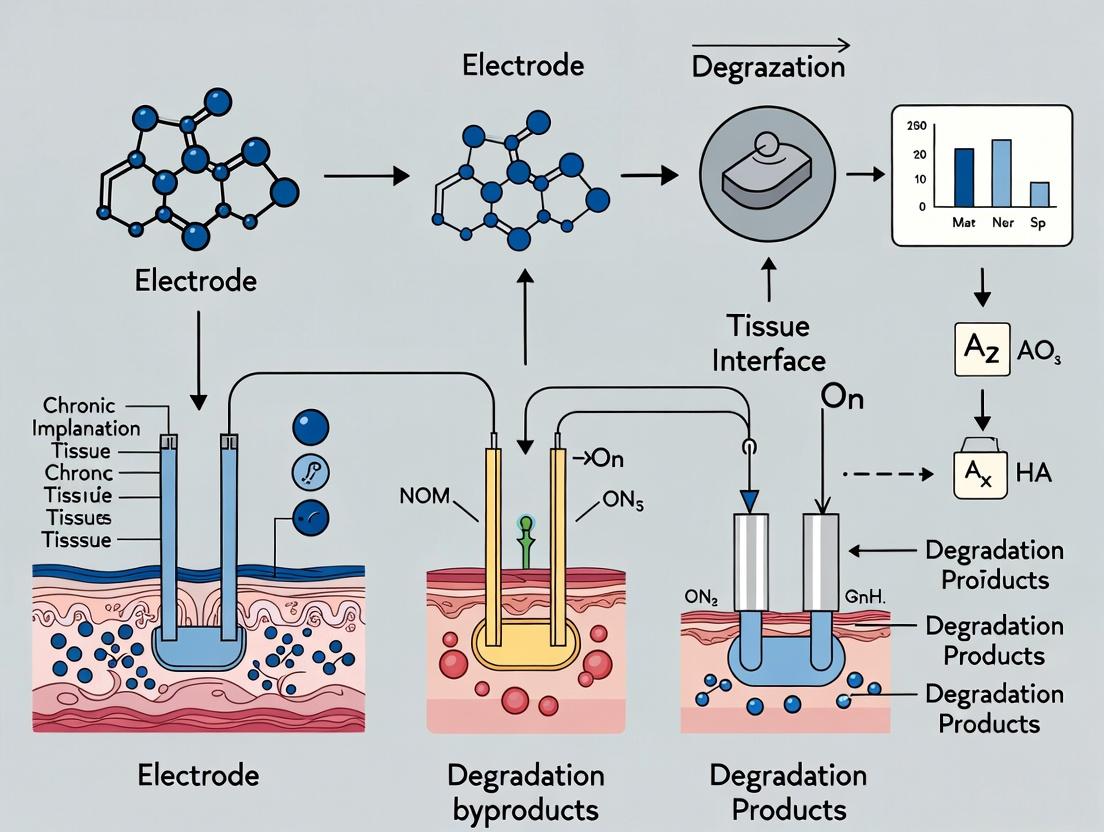
This article provides a comprehensive review for researchers and biomedical engineers on addressing electrode degradation in chronically implanted neural interfaces.
Confronting the Inevitable: Strategies to Mitigate Electrode Degradation for Long-Term Neural Implants
Abstract
This article provides a comprehensive review for researchers and biomedical engineers on addressing electrode degradation in chronically implanted neural interfaces. We explore the fundamental mechanisms of failure, including electrochemical corrosion, mechanical mismatch, and the foreign body response. We then detail current methodological approaches for enhancing electrode longevity, covering novel materials, advanced coatings, and flexible designs. Troubleshooting strategies and optimization techniques for existing systems are analyzed, followed by a critical comparison of validation protocols and performance metrics across different platforms. The synthesis aims to guide the development of next-generation, stable neural interfaces for sustained research and therapeutic applications.
Understanding the Enemy: Core Mechanisms of Electrode Degradation in Chronic Implants
Technical Support Center
Troubleshooting Guides & FAQs
Q1: During chronic in vivo testing, my PtIr electrode's impedance at 1 kHz spiked by over 50% after 4 weeks. What is the most likely failure mechanism and how can I confirm it?
A: This is indicative of insulation failure or severe surface corrosion. First, perform electrochemical impedance spectroscopy (EIS) from 10 Hz to 100 kHz to distinguish between insulation cracks (affecting all frequencies) and surface fouling/corrosion (primarily increasing low-frequency impedance). Post-explant, use Scanning Electron Microscopy (SEM) with Energy Dispersive X-ray Spectroscopy (EDX) to check for pitting, cracks in the silicone/parylene C insulation, and elemental composition changes.
Q2: I observe visible delamination of my PEDOT:PSS conductive polymer coating from a gold electrode substrate during accelerated aging in PBS. How can I improve adhesion?
A: Delamination is often due to poor interfacial adhesion and osmotic stress. Implement a surface pretreatment protocol:
- Clean substrate with O2 plasma for 5 minutes at 100W.
- Apply a 2% (v/v) (3-aminopropyl)triethoxysilane (APTES) solution in toluene for 1 hour.
- Rinse and bake at 110°C for 10 minutes. This creates a covalent linkage. Alternatively, incorporate an adhesion promoter like 3,4-ethylenedioxythiophene (EDOT)-functionalized silane into your deposition solution.
Q3: My flexible polyimide-based electrode array is experiencing insulation failure at the lead interconnect after 100,000 bending cycles in simulated interstitial fluid. What are the best material and design remedies?
A: This is a fatigue-induced crack propagation issue. Implement a multi-layer encapsulation strategy. Use atomic layer deposition (ALD) of 50-100nm alumina (Al2O3) as a primary hermetic barrier directly on the metal trace, followed by a stress-absorbing layer of 5-10µm silicone rubber (e.g., MED-1000), and a final layer of 10-15µm parylene C. Design the interconnect with a "neutral plane" geometry, ensuring the metal trace is centered within the encapsulation to minimize tensile/compressive strain.
Q4: I suspect galvanic corrosion between my titanium connector and platinum-iridium lead wire. What quantitative tests can identify this, and what are mitigation strategies?
A: Set up a zero-resistance ammeter (ZRA) measurement in your test electrolyte (e.g., 0.9% NaCl, 37°C) to directly measure the galvanic current between the coupled metals. Monitor the open circuit potential (OCP) of each metal separately and then when coupled. Post-test, use X-ray photoelectron spectroscopy (XPS) to identify oxide layer changes on Ti.
Table 1: Key Metrics for Electrochemical Degradation in Simulated Body Fluid (37°C)
| Material/Couple | Corrosion Rate (µm/year) | Galvanic Current Density (nA/cm²) | Critical Pitting Potential (V vs. Ag/AgCl) |
|---|---|---|---|
| Platinum-Ir (90/10) | 0.05 - 0.1 | - | >1.2 |
| 316L Stainless Steel | 0.5 - 2.0 | - | 0.25 - 0.35 |
| PtIr - Titanium (coupled) | N/A | 10 - 50 | N/A |
| Gold | 0.01 - 0.05 | - | >0.8 |
| PEDOT:PSS Coated Pt | 0.02 - 0.1* | - | >1.0 |
*Rate of conductive polymer degradation, not metal dissolution.
Table 2: Accelerated Aging Test Protocol Summary
| Stressor | Test Condition | Acceleration Factor (Est.) | Monitored Parameter |
|---|---|---|---|
| Voltage Bias | ±1V DC, PBS, 37°C | 3-5x | Leakage Current, Impedance |
| Mechanical Flex | 2% Strain, 5Hz, Saline | 10x (vs. 1Hz) | Resistance, Optical Inspection |
| Temperature | 87°C, PBS (Arrhenius) | 16x (vs. 37°C) | EIS, Adhesion Peel Force |
| Potential Cycling | -0.6V to +0.8V, 50Hz, PBS | 50x (vs. physiological signals) | Charge Injection Limit, CV |
Experimental Protocols
Protocol 1: Electrochemical Impedance Spectroscopy (EIS) for Insulation Integrity Assessment
- Setup: Use a standard 3-electrode cell (working electrode: your implant, counter: Pt mesh, reference: Ag/AgCl in 3M KCl) in phosphate-buffered saline (PBS) at 37°C.
- Parameters: Apply a 10mV RMS sinusoidal perturbation. Sweep frequency from 100 kHz to 0.1 Hz. Log 10 points per decade.
- Analysis: Fit the Nyquist plot to a modified Randles circuit model. A significant decrease in the low-frequency impedance modulus (>1 order of magnitude) suggests bulk insulation failure. An increase in the charge transfer resistance (R_ct) with stable coating capacitance suggests stable encapsulation.
Protocol 2: Adhesion Strength Testing via Micro-Scratch Test
- Sample Prep: Coat your substrate (e.g., Au on polyimide) with the material (e.g., PEDOT:PSS or parylene C). Ensure surface is dry and flat.
- Instrument: Use a micro-scratch tester with a sphero-conical diamond tip (radius 5µm).
- Method: Apply a progressive normal load from 0 to 100 mN over a 3mm scratch length at a speed of 3mm/min. Simultaneously monitor acoustic emission and friction force.
- Analysis: The critical load (Lc) where a sudden increase in acoustic emission or friction occurs indicates adhesive/cohesive failure. Use optical microscopy post-test to confirm failure mode.
Diagrams
Diagram 1: Major Electrode Degradation Pathways
Diagram 2: Chronic Implant Testing Workflow
The Scientist's Toolkit: Research Reagent Solutions
Table 3: Essential Materials for Electrode Degradation Research
| Item | Function & Key Detail |
|---|---|
| Phosphate Buffered Saline (PBS), pH 7.4 | Standard electrolyte for in vitro simulation of physiological ionic environment. Must be sterile-filtered (0.22µm) and degassed before electrochemical tests to avoid bubble artifacts. |
| Parylene C dimer | Vapor-deposited polymer for conformal, pin-hole-free insulation. Thickness typically 5-20µm. Provides excellent moisture barrier and biocompatibility. |
| (3-Aminopropyl)triethoxysilane (APTES) | Silane coupling agent to promote adhesion between inorganic (metal/oxide) surfaces and organic polymers (e.g., PEDOT, polyimide). |
| EDOT monomer | Precursor for electrophysiologically-stable conductive polymer poly(3,4-ethylenedioxythiophene) (PEDOT). Used via electrochemical deposition to lower impedance and improve charge injection. |
| Hydrogen Peroxide (30% w/w) | Component of Fenton's reagent (with Fe²⁺) to generate reactive oxygen species (ROS) for simulating inflammatory oxidative stress in vitro. |
| Artificial Cerebrospinal Fluid (aCSF) | More accurate than PBS for neural implant studies, containing ions (Na⁺, K⁺, Ca²⁺, Mg²⁺, Cl⁻, HCO₃⁻, HPO₄²⁻) at physiological concentrations and pH 7.3-7.4. |
| MED-1000 Silicone Elastomer | Biomedical-grade, two-part silicone used as a soft, flexible outer encapsulation to absorb mechanical strain and reduce fibrotic encapsulation. |
| Alumina (Al2O3) target for ALD/Sputtering | Source for depositing ultra-thin, conformal, and hermetic oxide barrier layers via Atomic Layer Deposition (ALD) to prevent moisture ingress. |
Technical Support Center: Troubleshooting Chronic Implantation Experiments
Troubleshooting Guides
Guide 1: Addressing Rapid Electrode Impedance Rise and Signal Loss
- Problem: A sharp, sustained increase in electrode impedance (> 50% baseline) within the first 4-8 weeks post-implantation, correlated with signal amplitude loss.
- Likely Cause: Aggressive, non-conductive fibrous encapsulation driven by sustained mechanical mismatch and micromotion at the implant-tissue interface.
- Diagnostic Steps:
- Measure electrochemical impedance spectroscopy (EIS) weekly. Plot magnitude at 1 kHz.
- Perform post-explanation histology (H&E, Masson's Trichrome) on a subset of subjects to quantify capsule thickness.
- Correlate impedance data with capsule thickness metrics and recorded neural signal-to-noise ratio (SNR).
- Solutions:
- Material: Switch to a softer substrate (e.g., from polyimide to PDMS or parylene C) to lower the effective Young's modulus.
- Design: Implement a more compliant, slimmer shank design or a mesh/porous geometry to reduce bending stiffness.
- Interface: Apply a soft hydrogel coating (e.g., alginate, PEG) at the interface to dissipate strain.
- Surgical: Review fixation method. Ensure the cranial anchor adequately isolates the implant from dural micromotion.
Guide 2: Mitigating Chronic Inflammatory Marker Elevation
- Problem: Immunohistochemistry reveals persistent presence of pro-inflammatory markers (e.g., CD68+/IBA1+ macrophages, TNF-α, IL-1β) beyond the acute phase (> 12 weeks).
- Likely Cause: Chronic foreign body response (FBR) fueled by continuous mechanical irritation and particle shedding due to micromotion.
- Diagnostic Steps:
- Quantify immunofluorescence intensity for IBA1 (macrophages/microglia) and GFAP (astrocytes) in peri-implant zones (0-100 µm, 100-200 µm).
- Check for electrode surface degradation via post-explanation SEM/EDX for cracks or delamination.
- Solutions:
- Surface: Apply anti-inflammatory drug elution (e.g., dexamethasone) from a coating.
- Topography: Use nano/micro-topographical surfaces to guide beneficial glial cell alignment.
- Mechanical Integrity: Ensure coating adhesion and substrate integrity to prevent particulate debris.
Frequently Asked Questions (FAQs)
Q1: What is the primary mechanical factor leading to electrode performance degradation in chronic implants? A: The primary factor is the mismatch in mechanical compliance (Young's modulus) between the rigid implant (often GPa scale) and the soft brain tissue (kPa scale). This mismatch, exacerbated by physiological micromotion (50-100 µm pulses from breathing/pulsation), creates cyclic strain at the interface, driving chronic inflammation, glial scarring, and eventual signal degradation.
Q2: How can we quantitatively measure the strain field at the tissue-electrode interface? A: Combined computational and experimental approaches are used:
- Finite Element Analysis (FEA): Model the implant in brain tissue, apply physiological displacement boundaries, and calculate the strain field (e.g., von Mises strain). See Table 1 for example outputs.
- In Vitro Mimicry: Use soft elastomeric substrates with fluorescent bead tracking to visualize strain fields under simulated micromotion.
- In Vivo Indirect Measurement: Track marker displacement in two-photon imaging windows during controlled cranial window movement.
Q3: Which coating strategies are most effective for mitigating micromotion-induced stress? A: Soft, bioactive interlayers are most effective. See "The Scientist's Toolkit" below for key reagents. Hydrogel coatings (alginate, hyaluronic acid) with a stiffness of 0.1-10 kPa are optimal, as they better match neural tissue modulus and dissipate strain. Covalent tethering of the coating to the substrate is critical to prevent delamination under shear stress.
Q4: What are the key histological metrics to assess the FBR, and what are acceptable thresholds? A: Key metrics and typical benchmarks for a "successful" chronic interface (> 6 months) are summarized in Table 2.
Data Presentation
Table 1: FEA Simulation Results of Strain at Interface for Different Implant Materials
| Implant Material | Young's Modulus | Simulated Micromotion (µm) | Max Induced Strain in Adjacent Tissue (%) | Key Risk |
|---|---|---|---|---|
| Silicon | ~170 GPa | 50 | 12.5 | High risk of neuronal death & gliosis |
| Polyimide | ~2.5 GPa | 50 | 8.2 | Moderate glial scarring |
| Parylene C | ~3.2 GPa | 50 | 8.7 | Moderate glial scarring |
| SU-8 | ~4.0 GPa | 50 | 9.1 | Moderate glial scarring |
| PDMS | ~2 MPa | 50 | < 2.0 | Minimal strain transfer |
| Alginate Hydrogel | ~10 kPa | 50 | ~0.5 | Negligible strain transfer |
Table 2: Histological Assessment Metrics for Chronic Foreign Body Response
| Metric | Method/Target | Acceptable Threshold (at 6+ months) | Notes |
|---|---|---|---|
| Capsule Thickness | Masson's Trichrome / Collagen | < 50 µm | Measured from implant surface. |
| Microglia Activation | IHC / IBA1+ & CD68+ | Fluorescence intensity < 2x distal tissue | Quantify in 0-100 µm zone. |
| Astrocyte Activation | IHC / GFAP+ | Fluorescence intensity < 3x distal tissue | Dense scarring indicated by >5x. |
| Neuronal Density | IHC / NeuN+ | > 70% of distal density within 100 µm | Core indicator of functionality. |
| Vascular Integrity | IHC / Laminin (Blood Vessels) | Intact, non-fragmented vessels near interface. | Signs of chronic hypoxia. |
Experimental Protocols
Protocol 1: In Vitro Shear Strain Calibration for Coating Adhesion Testing
- Objective: Quantify the adhesion strength of soft coatings under cyclic shear stress mimicking micromotion.
- Materials: Coated electrode samples, bioreactor with controlled oscillatory stage, PBS at 37°C, optical microscopy.
- Method:
- Mount the coated sample in the bioreactor chamber filled with PBS.
- Subject the sample to horizontal oscillatory displacement (amplitude: 10-100 µm, frequency: 1 Hz) to simulate physiological micromotion.
- Run cycles for a predetermined period (e.g., 1 million cycles).
- Periodically (every 24h) inspect under a microscope for coating delamination, cracking, or peeling.
- Post-test, use SEM to examine the coating-substrate interface for failure modes.
- Analysis: Report the number of cycles until first observable failure and the percentage of delaminated area after test completion.
Protocol 2: Immunohistochemical Quantification of Peri-Implant Glial Scar
- Objective: Quantify the extent of glial activation and neuronal loss around an explanted chronic neural electrode.
- Materials: Perfused-fixed brain tissue with implant tract, cryostat, primary antibodies (IBA1, GFAP, NeuN), fluorescent secondary antibodies, confocal microscope.
- Method:
- Section tissue coronally (20-30 µm thickness) through the implant tract.
- Perform immunofluorescence staining using standard protocols for IBA1 (microglia), GFAP (astrocytes), and NeuN (neurons).
- Image sections using a confocal microscope with consistent laser power and gain settings.
- Draw concentric regions of interest (ROIs: 0-50 µm, 50-100 µm, 100-200 µm from the tract edge) and a control ROI >500 µm away.
- Measure mean fluorescence intensity for each marker in each ROI using software (e.g., ImageJ, Imaris).
- Analysis: Calculate fold-change in intensity relative to the distal control ROI for each marker and distance zone. Statistically compare across experimental groups (e.g., different implant materials).
Visualizations
Diagram 1: Micromotion-Induced Degradation Pathway
Diagram 2: Experiment Workflow for Interface Evaluation
The Scientist's Toolkit: Research Reagent Solutions
| Item | Function & Rationale |
|---|---|
| Soft Substrate (PDMS, Elastomers) | Provides a low-modulus base for flexible electrodes, reducing mechanical mismatch. |
| Conductive Polymer Coating (PEDOT:PSS) | Improves charge injection capacity, allowing smaller, softer electrodes. Can be doped with bioactive molecules. |
| Drug-Eluting Hydrogel (Dexamethasone in Alginate) | Localized, sustained release of anti-inflammatory drugs to suppress chronic FBR at the interface. |
| Cell-Adhesive Peptide Coatings (e.g., RGD, Laminin) | Promotes beneficial cellular integration (e.g., neuronal attachment) over glial encapsulation. |
| Anti-Fouling Polymer Brushes (PEG, Zwitterions) | Creates a hydration layer to passively resist non-specific protein adsorption, the first step of FBR. |
| Micro/Nano-Patterned Molds | Used to fabricate implants with topographical cues designed to direct glial cell morphology and reduce scarring. |
| Finite Element Analysis Software (COMSOL, ANSYS) | Critical for simulating mechanical interactions and optimizing implant geometry before fabrication. |
Technical Support Center: Electrode Degradation & Chronic Implantation
Troubleshooting Guides & FAQs
FAQ Category 1: Initial Immune Response & Acute Inflammation
Q1: Our implanted neural electrodes show a rapid decline in signal-to-noise ratio (SNR) within the first week. What is the likely cause and how can we mitigate it?
- A: This is characteristic of the acute inflammatory phase. Activated microglia and macrophages at the device-tissue interface create a high-interference electrochemical environment. Mitigation Strategy: Pre-coat electrodes with anti-inflammatory agents (e.g., dexamethasone) or use hydrogel coatings that elute interleukin-1 receptor antagonist (IL-1Ra). Ensure surgical protocols minimize initial mechanical trauma.
Q2: Histology reveals excessive neutrophil infiltration around the implant site at 3 days post-implantation. Is this abnormal?
- A: Some neutrophil presence is normal. Excessive infiltration suggests significant surgical trauma or bacterial contamination. Troubleshooting Steps: 1) Review sterile surgical technique. 2) Consider pre-treating the implant with a broad-spectrum antibiotic (e.g., gentamicin). 3) Evaluate implant surface roughness; smoother surfaces may reduce initial protein fouling that potentiates this response.
FAQ Category 2: Chronic Foreign Body Response & Glial Scar Maturation
Q3: After 4 weeks, we observe a dense cellular sheath (GFAP+/CSPG+) and complete loss of neuronal markers (NeuN) around the implant. Has the scar matured, and can device function recover?
- A: Yes, this indicates a mature, chronic glial scar. The dense astrocytic seal and chondroitin sulfate proteoglycan (CSPG) matrix are largely irreversible with current technology and create a permanent diffusion barrier, isolating the device. Functional recovery at this stage is highly unlikely. Focus should shift to prevention strategies applied during the acute/sub-acute phases (weeks 1-2).
Q4: Our in vivo impedance spectroscopy shows a steady rise from week 2 to week 6, then plateaus. What does this correlate with biologically?
- A: This classic trajectory correlates with the progression of the foreign body response. The initial rise matches glial encapsulation and matrix deposition. The plateau often corresponds to the stabilization of the fibrous capsule and the completion of the scarring process. See quantitative data in Table 1.
Q5: Multinucleated foreign body giant cells (FBGCs) are present on the implant surface in explants. What does this signify for electrode degradation?
- A: FBGCs are a hallmark of the chronic foreign body response and are highly damaging. They secrete reactive oxygen species (ROS) and acidic lysosomal enzymes directly onto the electrode surface, accelerating non-Faradaic degradation, insulation delamination, and metal corrosion. This is a primary driver of chronic device failure.
FAQ Category 3: Material & Electrode Performance Degradation
Q6: We suspect oxidative degradation of our PEDOT:PSS conductive polymer coating. How can we confirm this and what are protective measures?
- A: Confirmation: Use FTIR or XPS on explanted electrodes to detect chemical changes like oxidation of thiophene rings. Protection: 1) Incorporate antioxidant molecules (e.g., ascorbic acid, cerium oxide nanoparticles) into the coating. 2) Use more stable conductive polymers like poly(3,4-ethylenedioxythiophene) (PEDOT) functionalized with counter-ions less susceptible to oxidation (e.g., pTS, NAFION).
Q7: What are the primary failure modes for chronically implanted Utah arrays or Michigan probes?
- A: Failure modes are multimodal and synergistic:
- Biological: Insulation by glial scar, neuronal loss.
- Electrochemical: Corrosion of metal traces (especially Ir, Pt) under low pH from inflammatory cells.
- Mechanical: Delamination of insulation (e.g., parylene-C, SiO2) due to enzymatic attack and mechanical stress from micromotion.
- A: Failure modes are multimodal and synergistic:
Table 1: Chronic Timeline of Key Biomarkers & Electrical Changes
| Time Post-Implantation | Key Cellular Events | Dominant Molecular Signals | Typical Impedance Change (at 1 kHz) | Neuronal Density (% of Baseline) |
|---|---|---|---|---|
| 1-3 Days (Acute) | Neutrophils, Microglia activation | TNF-α, IL-1β, ROS | +50% to +200% | 80-90% |
| 1-2 Weeks (Sub-Acute) | Macrophage dominance, Astrocyte recruitment | IL-6, TGF-β, MCP-1 | +200% to +500% | 60-80% |
| 2-4 Weeks (Chronic) | FBGC formation, Fibrous capsule, Dense glial scar | IL-10, IL-4, CSPG production | +500% to +1000% (then plateaus) | 20-50% (adjacent to device) |
| >8 Weeks (Stable Scar) | Quiescent astrocytes, Collagen matrix | Low cytokine expression | Stable at elevated level | <30% (persistent deficit) |
Table 2: Efficacy of Common Mitigation Strategies in Pre-Clinical Models
| Mitigation Strategy | Target Phase | Reduction in Glial Scar Thickness (%) | Improvement in Long-term SNR (vs Control) | Key Limitations |
|---|---|---|---|---|
| Dexamethasone Eluting Coating | Acute/Sub-Acute | ~40-60% | Maintained >150% for 4 weeks | Finite drug load, may delay wound healing |
| IL-1Ra Hydrogel Coating | Acute | ~30-50% | Maintained >120% for 6 weeks | Protein stability, release kinetics |
| CSPG-Degrading Enzyme (ChABC) | Sub-Acute | ~50-70% | Significant short-term recovery | Transient effect, requires repeated delivery |
| Soft/Matrigel Coatings | Chronic | ~20-40% | Moderate, delays decline | Mechanical stability, handling difficulty |
| Anti-inflammatory Nanoparticles | All Phases | ~35-55% | Maintained >110% for 8 weeks | Potential long-term nanomaterial toxicity |
Experimental Protocols
Protocol 1: Histological Quantification of Glial Scarring
- Objective: Quantify astroglial and microglial activation around an implanted neural probe.
- Materials: Formalin-fixed brain tissue with implant track, cryostat, antibodies (GFAP, Iba1, NeuN), fluorescent microscope, image analysis software (e.g., ImageJ, Imaris).
- Method:
- Section tissue in 20 µm coronal slices encompassing the entire implant track.
- Perform immunofluorescence: block, incubate with primary antibodies (GFAP for astrocytes, Iba1 for microglia, NeuN for neurons), then species-appropriate fluorescent secondaries.
- Image using confocal microscopy with standardized settings.
- Analysis: Use thresholding to define the implant track. Measure fluorescence intensity of GFAP and Iba1 in concentric shells (e.g., 0-50µm, 50-100µm, 100-150µm) from the track edge. Normalize to background intensity in distant tissue. Count NeuN+ nuclei in same regions.
Protocol 2: In Vivo Electrochemical Impedance Spectroscopy (EIS) Monitoring
- Objective: Track the progression of the foreign body response via changes at the electrode-tissue interface.
- Materials: Chronically implanted electrode, potentiostat with EIS capability, saline reference/counter electrodes, data acquisition software.
- Method:
- Connect the implanted working electrode, a large surface area counter electrode (e.g., Pt wire), and a reference electrode (e.g., Ag/AgCl) to the potentiostat in a 3-electrode configuration.
- In a biologically relevant range (e.g., 10 Hz to 100 kHz), apply a small sinusoidal voltage (10-50 mV RMS).
- Measure impedance magnitude and phase angle at each frequency. Perform weekly.
- Analysis: Focus on the 1 kHz impedance as a summary metric. Fit data to an equivalent circuit model (e.g., Randles circuit) to separate contributions from solution resistance, charge transfer resistance, and tissue encapsulation.
Diagrams
Diagram 1: Core Signaling in Foreign Body Response
Diagram 2: Electrode Degradation Pathways
The Scientist's Toolkit: Research Reagent Solutions
| Item Name | Function & Application | Key Considerations |
|---|---|---|
| Dexamethasone Sodium Phosphate | Potent synthetic glucocorticoid used in eluting coatings to suppress acute inflammatory cytokine release (TNF-α, IL-1β). | Short half-life requires controlled release systems (e.g., PLGA microspheres, loaded hydrogels). |
| Chondroitinase ABC (ChABC) | Bacterial enzyme that degrades chondroitin sulfate proteoglycans (CSPGs) in the glial scar matrix, temporarily reducing the physical/chemical barrier. | Activity is temperature-sensitive and transient; requires stabilization or repeated delivery via viral vectors or encapsulated cells. |
| Minocycline Hydrochloride | Broad-spectrum tetracycline antibiotic with potent anti-microglial activation properties. Used systemically or locally to reduce neuroinflammation. | Can have off-target systemic effects; local delivery from coatings is preferred. |
| Poly(3,4-ethylenedioxythiophene):Polystyrene Sulfonate (PEDOT:PSS) | Conductive polymer coating for electrodes. Lowers impedance and increases charge injection capacity (CIC). | Vulnerable to oxidative degradation in vivo; stability can be improved with cross-linking or alternative counter-ions. |
| Matrigel / RGD-Modified Hydrogels | Soft, biologically active coatings that mimic brain's extracellular matrix (ECM). Reduce mechanical mismatch and inflammatory cell adhesion. | Batch variability (Matrigel), potential immunogenicity, and may weaken over long implantation periods. |
| Interleukin-1 Receptor Antagonist (IL-1Ra) | Competitive inhibitor of the pro-inflammatory cytokine IL-1. Used in hydrogels or gene therapy to specifically block a key early signaling pathway. | Requires high local concentrations; effective in the acute phase but may not impact later fibrous encapsulation. |
| Cerium Oxide (CeO2) Nanoparticles | Nanozymes with catalase- and superoxide dismutase-mimetic activity. Scavenge ROS at the implant site, protecting both tissue and electrode materials. | Long-term biodistribution and stability of nanoparticles in the brain must be thoroughly characterized. |
Troubleshooting Guides & FAQs
Q1: Our chronically implanted iridium oxide (IrOx) electrodes show a sudden, severe drop in charge injection capacity (CIC). What is the likely cause and how can we diagnose it?
A: This is typically indicative of mechanical delamination or dissolution of the hydrated oxide layer. Iridium oxide can suffer from slow dissolution in biological fluids, especially under aggressive pulsing protocols, leading to irreversible loss of active material.
Diagnostic Protocol:
- Electrochemical Impedance Spectroscopy (EIS): Perform EIS in PBS (pH 7.4) from 10 kHz to 0.1 Hz at zero bias. A significant increase in impedance at 1 kHz, particularly the real component, suggests loss of active surface area.
- Cyclic Voltammetry (CV): Run CV in deaerated PBS at 50 mV/s from -0.6V to 0.8V vs. Ag/AgCl. Calculate the cathodic charge storage capacity (cCSC). A drop >40% from pre-implantation baseline strongly indicates oxide layer failure.
- Post-Explant Analysis (if possible): Use SEM/EDS to check for cracks, pits, or thinning of the oxide layer and to confirm the presence of Ir in the surrounding tissue.
Q2: We observe increased noise and baseline drift in our PEDOT:PSS-coated microelectrodes after several weeks in vivo. What could be the issue?
A: This is a classic symptom of oxidative degradation and de-doping of the PEDOT polymer. The inflammatory environment (reactive oxygen species, peroxides) and applied anodic potentials can irreversibly oxidize the PEDOT backbone, reducing its conductivity and ionic-to-electronic coupling.
Mitigation & Testing Protocol:
- In-Situ CV Test: Run a slow CV (20 mV/s) in the therapeutic window (e.g., -0.9V to 0.5V vs. Ag/AgCl). Loss of the characteristic redox peaks and a shrinking hysteretic area confirm de-doping.
- Protocol Adjustment: Implement charge-balanced, biphasic pulses with symmetric anodic-first/cathodic-first cycling to minimize cumulative anodic stress. Consider adding a biocompatible antioxidant coating (e.g., PEG) as a barrier layer.
- Material Reformulation: For next-generation devices, consider using PEDOT composites with nanomaterials (e.g., carbon nanotubes) or alternative counter-ions (e.g., PEDOT:NSF) for improved stability.
Q3: Our platinum (Pt) electrodes used for chronic stimulation are developing a "fuzzy" coating, and the required voltage for stimulation is climbing. What is happening?
A: You are likely observing the growth of a non-conductive, proteinaceous, and fibrous tissue encapsulation layer, coupled with possible charge-driven dissolution and redeposition of Pt as insulating platinum oxides/chlorides.
Characterization Workflow:
- Post-Recording Pulse Test: After a chronic recording session, apply a single, safe cathodic pulse in saline and measure the voltage transient. An increased access voltage (Va) indicates higher interface impedance due to tissue encapsulation.
- Biphasic Pulse Monitor: Continuously monitor the compliance voltage of your stimulator. A steady increase suggests growing impedance.
- Post-Explant Analysis:
- SEM: Visualize the "fuzziness" – will show protein吸附 and cellular deposits.
- XPS: Analyze the Pt surface chemistry for PtO, PtO₂, and PtCl₄ species, confirming electrochemical corrosion.
Q4: The electrochemical performance of our carbon nanotube (CNT) fiber electrodes is degrading unpredictably. What are the potential failure modes?
A: Carbon-based materials primarily fail via micro-fracture of the conductive carbon lattice (electrochemical corrosion) and biofouling that blocks porous access.
Troubleshooting Table:
| Symptom | Potential Failure Mode | Confirmatory Test |
|---|---|---|
| Gradual CSC loss | Biofouling in micropores | EIS: Increase in diffusion tail impedance at low frequency. |
| Sudden impedance jump | Micro-crack in fiber or delamination from substrate | SEM imaging of the electrode cross-section. |
| Reduced sensitivity for neurotransmitters | Loss of edge plane sites / functional groups | CV in Ferricyanide: Reduction in redox peak current. |
Table 1: Comparative Failure Modes & Key Metrics
| Electrode Material | Primary Chronic Failure Mode | Typical CIC Loss (After 1-6 months) | Key Stability Indicator | Acceleration Test |
|---|---|---|---|---|
| Iridium Oxide (AIROF) | Dissolution of oxide layer | 40-70% | Cathodic Charge Storage Capacity (cCSC) | Pulsing at 200 Hz, 0.5 mC/cm² in 40°C PBS. |
| PEDOT:PSS | Oxidative de-doping & delamination | 50-80% | Low-freq EIS impedance & redox peak area in CV | Anodic bias at 0.7V vs. Ag/AgCl in H₂O₂ solution. |
| Platinum (Pt) | Tissue encapsulation & corrosion | 20-50% (due to voltage compliance) | 1-kHz Impedance & Voltage Transient Analysis | High-charge pulsing (>300 μC/cm²) in chloride-rich solution. |
| Carbon Nanotube (CNT) | Biofouling & carbon oxidation | 30-60% | Charge Transfer Resistance (from EIS) & Cottrell Plot | Potential cycling in oxidative window (>0.8V). |
Table 2: Recommended Pre-Implantation Benchmark Tests
| Test | Parameters | Acceptable Range for Chronic Use | Purpose |
|---|---|---|---|
| Accelerated Aging (EIS/CV) | 10⁶ pulses @ 200 Hz, 37°C PBS | <20% change in CSC or 1-kHz Z | Stress-test electrochemical stability. |
| Adhesion Tape Test (ASTM D3359) | Standardized tape pull | Rating ≥ 4B (≤5% removal) | Check coating adhesion to substrate. |
| Mechanical Bend Test | 1000 cycles at min bend radius | <5% Δ in DC resistance | Simulate mechanical stress in vivo. |
Experimental Protocols
Protocol 1: Measuring Charge Injection Capacity (CIC) Title: CIC Determination via Voltage Transient Purpose: To determine the maximum safe charge per phase an electrode can deliver without exceeding the water window. Materials: Potentiostat, 3-electrode setup (WE: test electrode, RE: Ag/AgCl, CE: Pt coil), PBS (0.1M, pH 7.4), Data acquisition software. Steps:
- Set up in a beaker with 37°C PBS.
- Apply a series of cathodic-first, symmetric, biphasic current pulses (0.1 ms to 1 ms pulse width, 10-30 s inter-pulse interval).
- Record the voltage transient across the working and reference electrodes.
- CIC Calculation: The CIC (in μC/cm²) is the charge density of the pulse where the leading negative voltage peak reaches the water reduction limit (typically -0.6V vs. Ag/AgCl for safety). CIC = (I * pw) / A, where I=current, pw=pulse width, A=geometric area.
Protocol 2: Electrochemical Impedance Spectroscopy (EIS) for Stability Tracking Title: Chronic EIS Stability Protocol Purpose: To non-destructively track changes in electrode interface properties over time. Materials: Potentiostat with EIS capability, same 3-electrode setup as above. Steps:
- At each time point (pre-implant, weekly in vivo/vitro), acquire EIS spectrum.
- Settings: Apply 10 mV RMS sinusoidal perturbation from 100 kHz to 0.1 Hz at the open circuit potential.
- Fit data to an equivalent circuit model (e.g., [Rs(CPE[Rct])] for simple interfaces, or [Rs(CPE[Rct(W)])] for porous electrodes).
- Monitor changes in Charge Transfer Resistance (Rct) and Constant Phase Element (CPE) magnitude over time. An increasing Rct indicates loss of active surface or fouling.
Visualizations
Title: PEDOT Electrode Degradation Pathway
Title: Electrode Failure Analysis & Mitigation Workflow
The Scientist's Toolkit
Table 3: Essential Research Reagent Solutions for Electrode Stability Studies
| Reagent / Material | Function in Chronic Stability Research |
|---|---|
| Phosphate Buffered Saline (PBS), 0.1M, pH 7.4 | Standard electrolyte for in-vitro electrochemical testing, mimics physiological ionic strength and pH. |
| Hydrogen Peroxide (H₂O₂), 0.1-1 mM in PBS | Creates an oxidative stress environment to simulate inflammatory reactive oxygen species (ROS) for accelerated polymer (PEDOT) degradation tests. |
| Artificial Cerebrospinal Fluid (aCSF) | More biologically relevant than PBS for pre-implant testing, containing ions like Ca²⁺ and Mg²⁺ that can affect deposition. |
| Ferri/Ferrocyanide Redox Couple ([Fe(CN)₆]³⁻/⁴⁻) | Probing solution for CV to assess electroactive surface area (ESA) and charge transfer kinetics of carbon and metal electrodes. |
| Potentiostat/Galvanostat with EIS | Core instrument for performing CV, EIS, and pulse testing to quantify electrochemical performance and degradation. |
| Ag/AgCl Reference Electrode (with KCl bridge) | Stable, non-polarizable reference electrode essential for accurate potential control in long-term experiments. |
| Accelerated Test Chamber (37°C) | Temperature-controlled environment to simulate body temperature and accelerate reaction kinetics during aging tests. |
Building to Last: Material and Design Strategies for Robust Chronic Electrodes
Technical Support Center
Troubleshooting Guides & FAQs
Q1: My graphene-based electrode shows increased impedance during chronic in vivo testing. What are the likely causes and solutions?
A: Increased impedance in graphene electrodes is often due to biofouling or delamination.
- Cause 1: Protein Adsorption & Inflammation. The initial foreign body response leads to a layer of proteins and inflammatory cells insulating the electrode.
- Solution: Pre-coat the electrode with an anti-fouling conductive polymer like PEDOT:PSS-Hyaluronic acid blends. Sterilize using ethylene oxide (EtO) instead of autoclaving to prevent graphene sheet aggregation.
- Cause 2: Interfacial Delamination. Mechanical mismatch between the flexible graphene and the substrate can cause peeling under cyclic biological stress.
- Solution: Implement a graded adhesion strategy. Use a thin Ti (5-10 nm) adhesion layer on the substrate, followed by a plasma-enhanced chemical vapor deposition (PECVD) graphene synthesis protocol for stronger bonding.
- Protocol - Impedance Check: Perform electrochemical impedance spectroscopy (EIS) in PBS (pH 7.4) at 37°C pre- and post-explanation. Use a 10 mV RMS sinusoidal signal from 1 Hz to 1 MHz. A significant low-frequency (<100 Hz) impedance rise indicates biofouling.
Q2: I am experiencing rapid oxidation and loss of conductivity in my MXene (Ti₃C₂Tₓ) films in a physiological environment. How can I mitigate this?
A: MXene degradation is a critical stability challenge. Oxidation converts conductive Ti₃C₂ to insulating TiO₂.
- Cause: Hydrolysis and Oxidation. Water molecules and dissolved oxygen penetrate the MXene layers, initiating redox reactions.
- Solutions & Protocol:
- Parylene-C Encapsulation: Deposit a conformal, biocompatible Parylene-C layer (2-5 µm) via chemical vapor deposition (CVD). This creates a superior barrier vs. spin-coated polymers.
- Gel Electrolyte Embedding: Embed the MXene electrode in a stable hydrogel (e.g., 10% w/v gelatin methacryloyl (GelMA)). The hydrogel limits oxygen diffusion while maintaining ion transport.
- Surface Termination Control: During synthesis (e.g., minimally intensive layer delamination - MILD method), aim for a higher -F/-Cl termination ratio versus -OH, which is less stable. Store MXene dispersions in argon-sparged, deoxygenated water.
- Verification Test: Monitor the C 1s and Ti 2p regions using X-ray photoelectron spectroscopy (XPS) on explanted electrodes. A growing TiO₂ peak at ~458.7 eV (Ti 2p₃/₂) confirms oxidation.
Q3: The adhesion of my PEDOT:PSS coating to a gold electrode is poor, leading to peeling under electrical stimulation. How can I improve adhesion?
A: Poor adhesion is common due to PSS-rich, hydrophilic surface repelling the gold interface.
- Cause: Interfacial Energy Mismatch. The gold surface is hydrophobic relative to the aqueous PEDOT:PSS dispersion.
- Protocol for Enhanced Adhesion:
- Substrate Pretreatment: Clean the gold electrode with oxygen plasma (100 W, 1 min) to create a hydrophilic surface.
- Adhesion Promoter: Immediately after plasma treatment, apply a monolayer of (3-glycidyloxypropyl)trimethoxysilane (GOPS) as a cross-linker. Spin-coat a 1% v/v solution in ethanol at 3000 rpm for 30s.
- Modified PEDOT:PSS Formulation: Mix your PEDOT:PSS dispersion with 1% v/v GOPS and 5% v/v ethylene glycol. Filter through a 0.45 µm PVDF syringe filter.
- Deposition & Cure: Spin-coat or electrodeposit the mixture. Cure at 140°C for 1 hour in a vacuum oven. The GOPS covalently links the PSS to silanized gold and cross-links the polymer matrix.
Q4: What are the best practices for sterility and functional testing of these novel material electrodes before implantation?
A:
- Sterilization: Avoid steam autoclaving (high heat/humidity degrades all three materials). Preferred method is ethylene oxide (EtO) gas sterilization for packaged devices. For in vitro tests, sterile filtration of coating solutions (where possible) and UV irradiation in a laminar flow hood for 24 hours is acceptable.
- Pre-Implantation Functional Test Protocol:
- EIS: As described in Q1.
- Cyclic Voltammetry (CV): In PBS, scan from -0.6V to 0.8V vs. Ag/AgCl at 50 mV/s for 100 cycles. Look for stability of the cathodic charge storage capacity (CSCc).
- Accelerated Aging in PBS: Soak in 1x PBS at 60°C for 72 hours (equivalent to ~1 month at 37°C). Re-run EIS and CV. A >20% change in CSCc or low-frequency impedance indicates inadequate encapsulation.
Table 1: Stability Metrics of Emerging Materials vs. Traditional Iridium Oxide (IrOx)
| Material | Charge Storage Capacity (CSC) Initial (mC/cm²) | CSC Retention after 10⁶ Stimulation Pulses (%) | Impedance at 1 kHz Initial (kΩ) | Impedance Change after 30 days in vivo (%) | Key Degradation Mode |
|---|---|---|---|---|---|
| IrOx (Sputtered) | 25 - 40 | 70 - 80 | 1 - 2 | +150 - +300 | Dissolution, Reduction to Ir |
| Graphene (CVD) | 15 - 30 | 85 - 95 | 0.5 - 1.5 | +80 - +200 | Biofouling, Delamination |
| MXene (Ti₃C₂Tₓ) | 40 - 70 | 50 - 70* | 0.2 - 0.8 | +300 - +1000* | Oxidation to TiO₂ |
| PEDOT:PSS | 50 - 150 | 75 - 90 | 0.1 - 0.5 | +100 - +250 | Over-oxidation, Swelling/Cracking |
*With advanced encapsulation (e.g., Parylene-C + hydrogel), MXene CSC retention can improve to >85% and impedance change to <+50%.
Table 2: Recommended Synthesis & Encapsulation Parameters
| Material | Synthesis Method Key Parameter | Optimal Thickness for Chronic Use | Recommended Encapsulation | Adhesion Promoter |
|---|---|---|---|---|
| Graphene | PECVD, Temp: 650°C, Precursor: CH₄/H₂ | 3-8 layers (1-2.5 nm) | Atomic layer deposition (ALD) of Al₂O₃ (20 nm) + silicone | Chromium or Titanium (5 nm) |
| MXene | MILD Etching, MAX phase: Ti₃AlC₂ | Film: 1-3 µm; Flake: 1-2 layer | Parylene-C (5 µm) + GelMA hydrogel (200 µm) | Polydopamine underlayer |
| PEDOT:PSS | Electropolymerization: 1.3 V vs. Ag/AgCl in EDOT+PSS | 100-500 nm | Cross-linking with GOPS + SG-80B silicone oil top-layer | GOPS silanization |
Experimental Protocols
Protocol 1: Electrophysiological Stability Testing for Chronic Implantation Objective: To evaluate the in vivo electrochemical stability of an emerging material electrode under chronic stimulation.
- Fabricate & Encapsulate Electrodes as per Table 2, leaving a defined active area.
- Pre-Implantation Characterization: Perform EIS, CV, and optical microscopy.
- Sterilize using EtO gas.
- Implant in target tissue (e.g., rat motor cortex) using aseptic technique.
- Stimulation Regime: Apply biphasic, charge-balanced pulses (200 µs pulse width, 0.5 mA amplitude, 100 Hz) for 4 hours daily.
- Weekly In Vivo EIS: Telemetric or percutaneous measurement at defined timepoints.
- Terminal Analysis: After 4, 12, and 24 weeks, explant devices. Perform: (a) Ex vivo EIS/CV, (b) XPS for material composition, (c) Histology (H&E, GFAP for gliosis) of surrounding tissue.
Protocol 2: In Vitro Accelerated Oxidation Test for MXenes Objective: To rapidly screen MXene stability and encapsulation efficacy.
- Prepare Samples: MXene films on substrates with/without encapsulation.
- Solution: 1x PBS, pre-warmed to 60°C in a sealed vial.
- Procedure: Immerse samples in PBS at 60°C. Use a fresh vial for each timepoint (e.g., 24h, 48h, 72h, 1 week).
- Analysis: At each timepoint, remove sample, rinse gently, dry under N₂.
- Measure sheet resistance via 4-point probe.
- Perform UV-Vis spectroscopy; monitor decay of characteristic MXene absorbance peak (~780 nm).
- Calculate % conductivity retention.
Diagrams
Title: Electrode Degradation Pathways & Solutions
Title: Chronic Stability Validation Workflow
The Scientist's Toolkit: Research Reagent Solutions
| Item | Function | Example/Specification |
|---|---|---|
| GOPS | Cross-linker for PEDOT:PSS; improves adhesion and stability in aqueous environments. | (3-Glycidyloxypropyl)trimethoxysilane, 98% purity. |
| Parylene-C | Conformal, biocompatible vapor-deposited polymer for inert moisture/ion barrier encapsulation. | Di-chloro-di-para-xylylene, 5 µm coating thickness. |
| GelMA | Photocrosslinkable hydrogel for embedding electrodes; reduces mechanical mismatch and oxidation. | Gelatin methacryloyl, 10% w/v, 5-10% methacrylation. |
| Ethylene Glycol | Secondary dopant for PEDOT:PSS; enhances conductivity and film uniformity. | Anhydrous, 99.8%, used at 3-7% v/v in dispersion. |
| LiF / HCl Etchant | For mild, high-quality MXene (Ti₃C₂Tₓ) synthesis via selective etching of Al from MAX phase. | 1.0 g LiF in 20 mL 9 M HCl (MILD method). |
| DMSO Solvent | For intercalation and delamination of multilayer MXene into few-layer flakes. | Anhydrous, ≥99.9%, used in a 1:1 v/v ratio with MXene sediment. |
| Oxygen Plasma | Modifies substrate surface energy to enhance hydrophilic coating adhesion (e.g., PEDOT:PSS). | 100-200 W, 30-120 seconds exposure. |
| Deoxygenated Water | For storing MXene dispersions to slow oxidation; prepared by argon sparging for 30+ minutes. | Resistivity >18 MΩ·cm, O₂ < 1 ppm. |
Technical Support Center: Troubleshooting Chronic Electrode Degradation
Frequently Asked Questions (FAQs)
Q1: My SIROF-coated electrode shows a significant increase in electrochemical impedance (EI) after 4 weeks of in vitro aging. What could be the cause and how can I verify it? A: A sharp EI increase often indicates coating failure, such as cracking or delamination, exposing the underlying metal to the corrosive biological environment. To verify:
- Perform Cyclic Voltammetry (CV) in PBS (e.g., -0.6V to 0.8V, 50 mV/s). A significant drop in Charge Storage Capacity (CSC) and a change in CV shape confirm loss of SIROF's porous, high-surface-area properties.
- Inspect using Scanning Electron Microscopy (SEM) to visualize cracks or pinholes.
- Protocol: In Vitro Accelerated Aging: Soak the electrode in phosphate-buffered saline (PBS, pH 7.4) at 60°C for 72 hours. This accelerates failure mechanisms. Measure EI and CSC at 1 kHz before and after. A >20% increase in EI suggests inadequate coating adhesion or quality.
Q2: I am observing fibroblast encapsulation and increased electrode-tissue impedance in vivo with Parylene-C coated devices. Is the coating failing? A: Not necessarily. Parylene-C itself is highly stable. The encapsulation is likely a biological response to the device's overall size, shape, stiffness, or surface chemistry. Parylene-C's smooth, hydrophobic surface can promote protein adsorption that leads to this response. To mitigate:
- Consider a surface modification on top of the Parylene-C. This is where hydrogel coatings are beneficial.
- Protocol: Surface Wettability Test: Measure the water contact angle of your coated device. Pristine Parylene-C will show a high contact angle (>80°). A lower angle may indicate contamination or degradation. Use this as a quality control step pre-implantation.
Q3: My hydrogel (e.g., PEG-based) coating is dissolving or swelling uncontrollably during sterilization or implantation. How can I improve its stability? A: This indicates insufficient crosslinking.
- Verify your crosslinking protocol. Ensure UV light intensity (mW/cm²) and duration, or chemical crosslinker concentration (e.g., NHS-ester ratio), are optimized and consistent.
- Perform a swelling ratio test: Weigh the dry coated device (Wd), soak in PBS for 24h at 37°C, blot gently, and weigh again (Ws). Swelling Ratio = (Ws - Wd)/Wd. A ratio >5 may indicate weak crosslinking for neural interfaces. Aim for a lower, controlled ratio (e.g., 1.5-3).
- Protocol: Sterilization Compatibility: Never autoclave hydrogel coatings. Use low-temperature methods: ethylene oxide (EtO) gas or sterile filtration for coating solutions. Test swelling and adhesion post-sterilization.
Q4: How do I test the adhesion strength of these conformal coatings to my substrate (e.g., Pt, Ir, Si)? A: Use a standardized tape test (ASTM D3359) for a qualitative check. For a quantitative measurement:
- Protocol: Scotch Tape Test (Qualitative): Apply and firmly rub pressure-sensitive tape onto the coated surface. Rapidly pull the tape off at 180°. Examine the tape and coating under a microscope for any transfer. Classify adhesion per ASTM grades (0B-5B).
- For quantitative data, a micro-scratch test using a nanoindenter with a stylus is required, measuring the critical load (Lc) at which coating failure occurs. This requires specialized equipment.
Q5: What are the key metrics to track when comparing coating performance for chronic implants in my thesis research? A: Consolidate longitudinal data into this comparison table:
| Performance Metric | SIROF | Parylene-C | Hydrogel (e.g., PEG) | Measurement Method & Notes |
|---|---|---|---|---|
| Initial Impedance @1kHz | 1-10 kΩ (low) | 50-200 kΩ (med) | 50-500 kΩ (med-high) | Electrochemical Impedance Spectroscopy (EIS) in PBS. |
| Impedance Stability (4-12 wks in vivo) | May decrease then stabilize if healthy. Sharp increase = failure. | Very stable. Increases are from biofouling, not coating decay. | May initially rise, then stabilize at lower level than Parylene due to biointegration. | Track % change from baseline. |
| Charge Storage Capacity (CSC) | Very High (20-70 mC/cm²) | Very Low (<1 mC/cm²) | Low to Medium (1-10 mC/cm²) | From CV scan. Critical for stimulation. |
| CSC Stability | Critical indicator of coating health. | N/A (not for stimulation) | Should remain stable if crosslinked well. | Monitor % loss over time. |
| Adhesion to Metal/Substrate | Excellent (electrodeposited) | Excellent (vapor-deposited) | Fair to Good (requires surface priming) | Tape test, scratch test. |
| Flexibility / Crack Resistance | Poor (brittle oxide) | Excellent (conformal polymer) | Excellent (soft, hydrates with tissue) | Bend test under microscope. |
| Target Thickness Range | 0.5 - 3 µm | 5 - 20 µm | 10 - 100 µm | SEM cross-section. |
Experimental Protocols Cited
Protocol 1: Electrochemical Characterization of Coated Microelectrodes
- Objective: Assess baseline performance and stability of coating.
- Materials: Potentiostat, coated working electrode, Pt wire counter electrode, Ag/AgCl reference electrode, 1x PBS (pH 7.4).
- Steps:
- Electrochemical Impedance Spectroscopy (EIS): Measure from 10 Hz to 100 kHz at open circuit potential with a 10 mV sinusoidal perturbation.
- Cyclic Voltammetry (CV): Cycle between -0.6 V and 0.8 V vs. Ag/AgCl at a scan rate of 50 mV/s for 3 cycles. Calculate CSC from the average of the anodic and cathodic charge.
- Chronic Monitoring: Perform steps 1 & 2 at regular intervals during in vitro aging or explant after in vivo studies.
Protocol 2: Accelerated Aging for Coating Durability Screening
- Objective: Rapidly identify weak coating formulations or processes.
- Materials: Coated electrodes, airtight vial, 1x PBS, oven set to 60°C or 87°C.
- Steps:
- Measure initial EI and CSC (Protocol 1).
- Submerge samples in PBS in vial. Place in oven.
- For a 72h, 60°C test, remove, rinse, and re-measure EI/CSC. For a more aggressive 24h, 87°C test, follow same procedure.
- A >20% shift in key metrics indicates potential long-term failure.
Protocol 3: Hydrogel Coating Application via Dip-Coating & Crosslinking
- Objective: Apply a uniform, crosslinked hydrogel layer on a primed substrate.
- Materials: PEG-diacrylate (PEGDA) solution (e.g., 10-20% w/v in H2O), Photoinitiator (e.g., Irgacure 2959, 0.5% w/v), UV lamp (365 nm, ~10 mW/cm²), oxygen-free chamber (N2 purge).
- Steps:
- Clean and prime substrate (e.g., with silane for SiO2 surfaces).
- Prepare PEGDA + photoinitiator solution. Filter sterilize (0.22 µm).
- Dip the electrode into the solution at a controlled speed (e.g., 1 mm/s).
- Withdraw and immediately place in N2 chamber under UV light for 60-90 seconds.
- Rinse in sterile PBS to remove uncrosslinked polymer. Perform swelling test.
Visualizations
Diagram Title: Primary Failure Modes of Chronically Implanted Electrodes
Diagram Title: General Workflow for Coating Development & Testing
The Scientist's Toolkit: Key Research Reagent Solutions
| Reagent / Material | Primary Function in Coating Research | Example Vendor / Cat. # |
|---|---|---|
| Parylene-C dimer | Vapor-deposited, conformal, biostable primary insulation barrier. | Specialty Coating Systems, SCS (Standard dimer) |
| Iridium (Ir) sputtering target | Substrate layer for subsequent growth of activated Iridium Oxide Films (SIROF). | Kurt J. Lesker, 99.9% purity |
| Polyethylene glycol-diacrylate (PEGDA, 3.4kDa) | Macromer for forming soft, hydrophilic, and tunable hydrogel coatings. | Sigma-Aldrich, 729076 |
| Photoinitiator Irgacure 2959 | UV-activated initiator for crosslinking acrylate-based hydrogels (e.g., PEGDA). | Sigma-Aldrich, 410896 |
| (3-Aminopropyl)triethoxysilane (APTES) | Adhesion promoter to create reactive -NH2 groups on oxide surfaces for hydrogel bonding. | Sigma-Aldrich, A3648 |
| Phosphate Buffered Saline (PBS), pH 7.4 | Standard electrolyte for in vitro electrochemical testing and aging studies. | Thermo Fisher, 10010023 |
| Liquid electrical tape (PDMS-based) | Used for creating quick, rugged insulation and encapsulation in benchtop prototypes. | MG Chemicals, 422B |
| Nanoindenter / Microscratch Tester | Equipment for quantitative measurement of coating adhesion strength and modulus. | Bruker, KLA |
Technical Support Center: Troubleshooting for Chronic Implantation Research
FAQs & Troubleshooting Guides
Q1: During accelerated aging tests in PBS at 37°C, my polyimide-encapsulated gold interconnects show premature delamination and increased impedance. What is the primary cause and solution?
A: The primary cause is likely poor adhesion at the polyimide/metal interface due to surface contamination or insufficient surface activation. Moisture ingress through the polyimide edges accelerates electrochemical corrosion at the interface.
- Solution Protocol:
- Surface Preparation: Prior to metal deposition, clean polyimide substrates in an oxygen plasma (100 W, 100 mTorr, 2 minutes).
- Adhesion Promotion: Apply a thin chromium (5-10 nm) or titanium adhesion layer via e-beam evaporation before depositing gold (200-300 nm).
- Edge Sealing: Apply a conformal parylene-C coating (2-5 µm) via chemical vapor deposition, ensuring complete coverage of all interconnect edges.
Q2: My PDMS-elastomer composite substrate shows poor adhesion to sputtered thin-film metals, causing peeling during cyclic stretching experiments (>10% strain). How can I improve metal adhesion to soft elastomers?
A: The low surface energy of PDMS prevents strong metal film adhesion. A surface modification and intermediate layer strategy is required.
- Solution Protocol:
- Elastomer Treatment: Treat cured PDMS (Sylgard 184, 10:1 base:curing agent) with ultraviolet/ozone (UV-O) for 5-10 minutes to create a silanol-rich surface.
- Interlayer Application: Spin-coat a thin layer of poly(3,4-ethylenedioxythiophene) polystyrene sulfonate (PEDOT:PSS) or an epoxy-based primer (e.g., OS-2000) onto the treated PDMS. Cure as per manufacturer instructions.
- Metal Deposition: Sputter gold or platinum (50-100 nm) onto the primed surface at a low deposition rate (≤ 0.5 Å/s) to minimize thermal stress.
Q3: After 4 weeks of in vivo implantation, my flexible electrode array fails electrically. Optical microscopy post-explant shows cracks in the gold traces at the junction between stiff polyimide islands and the soft elastomer bridge. How can I mitigate this?
A: This is a classic failure due to strain concentration at the hard-soft material interface. The solution is to engineer a graded mechanical transition.
- Solution Protocol:
- Island Design: Use a serpentine or horseshoe-shaped trace geometry connecting the islands, rather than a straight line.
- Graded Encapsulation: Instead of a single thick polyimide layer, apply multiple thinner layers (e.g., 3 layers of 2 µm each) with the final layer extending partially over the elastomer bridge to create a stiffness gradient.
- Stress-Buffer Layer: Embed the trace at the interface within a low-modulus silicone gel (e.g., NuSil MED-6345) before final encapsulation.
Experimental Protocols Cited
Protocol 1: Accelerated Soak Testing for Impedance Stability
- Sample Preparation: Fabricate 10 identical electrode sites (200 µm diameter) on your flexible substrate.
- Baseline Measurement: Measure electrochemical impedance spectroscopy (EIS) from 1 Hz to 1 MHz in 0.1x PBS at room temperature.
- Aging: Submerge samples in 1x PBS (pH 7.4) in a sealed vial. Place in an oven at 87°C. This temperature accelerates aging predictably (Arrhenius model).
- Monitoring: Extract one sample every 7 days. Rinse in DI water, dry with N₂, and repeat EIS measurement.
- Failure Criterion: Define failure as a >20% increase in impedance magnitude at 1 kHz compared to baseline.
Protocol 2: Cyclic Stretch Testing of Interconnects
- Fixture Setup: Mount substrate on a custom or commercial tensile stage with conductive grips connected to a digital multimeter for continuous resistance monitoring.
- Parameters: Program the stage for cyclic uniaxial stretching (e.g., 5%, 10%, 15% strain) at a physiologically relevant frequency (e.g., 1 Hz).
- Testing: Run for a minimum of 100,000 cycles or until resistance increases by >10% of its original value.
- Post-Mortem: Use scanning electron microscopy (SEM) to inspect for microcracks, especially at material interfaces and trace bends.
Data Summary Tables
Table 1: Comparative Properties of Substrate Materials
| Material | Young's Modulus (MPa) | Advantages | Disadvantages for Chronic Use |
|---|---|---|---|
| Polyimide (PI) | 2500 - 3000 | Excellent dielectric, stable, processable | High stiffness, moisture absorption (~3%) |
| Polydimethylsiloxane (PDMS) | 0.5 - 2.0 | Highly elastic, biocompatible | Permeable to gases/H₂O, poor metal adhesion |
| Polyurethane (PU) Elastomer | 1 - 100 | Tunable modulus, good toughness | Can hydrolyze long-term, UV sensitivity |
| Parylene-C (coating) | 2800 - 4000 | Conformal, USP Class VI biocompatible | Low strain-to-failure (<3%) |
Table 2: Failure Modes & Mitigation Strategies
| Observed Failure Mode | Likely Cause | Quantitative Metric for Detection | Recommended Mitigation |
|---|---|---|---|
| Trace Fracture | Cyclic fatigue, strain concentration | Resistance increase to open circuit | Use serpentine mesh geometry |
| Delamination | Poor interfacial adhesion | Visual peel, impedance spike at low freq. | Plasma treatment + adhesion layers |
| Insulation Failure | Pinhole in encapsulation | Leakage current > 1 nA at working voltage | Multi-layer spin-coating of PI |
| Electrode Degradation | Corrosion, Biofouling | Charge Storage Capacity decrease >15% | Use sputtered Iridium Oxide (IrOx) coating |
Diagrams
The Scientist's Toolkit: Research Reagent Solutions
| Item | Function & Rationale |
|---|---|
| Sylgard 184 (PDMS) | Silicone elastomer base for creating low-modulus, stretchable substrates and encapsulants. Tunable modulus (by ratio). |
| Pyralux PC (DuPont) | Commercial polyimide-copper laminate film. Provides a reliable, consistent base for fabricating flexible printed circuit-style electrodes. |
| Parylene-C dimer | For conformal vapor deposition coating. Provides excellent moisture barrier and biocompatible insulation with minimal stiffness increase. |
| Oxygen Plasma System | Critical for surface activation of polyimide and PDMS to increase hydrophilicity and improve adhesion of subsequent layers. |
| (3-Aminopropyl)triethoxysilane (APTES) | Silane coupling agent. Forms chemical bonds between inorganic (metal/oxide) and organic (polyimide) layers, enhancing adhesion. |
| Sputter Coater (Au, Pt, Ir) | For depositing conductive, bioinert thin-film metals and oxides. Allows for fine control over film thickness and stress. |
| MED-1000/6000 (NuSil) | Medical-grade silicone adhesives & gels. Used as stress-relieving interlayers or soft encapsulants over rigid components. |
| Iridium Oxide (IrOx) sputtering target | For depositing high charge-injection capacity electrode coatings, essential for safe and effective chronic neural stimulation. |
Troubleshooting Guides & FAQs
Q1: Our nanostructured electrode surfaces show inconsistent cellular adhesion in vitro. What could be the cause and how can we troubleshoot this?
A: Inconsistent adhesion is often due to contamination or variability in nanofeature replication. Follow this guide:
- Cause 1: Organic Residue Contamination. Even minute residues from fabrication (e.g., photoresist) or handling can mask topographical cues.
- Solution: Implement a rigorous cleaning protocol before cell seeding: (1) Sonicate in acetone (5 min), (2) rinse with IPA, (3) oxygen plasma treatment (100 W, 2 min) to both clean and enhance surface hydrophilicity.
- Cause 2: Inconsistent Nanofeature Dimensions. Variation in pillar height or groove depth >10% can lead to significant biological variability.
- Solution: Use Atomic Force Microscopy (AFM) to map multiple random areas (min. 5 areas of 10x10 µm) on each sample. Calculate coefficient of variation (CV). A CV > 15% indicates a fabrication process issue. Check for etch time uniformity or master template wear.
- Cause 3: Incorrect Cell Seeding Density. For topographical studies, optimal density is critical.
- Solution: For initial adhesion studies (24h), use a lower density (e.g., 5,000 cells/cm²) to prevent cell-cell signaling from overriding substrate cues.
Q2: We observe accelerated in vitro electrode impedance degradation on our nano-pillared gold surfaces compared to flat controls. Is this expected?
A: This is a critical, but not uncommon, finding in chronic implantation research. The increased surface area of nanostructures can accelerate electrochemical processes.
Troubleshooting Protocol:
- Perform Accelerated Aging in Simulated Body Fluid (SBF): Use a standard three-electrode setup. Subject nanostructured and flat electrodes to cyclic potentiostatic polarization (-0.6V to +0.6V vs. Ag/AgCl, 100 mVs⁻¹) for 1000 cycles in SBF at 37°C.
- Monitor Electrochemical Impedance Spectroscopy (EIS): Record EIS (10⁵ Hz to 10⁻¹ Hz) at cycles 1, 100, 500, and 1000.
- Post-Test Analysis: Use SEM/EDX to identify corrosion products (e.g., gold sulfide, chloride complexes). Nano-features are prone to localized pitting.
Table 1: Typical EIS Data (|Z| at 1 kHz) During Accelerated Aging
| Electrode Type | Cycle 1 (kΩ) | Cycle 100 (kΩ) | Cycle 1000 (kΩ) | % Change |
|---|---|---|---|---|
| Flat Au | 120.5 ± 5.2 | 115.8 ± 4.7 | 98.3 ± 8.1 | -18.4% |
| Nano-pillared Au (200 nm) | 85.3 ± 6.1 | 72.4 ± 7.5 | 41.2 ± 9.4 | -51.7% |
| Nano-pillared Au with HfO₂ coating | 450.2 ± 20.3 | 445.1 ± 18.9 | 430.5 ± 22.1 | -4.4% |
Q3: How can we distinguish between cellular responses driven by topography versus those driven by surface chemistry changes introduced during nanostructuring?
A: This is a fundamental control issue. Surface chemistry (wettability, elemental composition) always changes with physical patterning.
Definitive Experimental Workflow:
- Fabricate primary nanostructured substrates (e.g., TiO₂ nanopits).
- Create two critical controls:
- Control A (Chemistry-Only): Prepare a flat substrate, then use a thin film deposition technique (e.g., Atomic Layer Deposition - ALD) to coat it with an identical material that replicates the surface chemistry (e.g., roughness, oxygen vacancies) of the nanostructured surface, as verified by XPS and water contact angle.
- Control B (Topography-Only): Create a negative replica of your nanostructure in an inert polymer (e.g., PDMS), then backfill with the exact same material as your primary substrate (e.g., sputter TiO₂) to create the same topography with a different surface chemistry profile.
- Run parallel cell assays (e.g., focal adhesion staining, YAP/TAZ nuclear translocation) on all three substrates. Only responses seen on the primary substrate and Control B (Topography-Only) are truly topography-driven.
Q4: What are the best practices for characterizing nanotopography for publication?
A: A multi-modal approach is required. Provide the following in supplementary information:
- AFM: Minimum scan size 10x10 µm. Report Ra (average roughness), RSm (mean width of profile elements), and skewness (Rsk). Include a 3D rendered image.
- SEM: Images at minimum 3 magnifications (e.g., 5kX, 25kX, 100kX). Ensure scale bars.
- Water Contact Angle (WCA): Report static WCA from at least 5 measurements per sample type. This indirectly assesses chemistry changes.
Key Experimental Protocols
Protocol 1: Fabrication of Ordered Nanopit Arrays via Nanoimprint Lithography (for in vitro glial modulation studies)
Objective: Create precisely ordered TiO₂ nanopit arrays (diameter: 100 nm, depth: 150 nm, pitch: 250 nm) to study astrocyte alignment and reactivity. Materials: Silicon master template, UV-curable TiO₂ sol-gel resist (e.g., Tioxide), quartz substrate, UV-NIL system, oxygen plasma etcher. Steps:
- Clean quartz substrate with piranha solution (3:1 H₂SO₄:H₂O₂) CAUTION: Highly corrosive.
- Dispense ~20 µL of TiO₂ sol-gel resist onto substrate.
- Press silicon master template into resist at 5 bar for 60 sec.
- Expose to UV light (365 nm, 15 mW/cm²) for 120 sec to cure.
- Carefully demold. Post-bake at 150°C for 5 min to solidify.
- Perform brief oxygen plasma descum (50 W, 30 sec) to remove residual resist in pit bottoms.
- Characterize via AFM (as per Q4).
Protocol 2: Assessing Fibrotic Encapsulation via qPCR of Key Markers
Objective: Quantify fibrotic response to micro-grooved implant surfaces (vs. flat) after 4-week subcutaneous implantation in a rodent model. Materials: Explanted tissue surrounding implant, RNA extraction kit, cDNA synthesis kit, qPCR system, primers for Col1a1, Acta2 (α-SMA), Tgfb1, and housekeeping gene (e.g., Gapdh). Steps:
- Homogenize 20-30 mg of explanted fibrous tissue in 1 mL TRIzol.
- Extract total RNA following manufacturer's protocol. Determine purity (A260/A280 ~1.9-2.0).
- Synthesize cDNA from 1 µg of total RNA.
- Prepare qPCR reactions in triplicate: 10 µL SYBR Green mix, 1 µL cDNA, 0.5 µL each primer (10 µM), 8 µL nuclease-free water.
- Run qPCR: 95°C for 3 min; 40 cycles of 95°C for 10 sec, 60°C for 30 sec.
- Analyze using the ΔΔCt method. Normalize target gene Ct values to Gapdh and calculate fold change relative to tissue from flat implant control.
Visualizations
Diagram Title: Cellular Mechanosensing Pathway from Nanotopography
Diagram Title: Workflow for Testing Implant Nanotopography
The Scientist's Toolkit: Research Reagent Solutions
Table 2: Essential Materials for Nanotopography & Cellular Response Experiments
| Item | Function/Application | Example Product/Type |
|---|---|---|
| UV-curable TiO₂ Sol-Gel | Creates high-fidelity, biocompatible nano-patterns via Nanoimprint Lithography. | Tioxide PC-XX series |
| Oxygen Plasma System | Cleans nanostructured surfaces, removes organic contaminants, tunes hydrophilicity. | Harrick Plasma Cleaner |
| Cell Culture Media Supplements | For specific lineage studies (e.g., astrocytes, neurons, fibroblasts). | Gibco Astrocyte Medium, ScienCell Fibroblast Medium |
| Primary Antibodies for ICC | Label key mechanotransduction proteins (YAP/TAZ, Paxillin, Vinculin). | Santa Cruz (YAP sc-101199), Abcam (Paxillin ab32084) |
| Electrodeposition Kit for PEDOT:PSS | Apply conductive polymer coating to nanostructured electrodes to improve charge transfer. | Ossila PEDOT:PSS Aqueous Dispersion (PH1000) |
| Simulated Body Fluid (SBF) | For in vitro corrosion and stability testing of implant materials. | Prepared per Kokubo protocol (ions: Na⁺, Ca²⁺, Cl⁻, HCO₃⁻) |
| RNAlater Stabilization Solution | Preserves RNA in explanted fibrous tissue for subsequent qPCR analysis. | Thermo Fisher Scientific AM7020 |
| Atomic Layer Deposition (ALD) Precursors | Conformally coats nanostructures with inert oxides (Al₂O₃, HfO₂) for chemistry-topography decoupling. | Trimethylaluminum (TMA), Tetrakis(dimethylamido)hafnium (TDMAH) |
Diagnosing Failure and Extending Lifespan: Practical Optimization for Existing Implants
Troubleshooting Guides & FAQs
FAQ 1: My post-explant SEM images show charging artifacts on my polymer-coated electrode, obscuring surface morphology. What can I do?
- Answer: Charging indicates the sample is non-conductive. Standard solutions are:
- Apply a conductive coating: Sputter-coat with a thin layer (5-10 nm) of gold or platinum. Caution: This is destructive and may obscure ultrafine features or preclude further analysis like EDS.
- Use low-voltage SEM: Modern FE-SEMs can image at 0.5-2 kV, reducing charge buildup on uncoated samples.
- Utilize environmental SEM (ESEM): If available, the gas pressure in the chamber can dissipate charge.
- Pre-explant consideration: For future experiments, consider incorporating conductive elements (e.g., carbon nanotubes) into the polymer matrix if compatible with your study.
FAQ 2: My EIS data from a chronically implanted electrode shows a large, unexplained low-frequency inductive loop. What does this mean and how should I proceed?
- Answer: An inductive loop at low frequencies (often <1 Hz) in neural/bioelectrodes is frequently an artifact of electrode drift or instability during the lengthy low-frequency measurement.
- Troubleshooting Steps:
- Verify system stability: Ensure the electrode potential is truly at open-circuit potential (OCP) before measurement and that the OCP is stable over time. Use a longer settling time.
- Check connections: Ensure all cables are secure and shielded; loose wires can cause induction.
- Modify protocol: If the artifact persists, it may be data to exclude. Focus analysis on the higher frequency range (>1 Hz) where the data is stable for fitting to equivalent circuit models for interface degradation.
- Troubleshooting Steps:
FAQ 3: After analyzing my explanted electrode with XPS, I detect unexpected silicon contamination. What are the likely sources?
- Answer: Silicone is a common contaminant in implantation studies. Sources include:
- Surgical tools: Silicone lubricants from syringes or catheter tubing.
- Laboratory environment: Silicone-based vacuum greases, sealants, or dust.
- Sample preparation: Use of silicone-based molds or mats during embedding/sectioning.
- Mitigation: Implement a strict, clean protocol for explant handling. Use ceramic tools where possible, and perform control XPS on blank substrates processed through the same explant/handling workflow.
FAQ 4: How do I correlate in-situ EIS data with post-explant SEM/XPS findings when the measurements are days apart?
- Answer: Correlation requires a meticulous experimental log.
- Create a timeline: Log every in-situ EIS measurement relative to implantation time.
- Note physiological events: Record any observed inflammatory responses or functional changes in-vivo.
- Marker the site: Upon explant, carefully label the exact location analyzed by SEM/XPS.
- Cross-reference: Correlate the final in-situ EIS spectrum (capturing the "end state" of the implant) with the surface chemistry (XPS) and morphology (SEM) at the labeled site. Look for coherent trends—e.g., a steady increase in impedance magnitude may correlate with fibrous tissue encapsulation visible in SEM.
Experimental Protocols
Protocol 1: Post-Explant Multimodal Analysis Workflow
Objective: To systematically characterize the structural and chemical degradation of an explanted chronic neural electrode.
- Explant & Rinse: Carefully explant the device. Rinse gently in phosphate-buffered saline (PBS) to remove loose biological material.
- Primary Fixation: Immerse in 4% paraformaldehyde (in PBS) for 24 hours at 4°C.
- Dehydration: Dehydrate through an ethanol series (30%, 50%, 70%, 90%, 100%, 100%) for 1 hour each.
- Critical Point Drying: Use CO₂ critical point dryer to preserve delicate structures.
- SEM/EDS Imaging:
- Mount the sample on a stub.
- Sputter-coat with 5 nm Iridium (superior to Au for high-resolution EDS).
- Image using SEM at 5-15 kV. Acquire EDS elemental maps at sites of interest.
- XPS Preparation & Analysis:
- Transfer a separate, uncoated sample (or carefully cleave a portion) to the XPS holder.
- Use conductive carbon tape.
- Acquire survey spectra (0-1100 eV) and high-resolution spectra for C 1s, O 1s, N 1s, and relevant electrode materials (e.g., Pt 4f, Ir 4f).
- Use argon ion sputtering (brief, low energy) for depth profiling if needed to see beneath adventitious carbon.
Protocol 2:In-SituElectrochemical Impedance Spectroscopy (EIS) for Chronic Implants
Objective: To monitor the electrochemical interface stability of an implanted electrode over time.
- Setup: Connect the implanted working electrode, a stable reference electrode (e.g., Ag/AgCl), and a counter electrode to a potentiostat within a Faraday cage.
- Stabilization: Prior to each measurement (e.g., weekly), allow the system to stabilize at open-circuit potential (OCP) for 5-10 minutes.
- EIS Parameters:
- Applied Potential: OCP (0 V vs. OCP).
- Amplitude: 10 mV RMS (small-signal to avoid tissue damage).
- Frequency Range: 100 kHz to 0.1 Hz (or 1 Hz if instability occurs).
- Points per Decade: 10.
- Integration Time: Adaptive or medium.
- Recording: Perform triplicate measurements to ensure reproducibility. Save data in .csv or .txt format.
- Analysis: Fit data to an appropriate equivalent circuit model (e.g., Randles circuit with constant phase element) to track changes in charge transfer resistance and double-layer properties over implantation time.
Data Presentation
Table 1: Common XPS Peaks for Analyzing Explanted Electrode Surfaces
| Element & Orbital | Binding Energy Range (eV) | Common Assignment in Degradation Studies |
|---|---|---|
| C 1s | 284.8 | Adventitious Carbon (C-C/C-H) |
| C 1s | 286.5 | C-O (e.g., from proteins, PEG) |
| C 1s | 288.0-288.5 | O-C=O, N-C=O (protein adsorption) |
| O 1s | 530.0-531.0 | Metal Oxide (e.g., IrO₂, PtO₂) |
| O 1s | 531.5-532.5 | Organic C=O, O-C (proteins, tissue) |
| N 1s | 399.5-400.0 | Amine N (e.g., from lysine in proteins) |
| Pt 4f7/2 | 70.9 | Metallic Platinum (Pt⁰) |
| Pt 4f7/2 | 72.5-74.5 | Platinum Oxide (Pt²⁺/Pt⁴⁺) |
| Ir 4f7/2 | 60.9 | Metallic Iridium (Ir⁰) |
| Ir 4f7/2 | 61.8-62.5 | Iridium Oxide (Ir³⁺/Ir⁴⁺) |
Table 2: Interpretation of Key EIS Parameters for Electrode Degradation
| Parameter | Symbol | Typical Change with Encapsulation | Typical Change with Electrode Corrosion |
|---|---|---|---|
| Solution/ Tissue Resistance | Rₛ | May increase slightly | Unchanged |
| Charge Transfer Resistance | Rₖₜ | Increases significantly | May decrease if corrosion facilitates reactions |
| Double Layer Capacitance | Cₒₗ / CPEₒₗ | Decreases (insulating layer forms) | May change variably |
| Low-Frequency Impedance Magnitude | |Z| @ 1 Hz | Drastically increases | Can increase or decrease |
| Phase Angle at Mid-Frequencies | Θ @ ~1 kHz | Becomes more resistive (closer to 0°) | May become more capacitive (closer to -90°) |
Visualization
Title: Post-Explant Multimodal Analysis Workflow
Title: Logic Flow for Correlating In-Situ EIS with Post-Mortem Analysis
The Scientist's Toolkit: Research Reagent Solutions
Table 3: Essential Materials for Electrode Degradation Characterization
| Item | Function & Relevance |
|---|---|
| Paraformaldehyde (4% in PBS) | Primary fixative for post-explant tissue-electrode interfaces. Preserves morphology for SEM. |
| Ethanol Series (30%, 50%, 70%, 90%, 100%) | Dehydrates biological samples post-fixation, preparing them for critical point drying. |
| Liquid CO₂ (Grade 5.0 or higher) | Used in critical point drying to remove ethanol without surface tension damage, crucial for accurate SEM of explants. |
| Iridium Sputter Target | Provides a thin, conductive, high-resolution coating for SEM superior for EDS analysis of underlying elements. |
| Conductive Carbon Tape/Dots | For mounting non-conductive or fragile explanted samples for XPS analysis without introducing metallic contaminants. |
| Phosphate Buffered Saline (PBS), pH 7.4 | For gentle rinsing of explants to remove saline and loosely bound biomolecules without altering the adherent degradation layer. |
| Electrolyte for In-Situ EIS (e.g., 0.9% NaCl or sterile PBS) | Provides ionic conductivity for in-situ EIS measurements within the physiological environment. |
Technical Support Center
Troubleshooting Guide
Issue 1: Unexpected Electrode Impedance Increase
- Problem: A sudden or gradual rise in electrode impedance during chronic stimulation experiments.
- Likely Causes: Electrode corrosion, formation of insulating tissue encapsulation (glial scar), or dissolution of electrode material.
- Immediate Actions:
- Stop stimulation and perform electrochemical impedance spectroscopy (EIS) to characterize the interface.
- Verify the charge balance of your recent stimulation pulses using an oscilloscope.
- Inspect the integrity of your interconnects and reference electrode.
- Resolution Protocol: Re-evaluate your charge injection limits (see Table 1). Implement a more conservative protocol with enhanced charge balancing (e.g., using a higher-capacity capacitor in active balancing circuits). Consider pulse shapes that minimize water window excursion (e.g., asymmetric biphasic).
Issue 2: Inconsistent Neural Evoked Responses
- Problem: Variability in the amplitude or latency of recorded neural signals in response to identical stimulus pulses over time.
- Likely Causes: Electrode degradation altering the electroactive surface area, changes in local pH or ion concentration, or tissue reactivity.
- Immediate Actions:
- Confirm pulse fidelity at the electrode site using a voltage monitor.
- Check for leakage currents in your system.
- Review stimulation history against charge density limits.
- Resolution Protocol: Incorporate regular, interleaved measurement of charge storage capacity (CSC) and charge injection capacity (CIC). Switch to a pulse shape with a leading anodic phase if using a cathodic-first waveform, as it may be less damaging for certain materials.
Issue 3: Visible Gas Formation or pH Shift at Electrode Site
- Problem: Bubble formation or tissue damage observed post-stimulation, indicating Faradaic reactions.
- Likely Causes: Exceeding the water window voltage limits, incomplete charge recovery during the balancing phase, or using a DC-coupled system.
- Immediate Actions: Immediately terminate the experiment. Perform post-mortem analysis of the electrode surface using SEM/EDX.
- Resolution Protocol: Mandate the use of capacitor-coupled (DC-blocking) stimulation front ends. Implement real-time electrode potential monitoring (voltage transients) to ensure it stays within the water window. Adopt symmetric biphasic pulses with an interphase delay for complete charge recovery.
Frequently Asked Questions (FAQs)
Q1: What is the most critical parameter for preventing electrode degradation during chronic stimulation? A: Maintaining net zero charge delivery over each stimulation cycle is paramount. This is achieved through precise charge balancing, which prevents harmful Faradaic reactions that dissolve electrodes or produce toxic byproducts. The charge injection limit (see Table 1) of your specific electrode material must never be exceeded.
Q2: How do I choose between symmetric and asymmetric biphasic pulse shapes? A: Symmetric biphasic pulses (equal phase amplitude and duration) are standard for capacitance-dominated charge injection. Asymmetric pulses (e.g., long low-amplitude balancing phase) are used for electrodes where reversible Faradaic reactions contribute to charge injection. The choice depends on your electrode material (Pt, IrOx, TiN) and must be validated via voltage transient measurement to ensure safe potential limits.
Q3: How often should I calibrate or test my stimulation system's charge balance? A: Before initiating any chronic study and at least weekly during long-term experiments. Use a calibrated oscilloscope or data acquisition system to measure the current integral (charge) of the cathodic and anodic phases directly across a dummy cell that models your electrode-tissue interface.
Q4: What is the difference between CIC and CSC, and why are they important? A: Charge Storage Capacity (CSC) is the total charge available at the electrode interface from cyclic voltammetry (CV). Charge Injection Capacity (CIC) is the maximum charge that can be injected reversibly during a short, physiologically relevant pulse (e.g., 0.2 ms) without exceeding the water window. CIC is typically 10-20% of the CSC and is the practical limit for safe stimulation design.
Table 1: Safe Charge Injection Limits for Common Electrode Materials
| Material | Typical Charge Injection Limit (µC/cm² geometric) | Preferred Pulse Shape | Key Degradation Risk |
|---|---|---|---|
| Platinum (Pt) | 100 - 150 | Symmetric Biphasic | Dissolution to Pt ions, gas evolution |
| Iridium Oxide (IrOx) | 1,000 - 5,000 | Symmetric or Asymmetric | Reduction to Ir, pH swings |
| Titanium Nitride (TiN) | 100 - 200 | Symmetric Biphasic | Delamination, corrosion |
| Activated Iridium (AIROF) | 3,000 - 5,000 | Asymmetric Biphasic | Mechanical fracture, dehydration |
Table 2: Impact of Pulse Parameters on Safety and Efficacy
| Parameter | Safety Consideration | Efficacy Consideration | Optimization Goal |
|---|---|---|---|
| Phase Width | Shorter widths allow higher currents but risk exceeding CIC. | Should match chronaxie of target neurons (~0.1-1 ms). | Minimize within chronaxie to reduce total charge. |
| Interphase Delay | Allows charge redistribution, improving balance. | Can reduce neural recruitment if too long. | Typically 0-100 µs; essential for some materials. |
| Pulse Frequency | Higher frequencies increase average current and thermal load. | Drives synaptic plasticity; upper limit for firing rate following. | Match physiological range (10-200 Hz common). |
| Current vs. Voltage Mode | Voltage mode risks large current spikes if impedance drops. | Current mode ensures known charge delivery. | Current-controlled stimulation is strongly preferred for safety. |
Detailed Experimental Protocols
Protocol 1: Determining Charge Injection Capacity (CIC)
- Objective: Empirically determine the safe stimulation limit for a specific electrode.
- Materials: Potentiostat, 3-electrode cell (Working=test electrode, Counter, Reference), PBS (0.1 M, pH 7.4), oscilloscope.
- Method:
- Characterize the electrode via Cyclic Voltammetry (CV) at 50 mV/s to find the water window (typically -0.6V to +0.8V vs. Ag/AgCl).
- Set up the potentiostat in galvanostatic (current) mode for pulsing.
- Inject a single, cathodic-first, charge-balanced biphasic pulse (0.2 ms/phase) at a low current.
- Measure the voltage transient across the electrode-electrolyte interface using the oscilloscope.
- Gradually increase the pulse current amplitude and repeat step 4.
- The CIC is defined as the charge density (current amplitude × phase width / geometric area) at which the electrode potential just reaches the cathodic or anodic limit of the water window. Do not exceed these limits.
Protocol 2: In-Vitro Accelerated Aging Test for Electrode Durability
- Objective: Assess long-term stability of a stimulation protocol.
- Materials: Biphasic pulse generator, saline bath (37°C), electrode array, counter/reference electrodes, impedance spectrometer.
- Method:
- Place the electrode in a temperature-controlled saline bath.
- Measure initial EIS and CSC via CV.
- Program the pulse generator to deliver your proposed chronic stimulation protocol (e.g., 200 Hz, 4 hours/day) at the intended charge density.
- Run the protocol continuously or in cycles, measuring EIS and CSC daily.
- Continue for 1-2 weeks (accelerated test).
- Endpoint Analysis: Calculate percentage change in impedance (1 kHz) and CSC. Inspect electrodes under SEM for pitting, corrosion, or coating delamination.
Visualizations
Diagram 1: Charge Balancing Pulse Shapes Comparison
Diagram 2: Electrode Degradation Pathways & Prevention
The Scientist's Toolkit: Research Reagent & Essential Materials
Table 3: Key Reagents and Materials for Stimulation Protocol Research
| Item | Function/Application | Example/Note |
|---|---|---|
| Phosphate Buffered Saline (PBS), 0.1M | In-vitro electrochemical testing electrolyte. Mimics physiological ionic strength and pH. | Sterile, isotonic, pH 7.4. Use for CIC and accelerated aging tests. |
| Ag/AgCl Reference Electrode | Provides a stable, low-impedance reference potential for 3-electrode cell measurements. | Essential for accurate CV and voltage transient measurement. |
| Platinum Counter Electrode | Inert counter electrode for completing the circuit in a 3-electrode setup. | High surface area wire or mesh. |
| Electrochemical Impedance Spectrometer (EIS) | Characterizes electrode-electrolyte interface impedance across frequencies. | Key for monitoring tissue encapsulation and coating integrity. |
| Potentiostat/Galvanostat | Precision instrument for applying potentials/currents and measuring electrochemical responses. | Used for CV, EIS, and controlled pulsing experiments. |
| Charge-Balanced Biphasic Pulse Generator | Delivers precise, programmable current-controlled stimulation pulses. | Must have adjustable phase width, amplitude, frequency, and interphase delay. |
| Voltage Transient Monitoring Circuit | Measures the actual voltage at the electrode interface during a current pulse. | Critical for confirming pulses stay within the water window. |
| Dummy Cell (RC Circuit) | Electronic model of electrode-tissue interface for system testing. | Typically a series resistor (~1kΩ) and capacitor (~10nF). |
| Scanning Electron Microscope (SEM) | Post-experiment analysis of electrode surface morphology for signs of degradation. | Coupled with EDX for elemental analysis of corrosion products. |
Troubleshooting Guides & FAQs
Q1: Our dexamethasone-eluting coating shows a rapid, uncontrolled "burst release" in vitro instead of the sustained release required for long-term anti-inflammatory action. What are the primary factors to check? A: Burst release is typically caused by surface-adsorbed drug or poor polymer-drug integration. First, verify your coating process: ensure the drug is thoroughly mixed and dissolved in the polymer solution prior to deposition. A common fix is to implement a multi-layer coating strategy, starting with a pure polymer barrier layer. Second, characterize the coating morphology via SEM; high porosity will accelerate release. Increasing the polymer-to-drug ratio or using a higher molecular weight polymer can slow diffusion. Finally, validate your in vitro release testing buffer (pH 7.4 PBS at 37°C with gentle agitation) and ensure sink conditions are maintained.
Q2: Post-implantation, we observe a fibrotic capsule thicker than 100µm despite our anti-inflammatory coating. Is this a coating failure or an expected response? A: Some degree of fibrosis is inevitable, but a capsule >100µm indicates a significant chronic inflammatory response, potentially overcoming the coating's capacity. Key troubleshooting steps:
- Check Coating Integrity: Use post-explant SEM to confirm the coating remained adherent and did not delaminate, which creates inflammatory debris.
- Assess Drug Depletion: If your release profile is shorter than the implantation period, the coating may be exhausted. Correlate your in vitro release kinetics timeline with the explant timepoint.
- Evaluate Secondary Factors: Ensure surgical technique is sterile and minimizes trauma. Consider combinatorial approaches, as mechanical mismatch of the device itself can drive fibrosis independently of the chemical coating.
Q3: Our in vivo data shows variable inflammatory markers (e.g., TNF-α, IL-1β) around the implant site, making our anti-coating efficacy statistics insignificant. What could cause this high variability? A: High variability in rodent or large animal models often stems from inconsistent surgical placement, coating application, or tissue sampling.
- Surgical Consistency: Implement a standardized surgical protocol with defined coordinates (for CNS) or suture placement. Use the same skilled surgeon for all procedures.
- Coating Uniformity: Characterize drug loading per device using a validated technique (e.g., HPLC) before implantation to ensure batch consistency.
- Tissue Analysis: When performing qPCR or immunohistochemistry for cytokines, ensure the tissue harvest region is precisely defined (e.g., 500µm radius from implant) and processed identically. Pooling tissue from multiple animals per data point can reduce noise.
Q4: During accelerated aging tests, our PLLA-based coating crystallizes and cracks, compromising drug release. How can polymer degradation be managed? A: PLLA degradation (hydrolysis) and crystallization are sensitive to temperature and humidity.
- Storage: Store coated devices in a desiccated environment at -20°C to slow hydrolysis.
- Plasticizers: Incorporate a biocompatible plasticizer like polyethylene glycol (PEG) at 5-10% w/w to increase chain mobility and suppress crystallization.
- Blending: Blend PLLA with polycaprolactone (PCL) or PDLLA (amorphous) to create a copolymer with slower, more predictable degradation kinetics. Test revised formulations in in vitro degradation studies (ISO 13781) prior to in vivo use.
Key Experiment Protocols
Protocol 1: In Vitro Drug Release Kinetics for Coated Neural Electrodes Objective: Quantify the sustained release profile of an anti-inflammatory drug (e.g., Dexamethasone) from a polymer coating over 60 days.
- Coating Preparation: Dip-coat or spray-coat electrodes with your polymer-drug solution (e.g., 5% w/w Dex in PLGA 85:15). Dry under vacuum for 48h. Weigh to determine initial drug loading (theoretical and validated via sample extraction/HPLC).
- Release Study Setup: Place individual coated electrodes in 2.0 mL of phosphate-buffered saline (PBS, pH 7.4) with 0.02% sodium azide (biocide) in sealed vials. Incubate at 37°C under gentle orbital shaking (60 rpm).
- Sampling: At predetermined timepoints (e.g., 1, 3, 7, 14, 30, 60 days), remove the entire release buffer and replace with 2.0 mL of fresh, pre-warmed PBS.
- Quantification: Analyze collected buffer samples via High-Performance Liquid Chromatography (HPLC) or a drug-specific ELISA. Calculate cumulative release as a percentage of total loaded drug.
- Modeling: Fit data to mathematical models (Higuchi, Korsmeyer-Peppas) to elucidate release mechanisms (diffusion vs. erosion).
Protocol 2: Histological Quantification of Foreign Body Response Objective: Evaluate the efficacy of an anti-inflammatory coating by quantifying glial scarring and neuronal density post-explant.
- Implantation & Explanation: Implant coated and uncoated (control) devices in the target tissue (e.g., rat cerebral cortex) for 4 and 12 weeks (n=6 per group/timepoint). Perfuse-fixate animals with 4% paraformaldehyde.
- Sectioning: Extract the brain, post-fix, and cryoprotect. Section tissue coronally (40 µm thickness) through the implant tract using a cryostat.
- Immunostaining: Perform immunofluorescence staining on free-floating sections. Key markers:
- Astrocytes: Rabbit anti-GFAP (1:1000), secondary: Alexa Fluor 488.
- Microglia/Macrophages: Rabbit anti-IBA1 (1:800), secondary: Alexa Fluor 568.
- Neurons: Mouse anti-NeuN (1:500), secondary: Alexa Fluor 647.
- Nuclei: DAPI.
- Imaging & Analysis: Capture confocal z-stacks at standardized distances from the implant tract (0-100µm, 100-200µm). Use ImageJ/FIJI software to:
- GFAP/IBA1 Intensity: Measure mean fluorescence intensity in concentric rings.
- Capsule Thickness: Define the distance from the implant site where GFAP signal returns to baseline.
- Neuronal Density: Count NeuN+ cells within the 0-100µm region compared to contralateral control.
Data Presentation
Table 1: Comparative Performance of Common Anti-Inflammatory Drug Delivery Systems for Neural Implants
| Drug / Agent | Delivery Matrix | In Vitro Release Duration | In Vivo Efficacy (Capsule Thickness Reduction vs. Bare) | Key Challenge |
|---|---|---|---|---|
| Dexamethasone | PLGA (50:50) coating | ~14-28 days | 40-60% at 4 weeks | Acidic degradation products, burst release. |
| Dexamethasone | PVA/PEDOT electrodeposition | ~7-10 days | 30-50% at 4 weeks | Limited loading capacity, conductive polymer instability. |
| α-MSH | Silk Fibroin coating | > 60 days | 50-70% at 12 weeks | Complex coating process, batch variability. |
| Ibuprofen | Poly(sebacic acid) coating | ~21 days | 20-40% at 4 weeks | Moderate anti-inflammatory potency. |
| siRNA (TNF-α) | Layer-by-Layer Chitosan/HA Nanofilm | Release triggered by local pH | 50-65% at 2 weeks (acute phase) | Transfection efficiency in vivo, precise dosing. |
Table 2: Key Metrics for Assessing Chronic In-Vivo Performance (12-Week Rodent Study)
| Performance Indicator | Target Threshold | Analytical Method | Association with Thesis (Electrode Degradation) |
|---|---|---|---|
| Fibrotic Capsule Thickness | < 100 µm | Histology (H&E, Masson's Trichrome) | Thick capsule increases local hypoxia, accelerating metal corrosion & insulator delamination. |
| Chronic Inflammation (CD68+ cells) | Minimal presence beyond 4 weeks | Immunohistochemistry | Persistent macrophages release reactive oxygen species (ROS), directly oxidizing electrode materials. |
| Neuronal Density within 150 µm | > 60% of distal density | Immunohistochemistry (NeuN) | Neuronal loss indicates functional failure, correlating with increased electrode impedance. |
| Impedance at 1 kHz | Stable or < 2x initial value | Electrochemical Impedance Spectroscopy | Direct electrical readout of insulation failure & tissue integration quality. |
Diagrams
Diagram 1: Inflammatory Signaling Pathways at Implant Interface
Diagram 2: Multi-Layer Coating Fabrication Workflow
The Scientist's Toolkit: Research Reagent Solutions
| Item | Function in Experiments | Example Product/Catalog |
|---|---|---|
| Poly(D,L-lactide-co-glycolide) (PLGA) | Biodegradable polymer matrix for sustained drug release; ratio (e.g., 85:15) controls degradation rate. | Sigma-Aldrich, 719900 (85:15, MW ~50k-75k) |
| Dexamethasone | Potent synthetic glucocorticoid; suppresses pro-inflammatory cytokine expression and leukocyte infiltration. | Tocris Bioscience, 1126 |
| Anti-GFAP Antibody | Primary antibody for labeling and quantifying reactive astrocytes in glial scar tissue. | Abcam, ab7260 (Rabbit monoclonal) |
| Anti-IBA1 Antibody | Primary antibody for labeling and quantifying activated microglia and macrophages. | Fujifilm Wako, 019-19741 |
| Matrigel Basement Membrane Matrix | Used for in vitro 3D cell culture models of the brain tissue-device interface. | Corning, 356231 |
| Electrochemical Impedance Spectrometer | Measures impedance of coated electrodes in vitro and in vivo to track insulation integrity. | Gamry Instruments, Interface 1010E |
| Phosphate Buffered Saline (PBS), pH 7.4 | Standard buffer for in vitro release studies and immunohistochemistry washing steps. | Gibco, 10010023 |
| O.C.T. Compound | Optimal Cutting Temperature medium for embedding tissue for cryosectioning of implant sites. | Sakura Finetek, 4583 |
| Fluorescence-Compatible Mounting Medium with DAPI | Preserves fluorescence, provides anti-fade properties, and stains nuclei for histology. | Vector Laboratories, H-1200-10 |
Signal Processing and Algorithmic Compensation for Degrading Electrode Performance
Troubleshooting Guide & FAQ
Q1: During a chronic recording experiment, I observe a gradual decline in spike amplitude over weeks. Is this electrode degradation, and how can I algorithmically confirm it?
A: A gradual, monotonic decrease in mean spike amplitude across multiple units is a primary indicator of physical electrode degradation (e.g., encapsulation, material delamination). To confirm algorithmically:
- Calculate daily metrics: For each stable unit, compute the mean spike amplitude and signal-to-noise ratio (SNR).
- Track impedance: Measure electrode impedance at 1 kHz daily.
- Algorithmic Trend Analysis: Apply a linear regression or low-pass filter to the time series of these metrics. A statistically significant negative slope (p < 0.01) in amplitude/SNR, often correlated with increasing impedance, confirms degradation. Rule out biological causes by checking for stable firing rates of putative interneurons.
Table 1: Key Metrics for Tracking Electrode Degradation
| Metric | Measurement Method | Healthy Range | Degradation Indicator |
|---|---|---|---|
| Single-Unit Amplitude | Mean peak-to-trough | Stable over 24h | >5% decrease/day, monotonic trend |
| Signal-to-Noise Ratio (SNR) | (Peak amplitude)/(std. of background) | > 4 | Consistent downward trend |
| Impedance @ 1kHz | Intrinsic or through system | 0.5 - 1.5 MΩ | Sustained increase > 20% from baseline |
| Noise Floor (RMS) | Root-mean-square of background | Stable band-limited power | Sustained increase |
Q2: What signal processing steps can I implement in real-time to compensate for degrading signal quality before spike sorting?
A: Implement a pre-sorting digital signal processing (DSP) chain. The core steps are:
- Adaptive High-Pass Filtering: Use a time-varying cutoff frequency (e.g., 300 Hz to 500 Hz) that adjusts based on the increasing low-frequency noise observed with encapsulation.
- Common Average Referencing (CAR) or Local CAR: Dynamically update the reference channel selection to exclude electrodes showing severe degradation or noise artifacts.
- Adaptive Thresholding for Detection: Adjust spike detection thresholds based on a running estimate of the noise floor (RMS). Use:
Threshold(t) = µ_noise(t) + K * σ_noise(t), where K is adjusted based on yield.
Experimental Protocol: Validating a Compensation Algorithm
- Objective: To test the efficacy of an adaptive wavelet denoising algorithm in maintaining spike sorting accuracy.
- Materials: Chronic neural recording dataset from a publicly available repository (e.g., CRCNS, IBL) with tracked electrode impedance.
- Method:
- Select a recording segment from early (Day 7) and late (Day 30) post-implantation.
- Apply the standard, fixed-parameter processing pipeline to both segments. Sort units (Kilosort2/3) and establish a ground truth for Day 7.
- Apply the adaptive pipeline where the wavelet shrinkage parameter is inversely scaled by a moving average of channel SNR.
- Compare the number of identifiable units, sorting quality metrics (e.g., ISI violations < 0.5%), and cluster stability across days between the two pipelines.
- Analysis: A successful algorithm will show a higher percentage of stable units tracked from Day 7 to Day 30 compared to the standard pipeline.
Q3: My impedance spectroscopy shows a change at low frequencies. What does this indicate, and can it be used for compensation?
A: A rise in low-frequency impedance (<100 Hz) is strongly indicative of the formation of a high-resistance glial scar (encapsulation). This is a key bio-marker for algorithmic compensation.
- Use in Compensation: This low-frequency impedance (Z_LF) can be used as a control variable in a feedback model to adjust high-pass filter cutoffs and predict expected signal attenuation. For example:
HPF_Cutoff(Hz) = 250 + (α * ΔZ_LF)where α is an empirically derived constant from your system.
Diagram Title: Real-Time Compensation Feedback Loop
Q4: Are there machine learning models that can predict failure or restore waveforms?
A: Yes, two primary approaches are under active research:
- Failure Prediction: Supervised models (e.g., Gradient Boosting, LSTMs) trained on features like impedance trends, noise spectra, and unit activity histograms can predict imminent signal loss (AUC > 0.8 in recent studies).
- Waveform Restoration: Deep learning models, particularly denoising autoencoders or U-Nets, are trained to map noisy/degraded waveforms from late stages to their clean counterparts from early stages on the same electrode/channel.
Diagram Title: Autoencoder for Waveform Restoration
The Scientist's Toolkit: Research Reagent Solutions
Table 2: Essential Materials for Chronic Electrode & Compensation Studies
| Item | Function & Relevance to Degradation/Compensation |
|---|---|
| Poly(3,4-ethylenedioxythiophene) (PEDOT) Coating Solutions | Conductive polymer coating to lower initial impedance and improve charge transfer capacity, delaying the onset of signal degradation. |
| Anti-inflammatory Drugs (e.g., Dexamethasone) | Used in eluting coatings or local delivery to suppress glial scarring, directly targeting the primary cause of low-frequency impedance rise. |
| Impedance Spectroscopy System (e.g., Intan RHS) | Critical for tracking electrochemical changes at the electrode-tissue interface, providing the primary data for adaptive algorithm control variables. |
| Chronic Recording Neural Probes (e.g., Neuropixels, Michigan Arrays) | Devices with high channel counts essential for applying spatial filtering techniques (like local CAR) to compensate for localized degradation. |
| Synthetic Ground Truth Datasets (e.g., SpikeInterface) | Software-generated datasets with simulated degradation artifacts, crucial for training and benchmarking compensation algorithms without biological confounds. |
| Biocompatible Passivation Sealants (e.g., parylene-C, SiOx) | Materials used to insulate electrode traces; their long-term stability is key to preventing fluid ingress and delamination that cause catastrophic failure. |
Benchmarking Durability: Validation Models and Comparative Performance Metrics
Troubleshooting Guides & FAQs
FAQ 1: Why is my accelerated aging test failing to predict in-vivo electrode impedance increases observed after 3 months?
- Answer: A common mismatch occurs when the accelerated test uses a single stressor (e.g., voltage cycling) while real in-vivo degradation is multi-factorial. In-vivo, the foreign body response (FIBR) leads to protein adsorption, glial encapsulation (astrogliosis), and persistent low-grade inflammation, which accelerate corrosion and insulation failure. An accelerated protocol only focusing on electrochemical cycling will miss this biological component. Solution: Incorporate a simulated biological fluid (e.g., hydrogen peroxide-added PBS to simulate inflammatory reactive oxygen species) into your voltage cycling protocol. See Protocol A1 below.
FAQ 2: How do I correlate an accelerated aging "time unit" (e.g., 1 week of testing) with real-time in-vivo implantation time?
- Answer: A direct 1:1 correlation is rarely accurate. Correlation should be based on matching a degradation endpoint, not time. For example, if a 50% increase in electrode impedance is your endpoint, and it occurs at 90 days in-vivo and after 14 days in your accelerated protocol, then 14 accelerated days correlate to 90 real-time days for that specific metric. This correlation factor is material and metric-dependent. Establish a correlation table for key metrics (Impedance, Charge Storage Capacity, Signal-to-Noise Ratio). See Table 1.
FAQ 3: My chronic animal model shows unexpected mechanical failure (insulation cracking) not seen in accelerated tests. What's wrong?
- Answer: Accelerated tests are often performed on static electrodes. In-vivo, implants are subject to constant micromotion (pulsatile vessel movement, muscle movement). This mechanical stress synergizes with the chemical environment to cause fatigue failure. Solution: Integrate a cyclic mechanical flexion or strain stage into your accelerated aging setup that mimics the implant environment's mechanical properties (e.g., 1 Hz frequency, 2% strain). See Protocol A2.
FAQ 4: What are the key checkpoints to validate that my accelerated test is predictive?
- Answer: Perform periodic "mid-point" validations. For a 28-day accelerated test planned to correlate to 6 months in-vivo, sacrifice a cohort of animals at 3 months. Compare these key parameters:
- Surface Analysis: Use SEM/EDS to compare corrosion products and surface fouling.
- Electrochemical Performance: Compare electrochemical impedance spectroscopy (EIS) spectra and cyclic voltammetry (CV) charge storage capacity.
- Biological Interface: Histologically compare glial scarring thickness (GFAP staining) and neuronal density (NeuN staining) around explanted vs. in-vivo electrodes.
Experimental Protocols
Protocol A1: Multi-Factor Accelerated Aging for Neural Electrodes
- Objective: Simulate combined electrochemical and inflammatory stress.
- Materials: Potentiostat, 3-electrode cell, PBS (pH 7.4), 30% H₂O₂ solution, electrode samples.
- Method:
- Prepare aging solution: 1X PBS with 0.01% v/v H₂O₂ (replenished every 24 hrs).
- Immerse working (test electrode), counter (Pt wire), and reference (Ag/AgCl) electrodes.
- Apply an accelerated cycling protocol: 10,000 cycles per day of a voltage sweep from -0.6V to 0.8V vs. Ag/AgCl at a scan rate of 1 V/s.
- Maintain solution temperature at 37°C.
- Periodically (e.g., every 24 hours of cycling) pause to perform characterization EIS and CV in fresh, non-H₂O₂ PBS.
- Continue until a target endpoint (e.g., 50% impedance rise at 1 kHz) is reached.
Protocol A2: Chronic In-Vivo Validation in Rodent Model
- Objective: Assess long-term electrode performance and tissue integration.
- Materials: Rat or mouse model, stereotaxic frame, neural electrode arrays, wireless recording system, histological reagents (GFAP, NeuN, Iba1 antibodies).
- Method:
- Surgically implant electrode array into target brain region (e.g., motor cortex, hippocampus).
- Allow acute recovery (7 days). Begin chronic recording sessions 3x per week.
- Record neural activity (single-unit and LFP) and measure electrode impedance weekly.
- At predetermined timepoints (e.g., 1, 3, 6 months), perfuse-fixate the animal and extract the brain.
- Section the tissue around the implant site and perform immunohistochemistry for astrocytes (GFAP), microglia (Iba1), and neurons (NeuN).
- Image and quantify glial scar thickness and neuronal density versus distance from the implant.
Data Presentation
Table 1: Correlation of Degradation Metrics Between Accelerated Aging and Real-Time In-Vivo Models
| Degradation Metric | Accelerated Test (14 days, Protocol A1) | Real-Time In-Vivo (90 days, Protocol A2) | Correlation Factor (Accel:Real) | Predictive Strength (High/Med/Low) |
|---|---|---|---|---|
| Impedance @ 1 kHz | +52% ± 12% | +50% ± 18% | 1:6.4 | High |
| Charge Storage Loss | -28% ± 5% | -35% ± 9% | 1:6.4 | Medium |
| Single-Unit Yield | N/A (in-vitro) | -60% ± 15% | N/A | Requires in-vivo validation |
| Insulation Crack Density | 0 cracks/mm | 2.1 cracks/mm ± 0.8 | N/A | Low (Highlights need for mechanical stress) |
The Scientist's Toolkit: Research Reagent Solutions
| Item | Function in Chronic Implantation Research |
|---|---|
| PBS with H₂O₂ | Simulates the reactive oxygen species (ROS)-rich environment of chronic inflammation in an accelerated in-vitro test. |
| Artificial Cerebrospinal Fluid (aCSF) | Standard ionic medium for in-vitro electrochemical testing that mimics the brain's extracellular fluid. |
| GFAP / Iba1 Antibodies | Immunohistochemical markers for visualizing and quantifying astrogliosis and microglial activation, the primary cellular components of the foreign body response. |
| Conductive Polymer Coatings (e.g., PEDOT:PSS) | Used to modify electrode surfaces to lower impedance, improve charge injection, and potentially mitigate inflammatory responses. |
| Flexible Substrate Materials (e.g., Polyimide) | Provide mechanical compliance to reduce mismatch with brain tissue, minimizing micromotion-induced damage. |
Diagrams
Title: Accelerated vs. Real-Time Test Correlation Workflow
Title: Synergistic Stressors in Chronic In-Vivo Degradation
Title: Pros & Cons of Accelerated vs. Real-Time Models
Technical Support Center: Troubleshooting & FAQs
This support center addresses common issues encountered during chronic neural recording/stimulation experiments. Solutions are framed within the core thesis of mitigating electrode performance degradation to ensure reliable long-term data.
FAQ 1: My recorded signal amplitude has progressively decreased over 4 weeks of implantation. What are the primary causes and corrective actions?
- Answer: A gradual decrease in signal amplitude (increased impedance) is a hallmark of the foreign body response (FBR) and electrode material degradation. The primary causes are:
- Biological Encapsulation: Glial scarring (astrogliosis) and microglial activation create a physical barrier between the electrode and neurons.
- Material Dissolution/Corrosion: Especially for thin metal films (e.g., Pt, IrOx) under continuous electrical stimulation.
- Insulation Failure: Cracking or delamination of Parylene-C or silicone leads to current leakage.
- Corrective Actions:
- Pre-implantation: Apply coatings like PEDOT:PSS, hydrogels (e.g., alginate), or neurotrophic factors (e.g., BDNF) to mitigate gliosis.
- Post-implantation: Implement daily, low-voltage impedance monitoring. A sharp jump may indicate insulation failure, while a steady rise suggests encapsulation.
- Data Correction: Use consistent referencing and offline high-pass filtering to mitigate slow impedance-related baseline drift.
FAQ 2: I am observing an increase in stimulation threshold required to elicit a neural response. How should I adjust my protocol?
- Answer: Rising thresholds indicate decreased charge injection capacity, often due to coating degradation or increased tissue impedance.
- Protocol Adjustment Guide:
- Monitor Charge Injection Limits: Continuously track voltage transients. If you approach the water window limit (e.g., ±0.6V for Pt), reduce pulse width or amplitude.
- Switch to Cathodic-First Biphasic: This is safer for charge-balanced stimulation and minimizes metal dissolution.
- Implement Recovery Periods: Insert pauses in high-frequency stimulation trains to allow for reversible reactions at the electrode-tissue interface.
- Consider Coating Rejuvenation: For PEDOT-coated arrays, applying a low, periodic bias voltage can sometimes restore performance.
FAQ 3: How do I differentiate between tissue response (glial scar) and mechanical failure as the cause of single-electrode dropout?
- Answer: Follow this diagnostic workflow:
Table 1: Comparative Longevity & Performance Metrics of Leading Electrode Arrays
| Array Name (Model) | Type / Material | Typical Lifespan (Stable Recording) | Chronic Failure Modes | Key Mitigation Strategy in Research |
|---|---|---|---|---|
| Blackrock Neurotech (Utah Array) | Commercial / Silicon, Pt tips | 6 months - 5+ years (varies) | Insulation cracking, connector failure, glial scar. | Conformal hydrogel coatings, advanced Parylene deposition. |
| NeuroNexus (Michigan-style) | Commercial / Polyimide, Pt sites | 3 months - 2 years | Delamination of layers, metal trace dissolution. | PEDOT:PSS electrodeposition, use of flexible substrates. |
| Neuralink (N1) | Research / Polymer, Custom gold | Published data limited (<1 year). | Micromotion damage, wireless link stability. | Ultra-flexible threads, robotic insertion to reduce trauma. |
| Neuropixels 2.0 | Research / Silicon, Pt sites | Chronic recordings >6 months demonstrated. | Probe buckling on extraction, site degradation. | Durable CMOS insulation, reusable shank design. |
| Custom PEDOT:PSS on ITO | Research / Polymer, Organic | 6-12 months (coating stability limit). | Electrochemical degradation of polymer. | Graphene underlayers, composite hydrogels with PEDOT. |
Experimental Protocol: Accelerated Aging Test for Electrode Coatings
Title: In Vitro Electrochemical Aging to Predict Chronic In Vivo Performance.
Objective: To evaluate the stability of novel electrode coatings (e.g., PEDOT/CNT composite) under simulated physiological stress.
Materials:
- Potentiostat/Galvanostat with impedance capability.
- Phosphate-Buffered Saline (PBS), pH 7.4, at 37°C.
- Coated electrode samples, Ag/AgCl reference, Pt counter electrode.
- Environmental chamber for temperature control.
Methodology:
- Baseline Characterization: Perform Cyclic Voltammetry (CV) from -0.6V to 0.8V at 50 mV/s to define the water window. Measure Electrochemical Impedance Spectroscopy (EIS) from 10 Hz to 100 kHz.
- Accelerated Aging: Apply a continuous biphasic, charge-balanced pulse train (e.g., cathodic-first, 0.2 ms phase, 200 µA, 100 Hz) for 24-72 hours.
- Periodic Monitoring: At 4, 8, 12, 24, 48, 72-hour intervals, pause stimulation and repeat CV and EIS measurements.
- Endpoint Analysis: Calculate changes in Charge Storage Capacity (CSC) from CV, Charge Injection Limit (CIL), and impedance at 1 kHz. Inspect coating under SEM for cracks/delamination.
Table 2: The Scientist's Toolkit - Key Research Reagent Solutions
| Item | Function / Rationale |
|---|---|
| PEDOT:PSS Dispersion | Conductive polymer coating. Drastically lowers impedance, increases charge injection capacity, and provides a softer neural interface. |
| Recombinant BDNF | Neurotrophic factor. Co-delivered or released from coatings to promote neuron survival and proximity, counteracting glial scarring. |
| Laminin or Poly-L-Lysine | Adhesion molecules. Coated on arrays prior to implantation to improve neuronal attachment and integration. |
| Dexamethasone-Eluting Polymer | Anti-inflammatory drug. Local, sustained release from the array surface suppresses the acute inflammatory phase of the FBR. |
| Artificial Cerebrospinal Fluid (aCSF) | Physiological buffer. Used for in vitro testing and for maintaining tissue hydration during surgical implantation. |
| Fluorinated Ethylene Propylene (FEP) Insulation | Biostable polymer. An alternative to Parylene-C with superior long-term resistance to biological degradation and oxidation. |
Diagram 2: Key Pathways in Electrode Degradation & Intervention
Technical Support Center
This support center provides troubleshooting guidance for common challenges in chronic neural recording experiments. The focus is on maintaining and interpreting the key metrics of long-term electrophysiological stability.
Troubleshooting Guides
Issue: A sudden, sustained increase in electrode impedance.
- Check 1: Verify the integrity of the headcap and connector. Apply a gentle saline stream to check for and remove microscopic air bubbles trapped at the electrode-tissue interface.
- Check 2: Inspect the recording system cabling and connector pins for damage or corrosion. Swap out cables to isolate the fault.
- Check 3: In chronic preparations, a persistent increase often indicates a robust glial scar (astrogliosis). Consider this a biological confound rather than a hardware failure for long-term studies.
Issue: Gradual decline in Signal-to-Noise Ratio (SNR) over weeks.
- Check 1: Systematically rule out external noise sources (power lines, ungrounded equipment). Ensure the animal's grounding/ reference wire is intact.
- Check 2: Re-measure impedance. Increased impedance can degrade SNR by reducing the coupling efficiency of neural signals.
- Check 3: Analyze raw traces and spike shapes. A loss of high-frequency content in neural signals suggests increasing tissue encapsulation or electrode degradation.
Issue: Drop in single-unit yield, but stable local field potentials (LFPs).
- Check 1: This is a classic sign of electrode encapsulation or micromotion. Single-unit isolation is more sensitive to small changes in the electrode-neuron distance than LFPs.
- Check 2: Adjust spike sorting parameters. As waveforms degrade, sorting algorithms may misclassify units or fail to detect them.
- Check 3: Review implantation notes. Yield is highly dependent on initial targeting precision and the density of the target neuronal population.
Frequently Asked Questions (FAQs)
Q1: What is an acceptable impedance range for chronic silicon probes, and how does it change over time? A1: Initial impedance (typically 50-500 kΩ at 1 kHz) will often rise sharply in the first 1-2 weeks post-implantation due to acute biological responses, then may stabilize or slowly increase over months. The stability of the impedance trend is often more informative than its absolute value.
Q2: How do I distinguish between biological noise (e.g., inflammation) and electrical system noise? A2: Biological noise is often coupled to physiological rhythms (e.g., breathing, heartbeat) and varies with the animal's state. Electrical noise (60/50 Hz line noise, switching artifacts) is constant and frequency-locked. Use a short from the headstage to a saline bath to characterize pure system noise.
Q3: My single-unit yield dropped to zero after 30 days. Have my electrodes failed? A3: Not necessarily. Complete loss of units while LFPs remain can indicate electrode drift or dense encapsulation. Histological verification is required to confirm the electrode track location and the state of the surrounding tissue. Functional recovery is rare.
Q4: What is the minimum SNR required for reliable single-unit isolation over time? A4: A minimum SNR of 3:1 is often cited for initial detection. However, for chronic tracking of the same unit, an SNR > 5:1 is strongly recommended to withstand gradual signal degradation and allow for confident waveform discrimination over weeks.
| Metric | Target Range (Acute) | Typical Chronic Trend (1-6 months) | Primary Influencing Factors | Associated Failure Mode |
|---|---|---|---|---|
| Impedance (1 kHz) | 50 kΩ - 1 MΩ | Sharp initial rise, then plateau or slow increase. >2x baseline may indicate issues. | Electrode material/geometry, glial scarring, dielectric coating failure. | High electrical noise, attenuated neural signal amplitude. |
| Signal-to-Noise Ratio | > 5:1 (for unit tracking) | Gradual decline (0.5-1.5 SNR loss per month is common). | Encapsulation, neuronal death/damage, electrode material degradation, headstage noise. | Inability to isolate or track individual neurons. |
| Single-Unit Yield | Highly target-dependent | Exponential decay; often 50% loss by 4 weeks. Stabilization of a smaller population possible. | Target region density, initial tissue damage, chronic immune response, micromotion. | Loss of experimental data resolution from single cells. |
Experimental Protocol: Chronic Daily Recording & Metric Calculation
Objective: To longitudinally track impedance, SNR, and single-unit yield from a chronically implanted electrode array in a rodent model.
Materials: See "The Scientist's Toolkit" below.
Methodology:
- Pre-Implant Baseline: Measure electrode impedance in sterile saline at 1 kHz using an impedance tester.
- Surgical Implantation: Steretaxically implant the array in the target brain region. Secure the drive/connector with dental acrylic. Allow a 7-day post-op recovery.
- Daily Recording Session (Weeks 1-12): a. Connect the awake, head-fixed animal to the preamplifier. b. Impedance: Run a quick sine wave sweep (e.g., 10 Hz - 10 kHz) through the built-in test circuit of the recording system. c. Recording: Acquire 20 minutes of spontaneous neural activity (bandpass: 0.1 Hz to 7.5 kHz, sampling rate: 30 kHz). d. Disconnect the animal.
- Post-Processing & Analysis: a. Impedance: Extract the magnitude at 1 kHz from the daily sweep data. b. SNR: For each sorted unit, calculate: SNR = (Peak-to-Peak Amplitude of Mean Waveform) / (2 * Standard Deviation of Background Noise). c. Single-Unit Yield: Run a standardized spike sorting algorithm (e.g., Kilosort2) on each day's data, followed by manual curation. Count the number of well-isolated units (isolation distance > 20, L-ratio < 0.05).
Visualizations
Title: Chronic Neural Recording Experimental Workflow
Title: Pathways Leading to Key Metric Degradation
The Scientist's Toolkit: Research Reagent Solutions
| Item | Function in Chronic Recording Experiments |
|---|---|
| Polyimide or Parylene-C Coated Silicon Probes | Provides flexible, biocompatible insulation for chronic implants, reducing mechanical mismatch and tissue damage. |
| Iridium Oxide (IrOx) or PEDOT:PSS Electrode Coating | Lowers initial impedance and increases charge storage capacity, improving chronic SNR and signal fidelity. |
| Dental Acrylic Cement | The standard for securely affixing the implantable drive or connector to the skull for long-term stability. |
| Sterile Artificial Cerebrospinal Fluid (aCSF) | Used for irrigation during surgery and post-explanation cleaning of connectors to prevent saline crystallization. |
| Anti-inflammatory Drugs (e.g., Dexamethasone) | Often administered peri-operatively to mitigate acute inflammatory response, potentially improving early recording quality. |
| Fluoropolymer-coated Wires | For reliable, flexible internal connections within the implant assembly, offering long-term chemical stability. |
| Microbial Inhibitor (e.g., Antibiotic in Saline) | Used in cleaning protocols for external connectors to prevent infection-related inflammation that can compromise the implant. |
Technical Support Center
Troubleshooting Guide: Chronic Electrode Performance Degradation
Issue: Sudden Increase in Electrode Impedance
- Q: Why has the impedance of my chronically implanted Utah array in a rodent model spiked suddenly at week 8?
- A: A sudden impedance spike often indicates acute failure modes. This is frequently due to mechanical wire/flex circuit fracture at a stress concentration point (e.g., cranium exit site) or a hermetic seal breach leading to fluid ingress. It is less indicative of the gradual biotic failure (glial encapsulation) typically seen in chronic models. Inspect the integrity of the external cabling and connector. Review surgical videos/notes for anchor points.
Issue: Progressive Signal-to-Noise Ratio (SNR) Decline
- Q: We are observing a gradual decline in SNR and single-unit yield from our thin-film polymer electrode over 6 months in a non-human primate study. What are the likely causes?
- A: A progressive decline aligns with chronic biotic processes. The primary suspect is the foreign body response (FBR): persistent microglial activation and the maturation of a dense astroglial scar and fibrotic capsule, which insulates the electrode from viable neurons. Secondly, consider material degradation: delamination of conductive traces (e.g., PEDOT:PSS) or cracking of polymer substrates (e.g., polyimide) under cyclic mechanical stress.
Issue: Inconsistent In Vitro Accelerated Aging Results
- Q: Our electrode passed 1 billion cycles in an in vitro saline bath flex test but failed in vivo in 3 months. Why the discrepancy?
- A: In vitro tests often fail to recapitulate the complex, hostile in vivo environment. Key missing factors include: 1) Pro-inflammatory species: Reactive oxygen/nitrogen species (ROS/RNS) from immune cells degrade materials faster than phosphate-buffered saline. 2) Protein fouling: Protein adsorption alters surface mechanics and can promote cracking. 3) Dynamic mechanical loads: The brain micromotion environment is multi-axial, not simple uniaxial flexion. Your in vitro protocol likely underestimated these combined stresses.
Frequently Asked Questions (FAQs)
Q1: What are the most critical parameters to track longitudinally to assess electrode degradation?
- A1: Monitor these key metrics:
- Electrochemical: Electrode Impedance at 1 kHz (acute failures, encapsulation), Charge Storage Capacity (CSC), and Cyclic Voltammetry (CV) voltage window stability (material integrity).
- Functional: Single/Multi-unit yield, Signal-to-Noise Ratio (SNR), and Stimulation Efficacy Threshold.
- Histological: Glial Fibrillary Acidic Protein (GFAP) intensity/distance, Iba1+ microglia morphology, Neuronal Nuclear Protein (NeuN) density near interface.
Q2: Which preclinical model is most predictive for a deep brain stimulation (DBS) lead intended for 10-year human use?
- A2: No single model is perfectly predictive. A tiered approach is recommended:
- Large Animal (Sheep/Pig) for Mechanics: Simulates human-sized mechanical stresses (lead anchoring, torsion, pulse generator movement).
- Non-Human Primate (NHP) for Biology & Function: Best parallels human neurophysiology, grey/white matter anatomy, and chronic FBR.
- Rodent for High-Throughput Material Screening: Ideal for rapid, initial testing of novel coatings or materials in a living brain environment.
Q3: How do we differentiate between biological encapsulation and material degradation as the root cause of failure?
- A3: Employ endpoint histology combined with explant analysis:
- Protocol: Perfuse-fixate the animal, carefully explant the device-brain tissue bloc. Image the bloc via micro-CT to locate the device. Section tissue for immunohistochemistry (IHC: GFAP, Iba1, NeuN, collagen IV). Separately, clean and analyze the explanted device using scanning electron microscopy (SEM) for cracks/delamination and X-ray photoelectron spectroscopy (XPS) for surface chemistry changes. Correlate the histological map with the device's physical state.
Data Presentation: Key Metrics from Preclinical Durability Studies
Table 1: Comparative Electrode Performance in Chronic Preclinical Models
| Electrode Type | Model (Duration) | Impedance Change @1kHz | Single-Unit Yield Decline | Primary Failure Mode Identified |
|---|---|---|---|---|
| Silicon Michigan Array | Rat (36 wks) | +325% ± 87% | ~85% loss by 24 wks | Astroglial Scar (30-40μm thickness) |
| Thin-Film Polyimide | Mouse (52 wks) | +150% ± 42% | ~70% loss by 52 wks | Microglial Activation; Minor Polymer Cracking |
| Utah Array (PEDOT Coated) | NHP (78 wks) | +200% ± 120% (High Variance) | ~60% loss by 78 wks | Conductive Coating Delamination; Fibrosis |
| Carbon Fiber Ultramicroelectrode | Rat (24 wks) | +40% ± 15% | ~30% loss by 24 wks | Minimal Chronic FBR; Mechanical Breakage Risk |
Table 2: In Vitro vs. In Vivo Accelerated Lifetime Comparison
| Accelerated Test Condition | Predicted Lifetime (Cycles/Yrs) | In Vivo Observed Lifetime | Acceleration Factor Discrepancy |
|---|---|---|---|
| Saline Flex (37°C, 2Hz) | 1.5B cycles (~10 yrs) | 6 months | 20x Overestimation |
| ROS Solution Soak + Flex | 400M cycles (~2.5 yrs) | 9 months | 3.3x Overestimation |
| Proteinaceous Fluid + Dynamic Load | 200M cycles (~1.3 yrs) | 14 months | ~1.1x Correlation |
Experimental Protocols
Protocol 1: Histological Quantification of the Foreign Body Response
Objective: To quantitatively assess glial scarring and neuronal loss around a chronically implanted neural electrode. Materials: Perfused brain tissue with implanted device, cryostat/microtome, primary antibodies (anti-GFAP, anti-Iba1, anti-NeuN), fluorescent secondary antibodies, confocal microscope. Methodology:
- Tissue Preparation: After transcardial perfusion with 4% PFA, explant the brain region. Cryoprotect in 30% sucrose, then section coronally (30μm thickness) using a freezing microtome.
- Immunohistochemistry: Free-floating sections are incubated in blocking buffer (5% normal serum, 0.3% Triton X-100), then in primary antibodies (72h, 4°C). After washing, incubate with fluorescent secondary antibodies (2h, RT). Mount on slides.
- Imaging & Analysis: Using confocal microscopy, take z-stacks perpendicular to the implant track. Use image analysis software (e.g., ImageJ) to:
- Plot fluorescence intensity (GFAP, Iba1) as a function of distance from the implant interface.
- Calculate the full-width at half-maximum (FWHM) of the glial scar.
- Count NeuN+ nuclei in concentric bins (0-50μm, 50-100μm, 100-150μm) from the interface.
Protocol 2:In VitroElectrochemical Aging with Reactive Species
Objective: To accelerate and evaluate electrode material degradation under simulated inflammatory conditions. Materials: Potentiostat, three-electrode cell, electrode samples, 1X PBS (control), 1X PBS + 200μM H₂O₂ + 1mM NaNO₂ (ROS/RNS solution), 37°C incubator. Methodology:
- Baseline Characterization: Perform Electrochemical Impedance Spectroscopy (EIS: 1Hz-100kHz) and Cyclic Voltammetry (CV: -0.6V to 0.8V, 50mV/s) in 1X PBS.
- Accelerated Aging: Immerse electrodes in the ROS/RNS solution at 37°C. Apply a continuous, relevant stimulus waveform (e.g., biphasic, cathodic-first pulses, 200μA, 200μs/phase, 100Hz) for 12 hours/day.
- Periodic Monitoring: At defined intervals (e.g., every 48 hours), rinse electrodes in fresh PBS and repeat EIS and CV measurements in the control PBS solution.
- Endpoint Analysis: After target cycles (e.g., 100M), perform SEM and XPS on the electrode surface to assess pitting, cracking, or chemical changes. Compare charge storage capacity (from CV) and impedance over time to in vivo data.
Diagrams
Diagram 1: Key Pathways in Electrode Degradation & Failure
Diagram 2: Protocol for Integrated Failure Analysis
The Scientist's Toolkit: Research Reagent Solutions
| Item | Function/Application in Chronic Implant Research |
|---|---|
| Iba1 Antibody | Labels all microglia/macrophages. Used to assess activation state (ramified vs. amoeboid morphology) and density around the implant. |
| GFAP Antibody | Labels reactive astrocytes. Essential for quantifying the extent and density of the astroglial scar encapsulating the device. |
| NeuN Antibody | Labels mature neuronal nuclei. Critical for quantifying neuronal survival or displacement in the peri-implant region. |
| PEDOT:PSS Dispersion | Conductive polymer coating for electrodes. Used to lower impedance and improve charge injection; its durability is a key study parameter. |
| H₂O₂/NaNO₂ in PBS | Used to create in vitro reactive oxygen/nitrogen species (ROS/RNS) solution, simulating the oxidative inflammatory environment for accelerated aging tests. |
| Artificial Cerebrospinal Fluid (aCSF) | Electrolyte solution mimicking brain interstitial fluid. Used for in vitro electrochemical testing under physiologically relevant ionic conditions. |
| Paraformaldehyde (4%) | Fixative for perfusion and tissue preservation post-mortem, crucial for preparing samples for histology that accurately reflect the in vivo state. |
| Sucrose (30% in PBS) | Cryoprotectant. Prevents ice crystal formation during freezing of brain tissue for high-quality cryosectioning. |
| Triton X-100 | Non-ionic detergent. Used in immunohistochemistry buffers to permeabilize cell membranes, allowing antibodies to penetrate tissue sections. |
| Normal Serum (e.g., Donkey) | Used in blocking buffers to reduce non-specific binding of primary and secondary antibodies, lowering background noise in IHC. |
Conclusion
Addressing electrode degradation is not a singular challenge but a multi-front war requiring coordinated strategies across materials science, electrochemistry, mechanical engineering, and neurobiology. The path forward lies in the holistic integration of inherently stable materials, mechanically compliant designs, and bio-instructive interfaces, validated by physiologically relevant long-term models. Future research must prioritize not just initial performance but predictable, long-term stability, with standardized reporting metrics to enable true cross-platform comparison. Success in this endeavor will unlock the full potential of chronic neural interfaces, enabling decades-long brain-computer interfaces for restoration of function and deepening our understanding of neural circuits.