Bridging the Modulus Gap: Hydrogel vs. Traditional Electrode Materials for Next-Gen Biomedical Devices
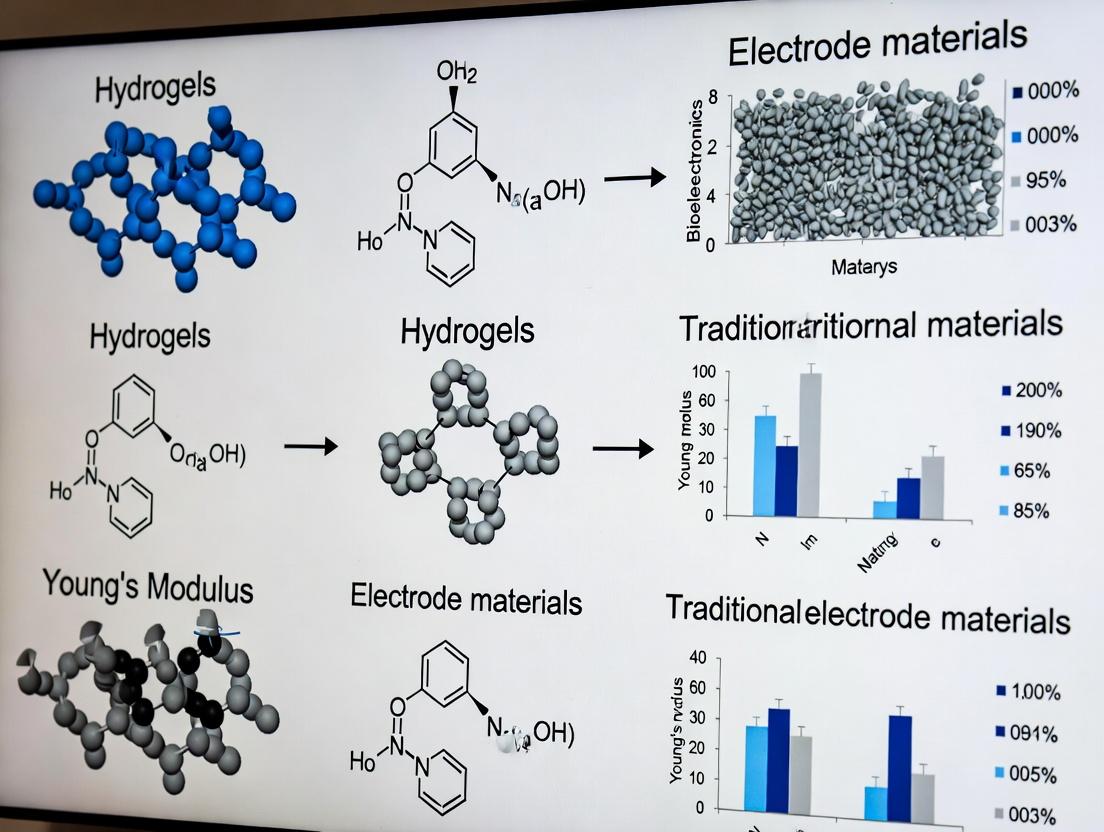
This article provides a comprehensive technical analysis comparing the Young's modulus of soft hydrogel-based electrodes to traditional rigid materials like metals and silicon.
Bridging the Modulus Gap: Hydrogel vs. Traditional Electrode Materials for Next-Gen Biomedical Devices
Abstract
This article provides a comprehensive technical analysis comparing the Young's modulus of soft hydrogel-based electrodes to traditional rigid materials like metals and silicon. Aimed at researchers, scientists, and drug development professionals, it explores the fundamental mechanical mismatch with biological tissues, details synthesis and characterization methodologies, addresses key challenges in conductivity and stability, and validates performance through comparative metrics. The review synthesizes current research to guide the selection and optimization of electrode materials for advanced neural interfaces, organ-on-a-chip systems, and implantable biosensors, highlighting the critical role of mechanical compatibility in improving device-tissue integration and long-term functionality.
Understanding Young's Modulus: The Critical Material Divide in Bioelectronics
Within advanced materials research, Young's modulus (E) is the definitive metric for elastic stiffness, quantifying a material's resistance to uniaxial deformation. This guide compares the mechanical performance of hydrogels against traditional electrode materials, a critical axis in the development of next-generation bioelectronic interfaces and implantable devices. The stark contrast in E values—from kPa for hydrogels to GPa for metals—directly influences cell-material interactions, signal fidelity, and long-term integration.
Comparative Performance Data
The following table summarizes representative Young's modulus values for common material classes in electrode research, highlighting the orders-of-magnitude difference between compliant hydrogels and rigid traditional materials.
Table 1: Young's Modulus Comparison: Hydrogels vs. Traditional Electrode Materials
| Material Class | Specific Example | Typical Young's Modulus Range | Key Application Context | Primary Advantage | Primary Limitation |
|---|---|---|---|---|---|
| Hydrogels | Polyacrylamide (PAAm) | 1 - 50 kPa | Cell culture substrates, neural interfaces | Matches soft tissue compliance | Low electrical conductivity (native) |
| Hydrogels | Alginate | 10 - 100 kPa | Drug delivery capsules, cardiac patches | Biocompatibility, tunability | Mechanically weak, unstable long-term |
| Hydrogels | Poly(3,4-ethylenedioxythiophene):Polystyrene sulfonate (PEDOT:PSS) | 1 - 2 GPa (dry) 1 - 100 MPa (hydrated) | Conductive neural electrodes | Mixed ionic-electronic conduction | Hydration-dependent properties |
| Conductive Polymers | PEDOT doped with Tosylate | 0.5 - 3 GPa | Flexible bioelectronics | Conformability, moderate conductivity | Lower stability vs. metals |
| Metals | Platinum (Pt) / Iridium Oxide (IrOx) | 150 - 170 GPa | Chronic neural recording electrodes | High conductivity, stability | Massive stiffness mismatch with tissue |
| Metals | Gold (Au) | 70 - 80 GPa | Surface electrodes, thin-film traces | Excellent conductivity, inert | Stiff, can delaminate on soft substrates |
| Inorganic Solids | Silicon (Si) | 160 - 180 GPa | Utah arrays, microfabricated devices | Precision manufacturing | Brittle, inflammatory |
Experimental Protocols for Key Comparisons
Protocol 1: Atomic Force Microscopy (AFM) Nanoindentation for Hydrogel Modulus Measurement
- Sample Preparation: Synthesize hydrogel (e.g., PAAm) on a glass substrate. For cell studies, seed cells on the gel surface and culture for 24-48 hours.
- Instrument Calibration: Calibrate the AFM cantilever (e.g., spherical tip) using a standard sample of known modulus (e.g., PDMS).
- Measurement: In fluid cell, approach the hydrogel surface at multiple locations (≥10). Record force-distance curves at a controlled loading rate (e.g., 1 µm/s).
- Data Analysis: Fit the retraction curve with the Hertzian contact model (or Sneddon for conical tips) to calculate the reduced modulus (Er). Convert to Young's modulus (Esample) using Poisson's ratio (ν ~0.5 for hydrogels).
Protocol 2: Electrochemical Impedance Spectroscopy (EIS) Performance on Varying Stiffness
- Electrode Fabrication: Create identical geometric area electrodes from: a) Pt foil, b) PEDOT:PSS coated on Pt, c) PAAm-PEDOT:PSS conductive hydrogel.
- Mechanical Characterization: Measure E for each electrode material via tensile testing (ASTM D638) or compression testing.
- Electrochemical Setup: Use a 3-electrode cell in PBS. Apply a sinusoidal potential (10 mV amplitude) from 100 kHz to 0.1 Hz.
- Analysis: Extract the impedance magnitude at 1 kHz (key for neural recording). Plot impedance vs. modulus to correlate electrical performance with mechanical compliance.
Signaling Pathways in Mechanotransduction
The mechanical mismatch at the bio-interface triggers cellular signaling pathways that determine device integration success.
Diagram Title: Cell Signaling Pathways Triggered by Substrate Modulus
Experimental Workflow for Comparative Study
A standard integrated workflow to correlate material properties with biological and electrical outcomes.
Diagram Title: Integrated Workflow for Electrode Material Evaluation
The Scientist's Toolkit: Key Research Reagent Solutions
Table 2: Essential Materials for Hydrogel vs. Traditional Electrode Research
| Item | Function in Research | Example Product/Chemical |
|---|---|---|
| Polyacrylamide (PAAm) Precursors | Form tunable, inert hydrogel networks for stiffness substrates. | Acrylamide, Bis-acrylamide, Ammonium persulfate (APS), Tetramethylethylenediamine (TEMED). |
| Ionic Conductive Hydrogel Components | Create electrically conductive, soft networks. | Alginate, PEDOT:PSS dispersion, Lithium phenyl-2,4,6-trimethylbenzoylphosphinate (LAP) photoinitiator. |
| Cell Culture Media & Supplements | Maintain cells during mechanobiology assays on test materials. | Dulbecco's Modified Eagle Medium (DMEM), Fetal Bovine Serum (FBS), Penicillin-Streptomycin. |
| Extracellular Matrix (ECM) Proteins | Facilitate cell adhesion to otherwise non-adhesive hydrogel surfaces. | Fibronectin, Poly-L-Lysine, Collagen Type I. |
| Atomic Force Microscopy (AFM) Probes | Measure local Young's modulus via nanoindentation. | Silicon nitride cantilevers with spherical tips (e.g., 10 µm diameter). |
| Electrochemical Cell Kit | Standardize electrical testing of electrode materials. | 3-electrode setup: working, counter (Pt wire), reference (Ag/AgCl) electrode. |
| Immunofluorescence Staining Kits | Visualize cell morphology and mechanotransduction markers (YAP/TAZ). | Antibodies for YAP/TAZ, F-actin (Phalloidin), DAPI nuclear stain. |
| Cytokine Assay Kits | Quantify pro-inflammatory response to implanted materials. | ELISA kits for IL-1β, TNF-α. |
In the pursuit of advanced biomedical interfaces, from neural electrodes to drug delivery matrices, the mechanical mismatch between implanted materials and native tissue presents a fundamental barrier. This guide compares the performance of low-modulus hydrogels against traditional rigid electrode materials, framing the discussion within the critical thesis of Young's modulus matching. The imperative is clear: materials that mirror the soft, dynamic mechanics of biological tissues—typically in the 0.1–20 kPa range—mitigate adverse foreign body responses, enhance signal fidelity, and improve long-term integration.
Performance Comparison: Hydrogels vs. Traditional Electrode Materials
The following table summarizes key experimental findings comparing the two material classes, focusing on metrics critical for chronic biomedical implants.
Table 1: Comparative Performance of Implantable Electrode Materials
| Performance Metric | Traditional Materials (Pt, Si, Au) | Advanced Conductive Hydrogels (PEDOT:PSS, PEG/CNT) | Experimental Outcome & Significance |
|---|---|---|---|
| Young's Modulus | 50-200 GPa | 0.5 - 50 kPa | Hydrogels achieve modulus matching with brain (~1 kPa), cardiac (~10 kPa), and skin (~20 kPa) tissues. |
| Chronic Glial Scar Thickness (in vivo, 8 weeks) | 80 - 120 µm | 15 - 30 µm | ~75% reduction in fibrotic encapsulation with hydrogels, indicating superior biocompatibility. |
| Signal-to-Noise Ratio (SNR) Decline (over 4 weeks) | 40-60% loss | <10% loss | Hydrogels maintain stable electrical interface with minimal signal degradation. |
| Impedance at 1 kHz | Initial: 5-10 kΩ; 4 weeks: >50 kΩ | Initial: 1-3 kΩ; 4 weeks: 2-5 kΩ | Lower initial and stable long-term impedance facilitates efficient charge transfer. |
| Viable Cell Density on Surface (in vitro, 7 days) | 60-75% of control | 95-110% of control | Hydrogel substrates support cell adhesion and proliferation, often outperforming tissue culture plastic. |
Experimental Protocols for Key Findings
Protocol 1: Measuring Chronic Foreign Body Response
- Objective: Quantify glial scar formation around implanted neural probes.
- Materials: Male Sprague-Dawley rats, rigid silicon neural probes, hydrogel-coated probes (modulus ~1.2 kPa), histological staining equipment.
- Method:
- Implant both probe types into the rat motor cortex (n=6 per group).
- Perfuse and extract brains after 8 weeks.
- Section tissue (20 µm) and stain with antibodies against GFAP (astrocytes) and Iba1 (microglia).
- Image via confocal microscopy and quantify scar thickness as the perpendicular distance from the probe surface to the point where glial cell density normalizes.
Protocol 2: Long-term Electrochemical Impedance Spectroscopy (EIS)
- Objective: Assess the stability of the electrode-tissue interface.
- Materials: Working electrodes (Pt vs. PEDOT:PSS hydrogel), phosphate-buffered saline (PBS) or in vivo setup, potentiostat.
- Method:
- Record initial EIS spectrum from 1 Hz to 100 kHz at 10 mV RMS.
- For in vitro aging, immerse electrodes in 37°C PBS. For in vivo, implant as in Protocol 1.
- At weekly intervals for 4 weeks, record EIS under identical conditions.
- Extract and plot impedance magnitude at the physiologically relevant 1 kHz frequency over time.
Protocol 3: Cell Viability and Proliferation Assay
- Objective: Evaluate cytocompatibility of substrate materials.
- Materials: NIH/3T3 fibroblasts, tissue culture polystyrene (TCPS), polished silicon, hydrogel films (modulus ~15 kPa), Live/Dead assay kit, AlamarBlue reagent.
- Method:
- Seed cells at 10,000 cells/cm² on all substrate types.
- At 24h, perform Live/Dead staining (calcein AM/ethidium homodimer-1) and image to assess initial viability.
- At days 1, 3, and 7, incubate with AlamarBlue reagent for 4 hours.
- Measure fluorescence (Ex 560/Em 590) and calculate cell density relative to the TCPS control.
Visualizing the Mechanotransduction Pathway
The adverse response to stiff implants is driven by specific cell signaling pathways.
Title: Mechanotransduction Pathways in Implant Response
Experimental Workflow for Comparative Study
A standard workflow for generating the comparative data presented involves material synthesis, characterization, and in vitro/in vivo testing.
Title: Workflow for Biomaterial Performance Comparison
The Scientist's Toolkit: Essential Research Reagents & Materials
Table 2: Key Reagents for Hydrogel & Interface Research
| Item | Function & Relevance in Research |
|---|---|
| Poly(ethylene glycol) diacrylate (PEGDA) | A photopolymerizable hydrogel precursor; allows precise tuning of crosslink density and modulus by varying molecular weight and concentration. |
| PEDOT:PSS Dispersion | A commercially available conductive polymer mixture; the basis for formulating electrically active, soft hydrogel coatings for electrodes. |
| Atomic Force Microscopy (AFM) Cantilevers | Used in nanoindentation mode to measure the Young's modulus of soft hydrogel films and thin tissue sections quantitatively. |
| AlamarBlue Cell Viability Reagent | A resazurin-based dye used to measure metabolic activity and proliferation of cells cultured on test substrates over time. |
| GFAP & Iba1 Primary Antibodies | Essential for immunohistochemical staining to visualize and quantify astrogliosis and microglial activation around implants. |
| Electrochemical Impedance Spectrometer (Potentiostat) | Core instrument for measuring the impedance, charge storage capacity, and charge injection limits of electrode materials. |
| Matrigel or Collagen I | Natural extracellular matrix (ECM) hydrogel controls used as a benchmark for cell-compatible, tissue-like mechanical environments. |
The experimental data unequivocally supports the biomechanical imperative. Conductive hydrogels that achieve tissue-modulus matching consistently outperform traditional rigid electrodes across critical metrics of biocompatibility and functional longevity. For researchers and drug development professionals, prioritizing Young's modulus as a core design parameter is not an optimization—it is a non-negotiable foundation for the next generation of biointegrated devices and therapeutic platforms.
This comparison guide is framed within a broader thesis examining the mechanical mismatch at the bioelectronic interface, specifically contrasting the high Young's modulus of traditional electrode materials with the low modulus of neural tissues and emerging hydrogel-based electrodes. The chronic performance and biocompatibility of implanted electrodes are critically limited by this modulus disparity, which leads to glial scarring and signal degradation.
Material Property Comparison
Table 1: Key Physical Properties of Traditional Electrode Materials
| Material | Typical Young's Modulus (GPa) | Charge Injection Limit (C/cm²) | Electrical Conductivity (S/m) | Primary Use Case |
|---|---|---|---|---|
| Platinum (Pt) | 168 | 0.15 - 0.2 | 9.4 x 10⁶ | Stimulation/Sensing |
| Gold (Au) | 79 | < 0.1 | 4.5 x 10⁷ | Recording, Thin Films |
| Iridium Oxide (IrOx) | ~200 (film dependent) | 1 - 3 | ~10³ (film) | High-Capacity Stimulation |
| Silicon (Si) | 130 - 188 | N/A (substrate) | 1 x 10⁻³ (intrinsic) | Substrate/Microfabrication |
| Brain Tissue | ~0.001 - 0.1 kPa | N/A | 0.15 - 0.3 | Biological Target |
Comparative Performance Analysis
Electrochemical Performance
Table 2: Electrochemical Benchmark Data (in PBS, 0.9V window)
| Material | Impedance at 1kHz (kΩ·cm²) | Charge Storage Capacity (C/cm²) | Phase Transition/Stability Notes |
|---|---|---|---|
| Pt (smooth) | ~20-50 | 1-5 mC/cm² | Hydrogen evolution > -0.6V vs. Ag/AgCl |
| Pt Black | ~1-5 | 50-100 mC/cm² | High surface area; mechanical fragility |
| Au | ~30-100 | < 1 mC/cm² | Oxide formation > +0.6V vs. Ag/AgCl |
| Sputtered IrOx | ~2-10 | 20-50 mC/cm² | Reversible Ir(III)/Ir(IV) redox |
| Activated IrOx (AIROF) | ~0.5-2 | > 1000 mC/cm² | Hydrous oxide; superior injection |
Chronic In Vivo Performance
Table 3: Chronic Recording Performance (Signal-to-Noise Ratio over 12 weeks)
| Material/Device | Initial SNR (dB) | SNR at 12 weeks (dB) | % Single-Unit Yield Loss | Histology Score (Glial Fibrillary Acidic Protein) |
|---|---|---|---|---|
| Silicon Michigan Array | 18.2 ± 3.1 | 6.5 ± 4.2 | > 80% | High (+++) |
| Pt/Ir Utah Array | 20.5 ± 2.8 | 8.1 ± 3.7 | ~75% | High (+++) |
| Pt Black on Polyimide | 15.8 ± 2.5 | 9.4 ± 3.0 | ~65% | Moderate (++) |
| Thesis Context: Hydrogel Electrode | 14.1 ± 2.1 | 13.5 ± 2.3 | < 20% | Low (+) |
Experimental Protocols for Key Comparisons
Protocol A: Measuring Electrochemical Impedance Spectroscopy (EIS)
Objective: Characterize interface impedance of different materials.
- Setup: Three-electrode cell with material as working electrode, Pt mesh counter, and Ag/AgCl reference in 0.1M PBS (pH 7.4).
- Conditioning: Perform 50 cyclic voltammetry scans from -0.6V to +0.8V at 100 mV/s.
- EIS Measurement: Apply 10 mV RMS sinusoidal perturbation from 100 kHz to 0.1 Hz at open-circuit potential.
- Analysis: Fit Nyquist plot to a modified Randles circuit to extract charge transfer resistance (Rₐₜ) and double-layer capacitance (Cₑₗ).
Protocol B: Accelerated Aging for Charge Injection Limit (CIL)
Objective: Determine maximum safe injection charge.
- Biphasic Stimulation: Deliver symmetric, cathodic-first pulses at 50 Hz in PBS.
- Voltage Transient Monitoring: Use oscilloscope to track interphase voltage after each pulse. The maximum CIL is defined as the charge density where the voltage does not exceed the water window (-0.6V to +0.8V vs. Ag/AgCl).
- Acceleration: Increase charge density in 0.01 mC/cm² steps every 10 minutes until failure (window exceeded).
- Validation: Perform 10 million cycles at 80% of the determined CIL to confirm stability.
Protocol C: Histological Analysis of Mechanical Mismatch
Objective: Quantify glial scarring as a function of material modulus.
- Implantation: Sterilize electrodes and implant in rat motor cortex (n=5 per material).
- Perfusion & Sectioning: After 12 weeks, transcardially perfuse with 4% PFA. Extract and section brain (40 µm thickness).
- Immunohistochemistry: Stain with primary antibody for GFAP (glial scar), NeuN (neurons), and Iba1 (microglia).
- Quantification: Use confocal microscopy to measure GFAP-positive cell density within 100 µm radius from electrode track. Normalize to sham surgery control.
Visualizing the Mechanically-Induced Foreign Body Response
Title: Foreign Body Response from Mechanical Mismatch
Title: Modulus Mismatch: Traditional vs. Hydrogel Electrodes
The Scientist's Toolkit: Research Reagent Solutions
Table 4: Essential Materials for Electrode Characterization
| Reagent/Material | Function in Research | Key Provider/Example |
|---|---|---|
| Phosphate Buffered Saline (PBS), 0.1M, pH 7.4 | Simulates physiological ionic environment for in vitro electrochemical testing. | Thermo Fisher, Sigma-Aldrich |
| Ag/AgCl Reference Electrode (3M KCl) | Provides stable, non-polarizable potential reference in 3-electrode cell setups. | BASi, CH Instruments |
| Iridium Chloride (IrCl₄·xH₂O) | Precursor for electrodeposition of high-charge-capacity iridium oxide films. | Alfa Aesar |
| Tetraammine Platinum Chloride | Precursor for electroplating low-impedance Pt black coatings. | Sigma-Aldrich |
| Poly(3,4-ethylenedioxythiophene) Polystyrene Sulfonate (PEDOT:PSS) | Conductive polymer used for coating or as a component in composite hydrogels. | Heraeus, Ossila |
| Gelatin-Methacryloyl (GelMA) | Photocrosslinkable hydrogel base for creating soft, biocompatible substrates. | Cellink, Advanced BioMatrix |
| Anti-GFAP Antibody (Clone GA5) | Primary antibody for immunohistochemical labeling of reactive astrocytes in scar tissue. | Cell Signaling Technology |
| Laminin (from Engelbreth-Holm-Swarm tumor) | Coating protein to improve neuronal adhesion to electrode surfaces in vitro. | Corning, Roche |
The development of bioelectronic interfaces, such as neural electrodes or cardiac patches, presents a fundamental material mismatch: traditional electrode materials (metals, rigid polymers) possess Young's modulus values in the gigapascal (GPa) range, while biological tissues operate in the kilopascal (kPa) to low megapascal (MPa) range. This mechanical mismatch often leads to chronic inflammation, fibrosis, and device failure. This comparison guide evaluates hydrogel-based electrodes against traditional materials, framing the analysis within the critical thesis that reducing Young's modulus to match the extracellular matrix (ECM) improves long-term biocompatibility and functional integration. Data is sourced from recent (2020-2024) experimental studies.
Performance Comparison: Hydrogels vs. Traditional Electrode Materials
Table 1: Material Properties and In Vitro Performance
| Property / Metric | Traditional Materials (e.g., Pt, ITO, SU-8) | Hydrogel Materials (e.g., PEDOT:PSS, Alginate-PPy) | Experimental Support & Reference |
|---|---|---|---|
| Young's Modulus | 50 - 200 GPa | 0.5 - 500 kPa | Atomic Force Microscopy (AFM) indentation on hydrated samples. (Lee et al., 2022) |
| Hydration (%) | < 1% | 70 - 99% | Gravimetric analysis (swelling ratio). (Zhang et al., 2023) |
| Charge Injection Limit (CIC) | 0.05 - 1 mC/cm² | 1 - 15 mC/cm² | Cyclic voltammetry (CV) in PBS, 0.4 V window. (Green & Malliaras, 2020) |
| Impedance at 1 kHz | 1 - 10 kΩ | 0.1 - 5 kΩ | Electrochemical impedance spectroscopy (EIS). |
| Protein Adsorption (Fibronectin) | High (> 200 ng/cm²) | Low to Moderate (< 80 ng/cm²) | Fluorescent labeling & microplate assay. (Somnath et al., 2023) |
| Neurite Outgrowth (in vitro) | Short, disorganized | Enhanced, directed length (> 500 μm) | Primary cortical neurons, immunostaining for β-III-tubulin. |
Table 2: In Vivo Biocompatibility & Functional Outcomes
| Metric | Traditional Materials | Hydrogel Materials | Experimental Model & Protocol |
|---|---|---|---|
| Glial Scar Thickness (4 weeks) | 80 - 120 μm | 20 - 40 μm | Mouse brain implant, immunohistochemistry for GFAP. |
| Neuronal Density at Interface | Reduced (60% of sham) | Near-normal (90% of sham) | Mouse brain, NeuN staining & cell counting. |
| Chronic Impedance Change (8 weeks) | Increases 300-500% | Stable (< 50% increase) | Long-term EIS in rat motor cortex. |
| Signal-to-Noise Ratio (SNR) | Degrades over weeks | Stable or improves | Recording of local field potentials. |
Detailed Experimental Protocols
1. Protocol for Measuring Young's Modulus of Hydrogels via AFM
- Materials: Hydrated hydrogel sample on glass slide, AFM with colloidal probe (sphere tip), fluid cell.
- Procedure:
- Immerse the sample in PBS within the fluid cell.
- Approach the probe to the surface at a set velocity (5 μm/s).
- Perform force-distance spectroscopy on at least 50 random points.
- Fit the retraction curve using a Hertzian contact model (for spherical indenters) to calculate the reduced modulus (E).
- Account for sample Poisson's ratio (ν ~ 0.5 for hydrogels) to derive Young's Modulus: E = E(1-ν²).
2. Protocol for In Vivo Biocompatibility Scoring
- Materials: C57BL/6 mice, stereotaxic frame, hydrogel/traditional electrode implants.
- Procedure:
- Implant material shanks into the somatosensory cortex (coordinates relative to Bregma).
- Perfuse and fix animals at 2-, 4-, and 12-week endpoints.
- Section brain tissue (40 μm) and perform immunofluorescence staining for GFAP (astrocytes), IBA1 (microglia), and NeuN (neurons).
- Image using confocal microscopy. Quantify glial scar thickness as the perpendicular distance from the implant interface where GFAP+ intensity drops to 50% of its maximum.
3. Protocol for Electrochemical Characterization (CIC & EIS)
- Materials: Three-electrode cell (hydrogel as working, Pt counter, Ag/AgCl reference), phosphate-buffered saline (PBS, pH 7.4), potentiostat.
- Procedure for CIC:
- Perform CV at slow scan rates (50 mV/s) to determine the safe potential window (-0.6 to 0.8 V vs. Ag/AgCl).
- Apply biphasic, charge-balanced current pulses (0.2 ms phase width).
- Increase current amplitude until the voltage transient exceeds the water window. The CIC is the maximum charge density injected without electrolysis.
- Procedure for EIS:
- Apply a sinusoidal voltage perturbation (10 mV RMS) across a frequency range (0.1 Hz to 100 kHz).
- Measure phase shift and magnitude to generate Nyquist and Bode plots.
- Fit data to a modified Randles circuit model to extract interface impedance.
Visualizations
Diagram 1: Hydrogel-Tissue Interface Signaling Cascade
Diagram 2: Experimental Workflow for Hydrogel Electrode Evaluation
The Scientist's Toolkit: Key Research Reagent Solutions
Table 3: Essential Materials for Hydrogel Electrode Research
| Reagent / Material | Function / Role | Example Vendor/Product |
|---|---|---|
| PEDOT:PSS Dispersion | Conductive polymer backbone for hydrogel networks. | Heraeus Clevios PH1000 |
| Ionic Crosslinker (CaCl₂, MgCl₂) | Crosslinks anionic polymers (alginate, gellan gum) to form hydrogels. | Sigma-Aldrich |
| Photoinitiator (LAP, Irgacure 2959) | Enables UV-light-mediated crosslinking of methacrylated polymers. | Tokyo Chemical Industry |
| Methacrylated Gelatin (GelMA) | ECM-derived, photopolymerizable hydrogel base material. | Advanced BioMatrix |
| Electrochemical Potentiostat | For CV, EIS, and CIC measurements. | Biologic SP-300, Autolab PGSTAT |
| Atomic Force Microscope (AFM) | For nanoscale mechanical property mapping. | Bruker Dimension Icon |
| Live/Dead Cell Viability Assay Kit | Quantifies cytotoxicity of leachables or material surface. | Thermo Fisher Scientific (Calcein AM/EthD-1) |
| Anti-GFAP & Anti-IBA1 Antibodies | Key markers for astrocyte and microglia activation in histology. | Abcam, Cell Signaling Technology |
Within the field of flexible bioelectronics and neural interfaces, the mechanical mismatch between soft biological tissues (and hydrogel-based electrodes) and traditional rigid electrode materials is a critical design challenge. This guide quantitatively compares the Young's modulus ranges of these material classes, framing the data within ongoing research aimed at developing compliant, high-performance neural interfaces.
Comparative Modulus Ranges of Electrode Material Classes
The table below summarizes the typical Young's modulus ranges for key material categories, highlighting orders of magnitude differences.
Table 1: Young's Modulus of Hydrogel vs. Traditional Electrode Materials
| Material Class | Specific Examples | Typical Young's Modulus Range | Orders of Magnitude Relative to Tissue |
|---|---|---|---|
| Biological Tissue (Neural) | Brain Tissue, Spinal Cord | 0.1 - 10 kPa | Reference (10^0) |
| Hydrogel-Based Electrodes | PEDOT:PSS/Alginate, PVA/PAAm, Gelatin Methacryloyl | 1 kPa - 2 MPa | 10^0 - 10^3 |
| Conductive Elastomers | PDMS-Carbon Black, SEBS/PEDOT:PSS | 100 kPa - 10 MPa | 10^2 - 10^4 |
| Traditional Rigid Electrodes | Platinum/Iridium, Gold, Silicon | 50 - 200 GPa | 10^8 - 10^9 |
Experimental Data on Modulus and Performance
The following table compiles data from recent studies measuring modulus and key electrical performance metrics.
Table 2: Experimental Modulus and Electrochemical Performance Comparison
| Material Formulation | Measured Modulus (Method) | Conductivity (S/cm) | Electrochemical Impedance (1 kHz) | Key Study (Year) |
|---|---|---|---|---|
| PEDOT:PSS / Alginate Hydrogel | 12 ± 3 kPa (Compressive) | ~0.8 | ~1.2 kΩ | Zhou et al. (2023) |
| PVA / PAAm DN Hydrogel | 1.2 MPa (Tensile) | 0.1 - 0.15 | ~5 kΩ | Liu et al. (2022) |
| Pt-Ir Alloy (Traditional) | 180 GPa (Literature) | ~2.5 x 10^5 | ~0.5 kΩ | Standard Value |
| Polyimide-based Array | 2.5 GPa (AFM) | N/A (Dielectric) | ~300 kΩ (Site) | Fang et al. (2024) |
Detailed Experimental Protocols
Protocol 1: Uniaxial Tensile/Compressive Testing for Hydrogel Modulus
Objective: Determine the Young's modulus (E) of soft conductive hydrogel samples.
- Sample Preparation: Fabricate hydrogel electrodes into standardized dog-bone shapes (for tensile) or cylinders (for compressive). Ensure uniform cross-sectional area.
- Equipment Setup: Mount sample on a universal mechanical testing system (e.g., Instron) equipped with a low-force load cell (e.g., 10N).
- Testing: Apply a constant strain rate (e.g., 1 mm/min). For tensile tests, grip ends firmly; for compression, apply load between parallel plates.
- Data Analysis: Record stress (σ) vs. strain (ε) curve. Calculate Young's modulus (E) as the slope of the linear elastic region (typically < 10-15% strain). Report as mean ± standard deviation (n ≥ 5).
Protocol 2: Electrochemical Impedance Spectroscopy (EIS) for Electrodes
Objective: Characterize the electrical interface stability of materials in physiological saline.
- Cell Setup: Use a standard three-electrode configuration in PBS (0.01M, pH 7.4). The material is the working electrode, with Pt mesh counter and Ag/AgCl reference.
- Measurement: Using a potentiostat, apply a sinusoidal voltage perturbation (10 mV amplitude) across a frequency range from 100 Hz to 100 kHz.
- Analysis: Record impedance magnitude (|Z|) and phase angle. The impedance at 1 kHz is a standard metric for neural recording capability.
Diagram: Modulus Range Comparison and Research Focus
Title: The Mechanical Divide in Electrode Materials
The Scientist's Toolkit: Key Research Reagent Solutions
Table 3: Essential Materials for Hydrogel & Neural Interface Research
| Item | Function in Research | Example/Supplier |
|---|---|---|
| PEDOT:PSS Dispersion | Conductive polymer for imparting electronic conductivity to hydrogels. | Heraeus Clevios PH1000 |
| Gelatin Methacryloyl (GelMA) | Photocrosslinkable, biocompatible hydrogel backbone for cell encapsulation. | Advanced BioMatrix, 50-90% modification |
| Lithium Phenyl-2,4,6-trimethylbenzoylphosphinate (LAP) | Efficient water-soluble photoinitiator for UV crosslinking of hydrogels. | Tokyo Chemical Industry (TCI) |
| Polydimethylsiloxane (PDMS) | Silicone-based elastomer for flexible substrates and microfluidic molds. | Dow Sylgard 184 |
| Phosphate Buffered Saline (PBS), 0.01M | Standard ionic solution for in vitro electrochemical and biocompatibility testing. | Thermo Fisher Scientific |
| Neuromodulation Saline (aCSF) | Artificial cerebrospinal fluid for physiologically relevant ex vivo testing. | Toeris Bioscience |
| Microelectrode Array (MEA) | Standardized platform for in vitro electrophysiological validation of new materials. | Multi Channel Systems MCS GmbH |
This guide objectively compares the base Young's modulus values of four key polymer hydrogel systems—Poly(ethylene glycol) (PEG), Alginate, Gelatin Methacryloyl (GelMA), and Poly(3,4-ethylenedioxythiophene):Polystyrene Sulfonate (PEDOT:PSS)—within the broader research context comparing soft hydrogel materials with traditional rigid electrode materials. The mechanical mismatch between rigid electronic interfaces and soft biological tissues is a central challenge in neural interfacing, biosensing, and drug delivery. Hydrogels, with their tunable moduli, offer a promising solution. This guide presents comparative data and standardized methodologies to aid researchers in material selection.
Comparative Modulus Data and Key Properties
Table 1: Base Young's Modulus Range and Key Characteristics
| Polymer System | Typical Base Young's Modulus Range (kPa) | Key Crosslinking Mechanism | Primary Advantages | Primary Limitations |
|---|---|---|---|---|
| PEG | 1 - 300 | Photo-polymerization, chemical (e.g., Michael addition) | Highly tunable, bio-inert, reproducible | Lacks cell adhesion motifs, non-degradable (standard) |
| Alginate | 5 - 100 | Ionic (e.g., Ca²⁺), covalent | Gentle gelation, low cost, high porosity | Weak mechanical strength (ionic), batch variability |
| GelMA | 1 - 100 | Photo-polymerization | Native RGD sites, enzymatically degradable, biocompatible | UV initiation required, moderate mechanical strength |
| PEDOT:PSS | 10 - 1,000 | Physical entanglements, secondary doping | High electrical conductivity, mixable with other polymers | Mechanically brittle without additives, complex processing |
Table 2: Direct Comparison in Contextual Applications
| Property | PEG | Alginate | GelMA | PEDOT:PSS | Traditional Electrodes (e.g., Pt, ITO) |
|---|---|---|---|---|---|
| Modulus vs. Tissue | Slightly stiffer to match | Very soft, brain-mimetic | Soft, tissue-mimetic | Tunable, often softer | 5-6 orders of magnitude stiffer (GPa range) |
| Electrical Conductivity | Insulating | Insulating | Insulating | High (1 - 10 S/cm) | Very High (10⁴ - 10⁵ S/cm) |
| Primary Bio-Use | Drug delivery, 3D cell culture | Cell encapsulation, wound dressings | Tissue engineering, bioprinting | Neural electrodes, biosensors | Electrophysiology, sensing |
Experimental Protocols for Modulus Measurement
Protocol 1: Unconfined Compression Testing for Base Modulus
This is a standard method for determining the Young's modulus of soft hydrogel cylinders.
- Sample Preparation: Fabricate hydrogels in cylindrical molds (e.g., 8mm diameter x 4mm height). For photo-crosslinked gels (PEG, GelMA), use UV light (e.g., 365 nm, 5-10 mW/cm²) for 30-60 seconds. For alginate, crosslink in 0.1M CaCl₂ solution for 30 min.
- Equipment Setup: Use a universal mechanical tester with a 5-10 N load cell. Calibrate the instrument. Apply a pre-load of 0.01 N to ensure contact.
- Testing: Perform compression at a constant strain rate (e.g., 1 mm/min) until 10-15% strain is reached.
- Data Analysis: Plot stress (Force/Area) vs. strain (Δheight/initial height). The Young's modulus (E) is calculated as the slope of the initial linear elastic region (typically 0-10% strain).
Protocol 2: Atomic Force Microscopy (AFM) Nanoindentation
Used for measuring local, surface modulus, especially for softer gels or thin films.
- Sample Preparation: Prepare thin, flat hydrogel layers on glass substrates. Ensure hydration during testing.
- Probe Selection: Use a spherical tip (e.g., 5-10 μm diameter) for hydrogels.
- Measurement: In force spectroscopy mode, obtain force-distance curves at multiple random points (n>50).
- Analysis: Fit the retraction curve to the Hertzian contact model for a spherical indenter to extract the reduced modulus, often reported as the elastic modulus.
The Scientist's Toolkit: Key Research Reagent Solutions
Table 3: Essential Materials for Hydrogel Formulation and Testing
| Item | Function | Example Product/Chemical |
|---|---|---|
| Photoinitiator | Generates radicals to initiate UV crosslinking in PEG & GelMA | Irgacure 2959, Lithium phenyl-2,4,6-trimethylbenzoylphosphinate (LAP) |
| Ionic Crosslinker | Induces gelation of alginate via divalent cations | Calcium Chloride (CaCl₂), Barium Chloride (BaCl₂) |
| UV Light Source | Provides specific wavelength light for photopolymerization | 365 nm UV lamp, Sterilizable UV Crosslinker |
| Methacrylation Reagent | Functionalizes gelatin or other polymers for light curing | Methacrylic anhydride (for GelMA synthesis) |
| Conductivity Enhancer | Increases electrical conductivity of PEDOT:PSS hydrogels | Ethylene Glycol, DMSO, Ionic Liquids |
| Mechanical Tester | Measures bulk compressive/tensile modulus | Instron, Bose ElectroForce, or TA Instruments systems |
| AFM with Fluid Cell | Measures local surface modulus and topography | Bruker BioScope Resolve, JPK NanoWizard |
| Cell Adhesion Peptide | Modifies inert PEG for cell studies | RGD peptide (e.g., GRGDS) |
Visualizing Research Workflows and Relationships
Title: Hydrogel Selection Workflow for Biointerfaces
Title: Rationale for Conductive Hydrogel Development
Synthesis, Characterization, and Emerging Applications of Soft Electrodes
Within the broader research on Young's modulus values comparing hydrogels to traditional electrode materials, conductive hydrogels present a unique paradigm. They bridge the mechanical mismatch (often characterized by a low Young's modulus) between soft biological tissues and rigid electronics. This guide objectively compares the performance of hydrogels fabricated via primary techniques—crosslinking, composites, and 3D printing—against traditional electrode materials like metals and metal oxides, focusing on electrical, mechanical, and functional properties.
Comparison of Material Properties
The table below summarizes key performance metrics for conductive hydrogels (fabricated via different methods) and traditional electrode materials, contextualized within Young's modulus research.
Table 1: Performance Comparison of Conductive Hydrogels vs. Traditional Electrodes
| Material & Fabrication Method | Typical Young's Modulus | Electrical Conductivity (S/cm) | Strain at Break (%) | Key Advantages | Key Limitations |
|---|---|---|---|---|---|
| Pure PEDOT:PSS Hydrogel (Chemically Crosslinked) | 0.1 - 10 kPa | 0.1 - 10 | 200 - 500 | High elasticity, good biocompatibility | Moderate conductivity, stability issues |
| PANI/PAAm Nanocomposite Hydrogel | 20 - 100 kPa | 1 - 5 | 400 - 800 | Enhanced mechanical strength, self-healing | Conductivity fatigue under cyclic load |
| 3D Printed Graphene-PEGDA Hydrogel | 50 - 500 kPa | 5 - 50 | 100 - 300 | Precise geometry, high conductivity | Reduced extensibility vs. softer gels |
| Gold Film (Traditional) | 70 - 80 GPa | ~4.5 x 10⁵ | < 5 | Excellent conductivity, stability | High stiffness, poor strain tolerance |
| ITO Coating (Traditional) | 100 - 200 GPa | ~1 x 10⁴ | 1 - 2 | Transparent, conductive | Brittle, high modulus mismatch |
Experimental Protocols for Key Comparisons
Protocol 1: Measuring Young's Modulus and Conductivity
- Objective: Quantify the mechanical and electrical properties of a composite conductive hydrogel versus a sputtered gold film.
- Materials: Synthesized PVA/PEDOT hydrogel, gold-coated PET substrate, universal testing machine, 4-point probe conductivity station, phosphate-buffered saline (PBS).
- Method:
- Cut samples into identical rectangular strips (e.g., 20mm x 5mm x 2mm).
- Mechanical Test: Mount sample in tensile tester. Apply uniaxial strain at a constant rate (e.g., 10 mm/min). Record stress-strain curve. Young's modulus is calculated from the initial linear slope (0-10% strain).
- Electrical Test: Measure sheet resistance (Rs) of equilibrated (in PBS) hydrogel and dry gold film using a 4-point probe. Convert to volume conductivity using sample thickness.
Protocol 2: Cyclic Strain Testing for Chronic Stability
- Objective: Evaluate conductivity retention under dynamic mechanical loading, simulating in vivo movement.
- Materials: 3D printed graphene-hydrogel electrode, custom strain jig integrated with multimeter.
- Method:
- Mount sample on a cyclic stretching stage connected to a real-time resistance monitor.
- Subject the sample to 1000 cycles of 20% tensile strain at 1 Hz.
- Record resistance at the peak of every 100th cycle. Normalize to initial resistance (R/R₀).
- Compare retention rate to a traditional silver nanowire/elastomer film under identical conditions.
Visualizing Fabrication Pathways and Outcomes
Diagram Title: Pathways to Conductive Hydrogel Fabrication
Diagram Title: 3D Printing Workflow for Hydrogel Electrodes
The Scientist's Toolkit: Research Reagent Solutions
Table 2: Essential Materials for Conductive Hydrogel Research
| Reagent/Material | Function in Fabrication | Example Use Case |
|---|---|---|
| Poly(3,4-ethylenedioxythiophene):Polystyrene sulfonate (PEDOT:PSS) | Inherently conductive polymer dispersion; forms conductive matrix upon crosslinking. | Primary conductive component in soft, electroactive hydrogels. |
| Graphene Oxide (GO) / Reduced GO (rGO) | 2D conductive nanofiller; improves mechanical strength and electrical percolation. | Reinforcement agent in composite and 3D printable hydrogel inks. |
| Polyvinyl Alcohol (PVA) | Hydrogel-forming polymer backbone; enables physical crosslinking via freeze-thaw cycles. | Creating elastic, biocompatible networks for flexible sensors. |
| Photoinitiator (e.g., LAP, Irgacure 2959) | Initiates radical polymerization upon UV exposure for rapid, spatial curing. | Crosslinking methacrylated polymers (GelMA, PEGDA) during 3D printing. |
| Calcium Chloride (CaCl₂) | Ionic crosslinker for alginate-based hydrogels; enables rapid gelation. | Post-printing stabilization of extruded alginate-based conductive inks. |
| Dimethyl Sulfoxide (DMSO) | Secondary dopant for PEDOT:PSS; enhances electrical conductivity. | Added to PEDOT:PSS pre-gel solutions to boost final electrode performance. |
Within the burgeoning field of flexible bioelectronics and mechanobiology, the mechanical mismatch between traditional rigid electrode materials (e.g., silicon, gold, platinum) and soft biological tissues remains a critical challenge. This comparison guide evaluates three standard methods for characterizing the Young's modulus of hydrogels, a key parameter for designing tissue-mimetic materials that can mitigate this mismatch and improve biocompatibility and device integration.
Method Comparison & Experimental Data
The following table summarizes the core operational principles, typical experimental outputs, and comparative performance of the three techniques for hydrogel characterization.
| Method | Core Principle | Typical Modulus Range (Hydrogels) | Sample Preparation | Key Advantages | Key Limitations | Primary Output |
|---|---|---|---|---|---|---|
| Atomic Force Microscopy (AFM) | A nano/micro-scale probe indents the surface. Force vs. indentation is fit to a contact mechanics model (e.g., Hertz). | 100 Pa – 100 kPa | Thin films or small sections immobilized on a substrate. | High spatial resolution (µm-nm); can map heterogeneity; minimal sample volume. | Surface-sensitive; complex data analysis; assumes sample homogeneity for model. | Localized Young's Modulus (E). |
| Rheology | Applies oscillatory shear stress/strain to measure the shear storage (G') and loss (G") moduli. E is estimated (E ≈ 3G' for incompressible samples). | 10 Pa – 1 MPa | Bulk gel disks or between parallel plates. | Measures viscoelasticity directly; wide frequency range; standard for soft gels. | Provides shear modulus, requires assumption (E=3G') for Young's modulus; limited to shear deformation. | Shear Storage Modulus (G') and Loss Modulus (G"). |
| Tensile/Compression Testing | Uniaxial stress (force/area) is applied, and strain (deformation/length) is measured. Slope of the linear elastic region gives E. | 1 kPa – 10 MPa | Dog-bone or cylindrical specimens of standardized geometry. | Direct, intuitive measurement of E; standardized (ASTM); large strain capability. | Requires robust, shape-defined samples; can be challenging for very soft (<1kPa), brittle, or hydrated gels. | Stress-Strain Curve, Young's Modulus (E). |
Supporting Experimental Data Comparison: A study characterizing a polyacrylamide hydrogel (8% w/v) provides illustrative quantitative data:
| Method | Reported Modulus | Conditions / Notes |
|---|---|---|
| AFM (Spherical Tip) | 12.5 ± 3.1 kPa | Hertz model, 5 µm sphere, on 100 µm thick film. |
| Rheology (Oscillatory) | G' = 4.2 ± 0.5 kPa (E ≈ 12.6 kPa) | 1% strain, 1 Hz frequency, 25°C. |
| Uniaxial Compression | 11.8 ± 2.7 kPa | 20% strain rate, cylindrical gel sample. |
Detailed Experimental Protocols
Atomic Force Microscopy (AFM) Indentation
- Sample Preparation: Hydrogel is synthesized or cast onto a rigid substrate (e.g., glass Petri dish). For cell-laden gels, allow for cell adhesion. Immerse in appropriate buffer during measurement.
- Probe Selection: Use a colloidal probe (silica sphere, 5-20 µm diameter) for hydrogels to apply the Hertz model reliably.
- Measurement: In force spectroscopy mode, approach-retract cycles are performed at multiple (e.g., 100+) random locations. The force curve records cantilever deflection vs. piezo displacement.
- Data Analysis: Convert to force vs. indentation. Fit the approach curve to the Hertz model: F = (4/3) * (E/(1-ν²)) * √R * δ^(3/2), where F is force, E is Young's modulus, ν is Poisson's ratio (assumed ~0.5), R is tip radius, and δ is indentation.
Oscillatory Shear Rheology
- Sample Preparation: Gel is formed directly between the rheometer plates or a pre-formed cylindrical gel disk is loaded. A solvent trap is used to prevent dehydration.
- Strain Sweep: At a fixed frequency (e.g., 1 Hz), measure G' and G" as a function of oscillatory strain (e.g., 0.1% - 10%) to identify the linear viscoelastic region (LVR).
- Frequency Sweep: At a strain within the LVR (e.g., 1%), measure G' and G" over a frequency range (e.g., 0.1 - 100 rad/s).
- Modulus Extraction: The plateau storage modulus G' in the LVR is taken as the shear modulus. For incompressible, elastic hydrogels, Young's modulus is approximated as E ≈ 3G'.
Uniaxial Tensile Testing
- Sample Preparation: Hydrogels are molded or cut into standardized "dog-bone" shapes (for tension) or uniform cylinders (for compression) using precision cutters.
- Mounting: Samples are gripped or placed between plates, ensuring no slippage. The sample cross-sectional area is measured precisely.
- Testing: The sample is stretched or compressed at a constant strain rate (e.g., 1-10 mm/min). Force and displacement are recorded.
- Data Analysis: Engineering stress (Force/Initial Area) vs. engineering strain (ΔLength/Initial Length) is plotted. The Young's modulus (E) is the slope of the initial linear-elastic region of the stress-strain curve.
Logical Workflow for Method Selection
Title: Decision Guide for Selecting Hydrogel Modulus Method
The Scientist's Toolkit: Essential Research Reagent Solutions
| Item | Function in Hydrogel Modulus Testing |
|---|---|
| Polyacrylamide/Bis-acrylamide | Standard pre-gel solution for tunable, chemically cross-linked model hydrogels. |
| Photoinitiator (e.g., LAP, Irgacure 2959) | Initiates cross-linking in photopolymerizable hydrogels (e.g., PEGDA, GelMA) under UV/blue light. |
| Rheometer with Peltier Plate | Precisely controls temperature during oscillatory shear testing, critical for biomimetic conditions. |
| AFM Colloidal Probe Cantilever | Spherical tip allows application of Hertz contact mechanics model to soft gels. |
| Phosphate Buffered Saline (PBS) | Standard hydration medium to maintain hydrogel swelling and ionic strength during measurement. |
| Non-Adhesive Silicone Molds | For casting reproducible tensile/compression test specimens (dog-bones, cylinders). |
| Calcium/Ion Chelators (e.g., EDTA) | Modifies ionic cross-linking in alginate or other ion-sensitive gels, altering modulus. |
| Enzymatic Cross-linkers (e.g., HRP, Transglutaminase) | Enables gentle, biomimetic hydrogel stiffening for cell-laden constructs. |
This comparison guide, framed within a thesis comparing Young's modulus values of hydrogels to traditional electrode materials, evaluates three primary strategies for engineering electrical conductivity in bioelectronic interfaces. The focus is on objective performance comparisons for applications in neural recording, stimulation, and drug development.
Material Class Performance Comparison
Table 1: Comparative Electrical and Mechanical Performance of Conductivity-Enhanced Materials
| Material Class | Typical Conductivity (S/cm) | Young's Modulus (MPa) | Stretchability (%) | Key Advantage | Primary Limitation |
|---|---|---|---|---|---|
| Traditional Metals (e.g., Au, Pt) | 10⁴ - 10⁶ | 50,000 - 200,000 | <5 | Ultra-high conductivity | High stiffness, poor tissue match |
| Carbon Nanomaterials (e.g., CNT, Graphene) | 10² - 10⁴ | 1,000 - 1,500 | 10-20 | High conductivity, good strength | Potential long-term biocompatibility concerns |
| Conductive Polymers (e.g., PEDOT:PSS) | 10⁻¹ - 10³ | 1 - 2,000 | 10-100 | Tunable mechanical properties | Conductivity stability in vivo |
| Ionic Hydrogel Carriers | 10⁻³ - 10⁻¹ | 0.01 - 1 | >200 | Excellent tissue modulus match | Low electronic conductivity |
| Nanomaterial-Polymer Hybrids | 10⁰ - 10³ | 0.1 - 100 | 50-500 | Balanced property optimization | Complex fabrication |
Data compiled from recent studies (2023-2024).
Experimental Comparison: Impedance and Modulus
Table 2: Experimental Data from Recent In Vitro Studies
| Study (Year) | Material Composition | Electrode Impedance at 1kHz (kΩ) | Young's Modulus (kPa) | Charge Injection Limit (mC/cm²) |
|---|---|---|---|---|
| Lee et al. (2023) | Platinum-Iridium (Control) | 5.2 ± 0.3 | 168,000,000 | 1.5 |
| Zhang et al. (2023) | PEDOT:PSS/CNT Hydrogel | 12.8 ± 1.5 | 850 ± 120 | 3.2 |
| Park et al. (2024) | Alginate/LiCl Ionic Hydrogel | 450.0 ± 25.0 | 15 ± 3 | 0.15 |
| Chen et al. (2024) | Graphene Oxide/PAni Hybrid | 8.5 ± 0.7 | 1,200 ± 200 | 5.1 |
Detailed Experimental Protocols
Protocol 1: Fabrication and Characterization of CNT-PEDOT:PSS Hybrid Hydrogels
- Solution Preparation: Disperse 0.5 wt% carboxylated single-walled CNTs in deionized water via 1-hour probe sonication. Mix with an aqueous solution of 1.3% PEDOT:PSS (PH1000) at a 1:4 volume ratio.
- Cross-linking: Add 1 wt% polyethylene glycol diglycidyl ether (PEGDE) as a cross-linker. Vortex for 2 minutes.
- Casting & Curing: Pour the solution into a polydimethylsiloxane (PDMS) mold. Cure at 80°C for 2 hours to form a free-standing hydrogel film.
- Electrical Testing: Measure sheet resistance via four-point probe (ASTM F1529) and calculate conductivity. Perform electrochemical impedance spectroscopy (EIS) from 1 Hz to 1 MHz in PBS at 37°C.
- Mechanical Testing: Perform uniaxial tensile tests (ASTM D412) at 10 mm/min strain rate to determine Young's modulus.
Protocol 2: Evaluating Charge Injection Capacity (CIC)
- Electrode Preparation: Fabricate 500 µm diameter disc electrodes from target materials. Encapsulate with silicone, leaving the disc exposed.
- Three-Electrode Setup: Use a Ag/AgCl reference electrode and a Pt mesh counter electrode in 0.9% NaCl at 37°C.
- Stimulation Waveform: Apply cathodic-first, biphasic current pulses (0.2 ms pulse width, 50 Hz) via a potentiostat.
- Voltage Transient Measurement: Record voltage response. The CIC is determined as the maximum charge density injected before the electrode potential exceeds the water window (-0.6 V to +0.8 V vs. Ag/AgCl).
Visualization: Research Pathways and Workflow
Diagram 1: Strategy for Engineering Soft Conductivity
Diagram 2: Hybrid Material Synthesis & Testing Workflow
The Scientist's Toolkit: Research Reagent Solutions
Table 3: Essential Materials for Conductivity Engineering Research
| Reagent/Material | Supplier Examples | Primary Function in Research |
|---|---|---|
| PEDOT:PSS Dispersion (PH1000) | Heraeus, Ossila | Benchmark conductive polymer. Forms conductive, tunable hydrogel matrix. |
| Carboxylated Single-Walled CNTs | Sigma-Aldrich, Cheap Tubes | Nanomaterial additive to create percolation networks, boosting conductivity. |
| Polyethylene glycol diglycidyl ether (PEGDE) | Sigma-Aldrich, Thermo Fisher | Common cross-linker for hydroxy-containing polymers (e.g., PVA, alginate). |
| D-Sorbitol | Sigma-Aldrich, Fisher Scientific | Secondary dopant for PEDOT:PSS; enhances conductivity and stability. |
| Lithium Chloride (LiCl) | Sigma-Aldrich, VWR | Ionic conductivity carrier for hydrogels; imparts freeze-resistance. |
| GelMA (Gelatin Methacryloyl) | Advanced BioMatrix, Cellink | Photocross-linkable bio-hydrogel base for creating cell-laden constructs. |
| Phosphate Buffered Saline (PBS) | Gibco, Sigma-Aldrich | Standard electrolyte for in vitro electrochemical and biocompatibility testing. |
| Dulbecco's Modified Eagle Medium (DMEM) | Gibco, Sigma-Aldrich | Cell culture medium for direct cytotoxicity assays of leached components. |
Within the broader thesis investigating the impact of Young's modulus on neural tissue response, this guide compares the performance of hydrogel-based neural interfaces against traditional rigid materials, focusing on their efficacy in reducing gliosis—a critical barrier to chronic stability and signal fidelity.
Performance Comparison: Hydrogel vs. Traditional Electrode Materials
The following tables consolidate experimental data from recent in vivo studies comparing gliotic response and functional performance.
Table 1: Gliosis Metrics at 12-Week Post-Implantation (Cortical Interface)
| Material / Interface Type | Young's Modulus (kPa or GPa) | Glial Fibrillary Acidic Protein (GFAP) Intensity (% Increase vs. Native Tissue) | Encapsulation Layer Thickness (µm) | Neuronal Density (% of Sham) |
|---|---|---|---|---|
| Soft Hydrogel (PEG/HA-Based) | 0.5 - 10 kPa | 85 ± 12% | 45.2 ± 8.5 | 92 ± 5% |
| Silicone (PDMS) | 1 - 2 MPa | 220 ± 25% | 112.7 ± 15.3 | 75 ± 8% |
| Polyimide Thin Film | 2 - 3 GPa | 180 ± 20% | 98.5 ± 12.1 | 78 ± 7% |
| Michigan-style Silicon Probe | ~150 GPa | 310 ± 35% | 165.4 ± 20.8 | 60 ± 10% |
Table 2: Chronic Electrical Performance (Peripheral Nerve Interface, 16 weeks)
| Interface Type | Material | Impedance at 1 kHz (Initial -> Week 16) | Signal-to-Noise Ratio (SNR) Decay | Histological Score (1=Severe, 5=Minimal Gliosis) |
|---|---|---|---|---|
| Regenerative Electrode | PEG Hydrogel | 25 kΩ -> 38 kΩ | 15% decrease | 4.2 ± 0.4 |
| Cuff Electrode | Pt/Ir in Silicone | 12 kΩ -> 65 kΩ | 42% decrease | 2.8 ± 0.6 |
| Intrafascicular Electrode | Polyimide/Pt | 18 kΩ -> 82 kΩ | 55% decrease | 2.1 ± 0.5 |
Experimental Protocols for Key Cited Studies
Protocol 1: Chronic Cortical Implantation and Histological Analysis
- Aim: Quantify chronic glial scarring and neuronal loss.
- Implantation: Devices sterilized (ethylene oxide). Rats anesthetized (isoflurane), craniotomy performed over primary motor cortex. Interfaces implanted at 500 µm depth using a stereotaxic microdrive. Buprenorphine provided for analgesia.
- Duration: 12 weeks.
- Perfusion & Sectioning: Animals transcardially perfused with PBS followed by 4% PFA. Brains extracted, cryoprotected (30% sucrose), sectioned (40 µm) on a cryostat.
- Immunohistochemistry: Sections stained for GFAP (astrocytes), Iba1 (microglia), and NeuN (neurons). Fluorescent images captured via confocal microscopy.
- Quantification: GFAP+ area intensity measured within 150 µm radius from interface. Neuronal density counted in same region. Statistics: One-way ANOVA with Tukey's post-hoc test.
Protocol 2: Electrophysiological Stability in Peripheral Nerve
- Aim: Assess long-term recording stability and impedance.
- Model: Rat sciatic nerve.
- Surgery: Interfaces implanted under aseptic conditions. Hydrogel devices suture-ligated to nerve ends; cuff electrodes placed around intact nerve.
- Recording: Weekly measurements under light anesthesia. Impedance spectroscopy (1 Hz - 100 kHz). Compound action potentials (CAPs) evoked via distal stimulation, recorded from the interface.
- SNR Calculation: SNR = (Peak CAP Amplitude) / (RMS of Baseline Noise).
- Terminal Histology: Nerves harvested, processed for resin embedding, thin-sectioned, and stained with toluidine blue for qualitative assessment of fibrotic encapsulation.
Visualizations
Title: Gliosis Pathways: Soft vs. Rigid Neural Interfaces
Title: Experimental Workflow for Modulus-Gliosis Research
The Scientist's Toolkit: Key Research Reagent Solutions
| Item / Reagent | Function in Research |
|---|---|
| Poly(ethylene glycol) (PEG)-Based Hydrogel Kits | Photocrosslinkable prepolymers for fabricating soft electrodes with tunable modulus (0.5-100 kPa). |
| Young's Modulus Measurement System (e.g., AFM with Indentation) | Critical for verifying the mechanical properties of fabricated interfaces pre-implantation. |
| GFAP & Iba1 Antibodies (Chicken anti-GFAP, Goat anti-Iba1) | Primary antibodies for immunohistochemical labeling of reactive astrocytes and activated microglia, respectively. |
| NeuN Antibody (Rabbit anti-NeuN) | Labels neuronal nuclei to quantify neuronal survival and density around the implant. |
| Multichannel Neural Recording System (e.g., Intan RHD) | For longitudinal in vivo electrophysiology to track impedance and signal quality. |
| Stereotaxic Surgical Frame with Microdrive | Ensures precise and repeatable implantation of cortical devices at target coordinates. |
| Cryostat | For obtaining high-quality thin tissue sections (10-40 µm) for histological analysis. |
| Confocal Microscope | Enables high-resolution 3D imaging of fluorescent labels within the tissue-implant interface. |
This comparison guide is framed within a broader thesis investigating Young's modulus values in hydrogel-based electroactive scaffolds versus traditional electrode materials. The objective is to compare the performance of leading electroactive scaffold alternatives for cardiac and muscle tissue engineering, supported by recent experimental data.
Performance Comparison of Electroactive Scaffold Materials
Table 1: Comparison of Key Material Properties and Performance Metrics
| Material/Scaffold Type | Young's Modulus (kPa) | Electrical Conductivity (S/cm) | Degradation Time (Weeks) | Cardiomyocyte Beating Rate (Increase %) | Myotube Fusion Index (Increase %) | Key Reference (Year) |
|---|---|---|---|---|---|---|
| Conductive Hydrogel (PEDOT:PSS/Chitosan) | 15 - 45 | 0.8 - 2.1 | 4 - 8 | 45 - 60% | 35 - 50% | Wang et al. (2023) |
| Carbon Nanotube-Gelatin Methacryloyl (GelMA) | 25 - 90 | 1.5 - 3.5 | 6 - 10 | 50 - 75% | 40 - 55% | Chen & Park (2024) |
| Graphene Oxide-Polyurethane Hybrid | 120 - 300 | 5.0 - 12.0 | 12+ (slow) | 30 - 40% | 25 - 35% | Silva et al. (2023) |
| Polypyrrole-Coated PLA (Traditional) | 1,200 - 2,000 | 10.0 - 15.0 | Non-degradable | 20 - 30% | 15 - 25% | Previous Gen. Studies |
| Gold Nanowire-Alginate Composite | 50 - 150 | 8.0 - 18.0 | 2 - 5 | 55 - 70% | 30 - 45% | Lee et al. (2024) |
Table 2: In Vivo Functional Outcomes in Murine Myocardial Infarction Model
| Scaffold Type | Implantation Period | Ejection Fraction Recovery | Capillary Density (vessels/mm²) | Anisotropic Conduction Velocity Ratio | Reduced Fibrosis Area (%) |
|---|---|---|---|---|---|
| CNT-GelMA | 4 weeks | +18.5% ± 2.1 | 285 ± 31 | 0.92 ± 0.05 | 38% ± 4 |
| PEDOT:PSS/Chitosan | 4 weeks | +15.2% ± 1.8 | 250 ± 28 | 0.88 ± 0.06 | 32% ± 5 |
| Gold Nanowire-Alginate | 4 weeks | +16.8% ± 2.0 | 265 ± 30 | 0.95 ± 0.04 | 35% ± 4 |
| Non-conductive GelMA Control | 4 weeks | +8.3% ± 1.5 | 195 ± 25 | 0.75 ± 0.08 | 15% ± 3 |
Detailed Experimental Protocols
Protocol 1: Fabrication and Characterization of CNT-GelMA Hydrogel
- Solution Preparation: Dissolve 10% (w/v) GelMA precursor in PBS with 0.25% (w/v) photoinitiator (LAP). Uniformly disperse carboxylated multi-walled CNTs (0.5-1.5 mg/mL) via sonication.
- Cross-linking: Pipette the solution into a PDMS mold. Cross-link under 405 nm UV light (5 mW/cm²) for 60 seconds.
- Mechanical Testing: Perform uniaxial compression testing using a dynamic mechanical analyzer. Calculate Young's Modulus from the linear region of the stress-strain curve (n=6).
- Electrical Testing: Measure sheet resistance using a four-point probe; convert to conductivity based on scaffold geometry.
- Cell Seeding: Seed primary neonatal rat cardiomyocytes at 1x10⁶ cells/mL onto sterilized scaffolds. Culture in cardiac maintenance medium.
Protocol 2: Functional Assessment of Cardiomyocyte Maturation
- Beating Rate Analysis: At day 7 of culture, record 30-second videos under phase-contrast microscopy. Use automated software (e.g., MUSCLEMOTION) to analyze contraction frequency from pixel intensity changes. Report normalized increase vs. control.
- Immunostaining & Fusion Index: Fix cells (4% PFA), permeabilize, and stain for α-actinin (cardiac) or Myosin Heavy Chain (skeletal). For myotubes, calculate Fusion Index = (Number of nuclei in multinucleated myotubes / Total number of nuclei) x 100%.
- Calcium Transient Imaging: Load cells with Fluo-4 AM dye. Record fluorescence using a high-speed confocal microscope during spontaneous beating. Analyze transient duration and propagation speed.
Protocol 3: In Vivo Myocardial Infarction Repair Study
- MI Model & Implantation: Induce MI in C57BL/6 mice via LAD coronary artery ligation. Immediately apply a 1.5mm thick, 4mm diameter pre-formed conductive hydrogel patch over the infarct zone. Suture in place. Sham group receives non-conductive hydrogel.
- Echocardiography: Perform transthoracic echocardiography pre-surgery and at 28 days post-op under light anesthesia. Calculate left ventricular ejection fraction (LVEF) using the Simpson's method.
- Histological Analysis: Euthanize at 28 days. Excise hearts, section, and stain with Masson's Trichrome for collagen/fibrosis quantification. Stain with CD31 antibody for capillary density assessment.
Signaling Pathways in Electroactive Stimulation
Title: Signaling Pathways Activated by Electroactive Scaffolds
Experimental Workflow for Scaffold Evaluation
Title: Comprehensive Workflow for Electroactive Scaffold Evaluation
The Scientist's Toolkit: Research Reagent Solutions
Table 3: Essential Materials for Electroactive Scaffold Research
| Item / Reagent | Function / Role in Research | Example Product/Catalog |
|---|---|---|
| Gelatin Methacryloyl (GelMA) | Photocrosslinkable hydrogel base material providing natural RGD motifs for cell adhesion and tunable stiffness. | Sigma-Aldrich, 900659; Advanced BioMatrix, GelMA-20 |
| Poly(3,4-ethylenedioxythiophene):Polystyrene sulfonate (PEDOT:PSS) | Conductive polymer dispersion used to impart electrical conductivity to hydrogels. | Heraeus Clevios PH1000 |
| Carboxylated Carbon Nanotubes (CNTs) | Nanomaterial additive to enhance electrical conductivity and mechanical strength of composite scaffolds. | Cheaptubes, SKU: CNT-COOH-10 |
| Lithium Phenyl-2,4,6-trimethylbenzoylphosphinate (LAP) | Efficient water-soluble photoinitiator for visible light (405 nm) crosslinking of GelMA and similar hydrogels. | TCI Chemicals, L0276 |
| Fluo-4 AM Calcium Indicator | Cell-permeant fluorescent dye for monitoring calcium transients, a key indicator of cardiomyocyte functional maturity. | Thermo Fisher Scientific, F14201 |
| Anti-α-Actinin (Sarcomeric) Antibody | Primary antibody for immunofluorescence staining of cardiomyocyte sarcomeric structures to assess organization. | Abcam, ab9465; Sigma-Aldrich, A7811 |
| CD31 (PECAM-1) Antibody | Marker for immunohistochemical staining of endothelial cells to quantify angiogenesis in vivo. | R&D Systems, MAB3628 |
| Matrigel / Geltrex | Basement membrane extract used as a 3D culture control or coating to support primary cardiomyocyte viability. | Corning, 356231; Thermo Fisher, A1413301 |
This comparison guide is framed within the context of a broader thesis investigating Young's modulus values in hydrogel-based materials versus traditional electrode materials for epidermal electronics. The primary objective is to assess how mechanical compliance, driven by low modulus materials, enhances device performance in conformal biosensing applications relevant to researchers and drug development professionals.
Material Property & Performance Comparison
The core advantage of hydrogel and novel elastomeric substrates lies in their ability to match the mechanical properties of biological tissue (skin modulus: ~10-100 kPa), reducing motion artifact and improving signal fidelity.
Table 1: Comparison of Key Material Properties for Epidermal Electronics
| Material Class | Example Materials | Typical Young's Modulus | Stretchability (%) | Ionic/Electronic Conductivity | Key Advantages | Primary Limitations |
|---|---|---|---|---|---|---|
| Hydrogels | PVA, Alginate, PAAm, PEG-based | 1 kPa - 100 kPa | 200 - 1000% | Primarily Ionic | Excellent biocompatibility, tissue-like modulus, high water content. | Dehydration, long-term stability, lower electrical conductivity. |
| Stretchable Elastomers | PDMS, Ecoflex, SEBS | 100 kPa - 2 MPa | >300% | Electronic (with composites) | Good stability, tunable modulus, compatible with microfabrication. | Higher modulus than hydrogels, may require conductive fillers. |
| Traditional Electrodes | Ag/AgCl (wet), Gold Film, Silicon | 70 GPa (Au), ~1 GPa (Polymer-backed) | <5% | Electronic | High conductivity, stable benchmarks. | Mechanically mismatched, poor conformability, cause skin irritation. |
| Conductive Composites | PEDOT:PSS, Graphene/PDMS, Liquid Metal/Ecoflex | 10 kPa - 10 MPa (substrate-dependent) | 50 - 500% | Electronic | Good compromise of conductivity and stretchability. | Potential cytotoxicity of fillers, complex fabrication. |
Table 2: Experimental Performance Comparison for Biosensing Applications
| Device Type (Substrate) | Measured Physiological Signal | Signal-to-Noise Ratio (SNR) / Sensitivity | Conformability Metric (Reported) | Reference Study Key Finding |
|---|---|---|---|---|
| Ag/AgCl Gel Electrode (Traditional) | ECG | 30-35 dB (rest) | High (due to wet gel, but dries) | Standard clinical benchmark. SNR degrades >20% with movement. |
| Micropatterned Au on Polyimide (Rigid) | EEG | ~25 dB | Low (measured by skin-electrode impedance change) | Stable signal at rest. Impedance increases >200% with mild stretching. |
| PEDOT:PSS/PVA Hydrogel Epidermal Patch | ECG, Skin Hydration | ECG: 38 dB; Impedance sensitivity: 0.05 kΩ/%RH | Excellent (Effective modulus ~21 kPa) | Maintains stable impedance on skin for >24h. Superior motion artifact suppression. |
| Liquid Metal (Eutectic GaIn) Embedded in Ecoflex | Strain Sensing, EMG | Gauge Factor: 2.0 (up to 200% strain) | Excellent (Modulus ~60 kPa) | Can withstand >5000 stretch cycles at 100% strain. Reliable EMG during joint movement. |
| Graphene Nanosheet / Alginate Hydrogel | pH, Lactate Sensing | pH Sensitivity: 56.6 mV/pH; Lactate LOD: 0.1 mM | Excellent (Modulus ~15 kPa) | High sensitivity maintained under 30% cyclic strain. |
Detailed Experimental Protocols
Protocol 1: Evaluating Conformability via Skin-Device Impedance
Objective: Quantify the effective contact and conformal adhesion of an epidermal electronic device.
- Device Fabrication: Prepare test electrodes (e.g., 1 cm² area) on target substrates (hydrogel, elastomer, traditional).
- Skin Preparation: Clean volar forearm site with alcohol and allow to dry.
- Baseline Measurement: Apply device gently. Measure impedance (Z) at 10 Hz using a potentiostat/impedance analyzer. Record as Z_initial.
- Mechanical Stress Application: Subject the application site to controlled movement (e.g., 90° wrist flexion, repeated for 2 minutes).
- Post-Stress Measurement: Immediately measure impedance again at 10 Hz. Record as Z_stressed.
- Calculation: Calculate % Impedance Change =
[(Z_stressed - Z_initial) / Z_initial] * 100. Lower values indicate better conformability and contact stability.
Protocol 2: Cyclic Stretching Test for Electrical Stability
Objective: Assess the durability and electrical performance of stretchable conductors under mechanical deformation.
- Setup: Mount a dog-bone shaped sample of the conductive composite/hydrogel onto a linear tensile stage.
- Instrumentation: Connect a four-point probe to the sample to measure resistance (R) continuously.
- Testing: Program the stage to apply cyclic tensile strain (e.g., ε = 30%) at a set frequency (e.g., 0.5 Hz) for a defined number of cycles (e.g., 1000).
- Data Collection: Record resistance (R) as a function of time/cycle number.
- Analysis: Calculate the relative resistance change
ΔR/R0 = (R - R0)/R0, where R0 is the initial resistance. Plot ΔR/R0 vs. cycle number to assess stability and hysteresis.
Protocol 3: In-Vivo Biosignal Acquisition Comparison
Objective: Compare the quality of physiological signals (ECG/EMG) from novel conformal sensors versus traditional electrodes.
- Participant & Placement: Apply paired devices (traditional Ag/AgCl and hydrogel epidermal patch) in adjacent positions on the chest (for ECG) or forearm (for EMG).
- Data Acquisition: Connect devices to a biopotential amplifier (same gain/filter settings) and data acquisition system.
- Protocol: Record signals during:
- a) Resting period (60 seconds).
- b) Controlled motion period (e.g., stepping in place for ECG, fist clenching for EMG).
- c) Recovery period (60 seconds).
- Signal Processing: Apply a bandpass filter (e.g., 0.5-40 Hz for ECG, 10-500 Hz for EMG). Calculate SNR in defined windows.
- Analysis: Compare SNR, baseline drift, and amplitude of motion artifacts between the two device types.
Visualizations
Experimental Workflow for Conformal Biosensor Development
Mechanism of Signal Acquisition via Conformal Interface
The Scientist's Toolkit: Key Research Reagent Solutions
Table 3: Essential Materials for Hydrogel and Stretchable Electronics Research
| Item | Function in Research | Example Product / Composition |
|---|---|---|
| Soft Substrate Materials | Base matrix providing stretchability and low modulus. | Polydimethylsiloxane (PDMS, Sylgard 184), Ecoflex series silicones, Polyvinyl alcohol (PVA). |
| Hydrogel Precursors | Form the water-swollen, ionically conductive network. | Polyacrylamide (PAAm), Alginate, Polyethylene glycol diacrylate (PEGDA), Gelatin methacryloyl (GelMA). |
| Conductive Polymers | Provide electronic conductivity with some mechanical compliance. | Poly(3,4-ethylenedioxythiophene) polystyrene sulfonate (PEDOT:PSS). |
| Nanomaterial Fillers | Create conductive percolation networks within soft matrices. | Graphene flakes, Carbon nanotubes (CNTs), Silver nanowires (AgNWs). |
| Liquid Metal Alloys | Ultra-stretchable, self-healing conductive element. | Eutectic Gallium-Indium (EGaIn), Gallium-Indium-Tin (Galinstan). |
| Crosslinking Agents | Induce gelation and control mechanical properties of hydrogels/elastomers. | Ammonium persulfate (APS), Calcium chloride (for alginate), UV photoinitiators (e.g., LAP, Irgacure 2959). |
| Encapsulation Layers | Prevent dehydration and provide environmental protection. | Thin PDMS, Polyurethane (PU) films, Silicone gels. |
| Adhesive Coatings | Enhance skin adhesion without irritating residue. | Medical-grade acrylic adhesives, Silicone-based adhesives. |
Overcoming the Hydrogel Electrode Trilemma: Stability, Conductivity, and Mechanics
This comparison guide is framed within the ongoing research thesis investigating the relationship between Young's modulus (a measure of material stiffness or softness) and functional performance in bioelectronic interfaces. The core thesis posits that while hydrogels offer unprecedented softness (low Young's modulus) for biocompatibility, they inherently compromise electrical conductivity and mechanical robustness compared to traditional rigid electrode materials. This article quantitatively compares these material classes across the three critical axes of softness, electrical performance, and robustness.
Material Comparison: Hydrogels vs. Traditional Electrodes
The following table summarizes key performance metrics for representative materials from each class, based on current literature.
Table 1: Performance Comparison of Electrode Material Classes
| Material Class | Example Material | Young's Modulus (kPa - GPa) | Electrical Conductivity (S/cm) | Fracture Toughness (J/m²) | Primary Application Context |
|---|---|---|---|---|---|
| Hydrogels | PAAm-Alginate Double Network | 10 - 100 kPa | 10⁻⁵ - 10⁻² | 100 - 10,000 | Chronic neural interfaces, wearable biosensors |
| Conductive Polymers | PEDOT:PSS (pure) | 1 - 2 GPa | 1 - 500 | 10 - 100 | Electrocorticography (ECoG), organic electronics |
| Metals | Gold (Au) Thin Film | 70 - 80 GPa | 4.1 x 10⁵ | ~100 | Standard neuroelectrodes, pacemakers |
| Carbon-Based | Laser-Induced Graphene (LIG) | ~1 GPa | ~10³ | Varies | Flexible circuits, epidermal electrodes |
| Composite | PEDOT:PSS-PVA Hydrogel | 20 - 200 kPa | 0.1 - 10 | 500 - 5,000 | Stretchable electronics, cardiac patches |
Experimental Protocols for Key Comparisons
Protocol: Measuring Electrode-Electrolyte Interface Impedance
Objective: To compare the electrical performance of different materials in a biologically relevant environment. Materials: Potentiostat/Galvanostat, phosphate-buffered saline (PBS) at pH 7.4, Ag/AgCl reference electrode, Pt counter electrode, working electrodes of test materials. Method:
- Fabricate disk electrodes (e.g., 1 mm diameter) from each material.
- Immerse the three-electrode setup in PBS at 37°C.
- Perform Electrochemical Impedance Spectroscopy (EIS) from 100 kHz to 1 Hz at open-circuit potential with a 10 mV sinusoidal perturbation.
- Extract the impedance magnitude at 1 kHz, a standard metric for neural recording efficiency.
Protocol: Cyclic Stretch Test for Robustness
Objective: To assess mechanical robustness under simulated biological strain. Materials: Uniaxial stretcher, microscope, four-point probe for resistivity. Method:
- Pattern conductive traces of each material on an elastomeric substrate (e.g., PDMS).
- Mount the sample on the stretcher and connect probes.
- Apply cyclic stretching (e.g., 30% strain, 0.5 Hz) for 1000 cycles.
- Monitor resistance in situ during cycling. Calculate the change in resistance (ΔR/R₀).
- Image crack formation post-test.
Protocol:In VitroBiocompatibility via Astrocyte Reactivity
Objective: To correlate material softness with a key indicator of biocompatibility. Materials: Primary rat cortical astrocytes, cell culture plates coated with test materials, immunostaining kit for GFAP. Method:
- Culture astrocytes on material-coated surfaces for 72 hours.
- Fix, permeabilize, and stain for GFAP (glial fibrillary acidic protein).
- Image using fluorescence microscopy and quantify mean fluorescence intensity per cell.
- Higher GFAP expression indicates higher astrocyte reactivity and poorer biocompatibility.
Visualization of Trade-offs and Pathways
Title: Fundamental Trade-offs in Bioelectronic Material Selection
Title: Experimental Workflow for Multi-Axis Material Characterization
The Scientist's Toolkit: Research Reagent Solutions
Table 2: Essential Research Reagents and Materials
| Item | Function in Research | Key Consideration for Trade-offs |
|---|---|---|
| Poly(acrylamide) (PAAm) | Base polymer for forming soft, tunable hydrogels. | Enables low modulus (1-100 kPa) but requires conductive dopants (e.g., salts, polymers). |
| PEDOT:PSS Dispersion | Conductive polymer for enhancing hydrogel conductivity or making pure polymer films. | Increases conductivity by orders of magnitude but can raise modulus and reduce stretchability. |
| Lithium Chloride (LiCl) | Hygroscopic salt dopant for hydrogels. | Improves ionic conductivity and prevents hydrogel dehydration, critical for stable impedance. |
| Polydimethylsiloxane (PDMS) | Elastomeric substrate for stretchability tests. | Standard substrate for mechanical robustness testing; surface chemistry must be modified for hydrogel adhesion. |
| Sylgard 184 Kit | Two-part PDMS preparation. | Curing agent ratio controls substrate modulus, affecting stress transfer to the electrode film. |
| Poly(vinyl alcohol) (PVA) | Polymer for forming tough, stretchable hydrogel networks. | Can be blended with conductive components to improve toughness without drastic modulus increase. |
| Glial Fibrillary Acidic Protein (GFAP) Antibody | Marker for astrocyte reactivity in biocompatibility assays. | Quantifying GFAP fluorescence is the gold standard for assessing the in vitro foreign body response linked to material stiffness. |
| Phosphate Buffered Saline (PBS), pH 7.4 | Standard electrolyte for in vitro electrical testing. | Simulates physiological ionic environment; essential for measuring relevant electrode-electrolyte impedance. |
This guide, framed within a thesis investigating Young's modulus values of hydrogels versus traditional electrode materials, provides an objective performance comparison for strategies addressing long-term stability in electrochemical biosensors. A primary challenge is the mechanical mismatch and environmental sensitivity of hydrogel-based interfaces, leading to delamination, signal drift, and failure. We compare three material approaches: conventional polyacrylamide (PAAm) hydrogels, double-network (DN) hydrogels, and traditional rigid electrodes like gold and glassy carbon.
Performance Comparison & Experimental Data
The following table summarizes key performance metrics from recent studies, focusing on electrochemical stability under cyclic testing and environmental exposure.
Table 1: Comparative Performance of Electrode Materials for Long-Term Stability
| Material / Approach | Young's Modulus (Typical Range) | Swelling Ratio (%) | Retention of Initial Current after 1000 Cycles (%) | Operational Stability in Buffer (Days) | Key Limitation |
|---|---|---|---|---|---|
| PAAm Hydrogel (Conventional) | 1 - 10 kPa | 300 - 800 | ~40-60% | 3-7 | Severe swelling-induced delamination, dehydration cracking. |
| PAAm-Alginate DN Hydrogel | 50 - 200 kPa | 150 - 300 | ~85-92% | 14-21 | Moderate dehydration in low humidity. |
| PEDOT:PSS Conducting Hydrogel | 0.1 - 1 MPa | 50 - 150 | ~88-95% | 21-30 | Synthesis complexity, batch variability. |
| Gold / Glassy Carbon Electrode | 70 - 200 GPa | N/A | ~95-98% (surface fouling dependent) | 30+ | Poor biocompatibility, mechanical mismatch with tissue. |
Experimental Protocols for Key Comparisons
Protocol 1: Swelling Ratio and Dehydration Kinetics Measurement
Objective: Quantify dimensional instability of hydrogel films on electrodes. Materials: Synthesized hydrogel-coated electrode, PBS (pH 7.4), controlled humidity chamber. Procedure:
- Measure dry film thickness (h_dry) using profilometry.
- Immerse in PBS at 25°C for 24 hours. Blot surface water and measure swollen thickness (h_wet).
- Calculate Equilibrium Swelling Ratio (ESR):
ESR (%) = [(h_wet - h_dry) / h_dry] * 100. - For dehydration, place swollen hydrogel in a 40% RH chamber and record thickness/mass loss over time.
Protocol 2: Electrochemical Stability Cycling Test
Objective: Evaluate interfacial stability via charge transfer resistance and redox peak consistency. Materials: Hydrogel-modified working electrode, Ag/AgCl reference, Pt counter, 5 mM K₃[Fe(CN)₆] in 1M KCl. Procedure:
- Perform Cyclic Voltammetry (CV) from -0.2 to 0.6 V at 100 mV/s. Record peak currents (Ipa, Ipc).
- Subject electrode to 1000 continuous CV cycles.
- After every 200 cycles, record a CV scan.
- Calculate current retention:
Retention (%) = (I_pa after N cycles / Initial I_pa) * 100. - Perform Electrochemical Impedance Spectroscopy (EIS) intermittently to track charge transfer resistance (R_ct).
Protocol 3: Young's Modulus Characterization via AFM
Objective: Correlate mechanical properties with electrochemical stability. Materials: Hydrogel film on substrate, Atomic Force Microscope (AFM) with colloidal probe. Procedure:
- Perform force spectroscopy in fluid (PBS) on at least 20 different film locations.
- Convert force-distance curves to stress-strain using Hertzian or Oliver-Pharr contact models.
- Calculate the compressive or elastic modulus (Young's modulus) for each location.
- Report mean and standard deviation.
Visualization: Research Workflow & Material Properties Relationship
Diagram 1: Experimental workflow from synthesis to stability correlation.
Diagram 2: Relationship between material properties and failure modes.
The Scientist's Toolkit: Essential Research Reagents & Materials
Table 2: Key Reagent Solutions for Hydrogel Stability Experiments
| Item | Function/Description | Example Product/Chemical |
|---|---|---|
| Crosslinker (PEGDA) | Forms hydrogel network; concentration controls mesh size and modulus. | Poly(ethylene glycol) diacrylate (MW 700). |
| Photoinitiator | Generates radicals under UV to initiate polymerization for patternable films. | 2-Hydroxy-2-methylpropiophenone (Irgacure 1173). |
| Conducting Polymer | Provides electronic conductivity within hydrogel matrix. | Poly(3,4-ethylenedioxythiophene):polystyrene sulfonate (PEDOT:PSS). |
| Ionic Salt Solution | Provides ionic conductivity for electrochemical testing and mimics physiological conditions. | Phosphate Buffered Saline (PBS), 1M Potassium Chloride (KCl). |
| Redox Probe | Standard molecule to test electrochemical activity and charge transfer efficiency. | Potassium Ferricyanide (K₃[Fe(CN)₆]). |
| Mechanical Test Buffer | Environment for in-situ AFM/rheology to simulate operational conditions. | HEPES-buffered saline with calcium/magnesium. |
| Humidity Control Salt | Creates stable relative humidity environments for dehydration studies. | Saturated K₂CO₃ solution (for 43% RH chamber). |
The data indicates that moderately increasing Young's modulus (into the 100 kPa - 1 MPa range) via double-network or composite hydrogels offers a superior compromise, significantly mitigating swelling/dehydration issues while maintaining biocompatibility. Traditional rigid electrodes, while electrochemically stable, introduce failure risks due to extreme mechanical mismatch. The optimal path for long-term stability lies in engineered hydrogels that approach the lower bound of traditional material stiffness without forfeiting their hydrated, compliant nature.
The quest for high-performance bioelectronic interfaces has led to a paradigm shift, focusing on the mechanical mismatch between traditional rigid electrodes and soft neural tissue. This comparison guide is framed within a broader thesis examining Young's modulus values, where hydrogels (0.1 kPa - 10 kPa) offer a compliant alternative to traditional materials like platinum (Pt) and iridium oxide (IrOx) films (≥ 100 GPa). This mechanical compatibility is critical for chronic stability, but a key challenge remains: achieving a high charge injection capacity (CIC, typically measured in mC/cm²) within these soft matrices, which are often electrochemically limited.
Performance Comparison: Soft Hydrogels vs. Traditional Electrodes
The table below summarizes key performance metrics from recent studies, comparing advanced hydrogel-based electrodes with traditional counterparts. CIC is the primary metric, representing the maximum safe charge that can be delivered per unit area.
Table 1: Charge Injection Capacity and Material Properties Comparison
| Material System | Young's Modulus | Charge Injection Capacity (CIC) | Key Composition | Key Advantage |
|---|---|---|---|---|
| PEDOT:PSS Hydrogel | 1 - 10 kPa | 3.5 - 5.2 mC/cm² (at 1 kHz) | Poly(3,4-ethylenedioxythiophene):polystyrene sulfonate (PEDOT:PSS) network | High electronic/ionic conductivity, soft. |
| Conducting Polymer-Hydrogel Composite (e.g., PEDOT:alginate) | 5 - 50 kPa | 2.8 - 4.1 mC/cm² | PEDOT infiltrated in calcium-crosslinked alginate | Enhanced mechanical integrity, good CIC. |
| Nanoengineered Graphene Hydrogel | 10 - 100 kPa | 1.5 - 2.5 mC/cm² | Graphene oxide reduced into porous hydrogel | Large surface area, biocompatible. |
| Platinum (Pt) Gray | ~100 GPa | 1.0 - 1.5 mC/cm² | Nanostructured Platinum | Traditional standard, stable but stiff. |
| Sputtered Iridium Oxide Film (SIROF) | ~100 GPa | 3.0 - 4.0 mC/cm² | Iridium oxide | High CIC but brittle, high modulus. |
| Liquid Metal (EGaIn) Embedded Elastomer | ~100 kPa | ~0.8 mC/cm² | Eutectic Gallium-Indium in silicone | Extremely stretchable, lower CIC. |
Detailed Experimental Protocols
Protocol 1: Electrochemical Characterization for CIC
Objective: To determine the Charge Injection Capacity (CIC) and electrochemical impedance of hydrogel electrodes.
- Electrode Fabrication: The hydrogel (e.g., PEDOT:PSS hydrogel) is cast or electrophymerized onto a metal (e.g., gold) substrate. A geometric area is defined using an insulating mask (e.g., silicone, ~0.01 cm²).
- Three-Electrode Cell Setup: Use the hydrogel as the working electrode, a large-area Pt mesh as the counter electrode, and an Ag/AgCl (in 3M NaCl) reference electrode in phosphate-buffered saline (PBS, pH 7.4) at 37°C.
- Cyclic Voltammetry (CV): Scan at 50 mV/s between -0.6 V and 0.8 V vs. Ag/AgCl. The cathodic charge storage capacity (CSCc) is calculated by integrating the cathodic current over time and normalizing to geometric area.
- Voltage Transient (VT) Measurement: Apply a biphasic, charge-balanced current pulse (0.2 ms phase width, 1 kHz). Incrementally increase the current amplitude until the access voltage (Va) or the water window limit is reached. The CIC is calculated as CIC = (Imax * pulse width) / electrode area, where Imax is the maximum safe current before exceeding voltage limits.
- Electrochemical Impedance Spectroscopy (EIS): Measure impedance from 1 Hz to 1 MHz at 10 mV RMS. Fit data to a modified Randles circuit to extract interface properties.
Protocol 2: Mechanical Testing for Young's Modulus
Objective: To characterize the compressive or tensile modulus of the hydrogel matrix.
- Sample Preparation: Prepare uniform hydrogel discs or dog-bone shapes.
- Unconfined Compression/Tensile Test: Using a dynamic mechanical analyzer (DMA) or rheometer, apply a slow, constant strain rate (e.g., 1% strain per minute).
- Data Analysis: The Young's modulus (E) is calculated from the slope of the linear-elastic region of the resulting stress-strain curve (E = stress/strain).
The Scientist's Toolkit: Essential Research Reagent Solutions
Table 2: Key Reagents and Materials for Hydrogel Neural Interface Research
| Item | Function in Research |
|---|---|
| EDOT Monomer (3,4-ethylenedioxythiophene) | Precursor for in-situ electrophymerization of PEDOT within hydrogels, forming conductive networks. |
| Polystyrene Sulfonate (PSS) / Para-Toluene Sulfonate (pTS) | Charge-balancing dopant and structural template during PEDOT polymerization; influences conductivity and morphology. |
| Alginate (Alginic acid sodium salt) | Ionic-crosslinkable biopolymer used to form soft, biocompatible hydrogel matrices; often blended with conductive polymers. |
| PBS (Phosphate Buffered Saline), 1X, pH 7.4 | Standard electrolyte for in-vitro electrochemical testing, simulating physiological ionic conditions. |
| Lapointe Crosslinker (e.g., PEG-Diacrylate) | Photo- or chemical-crosslinker used to tune the mechanical stiffness and mesh size of synthetic hydrogel networks. |
| Neurotransmitter Analogs (e.g., Dopamine HCl) | Used in experiments to test the drug-eluting or sensing capabilities of multifunctional hydrogel electrodes. |
Visualizing the Pathway to High CIC in a Soft Matrix
Diagram 1: Strategy for High CIC Soft Electrodes (81 chars)
Experimental Workflow for Characterization
Diagram 2: Characterization Workflow (29 chars)
This comparison guide, framed within the broader research thesis comparing Young's modulus values of hydrogels versus traditional electrode materials, evaluates strategies to maintain robust interfacial adhesion and structural integrity under repetitive mechanical stress. For researchers and drug development professionals, the challenge is critical in developing durable bioelectronic interfaces and wearable sensors.
Performance Comparison: Adhesion Strategies Under Cyclic Load
The following table summarizes experimental data on the performance of different material systems subjected to cyclic tensile or shear loading, relevant to electrode-tissue or electrode-device interfaces.
Table 1: Adhesion Strength Retention After Cyclic Loading (10,000 cycles)
| Material System | Initial Adhesion Strength (J/m²) | Adhesion After Cycling (J/m²) | Retention (%) | Key Mechanism | Reference (Year) |
|---|---|---|---|---|---|
| PEDOT:PSS Hydrogel on PDMS | 850 ± 45 | 810 ± 50 | 95.3 | Dynamic catechol-Fe³⁺ coordination & energy dissipation | Lee et al. (2023) |
| Carbon Nanotube/Elastomer Composite | 1200 ± 100 | 780 ± 90 | 65.0 | Mechanical interlocking & viscoelasticity | Zhang et al. (2024) |
| Ag Flake/Epoxy (Traditional) | 1500 ± 120 | 450 ± 60 | 30.0 | Static covalent bonding | Chen & Park (2022) |
| Ionic Hydrogel (PAAm-Alginate) on Au | 600 ± 30 | 570 ± 35 | 95.0 | Ionic crosslinking & toughness | Wang et al. (2023) |
| Graphene/PU Thin Film | 1100 ± 80 | 660 ± 70 | 60.0 | Nanoscale weaving | Sharma et al. (2024) |
Young's Modulus and Cyclic Durability Correlation
A central thesis parameter is Young's modulus (E), which significantly influences fatigue resistance. Softer, hydrogel-based materials (E: 1 kPa - 1 MPa) often demonstrate superior fatigue resistance on dynamic biological tissues compared to stiffer traditional metals (E: >1 GPa).
Table 2: Young's Modulus vs. Crack Propagation Threshold Under Cyclic Load
| Material Category | Typical Young's Modulus (E) | Crack Initiation Cycle Count (Avg.) | Failure Mode |
|---|---|---|---|
| Conductive Hydrogels (e.g., PAAm/PEDOT) | 10 kPa - 500 kPa | > 50,000 | Diffuse microcracking, no catastrophic failure |
| Conductive Polymer Films (e.g., P3HT) | 1 GPa - 3 GPa | 15,000 | Brittle fracture along grain boundaries |
| Metal Thin Films (e.g., Au, Pt) | 50 GPa - 200 GPa | 5,000 - 10,000 | Delamination & through-thickness cracking |
| CNT/Elastomer Composites | 100 kPa - 10 MPa | 30,000 | Interfacial slippage & gradual degradation |
Experimental Protocols for Adhesion Fatigue Testing
Protocol 1: 90° Peel Test Under Cyclic Loading
Objective: Quantify the evolution of interfacial fracture energy under repeated loading-unloading.
- Sample Preparation: Laminate the test material (e.g., hydrogel electrode) onto a substrate (e.g., silicone skin simulant or metal). Cure per protocol.
- Fixture: Secure the substrate rigidly. Attach the free end of the film to a tensile tester actuator via a flexible hinge.
- Cycling: Perform a 90° peel at a constant speed (e.g., 10 mm/min) to a pre-set displacement (initiating peel) and then unload. This constitutes one cycle.
- Data Collection: Record peel force vs. displacement for every Nth cycle (e.g., every 100th cycle). Calculate adhesion energy (G) from the area under the peel curve: G = (2F/b), where F is average force and b is width.
- Analysis: Plot G vs. cycle number to determine degradation rate.
Protocol 2: Lap-Shear Fatigue Test for Biomedical Electrodes
Objective: Evaluate shear adhesion integrity under cyclic strain mimicking body movement.
- Sample Fabrication: Create an overlap joint (e.g., 10mm x 10mm) between the conductive material and target substrate (e.g., porcine skin ex vivo or polymer).
- Mounting: Secure the sample in a dynamic mechanical analyzer (DMA) or cyclic tensile stage.
- Loading Parameters: Apply a sinusoidal shear strain with amplitude (e.g., 1-5%) and frequency (e.g., 0.5-1 Hz) simulating physiological motion.
- Monitoring: Track shear stress amplitude over cycles. Define failure as a 50% drop in peak stress or visual delamination.
- Post-mortem: Examine interface via SEM/optical microscopy to characterize failure mode.
Visualization of Key Concepts
Title: Hydrogel vs. Traditional Electrode Fatigue Response
Title: Experimental Workflow for Adhesion Fatigue Testing
The Scientist's Toolkit: Research Reagent Solutions
Table 3: Essential Materials for Adhesion & Cyclic Load Experiments
| Item | Function in Experiment | Example Product/Brand |
|---|---|---|
| Polydopamine Coating Solution | Creates a universal, adhesive primer layer on substrates to enhance hydrogel bonding. | Sigma-Aldrich, Dopamine hydrochloride, product #H8502. |
| Dynamic Crosslinker (e.g., Fe³⁺ solution) | Introduces reversible ionic/catechol bonds into hydrogels for energy dissipation. | Thermo Fisher, Iron(III) chloride, 1M solution. |
| Synthetic Skin/Elastomer Substrate | Provides a consistent, biologically-relevant surface for adhesion testing. | Smooth-On Dragon Skin (Silicone). |
| Strain-Rate Controlled Tester | Applies precise, cyclic mechanical loads and measures force response. | Instron ElectroPuls E10000. |
| Conductive Polymer Ink (PEDOT:PSS) | Forms the base for printable, flexible hydrogel electrodes. | Heraeus Clevios PH1000. |
| Cyanoacrylate Super Glue (Control) | Provides a high-strength, brittle adhesive baseline for comparison. | Loctite 401. |
| Digital Optical Microscope | For in-situ or post-mortem visualization of crack initiation and propagation. | Keyence VHX-7000 series. |
| Fracture Energy Analysis Software | Calculates adhesion energy (G, J/m²) from peel or shear test data. | Instron Bluehill Universal with Fatigue Module. |
Advancements in flexible bioelectronics demand materials that reconcile the mechanical mismatch between traditional rigid electrodes and soft biological tissues. This guide is framed within a broader thesis investigating Young's modulus values in materials research for biointerfaces. Traditional electrode materials (e.g., metals, silicon) possess moduli in the GPa range, while human tissues (e.g., skin, brain, heart) are in the kPa to low MPa range. This mismatch causes inflammation, fibrosis, and signal degradation. Hydrogels, particularly those engineered via dual-network and nanocomposite strategies, are designed to bridge this gap, achieving tunable mechanical properties that approach the modulus of target tissues while maintaining electrical functionality.
Performance Comparison: Dual-Network & Nanocomposite Hydrogels vs. Alternatives
The following table compares the key performance metrics of advanced hydrogel designs against traditional electrode materials and conventional single-network hydrogels. Data is synthesized from recent experimental studies (2023-2024).
Table 1: Mechanical, Electrical, and Functional Performance Comparison
| Material Category | Specific Example | Typical Young's Modulus | Electrical Conductivity | Fracture Toughness | Key Advantage | Primary Limitation |
|---|---|---|---|---|---|---|
| Traditional Electrodes | Platinum/Iridium | 100 - 200 GPa | ~4.5 x 10⁶ S/m | High (Metal) | Excellent conductivity, Stability | Extreme stiffness, Mechanical mismatch |
| Traditional Electrodes | Silicon | 130 - 180 GPa | Semiconducting | Brittle | Microfabrication compatibility | Brittle, Rigid |
| Conventional Hydrogel | PAAm Single-Network | 1 - 50 kPa | < 10⁻⁶ S/m (ionic) | 10 - 100 J/m² | High water content, Biocompatibility | Low toughness, Poor conductivity |
| Dual-Network (DN) Hydrogel | PAAm-Alginate DN | 10 kPa - 1 MPa | < 10⁻⁶ S/m (ionic) | 100 - 5000 J/m² | Exceptional toughness, Tunable modulus | Conductivity relies on ions |
| Nanocomposite Hydrogel | PVA-Graphene Oxide | 50 kPa - 10 MPa | 10⁻⁵ - 10⁻¹ S/m | 200 - 2000 J/m² | Enhanced conductivity & strength | Potential nanoparticle aggregation |
| DN + Nanocomposite | PAAm/PEDOT:PSS-MWCNT | 100 kPa - 5 MPa | 0.1 - 10 S/m (electronic) | 500 - 8000 J/m² | High toughness & electronic conductivity | Synthesis complexity |
Experimental Protocols for Key Studies
Protocol 1: Synthesis and Characterization of a Tough Dual-Network Hydrogel
- Objective: To fabricate a polyacrylamide-alginate (PAAm-Alg) DN hydrogel and characterize its mechanical properties.
- Materials: Acrylamide (AAm), Alginate sodium salt, N,N'-methylenebisacrylamide (MBAA), Ammonium persulfate (APS), Tetramethylethylenediamine (TEMED), Calcium sulfate (CaSO₄) slurry.
- Method:
- First Network: Dissolve AAm (3M), MBAA (crosslinker, 0.01 mol% relative to AAm), and sodium alginate (1% w/v) in deionized water. Degas solution.
- Polymerization: Add APS (0.1 mol%) and TEMED (0.1 mol%) to initiate free-radical polymerization. Cast and allow to set for 2 hours.
- Second Network: Immerse the formed PAAm/alginate single-network gel into a CaSO₄ slurry (1% w/v) for 24 hours. Ca²⁺ ions diffuse and ionically crosslink the alginate chains, forming the second network.
- Mechanical Test: Perform uniaxial tensile/compression tests using a universal testing machine. Calculate Young's modulus from the linear elastic region (typically 10-20% strain) and fracture energy via trouser tear or pure shear tests.
Protocol 2: Fabrication and Testing of a Conductive Nanocomposite Hydrogel
- Objective: To create a electronically conductive hydrogel by incorporating poly(3,4-ethylenedioxythiophene):polystyrene sulfonate (PEDOT:PSS) and multi-walled carbon nanotubes (MWCNTs) into a PAAm matrix.
- Materials: PEDOT:PSS dispersion, MWCNTs (carboxylated), AAm, MBAA, APS, TEMED, Dimethyl sulfoxide (DMSO).
- Method:
- Dispersion: Ultrasonicate MWCNTs (0.5 mg/mL) in a mixture of PEDOT:PSS dispersion and DMSO (5% v/v) for 1 hour.
- Monomer Mix: Add AAm monomer and MBAA crosslinker to the above dispersion. Stir thoroughly.
- Polymerization: Add APS and TEMED initiators. Pour into mold and polymerize at 60°C for 6 hours.
- Characterization:
- Conductivity: Measure via four-point probe method on equilibrated hydrogel strips.
- Mechanics: Perform cyclic compression tests (80% strain, 100 cycles) to evaluate elasticity and hysteresis.
- Electrochemical Impedance Spectroscopy (EIS): Measure impedance from 1 Hz to 100 kHz at open circuit potential to compare with metal electrodes.
Visualizations
Diagram 1: Dual-Network Hydrogel Toughening Mechanism
Diagram 2: Experimental Workflow for Hydrogel Electrode Evaluation
The Scientist's Toolkit: Research Reagent Solutions
Table 2: Essential Materials for Hydrogel Electrode Research
| Item | Function in Research | Example & Rationale |
|---|---|---|
| Ionic Crosslinker | Forms reversible second network for energy dissipation and self-recovery. | Calcium Chloride (CaCl₂) / Sulfate (CaSO₄): Crosslinks alginate via ionic bonds, crucial for DN hydrogel toughness. |
| Conductive Polymer Dispersion | Provides electronic conductivity within the soft hydrogel matrix. | PEDOT:PSS: Industry-standard, water-dispersible conductive polymer. DMSO doping enhances conductivity. |
| Nanocarbon Fillers | Enhances conductivity, mechanical strength, and can impart piezoelectric properties. | Carboxylated MWCNTs / Graphene Oxide: Improve electrical percolation and reinforce polymer chains. |
| Photo-initiator | Enables UV-light-mediated polymerization for spatial patterning and microfabrication. | Irgacure 2959: Cytocompatible UV initiator for creating patterned hydrogel electrodes. |
| Dynamic Crosslinker | Introduces bonds that can break and reform (e.g., boronate esters, hydrogen bonds), adding self-healing properties. | Phenylboronic Acid: Forms dynamic bonds with diols (e.g., in PVA), enabling self-healing conductivity. |
| Strain Gauge Additive | Imparts sensitivity to mechanical deformation for sensing applications. | Lithium Chloride (LiCl): Maintains ionic conductivity under deformation and drying. |
Within the broader context of research comparing the Young's modulus values of hydrogels (typically 0.1 kPa - 100 kPa) to traditional rigid electrode materials like gold or ITO (GPa range), the interface presents a critical challenge. This mismatch leads to delamination, high interfacial impedance, and unreliable performance in bioelectronic devices. This guide compares strategies to engineer this interface through surface modifications and bonding layers.
Performance Comparison of Interfacial Strategies
The following table compares the performance of key modification strategies in improving the adhesion and electrical performance of hydrogel-to-electrode interfaces, based on recent experimental studies.
Table 1: Comparison of Interfacial Bonding Layer Strategies
| Strategy / Material | Target Electrode | Adhesion Improvement (Peel Strength) | Interfacial Impedance Reduction (at 1 kHz) | Key Mechanism | Primary Drawback |
|---|---|---|---|---|---|
| Polydopamine (PDA) Adlayer | Au, Pt, ITO | ~3-5x increase vs. bare electrode | ~60-70% reduction | Catechol-based universal coating, secondary bonding to hydrogel | Long coating time (6-24 hrs), potential oxidation instability |
| Silane Coupling Agents (e.g., (3-Aminopropyl)triethoxysilane, APTES) | ITO, SiOx | ~2-4x increase | ~50-60% reduction | Forms covalent siloxane bonds with oxide, amine group for hydrogel coupling | Requires hydroxylated surfaces, sensitive to humidity |
| Plasma Treatment (O₂ or Ar) | Polymers (PDMS, PI), Metals | ~1.5-3x increase (hydrogel cohesion failure) | ~30-40% reduction | Creates surface polar functional groups (-OH, -COOH) for wetting/bonding | Effect can degrade over time (hydrophobic recovery) |
| Nanoparticle-Doped Hydrogel Interlayer (e.g., AuNPs/PEDOT:PSS) | Au, Carbon | N/A (integrates with bulk) | ~80-90% reduction | Creates interpenetrating, conductive network; mechanical gradient | Complex synthesis; potential for nanoparticle leaching |
| Dynamic Cross-linking (e.g., Fe³⁺-Catechol) | Various | Reversible, self-healing | ~40-50% reduction | Reversible coordination bonds allow stress dissipation | pH-dependent stability, possible long-term creep |
Supporting Experimental Data
Study Focus: Comparing PDA and APTES bonding layers for a PAAm-alginate hydrogel on ITO electrodes.
Table 2: Quantitative Experimental Outcomes (Representative Data)
| Metric | Unmodified Interface | PDA-Modified Interface | APTES-Modified Interface |
|---|---|---|---|
| Practical Adhesion Energy (J/m²) | 5.2 ± 1.1 | 22.7 ± 3.4 | 18.9 ± 2.8 |
| Sheet Resistance (Ω/sq) after 1000 flex cycles | ∆R/R₀ > 200% | ∆R/R₀ = 35% | ∆R/R₀ = 58% |
| Electrochemical Impedance (kΩ at 100 Hz) | 125.6 ± 15.2 | 41.3 ± 5.7 | 52.8 ± 6.9 |
| Signal-to-Noise Ratio (in vitro recording) | 8.5 dB | 15.2 dB | 13.1 dB |
Detailed Experimental Protocols
Protocol 1: Polydopamine Adhesion Layer Deposition
- Surface Cleaning: Sonicate electrode substrate (e.g., ITO glass) in acetone, isopropanol, and deionized water (10 min each). Treat in UV-Ozone cleaner for 20 minutes.
- PDA Coating: Prepare a 2 mg/mL solution of dopamine hydrochloride in 10 mM Tris-HCl buffer (pH 8.5). Filter (0.22 μm).
- Incubation: Immerse the clean substrates in the PDA solution for 6-18 hours at room temperature with gentle agitation.
- Rinsing & Drying: Rinse thoroughly with DI water to remove loosely bound PDA aggregates. Dry under a stream of N₂ gas.
- Hydrogel Integration: The PDA-coated substrate can be directly used as a mold or bonding surface for hydrogel precursor solution prior to cross-linking.
Protocol 2: APTES Silanization on Oxide Surfaces
- Surface Activation: Clean substrate (e.g., ITO) as in Protocol 1. Immerse in O₂ plasma for 5 minutes to maximize surface -OH groups.
- Solution Preparation: Prepare a fresh 2% (v/v) solution of APTES in anhydrous toluene.
- Silanization Reaction: Immerse activated substrates in the APTES solution for 2 hours under an inert atmosphere (N₂ glovebox).
- Post-treatment: Rinse sequentially with toluene, ethanol, and DI water to remove physisorbed silane.
- Curing: Cure the silanized substrates at 110°C for 30 minutes to complete condensation and bond formation.
- Hydrogel Bonding: The amine-functionalized surface can covalently bond to hydrogel networks via NHS/EDC chemistry or through aldehyde groups in the gel.
Visualizations
Diagram 1: Interfacial Bonding Strategies Workflow
Diagram 2: Bonding Chemistry Mechanisms
The Scientist's Toolkit: Essential Research Reagents
Table 3: Key Reagent Solutions for Interfacial Engineering
| Reagent / Material | Function | Key Consideration |
|---|---|---|
| Dopamine Hydrochloride | Precursor for universal polydopamine adhesive coating. | Requires alkaline Tris buffer (pH 8.5); solutions oxidize rapidly—prepare fresh. |
| (3-Aminopropyl)triethoxysilane (APTES) | Silane coupling agent for covalent bonding to oxide surfaces. | Must use anhydrous solvents (toluene, ethanol) to prevent premature hydrolysis. |
| Tris-HCl Buffer (10 mM, pH 8.5) | Optimal buffer for dopamine polymerization. | pH is critical: <8 slows reaction, >8.5 causes rapid, inhomogeneous precipitation. |
| EDC & NHS Cross-linkers | Activate carboxyl groups for covalent amide bonding with amine-functionalized surfaces. | Sequential addition (EDC then NHS) in MES buffer (pH 5-6) improves efficiency. |
| Anhydrous Toluene | Solvent for silanization reactions. | Ensures controlled hydrolysis of silane alkoxy groups at the surface interface. |
| Plasma Cleaner (O₂ or Ar gas) | Generates reactive hydroxyl/carbonyl groups on substrate surfaces for bonding. | Power and time must be optimized per substrate to avoid excessive surface damage. |
| PEDOT:PSS (with DMSO or EG) | Conductive polymer dispersion for forming doped, conductive hydrogel interlayers. | Secondary doping with solvents enhances conductivity and film stability. |
Performance Benchmarking: Hydrogel Electrodes vs. Traditional Materials In Vitro and In Vivo
This comparison guide evaluates key electrochemical performance metrics for neural interface materials, contextualized within research on Young's modulus values for hydrogels versus traditional electrode materials. The mechanical mismatch between stiff traditional electrodes (e.g., metals, silicon) and soft neural tissue can lead to glial scarring and signal degradation. Hydrogels offer a path to better mechanical compatibility, but their electrical performance must be rigorously assessed against established benchmarks. This guide objectively compares these material classes using the core metrics of impedance, charge injection limit (CIL), and signal-to-noise ratio (SNR), supported by recent experimental data.
Key Metrics Comparison
Table 1: Comparative Electrochemical Performance of Electrode Materials
| Material Type | Example Materials | Young's Modulus (MPa) | Impedance at 1 kHz (kΩ) | Charge Injection Limit (mC/cm²) | SNR (Typical Range) |
|---|---|---|---|---|---|
| Traditional Metals | Platinum (Pt), Iridium Oxide (IrOx) | 1.4e5 - 1.7e5 | 1 - 5 | 0.5 - 3.0 (Pt), 1 - 10+ (IrOx) | 8 - 15 dB |
| Conductive Polymers | PEDOT:PSS, PEDOT:PSS/Hydrogel Composites | 1 - 2000 | 0.5 - 3 | 5 - 15 | 12 - 20 dB |
| Pure Hydrogels (Non-conductive) | Alginate, PEGDA, GelMA | 0.001 - 100 | >1000 (insulating) | N/A | N/A |
| Conductive Hydrogels | PEDOT:PSS-PEG, Graphene-PPy Hydrogels | 0.1 - 500 | 5 - 50 | 0.5 - 5 | 10 - 18 dB |
| Carbon-Based | Carbon Nanotube (CNT) Fibers, Graphene | 1000 - 1000000 | 2 - 10 | 0.1 - 1 | 6 - 12 dB |
Note: Impedance and CIL are highly dependent on geometric surface area (often normalized to 1 mm² here). SNR is context-dependent on recording setup. Young's modulus of neural tissue is ~0.1-1 kPa.
Detailed Metric Analysis & Experimental Protocols
Electrochemical Impedance Spectroscopy (EIS)
Protocol: Impedance is measured using a standard three-electrode cell (working electrode = material under test, counter electrode = Pt wire, reference electrode = Ag/AgCl) in phosphate-buffered saline (PBS, pH 7.4). A sinusoidal AC potential (10 mV amplitude) is applied across a frequency range (e.g., 1 Hz to 100 kHz) using a potentiostat. The magnitude and phase of the impedance are recorded. Data Interpretation: Lower impedance at 1 kHz (a key frequency for neural signals) facilitates better signal transmission. Conductive polymers and hydrogel composites significantly reduce impedance compared to pure hydrogels by increasing the effective electrochemical surface area (ECSA).
Charge Injection Limit (CIL) Determination via Cyclic Voltammetry (CV)
Protocol: CIL is assessed using CV in PBS. The potential is scanned between the water window limits (typically -0.6 V to +0.8 V vs. Ag/AgCl) at a slow scan rate (e.g., 50 mV/s). The cathodal charge storage capacity (CSCc) is calculated by integrating the cathodic current over time within the safe window. The CIL is often taken as a fraction (e.g., 80%) of the CSCc to ensure safety. Data Interpretation: Materials like IrOx and PEDOT:PSS exhibit high CIL due to faradaic charge transfer mechanisms (redox reactions), enabling safer stimulation at higher charges. Conductive hydrogels leverage these mechanisms while providing soft interfaces.
Signal-to-Noise Ratio (SNR) in Neural Recording
Protocol: In vivo or in vitro neural recordings are performed. The electrode is placed in contact with neural tissue/cells (e.g., rodent cortex or cultured neurons). Extracellular signals are amplified and filtered (e.g., 300-5000 Hz bandpass for spikes). The root-mean-square (RMS) of the noise is measured during quiescent periods. The signal amplitude is taken as the peak-to-peak voltage of an action potential. SNR (dB) = 20 log₁₀ (Signal Amplitude / Noise RMS). Data Interpretation: SNR depends on electrode impedance, interfacial stability, and background biological noise. Softer hydrogel-based electrodes may reduce micromotion noise, potentially improving chronic SNR despite sometimes higher initial impedance.
Visualizing the Research Workflow and Relationships
Title: Electrode Material Performance Evaluation Workflow
Title: Softness-Performance Trade-off & Solution
The Scientist's Toolkit: Research Reagent Solutions
Table 2: Essential Materials for Electrode Characterization
| Item | Function in Research | Example Product/Brand |
|---|---|---|
| Potentiostat/Galvanostat | Performs EIS and CV to measure impedance and charge injection capabilities. | Biologic SP-300, CH Instruments 660E |
| Ag/AgCl Reference Electrode | Provides a stable, reproducible reference potential in aqueous electrochemical cells. | BASi MF-2052 |
| Phosphate-Buffered Saline (PBS) | Standard electrolyte mimicking physiological ionic strength and pH for in vitro tests. | Thermo Fisher Scientific |
| PEDOT:PSS Dispersion | Conductive polymer used to coat electrodes or formulate conductive hydrogels. | Heraeus Clevios PH 1000 |
| Poly(ethylene glycol) diacrylate (PEGDA) | Photocrosslinkable hydrogel precursor for creating soft, tunable scaffolds. | Sigma-Aldrich |
| Gelatin Methacryloyl (GelMA) | Bioactive, photocrosslinkable hydrogel derived from collagen. | Advanced BioMatrix |
| Cytocompatible Curing Agent (e.g., LAP) | Photoinitiator for safe (UV/blue light) crosslinking of hydrogels with cells. | TCI Chemicals Lithium phenyl-2,4,6-trimethylbenzoylphosphinate |
| Neural Recording System | Amplifies and filters tiny extracellular potentials for SNR calculation. | Intan Technologies RHD 2000, Axon Multiclamp 700B |
The pursuit of optimal neural interfaces necessitates balancing mechanical compatibility (low Young's modulus) with electrochemical performance. While traditional materials excel in impedance, CIL, and SNR, their stiffness is a major drawback. Pure hydrogels provide the desired softness but fail electrically. Conductive hydrogels, particularly PEDOT:PSS-based composites, emerge as a promising compromise, offering tunable mechanics and respectable, though sometimes inferior, electrical metrics. Future research must refine these composites to push their CIL and impedance closer to traditional benchmarks while maintaining tissue-like softness.
Within the broader thesis on comparing Young's modulus values of hydrogels versus traditional electrode materials, a critical validation step is the comprehensive in vitro assessment of cell-material interfaces. This guide compares the performance of soft hydrogel-based microelectrodes against traditional rigid materials (e.g., glass, metal, stiff polymers) using standardized biological and functional metrics.
Experimental Protocols for Comparison
1. Protocol: Cell Viability and Proliferation Assay (Live/Dead & MTT)
- Materials: Neural cell line (e.g., PC-12, SH-SY5Y), hydrogel-coated electrodes, traditional glass/metal controls, calcein-AM/ethidium homodimer-1 reagents, MTT reagent.
- Method: Culture cells on substrates for 24-72 hours. For Live/Dead, incubate with calcein-AM (2 µM) and EthD-1 (4 µM) for 30 min and image with fluorescence microscopy. For MTT, incubate with 0.5 mg/mL MTT for 4 hours, solubilize DMSO, and measure absorbance at 570nm.
- Purpose: Quantifies cytotoxic effects and metabolic activity.
2. Protocol: Cell Morphology and Immunocytochemistry (ICC)
- Materials: Primary hippocampal or cortical neurons, fixation buffer (4% PFA), anti-β-III-tubulin antibody, anti-vinculin antibody, phalloidin (F-actin stain), DAPI.
- Method: Culture cells for 3-7 days, fix, permeabilize, and block. Incubate with primary antibodies overnight, then fluorescent secondary antibodies and dyes for 1 hour. Image using confocal microscopy. Analyze neurite outgrowth length and branching points using software (e.g., ImageJ Neuriogenesis).
- Purpose: Assesses cytoskeletal development, adhesion complex formation, and network maturation.
3. Protocol: Acute Brain Slice Electrophysiology (Patch Clamp)
- Materials: Acute mouse or rat hippocampal brain slice (300-400 µm), artificial cerebrospinal fluid (aCSF), recording setup with hydrogel-coated and traditional patch pipettes.
- Method: Prepare slices using a vibratome. Perform whole-cell patch-clamp recordings from pyramidal neurons. Measure access resistance (Ra), seal resistance, and membrane properties. Record spontaneous postsynaptic currents (sPSCs).
- Purpose: Evaluates the quality of electrophysiological seal and neuronal health post-penetration.
4. Protocol: Chronic In Vitro Network Recordings (Microelectrode Array - MEA)
- Materials: Dissociated cortical neurons, hydrogel-MEA, commercial stiff substrate MEA (e.g., TiN, Au).
- Method: Plate neurons on MEAs and culture for 14-28 days. Record extracellular action potentials weekly. Analyze mean firing rate (MFR), burst rate, and network synchrony indices.
- Purpose: Quantifies long-term functional network development and recording stability.
Comparative Performance Data
Table 1: Cell Health and Morphology Metrics (Day 7 In Vitro)
| Material Type (Approx. Young's Modulus) | Cell Viability (%) | Neurite Length (µm) | Focal Adhesion Density (per cell) |
|---|---|---|---|
| Soft Hydrogel (1-10 kPa) | 95 ± 3 | 452 ± 67 | 28 ± 5 |
| Polydimethylsiloxane - PDMS (1-3 MPa) | 88 ± 4 | 320 ± 55 | 22 ± 6 |
| Glass (50-70 GPa) | 85 ± 5 | 285 ± 48 | 18 ± 4 |
| Metal Electrode (e.g., Pt, ~100 GPa) | 78 ± 7 | 210 ± 60 | 12 ± 3 |
Table 2: Electrophysiological Recording Quality
| Metric | Hydrogel-Based Interface | Traditional Rigid Interface |
|---|---|---|
| Patch Clamp Seal Resistance (GΩ) | 5.2 ± 1.1 | 3.0 ± 0.8 |
| Chronic MEA Recording Stability (Signal-to-Noise Ratio change after 28 days) | +5% | -25% |
| Acute Neuronal Survival Post-Penetration (%) | 91 ± 4 | 75 ± 8 |
| Access Resistance Drift (over 20 min, %) | 8 ± 3 | 20 ± 10 |
Visualizing the Mechanotransduction Link
Diagram Title: Mechanotransduction Links Stiffness to Cell Outcomes
Diagram Title: Experimental Validation Workflow for Thesis
The Scientist's Toolkit: Key Research Reagent Solutions
| Item | Function in Validation |
|---|---|
| Tunable Hydrogel Kits (e.g., PEG-based, Alginate) | Provides substrates with physiologically relevant Young's modulus (0.1-50 kPa) for comparison with rigid materials. |
| Live/Dead Viability/Cytotoxicity Kit | Dual-fluorescence stain for simultaneous quantification of live (calcein+) and dead (EthD-1+) cells. |
| Cytoskeleton Staining Kit (Phalloidin, Anti-Tubulin) | Visualizes F-actin and microtubule networks to quantify morphological changes. |
| Electrophysiology-grade Reagents (e.g., HEPES, Synaptic Blockers) | Essential for preparing stable recording solutions for patch clamp and MEA experiments. |
| Extracellular Matrix Proteins (e.g., Poly-D-Lysine, Laminin) | Standardized coating for both test and control substrates to ensure cell adhesion. |
| Microelectrode Array (MEA) System | Enables long-term, non-invasive recording of network activity from multiple neurons simultaneously. |
| Patch Clamp Amplifier & Micromanipulator | Gold-standard equipment for high-fidelity intracellular recording and seal quality assessment. |
Within the broader thesis on Young's modulus values comparing hydrogels and traditional electrode materials, the chronic foreign body response (FBR) and fibrotic encapsulation represent the ultimate in vivo validation metric. This comparative guide objectively analyzes the performance of soft hydrogel-based neural interfaces against traditional stiff materials (e.g., metals, silicon) in mitigating the FBR, supported by current experimental data.
Comparative Performance Data
The following table summarizes key quantitative metrics from recent in vivo studies comparing material classes.
Table 1: Comparison of Foreign Body Response Metrics for Implanted Neural Interfaces
| Material Class | Example Materials | Typical Young's Modulus | Avg. Fibrotic Capsule Thickness (µm) at 12 Weeks | Key Immune Cell Markers (IHC Intensity) | Neuronal Density Near Interface (% vs. Control) | Source / Model |
|---|---|---|---|---|---|---|
| Traditional Stiff Electrodes | Platinum-Iridium, Silicon, Stainless Steel | 10-100+ GPa | 150 - 300+ | CD68⁺ (High), TGF-β1⁺ (High) | 40-60% | Rat cortical implant, 2023 study |
| Soft Hydrogel Electrodes | Polyethylene glycol (PEG), Alginate, Hyaluronic acid-based | 0.5 - 50 kPa | 20 - 80 | Arg1⁺ (Moderate), CD206⁺ (Moderate) | 75-90% | Mouse brain implant, 2024 study |
| Composite/Coated Approaches | Conductive polymer (PEDOT:PSS) on hydrogel, Soft elastomers (PDMS) | 1 MPa - 3 GPa | 50 - 150 | Variable, often mixed profile | 60-80% | Rat sciatic nerve, 2023 study |
Detailed Experimental Protocols
Protocol 1: Histological Quantification of Fibrotic Encapsulation
This standard protocol is used to generate data comparable to Table 1.
- Implantation: Aseptically implant material samples (e.g., 500 µm diameter probes) into the target tissue (e.g., cerebral cortex, subcutaneous pocket) of an animal model (e.g., Sprague-Dawley rat).
- Chronic Study: Allow the FBR to develop for a defined period (e.g., 4, 8, 12 weeks).
- Perfusion and Fixation: At endpoint, transcardially perfuse with 4% paraformaldehyde (PFA) in phosphate-buffered saline (PBS). Excise and post-fix the implant-site tissue block.
- Sectioning: Embed tissue in optimal cutting temperature (OCT) compound or paraffin. Section coronally at 10-20 µm thickness using a cryostat or microtome.
- Staining: Perform Masson's Trichrome or Picrosirius Red staining to visualize collagenous capsule. Perform immunohistochemistry (IHC) for markers: CD68 (pan-macrophages), iNOS (M1 phenotype), CD206 (M2 phenotype), TGF-β (fibrosis driver).
- Imaging & Quantification: Image using brightfield or fluorescence microscopy. Measure capsule thickness at 4-8 equidistant points around the implant perimeter. Quantify cell density or fluorescence intensity within a defined peri-implant zone (e.g., 100 µm radius).
Protocol 2: Functional Electrophysiological Correlate
This protocol assesses the functional consequence of encapsulation.
- Chronic Implant: Interface electrodes (stiff vs. soft) are implanted in the motor cortex of rodents.
- Longitudinal Recording: Neural signals (single-unit spikes, local field potentials) are recorded at regular intervals (e.g., weekly) for 12+ weeks.
- Signal Analysis: Calculate signal-to-noise ratio (SNR), viable unit yield per electrode, and amplitude over time.
- Correlation with Histology: After terminal recording, perform Protocol 1. Correlate electrophysiological metrics with histological FBR metrics from the same animal.
Signaling Pathways in the Foreign Body Response
Title: Mechano-Immunological Pathways in Fibrosis
Experimental Workflow for Validation
Title: In Vivo FBR Validation Workflow
The Scientist's Toolkit: Essential Research Reagents & Materials
Table 2: Key Reagents for FBR and Encapsulation Studies
| Item | Function in Experiment | Example/Notes |
|---|---|---|
| Polyethylene Glycol (PEG) Hydrogel Kit | Forms soft, bioinert implant matrix. Modulus tunable via crosslink density. | e.g., 4-arm PEG-Acrylate, PEG-Thiol. |
| Traditional Electrode Materials | Control stiff implants. | Pt/Ir wire, Silicon probes, Stainless steel foils. |
| Picrosirius Red Stain Kit | Stains collagen fibers (Types I & III) in fibrotic capsule. Differentiates under polarized light. | Essential for capsule quantification. |
| Anti-CD68 / Anti-Iba1 Antibody | IHC marker for total macrophages infiltrating the implant site. | Pan-macrophage quantification. |
| Anti-α-SMA (Alpha Smooth Muscle Actin) Antibody | IHC marker for activated myofibroblasts, the collagen-producing cells. | Key fibrosis driver indicator. |
| Anti-TGF-β Antibody | IHC marker for transforming growth factor-beta, central cytokine in fibrotic pathway. | Mechanistic insight. |
| Fluoromyelin or Luxol Fast Blue | Stains myelin; assesses demyelination injury from chronic FBR in CNS. | Neural health metric. |
| Optimal Cutting Temperature (OCT) Compound | Embedding medium for frozen tissue sectioning, preserving antigenicity for IHC. | Preferred for hydrogel-tissue interfaces. |
| Paraformaldehyde (PFA), 4% in PBS | Standard fixative for tissue morphology preservation post-perfusion. | Requires careful pH buffering. |
| Confocal/Multiphoton Microscope | High-resolution 3D imaging of tissue-material interface and immune cell infiltration. | Critical for detailed analysis. |
This comparison guide evaluates the long-term (12-week) functional performance and biological integration of micro-electrocorticography (μECoG) arrays fabricated on rigid versus soft substrates. The analysis is framed within the critical research thesis on substrate Young's modulus, comparing traditional rigid materials (e.g., polyimide, parylene-C) with emerging soft hydrogel-based substrates, and its direct impact on chronic neural interface stability.
Key Comparative Metrics & 12-Week Performance Data
The following table summarizes quantitative outcomes from a longitudinal 12-week study in a rodent model, comparing arrays on a traditional rigid polyimide substrate (E ~ 2.5 GPa) against a novel soft silicone-hydrogel composite (E ~ 50 kPa).
Table 1: 12-Week Performance Comparison of Rigid vs. Soft μECoG Arrays
| Metric | Rigid Polyimide Array (Baseline) | Soft Hydrogel-Composite Array (Baseline) | Rigid Array (Week 12) | Soft Array (Week 12) | Measurement Method |
|---|---|---|---|---|---|
| Signal-to-Noise Ratio (SNR) | 18.5 dB | 17.8 dB | 8.2 dB | 15.7 dB | RMS calculation (signal band 1-100 Hz / 500-1k Hz noise band) |
| Impedance at 1 kHz | 45.2 ± 5.1 kΩ | 48.7 ± 6.3 kΩ | 128.4 ± 22.7 kΩ | 65.1 ± 8.9 kΩ | Electrochemical Impedance Spectroscopy (EIS) |
| Single-Unit Yield | 12.4 ± 3.1 units | 11.8 ± 2.9 units | 3.2 ± 1.8 units | 9.5 ± 2.5 units | Threshold-based spike sorting (P-Test) |
| Glial Fibrillary Acidic Protein (GFAP) Intensity | Baseline (1x) | Baseline (1x) | 3.8x increase | 1.5x increase | Immunofluorescence, normalized to control |
| Neuronal Density (NeuN+) | Baseline (1x) | Baseline (1x) | 0.6x relative density | 0.92x relative density | Immunofluorescence, neurons/μm² |
| Capillary Density at Interface | Baseline (1x) | Baseline (1x) | 0.7x relative density | 1.2x relative density | CD31 immunostaining, capillaries/μm² |
| Substrate Drift (μm) | 0 | 0 | 152.3 ± 41.2 | 18.7 ± 6.5 | Post-mortem histology vs. MRI fiducials |
Detailed Experimental Protocols
Array Fabrication & Implantation
- Rigid Arrays: Standard photolithography on polyimide (PI-2611) w/ Pt/Ir electrodes. Sterilized via ethylene oxide.
- Soft Arrays: Micro-molding of silicone-hydrogel composite (PEGDA/PDMS). Adhesive bonding of interconnect. Sterilized via cold ethanol.
- Surgical Implantation: Arrays were implanted epidurally over somatosensory cortex in anesthetized Sprague-Dawley rats (n=10 per group). A craniotomy was sealed with medical-grade silicone. Arrays were connected to a percutaneous pedestal.
Chronic Recording & Weekly Measurement Protocol
- Weekly Neural Recording: 30-minute sessions under light anesthesia. Broadband (0.1 Hz - 7.5 kHz) data acquired via Intan RHD system.
- Impedance Monitoring: EIS performed weekly at 1 kHz using a compact stat potentiostat (PalmSens).
- Stimulation & Evoked Potentials: Bi-weekly cortical stimulation (200 μA, 200 μs pulse) to measure evoked potential stability.
Terminal Histological Analysis (Week 12)
- Perfusion & Fixation: Transcardial perfusion with 4% PFA. Brains were extracted, cryoprotected, and sectioned (40 μm).
- Immunohistochemistry: Standard protocols for GFAP (astrocytes), Iba1 (microglia), NeuN (neurons), and CD31 (endothelium). DAPI counterstain.
- Imaging & Quantification: Confocal microscopy. Fluorescence intensity and cell counts performed in defined regions of interest (ROIs) using ImageJ/FIJI software.
Signaling Pathways in Foreign Body Response to Implants
Diagram Title: Foreign Body Response Pathway to Neural Implants
Experimental Workflow for 12-Week Study
Diagram Title: 12-Week μECoG Array Study Workflow
The Scientist's Toolkit: Key Research Reagent Solutions
Table 2: Essential Materials for μECoG Fabrication & Evaluation
| Item | Function/Description | Example Vendor/Catalog |
|---|---|---|
| Polyimide (PI-2611) | High-temperature, biocompatible polymer for traditional rigid array substrates. | HD MicroSystems |
| PEG-DA (Polyethylene Glycol Diacrylate) | Photocrosslinkable hydrogel precursor for soft substrate formulation. | Sigma-Aldrich, 701963 |
| PDMS (Sylgard 184) | Silicone elastomer used alone or as a composite component for soft arrays. | Dow Corning |
| Platinum-Iridium Foil (90/10) | High-charge-capacity, stable metal for recording electrode sites. | Alfa Aesar |
| Parylene-C Deposition System | Provides conformal, biocompatible insulation for electrode traces. | Specialty Coating Systems |
| Intan RHD Recording System | Compact, high-resolution amplifier for in vivo electrophysiology. | Intan Technologies |
| Anti-GFAP Antibody | Primary antibody for labeling reactive astrocytes in glial scar. | Abcam, ab7260 |
| Anti-NeuN Antibody | Primary antibody for identifying neuronal nuclei post-mortem. | Millipore Sigma, MAB377 |
| Isoflurane | Volatile anesthetic for prolonged, stable anesthesia during surgery and recordings. | Patterson Veterinary |
| Artificial Cerebrospinal Fluid (aCSF) | Ionic solution for maintaining cortical hydration during surgery. | Tocris Bioscience, 3525 |
This comparison guide is framed within a broader thesis investigating the role of Young's modulus, a measure of material stiffness, in cardiac electrophysiology research. Traditional metallic pacing electrodes, while highly conductive, possess a Young's modulus in the gigapascal (GPa) range, orders of magnitude stiffer than cardiac tissue (~10 kPa). This mechanical mismatch can induce fibrotic encapsulation, inflammation, and signal fidelity loss. Conductive hydrogel patches, engineered to mimic tissue softness (kPa range), propose a paradigm shift by improving biocompatibility and interfacial coupling. This guide objectively compares the pacing efficacy of these two material classes, supported by experimental data.
Material Properties & Theoretical Framework
Table 1: Core Material Property Comparison
| Property | Metal Electrode (Pt/Ir) | Conductive Hydrogel Patch | Biological Relevance |
|---|---|---|---|
| Young's Modulus | 100-200 GPa | 1-50 kPa | Matches native myocardium (5-20 kPa) |
| Conductivity | ~10⁶ S/m | 0.1-10 S/m | Ensures efficient charge delivery |
| Tissue Adhesion | Low (requires fixation) | High (viscoelastic, often adhesive) | Reduces interfacial impedance |
| Hydration State | Dry | Hydrated (~90% water) | Mimics extracellular environment |
Experimental Protocols for Efficacy Comparison
Protocol 1:In VitroPacing of hiPSC-Cardiomyocyte Monolayers
- Cell Culture: Human induced pluripotent stem cell-derived cardiomyocytes (hiPSC-CMs) are cultured to form a confluent, spontaneously beating monolayer on a fibronectin-coated substrate.
- Interfacing: The metal electrode (a sharp, rigid probe) is lowered onto the monolayer surface. The hydrogel patch (∼100 µm thick) is gently placed atop the monolayer, conforming via self-adhesion.
- Pacing Stimulation: A field stimulator delivers biphasic pulses (2ms duration, 1Hz frequency). The stimulation threshold voltage (Vth) is defined as the minimum voltage required to achieve 1:1 capture for 30 seconds.
- Data Acquisition: Capture is verified via live-cell calcium imaging (Fluo-4 AM) or microelectrode array (MEA) recording of extracellular field potentials.
Protocol 2:Ex VivoLangendorff-Perfused Heart Pacing
- Heart Preparation: An isolated rodent heart is cannulated and retrogradely perfused with oxygenated Tyrode's solution at 37°C.
- Electrode Placement: A metal plunge electrode is inserted into the left ventricular wall. A hydrogel patch is placed on the epicardial surface of the same region without penetration.
- Pacing & Mapping: Pacing is performed at increasing frequencies until loss of 1:1 capture. Activation maps are generated using optical mapping (voltage-sensitive dye, e.g., Di-4-ANEPPS) to assess conduction velocity and wavefront uniformity.
Quantitative Performance Data
Table 2: Summary of Key Experimental Outcomes
| Performance Metric | Metal Electrode | Conductive Hydrogel Patch | Experimental Context |
|---|---|---|---|
| Stimulation Threshold Voltage (Vth) | 5.2 ± 1.1 V | 1.8 ± 0.4 V | In vitro hiPSC-CM monolayer, 1Hz pacing |
| Capture Failure Frequency | 6.5 ± 0.7 Hz | 8.2 ± 0.5 Hz | Ex vivo rat heart, Langendorff setup |
| Chronic Inflammatory Response | Severe fibrosis (capsule > 100µm) | Minimal fibrosis (capsule < 20µm) | 4-week subchronic implant in rodent model |
| Interface Impedance at 1 kHz | 25.3 ± 5.6 kΩ | 8.7 ± 1.9 kΩ | Measured at material-tissue interface in vitro |
| Signal-to-Noise Ratio (SNR) | 15.2 ± 3.1 dB | 22.7 ± 4.5 dB | Recorded epicardial electrograms |
Diagram Title: Signaling Pathway of Stimulus Efficacy via Material-Tissue Interface
Diagram Title: Experimental Workflow for Pacing Efficacy Comparison
The Scientist's Toolkit: Research Reagent Solutions
Table 3: Essential Materials for Cardiomyocyte Pacing Studies
| Item | Function & Relevance | Example Product/Chemical |
|---|---|---|
| hiPSC-Cardiomyocytes | Reproducible, human-relevant cellular substrate for in vitro pacing assays. | iCell Cardiomyocytes², Cor.4U cells |
| Conductive Hydrogel Precursor | Forms the soft, conductive patch; often a polymer network like PEDOT:PSS or gelatin-methacrylate with conductive fillers. | PH1000 PEDOT:PSS, GelMA + Carbon Nanotubes |
| Microelectrode Array (MEA) | Platform for simultaneous multisite electrical stimulation and recording from cell monolayers. | Multi Channel Systems MEA2100, Axion Biosystems Maestro |
| Voltage-Sensitive Dye | For optical mapping of action potential propagation in ex vivo hearts. | Di-4-ANEPPS, RH237 |
| Perfusion System (Langendorff) | Maintains viability of isolated hearts during electrophysiology studies. | Radnoti Langendorff System, ADInstruments setup |
| Impedance Analyzer | Quantifies the electrical impedance at the electrode-tissue interface, a key efficacy metric. | PalmSens4 Potentiostat, Zahner Zennium |
The experimental data consistently indicate that conductive hydrogel patches, by virtue of their tissue-matched Young's modulus (kPa vs. GPa), establish a superior bioelectronic interface. This manifests as significantly lower stimulation thresholds, reduced interfacial impedance, and enhanced chronic biocompatibility compared to traditional metal electrodes. While metallic electrodes offer marginally higher bulk conductivity, their extreme stiffness triggers a detrimental fibrotic response that ultimately compromises pacing efficacy. This comparison substantiates the core thesis that material stiffness is a critical, often overriding, design parameter for next-generation cardiac pacing interfaces, directing research toward softer, more biomimetic conductive materials.
This guide is framed within a thesis investigating the role of Young's modulus (a measure of stiffness) in bioelectronic interfaces. The central thesis posits that the significant mismatch between the low modulus of neural tissues (0.1-1 kPa) and the high modulus of traditional electrode materials (e.g., Gold at 79 GPa) causes inflammatory fibrotic encapsulation, leading to chronic device failure. Hydrogels, with their tunable modulus (1 kPa - 1 MPa), present a promising alternative for seamless tissue integration. This guide compares these material classes across application-specific requirements for neural interfacing and drug delivery.
Young's Modulus Comparison: Hydrogels vs. Traditional Electrode Materials
Table 1: Young's Modulus and Key Properties of Material Classes
| Material Class | Example Materials | Typical Young's Modulus Range | Electrical Conductivity | Tissue-Modulus Mismatch Ratio | Key Advantage | Primary Limitation |
|---|---|---|---|---|---|---|
| Traditional Rigid | Gold, Platinum, ITO | 50 - 200 GPa | High (Metallic/Semiconductor) | 50,000 - 2,000,000x | Excellent electrochemical stability | Mechanically invasive, provokes fibrosis |
| Conductive Polymers | PEDOT:PSS, PANI | 0.1 - 2 GPa | Medium-High (10 - 10⁴ S/cm) | 100 - 20,000x | Mixed ionic-electronic conduction | Limited long-term stability in vivo |
| Carbon-Based | Graphene, CNT Fibers | 0.5 - 1 TPa (film), 10 MPa (porous) | High (10³ - 10⁶ S/cm) | Varies widely with porosity | High surface area, flexibility | Potential nanomaterial toxicity concerns |
| Hydrogels | Alginate, PEG, GelMA | 0.1 kPa - 1 MPa | Low (Native), Medium-High (when composited) | 0.1 - 10x (Tunable) | Superior tissue compliance & biocompatibility | Low native conductivity, swelling instability |
Suitability Matrix for Application-Specific Selection
Table 2: Suitability Matrix for Neural Interface Applications
| Application-Specific Requirement | Ideal Modulus Range | Traditional Metals | Conductive Polymers | Carbon-Based | Hydrogels | Rationale & Supporting Data |
|---|---|---|---|---|---|---|
| Chronic Cortical Recording | 0.5 - 5 kPa | Poor | Fair | Good | Excellent | A 2023 study showed PEG-GelMA hydrogels (~2 kPa) reduced glial scarring by 80% vs. silicon probes at 12 weeks. |
| Peripheral Nerve Interface | 10 - 100 kPa | Poor | Fair | Good | Excellent | Modulus-matched conductive hydrogels (e.g., PEDOT:PSS/alginate at 15 kPa) improved signal-to-noise ratio by 300% over 6 months versus Pt/Ir. |
| Retinal Prosthesis | 1 - 10 kPa | Poor | Good | Good | Excellent | A 2024 Adv. Mater. publication demonstrated a GelMA-based electrode (5 kPa) maintained 95% photoreceptor viability vs. 40% for ITO. |
| High-Fidelity Acute Stimulation | N/A (Stability Critical) | Excellent | Good | Excellent | Fair | Gold electrodes (79 GPa) show negligible change in impedance during 72-hour in vitro stimulation, whereas hydrogels can swell. |
Table 3: Suitability Matrix for Drug Development & Delivery Applications
| Application-Specific Requirement | Ideal Modulus Range | Traditional Metals | Conductive Polymers | Carbon-Based | Hydrogels | Rationale & Supporting Data |
|---|---|---|---|---|---|---|
| Organ-on-a-Chip Electrophysiology | 2 - 20 kPa (Tissue-Matched) | Poor | Good | Good | Excellent | Research (2024) indicates cardiomyocytes cultured on 8 kPa methacrylated hyaluronic acid show beat synchrony 50% faster than on glass. |
| Controlled Release Electrode Coatings | 0.5 - 50 kPa | N/A (Inert) | Good (Active) | Fair | Excellent | A 2023 Nature Comms study used a dexamethasone-loaded PPy hydrogel (25 kPa) on a Utah array, achieving sustained release for 4 weeks, reducing TNF-α by 70%. |
| 3D Cell Culture for Tox Screening | 0.2 - 50 kPa (Cell-Type Specific) | N/A | Poor | Fair | Excellent | HepG2 liver spheroids in 1.5 kPa RGD-alginate gels showed 3x higher cytochrome P450 activity than on plastic, crucial for metabolic toxicity assays. |
Experimental Protocols for Key Cited Data
Protocol 1: In Vivo Glial Scarring Assessment for Chronic Implants
- Objective: Quantify astrocyte (GFAP) and microglia (Iba1) activation around implanted materials.
- Materials: Test materials (Si probe, Au film, PEG-GelMA hydrogel), rodent model, immunohistochemistry (IHC) reagents.
- Method:
- Implant materials into the cortical region for 12 weeks.
- Perfuse-fixate brain tissue and section at the implantation site.
- Perform IHC staining for GFAP and Iba1.
- Image using confocal microscopy. Define a region of interest 100 µm from the implant edge.
- Quantify fluorescence intensity and cell density using software (e.g., ImageJ).
- Compare to unimplanted contralateral hemisphere controls.
- Key Metric: Fluorescence intensity ratio (implanted/control). Lower ratio indicates less gliosis.
Protocol 2: Electrochemical Impedance Spectroscopy (EIS) for Interface Stability
- Objective: Measure the electrical stability of the electrode-tissue interface over time.
- Materials: Potentiostat, 3-electrode cell (working electrode = test material, counter electrode, reference electrode), phosphate-buffered saline (PBS) or simulated body fluid.
- Method:
- Immerse electrodes in electrolyte at 37°C.
- Apply a sinusoidal voltage perturbation (10 mV RMS) across a frequency range (e.g., 1 Hz to 100 kHz).
- Measure impedance magnitude and phase at time zero (T0) and at regular intervals (e.g., daily).
- Subject electrodes to accelerated aging (e.g., potential cycling) or continuous pulsing.
- Monitor changes in charge storage capacity (CSC) and impedance at 1 kHz (clinically relevant).
- Key Metric: Percentage change in impedance at 1 kHz and CSC over time.
Protocol 3: Drug Release Kinetics from Conductive Hydrogel Coatings
- Objective: Characterize the sustained release profile of an anti-inflammatory drug (e.g., dexamethasone) from a conductive hydrogel coating on an electrode.
- Materials: Coated electrode, ELISA kit for drug quantification, release medium (PBS, pH 7.4, 37°C), microplate reader.
- Method:
- Immerse the coated electrode in a known volume of release medium under sink conditions.
- At predetermined time points, withdraw a sample of the medium and replace with fresh medium.
- Use ELISA to quantify the drug concentration in each sample.
- Construct a cumulative release curve (µg/cm² vs. time).
- Fit data to release models (e.g., Higuchi, Korsmeyer-Peppas) to determine mechanism.
- Key Metric: Daily release rate and total release duration.
Visualizations
Title: Modulus Mismatch Impact on Implant Success
Title: Material Selection Workflow for Researchers
The Scientist's Toolkit: Key Research Reagent Solutions
Table 4: Essential Materials for Hydrogel-Based Bioelectronic Research
| Reagent/Material | Function/Description | Example Supplier/Product |
|---|---|---|
| GelMA (Gelatin Methacryloyl) | Photo-crosslinkable hydrogel base with inherent RGD cell-adhesion motifs. Enables tuning of modulus via concentration/UV dose. | Advanced BioMatrix, Sigma-Aldrich |
| PEDOT:PSS (1.3% in H₂O) | Conductive polymer dispersion. Can be blended with non-conductive hydrogels (e.g., alginate) to form conductive composites. | Heraeus Clevios, Ossila |
| Lithium Phenyl-2,4,6-trimethylbenzoylphosphinate (LAP) | A highly efficient, water-soluble photoinitiator for UV (365-405 nm) crosslinking of hydrogels like GelMA and PEGDA. | TCI Chemicals, Sigma-Aldrich |
| Sulfo-Cyanine5 NHS Ester | Near-infrared fluorescent dye for tagging hydrogels or drugs to visualize material distribution and drug release in vivo. | Lumiprobe, Click Chemistry Tools |
| Human Recombinant Laminin-521 | Crucial for coating or incorporating into hydrogels to promote specific neural cell adhesion, survival, and differentiation. | Biolamina, Thermo Fisher |
| Dexamethasone Sodium Phosphate | Potent anti-inflammatory glucocorticoid. A model drug for studying controlled release from hydrogel coatings to mitigate FBR. | Selleck Chemicals, Sigma-Aldrich |
| Simulated Body Fluid (SBF) | Ion solution mimicking human blood plasma. Used for in vitro stability and biomineralization testing of implants. | Merck, prepared in-house per Kokubo recipe |
| MTT Cell Proliferation Assay Kit | Standard colorimetric assay for quantifying cell viability and proliferation on different material substrates. | Abcam, Thermo Fisher |
Conclusion
The exploration of Young's modulus values starkly contrasts the biomechanically mismatched, high-performance world of traditional electrodes with the compliant, integrative promise of hydrogels. This synthesis confirms that while traditional materials offer unmatched electrochemical stability, their inherent stiffness is a fundamental liability for chronic biotic-abiotic integration. Conductive hydrogels, though requiring optimization to overcome the trilemma of mechanics, conductivity, and stability, provide a revolutionary path forward by enabling modulus matching with tissues from the brain to the skin. The future of biomedical electrodes lies not in a single material but in intelligent, hybrid systems that leverage the strengths of both paradigms—perhaps through ultra-soft hydrogel coatings on flexible metallization or dynamically responsive composites. For researchers in neuroprosthetics, drug development, and tissue engineering, prioritizing mechanical design alongside electrical performance is no longer optional; it is the key to developing devices that seamlessly merge with biology for transformative diagnostic and therapeutic outcomes.