Bridging the Gap: A Practical Guide to In Vivo and In Vitro Bioelectronic Testing Correlation
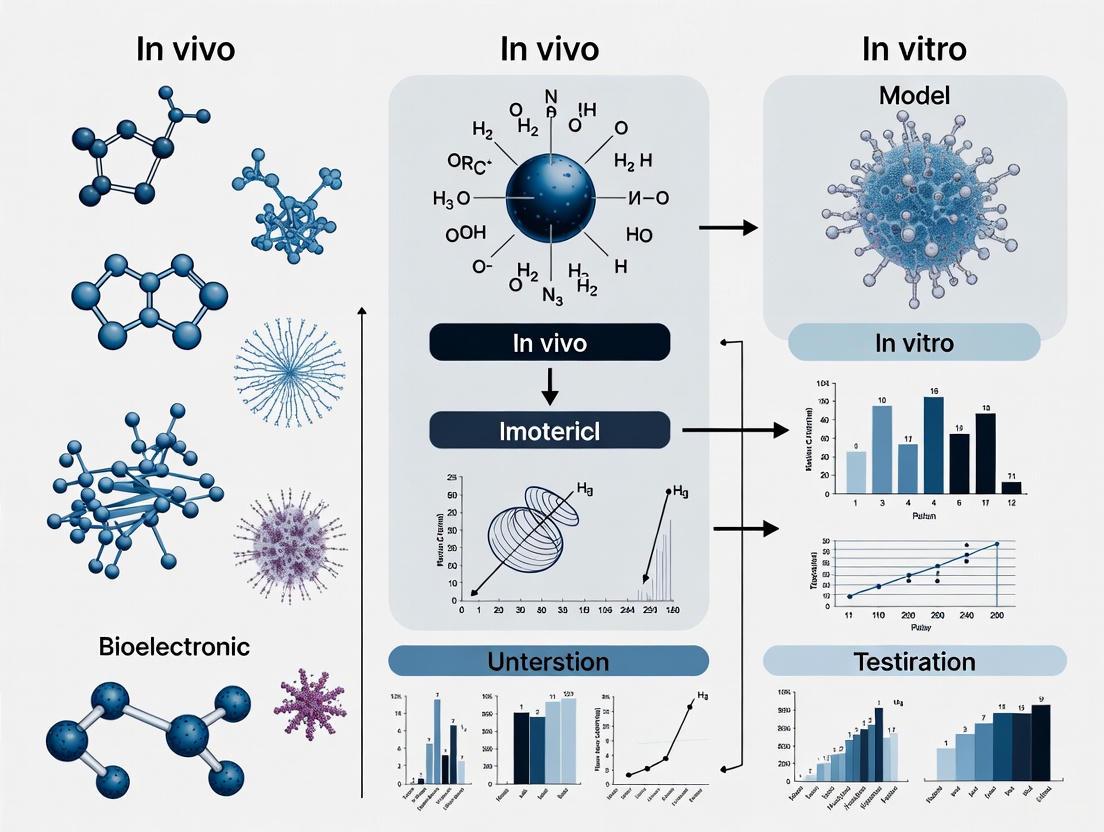
This article provides a comprehensive analysis of the correlation between in vitro and in vivo testing for bioelectronic devices, a critical step in the development of implantable and wearable medical...
Bridging the Gap: A Practical Guide to In Vivo and In Vitro Bioelectronic Testing Correlation
Abstract
This article provides a comprehensive analysis of the correlation between in vitro and in vivo testing for bioelectronic devices, a critical step in the development of implantable and wearable medical technologies. Aimed at researchers, scientists, and drug development professionals, it explores the foundational principles defining these testing environments and their distinct advantages and limitations. The content delves into methodological applications across therapeutic areas like neuromodulation and sensing, addresses persistent challenges such as the foreign body response and predictive accuracy of in vitro models, and presents a framework for validating testing protocols. By synthesizing evidence from current research, this guide aims to enhance the predictive power of preclinical testing, ultimately accelerating the translation of reliable and effective bioelectronic medicines to the clinic.
Defining the Landscapes: Core Principles of In Vitro and In Vivo Bioelectronic Environments
In the field of bioelectronics, which develops devices that interface electronic technology with biological systems, the choice of testing methodology is critical for clinical translation. Research and development hinge on two fundamental approaches: in vitro (Latin for "in glass") and in vivo (Latin for "within the living") studies [1] [2]. In vitro studies are performed with cells or biological molecules outside their normal biological context, such as in a petri dish or test tube [1]. In contrast, in vivo studies are those conducted in living organisms, including animals and humans [1] [2]. For bioelectronic devices like neural implants or organ-on-a-chip systems, understanding the correlation—and discrepancies—between data gathered from these two settings is a central research challenge. This guide objectively compares these methodologies, focusing on their performance in evaluating bioelectronic interfaces.
Core Definitions and Methodological Comparison
At its core, the distinction lies in the complexity of the biological environment. The following table summarizes the key characteristics of each approach.
Table 1: Fundamental Comparison of In Vitro and In Vivo Methodologies
| Feature | In Vitro | In Vivo |
|---|---|---|
| Definition | Studies performed "in glass" with components isolated from a living organism [1] [2] | Studies conducted "within a living organism" [2] |
| Biological Complexity | Low; uses cell cultures, tissues, or biomolecules in a controlled environment [1] [3] | High; involves the full physiological complexity of an intact organism [3] |
| Typical Costs | Relatively low cost [2] | Very expensive [2] |
| Experimental Duration | Relatively fast [2] | Long and extensive [2] |
| Key Advantage | Simplicity, species specificity, high-throughput automation [1] [2] | Provides specific and reliable data on biological effects in a whole organism [2] |
| Key Disadvantage | Physiologically limited; results may not predict whole-organism effects [1] [2] | Strict ethical regulations; physiological differences between animals and humans can limit translatability [2] [3] |
In bioelectronics, in vitro models provide a way to study the response of human or animal cells in culture, offering a controlled environment for initial experiments [2] [4]. A key challenge for these models is to mimic, as accurately as possible, the state of the actual biological system [4]. In vivo models, particularly animal studies, are used to further evaluate the safety, efficacy, and delivery of a device or drug candidate in a complex system [2].
Quantitative Data: Electrochemical Performance Correlations
A critical area of research involves how well in vitro tests predict in vivo performance for bioelectronic implants. A 2022 study directly compared the electrochemical performance of platinum electrodes in vitro and in vivo, providing key quantitative insights [5].
Table 2: Correlation of In Vitro and In Vivo Electrochemical Measurements for Platinum Electrodes [5]
| Electrochemical Parameter | Initial In Vitro vs. Subsequent In Vitro | Initial In Vitro vs. In Vivo | In Vivo vs. Explanted (Post-Rinse) |
|---|---|---|---|
| Charge Storage Capacity | Poorly correlated | Poorly correlated | Strongly correlated |
| Impedance at 1 kHz | Poor predictor | Very poor predictor | Not applicable |
| Impedance at Low Frequencies | Not applicable | Correlated only after electrode activation | Strongly correlated |
| Impact of Electrode Polarisation | Significant change in response | Significant change in response | Minimal impact from protein fouling |
Key findings from this study indicate that initial in vitro measurements were poor predictors of subsequent performance, whether in vitro or in vivo [5]. The commonly reported impedance at 1 kHz was found to be a very poor indicator of electrode performance; lower frequencies were more dependent on electrode properties and showed better in vitro-in vivo correlation after an initial "activation" period [5]. Furthermore, the physical implantation itself increased the resistance of the electrochemical circuit, with bone offering higher resistivity than soft tissue [5].
Experimental Protocols for Bioelectronic Testing
To ensure meaningful data, standardized experimental protocols are essential. Below is a detailed methodology for assessing bionic electrodes, derived from empirical research [5].
Detailed Protocol: In Vitro to In Vivo Electrochemical Assessment
1. Electrode Fabrication and Preparation:
- Materials: Cochlear implant electrode arrays with platinum electrodes, silicone rubber carrier, sterile sodium chloride solution [5].
- Procedure: Fabricate electrode arrays. Sterilize using a steam autoclave before use. Do not perform mechanical polishing or electrochemical cleaning to simulate a standard industrial process [5].
2. In Vitro Electrochemical Testing (3-Electrode Setup):
- Apparatus: Potentiostat, impedance analyzer, Ag/AgCl (3 M KCl) reference electrode, Pt wire counter electrode [5].
- Electrochemical Impedance Spectroscopy (EIS): Perform at 0 V with a 10 mV amplitude over a frequency range of 0.1–100,000 Hz [5].
- Cyclic Voltammetry (CV): Run a single voltammogram starting and ending at 0 V, scanning in a cathodic direction initially. Use maximum and minimum potentials of 0.8 V and -0.8 V at a scan rate of 20 mV/s [5].
3. In Vivo Implantation and Surgical Procedures:
- Animal Model: Dunkin-Hartley tri-colour guinea pigs [5].
- Procedure: Anaesthetize the animal. For cochlear implants, perform a cochleostomy into the scala tympani and insert the electrode array. For subcutaneous controls, create an incision and implant the array. Place platinum wire quasi-reference and counter electrodes in the extracochlear tissue or adjacent to the subcutaneous electrode [5].
4. In Vivo Electrochemical Testing:
- Configuration: A 2-electrode system is often used in vivo with a quasi-reference electrode [5].
- Measurements: Repeat EIS and CV measurements as described in the in vitro protocol. Note that the system will suffer from uncompensated resistance [5].
5. Post-Explantation Analysis:
- Procedure: Remove the electrode array from the animal and gently rinse in saline to remove loosely attached tissue. Retest the electrochemical performance in fresh saline using the standard in vitro 3-electrode setup [5].
This workflow is summarized in the following diagram:
The Scientist's Toolkit: Research Reagent Solutions
Successful experimentation in this field relies on specific materials and tools. The table below details essential items for setting up the described bioelectronic experiments.
Table 3: Essential Research Reagents and Materials for Bioelectronic Testing
| Item | Function / Explanation |
|---|---|
| Platinum Electrodes | A common, stable, and biocompatible material for neural stimulation and recording [5]. |
| Silicone Rubber Carrier | Provides structural support and insulation for electrode arrays, ensuring biocompatibility and flexibility for implantation [5]. |
| Potentiostat / Impedance Analyzer | Core instrumentation for performing electrochemical measurements like EIS and cyclic voltammetry [5]. |
| Ag/AgCl Reference Electrode | Provides a stable and reproducible reference potential for accurate electrochemical measurements in a 3-electrode in vitro setup [5]. |
| Sterile Sodium Chloride Solution | A standard physiological saline solution used as an in vitro testing medium to mimic ionic body fluid [5]. |
| Conjugated Polymers | Organic electronic materials that act as mixed conductors (ions/electrons), enabling more seamless integration and signal transduction at the biology-electronics interface [4]. |
| Microfluidic Systems | Technology used to create advanced, more physiologically relevant in vitro models (e.g., organ-on-a-chip) for more accurate testing [4]. |
Visualization of Bioelectronic Testing Workflows
The process of correlating in vitro and in vivo data involves multiple stages and decision points. The following diagram outlines the logical workflow and key relationships in this research paradigm.
The comparison between in vitro and in vivo methods is not about finding a superior approach, but about understanding their synergistic roles. In vitro studies offer a controlled, high-throughput, and ethically advantageous starting point [1] [4], while in vivo studies provide an irreplaceable assessment of performance in a living system [2]. The quantitative data shows that correlation is not a given; it is highly dependent on specific electrochemical parameters and testing protocols [5]. For the field of bioelectronics to advance, a deliberate strategy of using in vivo data to validate and refine in vitro models is essential. Emerging technologies like 3D cell cultures, microfluidics, and organic bioelectronics that use conjugated polymers are bridging the gap, promising more accurate in vitro systems that can better predict in vivo outcomes and potentially reduce the reliance on animal studies [4].
The pursuit of predictive preclinical models is a central challenge in biomedical research, particularly in the development of drugs and bioelectronic devices. While in vivo studies within living organisms represent the ultimate physiological benchmark, in vitro systems—experiments conducted in controlled laboratory environments—offer unparalleled advantages in precision and scalability. Research into the correlation between in vitro and in vivo bioelectronic testing highlights a critical trade-off: in vitro models provide exceptional control over the cellular microenvironment, whereas in vivo models encompass the full complexity of a living system [5] [6]. This guide objectively compares the performance of in vitro systems against their alternatives, focusing on their core strengths: the precise control of experimental variables and the application of high-throughput screening (HTS) methodologies. These advantages are transformative, enabling researchers to deconstruct complex biological phenomena, systematically identify drug candidates, and reduce the ethical and logistical burdens associated with animal studies [7] [8].
The Power of Controlled Variables in In Vitro Systems
A fundamental advantage of in vitro systems is the ability to isolate and manipulate specific components of the cellular microenvironment. In vivo, cells are influenced by a complex and intertwined set of signals, making it difficult to attribute a cellular response to any single factor. In vitro platforms allow scientists to dissect this complexity by controlling individual variables while holding all others constant [7].
Key Controllable Variables and Their Biological Impact
Table: Key Variables Controlled in In Vitro Systems and Their Experimental Impact
| Controlled Variable | Biological Significance | Experimental Impact |
|---|---|---|
| Extracellular Matrix (ECM) Composition | Provides structural support and biochemical cues that influence cell differentiation, proliferation, and function [7]. | Enables systematic study of how specific proteins (e.g., collagen, fibronectin) direct cell fate [7]. |
| Tissue Mechanical Properties (Stiffness) | Instructs cell behavior and can promote disease progression; sensed by cells through mechanoreceptors [7] [8] [9]. | Allows investigation of the role of substrate elasticity on cellular phenotypes, such as stem cell differentiation [7]. |
| Soluble Factors and Nutrients | Includes growth factors, cytokines, and metabolites that control cell survival, signaling, and metabolic activity [7] [6]. | Permits precise dosing and timing of treatments to elucidate mechanisms of action and toxicity [7] [8]. |
| Cell-Cell Interactions | Direct contact and paracrine signaling between cells are critical for tissue function and immune responses [7]. | Facilitates the creation of co-culture systems to study specific intercellular communication pathways [7]. |
| Electrochemical Environment | For bioelectronic interfaces, the electrical properties of the environment are a key variable [5] [10]. | Enables safe optimization of electrical stimulation parameters (e.g., charge, field time) before in vivo use [10]. |
Experimental Protocol: Deconstructing the Microenvironment with Microarrays
A prime example of leveraging variable control is the use of microarray platforms for screening extracellular matrix (ECM) components and their effects on cellular phenotypes.
Detailed Methodology:
- Platform Fabrication: A robotically printed microarray is created by depositing nanoliter volumes of different ECM proteins (e.g., fibronectin, laminin, collagens) onto a functionalized glass slide in a predefined grid pattern. Each spot represents a unique combinatorial microenvironment [7].
- Cell Seeding and Culture: A suspension of cells, such as stem cells, is uniformly seeded across the entire microarray surface. Cells attach only to the pre-printed ECM spots.
- Stimulation and Culture: The array is cultured under a defined set of conditions. Soluble factors can be added to the medium to study their interaction with the solid-phase ECM signals.
- Multiplexed Readouts: After a set duration, the array is fixed, stained, and imaged using automated high-content microscopy. Readouts can include:
- Data Analysis: Automated image analysis software quantifies cellular responses (e.g., proliferation, differentiation, cytotoxicity) for each spot in the array. This data identifies the specific ECM conditions that most potently drive the desired cellular response [7].
Diagram: Experimental workflow for a high-throughput microarray screen to identify optimal extracellular matrix (ECM) conditions.
High-Throughput Screening: Principles and Quantitative Applications
High-Throughput Screening (HTS) is a methodology that leverages automation, miniaturization, and parallel processing to rapidly test thousands to hundreds of thousands of compounds or conditions in a single experiment [11]. The core principle is assay miniaturization, which reduces the quantity of reagents and cells required per condition while dramatically increasing the number of conditions tested [7]. This is typically accomplished using 96-, 384-, or 1536-well microplates, automated liquid handling robots, and high-sensitivity detectors [7] [11].
Quantitative HTS (qHTS) and the Hill Equation
A key advancement in the field is Quantitative HTS (qHTS), where compounds are screened across a range of concentrations simultaneously, generating concentration-response curves for thousands of substances in a single campaign [9]. This approach provides richer data and lower false-positive rates compared to traditional single-concentration HTS.
The resulting data are typically fitted to a nonlinear model, most commonly the Hill Equation (HEQN), to estimate parameters that describe compound activity [9].
The Hill Equation (Logistic Form):
Ri = E0 + (E∞ - E0) / (1 + exp{-h[logCi - logAC50]})
Where:
Ri= Measured response at concentrationCiE0= Baseline responseE∞= Maximal responseh= Shape parameter (Hill slope)AC50= Concentration for half-maximal response (potency) [9]
The AC50 and Emax (E∞ - E0) are critical parameters used to rank chemicals by potency and efficacy, respectively, and prioritize them for further study [9]. The reliability of these parameter estimates is highly dependent on the assay design, including the range of tested concentrations and the spacing of data points [9].
Table: Key Parameters Derived from Quantitative HTS Data Analysis
| Parameter | Interpretation | Application in Triage |
|---|---|---|
| AC50 | Concentration for half-maximal response; an approximation of compound potency. | Lower AC50 indicates higher potency; used for primary ranking of "hit" compounds. |
| Emax | Maximal efficacy of the compound relative to a control. | Differentiates full agonists from partial agonists; high Emax is typically desirable. |
| Hill Slope (h) | Steepness of the concentration-response curve. | Can provide mechanistic insights (e.g., cooperativity in binding). |
| E0 (Baseline) | Response in the absence of the compound. | Used for quality control to ensure assay stability. |
Diagram: Logical workflow for analyzing quantitative high-throughput screening (qHTS) data to identify and prioritize active compounds.
Experimental Protocol: A Cell-Based HTS Toxicology Screen
The following protocol exemplifies a phenotypic HTS approach for predictive toxicology.
Detailed Methodology:
- Assay Design and Miniaturization: A cell-based assay is miniaturized into a 384-well microplate format. Each well contains a defined number of cells (e.g., iPSC-derived cardiomyocytes or hepatocytes) in a small volume (e.g., <10 µL) [7] [9].
- Compound Library Dispensing: An automated liquid handling robot dispenses nanoliter aliquots from a combinatorial chemical library into the assay plates, with each well receiving a unique compound at a specific concentration [11].
- Incubation and Treatment: Plates are incubated for a predetermined period to allow compound-cell interaction.
- Multiplexed Endpoint Measurement: After incubation, homogeneous assays (requiring no wash steps) are used to measure multiple endpoints simultaneously or sequentially using fluorescent or luminescent reporters [7] [11]. Common endpoints include:
- Cell Viability: Using markers for metabolic activity.
- Cytotoxicity: Using dyes that indicate membrane integrity.
- Mitochondrial Integrity: Measuring mitochondrial membrane potential.
- Reactive Oxygen Species (ROS) Formation: Using oxidative stress-sensitive dyes.
- Cell-Specific Functional Markers: For example, beat frequency in cardiomyocytes or lipid accumulation in hepatocytes [7] [11].
- Data Management and Hit Triage: Automated microscopy and plate readers collect raw data. Data analysis pipelines then:
The Scientist's Toolkit: Essential Research Reagent Solutions
Table: Key Reagents and Platforms for Advanced In Vitro Screening
| Tool / Reagent | Function | Application Example |
|---|---|---|
| Multiwell Microplates (384-/1536-well) | Provides the miniaturized platform for parallel experimentation. | Foundation for HTS assays in drug discovery and toxicology [7] [11]. |
| Automated Liquid Handling Robots | Precisely dispenses nanoliter volumes of samples and reagents for assay setup. | Enables high-throughput screening of large combinatorial libraries [11]. |
| Phage/Yeast Display Antibody Libraries | Presents vast diversity of antibody fragments on a biological surface for selection. | High-throughput generation of monoclonal antibodies against specific antigens [13]. |
| Fluorescent/Luminescent Reporter Assays | Provides a sensitive, quantifiable readout of biological activity (e.g., gene expression, cytotoxicity). | Used in homogeneous HTS assays for viability, cytotoxicity, and pathway activation [11]. |
| Electrochemical Impedance Spectroscopy (EIS) | Characterizes the electrochemical properties and stability of electrodes in solution. | Critical for in vitro testing and optimization of bioelectronic implants like cochlear electrodes [5] [10]. |
| Next-Generation Sequencing (NGS) | Enables massively parallel DNA sequencing. | Integrated with antibody library screening to analyze diversity and identify rare, high-affinity clones [13]. |
In vitro systems, empowered by precise environmental control and high-throughput technologies, offer a powerful and efficient paradigm for modern biomedical research. The ability to deconstruct biological complexity into manageable variables accelerates mechanistic understanding, while the capacity to screen vast libraries of compounds or conditions rapidly identifies promising leads for further development. Although the translation of results to in vivo settings remains a critical step, the advantages of in vitro systems—including cost-effectiveness, speed, ethical considerations, and high data content—make them an indispensable first line of investigation. As these technologies continue to evolve, particularly with advancements in 3D cell culture and organ-on-a-chip models, their predictive power and correlation with in vivo outcomes are poised to strengthen further, solidifying their role in the future of drug discovery and bioelectronic medicine [7] [8].
In the pursuit of advanced bioelectronic therapies and drug development, a fundamental challenge persists: bridging the gap between controlled laboratory results and real-world clinical performance. This guide objectively compares the performance of in vivo (within a living organism) and in vitro (in an artificial environment) testing methodologies, focusing on their correlation and predictive power for final outcomes. While in vitro models provide essential, controlled starting points, data consistently demonstrates that in vivo systems unveil a layer of physiological complexity that in vitro environments cannot replicate. This complexity arises from dynamic whole-organism processes including immune responses, tissue integration, metabolic interactions, and fluid dynamics, which collectively determine the ultimate efficacy and reliability of biomedical products [14] [15]. Understanding these differences is critical for researchers, scientists, and drug development professionals to accurately interpret data and design more predictive testing pipelines.
Key Differences Between In Vivo and In Vitro Systems
The choice between in vivo and in vitro models influences every aspect of research, from cost and timeline to the biological relevance of the results. The table below summarizes the core distinctions that shape their application in preclinical research.
Table 1: Fundamental Comparisons Between In Vivo and In Vitro Models
| Aspect | In Vivo Models | In Vitro Models |
|---|---|---|
| Definition | Testing within a whole, living organism [16] [2] | Studies conducted outside living organisms, in controlled lab environments like petri dishes [16] [2] |
| Physiological Scope | Holistic, whole-system response involving multiple interacting organs [16] | Focused on isolated cells or tissues, lacking systemic complexity [16] |
| Predictive Power for Human Response | Higher clinical relevance due to intact physiological context [16] [2] | Limited to specific tissues; often fails to predict overall body reaction [16] [2] |
| Cost & Resources | High (animal care, monitoring, equipment) [16] | Cost-effective (fewer materials, no live animals) [16] |
| Time to Results | Longer, extensive studies [16] | Quicker, more focused experiments [16] |
| Ethical Considerations | Significant, especially concerning animal use [16] | Viewed as more ethical, as no live animals are involved [16] |
Quantitative Performance Comparisons: Case Studies from the Literature
Experimental data from various fields highlights the performance gap between in vitro and in vivo environments. The following case studies provide quantitative evidence of this disconnect.
Case Study 1: Electrochemical Performance of Bionic Electrodes
A direct comparison of platinum electrodes tested both in vitro and in vivo revealed significant discrepancies in performance metrics [14].
Table 2: In Vitro vs. In Vivo Electrode Performance Data
| Performance Metric | In Vitro Findings | In Vivo Findings | Correlation & Notes |
|---|---|---|---|
| Initial Charge Storage Capacity | Highly variable initial measurements [14] | Not directly correlated with in vitro values [14] | Poor predictor of subsequent in vitro or in vivo performance [14] |
| Electrochemical Impedance | Lower resistance, dependent on solution properties [14] | Increased resistance (bone > soft tissue); minimal impact from protein fouling/fibrous tissue [14] | Impedance at 1 kHz was a very poor predictor; lower frequencies showed better in vitro/in vivo correlation post-activation [14] |
| Impact of Implantation | Not applicable | Electrode implantation significantly altered electrochemical response [14] | Electrode polarisation during implantation was a key factor changing performance [14] |
Case Study 2: Reliability of Implantable Glucose Sensors
Research on implantable glucose sensors has repeatedly shown that their performance is heavily influenced by the in vivo environment, often in unpredictable ways [15].
Table 3: Glucose Sensor Performance Discrepancies
| Observation | In Vitro Context | In Vivo Context | Research Implication |
|---|---|---|---|
| Functional Reliability | Sensors perform reliably in bench-top testing [15] | Performance is mixed in vivo; some fail soon after implantation [15] | Difficult to predict in vivo reliability from in vitro data alone [15] |
| Post-Failure Analysis | N/A | Sensors that failed in vivo frequently regained functionality when explanted and retested in vitro [15] | Highlights that failure is often due to the hostile in vivo environment, not sensor damage [15] |
| Primary Challenge | Controlling for variables like pH and temperature [15] | The wound healing process (hemostasis, inflammation, repair, encapsulation) [15] | Sensor failure is often linked to the body's biological response to the implanted device [15] |
Detailed Experimental Protocols for Correlation Research
To systematically study the in vitro-in vivo correlation, rigorous and comparable experimental protocols are essential. The following methodologies are adapted from recent research.
Protocol 1: In Vitro and In Vivo Electrochemical Characterization of Electrodes
Objective: To compare the electrochemical performance of implantable electrodes (e.g., platinum) in vitro and after implantation in vivo [14].
Materials & Equipment:
- Sterile sodium chloride solution (e.g., Promedica, Melbourne) [14].
- Potentiostat and Impedance Analyzer (e.g., Solartron SI1287 & SI1260) [14].
- Ag/AgCl (3 M KCl) reference electrode and Pt wire counter electrode [14].
- Custom-fabricated electrode arrays (e.g., cochlear implants with platinum rings) [14].
- Animal model (e.g., Dunkin-Hartley guinea pigs) [14].
- Platinum wire quasi-reference and counter electrodes for in vivo testing [14].
Procedure:
- In Vitro Baseline Testing: Set up a 3-electrode configuration in sterile saline. Perform electrochemical impedance spectroscopy (EIS) at 0 V with a 10 mV amplitude over a frequency range of 0.1–100,000 Hz. Follow with a single cyclic voltammogram, scanning from 0 V in a cathodic direction first, with maximum and minimum potentials of 0.8 and -0.8 V at a scan rate of 20 mV s⁻¹ [14].
- Surgical Implantation: Anesthetize the animal and implant the electrode array into the target tissue (e.g., cochlea or subcutaneous pocket). Place extracochlear or adjacent platinum wires to serve as quasi-reference and counter electrodes [14].
- Acute In Vivo Testing: With the animal under anesthesia, perform EIS and cyclic voltammetry using the implanted electrodes and the temporary quasi-reference/counter electrodes [14].
- Post-Explant In Vitro Testing: Gently remove the electrode array, rinse it in saline to remove loosely attached tissue, and repeat the in vitro electrochemical testing from step 1 [14].
- Chronic In Vivo Testing: Re-implant the electrode array and close the wound. After a designated period (e.g., 4 to 48 days), re-anesthetize the animal, re-expose the implantation site, and repeat the in vivo electrochemical testing [14].
Data Analysis: Compare charge storage capacity (from voltammetry) and impedance spectra (particularly at low frequencies) across all stages: initial in vitro, acute in vivo, post-explant in vitro, and chronic in vivo. Use equivalent circuit fitting (e.g., with ZView software) to model changes at the electrode-tissue interface [14].
Protocol 2: Assessing Bioelectronic Actuator Efficacy in a Porcine Wound Model
Objective: To evaluate the performance of a wireless bioelectronic device for delivering charged drugs (e.g., fluoxetine) and electric fields to enhance wound healing in vivo [17].
Materials & Equipment:
- Custom wireless bioelectronic actuator PCB with an MCU (e.g., ESP32), microSD card, ADCs, and current-source DACs [17].
- Polydimethylsiloxane (PDMS) drug reservoirs and channels [17].
- Hydrogel-filled capillaries for tissue interface [17].
- Platinum-coated pins and conductive silver epoxy paste [17].
- Large animal model (e.g., pig) [17].
Procedure:
- Device Integration: Fill the PDMS reservoirs with drug solution (e.g., Flx⁺) and Steinberg solution (for electric field). Integrate the PDMS component with the PCB ring by soldering platinum-coated pins [17].
- Calibration: Calibrate each delivery channel linearly in the 2 to 50 μA range by measuring currents through a precision resistor before integration with the animal [17].
- Surgical Preparation and Device Placement: Create multiple full-thickness wounds on the animal's back. Place the integrated device over the wounds, ensuring the central ground electrode and drug-delivery channels align with the wound bed [17].
- Wireless Treatment Delivery: Power the device and establish a wireless connection (WiFi) to a control laptop. Initiate treatment according to the experimental design:
- Monitoring and Data Collection: The device records applied voltages and currents locally to a microSD card while simultaneously transmitting data in real-time to the laptop for seven days [17].
- Endpoint Analysis: After the treatment period, analyze wound tissue for markers like M1/M2 macrophage ratio and degree of re-epithelialization compared to standard-of-care control wounds [17].
Visualizing the In Vitro - In Vivo Correlation Challenge
The following diagram illustrates the critical pathways and disparities between in vitro and in vivo testing environments, highlighting where predictive models often fail.
Diagram Title: The Predictive Gap Between Testing Environments
The Scientist's Toolkit: Essential Research Reagents and Materials
Successfully navigating the complexity of in vivo systems requires a specific set of tools and materials. This table details key solutions used in the featured experiments.
Table 4: Essential Research Reagents and Materials for Bioelectronic Testing
| Item Name | Function/Application | Example from Research |
|---|---|---|
| Potentiostat/Impedance Analyzer | Measures electrochemical properties (impedance, charge storage) of electrodes in both in vitro and in vivo setups [14]. | Solartron SI1287 potentiostat and SI1260 impedance analyzer [14]. |
| Ag/AgCl Reference Electrode | Provides a stable, known reference potential for electrochemical measurements in a 3-electrode cell, typically used for in vitro testing [14]. | Ag/AgCl (3 M KCl) reference electrode [14]. |
| Platinum Wire Electrodes | Serves as a durable, inert material for counter electrodes in vitro and as quasi-reference/counter electrodes implanted near the device in vivo [14] [17]. | Pt wire counter electrode; Pt wire quasi-reference electrode; Pt-coated pins in PDMS devices [14] [17]. |
| Polydimethylsiloxane (PDMS) | A biocompatible silicone elastomer used to fabricate flexible device components, such as drug reservoirs and structural carriers for implantable electrodes [17]. | PDMS reservoirs and channels in wireless bioelectronic actuators [17]. |
| Microcontroller Unit (MCU) | The computational core of wireless bioelectronic devices, enabling control, data logging, and communication for in vivo experiments [17]. | ESP32-PICO-D4 chip used for wireless control and data transmission [17]. |
| Steinberg Solution | A defined physiological solution used in electrotherapy and bioelectronic studies to create a controlled ionic environment for applying electric fields [17]. | Used in reservoirs of bioelectronic actuators to deliver electric field (EF) stimulation [17]. |
The journey from in vitro validation to in vivo efficacy is fraught with challenges imposed by the profound complexity of whole-organism physiology. While in vitro models are indispensable for initial screening and mechanistic studies, data from electrochemical sensors, bioelectronic actuators, and glucose monitors consistently demonstrates that they are often poor predictors of in vivo performance [14] [15]. The dynamic, integrated nature of living systems—encompassing immune responses, tissue remodeling, and systemic metabolism—creates a unique environment that cannot be fully replicated in a dish. For researchers in bioelectronics and drug development, acknowledging this predictive gap is the first step. The path forward lies in developing more sophisticated in vitro models, such as organ-on-a-chip technologies [18], and in designing rigorous, multi-stage testing protocols that systematically compare in vitro and in vivo outcomes. Ultimately, accounting for the complexity of in vivo systems is not merely a hurdle to overcome but a fundamental requirement for developing safe, effective, and reliable biomedical technologies.
Bioelectronic medicine represents a frontier in therapeutic technology, employing devices to interface with the nervous system and biological tissues for treating a range of conditions. From Deep Brain Stimulation (DBS) for Parkinson's disease to cochlear implants for hearing loss, these devices have transformed patient care. However, a significant challenge persists in the development pipeline: the often poor correlation between in vitro laboratory tests and subsequent in vivo performance [5] [6]. This discrepancy can obscure the true safety, efficacy, and long-term stability of bioelectronic interfaces, delaying clinical translation. This guide objectively compares the performance and experimental methodologies of key bioelectronic applications, framing the analysis within the critical context of validating device performance in biologically relevant environments. The focus is on providing researchers and drug development professionals with a clear comparison of data and methodologies essential for navigating the transition from benchtop to bedside.
Performance and Experimental Data Comparison
The following tables summarize key performance metrics and experimental findings for major bioelectronic applications, highlighting the context of their measurement—whether in a controlled in vitro setting or a complex in vivo environment.
Table 1: Comparative Electrochemical Performance In Vitro vs. In Vivo
| Performance Parameter | In Vitro Findings | In Vivo Findings | Correlation & Notes |
|---|---|---|---|
| Charge Storage Capacity (CSC) | Initial measurements showed high variability and were poor predictors of subsequent performance [5]. | Changed significantly after implantation and electrode polarization; not correlated with initial in vitro measurements [5]. | Poor Correlation. Initial in vitro CSC is not a reliable predictor of in vivo or subsequent in vitro performance [5]. |
| Electrochemical Impedance | Low-frequency impedance more dependent on electrode properties [5]. | Implantation increased the resistance of the electrochemical circuit; bone has higher resistivity than soft tissue [5]. | Frequency-Dependent. Impedance at 1 kHz is a very poor predictor; stronger correlations exist at lower frequencies post-activation [5]. |
| Impact of Biological Environment | Minimal impact from saline solution alone [5]. | Protein fouling and fibrous tissue formation had a minimal impact on electrochemical response compared to the effect of implantation itself [5]. | Context-Dependent. The major impact comes from the tissue environment (e.g., bone vs. soft tissue), not minor fouling [5]. |
| Stimulation Efficacy | Not directly applicable for functional outcomes. | Cochlear Implant (CI) performance in Single-Sided Deafness (SSD) listeners was significantly lower than in bilateral CI users, likely due to "blocking" by the normal-hearing ear [19]. | System-Dependent. Performance is influenced by complex physiological and neurological adaptation processes, not just device function [19]. |
Table 2: Clinical and Functional Outcomes of Bioelectronic Devices
| Application | Clinical Outcome | Supporting Experimental Data |
|---|---|---|
| Deep Brain Stimulation (DBS) | Effective for controlling Parkinson's disease symptoms [20]. | Patient with bilateral cochlear implants underwent successful DBS implantation. Levodopa requirement decreased by almost 50% with DBS settings at 1.2 V, 60 µs pulse width, and 140 Hz [20]. |
| Cochlear Implants (Bilateral) | Considered the baseline standard for speech perception performance [19]. | Used as a control group to assess performance in Single-Sided Deafness (SSD) listeners. Provides a benchmark for single-ear speech perception [19]. |
| Cochlear Implants (for SSD) | Reduced speech perception performance compared to bilateral CI users [19]. | Consonant-Nucleus-Consonant (CNC) speech perception scores for the CI-only ear in SSD listeners (N=55) were significantly lower than in matched bilateral CI listeners (N=55) [19]. |
| Next-Generation Wearables | Preclinical tests show accelerated healing [21]. | The "a-Heal" wearable device sped up wound healing by about 25% compared to standard care in preclinical models by delivering fluoxetine and an electric field [21]. |
Experimental Protocols for In Vivo/In Vitro Correlation
A critical methodology for evaluating bioelectronic interfaces involves direct comparison of the same devices tested in both in vitro and in vivo settings. The protocol below, derived from a study on platinum electrodes, provides a framework for such correlative studies [5].
Materials and Pre-implantation Testing
- Electrodes: 20 cochlear implant electrode arrays, each with four platinum electrodes (n=80), sterilized via steam autoclave without polishing or electrochemical cleaning [5].
- In Vitro Setup: A standard three-electrode electrochemical cell is used [5].
- Working Electrode: The implantable electrode array.
- Reference Electrode: A Ag/AgCl (3 M KCl) electrode.
- Counter Electrode: A platinum wire.
- Solution: Sterile sodium chloride solution, without degassing [5].
- Initial Measurements:
- Electrochemical Impedance Spectroscopy (EIS): Performed at 0 V with a 10 mV amplitude over a frequency range of 0.1–100,000 Hz [5].
- Cyclic Voltammetry (CV): A single voltammogram is run, starting and ending at 0 V, scanning initially in a cathodic direction. The potential window is set from -0.8 V to 0.8 V at a scan rate of 20 mV/s [5].
Surgical Implantation and In Vivo Testing
- Animal Model: The study utilized Dunkin-Hartley tri-colour guinea pigs [5].
- Implantation: Electrode arrays are implanted into the cochlea (for acute neural interface studies) or subcutaneously (for general tissue response studies) [5].
- In Vivo Electrochemical Testing:
- Configuration: A two-electrode system is often used in vivo [5].
- Quasi-Reference Electrodes: Platinum wires are placed in the extracochlear or adjacent subcutaneous tissue to serve as both reference and counter electrodes [5].
- Measurements: EIS and CV are repeated in the living organism following the same parameters as the in vitro tests. The total implanted time period before acute testing was approximately 120 minutes [5].
Post-explanation Analysis
- After in vivo testing, the electrode arrays are carefully explanted and gently rinsed in saline to remove loosely attached tissue [5].
- The electrochemical measurements (EIS and CV) are repeated in the saline solution to assess the effect of the acute implantation period on electrode properties [5].
- For chronic studies, animals are recovered and the electrodes are re-implanted for days or weeks before final testing and histological analysis of the surrounding tissue [5].
The Scientist's Toolkit: Key Research Reagents and Materials
Successful experimentation in bioelectronics relies on a specific set of materials and reagents. The following table details essential items used in the featured experiments and the broader field.
Table 3: Essential Research Reagents and Materials for Bioelectronic Studies
| Item | Function/Description | Example Use in Context |
|---|---|---|
| Platinum (Pt) Electrodes | A biocompatible, inert metal with excellent charge injection capacity for neural stimulation and recording [5]. | Used as the primary electrode material in the cochlear implant arrays for the in vitro/in vivo correlation study [5]. |
| Ag/AgCl Reference Electrode | A stable reference electrode providing a consistent potential baseline in a three-electrode electrochemical cell [5]. | Used for all in vitro electrochemical measurements to ensure accurate and reproducible potential control [5]. |
| Polydimethylsiloxane (PDMS) | A biocompatible silicone rubber used as an insulating carrier or structural component for implantable devices [5] [17]. | Served as the silicone rubber carrier for the cochlear electrode array and for drug reservoirs in a wireless wound healing actuator [5] [17]. |
| Steinberg Solution | A standard physiological solution used in electrophysiology and bioelectronic experiments to maintain tissue or simulate physiological conditions [17]. | Used as an electrolyte solution in the reservoirs of a wireless bioelectronic actuator for wound healing [17]. |
| Fluoxetine (Flx⁺) | A charged drug molecule (selective serotonin reuptake inhibitor) that can be electronically delivered via iontophoresis [21] [17]. | The active pharmaceutical ingredient delivered by the "a-Heal" smart bandage and wireless actuator to promote wound healing [21] [17]. |
| Quasi-Reference Electrode | A simple wire, often made of an inert metal like platinum, used as a reference in vivo where standard reference electrodes are impractical [5]. | Platinum wires placed in extracochlear tissue were used as reference/counter electrodes for in vivo electrochemical testing [5]. |
The journey of a bioelectronic device from the benchtop to the clinic is fraught with challenges, many stemming from the complex and dynamic nature of the living environment. As the data shows, initial in vitro electrochemical characterization can be a poor predictor of in vivo performance, with parameters like charge storage capacity and 1 kHz impedance offering limited insight [5]. Furthermore, functional outcomes, such as speech perception in cochlear implant users, are influenced by complex neurological factors like adaptive "blocking" [19]. Therefore, robust and biologically relevant testing protocols are not merely beneficial but essential. Researchers must prioritize experimental designs that directly correlate in vitro and in vivo data, employ clinically relevant animal models, and consider the entire device-tissue system. By adopting these rigorous approaches, the field can improve the predictive power of preclinical testing, accelerate the development of more effective bioelectronic therapies, and ultimately enhance patient outcomes.
The Critical Need for Correlation in Device Development and Regulatory Approval
In the field of bioelectronic medicine, the transition from laboratory concept to clinical therapy is a complex, high-stakes process. This journey requires robust, predictive models that ensure a device's performance in controlled, in vitro settings faithfully translates to its function within the living body (in vivo). The establishment of a strong correlation between in vitro and in vivo (IVIVC) data is not merely an academic exercise; it is a critical component of regulatory strategy, device optimization, and ultimately, patient safety. It serves as a formalized framework for demonstrating that in vitro dissolution or performance tests reliably predict in vivo bioavailability or biological performance [22]. For bioelectronic devices—which include neuromodulation implants, ion pumps, and neural recording interfaces—this correlation validates that electrical, chemical, and mechanical characteristics measured in the lab will result in the intended therapeutic effect in a patient. This article will explore the regulatory framework for IVIVC, present contemporary case studies from bioelectronics research, and provide a scientist's toolkit for developing and validating these essential correlations.
The Regulatory and Scientific Framework of IVIVC
The U.S. Food and Drug Administration (FDA) and other international regulatory bodies provide clear guidance on the levels and applications of in vitro-in vivo correlation (IVIVC). These frameworks are essential for justifying biowaivers, setting dissolution specifications, and reducing the number of human studies required during development [22].
Levels of Correlation
The FDA guidance outlines a multi-tiered structure for IVIVC, with each level defined by the relationship it describes. The following table summarizes these levels, their definitions, and their utility in a regulatory context.
Table 1: Levels of In Vitro-In Vivo Correlation (IVIVC)
| Level | Description | Relationship | Regulatory Utility |
|---|---|---|---|
| Level A | A point-to-point predictive relationship between the entire in vitro dissolution/release curve and the entire in vivo input (absorption) curve [22]. | Most informative; considered a direct relationship. Serves as a surrogate for in vivo bioavailability [22]. | High; supports biowaivers and justifies manufacturing/ formulation changes without additional human studies [22]. |
| Level B | Compares summary parameters characterizing in vitro and in vivo time courses, such as Mean Dissolution Time (MDT) versus Mean Absorption Time (MAT) or Mean Residence Time (MRT) [22]. | Utilizes statistical moment analysis. Not unique, as different in vivo profiles can produce similar mean values [22]. | Limited; least useful for regulatory purposes due to its inability to reflect the complete shape of the plasma profile [22]. |
| Level C | Relates a single dissolution time point (e.g., t~50%~) to a single pharmacokinetic parameter (e.g., AUC, C~max~) [22]. | A single-point relationship. Does not reflect the complete shape of the plasma concentration-time curve [22]. | Low; primarily useful in early formulation development for screening pilot formulations [22]. |
| Multiple Level C | Expands Level C by relating one or several pharmacokinetic parameters to the amount of drug dissolved at several time points [22]. | A multi-point relationship that covers the early, middle, and late stages of the dissolution profile [22]. | Medium; more useful than Level C for setting dissolution specifications [22]. |
For bioelectronic devices, the principles of IVIVC are adapted from purely pharmacological metrics to include electrical, chemical, and biological performance parameters. The goal remains the same: to create a predictive model that links an in vitro test to a clinically relevant in vivo outcome.
Correlation in Action: Bioelectronic Device Case Studies
Case Study 1: Implantable Electrodes for Neuromodulation
The development of organic bioelectronic materials for neural interfaces provides a powerful example of correlation-driven design. Researchers must ensure that the electrochemical performance of an electrode material measured in a saline bath predicts its stability and function after implantation.
- In Vitro Protocol: Standardized testing involves characterizing the electrode's charge storage capacity (CSC) and charge injection capacity (CIC) in phosphate-buffered saline (PBS) using cyclic voltammetry and electrochemical impedance spectroscopy. Accelerated aging tests (e.g., applying millions of electrical pulses) are conducted to predict long-term stability [23].
- In Vivo Validation: The coated electrodes are implanted into animal models (e.g., rat cortex or sciatic nerve). The key in vivo metrics include the quality of recorded neural signals (signal-to-noise ratio), the ability to successfully evoke a physiological response (e.g., muscle twitch) upon stimulation, and post-mortem histological analysis of the surrounding tissue for inflammation or damage [23].
- Correlation Analysis: A strong Level A-type correlation is established when the in vitro CIC value directly predicts the safe and effective stimulation charge threshold in vivo. Furthermore, a correlation between a low electrochemical impedance in vitro and a high signal-to-noise ratio for neural recordings in vivo is critical. Studies have shown that coatings like PEDOT:PSS demonstrate superior correlation by maintaining high charge injection and low impedance in both in vitro and in vivo settings, leading to more reliable device performance [23].
Table 2: Performance Comparison of Neural Electrode Coatings
| Electrode Material | In Vitro Charge Injection Capacity (μC/cm²) | In Vivo Signal-to-Noise Ratio (dB) | Histological Tissue Response (8 weeks post-implant) |
|---|---|---|---|
| Platinum-Iridium (PtIr) | ~150 [23] | Baseline | Moderate inflammatory response [23] |
| Iridium Oxide (IrOx) | ~300 [23] | +15% vs. PtIr | Moderate inflammatory response [23] |
| PEDOT:PSS Coating | >500 [23] | +30% vs. PtIr [23] | Minimal inflammation; healthy nerve cable regeneration observed in some studies [23] [24] |
Case Study 2: Closed-Loop Ion Pumps for Drug Delivery
Ion pumps represent a frontier in precision medicine, capable of delivering charged drugs or ions electrophoretically to a specific site [25]. Correlating in vitro pump efficiency with in vivo delivery is essential for dosing accuracy.
- In Vitro Protocol: The ion pump is set up to deliver a model drug (e.g., Fluoxetine) into a well containing a buffer solution. The applied voltage (V~pump~) and resulting current (I~pump~) are monitored. The delivery efficiency (η) is quantified using High-Performance Liquid Chromatography (HPLC) to measure the actual amount of drug delivered, calculated as: η = (Moles of Fluoxetine delivered / Moles of electrons transferred) × 100% [25]. Experiments show typical efficiencies around 20% [25].
- In Vivo Validation: The device is implanted in an animal model, and its ability to elicit a biological response is measured. For example, an ion pump delivering an anti-inflammatory agent might be correlated with a reduction in local inflammation biomarkers. The concentration of the drug in the target tissue can also be measured post-mortem.
- Correlation Analysis: The critical correlation is between the integrated charge (I~pump~ × time) passed in vitro and the mass of drug delivered, as verified by HPLC. This established relationship then allows researchers to use integrated charge as a real-time, predictive metric for drug dosage in vivo, where direct measurement is impossible. Advanced closed-loop control algorithms further refine this correlation by adapting the applied voltage in real-time to maintain a desired delivery current, compensating for device variability and saturation effects [25].
Diagram 1: Ion Pump Correlation Workflow. The workflow for correlating electrical signals with drug delivery in ion pumps, moving from in vitro calibration to predictive in vivo dosing.
Case Study 3: Gut Electrophysiology Recording Devices
A recent pioneering study developed a conformable, implantable bioelectronic device for recording electrophysiological signals from the colon's enteric nervous system (ENS) [24]. This work highlights the correlation between in vitro device characterization and in vivo functionality.
- In Vitro Protocol: The flexible devices, based on a parylene-C substrate and gold electrodes coated with PEDOT:PSS, were first characterized using Electrical Impedance Spectroscopy (EIS). This in vitro step confirmed low electrode impedance, which is crucial for recording high-fidelity, low-amplitude neural signals [24].
- In Vivo Validation: The devices were surgically implanted into the colonic wall of rodents. Validation involved recording electrophysiological activity in response to known physiological stimuli:
- Mechanical Distension: Saline was injected into the colon lumen to simulate fecal matter and stretch the gut wall [24].
- Pharmacological Stimuli: Chemicals were administered to evoke neural responses.
- Behavioral Contexts: Recordings were conducted in freely moving animals during feeding and induced stress [24].
- Correlation Analysis: The study successfully correlated the low impedance measured in vitro with the ability to record high-quality, stimulus-evoked signals in vivo. Specifically, a distinct two-component signal was observed upon distension: a fast, high-frequency component (indicative of neuronal firing) and a slower, low-frequency component (likely from integrated neuromuscular network activity) [24]. This correlation validates the device design and provides a benchmark for interpreting complex in vivo data.
The Scientist's Toolkit for IVIVC in Bioelectronics
Successfully establishing IVIVC requires a suite of specialized materials, instruments, and analytical techniques. The following table details key reagents and solutions used in the featured experiments.
Table 3: Research Reagent Solutions for Bioelectronic Device Testing
| Item / Solution | Function in Experimental Protocol | Field-Specific Application |
|---|---|---|
| PEDOT:PSS Coating | A conducting polymer coating for neural electrodes; reduces electrochemical impedance and increases charge injection capacity [23] [24]. | Essential for improving the fidelity of neural recording and the safety and efficiency of electrical stimulation in both central and peripheral nervous systems [23]. |
| Phosphate-Buffered Saline (PBS) | A standard isotonic solution for in vitro electrochemical testing of devices, simulating the ionic strength of physiological fluids [23]. | Used for baseline characterization of electrode properties (impedance, CIC) and stability testing before animal implantation [23]. |
| Fluoxetine Hydrochloride | A charged biochemical (Selective Serotonin Reuptake Inhibitor) used as a model drug for ion pump delivery studies [25]. | Enables research into precise, localized drug delivery for conditions like depression and inflammation, and for studying the gut-brain axis [25]. |
| High-Performance Liquid Chromatography (HPLC) | An analytical technique used to separate, identify, and quantify each component in a mixture [25]. | Critical for validating the actual mass of a drug delivered by an ion pump in vitro, thereby calibrating the device's delivery efficiency [25]. |
| Parylene-C Substrate | A flexible, biocompatible, and dielectric polymer used as the substrate for flexible bioelectronic implants [24]. | Provides mechanical compatibility with soft, moving tissues like the gut and brain, enabling stable, long-term recording interfaces [24]. |
The process of establishing a correlation is methodical. The following diagram outlines the general workflow, from initial data collection to the final predictive model.
Diagram 2: IVIVC Modeling Workflow. The general workflow for developing an IVIVC model, showing the relationship between deconvolution and convolution processes.
The critical need for correlation in bioelectronic device development is undeniable. As the field advances toward more sophisticated closed-loop systems that integrate real-time sensing and adaptive actuation, the principles of IVIVC will become even more central [26] [25]. A rigorous, correlated development strategy is the most reliable pathway to achieving regulatory approval and, most importantly, delivering safe and effective bioelectronic therapies to patients. By systematically employing the frameworks, case studies, and tools outlined in this guide, researchers and developers can bridge the gap between promising in vitro data and successful in vivo performance, thereby accelerating the growth of this transformative medical field.
From Bench to Body: Methodological Approaches and Therapeutic Applications
For researchers developing implantable bioelectronic devices, such as neural stimulators and biosensors, in vitro electrochemical characterization is a critical first step for predicting in vivo performance and ensuring device safety and efficacy. Cyclic Voltammetry (CV) and Electrochemical Impedance Spectroscopy (EIS) serve as the cornerstone techniques for this purpose. However, the critical question remains: how well do these standard in vitro tests correlate with ultimate in vivo performance? This guide objectively compares the predictive power of standard in vitro electrochemical characterization with performance in biological environments, providing researchers with a structured framework for interpreting their data. A growing body of evidence suggests that initial, simplistic in vitro measurements can be poor predictors of subsequent performance, necessitating more robust and predictive testing protocols [5] [14].
Core Principles of CV and EIS
Cyclic Voltammetry (CV) measures current resulting from a linearly scanned voltage applied to an electrode in an electrolyte, providing information about redox reactions, charge storage capacity (CSC), and charge injection limits. The CV curve reveals the electrochemical processes possible at the electrode-electrolyte interface within the chosen potential window.
Electrochemical Impedance Spectroscopy (EIS) applies a small amplitude AC potential across a range of frequencies and measures the current response to determine the complex impedance. The resulting Nyquist plot characterizes the resistive and capacitive properties of the electrode-electrolyte interface, revealing details about double-layer capacitance, charge transfer resistance, and diffusion processes.
Experimental Protocols for In Vitro Characterization
Standard Three-Electrode Cell Setup
A standard setup for characterizing bionic electrodes, as used in foundational comparison studies, involves the following configuration [5] [14]:
- Working Electrode: The implantable electrode of interest (e.g., platinum cochlear implant electrodes with geometric areas of ~0.39–0.44 mm²).
- Reference Electrode: A stable reference such as Ag/AgCl (3 M KCl).
- Counter Electrode: An inert electrode such as a Pt wire.
- Electrolyte: A biologically relevant solution like sterile 0.9% sodium chloride. Note that degassing may not be necessary [14].
- Equipment: A potentiostat/impedance analyzer (e.g., Solartron SI1287 potentiostat with SI1260 impedance analyzer).
Detailed Methodological Steps
Cyclic Voltammetry Protocol:
- Setup: Place the working, reference, and counter electrodes in the electrolyte solution and connect to the potentiostat.
- Parameters: Set the scan to start and end at 0 V, scanning initially in the cathodic direction. Use a scan rate of 20 mV/s with maximum and minimum potentials of 0.8 V and -0.8 V vs. Ag/AgCl, respectively [14].
- Measurement: Record a single cyclic voltammogram.
- Analysis: Calculate the Charge Storage Capacity (CSC) by integrating the area under the current-versus-time curve for one full cycle. CSC is a key metric for estimating the charge injection capacity of an electrode.
Electrochemical Impedance Spectroscopy Protocol:
- Setup: Use the same three-electrode configuration.
- Parameters: Set the DC potential to 0 V (i.e., at open circuit potential) with an AC amplitude of 10 mV. Perform the measurement over a broad frequency range, typically from 0.1 Hz to 100,000 Hz [5] [14].
- Measurement: Record the impedance and phase angle at each frequency.
- Analysis: Plot the data as a Nyquist plot (imaginary impedance vs. real impedance). Critically, analyze the impedance across the frequency spectrum, as reliance on a single frequency (e.g., 1 kHz) has been shown to be a poor predictor of overall electrode performance [5].
Comparative Performance: In Vitro vs. In Vivo
The following tables synthesize quantitative findings from studies that directly compared in vitro and in vivo electrochemical performance of platinum bionic electrodes [5] [14].
Table 1: Impact of Experimental Conditions on Key Electrochemical Metrics
| Metric | Standard In Vitro (Saline) | In Vivo (Animal Model) | Key Finding |
|---|---|---|---|
| Charge Storage Capacity (CSC) | Provides baseline measurement | Poor correlation with initial in vitro CSC | CSC is highly dependent on electrode history and polarization [5] |
| Impedance at 1 kHz | Commonly reported single value | Very poor predictor of in vivo performance | Over-simplifies complex interface electrochemistry [5] [14] |
| Low-Frequency Impedance | Dependent on electrode properties | Stronger correlation with in vivo data post-activation | More reliable indicator of electrode properties [5] |
| High-Frequency Impedance | Dependent on solution properties | Increased resistance upon implantation | Bone tissue exhibits higher resistivity than soft tissue [5] |
Table 2: Impact of Biological and Experimental Factors
| Factor | Effect on Electrochemical Performance | Correlation Implication |
|---|---|---|
| Electrode Polarization/Activation | Significant change in electrochemical response after first polarization | Initial in vitro measurements are poor predictors of subsequent performance [5] |
| Implantation (Acute) | Increases the resistance of the electrochemical circuit | Alters impedance compared to saline measurements [5] |
| Protein Fouling & Fibrous Tissue | Minimal direct impact on electrochemical response | Not a primary cause of performance changes [5] |
| Quasi-Reference Electrodes | Used in vivo due to surgical constraints | Introduces uncompensated resistance and potential drift vs. standard Ag/AgCl [5] |
The Scientist's Toolkit: Essential Research Reagents and Materials
Table 3: Key Materials and Reagents for In Vitro Bionic Electrode Characterization
| Item | Function / Description | Example / Specification |
|---|---|---|
| Potentiostat with EIS | Core instrument for applying potentials and measuring current/impedance. | Solartron SI1287 Potentiostat & SI1260 Impedance Analyzer [14] |
| Ag/AgCl Reference Electrode | Provides a stable, known reference potential for accurate measurements in a 3-electrode setup. | Filled with 3 M KCl solution [14] |
| Platinum Counter Electrode | Completes the electrical circuit, typically made from an inert material. | Pt wire [14] |
| Sterile Sodium Chloride | A standard and physiologically relevant electrolyte for initial in vitro testing. | 0.9% NaCl solution [14] |
| Electrode Arrays | The device under test, representing the actual bioelectronic implant. | Fabricated platinum electrode arrays embedded in silicone [14] |
Visualizing Workflows and Key Concepts
Experimental Correlation Workflow
The following diagram illustrates the workflow for correlating in vitro and in vivo data, highlighting key decision points and findings from comparative studies.
EIS Frequency Dependence
This diagram summarizes the critical finding that different EIS frequencies probe different aspects of the electrode and its environment, which is key to understanding in vitro and in vivo correlation.
Standard in vitro characterization using CV and EIS is a necessary but insufficient tool for predicting the in vivo performance of bioelectronic electrodes. The data compellingly show that common practices, such as relying on initial CSC measurements or single-frequency impedance values (e.g., at 1 kHz), provide low-fidelity predictions. To enhance predictive power, researchers should adopt more robust protocols that include electrode activation via polarization and prioritize low-frequency EIS analysis. Recognizing the limitations of simplistic in vitro tests is the first step toward developing more reliable, correlated testing methodologies that can accelerate the successful translation of bioelectronic devices from the bench to the clinic.
In Vivo Surgical Models and Electrochemical Testing in Living Tissue
The development of advanced bioelectronic devices, such as neural implants, pacemakers, and cochlear implants, relies heavily on electrochemical testing to ensure safety and efficacy. While in vitro (laboratory-based) testing provides initial performance data, in vivo (within living organisms) surgical models are indispensable for understanding how these devices function in real biological environments. Research demonstrates that electrochemical measurements obtained in vitro can be poor predictors of subsequent in vivo performance, highlighting the necessity of surgical models for accurate performance correlation [5] [14]. This guide objectively compares the experimental data and performance characteristics of electrodes across these two testing environments, providing researchers and drug development professionals with a clear framework for evaluating bioelectronic devices.
Performance Comparison: In Vivo vs. In Vitro Electrochemical Data
Electrochemical performance parameters shift significantly when devices transition from controlled saline solutions to complex living tissues. The following tables summarize key quantitative differences observed in experimental studies.
Table 1: Comparison of Key Electrochemical Performance Parameters
| Performance Parameter | Typical In Vitro Finding | Typical In Vivo Finding | Clinical Significance |
|---|---|---|---|
| Impedance at 1 kHz | Often used as a primary performance indicator [5] | A very poor predictor of actual electrode performance [5] [14] | Simplistic metrics can be misleading; broad-spectrum EIS is required. |
| Charge Storage Capacity (CSC) | Initial measurements show variability [14] | Changes significantly post-implantation; initial in vitro CSC not correlated with in vivo performance [14] | Impacts long-term stability and efficacy of stimulation. |
| Low-Frequency Impedance | Dependent on electrode properties [5] | Shows stronger correlation with in vitro data after electrode activation [5] | More reliable for assessing true interface properties post-implantation. |
| System Resistance | Governed by solution resistivity [5] | Increased due to higher resistivity of tissue (e.g., bone > soft tissue) [5] | Affects power requirements and stimulation efficiency. |
| Impact of Fouling | Minimal impact from proteins in short-term tests [5] | Protein adsorption and fibrous encapsulation have minimal impact on electrochemical response [5] | Long-term performance is not primarily limited by biofouling. |
Table 2: Impact of Experimental Conditions on Measurement Validity
| Experimental Condition | In Vitro Setup | In Vivo Surgical Model | Impact on Data Correlation |
|---|---|---|---|
| Reference Electrode | Stable Ag/AgCl (3M KCl) [5] | Platinum wire quasi-reference electrode [5] [14] | Introduces potential drift and uncompensated resistance in vivo. |
| Electrode Configuration | Standard 3-electrode cell [5] | Often a 2-electrode system [5] | Complicates direct comparison of electrochemical data. |
| Electrode History | "As-made" state or after controlled aging [14] | Polarization history drastically alters electrochemical response [14] | Initial in vitro measurements are poor predictors of subsequent behavior. |
| Solution/Environment | Sterile sodium chloride (controlled, static) [5] | Complex, reactive biological matrix with immune response [27] | Tissue reactivity can mimic real metabolic changes, causing artefactual readings. |
Experimental Protocols for In Vivo Electrochemical Testing
Surgical Implantation and Acute Testing Model
A representative protocol for acquiring in vivo electrochemical data involves the use of guinea pig models for cochlear implant electrode testing [5] [14].
- Pre-surgical Preparation: Animals are anesthetized (e.g., with isoflurane), and preoperative analgesics and local anesthetics are administered. The surgical site is shaved and sterilized [5] [14].
- Surgical Access: A surgical incision is made to expose the target site (e.g., the mastoid bulla for cochlear access). A burr hole is drilled, and a cochleostomy is performed into the scala tympani of the basal turn [14].
- Electrode Implantation: The sterilized electrode array is inserted into the target tissue (e.g., cochlea or subcutaneous pocket). For subcutaneous implantation, an incision is made lateral to the spine, and the array is placed in the pocket [5] [14].
- In Vivo Electrochemical Testing: Platinum wire quasi-reference and counter electrodes are placed in the extracochlear tissue or adjacent to the subcutaneous electrode. Electrochemical impedance spectroscopy (EIS) and cyclic voltammetry (CV) are performed in vivo [5] [14].
- Post-explanation Analysis: The electrode array is gently removed, rinsed in saline to remove loosely attached tissue, and retested in saline to assess the effect of acute implantation [14].
Chronic Implantation and Tissue Response Assessment
To evaluate long-term performance and the tissue encapsulation response, a chronic implantation protocol is followed [14].
- Device Re-implantation: After acute testing, the electrical contacts are sealed, and the arrays are reimplanted into their original site [14].
- Wound Closure and Recovery: The surgical wound is closed via sutures or staples. Animals recover from anesthesia and receive postoperative care, including broad-spectrum antibiotics and fluid replacement [14].
- Final Time-Point Testing: After a predetermined period (e.g., 4 days to 8 weeks), animals are re-anesthetized, the implant site is re-exposed, and electrochemical testing is repeated. Care is taken not to disturb the electrode array within its encapsulating scar tissue [14].
- Histological Analysis: After terminal testing, animals are perfused with formalin, and the target tissues (e.g., cochleae) are harvested. Tissues are decalcified, embedded, and sectioned for histological analysis (e.g., with haematoxylin and eosin staining) to correlate electrochemical performance with fibrous tissue formation [5] [14].
Visualization of Experimental Workflows and Biological Principles
In Vivo Electrode Testing Workflow
The following diagram illustrates the sequential workflow for evaluating electrodes in an in vivo surgical model, from initial preparation to final analysis.
Bioelectronic Interface Signaling Pathway
This diagram outlines the key signaling pathways through which implantable bioelectronic devices interact with excitable tissues in vivo, modulating cellular activity.
The Scientist's Toolkit: Essential Research Reagents and Materials
Successful in vivo electrochemical testing requires specific materials and equipment. The table below details key solutions, reagents, and instruments used in the featured experiments and the broader field.
Table 3: Essential Research Reagents and Equipment for In Vivo Electrochemical Studies
| Item Name | Function/Application | Example from Literature |
|---|---|---|
| Crystalloid Solutions | Used as conductive media; can be employed like contrast agents to differentially alter tissue bioimpedance for enhanced measurement [28]. | NaCl and Hartmann's solutions were used to modify bioimpedance response in ex vivo tissues [28]. |
| Potentiostat / Impedance Analyzer | Core instrument for performing electrochemical measurements (EIS, CV). | A Solartron SI1287 potentiostat and SI1260 impedance analyzer were used for in vitro and in vivo tests [5] [14]. |
| Quasi-Reference Electrodes | Provides a reference potential in vivo where standard reference electrodes are impractical. | Platinum wires placed in extracochlear tissue were used as quasi-reference and counter electrodes [5] [14]. |
| Sterile Sodium Chloride | In vitro testing solution and for rinsing electrodes post-explantation. | Sterile sodium chloride was used as the in vitro testing solution [5]. |
| BIOPAC EBI100C | Electrical bioimpedance equipment for spectroscopy studies. | Used for EIS studies, injecting a current of 400 μA at frequencies from 12.5 to 100 kHz [28]. |
| ZView Software | Used for equivalent circuit fitting and analysis of EIS data. | Used for equivalent circuit fitting of the EIS data [5] [14]. |
In vivo surgical models provide irreplaceable insights into the true electrochemical performance of bioelectronic devices, revealing significant limitations of relying solely on in vitro data. Key findings indicate that standard in vitro metrics like impedance at 1 kHz are poor predictors of in vivo functionality, and factors such as electrode polarization history and tissue resistivity have profound effects [5] [14]. While in vivo testing is complex and resource-intensive, it is critical for understanding the dynamic interface between the device and the reactive biological environment [27]. A robust testing protocol should integrate controlled in vitro studies with targeted in vivo surgical models to build accurate, predictive correlations. This integrated approach ultimately accelerates the development of safer and more effective bioelectronic medical devices.
The cochlear implant (CI) stands as one of the most successful neural prostheses, restoring hearing to over one million individuals with severe-to-profound hearing loss by electrically stimulating the auditory nerve [29]. At the heart of this neuroprosthetic device lies the platinum electrode array, which serves as the critical interface for converting electrical signals from the implant into ionic currents that activate spiral ganglion neurons. The electrochemical performance of these platinum electrodes directly determines stimulation efficiency, signal resolution, and long-term device viability.
A significant challenge in developing improved electrodes lies in the complex relationship between standardized in vitro testing and actual in vivo performance. As highlighted in recent research, "certain experimental conditions used for in vitro testing may have very poor correlation to the in vivo environment and give incorrect information about an electrode's performance" [5]. This case study examines the electrochemical performance of platinum electrodes in cochlear implants, comparing conventional platinum with emerging alternatives and surface-structured variants, with particular focus on the correlation between laboratory assessment and physiological performance.
Electrochemical Performance Metrics: In Vitro Versus In Vivo Correlation
Key Electrochemical Parameters
The functional performance of cochlear implant electrodes is evaluated through several critical electrochemical parameters that collectively determine their safety and effectiveness:
- Charge Storage Capacity (CSC): Represents the total charge available for stimulation, calculated by integrating the current in the cathodic phase of cyclic voltammetry scans. Higher CSC values enable greater charge injection capabilities [30] [31].
- Impedance: The total opposition to current flow, comprising both access resistance (Ra, representing bulk tissue resistance) and polarization impedance (Zp, arising from the electrode-electrolyte interface) [32]. Lower impedance at relevant stimulation frequencies improves power efficiency and signal clarity.
- Charge Injection Limit (CIL): The maximum safe charge that can be injected without causing irreversible Faradaic reactions that damage tissue or the electrode itself [30].
The In Vitro - In Vivo Disconnect
Recent investigations have revealed significant discrepancies between standard in vitro assessments and actual in vivo performance. A 2022 systematic study found that "initial in vitro measurements were poor predictors of subsequent measurements performed in vitro or in vivo," with charge storage capacity and charge density measurements from initial voltammetric measurements showing no correlation with subsequent measurements [5].
The same study identified that "electrode implantation also affected the electrochemical impedance," with the "typically reported impedance at 1 kHz" being a "very poor predictor of electrode performance" in physiological environments. Lower frequencies demonstrated significantly greater dependence on electrode properties, while higher frequencies were more dependent on solution properties [5].
Experimental Correlation Factors: This diagram illustrates the complex relationship between in vitro testing and in vivo performance for platinum electrodes in cochlear implants, highlighting key factors affecting correlation strength.
Performance Comparison: Platinum and Alternative Electrodes
Conventional Platinum Versus Platinum-Iridium Coatings
Electrodeposited platinum-iridium (Pt-Ir) alloy coatings have emerged as promising alternatives to conventional platinum electrodes, demonstrating significantly enhanced electrochemical performance in both benchtop and in vivo settings:
Table 1: Performance Comparison of Platinum vs. Platinum-Iridium Electrode Coatings
| Parameter | Conventional Platinum | Platinum-Iridium Coating | Testing Conditions | Significance |
|---|---|---|---|---|
| Charge Storage Capacity | Baseline | Significantly higher (p < 0.001) [30] | Bench-top before/after stimulation | Enhanced charge injection capability |
| Charge Injection Limit | Baseline | Significantly higher (p < 0.001) [30] | Bench-top before/after stimulation | Safer higher stimulation levels |
| Voltage Transient Impedance | Baseline | Significantly lower (p < 0.001) [30] | Bench-top measurement | Improved power efficiency |
| In Vivo CSC | Baseline | Significantly higher (p = 0.047) [30] | Chronic implantation | Maintained performance in physiological environment |
| In Vivo CIL | Baseline | Significantly higher (p < 0.001) [30] | Chronic implantation | Maintained safe stimulation limits |
| Tissue Response | No neural loss or corrosion [30] | Small deposits but no neural loss [30] | Histological examination | Good biocompatibility despite minor material release |
A chronic in vivo study confirmed that these electrochemical advantages persist in physiological environments, with Pt-Ir coated electrodes maintaining "significantly higher CSC and CIL than Pt throughout the implantation period" without evidence of increased neural loss or compromised neural function [30].
Surface-Structured and Alternative Materials
Recent advancements in electrode technology have focused on surface modifications and alternative materials to address platinum's limitations:
Table 2: Emerging Electrode Technologies for Cochlear Implants
| Technology | Electrochemical Performance | In Vivo Findings | Advantages | Limitations |
|---|---|---|---|---|
| Hierarchical Pt-Ir (Laser-Structured) | CSC ~16.8 mC/cm² after 16 weeks (15× smooth electrodes) [31] | Lower impedance amplitude; Good biocompatibility [31] | Massive CSC increase; Long-term stability | Complex fabrication |
| Reactive Hierarchical Surface Restructured Titanium | 100× increase in charge storage capacity; >700× increase in specific capacitance [33] | Pending chronic in vivo validation | Platinum-free solution; Sustainable material | Early development stage |
| Dual Drug-Delivery Electrodes | Delayed impedance increase [34] | Reduced connective tissue; Maintained SGN density [34] | Combination therapy; Tissue protection | Coating flexibility issues |
The hierarchical Pt-Ir electrodes demonstrated remarkable long-term performance stability, maintaining a charge storage capacity of "~16.8 mC/cm² after 16 weeks, which was 15 times that of the smooth control electrodes (1.1 mC/cm²)" in chronic rat brain implantation studies [31]. This represents one of the most significant improvements in electrode electrochemistry reported to date.
Experimental Protocols for Electrochemical Characterization
Standard In Vitro Electrochemical Assessment
Comprehensive electrode characterization typically employs a three-electrode system with the implant electrode as working electrode, Ag/AgCl reference electrode, and platinum wire counter electrode in physiological saline solution [5]. Key methodologies include:
- Cyclic Voltammetry (CV): Performed by scanning from the open circuit potential in a voltage range from −0.7 V to 0.7 V versus the reference electrode at a scan rate of 50 mV/s. The charge storage capacity is obtained by integrating the cathode current density over time [31].
- Electrochemical Impedance Spectroscopy (EIS): Measured using a sinusoidal voltage excitation of 10 mV with a test frequency range from 0.1 Hz to 100 kHz. The cutoff frequency is identified at the phase of −45°, indicating the boundary between high and low impedance regimes [31].
- Voltage Transient (VT) Measurements: Used to calculate access resistance and polarization impedance subcomponents by analyzing the voltage response to constant-current pulses [32].
In Vivo Validation Models
Animal models, particularly guinea pigs and rats, provide essential platforms for validating electrochemical performance in physiological environments:
- Surgical Implantation: Electrode arrays are typically implanted into the cochlea via a cochleostomy into the scala tympani of the basal turn, with careful attention to minimize trauma [5].
- Chronic Study Design: Electrodes remain implanted for extended periods (typically 4-16 weeks) to assess long-term performance and tissue response [31].
- Functional Assessment: Electrically evoked auditory brainstem responses (EABR) are recorded to confirm neural activation and determine threshold levels [35].
- Histological Analysis: After explant, cochleae are examined for spiral ganglion neuron survival, fibrous tissue formation, and foreign body response [34].
Electrode Assessment Workflow: This diagram outlines the comprehensive experimental workflow for characterizing the electrochemical performance of cochlear implant electrodes, from in vitro testing through in vivo validation.
The Scientist's Toolkit: Essential Research Reagents and Materials
Table 3: Essential Research Materials for Cochlear Implant Electrode Characterization
| Material/Reagent | Function | Application Context | Specific Examples |
|---|---|---|---|
| Phosphate Buffered Saline (PBS) | Simulates physiological ionic environment | In vitro electrochemical testing [31] | 0.01 M PBS for cyclic voltammetry |
| Sterile Sodium Chloride | Electrolyte solution for baseline measurements | In vitro electrode characterization [5] | Pharmaceutical grade NaCl (Promedica) |
| Ag/AgCl Reference Electrode | Stable potential reference | Three-electrode electrochemical setup [5] | 3 M KCl filling solution |
| Platinum Wire Counter Electrode | Completes current path in 3-electrode system | In vitro testing configuration [5] | High-purity Pt wire |
| Anti-inflammatory Compounds | Assess tissue response modulation | Drug-eluting electrode studies [34] | Dexamethasone, Diclofenac, MM284 |
| Immunohistochemistry Antibodies | Neural and glial cell identification | Histological analysis of tissue response [31] | NeuN (neurons), GFAP (astrocytes), Iba-1 (microglia) |
| Scanning Electron Microscopy | Electrode surface characterization | Pre- and post-implant surface analysis [31] | Quality control and degradation assessment |
This case study demonstrates that while conventional platinum electrodes have established a strong safety record in cochlear implants, significant opportunities exist for performance enhancement through surface structuring, alloying with iridium, and novel material approaches. The discrepancy between standardized in vitro testing and in vivo performance highlights the need for more physiologically relevant assessment protocols that better predict clinical performance.
Future directions in the field include developing more sophisticated in vitro models that incorporate biological elements such as protein adsorption and cellular responses, standardizing chronic implantation studies to enable cross-comparison of technologies, and exploring combinatorial approaches that pair advanced electrode materials with pharmacological interventions to optimize the electrode-tissue interface. As electrode technologies continue to evolve, maintaining focus on the correlation between benchtop predictions and physiological performance will be essential for translating electrochemical improvements into enhanced hearing outcomes for cochlear implant recipients.
Bioelectronic medicine represents a paradigm shift in therapeutic interventions, moving from broad-acting pharmaceuticals to targeted neuromodulation of specific neural circuits [36]. This field has evolved from basic electrical stimulation to sophisticated closed-loop systems that integrate real-time physiological monitoring with adaptive neuromodulation [26]. Unlike traditional open-loop approaches that deliver predetermined stimulation without feedback, closed-loop systems continuously monitor physiological outputs and automatically adjust therapeutic parameters in response [37]. This capability is particularly valuable for managing chronic conditions such as Parkinson's disease, epilepsy, inflammatory disorders, and cardiovascular diseases where physiological states fluctuate dynamically [26] [38].
The development of these systems intersects critically with a fundamental research question in bioelectronic medicine: how well do in vitro findings predict in vivo performance? This correlation research forms an essential bridge between initial device development and clinical application, as reliable predictive models can significantly accelerate therapeutic innovation while reducing risks associated with direct human testing [36] [39]. As the field advances toward increasingly miniaturized and intelligent implants, understanding these relationships becomes paramount for designing systems that maintain long-term stability and reliability within the complex environment of the human body [39].
Comparative Analysis of Bioelectronic System Architectures
Fundamental System Operational Differences
Bioelectronic systems can be fundamentally categorized by their operational philosophy, which significantly impacts their therapeutic precision, adaptability, and clinical applicability.
Table 1: Core Operational Differences Between Open-Loop and Closed-Loop Systems
| Characteristic | Open-Loop Systems | Closed-Loop Systems |
|---|---|---|
| Feedback Mechanism | No continuous output monitoring [40] | Continuous real-time feedback from physiological signals [26] [37] |
| Control Method | Fixed, based on preset parameters [40] | Adaptive, dynamically adjusted based on sensor input [26] [41] |
| Error Correction | Reactive, requires manual intervention [41] [40] | Proactive, automatic correction of deviations [41] [37] |
| Response to Disturbances | Limited compensation capability [37] [40] | Robust against external disturbances and internal changes [26] [37] |
| Therapeutic Precision | Consistent stimulation regardless of physiological state [40] | Precision-targeted therapy adjusted to immediate needs [26] [36] |
Performance Comparison of Clinical Bioelectronic Systems
The translation of these architectural differences into clinical performance can be observed across various approved and investigational bioelectronic devices.
Table 2: Performance Comparison of Bioelectronic Systems in Clinical Applications
| Device Type | System Architecture | Key Performance Metrics | Limitations |
|---|---|---|---|
| Deep Brain Stimulation (DBS) | Early systems: Open-loop [26]Modern systems (Medtronic Percept): Closed-loop [26] | ~70% reduction in tremor severity in Parkinson's [26]; Instantaneous tremor cessation within 5-10 minutes of programming [26] | Invasive implantation; Limited target specificity in open-loop systems [26] |
| Cardiac Pacemakers | Early systems: Open-loop [26]Modern systems: Closed-loop (rate-responsive) [26] | Improved survival and quality of life; Adaptation to activity level [26] | Fixed-rate early devices unable to respond to physiological needs [26] |
| Vagus Nerve Stimulation (VNS) | Primarily open-loop for epilepsy/depression [26]Investigational closed-loop for inflammation [26] | 50-60% seizure reduction in epilepsy [26]; Rheumatoid arthritis symptom improvement [26] | Non-selective stimulation in open-loop systems; Side effects from continuous stimulation [26] [38] |
| Spinal Cord Stimulation (SCS) | Early systems: Open-loop [26]Recent systems (Saluda, Medtronic): Closed-loop [26] | Improved pain management precision; Enhanced motor function recovery in spinal cord injuries [26] | Invasive implantation required; Potential lead migration or tolerance development [26] |
| Transcutaneous Auricular Vagus Nerve Stimulation (taVNS) | Primarily open-loop [38] | Non-invasive; Fecal calprotectin normalization in Crohn's disease (59 μg/g) [38] | Adherence dependency; Variable efficacy as monotherapy [38] |
Experimental Methodologies for System Validation
In Vitro to In Vivo Correlation Testing Protocols
Establishing reliable correlation between controlled laboratory testing and clinical performance requires standardized experimental methodologies that progressively increase in biological complexity.
Table 3: Experimental Protocols for Bioelectronic System Validation
| Testing Phase | Experimental Protocol | Key Measured Parameters | Correlation Significance |
|---|---|---|---|
| Material Biocompatibility | ISO 10993 standard cytotoxicity testing; Accelerated aging in simulated body fluid [36] [39] | Fibrotic capsule thickness; Inflammatory markers; Material degradation rates [36] [39] | Predicts long-term tissue response and device encapsulation [39] |
| Electrode-Electrolyte Interface Characterization | Electrochemical impedance spectroscopy in phosphate-buffered solution [36] [39] | Charge storage capacity; Charge injection limits; Interface stability [36] [39] | Determines signal-to-noise ratio and stimulation efficiency in vivo [36] |
| Mechanical Reliability | Cyclic flexion testing; Strain tolerance measurements; Accelerated lifetime prediction models [36] [39] | Young's modulus matching; Bending stiffness; Failure cycles [36] [39] | Predicts device integrity under continuous body movement [36] [39] |
| Computational Modeling | Realistic nerve anatomies with cuff geometries; Electrophysiological fiber models [38] | Neural activation thresholds; Selective stimulation parameters; Waveform optimization [38] | Reduces animal experimentation; Guides optimal stimulation paradigms [38] |
| Large Animal Studies | 6-week implantation with functional and histological analysis [38] [42] | Biocompatibility; Long-term stability; Physiological response to stimulation [38] [42] | Final preclinical validation before human trials [38] |
Signaling Pathways and Experimental Workflows
The therapeutic mechanisms of bioelectronic systems often involve complex neuro-immune pathways that can be visualized through standardized experimental workflows.
Diagram 1: In Vitro-In Vivo Correlation Workflow
Diagram 2: Neuro-Immune Signaling Pathway
The Scientist's Toolkit: Essential Research Reagents and Materials
Advancing closed-loop bioelectronic medicine requires specialized materials and technologies designed to bridge the gap between electronic devices and biological systems.
Table 4: Essential Research Toolkit for Closed-Loop Bioelectronic Systems
| Technology Category | Specific Examples | Function | Performance Considerations |
|---|---|---|---|
| Soft Electrode Materials | Polyimide-based cuff electrodes [42]; Liquid metal conductors [36]; Conductive hydrogels [36] | Interface with neural tissue while minimizing mechanical mismatch [36] [39] | Young's modulus: 1 kPa-1 MPa; Stretchability: >10%; Thickness: <100 μm [36] [39] |
| Wireless Power Systems | Metamaterial-enhanced WPT [42]; Bioenergy harvesting [39]; Ultrasound power transfer [42] | Enable continuous operation without percutaneous connections [42] | Efficiency improvements up to 40% with metamaterials [42]; Elimination of battery replacement needs [39] |
| Multi-Channel Stimulation ASICs | 16-channel vagus nerve stimulator [42]; Application-Specific Integrated Circuits [42] | Provide precise current regulation for selective neural targeting [38] [42] | Support Bluetooth remote control; Enable complex stimulation paradigms like i2CS [38] |
| Computational Modeling Tools | ASCENT pipeline [38]; Realistic nerve anatomies with cuff geometries [38] | Optimize stimulation parameters without exhaustive animal testing [38] | Correlation with physiological readouts (muscle activation, breathing rate) [38] |
| Biomarker Sensing Technologies | Cytokine sensors [26]; Heart rate variability monitoring [38]; Electroencephalography [43] | Provide real-time feedback for closed-loop control [26] [38] | TNF-α and IFN-γ reduction correlation with clinical improvement [38] |
The field of closed-loop bioelectronic medicine is rapidly advancing toward more adaptive, intelligent systems capable of responding to complex physiological states. The integration of artificial intelligence and machine learning is enhancing the capability of these systems to decode neural signals and predict optimal stimulation parameters [43]. Additionally, the shift toward soft, flexible bioelectronics represents a fundamental improvement in device-tissue integration, potentially extending functional longevity and reducing immune responses [36] [39].
Critical challenges remain in achieving reliable long-term stability within the dynamic biological environment, particularly regarding power management, signal drift, and material degradation [26] [39]. Future research focusing on improved in vitro-in vivo correlation methodologies will accelerate the development cycle of these sophisticated therapeutic systems. As these technologies mature, closed-loop bioelectronic medicine promises to revolutionize the treatment of chronic neurological, inflammatory, and cardiovascular conditions through precise, adaptive modulation of the body's own neural circuits [26] [38].
The field of implantable medical systems is undergoing a transformative shift from passive mechanical supports to sophisticated platforms capable of in-situ therapeutic production. This evolution is marked by the convergence of advanced materials science, bioelectronic interfaces, and targeted drug delivery technologies. Unlike conventional implants, these innovative systems interact dynamically with the biological environment, producing and delivering therapeutic agents precisely when and where needed within the body [44]. This capability is foundational to a new generation of personalized, adaptive treatments for chronic diseases, neurological disorders, and localized tissue repair.
The development of these platforms sits at the heart of a critical thesis in medical research: understanding the correlation between in vitro testing and in vivo performance. As these systems become more complex—integrating sensing, response, and production capabilities—accurately predicting their clinical behavior through preclinical models becomes both more challenging and more essential [6]. This guide objectively compares the performance of emerging implantable platforms, providing researchers with experimental data and methodologies essential for advancing this promising field.
Comparative Analysis of Implantable Platform Technologies
Implantable systems for in-situ therapeutic action can be broadly categorized into two technological approaches: bioelectronic neuromodulation devices that therapeutically modulate neural signals, and advanced drug delivery systems that physically release bioactive compounds. Their mechanisms, performance profiles, and applications differ significantly, as summarized in Table 1.
Table 1: Performance Comparison of Implantable Therapeutic Platforms
| Platform Type | Therapeutic Mechanism | Key Performance Metrics | Reported Efficacy/Performance Data | Advantages | Limitations/Challenges |
|---|---|---|---|---|---|
| Bioelectronic Neuromodulation (e.g., Vagus Nerve Stimulator) [36] [45] | Electrical modulation of neural circuits to regulate physiological processes (e.g., inflammatory reflex). | - Selectivity of neural target activation.- Long-term signal stability.- Reduction in clinical symptom scores.- Change in inflammatory biomarkers. | - 94% decrease in heart failure hospitalizations with Baroreflex Activation Therapy [38].- Decrease in TNF-α and IFN-γ inflammatory biomarkers post-therapy [38]. | - Self-sustaining, continuous action.- Highly specific and programmable.- Can treat systemic conditions via neural pathways. | - Surgical implantation required.- Risk of fibrosis and signal attenuation over time [6].- Precise neural targeting is complex. |
| In Situ Forming Drug Depot [46] | Injection of polymer solution that solidifies into a solid implant within the body, releasing encapsulated drugs. | - Controlled initial burst release.- Duration of sustained release.- Polymer solidification time. | - >3-week sustained release in beagle dogs [46].- Sustained suppressing effect in schizophrenic mice model from 1 day to 38 days [46]. | - Minimally invasive administration (injection).- High drug loading capacity (up to 50% reported [46]).- Tunable release kinetics. | - Difficult-to-predict burst release can cause toxicity.- Potential tissue irritation from solvent/polymer. |
| Conformal Bioelectronic Implant (e.g., Gut ENS Recorder) [24] | Sensing local electrophysiology (e.g., Enteric Nervous System) to inform or trigger therapy. | - Quality of recorded electrophysiological signals (signal-to-noise ratio).- Ability to detect response to physiological stimuli. | - Successful real-time recording of colonic neural activity in response to food intake and stress in freely moving rats [24]. | - Provides direct, real-time data for closed-loop systems.- Conforms to moving organs, enabling stable long-term contact. | - Early stage of development for therapeutic production.- Complex fabrication and data interpretation. |
Experimental Protocols for Performance Validation
The data presented in Table 1 is derived from rigorous experimental models. The following protocols detail the key methodologies used to generate this performance data, providing a template for researchers conducting in vitro-in vivo correlation studies.
Protocol for Validating In Situ Forming Implants
Objective: To evaluate and optimize the drug release profile and pharmacokinetics of an injectable in situ forming implant.
Methodology Summary (Based on Wang et al. and Lambert & Peck) [46]:
- Formulation: A biodegradable polymer (e.g., PLGA) is dissolved in a biocompatible solvent (e.g., DMSO or NMP). The drug (e.g., paliperidone) is either dissolved or dispersed within this solution.
- In Vitro Release Testing:
- The formulation is injected into a vial containing phosphate-buffered saline (PBS) at 37°C under gentle agitation to simulate body fluid environment and implant formation.
- Samples of the release medium are taken at predetermined time points and analyzed via High-Performance Liquid Chromatography (HPLC) to quantify drug concentration.
- The critical parameters analyzed are the initial burst release (first 24-48 hours) and the subsequent sustained release profile over weeks.
- In Vivo Validation:
- The optimized formulation is administered via subcutaneous injection to animal models (e.g., beagle dogs, schizophrenic mouse model).
- Blood samples are collected serially to measure plasma drug concentration over time, establishing pharmacokinetic (PK) parameters.
- In disease models (e.g., mice), the therapeutic effect is tracked longitudinally (e.g., suppression of schizophrenic behavior over 38 days) and correlated with the PK profile.
Protocol for Assessing Bioelectronic Implant Efficacy
Objective: To measure the physiological and molecular outcomes of bioelectronic neuromodulation in a disease model.
Methodology Summary (Based on Bekiaridou et al.) [38]:
- Subject Implantation: Patients with Heart Failure with reduced Ejection Fraction (HFrEF) are implanted with a Barostim device for Baroreflex Activation Therapy (BAT).
- Baseline Assessment: Pre-implantation, the following data are collected:
- Clinical: Number of heart failure hospitalizations in the previous 12 months, 6-minute walking test (6MWT) distance, Quality of Life (QoL) score (Minnesota Living with Heart Failure Questionnaire).
- Molecular: Circulating inflammatory biomarkers (TNF-α, IFN-γ) measured from blood samples via ELISA or multiplex immunoassays.
- Physiological: Heart Rate Variability (HRV) assessed via electrocardiogram (ECG) recording.
- Post-Therapy Assessment: After 6 months of BAT therapy at maximum uptitration, all baseline assessments are repeated.
- Data Analysis: A paired statistical analysis (e.g., paired t-test) is performed to compare pre- and post-BAT values, establishing the therapy's efficacy in reducing hospitalizations, improving functional capacity, and modulating inflammatory pathways.
Signaling Pathways and Workflows in Bioelectronic Medicine
Bioelectronic implants often function by modulating the body's innate neural signaling pathways. A prime example is the inflammatory reflex, which can be therapeutically targeted by vagus nerve stimulators. The following diagram illustrates this pathway and the experimental workflow for developing such implants.
The Inflammatory Reflex Pathway
Diagram Title: Vagus Nerve Stimulation Inhibits Inflammation
This pathway underpins the mechanism of action for bioelectronic devices treating inflammatory conditions like Crohn's disease [38]. The process begins with an external or implanted Vagus Nerve Stimulator (VNS) delivering electrical impulses. These signals travel along the Vagus Nerve, activating the Inflammatory Reflex [36]. This reflex sends efferent (outgoing) signals via the splenic nerve to the Spleen. In the spleen, specific T-Cells are activated, which in turn release the neurotransmitter norepinephrine. This neurotransmitter signals to Macrophages (immune cells), suppressing their production and release of pro-inflammatory cytokines like TNF-α [38], thereby reducing inflammation systemically.
Implant Development and Testing Workflow
The journey from concept to validated implantable system involves a structured, iterative process that tightly couples in vitro and in vivo testing, as shown below.
Diagram Title: Implant Development and Testing Workflow
This workflow visualizes the critical path for correlating in vitro and in vivo findings. It starts with a Concept, leading to In Vitro testing of materials, electronics, and drug release kinetics [44] [46]. Promising systems advance to Animal Model studies, where functional efficacy and biocompatibility are assessed in a living organism [24]. All data is fed into Data Analysis, which directly informs Design Refinement in an iterative loop. Only after consistent performance and a strong in vitro-in vivo correlation is established does the system proceed to Clinical Trials [47] [38].
The Scientist's Toolkit: Essential Research Reagents and Materials
The development and testing of implantable systems rely on a specific set of materials and reagents, each serving a critical function in ensuring device performance and biocompatibility.
Table 2: Key Reagent Solutions for Implantable System Research
| Category / Item | Specific Examples | Function in Research & Development |
|---|---|---|
| Polymer Matrix Materials | Poly(DL-lactide-co-glycolide) (PLGA), Parylene-C, Poly(ethylene dioxythiophene):poly(styrene sulfonate) (PEDOT:PSS) [44] [24] [46] | - PLGA: Forms biodegradable drug depot for controlled release.- Parylene-C: Serves as a flexible, biocompatible dielectric substrate for electronic implants.- PEDOT:PSS: Conductive polymer coating for electrodes, reduces impedance and improves signal recording/stimulation. |
| Biocompatible Solvents | Dimethyl Sulfoxide (DMSO), N-Methyl-2-pyrrolidone (NMP) [46] | Dissolves biodegradable polymers (e.g., PLGA) to create an injectable formulation that solidifies into an implant in situ. |
| Therapeutic Agents | Antibiotics, Growth Factors (GFs), Antipsychotics (e.g., Paliperidone) [44] [46] | The active pharmaceutical ingredients (APIs) released from the implant to produce the desired therapeutic effect (e.g., tissue regeneration, infection control, disease treatment). |
| Electrode & Conductive Materials | Gold, Platinum, PEDOT:PSS-coated Platinum (Pt-PEDOT:PSS) [45] [24] | Form the core conductive elements of bioelectronic implants for neural stimulation and recording. Conductive coatings prevent corrosion and improve long-term performance. |
| Characterization Assays | Enzyme-Linked Immunosorbent Assay (ELISA), Electrical Impedance Spectroscopy [38] [24] | - ELISA: Quantifies concentrations of specific biomarkers (e.g., TNF-α) to measure therapeutic response.- Impedance Spectroscopy: Measures electrode performance and stability in physiological conditions. |
Navigating Discrepancies: Overcoming Challenges in Bioelectronic Testing Correlation
For researchers and drug development professionals, the transition of bioelectronic devices from controlled in vitro environments to complex in vivo systems represents a critical translational challenge. The long-term performance of implantable electrodes is fundamentally constrained by the host's biological reaction to the foreign material, a process encompassing both biofouling and the foreign body response (FBR). Biofouling begins with the rapid, non-specific adsorption of proteins and other biomolecules onto the implant surface [48]. This event triggers the FBR, a complex immunological cascade that often culminates in the formation of a dense, avascular fibrotic capsule around the device [49] [50]. This fibrous tissue acts as a physical and chemical barrier, impeding the diffusion of analytes to biosensors and increasing the electrical impedance of stimulating and recording electrodes, ultimately leading to a decline in signal fidelity and device failure [6] [50]. This discrepancy between stable in vitro performance and degraded in vivo functionality is a central problem in bioelectronic medicine. This guide provides a comparative analysis of the FBR's impact on electrode performance, details experimental methodologies for its study, and outlines emerging strategies to mitigate its effects, all within the framework of improving the correlation between preclinical testing and clinical outcomes.
Biological Mechanisms: From Protein Adsorption to Fibrotic Encapsulation
The Foreign Body Response is a coordinated sequence of immune events that occurs following the implantation of any medical device. The process can be broken down into three key phases: onset, progression, and resolution [49] [50].
- Onset: Immediately upon implantation, blood plasma proteins (e.g., albumin, fibrinogen, and immunoglobulins) spontaneously adsorb onto the electrode surface, forming a conditioning film. The composition and conformation of these adsorbed proteins are heavily influenced by the surface properties of the implant, such as its wettability, charge, and topography [49] [50].
- Progression: The protein layer facilitates the recruitment and adhesion of immune cells. Neutrophils are the first responders, followed by monocytes which differentiate into M1 phenotype macrophages. These pro-inflammatory macrophages attempt to phagocytose the foreign material. When unsuccessful due to the implant's size, they fuse to form foreign body giant cells (FBGCs). Throughout this phase, activated macrophages and FBGCs secrete reactive oxygen species (ROS), matrix metalloproteinases, and pro-inflammatory cytokines (e.g., IL-1, TGF-β) [49] [50].
- Resolution: The persistent inflammatory signals and mechanical cues from the implant lead to the activation of fibroblasts and their differentiation into myofibroblasts. These contractile cells express α-smooth muscle actin (α-SMA) and deposit copious amounts of collagen, forming a dense, collagenous fibrotic capsule that isolates the device from the surrounding tissue [49]. This avascular capsule is the hallmark of the chronic FBR and is primarily responsible for the functional degradation of implanted electrodes by blocking analyte transport and increasing impedance [50].
The following diagram illustrates this sequential process:
Comparative Performance Data: In Vitro vs. In Vivo Trajectories
A critical challenge in bioelectronic development is the significant performance gap observed between in vitro validation and in vivo operation. The following table quantifies the impact of the FBR on key electrode performance metrics, comparing idealized laboratory conditions to the biological reality of implantation.
Table 1: Comparative Impact of FBR on Electrode Performance In Vitro vs. In Vivo
| Performance Metric | Typical In Vitro Performance (Baseline) | In Vivo Performance with FBR (Chronic) | Primary Biological Cause | Functional Consequence |
|---|---|---|---|---|
| Electrical Impedance | Stable, low impedance [50] | Can increase by >50% over weeks [50] | Fibrotic tissue formation & inflammatory cell layer [50] | Reduced signal-to-noise ratio for recording; higher power requirements for stimulation |
| Sensitivity (Biosensors) | Consistent, high sensitivity [48] | Significant attenuation (>70% signal loss reported) [48] | Fibrous capsule blocking analyte diffusion [49] [48] | Inaccurate low readings; failure to detect physiological changes |
| Limit of Detection (LOD) | Stable, low LOD [48] | Gradual increase, reducing sensor resolution [48] | Biofouling layer and capsule increasing background noise [48] | Inability to detect clinically relevant low concentration analytes |
| Selectivity | High with permselective membranes [48] | Degraded due to non-specific adsorption [48] | Adsorption of interfering proteins & cells (biofouling) [48] | False positives/negatives; signal drift due to interferents |
| Signal Drift | Minimal in buffered solutions [48] | High and unpredictable [48] | Dynamic changes in the device-tissue interface [49] [48] | Requires frequent re-calibration; unreliable for long-term use |
| Functional Lifetime | Months to years (abiotic failure) [48] | Days to weeks for many biosensors (biotic failure) [48] | Cumulative FBR leading to encapsulation & biofouling [49] [48] | Device explantation or replacement needed, increasing patient burden |
The mechanical mismatch between rigid, traditional electrode materials and soft, dynamic biological tissue exacerbates the FBR. Micromotion at the tissue-device interface causes repeated tissue damage, sustaining a chronic inflammatory state [50]. Consequently, a key design principle for improving in vivo longevity is to minimize this mismatch by developing softer, more flexible devices [36].
Table 2: Impact of Electrode Material Properties on Foreign Body Response
| Material Property | Rigid/Bioincompatible Profile | Soft/Biocompatible Profile | Effect on FBR and Performance |
|---|---|---|---|
| Young's Modulus | >1 GPa (e.g., Silicon, Metals) [36] | 1 kPa – 1 MPa (e.g., Polymers, Hydrogels) [36] | Softer materials with tissue-matching stiffness reduce inflammation and fibrosis [36]. |
| Surface Topography | Smooth or Micron-scale Roughness [49] | Nano/Micro-structured Porous Features [49] | Porous surfaces (e.g., 34 µm porosity) can reduce capsule density and increase vascularization [49]. |
| Surface Chemistry | Hydrophobic, High Surface Energy [49] | Hydrophilic, Zwitterionic, Biomimetic [48] | Hydrophilic/zwitterionic surfaces minimize protein adsorption, delaying the onset of FBR [48]. |
Experimental Protocols for FBR and Performance Evaluation
To bridge the in vitro-in vivo correlation gap, researchers employ standardized experimental models to quantify the FBR and its functional impact. Below are detailed protocols for key assays.
In Vitro Biofouling and Cytocompatibility Assay
This protocol assesses initial protein adsorption and cellular response under controlled conditions.
- Objective: To evaluate the inherent biofouling potential and cytotoxicity of electrode materials prior to in vivo implantation.
- Materials:
- Test substrates (electrode materials)
- Fibrinogen solution (2 mg/mL in PBS)
- Cell culture medium
- Macrophage cell line (e.g., RAW 264.7)
- ELISA kits for TNF-α and IL-1β
- Fluorescence microscope
- Methodology:
- Protein Adsorption: Incubate substrates in fibrinogen solution for 1 hour at 37°C. Remove, rinse with PBS, and quantify adsorbed protein via a colorimetric assay (e.g., BCA assay).
- Macrophage Culture: Seed macrophages onto the substrates and culture for 48-72 hours.
- Cytokine Analysis: Collect culture supernatant and quantify pro-inflammatory cytokines (TNF-α, IL-1β) using ELISA.
- Cell Morphology: Fix and stain cells for actin (phalloidin) and nuclei (DAPI). Image using fluorescence microscopy to assess cell adhesion and FBGC formation.
- Data Analysis: Compare protein adsorption and cytokine secretion levels across materials. Lower adsorption and cytokine levels indicate superior anti-fouling and anti-inflammatory properties.
In Vivo Subcutaneous Implantation and Functional Testing
This is a standard model for evaluating the chronic FBR and its functional impact on devices.
- Objective: To characterize the kinetics of the FBR and measure its impact on sensor/electrode performance in a living organism.
- Animal Model: Typically, mice or rats (e.g., C57BL/6 mice).
- Materials:
- Anesthetics (e.g., Isoflurane)
- Test and control devices
- Surgical tools
- Potentiostat for electrochemical testing
- Histology supplies (fixatives, paraffin, stains)
- Methodology:
- Implantation: Anesthetize the animal. Make a small dorsal incision and create a subcutaneous pocket. Insert the device and close the wound.
- Longitudinal Functional Testing: At predetermined time points (e.g., 1, 2, 4, 8, 12 weeks), measure the device's electrical impedance and, for biosensors, its sensitivity to target analytes via a calibrated in vivo test.
- Explanation and Histological Analysis: At endpoint, explant the device with surrounding tissue.
- Histology: Fix tissue, process, section, and stain with Hematoxylin & Eosin (H&E) for general morphology and Masson's Trichrome for collagen.
- Capsule Thickness: Measure fibrotic capsule thickness at multiple locations around the device using image analysis software.
- Immunohistochemistry: Stain for specific cell types (e.g., CD68 for macrophages, α-SMA for myofibroblasts).
- Data Analysis: Correlate functional data (impedance, sensitivity) with histological metrics (capsule thickness, cell density) to establish a quantitative relationship between FBR severity and performance loss.
The workflow for a comprehensive evaluation from in vitro to in vivo analysis is as follows:
The Scientist's Toolkit: Key Research Reagents and Materials
Advancing the field requires a suite of specialized materials and reagents designed to study or mitigate the FBR. The following table details essential tools for researchers in this domain.
Table 3: Key Research Reagent Solutions for FBR and Biofouling Studies
| Reagent/Material | Function & Utility | Example Application |
|---|---|---|
| Zwitterionic Polymers (e.g., polySBMA, polyCBMA) | Create a super-hydrophilic surface that strongly binds water, forming a physical and energetic barrier against non-specific protein adsorption [48]. | Coating for implantable biosensors to delay the onset of biofouling and maintain sensitivity in vivo. |
| Biomimetic Hydrogels (e.g., PEG, Alginate) | Highly hydrated, soft materials that mimic the natural extracellular matrix, reducing mechanical mismatch and inflammatory cell adhesion [49]. | Soft matrix for embedding electrodes or as a non-fouling coating for neural probes. |
| Drug-Eluting Coatings (e.g., Dexamethasone, Anti-inflammatories) | Localized, sustained release of anti-inflammatory drugs to suppress the immune response in the immediate vicinity of the implant [48]. | Coating for cardiovascular stents or neural implants to reduce acute and chronic inflammation and fibrosis. |
| Soft & Flexible Substrates (e.g., Polydimethylsiloxane - PDMS, Polyimide) | Enable the fabrication of devices with low bending stiffness and Young's modulus matching biological tissues, minimizing micromotion-induced FBR [36]. | Substrate for flexible electrode arrays in peripheral nerve and brain-machine interfaces. |
| Macrophage Polarization Markers (e.g., anti-CD86 for M1, anti-CD206 for M2) | Antibodies for identifying and quantifying pro-inflammatory (M1) vs. anti-inflammatory/healing (M2) macrophage phenotypes via flow cytometry or IHC. | Evaluating the immunomodulatory effect of a new biomaterial by assessing its ability to shift macrophage polarization toward the M2 phenotype. |
| Porous Scaffolds (e.g., pHEMA with 34µm porosity) | Topographical cues that can disrupt cell adhesion and fibrous capsule formation, promoting vascularization near the implant interface [49]. | Subcutaneous implant model to study how pore size influences capsule thickness and vascular density. |
Emerging Anti-Fouling and FBR Mitigation Strategies
The research community is developing increasingly sophisticated strategies to evade the host immune system. These can be broadly classified into passive and active approaches.
Passive Strategies focus on making the material surface inherently invisible or non-adhesive to proteins and cells.
- Hydrophilic and Zwitterionic Coatings: Materials like poly(ethylene glycol) - PEG and zwitterionic polymers create a hydration layer that provides a strong energetic barrier to protein adsorption, the critical first step in biofouling [48].
- Biomimetic Surfaces: These incorporate biological motifs, such as the anti-fouling properties of cell membranes, often using phospholipid polymers or peptides to create a "self" surface that the immune system does not recognize as foreign [49] [48].
- Topographical Patterning: Creating micro- or nano-scale surface features can physically prevent the adhesion and spreading of cells, thereby reducing the formation of a continuous fibrous capsule [49].
- Drug-Eluting Systems: Coatings that release anti-inflammatory drugs (e.g., dexamethasone) or other bioactive molecules (e.g., VEGF to promote vascularization) can actively modulate the local immune environment [48].
Active Strategies involve devices that can dynamically respond to their environment to prevent fouling.
- Stimuli-Responsive Materials: "Smart" polymers that change their properties (e.g., swell/shrink, become more/less hydrophilic) in response to a local trigger such as pH, temperature, or an external magnetic field can be used to shed accumulated biofoulant [48].
- Mechanical Actuation: Some devices incorporate mechanisms to physically dislodge fouling layers, for example, by inducing surface vibrations or changes in shape [48].
The ultimate goal of these strategies is to develop next-generation bioelectronic devices that maintain their in vitro-validated performance over clinically relevant timeframes in vivo, thereby fulfilling the promise of personalized, continuous monitoring and therapy.
In the pursuit of correlating in vitro electrochemical data with in vivo performance, researchers and drug development professionals often rely on impedance measurements as a key metric. Among these, the practice of using a single frequency—particularly 1 kHz—as a predictor of overall electrode performance persists despite growing evidence of its limitations. This simplification, while convenient, fundamentally misrepresents the complex electrochemical behavior of bioelectronic interfaces, leading to inaccurate predictions and potentially costly clinical outcomes.
The 1 kHz frequency has historically been favored for its supposed representation of a "characteristic" point in the impedance spectrum, yet recent investigations reveal it to be a particularly poor predictor of in vivo electrode performance [5]. As we demonstrate through experimental data and technical analysis, this single-frequency approach fails to capture the multidimensional electrochemical processes occurring at the tissue-electrode interface, especially when attempting to extrapolate in vitro findings to in vivo environments.
Experimental Evidence: Comparative Performance Across Frequencies
In Vitro vs. In Vivo Correlation Discrepancies
A comprehensive assessment of platinum electrode performance revealed significant limitations of single-frequency measurements. Initial in vitro measurements at 1 kHz proved to be poor predictors of subsequent measurements performed either in vitro or in vivo [5]. The study demonstrated that charge storage capacity and charge density measurements from initial voltammetric measurements showed no correlation with subsequent measurements, highlighting the inherent instability of single-point assessments.
Table 1: Correlation of Impedance Measurements Between In Vitro and In Vivo Environments
| Frequency Range | In Vitro-In Vivo Correlation Strength | Key Factors Affecting Correlation |
|---|---|---|
| 1 kHz (single) | Very poor | Electrode polarization, implantation effect, protein fouling |
| Low frequencies (<1 Hz) | Stronger (post-activation) | Diffusion processes, interfacial properties |
| High frequencies (>100 kHz) | Dependent on solution/tissue properties | Electrolyte resistivity, tissue composition |
| Multifrequency spectrum | Strong overall correlation | Comprehensive interface characterization |
Post-implantation analysis further revealed that the typically reported impedance at 1 kHz served as a very poor predictor of electrode performance, with lower frequencies demonstrating significantly better correlation between in vitro and in vivo measurements after electrode activation had occurred [5]. This finding fundamentally challenges the conventional reliance on 1 kHz measurements for performance prediction.
Frequency-Dependent Electrochemical Behavior
The fundamental limitation of 1 kHz measurements stems from their position in the frequency spectrum relative to dominant electrochemical processes. Different frequency ranges probe distinct electrochemical phenomena:
- High frequencies (>10 kHz): Dominated by ohmic resistance of electrolyte and contact resistances [51]
- Intermediate frequencies (1 Hz - 10 kHz): Reflect charge transfer kinetics and double-layer capacitance [51]
- Low frequencies (<1 Hz): Reveal slower processes including ionic diffusion, mass transport limitations, and interfacial polarization effects [51]
At precisely 1 kHz, measurements capture only a narrow slice of the intermediate frequency range, missing critical information about both charge transfer kinetics and diffusion processes that ultimately determine in vivo performance.
Technical Analysis: Why 1 kHz Fails as a Predictive Metric
Physiological Relevance and Current Pathways
The failure of 1 kHz impedance as a predictor stems from fundamental mismatches between what this frequency measures and the physiological reality of in vivo environments. At 1 kHz, electrical current faces frequency-dependent opposition that fails to represent the complex behavior of biological systems.
Table 2: Frequency-Dependent Current Behavior in Biological Tissues
| Frequency | Current Pathway | Biological Compartment Assessed | Limitations for Prediction |
|---|---|---|---|
| <5 kHz | Primarily extracellular | Extracellular water (ECW) | Does not penetrate cell membranes |
| 50 kHz | Penetrates some tissues | Total body water (TBW) estimates | Assumes fixed hydration ratios |
| 1 kHz | Transition zone | Poorly defined compartment | Captures neither ECW nor ICW effectively |
| >100 kHz | Intracellular and extracellular | Total body water | Reduced sensitivity to membrane integrity |
In biological tissues, lower frequencies (<5 kHz) primarily pass through extracellular fluids, while higher frequencies (>50 kHz) penetrate cell membranes to assess intracellular compartments [52] [53]. The 1 kHz frequency falls in a transition zone where it neither adequately represents extracellular conduction nor properly penetrates cellular structures, making it particularly unsuitable for predicting performance in complex biological environments.
The Tissue-Electrode Interface Complexity
The electrode-tissue interface represents a complex electrochemical system that cannot be characterized by a single frequency measurement. As demonstrated in neural interface studies, this interface involves multiple parallel processes:
- Charge transfer resistance: Electron transfer across the interface
- Double-layer capacitance: Ionic rearrangement at the interface
- Diffusion limitations: Mass transport of reactive species
- Tissue encapsulation: Foreign body response modifying interface properties [54]
These processes occur with different time constants, distributed across the frequency spectrum. A study on cochlear implants demonstrated that electrode implantation itself significantly altered electrochemical impedance, with 1 kHz measurements proving particularly sensitive to these changes and thus unreliable for performance prediction [5].
Methodological Framework: Comprehensive Impedance Assessment
Recommended Experimental Protocol for Bioelectronic Characterization
To overcome the limitations of single-frequency analysis, researchers should implement comprehensive electrochemical characterization protocols:
Step 1: Pre-implantation Baseline Assessment
- Perform electrochemical impedance spectroscopy (EIS) across a broad frequency range (0.1 Hz - 100 kHz)
- Characterize charge storage capacity through cyclic voltammetry (-0.8 V to +0.8 V, 20 mV/s scan rate)
- Establish baseline impedance spectrum for reference [5]
Step 2: In Vivo Electrochemical Monitoring
- Implement EIS in vivo using quasi-reference electrodes
- Measure across multiple frequencies with emphasis on low-frequency resolution
- Monitor temporal changes in impedance parameters post-implantation [5]
Step 3: Multidimensional Data Analysis
- Analyze full impedance spectra rather than single-frequency points
- Focus on low-frequency impedance components for interface characterization
- Track changes in phase angle and vector relationships [55] [56]
Step 4: Correlation with Functional Outcomes
- Relate impedance parameters to clinical performance metrics
- Establish frequency-specific correlation coefficients
- Identify optimal frequency ranges for predictive monitoring
Research Reagent Solutions and Essential Materials
Table 3: Essential Research Tools for Comprehensive Impedance Analysis
| Category | Specific Solution/Instrument | Function in Experimental Protocol |
|---|---|---|
| Impedance Analyzers | Multifrequency BIA systems (MF-BIA) | Measures resistance and reactance at multiple frequencies |
| Spectroscopy Systems | Bioimpedance spectroscopy (BIS) devices | Broad-frequency spectrum analysis |
| Reference Electrodes | Ag/AgCl (3M KCl) reference systems | Provides stable potential reference in 3-electrode configurations |
| Electrode Materials | Platinum, Platinum-Iridium alloys | Biocompatible electrode fabrication |
| Test Equipment | Potentiostat/Galvanostat with EIS capability | Controlled potential/current measurements with impedance analysis |
| Calibration Standards | Known shunt resistors, electrical circuit models | System validation and measurement verification |
| Interface Modeling | Equivalent circuit modeling software | Quantitative analysis of interface processes |
Implications for Research and Development
Consequences for Predictive Modeling
The reliance on 1 kHz impedance as a predictor has far-reaching implications for bioelectronic device development. When in vitro testing at 1 kHz fails to predict in vivo performance, the consequences include:
- Inaccurate lifetime predictions: Device longevity estimates based on accelerated aging at single frequencies prove unreliable [5]
- Poor translation to clinical outcomes: Promising in vitro results fail to correlate with human performance [54]
- Suboptimal electrode design: Design choices based on single-frequency metrics may not optimize true in vivo interface efficiency [6]
Advantages of Multifrequency Approaches
Multifrequency bioelectrical impedance analysis (MF-BIA) and bioelectrical impedance spectroscopy (BIS) offer superior predictive capability by capturing a comprehensive picture of the electrochemical interface. These approaches:
- Differentiate intracellular and extracellular water compartments [55] [57]
- Enable detection of fluid shifts and hydration status changes [56]
- Provide information about body cell mass and membrane integrity through phase angle analysis [56]
- Allow segmental analysis for localized interface assessment [55]
Studies comparing single-frequency versus multifrequency approaches consistently demonstrate the superiority of broad-spectrum impedance assessment for predicting in vivo performance and clinical outcomes [55] [57] [56].
The experimental evidence and technical analysis presented demonstrate conclusively that 1 kHz impedance serves as a poor predictor of in vivo bioelectronic performance. The persistence of this metric in research and development protocols represents a significant pitfall in the correlation of in vitro and in vivo testing outcomes. Researchers and drug development professionals must transition to multifrequency assessment approaches that capture the complex, distributed nature of electrochemical processes at tissue-electrode interfaces. By adopting comprehensive impedance characterization methodologies, the field can improve predictive accuracy, enhance device performance, and accelerate the development of effective bioelectronic medicines.
The path forward requires abandoning the convenience of single-frequency simplification in favor of sophisticated, frequency-resolved analysis that acknowledges the fundamental complexity of biological-electrical interfaces. Only through this more comprehensive approach can we genuinely bridge the gap between in vitro testing and in vivo performance.
In bioelectronic medicine, the initial electrical measurements taken from an electrode-tissue interface are often treated as a reliable baseline. However, a growing body of evidence indicates that these early readings can be profoundly misleading due to dynamic processes of electrode polarization and activation. This discrepancy creates a significant challenge for correlating in vitro test data with actual in vivo performance, potentially compromising the predictive validity of preclinical models and the reliability of therapeutic devices [36].
When an electrode is first deployed in a biological environment, its surface undergoes complex electrochemical transformations. The initial low impedance and stable baseline recorded in controlled laboratory settings can shift dramatically upon exposure to the dynamic, ionic-rich milieu of living tissues. This phenomenon is not merely a transient artifact but a fundamental characteristic of the electrode-electrolyte interface that, if unaccounted for, can lead to overoptimistic projections of device performance and underappreciation of chronic failure modes [36] [58]. This article examines the mechanisms behind these misleading initial measurements and provides frameworks for more accurate assessment of bioelectronic interfaces.
Fundamental Principles of Electrode-Tissue Interface Dynamics
Electrochemical Basis of Polarization and Activation
At the core of the measurement discrepancy lies the electrode-electrolyte interface, where charge carriers transition from electrons in the electrode to ions in the biological environment. When an electrode is first implanted, this interface is immediately modified by several concurrent processes:
- Electrical Double Layer Formation: Immediately upon contact with biological fluids, charges in the electrolyte solution reorganize at the electrode surface, forming a structured electrical double layer that governs initial impedance characteristics.
- Faradaic Processes: With applied potentials, electron transfer reactions occur across the interface, leading to oxidation or reduction of chemical species. These processes are particularly pronounced during the initial "activation" phase of new electrodes [58].
- Surface Adsorption and Passivation: Proteins and other biomolecules rapidly adsorb to the electrode surface, potentially forming an insulating layer that alters charge transfer kinetics in ways not observed in simplified in vitro systems [36].
The timescales for these processes vary considerably, with double layer formation occurring within milliseconds, while surface passivation may develop over hours to days, creating a moving baseline that complicates initial measurement interpretation.
Mechanical Factors Influencing Interface Stability
Beyond electrochemical phenomena, mechanical factors introduce substantial discrepancies between controlled laboratory measurements and in vivo performance:
- Mechanical Mismatch: Traditional rigid electrodes composed of silicon and metals exhibit significant stiffness mismatch with soft, dynamic biological tissues, leading to micromotion-induced inflammatory responses that alter interface properties over time [36].
- Fibrotic Encapsulation: The body's natural foreign body response leads to the formation of fibrotic tissue around implanted devices, effectively increasing the distance between the electrode and target cells and fundamentally changing the electrical characteristics of the interface [36].
These mechanical factors are often minimized in in vitro testing setups but dominate the long-term performance degradation of bioelectronic devices in actual clinical applications.
Experimental Evidence of Measurement Discrepancies
Case Study: Zinc Metal Anode Electrochemistry
Groundbreaking research on zinc metal electrodes for aqueous batteries provides a compelling model for understanding similar phenomena in bioelectronic interfaces. In a 2022 study published in Nature Communications, investigators systematically demonstrated how the initial cycling protocol dramatically influences long-term electrode stability and measurement validity [58].
The research employed a symmetric Zn||Zn cell configuration to isolate electrode behavior, using a three-electrode setup that allowed separate monitoring of working and counter electrode voltages during cycling. When an initial stripping process was applied to a fresh zinc electrode (creating S-Zn), the voltage profile showed an abrupt increase to approximately 0.09 V, indicating significant resistance at the newly formed interface. Optical microscopy revealed that this initial stripping created deep, irregular pits (up to 14μm) on the electrode surface, establishing sites for preferential current flow in subsequent cycles [58].
Conversely, when the electrode underwent initial plating (creating P-Zn), the voltage decreased to -0.04 V vs. Zn/Zn2+ before stabilizing at -0.02 V—less than half the absolute voltage required for initial stripping activation. More importantly, the resulting surface morphology showed more uniform deposition with shallower pits (approximately 5μm), leading to substantially different long-term cycling behavior [58].
Table 1: Electrochemical Behavior Comparison Between Initially Stripped and Plated Zinc Electrodes
| Parameter | Initially Stripped Zn (S-Zn) | Initially Plated Zn (P-Zn) |
|---|---|---|
| Initial Activation Voltage | ~0.09 V vs. Zn/Zn2+ | ~-0.04 V vs. Zn/Zn2+ |
| Stable Operation Voltage | ~0.04 V vs. Zn/Zn2+ | ~-0.02 V vs. Zn/Zn2+ |
| Surface Morphology | Deep, irregular pits (~14μm) | Shallow, more uniform pits (~5μm) |
| Long-term Stability | Rapid dendrite formation | Homogeneous deposition |
| Voltage Profile Shape | Two-stage stripping process | More uniform voltage response |
Bioelectronic Interface Stability Assessment
In bioelectronic medicine, similar principles apply to electrodes designed for neural stimulation and recording. The field is increasingly shifting toward soft, flexible materials that minimize mechanical mismatch with dynamic biological tissues [36]. These advanced interfaces exhibit fundamentally different polarization behavior compared to traditional rigid electrodes.
Table 2: Material Properties and Interface Characteristics of Bioelectronic Electrodes
| Property | Rigid Bioelectronics | Soft/Flexible Bioelectronics |
|---|---|---|
| Typical Materials | Silicon, metals, ceramics | Polymers, elastomers, hydrogels, thin-film materials |
| Young's Modulus | >1 GPa | 1 kPa–1 MPa |
| Bending Stiffness | >10⁻⁶ Nm | <10⁻⁹ Nm |
| Tissue Integration | Stiffness mismatch causes inflammation and fibrotic encapsulation | Soft, conformal materials match tissue mechanics and reduce immune response |
| Chronic Signal Fidelity | Long-term degradation due to micromotion and scar tissue | Better chronic signal due to stable tissue contact |
| Polarization Stability | Initially stable but degrades with fibrosis | More consistent long-term interface properties |
Recent innovations in bioadhesive and conformable bioelectronic (BACE) interfaces demonstrate the importance of stable mechanical coupling for reliable measurements. These interfaces incorporate silk fibroin-based adhesives with hydrophilic polyurethane to create substrates with high interfacial toughness (~100 N/m) and low bending stiffness, enabling robust adhesion to curved biological surfaces even in aqueous conditions [59]. Such interfaces maintain low impedance (6.77 ± 2.13 kΩ at 1 kHz) and background noise (2.63 ± 0.52 μV) in vivo, facilitating precise recording of physiological signals without the measurement drift commonly observed with conventional electrodes [59].
Methodological Framework for Accurate Interface Characterization
Recommended Experimental Protocols
To address the challenges of misleading initial measurements, researchers should implement the following experimental protocols:
Preconditioning Electrochemical Protocols: Based on the zinc electrode research, implement a "predeposition" strategy where electrodes undergo controlled electrochemical cycling before initial measurements are recorded. This approach establishes more representative surface morphology and interface properties [58]. The protocol should include:
- Application of specific current densities matched to intended operational parameters
- Defined cycling periods in environment-matched electrolytes
- Real-time monitoring of voltage hysteresis to establish stabilization criteria
Three-Electrode Configuration for Independent Monitoring: Adapt the methodology used in battery research to bioelectronic interfaces by implementing three-electrode configurations that allow separate voltage monitoring of working and counter electrodes [58]. This approach enables researchers to:
- Distinguish between anodic and cathodic polarization processes
- Identify asymmetric behavior between supposedly identical electrodes
- Attribute interface degradation to specific electrochemical processes
Accelerated Aging Protocols: Develop predictive models of long-term interface stability through controlled stress tests that simulate months of implantation over condensed timeframes. These protocols should combine:
- Electrochemical stress cycling beyond normal operational parameters
- Environmental challenges including temperature fluctuations and oxidative stressors
- Mechanical stress testing simulating in vivo movement and pressure
In Vitro to In Vivo Correlation Framework
Establishing meaningful correlations between laboratory measurements and clinical performance requires standardized assessment criteria:
Temporal Reporting Standards: Mandate explicit documentation of measurement timing relative to electrode deployment, including:
- "First-contact" measurements (within first 5 minutes of exposure)
- "Stabilized" measurements (after predefined conditioning protocol)
- "Chronic" measurements (following extended environmental exposure)
Environmental Mimicry Guidelines: Standardize electrolyte compositions and mechanical environments to more accurately simulate in vivo conditions, including:
- Protein-containing solutions to model surface passivation
- Dynamic flow conditions rather than static immersion
- Cyclic mechanical strain matching tissue movement
Multimodal Characterization: Combine electrical assessment with complementary techniques to develop comprehensive interface profiles:
- Optical microscopy for surface morphology evaluation
- Spectroscopic techniques for chemical composition analysis
- Thermal monitoring during operation to identify Joule heating effects
The Scientist's Toolkit: Essential Research Reagent Solutions
Table 3: Key Materials and Methods for Reliable Interface Characterization
| Tool/Reagent | Function | Considerations for Use |
|---|---|---|
| Three-Electrode Cell Setup | Enables separate monitoring of working and counter electrode behavior | Essential for identifying asymmetric electrode polarization; requires careful reference electrode selection [58] |
| Soft, Conformable Substrates | Minimizes mechanical mismatch with biological tissues | Materials like SF/PU composites provide high interfacial toughness (~100 N/m) while maintaining low modulus (<3 MPa) [59] |
| Conducting Polymer Coatings | Enhances charge transfer and interface stability | PEDOT:PSS coatings significantly increase charge storage capacity (23.94 mC cm⁻² vs. 0.25 mC cm⁻² for bare gold) [59] |
| Optical Microscopy with Electrochemical Control | Correlates electrical measurements with morphological changes | Reveals pit formation, dendrite growth, and other degradation processes in real-time [58] |
| Bioadhesive Interfaces | Maintains stable mechanical coupling in wet environments | SF/PU composites maintain adhesion to curved surfaces (3mm diameter) in PBS for up to two months [59] |
Visualization of Experimental Workflows and Signaling Pathways
The phenomenon of misleading initial measurements due to electrode polarization and activation represents a critical challenge in bioelectronic medicine. The evidence from both battery research and advanced biointerfaces indicates that conventional assessment protocols significantly overestimate long-term performance while underestimating chronic failure modes. By implementing the methodological frameworks outlined in this article—including electrochemical preconditioning, three-electrode monitoring configurations, and standardized environmental mimicry—researchers can bridge the gap between in vitro prediction and in vivo performance.
The development of soft, conformable bioelectronic interfaces with bioadhesive properties represents a promising direction for creating stable electrode-tissue interfaces with minimized polarization artifacts. As the field progresses toward more sophisticated bidirectional systems capable of both recording and modulation, the accurate characterization of interface stability becomes increasingly critical for both basic research and clinical translation.
The electrical properties of biological tissues are a critical determinant of performance for bioelectronic devices, influencing everything from the fidelity of neural recordings to the efficacy of electrical stimulation therapies. A profound understanding of the resistivity of the implantation environment is not merely an academic exercise but a practical necessity for predicting in vivo device behavior and optimizing therapeutic outcomes. This guide provides a structured comparison of the electrical resistivity of bone and soft tissue environments, framing the discussion within the critical context of correlating in vitro testing with in vivo performance. For researchers and drug development professionals, this synthesis of quantitative data, experimental methodologies, and practical tools is intended to inform the design and testing of next-generation bioelectronic medical devices.
Quantitative Resistivity Comparison of Biological Tissues
The electrical properties of biological tissues are not monolithic; they vary significantly based on tissue type, structure, and the frequency of the applied electrical signal. The following tables summarize key resistivity values reported in the literature, providing a foundational dataset for comparison.
Table 1: Electrical Resistivity of Human Tissues (100 Hz - 10 MHz Meta-Analysis)
| Tissue Type | Resistivity (Ω·cm) | Notes |
|---|---|---|
| Bone | > 17,583 | Extremely high resistivity; poor conductor [60] |
| Fat | 3,850 | High resistivity [60] |
| Skeletal Muscle | 171 | Low resistivity, varies with direction (anisotropic) [60] |
| Cardiac Muscle | 175 | Low resistivity [60] |
| Kidney | 211 | Moderate resistivity [60] |
| Liver | 342 | Moderate resistivity [60] |
| Lung | 157 | Low resistivity [60] |
| Spleen | 405 | Moderate resistivity [60] |
Table 2: Bone Tissue Conductivity and Resistivity from Specific Experimental Studies
| Tissue / Material | Conductivity | Resistivity | Experimental Conditions |
|---|---|---|---|
| Bovine Tibia (Trabecular) | Varies with BV/TV | - | Conductivity at 100 kHz strongly correlates (R²=0.83) with bone volume fraction (BV/TV) from microCT [61] |
| Cortical Bone (Longitudinal) | - | 45 - 48 Ω·m | Bovine femoral bone, saturated with physiological solution [62] |
| Cortical Bone (Radial) | - | 3 - 4 times longitudinal | Bovine femoral bone, shows strong anisotropy [62] |
| Physiological Solution (0.9% NaCl) | ~1.39 S/m | ~0.72 Ω·m | Reference value for fluid-filled bone pores [62] |
| Human Cortical Bone | 66.2 ± 15.3 mS/cm | ~151 Ω·cm | Measured at various frequencies and orientations [62] |
Experimental Protocols for Tissue Resistivity Characterization
Reproducible and reliable measurement of tissue electrical properties requires meticulous experimental design. The following protocols are adapted from key studies to serve as a reference for researchers.
Electrical Impedance Spectroscopy of Bone
This protocol, based on the characterization of fresh bovine bone, details the ex vivo measurement of bone conductivity and its correlation to microstructure [61].
- Sample Preparation: Extract cylindrical bone samples (e.g., 8 mm diameter) from fresh sources like bovine tibia using a hollow drill within a water bath to avoid heating and water loss. Store samples in Ringer's solution and complete the workflow within 48 hours post-sacrifice. Section into shorter samples (0.4-1.5 mm length) using a precision saw.
- Impedance Measurement Cell: Utilize a custom-made cell designed to limit stray capacitance. Key features include:
- Stainless steel electrode holders for electromagnetic shielding.
- Gold-coated electrode heads to limit corrosion.
- Teflon insulation (εr ≈ 3) to protect against parasitic capacitance.
- A controlled environment (e.g., 90% humidity) to prevent sample dehydration.
- Instrumentation and Measurement:
- Use a potentiostat (e.g., Autolab PGSTAT) to apply a sinusoidal voltage excitation (e.g., 10 mV amplitude) across a frequency range (e.g., 10 Hz to 1 MHz).
- Determine the bulk tissue conductivity at a frequency where the phase shift is negligible (e.g., 100 kHz), minimizing the capacitive effects of the electrode/bone interface.
- Morphometric Characterization:
- Following electrical measurement, scan samples with micro-Computed Tomography (microCT) at high resolution (e.g., 16 µm).
- Analyze images to determine morphometric parameters such as Bone Volume Fraction (BV/TV), trabecular thickness (Tb.Th), and trabecular spacing (Tb.Sp) using segmentation software.
Electrical Characterization of Cell Suspensions and Microenvironment
This protocol, adapted from breast cancer cell studies, highlights the importance of the cellular microenvironment in electrical property measurements [63].
- Cell Culture and Suspension Preparation: Culture relevant cell lines (e.g., normal and cancerous). To prepare for measurement, create cell suspensions in their native culture medium to preserve the biochemical signature of the microenvironment.
- Controlled Environment Measurement:
- Maintain a constant temperature during impedance measurements.
- Measure cell viability over the measurement duration to ensure stability (e.g., within 2.5 hours).
- Validate that the radiofrequency excitation signals do not significantly affect cell viability or medium acidity.
- Impedance Analysis:
- Measure the conductivity (σ) and permittivity (ε) of the cell suspension across a frequency range (e.g., 200 kHz to 5 MHz).
- Compare these values to measurements of the cell culture medium alone and the pelleted cells to deconvolute the contributions of the cells and their microenvironment.
- Biomarker Correlation:
- Post-measurement, assay the cell suspensions or parallel cultures for relevant biomarkers (e.g., proliferation markers like Ki67, metabolic markers like lactic acid, ion exchangers like NHE1).
- Use statistical correlation analyses (e.g., Pearson's correlation coefficient) to investigate relationships between electrical properties and biomarker expression levels.
Measurement Workflow and Data Correlation
The process of characterizing tissue electrical properties and relating them to underlying biology or device performance involves a structured workflow. The diagram below illustrates the key stages from sample preparation to data synthesis, integrating both electrical and biological analysis paths.
The Scientist's Toolkit: Essential Research Reagents and Materials
Successful characterization of tissue resistivity relies on a suite of specialized tools and reagents. This toolkit details essential items for conducting experiments as described in the featured protocols.
Table 3: Key Research Reagent Solutions and Materials
| Item | Function / Application | Example from Literature |
|---|---|---|
| Potentiostat / Impedance Analyzer | Applies controlled AC signals and measures the impedance response of the tissue sample. | Autolab PGSTAT 302N [61] |
| Custom Electrode Cell | Holds sample and electrodes; designed with shielding and low-permittivity insulation to minimize stray capacitance and electromagnetic noise. | Cell with stainless steel holders and Teflon isolation [61] |
| MicroCT Scanner | Provides high-resolution 3D images of bone microstructure for morphometric analysis and correlation with electrical data. | Scanco 40 scanner at 16 µm resolution [61] |
| Physiological Saline / Ringer's Solution | Maintains tissue hydration and ionic content during ex vivo experiments, preserving physiological electrical properties. | 0.9% NaCl solution for saturating bone samples [62] |
| Cell Culture Media & Reagents | Supports the growth of cell lines for suspension-based electrical measurements and biomarker analysis. | Media for MCF-10A, MCF-7, and MDA-MB-231 cell lines [63] |
| Biomarker Assay Kits | Quantifies expression levels of proteins (e.g., Ki67, NHE1) and metabolites (e.g., lactic acid) for correlation with electrical data. | Western blot for NHE1, colorimetric assays for lactate [63] |
Discussion and Implications for Bioelectronic Medicine
The data and methodologies presented underscore a fundamental principle: bone is a highly resistive environment compared to most soft tissues. This disparity has direct and profound implications for the design and interpretation of tests for bioelectronic implants.
The extreme resistivity of bone, which can be three orders of magnitude higher than that of muscle [60], means that the performance of an electrode implanted in or adjacent to bone will be drastically different from one tested in a standard saline solution (a common in vitro model). A key study directly comparing in vitro and in vivo electrochemical performance of platinum electrodes confirmed this, finding that implanting an electrode in bone increased the resistance of the electrochemical circuit more than implantation in soft tissue [14]. This challenges the common practice of relying on simplified in vitro tests, such as impedance at 1 kHz, as a sole predictor of in vivo functionality [14].
Furthermore, the electrical properties of bone are not static but are directly governed by its complex, fluid-filled microstructure. The strong correlation (R² = 0.83) between bone conductivity and bone volume fraction (BV/TV) [61] provides a quantitative basis for predicting tissue-level resistivity from clinical CT images. This relationship, formalized through micromechanical models [62], allows researchers to move beyond treating bone as a uniform material and instead model it as a porous, anisotropic composite. Consequently, the specific location and orientation of a bioelectronic device within the bone will critically influence its electrical interface.
For researchers developing neuro-stimulation devices or diagnostic tools that rely on electrical measurements, these findings are critical. The high and variable resistivity of bone must be accounted for in device models to accurately predict current spread and avoid off-target effects. The protocols and data provided here offer a pathway to more predictive in vitro testing by incorporating tissue-specific resistivities and microstructural data, ultimately improving the correlation between laboratory benchmarks and clinical performance.
Optimizing In Vitro Protocols to Better Predict In Vivo Behavior
A grand challenge in neurobiology and drug development is the precise regulation and prediction of neuronal function, which remains hampered by a lack of technology that can adequately trigger and translate signals between biological systems and electronic devices [23]. The nervous system operates through complex combinations of electric, ionic, chemical, and structural features at frequencies up to ∼1 kHz, creating a formidable barrier for seamless bioelectronic integration [23]. This challenge extends to pharmaceutical development, where in vitro/in vivo correlation (IVIVC) serves as a critical scientific approach for establishing predictive relationships between laboratory-based drug release profiles and pharmacokinetic behavior in humans [64]. For bioelectronic interfaces specifically, the fundamental obstacle lies in the signal translation between conventional complementary metal oxide semiconductor (CMOS) electronics, which rely exclusively on electronic signaling, and the multifaceted signaling pathways of biological systems [23]. Organic electronic materials have emerged as a key enabling technology that possesses many of the desired features for translating electronic signals into the endogenous signaling entities of the peripheral and central nervous systems [23]. This comparison guide objectively evaluates current platforms and methodologies aimed at bridging this translational gap, with particular focus on material interfaces, model systems, and validation frameworks that enhance predictive accuracy.
Optimization Strategies for Improved Correlation
Material and Interface Optimization
The interface between electronic devices and biological tissues represents the first critical domain for optimization. Conventional rigid electrodes face significant limitations in maintaining stable contact with dynamic biological tissues, leading to unreliable signal acquisition and stimulation. Organic electronic materials have demonstrated remarkable potential in addressing this challenge through their unique combination of electronic and biological properties.
Conjugated Polymer Electrodes (CPEs): Materials such as poly(3,4-ethylenedioxythiophene) poly(styrene sulfonate) (PEDOT:PSS) have revolutionized bioelectronic interfaces by significantly reducing electrode impedance while improving biocompatibility [23] [24]. These polymers can be manufactured onto flexible substrates like polydimethylsiloxane (PDMS), creating devices with elastic properties similar to neural tissue [23]. The translation from electronic addressing to biological recognition occurs through multiple mechanisms: PEDOT:PSS coatings on gold electrodes demonstrate superior signal-to-noise recording and enhanced charge injection characteristics when implanted in rat cortex, validated through electrochemical impedance spectroscopy [23].
Structural Integration: Advanced fabrication techniques enable unprecedented integration with biological systems. One innovative approach involves in situ/in vivo polymerization of EDOT monomers to form PEDOT "cloud electrodes" with protrusions penetrating brain tissue and the hippocampus of live rats [23]. This creates an interpenetrating interface that minimizes the mechanical mismatch between device and tissue. Similarly, PPy–poly(ε-caprolactone) copolymers have been developed as degradable electrodes for sciatic nerve regeneration, showing healthy nerve cable formation and no inflammatory response after 8 weeks of implantation [23].
Table 1: Performance Comparison of Bioelectronic Interface Materials
| Material Type | Charge Injection Capacity | Impedance Reduction | Biocompatibility Results | Stability Duration |
|---|---|---|---|---|
| PEDOT:PSS on Au microelectrodes | Significantly increased | ~80% reduction at 1 kHz | Minimal inflammatory response | >6 months chronic implantation |
| PPy with polystyrenesulfonate | Moderate improvement | ~60% reduction | Improved cell attachment | 4 weeks demonstrated |
| PEDOT:PSS-co-MA on carbon fibers | High for motor neuron activation | Not specified | Successful activation of spinal motor neurons | Acute experiments only |
| PPy-PCL copolymers | Sufficient for stimulation | Not quantified | No inflammatory response, nerve regeneration | 8 weeks biodegradable |
Physiological Replication in Model Systems
Beyond material interfaces, recreating relevant physiological environments in vitro represents the second crucial optimization domain. Traditional static 2D cell cultures fail to capture the dynamic mechanical and biochemical microenvironment of living tissues, limiting their predictive value.
Modular 3D Systems: For implant integration studies, researchers have developed modular 3D porous stacked models using Ti-6Al-4V sheets with different structural designs to screen porosity and surface conditions [65]. These systems enable systematic investigation of cell migration into implant structures through controlled pore geometries, providing valuable insights into tissue integration mechanisms that were previously only accessible through animal models [65]. The research indicates that pore size significantly influences cell behavior, with small pores (100µm) providing stronger initial support for cell adhesion, while larger pores (up to 700µm) offer greater space for proliferation and migration [65].
Organ-on-Chip Platforms: The FDA is now promoting new approach methodologies (NAMs), including organ-on-chip devices, to reduce traditional animal testing [66]. These microfluidic devices lined with living human cells simulate aspects of an organ's environment with microscale channels to culture human cells under flow, mimicking conditions in real blood vessels or organs. The increasing adoption of 3D skin models for In Vitro Permeation Testing (IVPT) represents a related advancement, better mimicking in vivo conditions and significantly improving predictive power for drug permeation studies [67].
Vascular Replica Models: For neuroendovascular device testing, 3D-printed vascular replicas made of silicone simulate the diameter and tortuosity of human cerebral arteries [66]. These models allow precise control of flow conditions using blood-mimicking fluid under regulated pressure, enabling high-speed imaging of device behavior in realistic anatomical geometries without biological variability [66]. The limitations include an inability to model biological responses like rupture, vasospasm, or thrombosis, but they provide invaluable mechanical performance data before advancing to in vivo studies [66].
Computational Integration and Correlation Frameworks
The third optimization domain involves computational approaches that integrate data across multiple testing platforms to enhance predictive accuracy.
In Silico Simulation: Computer modeling of device performance has become increasingly sophisticated, with regulators expecting sponsors to follow the American Society of Mechanical Engineers V&V 40 framework for verification and validation [66]. In the stent field for cerebral aneurysms, finite element analysis simulates structural mechanics during delivery expansion and long-term arterial pulsation, projecting 10-year equivalent cycle counts to assess worst-case stresses and safety factors virtually [66]. These simulations guide design tweaks of parameters like wire thickness, braid angle, and flare length, optimizing devices before physical prototyping.
IVIVC Methodologies: For pharmaceutical development, established IVIVC frameworks provide structured approaches for correlation. The FDA recognizes three primary levels [64]:
- Level A: Point-to-point correlation between in vitro dissolution and in vivo absorption, offering high predictive value for full plasma concentration-time profiles
- Level B: Statistical correlation using mean in vitro and mean in vivo parameters, with moderate predictive capability
- Level C: Correlation between a single in vitro time point and one pharmacokinetic parameter, offering limited predictive utility
The most valuable Level A correlations require at least two formulations with distinct release rates (slow, medium, fast) and enable biowaivers for formulation changes without additional clinical studies [64].
Table 2: In Vitro to In Vivo Correlation Levels and Applications
| Correlation Level | Predictive Capability | Regulatory Acceptance | Minimum Formulation Requirements | Appropriate Applications |
|---|---|---|---|---|
| Level A | High - predicts full plasma profile | Most preferred by FDA; supports biowaivers | ≥2 formulations with distinct release rates | Formulation optimization, major changes, quality control |
| Level B | Moderate - does not reflect individual PK curves | Less robust; usually requires additional data | Statistical moment analysis | Early development screening |
| Level C | Low - single point correlation | Least rigorous; insufficient for biowaivers | Single formulation | Early development insights |
Experimental Protocols for Method Validation
Protocol 1: In Vivo Validation of Bioelectronic Interfaces
For validating the performance of bioelectronic neural interfaces, the following methodology provides comprehensive assessment of functionality in relevant biological environments:
Implantation and Recording Procedure [24]:
- Perform a laparotomy to isolate the target organ (e.g., colon) from surrounding tissue
- Create a tunnel underneath the muscularis externa using a needle
- Back-track along this tunnel using reverse-action forceps
- Grip the leading edge of the flexible implant and thread it through the tunnel with electrodes facing luminally
- Confirm appropriate placement via histology post-experiment
- For distension studies: Ligate ~1 cm of colon to fluidically isolate the segment, then inject ~0.3 mL of saline using a syringe pump to increase intraluminal pressure while recording evoked electrophysiological activity
Signal Analysis Parameters [24]:
- Analyze electrophysiological response in two frequency bands:
- High frequency (300–2000 Hz): Isolate neural components from the signal
- Low frequency (0–300 Hz): Capture slower frequency components from other electrically active cells (ICCs, smooth muscle cells)
- Record responses under varying anesthetic doses to establish dose-dependent effects
Protocol 2: In Vitro Permeation Testing (IVPT) for Bioequivalence
For evaluating topical and transdermal drug delivery systems, IVPT provides critical data on drug permeation kinetics:
- Use Franz diffusion cells or flow-through cells with appropriate biological membranes
- Maintain temperature at 32°C ± 1°C to mimic skin surface conditions
- Apply formulation to donor compartment with standardized occlusion conditions
- Sample receptor fluid at predetermined time intervals
- Analyze samples using validated analytical methods (HPLC, LC-MS/MS)
Key Validation Parameters [67]:
- Skin integrity testing: Measure transepidermal water loss (TEWL) or impedance to ensure membrane integrity
- Mass balance: Recover 100% ± 15% of applied drug dose
- Sink conditions: Maintain drug concentration in receptor fluid below 30% of saturation solubility
- Comparison standards: Test reference and test products in parallel with balanced design
This methodology is particularly valuable for supporting bioequivalence of generic drugs, with the IVPT market for this segment experiencing strong growth driven by increasing generic drug approvals globally [67].
Signaling Pathways and Experimental Workflows
Bioelectronic Interface Signaling Pathway
The following diagram illustrates the signaling pathway in bioelectronic interfaces for neuromodulation, highlighting the translation from electronic to biological signals:
Diagram 1: Bioelectronic interface signaling pathway demonstrating bidirectional communication between electronic devices and neural tissue.
Integrated In Vitro to In Vivo Correlation Workflow
This workflow diagram outlines an integrated approach for developing and validating predictive in vitro to in vivo correlations:
Diagram 2: Integrated workflow for developing predictive in vitro to in vivo correlations across multiple testing platforms.
The Scientist's Toolkit: Essential Research Reagents and Materials
Table 3: Essential Research Reagents and Materials for Advanced In Vitro to In Vivo Correlation Studies
| Research Tool | Function | Application Examples |
|---|---|---|
| PEDOT:PSS Conducting Polymer | Reduces electrode impedance, improves signal translation | Neural recording/stimulation electrodes [23] [24] |
| Franz Diffusion Cell System | Measures drug release and permeation kinetics | IVPT for topical/transdermal formulations [68] [67] |
| 3D-Printed Vascular Replicas | Simulates human vascular anatomy for device testing | Neuroendovascular device evaluation [66] |
| Organ-on-Chip Microfluidic Platforms | Mimics organ-level functionality with human cells | Reducing animal testing via NAMs [66] |
| Modular 3D Porous Implant Models | Screens porosity and surface structure effects | Titanium implant optimization [65] |
| PBPK Modeling Software | Predicts human pharmacokinetics from in vitro data | Drug discovery and development optimization [64] [69] |
Optimizing in vitro protocols to better predict in vivo behavior requires a multifaceted approach addressing material interfaces, physiological relevance, and computational integration. The most promising strategies combine organic bioelectronic materials like PEDOT:PSS for seamless tissue integration, advanced 3D model systems that replicate critical aspects of living tissue, and structured IVIVC frameworks that systematically correlate in vitro measurements with in vivo outcomes. The convergence of these technologies—particularly through the integration of artificial intelligence-driven modeling platforms, microfluidics, organ-on-a-chip systems, and high-throughput screening assays—holds immense potential for augmenting the predictive power and scope of correlation studies [64]. As these methodologies continue to evolve, they promise to unlock new frontiers in precision pharmacology and personalized therapies while simultaneously accelerating development timelines and reducing dependence on animal studies through more predictive in vitro systems.
Ensuring Predictive Power: Validation Frameworks and Comparative Analysis
The transition from controlled in vitro environments to complex in vivo biological systems represents a fundamental challenge in bioelectronic medicine and preclinical research. Disconnects between laboratory testing and physiological performance can undermine therapeutic development, leading to failed translations and unreliable data. For instance, studies demonstrate that initial in vitro electrochemical measurements of implantable electrodes often prove to be poor predictors of subsequent in vivo performance, with significant changes observed post-implantation [14].
The V3 framework (Verification, Analytical Validation, and Clinical Validation) provides a structured methodology to bridge this correlation gap. Originally developed for clinical digital health technologies, this framework has been specifically adapted for preclinical research to ensure that digital measures—quantitative assessments of biological processes derived from digital sensors—generate reliable, meaningful, and translatable data [70] [71]. This guide explores how rigorous application of the V3 framework establishes confidence in preclinical measures, with particular focus on performance comparison between traditional methods and emerging digital approaches.
The Preclinical V3 Framework: A Structured Approach to Validation
The preclinical V3 framework comprises three sequential evidence-building stages designed to ensure that digital measures are technically robust, biologically accurate, and contextually relevant [70] [72]. This systematic approach is particularly valuable for addressing the unique variability inherent in animal models and ensuring replicability across species and experimental setups.
Table: Components of the Preclinical V3 Framework for Digital Measures
| Component | Primary Focus | Key Question | Primary Responsibility |
|---|---|---|---|
| Verification | Technical performance of sensors and data integrity | Does the technology accurately capture and store raw data? | Hardware manufacturers, engineers [70] [71] |
| Analytical Validation | Performance of data processing algorithms | Does the algorithm accurately transform raw data into meaningful biological metrics? | Algorithm developers, data scientists [70] [71] |
| Clinical Validation | Biological/clinical relevance of the measure | Does the measure accurately reflect the intended biological or functional state? | Researchers, clinical trial sponsors [70] [71] |
Figure 1: The Preclinical V3 Framework Workflow - This sequential process transforms raw sensor data into fit-for-purpose preclinical measures through structured validation stages.
Application to In Vivo - In Vitro Correlation Challenges
The V3 framework directly addresses critical correlation challenges in bioelectronic testing:
- Accounting for Environmental Variability: Unlike the original clinical framework, the preclinical V3 adaptation specifically addresses verification challenges in variable animal housing environments and analytical validation that ensures data outputs accurately reflect intended physiological constructs despite biological noise [70].
- Bridging Measurement Gaps: For novel digital endpoints where no direct "gold standard" comparator exists, the framework supports triangulation approaches—integrating biological plausibility, reference standards, and direct observation to build confidence in measures [72].
- Establishing Translational Relevance: By requiring clinical validation specifically in animal models relevant to the human condition being studied, the framework strengthens the line of sight between preclinical findings and clinical applications [70].
Comparative Experimental Data: Traditional vs. Digital Measures
Performance Comparison in Preclinical Models
Rigorous application of the V3 framework generates quantitative evidence demonstrating the advantages of validated digital measures over traditional assessment methods.
Table: Comparative Performance of Digital vs. Traditional Preclinical Measures
| Measure Type | Temporal Resolution | Data Completeness | Animal Impact | Translational Value | Key Supporting Evidence |
|---|---|---|---|---|---|
| Digital Monitoring (e.g., computer vision, sensors) | Continuous, high-resolution (e.g., centimeters traveled per second) [70] | Longitudinal, 24/7 data capture minimizing observational gaps [72] | Non-invasive, minimal disturbance in home-cage environment [72] | Objective, quantitative data directly comparable to clinical digital biomarkers [70] | Respiratory rate correlation with plethysmography; locomotion patterns in toxicology studies [72] |
| Traditional Manual Observation | Episodic, low-frequency (snapshots) [72] | Incomplete, particularly during nocturnal species active periods [72] | Potentially stressful, human presence alters natural behavior [72] | Subjective, difficult to standardize across sites and observers [72] | Manual scoring susceptible to inter-observer variability and human perceptual limits [72] |
In Vitro - In Vivo Electrochemical Correlation Data
Direct comparisons of electrode performance across testing environments highlight the critical importance of in vivo validation, a core principle of the V3 framework.
Table: In Vitro vs. In Vivo Electrochemical Performance of Bionic Electrodes
| Performance Parameter | Initial In Vitro Measurement | Subsequent In Vivo Measurement | Correlation Strength | Clinical Implications |
|---|---|---|---|---|
| Charge Storage Capacity | Highly variable initial readings | Stabilized post-activation values | Poor correlation with initial measurements; stronger after activation [14] | Implant performance unpredictable from pre-implantation testing alone [14] |
| Impedance at 1 kHz | Often used as single predictive metric | Significant post-implantation changes | Very poor predictor of in vivo electrode performance [14] | Oversimplification of electrochemical interface behavior [14] |
| Low-Frequency Impedance | Dependent on electrode properties | Shows correlation after activation | Stronger in vitro-in vivo correlation after electrode stabilization [14] | More relevant frequency range for assessing tissue interface [14] |
| Impact of Tissue Encapsulation | Not assessed in initial tests | Minimal impact on electrochemical response after stabilization [14] | Protein fouling less significant than often assumed [14] | Focus on electrode design rather than solely combating encapsulation [14] |
Experimental Protocols for V3 Validation
Verification and Analytical Validation Protocols
Computer Vision Sensor Verification Protocol (Based on Envision Platform Implementation [72])
- Illumination Control: Ensure consistent, adequate lighting without shadows or reflections that could interfere with animal detection.
- Background Contrast Maintenance: Validate sufficient color/contrast differentiation between animals and bedding environment throughout study duration.
- Identity Confirmation: Verify system accurately tracks individual animals in social housing configurations using unique identifiers.
- Temporal Accuracy: Confirm precise timestamp application to all recorded events and behavioral sequences.
- Data Integrity Checks: Implement continuous monitoring for data corruption, transmission errors, or storage failures throughout collection period.
Algorithm Analytical Validation Protocol (Triangulation Approach [72])
- Reference Standard Comparison:
- Compare digital respiratory rates against simultaneous plethysmography recordings
- Validate digital locomotion measures against manually scored video recordings by trained observers
- Biological Plausibility Assessment:
- Verify measures follow expected diurnal patterns (e.g., increased nocturnal activity in mice)
- Confirm expected responses to pharmacological challenges (e.g., reduced locomotion after sedative administration)
- Precision and Resolution Quantification:
- Establish minimum detectable difference for each measure (e.g., minimum distance traveled)
- Determine temporal resolution limits (e.g., minimum bout duration for classifying "locomotion")
In Vitro - In Vivo Electrochemical Correlation Protocol
(Based on Cochlear Implant Electrode Assessment [14])
In Vitro Pre-testing Phase:
- Electrochemical Setup: Use 3-electrode configuration with Ag/AgCl (3 M KCl) reference and Pt wire counter electrode in sterile 0.9% sodium chloride solution at room temperature.
- Initial Characterization:
- Perform electrochemical impedance spectroscopy (EIS) at 0 V with 10 mV amplitude over 0.1-100,000 Hz frequency range
- Execute single cyclic voltammogram from 0 V, scanning cathodically first with maximum and minimum potentials of 0.8 and -0.8 V at 20 mV s⁻¹ scan rate
- Pre-implantation Baseline: Conduct identical measurements immediately before surgical implantation.
In Vivo Testing Phase:
- Surgical Implantation: Insert electrode arrays into target tissue (e.g., cochlea, subcutaneous pocket) using aseptic technique.
- Acute In Vivo Measurement:
- Insert platinum wire quasi-reference and counter electrodes into adjacent tissue
- Repeat identical EIS and voltammetry measurements within 120 minutes post-implantation
- Maintain stable anesthesia and physiological conditions throughout testing
- Chronic In Vivo Assessment:
- Re-expose implantation site after recovery period (days to weeks)
- Repeat electrochemical testing without disturbing electrode-tissue interface
- Carefully remove encapsulated electrodes for post-explantation analysis
Post-explantation Analysis:
- Gentle Rinsing: Remove loosely attached tissue with saline solution without mechanical disruption of electrode surface.
- Final In Vitro Testing: Repeat identical electrochemical measurements in saline solution to assess changes from pre-implantation baseline.
- Histological Correlation: Process surrounding tissue for histological analysis of fibrous capsule formation and tissue response.
Essential Research Reagents and Materials
Successful implementation of V3 validation requires specific technical and biological resources.
Table: Essential Research Reagents and Solutions for V3 Validation
| Category | Specific Items | Function/Application | Validation Context |
|---|---|---|---|
| Sensor Technologies | Digital video cameras, photobeam arrays, RFID readers, biosensors, microelectronics [70] | Capture raw behavioral and physiological signals from animals | Verification: Ensuring accurate data capture [70] |
| Reference Standard Equipment | Plethysmography systems, EEG/EMG setups, metabolic cages, video recording systems [72] | Provide comparator data for analytical validation | Analytical Validation: Triangulation against established methods [72] |
| Electrochemical Testing | Potentiostat/Galvanostat systems, Ag/AgCl reference electrodes, Pt counter electrodes, electrochemical cells [14] | Characterize electrode-tissue interface properties | In Vitro-In Vivo Correlation: Assessing bioelectronic interface stability [14] |
| Biorelevant Media | Simulated biological fluids (e.g., saline, cerebrospinal fluid substitutes), protein-containing solutions [14] | In vitro testing under biologically relevant conditions | Verification: Assessing sensor performance in physiological environments [14] |
| Data Processing Tools | Machine learning algorithms, signal processing software, statistical analysis packages [70] | Transform raw sensor data into quantitative biological metrics | Analytical Validation: Algorithm performance assessment [70] |
| Animal Models | Disease-specific models (e.g., neurodegenerative, inflammatory), transgenic lines, wild-type controls [70] | Provide biological context for clinical validation | Clinical Validation: Establishing relevance to health/disease states [70] |
Figure 2: Interrelationship of Key Research Resources - Essential tools and systems form an interconnected ecosystem for comprehensive V3 validation, bridging technical and biological domains.
The rigorous application of the preclinical V3 framework establishes a necessary foundation for reliable correlation between in vitro assessments and in vivo performance in bioelectronic medicine and drug development. By systematically addressing verification, analytical validation, and clinical validation, researchers can:
- Generate more reliable and reproducible preclinical data through continuous, objective digital monitoring
- Improve translational predictability by strengthening the evidence chain from animal models to human applications
- Make informed decisions about technology selection based on structured performance validation against context-specific requirements
The framework's adaptability to diverse preclinical applications—from digital behavioral monitoring to implantable electrode assessment—makes it an essential methodology for advancing biomedical research quality and efficiency. As the field progresses, the integration of V3 principles into standard preclinical practice will be crucial for developing more predictive, human-relevant research models and ultimately improving therapeutic success rates.
The development of safe and effective bioelectronic devices, such as neural implants and bionic sensors, relies critically on pre-clinical testing of their electrochemical properties. Among these properties, charge storage capacity (CSC) and electrochemical impedance are paramount, dictating the efficiency of charge transfer at the tissue-electrode interface and the quality of recorded biological signals [73] [74]. To mitigate the high costs and ethical concerns associated with animal studies, researchers extensively use in vitro models to predict how these devices will perform in living organisms (in vivo).
However, a growing body of evidence indicates that data obtained from simplified in vitro environments often correlates poorly with performance in complex, dynamic biological systems [73]. This discrepancy arises from fundamental differences in the testing environments, including the presence of proteins, immune responses, and continuous physiological motion in vivo that are absent in standard laboratory buffers. This guide provides a comparative analysis of CSC and impedance data across testing environments, detailing the experimental protocols that generate them and the key reagents required for such investigations, framed within the broader thesis of improving the predictive power of in vitro bioelectronic testing.
Comparative Performance Data Across Environments
The following tables synthesize quantitative findings from key studies, highlighting the performance gaps between in vitro and in vivo conditions for different electrode technologies.
Table 1: Comparative Charge Storage Capacity (CSC) Across Testing Environments
| Electrode Material/Type | In Vitro CSC (PBS) | In Vivo or Tissue Model CSC | CSC Retention/Change | Source/Context |
|---|---|---|---|---|
| Iridium Oxide (IrOx) | 199.4 µC | 83.7 µC (in sheep brain model) | ~58% decrease | In vitro tissue model study [75] |
| PEDOT:PSS-coated Gold | 23.94 mC cm⁻² | N/A (In vivo performance inferred from stability) | High stability observed in vivo [59] | Bioadhesive vascular interface [59] |
| PEDOT/MWCNT Coating | Consistently higher than uncoated | Remained consistently higher than uncoated in vivo | Demonstrated in vivo electrochemical stability [74] | Neural electrode coating [74] |
| Bare Gold Electrodes | 0.25 mC cm⁻² | N/A | Baseline for comparison [59] | Bioadhesive vascular interface [59] |
Table 2: Comparative Electrochemical Impedance at 1 kHz Across Testing Environments
| Electrode Material/Type | In Vitro Impedance | In Vivo Impedance | Impedance Change & Notes | Source/Context |
|---|---|---|---|---|
| Platinum Cochlear Implants | Initial low impedance | Increased significantly post-implantation | Initial in vitro measurements were poor predictors of in vivo performance [73] | Bionic electrode study [73] |
| PEDOT/MWCNT Coating | Low impedance | Significant decrease within first 2 days, then increase (days 4-7) | Impedance increase linked to surface capacitance reduction from tissue encapsulation [74] | Neural electrode coating [74] |
| Bioadhesive (BACE) Interface | ~2 kΩ | 6.77 ± 2.13 kΩ | Low, stable impedance conducive to high-fidelity recording in vivo [59] | Vascular electrophysiology interface [59] |
Table 3: Impact of Environmental and Experimental Conditions on Key Metrics
| Factor | Impact on Charge Storage Capacity (CSC) | Impact on Impedance | Key Research Finding |
|---|---|---|---|
| Protein Adsorption & Fouling | Decrease in CSC observed in tissue models [75] | Contributes to post-implantation impedance increase [74] | Protein fouling had a minimal impact on electrochemical response in some studies [73] |
| Fibrous Tissue Encapsulation | Can limit charge transfer, reducing effective CSC | Significant increase in impedance, especially at lower frequencies [73] [74] | Tissue formation is a major cause of the in vitro vs. in vivo performance gap [73] |
| Electrode Polarisation | Significant change after polarisation [73] | Affected by polarisation state [73] | Post-polarisation, initial CSC and impedance are poor predictors of subsequent performance [73] |
| Reference Electrode System | N/A | N/A | In vivo use of a quasi-reference electrode and 2-electrode systems contributes to uncompensated resistance [73] |
Experimental Protocols for Cross-Environment Comparison
To generate comparable and meaningful data on CSC and impedance, standardized experimental protocols are essential. The following methodologies are commonly cited in the literature.
Electrochemical Impedance Spectroscopy (EIS)
- Purpose: To characterize the impedance of the electrode-electrolyte interface across a wide frequency spectrum, providing insight into both the resistive and capacitive properties of the interface [73] [74].
- Typical Protocol: A potentiostat/impedance analyzer applies a small sinusoidal voltage amplitude (e.g., 10 mV RMS) across a frequency range (e.g., 0.1 Hz to 100,000 Hz) while measuring the current response. The measurement is often performed at a DC potential of 0 V versus the reference electrode [73] [74].
- Data Interpretation: The impedance magnitude at a single frequency (e.g., 1 kHz) is often reported for simplicity, but it can be a poor predictor of overall electrode performance. Full spectrum analysis or equivalent circuit modeling is recommended for a deeper understanding of the interface properties [73] [74]. In vivo, EIS is typically performed in a two-electrode configuration with a platinum wire serving as the combined counter and quasi-reference electrode [73].
Cyclic Voltammetry (CV) for Charge Storage Capacity
- Purpose: To determine the charge storage capacity (CSC), a key metric defining the total charge available for stimulation from reversible processes at the electrode interface [75] [74].
- Typical Protocol: A potentiostat cycles the working electrode's potential between set cathodic and anodic limits (e.g., -0.8 V to 0.8 V vs. Ag/AgCl) at a controlled scan rate (e.g., 20 to 50 mV/s). The current response is measured throughout the cycle [73] [75].
- CSC Calculation: The CSC is calculated by integrating the area under the current-versus-time curve for a single cycle and dividing by the scan rate and the electrode's geometric surface area, yielding a value in millicoulombs per square centimeter (mC cm⁻²) [59].
In Vivo Implantation and Testing
- Purpose: To assess electrochemical performance in a realistic biological environment, accounting for tissue encapsulation, the inflammatory response, and protein fouling.
- Typical Protocol: Electrode arrays are sterilized and implanted into the target tissue (e.g., visual cortex, cochlea, or subcutaneous pocket) in an anesthetized animal subject following approved ethical procedures [73] [74]. Pre-implantation, electrochemical measurements (EIS, CV) are first conducted in saline. The arrays are then implanted, and measurements are repeated in vivo. Finally, the arrays are explanted, gently rinsed, and measured again in saline to isolate the effects of implantation from material degradation [73]. This protocol allows for direct comparison of the same electrode's performance across different environments.
The Scientist's Toolkit: Key Research Reagent Solutions
The following table details essential materials and reagents used in the featured experiments for characterizing bioelectronic interfaces.
Table 4: Essential Research Reagents and Materials for Bioelectronic Testing
| Reagent/Material | Function in Experiment | Specific Example from Literature |
|---|---|---|
| Phosphate Buffered Saline (PBS) | A standard in vitro electrolyte solution for initial electrochemical characterization, simulating ionic strength of physiological fluids. | Used as a control solution for initial EIS and CV measurements [75] [74]. |
| Sterile Sodium Chloride (NaCl) | Used as a simple, sterile electrolyte for in vitro testing and for rinsing explanted electrodes. | Used as the in vitro testing solution for platinum cochlear electrode arrays [73]. |
| Ag/AgCl Reference Electrode | Provides a stable, known reference potential for accurate electrochemical measurements in a standard 3-electrode in vitro setup. | Used as the reference electrode for all in vitro testing [73] [75]. |
| Platinum Wire Counter/Quasi-Ref. | Serves as the counter electrode in a 3-electrode in vitro setup. In vivo, it acts as a combined counter and quasi-reference electrode. | Platinum wire used for in vivo electrochemical testing in guinea pig models [73]. |
| Sheep Brain / Ground Meat | Proposed in vitro tissue models that mimic the composition and fouling properties of in vivo environments for more predictive testing. | Models used to replicate the in vivo electrochemical characteristics of Iridium oxide electrodes [75]. |
| PEDOT:PSS Coating | A conducting polymer coating applied to electrodes to significantly lower impedance and increase charge storage capacity. | Coated onto gold electrodes of a bioadhesive interface, increasing CSC to 23.94 mC cm⁻² [59]. |
| Functionalized MWCNTs | Multi-walled carbon nanotubes used as a dopant in conducting polymer coatings to improve mechanical robustness and electrochemical performance. | Incorporated into PEDOT coatings to prevent cracking and delamination, enhancing chronic stability [74]. |
The comparative data and methodologies presented in this guide underscore a critical challenge in bioelectronics: standard in vitro tests in saline or PBS are necessary but insufficient for predicting chronic in vivo performance. Key findings indicate that initial in vitro measurements of CSC and impedance are poor predictors of subsequent in vivo values, largely due to biological processes like protein adsorption and tissue encapsulation that occur post-implantation [73] [74].
To bridge this correlation gap, the field is moving towards more sophisticated testing strategies. These include using advanced in vitro models that incorporate biological components (e.g., sheep brain tissue) to better simulate the fouling and electrochemical environment of living systems [75]. Furthermore, the development of more stable and robust electrode materials, such as PEDOT/MWCNT composites and bioadhesive interfaces, shows promise in maintaining desired electrochemical properties even after implantation [59] [74]. For researchers, the implication is clear: a hierarchical testing approach, progressing from simple solutions to biologically relevant models and ultimately to in vivo validation, is essential for the development of reliable and effective bioelectronic devices.
The field of bioelectronics is undergoing a fundamental transformation driven by material science, shifting from rigid, passive components to soft, flexible, and bioactive systems. This evolution addresses a critical limitation of traditional bioelectronics: the mechanical mismatch between conventional rigid electronic materials (e.g., silicon, platinum) and soft, dynamic biological tissues. This mismatch often leads to foreign body responses, signal instability, and inaccurate readings in both research and clinical applications [76]. The emergence of soft, flexible bioelectronics represents more than a mere material substitution; it enables the development of devices that form seamless, stable interfaces with biological systems. These advanced interfaces are crucial for obtaining reliable, high-fidelity data in in vitro models and for ensuring the accurate prediction of in vivo performance, thereby directly enhancing the validity of correlation research [77] [76].
This guide objectively compares the performance of traditional rigid bioelectronics against emerging flexible alternatives, providing experimental data and methodologies central to this technological shift. The focus is placed on how material choices directly influence the quality of the biological interface, the stability of signal acquisition, and the overall biocompatibility—all key factors in developing robust in vitro–in vivo correlations (IVIVC).
Performance Comparison: Rigid vs. Flexible Bioelectronics
The superiority of flexible bioelectronics is demonstrated across multiple performance metrics, as quantified by recent experimental studies. The table below summarizes a direct comparison between conventional rigid and advanced flexible platforms.
Table 1: Quantitative Performance Comparison of Rigid and Flexible Bioelectronics
| Performance Metric | Conventional Rigid Platforms | Advanced Flexible Platforms | Experimental Context |
|---|---|---|---|
| Signal-to-Noise Ratio (SNR) | 15 dB (Pt electrodes) [77] | 37 dB [77] | Rat cortical implantation, 30 days |
| Fibrous Capsule Thickness | 85.2 ± 12.7 μm [77] | 28.6 ± 5.4 μm [77] | Rat cortical implantation, immune response measurement |
| Tensile Strain Capability | Brittle; fractures at low strain [76] | Conductivity maintained at 100% strain [77] | In vitro mechanical testing |
| Impedance Increase | Significant delamination [76] | 8.7% after 10,000 mechanical cycles [77] | In vitro durability testing |
| Motion Artifact Suppression | High (reference) [77] | 40% improvement [77] | In vivo motion conditions |
| Long-term Conductivity Stability | Stable but prone to encapsulation [23] | 23% decay after 28 days in biofluid [77] | Biofluid immersion test |
Material Composition and Key Research Reagents
The performance advantages of flexible bioelectronics are enabled by a novel class of materials. The following table details key research reagents and their specific functions in constructing these advanced devices.
Table 2: Research Reagent Solutions for Flexible Bioelectronics
| Material/Reagent | Function in Bioelectronics | Key Property |
|---|---|---|
| PEDOT:PSS [23] [76] | Conductive polymer for electrodes and transistors | High capacitance, mixed ionic-electronic conductivity, mechanical flexibility |
| Catechol-functionalized Polyurethane [77] | Self-healing, bioadhesive substrate | Tissue-like modulus (<1 kPa), mussel-inspired adhesion |
| Borate Ester-Crosslinked Hydrogels [77] | Conductive, ultra-tough hydrogel layer | Dynamic bonds for self-healing, toughness (420 MJ/m³) |
| MXene-Silk Fibroin Composite [77] | Anti-inflammatory coating | Scavenges reactive oxygen species (ROS) to suppress immune response |
| Polysaccharides (Cellulose, Chitosan) [78] | Sustainable substrates and matrices | Biodegradability, biocompatibility, tunable mechanical properties |
| PLGA (Poly(lactide-co-glycolide)) [79] | Biodegradable polymer for drug-eluting implants | Controlled drug release, biocompatibility, tunable degradation |
Experimental Protocols for Validating Flexible Interfaces
To generate the comparative data presented in Table 1, researchers employ specific, rigorous experimental protocols. Below are detailed methodologies for two critical tests: chronic in vivo implantation and mechanical durability assessment.
Protocol for Chronic In Vivo Biocompatibility and Signal Recording
This protocol assesses long-term interface stability and functionality [77] [76].
- Step 1: Device Fabrication. Flexible devices are typically fabricated on ultrathin (<5 μm) polymeric substrates (e.g., parylene-C, polyimide) using photolithography or microfluidic-assisted 3D printing. Conductive traces are defined from materials like Au, Pt, or PEDOT:PSS.
- Step 2: Surgical Implantation. The device is implanted onto the target tissue (e.g., rat cortex) under anesthesia and sterile conditions. The low bending stiffness of the flexible device allows it to conform to the tissue curvature without external fixation.
- Step 3: Histological Analysis. After a set period (e.g., 30 days), animals are perfused, and the implant site is harvested. Tissue sections are stained (e.g., H&E for general morphology, Masson's trichrome for collagen) to quantify the fibrous capsule thickness around the implant, a key indicator of the foreign body response.
- Step 4: Electrophysiological Recording. Throughout the implantation period, neural signals (e.g., EEG, single-unit spikes) are recorded. The Signal-to-Noise Ratio (SNR) is calculated by comparing the power of the neural signal to the power of the background noise.
Protocol for Mechanical and Electrical Durability Testing
This protocol validates device performance under physical stress [77] [76].
- Step 1: Cyclic Strain Testing. The flexible device is mounted on a tensile stage and subjected to repeated stretching cycles (e.g., 10,000 cycles at a set strain, such as 50%). The strain level is chosen to exceed physiological movements.
- Step 2: In-situ Impedance Monitoring. Electrochemical impedance spectroscopy (EIS) is performed before, during, and after mechanical cycling. The change in impedance at a relevant frequency (e.g., 1 kHz) is tracked to assess electrical stability.
- Step 3: Conductivity Measurement. For conductive materials like hydrogels and composites, a four-point probe method is used to measure sheet resistance before and after applying maximum strain (e.g., 100%).
- Step 4: Self-Healing Evaluation. For self-healing materials, the device is intentionally damaged (e.g., cut). The electrical conductivity and/or mechanical integrity are measured over time without external intervention to determine the recovery rate and percentage.
Visualizing the Interface and Workflow
The core concepts of material-tissue integration and the experimental workflow for validation are summarized in the following diagrams.
Diagram 1: Material-Tissue Integration Concept. This diagram contrasts the foreign body response triggered by a rigid device, which results in a thick fibrous capsule, against the seamless integration achieved by a multi-layered soft, flexible, and bioactive device.
Diagram 2: Experimental Workflow for Bioelectronic Validation. This workflow outlines the key steps from material selection and device fabrication through in vitro and in vivo testing, culminating in data correlation to establish a predictive IVIVC model.
Implications for In Vitro-In Vivo Correlation (IVIVC) Research
The transition to flexible bioelectronics has profound implications for IVIVC in pharmaceutical development and bioelectronic medicine. Traditional rigid interfaces can distort cellular responses in in vitro assays and provoke inflammatory pathways in vivo, creating a fundamental disconnect that undermines predictive modeling [76]. Soft, compliant interfaces mitigate this by providing a more physiologically realistic microenvironment for in vitro models and minimizing the confounding variable of the foreign body response in vivo [77]. This leads to more accurate and reliable data on parameters such as compound action potentials from neurons or biomarker concentrations, which are essential for building robust Level A IVIVCs that offer point-to-point predictability between an in vitro dissolution profile and an in vivo response [80] [79].
Furthermore, the integration of machine learning with these advanced bioelectronics is paving the way for intelligent closed-loop systems. These systems can process complex, real-time biosensor data to dynamically adapt therapeutic actuation (e.g., precise drug delivery via ion pumps), effectively repairing impaired homeostatic mechanisms [25] [81]. The stability of the flexible interface ensures that the sensor data feeding these algorithms is consistent over time, greatly enhancing the reliability of the entire control loop and strengthening the translational pathway from in vitro discovery to in vivo therapeutic application.
Assessing the Impact of Fibrous Tissue Encapsulation on Electrochemical Response
For researchers and scientists developing implantable bioelectronic devices, understanding the disparity between in vitro performance and in vivo functionality is a critical challenge. A primary source of this discrepancy is the foreign body reaction (FBR), a complex host response that culminates in the formation of a fibrous capsule around the implanted device [82] [83]. This collagen-rich avascular layer acts as a physical and electrical barrier between the electrode and the target tissue, potentially compromising the efficacy of devices ranging from neural interfaces and cochlear implants to biosensors and drug delivery systems [36] [84]. While conventional wisdom often attributes device failure directly to this fibrotic encapsulation, recent empirical evidence challenges the assumed magnitude of its impact, suggesting a more nuanced electrochemical reality [5].
This guide objectively compares the electrochemical performance of bioelectronic interfaces in controlled in vitro environments versus dynamic in vivo settings, with a specific focus on the role of fibrous encapsulation. Framed within broader research on in vitro-in vivo correlation (IVIVC), we synthesize experimental data and detailed methodologies to provide a clear, evidence-based analysis for drug development and bioelectronic medicine professionals. The subsequent sections will dissect the direct electrochemical impacts, present quantitative comparisons, outline critical experimental protocols, and visualize the underlying biological processes to equip researchers with the knowledge to design more predictive tests and robust, long-lasting implants.
The Direct Impact of Fibrous Encapsulation on Electrochemical Properties
The fibrous capsule that forms around an implant is the end result of a well-characterized foreign body reaction (FBR). This process begins with blood-biomaterial interaction and provisional matrix formation, followed by an acute inflammatory phase where neutrophils are recruited to the site [82]. This transitions to a chronic inflammatory stage dominated by macrophages, which attempt to phagocytose the foreign material. For non-degradable implants, persistent inflammation leads to macrophage fusion into foreign body giant cells (FBGCs) [82]. Activated macrophages and other immune cells, such as T-cells, release cytokines and growth factors, including Transforming Growth Factor-beta (TGF-β), which drive fibroblast recruitment and their differentiation into myofibroblasts [82] [83]. These myofibroblasts are responsible for the excessive deposition of collagen and other extracellular matrix (ECM) proteins, forming a dense, avascular fibrous capsule that matures over time, with type I collagen becoming predominant [82] [84].
From an electrochemical perspective, this fibrous tissue layer influences the electrode-tissue interface in several key ways. The capsule presents an additional resistive barrier to charge transfer, which can be quantified through electrochemical impedance spectroscopy (EIS). It physically separates the electrode from its target cells (e.g., neurons or muscle fibers), potentially reducing the efficacy of stimulation and the quality of recorded signals. Furthermore, the dynamic biological environment introduces variables not present in standard in vitro testing, such as local pH shifts, inflammatory oxidants, and specific ion concentration changes [5].
However, a pivotal study directly investigating platinum cochlear implant electrodes revealed a critical insight: the formation of fibrous tissue itself had a minimal impact on electrochemical response compared to other factors [5]. The research showed that the initial act of implanting the electrode and the resulting electrode activation—a change in the electrode's electrochemical state due to polarization—were the primary drivers of altered performance, not the subsequent fibrotic encapsulation [5]. This finding challenges the traditional assumption that fibrous tissue is the principal culprit behind chronic performance degradation of bionic electrodes.
Table 1: Key Stages of the Foreign Body Reaction and Electrochemical Implications.
| Stage | Key Cellular Events | Potential Electrochemical Impact |
|---|---|---|
| 1. Blood-Material Interaction | Protein adsorption (albumin, fibrinogen) onto implant surface [82] [83]. | Altered interfacial capacitance and charge transfer resistance. |
| 2. Acute Inflammation | Neutrophil infiltration, release of ROS and pro-inflammatory cytokines (IFN-γ, IL-1β, TNF-α) [82] [83]. | Inflammatory oxidants may accelerate electrode corrosion or fouling. |
| 3. Chronic Inflammation | Macrophage dominance, polarization to M1/M2 phenotypes, FBGC formation [82]. | Sustained inflammatory milieu alters local ionic and chemical environment. |
| 4. Fibrous Capsule Formation | Fibroblast activation, differentiation to myofibroblasts, collagen deposition (primarily Type III, later Type I) [82]. | Increased impedance and physical separation from target tissue; however, studies show this may have less impact than previously assumed [5]. |
Quantitative In Vitro vs. In Vivo Electrochemical Data
Direct comparisons of quantitative data reveal how electrochemical parameters shift from controlled in vitro settings to complex in vivo environments. A critical study on platinum cochlear implant electrodes provides a clear, data-driven perspective on the influence of implantation and fibrous encapsulation.
Table 2: Comparison of Electrochemical Parameters In Vitro vs. In Vivo.
| Parameter | In Vitro (Saline) | In Vivo (Implanted) | Impact of Fibrous Tissue |
|---|---|---|---|
| Electrochemical Impedance (1 kHz) | Baseline reference. | Increased resistance post-implantation, with bone exhibiting higher resistivity than soft tissue [5]. | "Protein fouling and fibrous tissue formation had a minimal impact on electrochemical response" compared to electrode activation and tissue type [5]. |
| Charge Storage Capacity (CSC) | Initial in vitro measurements were poor predictors of subsequent in vivo behavior [5]. | Changed significantly after electrode polarization; initial CSC not correlated with later measurements [5]. | Not a major direct factor; electrode activation is a more significant variable. |
| Charge Density Limits | Can be established but may not be predictive. | Must be determined in a relevant biological environment due to interface changes. | The fibrous capsule itself is not the primary determinant. |
| Stability Over Time | Stable in controlled ionic solutions. | Affected by dynamic biological processes; however, stable long-term recording is possible with conformable interfaces [59]. | Adhesive and conformable interfaces can mitigate its effects, enabling stable performance [59] [84]. |
The data underscores a fundamental principle: initial in vitro measurements are poor predictors of subsequent in vivo electrochemical performance [5]. The impedance at 1 kHz, a commonly reported value, was found to be a particularly poor predictor of overall electrode performance. The study concluded that lower frequency impedances were more dependent on electrode properties and showed stronger correlations between in vitro and in vivo measurements after electrode activation had occurred [5].
Experimental Protocols for Assessing the Impact of Encapsulation
To systematically evaluate the electrochemical impact of fibrous encapsulation, researchers should employ the following detailed methodologies, which integrate biological and electrochemical analysis.
In Vitro Electrochemical Characterization Pre-Implantation
- Cyclic Voltammetry (CV): Perform in a standard three-electrode electrochemical cell (working electrode, Pt wire counter electrode, Ag/AgCl reference electrode) using a solution like sterile 0.9% sodium chloride. A typical protocol involves running a single cyclic voltammogram, starting and ending at 0 V, scanning in a cathodic direction initially, with maximum and minimum potentials of 0.8 V and -0.8 V at a scan rate of 20 mV/s [5]. This establishes the baseline charge storage capacity (CSC) and reveals Faradaic processes.
- Electrochemical Impedance Spectroscopy (EIS): Conduct at 0 V (vs. Ag/AgCl) with a 10 mV amplitude over a broad frequency range of 0.1 Hz to 100,000 Hz [5]. Use equivalent circuit fitting (e.g., with ZView software) to model the interface and extract parameters like solution resistance and charge transfer resistance.
In Vivo Implantation and Electrochemical Testing
- Animal Model and Surgical Implantation: Utilize an established model, such as the Dunkin-Hartley guinea pig. Under approved ethical protocols, implant electrode arrays (e.g., in the cochlea or subcutaneously). Place platinum wire quasi-reference and counter electrodes in the extra-implant tissue adjacent to the device under test [5].
- In Vivo Electrochemical Testing: Test electrodes initially in saline, then implant and test electrochemically in vivo. A quasi-reference electrode is typically used, and the system may operate in a two-electrode configuration, which suffers from uncompensated resistance [5]. Perform EIS and CV measurements at multiple time points (e.g., acute: ~120 minutes; chronic: 4 days to 8 weeks) to track performance evolution.
- Post-Explantation Analysis: After the terminal in vivo measurement, carefully remove the electrode array, gently rinse it in saline to remove loosely attached tissue, and retest it in saline to assess the effect of acute implantation and tissue attachment [5].
Histological Correlation and Analysis
- Tissue Harvest and Fixation: Following physiological recording, perfuse the animal transcardially with heparinized saline and neutral buffered formalin. Harvest the tissue containing the implant and fix it for 24 hours [5].
- Histological Processing: Decalcify the tissue (if necessary) and embed it in an optimal cutting temperature compound. Section the tissue (e.g., 12 µm intervals) using a cryostat and stain sections (e.g., with Hematoxylin and Eosin) to visualize the fibrous capsule and immune cells [5].
- Capsule Thickness Measurement: Image the stained sections under a microscope and use image analysis software to measure the collagen layer thickness at multiple points around the implant-tissue interface for quantitative correlation with electrochemical data [84].
Figure 1: Experimental workflow for correlating electrochemical performance with fibrous encapsulation, integrating in vitro, in vivo, and histological methods.
Signaling Pathways in Fibrous Encapsulation
The foreign body reaction is a coordinated cellular process driven by specific signaling pathways. Understanding this network is crucial for developing anti-fibrotic strategies.
Figure 2: Key signaling pathways in fibrous encapsulation. The pro-fibrotic cascade (red) can be countered by promoting anti-inflammatory phenotypes (green) or targeted interventions.
The Scientist's Toolkit: Key Research Reagents and Materials
Advancing research in this field requires a specific toolkit of materials and reagents designed to mimic in vivo conditions, interface with biological tissues, and modulate the FBR.
Table 3: Essential Research Tools for Bioelectronic Interface Studies.
| Tool / Material | Function / Application | Specific Examples & Notes |
|---|---|---|
| Conformable Electrode Materials | Creates soft, flexible interfaces to minimize mechanical mismatch with tissue, reducing FBR. | Polyimide substrates; PEDOT:PSS-coated gold electrodes for low impedance and high CSC [59]; Silk Fibroin/Polyurethane (SF/PU) bioadhesive substrates [59]. |
| Anti-Fibrotic Coatings | Modulates the host immune response to directly inhibit fibrous capsule formation. | Adhesive hydrogels (e.g., crosslinked poly(acrylic acid)/PVA) that prevent observable fibrosis [84]; Drug-eluting coatings (e.g., Triamcinolone acetonide, Tranilast) [82]. |
| Three-Electrode Electrochemical Cell | The standard setup for in vitro electrochemical characterization (CV, EIS). | Consists of Working Electrode (implant), Counter Electrode (Pt wire), and Reference Electrode (Ag/AgCl in 3M KCl) [5]. |
| Quasi-Reference Electrodes | Enables electrochemical measurements in vivo where a standard reference electrode is impractical. | Platinum or stainless-steel wires placed in the extra-implant tissue [5]. Note: Results require careful interpretation due to unstable potentials. |
| Bioactive Cytokines & Inhibitors | Used in vitro and in vivo to dissect specific pathways of the FBR. | TGF-β (to stimulate fibrotic response); inhibitors targeting TGF-β, Rho/ROCK, or IL-17 pathways [82] [83]. |
| Immunofluorescence Staining Kits | To identify and quantify key cells in the FBR in tissue sections. | Antibodies against α-SMA (myofibroblasts), CD68 (macrophages), CD206 (M2 macrophages), iNOS (M1 macrophages), and CD3 (T cells) [84]. |
The journey from in vitro benchtop testing to reliable in vivo performance for bioelectronic implants is complex. The evidence indicates that while the fibrous capsule is a definitive marker of the foreign body reaction, its direct impact on electrochemical response may be less pronounced than previously assumed. Factors such as electrode activation upon implantation and the inherent electrical properties of the surrounding tissue can be more significant determinants of performance changes [5]. This insight is pivotal for refining predictive models and accelerating the development of next-generation bioelectronic medicines.
The field is rapidly evolving with promising strategies to further mitigate the FBR and enhance IVIVC. The development of bioadhesive and conformable interfaces that promote seamless integration with tissue shows remarkable success in preventing observable fibrous encapsulation and enabling stable long-term recording and stimulation [59] [84]. Furthermore, leveraging computational models to simulate the electrochemical interface and nerve stimulation paradigms can reduce reliance on exhaustive in vivo parameter exploration and provide deeper mechanistic insights [38]. A holistic approach, combining mechanically compliant device design, advanced materials that modulate the immune response, and sophisticated predictive modeling, is the key to unlocking the full clinical potential of bioelectronic implants.
The development of advanced bioelectronic devices, such as neural implants and biosensors, is fundamentally constrained by a critical methodological challenge: the poor predictive correlation between standardized in vitro tests and ultimate in vivo performance. This discrepancy risks the clinical translation of devices that perform flawlessly in the laboratory but fail in biological environments. Establishing a gold standard for testing therefore is not an academic exercise; it is an imperative for ensuring the safety, efficacy, and reliability of bioelectronic medicine.
This guide objectively compares the performance data and functional outcomes of in vitro and in vivo testing paradigms, framing them within an integrated strategy. Such a strategy is essential for de-risking the development pipeline for researchers, scientists, and drug development professionals who rely on these devices for critical discovery and therapeutic applications.
Performance Comparison: In Vitro vs. In Vivo Electrochemical Metrics
A direct comparison of key electrochemical metrics reveals significant disparities between controlled in vitro environments and complex in vivo systems. The data below, synthesized from comparative studies, highlights where in vitro predictions succeed and, more critically, where they falter.
Table 1: Comparative Performance of Platinum Electrodes In Vitro vs. In Vivo
| Performance Metric | Initial In Vitro (Saline) | Subsequent In Vitro (Aged) | In Vivo (Implanted) | Clinical/Functional Implication |
|---|---|---|---|---|
| Charge Storage Capacity (CSC) | Highly variable initial readings; poor predictor of subsequent performance [5] | Stabilizes after activation cycles ("electrode aging") [5] | Correlates with post-activation in vitro measurements [5] | Impacts stimulation efficacy and safety; requires preconditioning for accurate prediction. |
| Impedance at 1 kHz | A poor standalone predictor of overall electrode performance [5] | Becomes more relevant post-activation [5] | Increases post-implantation due to higher resistivity of biological tissue (e.g., bone) [5] | High impedance can lead to inefficient power transfer and require higher stimulation voltages. |
| Low-Frequency Impedance | Strongly dependent on electrode properties [5] | Shows stronger correlation with in vivo data post-activation [5] | Key indicator of the electrode-tissue interface status [5] | More reliable than 1 kHz data for assessing chronic interface stability. |
| Impact of Fibrous Encapsulation | Not present in standard tests | Not present in standard tests | Minimal acute impact on electrochemical response; significant chronic impact on signal quality and required stimulation energy [5] | A major cause of long-term device failure not predicted by standard in vitro protocols. |
The data demonstrates that initial in vitro measurements are often unreliable. Key metrics like Charge Storage Capacity only become stable after "electrode aging" through polarization, after which correlation with in vivo performance improves [5]. Furthermore, while biological factors like protein adsorption and fibrous encapsulation are often blamed for performance decay, their electrochemical impact can be minimal compared to the fundamental change in the electrochemical environment post-implantation [5].
Experimental Protocols for Correlation Research
To generate the comparative data essential for an integrated strategy, rigorous and standardized experimental protocols are required. The following methodology provides a template for direct in vitro to in vivo correlation.
Protocol: Paired Electrochemical Assessment
This protocol is designed for the direct, sequential testing of the same electrode array across different environments to isolate the effect of implantation [5].
Materials and Pre-implantation In Vitro Testing:
- Electrodes: Fabricate or obtain electrode arrays (e.g., 4-channel platinum rings embedded in a silicone carrier) [5].
- Sterilization: Sterilize arrays via steam autoclave without electrochemical cleaning or polishing [5].
- Initial In Vitro Baseline: Immerse electrodes in a sterile 0.9% sodium chloride solution. Perform Electrochemical Impedance Spectroscopy (EIS) (e.g., 0.1–100,000 Hz, 10 mV amplitude) and Cyclic Voltammetry (CV) (e.g., -0.8 V to +0.8 V, 20 mV/s) in a standard 3-electrode cell with a Ag/AgCl reference and Pt wire counter electrode [5].
Acute In Vivo Testing:
- Animal Model: Utilize an approved animal model (e.g., Dunkin-Hartley guinea pigs) [5].
- Surgical Implantation: Under anesthesia, implant the array into the target tissue (e.g., cochlea for intra-cochlear electrodes or a subcutaneous pocket).
- In Vivo Measurement: Within a short post-implantation period (e.g., 120 minutes), repeat EIS and CV measurements using a 2-electrode system with platinum wire quasi-reference and counter electrodes placed in the adjacent extracochlear or subcutaneous tissue [5].
Post-explantation In Vitro Validation:
- Explanation: Gently remove the electrode array from the animal.
- Rinsing: Rinse the array in saline to remove loosely attached tissue.
- Final In Vitro Test: Repeat the EIS and CV measurements in saline, as in Step 1, to assess the effect of acute implantation and identify any irreversible changes [5].
Chronic In Vivo Assessment:
- Long-Term Implantation: Re-implant and fix the array for a chronic study (e.g., 4 days to 8 weeks) [5].
- Final In Vivo Measurement: Re-expose the array and repeat the in vivo electrochemical testing, taking care not to disturb the encapsulating tissue.
- Histological Correlation: Perfuse the animal and harvest the tissue for histological analysis (e.g., sectioning and staining) to correlate electrochemical data with the degree of fibrous encapsulation [5].
Workflow Visualization
The following diagram illustrates the logical sequence and decision points within the paired electrochemical assessment protocol.
The Scientist's Toolkit: Essential Research Reagents and Materials
A successful integrated testing strategy relies on a suite of specialized materials and reagents. The table below details key items used in the featured protocols and their critical functions.
Table 2: Key Reagents and Materials for Bioelectronic Testing
| Item | Function/Application | Specific Example / Rationale |
|---|---|---|
| Platinum Electrode Arrays | The primary bioelectronic interface for stimulation and recording. | Silicone-carrier arrays with multiple Pt bands; Pt is a benchmark material for bionic implants due to its stability and charge injection properties [5]. |
| Ag/AgCl (3M KCl) Electrode | A stable, low-impedance reference electrode for accurate 3-electrode in vitro measurements. | Provides a known, constant potential against which the working electrode's potential is controlled, essential for reliable CV and EIS [5]. |
| Sterile Sodium Chloride Solution | A simplified in vitro environment that mimics the ionic composition of physiological fluids. | 0.9% NaCl solution provides a controlled baseline for initial electrochemical characterization [5]. |
| Platinum Wire Quasi-Reference | A practical reference for in vivo 2-electrode measurements where a standard reference electrode is not feasible. | While less stable than Ag/AgCl, it is surgically practical for acute in vivo measurements in tissue [5]. |
| Conducting Polymers (e.g., PEDOT:PSS) | Advanced electrode coating material to enhance performance. | Offers mixed ionic/electronic conductivity, reduces impedance, improves charge injection, and enhances biocompatibility compared to pure metals [85]. |
| Soft/Flexible Polymer Substrates | Material for next-generation "soft bioelectronics" to improve tissue integration. | Polymers and elastomers (e.g., PDMS, parylene) reduce mechanical mismatch with tissue, minimizing inflammation and chronic failure [36]. |
The evidence clearly demonstrates that an over-reliance on any single testing paradigm is inadequate for the demands of modern bioelectronic medicine. Initial in vitro tests are necessary for screening and baseline characterization but are insufficient predictors of in vivo performance. The establishment of a true gold standard necessitates an integrated, sequential testing strategy where preconditioned in vitro assays are systematically validated against in vivo outcomes in a continuous feedback loop. This approach, leveraging rigorous protocols and advanced materials, is the only path toward developing bioelectronic devices whose laboratory performance reliably predicts their clinical success.
Conclusion
The successful development of next-generation bioelectronic devices hinges on a nuanced understanding of the relationship between in vitro and in vivo testing environments. While in vitro methods provide essential controlled data for initial screening, they are often poor predictors of in vivo performance due to complex biological interactions like the foreign body response, electrode polarization effects, and tissue-specific resistivity. A critical takeaway is the need to move beyond oversimplified metrics, such as impedance at 1 kHz, and adopt more comprehensive electrochemical characterizations. The future of bioelectronic testing lies in the widespread adoption of structured validation frameworks and the strategic integration of both methodologies. Embracing advanced materials like soft, flexible electronics and developing more physiologically relevant in vitro models will be crucial. This disciplined, dual approach will enhance the reliability and predictive power of preclinical data, ultimately accelerating the translation of safer, more effective bioelectronic therapies from the laboratory to the patient.
References
- 1. In vitro [https://en.wikipedia.org/wiki/In_vitro]
- 2. Understanding In Vivo vs In Vitro Methods [https://www.technologynetworks.com/drug-discovery/articles/in-vivo-vs-in-vitro-definition-pros-and-cons-350415]
- 3. In vitro vs. In vivo: Is One Better? [https://www.uhnresearch.ca/news/vitro-vs-vivo-one-better]
- 4. Organic Bioelectronics for In Vitro Systems [https://www.ku.ac.ae/organic-bioelectronics-for-in-vitro-systems]
- 5. Comparison of the In Vitro and In Vivo Electrochemical ... [https://pmc.ncbi.nlm.nih.gov/articles/PMC8779563/]
- 6. Clinical challenges and opportunities related to the ... [https://www.sciencedirect.com/science/article/pii/S1742706124007566]
- 7. Advances in high throughput cell culture technologies for ... [https://pmc.ncbi.nlm.nih.gov/articles/PMC11135158/]
- 8. The Role Of in vitro Testing In Drug Development [https://www.pion-inc.com/blog/the-role-of-in-vitro-testing-in-drug-development]
- 9. Quantitative high-throughput screening data analysis [https://pmc.ncbi.nlm.nih.gov/articles/PMC4375054/]
- 10. Bioelectric stimulation outperforms brain derived ... [https://www.nature.com/articles/s41598-025-89330-4]
- 11. High-Throughput Screening - Drug Discovery [https://www.technologynetworks.com/drug-discovery/articles/high-throughput-screening-principles-applications-and-advancements-405121]
- 12. High-Throughput Screening Normalized to Biological ... [https://www.sciencedirect.com/science/article/pii/S2472555222073002]
- 13. High-throughput strategies for monoclonal antibody screening [https://jbioleng.biomedcentral.com/articles/10.1186/s13036-025-00513-z]
- 14. Comparison of the In Vitro and In Vivo Electrochemical ... [https://www.mdpi.com/2072-666X/13/1/103]
- 15. In Vitro, In Vivo and Post Explantation Testing of Glucose- ... [https://pmc.ncbi.nlm.nih.gov/articles/PMC1987311/]
- 16. In Vivo vs. In Vitro Models: Key Differences and ... [https://liveonbiolabs.com/in-vivo-vs-in-vitro-models/]
- 17. Development of a wireless bioelectronic actuator for wound ... [https://www.nature.com/articles/s41598-025-26161-3]
- 18. Microfabricated Mammalian Organ Systems and Their ... [https://pmc.ncbi.nlm.nih.gov/articles/PMC3593746/]
- 19. Reduced Cochlear Implant Performance in Listeners with ... [https://link.springer.com/article/10.1007/s10162-025-01001-3]
- 20. Deep brain stimulation in the setting of cochlear implants [https://pmc.ncbi.nlm.nih.gov/articles/PMC4540667/]
- 21. Smart device uses AI and bioelectronics to speed up ... [https://news.ucsc.edu/2025/09/smart-device-ai-bioelectronics-speed-up-wound-healing/]
- 22. Invitro invivo correlation | PPTX [https://www.slideshare.net/slideshow/invitro-invivo-correlation/70392378]
- 23. In Vivo Organic Bioelectronics for Neuromodulation - PMC [https://pmc.ncbi.nlm.nih.gov/articles/PMC8874920/]
- 24. Implantable bioelectronics for gut electrophysiology [https://www.nature.com/articles/s41467-025-65473-w]
- 25. Delivering biochemicals with precision using bioelectronic ... [https://pmc.ncbi.nlm.nih.gov/articles/PMC11093312/]
- 26. Next generation bioelectronic medicine: making the case for... [https://pmc.ncbi.nlm.nih.gov/articles/PMC11748337/]
- 27. Monitoring with In Vivo Electrochemical Sensors: Navigating ... [https://pmc.ncbi.nlm.nih.gov/articles/PMC7308849/]
- 28. Electrical bioimpedance analysis and comparison in ... [https://www.sciencedirect.com/science/article/abs/pii/S0956566323008163]
- 29. The auditory nerve implant—concept and device description ... [https://bioelecmed.biomedcentral.com/articles/10.1186/s42234-025-00188-3]
- 30. Electrochemical and biological characterization of thin-film ... [https://pubmed.ncbi.nlm.nih.gov/32408281/]
- 31. Electrochemical and biological performance of hierarchical ... [https://www.nature.com/articles/s41378-022-00433-8]
- 32. Measuring the Electrical Status of the Bionic Ear. Re- ... [https://www.frontiersin.org/journals/bioengineering-and-biotechnology/articles/10.3389/fbioe.2020.568690/full]
- 33. Sustainability inspired fabrication of next generation ... [https://www.nature.com/articles/s41378-024-00754-w]
- 34. Dual Drug Delivery in Cochlear Implants: In Vivo Study ... [https://pmc.ncbi.nlm.nih.gov/articles/PMC10058822/]
- 35. Auditory response to cochlear implant can be improved by ... [https://stemcellres.biomedcentral.com/articles/10.1186/s13287-025-04583-0]
- 36. Reliability and stability of Bioelectronic Medicine: a critical and ... [https://pmc.ncbi.nlm.nih.gov/articles/PMC12255127/]
- 37. A Closed Loop System Has Feedback Control [https://www.electronics-tutorials.ws/systems/closed-loop-system.html]
- 38. Abstracts from the Sixth Bioelectronic Medicine Summit [https://bioelecmed.biomedcentral.com/articles/10.1186/s42234-025-00182-9]
- 39. Reliability and stability of Bioelectronic Medicine: a critical and ... [https://bioelecmed.biomedcentral.com/articles/10.1186/s42234-025-00179-4]
- 40. Closed-Loop vs. Open-Loop Control Systems [https://www.linkedin.com/pulse/closed-loop-vs-open-loop-control-systems-mostafa-mohamed-sayed-01pwc]
- 41. Closed-Loop Systems in Manufacturing: The Future of Data ... [https://www.kladana.com/blog/mrp/closed-loop-manufacturing/]
- 42. Bioelectronic medicine: wearable and implantable ... [https://pmc.ncbi.nlm.nih.gov/articles/PMC12447594/]
- 43. Advancing Brain-Computer Interface Closed-Loop Systems for ... [https://biomedeng.jmir.org/2025/1/e72218]
- 44. Therapeutic functions of medical implants from various ... [https://pmc.ncbi.nlm.nih.gov/articles/PMC11757644/]
- 45. Guest Editorial: Implantable bioelectronics - PMC [https://pmc.ncbi.nlm.nih.gov/articles/PMC11136517/]
- 46. In situ forming implant systems [https://www.gchemglobal.com/blog/in-situ-forming-implant-systems/]
- 47. Spinal Cord Stimulation (SCS)-The Implantable Systems ... [https://pubmed.ncbi.nlm.nih.gov/27730706/]
- 48. Anti-Biofouling Strategies for Long-Term Continuous Use ... [https://www.mdpi.com/2227-9040/8/3/66]
- 49. Advanced strategies to thwart foreign body response ... [https://pmc.ncbi.nlm.nih.gov/articles/PMC9472022/]
- 50. Biomedical and Tissue Engineering Strategies to Control ... [https://www.frontiersin.org/journals/bioengineering-and-biotechnology/articles/10.3389/fbioe.2021.659033/full]
- 51. Low-Frequency Measurements in Electrochemical ... [https://www.mdpi.com/2079-9292/14/20/4048]
- 52. Bioelectrical Impedance: A History, Research Issues, and ... [https://www.ncbi.nlm.nih.gov/books/NBK233766/]
- 53. Bioelectric impedance analysis [https://www.measurement-toolkit.org/anthropometry/objective-methods/bioelectric-impedence-analysis]
- 54. Overcoming failure: improving acceptance and success of ... [https://bioelecmed.biomedcentral.com/articles/10.1186/s42234-025-00168-7]
- 55. Bioelectrical impedance analysis instruments: how do they ... [https://pmc.ncbi.nlm.nih.gov/articles/PMC12337901/]
- 56. Bioelectric impedance analysis for body composition ... [https://pmc.ncbi.nlm.nih.gov/articles/PMC8270506/]
- 57. Real-world assessment of Multi-Frequency Bioelectrical ... [https://www.nature.com/articles/s41430-025-01664-4]
- 58. Tailoring the metal electrode morphology via ... [https://www.nature.com/articles/s41467-022-31461-7]
- 59. Bioadhesive and conformable bioelectronic interfaces for ... [https://www.nature.com/articles/s41467-025-64118-2]
- 60. The electric resistivity of human tissues (100 Hz-10 MHz) [https://pubmed.ncbi.nlm.nih.gov/10593226/]
- 61. Characterization of the electrical conductivity of bone and ... [https://www.nature.com/articles/s41598-018-26836-0]
- 62. Electrical resistivity of cortical bone: Micromechanical ... [https://www.sciencedirect.com/science/article/abs/pii/S0020722512001747]
- 63. Correlation between electrical characteristics and ... [https://www.nature.com/articles/s41598-021-93793-6]
- 64. CMC Perspectives of In Vitro / In Vivo Correlation (IVIVC) ... [https://premier-research.com/perspectives/cmc-perspectives-of-in-vitro-in-vivo-correlation-ivivc-in-drug-development/]
- 65. Modular Ti-6Al-4V system for in vitro optimization of implant ... [https://pmc.ncbi.nlm.nih.gov/articles/PMC12516092/]
- 66. Recent Advances in Preclinical Testing of Novel Devices [https://evtoday.com/articles/2025-june/recent-advances-in-preclinical-testing-of-novel-devices]
- 67. In Vitro Permeation Testing (IVPT) 2025-2033 Trends [https://www.archivemarketresearch.com/reports/in-vitro-permeation-testing-ivpt-137799]
- 68. Process Development in Pharmaceutical Formulation [https://tiogaresearch.com/process-development-in-pharmaceutical-formulation-bridging-in-vitro-predictivity-scale-up/]
- 69. ADME Optimisation 2025 | Accelerate Drug Development [https://www.pharmaron.com/pharmaron-stories/adme-optimisation-2025/]
- 70. Validation framework for in vivo digital measures [https://www.frontiersin.org/journals/toxicology/articles/10.3389/ftox.2024.1484895/full]
- 71. Verification, analytical validation, and clinical validation (V3) [https://www.nature.com/articles/s41746-020-0260-4]
- 72. The V3 Framework: Establishing Confidence in Digital ... [https://resources.jax.org/jax-blog/the-v3-framework-establishing-confidence-in-digital-measures]
- 73. Comparison of the In Vitro and In Vivo Electrochemical Performance of Bionic Electrodes - PMC [https://www.ncbi.nlm.nih.gov/pmc/articles/PMC8779563/]
- 74. In Vivo Electrochemical Analysis of a PEDOT/MWCNT Neural Electrode Coating [https://www.mdpi.com/2079-6374/5/4/618]
- 75. In vitro Models for Measuring Charge Storage Capacity | SpringerLink [https://link.springer.com/chapter/10.1007/978-3-642-14998-6_26]
- 76. Materials strategy and device fabrication for stable closed ... [https://www.nature.com/articles/s44328-025-00045-y]
- 77. Recent progress of soft and bioactive materials in flexible ... [https://www.eurekalert.org/news-releases/1103092]
- 78. Polysaccharide-Based Functional Materials for Flexible ... [https://www.sciencedirect.com/science/article/pii/S2666893925003792]
- 79. In vitro-in vivo correlation (IVIVC) development for long- ... [https://www.sciencedirect.com/science/article/abs/pii/S0168365924007661]
- 80. Improving In Vitro–In Vivo Correlation (IVIVC) for Lipid- ... [https://www.mdpi.com/1999-4923/17/10/1310]
- 81. Merging machine learning and bioelectronics for closed- ... [https://www.sciencedirect.com/science/article/pii/S2666386423003302]
- 82. Decoding Fibrotic Encapsulation in Plastic Surgery implants [https://www.sciencedirect.com/science/article/abs/pii/S0927776525006988]
- 83. Unraveling the Immune Web: Advances in SMI Capsular ... [https://www.mdpi.com/2218-273X/14/11/1433]
- 84. Adhesive anti-fibrotic interfaces on diverse organs [https://www.nature.com/articles/s41586-024-07426-9]
- 85. The rise of bioelectronic medicine - BioMed Central [https://bioelecmed.biomedcentral.com/articles/10.1186/s42234-024-00151-8]