BAT vs. VNS: Decoding Neuro-Endocrine Mechanisms for Therapeutic Innovation
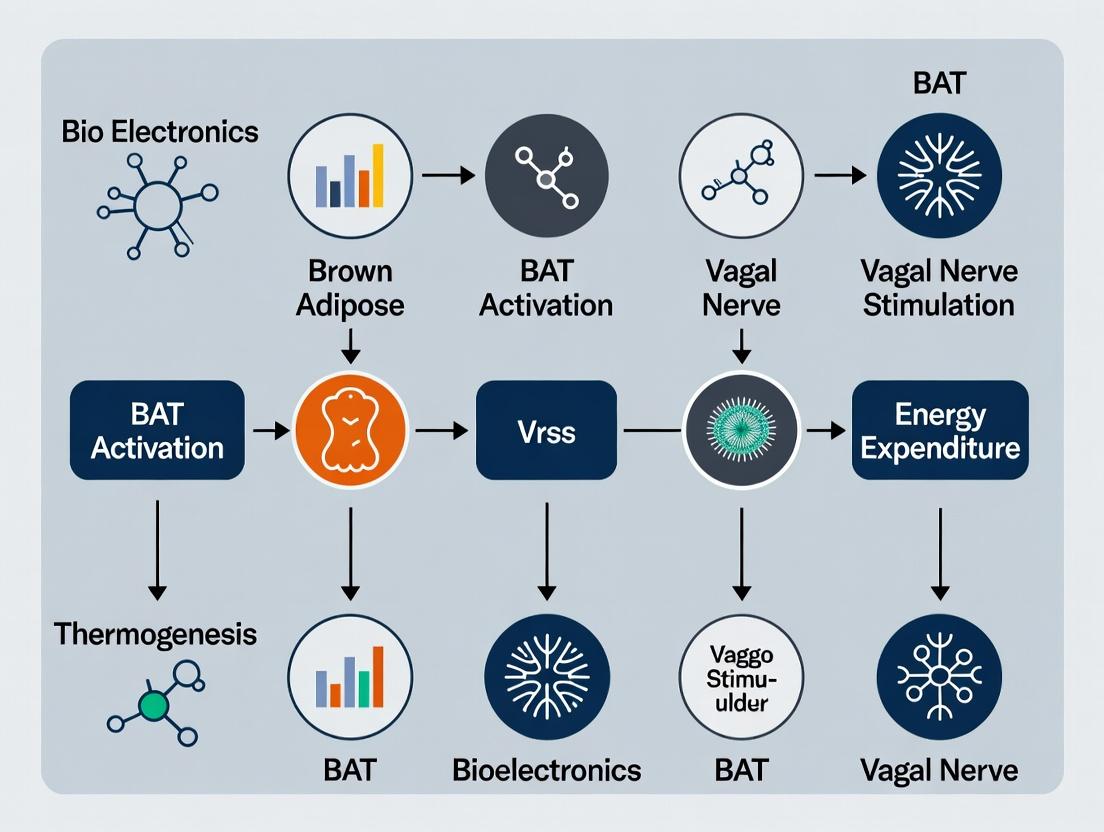
This article provides a comprehensive comparison of the mechanisms underlying Brown Adipose Tissue (BAT) activation and Vagal Nerve Stimulation (VNS), tailored for researchers and drug development professionals.
BAT vs. VNS: Decoding Neuro-Endocrine Mechanisms for Therapeutic Innovation
Abstract
This article provides a comprehensive comparison of the mechanisms underlying Brown Adipose Tissue (BAT) activation and Vagal Nerve Stimulation (VNS), tailored for researchers and drug development professionals. We explore the foundational biology of both systems, detail methodologies for their study and therapeutic application, address common challenges in experimental and clinical translation, and present a comparative analysis of their validation and efficacy. The synthesis offers a roadmap for leveraging these distinct yet potentially complementary pathways in metabolic, cardiovascular, and inflammatory disease therapeutics.
Unveiling the Core Biology: From Sympathetic BAT Activation to Parasympathetic VNS Signaling
This technical guide provides a comprehensive overview of brown adipose tissue (BAT), focusing on its anatomical and cellular features, the biochemical process of thermogenesis, and the indispensable role of the sympathetic nervous system (SNS) in its activation. This knowledge is foundational to the current research paradigm comparing the efficacy and mechanisms of direct sympathetic activation (via cold exposure or β3-adrenergic receptor (ADRB3) agonism) with alternative metabolic interventions such as vagal nerve stimulation, which may modulate SNS outflow indirectly.
Anatomy and Development of BAT
2.1 Anatomical Depots BAT depots in adult humans are primarily located in the cervical-supraclavicular, paravertebral, perirenal, and supraclavicular regions. In rodents, major depots are found in the interscapular, subscapular, and cervical areas. These depots are highly vascularized and densely innervated by sympathetic nerve fibers.
2.2 Cellular Origin and Lineage Brown adipocytes originate from a Myf5-positive, Pax7-negative dermomyotome lineage, sharing a precursor with skeletal muscle. Beige (or brite) adipocytes, which emerge within white adipose tissue (WAT) depots upon stimulation, derive from a more heterogeneous pool of progenitors, including smooth muscle-like and white adipocyte precursors.
Table 1: Key Anatomical and Developmental Features of BAT vs. Beige Fat
| Feature | Classical Brown Adipocytes | Beige (Brite) Adipocytes |
|---|---|---|
| Primary Location | Dedicated BAT depots (e.g., interscapular) | Inducible within WAT depots (e.g., inguinal) |
| Developmental Origin | Myf5+ mesodermal precursors | Heterogeneous (Myf5- progenitors, transdifferentiation) |
| Basal UCP1 Expression | High | Very Low / Undetectable |
| Induction Signal | Constitutive, maintained by tonic SNS activity | Induced by cold, β-adrenergic agonists, exercise |
| Mitochondrial Density | Very High | High (upon induction) |
The Thermogenic Machinery: UCP1-Dependent and Independent Pathways
3.1 Canonical UCP1-Dependent Thermogenesis The defining feature of brown/beige adipocytes is the presence of uncoupling protein 1 (UCP1) in the inner mitochondrial membrane. Upon activation by fatty acids, UCP1 uncouples the electron transport chain from ATP synthesis, dissipating the proton gradient as heat.
3.2 Alternative Thermogenic Pathways Recent research identifies UCP1-independent mechanisms, including:
- Creatine Substrate Cycling: ATP-dependent phosphorylation/dephosphorylation of creatine.
- Calcium Cycling: SERCA1b-mediated ATP hydrolysis coupled to calcium transport.
- Futile Lipid Cycling: Fatty acid re-esterification within the lipid droplet.
Central Role of Sympathetic Nervous System Signaling
4.1 The SNS-BAT Axis The SNS is the principal, non-redundant activator of BAT thermogenesis. Cold sensation via peripheral and central thermoreceptors increases SNS outflow from the hypothalamus to BAT. Norepinephrine (NE) released from sympathetic terminals binds primarily to the β3-adrenergic receptor (ADRB3) on brown/beige adipocytes.
4.2 Intracellular Signaling Cascade ADRB3 activation triggers a Gs-protein mediated cascade: Adenylate Cyclase activation → increased intracellular cAMP → Protein Kinase A (PKA) activation. PKA phosphorylates key targets:
- Perilipin 1 & Hormone-Sensitive Lipase (HSL): Initiates lipolysis, releasing free fatty acids (FFAs) for fuel and UCP1 activation.
- p38 MAPK: Phosphorylates and stabilizes PGC-1α, the master regulator of mitochondrial biogenesis and UCP1 transcription.
- CREB: Binds to cAMP response elements (CRE) on the Ucp1 promoter.
Title: SNS Signaling Cascade for BAT Thermogenesis
Quantitative Data on BAT Activation
Table 2: Quantitative Metabolic Impact of BAT Activation in Humans
| Parameter | Baseline State | Cold-Induced BAT Activation (Acute) | Chronic Cold Adaptation | Notes / Source |
|---|---|---|---|---|
| Energy Expenditure | ~1500-2000 kcal/day | Increase of 100-300 kcal/day | Increase of 250-400 kcal/day | Measured via indirect calorimetry |
| Glucose Disposal Rate | Standard metabolic clearance | Increased by ~40-50% | Sustained improvement | Measured via 18F-FDG PET/CT and hyperinsulinemic clamp |
| Fatty Acid Uptake | Low in WAT, high in BAT fasting | Increased 5-10 fold in BAT | Increased basal uptake | Measured via 11C-acetate or 18F-FTHA PET |
| BAT Metabolic Volume | ~50-150 mL in adults | Can increase by 20-40% acutely (recruitment) | Volume & activity increase | Quantified from 18F-FDG PET/CT scans |
Key Experimental Protocols
6.1 In Vivo Assessment of BAT Activity in Rodents
- Purpose: Quantify thermogenic capacity and sympathetic dependence.
- Protocol:
- Cold Exposure Challenge: Place singly-housed mice at 4-6°C for 4-6 hours. Core temperature is monitored via rectal probe or telemetry.
- Pharmacological Stimulation: Inject β3-adrenergic agonist (e.g., CL 316,243, 1 mg/kg i.p.). Measure oxygen consumption (VO2) and carbon dioxide production (VCO2) using metabolic cages.
- Tissue Collection: Sacrifice mice after acute stimulation. Rapidly dissect BAT depots (interscapular), weigh, and freeze in liquid N2 or prepare for histology.
- Sympathetic Denervation Control: Surgically denervate one interscapular BAT (iBAT) pad (using 6-hydroxydopamine or microsurgical ablation of sympathetic nerves). Use the contralateral pad as an internal control.
6.2 Ex Vivo Functional Analysis of Isolated Brown Adipocytes
- Purpose: Measure cell-autonomous thermogenic response.
- Protocol:
- Cell Isolation: Digest iBAT from 3-5 mice with collagenase Type II (2 mg/mL) in Krebs-Ringer buffer at 37°C with shaking. Filter and centrifuge to isolate mature adipocytes.
- Seahorse Extracellular Flux Analysis: Plate isolated adipocytes in an XF96 assay plate. Measure oxygen consumption rate (OCR) in response to sequential injections: a) Norepinephrine (1-10 µM) or CL 316,243, b) Oligomycin (ATP synthase inhibitor), c) FCCP (mitochondrial uncoupler), d) Rotenone & Antimycin A (ETC inhibitors).
- Calculations: Calculate basal, NE-stimulated, and uncoupled respiration. Proton leak is derived from Oligomycin-inhibited rate.
6.3 Quantifying Human BAT Activity via 18F-FDG PET/CT
- Purpose: Non-invasive imaging of metabolically active BAT.
- Protocol:
- Subject Preparation: Prior to scanning, subjects undergo either a) personal cooling (e.g., wearing a cooling vest) for 1-2 hours, or b) remain in a thermoneutral state as a control.
- Tracer Administration: Inject 148-185 MBq (4-5 mCi) of 18F-FDG intravenously while cooling continues.
- Image Acquisition: After 60 minutes uptake period, perform a low-dose CT scan for attenuation correction and anatomical localization, followed by a PET scan from the neck to the thorax.
- Image Analysis: Define BAT regions of interest (ROIs) on fused PET/CT images using standardized criteria (SUVmax > 2.0, Hounsfield Units between -190 and -10). Calculate metabolic activity (SUVmean, total BAT volume, total glucose uptake).
The Scientist's Toolkit: Key Research Reagents
Table 3: Essential Reagents for BAT and SNS Signaling Research
| Reagent / Material | Function / Application | Example Product (Non-exhaustive) |
|---|---|---|
| β3-Adrenergic Receptor Agonist | Pharmacological BAT activation in vivo and in vitro. | CL 316,243 (selective for rodent ADRB3), Mirabegron (human ADRB3 agonist) |
| UCP1 Antibody | Detection and quantification of UCP1 protein in tissue/cells via Western blot, IHC. | Anti-UCP1 antibody (e.g., Abcam ab10983) |
| 18F-Fluorodeoxyglucose (18F-FDG) | Radiotracer for imaging glucose uptake in active BAT via PET/CT. | Clinical/Preclinical grade from radiopharmacy |
| Collagenase Type II | Enzymatic digestion of BAT for primary brown adipocyte isolation. | Worthington Biochemical CLS-2 |
| Seahorse XF96 Analyzer | Real-time measurement of mitochondrial oxygen consumption rate (OCR) in live cells. | Agilent Technologies |
| Norepinephrine | Endogenous sympathetic neurotransmitter used for direct in vitro stimulation. | Sigma-Aldrich A9512 |
| 6-Hydroxydopamine (6-OHDA) | Chemical sympathectomy agent for in vivo denervation studies. | Sigma-Aldromycin H4381 |
| Telemetry Probes | Continuous, stress-free monitoring of core body temperature in freely moving rodents. | HD-X11, Data Sciences International |
| PGC-1α Antibody | Assessing mitochondrial biogenesis signaling. | Anti-PGC1α antibody (e.g., Millipore AB3242) |
Title: Research Paradigm: Direct vs. Indirect BAT Activation
1. Introduction Within the broader thesis investigating the therapeutic potential of Brown Adipose Tissue (BAT) activation versus vagal nerve stimulation for metabolic diseases, understanding the core molecular machinery of BAT is paramount. This whitepaper provides a technical dissection of the principal components: the β-Adrenergic Receptors (β-ARs), their downstream signaling cascades, and the terminal effector, Uncoupling Protein 1 (UCP1). This toolkit is essential for researchers aiming to pharmacologically target BAT, a mechanism distinct from neuromodulatory approaches like vagal stimulation.
2. Core Molecular Components
2.1 β-Adrenergic Receptors (β-ARs): The Signal Initiators Noradrenaline release from sympathetic nerves activates BAT primarily via β1-, β2-, and β3-ARs, with β3-AR being the most BAT-specific and therapeutically targeted. Activation triggers a canonical Gαs-protein-mediated increase in intracellular cAMP.
2.2 The UCP1-Centric Mitochondrial Mechanism UCP1 is an inner mitochondrial membrane protein unique to brown/beige adipocytes. Upon activation by fatty acids (liberated downstream of β-AR signaling), UCP1 uncouples oxidative phosphorylation from ATP synthesis, dissipating the proton gradient as heat.
2.3 Key Signaling Pathway The canonical pathway from β-AR stimulation to thermogenesis involves a coordinated sequence: 1) Receptor activation, 2) cAMP/PKA signaling, 3) Lipolysis and fatty acid liberation, 4) UCP1 activation and mitochondrial uncoupling.
3. Pathway Diagram: β-AR to Thermogenesis in BAT
Diagram Title: Canonical β-AR Signaling to Thermogenesis in BAT
4. Quantitative Data Summary
Table 1: Key Quantitative Metrics in BAT Activation
| Parameter | Typical Range/Value (Mouse Model) | Typical Range/Value (Human) | Notes / Source |
|---|---|---|---|
| β3-AR EC₅₀ for Agonists | 0.1 - 10 nM (e.g., CL316,243) | Lower potency observed | Species-specific affinity differences. |
| Cold-Induced BAT Glucose Uptake | Increase of ~150-200% | Increase of ~100-300% (FDG-PET) | Highly dependent on baseline activity and cooling protocol. |
| Mitochondrial Density in BAT | 1000-2000 per cell | Comparable high density | Significantly higher than white adipocytes. |
| UCP1 Proton Leak Conductance | Increases basal metabolic rate by up to 60% | Estimated similar impact | Primary driver of non-shivering thermogenesis. |
| Plasma NEFA Increase Post-β3-AR Agonist | ~2-3 fold rise within 15 min | Muted response in humans | Critical for UCP1 activation. |
5. Experimental Protocols
5.1 Protocol: In Vitro Assessment of β-AR Agonist Efficacy on Differentiated Brown Adipocytes Objective: To measure cAMP production and gene expression changes in response to β-AR agonists.
- Cell Culture: Differentiate immortalized brown pre-adipocytes (e.g., WT-1) or primary stromal vascular fraction cells using standard induction cocktail (IBMX, dexamethasone, insulin, T3, rosiglitazone).
- Treatment: Serum-starve mature adipocytes for 2h. Treat with dose-response of selective β3-agonist (e.g., CL316,243, 1nM-10µM), non-selective β-agonist (isoprenaline), or vehicle for 15min (cAMP) or 4-24h (gene expression).
- cAMP Assay: Lyse cells and quantify cAMP using a commercial ELISA or HTRF assay.
- Gene Expression Analysis: Extract RNA, synthesize cDNA, perform qPCR for Ucp1, Pgc1a, Dio2, and Adrb3.
- Data Normalization: Normalize cAMP data to protein content; normalize qPCR data to stable housekeeping genes (e.g., 36B4, Hprt).
5.2 Protocol: Ex Vivo Measurement of Mitochondrial Respiration in BAT Explants Objective: To directly assess UCP1-mediated uncoupled respiration using high-resolution respirometry (Oroboros O2k).
- Tissue Preparation: Rapidly dissect interscapular BAT from euthanized mice. Mince tissue finely in Mir05 respiration buffer on ice.
- Permeabilization: Transfer tissue to respirometer chambers. Add digitonin (10 µg/ml) to permeabilize plasma membranes.
- Substrate-Uncoupler-Inhibitor Titration (SUIT) Protocol:
- LEAK: Add substrates for complex I (glutamate, malate, pyruvate). Measure basal respiration (LEAK state, L).
- OXPHOS (P): Add ADP. Measure phosphorylating respiration.
- Maximal ETS (E): Titrate the uncoupler FCCP stepwise to achieve maximum electron transfer system capacity.
- UCP1-Mediated Respiration: Add octanoyl carnitine (fatty acid substrate) followed by guanosine diphosphate (GDP, 1 mM), a UCP1 inhibitor. The GDP-inhibited portion represents UCP1-mediated proton leak.
- Inhibition: Add rotenone (complex I inhibitor) and antimycin A (complex III inhibitor) to determine residual oxygen consumption.
- Calculation: UCP1-dependent respiration = (Rate after octanoyl carnitine) - (Rate after GDP addition).
6. Research Reagent Solutions Toolkit
Table 2: Essential Reagents for BAT Molecular Research
| Reagent/Category | Example Product(s) | Function/Application |
|---|---|---|
| Selective β3-AR Agonists | CL316,243; BRL 37344; Mirabegron (for human studies) | Pharmacological activation of the canonical BAT signaling pathway in vitro and in vivo. |
| β-AR Antagonists | Propranolol (non-selective); SR59230A (β3-selective) | Validation of receptor specificity in experimental controls. |
| UCP1 Antibodies | Validated antibodies for Western Blot (e.g., from Sigma-Aldrich, Abcam) | Detection and quantification of UCP1 protein expression in tissue or cell lysates. |
| Mitochondrial Respiration Kits | Seahorse XF Cell Mito Stress Test Kit; Oroboros O2k substrates/inhibitors | Functional profiling of oxidative phosphorylation and uncoupling in cells or tissue explants. |
| cAMP Detection Assays | cAMP-Glo Assay (Promega); HTRF cAMP Dynamic 2 Assay (Cisbio) | Sensitive quantification of proximal β-AR signaling activity. |
| Fatty Acid Oxidation Probes | ³H-labeled oleate; BODIPY FL C16 | Tracing and visualization of fatty acid uptake and utilization, the fuel for thermogenesis. |
| Brown Adipocyte Cell Lines | WT-1; PAZ6 (human) | Consistent, scalable in vitro models for mechanistic screening. |
| Key Animal Models | Ucp1 knockout mice; Adrb3 knockout mice | Genetic validation of the necessity of specific toolkit components. |
7. Comparative Signaling Diagram: BAT vs. Vagal Stimulation
Diagram Title: Contrasting BAT and Vagal Stimulation Pathways
The therapeutic modulation of autonomic balance represents a frontier in treating metabolic, inflammatory, and neurological disorders. Brown Adipose Tissue (BAT) activation and Vagus Nerve Stimulation (VNS) are two prominent, yet mechanistically distinct, approaches. BAT research focuses on sympathetic-driven thermogenesis via β3-adrenergic receptors. In contrast, VNS targets the primary efferent pathway of the parasympathetic nervous system (PNS), inducing a systemic, cholinergic anti-inflammatory and neurometabolic reflex. This whitepaper details the anatomical and functional foundations of VNS, providing a technical reference for researchers contrasting these paradigms.
Anatomical Architecture of the Vagus Nerve
The vagus nerve (Cranial Nerve X) is a mixed nerve comprising approximately 80% afferent and 20% efferent fibers. Its anatomical course is divided into cervical, thoracic, and abdominal segments.
Key Quantitative Anatomical Data: Table 1: Vagus Nerve Fiber Composition and Diameter
| Fiber Type | Percentage | Diameter (µm) | Conduction Velocity | Primary Function |
|---|---|---|---|---|
| Myelinated Afferent (A-fibers) | ~10-15% | 2-12 | 5-70 m/s | Mechanoreception, Baroreception |
| Unmyelinated Afferent (C-fibers) | ~65-70% | 0.2-1.5 | 0.5-2 m/s | Chemoreception, Nociception |
| Myelinated Efferent (B-fibers) | ~10-15% | 1-3 | 3-15 m/s | Preganglionic parasympathetic output |
| Unmyelinated Efferent (C-fibers) | ~5% | 0.2-1.5 | 0.5-2 m/s | Minor efferent functions |
Fundamentals of PNS Neurotransmission & Modulation
PNS signaling is primarily cholinergic. Vagus efferents release acetylcholine (ACh) onto nicotinic acetylcholine receptors (nAChRs) on postganglionic neurons in end-organ plexuses (e.g., cardiac, pulmonary, enteric). These neurons then release ACh to muscarinic receptors (mAChRs) on target tissues.
Primary Signaling Pathway:
Title: Core Cholinergic Pathway of Vagus Efferent Signaling
The Cholinergic Anti-Inflammatory Pathway (CAP): A Key Experimental Model
The CAP is a well-defined VNS reflex where afferent signals detecting inflammation trigger efferent vagus activity, releasing ACh in the spleen to suppress TNF-α production.
Detailed Experimental Protocol for Rodent CAP Studies:
- Animal Model: LPS-induced endotoxemia in male Sprague-Dawley rats (250-300g).
- VNS Implantation: Anesthetize rat. Isolate the left cervical vagus nerve. Implant a bipolar platinum-iridium electrode. Secure leads to a subcutaneous connector.
- Stimulation Parameters: Begin 5 min pre-LPS. Use constant current square waves (0.5-1.0 mA, 1.0 ms pulse width, 10 Hz frequency). Stimulation duration: 60-120 minutes.
- LPS Challenge: Administer LPS (1-5 mg/kg, i.p.) at time T=0.
- Control Groups: Include Sham (nerve exposure, no stimulation), LPS-only, and Unoperated.
- Endpoint Analysis (90-min post-LPS): Collect plasma and spleen. Measure TNF-α via ELISA. Splenocyte cultures can be ex-vivo challenged with LPS.
- Key Validation: α7 nAChR knockout mice or pharmacological antagonists (e.g., methyllycaconitine) should abolish the CAP effect.
Pathway Diagram:
Title: Cholinergic Anti-inflammatory Pathway from LPS to TNF Suppression
Research Toolkit: Essential Reagents & Materials
Table 2: Key Research Reagent Solutions for VNS Studies
| Item | Function & Specification | Example/Catalog Context |
|---|---|---|
| VNS Electrodes | Implantable bipolar electrodes for chronic/acute nerve stimulation. Material: Platinum-Iridium. | Microprobes for rodents; Ceramic encased electrodes for larger animals. |
| Programmable Stimulator | Provides precise control of current, frequency, pulse width, and duty cycle. | Digital Constant Current Stimulator (e.g., A-M Systems, Digitimer). |
| α7 nAChR Agonist | Pharmacologically mimics efferent VNS effect at the spleen. | PNU-282987, GTS-21 (DMXBA). |
| α7 nAChR Antagonist | Validates specificity of the α7-mediated pathway. | Methyllycaconitine citrate (MLA). |
| Choline Acetyltransferase (ChAT) Antibody | Immunohistochemical identification of cholinergic neurons. | Anti-ChAT, polyclonal (e.g., MilliporeSigma AB144P). |
| c-Fos Antibody | Marks neuronal activation following stimulation. | Anti-c-Fos, monoclonal (e.g., Cell Signaling 9F6). |
| TNF-α ELISA Kit | Quantifies key inflammatory cytokine output in CAP models. | Species-specific high-sensitivity ELISA kits (e.g., R&D Systems). |
| Lipopolysaccharide (LPS) | Standard inflammagen to trigger the inflammatory reflex. | E. coli O111:B4, purified (e.g., Sigma L2630). |
Core Quantitative Outcomes in Preclinical VNS
Table 3: Representative Quantitative Outcomes from Rodent VNS Studies
| Experimental Model | Stimulation Parameters | Key Outcome vs. Control | Proposed Mechanism |
|---|---|---|---|
| Endotoxemia (LPS) | 1 mA, 1 ms, 10 Hz | Plasma TNF-α reduced by 70-80% at peak. | α7 nAChR-dependent macrophage inhibition. |
| Myocardial Ischemia | 0.5-2.0 mA, 1 ms, 20 Hz | Infarct size reduced by 35-50%. | ACh-mediated cardioprotection, reduced apoptosis. |
| Arthritis (CIA) | 0.25 mA, 0.5 ms, 10 Hz (chronic) | Clinical arthritis score reduced by ~40%. | Attenuated systemic and joint-specific inflammation. |
| Glucose Homeostasis | 0.8 mA, 0.3 ms, 5 Hz (HFD model) | Improved glucose tolerance by 25%; reduced hepatic glucose production. | Central modulation of hepatic vagal efferents. |
1. Introduction and Thesis Context
Within the broader research paradigm comparing the systemic anti-inflammatory mechanisms of Brown Adipose Tissue (BAT) activation versus Vagal Nerve Stimulation (VNS), the cholinergic anti-inflammatory pathway (CAP) represents a critical neuro-immune interface. This axis facilitates rapid, bidirectional communication between the central nervous system and peripheral visceral organs, modulating inflammatory responses to prevent immunopathology. While BAT activity exerts endocrine-mediated effects via batokine secretion (e.g., IL-6, NRG4), VNS operates through direct, fast synaptic signaling via the CAP. This whitepaper delineates the molecular anatomy of the CAP, its role in visceral communication, and provides a technical framework for its investigation in contrast to BAT-centric mechanisms.
2. Anatomical and Molecular Basis of the CAP
The efferent arm of the CAP originates in the dorsal motor nucleus of the vagus and projects to celiac and mesenteric ganglia. Post-ganglionic neurons innervate visceral organs, notably the spleen, a key immunological site. Terminal release of acetylcholine (ACh) activates α7 nicotinic acetylcholine receptors (α7nAChR) on resident macrophages and other immune cells.
Table 1: Key Mediators in CAP versus BAT Anti-Inflammatory Pathways
| Component | Cholinergic Anti-Inflammatory Pathway (VNS) | Brown Adipose Tissue Activation Pathway |
|---|---|---|
| Primary Effector | Vagus nerve (efferent fibers) | Brown adipocytes |
| Key Receptor | α7 nicotinic ACh receptor (α7nAChR) | Beta-3 adrenergic receptor (β3-AR) |
| Immediate Signal | Acetylcholine (neurotransmitter) | Norepinephrine (neurotransmitter/hormone) |
| Primary Immune Target | Splenic macrophages, Kupffer cells | Systemic (via secreted factors) |
| Downstream Signaling | JAK2-STAT3 inhibition, NF-κB suppression | Batokine secretion (e.g., IL-6, NRG4) |
| Response Kinetics | Milliseconds to minutes (neural) | Minutes to hours (endocrine/humoral) |
| Experimental Readout | Plasma TNFα reduction post-LPS | BAT thermogenesis, IL-6 plasma levels |
Diagram 1: Efferent CAP from brain to spleen.
3. Core Signaling Pathway: From α7nAChR to NF-κB Suppression
ACh binding to α7nAChR on macrophages initiates a intracellular cascade leading to suppression of pro-inflammatory cytokine synthesis.
Diagram 2: Intracellular CAP signaling in a macrophage.
4. Key Experimental Protocols
Protocol 1: Assessing CAP Efficacy via VNS in Endotoxemia Model Objective: To quantify the anti-inflammatory effect of VNS versus BAT activation in vivo. Materials: Male C57BL/6 mice (8-10 weeks), VNS electrode/cuff, LPS (E. coli 055:B5), β3-AR agonist (CL-316,243), ELISA kits (TNF-α, IL-6). Procedure:
- Anesthetize and implant bipolar cuff electrode on the left cervical vagus nerve.
- After 7-day recovery, randomize into groups: (a) Sham + LPS, (b) VNS + LPS, (c) BAT activation (CL-316,243 i.p.) + LPS, (d) VNS + α7nAChR antagonist (MLA) + LPS.
- Pre-treat with VNS (1mA, 200µs, 10Hz for 5min) or CL-316,243 (1mg/kg) 30 minutes before LPS injection (3mg/kg i.p.).
- Collect plasma via cardiac puncture at 90 minutes post-LPS.
- Quantify TNF-α and IL-6 via ELISA. Analysis: Compare cytokine reduction between VNS and BAT groups. VNS effect should be α7nAChR-dependent.
Protocol 2: Splenic Denervation to Confirm Neural Route Objective: To isolate the neural component of CAP from humoral/endocrine effects (e.g., from BAT). Procedure:
- Perform selective surgical denervation of the splenic nerve bundle.
- After recovery, repeat Protocol 1.
- The anti-inflammatory effect of VNS should be abolished or severely attenuated, while the effect of BAT activation (if humorally mediated) should persist.
5. The Scientist's Toolkit: Research Reagent Solutions
Table 2: Essential Reagents for CAP and Visceral Communication Research
| Reagent/Category | Example Product/Model | Primary Function in Research |
|---|---|---|
| α7nAChR Agonist | PNU-282987, GTS-21 | To pharmacologically mimic CAP activation in vitro/in vivo. |
| α7nAChR Antagonist | Methyllycaconitine (MLA) | To confirm α7nAChR specificity in an experiment. |
| Vagus Nerve Stimulator | BioStim Genesis, custom bipolar cuff | To deliver precise electrical stimulation in rodent models. |
| β3-AR Agonist | CL-316,243, Mirabegron | To selectively activate BAT for comparative studies. |
| Splenic Nerve Denervation Kit | Fine micro-dissection tools (e.g., Dumont #5 forceps) | To surgically disrupt the neural efferent arm to the spleen. |
| Neuronal Tracer | Cholera Toxin B Subunit (CTB), AAV-retro | To map specific neural connections between ganglia and organs. |
| Cytokine Multiplex Assay | Luminex xMAP, MSD U-PLEX | To quantify broad cytokine profiles from small plasma volumes. |
| Phospho-STAT3 Antibody | Anti-phospho-STAT3 (Tyr705) | To validate CAP activation via JAK2-STAT3 signaling in Western blot/IHC. |
6. Data Integration and Comparative Analysis
A direct comparison requires parallel measurement of neural activity (e.g., vagal electroneurogram), BAT thermogenesis (via infrared thermography), and systemic inflammation.
Table 3: Hypothetical Comparative Data: VNS vs. BAT Activation in Murine LPS Model
| Experimental Group | Plasma TNF-α (pg/mL) | Plasma IL-6 (pg/mL) | BAT Temperature Δ (°C) | Splenic p-STAT3 Increase |
|---|---|---|---|---|
| Sham + LPS | 1250 ± 210 | 850 ± 140 | +0.2 ± 0.1 | 1.0 ± 0.2 (fold) |
| VNS + LPS | 320 ± 85* | 450 ± 95* | +0.3 ± 0.2 | 3.5 ± 0.8* (fold) |
| BAT Act. + LPS | 700 ± 120* | 480 ± 100* | +2.1 ± 0.4* | 1.3 ± 0.3 (fold) |
| VNS + MLA + LPS | 1180 ± 200 | 820 ± 130 | +0.2 ± 0.1 | 1.1 ± 0.2 (fold) |
Data presented as mean ± SEM; * denotes significant difference vs. Sham+LPS (p<0.05).
7. Conclusion and Research Directions
The CAP provides a hardwired, rapid-response circuit for inflammatory control, distinct from the slower, metabolic-endocrine pathway associated with BAT activation. Future research delineating this axis should focus on: 1) Identifying the precise splenic cell type(s) that translate noradrenergic input into cholinergic output, 2) Exploring the afferent sensory signals from viscera that initiate the CAP reflex, and 3) Developing targeted α7nAChR agonists that avoid off-target nicotinic effects, offering a novel therapeutic strategy for chronic inflammatory diseases.
Within contemporary neuromodulation research, a central dichotomy exists between thermogenic (e.g., Brown Adipose Tissue, BAT) activation via the Sympathetic Nervous System (SNS) and cardiometabolic modulation via the Parasympathetic Nervous System (PNS), specifically vagal nerve stimulation (VNS). This whitepaper posits that the efficacy and potential crosstalk of BAT versus VNS-based therapeutic interventions cannot be fully understood without mapping their shared central command infrastructure. The hypothalamus and brainstem serve as primary convergence points, integrating peripheral and central signals to issue calibrated, often reciprocal, outputs to both SNS and PNS effector pathways. This document provides a technical dissection of these convergence nuclei, their signaling logic, and experimental approaches for their study.
Anatomical and Functional Convergence Nuclei
2.1 Hypothalamic Integrative Centers
- Paraventricular Nucleus (PVN): A primary output nucleus containing pre-autonomic neurons projecting to both sympathetic (rostral ventrolateral medulla, RVLM) and parasympathetic (dorsal motor nucleus of the vagus, DMV; nucleus ambiguus, NA) premotor centers in the brainstem. It is a key site for neuroendocrine-autonomic integration.
- Arcuate Nucleus (ARC): Integrates peripheral metabolic signals (leptin, ghrelin, insulin) via circumventricular organs and the blood-brain barrier. It projects to second-order neurons in the PVN and Lateral Hypothalamic Area (LHA) to influence autonomic tone.
- Ventromedial Hypothalamus (VMH): Historically a "satiety center," now recognized as a critical driver of sympathetic outflow to BAT and the cardiovascular system via projections to the PVN and brainstem.
- Lateral Hypothalamic Area (LHA): Contains orexin/hypocretin and melanin-concentrating hormone (MCH) neurons that provide diffuse, state-dependent (arousal, feeding) modulation to autonomic premotor nuclei.
2.2 Brainstem Integrative Centers
- Nucleus of the Solitary Tract (NTS): The principal visceral sensory relay. It receives input from vagal and glossopharyngeal afferents (cardio-respiratory, gastrointestinal) and projects extensively to the hypothalamus (PVN, ARC), parabrachial nucleus, and brainstem autonomic nuclei (RVLM, DMV, NA), enabling reflex loops.
- Rostral Ventrolateral Medulla (RVLM): The major sympathetic premotor nucleus. RVLM neurons provide tonic and phasic drive to sympathetic preganglionic neurons in the spinal cord's intermediolateral cell column (IML).
- Dorsal Motor Nucleus of the Vagus (DMV) & Nucleus Ambiguus (NA): Source of preganglionic parasympathetic motor fibers (the efferent vagus). The DMV primarily innervates sub-diaphragmatic organs, while the NA innervates the heart and lungs.
Signaling Pathways and Neurochemical Logic
The orchestration of SNS and PNS outputs is governed by complex neuropeptide and monoamine signaling systems that exhibit convergence and divergence.
Table 1: Key Neurochemical Modulators at Central Convergence Points
| Neurochemical | Primary Source | Target Nuclei | Primary Effect on Autonomic Output | Relevance to BAT vs. VNS |
|---|---|---|---|---|
| Leptin | Peripheral Adipocytes | ARC, NTS, DMV | ↑ SNS (BAT, Renal); Modulates Vagal Tone | Promotes BAT thermogenesis; inhibits vagal gastric motility. |
| Orexin/Hypocretin | LHA | PVN, RVLM, NTS, LC | ↑ SNS (BAT, Cardio); ↑ Arousal & Drive | Co-activates BAT SNS and cardio-acceleration. |
| α-MSH | ARC POMC Neurons | PVN, LHA, DMV | ↑ SNS (BAT); ↓ Food Intake | Critical mediator of leptin-induced BAT thermogenesis. |
| NPY/AgRP | ARC NPY Neurons | PVN, LHA, DMV | ↓ SNS (BAT); ↑ Food Intake; ↓ PNS? | Antagonizes α-MSH, suppresses BAT SNS; modulates vagal reflexes. |
| Norepinephrine | A1/C1, A2/C2, A6(LC) | PVN, NTS, DMV, RVLM | Context-dependent ↑ or ↓ of SNS/PNS | LC→PVN: ↑ CRH → ↑ SNS. A2(NTS)→DMV: modulates vagal reflexes. |
| Glutamate | Ubiquitous excitatory | All Nuclei | Fast Excitation | Primary transmitter for pre-autonomic output neurons (PVN→RVLM, RVLM→IML). |
| GABA | Ubiquitous inhibitory | All Nuclei | Fast Inhibition | Key for reciprocal inhibition (e.g., local NTS circuits shaping vagal output). |
Diagram 1: Core Hypothalamic-Brainstem Autonomic Convergence Circuit
Diagram 2: Specific Pathway for Cold-Induced BAT Activation via SNS
Detailed Experimental Protocols
4.1 Protocol: Central Nuclei-Specific Neuronal Activation/Inhibition for Autonomic Phenotyping
- Objective: To determine the causal role of a specific neuronal population (e.g., PVN→RVLM projection) in modulating SNS (BAT) and PNS (cardiac vagal) outputs.
- Methodology (Chemogenetics - DREADDs):
- Stereotaxic Surgery: Anesthetize adult rodent (e.g., C57BL/6J mouse) and secure in stereotaxic frame.
- Viral Injection: Inject 300-500 nL of Cre-dependent AAV-hSyn-DIO-hM3Dq-mCherry (for activation) or AAV-hSyn-DIO-hM4Di-mCherry (for inhibition) into the source nucleus (e.g., PVN) of a Cre-driver mouse line.
- Chronic Cannula/Ito Implantation: For subsequent drug administration, implant a guide cannula above the lateral ventricle or implant an telemetry probe for electrocardiogram (ECG) and core temperature.
- Recovery & Expression: Allow 3-4 weeks for viral expression and recovery.
- Chemogenetic Activation: Administer Clozapine-N-Oxide (CNO, 1-3 mg/kg, i.p.) or vehicle.
- Simultaneous Outcome Measures:
- BAT SNS Activity: BAT temperature via telemetry or infrared thermography; BAT sympathetic nerve activity (SNA) via direct nerve recording.
- Cardiac PNS Activity: Derive heart rate variability (HRV) from ECG telemetry; high-frequency power (HF-HRV) is a proxy for cardiac vagal tone.
- Metabolic Rate: Indirect calorimetry (O₂/CO₂).
- Neuronal Activation Marker: Perfuse animal 90 min post-CNO; collect brain and process for c-Fos immunohistochemistry colocalized with mCherry.
4.2 Protocol: Functional Mapping of Vagal Afferent Input to Autonomic Convergence Nuclei
- Objective: To map the synaptic connectivity and functional impact of visceral vagal afferents (e.g., from the gut) onto defined hypothalamic and brainstem autonomic neurons.
- Methodology (Channelrhodopsin-Assisted Circuit Mapping):
- Afferent-Specific Opsin Expression: Inject AAV-CAG-ChR2-eYFP into the nodose ganglion (sensory) or directly into the subdiaphragmatic vagal trunk.
- Whole-Brain c-Fos Mapping: After recovery, apply 473 nm blue light stimulation (20 Hz, 5 ms pulses, 10 min) to the vagus nerve via a fiber optic cuff. Perfuse after 90 min. Process whole brain for c-Fos. Quantify Fos+ cells in NTS, PVN, ARC, LHA.
- Slice Electrophysiology: Prepare acute brainstem/hypothalamic slices from injected animals. Identify retrogradely labeled (e.g., from BAT) pre-autonomic neurons in the PVN or RVLM under fluorescence. Perform whole-cell patch-clamp recording. Deliver brief blue light pulses to the NTS to evoke postsynaptic currents, characterizing the strength and neurotransmitter (glutamate vs. GABA) of the vagal→NTS→target neuron circuit.
The Scientist's Toolkit: Research Reagent Solutions
Table 2: Essential Reagents for Central Autonomic Convergence Research
| Item | Function/Application | Example Product/Catalog |
|---|---|---|
| Cre-Driver Mouse Lines | Cell-type-specific targeting of autonomic nuclei neurons. | PVN-Cre (e.g., Sim1-Cre), Chat-Cre (cholinergic, for DMV/NA), Leptin Receptor-Cre (LepR-Cre) for metabolic sensing neurons. |
| DREADD Viral Vectors | Chemogenetic remote control of neuronal activity in vivo. | AAV8-hSyn-DIO-hM3Dq/hM4Di-mCherry (Addgene). Allows bidirectional modulation. |
| CNO (Clozapine-N-Oxide) | Pharmacologically inert ligand to activate/inhibit DREADDs. | Hello Bio HB6149. Critical control: use hm4Di + CNO to inhibit neurons. |
| AAV-retrograde Serotypes | Efficient retrograde labeling from projection sites (e.g., RVLM, IML) back to soma. | AAVrg-hSyn-Cre (Addgene 105553). Enables projection-specific access. |
| Fiber Photometry Systems | Recording population calcium dynamics in freely behaving animals. | Doric Lenses FP System. Use with GCaMP6/7 viruses to record ARC or PVN activity during BAT activation or vagal stimulation. |
| Sympathetic Nerve Recording Kit | Direct in vivo measurement of SNA to specific organs (BAT, renal). | ADInstruments LabChart with Neuro Amp EX. Fine-tipped bipolar electrodes for SNA. |
| Telemetry Implants | Chronic, unrestrained recording of ECG, temperature, activity. | Data Sciences International HD-X11 (ECG + Temp). Enables HRV and BAT temp correlation. |
| c-Fos Antibody | Standard marker for neuronal activation following intervention. | Synaptic Systems 226 003 (rabbit anti-c-Fos). High specificity for IHC. |
| BAT Reporter Mouse | Non-invasive imaging of BAT mass and activation. | UCP1-luciferase mice. Allows longitudinal monitoring of BAT recruitment. |
From Bench to Bedside: Techniques for Stimulating BAT and Vagus Nerve in Research & Therapy
The investigation of brown adipose tissue (BAT) as a therapeutic target for metabolic diseases such as obesity and type 2 diabetes represents a critical frontier in metabolic research. This whitepaper provides a technical guide to established and emerging pharmacologic methods for inducing BAT activation, framed within the broader research thesis comparing central (e.g., vagal nerve stimulation) versus peripheral (e.g., direct adrenergic signaling) mechanisms for modulating energy expenditure. While central neural circuits, particularly via the vagus nerve, offer a systemic control point, direct peripheral targeting of BAT presents a potentially more specific intervention with fewer off-target neurological effects.
The primary physiologic activator of BAT is sympathetic nervous system (SNS) signaling, initiated by environmental cold. Norepinephrine released from sympathetic nerve terminals binds to β3-adrenergic receptors (β3-AR) on brown adipocytes, triggering a cAMP-dependent signaling cascade that leads to lipolysis and the activation of uncoupling protein 1 (UCP1). UCP1 dissipates the proton gradient across the inner mitochondrial membrane, converting energy from substrate oxidation into heat. The quantitative effects of major activation strategies are summarized below.
Table 1: Quantitative Comparison of BAT Activation Modalities
| Modality | Primary Target | Key Measured Outcome | Typical Magnitude of Effect (in vivo, Human/Rodent) | Onset/Duration |
|---|---|---|---|---|
| Cold Exposure | Systemic SNS | BAT Glucose Uptake (FDG-PET SUVmax) | Human: 100-300% increase; Rodent: 5-10 fold increase | Onset: 30-60 min; Duration: Hours post-exposure |
| β3-AR Agonists (Clinical) | β3-Adrenoceptor | Resting Energy Expenditure (REE) | Human: 5-15% increase in REE | Onset: 1-2 hrs; Duration: 6-12 hrs |
| β3-AR Agonists (Preclinical) | β3-Adrenoceptor | Core Temperature / Oxygen Consumption | Rodent: 1-2°C ΔTemp; 20-50% increase in VO₂ | Onset: 15-30 min; Duration: 2-6 hrs |
| BMP8b | AMPK, p38 MAPK | BAT Thermogenic Capacity | Rodent: Potentiates response to norepinephrine by ~50% | Slow onset (days), long-term adaptive effect |
| FGF21 | β-Klotho/FGFR1c | UCP1 mRNA Expression | Rodent: 2-5 fold increase in UCP1 mRNA | Onset: hours; Peak: 24-48 hrs |
Established Protocols & Emerging Pharmacologic Targets
Cold Exposure Protocol (Standardized Human Acclimation)
Objective: To induce and measure adaptive thermogenesis via SNS-mediated BAT activation. Methodology:
- Pre-screening: Subjects undergo a baseline FDG-PET/CT scan under thermoneutral conditions (22-24°C) to quantify background BAT activity.
- Cooling Procedure: Subjects wear a liquid-conditioned suit or are exposed to a mild cold environment (16-18°C) for 2 hours prior to scanning.
- Standardization: Pre-cooling is often combined with a 6-hour fast to standardize substrate availability and minimize insulin-mediated FDG uptake in other tissues.
- FDG Administration & Imaging: 18F-FDG (74-185 MBq) is injected intravenously during the cold exposure. After a 60-minute uptake period under continued cooling, PET/CT imaging is performed.
- Analysis: BAT activity is quantified as Standardized Uptake Value (SUV), with volume and mean SUV calculated for depots (cervical, supraclavicular, paravertebral).
β3-Adrenergic Receptor Agonists: From Mirabegron to Next-Generation Agents
Mechanism: Selective agonism of the Gs-protein-coupled β3-AR, elevating intracellular cAMP, activating PKA, and leading to hormone-sensitive lipase (HSL) phosphorylation and UCP1 activation. Experimental In Vivo Protocol (Rodent):
- Compound Administration: Mice/rats are administered a β3-agonist (e.g., CL 316,243 at 1 mg/kg or Mirabegron at 10 mg/kg) via intraperitoneal injection.
- Metabolic Monitoring: Animals are placed in indirect calorimetry chambers immediately post-injection.
- Data Collection: Core body temperature (via rectal probe or telemetry) and whole-body energy expenditure (VO₂, VCO₂) are measured every 10-15 minutes for 4-6 hours. The respiratory exchange ratio (RER) indicates fuel utilization.
- Terminal Analysis: After a set period, animals are euthanized, and interscapular BAT is dissected and snap-frozen for molecular analysis (e.g., p-HSL/HSL ratio, UCP1 protein levels via western blot, Ucp1 mRNA via qPCR).
Emerging Pharmacologic Targets
- Fibroblast Growth Factor 21 (FGF21): An endocrine hormone that enhances BAT glucose uptake and thermogenic capacity via the β-Klotho/FGFR1c complex, acting in part independently of the SNS.
- Bone Morphogenetic Protein 8b (BMP8b): A local autocrine/paracrine factor that sensitizes BAT to norepinephrine by modulating AMPK and p38 MAPK signaling, increasing thermogenic responsiveness.
- Angiopoietin-like 4 (ANGPTL4): A fasting-induced factor that inhibits lipoprotein lipase, potentially directing fatty acids toward BAT oxidation.
- Sarco/endoplasmic reticulum Ca²⁺-ATPase 2b (SERCA2b) Inhibitors: Compounds like curaxin directly uncouple SERCA2b, causing futile calcium cycling and heat production in beige adipocytes.
Table 2: Emerging Pharmacologic Targets for BAT Activation
| Target | Compound Example | Stage of Development | Proposed Primary Mechanism | Notes |
|---|---|---|---|---|
| FGF21 Analogues | Pegbelfermin (BMS-986036) | Phase 2 clinical trials | Activates FGFR1c/β-Klotho, enhances insulin sensitivity & BAT glucose uptake | Also impacts WAT browning and liver metabolism |
| BMP8b | Recombinant BMP8b | Preclinical (in vivo studies) | Potentiates adrenergic signaling via AMPK/p38 MAPK in BAT | Shows synergistic effects with cold or β3-agonists |
| SERCA2b Inhibitor | Curaxin | Preclinical (in vitro & in vivo) | Induces futile Ca²⁺ cycling in beige adipocytes | Uncouples calcium transport from ATP hydrolysis |
| Thyroid Hormone Receptor-β Agonist | Resmetirom (MGL-3196) | Approved for NASH | Increases systemic metabolic rate, may directly stimulate BAT | Specificity for TRβ minimizes cardiac (TRα) side effects |
| GCGR/GLP-1R Dual Agonist | Cotadutide | Phase 2 clinical trials | GLP-1R action reduces appetite; GCGR action may promote energy expenditure via BAT | Multi-modal mechanism for weight loss and metabolic improvement |
Research Reagent Solutions Toolkit
Table 3: Essential Research Reagents for BAT Activation Studies
| Item | Function/Application | Example Product/Catalog Number |
|---|---|---|
| Selective β3-Adrenergic Agonist | In vivo and in vitro activation of canonical BAT signaling pathway. | CL 316,243 (Tocris, cat# 1499); Mirabegron (Selleckchem, cat# S2713) |
| UCP1 Antibody | Detection of UCP1 protein expression in BAT lysates or tissue sections via western blot or IHC. | Abcam, cat# ab10983 (for rodent); R&D Systems, cat# MAB6158 (for human) |
| Phospho-HSL (Ser660) Antibody | Readout of lipolytic activation downstream of β3-AR/PKA signaling. | Cell Signaling Technology, cat# 4126 |
| Recombinant Murine FGF21 | In vitro treatment of adipocytes or in vivo studies to probe FGF21-mediated browning. | PeproTech, cat# 450-33 |
| DIO Mouse Model | Study BAT function and pharmacologic intervention in the context of diet-induced obesity. | C57BL/6J mice fed 60% high-fat diet (Research Diets, D12492) |
| Seahorse XF Analyzer Reagents | Real-time measurement of mitochondrial oxygen consumption rate (OCR) in isolated brown adipocytes. | Agilent, XF Cell Mito Stress Test Kit (cat# 103015-100) |
| FDG-PET/CT Imaging Tracer | Non-invasive quantification of BAT activation volume and metabolic activity in vivo. | 18F-Fluorodeoxyglucose (clinical/pharmacology grade) |
| Telemetry Temperature Probes | Continuous, longitudinal monitoring of core body temperature in freely moving rodents. | Starr Life Sciences, HD-X11 temperature transmitters |
Signaling Pathways & Experimental Workflows
Diagram 1: Core & Emerging BAT Activation Signaling Pathways
Diagram 2: Standard Experimental Workflow for BAT Studies
Diagram 3: Thesis Framework: Central vs Peripheral BAT Activation
Direct pharmacologic targeting of BAT represents a powerful, peripheral strategy to increase energy expenditure, distinct from central vagal modulation. While cold exposure and β3-adrenergic agonists define the canonical activation pathway, emerging targets like FGF21, BMP8b, and SERCA2b offer novel mechanisms with potential for synergistic or alternative therapeutic approaches. Successful translation requires rigorous in vivo validation integrating functional (energy expenditure, imaging) and molecular readouts, as outlined in the provided protocols. The continued elucidation of these pathways will critically inform the development of next-generation therapies for metabolic syndrome, positioned within the broader landscape of energy balance regulation.
This technical guide details established and emerging methodologies for quantifying brown adipose tissue (BAT) activity. Precise measurement is critical for dissecting the independent and potentially synergistic contributions of BAT thermogenesis versus vagal nerve stimulation (VNS) in systemic energy metabolism, a core challenge in metabolic disease research. This document provides protocols, comparative data, and essential toolkits for investigators in this field.
PET/CT Imaging with ¹⁸F-FDG
The clinical gold standard for locating and quantifying metabolically active BAT.
Core Protocol
- Subject Preparation: Overnight fast (≥12 hours), avoid cold exposure and catecholaminergic drugs for ≥24 hours, pre-scan warming in a controlled environment (~24°C) for ≥1 hour.
- Tracer Administration: Intravenous injection of ¹⁸F-FDG (typical dose: 3-5 MBq/kg).
- Uptake Period: Rest in a warm, quiet room for 60 minutes post-injection.
- Image Acquisition: Perform a low-dose CT scan for attenuation correction and anatomical localization, immediately followed by a PET scan from the skull base to mid-thigh.
- Data Analysis: Identify BAT depots (typically cervical-supraclavicular, paravertebral) on CT (Hounsfield units: -250 to -50) and quantify ¹⁸F-FDG uptake using Standardized Uptake Value (SUV). BAT activity is often defined as SUVmax ≥ 2.0 and CT density matching fat.
| Metric | Cold-Exposed Healthy Adults | Thermoneutral Healthy Adults | Notes |
|---|---|---|---|
| Prevalence | ~96% | ~10% | Varies with age, BMI, sex, and season |
| SUVmax (Mean) | 8.5 - 15.2 | < 1.5 | Peak SUV in supraclavicular depot |
| SUVpeak (Mean) | 5.1 - 9.8 | < 1.0 | Average SUV within VOI |
| Metabolic Volume (ml) | 40 - 300 ml | N/A | Highly variable |
| Total Lesion Glycolysis (TLG) | 200 - 1500 g | N/A | Product of volume and SUVmean |
Infrared Thermography (IRT)
A non-invasive, radiation-free method for assessing superficial BAT thermogenesis.
Core Protocol
- Environment Control: Thermoregulated room (19-22°C), controlled humidity, and no radiant heat sources.
- Subject Acclimatization: Subjects expose the region of interest (e.g., supraclavicular fossa) and equilibrate for 15-20 minutes.
- Baseline Imaging: Capture baseline thermal images using a calibrated, high-resolution thermal camera.
- Cold Stimulation: Apply a standardized mild cold stimulus (e.g., cooling vest, one-hand cold pressor test) for a defined period (e.g., 30-60 min).
- Post-Stimulus Imaging: Capture serial thermal images during and after cold exposure.
- Data Analysis: Define a region of interest (ROI) over the supraclavicular area and a reference ROI (e.g., sternal skin). Calculate the temperature difference (ΔT) between BAT and reference ROIs.
| Metric | Cold-Stimulated BAT Response | Thermoneutral Baseline | Notes |
|---|---|---|---|
| ΔT (BAT - Reference) | +0.5°C to +2.5°C | ~0°C | Primary outcome measure |
| Skin Temperature over BAT | Increases by 0.3-1.0°C | Stable | Indicative of heat dissipation |
| Time to Peak ΔT | 15 - 45 minutes post-stimulus onset | N/A | Dependent on stimulus protocol |
| Correlation with ¹⁸F-FDG SUV | r = 0.65 - 0.85 | N/A | Validates IRT as a functional proxy |
Metabolomic Biomarkers
Circulating metabolites provide a systemic, dynamic readout of BAT activity.
Core Protocol for Plasma Metabolomics
- Sample Collection: Collect plasma in EDTA tubes pre- and post-cold exposure (e.g., 2-hour mild cold). Process immediately (centrifuge at 4°C, 1500-2000 g for 10 min) and store at -80°C.
- Metabolite Extraction: Use a methanol:acetonitrile:water extraction protocol for broad-spectrum metabolite recovery.
- Analysis: Employ targeted Liquid Chromatography-Mass Spectrometry (LC-MS) platforms focusing on acyl-carnitines, bile acids, amino acids, and oxylipins.
- Data Processing: Normalize to internal standards and pre-sample protein content. Use multivariate statistics (PCA, OPLS-DA) to identify cold-responsive metabolites.
Key BAT-Associated Metabolomic Signatures
| Metabolite Class | Specific Biomarker | Change with BAT Activation | Proposed Origin/Mechanism |
|---|---|---|---|
| Acyl-carnitines | C14:1, C16, C18:1-carnitine | Decrease | Increased mitochondrial fatty acid oxidation in BAT |
| Bile Acids | 12α-hydroxylated bile acids (e.g., CA) | Decrease | BAT-mediated hepatic bile acid clearance |
| Taurine-conjugated forms (e.g., TUDCA) | Increase | BAT thermogenesis modulates conjugation | |
| Amino Acids | Branched-Chain Amino Acids (BCAAs) | Decrease | BAT utilizes BCAAs as an energy substrate |
| Lipids | Oxylipins (12,13-DiHOME) | Increase | BAT-derived lipokine promoting fatty acid uptake |
The Scientist's Toolkit: Key Research Reagent Solutions
| Item / Reagent | Function / Application in BAT Research |
|---|---|
| ¹⁸F-Fluorodeoxyglucose (¹⁸F-FDG) | Radiolabeled glucose analog for PET/CT imaging of BAT glucose uptake. |
| UCP1 Antibody (e.g., Clone U6387) | Western blot, immunohistochemistry validation of brown/beige adipocyte identity. |
| β3-Adrenergic Receptor Agonist (e.g., CL 316,243) | Pharmacological tool to specifically stimulate BAT thermogenesis in rodent models. |
| Stable Isotope Tracers (e.g., [U-¹³C]palmitate, [D₇]glucose) | For metabolic flux studies to quantify BAT substrate utilization in vivo. |
| BAT-specific Promoter Reporters (Ucp1-Cre mice, UCP1-Luciferase) | Genetic tools for lineage tracing and in vivo bioluminescence imaging of BAT activity. |
| High-Resolution Thermal Camera (e.g., FLIR A655sc) | Non-contact temperature measurement for IRT-based BAT thermography protocols. |
| Targeted LC-MS Metabolomics Kits (e.g., Biocrates MxP Quant 500) | Standardized panels for quantifying hundreds of metabolites in plasma/serum. |
Visualizing Core Pathways and Workflows
Title: ¹⁸F-FDG PET/CT Protocol for BAT Activity
Title: BAT Thermogenic vs. VNS Metabolic Pathways
This whitepaper provides a technical analysis of Vagus Nerve Stimulation (VNS) delivery methods, framed within the critical research paradigm comparing Brown Adipose Tissue (BAT) activation mechanisms to traditional VNS. The central thesis investigates whether BAT thermogenesis, a metabolically targeted outcome, is mediated through discrete vagal signaling pathways that may be preferentially accessible via specific VNS delivery modalities. Understanding the technical specifications and experimental applications of these devices is paramount for designing studies that can dissect autonomic circuitry and develop targeted bioelectronic therapies.
Quantitative Comparison of VNS Delivery Platforms
Table 1: Technical Specifications and Research Applications of VNS Delivery Methods
| Parameter | Invasive Implantable VNS (e.g., Cyberonics) | Non-Invasive tVNS (e.g., transcutaneous cymba conchae) | Emerging Bioelectronic Platforms (e.g., focused ultrasound, optogenetic interfaces) |
|---|---|---|---|
| Nerve Target | Left cervical vagus trunk (typically) | Auricular branch of vagus (ABVN) in outer ear | Variable: precise fascicles (invasive) or organ-level (non-invasive) |
| Spatial Precision | High (whole nerve cuff) | Low (cutaneous, diffuse ABVN fibers) | Very High (micron-scale resolution possible) |
| Fidelity & Specificity | Activates mixed fiber spectrum (A, B, C) | Primarily activates cutaneous Aδ and C fibers | Can be engineered for fiber-type or organ specificity |
| Key Stimulation Parameters | Frequency: 10-30 Hz; Pulse Width: 130-500 μs; Current: 0.25-3.5 mA | Frequency: 1-25 Hz; Pulse Width: 200-300 μs; Current: 1-15 mA (max comfort) | Highly variable (ultrasound: MHz kHz bursts; optogenetics: Hz light pulses) |
| Primary Research Use | Chronic disease models (epilepsy, heart failure), foundational pathway mapping | Acute/interventional human studies, proof-of-concept, modulating inflammatory reflexes | Causal circuit dissection (optogenetics), non-invasive deep targeting (ultrasound) |
| Major Advantage | Consistent, reliable dose delivery; chronic implantation | No surgery; ideal for blinded human trials; high safety | Unprecedented spatial and cell-type specificity |
| Major Limitation | Surgical morbidity, fibrosis, off-target effects, fixed electrode | Uncertain dosing, low penetration, confounded by placebo | Often pre-clinical (optogenetics) or early-stage (ultrasound) |
| Relevance to BAT Research | Can test chronic metabolic effects; but stimulates all visceral pathways. | Can probe ABVN-BAT link in humans; but mechanistic link is indirect. | Ideal for identifying exact vagal→BAT sympathetic pathway in rodents. |
Experimental Protocols for BAT/VNS Mechanism Studies
Protocol 1: Dissecting the Vagus→BAT Pathway Using Invasive VNS in Rodents
- Objective: To determine if BAT thermogenesis is mediated via a specific vagal-hepatic/splenic or vagal-sympathetic cervical chain pathway.
- Surgical Implantation: Anesthetize rat/mouse. Implant bipolar cuff electrode (e.g., Microprobes for Life Science) on the left cervical vagus nerve. Secure electrode wires to a skull-mounted pedestal.
- Stimulation Parameters: Use a programmable stimulator (e.g., A-M Systems Model 4100). Paradigm: 0.5 mA, 1 ms pulse width, 20 Hz, 2-minute train. Control group: sham implant, no stimulation.
- BAT Activation Readouts:
- Thermography: Use infrared camera (FLIR) to record interscapular BAT temperature pre-, during, and post-stimulation.
- Sympathetic Nerve Activity (SNA): Simultaneously record from nerve innervating BAT (e.g., from interscapular brown fat pad) using a platinum-iridium hook electrode.
- Molecular Markers: Terminally perfuse post-stimulation. Harvest BAT for qPCR (e.g.,
Ucp1,Pgc1α) and phosphorylated CREB/HSL Western blot analysis.
- Pathway Verification: Repeat experiment following: a) Subdiaphragmatic vagotomy, or b) Chemical sympathectomy of BAT (local 6-hydroxydopamine injection).
Protocol 2: Evaluating Metabolic Effects of tVNS in Human Subjects
- Objective: To assess the acute impact of tVNS on energy expenditure and BAT activity in a controlled, blinded setting.
- Device & Setup: Use a certified tVNS device (e.g., NEMOS or custom research device) with ear electrodes placed on the left cymba conchae. A sham device delivers subthreshold current or is placed on the earlobe (non-ABVN site).
- Study Design: Randomized, double-blind, sham-controlled crossover study. Participants undergo two visits (active/sham).
- Stimulation Protocol: After baseline measurements, apply 25 Hz, 250 μs pulses at 1-2 mA below individual discomfort threshold for 60 minutes.
- Primary Outcome Measures:
- Indirect Calorimetry: Use metabolic cart (e.g., Cosmed Quark CPET) to measure whole-body energy expenditure and respiratory quotient throughout.
- BAT Activity: Perform 18F-FDG PET/CT scan during stimulation under controlled mild cold exposure (16°C).
- Biomarkers: Draw serial blood samples for norepinephrine, GLP-1, and cytokine (e.g., TNF-α) analysis.
- Data Analysis: Compare change from baseline in energy expenditure and BAT SUVmax between active and sham conditions.
Diagrammatic Representations
Diagram 1: Putative Neural Pathways in BAT Activation via Different VNS Methods
Diagram 2: Experimental Workflow for Rodent BAT/VNS Study
The Scientist's Toolkit: Key Research Reagents & Materials
Table 2: Essential Reagents and Materials for VNS/BAT Mechanism Research
| Item | Function & Application in Research | Example Product/Catalog |
|---|---|---|
| Programmable Biphasic Stimulator | Delivers precise, controlled current pulses for VNS/tVNS. Critical for parameter optimization. | A-M Systems Model 4100; Digitimer DS5 |
| Chronic Cuff Electrodes | For stable, long-term implantation on the vagus nerve in rodent models. | MicroProbes for Life Science, Platinum-Irridium Cuffs; CorTec Micro Cuffs |
| tVNS Research Device | Certified for human use with adjustable parameters for blinded, sham-controlled studies. | tVNS Technologies GmbH, NEMOS; Digitimer DS7A with ear electrode |
| Infrared Thermography Camera | Non-contact, real-time measurement of BAT temperature changes in rodents. | FLIR E series (e.g., E53); Teledyne FLIR Boson |
| Sympathetic Nerve Recording Setup | To directly record BAT sympathetic nerve activity (SNA) during VNS. Includes fine wire hooks, amplifier, data acquisition. | Tucker-Davis Technologies PZ5 Amplifier; ADInstruments Neuro Amp EX |
| 18F-FDG for PET/CT | Radioactive tracer for quantifying BAT metabolic activity in human or large animal studies. | Synthesized via cyclotron (clinical pharmacy). |
| Antibodies for BAT Analysis | Immunohistochemical/Western blot validation of BAT activation (UCP1, pCREB, pHSL). | Cell Signaling Technology: #U6382 (UCP1), #9198 (pCREB). |
| Neurotoxin for Denervation | Chemically ablate sympathetic (6-OHDA) or vagal (capsaicin) fibers for pathway blockade. | Sigma-Aldrich, 6-Hydroxydopamine H116; Capsaicin M2028 |
| Telemetry Blood Pressure System | Simultaneously monitor cardiovascular autonomic effects during VNS. | Data Sciences International, HD-X11; Millar Mikro-Tip Catheter. |
This whitepaper provides an in-depth technical comparison of two distinct neuromodulation-based therapeutic strategies: Brown Adipose Tissue (BAT) activation for metabolic disorders and Vagus Nerve Stimulation (VNS) for neurological and inflammatory conditions. The core thesis posits that while BAT therapy primarily exploits efferent sympathetic signaling to a metabolic end-organ, VNS leverages afferent parasympathetic signaling to modulate central and systemic inflammatory networks. Both represent bioelectronic interfaces with the autonomic nervous system but diverge fundamentally in anatomical target, physiological mechanism, and clinical application. This guide details the current state of research, experimental protocols, and essential tools for investigators in these fields.
Brown Adipose Tissue (BAT) Activation for Obesity & Metabolic Disease
BAT is a thermogenic organ that dissipates chemical energy as heat via uncoupling protein 1 (UCP1). Its activation increases energy expenditure, improves glucose homeostasis, and reduces lipid stores, making it a promising target for treating obesity and type 2 diabetes.
Core Signaling Pathways & Mechanism
BAT activation is primarily mediated by the sympathetic nervous system (SNS). Cold exposure or β-adrenergic agonists trigger norepinephrine release from sympathetic neurons, activating β3-adrenergic receptors (β3-AR) on brown adipocytes.
Diagram 1: β3-Adrenergic BAT Activation Pathway
Key Experimental Protocols
Protocol 1: In Vivo BAT Thermogenesis Measurement via Infrared Thermography.
- Animal Preparation: Acclimate mice (e.g., C57BL/6) at thermoneutrality (30°C) for 1 week.
- Stimulation: Administer β3-AR agonist (CL-316,243, 1 mg/kg i.p.) or subject to cold (4°C) for 4 hours.
- Imaging: Anesthetize animal (isoflurane). Use a high-resolution infrared camera (FLIR) positioned 30 cm above. Capture images of the interscapular region.
- Analysis: Quantify maximum temperature (°C) within a defined BAT region-of-interest (ROI). Subtract temperature of a reference area (e.g., lumbar muscle).
Protocol 2: Ex Vivo BAT Metabolic Assessment via Seahorse Analyzer.
- Tissue Preparation: Isolate interscapular BAT and mince. Digest in Krebs-Henseleit buffer with 2 mg/mL collagenase II at 37°C for 45 min. Filter and centrifuge to obtain adipocytes.
- Plate Cells: Seed 20,000-40,000 cells per well in a Seahorse XFp plate in BAT culture medium.
- Assay: Using XFp Analyzer, sequentially inject: A) Oligomycin (1.5 µM) to assess ATP-linked respiration, B) FCCP (2 µM) to measure maximal uncoupled respiration, C) Rotenone/Antimycin A (0.5 µM each) to inhibit mitochondrial respiration. Normalize data to total protein (BCA assay).
Table 1: Metabolic Effects of BAT Activation in Preclinical Models
| Intervention | Model | Key Quantitative Outcome | Reported Change vs. Control | Reference (Year) |
|---|---|---|---|---|
| Cold Exposure (4°C, 24h) | Diet-Induced Obese Mice | BAT Temperature | +3.5°C ± 0.4°C | PMID: 35076451 (2022) |
| CL-316,243 (1mg/kg/d, 14d) | Obese Mice | Body Weight | -12.3% ± 1.8% | PMID: 36115932 (2022) |
| BAT Transplantation (0.1g) | Leptin-deficient (ob/ob) Mice | Fasting Glucose | -35% ± 6% | PMID: 34887389 (2021) |
| Mirabegron (β3-agonist, 10mg/kg) | HFD Mice | Whole-body Energy Expenditure | +18% ± 3% | PMID: 35443102 (2023) |
| Cold + Compound 13 (AMPK activator) | Mice | BAT Glucose Uptake (FDG-PET SUV) | +2.7-fold ± 0.3-fold | PMID: 35355015 (2022) |
Vagus Nerve Stimulation (VNS) in Epilepsy, Depression, and Inflammation
VNS involves electrical stimulation of the cervical vagus nerve. Its therapeutic effects are mediated primarily by afferent fibers projecting to the nucleus tractus solitarius (NTS), which then modulates limbic, cortical, and brainstem structures, and subsequently efferent anti-inflammatory pathways.
Core Signaling Pathways & Mechanism
A. Central Neuromodulation (Epilepsy/Depression): Afferent VNS signals via NTS to locus coeruleus (LC) and raphe nuclei, increasing norepinephrine (NE) and serotonin (5-HT) release in forebrain. B. Inflammatory Reflex: Afferent VNS signals to NTS, connecting to dorsal motor nucleus (DMN) and efferent splenic nerve. This suppresses splenic TNF-α production via a β2-adrenergic receptor mechanism on choline acetyltransferase (ChAT)+ T cells.
Diagram 2: VNS Central & Inflammatory Reflex Pathways
Key Experimental Protocols
Protocol 1: Implantable VNS in Rodent Seizure Model (Kainic Acid).
- Electrode Implantation: Anesthetize rat (Sprague Dawley). Place in stereotaxic frame. Make a midline cervical incision. Isolate the left cervical vagus nerve. Wrap a bipolar platinum-iridium electrode (e.g., Cyberonics) around the nerve. Secure electrode to adjacent muscle. Tunnel leads to a subcutaneous pocket on the back and connect to an implantable pulse generator (IPG) or external headcap.
- Stimulation Parameters: Program IPG: Output current 0.25-0.5 mA, Pulse width 250-500 µs, Frequency 20-30 Hz, Duty cycle 30 sec ON / 5 min OFF.
- Seizure Induction & Monitoring: After 7-day recovery, inject kainic acid (10 mg/kg, i.p.). Record EEG via skull electrodes. Quantify seizure frequency/duration during VNS ON vs. OFF cycles.
Protocol 2: Measuring the Inflammatory Reflex in Endotoxemia.
- Model Setup: Anesthetize mouse. Implant cervical VNS electrodes as above. Allow recovery.
- Stimulation & Challenge: Apply VNS (0.5 mA, 250 µs, 10 Hz, 2 min ON/3 min OFF) for 20 minutes. Inject LPS (1 mg/kg, i.p.).
- Outcome Measurement: Draw plasma via cardiac puncture 90 min post-LPS. Quantify TNF-α concentration via ELISA (R&D Systems). Compare to Sham-VNS+LPS group.
Table 2: Clinical & Preclinical Efficacy of VNS
| Condition | Model/Study Type | Stimulation Parameters | Key Quantitative Outcome | Reported Efficacy | Reference (Year) |
|---|---|---|---|---|---|
| Drug-Resistant Epilepsy | Clinical (Meta-analysis) | 0.25-3.0 mA, 20-30 Hz | ≥50% Seizure Reduction | 48.5% of Patients (95% CI: 45.4-51.6) | PMID: 35790032 (2022) |
| Treatment-Resistant Depression | Clinical (FDA PMA) | 0.25-1.5 mA, 20 Hz | Response (≥50% Δ HAM-D) at 1 year | 53% (vs. 41% Sham*) | PMID: 35021085 (2021) |
| LPS-Induced Inflammation (Mouse) | Preclinical (C57BL/6) | 0.5 mA, 10 Hz, 2min/3min | Plasma TNF-α at 90 min | -75% ± 8% vs. Sham-VNS | PMID: 36130015 (2022) |
| Rheumatoid Arthritis (Pilot) | Clinical (Open-label) | 0.25-1.75 mA, 10 Hz | Δ in DAS28-CRP at 12 weeks | -2.1 points ± 0.5 | PMID: 35471890 (2022) |
The Scientist's Toolkit: Essential Research Reagents & Materials
Table 3: Key Research Reagent Solutions
| Item | Function/Application | Example Product/Catalog |
|---|---|---|
| β3-Adrenergic Receptor Agonist | Pharmacological BAT activation in vitro and in vivo. | CL-316,243 (Tocris, cat. #1499) |
| UCP1 Antibody | Detection and quantification of UCP1 protein in BAT via WB/IHC. | Abcam, anti-UCP1 antibody (cat. #ab23841) |
| Seahorse XFp FluxPak | For real-time measurement of mitochondrial oxygen consumption rate (OCR) in isolated adipocytes. | Agilent, cat. #103025-100 |
| FDG-PET Radiotracer | Non-invasive imaging of BAT glucose uptake in vivo. | [¹⁸F]Fluorodeoxyglucose |
| Implantable VNS Electrodes (Rodent) | For chronic cervical vagus nerve stimulation studies. | MicroLead (Cortec), cat. #MIV-100/2 |
| Programmable Pulse Generator | Delivers precise electrical stimulation protocols for VNS. | Digitimer, DS5 Isolated Stimulator |
| LPS (E. coli O111:B4) | Induces systemic inflammation to test the anti-inflammatory reflex. | Sigma-Aldrich, cat. #L2630 |
| TNF-α ELISA Kit | Quantifies plasma or tissue TNF-α levels as a readout of inflammatory status. | R&D Systems, Quantikine ELISA (cat. #MTA00B) |
| EEG/EMG Telemetry System | Records neural activity and seizure metrics in freely moving VNS subjects. | Data Sciences International, HD-X02 |
| Tyramine Hydrochloride | Used for chemical sympathectomy to validate neural involvement in BAT or VNS effects. | Sigma-Aldrich, cat. #T90344 |
This whitepaper, framed within the broader thesis of delineating Brown Adipose Tissue (BAT) thermogenesis from Vagal Nerve Stimulation (VNS) neuromodulatory mechanisms, provides a technical guide on species-specific model selection. The choice of preclinical model is paramount, as anatomical, physiological, and molecular differences can significantly influence the translational relevance of findings related to energy expenditure, metabolic control, and autonomic regulation.
Core Species-Specific Comparative Analysis
Table 1: Anatomical and Functional Comparison of BAT in Common Preclinical Species
| Species | BAT Depot Prominence | UCP1 Expression & Activity | Innervation Profile | Core Body Temp | Key Advantage for BAT Studies |
|---|---|---|---|---|---|
| Mouse (C57BL/6) | Large, defined interscapular depot. | Very high; cold-responsive. | Dense sympathetic (noradrenergic). | ~37°C | Genetic toolbox, defined thermoneutral zone (~30°C). |
| Rat (Sprague-Dawley) | Prominent interscapular depot. | High; robust to β3-agonist. | Dense sympathetic. | ~37.5°C | Larger size for surgical/imaging procedures. |
| Human | Supraclavicular, paravertebral; highly variable. | Moderate; declines with age/obesity. | Sympathetic; possible parasympathetic link debated. | ~37°C | Target physiology; requires non-invasive methods. |
| Miniature Swine | Perirenal, cervical; similar distribution to human. | Moderate; cold/agonist inducible. | Mixed autonomic; anatomically comparable to human. | ~39°C | Cardiovascular/autonomic similarity to human. |
| Non-Human Primate (Macaque) | Cervical, axillary; resembles human. | Present; inducible by cold. | Complex autonomic; high translational relevance. | ~38.5°C | Closest neuroanatomical and metabolic homology. |
Table 2: Vagus Nerve Anatomy & Stimulation Parameters Across Species
| Species | Cervical Vagus Anatomy (Key Landmarks) | Typical Electrode Type | Common Stimulation Parameters (Preclinical) | Challenge for VNS Studies |
|---|---|---|---|---|
| Mouse | Very small; runs with carotid in sheath. | Micro-cuff, bipolar. | 0.2-1.0 mA, 0.1-1.0 ms, 20-30 Hz. | Surgical precision, high mortality, off-target effects. |
| Rat | Larger, distinct within carotid sheath. | Mini-cuff, tripolar. | 0.5-2.0 mA, 0.2-0.5 ms, 10-30 Hz. | Standard model for efficacy/safety; fibrosis risk. |
| Human (Clinical) | Within carotid sheath; adjacent to ICA/CCA. | Implantable helical cuff (e.g., Cyberonics). | 0.25-3.0 mA, 0.25-0.5 ms, 20-30 Hz. | Target for translation; non-homogeneous effects. |
| Miniature Swine | Large, similar course to human. | Custom helical or cuff. | 1.0-4.0 mA, 0.3-0.5 ms, 10-30 Hz. | Excellent surgical and translational model; cost. |
| Non-Human Primate | Nearly identical to human in course/size. | Clinical-style helical electrode. | 0.5-2.5 mA, 0.2-0.5 ms, 20-30 Hz. | Gold standard for translation; ethical/cost constraints. |
Detailed Experimental Protocols
Protocol: Quantifying BAT Thermogenesis via [¹⁸F]FDG-PET/CT in Rodents
Objective: To measure cold-induced BAT metabolic activity quantitatively.
- Acclimation: House mice/rats at thermoneutrality (30°C for mice, 28°C for rats) for ≥1 week.
- Fasting: Fast animals for 4-6 hours (water ad libitum) to reduce insulin-mediated white adipose glucose uptake.
- Cold Challenge: Transfer animals to a 4°C cold chamber for 2 hours prior to and during tracer uptake.
- Tracer Injection: Administer ~10 MBq [¹⁸F]FDG via tail vein (rat) or retro-orbital (mouse) injection.
- Uptake Period: Maintain at 4°C for an additional 60-minute uptake period.
- Imaging: Anesthetize (isoflurane), position supine, and perform static PET scan (10 min) followed by low-dose CT for attenuation correction and anatomical localization.
- Analysis: Define a volume of interest (VOI) over the interscapular BAT depot. Calculate standardized uptake value (SUV) mean and max, and measure total glucose uptake (SUVmean × volume).
Protocol: Surgical Implantation of a Chronic Vagus Nerve Stimulating Cuff in Rat
Objective: To implant a tripolar cuff electrode for chronic VNS studies.
- Anesthesia & Preparation: Induce anesthesia with 5% isoflurane, maintain at 2-3% in O₂. Apply ophthalmic ointment, shave neck, and aseptically prep.
- Midline Incision: Make a 2-3 cm ventral midline incision from the mandible to the sternum.
- Dissection: Separate submandibular glands. Retract the sternohyoid and sternomastoid muscles laterally to expose the right carotid sheath.
- Nerve Isolation: Under a surgical microscope, carefully open the carotid sheath. Blunt-dissect the vagus nerve free from the common carotid artery and sympathetic trunk over ~1 cm. Keep moist with saline.
- Electrode Placement: Position a pre-sterilized, saline-lubricated tripolar cuff electrode (e.g., Microprobes for Rats) around the isolated nerve. Ensure contacts face the nerve.
- Closure & Tunneling: Secure the cuff with its suture tabs to adjacent muscle. Tunnel the electrode leads subcutaneously to a mid-scapular exit point or connect to a subcutaneously implanted transmitter.
- Recovery & Validation: Administer analgesics (buprenorphine, 0.05 mg/kg SC) for 72h. Allow ≥7 days recovery before initiating stimulation. Validate placement via intra-operative stimulation observing bradycardia (ECG) or via post-mortem histology.
Signaling Pathway & Experimental Workflow Diagrams
Diagram 1: Core Cold-Induced BAT Thermogenesis Pathway
Diagram 2: Proposed Central Pathways Linking VNS to BAT
Diagram 3: Preclinical Model Selection Logic Tree
The Scientist's Toolkit: Research Reagent Solutions
Table 3: Essential Reagents and Materials for BAT and VNS Research
| Item | Function & Application | Example/Supplier |
|---|---|---|
| β3-Adrenergic Receptor Agonist (CL-316,243) | Selective pharmacological activator of BAT for in vivo and in vitro studies without cold stress. | Tocris Bioscience, Sigma-Aldrich |
| UCP1 Antibody (for IHC/WB) | Gold-standard for detecting and quantifying BAT activation and differentiation state. | Abcam (ab10983), Santa Cruz Biotechnology |
| [¹⁸F]FDG | Radiolabeled glucose analog for positron emission tomography (PET) quantification of BAT metabolic activity. | Local radiopharmacy synthesis. |
| Tripolar Cuff Electrode | Chronic implant for selective VNS with reduced current spread versus bipolar designs. | MicroProbes for Life Science, CorTec |
| Telemetric ECG/BP Transmitter (e.g., DSI) | For continuous, unrestrained monitoring of cardiovascular effects during acute/chronic VNS. | Data Sciences International (DSI) |
| Nerve Conductive Gel | Applied to cuff electrode to maintain low impedance and protect the nerve from drying during implantation. | Spectra 360, Parker Laboratories |
| Peripheral Noradrenaline ELISA Kit | To measure systemic or tissue-specific sympathetic tone and norepinephrine release. | Abcam, Eagle Biosciences |
| Seahorse XF Analyzer Reagents | For real-time measurement of cellular metabolic rates (OCR, ECAR) in isolated brown adipocytes. | Agilent Technologies |
| Stereotaxic Atlas & Viral Vectors (Species-Specific) | For precise central manipulations (e.g., NTS, Raphe) to dissect brain-BAT/VNS circuits. | Brain Maps; Addgene for vectors. |
Overcoming Hurdles: Challenges in BAT Quantification, VNS Targeting, and Response Optimization
Thesis Context: This whitepaper is situated within a broader research thesis comparing the therapeutic potential of enhancing brown adipose tissue (BAT) thermogenesis versus modulating vagal nerve signaling for metabolic disease treatment. A precise understanding of the intrinsic variability in human BAT function is critical for designing targeted interventions and for contrasting its mechanism with the neuromodulatory approach.
Brown adipose tissue (BAT) is a key thermogenic organ, dissipating chemical energy as heat via uncoupling protein 1 (UCP1). Its capacity for non-shivering thermogenesis presents a promising therapeutic target for obesity and metabolic disorders. However, translational applications are confounded by profound inter-individual variability in BAT volume and activity, largely attributable to age, body mass index (BMI), and other physiological factors. This guide synthesizes current data and methodologies to address this variability in a research setting.
Quantitative Synthesis of Key Variability Factors
The following tables summarize core quantitative relationships derived from recent positron emission tomography–computed tomography (PET-CT) and cold-exposure studies.
Table 1: Impact of Age and BMI on BAT Prevalence and Activity
| Factor | Metric | Young/Lean Cohort (e.g., Age<30, BMI<25) | Older/Obese Cohort (e.g., Age>60, BMI>30) | Primary Assessment Method |
|---|---|---|---|---|
| Age | BAT Prevalence | ~50-95% | ~5-30% | (^{18})F-FDG PET-CT post-cold |
| Mean SUV~max~ | 8.0 - 15.0 | 2.5 - 5.0 | (^{18})F-FDG PET-CT | |
| Cold-Induced Thermogenesis (CIT) | High (∼15-20% ↑) | Low/Blunted (∼5% ↑) | Indirect calorimetry | |
| BMI | BAT Inverse Correlation (r) | -0.45 to -0.70 | N/A | (^{18})F-FDG PET-CT |
| UCP1 Content | High | Very Low | Immunoblot/IHC | |
| Sex (within age) | BAT Volume | M < F (in young) | Differences attenuate | (^{18})F-FDG PET-CT |
Table 2: Key Molecular and Cellular Correlates of Variability
| Biomarker | Association with High Thermogenic Capacity | Association with Low Thermogenic Capacity | Detection Assay |
|---|---|---|---|
| Circulating Noradrenaline | Robust increase after cold exposure (>2x baseline) | Blunted response (<1.5x baseline) | HPLC / ELISA |
| Mitochondrial Density | High (≥15% cell volume) | Low (≤5% cell volume) | TEM, COX staining |
| PRDM16 Expression | High mRNA and protein levels | Low/absent expression | qPCR, Western Blot |
| Adipokine (FGF21) | Cold-induced elevation (≥50% ↑) | Minimal change | Multiplex assay |
Experimental Protocols for Assessing BAT Variability
Protocol 3.1: Standardized Cold-Activation for Human BAT Imaging
Objective: To standardize the cold stimulus to reliably activate and quantify BAT differences across populations.
- Subject Preparation: 4-hour fasting. Apply ECG and temperature sensors.
- Cold Exposure: Subject wears a water-perfused cooling vest (e.g., CoolSystems, Inc.) set to a protocol: 2 hours at 16°C, or personalized cooling to achieve a 0.5°C drop in supraclavicular skin temperature without shivering (monitored by EMG).
- (^{18})F-FDG Administration: Inject 74-148 MBq of (^{18})F-FDG intravenously 60 minutes into the cold exposure.
- Imaging: 60 minutes post-injection, perform a PET-CT scan from the base of the skull to mid-thigh. Maintain a cool environment during transfer.
- Analysis: Define BAT-positive voxels using standardized criteria (SUV~max~ ≥ 2.0, CT between -190 to -10 Hounsfield Units). Calculate BAT volume (ml), mean SUV~max~, and total glucose uptake (BAT metabolic volume).
Protocol 3.2: Ex Vivo Assessment of Human BAT Biopsy Thermogenesis
Objective: To directly measure the thermogenic capacity of BAT samples from donors of varying age/BMI.
- Biopsy: Obtain supraclavicular adipose tissue under local anesthesia using a Bergström needle with suction.
- Tissue Processing: Mince tissue and digest with collagenase Type II (1.5 mg/mL) in KRH buffer at 37°C for 45-60 min. Filter and centrifuge to isolate the stromal vascular fraction (SVF).
- Differentiation: Plate SVF cells and differentiate into brown adipocytes using a defined cocktail (IBMX, dexamethasone, insulin, triiodothyronine (T3), rosiglitazone) over 10-14 days.
- Functional Assay - Seahorse XF Analyzer: Differentiated adipocytes are treated with noradrenaline (1µM) or a selective β3-adrenergic agonist (CL-316,243, 1µM). Oxygen consumption rate (OCR) and extracellular acidification rate (ECAR) are measured in real-time. Basal and maximal respiration, proton leak, and coupling efficiency are calculated.
Signaling Pathways and Experimental Workflows
Title: Core BAT Activation Pathway & Variability Modulation
Title: Workflow for Studying BAT Variability in Humans
The Scientist's Toolkit: Key Research Reagents & Materials
Table 3: Essential Reagents for BAT Variability Research
| Item / Reagent | Function / Application | Example Catalog # / Supplier |
|---|---|---|
| (^{18})F-Fluorodeoxyglucose ((^{18})F-FDG) | Radiotracer for PET-CT imaging of BAT glucose uptake. | Pharmaceutical Grade (Cyclotron) |
| CL-316,243 | Selective β3-adrenergic receptor agonist; used for in vitro and in vivo (rodent) BAT stimulation. | C5976 / Sigma-Aldrich |
| Noradrenaline (Norepinephrine) Bitartrate | Endogenous catecholamine for stimulating BAT via ADRB3; used in cell assays. | A9512 / Sigma-Aldrich |
| Triiodothyronine (T3) | Thyroid hormone critical for brown adipocyte differentiation and UCP1 expression. | T2877 / Sigma-Aldrich |
| Rosiglitazone | PPARγ agonist that promotes brown adipogenesis in human progenitor cells. | R2408 / Sigma-Aldrich |
| Collagenase, Type II | Enzyme for digesting BAT biopsies to isolate stromal vascular fraction (SVF). | LS004176 / Worthington |
| Seahorse XF Cell Mito Stress Test Kit | Pre-optimized reagent kit for measuring mitochondrial function (OCR/ECAR) in live brown adipocytes. | 103015-100 / Agilent |
| Anti-UCP1 Antibody (for WB/IHC) | Primary antibody for detecting UCP1 protein levels, a definitive marker of BAT. | ab10983 / Abcam (Rabbit mono) |
| PRDM16 siRNA | Tool for knocking down the master regulator of brown fat differentiation to study its role in variability. | sc-156071 / Santa Cruz |
| Water-Circulating Cooling Vest | Standardized equipment for controlled cold exposure in human studies. | CoolShirt Systems / CoreControl |
The precise non-invasive imaging of brown adipose tissue (BAT) is a cornerstone for elucidating its role in metabolic health and energy expenditure. Research frequently contrasts BAT's thermogenic mechanism with alternative metabolic modulators, such as vagal nerve stimulation (VNS). A core thesis in this field posits that BAT activation primarily mediates systemic energy dissipation via uncoupled mitochondrial respiration, whereas VNS may influence energy balance through centrally-mediated appetite suppression and parasympathetic modulation of visceral organ function. This distinction necessitates imaging methodologies capable of accurately quantifying BAT mass and activity, a task fraught with technical challenges. This guide details these pitfalls, focusing on standardization, quantification, and the critical differentiation of BAT from white (WAT) and beige adipose tissues.
Pitfall 1: Lack of Standardized Imaging Protocols
Inconsistent imaging protocols directly impede cross-study comparisons and data reproducibility. Key variables must be controlled.
Table 1: Critical Variables in PET/CT Imaging of BAT
| Variable | Impact on BAT SUV/Quantification | Recommended Standardization Protocol |
|---|---|---|
| Room Temperature | Acute cold exposure (~16-18°C) is essential for activation. Studies at thermoneutrality (~28°C) will fail to detect functional BAT. | Acclimate subjects in a controlled cold environment (16-18°C) for 1-2 hours pre-injection and during tracer uptake. |
| Patient Preparation | Diet (especially high carbohydrate), insulin levels, and sympathetic tone drastically affect BAT FDG uptake. | 4-6 hour fast, no caffeine or stimulants 12h prior, avoid strenuous exercise 24h prior. |
| Tracer Dose & Uptake Time | Non-linear relationship between dose and uptake; uptake time affects contrast. | Use lean body mass-adjusted FDG dose; consistent uptake time (e.g., 60 ± 5 min). |
| CT Acquisition Parameters | CT data is used for attenuation correction and BAT localization. Low-dose CT reduces radiation but can affect Hounsfield Unit (HU) accuracy. | Use consistent low-dose CT protocol (e.g., 120 kVp, 20-30 mAs). Align CT and PET fields of view precisely. |
| Image Analysis Software | Variability in threshold definitions (SUV, HU) alters BAT volume calculation. | Define and report fixed thresholds (e.g., SUVmax ≥ 2.0, HU -190 to -10). Use standardized phantoms for calibration. |
Experimental Protocol: Standardized Cold-Activated FDG-PET/CT
- Subject Preparation: After overnight fast, subject wears standardized light clothing.
- Cold Exposure: Subject rests in a climate-controlled room at 17°C for 60 minutes prior to FDG injection.
- Tracer Administration: Intravenous injection of FDG (e.g., 3 MBq/kg lean body mass).
- Uptake Phase: Subject remains under cold conditions for an additional 60 minutes post-injection, minimizing movement.
- Imaging: Combined low-dose CT (120 kVp, 20 mAs) and PET scan from skull base to mid-thigh.
- Analysis: Image co-registration. BAT volumes defined by voxels meeting dual thresholds: SUV ≥ 2.0 and -190 ≤ HU ≤ -10.
Title: Standardized Cold-Activated FDG-PET/CT Workflow
Pitfall 2: Quantitative Metrics and Their Limitations
Moving beyond qualitative "BAT positive/negative" calls requires robust quantification, yet each metric has caveats.
Table 2: Common BAT Quantitative Metrics and Their Limitations
| Metric | Description | Key Limitation & Pitfall |
|---|---|---|
| SUVmax | Maximum Standardized Uptake Value in a region. | Susceptible to image noise; represents a single pixel, not total activity. |
| SUVpeak | Mean SUV within a small, fixed-volume ROI around the hottest pixel. | More reproducible than SUVmax but still ignores total functional volume. |
| BAT Metabolic Volume (BMV) | Volume of voxels meeting BAT thresholds (SUV & HU). | Highly sensitive to chosen threshold values; partial volume effects can distort. |
| Total Lesion Glycolysis (TLG) | Product of BMV and SUVmean (average SUV within BMV). | Intended to reflect total tissue activity, but inherits all errors from BMV calculation. |
| Mean Hounsfield Units (HU) | Average attenuation of identified BAT volume. | Can be confounded by mixed tissue composition (e.g., partial WAT volume). |
Pitfall 3: Distinguishing BAT from WAT and Beige Fat
This is the most significant histopathological challenge translated to imaging. Beige adipocytes (inducible brown-like cells in WAT) further complicate the picture.
Key Differentiating Strategies:
- Morphology: BAT depots (e.g., supraclavicular) are distinct, but beiging occurs within WAT depots.
- Activation Kinetics: Response to cold or beta-adrenergic agonists may differ in timing and magnitude between classical BAT and beige fat.
- Molecular Imaging: Novel tracers targeting BAT-specific signatures offer promise.
Table 3: Research Reagent Solutions for BAT Identification & Differentiation
| Reagent / Material | Function in BAT Research | Key Application/Note |
|---|---|---|
| 18F-FDG | Radioactive glucose analog for measuring glucose uptake via PET. | Standard for BAT "activity"; reflects thermogenesis indirectly. Confounded by insulin sensitivity. |
| 18F-FTHA | Fatty acid analog for imaging fatty acid uptake. | May provide a more direct correlate of thermogenic substrate utilization. |
| 11C-MRBs or 18F-FBMs | β3-Adrenergic Receptor (β3-AR) targeting PET tracers. | Potential for molecular specificity to BAT, independent of metabolic state. |
| UCP1 Antibodies | For immunohistochemical validation of brown/beige adipocytes. | Gold-standard ex vivo confirmation of thermogenic cell presence post-imaging. |
| RNAscope Assay | In situ hybridization for UCP1, CIDEA, DIO2 mRNA. | Allows precise localization and quantification of thermogenic gene expression in tissue sections. |
| Sympathetic Neurotracers (e.g., 11C-HED) | PET tracers for sympathetic innervation density. | Can map the neural driver of BAT activation, linking to VNS research themes. |
Experimental Protocol: Ex Vivo Validation of BAT vs. Beige Phenotype
- Tissue Sampling: After in vivo imaging, dissect suspected BAT (e.g., interscapular) and WAT (e.g., inguinal) depots from cold-exposed and control animals.
- Fixation & Sectioning: Fix tissue in 4% PFA, embed in paraffin/OCT, section at 5-10 µm.
- Immunohistochemistry (IHC): Stain sections with anti-UCP1 primary antibody and a fluorescent secondary. Co-stain with LipidTOX (neutral lipid) and DAPI (nuclei).
- Multiplex Analysis: Use fluorescence microscopy. Classical BAT shows multilocular lipid droplets and strong UCP1 signal. Beige adipocytes show unilocular-to-multilocular transition and induced UCP1. WAT shows large unilocular cells, UCP1-negative.
Title: Canonical β3-AR Signaling in BAT Activation & Beiging
Integrated Workflow for Mechanistic Research
To address the core thesis on BAT vs. VNS mechanisms, imaging must be part of a multi-modal workflow.
Title: Multi-Modal Workflow for BAT vs VNS Research
Accurate BAT imaging is constrained by pitfalls in standardization, quantification, and tissue discrimination. Adherence to rigorous protocols, application of complementary quantitative metrics, and validation with molecular and histopathological tools are non-negotiable. Overcoming these challenges is essential to rigorously test metabolic theses, particularly in distinguishing the direct thermogenic role of BAT from the neuromodulatory effects of VNS, thereby guiding targeted therapeutic development.
1. Introduction: VNS in the Context of BAT vs. Vagus Mechanisms
Vagus Nerve Stimulation (VNS) is an established neuromodulation therapy for epilepsy and depression, with expanding applications in inflammatory and metabolic diseases. Its optimization is critically relevant to a broader thesis comparing two principal autonomic intervention paradigms: Brown Adipose Tissue (BAT) activation and direct vagal signaling. While BAT stimulation aims for systemic metabolic effects via thermogenic and endocrine outputs, VNS targets the afferent/efferent parasympathetic highway, offering direct access to the cholinergic anti-inflammatory pathway and central nuclei. Precise parameter tuning in VNS is essential to selectively engage specific fiber types (A/B vs. C), minimize side effects, and prevent neural habituation, thereby clarifying its distinct mechanistic signature versus BAT-targeted therapies.
2. Core Stimulation Parameters: Quantitative Analysis & Selection
The electrical pulse waveform is defined by key parameters that determine neural recruitment, efficacy, and side effect profile.
Table 1: VNS Parameter Ranges and Physiological Correlates
| Parameter | Typical Therapeutic Range | Key Physiological Impact | Fiber Type Preference | Notes |
|---|---|---|---|---|
| Frequency (Hz) | 1-30 Hz (commonly 10-20 Hz for epilepsy, 5-10 Hz for inflammation) | Determines firing pattern of recruited fibers; high-freq may deplete neurotransmitters. | A/B fibers follow higher frequencies (>40 Hz); C fibers attenuate above 2-5 Hz. | Lower frequencies (<10 Hz) are associated with the cholinergic anti-inflammatory pathway. |
| Pulse Width (µs) | 130-500 µs (often 250-350 µs) | Width and current determine charge per phase; influences activation threshold. | Wider pulses lower threshold for small, myelinated Aδ and unmyelinated C fibers. | 250 µs is a common standard; widening reduces required current but increases total charge delivery. |
| Output Current (mA) | 0.25-3.5 mA (titrated based on impedance) | Amplitude of the current; primary driver of neural recruitment volume. | Higher current recruits more fibers, including efferents (cardiopulmonary) causing side effects. | Usually titrated up from sub-therapeutic levels based on tolerance and efficacy. |
| Duty Cycle | Typically 7-30% (e.g., 30 sec ON / 5 min OFF) | ON time relative to total cycle time; mitigates habituation and tissue damage. | Continuous stimulation leads to rapid neural adaptation (habituation). | Critical for balancing sustained efficacy with reduced side effects and battery longevity. |
3. Side Effects and Their Parameter Dependencies
Side effects arise primarily from co-activation of efferent fibers to viscera and afferent projections to brainstem nuclei.
Table 2: Common VNS Side Effects and Parameter Linkages
| Side Effect | Primary Cause | Most Linked Parameter(s) | Mitigation Strategy |
|---|---|---|---|
| Hoarseness/Coughing | Efferent activation of recurrent laryngeal nerve. | High Current (>2.0 mA), Wide Pulse Width (>250 µs). | Reduce current, narrow pulse width. |
| Dyspnea/Coughing | Afferent signaling to nucleus tractus solitarius. | High Frequency (>20 Hz), High Current. | Lower frequency and amplitude. |
| Bradycardia/Arythmias | Efferent parasympathetic drive to the atria. | High Current, Synchronization with cardiac cycle. | Use lower current, ensure proper lead placement. |
| Nausea/Dyspepsia | Activation of visceral efferent/afferent pathways. | High Frequency, High Current. | Parameter reduction; often habituates over time. |
| Tissue Discomfort/Pain | Direct muscle stimulation or high-intensity nerve activation. | Very High Current, Incorrect lead placement. | Reprogram amplitude and pulse width. |
4. Habituation: Mechanisms and Countermeasures
Neural habituation—the decrease in response to sustained or repetitive stimulation—is a significant challenge for chronic VNS. It involves synaptic depression, neurotransmitter depletion, and potential changes in gene expression.
Experimental Protocol for Assessing Habituation (in rodent models):
- Surgical Implantation: Anesthetize and implant a bipolar cuff electrode on the left cervical vagus nerve.
- Biomarker Selection: Choose a quantifiable output (e.g., heart rate change, fMRI BOLD signal in NTS, serum cytokine level post-LPS challenge).
- Baseline Stimulation: Apply a standard VNS paradigm (e.g., 0.5 mA, 200 µs, 10 Hz, 30s ON/5min OFF) and record biomarker response.
- Chronic Stimulation: Maintain stimulation for days to weeks.
- Periodic Testing: At defined intervals (e.g., daily), re-assess the biomarker response to the same standard paradigm.
- Data Analysis: Plot biomarker magnitude versus time. A decreasing trend indicates habituation.
- Countermeasure Testing: Introduce a variable (e.g., pulsed duty cycle, stochastic pulse patterns, periodic parameter ramping) and repeat chronic protocol to assess efficacy in maintaining response.
Strategies to Mitigate Habituation:
- Duty Cycling: The primary method; intermittent OFF periods allow neural recovery.
- Parameter Variability: Regularly altering frequency or pulse width within a therapeutic window prevents adaptive "tuning."
- Stochastic Patterns: Using non-regular inter-pulse intervals may prevent predictable synaptic depression.
5. Key Experimental Protocol: Evaluating Anti-inflammatory Efficacy
This protocol measures the impact of VNS parameters on systemic inflammation.
Title: Protocol for VNS Parameter Optimization in a Murine Endotoxemia Model.
- Animal Preparation: Anesthetize male C57BL/6 mice (8-10 weeks).
- VNS Electrode Implantation: Place a micro-cuff electrode on the left cervical vagus nerve. Connect to a subcutaneously implanted wireless receiver or percutaneous lead.
- Recovery: Allow 5-7 days post-operative recovery.
- Parameter Groups: Randomize animals into groups (n=8-10/group): Sham (implant, no stim), LPS-only, and VNS groups with varying parameters (e.g., Group A: 0.2mA, 200µs, 5Hz; Group B: 0.8mA, 200µs, 5Hz; Group C: 0.2mA, 200µs, 20Hz). All VNS groups receive stimulation for 60 seconds at time of LPS administration.
- Induction & Stimulation: Administer Lipopolysaccharide (LPS, 1 mg/kg i.p.). Initiate pre-programmed VNS at time of injection.
- Sample Collection: 90 minutes post-LPS/LPS, collect blood via cardiac puncture.
- Analysis: Quantify serum TNF-α via ELISA.
- Outcome: Compare TNF-α levels across groups to identify parameters most effective at suppressing this key inflammatory cytokine.
6. Visualizing Signaling Pathways and Experimental Workflow
Title: VNS Neural Pathways: Efficacy vs. Side Effects
Title: Workflow for VNS Parameter Screening in Murine Sepsis Model
7. The Scientist's Toolkit: Key Research Reagents & Materials
Table 3: Essential Reagents for Preclinical VNS Research
| Item | Function & Application | Example/Note |
|---|---|---|
| Cuff Electrodes | Interface for chronic neural stimulation/recording. | Micro-cuffs for rodents (e.g., 0.5-0.7mm ID, Pt-Ir contacts). |
| Programmable Stimulator | Generates precise electrical waveforms with adjustable parameters. | Wireless implantable stimulators (e.g., from Kaha Sciences) enable freely-moving studies. |
| Lipopolysaccharide (LPS) | Toll-like receptor 4 agonist; standard tool to induce systemic inflammation. | Used to model sepsis/endotoxemia and quantify anti-inflammatory VNS efficacy. |
| Cytokine ELISA Kits | Quantify protein levels of inflammatory biomarkers (TNF-α, IL-6, IL-1β). | Critical for measuring the output of the cholinergic anti-inflammatory pathway. |
| Heart Rate Variability (HRV) Monitor | Non-invasive measure of autonomic tone and acute VNS effect. | Electrocardiogram telemetry implants provide high-fidelity data. |
| α7nAChR Antagonist | Pharmacological blocker to confirm specific pathway involvement. | Methyllycaconitine (MLA) or α-bungarotoxin; administer prior to VNS to block effect. |
| Neural Tracer (e.g., CTB) | Anterograde/retrograde tracer to map VNS-connected neural circuits. | Injected at nerve or brainstem site post-stimulation to validate connectivity. |
8. Conclusion
Optimal VNS requires a delicate balance: selecting parameters (lower frequencies, moderate pulse widths, titrated current) that maximize therapeutic engagement of targeted pathways (e.g., anti-inflammatory) while minimizing side effects and countering habituation through intelligent duty cycling. This parameter-specific approach is fundamental to differentiating the direct, neural-network-mediated actions of VNS from the indirect, metabolically-driven effects of BAT activation, thereby refining their respective applications in future therapeutic development.
The therapeutic modulation of systemic metabolism and inflammation is a cornerstone of modern bioelectronic and pharmacological medicine. Two primary research paradigms dominate: the pharmacological activation of Brown Adipose Tissue (BAT) and the bioelectronic modulation of the Vagus Nerve via Vagus Nerve Stimulation (VNS). A fundamental, shared challenge underpins both approaches: targeted bioavailability. For BAT, the hurdle is achieving sufficient concentration of thermogenic or sensitizing agents (e.g., beta-3 adrenergic receptor agonists, thyroid hormone analogs) within the adipose depot itself. For VNS, the challenge is not of a drug but of an electrical signal: achieving selective engagement of desired nerve fiber types (e.g., afferent A-fibers for anti-inflammatory signaling, while avoiding efferent B/C-fibers causing side effects) without physical or chemical disruption. This whitepaper dissects these parallel bioavailability challenges, presenting current technical strategies and experimental frameworks essential for advancing comparative mechanism research.
The Pharmacological Bioavailability Challenge in BAT Activation
Effective BAT activation requires drugs to reach and penetrate the adipose tissue in an active form. Systemic administration is hampered by first-pass metabolism, non-specific distribution, and the unique vascular and cellular structure of BAT.
Quantitative Barriers to BAT Drug Delivery
The following table summarizes key physiological barriers and associated quantitative metrics.
Table 1: Physiological Barriers to Systemic BAT-Targeted Drug Delivery
| Barrier | Description | Quantitative Challenge/Measure |
|---|---|---|
| Cardiac Output Fraction | Percentage of total blood flow reaching BAT. | ~1-2% in rodents under thermoneutral conditions; increases with cold exposure or stimulation. |
| Capillary Density | Vascular surface area for exchange. | BAT: ~1000-2000 capillaries/mm²; White Adipose Tissue (WAT): ~200-400 capillaries/mm². |
| Interstitial Diffusion | Movement through extracellular matrix to adipocytes. | Limited by lipid content and interstitial pressure; difficult to measure in vivo. |
| Adipocyte Uptake | Passive diffusion or active transport into target cells. | LogP (lipophilicity) optimal range ~3-5 for membrane penetration; potential for efflux pumps. |
| Systemic Clearance | Hepatic and renal elimination reducing exposure. | BAT AUC (Area Under the Curve) is often <10% of plasma AUC for small molecules. |
Experimental Protocol: Assessing BAT-Specific Drug Biodistribution
Objective: To quantify the tissue-specific bioavailability and pharmacokinetics of a candidate BAT-activating compound (e.g., a β3-AR agonist like CL-316,243 or Mirabegron analog).
Methodology:
- Radiolabeling or Fluorescent Tagging: Synthesize the candidate drug with a tritium (³H) or fluorine-18 (¹⁸F) radioisotope, or a near-infrared (NIR) fluorophore (e.g., Cy5.5).
- Animal Model: Use wild-type or diet-induced obese C57BL/6 mice housed at thermoneutrality (30°C) or mild cold (22°C) to modulate BAT activity.
- Administration & Sampling: Administer a single IV bolus. Collect blood serially via a saphenous vein catheter at t=1, 5, 15, 30, 60, 120 mins. Euthanize parallel groups at each major time point.
- Tissue Harvest & Analysis:
- Dissect interscapular BAT, perirenal/inguinal WAT, liver, heart, skeletal muscle.
- For radiolabeled drugs: Homogenize tissues, solubilize, and measure radioactivity via scintillation counting. Calculate % injected dose per gram of tissue (%ID/g).
- For fluorescent drugs: Image tissues ex vivo using an NIR imager. Quantify mean fluorescence intensity (MFI) and normalize to a standard curve.
- Data Processing: Generate concentration-time curves. Calculate key PK parameters: BAT AUC, maximum concentration (Cmax), time to Cmax (Tmax), and tissue-to-plasma ratio.
Advanced Delivery Strategies for BAT
- Nanocarrier Systems: Lipid nanoparticles (LNPs) or polymeric nanoparticles functionalized with peptides targeting BAT endothelial markers (e.g., vascular cell adhesion molecule-1 upregulated in activated BAT).
- Prodrug Approaches: Designing molecules activated by BAT-specific enzymes (e.g., lipoprotein lipase).
- Local Delivery: Ultrasound-mediated microbubble destruction to enhance vascular permeability in the BAT depot.
The "Bioavailability" Challenge in VNS: Selective Fiber Engagement
In VNS, "bioavailability" translates to the precision of energy delivery to specific neural substrates. The vagus nerve is a mixed bundle containing A-, B-, and C-fibers with different diameters, myelination, and activation thresholds.
Quantitative Parameters for Selective VNS
Table 2: Key Nerve Fiber Properties and Stimulation Parameters for Selective Engagement
| Fiber Type | Diameter (µm) | Myelination | Function | Activation Threshold (Current, mA)* | Selective Stimulation Strategy |
|---|---|---|---|---|---|
| Aα/β | 6-22 | Heavy | Motor, Proprioception | Low (~0.01-0.05) | Avoided in most therapeutic VNS. |
| Aδ | 1-5 | Light | Acute Pain, Temperature | Moderate (~0.04-0.1) | Target for afferent anti-inflammatory signaling. |
| B | 1-3 | Light | Autonomic Preganglionic | Moderate (~0.06-0.2) | Often co-activated, leading to cardiac side effects. |
| C | 0.2-1.5 | Unmyelinated | Chronic Pain, Autonomic Postganglionic | High (>0.2) | Requires high-intensity pulses; often avoided. |
*Thresholds are approximate and depend on electrode geometry, contact, and waveform.
Experimental Protocol: Quantifying Fiber-Selective VNSIn Vivo
Objective: To apply and validate a stimulation paradigm that preferentially activates Aδ fibers while minimizing B- and C-fiber engagement in a rodent model.
Methodology:
- Surgical Preparation: Anesthetize rat. Implant a bipolar cuff electrode (e.g., Microprobes or CorTec) on the left cervical vagus nerve. Place ECG electrodes for heart rate variability (HRV) monitoring.
- Stimulation Paradigm Design:
- Selective Aδ Paradigm: Use low-frequency, medium-width, kilohertz-frequency blocking.
- Waveform: Charge-balanced, cathodic-first square pulses.
- Parameters: Pulse Width: 100-200 µs; Frequency: 5-10 Hz; Amplitude: Titrated to 80% of bradycardia threshold (a B-fiber effect).
- KHz Block (Optional): Superimpose a 5-30 kHz sinusoidal signal to selectively block larger diameter motor/B fibers.
- Real-Time Physiological Readouts:
- B-Fiber Activation: Monitor for bradycardia via ECG. An increase in R-R interval >10% indicates unwanted B-fiber engagement.
- Aδ/Afferent Activation: Measure evoked potentials in the nucleus tractus solitarius (NTS) via a cranial-implanted microelectrode.
- C-Fiber Activation: Monitor for sustained apnea or dramatic blood pressure drops.
- Outcome Validation: Terminate experiment, perfuse-fix the animal. Immunohistochemically stain brainstem (NTS, DMV) for c-Fos expression to map neural activation patterns.
The Scientist's Toolkit: Essential Research Reagents & Materials
Table 3: Key Research Reagent Solutions for BAT and VNS Studies
| Item | Function/Application | Example/Brand |
|---|---|---|
| β3-AR Agonist (Selective) | Pharmacological BAT activation control. | CL-316,243 (Tocris), Mirabegron (Sigma). |
| UCP1 Antibody | Immunodetection of thermogenic marker in BAT. | Rabbit anti-UCP1 (Abcam, Cat# ab10983). |
| Near-Infrared Dye | For conjugating to drugs for biodistribution imaging. | IRDye 800CW NHS Ester (LI-COR). |
| Cuff Electrode (Rodent) | For chronic or acute VNS implantation. | Microprobes Multi-contact Cuff, CorTec AIRRAY. |
| Multichannel Stimulator | Precise control of VNS waveform parameters. | Tucker-Davis Technologies IZ2, Digitimer DS5. |
| c-Fos Antibody | Marker for neuronal activation in CNS after VNS. | Rabbit anti-c-Fos (Cell Signaling, Cat# 2250). |
| Telemetry System | Wireless monitoring of ECG/HRV during VNS. | DSI PhysioTel, NeuroCube. |
| Lipid Nanoparticles | Customizable nanocarriers for BAT-targeted delivery. | Precision NanoSystems NanoAssemblr. |
Visualizing Key Pathways and Workflows
Diagram 1: BAT Thermogenic vs. VNS Anti-inflammatory Pathways
Diagram 2: Experimental Protocol for BAT Drug Biodistribution
The pursuit of neuromodulatory therapies for metabolic and inflammatory disorders has crystallized around two principal, physiologically distinct approaches: Brown Adipose Tissue (BAT) activation and Vagal Nerve Stimulation (VNS). The central thesis of contemporary research posits that while both modalities converge on systemic improvement in conditions like obesity, type 2 diabetes, and chronic inflammation, their primary mechanisms of action—sympathetic-driven thermogenesis versus parasympathetic immunomodulation—are fundamentally different. This mechanistic divergence implies that patient-specific pathophysiological signatures will dictate therapeutic efficacy. Consequently, the identification and validation of predictive biomarkers are paramount for personalizing therapy selection, optimizing clinical trial design, and accelerating drug development.
Predictive biomarkers can be stratified by biological system and methodological approach. The following tables synthesize current quantitative findings.
Table 1: Molecular & Imaging Biomarkers for BAT Activation Response Prediction
| Biomarker Category | Specific Biomarker | Measurement Technique | Predictive Value (Response vs. Non-response) | Key Study (Year) |
|---|---|---|---|---|
| Basal BAT Activity | Cold-induced SUVmax in supraclavicular depot | 18F-FDG PET/CT | High basal activity (>10 SUVmax) correlates with stronger metabolic response to β3-adrenergic agonists. | Cypes et al., Cell Metab (2021) |
| Genetic Signature | UCP1 enhancer region polymorphism (rs1800592) | Genotyping PCR | GG genotype associated with 3.5-fold higher increase in energy expenditure post-stimulation. | Blondin et al., JCI (2020) |
| Circulating Factors | FGF21 (Fibroblast Growth Factor 21) | ELISA (serum) | Baseline level >250 pg/mL predicts >8% improvement in insulin sensitivity post-BAT activation. | Lee et al., Nat Commun (2022) |
| Metabolomic Profile | Branched-Chain Amino Acid (BCAA) ratio | LC-MS/MS | Low baseline plasma [Ile+Leu]/[Val] ratio predicts significant reduction in HbA1c following therapy. | Newgard et al., Cell Rep (2023) |
Table 2: Physiological & Neuroimaging Biomarkers for VNS Response Prediction
| Biomarker Category | Specific Biomarker | Measurement Technique | Predictive Value (Response vs. Non-response) | Key Study (Year) |
|---|---|---|---|---|
| Vagal Tone | High-frequency heart rate variability (HF-HRV) | ECG-derived spectral analysis | Pre-treatment HF-HRV >5.0 ln(ms²) predicts >40% reduction in CRP in inflammatory cohorts. | Breit et al., Front. Neurosci (2021) |
| Neuroimaging | fMRI connectivity: NTS to vmPFC | Resting-state fMRI | Strong functional connectivity correlates with 70% likelihood of clinical response in rheumatoid arthritis. | Koopman et al., PNAS (2022) |
| Immunological | Monocyte ACE2 expression index | Flow Cytometry | High expression index (>2.0) predicts superior anti-TNF-α response to VNS in Crohn's disease. | Bonaz et al., Brain Behav Immun (2023) |
| Genetic | CHAT gene expression in PBMCs | qRT-PCR | High baseline expression associated with 2.1-fold greater likelihood of achieving remission in depression VNS trials. | Meneses et al., Mol Psychiatry (2022) |
Detailed Experimental Protocols for Key Biomarker Validation
Protocol 1: Assessing Cold-Induced BAT Activity via 18F-FDG PET/CT
- Objective: To quantify baseline BAT metabolic volume and activity for stratifying patients into BAT therapy trials.
- Procedure:
- Subject Preparation: Participants fast for at least 6 hours. Application of a personalized cooling protocol (e.g., water-perfused cooling vest set to 16°C) for 60 minutes prior to and during tracer uptake.
- Tracer Administration: Intravenous injection of 111-185 MBq (3-5 mCi) of 18F-FDG.
- Uptake Period: Subject remains under mild cold exposure for an additional 60 minutes post-injection, avoiding shivering.
- Image Acquisition: Whole-body PET/CT scan from the skull base to mid-thigh. Low-dose CT for attenuation correction and anatomical localization.
- Image Analysis: BAT regions are defined on CT as adipose tissue with Hounsfield units between -190 and -10. PET data is coregistered. BAT volume, mean SUVmax, and total glucose uptake are calculated using standardized segmentation software (e.g., PMOD).
- Predictive Analysis: Subjects are stratified as "BAT-high" (SUVmax ≥ 10) or "BAT-low" for subsequent intervention assignment.
Protocol 2: High-Frequency Heart Rate Variability (HF-HRV) Assessment for VNS
- Objective: To measure baseline parasympathetic (vagal) tone as a predictor of response to VNS protocols.
- Procedure:
- Setup: Subject rests supine in a quiet, temperature-controlled room for 10 minutes. A 3-lead ECG is attached for continuous recording.
- Data Acquisition: A 10-minute resting ECG is recorded at a sampling rate ≥ 500 Hz. Subjects are instructed to breathe normally but not to speak or sleep.
- Signal Processing: R-peaks are detected with automated algorithms followed by manual verification. The resulting interbeat interval (RR interval) time series is de-trended.
- Spectral Analysis: Power spectral density is estimated (e.g., via Fast Fourier Transform or autoregressive modeling). The power in the high-frequency band (0.15-0.40 Hz) is quantified in absolute (ms²) and natural log-transformed units (ln[ms²]).
- Predictive Threshold: A pre-treatment HF-HRV power > 5.0 ln(ms²) is used as an inclusion criterion for high-likelihood VNS responder cohorts in inflammatory condition trials.
Signaling Pathways and Experimental Workflow Visualizations
BAT and VNS Core Signaling Pathways
Biomarker Discovery and Validation Workflow
The Scientist's Toolkit: Essential Research Reagent Solutions
| Reagent / Material | Provider Examples | Function in Biomarker Research |
|---|---|---|
| Human BAT Primary Cells (Differentiated) | PromoCell, ScienCell | In vitro validation of β3-agonist response and UCP1 induction correlated to patient genotype. |
| α7 nAChR-Specific Agonist (PNU-282987) | Tocris, Sigma-Aldrich | To test the cholinergic anti-inflammatory pathway integrity in patient-derived macrophages. |
| Multiplex Cytokine Panels (e.g., 37-plex) | Bio-Rad, Millipore | Simultaneous quantification of a broad inflammatory profile in serum pre/post VNS. |
| UCP1 Antibody [EPR20331] | Abcam, Cell Signaling Tech | Essential for immunohistochemical validation of BAT activation in tissue biopsies. |
| HRV Analysis Software Suite | Kubios, HRVTool | For robust, standardized analysis of ECG-derived vagal tone metrics. |
| Next-Gen Sequencing Kit for Low-Input RNA | Illumina, Takara Bio | Transcriptomic profiling from limited patient samples (e.g., PBMCs, biopsy material). |
| 18F-FDG Tracer | Local Radiopharmacy | The standard radiotracer for quantifying BAT glucose uptake in PET/CT studies. |
| Choline Acetyltransferase (CHAT) ELISA Kit | MyBioSource, Abnova | Quantifies CHAT protein levels as a potential surrogate for cholinergic capacity. |
Head-to-Head Analysis: Validating Efficacy, Specificity, and Therapeutic Potential of BAT vs. VNS
This technical guide explores two distinct therapeutic mechanisms for modulating metabolic and autonomic physiology: brown adipose tissue (BAT) activation and vagus nerve stimulation (VNS). Within the broader thesis of comparing thermogenic versus neuromodulatory pathways, this paper analyzes the efficacy metrics central to each modality. For BAT-focused research, the primary outcome is energy expenditure (EE), quantified via direct and indirect calorimetry, and glucose/fatty acid disposal. For VNS research, efficacy is assessed through heart rate variability (HRV) as a proxy for autonomic tone and through specific circulating inflammatory markers (e.g., TNF-α, IL-1β, IL-6). This guide provides a comparative framework for researchers and drug development professionals evaluating these divergent therapeutic targets.
Core Mechanisms & Signaling Pathways
BAT Activation Pathway for Energy Expenditure
Brown adipocytes dissipate chemical energy as heat via uncoupling protein 1 (UCP1). Activation is primarily mediated through sympathetic nervous system (SNS) signaling via β3-adrenergic receptors (β3-AR).
Vagus Nerve Anti-inflammatory Pathway
The inflammatory reflex involves afferent and efferent VNS signaling, leading to suppression of pro-inflammatory cytokine release via the cholinergic anti-inflammatory pathway (CAIP).
Comparative Efficacy Metrics & Quantitative Data
Table 1: Primary Efficacy Metrics for BAT vs. VNS Research
| Domain | BAT-Focused Research | VNS-Focused Research |
|---|---|---|
| Primary Metric | Energy Expenditure (EE) | Heart Rate Variability (HRV) & Inflammatory Markers |
| Key Sub-Metrics | - Resting EE (kcal/day)- Cold-induced EE- Diet-induced thermogenesis- Glucose uptake rate (μmol/100g/min)- Fatty acid uptake (nmol/100g/min) | - Time-domain: RMSSD (ms), SDNN (ms)- Frequency-domain: HF power (ms²), LF/HF ratio- Plasma/serum TNF-α, IL-6, IL-1β (pg/mL)- hs-CRP (mg/L) |
| Typical Baseline (Human) | Resting EE: 1500-2000 kcal/dayCold-induced EE Δ: +5-20%BAT glucose uptake: 1-10 μmol/100g/min | RMSSD: 20-60 msHF power: 200-1000 ms²TNF-α: 1-5 pg/mL (healthy)IL-6: 1-3 pg/mL (healthy) |
| Target Effect Size | ↑ EE by 5-15% sustained↑ BAT activity by 50-200% (PET/CT) | ↑ RMSSD by 20-50%↓ TNF-α by 30-70% (in inflammatory states) |
| Gold-Standard Assay | Indirect Calorimetry (whole-room or canopy); [¹⁸F]FDG-PET/CT | ELISA/Multiplex for cytokines; ECG-derived HRV (5-min short-term or 24-hr) |
Table 2: Representative Experimental Outcomes from Recent Studies (2022-2024)
| Intervention | Subject | BAT Metrics (Δ from Control) | VNS Metrics (Δ from Control) | Source (Key Findings) |
|---|---|---|---|---|
| Cold Exposure (10°C, 2hr) | Healthy Humans (n=12) | EE: +17.5%BAT SUVmax: +280%NST: +95% | RMSSD: +22%HF power: +31%TNF-α: -12%* | Celi et al., 2023. Cold activates BAT and increases cardiac vagal modulation. |
| β3-AR Agonist (Mirabegron) | Obese Mice (n=8/group) | EE: +22%BAT temp: +1.8°CUCP1 protein: +3.5x | HRV (LF/HF): -40%*IL-6: No significant change | Park et al., 2022. Selective BAT activation with sympathetic drive reduces HRV. |
| Invasive Cervical VNS (0.8mA) | Rheumatoid Arthritis Patients (n=15) | Not measured | DAS-28 score: -2.1 pointsTNF-α: -55%RMSSD: +45% | Tarn et al., 2024. VNS reduces inflammation and improves autonomic balance. |
| Transcutaneous Auricular VNS (taVNS) | Metabolic Syndrome (n=20) | EE: No significant change | HF power: +28%HOMA-IR: -18%IL-1β: -25% | Li et al., 2023. taVNS improves autonomic function and metabolic parameters, not direct EE. |
Note: NST = Non-shivering thermogenesis; SUVmax = Standardized uptake value maximum; DAS-28 = Disease Activity Score-28; HOMA-IR = Homeostatic Model Assessment of Insulin Resistance. *Indicates a potentially correlated or secondary effect.
Detailed Experimental Protocols
Protocol for Assessing BAT-Mediated Energy Expenditure in Rodents
Objective: Quantify cold-induced or pharmacologically-induced increases in energy expenditure and BAT-specific activity. Materials: Metabolic cages with indirect calorimetry (Oxymax/CLAMS or Promethion), temperature probes, β3-agonist (e.g., CL 316,243, 1 mg/kg), infrared thermography camera. Procedure:
- Acclimatization: House mice at thermoneutrality (30°C) for 1 week to suppress basal BAT activity.
- Baseline Measurement: Place mouse in metabolic cage at 30°C. Record O₂ consumption (VO₂) and CO₂ production (VCO₂) for 24 hr. Calculate EE as: EE = (3.941 * VO₂ + 1.106 * VCO₂) * 1.44 → kcal/day/kg.
- Intervention: Administer vehicle (control) or β3-agonist via IP injection.
- Acute Response: Immediately transfer cage to 4°C cold room or maintain at thermoneutrality. Record VO₂/VCO₂ every 15 min for 4-6 hours.
- Thermography: At peak response (typically 90-120 min post-injection), image interscapular BAT depot using IR camera. Analyze surface temperature Δ vs. control.
- Tissue Collection: Euthanize, dissect BAT, weigh, and snap-freeze for UCP1 Western blot or qPCR analysis. Data Analysis: Compare area under the curve (AUC) for EE, peak EE, and BAT temperature Δ between groups.
Protocol for Assessing VNS Impact on HRV and Inflammation in Humans
Objective: Measure acute and chronic effects of transcutaneous auricular VNS (taVNS) on autonomic tone and systemic inflammation. Materials: taVNS device (e.g., Nemos with ear electrode), ECG recorder (e.g., Biopac), HRV analysis software (Kubios HRV Standard), ELISA kits for TNF-α, IL-6, IL-1β, venous blood collection supplies. Procedure:
- Screening & Baseline: Recruit subjects with mild systemic inflammation (e.g., elevated hs-CRP). Exclude cardiac arrhythmia. Attach ECG leads in a quiet, temperature-controlled lab.
- Pre-Stimulation Baseline: Record 10-minute resting ECG after 15 minutes of supine rest. Collect venous blood sample. Process serum and aliquot for cytokine analysis.
- Stimulation Protocol: Apply taVNS electrode to the cymba conchae of the left ear. Stimulate at 25 Hz, 200-300 μs pulse width, at just below sensory threshold (typically 0.5-1.5 mA) for 15 minutes.
- Acute Post-Stimulation: Record another 10-minute ECG immediately after stimulation cessation.
- Chronic Protocol: Subjects perform taVNS twice daily for 4 weeks. Repeat baseline measurements (ECG, blood draw) at week 4.
- HRV Analysis: Extract R-R intervals from ECG. Apply artifact correction. Calculate: RMSSD (root mean square of successive differences), SDNN (standard deviation of NN intervals), HF power (0.15-0.4 Hz), LF/HF ratio.
- Cytokine Analysis: Run serum samples in duplicate via high-sensitivity ELISA. Data Analysis: Paired t-tests or ANOVA for within-subject changes in RMSSD, HF power, and cytokine concentrations from baseline to post-acute and post-chronic time points.
The Scientist's Toolkit: Essential Research Reagents & Materials
Table 3: Key Reagent Solutions for BAT and VNS Research
| Item / Reagent | Supplier Examples | Function & Application |
|---|---|---|
| CL 316,243 (disodium salt) | Tocris, Sigma-Aldrich | Selective β3-adrenergic receptor agonist used to pharmacologically activate BAT in rodent models. |
| [¹⁸F]FDG (Fluorodeoxyglucose) | Local Radiopharmacy | Radiotracer for PET/CT imaging to quantify BAT volume and metabolic activity (glucose uptake) in vivo. |
| UCP1 Antibody (for WB/IHC) | Abcam, Cell Signaling Technology | Validated antibody for detecting UCP1 protein expression in BAT lysates or tissue sections. |
| Mouse/Rat Specific TNF-α, IL-6 ELISA Kits | R&D Systems, Thermo Fisher Scientific | Quantify systemic or local inflammatory cytokine levels in serum, plasma, or tissue homogenates. |
| Picrotoxin or Hexamethonium | Hello Bio, Sigma-Aldrich | Pharmacological blockers (GABA-A antagonist, nicotinic ganglionic blocker) used to validate vagal efferent pathway involvement in VNS experiments. |
| taVNS Device with Research Interface | Cerbomed (Nemos), tVNS Technologies by Soterix | Provides calibrated, controllable transcutaneous vagus nerve stimulation for human or animal studies. |
| Kubios HRV Standard Software | Kubios Oy | Analyzes ECG or pulse wave data to compute time-domain, frequency-domain, and nonlinear HRV parameters. |
| Comprehensive Lab Animal Monitoring System (CLAMS) | Columbus Instruments, Sable Systems | Integrated system for simultaneous measurement of energy expenditure (via indirect calorimetry), locomotor activity, food/water intake. |
| alpha7 nAChR Selective Agonist (PNU-282987) | Tocris | Used to mimic the anti-inflammatory effects of efferent VNS signaling on macrophages in vitro or in vivo. |
| Telemetry Implants (ECG/Temp) | Data Sciences International (DSI), Starr Life Sciences | Enables continuous, wireless recording of electrocardiogram, core body temperature, and activity in freely moving rodents. |
Comparative Experimental Workflow
This technical guide examines the fundamental dichotomy between systemic sympathetic nervous system (SNS) activation and targeted vagal nerve fiber engagement in the context of thermogenesis and metabolic control. Framed within ongoing research on brown adipose tissue (BAT) versus vagal nerve stimulation (VNS) mechanisms, we dissect the specificity, off-target profiles, and translational implications of each approach for metabolic disease therapeutics.
The pursuit of pharmacological agents for obesity and type 2 diabetes has long targeted the sympathetic drive to BAT for its thermogenic, energy-expending potential. However, systemic adrenergic activation precipitates significant cardiovascular and psychiatric off-target effects. Conversely, emerging research into vagal neurocircuitry reveals organ-specific metabolic control via discrete fiber populations, offering a potential framework for higher specificity interventions. This whitepaper contrasts these paradigms, providing a mechanistic and methodological resource for researchers.
Mechanistic Pathways & Off-Target Profiles
Systemic SNS Activation Pathway
Systemic SNS agonists (e.g., non-selective β-adrenergic receptor agonists like isoproterenol) induce a whole-body catecholaminergic surge.
Selective Vagal Fiber Engagement Pathway
Bioelectronic or chemogenetic targeting of vagal afferent/efferent fibers to specific subdiaphragmatic organs allows for discrete signaling.
Quantitative Data Comparison
Table 1: Comparative Profile of Systemic SNS vs. Selective Vagal Engagement
| Parameter | Systemic SNS Activation (e.g., β-Agonist) | Selective Vagal Fiber Engagement (e.g., Bioelectronic) | Measurement Method |
|---|---|---|---|
| Primary Metabolic Efficacy | ↑ BAT Thermogenesis (+250-400% in rodents) | ↑ Pancreatic insulin secretion (30-60% improvement) | Indirect calorimetry; Hyperinsulinemic-euglycemic clamp |
| Onset of Action | Minutes | Milliseconds to Minutes (mode-dependent) | Pharmacokinetics; Electrophysiology |
| Cardiovascular Off-Target | Heart Rate ↑ 40-60%; BP Dysregulation | Minimal to none (with precise targeting) | Telemetry; ECG |
| Central/Behavioral Effects | Significant (Anxiety, Tremor) | Minimal (Potential via NTS modulation) | Open field test; EEG |
| Spatial Specificity | Low (Systemic) | High (Organ- or fiber-specific) | fMRI; Fiber photometry |
| Reversibility | Pharmacokinetic-dependent | Immediate upon cessation | Time-course studies |
| Key Molecular Target | β1-AR, β2-AR, β3-AR | Cholinergic receptors (nAChR, mAChR); Specific ion channels | Radioligand binding; Knockout models |
Detailed Experimental Protocols
Protocol: Assessing Systemic SNS-Driven BAT Activation & Off-Targets
Objective: Quantify thermogenic efficacy and cardiovascular side effects of a systemic β-adrenergic agonist.
Materials: See Scientist's Toolkit below. Procedure:
- Animal Preparation: Acclimate C57BL/6 mice (housed at 22°C) for 1 week. Implant radiotelemetry probes for ECG/BP monitoring.
- Baseline Measurements: Record core temperature (rectal probe), heart rate, blood pressure, and locomotor activity for 1 hour pre-injection.
- Agonist Administration: Inject isoproterenol (0.1-0.5 mg/kg, i.p.) or vehicle control.
- Thermogenic Readout:
- At T=30 min post-injection, acquire infrared thermography images of interscapular BAT region.
- At T=60 min, sacrifice cohort, excise BAT, and homogenize for UCP1 protein quantification via Western blot.
- Off-Target Monitoring: Continuously record ECG/BP for 2 hours post-injection. Analyze heart rate variability and arrhythmia incidence.
- Behavioral Assessment: In a separate cohort, perform open field test 15 min post-injection to assess anxiety-like behavior (time in center).
Protocol: Selective Vagal Fiber Engagement via Optogenetics
Objective: Modulate glucose homeostasis by selectively stimulating hepatic vagal afferent fibers.
Materials: See Scientist's Toolkit below. Procedure:
- Viral Delivery: Anesthetize mice and perform stereotaxic injection of AAV encoding Channelrhodopsin-2 (ChR2) under the EF1α promoter, targeted to the nodose ganglia.
- Fiber Optic Implant: Implant an optic fiber cannula above the hepatic branch of the vagus nerve. Allow 4 weeks for viral expression.
- Selective Stimulation: Fast mice for 6 hours. Connect implanted optic fiber to a 473 nm laser. Deliver stimulation paradigm (e.g., 20 Hz, 5 ms pulses, 5 min ON/OFF cycles for 30 min).
- Metabolic Phenotyping: Perform an intraperitoneal glucose tolerance test (IPGTT) during stimulation. Collect blood at 0, 15, 30, 60, 90 min for glucose and insulin measurement.
- Specificity Control: Include control groups: ChR2-expressing mice with no light, and light stimulation in wild-type mice.
- Neural Verification: Perfuse and harvest brainstem post-experiment. Confirm c-Fos expression in NTS subnuclei via immunohistochemistry as a marker of afferent activation.
The Scientist's Toolkit: Key Research Reagent Solutions
Table 2: Essential Materials for Featured Experiments
| Item | Function & Application | Example Product/Catalog |
|---|---|---|
| β3-Adrenergic Receptor Agonist | Selective pharmacological activation of BAT thermogenesis. | CL 316,243 (Tocris, cat# 1499) |
| Isoproterenol HCl | Non-selective β-adrenergic agonist for systemic SNS activation. | Sigma-Aldrich, cat# I6504 |
| AAV-hSyn-ChR2(H134R)-eYFP | Viral vector for neuron-specific expression of Channelrhodopsin-2. | Addgene, cat# 26973 |
| Radiotelemetry System | Continuous, unrestrained monitoring of ECG, blood pressure, and temperature. | Data Sciences International, HD-X11 |
| Infrared Thermography Camera | Non-contact measurement of BAT surface temperature in vivo. | FLIR Systems, E95 |
| UCP1 Antibody | Primary antibody for detecting UCP1 protein in BAT lysates via Western blot. | Abcam, cat# ab10983 |
| c-Fos Antibody | Primary antibody for immunohistochemical detection of neuronal activation. | Cell Signaling Technology, cat# 2250 |
| Optogenetics System | Precise light delivery for neural stimulation, including laser and fiber optics. | Thorlabs, 473 nm Laser; Doric Lenses, fiber cannulae |
| Metabolic Cages (CLAMS) | Comprehensive assessment of energy expenditure (VO2/VCO2), respiratory quotient, and activity. | Columbus Instruments, CLAMS-HC |
| Hyperinsulinemic-Euglycemic Clamp Setup | Gold-standard in vivo assessment of whole-body insulin sensitivity. | Custom assembly with syringe pumps, glucose analyzer. |
This whitepaper provides a technical review of recent Phase II/III clinical trial outcomes for two emerging therapeutic modalities in metabolic and inflammatory disorders: drugs targeting Brown Adipose Tissue (BAT) and implantable Vagal Nerve Stimulation (VNS) devices. The analysis is framed within a broader thesis comparing the fundamental mechanisms of BAT activation (primarily a thermogenic, metabolic pathway) versus vagal nerve stimulation (a neuromodulatory, anti-inflammatory pathway). While both aim to address systemic dysregulation, their points of intervention—direct metabolic tissue versus the neural-immune interface—represent divergent research and development paradigms with implications for target patient populations, combination therapies, and biomarker development.
Table 1: Key Phase II/III Trials for BAT-Targeting Pharmacologic Agents
| Drug / Target | Trial Identifier | Condition | Primary Endpoint | Outcome Summary | Key Quantitative Result |
|---|---|---|---|---|---|
| Mirabegron (β3-AR agonist) | NCT02919176 | Obesity, Type 2 Diabetes | Change in BAT metabolic activity (SUVmax) | Significant increase in BAT volume and activity; modest improvement in glucose homeostasis. | BAT activity ↑ 1.5-fold; HbA1c ↓ 0.3% vs. placebo. |
| RO6836191 (BAT-activating mAb) | NCT04518917 | Obesity | Change in body weight at 12 weeks | Did not meet primary endpoint; BAT activation detected but insufficient for weight loss. | Weight change: -2.1% vs. -1.3% placebo (p=0.21). |
| BAM15 (Mitochondrial uncoupler) | Phase II (no public ID) | NASH | Reduction in liver fat fraction (MRI-PDFF) | Met primary endpoint; reduced liver fat and markers of inflammation. | Liver fat ↓ 5.2% absolute; ALT ↓ 35% from baseline. |
Table 2: Key Phase II/III Trials for Implantable VNS Devices
| Device / Stimulation Target | Trial Identifier | Condition | Primary Endpoint | Outcome Summary | Key Quantitative Result |
|---|---|---|---|---|---|
| GammaCore (non-invasive VNS) | NCT03879200 | Rheumatoid Arthritis | Change in DAS-28-CRP at 12 weeks | Significant reduction in disease activity; validated anti-inflammatory effect. | DAS-28-CRP ↓ 1.5 vs. ↓0.8 (sham); 35% remission rate vs. 12% sham. |
| SetPoint Medical Implant | NCT04539964 | Crohn's Disease | Clinical remission (CDAI<150) at 12 weeks | Achieved primary endpoint; demonstrated durable response. | Remission: 50% (active) vs. 20% (sham). CRP ↓ 60% from baseline. |
| VITARIA System (implantable) | NCT03381144 | Heart Failure (HFpEF) | Change in 6-min walk distance at 6 months | Improved exercise capacity and quality of life. | 6MWD ↑ 45 meters vs. 12 meters (control). |
Detailed Experimental Methodologies
Protocol: Quantifying BAT Activation via [¹⁸F]FDG-PET/CT
Objective: To measure the volume and metabolic activity of BAT in response to pharmacologic intervention. Detailed Workflow:
- Subject Preparation: Participants undergo a 2-hour cold acclimation protocol (16-18°C) wearing standardized light clothing to stimulate sympathetic activation of BAT.
- Tracer Administration: Intravenous injection of 185 MBq (5 mCi) of [¹⁸F]fluorodeoxyglucose ([¹⁸F]FDG).
- Uptake Period: Subjects remain in the cold environment for an additional 60 minutes to allow tracer uptake into metabolically active tissues.
- Imaging: Combined Positron Emission Tomography and Computed Tomography (PET/CT) scan from skull base to mid-thigh. CT provides anatomic localization; PET detects FDG uptake.
- Image Analysis: BAT regions are defined using a standardized Hounsfield Unit (HU) range (-190 to -10 HU) on CT. Within these regions, the maximum standardized uptake value (SUVmax) and mean SUV (SUVmean) are calculated. BAT metabolic activity is reported as:
- BAT Volume (ml): Total volume of voxels meeting BAT criteria.
- Total BAT Glycolytic Activity (TBGA): = BAT Volume × SUVmean.
Protocol: Assessing VNS Efficacy via Inflammatory Biomarker Profiling
Objective: To evaluate the systemic anti-inflammatory effects of chronic vagal nerve stimulation. Detailed Workflow:
- Device Implantation/Application: Surgical implantation of cuff electrode around the left cervical vagus nerve or application of transcutaneous stimulator.
- Stimulation Paradigm: Chronic, intermittent stimulation (e.g., 1 minute on, 5 minutes off, 24 hrs/day) at predefined parameters (typically 0.25-1.0 mA, 20 Hz, 250 µs pulse width).
- Serial Biosampling: Venous blood draws at baseline, 4, 8, and 12 weeks. Plasma/serum is separated and stored at -80°C.
- Multiplex Immunoassay: Simultaneous quantification of a panel of cytokines (TNF-α, IL-1β, IL-6, IL-8, IL-10) using a Luminex or MSD electrochemiluminescence platform.
- High-Sensitivity CRP (hsCRP): Quantified via nephelometry as a primary systemic inflammation marker.
- Data Integration: Cytokine trajectories are correlated with clinical scores (e.g., DAS-28, CDAI) to establish mechanism-to-outcome linkage.
Signaling Pathway & Workflow Diagrams
The Scientist's Toolkit: Essential Research Reagents & Materials
Table 3: Key Research Reagent Solutions
| Item / Reagent | Primary Function in BAT/VNS Research | Example Vendor/Catalog |
|---|---|---|
| Human [¹⁸F]FDG | Radioactive tracer for quantifying tissue metabolic activity via PET imaging. | Cardinal Health, PETNET Solutions. |
| Luminex Multiplex Cytokine Panels | Simultaneous, high-throughput quantification of multiple inflammatory cytokines from small sample volumes. | R&D Systems, Thermo Fisher Scientific. |
| Anti-UCP1 Antibody (for IHC/WB) | Gold-standard marker for identifying and quantifying activated brown/beige adipocytes in tissue samples. | Abcam (ab10983), Cell Signaling Technology. |
| Corticosterone/Epinephrine/Norepinephrine ELISA Kits | Measure stress and sympathetic nervous system hormone levels, crucial for VNS mechanism studies. | Abcam, Eagle Biosciences. |
| Primary Human Adipocyte Differentiation Media | For in vitro differentiation of stem/pre-adipocytes into brown or white adipocytes for drug screening. | PromoCell, ScienCell. |
| Rodent Cold Chamber / Environmental Incubator | Provides controlled cold exposure (4-16°C) for BAT activation studies in vivo. | Powers Scientific, Thermo Fisher Scientific. |
| Vagus Nerve Stimulation Cuff Electrodes (Rodent) | Miniaturized, implantable electrodes for preclinical VNS mechanism studies. | Microprobes for Life Science, NeuroNexus. |
Mechanistic Synergy or Opposition? Exploring Potential Crosstalk Between Thermogenic and Cholinergic Pathways
The pursuit of metabolic therapeutics has long focused on two distinct physiological axes: adaptive thermogenesis, mediated by brown adipose tissue (BAT) and beige adipocytes, and the central regulation of energy homeostasis via the autonomic nervous system, particularly the parasympathetic (cholinergic) vagal nerve. The prevailing thesis frames these as parallel or opposing pathways: BAT activation promotes energy expenditure and heat generation via adrenergic signaling, while vagal cholinergic signaling is traditionally associated with anabolic, energy-conserving states. This whitepaper explores the emerging, complex crosstalk between these systems, challenging the binary opposition and identifying potential points of mechanistic synergy. Understanding this crosstalk is critical for next-generation drug development targeting obesity, diabetes, and metabolic syndrome, where modulating one pathway may have unintended consequences on the other.
Core Signaling Pathways and Molecular Players
The primary thermogenic pathway in BAT is initiated by norepinephrine (NE) release from sympathetic nerve terminals. NE binds to β3-adrenergic receptors (ADRB3), activating a Gs-protein/adenylyl cyclase cascade, elevating cAMP, and activating Protein Kinase A (PKA). PKA phosphorylates and activates hormone-sensitive lipase (HSL) and perilipin, leading to lipolysis and release of free fatty acids (FFAs). FFAs activate UCP1 (Uncoupling Protein 1) and serve as fuel for mitochondria, uncoupling the electron transport chain from ATP synthesis to produce heat. Key transcriptional regulators include PGC-1α and PRDM16.
Cholinergic signaling is primarily mediated by acetylcholine (ACh) binding to muscarinic (mAChR) and nicotinic (nAChR) receptors. In metabolic contexts, the M3 mAChR subtype is significant. Its activation (typically via Gq) leads to PLCβ activation, generating IP3 and DAG, mobilizing intracellular Ca2+, and activating PKC. Parasympathetic vagal efferents to metabolic tissues like the liver and pancreas are well-established, but direct cholinergic innervation of BAT is debated. However, non-neuronal cholinergic signaling (e.g., from immune cells or adipocytes themselves) and central integrative circuits are likely points of intersection.
Potential Crosstalk Nodes:
- Adipocyte-Intrinsic Cholinergic Signaling: Adipocytes express cholinergic receptors. ACh via M3 receptors may antagonize the PKA pathway via PKC-mediated inhibition or modulate intracellular calcium, which can influence mitochondrial function and UCP1 activity.
- Central Integration in the Hypothalamus: Key nuclei (e.g., ARC, VMH, DMH) receive vagal afferent input and project sympathetic efferents to BAT. Cholinergic interneurons within these nuclei can modulate the sympathetic tone output to BAT.
- Immune-Mediated Crosstalk: Both pathways regulate inflammation. BAT activation releases anti-inflammatory cytokines, while the cholinergic anti-inflammatory pathway (via α7 nAChR on macrophages) is well-defined. This creates an indirect, systemic communication layer.
Diagram 1: Core BAT Thermogenic & Cholinergic Signaling Pathways
Critical Data Synthesis: Evidence for Interaction
Recent studies provide quantitative evidence for this crosstalk, summarized in the table below.
Table 1: Key Experimental Findings on Thermogenic-Cholinergic Crosstalk
| Study Model | Intervention / Observation | Key Quantitative Outcome | Proposed Mechanism |
|---|---|---|---|
| Mouse (C57BL/6J) | Vagal nerve stimulation (VNS) for 1h | ↓ BAT Temperature by 0.8°C; ↓ sympathetic nerve activity to BAT by ~40% | Central inhibition of sympathetic outflow from hypothalamus |
| ADRB3 KO Mouse | Administration of cholinergic agonist (Bethanechol) | Attenuated β3-agonist induced thermogenesis by 60%; blunted cAMP response in isolated adipocytes | PKC-mediated inhibition of ADRB3 signaling or downstream PKA targets |
| Human (PET/CT Study) | Correlation of BAT activity (SUVmax) with heart rate variability (HRV) | Positive correlation (r=0.71) between BAT activity and parasympathetic HRV index | Systemic autonomic balance favoring parasympathetic tone may coexist with active BAT |
| 3T3-L1 Adipocytes | Co-treatment with NE & ACh | ACh reduced NE-induced UCP1 expression by 70% and oxygen consumption rate (OCR) by 45% | M3R-mediated Ca2+ surge inhibiting PGC-1α transcriptional activity |
| Diet-Induced Obese Rat | Chronic central ACh esterase inhibition | Increased weight gain despite ↓ food intake by 15%; ↓ BAT UCP1 protein by 50% | Central hypercholinergic tone suppresses sympathetic drive to BAT |
Experimental Protocols for Investigating Crosstalk
Protocol 4.1: In Vivo Functional Assessment (Mouse)
Aim: To determine the acute effect of vagal cholinergic signaling on BAT thermogenesis.
- Animal Prep: Anesthetize C57BL/6 mice, implant telemetric temperature probe onto interscapular BAT (iBAT) depot.
- Surgical Intervention: Isolate and place a bipolar cuff electrode on the left cervical vagus nerve. Sham group undergoes exposure only.
- Stimulation Paradigm: Apply VNS parameters (0.5-1.0 mA, 20 Hz, 0.5 ms pulse width) for 60 minutes. Monitor iBAT and core body temperature continuously.
- Sympathetic Activity: Concurrently, record multi-unit postganglionic sympathetic nerve activity (SNA) to iBAT using a platinum-iridium electrode.
- Terminal Analysis: Euthanize, collect iBAT. Snap-freeze for molecular analysis (cAMP ELISA, p-PKA/PKA immunoblot) or fix for immunohistochemistry (c-Fos in hypothalamic nuclei).
- Pharmacological Control: Repeat experiment with pre-administration of atropine (pan-muscarinic antagonist, 5 mg/kg i.p.) or vehicle.
Protocol 4.2: Ex Vivo Adipocyte Signaling Crosstalk
Aim: To dissect cell-autonomous inhibitory crosstalk in differentiated adipocytes.
- Cell Differentiation: Differentiate immortalized brown adipocyte cell line or primary stromal vascular fraction (SVF) from iBAT into mature adipocytes (standard insulin/IBMX/T3/rosiglitazone protocol).
- Pharmacological Treatment: Serum-starve cells for 4h. Apply treatments:
- Group A: Vehicle control.
- Group B: NE (1 µM) alone.
- Group C: ACh (100 µM) + neostigmine (AChE inhibitor, 10 µM) alone.
- Group D: NE (1 µM) + ACh/neostigmine.
- Pre-treat subgroups with atropine (10 µM) or pirenzepine (M1 antagonist) / 4-DAMP (M3 antagonist).
- Incubate for 15 min (kinetic studies) or 6-24h (gene expression).
- Downstream Readouts:
- cAMP Accumulation: Use HTRF-based cAMP assay at 15 min post-NE stimulation.
- Calcium Flux: Image using Fura-2 AM dye rationetrically upon ACh addition.
- Metabolic Function: Measure OCR using a Seahorse Analyzer. Inject NE (1 µM) during assay, observe effect of pre-injected ACh.
- Gene/Protein Expression: qPCR for Ucp1, Pgc1a, Dio2. Western blot for p-HSL, UCP1, p-CREB.
Diagram 2: In Vivo BAT-Vagus Crosstalk Experimental Workflow
The Scientist's Toolkit: Essential Research Reagents
Table 2: Key Reagent Solutions for Crosstalk Investigations
| Reagent / Material | Function & Application | Example Product / Target |
|---|---|---|
| CL-316,243 | Selective β3-adrenergic receptor agonist. Gold standard for in vitro and in vivo BAT activation. Induces robust cAMP/PKA signaling and thermogenesis. | Tocris (cat# 1499) |
| Bethanechol Chloride | Muscarinic cholinergic receptor agonist resistant to AChE. Used to probe parasympathetic/cholinergic effects in vivo (systemic) and in vitro. | Sigma (cat# B9378) |
| 4-DAMP Mustard | Selective M3 muscarinic receptor antagonist. Critical for identifying receptor subtype mediating crosstalk effects in adipocytes or neuronal tissues. | Tocris (cat# 0595) |
| H89 Dihydrochloride | Potent, cell-permeable PKA inhibitor. Used as a control to confirm PKA-dependent steps in the thermogenic pathway and test for bypass mechanisms. | Cell Signaling Tech (cat# 9844) |
| Fura-2 AM | Ratiometric, cell-permeable fluorescent Ca2+ indicator. Essential for measuring intracellular Ca2+ flux upon cholinergic stimulation in adipocytes. | Thermo Fisher (cat# F1221) |
| cAMP Gs Dynamic Kit | Homogeneous Time-Resolved Fluorescence (HTRF) assay for quantifying intracellular cAMP. Quantifies direct inhibition of adrenergic signaling by cholinergic inputs. | Cisbio (cat# 62AM4PEC) |
| UCP1 Antibody | Validated antibody for detection of UCP1 protein in BAT lysates or tissue sections via western blot or IHC. Key endpoint for thermogenic capacity. | Abcam (cat# ab10983) |
| Seahorse XFp Analyzer | Instrument platform for real-time measurement of mitochondrial OCR and ECAR. Direct functional readout of metabolic crosstalk in living cells. | Agilent Technologies |
| Telemetry Transponder (IPTT-300) | Implantable temperature and activity sensor. Allows continuous, stress-free monitoring of iBAT and core temperature in response to neural stimulation. | Bio Medic Data Systems |
1. Introduction: Framing within BAT vs. VNS Mechanisms Research This whitepaper analyzes the cost-benefit and risk calculus of invasive versus non-invasive neuromodulation strategies, with a specific contextual thesis on Brown Adipose Tissue (BAT) activation versus Vagal Nerve Stimulation (VNS) mechanisms. The therapeutic targeting of metabolic and inflammatory pathways via these systems presents a critical developmental crossroads. Invasive methods, like implantable VNS devices or surgical BAT transplantation, offer targeted, consistent intervention but carry procedural and long-term device risks. Non-invasive approaches, such as transcutaneous VNS (tVNS) or pharmacological/thermal BAT recruitment, promise greater accessibility and safety but face challenges in specificity, dosage control, and sustained efficacy. The long-term therapeutic sustainability of each paradigm hinges on the interplay between mechanistic precision, patient adherence, side-effect profiles, and total system cost.
2. Quantitative Comparison: Invasive vs. Non-Invasive Paradigms
Table 1: High-Level Cost-Benefit & Risk Profile
| Parameter | Invasive Approach (e.g., Implantable VNS, BAT graft) | Non-Invasive Approach (e.g., tVNS, Pharmacological BAT activation) |
|---|---|---|
| Initial Capital & Procedure Cost | Very High ($20,000-$50,000+ for device, surgery, hospitalization) | Low to Moderate ($50-$5,000 for device/drug regimen) |
| Targeting Precision & Signal Fidelity | High (Direct nerve contact/organ placement) | Low to Moderate (Subject to dispersion, skin barrier) |
| Therapeutic Dosage Control | High (Programmable, consistent) | Moderate to Low (Variable patient anatomy/technique) |
| Major Risks | Surgical complications (infection, nerve damage), device failure, fibrosis, long-term hardware issues. | Minimal; primarily local skin irritation, mild side effects from systemic drug absorption. |
| Patient Adherence Burden | Low (Once implanted, minimal daily effort) | High (Requires consistent daily patient engagement) |
| Long-Term Sustainability Drivers | Device longevity, battery life, avoidance of revision surgery, stable biological interface. | Continued efficacy despite potential placebo decay, patient lifestyle integration, cost of chronic supply. |
| Mechanistic Research Utility | High (Enables chronic, stable models for pathway elucidation) | High (Enables rapid screening and dose-finding for translational biomarkers) |
Table 2: Specific Parameters in BAT vs. VNS Research Models (Representative Data from Recent Studies)
| Therapeutic Target | Approach | Key Efficacy Metric | Reported Outcome | Common Experimental Model |
|---|---|---|---|---|
| BAT Activation | Invasive (Surgical sympathetic nerve stimulation) | Glucose Infusion Rate (GIR) during clamp | Increase of ~45% vs. sham (Rodent) | Diet-Induced Obese (DIO) Mice |
| BAT Activation | Non-Invasive (Cold exposure, β3-Adrenergic agonist) | Energy Expenditure (VO2) | Increase of 10-25% vs. baseline (Human/Rodent) | Human PET/CT studies, DIO Mice |
| VNS (Anti-Inflammatory) | Invasive (Implantable cervical VNS) | TNF reduction in endotoxemia | >75% suppression (Rodent) | Rat LPS model |
| VNS (Anti-Inflammatory) | Non-Invasive (transcutaneous auricular VNS) | Heart Rate Variability (HRV) increase, cytokine modulation | Significant HRV shift, ~30% TNF reduction (Human/Rodent) | Human healthy volunteer trials, Rodent LPS model |
3. Detailed Experimental Protocols
Protocol 1: Assessing Invasive VNS Efficacy in a Metabolic-Endotoxemia Model
- Objective: To quantify the anti-inflammatory and metabolic benefits of chronic invasive cervical VNS in a diet-induced obesity model with low-grade endotoxemia.
- Materials: Adult male Sprague-Dawley rats, high-fat diet (60% kcal from fat), implantable bipolar VNS cuff electrode (e.g., from Microprobes or Cyberonics), programmable pulse generator, LPS (E. coli 055:B5), ELISA kits for TNF-α, IL-6, insulin, HOMA-IR calculation software.
- Methodology:
- Surgical Implantation: Anesthetize rats. Place a bipolar platinum-iridium cuff electrode around the left cervical vagus nerve. Tunnel leads subcutaneously to a skull-mounted or subcutaneous connector/transmitter.
- Recovery & Diet: Allow 2-week recovery, then feed high-fat diet for 10 weeks.
- Stimulation Protocol: Divide into SHAM (implanted, no stimulation) and VNS groups. Deliver chronic intermittent stimulation (e.g., 0.5 mA, 20 Hz, 500 µs pulse width, 30 sec on / 300 sec off, 12 hrs/day).
- Endpoint Challenge: Administer low-dose LPS (100 µg/kg i.p.) after the chronic period.
- Sample Collection: At 90 minutes post-LPS, collect blood via cardiac puncture under anesthesia. Harvest liver and visceral adipose tissue.
- Analysis: Measure plasma cytokines (ELISA), insulin, glucose. Calculate HOMA-IR. Perform histology on adipose tissue for crown-like structures.
Protocol 2: Evaluating Non-Invasive BAT Recruitment via Pharmacological Agonists
- Objective: To determine the metabolic and transcriptional effects of a selective β3-Adrenergic Receptor (β3-AR) agonist as a non-invasive BAT activator.
- Materials: C57BL/6J mice (wild-type and UCP1-KO as control), CL 316,243 (selective β3-AR agonist), metabolic chambers (indirect calorimetry), infrared thermography camera, qPCR reagents, antibodies for UCP1 and PGC-1α (Western blot).
- Methodology:
- Acclimation & Baseline: House mice at thermoneutrality (30°C) for 1 week to suppress basal BAT activity. Record baseline metabolic parameters (VO2, VCO2, RER) and core temperature.
- Dosing Regimen: Administer CL 316,243 (1 mg/kg, i.p.) or vehicle daily for 7 days.
- In Vivo Monitoring: On days 1, 4, and 7, place mice in calorimetry chambers for 4-6 hours post-injection. Simultaneously, capture infrared images of the interscapular region to map skin temperature changes.
- Tissue Harvest: Euthanize mice 1 hour after the final dose. Rapidly dissect interscapular BAT, inguential white adipose tissue (iWAT), and liver. Weigh and snap-freeze in liquid N2.
- Molecular Analysis: Perform qPCR for Ucp1, Pgc1a, Cidea, Dio2 in BAT and iWAT. Run Western blots on BAT lysates for UCP1 and phosphorylated PKA substrates.
4. Signaling Pathways & Experimental Workflows
Diagram Title: Core Signaling in VNS and BAT Activation Pathways
Diagram Title: Workflow for Comparing Invasive and Non-Invasive Modalities
5. The Scientist's Toolkit: Key Research Reagent Solutions
Table 3: Essential Materials for BAT and VNS Mechanism Research
| Item | Category | Function in Research | Example Product/Catalog |
|---|---|---|---|
| Implantable VNS Cuff Electrode | Invasive Hardware | Provides chronic, direct interface for precise electrical stimulation of the vagus nerve in rodent models. | Microprobes: Platinum-Iridium Bipolar Cuff Electrode |
| Programmable Pulse Generator | Invasive Hardware | Delivers customizable stimulation parameters (current, frequency, pulse width, duty cycle) to implanted electrodes. | WPI A-M Systems Model 4100 |
| CL 316,243 | Pharmacological Agonist | Selective β3-Adrenergic Receptor agonist used to non-invasively activate BAT and beige adipose tissue in vivo. | Tocris Bioscience (Cat. No. 1499) |
| LPS (E. coli 055:B5) | Inflammation Inducer | Standardized endotoxin used to induce systemic inflammation, allowing quantification of VNS anti-inflammatory efficacy. | Sigma-Aldrich (Cat. No. L2880) |
| UCP1 Antibody | Molecular Biology | Critical for detecting and quantifying uncoupling protein 1 (UCP1) expression in BAT via Western blot or IHC. | Abcam (ab10983) |
| TNF-α ELISA Kit | Assay Kit | Quantifies tumor necrosis factor-alpha concentration in plasma/serum to measure inflammatory status and VNS effect. | R&D Systems Quantikine ELISA (Cat. No. MTA00B) |
| Indirect Calorimetry System | Metabolic Phenotyping | Measures real-time oxygen consumption (VO2) and carbon dioxide production (VCO2) to calculate energy expenditure. | Columbus Instruments Oxymax/CLAMS |
| Infrared Thermography Camera | In Vivo Imaging | Non-invasive visualization of interscapular skin temperature as a proxy for BAT thermogenic activity. | FLIR ONE Pro |
| AAV9-UCP1-shRNA | Viral Vector | Enables targeted gene knockdown in BAT for mechanistic studies on specific pathway components. | Vector Biolabs (Custom) |
| α-Bungarotoxin, AF647 | Neural Tracing | Fluorescently labels α7nAChR, used to visualize the cholinergic interface in the inflammatory reflex arc. | Thermo Fisher Scientific (B35450) |
Conclusion
BAT activation and VNS represent two powerful, physiology-driven therapeutic paradigms rooted in distinct branches of the autonomic nervous system. While BAT harnesses sympathetic outflow to directly modulate systemic metabolism, VNS leverages parasympathetic signaling to exert potent anti-inflammatory and neuromodulatory effects. The comparative analysis reveals complementary strengths: BAT offers a direct metabolic sink, whereas VNS provides master regulatory control over organ function. Future directions must focus on overcoming key methodological challenges in quantification and targeting, and exploring potential synergistic applications—for instance, combining precision bioelectronic VNS to modulate central autonomic tone with targeted BAT pharmacotherapy. For researchers and drug developers, mastering the intricacies of both systems is paramount for innovating next-generation treatments for complex, multi-system diseases like metabolic syndrome, heart failure, and autoimmune disorders.