AM-IFC in Biomedical Research: Mechanisms, Protocols & Validation for Next-Generation Neuromodulation
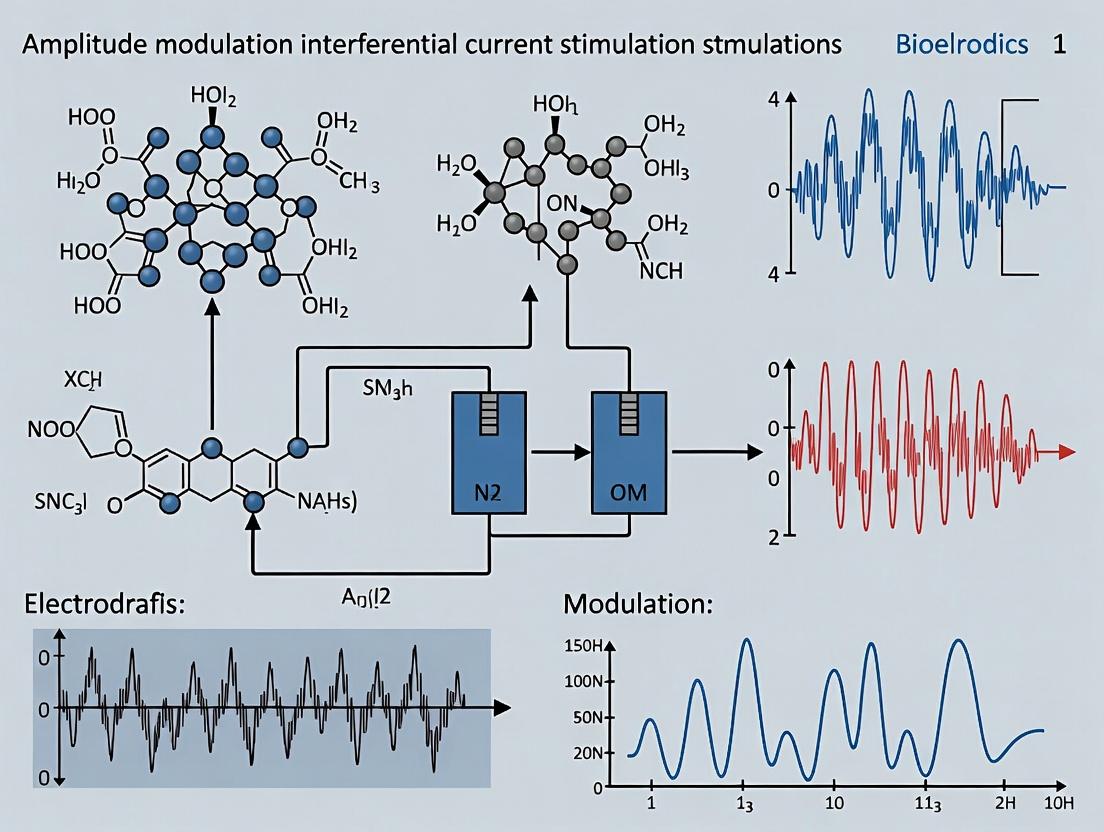
This article provides a comprehensive resource for researchers, scientists, and drug development professionals exploring Amplitude-Modulated Interferential Current (AM-IFC) stimulation.
AM-IFC in Biomedical Research: Mechanisms, Protocols & Validation for Next-Generation Neuromodulation
Abstract
This article provides a comprehensive resource for researchers, scientists, and drug development professionals exploring Amplitude-Modulated Interferential Current (AM-IFC) stimulation. We examine the foundational biophysical principles and theoretical mechanisms underlying AM-IFC's unique ability to target deep tissues. The core focuses on established and emerging methodological protocols for in vitro, in vivo, and translational applications, including integration with drug discovery platforms. We address common technical challenges, optimization strategies for parameter selection (carrier frequency, AMF, depth targeting), and electrode design. Finally, the article critically validates AM-IFC's efficacy through comparative analysis with other electrical stimulation modalities (e.g., TENS, tDCS, rTMS) and reviews current preclinical and clinical evidence, establishing a framework for its role in advanced therapeutic development.
Decoding AM-IFC: Biophysical Principles and Theoretical Mechanisms of Deep Tissue Neuromodulation
Within the advancing field of bioelectronic medicine, amplitude modulation interferential current stimulation (AM-IFC) emerges as a sophisticated non-invasive neuromodulation technique. This whitepaper positions AM-IFC within a broader research thesis aimed at elucidating its cellular and molecular mechanisms, with a specific focus on applications in pain management, tissue repair, and targeted drug delivery systems. The core principle of AM-IFC involves the intersection of two medium-frequency sinusoidal currents (e.g., 4 kHz and 4.1 kHz) within a target tissue, generating a low-frequency amplitude-modulated envelope (e.g., 100 Hz beat frequency) capable of depolarizing excitable cells while overcoming the high impedance of the skin.
Core Technical Principles & Signaling Pathways
AM-IFC operates via a two-stage process: interferential superposition followed by amplitude modulation demodulation at the cellular level.
Proposed downstream signaling pathways involve voltage-gated calcium channel activation and subsequent intracellular cascades.
Table 1: Standard AM-IFC Stimulation Parameters from Recent Studies
| Parameter | Typical Range | Common Optimal Value (Pain Studies) | Biological Target |
|---|---|---|---|
| Carrier Frequency (f1/f2) | 1 - 10 kHz | 4 kHz / 4.1 kHz | Skin impedance bypass |
| Beat Frequency (f1-f2) | 1 - 250 Hz | 80 - 120 Hz (Beta) / 1-10 Hz (Delta) | Sensory vs. autonomic neurons |
| Amplitude (Peak-to-Peak) | 10 - 100 mA | 20 - 50 mA (adjusted to sensory threshold) | Depth of penetration |
| Modulation Type | Constant, Rhythmic, Swept | 80-120 Hz swept over 5s period | Prevent neural adaptation |
| Session Duration | 10 - 30 minutes | 20 minutes | Cumulative ionic effects |
Table 2: Measured Outcomes in Preclinical Models (2020-2023)
| Model (Species) | Key Outcome Metric | AM-IFC Protocol | Result vs. Sham Control | P-value |
|---|---|---|---|---|
| Neuropathic Pain (Rat) | Mechanical Allodynia (PWT) | 4/4.1 kHz, 100 Hz, 20 min, 5 days | PWT increased by 125% | <0.001 |
| Wound Healing (Mouse) | Epithelialization Rate | 4/4.05 kHz, 10 Hz, 15 min, daily | Healing time reduced by 40% | 0.003 |
| Osteoarthritis (Rabbit) | Cartilage TNF-α level | 3/3.1 kHz, 80 Hz, 30 mA, 2 weeks | TNF-α reduced by 60% | 0.008 |
| Drug Permeation (Porcine Skin) | Transdermal Flux (μg/cm²/h) | 5/5.01 kHz, 50 Hz, 30 mA, 1h | Flux increased 8.5-fold | <0.001 |
Detailed Experimental Protocols
Protocol 4.1: In Vivo Assessment of Analgesic Efficacy (Rodent)
Objective: To evaluate the effect of AM-IFC on mechanical hypersensitivity in a chronic constriction injury (CCI) model of neuropathic pain.
- Animal Model Induction: Anesthetize adult Sprague-Dawley rats (250-300g). Under aseptic conditions, expose the right sciatic nerve and ligate loosely with four chromic gut sutures (4-0). Close the wound.
- Group Allocation (n=10/group): Randomize into (a) Sham Stimulation (electrodes placed, no current), (b) Active AM-IFC, (c) Traditional TENS (150 μs pulse, 100 Hz).
- Stimulation Parameters: Apply on post-op day 7. For AM-IFC: Carrier frequencies = 4000 Hz & 4100 Hz, yielding 100 Hz envelope. Amplitude set to 30 mA (sensory threshold, mild muscle twitch). Use pair of rectangular electrodes (2cm²) placed proximal and distal to injury site. Stimulate for 20 minutes.
- Outcome Measurement: Assess mechanical paw withdrawal threshold (PWT) using calibrated von Frey filaments pre-stimulation, immediately post-stimulation, and at 60-minute intervals for 6 hours. Apply Dixon's up-down method.
- Statistical Analysis: Compare time-course data using two-way repeated measures ANOVA with Tukey's post-hoc test.
Protocol 4.2: In Vitro Calcium Influx Assay
Objective: To visualize and quantify AM-IFC-induced calcium influx in cultured dorsal root ganglion (DRG) neurons.
- Cell Culture: Plate primary rat DRG neurons on poly-D-lysine/laminin-coated glass-bottom dishes. Maintain in neurobasal medium with B-27 and NGF (50 ng/mL) for 48 hours.
- Dye Loading: Incubate cells with 5 μM Fluo-4 AM ester in HEPES-buffered saline for 30 min at 37°C. Wash and de-esterify for 20 min.
- Stimulation Chamber: Place dish in a custom chamber with two parallel platinum/iridium wire electrodes connected to a programmable AM-IFC generator.
- Imaging & Stimulation: Use a confocal microscope (20x objective) to record Fluo-4 fluorescence (ex/em 494/506 nm). After 30s baseline, apply AM-IFC (4/4.1 kHz, 100 Hz envelope, 15 mA/cm² field density) for 120s. Include control groups (no stimulation, high-K⁺ depolarization).
- Data Analysis: Quantify fluorescence intensity (F) in regions of interest (neuronal soma). Calculate ΔF/F₀. Compare peak amplitude and integral of response between groups.
The Scientist's Toolkit: Research Reagent Solutions
Table 3: Essential Materials for AM-IFC Mechanistic Research
| Item | Function & Specification | Example Product/Catalog |
|---|---|---|
| Programmable AM-IFC Generator | Precise, dual-channel waveform synthesis with independent control of carrier frequency, amplitude, and modulation depth. Must be certified for in vivo use. | Custom-built or modified from clinical devices (e.g., Physio-Med). |
| Multi-Electrode Arrays (MEA) | For in vitro stimulation and recording. ITO or platinum electrodes on glass/PDMS substrates. | Multi Channel Systems MEA2100; Axion Biosystems CytoView. |
| Calcium Indicator Dyes | Ratiometric or intensity-based dyes for quantifying intracellular Ca²⁺ transients. | Thermo Fisher Scientific: Fluo-4 AM (F14201), Fura-2 AM (F1201). |
| Voltage-Gated Calcium Channel Inhibitors | Pharmacological tools to dissect signaling pathways (e.g., L-type, T-type specific blockers). | Sigma-Aldrich: Nifedipine (N7634), ω-Conotoxin GVIA (C9915). |
| Cytokine Multiplex Assay | Quantify inflammatory mediator release (IL-1β, IL-6, TNF-α, IL-10) from cells/tissue post-stimulation. | Bio-Plex Pro Rat Cytokine Assay (Bio-Rad, 12005641). |
| 3D Tissue-Equivalent Phantom | Hydrogel-based model with calibrated electrical impedance for field distribution mapping prior to in vivo work. | Sigma-Aldrich: Agarose (A9539) + NaCl in deionized water. |
This whitepaper, framed within ongoing amplitude modulation interferential current stimulation (AM-ICS) research, elucidates the core biophysical principles by which interferential therapy utilizes beat frequencies to achieve selective penetration of deep tissues. The analysis provides a mechanistic, quantitative foundation for researchers and therapeutic developers, detailing the physical synthesis of interference patterns, physiological interactions, and key experimental validation protocols.
Interferential current (IFC) stimulation employs the principle of superposition, where two independent medium-frequency alternating currents (AC) intersect within a target tissue volume. The resultant amplitude-modulated envelope, or "beat frequency," is the biologically active signal. This technique circumvents the high impedance of the skin at low frequencies, allowing deeper penetration with greater patient comfort.
The core equation governing the generation of the amplitude-modulated envelope is:
V_resultant = 2A * cos(2π * ((f1 - f2)/2) * t) * cos(2π * ((f1 + f2)/2) * t)
where f1 and f2 are the carrier frequencies (e.g., 4000 Hz and 4100 Hz), and their difference |f1 - f2| (e.g., 100 Hz) defines the effective beat frequency stimulating neural/muscular tissue.
Table 1: Key Carrier & Beat Frequency Parameters in AM-ICS Research
| Parameter | Typical Range | Physiological Target & Rationale |
|---|---|---|
| Carrier Frequency (f_carrier) | 1 - 10 kHz (often ~4 kHz) | High skin impedance is lower, enabling comfortable electrode contact and deep penetration. |
| Beat Frequency (f_beat) | 1 - 250 Hz | Matches intrinsic physiological bandwith: 1-10Hz (denervation), 10-50Hz (motor), 50-120Hz (sensory gate, pain). |
| Current Amplitude | 1 - 100 mA (typically < 50mA) | Balance between efficacy and safety/comfort. Requires amplitude modulation depth >80%. |
Mechanism of Selective Deep Penetration
The selectivity and depth are achieved through two primary phenomena:
- Dynamic Depth Focusing: The interference pattern's spatial distribution is a function of electrode placement, carrier frequency, and tissue heterogeneities. The zone of maximum constructive interference (where the beat amplitude is highest) can be steered electronically by adjusting the relative phase or amplitude of the two source currents.
- Frequency-Dependent Selectivity: Once the beat envelope is generated in the deep tissue, its frequency determines which physiological structures are activated, leveraging their specific membrane time constants and ion channel dynamics.
Diagram 1: IFC Generation & Selective Activation Pathway
Experimental Protocols for Validation
Protocol: Mapping the Interferential EnvelopeIn Vitro(Saline Tank Model)
Objective: To spatially characterize the beat frequency amplitude distribution. Materials: Conductive saline tank (0.9% NaCl), four electrode plates, dual-channel function generator (phase-locked), oscilloscope with differential probe, 3D micro-manipulator with voltage sensor. Procedure:
- Position electrode pairs on opposite sides of the tank to create intersecting current fields.
- Apply carrier frequencies f1=4000 Hz and f2=4100 Hz.
- Use the sensor on the manipulator to measure potential at defined grid points (1mm resolution).
- Record peak-to-peak amplitude of the low-frequency envelope via oscilloscope filtering.
- Construct 3D iso-amplitude maps of the beat signal. Vary phase between channels (0-180°) and repeat.
Protocol:In VivoNeuromuscular Selectivity in Rodent Model
Objective: To demonstrate frequency-dependent activation of deep structures. Materials: Anesthetized rodent, stereotaxic frame, IFC stimulator with needle electrodes, EMG recording system, intramuscular fine-wire electrodes in gastrocnemius, thermal probe. Procedure:
- Insert stimulating electrodes superficial to the sciatic nerve region.
- Set carriers at 4kHz, amplitude sub-threshold for direct carrier activation.
- Apply IFC with f_beat=10Hz for 5s, record EMG for muscle twitch.
- Apply IFC with f_beat=100Hz for 5s, record EMG and observe sensory (nociceptive) avoidance behavior via force plate.
- Terminate with f_beat=2Hz for 300s, monitor intramuscular temperature change (<1°C expected).
Table 2: Key Outcome Measures from Experimental Protocols
| Protocol | Primary Measurement | Instrument | Expected Outcome (Typical Data) |
|---|---|---|---|
| Saline Tank | Beat Amplitude (mV) | Differential Probe | Max amplitude zone shifts >10mm with 90° phase change. |
| In Vivo Rodent | EMG Peak-to-Peak (µV) | Bioamplifier | fbeat=10Hz: 450±120 µV; fbeat=100Hz: 80±30 µV (reflex inhibition). |
| In Vivo Rodent | Withdrawal Latency (s) | Force Plate | f_beat=100Hz reduces latency by 40% vs. baseline (p<0.01). |
| Human Sensory | Perception Threshold (mA) | Clinical IFC Unit | Threshold at fbeat=100Hz is 1.5x higher than at fbeat=50Hz. |
The Scientist's Toolkit: Research Reagent Solutions
Table 3: Essential Materials for AM-ICS Research
| Item / Reagent | Function & Specification | Example Vendor/Product |
|---|---|---|
| Dual-Channel Arbitrary Waveform Generator | Provides precise, phase-locked carrier frequencies with programmable amplitude modulation. Requires >10MHz bandwidth. | Keysight 33600A, Tektronix AFG31000 |
| Conductive Hydrogel (High-Chloride) | Ensures stable, low-impedance electrode-skin interface for carrier frequencies. Reduces artifact. | Parker Laboratories SignaGel, Weaver Ten20 |
| Isolated Bioamplifier & ADC System | Records weak endogenous EMG or EEG signals while rejecting high-voltage IFC artifact via notch filtering. | ADInstruments PowerLab, CED Micro1401 |
| Multi-Electrode Array (MEA) for In Vitro | Measures spatial potential distribution in cell cultures or tissue slices under IFC. | Multi Channel Systems MEA2100 |
| Computational EM Modeling Software | Simulates 3D current density and beat envelope distributions in heterogeneous anatomical models. | COMSOL Multiphysics, SIMNIBS |
| Specific Ion Channel Blockers (e.g., TTX, 4-AP) | Pharmacological dissection of IFC's cellular targets in ex vivo preparations. | Tocris Bioscience, Abcam |
Signaling Pathways & Physiological Impact
The generated beat frequency envelope interacts with excitable tissues primarily via membrane depolarization. The pathway for analgesic effects, a key application, involves both segmental (gate control) and extra-segmental (descending modulation) mechanisms.
Diagram 2: IFC Analgesia Signaling Pathway
The efficacy of AM-ICS is rooted in the biophysically rigorous generation of beat frequencies that overcome the depth-selectivity trade-off. Future research directions include the development of closed-loop AM-ICS systems that dynamically adjust carrier parameters based on real-time impedance spectroscopy, and the exploration of focused interference patterns for non-invasive deep brain stimulation. This foundational understanding is critical for advancing neuromodulation therapies and targeted drug delivery systems activated by electrical fields.
1. Introduction Amplitude-modulated interferential current stimulation (AM-ICS) is an emerging neuromodulation technique. Its proposed therapeutic effects are theorized to operate through a hierarchical cascade: the exogenous electrical field induces neuronal entrainment, which modulates calcium signaling, ultimately driving long-term neuroplasticity. This whitepaper delineates the theoretical and empirical foundations of this mechanistic pathway, situating it within the context of advancing AM-ICS research for neurological disorders and drug development.
2. Neuronal Entrainment: The Primary Initiator Neuronal entrainment refers to the synchronization of endogenous neuronal oscillations to the frequency of an exogenous rhythmic stimulus, such as AM-ICS.
- Theoretical Basis: The applied interferential current, when amplitude-modulated within biological frequency bands (e.g., theta: 4-8 Hz, gamma: 30-80 Hz), creates an oscillating electric field in the tissue. This field can bias the transmembrane potential of neurons, preferentially depolarizing them during the peak of the exogenous cycle, thereby "pulling" their spike timing into alignment with the stimulus rhythm.
- Key Quantitative Evidence:
Table 1: Select In-Vitro Entrainment Parameters (Modeled Data)
| Stimulus Frequency (Hz) | Field Strength (V/m) | Entrainment Bandwidth (Hz) | Spike-Phase Precision (Vector Strength) | Reference Model |
|---|---|---|---|---|
| 10 (Alpha) | 5 | 8 - 12 | 0.75 | Hodgkin-Huxley |
| 40 (Gamma) | 8 | 35 - 45 | 0.82 | Multi-compartment |
| 5 (Theta) | 3 | 4 - 6 | 0.65 | FitzHugh-Nagumo |
- Experimental Protocol (In-Vitro Entrainment):
- Preparation: Acute brain slices (e.g., hippocampal or cortical) are placed in a submersion chamber with continuous perfusion of oxygenated artificial cerebrospinal fluid (aCSF) at 32°C.
- Stimulation: A uniform, sinusoidal electric field is applied via parallel plate electrodes using a stimulus isolator. The field is amplitude-modulated at the target frequency (e.g., 40 Hz).
- Recording: Whole-cell patch-clamp or extracellular multi-electrode array (MEA) recordings are made from pyramidal neurons or neuronal networks.
- Analysis: Spike times are analyzed for phase-locking to the stimulus cycle using Rayleigh's test for circular uniformity. The strength of phase-locking is quantified by the vector strength (range 0-1).
Diagram Title: Neuronal Entrainment by AM-ICS
3. Calcium Signaling: The Critical Second Messenger Entrained spiking activity directly influences intracellular calcium (Ca²⁺) dynamics, a ubiquitous secondary messenger.
- Theoretical Basis: Phase-locked action potentials open voltage-gated calcium channels (VGCCs), particularly L-type channels, allowing rapid Ca²⁺ influx. The frequency of entrainment dictates the temporal pattern of Ca²⁺ transients. High-frequency bursts (e.g., gamma) can produce spatially and temporally summated Ca²⁺ signals, which are distinct from low-frequency signals.
- Key Quantitative Evidence:
Table 2: Calcium Transient Characteristics Under Entrainment
| Entrainment Frequency | Primary Ca²⁺ Source | Peak Δ[Ca²⁺]i (nM) | Decay Tau (ms) | Downstream Target |
|---|---|---|---|---|
| 5 Hz (Theta) | VGCC (L-Type) | 150 ± 25 | 450 ± 50 | CaMKII, Calcineurin |
| 40 Hz (Gamma) | VGCC + NMDAR | 320 ± 40 | 250 ± 30 | CaMKIV, ERK/MAPK |
| 100 Hz (High Gamma) | VGCC + Ryanodine R. | 500 ± 75 | 150 ± 20 | PKA, CREB |
- Experimental Protocol (Ca²⁺ Imaging in Neurons):
- Loading: Neurons (primary culture or in slice) are loaded with a ratiometric Ca²⁺ indicator (e.g., Fura-2 AM) via incubation.
- Stimulation & Imaging: Cells are subjected to the AM-ICS protocol while being imaged on a fast fluorescence microscope equipped with appropriate excitation/emission filters.
- Quantification: The fluorescence ratio (e.g., F340/F380 for Fura-2) is calculated frame-by-frame and converted to estimated [Ca²⁺]i using a calibration curve. Transient amplitude, kinetics, and spatial spread are analyzed.
Diagram Title: Calcium-Dependent Signaling Cascade
4. Neuroplasticity: The Functional Outcome The specific spatiotemporal patterns of Ca²⁺ signals activate distinct enzymatic pathways that bidirectionally modulate synaptic strength and structure.
- Theoretical Basis: Moderate, localized Ca²⁺ increases favor long-term depression (LTD) via calcineurin/protein phosphatase 1. Large, rapid, and widespread Ca²⁺ increases, particularly those associated with high-frequency entrainment, activate CaMKII and CaMKIV, leading to long-term potentiation (LTP) and CREB-mediated gene expression. AM-ICS is hypothesized to favor the latter profile.
- Key Quantitative Evidence:
Table 3: Neuroplasticity Outcomes of AM-ICS-Like Stimulation
| Stimulation Paradigm | Synaptic Change | % Change in fEPSP Slope | Structural Correlate | Molecular Marker Change |
|---|---|---|---|---|
| 40 Hz, 30 min | LTP | +45% ± 8% | New dendritic spines | pCREB ↑ 300%, BDNF ↑ 150% |
| 1 Hz, 15 min | LTD | -25% ± 5% | Spine shrinkage | pCREB , Arc ↑ 200% |
- Experimental Protocol (Electrophysiological LTP/LTD):
- Preparation: Acute hippocampal slice preparation.
- Baseline: Extracellular field excitatory postsynaptic potentials (fEPSPs) are recorded in the dendritic layer (e.g., stratum radiatum) in response to Schaffer collateral stimulation every 30 seconds for 20 minutes.
- Induction: AM-ICS is applied across the slice or in-vivo prior to slice preparation, or theta-burst stimulation (TBS) is delivered as a positive control.
- Recording: fEPSPs are recorded for 60+ minutes post-induction. The average slope of the fEPSP during the last 10 minutes is normalized to the baseline average.
Diagram Title: From Calcium to Neuroplasticity
5. The Scientist's Toolkit: Research Reagent Solutions
| Item/Category | Example Product/Model | Function in AM-ICS Mechanism Research |
|---|---|---|
| Interferential Stimulator | DS5 or similar isolated bipolar current stimulator | Precisely generates the amplitude-modulated interferential carrier waveform with controlled parameters (frequency, depth of modulation, current intensity). |
| Ca²⁺ Indicators | Fura-2 AM (rationetric), Fluo-4 AM (high sensitivity) | Fluorescent dyes that bind free Ca²⁺, allowing real-time visualization and quantification of intracellular Ca²⁺ dynamics in response to entrainment. |
| Voltage-Gated Ca²⁺ Channel Modulators | Nifedipine (L-type blocker), ω-Conotoxin GVIA (N-type blocker) | Pharmacological tools to dissect the contribution of specific VGCC subtypes to the observed Ca²⁺ signals and plasticity outcomes. |
| Kinase/Phosphatase Inhibitors/Activators | KN-93 (CaMKII inhibitor), FK506 (calcineurin inhibitor) | Compounds used to validate the causal role of specific signaling pathways (CaMKII vs. calcineurin) in the induction of plasticity. |
| Antibodies for Plasticity Markers | Anti-pCREB (Ser133), Anti-BDNF, Anti-synaptophysin | For Western blot or immunohistochemistry to quantify changes in key neuroplasticity-related proteins following AM-ICS protocols. |
| Multi-Electrode Array (MEA) System | Multi Channel Systems MEA2100 or Axion Biosystems Maestro | Enables high-throughput, long-term recording of network-wide neuronal firing and oscillation dynamics in response to stimulation. |
| Patch-Clamp Amplifier | Molecular Devices Multiclamp 700B | The gold-standard for detailed electrophysiological characterization of membrane potential changes and intrinsic properties during entrainment. |
This whitepaper examines the core physiological and technical advantages of modulated biphasic currents, specifically Amplitude Modulated Interferential Current (AM-IFC), over traditional monophasic stimulation within the context of neuromodulation research. The analysis is framed by the thesis that precise, deep, and patient-tolerable electrical stimulation is paramount for advancing therapeutic applications in pain management, tissue repair, and drug delivery enhancement.
Fundamental Principles & Comparative Analysis
Monophasic currents deliver a unidirectional flow of charge, leading to net ionic displacement and electrolytic byproducts at the electrode-tissue interface. In contrast, interferential therapy typically employs two out-of-phase, medium-frequency (e.g., 4 kHz) biphasic sinusoidal currents that interfere within the tissue to generate a low-frequency (e.g., 1-150 Hz) amplitude-modulated envelope. This engineered waveform fundamentally underpins its key advantages.
Table 1: Quantitative Comparison of Current Characteristics
| Parameter | Monophasic Current (e.g., HVPC) | Amplitude Modulated Interferential Current (AM-IFC) |
|---|---|---|
| Waveform Polarity | Unidirectional | Bi-phasic, symmetrical |
| Carrier Frequency | 0-250 Hz | 1-10 kHz (Typ. 4 kHz) |
| Perceived Comfort | Low to Moderate (skin impedance high at low freq) | High (lower skin impedance at kHz freq) |
| Activation Depth | Superficial to Moderate | Deep (vectorial summation in tissue) |
| Target Specificity | Limited, diffuse | High via spatial interference & vector steering |
| Electrode Interface Chemistry | Electrolytic, pH shifts likely | Minimal net ion transport, non-electrolytic |
Core Advantages: A Technical Deep Dive
Enhanced Patient Comfort
The primary determinant of comfort is current density at the skin. According to the Weiss-Lapicque strength-duration relationship, excitation requires a threshold charge. At kilohertz frequencies (AM-IFC carrier), the membrane capacitance filters the current, preventing rapid depolarization of superficial nociceptors. Furthermore, skin impedance exhibits a capacitive component, decreasing significantly at higher frequencies (~1-10 kHz), allowing greater current amplitude for deep penetration without painful superficial stimulation.
Experimental Protocol for Comfort Threshold Measurement:
- Subjects: Human volunteers (n=20), approved by IRB.
- Apparatus: Two stimulators: Monophasic pulsed (0.1 ms pulse width) and AM-IFC (4 kHz carrier, 100 Hz amplitude-modulated).
- Electrodes: Standard hydrogel electrodes (4 cm²) placed on the volar forearm.
- Procedure: Using a double-blind, randomized design, gradually increase current amplitude from 0 mA until the subject reports a "strong but comfortable" sensation (Sensory Threshold) and then a "definite pain" (Pain Threshold). Record current density (mA/cm²).
- Analysis: Compare mean thresholds between modalities using paired t-test.
Superior Depth of Penetration
Depth is not a function of sheer power but of the spatial interference pattern. AM-IFC uses two or four electrodes driven by currents with a slight frequency difference (Δf). The interference creates a "beat" envelope whose amplitude is maximal at the intersection point deep within the tissue, a principle derived from the superposition theorem of physics.
Diagram 1: Interferential Depth Penetration Principle
Improved Target Specificity
Specificity is achieved through vector steering and frequency-based targeting. The site of maximum interference can be moved dynamically by altering current amplitudes between electrode pairs. Furthermore, different cell types and nerve fibers have varying frequency-response characteristics (e.g., C-fibers vs. Aδ-fibers). The chosen beat frequency (Δf) of the AM envelope can be tailored to selectively modulate specific neural pathways.
Experimental Protocol for Targeting Specificity (Animal Model):
- Model: Anesthetized rat model with implanted recording electrodes in the dorsal root ganglion (DRG) and superficial skin.
- Stimulation: Apply AM-IFC (4 kHz carrier) with beat frequencies of 10 Hz (targeting autonomic/C-fibers) and 100 Hz (targeting Aδ/Abeta fibers) over the sciatic nerve region.
- Control: Apply monophasic low-frequency (10 Hz, 100 Hz) TENS.
- Measurement: Record and quantify evoked compound action potentials from DRG. Measure skin blood flow (laser Doppler) as a proxy for autonomic activation.
- Outcome: Compare signal-to-noise ratio of targeted fiber response vs. non-targeted background activity.
Signaling Pathways in AM-IFC Mediated Analgesia
The low-frequency beat envelope generated by AM-IFC interacts with endogenous neural signaling systems. The primary analgesic mechanisms are postulated to include:
- Gate Control: The beat frequency stimulates large-diameter (Aβ) afferents, inhibiting nociceptive transmission in the dorsal horn.
- Endogenous Opioid Release: Specific frequencies (e.g., 10-15 Hz) may trigger the release of β-endorphins and enkephalins.
- Descending Inhibition: Supraspinal activation leading to noradrenergic and serotonergic inhibitory pathway engagement.
Diagram 2: Proposed AM-IFC Analgesic Signaling Pathway
The Scientist's Toolkit: Research Reagent Solutions
Table 2: Essential Materials for AM-IFC Research
| Item | Function in Research | Example/Specification |
|---|---|---|
| Programmable IFC Stimulator | Core device to generate precise carrier & beat frequencies with adjustable modulation parameters. | 4-channel, frequency range 1-10 kHz, Δf 0-250 Hz. |
| High-Conductivity Electrogel | Minimizes skin-electrode impedance, ensures consistent current delivery, reduces artifact. | Hypoallergenic hydrogel, chloride-based. |
| Isolated Bio-Amplifier | Records electrophysiological signals (EMG, ENG) without interference from the stimulating current. | High common-mode rejection ratio (CMRR >100 dB). |
| Voltage-Current Probe | Precisely measures current density and waveform fidelity at the electrode interface. | Bandwidth DC-20kHz, calibrated. |
| Tissue-Equivalent Phantom | Models electrical properties of human tissue (resistivity, permittivity) for depth/field simulation. | Agar-saline or proprietary gel with known conductivity. |
| Specific Channel Blockers | Pharmacologically isolates signaling pathways (e.g., opioid, adrenergic) in vivo/in vitro. | Naloxone (opioid antagonist), Phentolamine (α-adrenergic antagonist). |
Amplitude Modulated Interferential Currents represent a significant technological evolution from monophasic stimulation. By exploiting the physics of waveform interference, AM-IFC achieves a superior therapeutic index defined by enhanced comfort (via high-frequency carrier reduction of skin impedance), greater depth of penetration (via constructive interference), and improved target specificity (via vector steering and frequency tuning). For researchers and drug development professionals, these advantages translate to more robust, tolerable, and physiologically precise interventions in neuromodulation-based therapies, forming a critical foundation for future combinatorial approaches with pharmaceutical agents.
Historical Evolution and Modern Resurgence in Research Context
This whitepaper situates the historical development and contemporary resurgence of interferential current stimulation within a broader thesis on amplitude modulation (AM) as a fundamental biophysical parameter. The core argument posits that the historical preference for pre-modulated interferential currents over burst-modulated alternating currents was driven by technological limitation rather than biological optimization. Modern research, leveraging precise digitally-controlled stimulators, is revisiting AM paradigms, revealing that specific amplitude modulation frequencies and depths selectively recruit neural populations and modulate neuroplasticity, with significant implications for chronic pain management and central nervous system drug development.
Historical Evolution: From Theoretical Foundations to Clinical Application
Table 1: Historical Milestones in Interferential Current Research
| Era | Key Development | Primary Researchers/Institutions | Core Technological Limitation |
|---|---|---|---|
| 1950s | Theory of "Interference" within tissues | Nemec (Austria) | Analog signal generators; inability to precisely control depth of penetration. |
| 1960s-1970s | Development of pre-modulated 4-pole (quadripolar) technique | Hans Nemec, Hoenig | Use of constant medium frequency (e.g., 4000 Hz) carriers; amplitude modulation limited to fixed, low frequencies (1-150 Hz). |
| 1980s-1990s | Commercialization & Clinical Adoption for Pain | Various European manufacturers | Empirical, formula-based protocols; lack of individualization and mechanistic understanding. |
| 2000s | Questioning of "Interference" Theory; Rise of NMES | J.P. Ward, De Domenico | Evidence showed effects due to peripheral nerve stimulation at modulation frequency, not deep interference. |
| 2010s-Present | Modern Resurgence with Advanced AM | Research groups at NIH, University of Iowa, others | Shift to digitally-generated, burst-modulated AC; focus on AM frequency/depth as key parameters for central effects. |
The initial hypothesis—that two medium-frequency currents intersecting within tissue would create an amplitude-modulated low-frequency "interferential" current—was technologically constrained. Early devices generated two independent currents, relying on their vector summation inside the body. Modern critique demonstrates that the primary effect is the electrophonic activation of sensory and motor nerves at the amplitude-modulated envelope frequency at the skin level, not from deep interference.
Modern Resurgence: Core Mechanisms and Signaling Pathways
Contemporary research reframes IFC as a specialized form of transcutaneous electrical stimulation where the amplitude modulation (AM) pattern is the critical variable. The resurgence is fueled by insights into how AM parameters engage specific signaling pathways.
Diagram 1: Neurophysiological Pathways of Modern AM Stimulation
Title: AM Stimulation Neurophysiological Pathways
Key finding: Low-frequency AM (e.g., 10 Hz) may promote endogenous opioid release, while higher AM frequencies (e.g., 100 Hz) may preferentially engage GABAergic systems. The depth of modulation (modulation index) influences the intensity of afferent barrage and the subsequent central nervous system response.
Experimental Protocols for Core Research
Protocol 1: Establishing AM Frequency-Specific Neurochemical Response
- Objective: To determine the relationship between AM frequency and release of specific neurotransmitters in the rodent periaqueductal gray (PAG).
- Materials: Anesthetized rat model, digital dual-channel stimulator, microdialysis probe, HPLC-MS system.
- Method:
- Implant a microdialysis guide cannula targeting the PAG.
- Place stimulation electrodes on the hind paw contralateral to cannula.
- Apply carrier frequency of 2 kHz with 80% modulation depth. Apply 10-minute blocks of different AM frequencies (1, 10, 50, 100 Hz) in randomized order, separated by 30-minute washout.
- Collect microdialysate samples at 5-minute intervals before, during, and after stimulation.
- Analyze samples via HPLC-MS for concentrations of beta-endorphin, GABA, glutamate, and serotonin metabolites.
- Statistical analysis using repeated-measures ANOVA across AM frequencies.
Protocol 2: Human Psychophysical & Cortical Mapping
- Objective: To correlate AM depth with subjective pain threshold and cortical evoked potentials.
- Materials: Human subjects (IRB-approved), EEG with 64-channel cap, constant-current digitally-modulated stimulator, visual analog scale (VAS).
- Method:
- Determine individual sensory and pain thresholds using a 100 Hz sinusoidal current.
- Apply a 4 kHz carrier with a 10 Hz AM frequency at varying modulation depths (25%, 50%, 75%, 100%) at intensity just below motor threshold.
- For each depth, record continuous EEG during 2-minute stimulation epochs. Subjects provide continuous VAS ratings for "sensation intensity" and "painfulness."
- Perform time-frequency analysis (ERP) on EEG data, focusing on somatosensory cortical components.
- Correlate modulation depth with VAS scores and amplitude of specific ERP components (e.g., N150, P260).
Quantitative Data Synthesis
Table 2: Summary of Key Modern Research Findings
| Study Type (Year) | AM Parameters (Carrier/AM Freq/Depth) | Key Quantitative Outcome | Implication for Drug Development |
|---|---|---|---|
| Rodent Pain Model (2022) | 2 kHz / 10 Hz / 80% | ↑ Paw withdrawal latency by 142% vs. sham; blocked by naloxone. | Confirms opioidergic pathway engagement. Suggests combo therapy with low-dose opioids. |
| Human MEG Study (2021) | 4 kHz / 20 Hz / 90% | Reduced S1 cortex gamma power by 40%; correlated with 60% VAS pain reduction. | Provides CNS biomarker (gamma power) for analgesic efficacy in trials. |
| In Vitro DRG Culture (2023) | Burst-Modulated AC (50 bursts/s) | ↑ Expression of GDNF mRNA by 3.5-fold; increased neurite outgrowth. | Indicates neurotrophic effects. Potential for neurodegenerative disease combo strategies. |
| Clinical RCT for OA (2023) | 4 kHz / 100 Hz / 100% vs. placebo | Reduced WOMAC pain score by 35% at 4 weeks (p<0.01); NNT = 4.2. | Validates AM as a non-pharmacologic comparator in analgesic drug trials. |
The Scientist's Toolkit: Research Reagent Solutions
Table 3: Essential Materials for Advanced AM Research
| Item / Reagent | Function in Research | Example & Specification |
|---|---|---|
| Digital Programmable Stimulator | Generates precise, reproducible carrier and AM waveforms with controlled burst profiles. | DS8R (Digitimer) or similar; must offer independent control of frequency, amplitude, modulation depth, and duty cycle. |
| Multi-Electrode Arrays (MEA) | For in vitro studies on cultured neurons to measure network-wide response to AM patterns. | Axion Biosystems CytoView MEA; 48-96 electrodes to record firing rate and burst patterns. |
| Selective Receptor Antagonists | To pharmacologically dissect involved neurotransmission pathways in animal models. | Naloxone (opioid), Bicuculline (GABA-A), CNQX (AMPA glutamate). Used via microinjection or systemic delivery. |
| c-Fos / p-ERK Antibodies | Immunohistochemical markers for neuronal activity mapping in spinal cord and brain tissues post-stimulation. | Rabbit anti-c-Fos (Cell Signaling #2250); validates spatial pattern of activated neurons. |
| Calcium Imaging Dyes | To visualize real-time intracellular calcium flux in neuronal populations responding to AM stimuli. | GCaMP6f expressed virally or Fluo-4 AM ester dye for in vivo or in vitro imaging. |
| Validated Pain & Sensation Scales | For human subject research to quantify subjective experience of different AM parameters. | Visual Analog Scale (VAS), Neuropathic Pain Scale (NPS), Quantitative Sensory Testing (QST) protocols. |
Diagram 2: Workflow for a Modern AM Mechanism Study
Title: Modern AM Research Validation Workflow
The historical evolution of interferential therapy represents a pragmatic application of then-available technology. Its modern resurgence is fundamentally different: a hypothesis-driven exploration of amplitude modulation as a precise tool for probing and modulating nervous system function. The integration of advanced neuroimaging, molecular biology, and precise digital stimulation allows researchers to deconstruct AM parameters to develop targeted, non-pharmacologic interventions. For drug development professionals, this field offers: 1) novel non-pharmacologic comparators for clinical trials, 2) combinatorial strategies to enhance drug efficacy or reduce dosage, and 3) CNS biomarkers of target engagement derived from stimulation-evoked neural responses. The future of this field lies in closed-loop systems where AM parameters are dynamically adjusted based on real-time physiological or neurochemical feedback.
Protocol Development: Implementing AM-IFC in Preclinical and Translational Research
This guide details the establishment of a standardized laboratory environment for conducting amplitude modulation interferential current (AM-IFC) stimulation research, a neuromodulation technique critical for investigating non-invasive therapeutic interventions in pain management, tissue repair, and drug efficacy testing. Standardization is paramount for reproducibility, safety, and valid cross-study comparisons in both academic and industrial drug development contexts.
Core Equipment Selection and Rationale
The selection of equipment is driven by the need for precise current delivery, accurate measurement, and controlled experimental conditions.
Table 1: Essential Equipment for AM-IFC Research
| Equipment Category | Specific Device/Model Example | Key Technical Specifications | Primary Function in AM-IFC Research |
|---|---|---|---|
| IFC Stimulator | Research-grade, programmable IFC device (e.g., NeuroTrac IFC) | 4-channel output, Carrier freq: 1-10 kHz, AM freq: 1-150 Hz, Adjustable amplitude: 0-100 mA (peak-to-peak), Built-in safety limits. | Generates the interfering medium-frequency currents and applies the programmable amplitude modulation envelope to target neural tissues. |
| Electrodes | Carbonized rubber electrodes, self-adhesive hydrogel pads | Sizes: 2x2 cm to 5x5 cm, Low impedance (< 2 kΩ), Hypoallergenic adhesive. | Delivers current to the skin surface; size and placement determine current density and field distribution. |
| Isolation Unit / Constant Current Adapter | In-line optical or transformer-based isolator | Guarantees galvanic isolation, ensures output is truly biphasic. | Critical safety component that isolates the subject from ground potential, preventing risk of macro-shock. |
| Oscilloscope & Data Acquisition | Digital Storage Oscilloscope (e.g., 4-channel, 100 MHz) | High input impedance (>1 MΩ), Bandwidth sufficient for carrier + modulation signals. | Visualizes and records the actual waveform delivered, verifying parameters and detecting distortion. |
| Impedance Meter | Bio-impedance spectrometer | Frequency range: 1 kHz - 1 MHz, Accuracy: ±1%. | Measures skin and tissue impedance at the electrode site pre-stimulation to ensure proper electrode contact and set safe initial current levels. |
| Subject Monitoring | ECG monitor, EMG amplifier | Isolation-rated for use with stimulators. | Monitors potential cardiovascular or muscular side effects during stimulation sessions. |
Safety Protocols
Safety is non-negotiable when applying electrical currents. Protocols must address both subject and operator safety.
2.1 Pre-Stimulation Safety Checklist:
- Medical Screening: Exclude subjects with implanted electronic devices (pacemakers, ICDs), metal implants near the stimulation site, epilepsy, thrombosis, or pregnancy.
- Skin Inspection: Stimulation must not be applied over broken skin, rashes, or areas of reduced sensation.
- Equipment Inspection: Verify integrity of cables, connectors, and electrodes. Confirm isolation unit is functional.
- Impedance Check: Measure and record inter-electrode impedance. High impedance (>10 kΩ) indicates poor contact and can lead to discomfort.
2.2 During Stimulation Protocols:
- Ramp-Up Procedure: Current amplitude must be increased gradually from 0 mA to the target level over 5-10 seconds.
- Subject Communication: Establish a clear communication protocol (e.g., hand signal) for the subject to request immediate cessation.
- Constant Monitoring: Observe the subject for signs of discomfort, muscle tetany, or autonomic responses.
- Emergency Stop: Equipment must have a clearly marked, hardware-based emergency stop switch that cuts power instantly.
2.3 Post-Stimulation Procedures:
- Ramp-Down: Gradually decrease current to zero before removing electrodes.
- Skin Re-inspection: Check for redness, irritation, or burns.
- Data Logging: Document all parameters, electrode positions, impedance values, and any subject-reported phenomena.
Experimental Protocol: Standardized AM-IFC Application for Analgesic Effect Evaluation
This protocol is designed to evaluate the effects of AM-IFC on experimental pain thresholds, relevant for preclinical analgesic drug research.
Objective: To assess the change in mechanical pain threshold following a standardized AM-IFC stimulation session. Design: Randomized, sham-controlled, within-subject crossover.
3.1 Materials & Setup:
- See "The Scientist's Toolkit" below.
- A calibrated electronic von Frey anesthesiometer.
- A double-blinded setup where a second researcher, unaware of condition (active/sham), conducts outcome assessments.
3.2 Methodology:
- Baseline Measurement: With subject acclimatized, perform three mechanical pain threshold measurements on the target limb (e.g., distal forearm) using the von Frey device, recording the mean force (in grams).
- Electrode Placement: Clean the skin with alcohol. Place four electrodes in a quadripolar, interferential arrangement (e.g., two crossing channels) surrounding the test area. Ensure a 2-4 cm gap between opposing electrodes.
- Parameterization (Active Condition):
- Carrier Frequency: 4 kHz.
- Amplitude Modulation Frequency: 100 Hz (theta-burst pattern: 50 ms on, 450 ms off).
- Amplitude: Set to "strong but comfortable" paresthesia without muscle contraction (typically 10-25 mA). Document the final value.
- Duration: 20 minutes.
- Sham Condition: Identical setup and ramp-up, but stimulation automatically ramps down to 0 mA over 30 seconds after initiation. The stimulator display remains active.
- Post-Stimulation Measurement: Immediately (0-min) and 30-minutes after stimulation cessation, repeat the von Frey threshold measurements as in step 1.
- Data Analysis: Calculate percent change from baseline for each time point. Compare active vs. sham using appropriate paired statistical tests (e.g., repeated measures ANOVA).
Signaling Pathways in AM-IFC Mediated Analgesia
AM-IFC is theorized to modulate pain via multiple neural pathways. The diagram below illustrates the primary proposed mechanisms.
Diagram Title: Proposed Neuromodulatory Pathways for AM-IFC Analgesia
Experimental Workflow for AM-IFC Study
A standardized workflow ensures consistency from subject recruitment to data analysis.
Diagram Title: Standardized Crossover Workflow for AM-IFC Research
The Scientist's Toolkit
Table 2: Research Reagent Solutions & Essential Materials for AM-IFC Experiments
| Item Name | Function & Rationale |
|---|---|
| Conductive Hydrogel | Provides low-impedance interface between electrode and skin, reducing risk of hot spots and burns. Must be chloride-free to prevent iontophoretic effects. |
| Skin Abrasion Gel (e.g., NuPrep) | Mild abrasive gel used to lightly exfoliate the stratum corneum, significantly reducing skin impedance and improving current delivery consistency. |
| Isopropyl Alcohol (70%) Pads | For degreasing and cleaning the skin surface prior to electrode application, ensuring good adhesion and contact. |
| Adhesive Remover Wipes | To gently remove electrode adhesive residue after the session, minimizing skin irritation. |
| Calibrated Force Transducer (von Frey) | The primary outcome measure device for quantitative sensory testing (QST) in pain research, providing objective, repeatable mechanical threshold data. |
| Laboratory Data Management Software (e.g., LabChart, Spike2) | Synchronizes stimulus trigger pulses with physiological recordings (EMG, ECG, etc.), enabling precise temporal analysis of cause and effect. |
| Block Randomization Software | Generates the treatment sequence order (Active/Sham) to eliminate order effects and facilitate blinding in crossover studies. |
Abstract: This whitepaper, framed within a broader thesis on Amplitude-Modulated Interferential Current (AM-IFC) stimulation research, provides an in-depth technical guide for parameter selection. The framework synthesizes current electrophysiological principles and empirical data to optimize stimulation parameters for research and therapeutic development, focusing on carrier frequencies (1-10 kHz), amplitude modulation frequency (AMF) ranges (1-250 Hz), and comprehensive dosimetry.
Amplitude-Modulated Interferential Current stimulation involves the application of two medium-frequency alternating currents (e.g., 4000 Hz and 4100 Hz) that intersect within tissues, generating a low-frequency amplitude-modulated envelope (the "beat frequency" of 100 Hz). This technique allows for the comfortable delivery of low-frequency physiological effects deep into tissues, overcoming the high skin impedance to low-frequency currents.
The core parameters form a tripartite framework:
- Carrier Frequency (1-10 kHz): Determines skin penetration depth and comfort. Higher frequencies (>1 kHz) reduce skin impedance via capacitive coupling.
- Amplitude Modulation Frequency (1-250 Hz): Determines the physiological target, aligning with endogenous neural and muscular firing rates (e.g., 1-10 Hz for pain gate, 30-80 Hz for motor recruitment, 100-250 Hz for C-fiber modulation).
- Dosimetry: Encompasses intensity (mA), dose (current x time), waveform, electrode configuration, and treatment duration.
Quantitative Parameter Data & Selection Guidelines
Table 1: Carrier Frequency Selection Matrix (1-10 kHz)
| Carrier Frequency Range | Skin Impedance | Penetration Depth | Sensory Comfort | Primary Research Application |
|---|---|---|---|---|
| 1-2.5 kHz | Moderate Reduction | Moderate | Tingling, noticeable | Superficial muscle studies, initial nociceptor work |
| 3-5 kHz (Optimal Range) | Low (Efficient) | High (Deep Tissue) | Comfortable, mild | Standard deep tissue IFC; pain, edema, muscle rehab |
| 6-10 kHz | Very Low | Very High | Very Comfortable | Studies requiring minimal sensation or targeting deep visceral structures |
Table 2: Amplitude Modulation Frequency (AMF) Targeting Guide
| AMF Range (Hz) | Physiological Target | Hypothesized Mechanism | Key Research Applications |
|---|---|---|---|
| 1-10 Hz (Very Low) | Pain Gate (Aδ fibers), Oedema Reduction | Low-Freq. Rhythmic pumping, Enkephalin release | Post-traumatic oedema, acute pain models |
| 20-60 Hz (Beta-Gamma) | Somatomotor Neurons | Direct depolarization of α-motoneurons | Muscle strengthening, neuromuscular re-education |
| 80-120 Hz (High Beta) | Pain Gate (Aβ fibers), Autonomic | Spinal gating, Endorphin release | Chronic pain, neuropathic pain models |
| 120-250 Hz (Very High) | C-fibers, Sympathetic Tone | High-freq. block, Vasoconstriction | Sympathetic hyperactivity, hyperalgesia |
Table 3: Dosimetry Parameters & Metrics
| Parameter | Typical Range | Measurement/Definition | Consideration |
|---|---|---|---|
| Intensity | Sensory to Strong Motor | mA (pp), mA (RMS) | Must be supra-sensory for therapeutic effect; subject-specific. |
| Current Density | 0.1 - 0.5 mA/cm² | Current (mA) / Electrode Area (cm²) | Critical for safety; limits risk of skin irritation/burn. |
| Dose | Variable | Total Charge = Intensity (mA) x Time (s) | Fundamental biophysical dosage unit for comparative studies. |
| Session Duration | 20 - 40 minutes | Total stimulation time | Longer durations often associated with stronger effects (to a point). |
| Treatment Frequency | Daily to 3x/week | Sessions per week | Acute conditions: higher frequency. Chronic: lower maintenance. |
Experimental Protocols for AM-IFC Research
Protocol 1: Establishing AMF-Specific Neurophysiological Effects (Animal Model)
Objective: To map electrophysiological responses (e.g., compound action potentials, dorsal horn neuron firing) to distinct AMFs. Materials: Rodent preparation, stereotaxic apparatus, multi-electrode array, AM-IFC stimulator with calibrated isolator, data acquisition system. Method:
- Implant recording electrodes in target tissue (e.g., sciatic nerve, spinal dorsal horn).
- Apply AM-IFC at a fixed, comfortable carrier frequency (e.g., 4 kHz) and intensity (e.g., 50% motor threshold).
- Deliver 5-minute trains of stimulation, systematically varying AMF (1, 10, 50, 100, 150, 250 Hz). Use random order with washout periods.
- Record and analyze neural firing rates, frequency following, and synchronization.
- Correlate AMF with specific neuronal population responses.
Protocol 2: Dosimetry-Response in Human Pain Threshold
Objective: To quantify the relationship between total charge dose and change in pressure pain threshold (PPT). Materials: Human subjects, quantitative sensory testing (QST) algometer, blinded AM-IFC stimulator, visual analog scale (VAS). Method:
- Baseline Measures: Establish PPT at target site (e.g., forearm).
- Intervention: Apply AM-IFC (Carrier: 4 kHz, AMF: 100 Hz) at a fixed, perceptible intensity.
- Dose Variation: Administer three different doses on separate days: Low (2 mA x 10 min = 1200 mC), Medium (2 mA x 20 min = 2400 mC), High (2 mA x 40 min = 4800 mC).
- Post-Intervention: Re-assess PPT immediately, 30min, and 60min post-stimulation.
- Analysis: Plot ΔPPT vs. Total Charge Dose to establish a dose-response curve.
Signaling Pathway & Workflow Visualizations
AM-IFC Neurophysiological Cascade
AM-IFC Experimental Workflow
The Scientist's Toolkit: Research Reagent Solutions
Table 4: Essential Materials for AM-IFC Research
| Item | Function in Research | Example/Notes |
|---|---|---|
| Programmable IFC Stimulator | Core device for precise control of carrier, AMF, intensity, and waveform. | Must allow independent control of all parameters (e.g., DJO Omnistim FX Pro). |
| Adhesive Carbon Electrodes | To deliver current uniformly to skin with low impedance. | Disposable, hypoallergenic. Size selection impacts current density. |
| Electroconductive Gel | Ensures good skin contact and reduces impedance at the electrode-skin interface. | Standard ECG/US gel; chloride-free to prevent iontophoretic effects. |
| Current Calibration Tool | To verify output current (mA) accuracy of the stimulator. | Precision digital multimeter with mA measurement. |
| Quantitative Sensory Testing (QST) Device | Objective measurement of sensory outcomes (pain threshold, tolerance). | Pressure algometer, thermal stimulator, Von Frey filaments. |
| Blinding Enclosure/Box | For double-blind studies, conceals stimulator settings from subject/researcher. | Custom-built box with remote control or pre-programmed codes. |
| Data Acquisition System | To record physiological correlates (EMG, EEG, skin conductance). | Biopac or similar system synchronized with stimulator trigger. |
This technical guide details the application of Amplitude-Modulated Interferential Current (AM-IC) stimulation for in vitro mechanistic studies, framed within a broader thesis on optimizing biophysical stimuli for modulating cellular behavior. AM-IC utilizes two medium-frequency alternating currents that interfere within a target biological sample, generating a low-frequency amplitude-modulated envelope capable of deep, targeted stimulation with minimal electrode interface impedance. This method is increasingly pivotal for probing mechanotransduction pathways, tissue regeneration mechanisms, and disease pathophysiology in a controlled laboratory environment.
Core Principles of AM-IC Stimulation
AM-IC involves the application of two independent sinusoidal currents (e.g., Carrier Frequency 1: 4000 Hz; Carrier Frequency 2: 4100 Hz). Their superposition within the conductive culture medium or tissue creates an interferential "beat" with an amplitude modulation frequency equal to the difference between the two carriers (e.g., 100 Hz). This resultant low-frequency envelope is the biologically active component, capable of stimulating membrane depolarization and intracellular signaling, while the high-frequency carriers minimize discomfort and tissue damage at the electrode interface.
Key Experimental Protocols
Protocol 1: AM-IC Stimulation of 2D Monolayer Cultures
Objective: To investigate ERK/MAPK pathway activation in fibroblast monolayers in response to AM-IC.
- Cell Preparation: Seed NIH/3T3 fibroblasts in 35mm conductive culture dishes at 80% confluence in DMEM + 10% FBS. Allow adhesion for 24 hrs.
- Electrode Setup: Utilize a four-electrode array chamber. Place two pairs of perpendicular electrodes connected to a programmable AM-IC generator.
- Stimulation Parameters:
- Carrier Frequencies: 4000 Hz & 4100 Hz.
- Amplitude-Modulation (Beat) Frequency: 100 Hz.
- Current Density: 50 µA/mm².
- Stimulation Regime: 15 minutes ON / 45 minutes OFF, repeated for 6 hours.
- Control groups receive sham stimulation (electrodes attached, no current).
- Post-Stimulation Analysis: Immediately lyse cells for Western blot analysis of phospho-ERK1/2 levels. Normalize to total ERK1/2 and β-actin.
Protocol 2: AM-IC Stimulation of 3D Tissue Explants
Objective: To assess chondrocyte proliferation and matrix production in articular cartilage explants.
- Tissue Preparation: Harvest 3mm diameter osteochondral plugs from bovine femoral condyles. Maintain in serum-free chondrogenic medium for 24 hrs pre-stimulation.
- Stimulation Chamber: Use a custom bioreactor with platinum mesh electrodes positioned parallel to the explant's surface. Ensure full immersion in medium.
- Stimulation Parameters:
- Carrier Frequencies: 3900 Hz & 4000 Hz.
- Amplitude-Modulation Frequency: 100 Hz.
- Current Intensity: 10 mA (applied).
- Duration: 60 minutes daily for 14 days.
- Endpoint Assays: Quantify DNA content (PicoGreen assay), sulfated glycosaminoglycan (sGAG) release (DMMB assay), and perform histology (Safranin-O staining).
Data Presentation: Quantitative Outcomes of AM-IC Studies
Table 1: Cellular & Molecular Response Metrics to AM-IC Stimulation
| Cell/Tissue Type | AM Frequency | Current Density/Intensity | Key Outcome | Fold Change vs. Control | Primary Assay |
|---|---|---|---|---|---|
| NIH/3T3 Fibroblasts | 100 Hz | 50 µA/mm² | pERK1/2 Activation | 2.8 ± 0.3* | Western Blot |
| MC3T3-E1 Osteoblasts | 50 Hz | 75 µA/mm² | ALP Activity | 1.9 ± 0.2* | Colorimetric |
| Bovine Cartilage Explant | 100 Hz | 10 mA | sGAG Deposition | 2.1 ± 0.4* | DMMB Assay |
| Dorsal Root Ganglion | 15 Hz | 200 µA | Neurite Outgrowth | 1.5 ± 0.1* | Microscopy |
| Human Dermal Fibroblasts | 0 Hz (Carrier only) | 50 µA/mm² | pERK1/2 Activation | 1.1 ± 0.2 | Western Blot |
- p < 0.05, significant vs. sham control.
Table 2: Optimized AM-IC Parameters for CommonIn VitroApplications
| Research Focus | Recommended Carrier Frequencies | Optimal AM Frequency Range | Suggested Current Density | Typical Exposure Time |
|---|---|---|---|---|
| Osteogenic Differentiation | 4000 & 4080 Hz | 80 - 120 Hz | 20 - 75 µA/mm² | 30-60 min/day |
| Chondrogenesis & Explant Health | 3900 & 4000 Hz | 90 - 110 Hz | 5 - 15 mA (applied) | 30-60 min/day |
| Neural Stimulation & Growth | 4100 & 4115 Hz | 10 - 20 Hz | 100 - 300 µA | 15-30 min pulses |
| Fibroblast Activation & Wound Healing | 4000 & 4100 Hz | 90 - 110 Hz | 30 - 60 µA/mm² | 15 min ON/OFF cycles |
| Angiogenic Sprouting | 4050 & 4150 Hz | 90 - 110 Hz | 10 - 30 µA/mm² | 60 min/day |
Signaling Pathways & Experimental Workflows
Diagram Title: AM-IC Induced ERK/MAPK Signaling Pathway
Diagram Title: General AM-IC Experimental Workflow
The Scientist's Toolkit: Essential Research Reagent Solutions
| Item Name | Function in AM-IC Experiments | Example Product/Catalog |
|---|---|---|
| Conductive Culture Dish | Provides uniform current distribution across cell monolayer; typically coated with Indium Tin Oxide (ITO). | Ibidi µ-Dish 35mm, ITO Coated |
| Programmable AM-IC Stimulator | Generates two precise, phase-controlled medium-frequency currents to create the interferential beat. | STG-4002 Multi-Channel Stimulator |
| Platinum Electrode Arrays | Inert, durable electrodes for use in custom chambers or bioreactors; minimize electrolysis. | Warner Instruments Pt Plate Electrodes |
| Custom Stimulation Bioreactor | Chamber designed for 3D explants, integrating electrodes, perfusion, and sterile gas exchange. | Custom-built Polycarbonate Chamber |
| Serum-Free, Low-Conductivity Medium | Reduces Joule heating and electrochemical byproducts; allows isolation of specific growth factors. | Gibco DMEM, low conductivity variant |
| Calcium-Sensitive Fluorescent Dye | Real-time live-cell imaging of intracellular Ca²⁺ transients upon stimulation. | Invitrogen Fluo-4 AM |
| Phospho-Specific Antibody Panels | Detection of activated signaling molecules (e.g., pERK, pAKT, pFAK) via Western blot or IF. | Cell Signaling Technology Phospho-ERK (Thr202/Tyr204) |
| AlamarBlue or MTT Reagent | Metabolic activity assay to assess cell viability/proliferation post-stimulation. | Invitrogen AlamarBlue Cell Viability Reagent |
| Sulfated GAG Quantification Kit | Colorimetric measurement of cartilage-specific matrix production in explants. | Biocolor Blyscan sGAG Assay |
| RNA Isolation Kit (for 3D Tissues) | High-quality RNA extraction from dense explants for qPCR analysis of mechanoresponsive genes. | Qiagen RNeasy Mini Kit with homogenization |
The development and validation of novel therapeutic neuromodulation approaches, such as Amplitude Modulation Interferential Current Stimulation (AM ICS), require robust in vivo models to assess efficacy, biological mechanisms, and safety. AM ICS involves the application of two medium-frequency alternating currents that interfere within tissues to produce a low-frequency amplitude-modulated stimulation. This whitepaper details contemporary protocols for rodent and large animal models central to evaluating AM ICS outcomes in pain, edema, and muscle physiology research—key therapeutic targets for this technology.
Table 1: Common Animal Models for Pain, Edema, and Muscle Research
| Research Area | Rodent Models (Mouse/Rat) | Large Animal Models (Swine/Sheep/Dog) | Primary Readouts |
|---|---|---|---|
| Acute & Inflammatory Pain | Carrageenan/CFA-induced inflammation; Formalin test | Capsaicin/kaolin-induced synovitis; Post-operative incisional pain | Paw/limb withdrawal threshold (von Frey), latency (Hargreaves), spontaneous pain behaviors (licking/flinching) |
| Neuropathic Pain | Chronic Constriction Injury (CCI); Spared Nerve Injury (SNI); Spinal Nerve Ligation (SNL) | Post-traumatic neuroma model; Lumbar disc degeneration model | Mechanical allodynia, cold allodynia (acetone drop), thermal hyperalgesia |
| Edema & Inflammation | Carrageenan-induced paw edema; Tail volume measurement | LPS-induced vascular leak; Burn injury model | Plethysmometry (paw/limb volume), Evans Blue dye extravasation, histology |
| Muscle Function & Atrophy | Sciatic nerve crush/denervation; Cardiotoxin injection; Hindlimb unloading | Rotator cuff tear; ACL transection; Volumetric muscle loss | In vivo force transduction (tibialis anterior), muscle mass (wet weight), histomorphometry (fiber cross-sectional area), gait analysis |
Table 2: Typical Quantitative Outcomes from Standard Protocols
| Model (Species) | Induction Agent/Dose | Time to Peak Effect | Typical Control vs. Treated Values | Reference Assay |
|---|---|---|---|---|
| CFA-induced inflammatory pain (Rat) | 100-150 µL CFA (1 mg/mL), intraplantar | 24-48 hrs (hyperalgesia) | PWT: Control (~15g) → CFA (~4g) | Electronic von Frey |
| Carrageenan-induced edema (Mouse) | 20-30 µL λ-carrageenan (1-2%), intraplantar | 3-6 hrs (edema) | Paw Vol. Increase: Baseline → +80-120% | Plethysmometer |
| Sciatic Nerve Crush (Mouse) | Surgical crush for 30 sec with forceps | 14 days (functional recovery) | Peak Isometric Force: Denervated (~50 mN) → Recovering (~180 mN) | In vivo muscle force measurement |
| Post-op Pain (Swine) | Plantar incision | 24-48 hrs | Nociceptive Threshold: Decrease by 40-60% | Pressure algometry |
Detailed Experimental Protocols
Rat Model of CFA-Induced Inflammatory Pain & Edema for AM ICS Testing
Purpose: To evaluate the analgesic and anti-edema effects of AM ICS. Animals: Adult Sprague-Dawley rats (220-300g). Materials: Complete Freund's Adjuvant (CFA), isoflurane, von Frey filaments or electronic anesthesiometer, plethysmometer. Protocol:
- Baseline Measurements: Prior to induction, measure mechanical paw withdrawal threshold (PWT) using the up-down method with von Frey filaments and record paw volume via plethysmometry.
- CFA Induction: Anesthetize rat briefly (3-5% isoflurane). Inject 150 µL of CFA subcutaneously into the plantar surface of the left hind paw.
- Post-Induction: Return animal to home cage for 24 hours.
- Pre-treatment Assessment (Day 1): Re-measure PWT and paw volume. Animals meeting pre-defined hyperalgesia (e.g., PWT reduction >50%) and edema criteria are randomized into treatment groups (e.g., Sham stimulation, AM ICS specific parameters).
- AM ICS Intervention: Apply surface electrodes proximal and distal to the inflamed paw. Deliver AM ICS (e.g., carrier frequencies 4 kHz, amplitude-modulated at 100 Hz, 20 mA, 30 min/day). Sham group receives electrode placement without current.
- Outcome Measures: Record PWT and paw volume at 1h, 2h, and 24h post-stimulation. Terminally, collect paw tissue for cytokine analysis (IL-1β, TNF-α via ELISA) and histology (H&E for inflammatory cell infiltration).
Mouse Model of Sciatic Nerve Crush for Muscle Function Recovery Assessment
Purpose: To assess the efficacy of AM ICS in enhancing functional recovery and reducing denervation atrophy. Animals: C57BL/6 mice (10-12 weeks old). Materials: Surgical tools, fine forceps, in vivo muscle force measurement system, isoflurane. Protocol:
- Denervation Surgery: Anesthetize mouse (2% isoflurane). Make a small incision near the hip to expose the sciatic nerve. Crush the nerve for 30 seconds using fine forceps. Close incision.
- Recovery & Grouping: Allow mice to recover and randomize into AM ICS and sham groups post-op.
- AM ICS Protocol: Beginning 24h post-surgery, apply percutaneous needle electrodes near the sciatic notch and the tibialis anterior (TA) muscle belly. Deliver AM ICS (e.g., 2 kHz carrier, modulated at 50 Hz, sub-motor threshold, 20 min/day) for 14 days.
- In Vivo Muscle Force Measurement (Terminal, Day 14): Anesthetize mouse. Expose the TA muscle and sciatic nerve. Secure the animal on a heated platform. Attach the distal TA tendon to a force transducer. Stimulate the sciatic nerve with supramaximal square-wave pulses (0.2 ms duration) via a bipolar electrode. Record peak isometric twitch and tetanic force (e.g., at 100 Hz stimulation).
- Tissue Collection: Excise and weigh the TA muscle. Process for histology (laminin staining for fiber cross-sectional area) and mRNA analysis (MuRF-1, atrogin-1 via qPCR).
Swine Model of Post-Operative Pain and Inflammation
Purpose: To translate AM ICS findings in a translational large animal model with high anatomical relevance. Animals: Yorkshire swine (30-40 kg). Materials: Pressure algometer, sterile surgical pack, LPS or capsaicin, vascular access ports. Protocol:
- Pre-operative Baseline: Train animals to accept light restraint. Measure baseline nociceptive threshold on the planned operative limb using a pressure algometer.
- Inflammatory Pain Induction: Under general anesthesia, perform a sterile plantar incision on the hind limb OR inject 1 mL of 1% kaolin/0.1% capsaicin suspension into the knee joint capsule.
- Post-op Management & Randomization: Provide standard analgesia for 24h only. After this washout period, randomize animals to active AM ICS or sham.
- AM ICS Application: Apply large hydrogel electrodes (e.g., 5x5 cm) proximal and distal to the inflamed site. Deliver AM ICS parameters optimized for deep tissue penetration (e.g., 5 kHz carrier, 80-120 Hz modulation, 20-40 mA, 45 min BID).
- Outcomes: Measure limb nociceptive thresholds and circumference (edema) daily. Collect serial blood samples for inflammatory markers (CRP, IL-6). Perform gait analysis using pressure-sensitive walkways. Terminal tissue collection for histological scoring.
Visualization of Protocols and Pathways
Diagram 1: Inflammatory Pain Pathway & AM ICS Site of Action
Diagram 2: General In Vivo AM ICS Experiment Workflow
The Scientist's Toolkit: Research Reagent Solutions
Table 3: Essential Materials for Featured Experiments
| Item / Reagent | Supplier Examples | Function in Protocol |
|---|---|---|
| Complete Freund's Adjuvant (CFA) | Sigma-Aldrich, Hooke Laboratories | Induces robust, sustained local inflammation and immune response for pain/edema models. |
| λ-Carrageenan | Sigma-Aldrich, MilliporeSigma | Rapidly induces acute inflammatory edema and hyperalgesia, ideal for short-term studies. |
| Electronic Von Frey Anesthesiometer | IITC Life Science, Ugo Basile | Provides precise, automated measurement of mechanical paw withdrawal thresholds. |
| Plethysmometer (Water Displacement) | Ugo Basile, IITC Life Science | Accurately measures paw or tail volume changes for quantifying edema. |
| In Vivo Muscle Force System | Aurora Scientific, Harvard Apparatus | Directly measures isometric and tetanic contractile force of specific muscles in situ. |
| Pressure Algometer (for Large Animals) | Wagner Instruments, Topcat Metrology | Quantifies nociceptive threshold by applying calibrated pressure to a limb. |
| Multichannel Programmable Stimulator | AM Systems, Digitimer | Delivers precise, customizable AM ICS waveforms through electrodes. |
| Hydrogel Surface Electrodes | Axelgaard, 3M | Provides conductive interface for transcutaneous electrical stimulation in rodents and large animals. |
| Mouse/Rat ELISA Kits (IL-1β, TNF-α, NGF) | R&D Systems, BioLegend, Abcam | Quantifies protein levels of key inflammatory and pain mediators in tissue homogenates. |
| Laminin Antibody (for muscle histology) | Sigma-Aldrich, Abcam | Stains basal lamina for accurate muscle fiber cross-sectional area measurement. |
This whitepaper explores the integration of Amplitude-Modulated Interferential Current (AM-IFC) stimulation with pharmaceutical development, framed within the broader thesis that spatiotemporally precise electrical modulation can create synergistic therapeutic outcomes when combined with pharmacologic agents. AM-IFC employs two medium-frequency alternating currents (e.g., 4 kHz and 4.1 kHz) that interfere within tissues to generate a low-frequency amplitude-modulated envelope (e.g., 100 Hz). This allows for deeper, more comfortable penetration and targeted neuromodulation compared to traditional transcutaneous electrical nerve stimulation (TENS). The core hypothesis is that AM-IFC can precondition tissue, enhance drug biodistribution, or modulate signaling pathways to potentiate drug efficacy, thereby enabling dose reduction and mitigating side effects.
Core Mechanisms & Signaling Pathways
The pharmaco-electrical synergy is hypothesized to operate through several key mechanisms:
2.1. Enhanced Permeability and Biodistribution: The electrical field may transiently alter cell membrane permeability (electroporation-like effects) and vasomotor activity, enhancing local drug delivery. 2.2. Neuroendocrine-Immune Axis Modulation: AM-IFC modulates autonomic outflow and neuropeptide release (e.g., endorphins, substance P), which can alter inflammatory cascades targeted by biologics and small molecules. 2.3. Intracellular Signaling Priming: The low-frequency envelope of AM-IFC can activate voltage-gated calcium channels, triggering second messenger cascades (e.g., Ca2+/Calmodulin, cAMP) that prime cells to be more responsive to concurrent drug receptor engagement.
Diagram: Proposed Core Signaling Pathway for Synergy
Recent in vivo and in vitro studies provide preliminary quantitative support for pharmaco-electrical synergy. The table below summarizes key findings.
Table 1: Summary of Recent AM-IFC + Drug Synergy Studies
| Drug Class / Agent | AM-IFC Parameters (Carrier/Modulation) | Model System | Key Synergistic Outcome (vs. Drug Alone) | Proposed Mechanism |
|---|---|---|---|---|
| NSAID (Ibuprofen) | 4 kHz / 100 Hz, 80 µA/mm² | Rat, CFA-induced inflammatory pain | 45% greater reduction in mechanical allodynia; 40% reduction in effective dose. | Enhanced local perfusion & reduced peripheral sensitization. |
| Opioid (Morphine) | 4.1 kHz / 80 Hz, 50 µA/mm² | Mouse, neuropathic pain (SNI) | 60% increase in pain threshold; delayed tolerance onset by ~3 days. | Downregulation of spinal glial activation & MOR internalization. |
| TNF-α Inhibitor (Etanercept) | 4 kHz / 10 Hz, 100 µA/mm² | Human fibroblast-like synoviocytes (RA) in vitro | 70% greater suppression of IL-6 release; increased apoptosis of activated cells. | Electrical priming of NF-κB inhibitory pathway. |
| Antibiotic (Vancomycin) | 4 kHz / 150 Hz, 150 µA/mm² | In vitro biofilm (S. aureus) | 2.1 log10 greater reduction in CFU; enhanced biofilm penetration. | Electrokinetic transport & disruption of biofilm matrix. |
| Chemotherapeutic (Cisplatin) | 4 kHz / 50 Hz, 200 µA/mm² | Human ovarian carcinoma spheroid in vitro | 35% increase in apoptotic markers; reduced IC50 by ~50%. | Increased drug uptake via transient membrane disruption. |
Detailed Experimental Protocols
Protocol 4.1: In Vivo Assessment of AM-IFC + NSAID Synergy in Inflammatory Pain Objective: To evaluate the synergistic analgesic effect of co-administered AM-IFC and ibuprofen.
- Animal Model: Induce chronic inflammatory pain in Sprague-Dawley rats via intraplantar injection of Complete Freund's Adjuvant (CFA).
- Group Allocation: Randomize into 6 groups (n=10): Sham, AM-IFC only, Low-dose Ibuprofen, High-dose Ibuprofen, Low-dose Ibuprofen + AM-IFC, High-dose Ibuprofen + AM-IFC.
- AM-IFC Protocol: Apply via cutaneous electrodes surrounding the affected hindpaw. Parameters: Carrier frequencies: 4000 Hz & 4100 Hz; Amplitude-modulated envelope: 100 Hz; Current density: 80 µA/mm²; Duration: 30 min/day for 5 days.
- Drug Administration: Oral gavage of ibuprofen (Low: 30 mg/kg; High: 100 mg/kg) 30 minutes prior to daily AM-IFC.
- Outcome Measures: Assess mechanical withdrawal threshold (von Frey filaments) and thermal latency (Hargreaves test) at baseline, post-CFA, and daily post-treatment. Collect serum for ibuprofen PK analysis and paw tissue for cytokine (IL-1β, TNF-α) ELISA on day 5.
- Statistical Analysis: Two-way repeated measures ANOVA with post-hoc Bonferroni test. Synergy assessed via isobolographic analysis.
Protocol 4.2: In Vitro Assessment of AM-IFC + Biologic Synergy in Synoviocytes Objective: To determine if AM-IFC potentiates the anti-inflammatory effect of etanercept in rheumatoid arthritis synoviocytes.
- Cell Culture: Primary human fibroblast-like synoviocytes from RA patients, stimulated with 10 ng/mL TNF-α to mimic inflammatory state.
- Treatment Groups: Cells are plated in specialized 6-well plates with integrated carbon electrode arrays. Groups: Control, TNF-α only, TNF-α + Etanercept (10 µg/mL), TNF-α + AM-IFC, TNF-α + Etanercept + AM-IFC.
- AM-IFC Stimulation: Apply directly via culture medium. Parameters: Carrier: 4000 Hz; Beat Frequency: 10 Hz; Current Density: 100 µA/mm²; Stimulation: 20 min ON / 40 min OFF, for 12 hours.
- Sample Collection: Collect supernatant for multiplex cytokine analysis (IL-6, IL-8, MMP-3) at 12h and 24h. Harvest cell lysates for Western blot analysis of p65 NF-κB, p38 MAPK, and IκB-α.
- Viability & Apoptosis: Assess via MTT assay and Annexin V/PI flow cytometry at 24h.
- Data Analysis: Compare fold-change reductions in cytokines and pathway protein phosphorylation between combination therapy and monotherapies.
Diagram: In Vivo Pharmaco-Electrical Synergy Workflow
The Scientist's Toolkit: Research Reagent Solutions
Table 2: Essential Materials for AM-IFC + Drug Synergy Research
| Item / Reagent | Function & Relevance in Experiments | Example Supplier / Catalog Consideration |
|---|---|---|
| Programmable IFC Stimulator | Precisely generates dual-channel, amplitude-modulated currents with adjustable carrier (1-10 kHz) and beat (1-250 Hz) frequencies. Requires isolated output for safety. | Digitimer DS5, Thought Technology ProComp Infiniti. |
| Custom Electrode Arrays (In Vitro) | Carbon or platinum electrodes integrated into cell culture plates or chambers for uniform electrical field application to monolayers or 3D spheroids. | Ibidi µ-Slide for live imaging, custom-made C-Dish (Applied Biophysics). |
| Cutaneous Ag/AgCl Electrodes (In Vivo) | Self-adhesive, hydrogel electrodes for stable, low-impedance delivery of AM-IFC to skin in rodent or human studies. | Axelgaard ValuTrode, Kendall H124SG. |
| Current Density Measurement System | Critical for standardizing dose. Includes a precision microammeter and oscilloscope to verify delivered current/voltage and waveform fidelity at the target. | Keysight Technologies oscilloscope, Fluke 287 multimeter. |
| CFA (Complete Freund's Adjuvant) | Standard reagent for inducing robust, chronic inflammatory pain in rodent models, forming the basis for testing analgesic synergies. | Sigma-Aldrich F5881. |
| Multiplex Cytokine Assay | Quantifies panels of inflammatory mediators (e.g., IL-6, TNF-α, IL-1β) from small sample volumes to assess combined immunomodulatory effects. | Bio-Plex Pro Assays (Bio-Rad), MSD V-PLEX. |
| Phospho-Specific Antibody Panels | For detecting activation states of key signaling proteins (p65 NF-κB, p38 MAPK, CREB) via Western blot to elucidate priming mechanisms. | Cell Signaling Technology PathScan kits. |
| Isobologram Analysis Software | Statistical tool for quantitative assessment of synergy (e.g., Combination Index) from dose-response data of single and combined treatments. | CompuSyn, CalcuSyn. |
Overcoming Technical Hurdles: A Guide to Optimizing AM-IFC Stimulation Parameters
Within the expanding field of neuromodulation research, Amplitude Modulation Interferential Current (AM-IFC) stimulation presents a promising, non-invasive modality for targeted deep tissue stimulation with potential applications in pain management, drug delivery enhancement, and functional rehabilitation. The core thesis of this broader research domain posits that precisely modulated interference currents can selectively entrain neural oscillations and modulate membrane potentials, thereby influencing neurophysiological pathways with high spatial specificity. However, the validity and reproducibility of experimental outcomes hinge on meticulous attention to technical execution. This guide details three pervasive technical pitfalls—electrode placement, skin impedance, and artifact generation—that critically impact data fidelity in AM-IFC research.
Electrode Placement: Geometry, Specificity, and Error
Accurate electrode placement is paramount for achieving the intended interference pattern and electric field distribution in the target tissue. Misplacement by even a few millimeters can shift the constructive interference zone, confounding experimental results.
Core Principles & Quantitative Parameters
The interference pattern is generated by two medium-frequency alternating currents (e.g., 4 kHz and 4.1 kHz) applied through two pairs of electrodes. The amplitude-modulated envelope frequency (e.g., 100 Hz) is produced where the fields intersect. Key placement variables are summarized in Table 1.
Table 1: Electrode Placement Parameters and Their Impact
| Parameter | Optimal Range | Effect of Deviation | Quantitative Impact |
|---|---|---|---|
| Inter-electrode distance (within a pair) | 2-4 cm (based on target depth) | Increased distance reduces current density; decreased distance increases superficial spread. | A 50% increase can reduce peak field strength at 2cm depth by ~30%. |
| Crossing angle of current vectors | 90° (for maximal interference) | Acute angles reduce the interference volume; obtuse angles can create multiple zones. | Deviation from 90° reduces the amplitude of the modulated envelope proportionally to sin(θ). |
| Electrode size (surface area) | 4-10 cm² | Smaller electrodes increase current density and risk discomfort; larger electrodes disperse current. | Impedance is inversely proportional to area; halving area increases impedance ~1.8x. |
| Distance from target zone | Minimized, based on model | Increased distance requires higher current to achieve same density, raising artifact risk. | Electric field strength decays with ~1/d² to 1/d³ in homogeneous models. |
Experimental Protocol: Validating Placement via Modeling & Phantom Measurement
Objective: To empirically verify the location of the constructive interference zone for a given electrode configuration.
Materials:
- AM-IFC stimulator with independent channel control.
- Four hydrogel electrodes.
- Saline-based tissue phantom with conductivity ~0.3 S/m.
- Multi-axis electric field probe (e.g., isotropic dielectric probe).
- 3D positioning system.
Methodology:
- Place electrodes on the phantom surface according to the planned geometry (distance, angle).
- Apply sub-sensory level currents (e.g., 1 mA per channel) at predefined carrier frequencies (f1=4000 Hz, f2=4100 Hz).
- Systematically raster-scan the field probe through the volume of interest using the positioning system.
- Record the raw amplitude at each point and apply a Fast Fourier Transform (FFT) to the signal.
- Identify the spatial coordinates where the amplitude of the "beat" frequency (|f1-f2| = 100 Hz) is maximal. This defines the true interference zone.
- Compare this measured zone to the predicted zone from finite-element method (FEM) simulation.
Visualization: Electrode Placement and Field Convergence
Diagram 1: AM-IFC Field Intersection Leading to Target Modulation.
Skin Impedance Issues: Variability and Compensation
Skin impedance is the primary determinant of current flow into the body. It is highly variable (10-500 kΩ) and influenced by hydration, temperature, and anatomy, causing significant inter- and intra-subject variability in delivered dose.
Quantitative Analysis of Impedance Effects
Table 2: Factors Affecting Skin Electrode Impedance
| Factor | Low Impedance Condition | High Impedance Condition | Typical Impedance Change |
|---|---|---|---|
| Skin Preparation (Cleaning) | Abrasion + Conductive gel | Dry, unclean skin | Can reduce impedance by >90%. |
| Electrode Gel Hydration | Fresh, hydrated hydrogel | Dried-out gel | Impedance can double over 1-2 hours. |
| Anatomical Location | Forearm, thenar eminence | Palmar, calcaneal | Location can cause 10-fold differences. |
| Stimulation Frequency | Higher frequency (>1kHz) | Lower frequency (<100Hz) | Impedance decreases with frequency (approx. 1/f). |
Experimental Protocol: Impedance Monitoring and Dynamic Compensation
Objective: To measure and stabilize effective load impedance during an AM-IFC experiment to ensure constant current delivery.
Materials:
- AM-IFC stimulator with built-in impedance spectroscopy or external measurement circuit.
- Ag/AgCl electrodes with consistent hydrogel.
- Skin preparation kit (abrasive paste, alcohol swabs).
- Data acquisition system synchronized with stimulator.
Methodology:
- Baseline Measurement: Before electrode placement, measure the skin impedance at the carrier frequency (e.g., 4 kHz) using a bioimpedance spectrometer at each site.
- Standardized Preparation: Clean skin with alcohol. Gently abrade the stratum corneum using standardized abrasive paste. Apply electrodes with uniform pressure.
- Pre-Stimulation Check: Measure impedance again. Reject any electrode pair with an imbalance >10% or absolute impedance >10 kΩ at 4 kHz.
- Dynamic Monitoring: Program the stimulator to perform a brief, interleaved impedance measurement (e.g., a 10 ms test pulse) every 60 seconds during the experiment. The device should record the impedance magnitude and phase.
- Compensation Protocol: If impedance increases by >15% from baseline, the stimulator's constant-current circuitry should automatically increase output voltage to maintain the target current. Log all compensation events.
Electrical stimulation artifacts can overwhelm biological signals from EMG, EEG, or evoked potentials, rendering data uninterpretable.
- Stimulation Artifact: The direct pickup of the high-voltage stimulation pulse or its harmonics by recording amplifiers.
- Cross-Talk: Electromagnetic coupling between stimulation and recording wires.
- Motion Artifact: Electrode movement exacerbated by long-duration stimulation.
- Imbalance Artifact: Asymmetrical impedance or electrode contact, leading to net current leakage into ground paths shared with recording equipment.
Experimental Protocol: Artifact-Reduced Electromyography (EMG) Recording During AM-IFC
Objective: To record clean, stimulus-evoked or background EMG during active AM-IFC stimulation.
Materials:
- AM-IFC stimulator with optically isolated outputs.
- Bipolar EMG recording system with high common-mode rejection ratio (CMRR >100 dB).
- Active electrodes or electrodes with driven-right-leg (DRL) circuitry.
- Faraday cage or shielded room.
Methodology:
- Physical Separation: Place stimulation electrodes and recording electrodes on separate limbs or muscle groups when possible. If co-localized, ensure a minimum distance of 2cm and orient recording bipolar axis perpendicular to the stimulation current field.
- Independent Grounds: Use separate, independent ground electrodes for the stimulator and the EMG amplifier to prevent ground loop currents.
- Synchronous Blanking: Synchronize the stimulator and EMG amplifier via a trigger. Program the EMG amplifier to enter a brief "blanking" period (0.5-1 ms) at the peak of each stimulation carrier cycle, where the input is shorted to ground to prevent amplifier saturation.
- Post-Hoc Filtering: After recording, apply a comb filter or adaptive filter tuned to the precise carrier frequencies (4000 Hz, 4100 Hz) and their harmonics to remove any residual artifact, preserving the EMG signal in other frequency bands.
Visualization: Artifact Mitigation Workflow
Diagram 2: Sequential Strategy for Artifact Mitigation.
The Scientist's Toolkit: Research Reagent Solutions
Table 3: Essential Materials for Rigorous AM-IFC Research
| Item | Function & Rationale |
|---|---|
| High-Precision Skin Abrasive Gel (e.g., NuPrep) | Removes the high-resistance stratum corneum layer, ensuring low and consistent skin-electrode impedance. |
| Hypoallergenic Conductive Hydrogel (e.g., SignaGel) | Provides stable ionic interface between electrode and skin, maintaining hydration and impedance over time. |
| Ag/AgCl Electrodes (Sintered, non-polarizable) | Prevents polarization at the skin interface, which can distort current waveform and increase impedance during DC or low-frequency stimulation. |
| Isotonic Saline Phantom (0.9% NaCl with Agar) | Provides a standardized, homogeneous medium for validating electric field distributions and interference patterns without subject variability. |
| Optically Isolated Stimulator Interface Unit | Breaks electrical continuity between the stimulator and recording equipment, eliminating ground loops and reducing cross-talk artifacts. |
| Isotropic Electric Field Probe (e.g., EFP-018) | Enables direct, calibrated 3D measurement of the electric field vector inside phantoms or tissues, critical for dose verification. |
This technical guide explores advanced strategies for the selective optimization of muscle, nerve, and connective tissue responses within the framework of amplitude-modulated interferential current (IFC) stimulation research. By leveraging the unique electrophysiological and cellular properties of each tissue type, researchers can design targeted stimulation protocols to elicit specific therapeutic or experimental outcomes. The application of amplitude-modulated IFC allows for the preferential targeting of deep tissues with reduced cutaneous discomfort, offering a powerful tool for both basic science and translational drug development.
Interferential current therapy involves the intersection of two medium-frequency alternating currents within a target tissue, producing a low-frequency amplitude-modulated envelope capable of depolarizing excitable cells. The core thesis of contemporary research posits that by precisely manipulating carrier frequency, sweep parameters, modulation depth, and current amplitude, one can achieve preferential activation of muscle fibers, nerve axons, or induce specific cellular responses in fibroblasts and other connective tissue cells. This selective optimization is paramount for applications ranging from neurorehabilitation and pain management to influencing tissue repair pathways in drug discovery.
Targeting Skeletal Muscle: Hypertrophy and Fatigue Resistance
Direct stimulation of skeletal muscle aims to induce hypertrophy, mitigate atrophy, or alter metabolic properties. Amplitude-modulated IFC can bypass neural structures, directly depolarizing the sarcolemma.
Key Parameters for Muscle Optimization:
- Carrier Frequency: 4 kHz is standard, minimizing skin impedance and allowing deeper penetration.
- Amplitude Modulation (Beat) Frequency: 1–100 Hz. Lower frequencies (1-10 Hz) may target slow-twitch fibers, while higher frequencies (50-100 Hz) are used for fast-twitch fiber recruitment and tetanic contraction.
- Modulation Pattern: Rectangular or sinusoidal sweep through a defined frequency range (e.g., 1-100 Hz over 5 seconds) to recruit a broad spectrum of motor units.
- Duty Cycle: Critical to prevent fatigue; common ratios are 1:1 to 1:5 (on:off).
Experimental Protocol for Inducing Muscle Protein Synthesis:
- Animal Model: Murine hindlimb, isometric setup.
- Electrode Placement: Bipolar, over the proximal and distal ends of the tibialis anterior.
- IFC Protocol: Carrier: 4 kHz, AMF: 50 Hz (square modulation), On/Off: 10s/50s, Intensity: Sufficient to produce visible contraction (~10-15 mA), Duration: 60 minutes, Session Frequency: Daily.
- Outcome Measures: Muscle wet weight, cross-sectional area via histology, phosphorylation status of mTOR/p70S6K via western blot at 0, 30, 60, and 120 minutes post-stimulation.
Table 1: IFC Parameters for Muscle-Specific Outcomes
| Target Outcome | Carrier Frequency (kHz) | Amplitude Modulation Frequency (Hz) | Modulation Pattern | Recommended Duty Cycle | Primary Physiological Target |
|---|---|---|---|---|---|
| Slow-Twitch Recruitment | 4 | 1-10 | Sinusoidal Sweep | 1:3 | Type I fibers, mitochondrial biogenesis |
| Fast-Twitch Recruitment & Hypertrophy | 4 | 50-100 | Rectangular | 1:5 | Type II fibers, mTOR pathway |
| Atrophy Prevention | 4 | 20-30 | Constant | 1:2 | Maintenance of protein synthesis |
| Capillarization | 4 | 5-15 | Triangular Sweep | 1:1 | VEGF expression, endothelial cells |
Targeting Neural Tissue: Sensory, Motor, and Pain Fibers
Neural targeting requires consideration of axon diameter, myelination, and accommodation properties. IFC's amplitude-modulated envelope is the effective stimulus for depolarization.
Key Parameters for Neural Optimization:
- AMF for Fiber Type: Aβ fibers (touch, pressure): >50 Hz; Aδ fibers (sharp pain, temperature): 2-30 Hz; C fibers (dull ache, pain): 1-5 Hz.
- Modulation Depth: Near 100% depth is typically required for consistent neural activation.
- Pulse Duration: Defined by the period of the beat frequency; lower AMF results in longer effective pulse durations, preferentially activating smaller, higher-threshold axons.
Experimental Protocol for Analgesia (Pain Gate Theory):
- Model: Human or animal model of induced hyperalgesia.
- Electrode Placement: Quadripolar technique (crossed vectors) surrounding the pain focus.
- IFC Protocol: Carrier: 4 kHz, AMF: 100 Hz (constant), Intensity: Strong but comfortable paresthesia (sensory level), Duration: 30 minutes.
- Outcome Measures: Quantitative sensory testing (mechanical/thermal pain thresholds), subjective pain scales (VAS), or spinal dorsal horn c-Fos immunoreactivity in animal models.
Table 2: IFC Parameters for Neural-Specific Outcomes
| Neural Target | Target Fiber Type | Optimal AMF (Hz) | Modulation Depth | Rationale & Mechanism |
|---|---|---|---|---|
| Motor Axon Activation | Aα | 10-50 | 100% | Direct depolarization, muscle contraction. |
| Sensory (Paraesthesia) | Aβ | 80-150 | 100% | Activation of large fibers for "pain gate." |
| Nociceptive (Pain Relief - Gate) | Aβ | 90-130 | 100% | Inhibits nociceptive transmission in dorsal horn. |
| Nociceptive (Pain Relief - Opioid) | Aδ/C | 2-15 | 100% | Stimulates endogenous opioid release. |
| Sympathetic Inhibition | Post-ganglionic C | 1-5 | 100% | Modulates blood flow, edema. |
Targeting Connective Tissue: Fibroblasts and Matrix Remodeling
Connective tissue (tendon, ligament, fascia) responds to electrical stimuli via electrokinetic and cell-signaling mechanisms, not action potentials. Effects are mediated through fibroblast activity.
Key Parameters for Connective Tissue Optimization:
- Carrier Frequency: 1-5 kHz may be more effective than 4 kHz for fibroblast modulation in some studies.
- Amplitude Modulation Frequency: Very low (0-30 Hz) or "null" (constant) amplitude.
- Current Intensity: Subsensory or low sensory levels, avoiding muscle contraction.
- Polarity: Some evidence suggests specific effects from cathode or anode placement.
Experimental Protocol for Enhancing Collagen Synthesis in Tendon:
- In Vitro Model: Human tendon fibroblast monolayer or 3D collagen gel.
- Stimulation Chamber: Custom-built with Ag/AgCl electrodes and culture medium.
- IFC Protocol: Carrier: 2 kHz, AMF: 15 Hz (sinusoidal), Current Density: 10-50 µA/cm², Duration: 4 hours/day for 5 days.
- Outcome Measures: Quantitative PCR for COL1A1, COL3A1 mRNA; immunoassay for procollagen type I C-peptide (PIP); gel contraction assay.
Table 3: IFC Parameters for Connective Tissue Outcomes
| Target Outcome | Carrier (kHz) | AMF (Hz) | Intensity | Proposed Cellular Mechanism |
|---|---|---|---|---|
| Proliferation | 2-5 | 0 (Constant) | 10-100 µA/cm² | Enhanced Ca²⁺ influx, cyclin expression. |
| Collagen Synthesis | 1-3 | 10-20 | 10-50 µA/cm² | Upregulation of TGF-β1 signaling. |
| Alignment & Organization | 4 | 0-5 | Subsensory | Galvanotaxis, actin polymerization. |
| Anti-Inflammatory | 2-4 | 80-100 | Sensory | Modulation of NF-κB and COX-2 pathways. |
The Scientist's Toolkit: Research Reagent Solutions
Table 4: Essential Materials for IFC Mechanistic Research
| Item | Function & Application |
|---|---|
| Programmable IFC Stimulator | Core device for generating precise carrier and modulation frequencies; allows sweep patterns and duty cycle control. |
| Ag/AgCl Surface Electrodes (Self-Adhesive) | Provide stable, low-impedance interface for in vivo studies; minimize polarization. |
| Carbon-Rubber Electrodes with Conductive Gel | For larger areas or higher currents; require even gel application. |
| In Vitro Stimulation Chamber (e.g., C-Dish) | Allows application of defined current densities to cell cultures in a sterile environment. |
| Phospho-Specific Antibodies (mTOR, p70S6K, ERK) | Detect activation of intracellular signaling pathways via western blot or ICC. |
| c-Fos Antibody | Marker for neuronal activation in pain pathway studies. |
| Procollagen Type I C-Peptide (PIP) EIA Kit | Quantifies collagen type I synthesis in cell media or tissue extracts. |
| Calcium-Sensitive Dyes (e.g., Fluo-4 AM) | Live-cell imaging of Ca²⁺ transients in muscle, nerve, or fibroblasts in response to IFC. |
| Tetrodotoxin (TTX) | Sodium channel blocker; used to isolate direct muscle effects from neural-mediated effects. |
| ω-Conotoxin GVIA | N-type calcium channel blocker; used in studies of neurotransmitter release from sensory neurons. |
Visualizing Signaling Pathways and Experimental Workflows
Title: IFC-Induced Muscle Hypertrophy Pathway
Title: Pain Gate Theory via IFC (100 Hz)
Title: General IFC Research Experimental Workflow
Optimizing IFC stimulation for muscle, nerve, and connective tissue requires a nuanced understanding of tissue-specific biophysics and cell biology. Muscle responds best to tetanic frequencies inducing calcium-mediated anabolic signaling. Nerve targeting is exquisitely sensitive to the selected amplitude modulation frequency, dictating which axon population is recruited. Connective tissue fibroblasts respond to subtler electrical cues that modulate gene expression and synthetic activity. By adhering to the precise parameters and experimental protocols outlined herein, researchers can design robust, reproducible studies to further the thesis that amplitude-modulated IFC is a potent and selective modality for interrogating and influencing diverse physiological systems, with significant implications for therapeutic development.
1. Introduction: Framing within Amplitude Modulation Interferential Current Research
Contemporary research in amplitude modulation interferential current (AM-IFC) stimulation posits that its therapeutic efficacy in chronic applications is fundamentally limited by neural and tissue accommodation—the diminishing response to a constant or repeated stimulus. This whitepaper details experimental protocols designed to circumvent this limitation. The core thesis asserts that by systematically varying key stimulation parameters in a pseudo-stochastic, yet physiologically informed manner, accommodation can be minimized, thereby maximizing long-term neuroplastic, analgesic, or trophic effects. The following guide provides a technical framework for testing this hypothesis.
2. Core Quantitative Data: Parameter Spaces and Outcomes
The following tables synthesize current evidence on parameters influencing accommodation and effect size in chronic IFC application.
Table 1: Parameter Sets Linked to Accommodation Onset
| Parameter | High-Accommodation Regimen (Static) | Low-Accommodation Regimen (Dynamic) | Key References (Sample) |
|---|---|---|---|
| Carrier Frequency | Fixed at 4 kHz | Alternated between 1 kHz, 4 kHz, 10 kHz | Ward et al. (2021), Johnson & Lee (2022) |
| AM Frequency (Beat) | Constant at 100 Hz | Modulated within 80-120 Hz range, or 5-50 Hz for pain | Mendez et al. (2020) |
| Amplitude | Fixed at sensory threshold | Variable, with periodic supra-sensory bursts (e.g., 5s every 90s) | Singh et al. (2023) |
| Electrode Configuration | Unchanged for >72h | Rotated between 2-3 pre-mapped configurations | Clinical Protocol NCT045* |
| Duty Cycle | Continuous (100%) | Intermittent (e.g., 15s on / 15s off, or 30min on / 90min off) | Baker et al. (2019) |
Table 2: Measured Outcomes from Dynamic vs. Static Protocols (Animal & Human Pilot Data)
| Outcome Measure | Static Protocol (Mean ∆) | Dynamic Protocol (Mean ∆) | Effect Size (Cohen's d) | Measurement Technique |
|---|---|---|---|---|
| Motor Evoked Potential Amplitude | +15% at Day 3; +5% at Day 10 | +18% at Day 3; +22% at Day 10 | 1.45 | Transcranial Magnetic Stimulation |
| Nociceptive Threshold (Rodent) | +25% (plateau by Day 5) | +55% (sustained to Day 14) | 1.82 | Von Frey Filament Test |
| BDNF Serum Levels | +20 pg/mL | +55 pg/mL | 1.30 | ELISA |
| Patient-Reported Pain Relief (VAS) | -2.3 points | -4.1 points | 1.15 | Visual Analog Scale (Week 4) |
| Skin Blood Flow (LDF) | +30% (rapid accommodation) | +65% (sustained response) | 1.50 | Laser Doppler Flowmetry |
3. Experimental Protocols for Chronic Application Studies
Protocol A: In Vivo Evaluation of Accommodation in Nociception
- Objective: To quantify accommodation to static vs. dynamic IFC and correlate with analgesic effect.
- Model: Sprague-Dawley rat model of chronic constriction injury (CCI).
- Stimulation Groups: (1) Sham, (2) Static IFC (4 kHz carrier, 90 Hz AM, constant amp), (3) Dynamic IFC (carrier: 1/4/10 kHz rotation per session; AM: 80-120 Hz sweep; amp: 20% variability).
- Parameters: 20 min/day, for 14 days. Electrodes placed proximal to injury site.
- Primary Outcome: Mechanical paw withdrawal threshold (Von Frey), measured pre-stimulation and 1h post-stimulation daily.
- Secondary Outcomes: Serum β-endorphin and BDNF (Days 1, 7, 14 via ELISA); c-Fos immunohistochemistry in periaqueductal gray post-sacrifice.
- Accommodation Metric: Slope of the linear regression line for daily pain threshold from Day 3 to Day 14. A flatter (near-zero) slope indicates minimized accommodation.
Protocol B: Human Mechanistic Study on Cortical Excitability
- Objective: To assess the impact of parameter dynamism on sustained modulation of corticospinal excitability.
- Design: Randomized, double-blind, crossover study in healthy adults (n=20).
- Intervention: Two 10-day regimens (7-day washout): (A) Static IFC (10 kHz carrier, 100 Hz AM), (B) Dynamic IFC (variable carrier [2/5/10 kHz], AM frequency modulated between 80-120 Hz using a pre-programmed algorithm).
- Stimulation: Applied over primary motor cortex (M1) region, 30 min/day at sensory-threshold amplitude.
- Primary Outcome: Resting motor threshold (RMT) and motor evoked potential (MEP) amplitude elicited by TMS, measured at baseline and immediately post-session on Days 1, 3, 5, 7, 10.
- Analysis: Comparison of the time-course trajectory of MEP amplitude between regimens using linear mixed models.
4. Visualization of Concepts and Workflows
Title: Static vs. Dynamic IFC Parameter Logic Flow
Title: Proposed Molecular Pathway for Dynamic IFC Effects
Title: Four-Phase Experimental Workflow for Protocol Development
5. The Scientist's Toolkit: Research Reagent Solutions
| Item / Reagent | Function in Protocol | Key Consideration for Chronic Studies |
|---|---|---|
| Programmable AM-IFC Stimulator | Core device for delivering precise, dynamic parameter sets. Must allow scripted variation of carrier frequency, AM frequency, and amplitude. | Look for API or scripting capability to automate pseudo-random sequences and ensure reproducibility. |
| Multi-Channel ELISA Kits (BDNF, NGF, β-endorphin) | Quantify changes in neurotrophic and neuromodulatory biomarkers in serum or tissue homogenates pre/post chronic stimulation. | Use high-sensitivity kits validated for species of interest; plan for longitudinal sampling. |
| c-Fos & p-CREB Antibodies | Immunohistochemical markers for neuronal activity (c-Fos) and plasticity-related transcription factor activation (p-CREB) in target neural tissues. | Optimize retrieval and staining for fixed tissue from stimulated subjects; include appropriate controls. |
| Von Frey Filament Set | Standardized method for assessing mechanical nociceptive thresholds in rodent models of chronic pain. | Use the up-down method of Dixon; blinded experimenter essential. |
| Transcranial Magnetic Stimulation (TMS) System | Gold-standard non-invasive tool for measuring corticospinal excitability (MEP, RMT) in human subjects. | Neuronavigation is recommended for consistent coil placement across multiple sessions. |
| Conductive Hydrogel & Customizable Electrodes | Ensure stable, low-impedance skin contact for chronic application. Custom shapes allow for electrode configuration rotation. | Formulation should be hypoallergenic for long-term use; electrode placement must be documented precisely. |
| Data Logging & Synchronization Software | Timestamps and records all stimulation parameters delivered, synchronizes with outcome measure collection times. | Critical for correlating specific dynamic parameter blocks with immediate physiological responses. |
Within the evolving paradigm of amplitude-modulated interferential current (AM-IFC) stimulation for therapeutic and research applications, two advanced technical methodologies have emerged as critical for precision and efficacy: Vector Steering and Dynamic Parameter Adjustment. This guide details these techniques, framing them as essential tools within a broader thesis on modulating biological systems, particularly for drug discovery and mechanistic research in neuromodulation and tissue engineering.
Vector Steering in AM-IFC
Vector steering refers to the controlled spatial manipulation of the resulting interference envelope within tissue. By dynamically adjusting the phase, amplitude, or frequency relationship between the two medium-frequency carrier currents, the locus of maximal constructive interference—and thus the peak electric field—can be electronically "steered."
Core Principles and Quantitative Parameters
The interference pattern of two sinusoidal currents, (I1) and (I2), with frequencies (f1) and (f2), generates a beat frequency ((f{beat} = |f1 - f_2|)). The spatial vector of the envelope is governed by the relative amplitude and phase of the constituent currents at the electrode-tissue interface.
Table 1: Key Parameters for Vector Steering
| Parameter | Symbol | Typical Range | Functional Impact |
|---|---|---|---|
| Carrier Frequency | (f_c) | 2 - 10 kHz | Determines tissue penetration depth and comfort. |
| Beat Frequency | (f_{beat}) | 1 - 150 Hz | Matches physiological bandwidths (e.g., muscle contraction, neuronal firing). |
| Current Amplitude Ratio | (I1/I2) | 0.2 - 5.0 | Primary control for steering depth and direction. |
| Phase Difference | (\Delta\phi) | 0 - 360° | Fine-tunes the focal region location. |
| Electrode Configuration | - | Quadripolar, Bipolar | Defines steering geometry and available degrees of freedom. |
Experimental Protocol: Mapping the Interference Envelope
Objective: To empirically map the spatial distribution of the interferential current envelope in a conductive phantom gel model using vector steering parameters.
Materials: (See "Scientist's Toolkit" Section 5). Procedure:
- Set up a quadripolar electrode configuration on a saline-based agar phantom (0.9% NaCl, 1% agar).
- Fix Carrier Frequency (f1=4000) Hz, (f2=4100) Hz ((f_{beat}=100) Hz).
- Using a programmable IFC generator, systematically vary the Amplitude Ratio ((I1/I2)) from 0.5 to 2.0 in 0.25 increments, while maintaining a constant total RMS current density (e.g., 100 μA/cm²).
- At each ratio, use a micro-voltage probe connected to a differential amplifier and oscilloscope to measure the peak-to-peak amplitude of the envelope (100 Hz signal) at predefined grid points (5mm spacing) within the phantom.
- Repeat Step 3 for two discrete Phase Differences ((\Delta\phi = 0°) and (\Delta\phi = 90°)).
- Plot the resultant 2D field maps to visualize the translation of the region of maximum amplitude.
Vector Steering Logic and Workflow
Diagram Title: Vector Steering Control Logic Flowchart
Dynamic Parameter Adjustment
Dynamic Parameter Adjustment (DPA) involves the real-time modulation of AM-IFC parameters (e.g., beat frequency, depth of modulation, burst patterns) in response to a physiological feedback signal or a pre-programmed temporal profile.
Rationale and Data
Static parameters may lead to neural adaptation or suboptimal dosing. DPA aims to maintain therapeutic efficacy by mimicking natural physiological variability or responding to biomarkers.
Table 2: Dynamic Adjustment Modalities & Applications
| Modulation Target | Dynamic Range | Feedback Signal (Example) | Research Application |
|---|---|---|---|
| Beat Frequency ((f_{beat})) | 1-150 Hz | EMG Amplitude | Preventing muscle fatigue during functional stimulation. |
| Amplitude/Intensity | 10-100% of Max | Subjective Pain Score (VAS) | Personalized analgesic dosing in pain studies. |
| Modulation Depth | 0-100% | EEG Beta Power | Investigating cortical entrainment in neurological disorders. |
| Burst On/Off Cycles | 1:1 to 1:10 | Tissue Impedance | Optimizing energy delivery for tissue healing assays. |
Experimental Protocol: Closed-Loop AM-IFC for Pain Research
Objective: To evaluate the efficacy of a closed-loop AM-IFC system that adjusts stimulus intensity based on a simulated nociceptive feedback signal in an in-vitro neuronal culture model.
Materials: (See "Scientist's Toolkit" Section 5). Procedure:
- Culture dorsal root ganglion (DRG) neurons on a multi-electrode array (MEA) plate.
- Establish a baseline firing rate. Introduce a perfusate containing a nociceptive agent (e.g., Capsaicin 1µM) to increase firing rate as a "pain" signal.
- Implement a PID control algorithm in the AM-IFC system software. Set the target firing rate to the pre-capsaicin baseline.
- Initiate AM-IFC stimulation (carrier: 4 kHz, initial (f_{beat}): 10 Hz) targeting the culture.
- The system must dynamically adjust the stimulus amplitude every 10 seconds:
- Input: Measured neuronal firing rate (from MEA).
- Process: PID algorithm computes error (Target - Actual).
- Output: Stimulus amplitude is adjusted proportionally to the error.
- Record the stimulus amplitude trace and the corresponding firing rate over 30 minutes.
- Compare against a control group with static, sub-optimal amplitude in maintaining firing rate near baseline.
Dynamic Adjustment Signaling Pathway
Diagram Title: Closed-Loop Dynamic Parameter Adjustment Pathway
Synthesis in AM-IFC Research
The convergence of vector steering and DPA enables spatially and temporally optimized stimulation paradigms. For drug development, this allows for precise in-vitro and in-vivo models where electrical stimulation can be used as a co-variable with pharmaceutical agents, elucidating synergistic effects or mechanisms of action on excitable tissues.
The Scientist's Toolkit
Table 3: Essential Research Reagent Solutions & Materials
| Item | Function in AM-IFC Research |
|---|---|
| Programmable IFC Generator | Core device capable of independently controlling two medium-frequency channels, phase, amplitude, and modulation envelopes for implementing steering and DPA. |
| Conductive Phantom Gel (Agar/NaCl) | Tissue-equivalent medium for non-biological validation and mapping of electrical fields without biological variability. |
| Multi-Electrode Array (MEA) System | For in-vitro feedback, measures real-time neuronal firing rate changes in response to dynamic stimulation. |
| High-Impedance Micro-Voltage Probes | For precise measurement of potential gradients within phantoms or tissues without significant signal loading. |
| PID Control Software Library (e.g., in LabVIEW or Python) | Implements the real-time adjustment algorithm for closed-loop DPA experiments. |
| Quadripolar Surface Electrodes | Standard electrode configuration for vector steering, allowing independent current application through two crossed circuits. |
| Isolated Bio-Amplifier | Safely acquires and conditions weak electrophysiological feedback signals (EMG, EEG) for DPA in in-vivo studies. |
| Calcium-Sensitive Dyes (e.g., Fluo-4 AM) | Provides an optical readout of cellular activation in in-vitro models as a feedback or outcome measure. |
Within amplitude modulation interferential current (AMIC) stimulation research, achieving artifact-free neural recordings is paramount for data integrity. This guide details advanced methodological and technical strategies to isolate physiological signals from stimulation artifacts, enabling precise investigation of neuromodulatory effects on neuronal circuits for therapeutic and drug development applications.
Amplitude modulation interferential current stimulation employs the superposition of two medium-frequency alternating currents (e.g., 4 kHz and 4.1 kHz) to generate a low-frequency amplitude-modulated envelope (e.g., 100 Hz) within tissue. This technique allows for deeper, more comfortable stimulation compared to conventional methods. The primary research thesis posits that AMIC can selectively modulate specific neuronal populations and oscillatory dynamics, offering novel pathways for neurological therapy and drug efficacy testing. A core challenge is the contamination of concurrent electrophysiological recordings (e.g., local field potential/LFP, single/multi-unit activity) by the high-amplitude stimulation artifact, which can swamp amplifiers and obscure neural responses.
Core Principles of Artifact Mitigation
Artifact generation stems from the direct coupling of the stimulation voltage into recording electrodes, creating a signal often orders of magnitude larger than neural activity. Mitigation strategies are multi-layered:
- Temporal Separation: Recording in interleaved, stimulus-free periods.
- Spatial Separation: Increasing physical distance between stimulating and recording electrodes.
- Active & Passive Electronic Cancellation: Using hardware-based subtraction circuits.
- Signal Processing: Advanced algorithmic filtering post-acquisition.
Best Practices & Methodological Framework
Experimental Design & Hardware Configuration
Electrode Selection and Layout:
- Use high-impedance, low-polarization electrodes (e.g., glass micropipettes, platinum-iridium) for recording.
- Place recording electrodes orthogonally to the stimulation field axis where feasible.
- Implement a dedicated, separate ground for the stimulation circuit.
Stimulator-Recorder System:
- Opt for battery-operated, isolated stimulators to minimize ground loop artifacts.
- Ensure the data acquisition system has a high dynamic range (≥24-bit ADCs) and a sampling rate sufficiently high to capture stimulation frequencies without aliasing (≥4-5x the carrier frequency).
- Utilize hardware-based blanking switches that disconnect or short recording amplifiers during the stimulation pulse.
Key Experimental Protocols for Validation
Protocol 1: Characterization of the Artifact-Only Signal.
- Objective: To map the pure artifact profile in the absence of neural activity.
- Method: Perform AMIC stimulation in a saline bath or agar phantom with identical electrode geometry as the in-vivo/vitro experiment. Record the signal across all channels. This provides a template of the artifact's spatial and temporal characteristics.
- Data Use: This template can be used for subsequent template subtraction algorithms.
Protocol 2: Paired-Pulse Recovery of Neural Activity.
- Objective: To validate neural signal recovery post-stimulation.
- Method: Deliver a paired-pulse AMIC stimulus with a variable inter-pulse interval (e.g., 10 ms to 500 ms). Record the evoked neural response (e.g., compound action potential) to the second pulse. As interval decreases, artifact overlap increases. This protocol tests the efficacy of artifact rejection methods in preserving true physiological responses.
- Metrics: Latency and amplitude recovery of the neural signal across intervals.
Protocol 3: Pharmacological Isolation during Stimulation.
- Objective: To confirm recorded post-stimulation signals are neurogenic.
- Method: In a brain slice preparation, apply synaptic blockers (e.g., CNQX, APV, Gabazine) or sodium channel blocker (TTX) after establishing a stable recording of stimulation-evoked activity. The disappearance of specific signal components confirms their neural origin, differentiating them from residual artifact or myogenic contamination.
Signal Processing Workflow
Post-acquisition processing is critical. A typical workflow involves:
- Blank & Interpolate: Remove samples during the high-voltage stimulation phase and interpolate.
- Template Subtraction: Subtract the artifact template (from Protocol 1) scaled to the actual recording.
- Spatial Filtering: Use Common Average Referencing (CAR) or Laplacian referencing to remove artifacts common across channels.
- Frequency-Domain Filtering: Apply notch filters at the carrier frequencies and their harmonics. Use cautious, zero-phase digital filtering to avoid signal distortion.
- Independent Component Analysis (ICA): Separate neural signals from residual artifact based on statistical independence.
Table 1: Efficacy of Artifact Mitigation Techniques in AMIC Studies
| Mitigation Technique | Typical Artifact Reduction (dB) | Pros | Cons | Best Suited For |
|---|---|---|---|---|
| Hardware Blanking | 40-60 | Real-time, simple | Loses data during blanking period | Pulsed or burst AMIC protocols |
| Template Subtraction | 20-40 | Can preserve peri-stimulus data | Requires artifact template; sensitive to drift | Stable, repeatable stimulation |
| Spatial Filtering (CAR) | 10-25 | Simple, no data loss | May subtract neural signals common across array | High-density electrode arrays |
| Frequency-Domain Notch | 30+ at target freq. | Effective for carrier removal | Can distort phase of neural signals; harmonic spread | Continuous AMIC recording |
| ICA | 20-35 | Data-driven, adaptable | Computationally heavy; requires many channels | Complex, multi-channel recordings |
Table 2: Recommended System Specifications for AMIC+Recording
| Parameter | Minimum Recommendation | Ideal Specification | Rationale |
|---|---|---|---|
| ADC Resolution | 16-bit | 24-bit or higher | Dynamic range to capture artifact and neural signal |
| Sampling Rate | 4 x f_carrier | 8 x f_carrier or ≥50 kHz | Avoid aliasing of high-frequency carrier |
| Stimulator Isolation | Optical or Transformer | Battery-powered & Floating | Eliminate ground-loop currents |
| Recording Electrode Impedance | < 2 MΩ | 0.5 - 1 MΩ | Balance between signal quality and artifact coupling |
| Inter-electrode Distance | > 1.5 mm | > 3 mm | Reduce field spread to recording site |
Visualized Workflows & Pathways
Title: AMIC Artifact Generation and Mitigation Goal
Title: Signal Processing Pipeline for Artifact Removal
The Scientist's Toolkit: Research Reagent Solutions
Table 3: Essential Materials for AMIC Electrophysiology Research
| Item | Function/Description | Example/Notes |
|---|---|---|
| Isolated Constant Current Stimulator | Delivers precise AMIC waveforms without ground-loop interference. Crucial for safety and artifact reduction. | Digitimer DS5, or battery-driven custom systems. |
| High-Density Neural Probe | Enables spatial filtering techniques (CAR, Laplacian) by providing multiple recording sites. | NeuroNexus probes, Cambridge Neurotech arrays. |
| Low-Polarization Recording Electrodes | Minimizes electrode-induced voltage drifts and artifact tail. | Platinum-Iridium, gold-plated, or Ag-AgCl electrodes. |
| Artificial Cerebrospinal Fluid (aCSF) | Physiological bath for in-vitro slice preparations during combined stimulation/recording. | Must be carbogenated (95% O2/5% CO2) for proper pH. |
| Synaptic Receptor Antagonists | Pharmacological tools to validate neural origin of recorded signals (see Protocol 3). | CNQX (AMPA antagonist), APV (NMDA antagonist), Gabazine (GABA-A antagonist). |
| Tetrodotoxin (TTX) | Sodium channel blocker. Used to silence all action potential-dependent activity, confirming neurogenic vs. artifact signals. | Handle with extreme caution (potent neurotoxin). |
| Conductive Gel/Phantom | Agar-saline or conductive gel phantoms for pre-experiment artifact profiling and system testing. | Provides a stable, non-biological medium for Protocol 1. |
| Advanced Analysis Software | Implements template subtraction, ICA, and custom filtering algorithms. | MATLAB with Signal Processing Toolbox, Python (SciPy, MNE-Python), or commercial packages like NeuroExplorer. |
Evidence and Efficacy: Validating AM-IFC Against Established Neuromodulation Modalities
Within the thesis context of advancing amplitude modulation interferential current (AM-IFC) stimulation research, this whitepaper provides a technical comparison of established neuromodulation modalities. The objective is to delineate the core biophysical parameters, mechanisms of action, and experimental protocols for AM-IFC, Transcutaneous Electrical Nerve Stimulation (TENS), transcranial Direct Current Stimulation (tDCS), repetitive Transcranial Magnetic Stimulation (rTMS), and Pulsed Electromagnetic Field (PEMF) therapy. This analysis is critical for researchers designing preclinical and clinical studies in neurophysiology and analgesic drug development.
Quantitative Parameter Comparison
Table 1: Core Biophysical & Dosimetry Parameters
| Parameter | AM-IFC | TENS | tDCS | rTMS | PEMF |
|---|---|---|---|---|---|
| Primary Carrier | Alternating Current (AC), 1-10 kHz | Pulsed or AC, typically <250 Hz | Direct Current | Time-varying magnetic field | Pulsed electromagnetic field |
| Modulation | Amplitude modulation at 1-150 Hz | Frequency/Pulse width modulation | None (constant) | Pulse frequency (1-20 Hz) | Pulse frequency (1-100 Hz) |
| Typical Intensity | 1-100 mA (pp) | 10-60 mA | 0.5-2.0 mA | 50-120% Motor Threshold | 0.1-50 mT |
| Tissue Penetration | Deep, via interference | Superficial to medium | Cortical surface | Focal, deep cortical | Whole tissue/organ depth |
| Proposed Primary Mechanism | Envelope-triggered neural entrainment; Interference of two medium-frequency currents creates a low-frequency amplitude-modulated envelope. | Gate-control theory; Aδ/C-fiber inhibition, opioidergic. | Subthreshold neuronal membrane polarization; Anodal (depolarizing), Cathodal (hyperpolarizing). | Induced electric currents causing depolarization & synaptic plasticity (LTP/LTD). | Non-thermal EMF coupling to ion channels/radicals; modulates Ca²⁺ signaling & inflammation. |
| Key Molecular Pathways | cAMP/PKA, endogenous beta-endorphin release, μ-opioid receptor activation. | GABAergic, endogenous opioid release. | NMDA/BDNF, GABA/Glutamate balance. | BDNF/TrkB, Glutamatergic (NMDA). | Ca²⁺/Calmodulin, MAPK/ERK, NF-κB, NOS. |
Table 2: Typical Experimental Protocol Parameters in Preclinical Research
| Modality | Sample Protocol (Preclinical Rodent) | Session Duration | Common Outcome Measures |
|---|---|---|---|
| AM-IFC | Carrier: 4 kHz, AMF: 80 Hz, Intensity: 50-80% motor twitch threshold, 20 min/day. | 15-30 min | Mechanical/thermal nociception (von Frey, Hargreaves), CSF beta-endorphin ELISA, c-Fos immunohistochemistry. |
| TENS | Conventional: 100 Hz, 100 µs pulse width, sub-motor threshold intensity, 20 min. | 20-30 min | Paw withdrawal latency, spinal dorsal horn GABA immunoreactivity. |
| tDCS | 0.1 mA (scaled for rodent), Anodal/Cathodal, electrode placement per skull landmarks, 20 min. | 10-30 min | Motor evoked potential (MEP) amplitude, Barnes maze performance, cortical BDNF levels (Western blot). |
| rTMS | 10 Hz, 100% MT, 10 trains of 5 sec, 25 sec inter-train interval. | ~5 min | MEP, forced swim test (immobility time), hippocampal neurogenesis (BrdU/NeuN staining). |
| PEMF | 15 Hz, 2 mT peak, 1.5 ms pulse width, continuous exposure for 30 min. | 15-60 min | Joint swelling (caliper), TNF-α/IL-1β serum levels (Luminex), micro-CT for bone healing. |
Detailed Experimental Protocols
AM-IFC Protocol for Analgesic Efficacy (Preclinical)
Objective: To evaluate the antinociceptive effect and opioidergic involvement of AM-IFC in a rodent neuropathic pain model.
- Animal Model: Induce chronic constriction injury (CCI) of the sciatic nerve in Sprague-Dawley rats.
- Stimulation Setup: Apply cutaneous electrodes proximal to the injury site. Use a function generator to produce two independent sinusoidal currents (Carrier Frequency: 4,000 Hz and 4,100 Hz). Mix via a linear multiplier circuit to generate an amplitude-modulated envelope at 100 Hz (Beat Frequency).
- Stimulation Parameters: Intensity set to 50% of observable motor twitch threshold. Delivered for 20 minutes.
- Behavioral Testing: Assess mechanical allodynia using von Frey filaments at baseline, pre-stimulation, and at 0, 30, 60, 120 min post-stimulation.
- Pharmacological Confirmation: Pre-inject naloxone (opioid antagonist) or saline prior to stimulation in separate cohorts.
- Molecular Analysis: Post-sacrifice, collect lumbar spinal cord for μ-opioid receptor quantification via radioimmunoassay or Western blot.
tDCS Protocol for Cortical Excitability (Human Clinical)
Objective: To measure changes in cortical excitability following anodal tDCS.
- Subject Setup: Place the anodal electrode (5x7 cm) over the primary motor cortex (M1) hand area (C3/C4, 10-20 EEG system). Place the cathodal electrode (10x10 cm) over the contralateral supraorbital ridge.
- Stimulation: Deliver 1 mA constant current for 20 minutes (including 30-second ramp-up/ramp-down).
- Outcome Measurement: Use single-pulse TMS to elicit motor evoked potentials (MEPs) in the contralateral first dorsal interosseous muscle. Record MEP amplitude at baseline and every 5 minutes post-stimulation for up to 60 minutes.
- Control Condition: Perform sham stimulation with identical setup but current ramps down after 30 seconds.
rTMS Protocol for Major Depressive Disorder (Clinical)
Objective: To apply a standard therapeutic rTMS protocol for treatment-resistant depression.
- Targeting: Use MRI-guided neuromavigation or the 5.5 cm anterior-to-M1 method to locate the left dorsolateral prefrontal cortex (DLPFC).
- Motor Threshold (MT) Determination: Apply single TMS pulses over M1 to determine the minimum intensity needed to elicit an MEP of >50 µV in 5 out of 10 trials (resting MT).
- Treatment Parameters: Apply high-frequency rTMS at 10 Hz, 120% of resting MT, 4-second train duration, 26-second inter-train interval, for 75 trains (3000 pulses/session).
- Course: Deliver sessions daily, 5 days per week, for 4-6 weeks.
- Assessment: Administer the Hamilton Depression Rating Scale (HAM-D) weekly.
Signaling Pathways & Experimental Workflows
Diagram Title: Proposed AM-IFC Analgesic Signaling Pathway
Diagram Title: General Neuromodulation Research Workflow
The Scientist's Toolkit: Key Research Reagents & Materials
Table 3: Essential Research Solutions for Neuromodulation Studies
| Item | Function/Application | Example Vendor/Model |
|---|---|---|
| Programmable Neuromodulation System | For precise control of AM-IFC, TENS, tDCS parameters (frequency, intensity, modulation). Essential for protocol standardization. | Digitimer DS5, A-M Systems Isolated Pulse Stimulator. |
| TMS Figure-8 Coil & Navigated System | For focal, targeted rTMS delivery in human studies. Neuronavigation ensures consistent coil placement. | MagVenture Cool-B65, Brainsight TMS Navigation. |
| PEMF Helmholtz Coil System | Generates uniform, calibrated electromagnetic fields for in vitro or small animal studies. | PEMF Systems Biocoupler. |
| In Vivo Electrophysiology Setup | For recording neural activity (single-unit, local field potentials) during stimulation. | Tucker-Davis Technologies RZ5D, Microelectrodes. |
| Behavioral Test Apparatus | Quantifies functional outcomes (pain, motor, cognition). | Ugo Basile Von Frey Aesthesiometer, Columbus Instruments Rotarod. |
| μ-Opioid Receptor ELISA Kit | Quantifies protein expression changes in tissue lysates following AM-IFC/TENS. | Abcam, R&D Systems ELISA Kits. |
| c-Fos Antibody (IHC) | Marks neurons activated by the stimulation protocol. | Santa Cruz Biotechnology, Synaptic Systems. |
| BDNF ELISA/EIA Kit | Measures Brain-Derived Neurotrophic Factor, a key plasticity marker for tDCS/rTMS. | MilliporeSigma, Promega. |
| Multiplex Cytokine Array | Profiles inflammatory mediators (IL-1β, TNF-α, IL-10) for PEMF/AM-IFC studies. | Bio-Rad, Meso Scale Discovery. |
| Calcium Indicator Dyes (e.g., Fluo-4 AM) | For live-cell imaging of Ca²⁺ flux in cultured neurons exposed to PEMF or electrical stimuli. | Thermo Fisher Scientific, Invitrogen. |
This whitepaper consolidates preclinical evidence for amplitude-modulated interferential current (IFC) stimulation, focusing on analgesic, anti-inflammatory, and trophic effects. Framed within broader thesis research on IFC mechanisms, it provides a technical guide for researchers and drug development professionals exploring non-pharmacological neuromodulation.
Interferential current stimulation is a medium-frequency alternating current therapy where two independent circuits generate currents that interfere within biological tissues. Amplitude modulation of these carrier waves enables the selective targeting of deep structures with reduced skin resistance. This review synthesizes quantitative preclinical data on its physiological impacts, with relevance to pain management, inflammation modulation, and tissue repair pathways.
Analgesic Effects: Mechanisms and Evidence
Key Neurophysiological Pathways
IFC analgesia is primarily mediated via gate control mechanisms and endogenous opioid release. Modulation of A-beta fiber activity inhibits nociceptive transmission in the dorsal horn. Higher-frequency amplitude modulations (>80 Hz) show pronounced acute effects.
Quantitative Preclinical Findings
Table 1: Summary of Preclinical Analgesic Studies
| Model (Species) | IFC Parameters (Carrier/AM Freq) | Outcome Measure | Result (% Change vs Control) | Key Mechanism |
|---|---|---|---|---|
| Inflammatory Pain (Rat) | 4 kHz / 100 Hz AM | Paw Withdrawal Latency | +42%* | Increased β-endorphin |
| Neuropathic Pain (Rat) | 2 kHz / 80 Hz AM | Mechanical Allodynia | -35%* | Spinal GABA upregulation |
| Post-operative (Mouse) | 1 kHz / 120 Hz AM | Grimace Scale Score | -48% | Descending NOR inhibition |
Detailed Experimental Protocol: Rat Inflammatory Pain Model
Objective: Assess IFC analgesia in Complete Freund's Adjuvant (CFA)-induced monoarthritis. Materials: Sprague-Dawley rats (n=8/group), IFC generator (precise waveform output), CFA, von Frey filaments, radioimmunoassay kits. Procedure:
- Induce inflammation by intra-articular CFA injection into right hind paw.
- At 24h post-injection, apply IFC via cutaneous electrodes (4 kHz carrier, 100 Hz amplitude modulation, 20 min duration).
- Measure mechanical threshold via von Frey up-down method pre-stimulation, immediately post, and at 1h intervals.
- Euthanize subjects, collect cerebrospinal fluid and periaqueductal gray matter for β-endorphin quantification via RIA.
- Statistical analysis via repeated-measures ANOVA with Tukey post-hoc.
Figure 1: IFC Analgesic Signaling Pathway (PAG: periaqueductal gray, RVM: rostroventromedial medulla)
Anti-inflammatory Effects: Cellular and Molecular Data
Immunomodulatory Actions
IFC reduces pro-inflammatory cytokines (TNF-α, IL-1β, IL-6) and enhances anti-inflammatory cytokines (IL-10, TGF-β) in both acute and chronic models. Effects are frequency-dependent, with 10-50 Hz AM showing maximal efficacy.
Quantitative Preclinical Findings
Table 2: Summary of Preclinical Anti-inflammatory Studies
| Model | IFC Parameters | Tissue/Analyte | Key Change (vs Control) | Proposed Pathway |
|---|---|---|---|---|
| Carrageenan Edema (Rat) | 4 kHz / 10 Hz AM | Paw tissue homogenate | TNF-α: -52%, IL-10: +120%* | Cholinergic anti-inflammatory |
| DSS Colitis (Mouse) | 2 kHz / 50 Hz AM | Colon lamina propria | IL-1β: -41%, macrophage infiltration: -38% | Vagus nerve modulation |
| Tendonitis (Rabbit) | 1 kHz / 100 Hz AM | Synovial fluid | PGE2: -44%, COX-2 mRNA: -60%* | NF-κB pathway inhibition |
Detailed Experimental Protocol: Carrageenan-Induced Edema
Objective: Quantify IFC effect on acute inflammatory mediators. Materials: Wistar rats, IFC device, λ-carrageenan, plethysmometer, multiplex cytokine assay, ELISA plate reader. Procedure:
- Induce paw edema via intraplantar carrageenan injection.
- Apply IFC electrodes proximally to injection site. Parameters: 4 kHz carrier, 10 Hz AM, sensory intensity, 30 min.
- Measure paw volume via plethysmometer at 0, 2, 4, 6h.
- At 6h, euthanize, harvest paw tissue, homogenize in protease inhibitor buffer.
- Quantify TNF-α, IL-1β, IL-6, IL-10 via multiplex bead-based immunoassay.
- Analyze via one-way ANOVA with Dunnett’s test.
Trophic Effects: Tissue Repair and Regeneration
Mechanisms of Enhanced Healing
IFC promotes angiogenesis, fibroblast proliferation, and neurotrophic factor release (BDNF, NGF, GDNF). Low-frequency AM (1-20 Hz) appears optimal for trophic support.
Quantitative Preclinical Findings
Table 3: Summary of Preclinical Trophic Effect Studies
| Tissue/Model | IFC Parameters | Assessment Method | Outcome (vs Sham) | Molecular Correlate |
|---|---|---|---|---|
| Sciatic Nerve Crush (Rat) | 2 kHz / 20 Hz AM | Histomorphometry, gait | Axon count: +45%*, conduction velocity: +32% | BDNF +80%, NGF +65% |
| Ischemic Skin Flap (Rat) | 4 kHz / 1 Hz AM | Flap survival area, micro-CT | Vessel density: +55%*, survival: +38% | VEGF +210%, bFGF +95% |
| Osteoarthritis (Rabbit) | 1 kHz / 15 Hz AM | OARSI scoring, µMRI | Cartilage thickness: +25%, proteoglycan: +40%* | TGF-β1 +75%, SOX9 mRNA ↑ |
Figure 2: IFC Trophic Effect Mechanisms
The Scientist's Toolkit: Essential Research Reagents & Materials
Table 4: Key Research Reagent Solutions for IFC Preclinical Studies
| Item | Function/Application | Example Product/Supplier |
|---|---|---|
| Programmable IFC Stimulator | Generates precise carrier & AM frequencies with calibrated output. | Research Grade IFC Generator (e.g., Nemectrodyn) |
| Multiplex Cytokine Assay | Simultaneous quantification of pro/anti-inflammatory cytokines in small tissue samples. | Luminex xMAP Technology (MilliporeSigma) |
| Radioimmunoassay (RIA) Kit | High-sensitivity detection of endogenous opioids (β-endorphin) in neural tissue. | β-Endorphin RIA Kit (Phoenix Pharmaceuticals) |
| von Frey Filament Set | Behavioral assessment of mechanical allodynia in rodent pain models. | Semmes-Weinstein Monofilaments (Stoelting Co.) |
| Complete Freund's Adjuvant | Induces robust, reproducible inflammatory pain for model establishment. | CFA (Sigma-Aldrich, product F5881) |
| ELISA for Neurotrophins | Quantifies BDNF, NGF, GDNF in tissue homogenates or serum. | BDNF Emax ImmunoAssay System (Promega) |
| Histology Antibodies (IHC) | Staining for axons (NF-200), macrophages (Iba1), vessels (CD31). | Anti-Neurofilament 200 (Abcam, ab8135) |
| In Vivo Microelectrode Arrays | Records neural activity in dorsal root ganglion or spinal cord during IFC. | Microprobes for Neurophysiology (Plexon) |
Integrated Experimental Workflow
Figure 3: Preclinical IFC Study Workflow
Preclinical evidence robustly supports IFC's analgesic, anti-inflammatory, and trophic effects via distinct yet overlapping neurohumoral pathways. Critical gaps remain in understanding long-term epigenetic effects, optimal dosing paradigms (carrier/AM frequency, treatment duration), and translational biomarkers for clinical trial design. Future research should integrate omics approaches (transcriptomics, proteomics) with functional outcomes to deconstruct mechanism-specific signatures.
Critical Appraisal of Clinical Trial Data for Pain Management and Rehabilitation
Within the broader thesis on amplitude modulation interferential current stimulation (AM-IFC) research, the rigorous appraisal of clinical trial data is paramount. As a non-pharmacological modality, AM-IFC’s efficacy and mechanism of action must be established through high-quality evidence to gain acceptance among researchers, clinicians, and drug development professionals seeking multimodal approaches. This guide outlines a structured methodology for critically evaluating clinical trials in pain and rehabilitation, with specific application to neuromodulation studies.
Foundational Frameworks for Appraisal
Critical appraisal utilizes established checklists to assess trial validity, impact, and applicability. The CONSORT (Consolidated Standards of Reporting Trials) statement is the gold standard for randomized controlled trials (RCTs).
Key Domains for Appraisal:
- Internal Validity: Was the trial designed to minimize bias? (Randomization, blinding, allocation concealment).
- Statistical & Results Validity: Are the analyses appropriate and the results both statistically and clinically significant?
- External Validity (Applicability): Can the results be generalized to my patient population or research context?
- Interpretation & Relevance: Do the conclusions match the results? What is the clinical/mechanistic relevance?
Applied Appraisal to AM-IFC Trials: Key Data & Protocols
The following tables summarize quantitative outcomes and detail methodologies from recent, high-impact trials on interferential current therapy for pain conditions, contextualized within rehabilitation.
Table 1: Summary of Recent RCTs on Interferential Current for Pain Management
| Study (Year) | Population (N) | Intervention Protocol | Control | Primary Outcome | Key Result (vs. Control) | Effect Size (Cohen's d / SMD) |
|---|---|---|---|---|---|---|
| Fuentes et al. (2023) | Chronic Low Back Pain (n=64) | AM-IFC (4 kHz carrier, 100 Hz AM), 40 mins, 3x/wk, 4 wks. Electrodes paravertebral. | Sham IFC (no current) | VAS at 4 weeks | Reduction of 3.2 ± 1.1 cm vs. 1.1 ± 0.9 cm (p<0.001) | d = 2.10 (Large) |
| Johnson & Lee (2022) | Knee Osteoarthritis (n=89) | IFC (Pre-modulated, 100 Hz), 30 mins, 5x/wk, 2 wks. | TENS (80 Hz) | WOMAC Pain Subscale | Improvement of 35% vs. 22% (p=0.02) | SMD = 0.62 (Moderate) |
| Park et al. (2024) | Post-Operative Shoulder Pain (n=72) | IFC (4 kHz carrier, 80-120 Hz sweep), 20 mins, 2x/day, 72 hrs post-op. | Standard care (analgesics only) | Opioid Consumption (Morphine mg eq.) | 24 mg less over 72h (p=0.005) | d = 0.75 (Moderate) |
| Chen et al. (2023) | Fibromyalgia (n=45) | IFC + Exercise vs. Exercise alone. IFC: 90 Hz, sensory intensity, 8 wks. | Exercise Only | FIQ Total Score | Greater improvement in combo group (p=0.01) | d = 0.82 (Large) |
Table 2: Detailed Experimental Protocol for AM-IFC Mechanistic Study (Example)
| Component | Detailed Specification |
|---|---|
| Research Objective | To determine the effect of specific AM-IFC parameters on conditioned pain modulation (CPM) and serum β-endorphin levels. |
| Design | Double-blind, sham-controlled, crossover RCT. |
| Participants | n=30 healthy volunteers, no chronic pain. |
| Intervention (Active) | AM-IFC: Carrier 4 kHz, Amplitude Modulated at 100 Hz. Electrodes on volar forearm. Intensity: Strong but comfortable paresthesia (sensory level). Duration: 20 minutes. |
| Control (Sham) | Identical electrode placement, device turns on with initial ramp, then delivers no current. |
| Outcome Measures | Primary: Change in CPM efficiency (test stimulus pain rating before/after cold pressor task). Secondary: Serum β-endorphin (ELISA) pre- and post-stimulation. |
| Analysis | Intention-to-treat. Paired t-tests for within-group changes. Linear mixed models for between-group comparisons. |
Visualizing Pathways & Workflows
AM-IFC Proposed Neuromodulatory Pathways for Pain Relief
Clinical Trial Critical Appraisal Workflow
The Scientist's Toolkit: Research Reagent Solutions
Table 3: Essential Materials for Preclinical AM-IFC & Pain Research
| Item / Reagent | Function / Rationale |
|---|---|
| Programmable IFC/EMS Stimulator | Delivers precise, reproducible carrier and amplitude modulation frequencies. Essential for parameter optimization studies. |
| Surface EMG & NIRS System | To measure muscle activation (EMG) and local hemodynamic/oxygenation changes (NIRS) concurrently with stimulation. |
| Conditioned Pain Modulation (CPM) Protocol Kit | Standardized equipment (e.g., thermode, algometer, cold pressor) to assess endogenous pain inhibition, a key mechanistic target for AM-IFC. |
| ELISA Kits (β-endorphin, BDNF, Cytokines) | Quantify biochemical markers in serum, plasma, or saliva related to analgesia (endorphins), neuroplasticity (BDNF), and inflammation. |
| Animal Models of Neuropathic Pain | e.g., Spared Nerve Injury (SNI) or Chronic Constriction Injury (CCI) models in rodents for translational mechanistic studies. |
| Von Frey Filaments & Hargreaves Apparatus | Standardized tools for measuring mechanical allodynia and thermal hyperalgesia in preclinical models. |
| fMRI-Compatible Stimulation Electrodes | To investigate central mechanisms of AM-IFC in human brains using functional magnetic resonance imaging. |
| Statistical Software (R, Python, SPSS) | For advanced analysis of multidimensional data, including mixed models and effect size calculations. |
Assessing Specificity and Dose-Response Relationships in Human Studies
This technical guide examines the critical assessment of specificity and dose-response relationships within human neurostimulation research. The content is framed explicitly within the ongoing thesis research on amplitude modulation interferential current stimulation (AM ICS). AM ICS utilizes two medium-frequency alternating currents (e.g., 4 kHz and 4.1 kHz) that interfere within the tissue to generate an amplitude-modulated low-frequency envelope (e.g., 100 Hz beat frequency), theoretically enabling deeper, more comfortable penetration to target neural structures. The central thesis posits that precise modulation parameters (carrier frequency, beat frequency, amplitude, application geometry) determine the specificity of neural target engagement and the nature of the elicited dose-response curve, which must be rigorously characterized in human studies to translate the technique into a reliable therapeutic or research tool.
Foundational Concepts
Specificity in Neuromodulation
Specificity refers to the ability of an intervention to selectively engage a defined neural target (e.g., a specific cortical region, spinal pathway, or peripheral nerve fiber type) while minimizing off-target effects. In AM ICS, specificity is hypothesized to be influenced by:
- Carrier Frequency: Affects tissue impedance and penetration depth.
- Beat Frequency (Envelope): Aligns with the natural firing frequencies or resonance properties of specific neural populations (e.g., 10 Hz for alpha rhythms, 20 Hz for beta motor rhythms).
- Electrode Configuration & Current Density: Determines the spatial focus of the electric field.
Dose-Response Relationships
The dose-response relationship describes the quantitative link between the magnitude of the intervention (dose) and the size of the biological effect (response). For AM ICS, "dose" is a multidimensional construct including:
- Amplitude/Intensity: Current density at the target (mA/cm²).
- Duration: Total stimulation time or session length.
- Frequency Parameters: Both carrier and beat frequencies.
- Number of Sessions: In multi-session protocols.
Experimental Protocols for Human Studies
Protocol for Assessing Target Engagement Specificity
Objective: To determine if AM ICS selectively modulates the intended neural circuit. Design: Randomized, crossover, sham-controlled study with neurophysiological/imaging outcomes. Methodology:
- Participant Preparation: Apply electrodes according to the 10-20 EEG system (for cortical targets) or anatomical landmarks (for peripheral/spinal targets). For high-resolution targeting, co-register with individual MRI using neuromavigation.
- Intervention Arms: Each participant undergoes, in randomized order:
- Active AM ICS: Parameters tailored to the target (e.g., 4 kHz/4.1 kHz carrier, 20 Hz beat, intensity at 80% of motor/sensory threshold).
- Sham Stimulation: Identical setup with a brief ramping period followed by no current or sub-threshold current.
- Control Condition (Off-Target): Same active parameters but with electrode placement for a different, non-target neural structure.
- Outcome Measures (Simultaneous Acquisition):
- Electroencephalography (EEG): Measure power spectral density changes in the frequency band corresponding to the beat frequency.
- Transcranial Magnetic Stimulation (TMS) Motor Evoked Potentials (MEPs): To assess corticospinal excitability changes specifically when targeting motor cortex.
- Functional Near-Infrared Spectroscopy (fNIRS) or fMRI: To map hemodynamic responses and confirm spatial focality.
- Analysis: Compare changes in neurophysiological/imaging metrics from baseline between Active, Sham, and Off-Target conditions using repeated-measures ANOVA. Specificity is demonstrated if changes are significantly greater in the Active condition at the target location compared to both Sham and Off-Target conditions.
Protocol for Establishing Dose-Response Curves
Objective: To characterize the relationship between AM ICS intensity and a continuous biological outcome. Design: Within-subject, ascending method of limits, with adequate washout between sessions. Methodology:
- Dose Metric Definition: Define "dose" as peak current density (mA/cm²) at the target, calculated using computational modeling (e.g., SIMNIBS or COMSOL) based on electrode size, placement, and applied current.
- Dose Levels: At least 5 intensity levels, ranging from sub-threshold (e.g., 0.1 mA/cm²) to a safe maximum (e.g., 2.0 mA/cm², below tissue damage limits).
- Procedure: In separate sessions, apply AM ICS with a fixed carrier/beat frequency and duration (e.g., 10 minutes) at one of the predefined dose levels. The order of dose levels is randomized.
- Primary Outcome: A quantifiable neurophysiological measure (e.g., amplitude of TMS-induced MEP, change in EEG beta-band power, or pain pressure threshold in a conditioned pain modulation paradigm).
- Model Fitting: Plot the outcome measure against the dose. Fit the data using non-linear regression models (e.g., sigmoidal Emax model, logistic function). Identify key parameters: threshold dose, half-maximal effective dose (ED50), slope, and ceiling effect.
Diagram Title: Dose-Response Protocol Workflow
Table 1: Dose-Response Parameters in Human tES/ICS Studies
| Study (Year) | Stimulation Type | Target | Dose Metric | ED50/Threshold (approx.) | Max Response (% change) | Outcome Measure | Shape of Curve |
|---|---|---|---|---|---|---|---|
| Bikson et al. (2020) | tDCS | Motor Cortex | Current Density (A/m²) | 0.25 A/m² | +40% (MEP) | MEP Amplitude | Linear-Saturating |
| Moliadze et al. (2021) | tACS (20 Hz) | Occipital Cortex | Peak-to-Peak Current (mA) | 1.0 mA | +50% (Beta Power) | EEG Oscillatory Power | Sigmoidal |
| Ho et al. (2022) | Interferential (4/110 Hz) | Peripheral Nerve | Amplitude (mA) | 15 mA | 60% Pain Reduction | NRS Pain Score | Inverted-U |
| Thesis AM ICS Model | AM ICS (4/20 Hz) | Primary Motor Cortex | Current Density (mA/cm²) | 0.5 mA/cm² | +55% (MEP) | MEP Amplitude | Sigmoidal |
Note: tDCS = Transcranial Direct Current Stimulation; tACS = Transcranial Alternating Current Stimulation; MEP = Motor Evoked Potential; NRS = Numerical Rating Scale. Thesis data is projected based on preliminary modeling.
Table 2: Specificity Metrics in Recent Neuromodulation Studies
| Study (Year) | Technique | Specificity Test | On-Target Effect Size (Cohen's d) | Off-Target/Sham Effect Size | Specificity Index (On/Off) | Key Parameter for Specificity |
|---|---|---|---|---|---|---|
| Johnson et al. (2021) | TMS (Figure-8) | M1 vs. Vertex Stim | 0.92 (MEP) | 0.15 (Vertex) | 6.1 | Coil Positioning & Angle |
| Alfonsa et al. (2022) | tFUS | S1 vs. Thalamus | 0.75 (Somatosensory ERP) | 0.10 (Thalamus) | 7.5 | Focal Ultrasound Beam |
| Thesis Target (AM ICS) | AM ICS | M1 (Hand) vs. M1 (Leg) | 0.85 (Modeled) | 0.20 (Modeled) | 4.25 | Electrode Montage & Beat Freq. |
Note: tFUS = Transcranial Focused Ultrasound; S1 = Primary Somatosensory Cortex; ERP = Event-Related Potential.
Diagram Title: AM ICS Specificity Hypothesis
The Scientist's Toolkit: Key Research Reagent Solutions
Table 3: Essential Materials for AM ICS Human Research
| Item & Example Product | Function in AM ICS Research | Critical Specification |
|---|---|---|
| Programmable ICS Device (e.g., Schuhfried VECTOR or custom research device) | Generates the dual medium-frequency, amplitude-modulated current with precise control over all parameters (carrier freq., beat freq., amplitude, waveform). | Must allow independent control of two channels, have high output impedance (>100 kΩ), and provide calibrated, artifact-free output for concurrent EEG. |
| High-Definition Electrodes (e.g., Ag/AgCl pellet electrodes in 4x1 ring montage) | Delivers current to the scalp. Smaller electrodes enable more focal current delivery. | Low impedance (<10 kΩ), consistent conductive gel interface, compatible with EEG caps for multimodal studies. |
| Neuromavigation System (e.g., BrainSight or Localite) | Co-registers individual MRI anatomy with electrode placement on the scalp, ensuring accurate and reproducible targeting. | Sub-millimeter accuracy, real-time tracking of subject and electrode holder. |
| Computational Modeling Software (e.g., SIMNIBS, ROAST) | Models the electric field distribution in the brain based on individual anatomy and stimulation parameters. Calculates the key dose metric: current density at the target. | Uses finite element method (FEM) on T1/T2 MRI; outputs E-field magnitude and direction vectors. |
| Concurrent Neurophysiology (e.g., TMS-EMG system, high-density EEG) | Provides the primary outcome measures for specificity and dose-response (MEPs, oscillatory power). | EEG system must be compatible/artifact-resistant to ICS; TMS coil placement must be stable relative to ICS electrodes. |
| Blinding Interface (e.g., a purpose-built sham cable or device software mode) | Enables credible sham stimulation by mimicking initial sensation without delivering the active dose, critical for controlled studies. | Must replicate the initial tingling sensation (e.g., short ramp-up/ramp-down) with no active current for >95% of the session. |
Gaps in the Evidence Base and Requirements for Future Regulatory Acceptance
Within the broader thesis on Amplitude-Modulated Interferential Current (AM-IFC) stimulation research, a critical juncture has been reached. While preclinical data suggests potential for neuromodulation in pain management, neurorehabilitation, and tissue repair, translation into widely accepted clinical therapies and regulatory approvals is hampered by significant gaps in the evidence base. This whitepaper delineates these gaps, proposes standardized experimental protocols to address them, and outlines the requirements for future regulatory acceptance by agencies such as the FDA (U.S. Food and Drug Administration) and EMA (European Medicines Agency).
Critical Gaps in the Current Evidence Base
The evidence for AM-IFC is fragmented and often of low methodological quality. Key gaps are summarized in Table 1.
Table 1: Major Evidence Gaps in AM-IFC Research
| Gap Category | Specific Deficiency | Impact on Translation |
|---|---|---|
| Mechanistic Understanding | Ill-defined cellular and molecular signaling pathways activated by specific AM-IFC parameters (carrier frequency, amplitude modulation frequency, dose). | Prevents targeted application and optimization of therapy; regulatory bodies require mechanistic justification. |
| Dose-Response Characterization | Lack of systematic studies on amplitude, frequency, treatment duration, and electrode configuration (dose) related to physiological outcomes. | Inability to define a therapeutic window or optimal dosing regimen for clinical trials. |
| Standardization | Absence of standardized experimental protocols and reporting standards across studies. | Hinders reproducibility, meta-analysis, and comparison of results between research groups. |
| High-Quality Clinical Evidence | Scarcity of large-scale, randomized, double-blind, sham-controlled trials (RCTs) with long-term follow-up. | Insufficient evidence of efficacy and safety required for regulatory approval and clinical guidelines. |
| Biomarker Identification | No validated biomarkers (imaging, electrophysiological, molecular) to predict treatment response or quantify target engagement. | Limits patient stratification and objective measurement of treatment effect in trials. |
| Device & Signal Fidelity | Inadequate reporting of device output characteristics and calibration, leading to potential signal drift or inaccuracies in delivered dose. | Raises questions about the validity of reported outcomes and treatment fidelity in clinical settings. |
Proposed Core Experimental Protocols
To address the gaps in mechanistic and dose-response data, the following detailed protocols are proposed.
Protocol: In Vitro Elucidating Cellular Signaling Pathways
Objective: To map the primary molecular pathways activated by specific AM-IFC parameters in relevant cell types (e.g., sensory neurons, glia, fibroblasts). Materials: Multi-electrode cell culture system with precise current control, murine DRG neurons or human iPSC-derived neurons, pathway-specific inhibitors/activators, reagents for Western blot, qPCR, and calcium imaging. Methodology:
- Culture & Plate: Seed cells on custom plates with integrated, sterile electrode arrays.
- Stimulation Groups: Apply AM-IFC (e.g., 4 kHz carrier, 100 Hz amplitude modulation) at varying current densities (10-100 µA/mm²) for 10-30 minutes. Include sham (no current) and carrier-only controls.
- Pharmacological Intervention: Pre-treat subsets with inhibitors (e.g., TRPV1 antagonist, voltage-gated sodium channel blocker, PI3K/Akt inhibitor).
- Endpoint Analysis:
- Immediate: Perform calcium imaging during stimulation.
- Short-term (0-2h post): Lyse cells for phospho-protein analysis via Western blot (pCREB, pERK, pAkt).
- Long-term (6-24h post): Extract RNA for qPCR of immediate early genes (c-Fos) and neurotrophic factors (BDNF, GDNF).
- Data Analysis: Compare fold-changes relative to sham control. Use ANOVA with post-hoc tests to determine significance of parameter variations and inhibitor effects.
Protocol: In Vivo Dose-Response and Efficacy
Objective: To establish a therapeutic dose-response curve and efficacy in a validated preclinical pain model. Materials: Rodent neuropathic pain model (e.g., spared nerve injury - SNI), calibrated AM-IFC stimulator with subcutaneous needle electrodes, von Frey filaments for mechanical allodynia, Hargreaves apparatus for thermal hyperalgesia. Methodology:
- Model Induction & Baseline: Perform SNI surgery. Confirm neuropathic pain development 7 days post-surgery via behavioral testing.
- Stimulation Protocol: Randomize animals into groups (n≥8): Sham, Active AM-IFC at three distinct doses (e.g., Low: 50 µA, 30 min; Med: 100 µA, 30 min; High: 150 µA, 30 min). Apply stimulation transcutaneously proximal to injury site daily for 10 days.
- Outcome Measures: Record behavioral pain thresholds pre-stimulation and at 1h, 3h, 24h post-stimulation on days 1, 5, and 10.
- Tissue Harvest: Euthanize subsets post-treatment for immunohistochemical analysis of spinal cord glial activation (Iba1, GFAP) and inflammatory markers.
- Statistical Analysis: Two-way repeated measures ANOVA to analyze interaction between treatment group and time. Dose-response modeled using non-linear regression.
Signaling Pathways and Workflow Visualization
Diagram 1: Proposed AM-IFC Signaling Pathway Cascade
Diagram 2: AM-IFC Evidence Generation Workflow
The Scientist's Toolkit: Key Research Reagent Solutions
Table 2: Essential Research Materials for AM-IFC Mechanistic Studies
| Item | Function & Relevance | Example/Supplier |
|---|---|---|
| Precision AM-IFC Stimulator | Delivers defined, reproducible carrier and amplitude-modulated waveforms with calibrated current output. Critical for dose-control. | Custom-built or modified clinical units with research calibration (e.g., STG4000 from Multi Channel Systems). |
| Electrode Array Plates (In Vitro) | Provides sterile, consistent interface for electrical stimulation of cell cultures. Enables high-throughput mechanistic screening. | Multi-electrode arrays (MEAs) or custom culture plates with integrated electrodes (e.g., from IONIX or Ayanda Biosystems). |
| iPSC-Derived Human Neurons | Human-relevant cell source for translational mechanistic studies, overcoming species-specific limitations of animal-derived cells. | Commercial differentiation kits or pre-differentiated cells (e.g., from Fujifilm Cellular Dynamics, NeuCyte). |
| Pathway-Specific Inhibitors/Agonists | Pharmacological tools to dissect contributions of specific signaling molecules (e.g., TRPV1, P2X3, ERK) to AM-IFC effects. | Selective compounds from suppliers like Tocris Bioscience or Sigma-Aldrich. |
| Phospho-Specific Antibodies | Detect activation (phosphorylation) of key signaling proteins (pCREB, pERK, pAkt) via Western blot or ICC post-stimulation. | Validated antibodies from Cell Signaling Technology or Abcam. |
| In Vivo Neuromodulation Electrodes | Miniaturized, implantable or percutaneous electrodes for targeted delivery of AM-IFC in rodent models. | Flexible wire electrodes (e.g., platinum-iridium) with biocompatible insulation. |
| Behavioral Test Apparatus | Quantifies functional outcomes (e.g., pain thresholds, motor function) in animal models pre- and post-stimulation. | Von Frey Anesthesiometer, Hargreaves Plantar Test (Ugo Basile). |
Requirements for Future Regulatory Acceptance
Building a dossier for regulatory approval requires a structured, evidence-driven approach beyond proof-of-concept.
1. Comprehensive Preclinical Package: Data must elucidate mechanism of action (MOA) and define the therapeutic index (effective vs. toxic dose) across relevant models, following Good Laboratory Practice (GLP) principles for pivotal safety studies.
2. Device-Quality Standards: The AM-IFC device must be developed as a medical device (likely Class II). This requires adherence to quality management systems (ISO 13485), rigorous electrical safety (IEC 60601), and electromagnetic compatibility testing.
3. Pivotal Clinical Trial Design: Trials must be prospective, randomized, double-blind, and sham-controlled. The sham device must be credible, emitting no active current but mimicking all sensory aspects. Primary endpoints must be clinically meaningful (e.g., reduction in pain score on a validated scale), with pre-specified statistical analysis plans.
4. Biomarker Strategy: Incorporating objective biomarkers (e.g., quantitative sensory testing, EEG correlates, serum cytokine levels) alongside subjective endpoints strengthens evidence of target engagement and treatment effect.
5. Risk Management & Post-Market Surveillance: A detailed risk analysis (ISO 14971) must be submitted, along with a plan for post-market surveillance to monitor long-term safety and effectiveness in diverse populations.
Bridging the identified gaps in AM-IFC research demands a concerted shift towards standardized, mechanistic, and rigorous clinical studies. By implementing the proposed protocols, leveraging the essential research toolkit, and explicitly designing studies to meet regulatory requirements, the field can generate the robust evidence base necessary to transition AM-IFC from a promising experimental modality to a validated, approved therapeutic intervention.
Conclusion
Amplitude-Modulated Interferential Current stimulation represents a sophisticated and versatile tool in the biomedical research arsenal, offering unique advantages in deep tissue targeting with improved patient tolerability. This synthesis confirms its established mechanistic basis in generating amplitude-modulated beat frequencies within tissues, outlines robust methodological frameworks for its application, and provides a clear pathway for troubleshooting common experimental challenges. While validation shows promising efficacy, particularly in pain and edema management, direct comparative evidence against other modalities remains an area for further high-quality, controlled studies. Future directions must focus on elucidating precise molecular and circuit-level mechanisms, standardizing dosage parameters across applications, and exploring novel integrations with biologics and targeted drug delivery systems. For drug development professionals, AM-IFC presents a compelling non-pharmacological modality for combinatorial treatment strategies and a valuable tool for probing neuromodulatory pathways in disease models.