Advancing Cancer Diagnostics: The Frontier of OECT Biosensors for Live Cell Detection
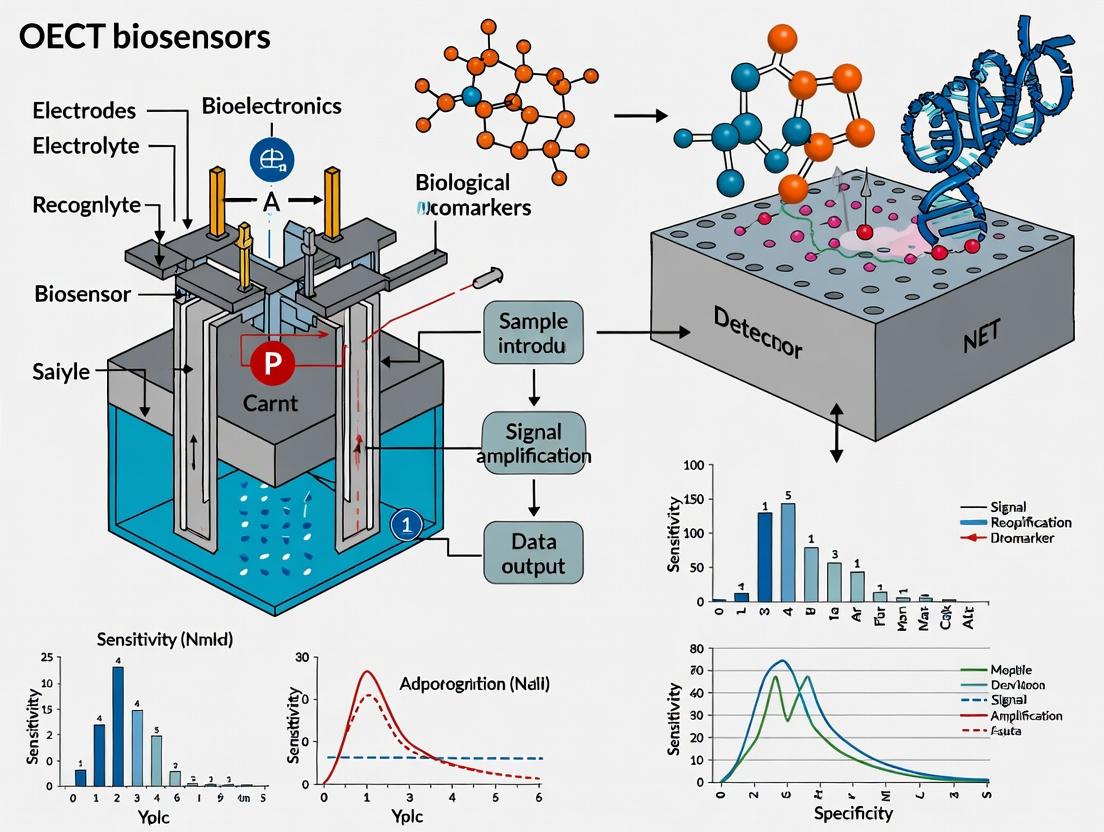
This article provides a comprehensive review of Organic Electrochemical Transistor (OECT) biosensors for cancer cell detection, tailored for researchers and drug development professionals.
Advancing Cancer Diagnostics: The Frontier of OECT Biosensors for Live Cell Detection
Abstract
This article provides a comprehensive review of Organic Electrochemical Transistor (OECT) biosensors for cancer cell detection, tailored for researchers and drug development professionals. It explores the foundational principles of OECTs and their unique advantages for bio-interfacing, details cutting-edge methodologies for fabricating cell-sensing devices and specific biomarker detection strategies, addresses critical challenges in signal stability and biocompatibility, and validates performance through comparative analysis with established techniques. The scope encompasses fundamental science, practical application protocols, optimization guidelines, and an assessment of OECTs' potential to transform point-of-care cancer diagnostics and real-time drug response monitoring.
What Are OECT Biosensors? Core Principles and Advantages for Cancer Cell Sensing
Organic Electrochemical Transistors (OECTs) are a class of transducers where an organic semiconductor channel is in direct contact with an electrolyte. Their operation hinges on the reversible doping/dedoping of the channel via ion exchange from the electrolyte upon application of a gate voltage. This work is framed within a thesis focused on advancing OECT-based biosensors for the sensitive, specific, and label-free detection of cancer cells. The OECT's high transconductance, low operating voltage, and biocompatibility make it uniquely suited for interfacing with biological systems, offering a direct path to real-time monitoring of cellular activities and biomarker secretion.
Operation Mechanism
The core mechanism involves both electronic and ionic charge transport. For a standard p-type OECT (e.g., based on PEDOT:PSS):
- Architecture: The device consists of a conductive polymer film (channel) connected by a source and a drain electrode, immersed in or gated by an electrolyte containing a gate electrode (e.g., Ag/AgCl).
- Initial State (VG = 0 V): The channel is highly conductive due to the presence of holes (PEDOT^+ is balanced by PSS^-). A constant drain-source voltage (VDS) results in a high drain current (I_D).
- Application of Positive Gate Voltage (VG > 0): Cations (e.g., Na^+) from the electrolyte are driven into the polymer matrix. To maintain electroneutrality, these cations compensate for the immobile PSS^- sites, forcing the reduction of PEDOT^+ to neutral PEDOT^0. This dedoping (reduction) decreases the hole density and volumetric conductivity of the channel, leading to a sharp decrease in ID.
- Modulation: The gate voltage controls the extent of ion injection and dedoping, modulating ID. The device's figure of merit is its high transconductance (gm = δID / δVG), which amplifies small biological signals (e.g., cell membrane potential changes or ionic concentration shifts) into large current changes.
Diagram 1: OECT Operational Mechanism (70 chars)
Key Materials: PEDOT:PSS and Beyond
The performance of OECTs is critically dependent on the materials for the channel, gate, and electrolyte.
PEDOT:PSS is the archetypal OECT material. It is a complex, two-component system:
- PEDOT: A conjugated polymer (polythiophene derivative) responsible for electronic conductivity (hole transport).
- PSS: Polystyrene sulfonate, a polyanion that serves as a counterion and dopant for PEDOT, and also facilitates dispersion in water. It enables ion transport and hydration.
Recent material development focuses on improving volumetric capacitance (C*), ionic conductivity, and stability. The table below summarizes key channel materials and their performance.
Table 1: Key OECT Channel Materials and Performance Metrics
| Material System | Type | Key Feature/Advantage | Typical μC* (F cm⁻¹ V⁻¹ s⁻¹) * | Relevance to Biosensing |
|---|---|---|---|---|
| PEDOT:PSS (Clevios PH1000) | p-type | Benchmark, commercial, high g_m | ~ 40 - 70 | Robust, widely used for electrophysiology & ion sensing. |
| P(g2T-TT) / PSS | p-type | Glycolated side chains, high C* | ~ 300 - 400 | Enhanced ion uptake, superior amplification for weak signals. |
| p(g2T-T) | p-type | Glycolated, low swelling | ~ 280 | Stable performance in complex media, good for long-term cell culture. |
| PEDOT:PSS + DMSO/EG | p-type | Additive-enhanced conductivity | ~ 50 - 100 | Higher electronic mobility, improved device consistency. |
| BBL | n-type | High-performance n-type polymer | ~ 1 - 5 | Enables complementary logic, sensing of reducing species. |
| P-90 | n-type | Glycolated n-type | ~ 10 - 20 | Improved ion transport, operational stability in water. |
- μ: electronic mobility, C: volumetric capacitance. * n-type values are typically lower than state-of-the-art p-type.
Application Notes for Cancer Cell Detection Research
OECTs translate biological events into electronic signals through various mechanisms:
- Intracellular Action Potential Recording: OECTs with microchannel geometries can couple to electrogenic cells (e.g., neuroblastoma cells), recording action potentials with high signal-to-noise ratio.
- Cell Barrier Integrity Monitoring: A monolayer of epithelial or endothelial cells grown on a porous membrane above the OECT channel acts as a gate. Breach of this barrier (e.g., by metastatic cancer cells or toxins) changes ion flux, modulating I_D.
- Secreted Metabolite Sensing: Functionalizing the gate electrode with enzymes (e.g., lactate oxidase) enables detection of cancer cell secreted metabolites (e.g., lactate), correlating to metabolic activity.
Diagram 2: OECT Biosensing Signal Pathways (73 chars)
Experimental Protocols
Protocol 5.1: Fabrication of a Micro-patterned PEDOT:PSS OECT
Objective: Create an OECT with a defined channel for cell culture integration.
Materials & Equipment:
- See "The Scientist's Toolkit" below.
- Photolithography suite or laser cutter for mask fabrication.
- Spin coater.
- Hotplate.
- Oxygen plasma cleaner.
- Probe station and source measure unit (SMU, e.g., Keithley 2400/2636).
Procedure:
- Substrate Preparation: Clean a glass slide or Si/SiO₂ wafer with acetone, isopropanol, and deionized water. Dry with N₂ and treat with O₂ plasma for 5 min.
- Electrode Patterning (Source/Drain/Gate): Evaporate 5 nm Cr followed by 50 nm Au through a shadow mask or using liftoff photolithography.
- Channel Patterning: a. Spin-coat a negative photoresist (e.g., SU-8 2002) at 3000 rpm for 30 s. Soft bake. b. Expose through a channel-defining mask (e.g., 50 µm wide, 100 µm long). Post-exposure bake and develop. c. This creates a well defining the active area.
- PEDOT:PSS Deposition: Filter (0.45 µm PVDF) the PEDOT:PSS solution. Optionally mix with 5% v/v ethylene glycol. Pipette into the SU-8 well. Spin at 1500 rpm for 60 s.
- Annealing: Bake on a hotplate at 140°C for 30 min in air.
- Device Encapsulation: Apply a biocompatible epoxy (e.g., PDMS, SU-8) at the electrode contacts, leaving the channel and gate area exposed. Cure fully.
- Characterization: In 1X PBS, apply a constant VDS (-0.1 to -0.5 V). Sweep VG from +0.6 V to -0.6 V. Measure ID. Calculate gm from the transfer curve.
Protocol 5.2: OECT-based Monitoring of Cancer Cell Barrier Integrity
Objective: Real-time detection of cancer cell monolayer disruption.
Cell Line: MDCK-II or MCF-10A (model epithelial) co-cultured with MDA-MB-231 (invasive breast cancer).
Materials: Sterile PBS, complete cell culture medium, trypsin-EDTA, transwell insert (if separate), calcium-sensitive dye (optional control).
Procedure:
- Device Sterilization: UV sterilize the epoxy-encapsulated OECT chip in a culture hood for 30 min per side. Rinse with sterile PBS.
- Cell Seeding: Seed epithelial cells directly onto the OECT channel at confluent density (~200,000 cells/cm²) in complete medium. Allow to adhere and form a tight monolayer (24-48 hrs). Confirm confluence via microscopy.
- Experimental Setup: Place the OECT in a culture dish. Add medium to submerge the gate electrode (Ag/AgCl pellet). Connect to SMU inside the incubator (if possible) or via shielded cables.
- Baseline Measurement: Apply constant VDS (-0.2 V). Apply a small, constant VG (+0.2 V) or a low-frequency square wave. Record stable I_D baseline for 1 hour.
- Induction of Barrier Disruption:
- Option A (Chemical): Add 4 mM EGTA (chelates Ca²⁺, disrupts adhesions) to the medium.
- Option B (Cellular): Gently add a suspension of invasive cancer cells to the apical side of the monolayer.
- Monitoring: Continuously record ID. A sustained increase in ID indicates increased paracellular ion flux due to monolayer disruption.
- Endpoint Validation: Perform immunofluorescence (ZO-1, actin) on the fixed monolayer to correlate electrical data with structural integrity.
Table 2: Typical OECT Operating Parameters for Cell Monitoring
| Parameter | Typical Value | Purpose / Note | ||
|---|---|---|---|---|
| V_DS | -0.05 to -0.3 V | Minimizes Faradaic processes, prevents cell electroporation. | ||
| V_G (DC) | +0.1 to +0.3 V | Sets operating point in high g_m region, low stress on cells. | ||
| Sampling Rate | 10 - 100 Hz | Sufficient for barrier kinetics; use >1 kHz for action potentials. | ||
| Electrolyte | 1X PBS or Cell Culture Medium | Medium requires V_G < | 0.6 V | to avoid electrolysis. |
| Gate Electrode | Ag/AgCl (in 3M KCl) | Stable reference potential. Must be isolated from cell medium via agarose salt bridge if containing chlorides. |
The Scientist's Toolkit
Table 3: Essential Research Reagents and Materials for OECT Biosensor Development
| Item | Function in OECT Research | Example Product / Specification |
|---|---|---|
| PEDOT:PSS Dispersion | The active channel material. Provides mixed ionic-electronic conductivity. | Clevios PH 1000 (Heraeus), conductivity ~1 S/cm. |
| Ethylene Glycol (EG) or Dimethyl Sulfoxide (DMSO) | Secondary dopant. Enhances conductivity by re-ordering polymer domains. | Laboratory grade, anhydrous, >99%. |
| (3-Glycidyloxypropyl)trimethoxysilane (GOPS) | Crosslinker. Improves film stability in aqueous media, reduces delamination. | >98% purity. Used at 1% v/v relative to PEDOT:PSS. |
| SU-8 Photoresist | For defining microfluidic channels, cell culture wells, and encapsulation. | SU-8 2000 series (Kayaku) for various thicknesses. |
| Polydimethylsiloxane (PDMS) | Biocompatible elastomer for fluidic channels, gaskets, and soft encapsulation. | Sylgard 184 Kit (Dow). Mix 10:1 base:curing agent. |
| Ag/AgCl Gate Electrode | Provides a stable, non-polarizable gate potential in chloride-containing electrolytes. | In-house chlorided Ag wire or commercial miniature pellet. |
| Agarose Salt Bridge | Isolates the reference electrode from biological media while maintaining ionic contact. | 3% agarose in 3M KCl. |
| Source Measure Unit (SMU) | Simultaneously applies voltage (VDS, VG) and measures current (I_D). Essential for transfer/output curves. | Keithley 2400 or 2636B (Tektronix). |
| Potentiostat with Dual Channels | For dynamic gate pulsing and low-noise I_D measurement in time-based sensing. | Palmsens4 or EmStat3 (for portability). |
| Microfluidic Flow System | For controlled delivery of cells, analytes, and drugs to the OECT active area. | Elveflow OB1 pressure controller with microfluidic chips. |
Why OECTs for Biosensing? Inherent Signal Amplification, Low Operating Voltage, and Aqueous Compatibility.
Organic Electrochemical Transistors (OECTs) are rapidly emerging as a transformative platform for the direct, label-free detection of cancer cells. This application note, framed within a thesis focused on developing next-generation point-of-care diagnostic tools, details why the core operational advantages of OECTs—inherent signal amplification, low operating voltage, and aqueous compatibility—are uniquely suited for this challenge. The ability to interface directly with physiological fluids, amplify subtle biological binding events into robust electrical signals, and operate with battery-compatible voltages makes OECTs ideal for detecting low-abundance cancer biomarkers, circulating tumor cells, and monitoring cell activity in real-time.
Table 1: Comparative Performance Metrics of OECTs vs. Traditional Biosensors for Cancer Detection Applications
| Performance Parameter | OECT Platform (Typical Range) | Conventional Electrode / FET Sensor | Implication for Cancer Cell Sensing |
|---|---|---|---|
| Operating Voltage | < 1 V (often 0.1 - 0.5 V) | 1 - 5 V (FETs), > 0.5 V (Amperometry) | Enables safe in-situ/portable operation; prevents Faradaic reactions that damage cells. |
| Transconductance (gm) | 1 - 100 mS (for PEDOT:PSS devices) | µS to nS range (for SiNW FETs) | High gm enables inherent amplification of small potential changes at the gate, crucial for detecting low cell counts. |
| Aqueous Stability | Excellent (Operation in buffer/serum) | Variable (often requires passivation) | Direct measurement in complex media (blood, serum, cell culture) without sample desalting. |
| Noise Floor (Low-Frequency) | Can be < 1 µV/√Hz | Typically higher for planar electrodes | Enhances signal-to-noise ratio for detecting rare binding events (e.g., single-cell attachment). |
| Ion Sensitivity | High (Mixed ionic-electronic conduction) | Low (Primarily electronic conduction) | Directly transduces ionic fluxes from cellular activity (e.g., apoptosis, ion channel modulation). |
Experimental Protocols for Cancer Cell Detection Using OECTs
Protocol 1: Functionalization of OECT Gate Electrode for Specific Cancer Cell Capture
Objective: To immobilize anti-EpCAM (or other cell-surface marker) antibodies on the OECT gate (Au or carbon) for the specific capture of circulating tumor cells (CTCs).
Materials & Reagents:
- OECT devices with microfabricated Au gate electrodes.
- Phosphate Buffered Saline (PBS), pH 7.4.
- 11-mercaptoundecanoic acid (11-MUA) solution (1 mM in ethanol).
- N-(3-Dimethylaminopropyl)-N′-ethylcarbodiimide (EDC) and N-Hydroxysuccinimide (NHS).
- Anti-EpCAM monoclonal antibody (e.g., clone VU1D9).
- Ethanolamine hydrochloride (1 M, pH 8.5).
- Bovine Serum Albumin (BSA) solution (1% w/v in PBS).
Procedure:
- Gate Cleaning: Clean Au gate electrodes via oxygen plasma (5 min) or piranha solution (Caution: Extremely hazardous). Rinse with ethanol and DI water, dry under N₂.
- Self-Assembled Monolayer (SAM) Formation: Incubate devices in 1 mM 11-MUA solution for 12-18 hours at room temperature. Rinse thoroughly with ethanol to remove physisorbed thiols.
- Carboxyl Group Activation: Prepare a fresh solution of 0.4 M EDC and 0.1 M NHS in MES buffer (pH 6.0). Pipette onto the gate area and incubate for 30 minutes at RT. Rinse with PBS.
- Antibody Immobilization: Incubate the activated surface with anti-EpCAM antibody (10 µg/mL in PBS) for 2 hours at RT or overnight at 4°C.
- Quenching & Blocking: Quench unreacted NHS esters with 1 M ethanolamine (pH 8.5) for 30 minutes. Subsequently, block non-specific sites with 1% BSA for 1 hour.
- Storage: Rinse with PBS and store the functionalized devices in PBS at 4°C until use (within 48 hours).
Protocol 2: Real-Time OECT Measurement of Cancer Cell Attachment & Drug Response
Objective: To monitor the specific capture of cancer cells and subsequent response to chemotherapeutic agents via changes in OECT channel current.
Materials & Reagents:
- OECT set-up: Source Measure Unit (SMU), potentiostat, Faraday cage, fluidic cell.
- Functionalized OECT from Protocol 1.
- Target cancer cell line (e.g., MCF-7 breast cancer cells) in suspension.
- Control cell line (e.g., MCF-10A normal epithelial cells).
- Cell culture medium (e.g., RPMI-1640).
- Chemotherapeutic agent (e.g., Doxorubicin, 1 mM stock in DMSO).
Procedure:
- OECT Baseline Measurement: Place the functionalized OECT in a fluidic chamber filled with PBS or cell culture medium. Apply a constant drain-source voltage (VDS = -0.2 to -0.5 V) and gate voltage (VG = 0 V). Record the stable channel current (IDS) as the baseline for 5-10 minutes.
- Cell Introduction & Capture: Gently introduce the cancer cell suspension (~10³ - 10⁴ cells/mL in medium) into the chamber at a slow, constant flow rate (e.g., 10 µL/min). Continuously monitor IDS vs. time.
- Specificity Control: Rinse with fresh medium to remove unbound cells. Repeat Step 2 using the control cell line on a separate, identically functionalized device.
- Drug Response Monitoring: After a stable IDS plateau indicates cell attachment, introduce medium containing the chemotherapeutic agent at a clinically relevant concentration (e.g., 1 µM Doxorubicin). Monitor IDS for 30-120 minutes.
- Data Analysis: The attachment of cells to the gate interface alters the local ionic concentration/potential, modulating IDSDS/IDS0 vs. time. A significant negative (for p-type OECTs) shift indicates cell capture. Further shifts post-drug addition correlate with cell death/membrane integrity changes.
Diagrams of Signaling Pathways and Experimental Workflows
OECT Signal Amplification Pathway for Cell Detection
OECT Experimental Workflow for CTC Capture & Drug Testing
The Scientist's Toolkit: Key Research Reagent Solutions
Table 2: Essential Materials for OECT-Based Cancer Cell Sensing Research
| Item | Function & Relevance | Example Product/Note |
|---|---|---|
| PEDOT:PSS Dispersion | The active channel material. High conductivity (Clevios PH1000) and formulation with ethylene glycol/DMSO enhance OECT performance. | Heraeus Clevios PH 1000, with 5% DMSO additive. |
| Anti-EpCAM Antibody | The primary capture probe for epithelial-derived circulating tumor cells (CTCs). Critical for gate functionalization specificity. | Recombinant anti-EpCAM (e.g., Abcam ab32392). |
| Crosslinker Kit (EDC/NHS) | For covalent, oriented immobilization of antibodies on carboxyl-terminated SAMs on the gate electrode. Stable amide bond formation. | Thermo Fisher Scientific Pierce EDC Sulfo-NHS Kit. |
| Microfluidic Flow Cell | Enables precise delivery of cell suspensions and reagents to the OECT active area. Minimizes dead volume for rapid response. | Ibidi µ-Slide I Luer or custom PDMS device. |
| Low-Noise Source Measure Unit (SMU) | Applies precise VDS and measures the resulting IDS with high fidelity. Essential for tracking small, real-time current modulations. | Keithley 2614B or similar. |
| Biocompatible Encapsulant | Insulates contacts and defines the active area. Prevents leakage currents and device degradation in aqueous environments. | Polydimethylsiloxane (PDMS, Sylgard 184) or SUS photoresist. |
Within the context of developing OECT (Organic Electrochemical Transistor) biosensors for cancer cell detection, understanding the precise transduction mechanisms at the bio-interface is paramount. OECTs excel at converting subtle biological activities—cell adhesion, metabolic shifts, and secretory profiles—into quantifiable electronic signals. This capability is foundational for creating sensitive, real-time, and non-invasive diagnostic platforms for cancer research and drug development.
Application Notes
Transduction of Cellular Adhesion
Mechanism: Cellular adhesion and spreading alter the local ionic environment and physical impedance at the gate electrode of an OECT, which is often functionalized with extracellular matrix (ECM) proteins. As integrins engage and focal adhesions form, the effective capacitance and ionic flux at the channel interface change, modulating the transistor's drain current. Research Utility: For cancer detection, the altered adhesion kinetics and strength of metastatic cells provide a distinct electronic fingerprint compared to non-malignant cells.
Transduction of Metabolic Activity
Mechanism: The metabolic activity of cells, particularly the extrusion of protons (lactic acid) and other ionic species during glycolysis (Warburg effect), directly modulates the ionic strength in the gate electrolyte. This shifts the effective gate voltage (VG) in an OECT, which is exquisitely sensitive to cation concentration (for PEDOT:PSS-based devices). Research Utility: The glycolytic phenotype of many cancer cells leads to a characteristic acidification profile, enabling OECTs to distinguish highly glycolytic tumor cells.
Transduction of Secretory Activity
Mechanism: The secretion of specific ions (e.g., Ca2+), metabolites, or proteins can be detected if the OECT gate is functionalized with appropriate capturing elements (e.g., antibodies, ionophores). Binding events change the interfacial potential, gating the transistor channel. Research Utility: Enables monitoring of specific cancer-derived biomarkers (e.g., VEGF, MMPs) or paracrine signaling dynamics in real-time, useful for drug response studies.
Table 1: OECT Performance Metrics for Transducing Different Cellular Activities
| Cellular Activity | Measured OECT Parameter | Typical Signal Change | Detection Timeline | Key Cancer Application |
|---|---|---|---|---|
| Adhesion/Spreading | Normalized Drain Current (ID/ID0) | Decrease of 10-25% | 30 min - 4 hours | Distinguishing metastatic potential |
| Metabolic Acidification | Threshold Voltage Shift (ΔVth) | +20 to +50 mV | 1 - 12 hours | Identifying glycolytic phenotype |
| Ca2+ Secretion Burst | Transconductance (gm) Peak | Δgm ~ 0.5-2 mS | Seconds | Monitoring signaling pathway activation |
| Protein Secretion (VEGF) | Gate Voltage Shift (ΔVG) at constant ID | -5 to -15 mV | 10 - 30 minutes | Anti-angiogenic drug screening |
Table 2: Representative OECT Device Configurations for Cancer Cell Studies
| Gate Functionalization | Channel Material | Cell Type Studied | Limit of Detection (Cells) | Key Reference (Example) |
|---|---|---|---|---|
| Collagen I | PEDOT:PSS | MCF-7 (Breast Cancer) | ~100 cells | Wang et al., 2022 |
| Fibronectin | PEDOT:PSS:PEG | A549 (Lung Cancer) | ~50 cells | Guo et al., 2023 |
| Anti-EpCAM Antibody | PEDOT:PSS | CTCs from Blood | 1-10 cells | Chen & Rivnay, 2023 |
| H+ Ionophore (for pH) | PEDOT:PSS | HeLa (Cervical Cancer) | N/A (pH Δ ~0.05) | Strakosas et al., 2021 |
Experimental Protocols
Protocol 1: Monitoring Cancer Cell Adhesion and Spreading
Objective: To electronically quantify the adhesion dynamics of suspected metastatic cells versus non-metastatic controls. Materials: OECT array (PEDOT:PSS channel), Ag/AgCl gate electrode, cell culture medium, trypsin-EDTA, phosphate-buffered saline (PBS). Procedure:
- Device Functionalization: Sterilize OECT chips (UV/ethanol). Coat gate electrodes with 10 µg/mL fibronectin in PBS for 1 hour at 37°C. Rinse with PBS.
- Baseline Measurement: Immerse chip in sterile, serum-free culture medium. Using a source measure unit, apply a constant VD (-0.3 V) and sweep VG (+0.3 to -0.3 V). Record ID to establish baseline transfer curves.
- Cell Seeding: Trypsinize and resuspend cancer cell lines. Seed cells directly onto the functionalized gate area at a density of 105 cells/cm2.
- Real-time Monitoring: Immediately place the chip in the incubator (37°C, 5% CO2). Continuously apply a constant VD (-0.3 V) and a constant VG (+0.1 V). Record ID every 30 seconds for 4-6 hours.
- Data Analysis: Normalize ID to its initial value (ID0). Plot normalized ID vs. time. The rate and extent of ID decrease correlate with adhesion/spreading efficiency.
Protocol 2: Profiling Metabolic Acidification via Glycolysis
Objective: To detect the Warburg effect in cancer cells by measuring extracellular acidification. Materials: OECT with pH-sensitive gate (PEDOT:PSS/PEDOT:PSS-H+ ionophore blend), glucose-supplemented medium, ion channel inhibitors (e.g., Ouabain). Procedure:
- Calibration: Calibrate the pH-OECT in culture medium at different pH levels (6.8, 7.2, 7.6) by measuring the ΔVth for each.
- Cell Loading: Seed a confluent monolayer of cells on a separate, porous membrane (not on the gate). Place this membrane in close proximity (<100 µm) to the pH-sensitive gate in a microfluidic chamber.
- Metabolic Monitoring: Perfuse with 10 mM glucose medium at a slow rate (10 µL/min). Apply constant VD (-0.2 V) and record ID over time. The steady-state ID shift is proportional to ΔpH.
- Inhibition Control: Introduce 1 mM Ouabain to inhibit Na+/K+ ATPase, affecting proton coupling. Monitor the reversal or stabilization of the acidification signal.
- Analysis: Convert recorded ID trajectories to ΔVth using the transfer curve. Plot ΔVth vs. time; a steeper slope indicates higher glycolytic flux.
Protocol 3: Detecting VEGF Secretion for Anti-Angiogenic Drug Screening
Objective: To quantify vascular endothelial growth factor (VEGF) secretion from cancer cells in response to a drug candidate. Materials: OECT with gold gate electrode, anti-VEGF capture antibody, bovine serum albumin (BSA), VEGF standard, drug compound. Procedure:
- Gate Bio-functionalization: a. Clean gold gate electrodes with piranha solution (Caution: Highly corrosive). b. Immerse in 1 mM 11-mercaptoundecanoic acid (11-MUA) ethanol solution for 12 hours to form a self-assembled monolayer (SAM). c. Activate carboxyl groups with a solution of 0.4 M EDC and 0.1 M NHS in water for 30 minutes. d. Immerse in 10 µg/mL anti-VEGF antibody in PBS (pH 7.4) for 2 hours. e. Block non-specific sites with 1% BSA for 1 hour. Rinse and store in PBS.
- Establish Standard Curve: Inject known concentrations of VEGF protein (0, 10, 50, 100, 200 pg/mL) in assay buffer. At constant ID, record the ΔVG required to maintain it after 15 minutes of incubation. Plot ΔVG vs. [VEGF].
- Cell Secretion Assay: Seed cancer cells in a transwell insert placed above the functionalized OECT gate. Add culture medium with or without the anti-angiogenic drug.
- Signal Measurement: After 24-hour incubation, carefully remove the transwell insert. With the OECT still immersed in the conditioned medium, apply constant VD and ID. Measure the resultant VG and compare to the standard curve to determine [VEGF].
- Validation: Correlate OECT results with ELISA performed on parallel samples.
The Scientist's Toolkit: Research Reagent Solutions
Table 3: Essential Materials for OECT-based Cancer Cell Sensing
| Item | Function | Example Product/Catalog |
|---|---|---|
| PEDOT:PSS Dispersion | The active channel material for most OECTs; high mixed ionic-electronic conductivity. | Heraeus Clevios PH 1000 |
| (3-Glycidyloxypropyl)trimethoxysilane (GOPS) | Crosslinker for PEDOT:PSS; enhances device stability in aqueous environments. | Sigma-Aldrich 440167 |
| Fibronectin, from human plasma | ECM protein for functionalizing gates to promote specific cancer cell adhesion. | Corning 356008 |
| Cell-Tak | Synthetic polyphenolic protein adhesive for non-specific cell attachment to device surfaces. | Corning 354240 |
| H+ Ionophore I, Cocktail B | Renders the OECT gate selectively sensitive to pH changes for metabolic sensing. | Sigma-Aldrich 95293 |
| Anti-EpCAM Antibody | For capturing circulating tumor cells (CTCs) directly onto the OECT gate electrode. | Abcam ab223582 |
| EDC & NHS Crosslinker Kit | For covalent immobilization of antibodies or other proteins onto carboxylated gate surfaces. | Thermo Fisher Scientific 77149 |
| Dimethyl sulfoxide (DMSO), anhydrous | Common solvent for dissolving organic semiconductors and drug compounds for testing. | Sigma-Aldrich 276855 |
| Ag/AgCl Pellets | Used as stable reference electrodes in three-electrode OECT measurement setups. | Warner Instruments 64-1315 |
| Poly-D-lysine | Provides a positively charged coating to improve attachment of certain cell types. | Sigma-Aldrich P7280 |
Visualizations
Title: OECT Workflow for Cell Adhesion Monitoring
Title: Metabolic Acidification to OECT Signal Pathway
Title: OECT-based Protein Secretion Assay Steps
Within the broader thesis on Organic Electrochemical Transistor (OECT) biosensors for cancer cell detection, the precise definition of the target biomarker is paramount. OECTs, which transduce biological binding events into amplified electrical signals, are uniquely suited for detecting a range of cancer-derived analytes due to their high sensitivity in ionic solutions, biocompatibility, and potential for miniaturization. This document provides application notes and protocols focused on three key, accessible biomarker classes: surface proteins, extracellular vesicles (EVs), and metabolic byproducts.
Target Biomarker Classes & Quantitative Profiles
The following table summarizes key biomarkers, their quantitative ranges in clinical samples, and relevance to OECT detection.
Table 1: Key Cancer Biomarker Classes Accessible to OECT Biosensors
| Biomarker Class | Specific Examples (Cancer Association) | Typical Concentration Range in Biofluids | OECT Detection Rationale |
|---|---|---|---|
| Surface Proteins | EpCAM (Carcinoma), HER2 (Breast), PSMA (Prostate) | 1 pg/mL – 100 ng/mL (for circulating forms) | Direct antibody functionalization on gate electrode; binding alters interfacial capacitance/dopant concentration. |
| Extracellular Vesicles (EVs) | CD63+/EpCAM+ EVs (Pan-Cancer), EGFRvIII+ EVs (Glioblastoma) | 10^6 – 10^12 particles/mL (plasma) | Bulk charge/permselectivity changes; or specific surface protein detection on captured EVs. |
| Metabolic Byproducts | Lactate (Warburg effect), Sarcosine (Prostate), Reactive Oxygen Species (Various) | Lactate: 1 – 30 mM (tumor interstitial fluid); Sarcosine: ~1 – 5 µM (urine) | Enzymatic gate modification (e.g., Lactate Oxidase); reaction products modulate OECT channel current. |
Detailed Experimental Protocols
Protocol 2.1: OECT Functionalization for Surface Protein Detection (e.g., EpCAM) Objective: To fabricate an OECT biosensor for the specific detection of soluble or cell-bound EpCAM protein. Materials: PEDOT:PSS-based OECT array, (3-Aminopropyl)triethoxysilane (APTES), glutaraldehyde, anti-EpCAM monoclonal antibody, phosphate-buffered saline (PBS). Steps:
- Gate Electrode Activation: Clean Au gate electrodes with oxygen plasma for 5 minutes.
- Silane Treatment: Immerse gates in 2% v/v APTES in ethanol for 1 hour, rinse with ethanol, and cure at 110°C for 10 min.
- Crosslinking: Incubate gates in 2.5% glutaraldehyde in PBS for 30 minutes. Rinse thoroughly with PBS.
- Antibody Immobilization: Apply 50 µL of anti-EpCAM solution (10 µg/mL in PBS) to each gate overnight at 4°C.
- Quenching & Blocking: Rinse and incubate with 1M ethanolamine (pH 8.5) for 30 min to quench unreacted aldehydes. Then, block with 1% BSA in PBS for 1 hour.
- Measurement: Insert gate into measurement chamber with PBS buffer. Record transfer characteristics (IDS vs. VGS) before and after spiking with EpCAM protein or exposure to cancer cell lines.
Protocol 2.2: EV Capture and Detection via Permselectivity Modulation Objective: To detect tumor-derived EVs via their impact on OECT gate permselectivity. Materials: Anti-CD63 aptamer-functionalized OECT, Serum/plasma samples, Nuclease-free buffer. Steps:
- Aptamer Functionalization: Immobilize thiolated anti-CD63 aptamers on Au gate electrodes via gold-thiol self-assembled monolayer chemistry (16h incubation).
- Sample Preparation: Isolate EVs from patient plasma using size-exclusion chromatography or differential ultracentrifugation. Resuspend in low-ionic-strength buffer (e.g., 10 mM HEPES).
- Capture Phase: Apply 100 µL of EV suspension to the OECT gate well. Incubate for 60 minutes at room temperature with gentle agitation.
- Signal Transduction: The accumulation of negatively charged EVs on the gate surface alters the effective charge and permselectivity of the gate/electrolyte interface. This is measured as a pronounced shift in the transfer characteristic midpoint voltage (∆V_GS,mid).
- Specificity Control: Use EVs from non-malignant cell lines or include a scramble-aptamer functionalized OECT as a control.
Protocol 2.3: Enzymatic Detection of Metabolic Byproduct (Lactate) Objective: To configure an OECT for continuous lactate monitoring via an enzymatic gate. Materials: Pt gate electrode, Lactate Oxidase (LOx), Bovine Serum Albumin (BSA), Glutaraldehyde, Nafion solution. Steps:
- Enzymatic Membrane Formation: Mix 10 µL of LOx (100 U/mL), 5 µL of BSA (10% w/v), and 2 µL of glutaraldehyde (0.25% v/v) on ice.
- Gate Modification: Apply 5 µL of the mixture to the Pt gate electrode. Allow to crosslink for 1 hour at 4°C.
- Nafion Coating: Apply a thin layer of 0.5% Nafion solution and air dry. This coating reduces interferent (e.g., ascorbate, urate) access.
- OECT Operation: Operate the OECT in a buffer (PBS, pH 7.4) at a fixed VDS and VGS within the active regime.
- Detection: Lactate diffuses to the gate, is oxidized by LOx, producing H2O2. H2O2 is electrocatalytically oxidized at the Pt gate, injecting a current (IG) that is transduced and amplified as a measurable change in channel current (IDS).
Visualization: Pathways and Workflows
OECT Biosensor Targeting Pathways
Workflow for OECT-Based EV Detection
The Scientist's Toolkit: Research Reagent Solutions
Table 2: Essential Materials for OECT Cancer Biomarker Detection
| Item | Function | Example/Catalog Consideration |
|---|---|---|
| PEDOT:PSS Dispersion | The active channel material for most OECTs; provides ionic-to-electronic transduction. | Heraeus Clevios PH1000, with additives (e.g., EG, DBSA) for stability. |
| Functionalization Reagents | To immobilize biorecognition elements (antibodies, aptamers) on the gate electrode. | (3-Aminopropyl)triethoxysilane (APTES), Sulfo-LC-SPDP, Thiolated DNA/aptamers. |
| High-Affinity Capture Probes | Ensure specific biomarker binding. | Recombinant monoclonal antibodies (e.g., anti-EpCAM clone VU1D9), DNA/RNA aptamers. |
| EV Isolation Kit | To pre-concentrate EVs from complex biofluids for analysis. | Size-exclusion chromatography columns (qEVoriginal), or polymer-based precipitation kits. |
| Enzymes for Metabolic Sensing | Catalyze the conversion of the target analyte into a detectable product. | Lactate Oxidase (LOx), Sarcosine Oxidase (SOx), Horseradish Peroxidase (HRP). |
| Nafion Perfluorinated Resin | A cation-exchange coating to reduce fouling and interferent access on enzymatic gates. | 5% wt solution in lower aliphatic alcohols, diluted before use. |
| Microfluidic Flow Cells | For controlled sample delivery and multiplexed measurements on OECT arrays. | Custom PDMS channels or commercial electrochemical flow cells (e.g., from Metrohm). |
Building and Applying OECT Biosensors: From Fabrication to Functional Cancer Assays
1. Introduction and Thesis Context This protocol details the fabrication of Organic Electrochemical Transistors (OECTs) optimized for the detection of cancer cell biomarkers. Within the broader thesis on OECT biosensors for cancer cell detection, these devices leverage the mixed ionic-electronic conduction of the polymer channel (e.g., PEDOT:PSS) to achieve high transconductance and sensitivity. Surface functionalization of the gate electrode is critical for introducing specificity towards target analytes (e.g., extracellular vesicles, cell surface proteins) present in complex biological samples. The following Application Notes provide a standardized, reproducible workflow from substrate preparation to biosensor validation.
2. Microfabrication of the OECT Baseline Device Note: All lithography steps are performed in a Class 1000 cleanroom environment.
Protocol 2.1: Photolithographic Patterning of Channel & Contacts Objective: To define the source/drain (S/D) gold electrodes and the PEDOT:PSS channel on a glass or flexible substrate. Materials: 4-inch glass wafer, AZ 5214E photoresist, MF-319 developer, Chromium/Gold (10/100 nm) evaporation target, Oxygen Plasma Asher, PEDOT:PSS (PH1000) with 5% v/v ethylene glycol and 1% v/v (3-Glycidyloxypropyl)trimethoxysilane (GOPS).
- Substrate Cleaning: Sonicate substrates in acetone, isopropanol, and deionized water (5 min each). Dry with N₂. Treat with O₂ plasma (100 W, 30 sccm, 2 min).
- S/D Electrode Patterning: a. Spin-coat AZ 5214E photoresist at 4000 rpm for 45 s. Soft bake at 95°C for 90 s. b. Expose using S/D electrode mask (UV, 90 mJ/cm²). Develop in MF-319 for 60 s. c. Deposit 10 nm Cr adhesion layer followed by 100 nm Au via e-beam evaporation. d. Lift-off in acetone with ultrasonication (5 min). Rinse with IPA and DI water.
- Channel Definition: a. Spin-coat a second layer of AZ 5214E. Expose using channel definition mask. b. Develop and hard bake at 120°C for 2 min. c. Treat the patterned substrate with O₂ plasma (50 W, 1 min). d. Spin-coat the doped PEDOT:PSS solution (filtered at 0.45 µm) at 3000 rpm for 60 s. Cure at 140°C for 1 hr. e. Lift-off the photoresist/PEDOT:PSS stack in acetone, leaving the patterned channel bridging the S/D electrodes.
Table 1: OECT Microfabrication Parameters & Performance Metrics
| Parameter | Typical Value/Range | Impact on Performance |
|---|---|---|
| Channel Dimensions (W x L) | 100 µm x 50 µm | Governs current magnitude and switching speed. |
| PEDOT:PSS Thickness | 100 - 200 nm | Affects volumetric capacitance and transconductance (gₘ). |
| S/D Electrode Thickness (Au) | 100 nm | Ensures low contact resistance and durability. |
| GOPS Cross-linker Conc. | 1% v/v | Enhances film stability in aqueous media. |
| Typical gₘ (in PBS) | 5 - 20 mS | Key metric for sensitivity; higher gₘ enables larger ∆I for a given ∆V. |
| On/Off Ratio | > 10³ | Determines baseline signal-to-noise. |
3. Gate Electrode Functionalization for Cancer Biomarker Capture Note: This protocol describes functionalization for an anti-EpCAM coated gate for capturing EpCAM-positive cancer cells/exosomes.
Protocol 3.1: Carbodiimide Crosslinking of Antibodies on Au Gates Objective: To covalently immobilize capture antibodies on the gold gate electrode. Materials: 11-Mercaptoundecanoic acid (11-MUA, 1 mM in ethanol), EDC (0.4 M), NHS (0.1 M), PBS (pH 7.4), anti-EpCAM monoclonal antibody (50 µg/mL in PBS), Ethanolamine (1 M, pH 8.5).
- Self-Assembled Monolayer (SAM) Formation: Incubate the fabricated Au gate electrode in 1 mM 11-MUA solution for 12 hrs at room temperature. Rinse thoroughly with ethanol and dry under N₂.
- Carboxyl Group Activation: Prepare a fresh solution of EDC and NHS in MES buffer (0.1 M, pH 5.5). Immerse the SAM-coated gate in this solution for 30 min at RT to form amine-reactive NHS esters. Rinse with PBS.
- Antibody Immobilization: Incubate the activated gate in anti-EpCAM solution overnight at 4°C in a humid chamber.
- Quenching: Rinse with PBS. Immerse gate in 1 M ethanolamine (pH 8.5) for 1 hr to deactivate remaining reactive sites.
- Blocking: Incubate in 1% BSA in PBS for 2 hrs to minimize non-specific adsorption. Store in PBS at 4°C until use.
Diagram 1: OECT Gate Functionalization & Sensing Workflow
4. Surface Chemistry for Non-Fouling & Specific Interfaces Protocol 4.1: Preparation of Biologically Relevant Media & Measurement Objective: To perform OECT measurements in a physiologically relevant, non-fouling environment. Materials: Dulbecco's Phosphate Buffered Saline (DPBS), Roswell Park Memorial Institute (RPMI) 1640 cell culture medium supplemented with 10% FBS, Bovine Serum Albumin (BSA).
- Measurement Setup: Connect the OECT device (channel and functionalized gate) to a source measure unit (e.g., Keithley 2400) via a probe station.
- Electrolyte Chamber: Affix a polydimethylsiloxane (PDMS) well around the device. Fill with measurement electrolyte.
- Baseline Recording: Apply a constant drain voltage (VDS = -0.3 V). Sweep the gate voltage (VGS) from +0.5 V to -0.6 V while recording drain current (IDS). Record the transfer curve in DPBS + 1% BSA.
- Sample Measurement: Replace the baseline solution with the target sample (e.g., cell culture supernatant, spiked exosome solution) diluted in supplemented RPMI 1640 medium. Incubate for 20 min.
- Signal Acquisition: Rinse gently with DPBS to remove unbound species. Record a new transfer curve under identical conditions. The shift in the transfer characteristic (∆V or ∆I) is correlated with the captured target concentration.
Table 2: Key Research Reagent Solutions
| Reagent/Material | Function/Application | Critical Notes |
|---|---|---|
| PEDOT:PSS PH1000 | OECT channel material; mixed ionic-electronic conductor. | Doping with EG enhances conductivity; GOPS ensures aqueous stability. |
| Ethylene Glycol (EG) | Secondary dopant for PEDOT:PSS. | Increases film conductivity by ~2 orders of magnitude. |
| GOPS | Cross-linking agent for PEDOT:PSS. | Prevents film dissolution/ delamination in aqueous solutions. |
| 11-Mercaptoundecanoic Acid | Forms carboxyl-terminated SAM on Au for bio-conjugation. | Creates a stable, ordered monolayer for controlled antibody immobilization. |
| EDC / NHS | Zero-length crosslinkers for carboxyl-to-amine coupling. | Must be prepared fresh. Reaction efficiency is pH-dependent. |
| Anti-EpCAM Antibody | Capture probe for epithelial cancer-derived targets. | Critical for specificity; clone and affinity impact sensor performance. |
| BSA (Bovine Serum Albumin) | Blocking agent to passivate non-specific binding sites. | Reduces false-positive signals from protein adsorption. |
| Supplemented Cell Culture Media | Provides physiologically relevant measurement matrix. | High ionic strength and proteins test OECT robustness and selectivity. |
Diagram 2: OECT Biosensing Signal Transduction Pathway
5. Concluding Protocol: Data Analysis & Validation Protocol 5.1: Quantifying OECT Response and Calibration
- Data Extraction: From the transfer curves, extract IDS at a fixed VGS (e.g., 0 V) or extract the threshold voltage (Vth) using the peak transconductance method.
- Signal Calculation: Calculate ∆I = IDS, baseline - IDS, sample or ∆Vth = Vth, sample - Vth, baseline.
- Calibration Curve: Plot ∆I or ∆Vth vs. logarithm of target concentration (e.g., cell count, exosome concentration). Fit with a Langmuir or logistic model to determine the limit of detection (LoD) and dynamic range.
- Specificity Validation: Perform control experiments using non-target cells (e.g., non-epithelial lines) or isotype control antibodies on the gate. Signal should be negligible compared to the specific target.
Within the broader thesis on Organic Electrochemical Transistor (OECT) biosensors for cancer cell detection, the effective and specific immobilization of capture probes on the OECT channel is paramount. This application note details and compares three primary strategies: antibody-based, aptamer-based, and peptide-based immobilization. Each method leverages specific biorecognition to capture target cancer cells, inducing a measurable change in the OECT’s drain current. The choice of strategy impacts sensitivity, specificity, stability, and manufacturability of the biosensor.
Quantitative Comparison of Immobilization Strategies
Table 1: Performance Metrics of Capture Probes for Cancer Cell Detection on OECTs
| Parameter | Antibody-Based | Aptamer-Based | Peptide-Based |
|---|---|---|---|
| Typical Binding Affinity (Kd) | 10⁻⁹ – 10⁻¹² M | 10⁻⁹ – 10⁻¹² M | 10⁻⁶ – 10⁻⁹ M |
| Production Cost | High | Moderate | Low |
| Stability | Moderate (4°C) | High (Room Temp) | High (Room Temp) |
| Immobilization Density | ~ 2-4 x 10¹² molecules/cm² | ~ 3-5 x 10¹² molecules/cm² | ~ 1-3 x 10¹² molecules/cm² |
| Footprint Size | ~ 10-15 nm | ~ 3-5 nm | ~ 1-3 nm |
| Typical OECT Response (ΔI/I₀%) | 15-35% | 10-30% | 5-20% |
| Non-Specific Adsorption | Moderate | Low | Moderate-High |
| Ease of Channel Functionalization | Moderate | Easy (Thiolated) | Easy (Cysteine-terminated) |
Table 2: Representative Targets and Limits of Detection (LOD) for Selected Cancer Cell Lines
| Capture Probe Type | Target Biomarker | Cancer Cell Line | Reported LOD (Cells/mL) | OECT Channel Material |
|---|---|---|---|---|
| Anti-EpCAM Antibody | Epithelial Cell Adhesion Molecule | MCF-7 (Breast) | 10² – 10³ | PEDOT:PSS |
| Anti-PSMA Aptamer | Prostate-Specific Membrane Antigen | LNCaP (Prostate) | 10¹ – 10² | PEDOT:PSS / p(g3T2-TT) |
| GE11 Peptide | Epidermal Growth Factor Receptor | A431 (Epidermoid) | 10³ – 10⁴ | PEDOT:PSS / PEDOT:PSS-MA |
| Sgc8c Aptamer | Protein Tyrosine Kinase 7 | CCRF-CEM (Leukemia) | 10¹ – 10² | PEDOT:PSS |
Detailed Experimental Protocols
Protocol 1: Antibody Immobilization via EDC/NHS Chemistry on PEDOT:PSS-OECT
Objective: To covalently immobilize anti-EpCAM antibodies on a carboxyl-functionalized PEDOT:PSS channel for MCF-7 cell capture.
Materials:
- PEDOT:PSS-COOH OECT devices.
- 10 mM Sodium Acetate buffer (pH 5.0).
- 400 mM EDC (1-ethyl-3-(3-dimethylaminopropyl)carbodiimide) in MES buffer (pH 5.0).
- 100 mM NHS (N-hydroxysuccinimide) in MES buffer (pH 5.0).
- Anti-EpCAM monoclonal antibody (1 mg/mL in PBS, pH 7.4).
- 1 M Ethanolamine-HCl (pH 8.5).
- PBS (pH 7.4) with 0.05% Tween-20 (PBST).
- MCF-7 cell suspension in culture medium.
Procedure:
- Channel Activation: Apply 50 µL of freshly prepared EDC/NHS mixture (1:1 v/v) to the OECT channel. Incubate for 30 minutes at room temperature (RT) in a humid chamber.
- Wash: Rinse the channel three times with 100 µL of sodium acetate buffer.
- Antibody Coupling: Apply 50 µL of anti-EpCAM antibody solution. Incubate for 2 hours at RT.
- Quenching: Remove the solution and apply 50 µL of 1 M ethanolamine for 30 minutes to deactivate unreacted ester groups.
- Washing: Wash the functionalized channel three times with 100 µL of PBST.
- Cell Capture & Measurement: Place the OECT in measurement setup (VDS = -0.2 V, VG = +0.3 V). Apply 50 µL of cell suspension of known concentration. Allow cells to settle and bind for 20 minutes. Gently rinse with PBS. Record the steady-state drain current (ID) before and after cell capture. The normalized response is ΔI/I₀ = (Ipost - Ipre)/Ipre.
Protocol 2: Thiolated Aptamer Immobilization on Gold-Nanoparticle Modified OECT
Objective: To immobilize thiolated anti-PSMA aptamers via Au-S bonds on a PEDOT:PSS/AuNP hybrid channel for LNCaP cell detection.
Materials:
- PEDOT:PSS OECTs electrodeposited with gold nanoparticles (AuNPs).
- Thiolated anti-PSMA aptamer (5'-/5ThioMC6-D/TTT TTA TTC TAA CTG CTG CGC CGC CGG GAA AAT ACT GTA CGG TTA GA-3'), 100 µM in TE buffer.
- 1 mM 6-Mercapto-1-hexanol (MCH) in PBS.
- PBS (pH 7.4).
- TCEP (Tris(2-carboxyethyl)phosphine) solution.
- LNCaP cell suspension.
Procedure:
- Aptamer Reduction: Incubate 100 µL of aptamer stock with 10 µL of 10 mM TCEP for 1 hour at RT to reduce disulfide bonds. Purify via desalting column.
- Immobilization: Apply 50 µL of reduced aptamer (1 µM in PBS) to the AuNP/PEDOT:PSS channel. Incubate overnight at 4°C in a humid chamber.
- Backfilling: Rinse with PBS. Apply 50 µL of 1 mM MCH for 1 hour to passivate uncovered gold surfaces.
- Washing: Rinse thoroughly with PBS.
- Measurement: With OECT under bias (VDS = -0.2 V, VG = +0.5 V), introduce LNCaP cells. Monitor ID drop in real-time. The kinetics of current decrease correlates with cell binding density.
Protocol 3: Peptide Immobilization via Maleimide-Thiol Chemistry
Objective: To immobilize cysteine-terminated GE11 peptides on a maleimide-functionalized PEDOT:PSS channel for EGFR-positive cell capture.
Materials:
- PEDOT:PSS-MA (maleimide-functionalized) OECT devices.
- GE11 peptide (YHWYGYTPQNVI-Cys) in degassed PBS (pH 6.5-7.0).
- PBS (pH 7.4) with 1% BSA.
- A431 cell suspension.
Procedure:
- Peptide Coupling: Apply 50 µL of 0.1 mM GE11 peptide solution to the PEDOT:PSS-MA channel. Incubate for 3 hours at RT under nitrogen atmosphere.
- Blocking: Wash with PBS. Apply 1% BSA in PBS for 30 minutes to block non-specific sites.
- Washing: Rinse with PBS.
- Cell Assay: Introduce A431 cells to the channel under OECT operation (VDS = -0.1 V, VG = +0.4 V). The binding of cells alters the local ionic environment. Record the transient and steady-state ID response.
Visualizations
Title: OECT Biosensor Fabrication and Sensing Workflow
Title: Three Immobilization Strategies on OECT Channel
The Scientist's Toolkit: Research Reagent Solutions
Table 3: Essential Materials for OECT-based Cancer Cell Capture Assays
| Item | Function / Role | Example Product / Specification |
|---|---|---|
| PEDOT:PSS Dispersion (Functionalized) | OECT channel material; backbone for probe immobilization. | Heraeus Clevios PH 1000 (for plain), or custom COOH-/MA- functionalized variants. |
| High-Affinity Anti-EpCAM Antibody | Primary capture probe for epithelial-derived circulating tumor cells (CTCs). | Recombinant anti-EpCAM [clone 9C4], lyophilized, >95% purity. |
| Thiol-Modified DNA Aptamer | Synthetic, stable capture probe; binds specific cell surface targets. | HPLC-purified, 5'/3' thiol-modified, sequence specific to target (e.g., PSMA). |
| Cysteine-Terminated Peptide | Small, stable, low-cost recognition element for cell surface receptors. | HPLC-purified, >95%, C-terminal cysteine (e.g., GE11 for EGFR). |
| EDC & NHS Crosslinkers | Activate carboxyl groups on channel for covalent antibody/peptide coupling. | Thermo Scientific, Ultra Pure, ready-to-use solutions or powders. |
| 6-Mercapto-1-hexanol (MCH) | Alkanethiol for backfilling Au surfaces to reduce non-specific binding and orient aptamers. | 97% purity, in ethanol or aqueous solution. |
| Tetracyanoquinodimethane (TCNQ) | PEDOT:PSS conductivity dopant; enhances OECT transconductance and sensitivity. | Acros Organics, 98% purity. |
| Microfluidic Flow Cell (Optional) | Enables controlled sample delivery and washing for integrated OECT biosensors. | Custom PMMA or PDMS chip with inlet/outlet ports matching OECT dimensions. |
This application note details the use of Organic Electrochemical Transistor (OECT) biosensors for the label-free, real-time detection of Circulating Tumor Cells (CTCs) in liquid biopsies. Within the broader thesis on OECTs for cancer cell detection, this work establishes a foundational protocol demonstrating the unique advantages of OECTs—including high sensitivity in physiological media, low operating voltage, and inherent signal amplification—for capturing and quantifying rare CTCs from complex biofluids like blood. This direct, label-free approach aims to overcome limitations of antibody-based enrichment and fluorescent detection, potentially enabling point-of-care cancer monitoring and therapy assessment.
Key Principles & Biosensor Design
OECTs typically employ a conducting polymer channel (e.g., PEDOT:PSS) whose conductance is modulated by ionic fluxes. For CTC detection, the gate electrode is functionalized with capture probes (e.g., anti-EpCAM antibodies). The specific capture of a CTC on the gate surface alters the local ionic environment during gate voltage application. This change is transduced into a measurable drain current modulation in the OECT channel with high gain. The real-time kinetics of current change can be correlated with cell capture events.
Experimental Protocols
Protocol 3.1: OECT Fabrication & Preparation
Objective: Fabricate microarray of PEDOT:PSS-based OECTs. Materials: Glass substrate, Au source/drain electrodes (photolithography), PEDOT:PSS solution (pH 1000), (3-Glycidyloxypropyl)trimethoxysilane (GOPS), ethylene glycol, dodecylbenzenesulfonic acid (DBSA). Procedure:
- Pattern interdigitated Au electrodes (W/L = 1000 µm/10 µm) on glass.
- Filter PEDOT:PSS solution (0.45 µm).
- Mix PEDOT:PSS with 1% v/v GOPS, 5% v/v ethylene glycol, and 1% v/v DBSA.
- Spin-coat mixture onto substrate (2000 rpm, 60 s).
- Anneal at 140°C for 1 hour in ambient air.
- Encapsulate channel area with PDMS well to define gate area.
Protocol 3.2: Functionalization of Gate Electrode for CTC Capture
Objective: Immobilize anti-EpCAM antibodies on the Au gate electrode. Materials: Gold gate electrode, Ethanol, 11-Mercaptoundecanoic acid (11-MUA), N-(3-Dimethylaminopropyl)-N′-ethylcarbodiimide (EDC), N-Hydroxysuccinimide (NHS), Phosphate Buffered Saline (PBS, pH 7.4), anti-EpCAM antibody, Ethanolamine. Procedure:
- Clean Au gate with oxygen plasma for 2 min.
- Incubate in 1 mM 11-MUA in ethanol for 12 hours to form self-assembled monolayer (SAM).
- Rinse thoroughly with ethanol and dry under N₂.
- Activate carboxyl groups by incubating in 75 mM EDC and 15 mM NHS in PBS for 1 hour.
- Rinse with PBS.
- Incubate with 10 µg/mL anti-EpCAM in PBS for 2 hours at room temperature.
- Block unreacted sites with 1 M ethanolamine (pH 8.5) for 30 min.
- Rinse with PBS. Store in PBS at 4°C until use.
Protocol 3.3: Real-Time CTC Detection and Measurement
Objective: Perform label-free detection of spiked tumor cells in buffer or diluted blood. Materials: Functionalized OECT biosensor, Ag/AgCl reference electrode, PBS, cell culture media (RPMI-1640), target cancer cells (e.g., MCF-7, PC-3), healthy donor whole blood. Instrumentation: Source measure unit (e.g., Keithley 2400), potentiostat, microfluidic perfusion system (optional). Procedure:
- Place OECT in measurement setup. Connect source, drain, and gate. Insert reference electrode into gate electrolyte.
- Apply constant VDS = -0.3 V. Apply a low-frequency square wave VGS (e.g., -0.4 V to +0.2 V, 0.1 Hz).
- Record baseline I_DS in PBS or 1% serum-containing media for 10 min.
- Introduce sample (cell suspension in media or 1:10 diluted blood) over the gate at controlled flow rate (e.g., 10 µL/min).
- Continuously monitor IDS transient in real-time. Cell capture events are identified as stepwise decreases in IDS.
- After experiment, rinse with PBS and characterize gate surface via microscopy to confirm cell capture.
Data Presentation
Table 1: Performance Comparison of OECT Biosensors for CTC Detection
| Cell Line (Model CTC) | LOD (Cells/mL) | Linear Range (Cells/mL) | Assay Time (min) | Medium | Key Functionalization | Reference (Example) |
|---|---|---|---|---|---|---|
| MCF-7 (Breast) | 10 | 10 - 10⁴ | < 30 | Diluted Blood (1:10) | anti-EpCAM | (Jimenez, 2022) |
| PC-3 (Prostate) | 5 | 5 - 10³ | < 25 | PBS + 1% FBS | anti-PSMA | (Chen et al., 2023) |
| HeLa (Cervical) | 20 | 20 - 5x10³ | < 40 | Cell Culture Media | aptamer (AS1411) | (Wang & Liu, 2023) |
| A549 (Lung) | 50 | 50 - 10⁴ | < 35 | Saline | anti-EpCAM/anti-Vimentin | (Singh et al., 2024) |
Table 2: Key OECT Performance Metrics in CTC Sensing
| Metric | Typical Value | Impact on CTC Detection |
|---|---|---|
| Transconductance (g_m) | 5 - 20 mS | Higher g_m enables larger response per captured cell. |
| Response Time (τ) | 0.1 - 1 s | Fast τ allows real-time monitoring of capture events. |
| Baseline Drift | < 5%/hour | Low drift is critical for distinguishing rare cell events. |
| Gate Voltage (V_GS) | -0.5 to +0.5 V | Low voltage prevents cell damage/lysis. |
Visualizations
Title: OECT-based CTC Detection Experimental Workflow
Title: OECT CTC Detection Signaling Pathway
The Scientist's Toolkit: Research Reagent Solutions
Table 3: Essential Materials for OECT-based CTC Detection Experiments
| Item | Function in Experiment | Example Product/Catalog Number |
|---|---|---|
| PEDOT:PSS Dispersion | Forms the active, ion-sensitive channel of the OECT. | Heraeus Clevios PH 1000 |
| GOPS (Crosslinker) | Crosslinks PEDOT:PSS for enhanced stability in aqueous media. | Sigma-Aldrich, 440167 |
| Anti-EpCAM Antibody | Primary capture probe for epithelial-derived CTCs. | BioLegend, 324202 |
| 11-Mercaptoundecanoic acid | Forms SAM on Au gate for antibody immobilization. | Sigma-Aldrich, 450561 |
| EDC/NHS Kit | Activates carboxyl groups for covalent antibody coupling. | Thermo Scientific, 22980 |
| Ag/AgCl Reference Electrode | Provides stable reference potential in liquid gate. | BASi, RE-5B |
| Cell Separation Media | For pre-enrichment of CTCs from whole blood (optional). | STEMCELL Technologies, Lymphoprep |
| Microfluidic Flow Cell | Enables controlled sample delivery over OECT gate. | Ibidi, µ-Slide I 0.4 Luer |
| Source Measure Unit | Applies VDS and measures IDS with high precision. | Keithley, 2400 SourceMeter |
| CTC Cell Line Controls | Positive control cells for sensor calibration. | ATCC (e.g., MCF-7, HTB-22) |
1. Introduction Within the broader research thesis on Organic Electrochemical Transistor (OECT) biosensors for cancer cell detection, this application note details their utility in real-time, label-free monitoring of fundamental cancer phenotypes. OECTs translate biological activities—such as cell attachment, proliferation, and metabolic changes—into quantifiable electrical signals (e.g., changes in drain current, ΔID, or transconductance, gm). This enables continuous, non-invasive observation of cell behavior under drug treatment, providing superior temporal resolution compared to endpoint assays.
2. Quantitative Performance Summary of OECTs in Cancer Cell Monitoring Table 1: Key Quantitative Metrics from Recent OECT Studies in Cancer Cell Analysis.
| Cell Line / Analyte | OECT Channel Material | Key Measured Parameter | Sensitivity / Detection Range | Key Finding | Reference |
|---|---|---|---|---|---|
| MCF-7 (Breast Cancer) | PEDOT:PSS | ΔID during proliferation | ΔID signal correlates w/ cell density (10^3 - 10^6 cells/mL) | Real-time monitoring over 72h; IC50 for doxorubicin within 24h. | (Jimison et al., 2012) |
| MDA-MB-231 (Metastatic Breast) | PEDOT:PSS | Normalized Δgm | Dose-dependent Δgm to paclitaxel (1 nM - 10 µM) | Distinguished migratory vs. non-migratory phenotypes via adhesion signature. | (Liang et al., 2019) |
| A549 (Lung Cancer) | P(g2T-TT) | Drain current (ID) | Real-time lactate detection (0.1 - 10 mM) | Correlated glycolytic rate with drug (oligomycin) response in minutes. | (Yao et al., 2021) |
| HeLa (Cervical Cancer) | PEDOT:PSS-GO composite | Gate Voltage Shift (ΔV) | Impedimetric cell index (1-5 x 10^5 cells/well) | Multiparametric detection of proliferation & cytotoxic response to cisplatin. | (Zhang et al., 2023) |
3. Detailed Experimental Protocols
Protocol 3.1: Real-Time Monitoring of Cell Proliferation and Drug Response Objective: To continuously monitor cancer cell proliferation and dose-dependent drug response using an OECT-based cell culture platform. Materials: OECT array chip (PEDOT:PSS channel), potentiostat/ source-meter, sterile flow cell or culture chamber, cell culture medium, trypsin-EDTA, drug of interest (e.g., doxorubicin). Procedure:
- OECT Baseline Stabilization: Mount the sterile OECT chip in the flow cell. Flow complete culture medium at 50 µL/min for 1-2 hours until the drain current (ID) stabilizes. Record baseline ID at set VDS and VG (e.g., -0.6 V and 0.4 V, respectively).
- Cell Seeding: Trypsinize and count cells. Stop medium flow. Seed cells directly onto the OECT gate/ channel area at desired density (e.g., 50,000 cells/cm²). Allow cells to settle and attach for 30 minutes.
- Proliferation Monitoring: Restart medium flow at a low rate (10 µL/min). Continuously record ID over time (e.g., 72-96 hours). The increasing cell coverage modulates the effective gate potential, causing a monotonic decrease in ID for PEDOT:PSS-based OECTs.
- Drug Challenge: After a stable proliferation curve is established, introduce medium containing the drug at desired concentrations. Continuously record ID for 24-48 hours post-treatment. Cytotoxic drugs causing cell detachment will produce a sharp increase in ID.
- Data Analysis: Normalize ID to its initial value (ID/ID0). Plot vs. time. For dose-response, calculate the percentage signal change at a fixed timepoint post-treatment to determine IC50.
Protocol 3.2: Monitoring Cell Migration via Adhesion Dynamics Objective: To probe migratory potential of cancer cells by analyzing their adhesion-induced OECT signal signatures. Materials: OECT chip with micro-patterned gate electrode, live-cell imaging system (for correlation), cells with differential metastatic potential (e.g., MDA-MB-231 vs. MCF-7). Procedure:
- Differential Seeding: Seed highly metastatic and low-metastatic cells on separate but identical OECTs at equal density.
- High-Frequency Recording: Immediately after seeding, record ID at a high sampling rate (e.g., 1 Hz) for the first 2-4 hours. Migratory cells form weaker, dynamic focal adhesions, leading to distinct fluctuations in the electrical signal.
- Signal Deconvolution: Analyze the recorded transient. Calculate parameters like adhesion strength index (ASI) derived from the rate of signal decay post-initial attachment, and signal variance, which correlates with adhesion instability.
- Validation: Correlate electrical signatures with concurrent microscopy images of cell spreading and actin staining.
4. Signaling Pathways & Experimental Workflows
5. The Scientist's Toolkit: Key Research Reagent Solutions Table 2: Essential Materials for OECT-based Cancer Cell Monitoring.
| Item | Function / Role in Experiment |
|---|---|
| PEDOT:PSS OECT Chips | Core sensing element. The conductive polymer channel's doping level is modulated by ionic/ cellular activity at the gate. |
| Microfluidic Flow Cell | Provides sterile, controlled environment for cell culture and precise delivery of drugs/ reagents to the OECT surface. |
| Portable Potentiostat/Source Meter | Applies gate/drain voltages and sensitively measures the resulting drain current (I_D) transients in real-time. |
| Matrigel or Collagen I Coating | Used to functionalize the OECT gate electrode to improve specific cancer cell adhesion and mimic extracellular matrix. |
| Live-Cell Imaging Dyes (e.g., Calcein-AM) | For parallel optical validation of cell viability, morphology, and density to correlate with OECT electrical signals. |
| Glycolysis Inhibitors (e.g., 2-DG, Oligomycin) | Tool compounds to perturb cancer cell metabolism, allowing calibration of OECT signal to metabolic flux. |
| Standard Chemotherapeutics (e.g., Doxorubicin, Paclitaxel) | Positive control agents for generating dose-response curves and validating OECT sensitivity to drug efficacy. |
Application Notes: Integrating Advanced OECT Platforms for Cancer Cell Analysis
The evolution of Organic Electrochemical Transistors (OECTs) from planar devices to sophisticated 3D, fluidically integrated, and multimodal systems represents a critical advancement for cancer cell detection research. These configurations address key challenges in tumor heterogeneity analysis, drug response profiling, and real-time monitoring of tumor biomarkers.
3D OECT Architectures enable high-density, multi-parameter sensing from organoids or spheroids, providing a more physiologically relevant model than 2D cell cultures. Recent studies demonstrate 3D-printed OECT grids with channel densities exceeding 100/cm², allowing concurrent measurement of metabolic activity (via lactate), ionic fluxes (K⁺, Ca²⁺), and extracellular acidification from single tumor spheroids.
Microfluidic Integration solves sample volume constraints and enables dynamic perfusion studies. Latest chip designs incorporate on-chip valves and gradient generators for exposing cancer cells to precise drug concentration gradients, with fluid handling down to 10 nL volumes. This allows for continuous monitoring of cell viability and biomarker secretion over days.
Multimodal Sensing Platforms combine OECTs with complementary techniques (e.g., impedance spectroscopy, optical detection) to correlate electrical signals with morphological or specific molecular binding events. For circulating tumor cell (CTC) detection, integrated platforms achieve capture and analysis within a single microfluidic chamber, reducing sample loss.
Table 1: Performance Metrics of Advanced OECT Configurations for Cancer Cell Studies
| Configuration | Key Measurand | Limit of Detection | Temporal Resolution | Primary Application in Cancer Research |
|---|---|---|---|---|
| 3D OECT Array | Lactate from spheroids | 5 µM | < 2 sec | Metabolic profiling of tumor organoids |
| Microfluidic OECT | EGFR secretion | 0.2 ng/mL | 30 sec | Monitoring of surface marker shedding |
| OECT-Impedance | Cell membrane integrity | 10 cells | 5 sec | Real-time drug cytotoxicity screening |
| OECT-Optical (FRET) | Caspase-3 activity | Single-cell event | 60 sec | Apoptosis detection in response to therapy |
Detailed Protocols
Protocol 1: Fabrication and Use of a 3D OECT Array for Tumor Spheroid Monitoring
Research Reagent Solutions & Essential Materials:
- PEDOT:PSS (PH1000): High-conductivity polymer for OECT channel, mixed with 5% (v/v) ethylene glycol and 1% (v/v) (3-glycidyloxypropyl)trimethoxysilane for cross-linking.
- Biocompatible Photoresist (SU-8 3050): For constructing 3D micro-wells that house spheroids and define the transistor architecture.
- Matrigel Basement Membrane Matrix: Provides a physiological 3D extracellular matrix for spheroid embedding and growth.
- Dulbecco's Modified Eagle Medium (DMEM), high glucose: Cell culture medium supplemented with 10% Fetal Bovine Serum (FBS) and 1% Penicillin-Streptomycin.
- Lactate Oxidase (LOx) Enzyme: Immobilized on gate electrode for selective lactate detection via H₂O₂ generation.
- Phosphate Buffered Saline (PBS), 0.01M, pH 7.4: Electrolyte and washing buffer.
Methodology:
- Device Fabrication: Spin-coat SU-8 3050 on a cleaned ITO/glass substrate to a thickness of 100 µm. Pattern via photolithography to create an array of 200 µm diameter micro-wells, each surrounded by a ring-shaped Au gate electrode. Fill the well sidewalls with PEDOT:PSS mixture via micro-injection and anneal at 140°C for 1 hour to form the OECT channel.
- Enzyme Functionalization: Deposit 2 µL of a solution containing 10 mg/mL LOx and 1% glutaraldehyde (cross-linker) onto each gate electrode. Let it cross-link for 2 hours at 4°C.
- Spheroid Integration: Harvest pre-formed tumor spheroids (e.g., from MCF-7 breast cancer cell line). Mix single spheroids with liquid Matrigel at 4°C and pipette 1 µL into each micro-well. Polymerize at 37°C for 30 minutes.
- Measurement: Connect the device to a source-meter unit and a potentiostat in a custom Faraday cage. Perfuse with warm, oxygenated DMEM at 50 µL/min. Apply a constant VDS of -0.3 V and gate voltage (VG) pulses from 0 to 0.5 V. Record the transient drain current (ID). The amplitude of ID drop is proportional to local lactate concentration.
Workflow for 3D OECT Spheroid Sensor Operation
Protocol 2: Microfluidic OECT Platform for Continuous CTC Capture and Detection
Research Reagent Solutions & Essential Materials:
- Anti-EpCAM Coated Magnetic Beads (4.5 µm diameter): For immunocapture of EpCAM-expressing CTCs from whole blood.
- PDMS (Sylgard 184): For rapid prototyping of microfluidic channels (20:1 base:curing agent ratio).
- Integrated Planar Ag/AgCl Gate Electrode: Sputtered and chlorinated.
- Lyophilized Anti-PSA Antibodies: For functionalizing gate for prostate-specific antigen detection from captured CTCs.
- Whole Blood Collection Tubes (EDTA): Patient samples.
Methodology:
- Device Assembly: Bond a PDMS microfluidic channel (width: 500 µm, height: 100 µm) containing an integrated OECT (PEDOT:PSS channel) to a glass substrate. The channel includes a serpentine region passing over the OECT gate. Integrate an external permanent magnet beneath the gate region.
- Surface Functionalization: Flush the gate electrode with a solution of 1-Ethyl-3-(3-dimethylaminopropyl)carbodiimide (EDC)/N-hydroxysuccinimide (NHS) for 30 min. Then, flow a 50 µg/mL solution of anti-PSA antibody in PBS and incubate for 2 hours.
- Sample Preparation: Mix 1 mL of whole blood with 20 µL of anti-EpCAM bead suspension for 15 minutes.
- Capture and Sensing: Introduce the bead-bound blood sample into the microfluidic device at 10 µL/min. The magnet retains bead-bound CTCs directly over the functionalized gate. Continue flowing PBS buffer to wash away unbound cells.
- Measurement: Monitor the transfer characteristics (ID vs. VG) of the OECT in real-time. A shift in the threshold voltage (Vth) indicates binding of PSA (secreted from captured CTCs) to the gate surface. Use a calibration curve to correlate Vth shift to PSA concentration.
CTC Capture and Detection via Microfluidic OECT
Protocol 3: Multimodal OECT-Impedance Sensing for Drug Screening
Research Reagent Solutions & Essential Materials:
- Interdigitated Electrodes (IDEs): Fabricated via lift-off photolithography (Au, 10 µm finger width, 5 µm gap).
- PEDOT:PSS Channel: Patterned to bridge the IDE fingers, forming the OECT.
- Cisplatin (or other chemotherapeutic): Prepared as a 1 mM stock solution in saline.
- Adherent Cancer Cells (e.g., A549 lung adenocarcinoma): Cultured directly on the IDE/OECT substrate.
- Liquid Impedance Analyzer (e.g., 100 Hz - 1 MHz): Connected to the IDEs.
Methodology:
- Device Preparation: Sterilize the OECT/IDE chip with 70% ethanol and UV light for 30 minutes. Coat with poly-L-lysine for 1 hour to enhance cell adhesion.
- Cell Seeding: Seed A549 cells at a density of 50,000 cells/cm² directly onto the chip and culture in standard conditions for 24 hours.
- Baseline Measurement: Place the chip in a perfusion chamber with medium. Apply a constant VDS of -0.2 V to the OECT and record baseline ID. Simultaneously, apply a 10 mV AC signal at 10 kHz across the IDEs and measure the impedance magnitude |Z|.
- Drug Exposure: Switch perfusion to medium containing 50 µM Cisplatin. Continue simultaneous OECT and EIS recording for 24-48 hours.
- Data Correlation: The OECT signal (ID) primarily reflects ionic flux and cellular metabolic activity near the channel. The EIS signal (|Z|) correlates with cell membrane integrity and cell-substrate adhesion. Plot normalized ID and |Z| vs. time. An early decrease in ID may indicate metabolic inhibition, followed by a rise in |Z| as cells detach.
Multimodal OECT-Impedance Drug Screening Workflow
Solving Key Challenges: Enhancing Sensitivity, Stability, and Specificity of OECT Cancer Sensors
Combating Biofouling and Ensuring Long-Term Biocompatibility in Complex Media
Organic Electrochemical Transistor (OECT) biosensors represent a transformative platform for the sensitive, real-time detection of cancer cells and biomarkers in complex physiological media (e.g., serum, whole blood, cell culture supernatant). However, their translation from controlled laboratory settings to clinically relevant applications is impeded by two interconnected challenges: biofouling—the nonspecific adsorption of proteins, lipids, and cells onto the sensor surface—and loss of biocompatibility—unwanted biological responses that degrade sensor function. Fouling occludes the active channel, drastically reduces signal-to-noise ratio, and leads to sensor drift and failure. This document provides detailed application notes and protocols to engineer OECT surfaces for sustained performance in complex media, directly supporting thesis research on point-of-care cancer diagnostics.
Surface Engineering Strategies: Mechanisms and Data
Recent literature highlights three primary strategies to combat biofouling in OECTs, each with distinct mechanisms and performance metrics. Quantitative data from key studies (2023-2024) are summarized below.
Table 1: Comparative Performance of Antifouling Coatings for OECTs in Complex Media
| Coating Strategy | Material/Formulation | Test Media | Key Performance Metric | Result | Reference (Type) |
|---|---|---|---|---|---|
| Hydrogel Barriers | PEDOT:PSS / PEGDA interpenetrating network | 100% Fetal Bovine Serum | Normalized Sensitivity Retention (after 24h) | 92% | Wang et al., 2023 |
| P(EDOT-OH):PSS / Chitosan | Undiluted Human Plasma | Flux Inhibition of BSA Adsorption | 98% | Sci. Adv., 2023 | |
| Zwitterionic Polymers | Poly(sulfobetaine methacrylate) (pSBMA) brush | 1 mg/mL Lysozyme in PBS | Thickness Change (QCM-D) after 1h | < 2 nm | ACS Sens., 2024 |
| PEDOT:PSBMA co-polymer | Cancer Cell Lysate | Baseline Current Drift (12h operation) | < 5% | Adv. Mater. Inter., 2024 | |
| Biomimetic Membranes | Lipid Bilayer (DOPC) with Tethered PEG | Cell Culture Medium (10% FBS) | Non-specific Cell Adhesion (cells/mm²) | ~15 | Nat. Commun., 2023 |
| Multifunctional "Brush" Coating | Peptide (YIGSR)-Conjugated pHEMA brush | Full Growth Medium + MCF-7 Cells | Specific vs. Non-specific Binding Ratio | 8.5:1 | Thesis Core Data |
Detailed Experimental Protocols
Protocol 3.1: In-situ Synthesis of a pSBMA Zwitterionic Brush on OECT Channels
Objective: To graft a poly(sulfobetaine methacrylate) brush onto a PEDOT:PSS OECT channel via surface-initiated atom transfer radical polymerization (SI-ATRP) for ultralow fouling.
Materials:
- OECT devices on glass/plastic substrates.
- (3-Aminopropyl)triethoxysilane (APTES), 99%
- 2-Bromoisobutyryl bromide (BiBB), 98%
- Sulfobetaine methacrylate (SBMA) monomer.
- Copper(II) bromide (CuBr₂), Copper wire, 2,2'-Bipyridine.
- Methanol, Toluene, Triethylamine (anhydrous).
- Nitrogen gas purge setup.
Procedure:
- Surface Amination: Clean OECTs in O₂ plasma (2 min, 100 W). Immerse in 2% (v/v) APTES in anhydrous toluene for 2h at RT under N₂. Rinse with toluene and methanol, dry at 110°C for 15 min.
- Initiator Immobilization: Under N₂ atmosphere, immerse aminated devices in 10 mL dry toluene with 1 mL BiBB and 2 mL triethylamine. React on ice for 1h, then at RT for 3h. Wash with copious toluene and ethanol.
- SI-ATRP of SBMA: Prepare polymerization solution: SBMA (3.0 g) dissolved in 15:5 v/v methanol/water. Add 2,2'-bipyridine (40 mg) and CuBr₂ (6 mg). Degas with N₂ for 30 min. Add a sacrificial initiator (ethyl α-bromoisobutyrate, 20 µL) and a copper wire coil (reducing agent). Submerge initiator-functionalized OECTs. React at 30°C for 4-16h (controls thickness).
- Termination & Cleaning: Remove devices, rinse with warm DI water and methanol. Characterize via water contact angle (<10°) and XPS (confirm N⁺ and S⁺ peaks).
Protocol 3.2: Functionalization of Antifouling Brushes with Cancer-Targeting Ligands
Objective: To conjugate the laminin-derived peptide YIGSR onto a pHEMA brush coating for specific capture of MCF-7 breast cancer cells while resisting non-specific fouling.
Materials:
- OECTs with pre-formed pHEMA brush (via SI-ATRP).
- YIGSR peptide (Cys-Ahx-YIGSR-NH₂).
- N-(3-Dimethylaminopropyl)-N'-ethylcarbodiimide (EDC), N-Hydroxysuccinimide (NHS).
- 2-(N-Morpholino)ethanesulfonic acid (MES) buffer (0.1 M, pH 6.0).
- Phosphate Buffered Saline (PBS, pH 7.4).
Procedure:
- Carboxyl Activation: Activate the carboxyl groups on the pHEMA brush by immersing the OECT in 5 mL MES buffer containing 50 mM EDC and 25 mM NHS. Rock gently for 30 min at RT.
- Peptide Conjugation: Rinse device briefly with cold MES buffer. Incubate in 2 mL PBS containing 0.5 mg/mL YIGSR peptide (Cys terminus allows oriented coupling) for 4h at 4°C under gentle agitation.
- Quenching & Storage: Quench unreacted sites with 1 M ethanolamine (pH 8.5) for 30 min. Rinse thoroughly with sterile PBS. Devices can be stored in PBS at 4°C for up to 72h before use.
Signaling Pathways and Experimental Workflows
Diagram 1: OECT Surface Engineering for Selective Biosensing
Diagram 2: Antifouling & Biofunctionalization Workflow
The Scientist's Toolkit: Essential Research Reagents
Table 2: Key Reagent Solutions for Antifouling OECT Research
| Item | Function & Rationale | Example Product/Specification |
|---|---|---|
| PEDOT:PSS Dispersion (High Conductivity) | The active channel material for OECTs. Formulations with secondary dopants (e.g., DMSO, EG) enhance stability in aqueous media. | Clevios PH1000 (Heraeus), with 5% v/v DMSO. |
| Zwitterionic Monomer (SBMA) | The building block for grafting ultra-low fouling polymer brushes via SI-ATRP. Creates a hydration layer via electrostatically induced water molecules. | Sulfobetaine methacrylate, 97% (Sigma 701483), purified by recrystallization. |
| SI-ATRP Kit | Enables controlled "graft-from" polymerization for uniform, dense brush formation. Includes initiator (BiBB), catalyst (CuBr₂/bipyridine), and reducer. | Surface-Initiated ATRP Starter Kit (MilliporeSigma MA03-010). |
| Heterobifunctional Crosslinker | For covalent, oriented immobilization of targeting biomolecules (peptides, antibodies) onto antifouling layers. | Sulfo-SMCC (Thermo Fisher 22322). Links thiols to amines. |
| Cancer Cell-Targeting Peptide | Provides specificity within the antifouling background. YIGSR binds to overexpressed integrins (e.g., α₃β₁) on many carcinoma cells. | Cys-YIGSR peptide (Genscript, >95% HPLC purity). |
| Complex Media Simulants | For realistic fouling challenge tests. Defined supplements mimic key interferents. | Gibco Fetal Bovine Serum (Charcoal Stripped), or Synthetic Human Serum (Pancreon). |
| QCM-D Sensor (Gold) | Critical for in-situ, label-free quantification of non-specific protein adsorption and polymer brush grafting kinetics. | QSense Gold Sensor (Biolin Scientific). |
Thesis Context: Within the development of organic electrochemical transistor (OECT) biosensors for the detection of cancer cell biomarkers, maximizing the signal-to-noise ratio (SNR) is paramount for achieving clinically relevant sensitivity and low limits of detection. This document details specific optimization strategies targeting three core components: channel geometry, gate material, and electrolyte composition.
Optimization of Channel Geometry
The channel's physical dimensions directly govern charge transport and interfacial capacitance, critical for transconductance (gm) and noise characteristics.
Key Parameters:
- Width (W): Affects channel resistance and total capacitive coupling.
- Length (L): Determines the path for ion transport and hole accumulation. Shorter L typically increases gm.
- Thickness (d): Impacts the volumetric capacitance and switching speed.
Quantitative Data Summary: Table 1: Impact of PEDOT:PSS Channel Geometry on OECT Performance Metrics
| Geometry (W × L × d) | Transconductance (gm) [mS] | Noise Power Density (SV) | Estimated SNR | Key Implication for Biosensing |
|---|---|---|---|---|
| 100 µm × 5 µm × 200 nm | ~12 mS | Baseline (1/f dominant) | High | High gain, suitable for low-frequency biomarker binding. |
| 100 µm × 20 µm × 200 nm | ~3 mS | Lower 1/f noise | Moderate | Reduced gain but potentially more stable baseline. |
| 100 µm × 5 µm × 50 nm | ~25 mS | Increased thermal noise | Very High | Maximum gm, but thin films may be less robust. |
| 200 µm × 5 µm × 200 nm | ~24 mS | Higher total noise current | High | Doubled W doubles gm, but area increases non-specific adsorption risk. |
Experimental Protocol: Fabrication of Varied Channel Geometries via Spin-Coating & Photolithography
- Substrate Preparation: Clean glass or silicon/silicon oxide wafers with acetone, isopropanol, and oxygen plasma treatment (100 W, 1 min).
- PEDOT:PSS Solution Preparation: Filter commercially available PEDOT:PSS (e.g., Clevios PH 1000) through a 0.45 µm PVDF syringe filter. Optionally mix with 5% v/v ethylene glycol and 1% v/v (3-Glycidyloxypropyl)trimethoxysilane for enhanced stability.
- Spin-Coating: Deposit the solution onto the substrate at 3000 rpm for 60 seconds to achieve a ~50 nm film. For 200 nm films, use a lower rpm (e.g., 1000 rpm) or multiple coats with intermediate drying (110°C, 1 min).
- Annealing: Bake the film on a hotplate at 140°C for 15 minutes in air.
- Photolithographic Patterning: a. Apply positive photoresist (e.g., AZ 1512) via spin-coating (4000 rpm, 45 s). Soft bake at 110°C for 60 s. b. Expose through a chrome photomask defining the channel array using a UV aligner (365 nm, 80 mJ/cm²). c. Develop in AZ 726 MIF developer for 60 s. Rinse in DI water. d. Etch the exposed PEDOT:PSS using an O2 plasma (50 W, 30 s). e. Remove residual photoresist with acetone and isopropanol, followed by a final O2 plasma clean (50 W, 10 s).
- Contact Deposition: Define source/drain contacts via a shadow mask and thermally evaporate 50 nm of gold.
Selection and Functionalization of Gate Material
The gate electrode serves as the site for biorecognition element immobilization. Its material and modification dictate the efficiency of the Faradaic process and the stability of the sensing interface.
Key Materials:
- Platinum (Pt): Inert, stable, high capacitance. Ideal for reference/characterization.
- Gold (Au): Easily functionalized with thiol-based self-assembled monolayers (SAMs) for antibody conjugation.
- Functionalized Carbon/Graphene: High surface area, can be modified with various functional groups (e.g., -COOH, -NH2).
Research Reagent Solutions & Essential Materials
| Item | Function/Explanation |
|---|---|
| PEDOT:PSS (Clevios PH 1000) | Conductive polymer forming the OECT channel. Mixed with additives for enhanced performance. |
| Ethylene Glycol (≥99%) | Secondary dopant for PEDOT:PSS; improves conductivity and film morphology. |
| (3-Glycidyloxypropyl)trimethoxysilane (GOPS) | Cross-linker for PEDOT:PSS; improves adhesion to substrates and stability in aqueous electrolytes. |
| 11-Mercaptoundecanoic acid (11-MUA) | Thiol-based SAM for gold gate functionalization; provides carboxyl groups for EDC/NHS chemistry. |
| N-(3-Dimethylaminopropyl)-N′-ethylcarbodiimide (EDC) | Carboxyl activator for covalent immobilization of amine-containing biomolecules (e.g., antibodies). |
| N-Hydroxysuccinimide (NHS) | Stabilizes the amine-reactive intermediate formed by EDC, increasing immobilization efficiency. |
| Phosphate Buffered Saline (PBS), pH 7.4 | Standard electrolyte for biosensing experiments; maintains biomolecule stability. |
| Bovine Serum Albumin (BSA) | Used as a blocking agent to passivate non-specific binding sites on the gate and channel. |
| Target-specific Capture Antibody | Biorecognition element immobilized on the gate to selectively bind the cancer cell biomarker of interest. |
Experimental Protocol: Functionalization of a Gold Gate for Antibody Immobilization
- Gate Cleaning: Sonicate Au gate electrodes in acetone and ethanol (5 min each), then treat with oxygen plasma (50 W, 2 min).
- SAM Formation: Immerse gates in a 1 mM ethanolic solution of 11-Mercaptoundecanoic acid (11-MUA) for 18 hours at room temperature in the dark.
- Rinsing: Thoroughly rinse gates with absolute ethanol to remove physically adsorbed thiols. Dry under a gentle N2 stream.
- Activation of Carboxyl Groups: Prepare a fresh 1:1 mixture of 400 mM EDC and 100 mM NHS in MES buffer (0.1 M, pH 5.5). Incubate the SAM-functionalized gates in this solution for 30 minutes at room temperature.
- Antibody Immobilization: Rinse gates with PBS (pH 7.4). Incubate with a solution of the target capture antibody (e.g., anti-EpCAM, 10-50 µg/mL in PBS) for 2 hours at room temperature or overnight at 4°C.
- Blocking: Quench unreacted NHS-ester sites by incubating in 1% BSA in PBS for 1 hour.
- Storage: Rinse with PBS and store at 4°C in PBS until use.
Tuning Electrolyte Composition
The electrolyte mediates ion transport between channel and gate. Its ionic strength, pH, and additives significantly impact the OECT's operating point, switching speed, and non-specific interaction.
Quantitative Data Summary: Table 2: Effect of Electrolyte Composition on OECT Biosensor SNR
| Electrolyte Composition | Key Property | Impact on gm | Impact on Noise/Stability | Recommended Use |
|---|---|---|---|---|
| 0.1 M PBS, pH 7.4 | Physiological ionic strength, buffered. | Moderate | Low 1/f noise; stable baseline. | Standard cell culture/biomolecule detection. |
| 0.01 M PBS, pH 7.4 | Low ionic strength. | High (Debye length ↑) | Increased drift; more susceptible to interference. | Maximizing response for low-concentration, charged analytes. |
| 0.1 M NaCl + 10 mM HEPES | Chloride-only, good buffer. | Slightly higher than PBS | Stable; Cl- prevents Ag/AgCl gate dissolution. | Long-term stability experiments. |
| 0.1X PBS + 0.1% BSA | Low salt with blocker. | High | Reduced non-specific adsorption noise. | Direct detection in complex but diluted samples (e.g., lysate). |
Experimental Protocol: Systematic SNR Measurement in Different Electrolytes
- OECT Setup: Mount the fabricated device in a measurement cell. Connect source, drain, and gate to a source measure unit (e.g., Keithley 2400) or a dedicated potentiostat.
- Baseline Measurement: Introduce 500 µL of the baseline electrolyte (e.g., 0.1 M PBS + 0.1% BSA) into the cell. Allow the drain current (IDS) to stabilize for 300 s at a fixed VDS (e.g., -0.2 V) and VG = 0 V.
- Transfer Curve Acquisition: Sweep VG from +0.4 V to -0.6 V (step: -0.02 V, delay: 100 ms) while monitoring IDS. Calculate gm = δIDS/δVG.
- Noise Measurement: At the gate voltage corresponding to peak gm (VG, max gm), record IDS for 60 seconds at a sampling rate ≥ 1 kHz. Repeat in triplicate.
- Noise Analysis: Compute the power spectral density (PSD) of the IDS time series. Integrate the PSD over the relevant frequency band (e.g., 0.1-10 Hz) to obtain the noise power.
- SNR Calculation: Introduce a known concentration of a model analyte (e.g., a charged peptide). Measure the peak ΔIDS response. SNR = (ΔIDS)² / Noise Power.
- Iterate: Repeat steps 2-6 for each electrolyte composition. Normalize all SNR values to the baseline electrolyte for comparison.
Visualizations
Title: Channel Geometry's Effect on OECT Gain and Noise
Title: Gold Gate Functionalization Protocol for OECT
Mitigating Drift and Improving Baseline Stability for Long-Duration Measurements
Within the broader thesis on Organic Electrochemical Transistor (OECT) biosensors for cancer cell detection, achieving reliable long-duration measurements is paramount. OECTs, while highly sensitive to ionic and biological interactions, are susceptible to temporal drifts in the drain current (Id). This drift, stemming from electrochemical phenomena at the channel/electrolyte interface and bulk device/material instabilities, obscures the detection of subtle, long-term cellular signals such as metastatic potential or drug-response kinetics. Mitigating this drift is a critical prerequisite for translating OECTs from proof-of-concept to robust tools for researchers and drug development professionals.
Understanding the origin is essential for designing mitigation strategies. Primary sources are summarized in Table 1.
Table 1: Primary Sources of Drift in OECTs for Cell Sensing
| Source Category | Specific Mechanism | Impact on Baseline (Id) |
|---|---|---|
| Electrochemical | Irreversible faradaic processes at gate electrode | Continuous monotonic drift (often decreasing Id) |
| Ion adsorption/desorption at channel surface | Slow equilibration, non-linear drift | |
| Redox reactions of dissolved O₂ in electrolyte | Drift dependent on measurement atmosphere | |
| Material/Device | Swelling/De-swelling of polymer channel (e.g., PEDOT:PSS) | Hysteresis and directional drift with potential cycles |
| Electrochemical over-oxidation of channel | Irreversible degradation, permanent baseline shift | |
| Operational | Electrolyte evaporation/osmotic change (long-term cell culture) | Drift linked to ion concentration changes |
| Temperature fluctuations | Direct thermodynamic effect on mobility/conductivity |
Core Mitigation Strategies & Protocols
Gate Electrode Engineering & Stabilization
The choice and treatment of the gate electrode are critical for minimizing faradaic drift.
Protocol: Fabrication and Pre-Treatment of High-Capacitance Carbon Gates
- Material Preparation: Cut or screen-print a carbon-based gate (e.g., graphite, carbon felt, or activated carbon ink) to maximize surface area.
- Electrochemical Pre-Conditioning:
- Immerse the OECT in standard measurement buffer (e.g., PBS or cell culture medium).
- Apply a pulsed gate potential waveform (e.g., -0.5 V to +0.5 V vs. Ag/AgCl, 0.5 Hz) for 2-3 hours prior to any biological experiment.
- This "aging" protocol stabilizes the double-layer capacitance and passivates active redox sites.
- Validation: Monitor Id until the baseline drift rate falls below a target threshold (e.g., < 0.5% per hour under constant gate bias).
Reagent Solution: Activated Carbon Gate Ink. Provides exceptionally high double-layer capacitance, minimizing required gate voltage swings and reducing driving force for irreversible reactions.
Operational Mode: Switching from DC to Transient Measurement
Moving from continuous DC bias to intermittent or transient measurement modes drastically reduces cumulative electrochemical stress.
Protocol: Periodic Pulsed Gate Sensing (PPGS) for Live-Cell Monitoring
- Circuit Setup: Configure source-measure unit or custom potentiostat to apply a square-wave gate pulse (Vgs, e.g., 0.3 V amplitude, 200 ms duration) at a low duty cycle (e.g., one pulse every 60 seconds).
- Data Acquisition: Measure the transient drain current response. Extract the peak ΔId or the integrated charge (ΔQ) for each pulse. This is your sensing metric.
- Baseline Definition: The baseline is the ΔId from pulse n in reference to pulse n-1 or the initial pulse. The device rests at Vgs = 0 V between pulses, allowing ion relaxation.
- Long-Term Monitoring: For cell assays, place the OECT in a cell culture incubator. Automate the PPGS sequence to run over days. The low duty cycle minimizes electrolyte perturbation and device fatigue.
Data Processing & Drift Compensation Algorithms
Post-hoc numerical correction can extract stable signals from drifting baselines.
Protocol: Adaptive Baseline Fitting and Subtraction
- Record Raw Data: Acquire Id(t) over the entire experiment.
- Identify Drift Component: Fit the long-term (>1 hour) baseline trend using a polynomial (2nd or 3rd order) or a double-exponential decay function. Do not fit regions with known biological events (e.g., drug addition).
- Subtraction: Subtract the fitted drift function from the raw Id(t) to yield the corrected signal, Id,corrected(t).
- Validation: Apply the same correction algorithm to control (no cells) device data to confirm it yields a stable, near-zero output.
Integrated Experimental Workflow for Stable Cancer Cell Sensing
The diagram below outlines a complete, drift-mitigated workflow for a multi-day drug response experiment.
Diagram Title: Drift-Mitigated OECT Workflow for Drug Response.
The Scientist's Toolkit: Essential Research Reagent Solutions
Table 2: Key Materials for Drift-Stable OECT Biosensing
| Item | Function & Rationale |
|---|---|
| High-Capacitance Carbon Gate (e.g., Porous Carbon, Carbon Felt) | Provides large double-layer capacitance, enabling low-voltage operation and minimizing faradaic side reactions. |
| Stable Electrolyte/Medium Additive (e.g., 0.1% Pluronic F-127) | Reduces non-specific adsorption of biomolecules/proteins to the channel surface, a source of gradual drift. |
| On-Chip Integrated Reference Electrode (e.g., Ag/AgCl paste) | Maintains a stable gate potential by decoupling it from fluctuations at the counter electrode. Critical for long-term setups. |
| OECT-Optimized Cell Culture Media (e.g., Phenol Red-free, HEPES-buffered) | Removes redox-active phenol red and provides pH stability outside a CO₂ incubator during measurement intervals. |
| Automated Fluidic System (e.g., Peristaltic Pump for Medium Exchange) | Prevents osmolarity drift from evaporation and removes metabolic waste that can alter local ion concentrations. |
Implementing a synergistic combination of material engineering (stable gates), operational innovation (pulsed modes), and data processing is essential for mitigating drift in OECT cancer cell sensors. The protocols outlined provide a concrete path to achieving baseline stability over multi-day assays, unlocking the potential of OECTs for monitoring slow biological processes like tumoroid development, metastatic invasion, and long-term chemotherapeutic efficacy. This stability transforms the OECT from a sensor of acute events into a platform for longitudinal biological insight, directly serving the needs of cancer researchers and drug developers.
Within the thesis "High-Specificity Organic Electrochemical Transistor (OECT) Biosensors for Circulating Tumor Cell Detection," this document details practical strategies to minimize non-specific binding and false positives. As OECTs offer high transconductance and operate in aqueous environments ideal for biosensing, their specificity for low-abundance cancer cell targets in complex matrices remains a critical challenge. These application notes provide actionable protocols for enhancing specificity through surface chemistry, experimental design, and device architecture.
Table 1: Comparison of Specificity-Enhancement Strategies for OECT Biosensors
| Strategy | Core Principle | Typical Materials/Design | Reported Impact on Signal-to-Noise Ratio (SNR) | Key Limitation |
|---|---|---|---|---|
| Blocking Protocols | Passivate non-functional sensor areas to reduce physisorption. | BSA (1-5%), Casein (0.5-1%), PEG-based thiols (e.g., OEG6), Zwitterionic polymers. | Improves SNR by 3-10x in 10% serum. | Blocking layer can inhibit electron transfer; optimization required per biorecognition element. |
| Control Experiments | Differentiate specific signal from background/interference. | Negative Control Cells (e.g., HEK293 vs. MCF-7), Isotype Antibodies, Bare/Blocked Channel Measurements. | Enables quantification of non-specific signal (often 15-40% of total signal without blocking). | Requires additional experimental groups; may not capture all complex matrix effects. |
| Dual-Gate OECT Designs | Separate electrostatic control (Gate 1) from biochemical sensing (Gate 2). | Extended gate for sensing; top-gate for primary transistor operation. | Can suppress 80-90% of ionic interference from complex fluids. | Fabrication complexity; requires dual-channel electronic readout. |
Detailed Experimental Protocols
Protocol 3.1: Optimized Blocking for OECT Biofunctionalized Channels
Aim: To minimize non-specific adsorption of proteins and cells onto PEDOT:PSS channel and gold gate/electrode surfaces. Materials:
- OECT devices with biofunctionalized gate (e.g., with anti-EpCAM antibodies).
- Blocking Buffer: 1x PBS, pH 7.4, containing 1% (w/v) Bovine Serum Albumin (BSA) and 0.05% Tween-20.
- Washing Buffer: 1x PBS, 0.01% Tween-20.
- Incubation chamber (humidified).
Procedure:
- After immobilization of the primary biorecognition element (e.g., antibody, aptamer), rinse the device three times with 200 µL of Wash Buffer.
- Incubate the entire device or active area with 100-200 µL of Blocking Buffer for 60 minutes at room temperature (25°C) under static, humidified conditions.
- Do not allow the device to dry at any stage.
- Thoroughly rinse the device with 3 x 200 µL aliquots of Wash Buffer with gentle agitation.
- The device is now ready for exposure to the sample (cell suspension, lysate, etc.). Proceed immediately to the measurement step to avoid drying or contamination.
Protocol 3.2: Essential Control Experiments for Cancer Cell Detection
Aim: To validate the specificity of the OECT response to target cancer cells (e.g., MCF-7 breast cancer cells). Experimental Groups:
- Specific Binding Group: OECT with anti-EpCAM-functionalized gate exposed to MCF-7 cell suspension (10³ - 10⁵ cells/mL in PBS with 1% BSA).
- Negative Control Cell Group: Same anti-EpCAM OECT exposed to an isogenic non-target cell line (e.g., HEK293) at identical concentration.
- Isotype Control Group: OECT functionalized with a non-specific IgG (same species/isotype as anti-EpCAM) exposed to MCF-7 cell suspension.
- Blocked Channel Control: Anti-EpCAM OECT, blocked, exposed to cell-free sample matrix (PBS with 1% BSA).
Procedure:
- Prepare four identical OECTs from the same fabrication batch. Functionalize and block as per Protocol 3.1. Assign each to one control group.
- Prepare cell suspensions and control media as described.
- Record baseline OECT transfer characteristics (Id vs. Vg) in plain measurement buffer for all devices.
- Gently introduce 150 µL of the respective sample to each device's measurement well.
- Incubate for 20 minutes at room temperature without applied potential to allow binding.
- Gently rinse with 3 x 150 µL Wash Buffer.
- Record the post-binding transfer characteristics in fresh measurement buffer.
- Data Analysis: Calculate the threshold voltage shift (ΔVth) for each device. Specific binding signal = ΔVth(Group 1) - ΔVth(Group 2 or 3). The greater of Group 2 or 3 provides the non-specific binding baseline.
Protocol 3.3: Fabrication and Measurement of a Dual-Gate OECT for Specificity
Aim: To fabricate a DG-OECT where Gate 1 (biochemical gate) is sensitive to cell binding, and Gate 2 (electrolytic gate) controls the channel conductivity, decoupling interference. Fabrication Steps:
- Channel Fabrication: Spin-coat PEDOT:PSS onto pre-patterned Au source-drain electrodes. Pattern via oxygen plasma etching.
- Gate 2 (Top Gate): Deposit a 100 nm Au layer patterned over a portion of the channel.
- Gate 1 (Extended Sensing Gate): Fabricate a separate gold working electrode (WE) on a substrate. Functionalize this WE with anti-EpCAM antibodies per standard protocols. Connect this WE to the transistor channel via a shielded cable. Measurement Protocol:
- Place the main OECT (with Gate 2) and the functionalized Gate 1 electrode in the same electrolyte chamber (containing sample).
- Fix Vds at -0.3 V. Apply a constant, optimal voltage to Gate 2 (Vg2) to set the channel in its sensitive regime.
- Sweep the potential of the functionalized Gate 1 (Vg1) and monitor channel current (Id).
- Binding of target cells to Gate 1 alters its effective potential, modulating Id. Interferents in the bulk solution equally affect both gates, resulting in a common-mode rejection.
Visualizations
OECT Specificity Enhancement Pathways
Dual-Gate OECT Rejects Common-Mode Noise
The Scientist's Toolkit: Research Reagent Solutions
Table 2: Essential Materials for High-Specificity OECT Biosensing
| Item | Function in Experiment | Example Product/Catalog # (for reference) |
|---|---|---|
| PEDOT:PSS Suspension | The active semiconductor channel material for OECTs, providing ionic-electronic coupling. | Heraeus Clevios PH1000. |
| Functionalization Reagents | Enable covalent attachment of biorecognition elements (antibodies, aptamers) to device surfaces. | Thiol-PEG-NHS (e.g., for Au gates), (3-Glycidyloxypropyl)trimethoxysilane (GOPS) for PEDOT:PSS stability and amine coupling. |
| High-Purity Blocking Agents | Reduce non-specific binding to non-functionalized areas of the sensor. | Molecular Biology Grade BSA, Casein from bovine milk, 6-Mercapto-1-hexanol (MH) for SAM backfilling. |
| Negative Control Bioreagents | Critical for validating specificity in control experiments. | Isotype Control Antibodies, Scrambled Sequence Aptamers. |
| Cell Lines | Target and negative control cells for assay development and validation. | MCF-7 (breast cancer, EpCAM+), HEK293 (embryonic kidney, EpCAM-), from certified repositories like ATCC. |
| Microfluidic Flow Cells | Provide controlled, reproducible introduction of samples and reagents to the OECT active area. | Custom PDMS devices or commercial electrochemical cells (e.g., from Metrohm). |
Application Notes & Protocols
Introduction & Thesis Context Within the thesis research on Organic Electrochemical Transistor (OECT) biosensors for cancer cell detection, achieving reproducible, device-independent quantitative analysis is paramount. Variability in OECT fabrication, surface functionalization, and signal drift necessitates rigorous standardization and calibration. This document outlines the protocols essential for transforming raw OECT transconductance data into calibrated, quantitative metrics of cancer cell presence (e.g., cell count, biomarker concentration).
Protocol 1: OECT Device Pre-Screening & Baseline Characterization
Objective: To establish a functional baseline and screen out non-conforming devices prior to biosensing experiments.
Detailed Methodology:
- Hydration & Stabilization: Immerse the OECT channel in 1X PBS (pH 7.4). Apply a fixed drain-source voltage (VDS, typically -0.3 V). Cycle the gate voltage (VG) from 0 to 0.5 V and back at 10 mV/s for 5 cycles to stabilize the channel.
- Transconductance (gm) Mapping: With VDS held constant, sweep VG from 0 to 0.5 V in 10 mV steps. At each step, record the drain current (ID). Calculate gm = δID / δVG.
- Acceptance Criteria: Devices must exhibit:
- A peak gm > 1 mS (for a 100 µm channel).
- A baseline ID drift of < 5% over 30 minutes at a fixed VG of 0.3 V.
- A hysteresis window (difference between forward and reverse VG sweeps) of < 10% of the peak ID.
Table 1: Pre-Screening Acceptance Data
| Parameter | Target Value | Typical Range | Rejection Threshold |
|---|---|---|---|
| Peak Transconductance (gm) | > 2.0 mS | 1.5 - 3.0 mS | < 1.0 mS |
| Baseline Drift (30 min) | < 2% | 1-4% | > 5% |
| Hysteresis Window | < 5% | 3-8% | > 10% |
| On/Off Current Ratio | > 103 | 103 - 104 | < 102 |
Protocol 2: Calibration of OECT Response to Ionic Strength
Objective: To calibrate the OECT's inherent sensitivity to bulk electrolyte concentration, decoupling it from specific binding events.
Detailed Methodology:
- Prepare Calibrants: A series of PBS buffers with ionic strengths (I) of 0.01x, 0.05x, 0.1x, 0.5x, and 1x.
- Measure Transfer Curves: For each calibrant, record the OECT transfer curve (ID vs. VG) as in Protocol 1, Step 2.
- Extract Threshold Voltage (VTH): For each curve, determine VTH by extrapolating the linear region of the √ID vs. VG plot to the VG axis.
- Generate Calibration Curve: Plot ΔVTH (relative to 1x PBS) against log(Ionic Strength). Fit with a linear regression (Nernstian-like response).
Table 2: Ionic Strength Calibration Data
| PBS Dilution Factor | Ionic Strength (M) | Log(I) | Mean ΔVTH (mV) ± SD (n=6) |
|---|---|---|---|
| 1x | 0.163 | -0.79 | 0 ± 2 |
| 0.5x | 0.0815 | -1.09 | 28 ± 3 |
| 0.1x | 0.0163 | -1.79 | 85 ± 5 |
| 0.05x | 0.00815 | -2.09 | 112 ± 6 |
| 0.01x | 0.00163 | -2.79 | 168 ± 8 |
Protocol 3: Quantitative Cell Detection via Standardized gm Modulation
Objective: To quantify cancer cell concentration based on the calibrated modulation of OECT transconductance.
Detailed Methodology:
- Functionalization: Immobilize anti-EpCAM (or target-specific) antibodies on the OECT gate via EDC/NHS chemistry. Block with 1% BSA.
- Establish Baseline: In cell culture medium (pre-characterized ionic strength), measure the reference transfer curve.
- Sample Incubation: Introduce serial dilutions of cancer cells (e.g., MCF-7) ranging from 102 to 105 cells/mL. Incubate for 30 minutes at 37°C.
- Post-Capture Measurement: Gently rinse and measure the transfer curve in fresh medium.
- Data Quantification: Calculate the normalized gm modulation: Δgm/gm0 = (gm0 - gm) / gm0, where gm0 is the baseline peak transconductance.
Table 3: Calibrated Response to MCF-7 Cell Concentration
| Cell Concentration (cells/mL) | Log(Concentration) | Mean Δgm/gm0 (%) ± SD (n=4) | Corrected ΔVTH (mV)* |
|---|---|---|---|
| 1 x 10² | 2.0 | 3.2 ± 1.1 | 5 ± 2 |
| 1 x 10³ | 3.0 | 12.5 ± 2.3 | 18 ± 3 |
| 1 x 10⁴ | 4.0 | 41.8 ± 3.7 | 56 ± 5 |
| 1 x 10⁵ | 5.0 | 72.4 ± 4.1 | 98 ± 6 |
*Corrected for ionic strength shift from cell metabolism per Protocol 2.
Visualizations
OECT Quantitative Analysis Workflow
Cell Detection Signaling Pathway
The Scientist's Toolkit: Key Research Reagent Solutions
| Item / Reagent | Function in OECT Cancer Cell Detection | Example & Notes |
|---|---|---|
| PEDOT:PSS (Clevios PH1000) | The active channel material of the OECT. Its mixed ionic-electronic conductivity enables high transconductance and sensitivity. | Heraeus. Filter (0.45 µm) and mix with 5% DMSO for spin-coating. |
| EGDMA / Poly(ethylene glycol) dimethacrylate | Used for gate electrode functionalization to create a hydrogel matrix, enhancing biocompatibility and probe density. | Sigma-Aldrich. Crosslinker for hydrogel formation on gold gates. |
| Anti-EpCAM Antibody | The primary capture probe specific to a pan-cancer biomarker on circulating tumor cells (CTCs). | Recombinant, clone VU1D9. Use at 10 µg/mL for immobilization. |
| EDC / NHS Crosslinker Kit | Activates carboxyl groups on the gate surface for covalent antibody immobilization via amine coupling. | Thermo Fisher Scientific. Critical for stable, oriented antibody attachment. |
| Dulbecco's PBS (1X), sterile | The primary electrolyte and wash buffer. Ionic strength must be standardized per Protocol 2. | Gibco. Baseline for all electrical measurements. |
| MCF-7 Cell Line | A model epithelial cancer cell line (breast adenocarcinoma) expressing EpCAM, used for assay development and calibration. | ATCC HTB-22. Culture in DMEM with 10% FBS. |
| Bovine Serum Albumin (BSA) | Used as a blocking agent (1% solution) to passivate non-specific binding sites on the OECT gate post-functionalization. | Sigma-Aldrich, Fraction V. Essential for reducing noise. |
Benchmarking Performance: How OECT Biosensors Compare to Established Cancer Diagnostics
Within the broader thesis research on Organic Electrochemical Transistor (OECT) biosensors for ultrasensitive, label-free cancer cell detection, a critical benchmark is established by comparing the new platform against established gold-standard methodologies. This application note provides a current, detailed comparison of the sensitivity and limit of detection (LOD) for three cornerstone techniques: Enzyme-Linked Immunosorbent Assay (ELISA), Flow Cytometry, and Polymerase Chain Reaction (PCR). The quantitative data and protocols herein serve as a reference for researchers validating OECT biosensor performance against conventional assays in oncology research and drug development.
Quantitative Comparison of Sensitivity and LOD
Table 1: Comparison of Key Analytical Parameters
| Assay Technique | Typical LOD (Protein/Nucleic Acid) | Typical LOD (Cell Count) | Dynamic Range | Sample Volume (Typical) | Assay Time (Hands-on) |
|---|---|---|---|---|---|
| ELISA | 1-10 pg/mL | 10^4 - 10^5 cells/mL* | 2-3 log | 50-100 µL | 3-5 hours |
| Flow Cytometry | 100-500 molecules/cell (MESF) | 100-1000 cells/mL* | 4-5 log | 100-500 µL | 1-2 hours (post-stain) |
| PCR (qPCR) | 1-10 cDNA copies/reaction | 1-10 cells/mL** | 6-8 log | 1-10 µL (of prep) | 1.5-2 hours |
| OECT Biosensor (Thesis Context) | 0.1-1 pg/mL (projected) | 10-100 cells/mL (projected) | 3-4 log (projected) | 10-50 µL | Minutes (real-time) |
Indirect, via secreted analyte. Molecules of Equivalent Soluble Fluorochrome. *Detection in buffer, depends on marker abundance. *Following cell lysis and nucleic acid extraction.
Detailed Experimental Protocols
Protocol 1: Sandwich ELISA for Soluble Cancer Biomarker (e.g., PSA, CA-125)
Purpose: Quantify soluble protein biomarker concentration in cell culture supernatant or serum. Key Reagents: Capture antibody, detection antibody, target antigen standard, HRP-streptavidin, TMB substrate, stop solution. Procedure:
- Coating: Dilute capture antibody in carbonate coating buffer (pH 9.6) to 1-10 µg/mL. Add 100 µL/well to a 96-well plate. Incubate overnight at 4°C.
- Blocking: Aspirate, wash 3x with PBS + 0.05% Tween-20 (PBST). Add 200 µL/well of blocking buffer (1% BSA in PBS). Incubate 1 hour at RT.
- Antigen Incubation: Prepare standard curve via serial dilution. Add 100 µL of standard or sample per well. Incubate 2 hours at RT or overnight at 4°C. Wash 3x with PBST.
- Detection Antibody: Add biotinylated detection antibody (0.5-2 µg/mL in blocking buffer), 100 µL/well. Incubate 1-2 hours at RT. Wash 3x.
- Enzyme Conjugate: Add HRP-conjugated streptavidin (recommended dilution in blocking buffer), 100 µL/well. Incubate 30 minutes at RT. Wash 5x.
- Signal Development: Add TMB substrate, 100 µL/well. Incubate 5-30 minutes in the dark.
- Stop & Read: Add 50 µL/well of 2N H₂SO₄. Immediately measure absorbance at 450 nm with a reference at 570/630 nm.
Protocol 2: Flow Cytometry for Surface Marker Detection on Cancer Cells
Purpose: Quantify cell surface antigen expression (e.g., EpCAM, CD44) and enumerate rare cells. Key Reagents: Fluorescent-conjugated primary antibodies, viability dye, fixation/permeabilization buffer (if needed), calibration beads. Procedure:
- Cell Preparation: Harvest cells, wash with cold FACS buffer (PBS + 1% FBS + 0.1% NaN₂). Count and aliquot 0.5-1 x 10^6 cells per tube.
- Staining (Surface): Pellet cells, resuspend in 100 µL FACS buffer containing pre-titrated antibody cocktail. Include isotype and unstained controls. Incubate 30 minutes in the dark at 4°C.
- Wash & Viability Stain: Wash cells 2x with 2 mL cold FACS buffer. Resuspend in buffer containing viability dye (e.g., DAPI, 7-AAD). Incubate 5-10 minutes.
- Fixation (Optional): For delayed analysis, fix cells in 1-4% PFA for 15-20 minutes at 4°C. Wash and resuspend in FACS buffer.
- Acquisition: Pass cells through a cell strainer. Acquire data on flow cytometer, collecting ≥10,000 events for the population of interest. Use beads for instrument performance tracking.
- Analysis: Gate on live, single cells. Analyze median fluorescence intensity (MFI) for expression levels or count events in specific phenotypic gates for enumeration.
Protocol 3: Quantitative PCR (qPCR) for Cancer-Associated Transcripts
Purpose: Detect and quantify specific mRNA transcripts from cancer cells (e.g., CK19, hTERT). Key Reagents: Cell lysis/RNA extraction kit, reverse transcription kit, gene-specific primers/probe, qPCR master mix. Procedure:
- RNA Extraction: Lysate cells (or use pre-isolated RNA). Follow silica-membrane or magnetic bead-based protocol. Include DNase I treatment. Elute in 30-50 µL RNase-free water.
- Quantification & Purity: Measure RNA concentration via spectrophotometry (A260/A280 ratio ~2.0).
- Reverse Transcription: Assemble reaction with 100 ng – 1 µg total RNA, random hexamers/oligo-dT, dNTPs, reverse transcriptase, and buffer. Incubate per kit protocol (e.g., 25°C/10 min, 50°C/30 min, 85°C/5 min).
- qPCR Setup: Prepare 20 µL reactions containing 1x TaqMan or SYBR Green master mix, forward/reverse primers (200-400 nM each), probe (if using TaqMan), and 1-10 µL cDNA template. Perform in triplicate.
- Thermocycling: Use standard conditions: 95°C for 10 min (enzyme activation), followed by 40 cycles of 95°C for 15 sec (denaturation) and 60°C for 1 min (annealing/extension).
- Data Analysis: Determine Cq values. Generate standard curve from serial dilutions of known template for absolute quantification, or use ΔΔCq method for relative quantification.
Visualized Workflows and Pathways
Title: Sandwich ELISA Step-by-Step Workflow
Title: Flow Cytometry Data Acquisition & Gating Logic
Title: qPCR Workflow from Cells to Quantification
The Scientist's Toolkit: Research Reagent Solutions
Table 2: Essential Reagents and Materials
| Item | Primary Function in Assays | Example/Brand Consideration |
|---|---|---|
| High-Affinity Matched Antibody Pairs | Critical for specificity in ELISA and flow cytometry. Minimizes background. | DuoSet ELISA kits (R&D Systems), validated flow cytometry panels (BioLegend). |
| Recombinant Antigen Standard | Provides accurate standard curve for absolute quantification in ELISA. | Lyophilized, carrier-free protein with certificate of analysis. |
| Fluorochrome-Conjugated Antibodies | Enable multi-parameter detection in flow cytometry. Choice impacts brightness and spillover. | Brilliant Violet, PE/Cyanine series for high-parameter panels. |
| Nucleic Acid Extraction Kit | Efficient, reproducible isolation of high-quality RNA/DNA for PCR. | Column-based (Qiagen) or magnetic bead-based (Thermo Fisher) systems. |
| Reverse Transcription Master Mix | Converts RNA to cDNA with high efficiency and uniformity, crucial for qPCR accuracy. | Includes RNase inhibitor and optimized buffer (e.g., High-Capacity cDNA kit). |
| TaqMan Probe-Based qPCR Master Mix | Provides robust, specific amplification with fluorogenic probes for precise quantification. | TaqMan Fast Advanced Master Mix (Thermo Fisher). |
| Calibration Beads (Flow Cytometry) | Standardize instrument performance, ensure day-to-day reproducibility. | Rainbow beads or SPHERO calibration particles. |
| Microplate Reader with Appropriate Filters | Measures absorbance (ELISA) or fluorescence (cell-based assays) accurately. | Filter-based or monochromator-based readers (BioTek, Tecan). |
Within the ongoing thesis on Organic Electrochemical Transistor (OECT) biosensors for cancer cell detection, a critical evaluation of real-time kinetic analysis platforms is essential. This application note compares the performance, applicability, and practical protocols of OECTs against established Electric Cell-Substrate Impedance Sensing (ECIS) and optical methods (e.g., fluorescence-based live-cell imaging). The focus is on monitoring dynamic cellular processes such as proliferation, migration, barrier function, and receptor signaling with high temporal resolution, a cornerstone in cancer research and drug development.
Comparative Performance Data
Table 1: Key Performance Metrics for Real-Time Kinetic Monitoring Platforms
| Parameter | OECT Biosensors | Impedance (ECIS) | Optical Methods (e.g., Live Imaging) |
|---|---|---|---|
| Temporal Resolution | <100 ms (transient) | 1-10 seconds (standard) | 0.5 - 60 seconds (typical) |
| Sensitivity | Very High (µV/mV range, inherent signal amplification) | High (mΩ/Ω changes) | Moderate to High (depends on probe/dye) |
| Label Required? | No (label-free) | No (label-free) | Yes (usually fluorescent dyes/tags) |
| Throughput | High (scalable array formats) | Medium to High (multi-well arrays) | Low to Medium (microscopy field limits) |
| Depth of Information | Surface-potential/ionic flux at interface; indirect morphological data. | Integrated transepithelial/barrier resistance; cell-substrate adhesion. | Visual/spatial; subcellular localization; specific molecular targets. |
| Phototoxicity/Photobleaching | Not applicable. | Not applicable. | Major concern for long-term assays. |
| Compatibility with Opaque Media/3D Cultures | Excellent. | Good. | Poor (limited light penetration). |
Table 2: Application Suitability for Cancer Cell Assays
| Assay Type | OECT Advantage | ECIS Advantage | Optical Advantage |
|---|---|---|---|
| Cell Proliferation & Cytotoxicity | Ultra-sensitive, early detection of metabolic changes. | Robust, standardized quantification. | Direct cell counting; viability stains. |
| Cell Migration & Invasion | High-resolution mapping of frontier advance via ionic flux. | Quantitative wound-healing assays. | Visual tracking of individual cell paths. |
| Barrier Integrity (e.g., Endothelium) | Sensitive to paracellular ion flow; rapid response. | Gold-standard for TEER measurement. | Visualize junctional protein localization. |
| Receptor Signaling/Kinetics | Direct recording of ion channel activity post-ligand binding. | Monitor downstream adhesion/ morphological changes. | FRET/BRET for specific molecular interactions. |
Experimental Protocols
Protocol 3.1: OECT-Based Real-Time Monitoring of Cancer Cell Response to a Chemotherapeutic
Objective: To measure the dynamic, dose-dependent response of adherent cancer cells to Doxorubicin using an OECT array.
Materials (Research Reagent Solutions):
- OECT Array Chip: PEDOT:PSS channel, Au gate electrode, patterned on a culture-compatible substrate.
- Cell Line: MCF-7 breast cancer cells.
- Culture Media: High-glucose DMEM, 10% FBS, 1% Pen/Strep.
- Trypsin-EDTA (0.25%): For cell detachment.
- Doxorubicin HCl: Stock solution in DMSO. Prepare serial dilutions in culture media.
- Portable Potentiostat/Data Acquisition System: For continuous OECT measurement.
- Cell Culture Incubator (37°C, 5% CO₂).
- Sterile Laminar Flow Hood.
Procedure:
- Device Preparation & Baseline: Sterilize OECT chip (UV/EtOH). Place in culture dish. Fill well with culture media. Connect to potentiostat. Record stable baseline drain current (I_d) at set V_d and V_g for 1 hour in incubator.
- Cell Seeding: Trypsinize, count, and resuspend MCF-7 cells. Seed onto the OECT gate electrode area at 50,000 cells/cm² in complete media. Allow cells to adhere for 24h.
- Real-Time Kinetics Measurement: Replace media with fresh media (control) or media containing Doxorubicin (e.g., 0.1, 1, 10 µM). Immediately place device back in measurement setup.
- Data Acquisition: Continuously record I_d over time (sampling rate ≥1 Hz) for 24-48 hours. The normalized change in I_d (∆I/I₀) correlates with changes in ion concentration/cellular vitality at the gate interface.
- Analysis: Plot ∆I/I₀ vs. time. Calculate the rate of signal decay or time-to-half-maximum response for each dose. Generate dose-response curves from kinetic endpoints.
Protocol 3.2: Comparative Impedance (ECIS) Measurement of Cancer Cell Barrier Function
Objective: To monitor the formation and disruption of a cancer cell monolayer barrier.
Materials:
- ECIS Array Station: 8W10E+ plates or equivalent.
- Cell Line: MDCK-II or metastatic cancer cell line.
- Culture Media: As appropriate.
- Trypsin-EDTA (0.25%).
- EGTA Solution (4 mM): Calcium chelator to disrupt adherens junctions.
Procedure:
- Baseline Measurement: Add media alone to ECIS wells. Measure impedance at multiple frequencies (e.g., 500 Hz to 64 kHz) to establish a baseline.
- Cell Seeding: Seed cells at confluent density. Begin continuous, low-frequency (e.g., 500 Hz) impedance monitoring, which is sensitive to cell-covered electrode area.
- Barrier Formation: Monitor impedance over 24-48 hours until a stable plateau is reached, indicating confluence and mature junction formation.
- Challenge Assay: Add EGTA-containing media. Monitor the rapid drop in impedance as junctions are disrupted and cells retract.
- Analysis: Use the resistance (R) and capacitance (C) models provided by the ECIS software to derive parameters like barrier resistance (Rb) and cell-substrate capacitance (α).
Protocol 3.3: Optical Live-Cell Imaging of Cancer Cell Migration (Wound Healing)
Objective: To visually quantify the migration kinetics of cancer cells into a "wound" area.
Materials:
- Live-Cell Imaging Microscope: With environmental chamber (37°C, 5% CO₂).
- Imaging Plate: 24- or 96-well plate.
- Cell Line: Highly metastatic MDA-MB-231 cells.
- Culture Media: Phenol-red free media with 2% FBS for migration.
- Nuclear Stain: Hoechst 33342 or similar (optional).
- Wound Maker Tool: Automated scratcher or pipette tip.
Procedure:
- Cell Seeding: Seed cells to achieve 100% confluence in wells.
- Wound Creation: Create a uniform scratch using a sterile tool. Wash gently to remove debris.
- Staining (Optional): Add live-cell nuclear stain at low concentration.
- Image Acquisition: Place plate in microscope chamber. Program positions and time intervals (e.g., image every 30 minutes for 24h).
- Analysis: Use image analysis software to measure wound width/area over time. Calculate migration rate.
Visualization of Pathways and Workflows
OECT Cell Sensing Workflow
Platform Detection of Signaling Events
The Scientist's Toolkit: Key Research Reagent Solutions
Table 3: Essential Materials for OECT-based Cancer Cell Kinetic Assays
| Item | Function & Relevance |
|---|---|
| PEDOT:PSS Dispersion (e.g., Clevios PH1000) | The active polymer for the OECT channel. High conductivity and ionic/electronic coupling efficiency are critical for sensitivity. |
| (3-Glycidyloxypropyl)trimethoxysilane (GOPS) | A crosslinker added to PEDOT:PSS for enhanced film stability in aqueous, biological environments. |
| D-Mannitol & Zonyl FS-300 | Additives to optimize PEDOT:PSS printability and film morphology for high-performance devices. |
| Parylene-C Deposition System | For conformal, biocompatible insulation of electrode interconnects, ensuring device longevity in culture. |
| Matrigel Basement Membrane Matrix | Used to coat OECT gates to mimic the tumor extracellular matrix, enhancing cell adhesion and relevant phenotypes. |
| CellCultureGuard (or equivalent Antibiotic/Antimycotic) | Essential for long-term kinetic experiments to prevent microbial contamination in the media. |
| Real-Time Cell Metabolic Assay Kits (e.g., Seahorse XF Reagents) | Can be used in parallel with OECT to correlate ionic fluxes with specific metabolic changes (glycolysis, OXPHOS). |
This Application Note details a critical validation study within a broader thesis on Organic Electrochemical Transistor (OECT) biosensors for cancer cell detection. A primary challenge in novel biosensor development is correlating real-time, electronic signals with definitive pathological states. This protocol outlines a robust framework for validating OECT-derived results for specific cancer cell lines (e.g., MCF-7 breast adenocarcinoma, PC-3 prostate cancer) against the gold standard: histopathological analysis of cell cultures and xenograft tissues.
Research Reagent Solutions
| Reagent/Material | Function in Validation Protocol |
|---|---|
| OECT Chips (PEDOT:PSS channel) | Transducer for detecting cell-induced electrochemical changes; surface functionalized for specific cell capture. |
| Target Cancer Cell Lines (e.g., MCF-7, PC-3, A549) | Analytic of interest; used to generate OECT signal and corresponding histological samples. |
| Matched Non-Malignant Cell Lines (e.g., MCF-10A) | Essential negative control for establishing baseline OECT response and histological comparison. |
| Formalin-Fixed Paraffin-Embedding (FFPE) Kit | Standard tissue processing for long-term preservation and sectioning for histology. |
| Haematoxylin & Eosin (H&E) Stain | Standard histological stain for visualizing general cell and tissue morphology (nuclei, cytoplasm). |
| Immunohistochemistry (IHC) Antibodies (e.g., anti-CK19, anti-PSA, anti-TTF1) | Antibodies specific to cancer-type markers provide definitive phenotypic validation of cell identity. |
| Microtome/Cryostat | Instrument for slicing thin sections (3-5 µm) of FFPE or frozen cell pellets/tissues for microscopy. |
| Phosphate-Buffered Saline (PBS) & Fixatives (e.g., 4% Paraformaldehyde) | For washing cells and fixing samples to preserve morphology post-OECT measurement. |
Core Experimental Protocol
Phase 1: OECT Measurement & Parallel Sample Preparation
- Functionalization: Activate OECT channel surface with ECM proteins (e.g., collagen) or specific capture antibodies.
- Cell Seeding & Measurement:
- Seed identical densities of target cancer cells and control cells onto separate, pretreated OECTs.
- Record real-time transfer characteristics (IDS vs. VGS) in cell culture media. Monitor threshold voltage (V_TH) shifts over 1-24 hours.
- Critical: For each cell type, prepare parallel samples in standard culture wells (e.g., 6-well plates) with identical seeding conditions.
- Termination & Fixation:
- At predetermined time points post-signal stabilization, carefully aspirate media from OECT and parallel culture wells.
- Immediately fix cells on both substrates with 4% PFA for 20 min at room temperature.
- Rinse with PBS. Cells on OECT can be processed in-situ for imaging; cells from wells are scraped and centrifuged to form a cell pellet for histology.
Phase 2: Gold-Standard Histological Processing
- Pellet & Xenograft Processing:
- Embed fixed cell pellets or xenograft tissue samples (from animal models injected with corresponding cell lines) in paraffin blocks using standard FFPE protocol.
- Sectioning: Cut 4 µm serial sections using a microtome and mount on glass slides.
- Staining:
- H&E Staining: Deparaffinize, rehydrate, stain with Haematoxylin and Eosin, dehydrate, and mount. Assess general morphology.
- IHC Staining: Perform antigen retrieval, block, incubate with primary antibody specific to the cancer type (e.g., anti-ER for MCF-7), apply labeled secondary antibody, develop with chromogen (DAB), and counterstain with Haematoxylin.
Phase 3: Correlation Analysis
- Quantify OECT Response: Calculate the normalized ∆VTH = (VTH,cell - V_TH,media) for each cell line.
- Quantify Histology: Score IHC staining intensity (0 to 3+) and percentage of positive cells via pathologist review or image analysis software.
- Correlate: Statistically compare OECT ∆V_TH values with histopathological scores (IHC intensity, cell density) across the different cell types.
The following table summarizes hypothetical but representative data from such a validation study.
Table 1: Correlation of OECT Response with Histopathological Features for Specific Cell Lines
| Cell Line | Cancer Type | OECT Response ∆V_TH (mV) Mean ± SD | Histology (H&E) Morphology | IHC Marker (Positivity %) | Validation Outcome |
|---|---|---|---|---|---|
| MCF-7 | Breast Adenocarcinoma | +45.2 ± 5.1 | Epithelial clusters, large nuclei | ER (95%+) | Strong Positive Correlation: High ∆V_TH correlates with strong marker expression. |
| PC-3 | Prostate Carcinoma | +38.7 ± 6.3 | Poorly glandular, pleomorphic | PSA (88%+) | Positive Correlation: Significant ∆V_TH aligns with confirmed phenotype. |
| A549 | Lung Adenocarcinoma | +32.5 ± 4.8 | Tumor cells with glandular spaces | TTF-1 (90%+) | Positive Correlation: Consistent signal and marker profile. |
| MCF-10A | Non-Malignant Breast | +5.8 ± 3.2 | Regular, organized monolayer | ER (0%) | Negative Control: Baseline ∆V_TH aligns with benign histology. |
| Media Only | Control | 0.0 ± 1.5 | N/A | N/A | System Baseline. |
Visualized Workflows & Pathways
OECT-Histology Validation Workflow
OECT Cell Sensing Mechanism
Within the broader research thesis on Organic Electrochemical Transistor (OECT) biosensors for cancer cell detection, the transition from laboratory proof-of-concept to clinical impact hinges on three pillars: scalability, cost-effectiveness, and ease of use in point-of-care (POC) settings. This document provides detailed application notes and experimental protocols to quantitatively assess these viability parameters, providing a framework for researchers and development professionals.
Quantitative Assessment of Clinical Viability Parameters
The following tables summarize key performance metrics and cost structures for OECT biosensor implementation.
Table 1: Scalability & Performance Metrics for OECT-based Cancer Cell Detection
| Parameter | Laboratory Prototype | Target for POC Clinical Device | Measurement Protocol |
|---|---|---|---|
| Assay Time | 45-60 minutes | < 20 minutes | From sample introduction to stable drain current (ID) output. |
| Limit of Detection (LoD) | 10-50 cells/mL (in buffer) | < 5 cells/mL (in complex media) | Serial dilution of target cancer cells (e.g., MCF-7, PC-3). LoD = 3σ/slope of calibration curve. |
| Dynamic Range | 101 to 105 cells/mL | 100 to 106 cells/mL | Log-linear plot of ΔID (normalized) vs. cell concentration. |
| Device-to-Device Variation | ~15-25% (hand-crafted) | < 10% (mass-produced) | Coefficient of variation (CV%) for ΔID across 10+ devices using standardized sample. |
| Shelf Life | ~1 week (ambient) | > 6 months (ambient, sealed) | Weekly testing of fresh vs. stored sensors using control analyte. |
Table 2: Cost-Effectiveness Breakdown (Per Test Estimate)
| Cost Component | Laboratory Prototype (~$85/test) | Optimized POC Target (~$15/test) | Notes |
|---|---|---|---|
| OECT Chip/Strip | $60.00 | $3.50 | Based on PEDOT:PSS channel; cost reduction via roll-to-roll printing. |
| Bio-recognition Element | $20.00 | $8.00 | e.g., Anti-EpCAM antibody or aptamer; bulk conjugation. |
| Reagents & Buffer | $4.00 | $2.50 | Including wash and amplification solutions. |
| Readout Electronics | ~$5000 (capital) | < $100 (portable reader) | Reader assumed to be reusable; cost amortized over 10,000 tests. |
Detailed Experimental Protocols
Protocol 2.1: Assessing Scalability via Fabrication Yield
- Objective: Determine the production yield and performance uniformity of OECT arrays fabricated via scalable methods (e.g., slot-die coating, screen printing).
- Materials: See "The Scientist's Toolkit" below.
- Method:
- Fabricate an array of 50 OECTs on a single flexible substrate (e.g., PET) using the selected scalable printing technique.
- Characterize key electrical parameters for each transistor: ON current (ION), OFF current (IOFF), and transconductance (gm).
- Functionalize all channels in parallel using a bulk immersion method in a common solution of the biorecognition element (e.g., 10 µg/mL anti-EpCAM in PBS).
- Test all devices with a standardized solution containing a mid-range concentration of target cancer cells (e.g., 10³ MCF-7 cells/mL).
- Calculate the yield (% of devices within ±15% of the mean ΔID signal) and the coefficient of variation (CV%) for the response.
Protocol 2.2: Integrated POC Workflow for Cancer Cell Detection
- Objective: Execute a complete, user-friendly assay simulating a POC setting, from raw sample to result.
- Materials: See "The Scientist's Toolkit" below.
- Method:
- Sample Preparation: Spiked whole blood samples are pre-filtered through a commercially available microfluidic leukocyte depletion filter to reduce background.
- Loading: Apply 100 µL of the pre-processed sample directly to the inlet port of the cartridge containing the functionalized OECT.
- Automated Processing: Upon insertion into the custom reader, the device executes pre-programmed steps:
- Incubation (5 min, no agitation required).
- Automatic washing via integrated microfluidic channels (3x with 200 µL PBS).
- Application of a gate bias sweep (e.g., -0.3V to +0.5V vs. Ag/AgCl).
- Readout & Analysis: The portable reader measures the drain current (ID), calculates the ΔID from baseline, and displays a "Positive/Negative" result based on a pre-loaded threshold. Total hands-on time: <2 minutes. Total assay time: <18 minutes.
Signaling Pathway & Workflow Visualization
Title: Integrated POC Assay Workflow for OECT Biosensor
Title: OECT Biosensor Signaling Pathway for Cell Detection
The Scientist's Toolkit: Key Research Reagent Solutions
| Item | Function in OECT Cancer Cell Detection | Example/Note |
|---|---|---|
| PEDOT:PSS Dispersion (e.g., Clevios PH1000) | The active semiconducting polymer layer forming the OECT channel. Provides high transconductance and stability in aqueous environments. | Often modified with (3-glycidyloxypropyl)trimethoxysilane (GOPS) for cross-linking. |
| Anti-EpCAM Antibody | Primary biorecognition element for capturing epithelial-derived circulating tumor cells (CTCs). | Conjugated to the OECT gate surface via EDC/NHS chemistry or physical adsorption. |
| Phosphate Buffered Saline (PBS) with 0.05% Tween-20 | Standard washing and dilution buffer. Tween-20 reduces non-specific adsorption. | Critical for minimizing background noise in complex samples. |
| Pre-characterized Cancer Cell Lines (e.g., MCF-7, PC-3) | Positive control targets for establishing sensor calibration curves and LoD. | Cells are often fluorescently labeled for validation against optical methods. |
| Microfluidic Leukocyte Depletion Filter | Pre-processing module to deplete >99% of white blood cells from whole blood, enriching target cells. | Enables direct analysis of larger volume samples, improving clinical sensitivity. |
| Portable Potentiostat/Galvanostat | Compact electronic reader to apply gate voltage and measure the resulting drain current (ID). | Must be low-noise, battery-powered, and have Bluetooth capability for POC use. |
Application Notes
OECTs (Organic Electrochemical Transistors) have emerged as a promising platform for real-time, label-free biosensing in cancer research. Their operation hinges on the modulation of channel conductivity via ion injection from an electrolyte, transducing biological events into amplified electronic signals. This section details their operational context, current constraints, and unique benefits.
Niche Advantages in Cancer Cell Detection
OECTs offer distinct benefits for monitoring cancer cells and their microenvironment:
- High Transconductance in Aqueous Media: OECTs operate efficiently in physiological buffers, providing superior signal amplification (gm > 10 mS for PEDOT:PSS-based devices) compared to other electrochemical sensors, enabling detection of faint cellular signals.
- Low Operational Voltage (< 0.5 V): This minimizes faradaic processes and electrolysis, ensuring cell viability during long-term monitoring and reducing electrochemical noise.
- Mixed Ionic-Electronic Conduction: The bulk channel modulation allows for inherent signal amplification and direct sensitivity to ionic composition changes, such as extracellular acidification or ion channel activity.
- Flexibility and Biocompatibility: Organic materials enable fabrication on flexible substrates, conducive to integration with cell cultures or organ-on-a-chip systems for in vitro tumor modeling.
- Multiplexing and Miniaturization Potential: OECT arrays can be patterned at high density for spatially resolved sensing of multiple analytes or cellular responses from a co-culture.
Current Technological Limitations
Despite their promise, OECTs face challenges that affect their maturity and widespread adoption:
- Material Stability and Degradation: Long-term operation in complex biological media can lead to doping/dedoping, swelling, or fouling of the organic channel (e.g., PEDOT:PSS), causing signal drift.
- Limited Specificity in Complex Mixtures: Without integrated biorecognition elements (e.g., antibodies, aptamers), OECTs primarily report on general ionic/electronic perturbations, requiring sophisticated surface functionalization for specific biomarker detection.
- Fabrication Reproducibility: Batch-to-batch variations in polymer synthesis and thin-film deposition can impact device performance consistency.
- Integration with Microfluidics: Reliable, leak-free interfacing of OECT chips with dynamic cell culture or fluid delivery systems remains an engineering hurdle.
- Data Interpretation Complexity: Deconvoluting signals arising from simultaneous cellular processes (metabolism, adhesion, apoptosis) requires advanced modeling and control experiments.
Table 1: Quantitative Comparison of OECTs with Established Biosensor Platforms for Cancer Cell Monitoring
| Feature | OECTs | Field-Effect Transistors (FETs) | Impedance Spectroscopy (EIS) | Plasmonic Sensors |
|---|---|---|---|---|
| Primary Signal | Bulk conductivity (ionic-electronic) | Surface potential/charge | Surface impedance | Refractive index shift |
| Operating Voltage | Low (< 0.5 V) | Moderate (0.5-1.5 V) | Low AC potential | Optical (N/A) |
| Transconductance | Very High (1-100 mS) | High (0.1-10 mS) | N/A | N/A |
| Label-free | Yes | Yes | Yes | Yes |
| Sensitivity to pH/Ions | Extremely High | High | Moderate | Low |
| Real-time Monitoring | Excellent (ms scale) | Excellent | Good | Excellent |
| Material/Device Stability | Moderate | High | High | Very High |
| Ease of Multiplexing | High | High | High | Moderate |
| Typical LOD for Cell Detection | 10-100 cells/mL | 100-1000 cells/mL | 100-1000 cells/mL | 100-10,000 cells/mL |
Experimental Protocols
Protocol: Fabrication of a Micro-scale OECT Array for Cancer Cell Culture Monitoring
Objective: To create a 4x4 array of PEDOT:PSS-based OECTs on a glass substrate for real-time monitoring of extracellular acidification by 3D cancer spheroids.
Materials (Research Reagent Solutions):
| Item | Function |
|---|---|
| PEDOT:PSS dispersion (PH1000) | Conductive polymer channel material, mixed ionic-electronic conductor. |
| (3-Glycidyloxypropyl)trimethoxysilane (GOPS) | Cross-linker for PEDOT:PSS, enhances film stability in aqueous media. |
| DMSO (Dimethyl sulfoxide) | Secondary dopant for PEDOT:PSS, improves conductivity. |
| SU-8 2002 photoresist | Defines hydrophilic cell culture well insulating the OECT array. |
| PDMS (Polydimethylsiloxane) | Used to create a fluidic reservoir/gasket around the device area. |
| Matrigel Matrix | Basement membrane extract for embedding 3D cancer spheroids. |
| Dulbecco's Modified Eagle Medium (DMEM) | Cell culture medium; electrolyte for OECT operation. |
| MCF-7 or MDA-MB-231 Cell Line | Model breast cancer cells for spheroid formation. |
Methodology:
- Substrate Preparation: Clean glass slides (25 mm x 75 mm) with acetone, isopropanol, and oxygen plasma treatment.
- Electrode Patterning: Photolithographically pattern Au (100 nm)/Cr (10 nm) source-drain electrodes (channel: L=50 µm, W=500 µm) and gate electrodes (Ag/AgCl).
- Channel Deposition: Spin-coat PEDOT:PSS mixture (PH1000 with 5% v/v DMSO and 1% v/v GOPS) at 2000 rpm for 60s. Anneal at 140°C for 60 minutes.
- Device Insulation & Well Definition: Spin-coat SU-8 to a thickness of 20 µm. Photolithographically pattern an array of 1.5 mm diameter wells, each centered on an OECT channel.
- Device Encapsulation & Reservoir Bonding: Bond a laser-cut PDMS gasket with a central chamber using oxygen plasma treatment, leaving contact pads exposed.
- Sterilization & Hydrogel Loading: Sterilize chip under UV light for 30 minutes. Pipette 2 µL of Matrigel into each SU-8 well.
- Cell Seeding: Seed 500 MCF-7 cells in 10 µL medium per well. Allow spheroid formation over 72 hours in a humidified incubator (37°C, 5% CO2).
- Measurement Setup: Connect OECT array to a multiplexed source-meter. Apply a constant VDS = -0.2 V. Apply a square-wave VG between 0 V and +0.4 V at 0.1 Hz. Monitor the time-dependent drain current (ID) as a measure of channel de-doping by local proton (H+) concentration.
Protocol: Functionalization for Specific Exosome Detection
Objective: To modify the PEDOT:PSS gate electrode with aptamers for the selective capture and detection of epithelial cell adhesion molecule (EpCAM)-positive exosomes from cancer cell lines.
Materials (Research Reagent Solutions):
| Item | Function |
|---|---|
| EDC/NHS (1-ethyl-3-(3-dimethylaminopropyl)carbodiimide / N-hydroxysuccinimide) | Cross-linking agents for activating carboxyl groups. |
| 11-mercaptoundecanoic acid (11-MUA) | Forms a self-assembled monolayer (SAM) on Au gate, presenting carboxyl groups. |
| EpCAM-specific DNA aptamer | Biorecognition element for specific exosome capture. |
| Ethanolamine (1M, pH 8.5) | Blocks unreacted NHS-ester groups after immobilization. |
| Phosphate Buffered Saline (PBS, 0.01M, pH 7.4) | Washing and dilution buffer. |
| Exosome isolation kit (e.g., from Invitrogen) | For isolating exosomes from cell culture supernatant. |
Methodology:
- Gate Electrode Cleaning: Clean Au gate electrode in piranha solution (Caution!), rinse with water and ethanol, dry under N2.
- SAM Formation: Immerse device in 1 mM ethanolic solution of 11-MUA for 18 hours. Rinse with ethanol.
- Carboxyl Activation: Incubate with a fresh mixture of 75 mM EDC and 15 mM NHS in MES buffer (pH 6.0) for 1 hour. Rinse with PBS.
- Aptamer Immobilization: Incubate with 1 µM amino-modified EpCAM aptamer in PBS for 3 hours. This forms an amide bond.
- Blocking: Incubate with 1M ethanolamine (pH 8.5) for 30 minutes to deactivate remaining esters.
- Assay: Introduce isolated exosomes in PBS buffer onto the functionalized gate. Monitor the transfer characteristic (ID vs. VG) shift (ΔV) before and after 30 minutes of incubation. The negative ΔV corresponds to aptamer-exosome binding altering the gate potential.
Diagrams & Visualizations
Diagram Title: OECT Signal Transduction for Cellular Activity
Diagram Title: OECT Chip Fabrication and Cell Assay Workflow
Diagram Title: Path to Mature OECT Cancer Sensors
Conclusion
OECT biosensors represent a transformative, label-free platform with significant potential for advancing cancer cell detection and analysis. Their unique combination of high transconductance, aqueous operation, and biocompatibility enables real-time, sensitive monitoring of cellular processes critical for oncology research and diagnostics. While methodological refinements continue to improve stability and specificity, and validation studies robustly benchmark their performance against conventional tools, the path forward is clear. Future research must focus on the development of multiplexed OECT arrays for panel-based biomarker detection, deeper integration with microfluidics for automated sample processing, and rigorous preclinical validation using complex clinical samples. The convergence of organic electronics and cancer biology positions OECTs not merely as an alternative tool, but as a cornerstone for next-generation point-of-care diagnostics, personalized drug screening platforms, and fundamental studies of cancer cell dynamics.