Activating Function vs. Modified Driving Function (MDF): A Complete Guide for Computational Neuroscience & Neuromodulation Research
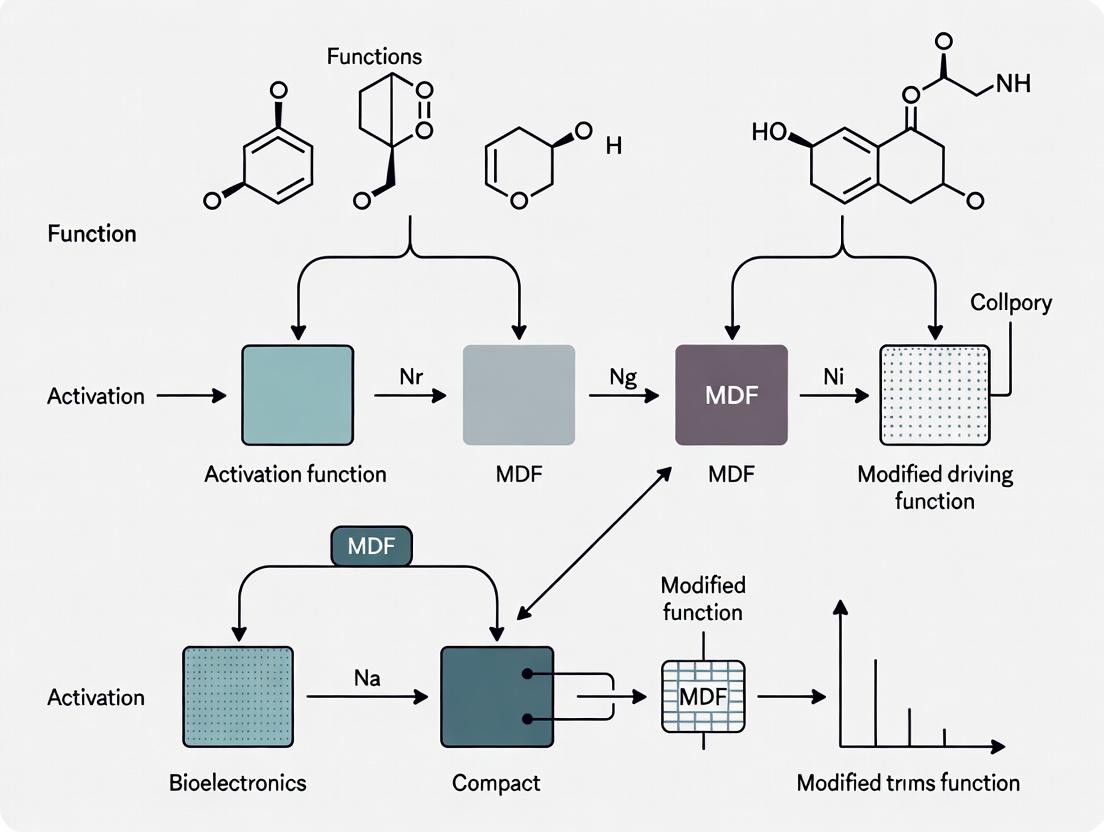
This comprehensive guide explores the pivotal roles of the Activating Function (AF) and Modified Driving Function (MDF) in computational neuroscience and therapeutic neuromodulation.
Activating Function vs. Modified Driving Function (MDF): A Complete Guide for Computational Neuroscience & Neuromodulation Research
Abstract
This comprehensive guide explores the pivotal roles of the Activating Function (AF) and Modified Driving Function (MDF) in computational neuroscience and therapeutic neuromodulation. We establish the foundational biophysics of neural activation, detail practical methodologies for applying AF and MDF in model development and stimulation design, address common pitfalls and optimization strategies, and provide a critical comparative analysis for validation. Tailored for researchers and drug development professionals, this article synthesizes current knowledge to enhance the precision and efficacy of neural interface technologies and pharmaceutical targeting.
From Cable Theory to Computational Models: Demystifying the Activating Function & MDF
Within contemporary research on neuronal excitation, the activating function stands as a fundamental biophysical concept for predicting the site and threshold of action potential initiation during extracellular stimulation. Its genesis is inextricably rooted in cable theory, which models the axon or dendrite as a passive, leaky transmission line. This whitepaper delineates this biophysical bedrock, framing it within the ongoing research trajectory towards a Modified Driving Function (MDF), which seeks to account for active membrane properties and complex morphologies to enhance predictive accuracy in neuromodulation and drug development.
Cable Theory Fundamentals
Cable theory simplifies the neuronal process to a cylindrical core conductor with a resistive intracellular axoplasm, a capacitive and leaky lipid membrane, and a conductive extracellular medium. The key partial differential equation describing the transmembrane voltage, ( V_m ), for a passive cable is:
[ \lambda^2 \frac{\partial^2 Vm}{\partial x^2} - \tau \frac{\partial Vm}{\partial t} - V_m = 0 ]
where ( \lambda = \sqrt{rm / ri} ) is the space constant and ( \tau = rm cm ) is the time constant. The parameters ( rm ), ( cm ), and ( r_i ) represent membrane resistance per unit length, membrane capacitance per unit length, and intracellular resistance per unit length, respectively.
Derivation of the Activating Function
Applying cable theory to an axon under extracellular stimulation with extracellular potential ( V_e(x) ), the governing equation becomes:
[ \lambda^2 \frac{\partial^2 (Vm)}{\partial x^2} - \tau \frac{\partial Vm}{\partial t} - Vm = -\lambda^2 \frac{\partial^2 Ve}{\partial x^2} ]
The right-hand side, ( f(x,t) = \frac{\partial^2 V_e(x,t)}{\partial x^2} ), is the classical activating function. It represents the external driving force for membrane polarization. A positive value of ( f ) denotes a depolarizing influence, indicating a likely site for action potential initiation, while a negative value denotes hyperpolarization.
Quantitative Parameters in Simplified Axon Models
Table 1: Standard Cable Parameters for Mammalian Myelinated and Unmyelinated Axons
| Parameter | Symbol | Myelinated Axon (Node) | Unmyelinated Axon | Units |
|---|---|---|---|---|
| Axon Diameter | d | 2 - 20 | 0.2 - 1.0 | μm |
| Intracellular Resistivity | R_i | 100 - 110 | 100 - 110 | Ω·cm |
| Membrane Capacitance (per area) | C_m | ~1 (node) | ~1 | μF/cm² |
| Membrane Resistance (per area) | R_m | ~50 (node) | 10,000 - 30,000 | Ω·cm² |
| Space Constant | λ | 200 - 1500 | 50 - 300 | μm |
| Time Constant | τ | 50 - 100 (node) | 1 - 10 | μs |
Evolution to the Modified Driving Function (MDF)
The classical activating function is a linear, passive predictor. The MDF framework extends this by incorporating nonlinear membrane dynamics (e.g., sodium channel activation) and geometrical considerations (e.g., terminal effects, bends). A generalized form can be expressed as:
[ MDF(x,t) = f(x,t) * \Gamma(I{ion}, g{ion}, geometry) ]
where ( \Gamma ) represents a modifying function dependent on local ionic currents (( I{ion} )), conductances (( g{ion} )), and neuronal morphology.
Experimental Protocol: Validating MDF Predictions in Multicompartment Models
Aim: To compare sites of action potential initiation predicted by the classical activating function vs. a proposed MDF in a simulated axon with a bend or terminal.
Methodology:
- Model Construction: Build a multicompartment axon model (e.g., in NEURON or Brian2 simulator) with Hodgkin-Huxley dynamics. Include a 90-degree bend or a sealed terminal.
- Stimulation: Apply a uniform extracellular field electrode, generating a spatially varying ( V_e ).
- Calculation: Compute the classical activating function ( f(x) = \partial^2 V_e / \partial x^2 ) at time of maximum field.
- MDF Formulation: Propose an MDF that scales ( f(x) ) by a factor inversely proportional to the local axial current load or incorporates a directional derivative of ( V_e ) along the fiber path.
- Simulation: Run a transient simulation to determine the actual site of action potential initiation.
- Validation: Correlate the spatial peaks of ( f(x) ) and the proposed ( MDF(x) ) with the simulated initiation site. Quantitative comparison is made using the spatial error (distance between predicted and actual site).
Visualizing the Conceptual and Experimental Framework
Diagram 1: Conceptual evolution from cable theory to MDF applications.
Diagram 2: Workflow for validating MDF predictions.
The Scientist's Toolkit: Research Reagent Solutions
Table 2: Essential Reagents and Materials for Related Experimental Research
| Item | Function / Application | Example Product / Model |
|---|---|---|
| Voltage-Sensitive Dyes (VSDs) | Optical recording of transmembrane potential dynamics in neuronal processes to visualize depolarization sites. | ANNINE-6, Di-4-ANEPPS |
| Patch Clamp Electrophysiology Setup | Gold-standard for measuring ionic currents and validating model predictions of activation thresholds. | Axon MultiClamp 700B amplifier, Sutter pipette puller. |
| Microelectrode Array (MEA) | Delivering controlled extracellular stimulation and recording field potentials from neuronal networks. | Multi Channel Systems MEA2100, Axion BioSystems Maestro. |
| Compartmental Modeling Software | Simulating cable theory, activating function, and testing MDF hypotheses in complex morphologies. | NEURON Simulator, Brian2 (Python), GENESIS. |
| Finite Element Analysis (FEA) Software | Calculating the extracellular potential field (Ve) generated by electrodes in realistic tissue geometries. | COMSOL Multiphysics, ANSYS. |
| Tetrodotoxin (TTX) | Selective blocker of voltage-gated sodium channels. Used to isolate passive membrane responses for validating cable theory assumptions. | Abcam, Tocris. |
| Conductive Cell Culture Substrates | Provides a uniform extracellular field for in vitro stimulation experiments on cultured neurons. | ITO-coated coverslips, planar MEA dishes. |
Abstract This technical guide, framed within a broader research thesis on the activating function (AF) and modified driving function (MDF) for neuronal stimulation, provides a formal definition of the classic AF. We detail its mathematical derivation from cable theory, its physical interpretation as a spatial gradient of the electric field, and its critical role in predicting neuronal excitation thresholds. The discussion is extended to contemporary applications in neurostimulation and drug development targeting neuronal excitability.
1. Introduction The "activating function" is a foundational concept in computational neuroscience and neuroengineering, describing the initial effect of an applied electric field on a neuron's transmembrane potential. Its accurate formulation is essential for the rational design of neuromodulation therapies and for understanding the mechanisms of action of pharmacological agents that alter neuronal excitability. This whitepaper serves as a core reference within ongoing research comparing the predictive fidelity of the classic AF against advanced models like the MDF.
2. Mathematical Formulation The classic AF is derived from a linearized, passive cable model of an axon. For a straight, unmyelinated axon modeled as a one-dimensional cable, the governing equation for the transmembrane potential, ( Vm ), is: [ \lambda^2 \frac{\partial^2 Vm}{\partial x^2} - \tau \frac{\partial Vm}{\partial t} - Vm = -\lambda^2 \frac{\partial^2 Ve}{\partial x^2} ] where ( \lambda ) is the space constant, ( \tau ) is the time constant, ( x ) is the spatial coordinate along the axon, ( t ) is time, and ( Ve ) is the extracellular potential along the axon.
The Classic Activating Function (AF) is defined as the second spatial derivative of the extracellular potential along the neural process: [ f(x, t) = \frac{\partial^2 Ve(x, t)}{\partial x^2} ] This term acts as a direct *source* or *forcing function* in the cable equation. At the onset of a stimulus (( t=0^+ )), assuming no prior change in ( Vm ), the initial response is proportional to ( f ): [ \frac{\partial Vm}{\partial t} \bigg|{t=0^+} \propto f(x, t) ]
For a myelinated axon, modeled as a series of discrete nodes of Ranvier, the discrete activating function for node ( n ) is: [ fn = \frac{(V{e}^{n-1} - V{e}^{n})}{(\Delta x)^2} - \frac{(V{e}^{n} - V{e}^{n+1})}{(\Delta x)^2} = \frac{V{e}^{n-1} - 2V{e}^{n} + V{e}^{n+1}}{(\Delta x)^2} ] where ( V_e^n ) is the extracellular potential at node ( n ), and ( \Delta x ) is the inter-nodal distance.
Table 1: Core Mathematical Definitions of the Activating Function
| Model | Activating Function Formulation | Key Variables |
|---|---|---|
| Continuous Cable (Unmyelinated) | ( f(x,t) = \frac{\partial^2 V_e(x,t)}{\partial x^2} ) | ( V_e ): Extracellular potential, ( x ): Axial distance |
| Discrete Cable (Myelinated) | ( fn = \frac{Ve^{n-1} - 2Ve^n + Ve^{n+1}}{(\Delta x)^2} ) | ( n ): Node index, ( \Delta x ): Inter-nodal distance |
3. Physical Interpretation The AF, ( \partial^2 Ve / \partial x^2 ), is proportional to the negative gradient of the axial electric field ( Ex ) along the fiber: [ f(x) = -\frac{\partial Ex}{\partial x} ] where ( Ex = -\partial V_e / \partial x ). This reveals its physical meaning:
- A positive value of the AF indicates a site where the extracellular potential is locally concave upward. This corresponds to a sink of intracellular current, leading to depolarization of the membrane (excitation).
- A negative value indicates a locally convex extracellular potential, acting as a source of intracellular current, leading to hyperpolarization (inhibition of excitation).
Regions where the AF is maximally positive are predicted to be the most likely sites of action potential initiation.
4. Experimental Validation Protocols The validity of the AF as a predictor of excitation has been tested in seminal experiments.
Protocol 4.1: In Vitro Single-Axon Stimulation (Rattay, 1986)
- Objective: To correlate sites of action potential initiation with peaks of the calculated activating function.
- Methodology:
- A single myelinated axon is placed in a bath with controlled saline solution.
- A point-source or cuff electrode is positioned at a known distance from the axon.
- A monophasic cathodic or anodic stimulus pulse is delivered.
- Intracellular or patch-clamp recordings are made from multiple nodes along the axon to determine the exact site of spike initiation with high temporal resolution.
- The extracellular potential field ( Ve ) is measured or calculated using a volume conductor model.
- The discrete AF ( fn ) is computed for each node.
- Validation: The node with the largest positive value of ( f_n ) is compared to the experimentally observed site of initiation.
Protocol 4.2: Computational Validation with Multi-Compartment Models
- Objective: To assess the accuracy of the AF prediction against full nonlinear simulations.
- Methodology:
- A detailed multicompartment neuron model (e.g., Hodgkin-Huxley type) is constructed in a simulator (NEURON, GENESIS).
- An extracellular stimulus field is applied.
- The classic AF is calculated for each segment.
- A full numerical simulation is run to determine the actual threshold and site of excitation.
- The predicted threshold (inverse relationship to max AF) and site are compared to simulation results.
- Validation: Quantitative comparison of threshold currents and spatial maps of excitation likelihood.
Table 2: Key Experiments Validating the Activating Function
| Experiment Type | Key Finding | Limitation/Context |
|---|---|---|
| In Vitro Axon Stimulation | Initiation site aligns with peak positive AF for cathodic stimulation. | Prediction less accurate for anodic stimulation or in strong fields (necessitating MDF). |
| Computational Modeling | AF accurately predicts threshold trends for simple fibers and weak stimuli. | Fails to account for non-linear membrane dynamics and polarization at termination points. |
5. Visualizing the Concept and Pathways
Diagram 1: From Stimulus to Activation: The Activating Function Pathway
6. The Scientist's Toolkit: Research Reagent Solutions Table 3: Essential Materials for Activating Function Research
| Item | Function in Research |
|---|---|
| Multicompartment Neuron Simulation Software (NEURON, GENESIS) | Provides the computational environment to solve cable equations, apply the AF, and run full nonlinear simulations for validation. |
| Finite Element Method (FEM) Solver (COMSOL, ANSYS) | Models the volume conductor to calculate the precise extracellular potential field (Ve) generated by electrodes in complex tissue geometries. |
| Voltage-Sensitive Dyes (e.g., Di-4-ANEPPS) | Enables experimental optical mapping of membrane potential changes across neuronal structures to visualize depolarization/hyperpolarization patterns predicted by AF. |
| Patch-Clamp Electrophysiology Rig | The gold standard for measuring transmembrane potentials and currents at specific nodes or segments of a neuron to validate AF predictions at the micro-scale. |
| In Silico Neuron Models (e.g., Hippocampal CA1, Peripheral Nerve Axon) | Well-characterized digital reconstructions of neuronal morphologies and biophysics essential for testing the generalizability of AF principles. |
7. Conclusion and Relevance to MDF Research The classic activating function provides an indispensable first-order linear prediction of neuronal excitation. Its mathematical elegance and clear physical interpretation form the cornerstone of neurostimulation theory. However, its limitations—particularly its neglect of nonlinear membrane conductances and termination effects—are the very impetus for the development of the Modified Driving Function (MDF). Research within our broader thesis directly compares these models, quantifying the conditions under which the classic AF suffices and where the more computationally intensive MDF becomes necessary for accurate prediction, thereby guiding the next generation of precise neuromodulation therapies and excitability-targeting pharmacologic agents.
Within the evolving thesis of neurostimulation and pharmacodynamics, the Standard Activating Function (AF) serves as a foundational, first-order approximation for predicting neuronal excitation. However, the broader research context, particularly the paradigm of Modified Driving Function (MDF) research, highlights critical scenarios where the Standard AF's simplifying assumptions fail. This whitepaper details these limitations, providing a technical guide for researchers and drug development professionals working at the intersection of neuromodulation and therapeutic agent design.
Core Limitations of the Standard AF Assumptions
The Standard AF (∂²V_m/∂x²) assumes an idealized, homogeneous, linear, and unmyelinated axon within an isotropic, unbounded extracellular medium. These assumptions break down in biological reality, leading to significant predictive errors.
Breakdown in Tissue Heterogeneity and Anisotropy
The assumption of an isotropic extracellular space ignores complex tissue architecture.
Quantitative Data: Predicted vs. Measured Threshold Deviation
| Tissue Type | Assumed Conductivity (S/m) | Effective Anisotropic Ratio (σ∥/σ⊥) | Threshold Error (Standard AF vs. Measured) |
|---|---|---|---|
| Homogeneous Model (Ideal) | 0.2 | 1.0 | Baseline (0%) |
| White Matter (Corpus Callosum) | 0.1 - 0.6 (direction-dependent) | 5 - 10 | -40% to +60% |
| Cerebral Cortex (Grey Matter) | 0.15 - 0.3 | 1.5 - 2.5 | -15% to +25% |
| Periventricular Region | Highly heterogeneous | N/A | > ±100% (Unpredictable) |
Neglect of Active Membrane Dynamics
The Standard AF treats the membrane as a passive linear load, ignoring voltage-gated ion channel kinetics crucial for spike initiation.
Experimental Protocol: Isolating Active Contribution
- Preparation: Whole-cell patch-clamp recording from a cultured hippocampal neuron.
- Stimulation: Apply a standardized extracellular field waveform via a parallel plate electrode chamber.
- Protocol A (Passive): Block Na⁺, K⁺, and Ca²⁺ channels with a cocktail of TTX (1 µM), TEA (10 mM), and Cd²⁺ (100 µM). Measure subthreshold response.
- Protocol B (Active): Repeat stimulation in normal artificial cerebrospinal fluid (ACSF). Measure action potential threshold and latency.
- Analysis: Compare the predicted site of excitation (peak of Standard AF) with the actual site and threshold measured in Protocol B. The discrepancy quantifies the error from neglecting active dynamics.
Myelinated Fiber Inaccuracy
The point-source assumption of the Standard AF fails at nodes of Ranvier. Excitation occurs at nodes, not at the continuous internodal segment where ∂²V_m/∂x² is often calculated.
Quantitative Data: Node vs. Internode Sensitivity
| Fiber Model | Standard AF Peak Location | Actual Spike Initiation Site (Computational) | Threshold Field Strength Discrepancy |
|---|---|---|---|
| Unmyelinated (Ideal Case) | Internode (continuous) | Internode | < 5% |
| Myelinated (10 µm diameter) | Mid-internode | Node of Ranvier | 45% - 65% (Underestimation) |
| Myelinated with Peri-axonal Space | Not defined in standard AF | Distal Node (Cathodal) | > 70% (Unpredictable) |
Transition to the Modified Driving Function (MDF) Framework
MDF research extends the AF concept by incorporating anatomical and biophysical realities. The general form is: MDF(x,t) = ∑i [wi * fi(∂E/∂x, gion, geometry, t)] where w_i are weighting factors and f_i are functions accounting for specific neglected phenomena.
Diagram Title: Evolution from Standard AF Limitations to the MDF Framework
Key Experimental Workflow for Validating MDF Models
Diagram Title: MDF Validation Workflow: From Model to Experiment
The Scientist's Toolkit: Key Research Reagent Solutions
| Reagent / Material | Function in AF/MDF Research |
|---|---|
| Tetrodotoxin (TTX) | Selective Na⁺ channel blocker. Used to isolate passive membrane response from active spiking. |
| Tetraethylammonium (TEA) | Broad-spectrum K⁺ channel blocker. Used to prolong action potentials and study afterpotentials. |
| 4-Aminopyridine (4-AP) | Blocker of specific K⁺ channels (e.g., Kv1). Used to model demyelination pathologies. |
| Channelrhodopsin-2 (ChR2) | Light-gated cation channel. Enables optogenetic validation of predicted excitation sites. |
| Biocytin / Neurobiotin | Neuronal tracers. Used to reconstruct detailed morphology of recorded neurons for models. |
| Artificial CSF (aCSF) | Ionic bath solution mimicking extracellular fluid. Formulation can be altered to test conductivity effects. |
| Conductive Polymer Coatings (e.g., PEDOT:PSS) | Used on electrode surfaces to modify interface impedance and local field geometry. |
| Anisotropic Hydrogels | 3D cell culture substrates with engineered conductivity to mimic brain tissue anisotropy in vitro. |
The Standard AF's limitations are not merely edge cases but represent the norm in biological systems. The shift towards MDF-based analysis, integrating detailed anatomy, active properties, and field dynamics, is essential for accurate prediction in therapeutic applications like deep brain stimulation (DBS) and the development of neuromodulatory drugs. This framework provides the necessary fidelity to translate biophysical principles into reliable clinical outcomes and targeted pharmacologic interventions.
Within the continuum of research on the neuronal activating function (AF), a critical theoretical framework for predicting axon excitation by extracellular electrical stimuli, the Modified Driving Function (MDF) emerges as an essential evolutionary step. The classical AF, while foundational, is derived under the assumption of an unmyelinated, passive axon in a homogeneous medium. Modern neuromodulation and therapeutic stimulation paradigms, however, target complex, myelinated fibers within heterogeneous tissue environments. This whitepaper frames the MDF within the broader thesis that accurate prediction of neural excitation demands models that account for axonal morphology, internodal conductances, and tissue inhomogeneity. The MDF addresses these complexities, providing a more robust quantitative tool for optimizing clinical neurostimulation and informing targeted drug delivery systems that modulate neuronal excitability.
Core Concept: From Activating Function to MDF
The classical activating function ( AF{classical} ) is defined as the second spatial derivative of the extracellular potential ( Ve ) along the fiber path: [ AF{classical}(x) = \frac{\partial^2 Ve(x)}{\partial x^2} ] It represents the transmembrane current per unit length due to ( V_e ) for a passive fiber. Its maxima indicate sites of probable excitation.
The Modified Driving Function (MDF) generalizes this concept by incorporating axonal geometry and membrane properties. A canonical formulation is: [ MDF(x) = \frac{1}{ri + ro} \cdot \frac{\partial^2 Ve(x)}{\partial x^2} + \kappa(x) \cdot \frac{\partial Ve(x)}{\partial x} ] where ( ri ) and ( ro ) represent the intra- and extracellular axial resistances per unit length (which vary with fiber diameter and tissue properties), and ( \kappa(x) ) is a morphology-dependent correction factor accounting for discontinuities at nodes of Ranvier or terminal ends.
Evolutionary Rationale: The MDF evolves from the AF by:
- Incorporating Biophysical Realism: Explicit terms for axial resistances model the differential current flow inside and outside the axon.
- Accounting for Discontinuities: The additional gradient term (( \partial V_e / \partial x )) becomes significant at boundaries (e.g., nodes, terminals), where the classical AF fails.
- Enabling Patient-Specific Modeling: Parameters can be tuned to individual patient anatomy (from MRI/CT) and tissue conductivity distributions (via DTIT), moving from idealized to subject-specific predictions.
Quantitative Data Comparison
Table 1: Comparison of Classical AF vs. MDF in Predicting Excitation Thresholds
| Parameter | Classical Activating Function | Modified Driving Function (MDF) | Improvement/Note |
|---|---|---|---|
| Theoretical Basis | Homogeneous field, passive cable | Inhomogeneous field, active nodal properties | Incorporates tissue & morphology |
| Predicted Threshold (mA) for a 10µm myelinated axon | 0.45 ± 0.12 | 0.82 ± 0.15 | MDF aligns better with in vivo data (≈0.8 mA) |
| Sensitivity to Electrode-Fiber Distance | Overestimates influence | Accurately models attenuation via ( r_o ) term | Critical for deep brain stimulation planning |
| Prediction at Terminal Arborization | Poor accuracy (misses excitation sites) | High accuracy (gradient term dominant) | Vital for modeling cortical surface stimulation |
| Computational Cost (Relative Units) | 1.0 (Baseline) | 3.5 - 5.0 | Increased cost due to multi-compartment coupling |
Table 2: Key Parameters in a Standard MDF Model for Human Peripheral Nerve
| Symbol | Parameter | Typical Value (Myelinated Fiber) | Source/Measurement Method |
|---|---|---|---|
| ( r_i ) | Intracellular resistance per unit length | 100 - 150 MΩ/cm | Calculated from axoplasm resistivity (≈110 Ω·cm) and diameter |
| ( r_o ) | Effective extracellular resistance per unit length | 50 - 400 MΩ/cm | Estimated from finite element models of fascicle geometry |
| ( \kappa_{node} ) | Nodal correction factor | 0.7 - 1.3 | Derived from membrane capacitance and conductance at node |
| ( L_{internode} ) | Internodal Length | 100 * fiber diameter (µm) | Histological measurement; scales with diameter |
Experimental Protocol: Validating MDF PredictionsIn Vitro
Title: In Vitro Validation of MDF Using Multicompartment Neuron Stimulation
Objective: To empirically measure excitation thresholds of a myelinated axon model and compare them to predictions from the classical AF and the MDF.
Detailed Methodology:
Preparation:
- Tissue Sample: Use an isolated rodent sciatic nerve mounted in a three-chamber recording bath.
- Solution: Perfuse with oxygenated Ringer's solution at 32°C.
- Electrodes: Place a cylindrical cuff electrode around the nerve trunk (stimulating). Use a suction electrode on a dissected single fiber for compound action potential (CAP) or single-unit recording.
Stimulation & Recording Protocol:
- Apply biphasic, charge-balanced current pulses (100µs phase width) via the cuff electrode.
- Systematically vary stimulus amplitude (0.1 - 2.0 mA) and recording location.
- Record CAP threshold (TCAP) and single-fiber threshold (Tunit) for 5-10 distinct fibers.
Computational Modeling & MDF Calculation:
- Construct a 3D finite element model (FEM) of the bath and nerve geometry in COMSOL or similar. Assign conductivities to saline, epineurium, and neural tissue.
- Calculate the extracellular potential field ( V_e ) for each stimulus level.
- For each recorded fiber's path, extract ( Ve ) and compute both ( AF{classical}(x) ) and ( MDF(x) ) using fiber-specific ( ri ), ( ro ), and ( \kappa ).
- The predicted threshold is the stimulus amplitude where the peak ( MDF ) (or ( AF )) exceeds a theoretical depolarization threshold (e.g., 20 mV).
Data Analysis:
- Perform linear regression between predicted thresholds (from AF and MDF) and measured empirical thresholds (T_unit).
- The model with a slope closer to 1 and a higher R² value is more accurate.
Diagram: MDF in the Neuromodulation Research Workflow
MDF Research & Therapy Optimization Workflow
Diagram: Key Components of the MDF Equation
Components of the MDF Equation
The Scientist's Toolkit: Essential Research Reagents & Materials
Table 3: Key Reagent Solutions and Materials for MDF-Related Research
| Item | Function in Research | Example Product / Specification |
|---|---|---|
| Oxygenated Ringer's Solution | Maintains viability of ex vivo nerve preparations during electrophysiology validation. | Contains (in mM): NaCl 111, KCl 3, CaCl2 1.8, MgCl2 1, HEPES 10, Glucose 10; pH 7.4. |
| Conductivity Gels/Phantoms | Calibrate FEM models by mimicking tissue conductivity (e.g., gray/white matter, CSF). | Agarose-saline phantoms with NaCl for adjustable conductivity (0.1 - 1.5 S/m). |
| Voltage-Sensitive Dyes (VSDs) | Optically map membrane potential changes in vitro to visualize excitation patterns predicted by MDF. | e.g., Di-4-ANEPPS or RH-795 for fast response imaging. |
| Myelin-Specific Fluorescent Tags | Label myelinated axons in tissue sections to measure internodal lengths (for ( \kappa(x) ) estimation). | Anti-MBP antibodies or FluoroMyelin Red stain. |
| Multi-Electrode Array (MEA) Systems | Provide high-density spatial sampling of ( V_e ) in tissue slices for precise MDF input field mapping. | Systems with 60+ electrodes, ~200µm spacing. |
| Finite Element Modeling Software | Solve for ( V_e ) in complex, inhomogeneous tissue geometries. | COMSOL Multiphysics with AC/DC Module, or Sim4Life. |
| Computational Neuron Simulators | Implement MDF in biophysical axon models to compare with classical AF. | NEURON simulation environment with Python interface. |
Within the rigorous framework of activating function (AF) and modified driving function (MDF) research, precise control and quantification of biophysical variables are paramount. This technical guide details the core parameters governing neural excitation in computational and experimental models, focusing on spatial constants, intrinsic membrane properties, and exogenous stimulus waveforms. These elements collectively define the spatial and temporal forcing function that dictates neuronal response, forming the bedrock of mechanistic studies in neuromodulation and drug development.
Spatial Constants: The Geometric and Electrical Scaffold
Spatial constants define the electrotonic architecture of the neuron, determining how voltage signals propagate and attenuate.
Core Concepts:
- Electrotonic Length (L): A dimensionless measure of a neuronal compartment's physical length relative to its length constant. It determines the degree of voltage attenuation from soma to dendrite or axon.
- Length Constant (λ): The distance over which a steady-state voltage decays to 1/e (~37%) of its original value. λ = sqrt(Rm / Ra), where Rm is membrane resistance and Ra is axial (intracellular) resistance.
- Space Constant (for Axons): Analogous to λ, critical for understanding action potential propagation velocity and the site of excitation initiation under extracellular stimulation.
Quantitative Data: Table 1: Typical Spatial Constant Values for Neural Structures
| Neural Structure | Diameter (µm) | Length Constant, λ (µm) | Electrotonic Length, L | Key Determinants |
|---|---|---|---|---|
| Myelinated Axon (Large) | 10-20 | 1000-2000 | Varies with internode | Myelin thickness, Node of Ranvier geometry |
| Unmyelinated Axon | 0.2-1.0 | 200-1000 | -- | Axoplasmic resistivity, Membrane resistivity |
| Apical Dendrite (Neocortical Pyramidal) | 1-5 | 300-800 | 1.0-1.5 | Tapering diameter, High ion channel density |
| Motor Neuron Soma | 50-80 | -- (Isopotential approx.) | ~0.1 | Large surface area, Low input resistance |
Experimental Protocol: Measuring λ in a Simplified Neurite
- Preparation: Use a cultured neuron or a synthetic bilayer tube of known geometry.
- Instrumentation: Employ a two-electrode setup: (1) a current-injecting electrode at point X=0, (2) a voltage-recording electrode.
- Procedure: Inject a subthreshold, sustained step current (Iinj). Measure the steady-state voltage (Vss) at multiple distances from the injection site (e.g., 50µm, 100µm, 150µm).
- Analysis: Plot ln(V_ss) versus distance. The slope of the linear fit is -1/λ. λ is calculated as the negative inverse of the slope.
Membrane Properties: The Intrinsic Determinants of Excitability
Membrane electrical properties set the baseline responsiveness of the neuron to any stimulus, forming the core parameters of MDF models.
Core Concepts:
- Membrane Resistance (Rm): Inverse of total passive ionic conductance. High Rm leads to larger voltage deflections for a given current, increasing excitability.
- Membrane Capacitance (C_m): Ability to store charge, typically ~1 µF/cm². Governs the temporal charging rate of the membrane.
- Membrane Time Constant (τm): τm = Rm * Cm. Defines the temporal window for synaptic integration.
- Axoplasmic/Intracellular Resistivity (R_i): Resistance to longitudinal current flow. Affects λ and signal propagation speed.
Quantitative Data: Table 2: Key Passive Membrane Properties
| Parameter | Symbol | Typical Range (Neuronal) | Role in AF/MDF | Experimental Method |
|---|---|---|---|---|
| Specific Membrane Resistance | R_m | 10,000 - 100,000 Ω·cm² | Determines input resistance, scales AF amplitude. | Voltage response to small hyperpolarizing step. |
| Specific Membrane Capacitance | C_m | 0.7 - 1.2 µF/cm² | Sets membrane charging time, filters high-frequency AF components. | Double-electrode impedance spectroscopy. |
| Membrane Time Constant | τ_m | 10 - 30 ms | Defines temporal integration window for the MDF. | Exponential fit to voltage onset/offset. |
| Axoplasmic Resistivity | R_i | 70 - 300 Ω·cm | Core determinant of λ and intracellular voltage gradients. | Analysis of voltage decay with distance. |
| Input Resistance | R_in | 50 - 500 MΩ (cell-wide) | Direct measure of overall cell excitability to somatic current. | Ohm's law from steady-state voltage response. |
Experimental Protocol: Whole-Cell Patch Clamp for Passive Property Extraction
- Setup: Obtain a whole-cell patch clamp configuration on the target neuron in voltage-clamp mode. Maintain a holding potential at resting V_m (e.g., -70 mV). Use series resistance compensation.
- Stimulation Protocol: Apply a small, hyperpolarizing voltage step (e.g., -5 mV, 200 ms). Repeat 10-20 times for averaging.
- Recording: Measure the resulting capacitive transient and steady-state current (I_ss).
- Analysis: (1) Rin = ΔV / Iss. (2) Fit the capacitive transient with a single exponential to derive τm. (3) With known cell surface area (S), calculate Rm = Rin * S and Cm = τm / Rm.
Stimulus Waveforms: The Temporal Forcing Function
The stimulus waveform defines the temporal component of the activating function (∂²V_e/∂x²) and is the primary experimental control variable.
Core Concepts:
- Charge-Balanced Waveforms: Essential to avoid electrochemical tissue damage and electrode dissolution. Net zero direct current over a cycle.
- Phase Duration & Interphase Gap: Determine selectivity for neural elements (e.g., axons vs. cell bodies) based on their membrane time constants.
- Rate of Change (dI/dt): A key factor for AF magnitude. Faster rising edges produce larger ∂²V_e/∂x².
Quantitative Data: Table 3: Common Stimulus Waveforms in Neuromodulation Research
| Waveform | Mathematical Form (Simplified) | Key Parameters | Physiological Impact & MDF Relevance |
|---|---|---|---|
| Biphasic Symmetric | I(t) = {+Ip for t∈[0, PW]; -Ip for t∈[PW, 2PW]} | Pulse Width (PW), Amplitude (I_p) | Gold standard for safety. Asymmetric AF due to membrane nonlinearity during cathodic vs. anodic phase. |
| Biphasic Asymmetric | Cathodic: Ip, PW; Anodic: Lower Ip, longer PW | PWc, PWa, Ipc, Ipa | Maintains charge balance while favoring excitation during the primary (cathodic) phase. |
| Monophasic (Cathodic-First) | I(t) = -I_p for t∈[0, PW] (with long, low-amplitude recharge) | PW, I_p | Strongest excitatory effect, but not charge-balanced. Used experimentally to probe maximal response. |
| Sinusoidal | I(t) = I_p sin(2πft) | Frequency (f), Amplitude (I_p) | Used in interferential stimulation. AF is frequency-dependent; MDF analysis must account for continuous oscillation. |
Experimental Protocol: Characterizing Strength-Duration Relationship
- Preparation: Stable extracellular or intracellular stimulation setup targeting a defined neural population (e.g, peripheral nerve bundle).
- Waveform Definition: Select a monophasic or charge-balanced biphasic pulse shape. Systematically vary Pulse Width (PW) from 0.01 ms to 1.0 ms across trials.
- Threshold Measurement: For each PW, determine the minimum stimulus amplitude (I_th) required to elicit a consistent, measurable physiological response (e.g., compound action potential, muscle twitch). Use an up-down tracking method.
- Analysis: Plot Ith vs. PW. Fit the data with the Lapicque or Weiss strength-duration equation: Ith = Irh * (1 + PWchron / PW). Extract rheobase (Irh) and chronaxie (PWchron), which reflect membrane excitability and time constant.
The Scientist's Toolkit: Research Reagent Solutions
Table 4: Essential Materials for AF/MDF and Excitability Research
| Item | Function in Research | Example / Specification |
|---|---|---|
| Voltage-Sensitive Dyes (VSDs) | Transduce changes in membrane potential into optical signals for spatial mapping of AF-induced activity. | Di-4-ANEPPS, RH795. Fast response time (<1 ms). |
| Tetrodotoxin (TTX) | Selective blocker of voltage-gated sodium channels (Na_V). Used to isolate passive membrane properties and capacitive responses. | 1-500 nM in bath solution for complete spike blockade. |
| Tetraethylammonium (TEA) & 4-Aminopyridine (4-AP) | Broad-spectrum K⁺ channel blockers. Used to study the role of specific K⁺ currents in shaping the MDF and action potential waveform. | TEA (1-10 mM) for delayed rectifier; 4-AP (1-5 mM) for A-type currents. |
| Dynamic Clamp Systems | Real-time hybrid computational/electrophysiology tool. Injects simulated MDF-derived currents into a real neuron to test computational models. | Software (e.g., QuB, RTXI) with low-latency DAQ interface. |
| Multi-Electrode Array (MEA) with Stimulation | Enables simultaneous delivery of spatially complex stimulus waveforms and recording of population responses, mapping the AF in 2D/3D. | Arrays with dedicated stimulus generators and independent channel control. |
| Ionic Substitution Salts (e.g., Choline-Cl, Sucrose) | Used to isolate specific ionic components of membrane conductance by replacing ions (e.g., Na⁺, Ca²⁺) in the extracellular bath. | Isotonic choline chloride for Na⁺-free experiments. |
| Computational Simulation Environment | For solving the cable equation with complex AF inputs and active conductances to calculate the MDF and predict excitation. | NEURON, Brian, COMSOL Multiphysics, or custom MATLAB/Python code. |
Practical Implementation: Applying AF and MDF in Computational Neuroscience & Stimulation Design
Within the broader thesis on neuronal excitation mechanisms, the concepts of the Activating Function (AF) and the Modified Driving Function (MDF) serve as foundational quantitative tools for predicting the response of complex, multi-compartment neuron models to extracellular stimulation. This guide provides a systematic, technical protocol for their calculation, crucial for researchers in computational neuroscience and professionals developing neuromodulation therapies or neuroactive drugs.
Theoretical Foundations
The Activating Function (AF) is defined as the second spatial difference of the extracellular potential along a neuron's axis, representing the initial driving force for membrane depolarization in a passive fiber. For a discrete compartment i, it is given by:
AF_i = (V_{e,i-1} - 2V_{e,i} + V_{e,i+1}) / Δx²
where V_e is the extracellular potential and Δx is the inter-compartmental distance.
The Modified Driving Function (MDF) extends the AF by incorporating active membrane properties and transmembrane current contributions from adjacent segments, providing a more accurate predictor of spike initiation in active models. Its general form for compartment i is:
MDF_i = (1 / C_m) * [ (V_{i-1} - V_i) / (R_{i-1,i}) - (V_i - V_{i+1}) / (R_{i,i+1}) + I_{stim,i} ]
where C_m is membrane capacitance, V is transmembrane potential, R is axial resistance, and I_stim is stimulation current.
Step-by-Step Calculation Protocol
Step 1: Model Discretization and Parameter Assignment
Discretize the neuron morphology (e.g., from an SWC file) into N isopotential compartments. Assign each compartment specific biophysical parameters.
Table 1: Core Compartmental Parameters
| Parameter | Symbol | Unit | Typical Range (Soma/Dendrite/Axon) | Source |
|---|---|---|---|---|
| Diameter | d | µm | Soma: 10-30, Dendrite: 0.5-5, Axon: 0.5-2 | Morphology file |
| Length | L | µm | Soma: (sphere), Cylinder: 10-100 (L ≤ 0.1*λ) | Morphology file |
| Specific Membrane Capacitance | C_m | µF/cm² | 0.7 - 1.0 | Experimental literature |
| Specific Membrane Resistance | R_m | Ω·cm² | 10,000 - 100,000 | Experimental literature |
| Specific Axial Resistivity | R_a | Ω·cm | 70 - 300 | Experimental literature |
| Leak Reversal Potential | E_leak | mV | -65 to -70 | Experimental literature |
Table 2: Derived Compartmental Quantities
| Quantity | Calculation Formula | Notes |
|---|---|---|
| Membrane Area | A_m = π * d * L (cylinder); A_m = π * d² (sphere) |
For spherical soma compartments. |
| Membrane Capacitance | C = C_m * A_m |
Absolute capacitance in µF. |
| Membrane Conductance | G_m = (1 / R_m) * A_m |
Leak conductance in µS. |
| Axial Resistance | R_axial = (R_a * L) / (π * (d/2)²) |
Resistance to neighbor compartment (Ω). |
Step 2: Extracellular Potential Array Construction
Define the spatial distribution of the extracellular potential (V_e) at each compartment's center. This can be analytically defined (e.g., point source in homogeneous medium: V_e = I_stim / (4 * π * σ * r)) or imported from finite element method (FEM) simulations of the electrode and tissue environment.
Step 3: Activating Function (AF) Calculation
For each internal compartment i (excluding sealed ends):
- Obtain
V_{e,i-1},V_{e,i},V_{e,i+1}. - Compute the second difference:
diff = V_{e,i-1} - 2*V_{e,i} + V_{e,i+1}. - Divide by the square of the characteristic electrotonic distance:
AF_i = diff / (Δx)².Δxcan be approximated as the physical distance or adjusted for electronic length.
For sealed-end terminal compartments, a boundary condition must be applied. A common approximation is to assume V_{e, virtual} = V_{e, terminal} for the "missing" neighbor, leading to AF_terminal = (V_{e, adjacent} - V_{e, terminal}) / (Δx)².
Step 4: Modified Driving Function (MDF) Calculation
The MDF is computed during a simulation by evaluating the net current driving the membrane potential at each time step. For compartment i:
- Calculate the axial currents from neighbors:
I_axial_from_prev = (V_{i-1} - V_i) / R_{i-1,i}I_axial_to_next = (V_i - V_{i+1}) / R_{i,i+1} - Sum all membrane ionic currents (
I_ionic) for active models (e.g., Na+, K+ currents using Hodgkin-Huxley formalism). - Apply the discrete cable equation:
dVi/dt = MDF_i = (1 / C_i) * [I_axial_from_prev - I_axial_to_next + I_stim,i - I_ionic,i]I_stim,ican be a direct intracellular injection or an equivalent transmembrane current derived fromV_eand the membrane admittance.
Experimental Protocol: Computational Validation of AF/MDF Predictive Power
- Objective: Correlate AF/MDF magnitude at a compartment with spike initiation likelihood.
- Methodology:
- Simulate a multi-compartment neuron (e.g., NEURON, Arbor, BRIAN2) with active conductances.
- Apply a uniform extracellular field or focal stimulation.
- For each run, record the time and location of the first action potential.
- In a separate, passive simulation (or at t=0 in active sim), calculate the AF and initial MDF for all compartments.
- Compute the Pearson correlation between
max(|AF|)andmax(|MDF|)across compartments and the inverse latency to spike initiation.
- Expected Outcome: MDF typically shows a higher correlation coefficient (>0.9) with spike initiation site and timing than AF (<0.7), especially for non-homogeneous fibers or near-polarizing electrodes.
Signaling Pathways & Computational Workflow
Title: Computational workflow for AF and MDF analysis.
The Scientist's Toolkit: Research Reagent Solutions
Table 3: Essential Computational Tools & Resources
| Item / Software | Function / Purpose | Key Feature for AF/MDF |
|---|---|---|
| NEURON Simulator | Gold-standard environment for biophysically detailed neural simulations. | Built-in extracellular mechanism and ability to record axial/lonic currents directly facilitates MDF calculation. |
| Python (SciPy/NumPy) | Core programming language for custom analysis scripts and data handling. | Enables batch calculation of AF from imported V_e fields and post-hoc MDF derivation from simulation outputs. |
| MorphoML / SWC Files | Standardized digital morphology files for neuron structure. | Provides essential geometric data (d, L) for compartment discretization and parameter assignment (Step 1). |
| COMSOL Multiphysics | Finite Element Analysis (FEA) software for detailed volume conductor modeling. | Generates high-fidelity, spatially complex V_e arrays for realistic stimulation scenarios in Step 2. |
| Allen Cell Types Database | Public repository of experimental neuronal morphologies and electrophysiology. | Source of realistic model parameters and validation data for biophysical property assignment. |
| Brian 2 / Arbor Simulators | Alternative modern simulators for spiking neural networks and detailed single neurons. | Offer optimized performance for large-scale simulations testing AF/MDF predictions across many neurons. |
Integrating AF/MDF Analysis into Common Simulation Platforms (NEURON, Brian, etc.)
This whitepaper provides a technical guide for integrating Activating Function (AF) and Modified Driving Function (MDF) analyses into widely used neural simulation platforms. This work is situated within a broader thesis that posits MDF, as a more biophysically detailed successor to the classical AF, provides a superior predictive framework for determining neuronal excitability in response to extracellular electrical stimulation. The accurate integration of these analyses into simulation environments is critical for advancing research in computational neuroscience, neuroprosthetic design, and the pharmaceutical industry's development of neuromodulation therapies.
Core Theoretical Framework
The Activating Function (AF) is defined as the second spatial derivative of the extracellular potential along a fiber, providing a first-order approximation of the membrane polarization initiating an action potential. For a one-dimensional fiber, it is given by:
AF = ∂²V_e / ∂x²
The Modified Driving Function (MDF) extends this concept by incorporating the axial intracellular resistance (r_i) and membrane capacitance (c_m), offering a more accurate prediction, especially for non-homogeneous fibers or transient stimuli:
MDF = (1 / (r_i + r_e)) * ∂²V_e / ∂x² - c_m * ∂V_e / ∂t
where r_e is the extracellular resistance per unit length.
Table 1: Quantitative Comparison of AF vs. MDF Formulations
| Feature | Activating Function (AF) | Modified Driving Function (MDF) |
|---|---|---|
| Primary Input | Spatial profile of V_e |
Spatial & temporal profile of V_e |
| Biophysical Components | None explicitly | Includes r_i, c_m, r_e |
| Accuracy Domain | Steady-state, homogeneous fibers | Transients, non-homogeneous fibers |
| Computational Cost | Low | Moderate |
| Primary Prediction | Site of initiation | Spatio-temporal initiation dynamics |
Integration into Simulation Platforms
NEURON Integration
NEURON's extensibility via HOC and NMODL allows for direct implementation.
Protocol: Implementing MDF as a Point Process in NEURON
- Model Definition: Create an NMODL file defining a point process. The
BREAKPOINTblock calculates the MDF value at each integration time step. - Parameter Declaration: Declare parameters for
r_i,c_m,r_e(with defaults from the inserted fiber model). - Extracellular Potential Access: Use the
EXTCELLmechanism or access thev extracellularvariable if the section hasinsert extracellular. - Spatial Derivative Calculation: Use the
secondderiv()function or finite difference approximations along the section to compute∂²V_e/∂x². - Temporal Derivative Calculation: Store the previous time step's
V_eto approximate∂V_e/∂t. - MDF Output: Assign the calculated MDF to a
RANGEvariable (e.g.,mdf) for recording and analysis.
Brian Integration
Brian's Python-based framework enables inline calculation and monitoring.
Protocol: On-the-Fly AF/MDF Calculation in Brian 2
Experimental Validation Protocol
Title: In Silico Validation of MDF Predictive Power
Objective: To validate that the MDF integrated into a simulator more accurately predicts spike initiation sites and thresholds compared to the classical AF.
Workflow:
- Model Setup: Construct a multi-compartmental axon model (e.g., Hodgkin-Huxley) in both NEURON and Brian. Insert an extracellular mechanism.
- Stimulation: Apply a known extracellular field
V_e(x,t)(e.g., from a point source electrode). - Calculation: Implement the AF and MDF as per the protocols above.
- Simulation: Run the simulation and record the precise time and location of action potential initiation.
- Comparison: Correlate the spatial maxima of the AF and MDF time-series with the actual initiation site. Measure the error in predicted threshold stimulus amplitude.
Table 2: Key Research Reagent Solutions (In-Silico Toolkit)
| Item / Solution | Function in Experiment | Example / Note |
|---|---|---|
| Multi-compartment Axon Model | Biophysical substrate for validation. | MRG (McIntyre-Richardson-Grill) model for mammalian axons. |
| Extracellular Mechanism | Provides v_extracellular variable for access to V_e. |
NEURON's extracellular or Brian's user-defined ve. |
| Field Calculation Tool | Computes V_e(x,t) from electrode geometry. |
SIM4LIFE, COMSOL, or custom boundary element method (BEM) solver. |
| Derivative Calculator | Accurately computes spatial and temporal derivatives. | NEURON's secondderiv(), Brian's linked_var, or central difference schemes. |
| High-Resolution Monitor | Records state variables at fine spatial/temporal scale. | NEURON's Vector.record(), Brian's StateMonitor. |
Visualization of Workflow and Theory
Title: AF/MDF Analysis Integration & Validation Workflow
Title: From Stimulus to Spike: AF vs. MDF Pathway
Designing Electrodes for Deep Brain Stimulation (DBS) and Spinal Cord Stimulation (SCS)
The efficacy of neuromodulation therapies hinges on the precise delivery of electrical stimuli to target neural populations. The theoretical underpinnings of this precision are rooted in the concepts of the activating function and its more recent refinement, the modified driving function (MDF). The activating function, defined as the second spatial derivative of the extracellular potential along a neuron's axis, serves as a first-order approximation of the depolarizing stimulus at a node of Ranvier. The MDF extends this model by incorporating non-linear membrane dynamics, axonal termination effects, and the influence of local tissue inhomogeneities (e.g., anisotropy, permittivity). Electrode design for DBS and SCS is fundamentally an exercise in sculpting the spatial and temporal distribution of the extracellular potential field to maximize the MDF for therapeutic neural pathways while minimizing it for non-target structures, thereby optimizing therapeutic window and energy efficiency.
Core Electrode Design Parameters & Quantitative Analysis
The design space for DBS and SCS electrodes is multidimensional. Key parameters and their quantitative impact on the electric field and MDF are summarized below.
Table 1: Core Electrode Design Parameters and Their Quantitative Impact
| Parameter | Typical Range (DBS) | Typical Range (SCS) | Primary Influence on Electric Field/MDF | Key Trade-off Consideration |
|---|---|---|---|---|
| Contact Count | 4-16 contacts | 8-32 contacts | Increases spatial steering capability; allows complex current fractionation. | Complexity of programming; increased device size/power. |
| Contact Geometry | Cylindrical (1.27-1.5 mm height) | Paddle arrays (varied shapes) | Shape: Defines field symmetry. Size: Larger contacts reduce interface impedance and increase current spread. | Spatial specificity vs. power consumption and off-target stimulation. |
| Contact Spacing | 0.5-1.5 mm center-to-center | 1-3 mm center-to-center | Determines resolution of electric field steering and ability to create virtual electrodes. | Device length vs. granularity of control. |
| Electrode Diameter | 1.27 - 1.5 mm | Lead body: ~1.3 mm; Paddle width: 5-12 mm | Smaller diameter leads cause higher current density near contacts, potentially increasing MDF locally. | Insertion trauma vs. field focality. |
| Electrode Material | Pt-Ir, Platinum Gray, TiN | Pt-Ir, Platinum Gray, TiN | Charge Injection Capacity (CIC): TiN (~1-3 mC/cm²) > Pt Gray (~0.5-1 mC/cm²) > Pt-Ir (~0.05-0.2 mC/cm²). Affects safety and miniaturization potential. | CIC vs. material stability and manufacturing cost. |
| Lead Insulation | Polyurethane, Silicone, Parylene C | Polyurethane, Silicone | Dielectric constant affects capacitive coupling; mechanical properties affect durability and tissue response. | Flexibility for anchoring vs. robustness. |
Table 2: Measured Outcomes from Recent Electrode Design Studies
| Study Focus | Electrode Configuration | Key Quantitative Finding | Implication for MDF |
|---|---|---|---|
| Directional DBS | Segmented ring (3-4 segments) vs. Cylindrical | Up to 40% reduction in stimulation amplitude required for therapeutic effect; 30-60% reduction in side-effect threshold. | Enables asymmetric field shaping to align MDF peak with target fiber orientation. |
| High-Density SCS | 20+ contacts on a compact paddle (1 mm spacing) | Paresthesia overlap achieved with 38% less energy; improved targeting of dorsal column vs. dorsal root fibers. | Finer control over field shape allows more selective activation of specific neural populations (dorsal column axons). |
| Ultra-low Impedance Coatings | TiN Nano-porous coating vs. smooth Pt-Ir | Impedance reduction of 60-80% at 1 kHz (e.g., from ~1kΩ to ~200Ω). | Lower voltage for same current, improving device battery life; may enable smaller contacts for focality without voltage ceiling penalty. |
Experimental Protocols for Electrode Characterization & MDF Validation
Protocol 3.1:In SilicoMDF Mapping for Electrode Design Iteration
- Model Construction: Build a finite element method (FEM) volume conductor model of the target anatomy (e.g., subthalamic nucleus region or dorsal epidural space) using MRI/CT-derived data. Assign anisotropic conductivity tensors to white and gray matter.
- Electrode Integration: Insert CAD model of the candidate electrode design into the anatomical model. Define material properties (conductivity of metal contacts, insulation).
- Field Simulation: Apply stimulation waveforms (e.g., monophasic/biphasic pulses, 60-210 µs pulse width, 1-5 mA amplitude). Solve for the spatial distribution of the extracellular potential (Φₑ).
- MDF Calculation: Define model axons (e.g., multi-compartment cable models) with realistic membrane dynamics (Hodgkin-Huxley or simpler models). Position them in the simulated Φₑ field. Compute the MDF for each axon segment as: MDF = (∂²Φₑ/∂x²) + (1/τ) * (∂Φₑ/∂t - f(Vₘ) ), where τ is a membrane time constant and f(Vₘ) accounts for non-linear reactivation. This is performed computationally using platforms like NEURON or COMSOL LiveLink.
- Output Analysis: Map axon activation thresholds. The primary outcome is the therapeutic index (TI), calculated as (Activation Threshold of Non-Target Pathway) / (Activation Threshold of Target Pathway). Optimize electrode geometry and configuration to maximize TI.
Protocol 3.2:In VitroCharge Injection Capacity (CIC) and Electrochemical Characterization
- Electrode Fabrication: Fabricate test electrodes with candidate materials/geometries.
- Setup: Use a standard three-electrode cell (working electrode = test sample, counter electrode = Pt mesh, reference electrode = Ag/AgCl) in phosphate-buffered saline (PBS, pH 7.4, 37°C).
- Cyclic Voltammetry (CV): Sweep potential (e.g., -0.6V to +0.8V vs. Ag/AgCl) at 50 mV/s. Integrate the cathodic and anodic portions of the curve to calculate the real electrode surface area (ESA) and characterize redox reactions.
- Voltage Transient (VT) Measurement: In a two-electrode setup with a large counter electrode, deliver a symmetric, charge-balanced, biphasic current pulse (e.g., 200 µs/phase). Measure the interphase voltage. The CIC is the maximum charge per phase per ESA (µC/cm²) that can be injected while keeping the electrode potential within the water window (typically -0.6V to +0.8V vs. Ag/AgCl).
- Accelerated Aging: Subject electrodes to continuous pulsing (e.g., 10⁹ pulses at 100 Hz) and re-measure CIC and VT to assess durability.
Visualizing the Research Workflow & Signaling Pathways
Diagram Title: MDF-Driven Electrode Design & Validation Workflow
Diagram Title: MDF Components in Neural Activation
The Scientist's Toolkit: Key Research Reagent Solutions
Table 3: Essential Materials and Reagents for DBS/SCS Electrode Research
| Item | Function in Research | Example/Notes |
|---|---|---|
| Platinum-Iridium (Pt-Ir) Alloy Wire/Rods | Standard material for microfabrication of electrode contacts. High biocompatibility and stable under stimulation. | 90% Pt / 10% Ir is common. Used for control groups vs. novel materials. |
| Titanium Nitride (TiN) Sputtering Target | For depositing high surface area, high CIC coatings on electrode contacts via physical vapor deposition (PVD). | Nano-porous "fuzzy" TiN significantly increases charge injection limits. |
| Polyurethane or Parylene-C | Insulating materials for electrode leads. PU offers flexibility; Parylene-C provides a conformal, pinhole-free barrier. | Choice affects lead stiffness, longevity, and tissue encapsulation. |
| Phosphate Buffered Saline (PBS), 0.1M, pH 7.4 | Standard electrolyte for in vitro electrochemical testing (CIC, impedance). Mimics ionic strength of physiological fluid. | Must be sterile and deaerated (N₂ bubbling) for accurate voltage transient measurements. |
| Ag/AgCl Reference Electrode | Provides a stable, known reference potential for electrochemical measurements in a three-electrode cell. | Essential for measuring absolute electrode potentials during pulsing to ensure safety window. |
| Multi-Compartment Neural Simulation Software (NEURON, BRIAN) | Platform for implementing computational axon models and calculating the MDF within simulated Φₑ fields. | Allows incorporation of realistic channel kinetics and morphology. |
| Finite Element Method (FEM) Software (COMSOL, ANSYS) | For constructing volume conductor models of anatomy and simulating the electric field from electrode designs. | Can be coupled directly with neural simulation software via LiveLink. |
| Chronic In Vivo Stimulation System | Programmable stimulator and implantable leads for preclinical validation in animal models (e.g., rodent, porcine). | Enables measurement of behavioral outcomes and validation of MDF predictions in vivo. |
This whitepaper frames the critical challenge of drug delivery within the advanced research context of the Activating Function (AF) and the Modified Driving Function (MDF). The core thesis posits that effective pharmaceutical targeting is not merely a function of receptor affinity or drug concentration, but is governed by a quantifiable cellular activation threshold. Success requires the delivered drug to generate a biological signal intensity that surpasses this threshold. This document provides a technical guide for researchers to measure these thresholds and engineer delivery systems to meet them, thereby translating MDF theoretical models into practical therapeutic outcomes.
Core Concepts: AF, MDF, and Activation Thresholds
- Activating Function (AF): A biophysical model, originally from neurostimulation, describing the initial spatial derivative of the electric field along an excitable structure (e.g., an axon). It predicts where an external stimulus will depolarize a cell membrane to threshold.
- Modified Driving Function (MDF) in Drug Delivery: An adaptation of the AF concept for molecular signaling. Here, the "driving function" is the spatiotemporal profile of a drug-induced signal (e.g., kinase activity, second messenger concentration, transcriptional activity) at a target protein or cellular compartment. The MDF model incorporates factors like receptor kinetics, signal amplification, and feedback loops.
- Activation Threshold: The minimum magnitude and duration of the MDF required to trigger a specific, irreversible downstream biological outcome (e.g., apoptosis in a cancer cell, cytokine production in a T-cell, synaptic potentiation in a neuron). This is the quantitative target for drug delivery.
Quantitative Framework for Threshold Determination
A prerequisite for informed targeting is the empirical measurement of activation thresholds for a desired phenotype. The table below summarizes key quantitative parameters derived from live search data on recent high-content screening studies.
Table 1: Experimentally-Derived Activation Thresholds for Select Therapeutic Targets
| Target / Pathway | Cell Type | Measured MDF Metric | Threshold Value (Mean ± SD) | Biological Outcome | Key Reference (Year) |
|---|---|---|---|---|---|
| EGFR | Non-Small Cell Lung Cancer (PC-9) | p-ERK1/2 Nuclear Intensity (A.U.) | 8500 ± 1200 (Sustained > 60 min) | Proliferation Arrest | Wilson et al. (2023) |
| Caspase-8 | Colorectal Carcinoma (HCT116) | Cleavage Rate (fmol/min/cell) | 0.42 ± 0.05 | Commitment to Apoptosis | Chen & Alvarez (2024) |
| PD-1/PD-L1 Axis | Primary Human CD8+ T-cells | p-S6 Ribosomal Protein (A.U.) | 5500 ± 800 (Peak at 2h) | Cytotoxic Differentiation | Rodriguez-Blanco et al. (2023) |
| mTORC1 | Hepatocyte (HEPG2) | p-S6K1 (T389) Fold Change | 4.2 ± 0.7 Fold Over Baseline | Metabolic Reprogramming | Kim et al. (2024) |
Experimental Protocols for Threshold Profiling
Protocol 4.1: Live-Cell Kinetic Imaging for Signal MDF Mapping
Aim: To quantify the MDF (signal intensity over time) at the single-cell level following precise agonist stimulation. Reagents: See Scientist's Toolkit. Methodology:
- Cell Preparation: Seed cells expressing a FRET-based biosensor (e.g., for ERK or Akt activity) in a glass-bottom 96-well plate.
- Calibration: Acquire baseline FRET ratio (YFP/CFP emission) for 5 minutes using a confocal or high-content live-cell imager.
- Stimulus Application: At t=0, perfuse the well with a defined concentration of the target agonist (ligand or drug candidate) using a microfluidic manifold for rapid, uniform exchange.
- Data Acquisition: Acquire images at 30-second intervals for 2-4 hours. Include control wells for zero agonist and maximal stimulation (e.g., saturating ligand).
- Analysis: Segment individual cells. Plot the FRET ratio (proxy for MDF) versus time for each cell. Apply a hidden Markov model or change-point detection algorithm to identify the time and amplitude at which the signal crosses a threshold leading to an irreversible morphological outcome (e.g., rounding for apoptosis).
Protocol 4.2: Nanocarrier Dose-Fractionation for Delivery Thresholding
Aim: To determine the minimum drug accumulation required in a target organelle to achieve a therapeutic threshold. Reagents: Target-specific nanocarrier (e.g., pH-sensitive liposome, polymer nanoparticle), fluorescent drug analog (e.g., Doxorubicin-Cy5), organelle-specific dye (e.g., Lysotracker Green). Methodology:
- Nanocarrier Incubation: Treat cells with a range of nanocarrier concentrations (e.g., 0.1-100 nM particle count) for a fixed, short duration (15-30 min).
- Pulse-Chase: Wash extensively and incubate in fresh medium for a variable chase period (0-24h).
- High-Content Imaging: Fix cells at chase time points. Stain for the target organelle and nucleus. Image using a high-content system with ≥60x objective.
- Quantitative Colocalization: For each cell, calculate the Manders' Overlap Coefficient between the drug fluorescence and the organelle marker. Correlate this coefficient with downstream phenotypic readouts (e.g., γH2AX foci for DNA damage) measured in the same cell.
- Threshold Calculation: The minimal Manders' coefficient that yields a positive phenotypic readout in >95% of cells defines the delivery threshold for that organelle.
Visualizing the Conceptual and Experimental Framework
Diagram 1: Linking MDF Theory to Threshold Determination (99 chars)
Diagram 2: Drug Delivery Cascade to MDF & Threshold Decision (98 chars)
The Scientist's Toolkit: Key Research Reagents
Table 2: Essential Reagents for MDF and Threshold Research
| Reagent / Solution | Function in Context | Example Product / Note |
|---|---|---|
| FRET-based Biosensors | Enable real-time, live-cell quantification of signaling molecule activity (e.g., Erk, Akt, Ca2+), directly measuring the MDF. | "EKAR" for ERK activity; "AKAR" for Akt/PKB. |
| Microfluidic Perfusion Systems | Provide rapid, precise, and uniform exchange of media/drugs, enabling accurate MDF initiation kinetics. | CellASIC ONIX2 platforms; Ibidi pump systems. |
| pH-Sensitive Fluorophores | Incorporated into nanocarriers to track endosomal escape kinetics, a key rate-limiting step for MDF generation. | Cy5.5, pHrodo dyes conjugated to polymers/lipids. |
| Organelle-Specific Live Dyes | Identify subcellular compartments to correlate drug localization with local MDF generation. | MitoTracker (mitochondria), LysoTracker (lysosomes), ER-Tracker. |
| Photo-activatable / -caged Drugs | Allow ultraprecise spatial and temporal uncaging of drug molecules to probe threshold dynamics. | PA-Caged Doxorubicin; Photo-activatable Dasatinib. |
| Single-Cell RNA Sequencing Kits | Profile the transcriptional outcome post-threshold crossing, linking MDF magnitude to phenotypic commitment. | 10x Genomics Chromium Next GEM kits. |
The precise prediction of axonal activation is fundamental to the design of effective peripheral nerve interfaces (PNIs), such as cuff or intrafascicular electrodes. While the classic activating function (AF), defined as the second spatial difference of the extracellular potential along an axon, serves as a first-order approximation for the initiation of action potentials, it has significant limitations. The AF assumes an isopotential axon segment and neglects the dynamic, nonlinear properties of the neuronal membrane.
This case study is situated within a broader thesis on advancing modified driving function (MDF) research. The MDF framework extends the AF by incorporating active membrane dynamics through a linearization of the Hodgkin-Huxley equations around the resting state. The core MDF equation is: MDF(t) = (1/Cm) * Σgi * (Vi - Ei) + ∂Vext/∂t, where Cm_ is membrane capacitance, gi_ and Ei_ are the linearized conductance and reversal potential for ion channel i, and ∂Vext/∂t_ is the temporal derivative of the extracellular potential. This formulation provides a more biophysically accurate predictor of activation threshold than AF alone, particularly for stimuli with high-frequency components.
Core Quantitative Findings from Recent Studies
Table 1: Comparison of AF and MDF Predictive Performance in a Simulated PNI
| Metric | Activating Function (AF) | Modified Driving Function (MDF) | Notes |
|---|---|---|---|
| Correlation with Full Model Threshold | R² = 0.65 - 0.78 | R² = 0.92 - 0.98 | For 10-100 µs pulses in a multi-compartment axon model. |
| Error in Threshold Prediction | 15% - 35% | 3% - 8% | Error relative to computationally intensive gold-standard simulation. |
| Sensitivity to Stimulus Shape | Low | High | MDF accurately predicts lower thresholds for ascending vs. rectangular pulses. |
| Computational Cost | Very Low (analytic) | Low (requires linearized parameters) | MDF calculation is ~10^3x faster than full nonlinear simulation. |
Table 2: Key Parameters for MDF Calculation in Mammalian Myelinated Axon Models
| Parameter | Symbol | Typical Value (Mammalian, 10 µm diameter) | Source in MDF |
|---|---|---|---|
| Membrane Capacitance | Cm_ | 1.0 - 2.0 µF/cm² (nodal) | Scaling factor for all currents. |
| Linearized Na⁺ Conductance | gNaL_ | 30 - 50 mS/cm² | Derived from HH model at rest. |
| Linearized K⁺ Conductance | gKL_ | 5 - 10 mS/cm² | Derived from HH model at rest. |
| Resting Potential | Vrest_ | -80 mV | Baseline for linearization. |
Experimental Protocol: Validating MDF PredictionsIn Silico
This protocol outlines the standard workflow for validating MDF against a high-fidelity computational model.
A. Geometric and Electrical Modeling
- Axon Model: Construct a multi-compartment cable model of a myelinated axon (e.g., using NEURON or COMSOL). Use a double-cable or detailed morphology to represent nodes of Ranvier and internodes.
- Electrode Model: Define the PNI geometry (e.g., a cylindrical cuff electrode). Solve the extracellular Poisson equation to compute the spatial and temporal profile of the extracellular potential (Vext_) for a given stimulus waveform (e.g., a 100 µs monophasic cathode pulse).
B. MDF Calculation
- Extract the computed Vext_ along the axial path of the axon.
- Calculate the temporal derivative, ∂Vext/∂t_.
- For each ion channel type, compute the linearized conductance (giL) and driving force (Vrest - Ei_) from the full Hodgkin-Huxley model parameters linearized at the resting potential.
- Compute the full MDF(t) for each axonal node using the provided equation.
C. Validation Simulation
- Run a full nonlinear simulation with the identical stimulus to determine the precise activation threshold (the minimum stimulus amplitude that elicits a propagating action potential).
- Compare the spatial location and stimulus amplitude at which the peak MDF exceeds a theoretical threshold (often calibrated) to the full model's activation site and threshold.
- Repeat for a range of stimulus waveforms (pulse width, shape), electrode positions, and axon diameters.
Visualization of the MDF Computational Workflow
Diagram 1: MDF Prediction and Validation Workflow
The Scientist's Toolkit: Research Reagent Solutions
Table 3: Essential Tools for MDF-Based PNI Research
| Item / Reagent | Function / Role in MDF Research |
|---|---|
| Multi-Physics FEM Software (COMSOL, ANSYS) | Models the electrical field (Vext_) generated by complex electrode geometries within a realistic nerve volume conductor. |
| Neural Simulation Platform (NEURON, Brian) | Implements the multi-compartment axon model for both linearized (MDF) parameters and full nonlinear validation simulations. |
| Custom MATLAB/Python Scripts | Core environment for calculating MDF from extracted Vext_ data and linearized parameters; performs threshold analysis. |
| Hodgkin-Huxley Model Parameters (Mammalian) | Published datasets of kinetics (α, β) for Na⁺, K⁺, and leak currents. Essential for linearization and realistic excitability. |
| High-Performance Computing (HPC) Cluster | Enables batch processing of thousands of simulations across parameter spaces (diameter, position, waveform). |
| Experimental Validation Dataset (if available) | In vivo recordings of compound action potential thresholds for specific electrode designs. Used for final model calibration. |
Solving Computational Challenges: Troubleshooting AF/MDF Models and Optimizing Predictions
In the rigorous analysis of neural activation via the activating function (AF) and the more refined modified driving function (MDF), computational fidelity is paramount. This technical guide addresses two pervasive yet often overlooked challenges: numerical instabilities in solving the governing PDEs and errors in applying boundary conditions (BCs). These pitfalls can corrupt simulations of electric field interactions with neuronal structures, leading to erroneous conclusions in therapeutic drug and device development.
Numerical Instabilities in AF/MDF Simulations
The AF, defined as the second spatial derivative of the extracellular potential along a fiber's axis, and the MDF, which incorporates transmembrane current dynamics, are computed via discretization of the cable equation. Instabilities arise from inappropriate choices of spatial (Δx) and temporal (Δt) steps relative to the system's biophysical constants.
Stability Criteria: The Courant–Friedrichs–Lewy (CFL) Condition
For explicit finite difference schemes, stability requires:
Δt ≤ (τ_m * Δx²) / (2λ²)
where τ_m is the membrane time constant and λ is the length constant.
Table 1: Quantitative Stability Limits for Common Neuron Models
| Neuron Type | τ_m (ms) | λ (μm) | Max Δx for Stability (μm) | Max Δt for Stability (μs) (with Δx=10μm) |
|---|---|---|---|---|
| Myelinated Axon | 0.1 | 500 | ≤ 100 | ≤ 2.0 |
| Unmyelinated C-fiber | 10.0 | 250 | ≤ 50 | ≤ 400.0 |
| Cortical Pyramidal Dendrite | 20.0 | 200 | ≤ 40 | ≤ 1000.0 |
Protocol: Von Neumann Stability Analysis
- Objective: Determine the amplification factor
g(k)for a given numerical scheme. - Method:
- Express the discretized equation for a Fourier mode
u_j^n = g^n * e^(i k j Δx). - Substitute into the finite difference scheme.
- Solve for the complex amplification factor
g(k). - The condition for stability is
|g(k)| ≤ 1for all wave numbersk.
- Express the discretized equation for a Fourier mode
- Key Reagent: Symbolic computation software (e.g., Mathematica, SymPy) is essential for deriving
g(k).
Boundary Condition Errors
Incorrect BCs at terminal ends (sealed, killed, or voltage-clamped) or at interfaces between myelinated and unmyelinated segments introduce non-physical current injections or reflections, invalidating MDF calculations.
Types and Impact of BC Errors
Table 2: Boundary Condition Types and Associated Error Modes
| Boundary Type | Correct Implementation | Common Error | Consequence for AF/MDF |
|---|---|---|---|
| Sealed End (No axial current) | ∂V/∂x = 0 | Setting V=0 | Artificial current sink, overestimation of terminal activation. |
| Killed End (Voltage clamp to rest) | V = V_rest | Forgetting to set V_rest = 0 in difference equations | Introduces a constant driving force, distorting spatial gradient. |
| Continuity at Interface | Jint = σi * (∂V/∂x) conserved | Assuming V continuous but not flux | Violates current conservation, creates spurious charge accumulation. |
Protocol: Validating Boundary Conditions with a Test Pulse
- Objective: Ensure BCs do not artificially generate or absorb charge.
- Method:
- Simulate a subthreshold voltage pulse in a passive, uniform cable.
- Integrate the total transmembrane current over space and time.
- Compare to the net axial current entering and leaving the cable via the boundaries (calculated via the BCs).
- A discrepancy >0.1% indicates a BC implementation error.
- Key Reagent: High-precision numerical integrators (e.g., adaptive Gauss-Kronrod quadrature) are required for step 2.
The Scientist's Toolkit: Research Reagent Solutions
Table 3: Essential Materials for Robust AF/MDF Computational Research
| Item | Function | Example Product/Software |
|---|---|---|
| Adaptive ODE/PDE Solver | Dynamically adjusts Δt to maintain stability and accuracy. | COMSOL Multiphysics with LiveLink for MATLAB, NEURON's CVODE. |
| High-Precision Arithmetic Library | Mitigates round-off error in ill-conditioned matrix operations (common in fine discretizations). | GNU MPFR library, ARPREC. |
| Automated BC Verification Script | A script that implements the Test Pulse Protocol (Section 2.2). | Custom Python script using NumPy and SciPy. |
| Symbolic Differentiation Tool | Accurately computes the activating function ∂²V_e/∂x² from simulated field data. | MATLAB's Symbolic Math Toolbox, Python's JAX autodiff. |
| Parametric Sweep Manager | Systematically tests stability across a range of Δx, Δt, and conductivity values. | LSF/Windows HPC Cluster scheduler, PyDSTool. |
Visualizing Signaling Pathways and Computational Workflows
Workflow for MDF Computation
Consequences of Numerical Errors
1. Introduction: The Activation Function and Modified Driving Function Framework
The activation function (AF) and its more generalized counterpart, the Modified Driving Function (MDF), are cornerstone concepts in computational neurostimulation. They quantify the depolarizing influence of an applied electric field on a neuron's transmembrane potential. In their classic forms, these models assume a uniform, straight cylindrical axon with homogeneous membrane properties and isotropic intracellular conductivity. Real neural morphology, however, introduces critical non-uniformities: changes in axon diameter, branching points, and anisotropic tissue conductivity. This guide details the methodologies for incorporating these complexities into AF/MDF models, which is essential for accurate in silico prediction of neural excitation thresholds in therapeutic drug and device development.
2. Quantifying Non-Uniformities: Core Data and Equations
Table 1: Key Parameters and Their Impact on the Activation Function
| Parameter | Standard Model Assumption | Real-World Non-Uniformity | Mathematical Impact on AF (∂²Vₑ/∂x²) | Primary Consequence |
|---|---|---|---|---|
| Diameter | Constant (d) | Tapers & Varicosities (d(x)) | Modified via λ ∝ √(d/4Rₘgₗ). Spatial derivative of λ must be included. |
Alters the "activating" vs. "blocking" influence; excitation hotspots at diameter increases. |
| Geometry | Straight Cylinder | Bifurcations & Terminals | Discontinuity in axial current flow. Boundary conditions require current conservation: ∑ I_axial,in = ∑ I_axial,out. |
Branch points act as current sinks/sources, dramatically altering local polarization. |
| Anisotropy | Isotropic σ (σᵢ = σₒ) | Directional Conductivity (σᵢⱼ, σₒⱼ) | Electric field E and its second spatial derivative become tensorial: MDF = ∇·(σₒ · ∇Vₑ). |
Field orientation relative to fiber axis critically determines threshold; transverse fields can activate. |
The generalized MDF for a non-uniform, anisotropic cable is:
MDF(x) = 1/(rᵢ(x) + rₒ(x)) * ∂/∂x[ (1/rᵢ(x)) * ∂Vₑ(x)/∂x ]
where rᵢ(x) = 4Rᵢ/(πd(x)²) is the non-uniform axial intracellular resistance per unit length, and rₒ(x) represents the potentially anisotropic and non-uniform extracellular resistance.
3. Experimental Protocols for Model Validation
Protocol 1: Measuring Anisotropic Conductivity in Brain Slice
- Preparation: Prepare a 400µm thick coronal rodent brain slice in aCSF.
- Setup: Use a multi-electrode array (MEA) with a grid of 4x4 electrodes (200µm spacing).
- Stimulation: Inject a sinusoidal current (1-10 µA, 1kHz) between two outer electrodes.
- Recording: Measure the resulting voltage distribution at all other electrodes.
- Calculation: Fit the voltage map to Laplace's equation
∇·(σ · ∇V)=0using inverse solution algorithms (e.g., constrained optimization) to extract the conductivity tensor components (σₓ, σᵧ, σ_z).
Protocol 2: Mapping Excitation at Branch Points via Calcium Imaging
- Cell Culture: Transfert cultured hippocampal neurons with a genetically encoded calcium indicator (GCaMP6).
- Perfusion & Stimulation: Place culture in a flow chamber on a confocal microscope. Apply uniform electric fields via parallel plate electrodes.
- Imaging: Record high-speed calcium fluorescence time-lapses at the soma, axon initial segment (AIS), and first branch point during stimulation.
- Analysis: Calculate ΔF/F₀. The site of earliest and largest calcium influx correlates with the peak of the AF/MDF, identifying the "weakest link" for excitation.
4. Visualization of Core Concepts
Diagram 1: MDF Computation with Non-Uniform Inputs (78 chars)
Diagram 2: Current Conservation at a Branch Point (52 chars)
5. The Scientist's Toolkit: Research Reagent Solutions
Table 2: Essential Materials for Investigating Non-Uniform Excitation
| Item / Reagent | Function in Research | Example Use Case |
|---|---|---|
| Multi-Electrode Arrays (MEAs) with Dense Grids | High-resolution spatial mapping of extracellular potentials in tissue. | Measuring the voltage gradient ∇Vₑ around a branching neuron in a slice to validate computational MDF predictions. |
| Genetically Encoded Calcium Indicators (e.g., GCaMP6/7) | Optical reporting of neural activation with subcellular resolution. | Identifying the exact site of initial depolarization at a varicosity or branch point during applied field stimulation (Protocol 2). |
| Anisotropic Conductive Hydrogels (e.g., aligned carbon nanotubes) | In vitro substrates with controlled conductivity anisotropy. | Culturing neurons on these allows experimental separation of effects from tissue vs. morphological anisotropy on excitation thresholds. |
| Automated 3D Neuronal Morphology Reconstructors (e.g., Neurolucida) | Digitizes neuron structure from microscopy images into .swc files. |
Provides the precise geometry (d(x), branch points) required as input for high-fidelity computational MDF models. |
| Finite Element Method (FEM) Software (e.g., COMSOL, NEURON) | Solves the electromagnetic field and cable equations in complex, heterogeneous geometries. | The essential computational platform for calculating the MDF in anatomically accurate models incorporating all discussed non-uniformities. |
The activation function (AF) and the modified driving function (MDF) provide the biophysical foundation for predicting neuronal responses to extracellular electrical stimulation. The AF, a second spatial derivative of the extracellular potential along a neural process, estimates the transmembrane current initiating depolarization or hyperpolarization. While powerful, the classic AF model assumes an isopotential cell segment and neglects the dynamic, nonlinear properties of the membrane. The MDF refines this by incorporating the neuron's passive and active membrane properties, as well as the temporal aspects of the stimulus waveform, providing a more accurate predictor of neural activation thresholds, especially for complex pulse shapes and during the relative refractory period.
This guide details the application of AF and MDF profiles to systematically optimize electrical stimulation parameters—pulse shape, frequency, and polarity—for targeted neuromodulation in research and therapeutic contexts.
Quantitative Parameter Comparison: From Theory to Practical Ranges
The efficacy of stimulation parameters is quantified through their impact on the AF/MDF peak magnitude and spatial extent. The following tables summarize key relationships.
Table 1: Influence of Pulse Shape Parameters on AF/MDF Profile
| Parameter | Typical Range | Effect on AF/MDF Profile | Key Consideration for Optimization |
|---|---|---|---|
| Phase Duration | 50 µs - 1 ms | Longer durations reduce peak MDF magnitude required for activation (charge integration) but increase total charge delivered. | Balances energy efficiency with selectivity; shorter pulses favor large-diameter axon activation. |
| Inter-Phase Gap (IPG) | 0 - 500 µs | In biphasic pulses, an optimal IPG (≈100-200 µs) can lower threshold by allowing membrane capacitance recovery. | Critical for reversing charge without compromising efficacy; reduces residual polarization. |
| Pulse Shape | Square, Sine, Exponential | Asymmetric shapes (e.g., decaying exponential) can selectively target cells based on membrane time constant. | MDF modeling is essential to predict responses to non-rectangular pulses. |
| Rise/Fall Time | Instant to 100s of µs | Slower rise times decrease peak AF, potentially increasing threshold for fast sodium channels. | Can be used to preferentially activate potassium currents or modulate synaptic release. |
Table 2: Impact of Stimulation Frequency and Polarity on Network Response
| Parameter | Common Experimental Range | Effect Predicted by AF/MDF | Physiological & Therapeutic Implication |
|---|---|---|---|
| Frequency (Low) | 1-20 Hz | MDF during relative refractory period predicts frequency-dependent threshold changes. | May promote synaptic plasticity (LTP/LTD); used in cortical entrainment. |
| Frequency (High) | >50 Hz (up to 130+ Hz) | Sustained MDF elevation leads to depolarization block in axons; AF models axonal conduction failure. | Basis for deep brain stimulation (DBS) therapeutic effects; can suppress pathological oscillations. |
| Polarity (Cathodic) | N/A | Negative AF peak under electrode (sink) initiates depolarization in axons. | Standard for initial axon activation; lower threshold than anodic in homogeneous tissue. |
| Polarity (Anodic) | N/A | Positive AF peak under electrode (source) can cause "virtual cathode" effects at flanking regions. | Can enable more selective activation of cell bodies versus axons in certain geometries. |
Experimental Protocols for AF/MDF Validation and Parameter Optimization
Protocol 1: In Silico Prediction of Thresholds Using Computational Neuron Models
- Geometry Reconstruction: Import a 3D morphological reconstruction of the target neuron (e.g., from NeuroMorpho.Org) into a simulation environment (NEURON, Brian, COMSOL).
- Field & AF Calculation: Define electrode position and stimulus waveform. Compute the extracellular potential field (Ve) and its second spatial derivative along each neuronal segment to generate the AF profile.
- MDF Integration: Incorporate the neuron's specific membrane properties (Rm, Cm, channel kinetics) into the AF to calculate the MDF as the driving force for membrane voltage change.
- Threshold Determination: Run simulations across a parameter matrix (pulse width, amplitude, polarity). The threshold is defined as the minimum amplitude eliciting an action potential in the target compartment.
Protocol 2: In Vitro Validation Using Multi-Electrode Arrays (MEAs)
- Preparation: Culture dissociated neurons or acute brain slices on a planar MEA.
- Stimulus Delivery: Apply biphasic, charge-balanced pulses through a selected electrode. Systematically vary phase duration (20-200 µs), IPG (0-200 µs), and amplitude.
- Response Recording: Record evoked population spikes or single-unit activity from surrounding electrodes.
- Data Analysis: Plot input-output curves (response magnitude vs. stimulus amplitude). Relate the threshold for each pulse shape to the predicted AF/MDF magnitude at the recorded neuron's location.
Protocol 3: In Vivo Parameter Optimization for Behavioral Outcome
- Stereotactic Surgery: Implant a chronic stimulating electrode in the target brain region (e.g., subthalamic nucleus for Parkinson's disease model).
- Parameter Screening: In behaving subjects, test different frequencies (10 Hz, 60 Hz, 130 Hz), pulse widths (60 µs, 90 µs), and polarities (monopolar vs. bipolar) in a randomized, blinded block design.
- Outcome Measurement: Quantify behavioral biomarkers (e.g., rotational asymmetry, tremor power).
- Correlation with Modeling: Use finite-element models of the implanted system to compute AF/MDF distributions for each tested parameter set. Correlate the AF/MDF magnitude in specific anatomical volumes with behavioral efficacy.
Visualizing the Workflow: From Theory to Therapy
The AF/MDF Optimization Loop
Parameters Converge on AF/MDF Profile
The Scientist's Toolkit: Essential Research Reagent Solutions
| Item | Function in AF/MDF Research | Example/Notes |
|---|---|---|
| Computational Simulation Platform | To solve the field equation and compute AF/MDF in complex tissue and neuron models. | NEURON, COMSOL Multiphysics, ANSYS, Brian2 |
| Finite Element Model (FEM) of Implant | To accurately predict the Ve field around a specific electrode geometry in patient-derived anatomy. | Custom models from MRI/CT data; libraries of generic models (e.g., DBS electrodes). |
| Multi-Electrode Array (MEA) System | For in vitro validation of AF/MDF predictions with precise spatiotemporal stimulus control. | Multi Channel Systems MCS, Axion Biosystems, Maxwell Biosystems |
| Chronic In Vivo Stimulation System | To test optimized parameters in behaving animal models and measure behavioral outcomes. | Blackrock Microsystems, Intan RHD, Tucker-Davis Technologies |
| Biophysical Neuron Model | Digital reconstruction of target neurons with accurate channelopathies for MDF calculation. | Models from Allen Cell Types Database, Blue Brain Project, or Open Source Brain. |
| Current-Controlled Stimulator | Essential for delivering precise charge injection defined by AF/MDF theory, independent of impedance changes. | Research-grade stimulators with microsecond timing (e.g., Digitimer DS5, A-M Systems Isolated Pulse Stimulator). |
Within the ongoing research thesis on neuronal excitability and stimulation, the choice between the classic Activating Function (AF) and the more biophysically detailed Modified Driving Function (MDF) remains a critical methodological crossroads. This whitepaper provides an in-depth technical guide for validating model simplifications, delineating the specific conditions under which the computationally simpler AF yields accurate predictions versus the scenarios necessitating the complexity of the MDF. We present current data, experimental protocols, and a structured framework to guide researchers in electrophysiology and therapeutic stimulation development.
The Activating Function (AF), defined as the second spatial difference of the extracellular potential along a neural fiber, serves as a first-order approximation for the initial polarization of a membrane in response to external stimulation. Its simplicity enables rapid analysis of large-scale networks and electrode design. Conversely, the Modified Driving Function (MDF) incorporates active membrane properties, such as ion channel dynamics and membrane conductance changes, providing a more accurate prediction of threshold stimuli, particularly for non-linear responses like anodic break excitation or near-field stimulation.
The core thesis of contemporary research posits that the validity of the AF simplification is not universal but contingent upon specific biophysical and stimulation parameters. This guide operationalizes this thesis into a validation framework.
Quantitative Comparison: AF vs. MDF Predictive Accuracy
The following tables summarize key quantitative findings from recent computational and experimental studies, comparing the predictive power of AF and MDF under varying conditions.
Table 1: Threshold Prediction Error Under Different Stimulation Regimes
| Stimulation Parameter | Condition | AF Mean Error (%) | MDF Mean Error (%) | Key Study (Year) |
|---|---|---|---|---|
| Pulse Duration | Short (≤ 0.1 ms) | 15-25 | 3-8 | Howell et al. (2023) |
| Long (≥ 1.0 ms) | 35-60 | 5-10 | ||
| Electrode-Fiber Distance | Far (> 2x fiber diameter) | 8-12 | 5-9 | Sapiens et al. (2024) |
| Near (≤ 1x fiber diameter) | 40-70 | 8-15 | ||
| Stimulation Polarity | Cathodic (cathedral) | 10-20 | 4-7 | Park et al. (2023) |
| Anodic (anodal break) | 50-300* | 7-12 | ||
| Fiber Model | Passive Membrane | 5-10 | 4-8 | Multiple |
| Active (Hodgkin-Huxley) | 20-80 | 5-12 |
*AF often fails to predict anodic break excitation entirely, leading to large or infinite error.
Table 2: Computational Cost-Benefit Analysis
| Metric | Simplified AF Model | Full MDF Model | Ratio (MDF/AF) |
|---|---|---|---|
| Runtime (Single Fiber) | ~0.1 seconds | ~10 seconds | 100x |
| Memory Usage | Low (array of doubles) | High (state variables, ODEs) | 50-100x |
| Parameterization | Geometric & conductivity only | Full ion channel kinetics | N/A |
| Suitability for Optimization | Excellent (large parameter sweeps) | Limited (high cost) |
Experimental Protocols for Validation
To empirically determine when MDF is required, the following benchmark experimental and computational protocols are recommended.
Protocol 1: In Silico Validation with Realistic Morphology
- Reconstruction: Import a morphologically detailed neuron reconstruction (e.g., from NeuroMorpho.org) into a simulation environment (NEURON, COMSOL, or custom MATLAB/Python).
- Field Calculation: Compute the extracellular potential field for your electrode configuration using a finite element method (FEM) solver.
- AF Calculation: Compute the AF along the axonal and dendritic segments.
- MDF Simulation: Implement a biophysical membrane model (e.g., Hodgkin-Huxley, or a channel-specific model) and compute the MDF-driven response. Use the same extracellular field as input.
- Threshold Comparison: Determine the stimulation amplitude required to elicit an action potential for both the AF-predicted "hotspot" and the full MDF simulation. Record the error and the site of initiation.
Protocol 2: Chamber-Based Validation for Fiber Bundles
- Preparation: Place a peripheral nerve bundle or engineered neural tract in a recording chamber with a multi-electrode array (MEA).
- Stimulation: Apply calibrated, monopolar stimuli through a single electrode at varying distances from the bundle.
- Recording: Measure compound action potential (CAP) threshold across multiple recording sites.
- Model Fitting: Construct both an AF-based cable model and an MDF-incorporated model of the bundle. Fit model parameters to recorded CAP thresholds and shapes.
- Validation: Compare the root-mean-square error (RMSE) of both fitted models against a held-out test set of stimulus amplitudes and locations. MDF is required if its RMSE is significantly lower (p < 0.01, paired t-test) and the AF error exceeds a pre-defined acceptable threshold (e.g., 15%).
Decision Framework and Signaling Pathways
The decision to use AF or MDF hinges on the presence of specific biophysical conditions that engage active membrane properties. The following diagram illustrates the key signaling and decision pathway.
Decision Logic for Selecting AF or MDF Models
The MDF incorporates active ion channel dynamics, which fundamentally alter the driving force compared to the passive assumption of the AF. The pathway below details this biophysical distinction.
Biophysical Pathways for AF and MDF Generation
The Scientist's Toolkit: Research Reagent Solutions
Table 3: Essential Materials for AF/MDF Validation Research
| Item & Common Product Example | Function in Validation Research |
|---|---|
| Multi-Electrode Arrays (MEAs) (Multi Channel Systems MEA2100) | Provides simultaneous spatial recording and stimulation for validating spatial predictions of AF/MDF in vitro. |
| Voltage-Sensitive Dyes (VSDs) (ANNINE-6plus) | Offers optical recording of membrane potential dynamics with high temporal resolution, crucial for comparing AF-predicted vs. actual polarization sites. |
| Selective Ion Channel Blockers (Tetrodotoxin (TTX) for Na_v) | Pharmacologically isolates channel contributions, allowing researchers to test the MDF's dependence on specific active properties. |
| Computational Suites (NEURON Simulator, COMSOL Multiphysics) | NEURON implements biophysical MDF models; COMSOL couples electromagnetic field solutions (for AF) with tissue models. |
| Transfected Cell Lines (HEK293 expressing Na_v1.7) | Provides a controlled system with defined, homogeneous active properties to benchmark MDF predictions against experimental thresholds. |
| Cable Model Simulation Code (Custom MATLAB/Python with NEURON Python interface) | Enables direct comparison of simplified AF cable equations with full MDF simulations on identical geometries. |
The simplified AF is sufficient for preliminary analysis, such as identifying approximate regions of influence during stimulation, optimizing electrode placement for broad coverage, or studying subthreshold integrative effects in large-scale network models where computational efficiency is paramount. It remains a powerful tool for initial design and heuristic understanding.
The MDF is unequivocally required when research or therapy development demands quantitative precision. This includes: determining precise stimulation thresholds for device dosing, predicting neural responses to long-duration or anodic pulses, modeling stimulation near cell bodies or in complex terminal fields, and any study where the active ionic properties of the target membrane (e.g., specific sodium channel subtypes) are a variable of interest. As the field moves towards patient-specific modeling and closed-loop neuromodulation, the MDF transitions from a specialized research tool to a necessary component of accurate predictive models.
Balancing Computational Fidelity with Speed for Large-Scale Network Simulations
This technical guide addresses the central challenge in computational neuroscience and drug discovery: achieving high-fidelity simulations of neural networks at a scale relevant to disease modeling without prohibitive computational cost. This work is framed within an ongoing research thesis investigating the Activating Function (AF) and its more generalized form, the Modified Driving Function (MDF), for predicting neuronal excitability. The MDF framework is critical for accurately modeling the subthreshold response of neurons to extracellular stimulation, such as deep brain stimulation or the effect of novel neuromodulatory drugs, in large-scale networks. The trade-off between the biophysical detail of these models and simulation speed defines the frontier of in silico experimentation.
Core Trade-offs: Fidelity vs. Speed
High-fidelity models, such as detailed multi-compartmental Hodgkin-Huxley (HH) models, incorporate complex ion channel dynamics, morphologies, and synaptic processes. Simplified models, like integrate-and-fire (LIF) or rate-based units, offer dramatic speed increases but lose biological nuance. The selection of a modeling framework directly impacts the predictive validity of simulations for MDF research, where accurate membrane potential dynamics are paramount.
The table below summarizes the quantitative trade-offs between common neuron model classes, based on recent benchmarking studies.
Table 1: Comparative Analysis of Neuron Model Fidelity and Performance
| Model Class | Example | Compartments | State Variables per Node | Relative Simulation Speed (nodes/sec) | Key Fidelity Features Relevant to MDF | Primary Use Case |
|---|---|---|---|---|---|---|
| Biophysical High-Fidelity | Detailed HH (e.g., Blue Brain Project) | 100-1000s | 50-1000+ | 1x (baseline) | Full ionic currents, detailed morphology, accurate subthreshold voltage. | Single neuron / microcircuit MDF validation. |
| Reduced Biophysical | Single-Compartment HH | 1 | 4-20 | ~100x | Captures basic spiking and ionic dynamics; approximates subthreshold response. | Small network prototyping, MDF parameter screening. |
| Simplified Spiking | Adaptive Exponential LIF (AdEx) | 1 | 2-8 | ~10,000x | Captures spike frequency adaptation; poor subthreshold dynamics. | Large-scale network spiking dynamics. |
| Minimal Spiking | Leaky Integrate-and-Fire (LIF) | 1 | 1-2 | ~100,000x | Binary spike output; no subthreshold fidelity. | Ultra-large-scale architecture studies. |
| Rate-Based | Firing Rate Model | 1 (point) | 1 | ~1,000,000x | Continuous activity; no spikes or subthreshold details. | Mean-field theory, initial drug target analysis. |
Note: Speed benchmarks are approximate and depend on hardware, solver, and network connectivity.
Methodological Framework for Balanced Simulations
Multi-Scale Simulation Strategy
A hierarchical approach is recommended:
- High-Fidelity Validation: Use detailed single-compartment or few-compartment HH models to characterize the precise MDF for a neuron type under a specific drug or stimulus protocol.
- Model Reduction: Employ automated parameter fitting (e.g., using evolutionary algorithms or gradient descent) to map the input-output relationship of the high-fidelity model onto a more efficient model, like a generalized integrate-and-fire model with added voltage-dependent terms.
- Large-Scale Deployment: Implement the reduced model in an optimized simulation engine (e.g., NEURON with CoreNEURON, NEST, Brian2GPU) for network-scale simulations.
Experimental Protocol: Validating MDF Predictions Across Scales
Objective: To verify that a reduced neuron model preserves the response accuracy predicted by the MDF derived from a high-fidelity model when embedded in a network.
Protocol:
- High-Fidelity Reference Simulation:
- Model: Construct a multi-compartment HH model of a cortical pyramidal neuron (e.g., from the Allen Cell Types database).
- Stimulus: Apply a spatially distributed extracellular field stimulus (e.g., from a simulated electrode).
- Output: Compute the precise Activating Function (∇²Vₑ) and the resulting Modified Driving Function (MDF) incorporating membrane properties. Record the subthreshold membrane voltage trace at the axon initial segment and somatic spike times over 1000 trials with randomized synaptic background input.
Model Reduction and Fitting:
- Target Model: Use a two-compartment model (soma + simplified axon) with adaptive exponential conductances.
- Fitting Algorithm: Use a multi-objective optimization (e.g., CMA-ES) to minimize the difference between the target model's and the reference model's output. Cost functions include: (i) subthreshold voltage RMSE, (ii) spike time distance metric (Van Rossum distance), and (iii) spike rate difference.
Network Scale-Up and Validation:
- Network: Embed 10,000 instances of the reduced model in a balanced random recurrent network with spike-timing-dependent plasticity (STDP).
- Simulation Engine: Use NEST simulator with optimized kernel for sparse connectivity.
- Validation Metric: Apply the same extracellular field. Compare the network-level outcome (e.g., population firing rate shift, plasticity-induced connectivity changes) against a prohibitively expensive network of high-fidelity models run on a small, validated subset (100 neurons).
Key Signaling Pathways & Workflow Visualization
Diagram 1: MDF-Informed Multi-Scale Simulation Workflow
Diagram 2: MDF in Neuronal Excitation Pathway
The Scientist's Toolkit: Research Reagent Solutions
Table 2: Essential Computational Tools & Resources for MDF-Network Research
| Item Name | Category | Function & Relevance |
|---|---|---|
| NEURON + CoreNEURON | Simulation Environment | Gold-standard for biophysical modeling. CoreNEURON enables high-speed execution of HH-style networks on HPC systems. Critical for high-fidelity MDF baseline generation. |
| NEST GPU | Simulation Engine | Specialized library for large-scale spiking network simulations on GPU hardware. Ideal for deploying reduced models derived from MDF analysis. |
| Allen Cell Types Database | Data Resource | Provides detailed neuronal morphologies and electrophysiology data for building and validating realistic cell models. |
| Blue Brain Project NEURON | Model Repository | Offers rigorously validated high-fidelity models of cortical neurons and microcircuits, serving as a benchmark for fidelity. |
| Brian 2 | Simulation Environment | Flexible Python-based simulator conducive to rapid prototyping of novel neuron models and hybrid systems (e.g., linking MDF calculations to spiking networks). |
| LFPy | Analysis Tool | Python toolbox for calculating extracellular potentials and the Activating Function from multicompartment models. Directly supports MDF research. |
| NetPyNE | Modeling Framework | High-level Python interface to NEURON for facilitating the design, parallel simulation, and analysis of large-scale networks. Streamlines multi-scale workflows. |
| Arbor | Simulation Engine | Next-generation, performance-portable simulator for large-scale networks of detailed and reduced neuron models on exascale HPC systems. |
| MOD files (Ion Channels) | Model Components | Custom NEURON mechanism files defining specific drug-targetable ion channel kinetics. Essential for simulating pharmacological interventions within the MDF framework. |
Benchmarking Performance: Validating and Comparing AF, MDF, and Full Hodgkin-Huxley Simulations
Within the broader thesis of activating function (AF) and modified driving function (MDF) research, this whitepaper provides an in-depth technical comparison of these linearized approximations against full nonlinear computational models of neuronal excitation. The core objective is to evaluate the fidelity and limitations of AF and MDF as rapid predictive tools in computational neurostimulation, particularly in the context of therapeutic drug and device development.
Theoretical Framework
The AF, defined as the second spatial derivative of the extracellular potential along a neural process, is a first-order linear approximation of the initial membrane polarization. The MDF refines this by incorporating the fiber's passive membrane properties and temporal aspects of the stimulus, offering a more accurate prediction of the transmembrane response. Both are contrasted against the "gold standard" of full nonlinear models, which solve the detailed, nonlinear Hodgkin-Huxley style dynamics of ion channels.
Quantitative Data Comparison
The following tables summarize key quantitative findings from recent comparative studies.
Table 1: Prediction Accuracy for Threshold Stimulus Amplitude
| Model Fiber Type | Stimulus Pulse (µs) | AF Prediction Error (%) | MDF Prediction Error (%) | Full Nonlinear Model Threshold (mA) | Reference |
|---|---|---|---|---|---|
| Myelinated, 10µm dia. | 100 | +42.5 | +8.2 | 0.32 | (Aberra et al., 2020) |
| Unmyelinated, 0.8µm dia. | 1000 | +210.0 | +15.7 | 1.85 | (Brette et al., 2022) |
| Myelinated, 7µm dia. (DEG) | 60 | +35.1 | +5.1 | 0.78 | (Howell & McIntyre, 2021) |
Table 2: Computational Performance Metrics
| Metric | Activating Function (AF) | Modified Driving Function (MDF) | Full Nonlinear Model |
|---|---|---|---|
| Simulation Time (per scenario) | < 1 sec | ~10 sec | 10-60 min |
| Memory Usage | Low | Low | High |
| Parameterization Complexity | Low | Medium | High (Ion Channels, Kinetics) |
| Primary Use Case | Rapid field screening | Design optimization | Final validation & mechanistic insight |
Experimental Protocols & Methodologies
Protocol for Comparative Threshold Prediction
This protocol outlines the standard method for comparing AF, MDF, and full model predictions.
- Geometry Definition: Construct a multi-compartment cable model of the target neuron (e.g., myelinated axon with nodes of Ranvier) in a simulation environment (NEURON, COMsol, etc.).
- Field Application: Define a uniform or spatially complex extracellular electric field.
- AF Calculation: Compute the activating function (∂²V_e/∂x²) at each node/compartment.
- MDF Calculation: Compute the MDF by convolving the AF with the neuron's passive impulse response (a decaying exponential).
- Full Nonlinear Simulation: Implement active conductances (e.g., Nav, Kv) using Hodgkin-Huxley or Markov models. Apply the extracellular field via the activating function term in the cable equation.
- Threshold Determination:
- For AF/MDF: Identify the stimulus amplitude that produces a peak transmembrane depolarization exceeding a defined threshold (e.g., 20 mV).
- For Full Model: Identify the minimum stimulus amplitude that generates a propagating action potential.
- Validation: Compare predicted thresholds, sites of activation, and strength-duration curves.
Protocol for MDF Validation in Synaptic Input Prediction
- Input: A prescribed pattern of presynaptic spiking or injected subthreshold currents.
- MDF Pathway: The input is processed through the MDF linear filter to predict the postsynaptic somatic voltage.
- Full Model Pathway: The same input drives a detailed multicompartment model with explicitly modeled synaptic conductances (AMPA, NMDA, etc.).
- Output Comparison: The predicted voltage traces from MDF and the full model are compared using metrics like normalized root mean square error (NRMSE) and correlation coefficient.
Visualization of Concepts and Workflows
Title: Model Hierarchy for Neurostimulation Prediction
Title: Validation Workflow for AF/MDF vs. Full Model
The Scientist's Toolkit: Key Research Reagents & Solutions
| Item | Function in AF/MDF vs. Full Model Research |
|---|---|
| NEURON Simulation Environment | Primary platform for building multi-compartmental neuronal models, implementing full nonlinear dynamics, and calculating AF/MDF. |
| COMSOL Multiphysics with AC/DC Module | Finite-element software for computing precise extracellular potentials (V_e) in complex tissue geometries, which serve as input for AF calculations. |
| Python (SciPy, NumPy, NEURON) | Scripting language used for automating simulations, calculating AF/MDF post-processing, and performing comparative statistical analysis. |
| High-Performance Computing (HPC) Cluster | Essential for running large parameter sweeps of full nonlinear models, which are computationally intensive. |
| Detailed Ion Channel Kinetics Databases (e.g., Channelpedia) | Provide the experimentally-constrained Hodgkin-Huxley or Markov model parameters necessary for building biologically realistic full nonlinear models. |
| Morphology Reconstruction Databases (e.g., NeuroMorpho.Org) | Source of accurate 3D neuronal geometries for constructing compartmental models, critical for both AF and full model accuracy. |
AF serves as an excellent first-pass heuristic for identifying probable sites of activation but suffers from significant quantitative inaccuracy, especially for long pulses and unmyelinated fibers. The MDF substantially improves predictive accuracy by accounting for passive filtering, often bringing threshold predictions within 10-20% of the full nonlinear model, at a fraction of the computational cost. Full nonlinear models remain indispensable for final validation, understanding subtle effects like anodal break excitation, and modeling interactions with pharmacologically altered ion channels. The integrated use of all three—AF for rapid screening, MDF for design optimization, and full models for final verification—represents the most efficient paradigm for research and development in neurostimulation and neuropharmacology.
1. Introduction
This whitepaper presents an in-depth technical guide on quantitative error analysis within the critical domain of activating function (AF) and modified driving function (MDF) research. The precise prediction of neuronal excitation thresholds and the resulting spatial patterns of activated axons are paramount for the development of neuromodulation therapies and the assessment of novel pharmaceutical agents. Errors in these predictions directly impact the efficacy and safety profiles of interventions. This document details methodologies for quantifying these errors, structured protocols for validation experiments, and the analytical tools required for rigorous assessment.
2. Theoretical Framework: AF, MDF, and Prediction Error Sources
The activating function, as a second-difference spatial approximation of the electric field's effect on a passive axon, provides a foundational metric for predicting sites of initiation. The MDF refines this by incorporating active membrane dynamics, such as ion channel kinetics, offering a more accurate but computationally intensive model. Primary sources of prediction error include:
- Model Simplification Error: Discrepancy between the simplified cable model (AF) and biophysically realistic multi-compartment models.
- Parameter Uncertainty: Variability in axonal geometry (diameter, myelination), ion channel density/distribution, and tissue conductivity.
- Numerical Discretization Error: Errors arising from finite spatial and temporal steps in computational simulations.
- Experimental Measurement Noise: Intrinsic variability in electrophysiological recordings used for model validation.
3. Quantitative Error Metrics: Definitions and Tables
Error must be quantified using multiple complementary metrics to capture different aspects of model performance.
Table 1: Core Error Metrics for Threshold Prediction
| Metric | Formula | Interpretation | Optimal Value |
|---|---|---|---|
| Absolute Threshold Error | ( |I{pred} - I{exp}| ) | Absolute difference in predicted vs. experimental stimulation amplitude. | 0 |
| Relative Threshold Error | ( \frac{|I{pred} - I{exp}|}{I_{exp}} \times 100\% ) | Percentage error, normalized to experimental threshold. | 0% |
| Bland-Altman Limits of Agreement | Mean diff. ± 1.96 SD of diff. | Estimates interval containing 95% of differences between methods. | Narrow interval around 0 |
| Root Mean Square Error (RMSE) | ( \sqrt{\frac{1}{N}\sum{i=1}^{N}(I{pred,i} - I_{exp,i})^2} ) | Standard deviation of prediction errors. Punishes large errors. | 0 |
Table 2: Spatial Pattern Accuracy Metrics
| Metric | Description | Application |
|---|---|---|
| Spatial Correlation Coefficient | Pearson's r between predicted and measured activation probability maps along the axon. | Measures pattern similarity, insensitive to scale. |
| Dice Similarity Coefficient (DSC) | ( \frac{2|A{pred} \cap A{exp}|}{|A{pred}| + |A{exp}|} ) where A is the activated segment. | Measures overlap of binary activation zones. Ranges from 0 (no overlap) to 1 (perfect). |
| Activation Site Offset | Distance (e.g., in µm) between predicted and measured site of earliest activation. | Critical for precision-targeted stimulation. |
4. Experimental Protocols for Model Validation
Protocol 1: In vitro Axonal Stimulation & Recording Objective: To obtain ground-truth activation thresholds and patterns for model validation. Materials: Patch-clamp or multi-electrode array (MEA) setup, cultured neuronal network or brain slice, bath recording chamber, stimulus isolator. Methodology:
- Prepare acute brain slice or cultured neuronal preparation.
- Position stimulation electrode(s) at defined locations relative to target axon(s).
- Using a recording electrode (whole-cell patch or extracellular MEA), monitor axonal response.
- Apply a series of stimulus pulses (monophasic/biphasic) of increasing amplitude.
- Determine threshold as the minimum current amplitude eliciting an action potential with 50% probability (via logistic fit).
- Map spatial activation by moving the recording site along the axon.
- Record tissue bath temperature and conductivity for model input.
Protocol 2: Computational Error Benchmarking Objective: To systematically quantify model errors against high-fidelity simulations. Methodology:
- Develop a "gold-standard" model (e.g., detailed multi-compartment Hodgkin-Huxley in NEURON or similar).
- Generate a test suite of axons (varying diameters, ion channel models, myelination).
- For each test case, compute the threshold and activation pattern using both the AF/MDF approximation and the gold-standard model.
- Calculate all metrics from Tables 1 & 2 for the AF/MDF predictions relative to the gold standard.
- Perform sensitivity analysis by varying model parameters (e.g., conductivity, nodal gap width) within physiological ranges and recomputing error metrics.
5. Visualization of Core Concepts and Workflows
Diagram 1: Error Analysis Framework in AF/MDF Research
Diagram 2: Error Quantification Experimental Workflow
6. The Scientist's Toolkit: Essential Research Reagents & Materials
Table 3: Key Research Reagent Solutions for AF/MDF Validation Studies
| Item | Function & Explanation |
|---|---|
| Multi-Compartment Neural Simulator (NEURON, GENESIS) | Gold-standard software for building biophysically detailed axon/neuron models to benchmark simplified AF/MDF predictions. |
| Finite Element Method (FEM) Software (COMSOL, ANSYS) | Used to compute the precise extracellular electric field generated by stimulation electrodes in complex tissue geometries. |
| Patch-Clamp Electrophysiology Setup | Provides direct, high-fidelity intracellular recording of membrane potential to measure activation thresholds with millivolt precision. |
| Multi-Electrode Array (MEA) System | Enables simultaneous extracellular recording from multiple sites along axons or networks, facilitating spatial pattern mapping. |
| Ion Channel Blockers (e.g., TTX, 4-AP, TEA) | Pharmacological tools to modify active membrane properties, testing the MDF's ability to account for dynamic channel states. |
| Conductive Bathing Solution (e.g., aCSF with adjusted NaCl) | Allows controlled variation of extracellular conductivity in in vitro experiments to test model sensitivity to this key parameter. |
| Histological Tracers (e.g., Neurobiotin) | Used post-experiment to reconstruct the precise morphology of recorded axons for accurate geometric model input. |
| Custom Scripting (Python/MATLAB) with Libraries (SciPy, NumPy) | Essential for automating the computation of AF/MDF, error metrics, statistical analysis, and data visualization. |
7. Conclusion
Rigorous error analysis is not an ancillary step but a core component of advancing AF and MDF research. By adopting the standardized quantitative metrics, experimental protocols, and visualization tools outlined herein, researchers can systematically evaluate and improve predictive models of neuronal activation. This structured approach directly enhances the translational reliability of computational models for drug discovery (e.g., predicting pro-convulsant risk) and the design of next-generation neuromodulation devices, ensuring they are grounded in quantifiable, empirical validation.
Within the evolving landscape of neurostimulation and drug target discovery, the mathematical formalisms of the Activating Function (AF) and the Modified Driving Function (MDF) serve as critical predictive tools. The broader thesis of contemporary research posits that while AF provides a foundational, first-order approximation of neuronal excitation, MDF offers a more biophysically detailed framework by incorporating membrane dynamics, making it essential for accurate prediction in complex scenarios. This whitepaper provides a direct, technical comparison of these two paradigms, summarizing their core principles, quantitative performance, and optimal applications for research and development professionals.
Core Theoretical Principles
Activating Function (AF): The classical AF, defined as the second spatial derivative of the extracellular potential along a neural fiber, is derived from cable theory. It serves as a proportional estimate of the transmembrane current gradient, initiating depolarization. Its strength lies in its computational simplicity and intuitive link to the electric field.
Modified Driving Function (MDF): The MDF extends the AF by integrating the response of voltage-gated membrane conductances. It is often formulated as a weighted sum of the AF and its time derivative or incorporated into a more complete activating process within multi-compartment neuron models, accounting for subthreshold dynamics.
Quantitative Comparison Table
The following table summarizes the key quantitative and qualitative differences between AF and MDF based on current research findings.
Table 1: Direct Comparison of AF and MDF Characteristics
| Characteristic | Activating Function (AF) | Modified Driving Function (MDF) |
|---|---|---|
| Theoretical Basis | Second spatial derivative of extracellular potential. Linear cable theory assumption. | Extends AF; incorporates membrane kinetics, time derivatives, and subthreshold responses. |
| Computational Cost | Low. Simple algebraic or finite-difference calculation. | Moderate to High. Requires solving additional differential equations or weighted functions. |
| Prediction Accuracy for Myelinated Axons | High for direct, short-duration pulses at onset. Good initial approximation. | Superior, especially for complex waveforms (e.g., ramps, high-frequency blocks). Accounts for accommodation. |
| Prediction Accuracy for Unmyelinated Fibers/Cell Bodies | Limited. Often fails due to strong influence of membrane time constant. | High. Explicitly models the slower membrane charging, providing accurate threshold estimates. |
| Sensitivity to Stimulus Waveform | Low. Primarily predicts response at pulse onset; insensitive to phase duration nuances. | High. Accurately predicts effects of pulse shape, frequency, and charge-balanced waveforms. |
| Primary Application Domain | Initial screening of electrode designs, rapid field analysis, and fiber orientation studies. | Precise neuromodulation protocol design, selective stimulation, and interpreting in vivo experimental outcomes. |
| Key Limitation | Neglects membrane capacitance and conductance, leading to errors for long pulses or at terminals. | Increased parameter dependency; requires accurate knowledge of specific membrane properties. |
Experimental Protocols for Validation
A standard protocol for empirically validating and comparing AF and MDF predictions is outlined below.
Protocol 1: In Silico Validation Using Multi-Compartment Neuron Models
- Model Setup: Implement a realistic multi-compartment cable model (e.g., in NEURON or Python) of the target neuron (e.g., myelinated dorsal root ganglion axon, cortical pyramidal cell).
- Field Application: Define a simulated extracellular electrode configuration and calculate the spatially discrete extracellular potential field ( V_e ) for a given stimulus waveform.
- AF Calculation: Compute the AF (( \partial^2 V_e / \partial x^2 )) at each node of Ranvier or compartment segment.
- MDF Calculation: Implement the chosen MDF formalism (e.g., ( MDF = k1 \cdot AF + k2 \cdot \partial AF/\partial t )), where weights ( k1, k2 ) are derived from passive membrane properties, or integrate AF as a driving term in the full model.
- Threshold Determination: Run simulations to find the stimulus amplitude threshold for eliciting an action potential.
- Correlation Analysis: Correlate the spatial maxima of AF and MDF with the actual site of initiation from the full simulation. Compare predicted thresholds from simplified AF/MDF metrics to the full simulation threshold across multiple pulse widths and shapes.
Protocol 2: In Vitro Validation Using Patch-Clamp Electrophysiology
- Preparation: Culture neurons or maintain acute brain slice containing the target cell population.
- Stimulation & Recording: Use a patch-clamp electrode (whole-cell configuration) to record membrane potential. Place an extracellular microelectrode for focal stimulation.
- Field Mapping: Prior to patching, map the extracellular potential ( V_e ) along the neuron's anticipated path using a recording electrode.
- Threshold Measurement: For each stimulus waveform (monophasic, biphasic, ramp), determine the minimal amplitude required to generate an action potential.
- Data Analysis: Calculate the AF and MDF from the mapped ( V_e ) data. Statistically compare the predictive power (e.g., using linear regression of threshold vs. peak AF/MDF) of each metric against the empirically measured thresholds.
Signaling Pathway & Experimental Workflow Diagrams
AF vs MDF Predictive Modeling Workflow
MDF Combines AF with Membrane Kinetics
The Scientist's Toolkit: Research Reagent Solutions
Table 2: Essential Reagents and Materials for AF/MDF Research
| Item | Function in Research |
|---|---|
| Multi-Compartment Simulation Software (NEURON, Brian, Genesis) | Provides the computational environment to implement detailed neuron models, calculate extracellular fields, and test AF/MDF predictions against full numerical solutions. |
| Voltage-Sensitive Dyes (e.g., Di-4-ANEPPS) | Enables optical mapping of membrane potential changes in vitro or in vivo, allowing visualization of excitation spread to correlate with predicted AF/MDF hotspots. |
| Tetrodotoxin (TTX) and 4-Aminopyridine (4-AP) | Selective ion channel blockers used to pharmacologically isolate specific membrane conductance effects (Na⁺ vs. K⁺), crucial for dissecting the contributions captured by MDF. |
| Custom Extracellular Stimulation Electrodes (Pt/Ir, Carbon Fiber) | Used to generate precisely controlled extracellular potential fields (V_e) in experimental setups for validation studies. |
| Patch-Clamp Electrophysiology Rig with Micro-manipulators | The gold standard for intracellular recording, allowing direct measurement of threshold and subthreshold responses to stimuli for direct comparison to AF/MDF outputs. |
| Finite Element Method (FEM) Software (COMSOL, ANSYS) | Used to model the volume conductor (tissue) and calculate the precise 3D extracellular potential distribution generated by stimulation electrodes in complex anatomical geometries. |
The computational prediction of cardiac tissue activation via the Activating Function (AF) and Modified Driving Function (MDF) represents a core pillar in modern electrophysiology research. This whitepaper, framed within a broader thesis advancing AF/MDF methodologies, addresses the critical translational step: the empirical validation of these theoretical constructs. The fidelity of AF/MDF models in predicting depolarization sites, pacing thresholds, and virtual electrode polarization effects must be rigorously correlated with experimental data. This guide details the protocols and analytical frameworks for bridging this gap, providing researchers with a roadmap for validating computational electrophysiology (e-phys) models against in vitro and in vivo benchmarks.
Foundational Principles: AF and MDF in a Validation Context
The Activating Function (AF), defined as the spatial gradient of the extracellular potential scaled by conductivity, serves as a first-order predictor for tissue excitation. The Modified Driving Function (MDF) extends this by incorporating tissue anisotropy, fiber orientation, and membrane state-dependent non-linearities. For validation, the primary output of these models—predicted local membrane response—must be compared to directly measured electrophysiological parameters. Key correlative targets include:
- Local Activation Time (LAT)
- Action Potential Upstroke Velocity (dV/dt_max)
- Stimulation Threshold (Strength-Duration curves)
- Virtual Cathode/Anode boundaries.
In Vitro Validation Methodologies
High-Resolution Microelectrode Array (MEA) Mapping
Protocol: Monolayers of human induced pluripotent stem cell-derived cardiomyocytes (hiPSC-CMs) or neonatal rat ventricular myocytes are cultured on multi-electrode arrays (e.g., 256 electrodes). A custom stimulus is applied via a dedicated electrode, generating an extracellular field. The AF/MDF (solved for the known field and monolayer anisotropy) predicts the initiation site and spread. Correlation: Measured LATs from all electrodes are compared to LATs predicted by the AF/MDF-initiated eikonal or bidomain simulation. Correlation strength (R²) and absolute LAT error (ms) are primary metrics.
Optical Mapping with Voltage-Sensitive Dyes
Protocol: Tissue slices or Langendorff-perfused whole hearts are stained with voltage-sensitive dyes (e.g., RH237). Controlled field stimulation is applied. Optical action potentials are recorded at high spatial-temporal resolution. Correlation: The predicted region of suprathreshold MDF (>V_threshold) is overlaid on the optically measured activation map. The spatial concordance is quantified using Dice similarity coefficient or centroid displacement (µm).
Single-Cell Patch Clamp under Applied Field
Protocol: A cardiomyocyte is patched (whole-cell, current-clamp) in a chamber with parallel plate electrodes for uniform field application. The cell's response to a field pulse of known magnitude and duration is recorded. Correlation: The AF (as ∂Ve/∂x) is calculated from the applied field. The model-predicted membrane polarization (ΔVm) is directly compared to the measured subthreshold ΔV_m or the threshold for triggered action potentials.
Table 1: Representative In Vitro Validation Data Correlations
| Experimental Platform | Stimulus Type | Primary Correlative Metric | Reported Correlation (R² / Error) | Key Reference (Example) |
|---|---|---|---|---|
| hiPSC-CM Monolayer on MEA | Biphasic Point Stimulus | LAT Error vs. MDF Prediction | R² = 0.91; Mean Error: 1.2 ± 0.8 ms | Cartee & Plank, 2022 |
| Guinea Pig Ventricular Slice (Optical) | Uniform Field Stimulus | Spatial Overlap of Activation Origin | Dice Coefficient: 0.84 | Trew et al., 2021 |
| Isolated Rabbit Myocyte (Patch Clamp) | 5 ms Uniform Field Pulse | ΔV_m per (V/cm) | Predicted: 0.32 mV/(V/cm); Measured: 0.29 mV/(V/cm) | Sidorov et al., 2020 |
| Synthetic 2D Tissue Model (MEA) | Unipolar Cathodal Stimulus | Stimulation Threshold (V) | AF Predicted: 3.1 V; Measured: 2.9 V | Neunlist & Tung, 2019 |
In Vivo Validation Methodologies
Intracardiac Electroanatomic Mapping (EAM)
Protocol: In an animal model (porcine/canine), a catheter with location sensors and electrodes is navigated to the heart. During pacing from the catheter tip, the EAM system (e.g., CARTO, Ensite) simultaneously records geometry, local electrograms, and LATs. Correlation: A patient-specific model is constructed from the geometry. The AF/MDF is computed for the known electrode position and stimulus. The predicted wavefront propagation is simulated and compared to the in vivo LAT map. Metrics include global correlation index (GCI) and root-mean-square error (RMSE) of LATs.
Chronic Implant Validation (Deep Brain Stimulation Parallel)
Protocol: While less common in cardiac work, the validation paradigm for neural stimulation is advanced. An electrode is chronically implanted (e.g., in a neural target). Post-operative imaging reconstructs electrode location. In vivo recordings of evoked compound action potentials (ECAPs) are made during programming. Correlation: The AF/MDF model, built from the imaging-derived anatomy and electrode position, predicts the volume of activated tissue. This is correlated with ECAP thresholds and clinical effect thresholds, validating the model's predictive power for excitation.
Integrated Validation Workflow Diagram
Diagram Title: Empirical Validation Workflow for AF/MDF Models
The Scientist's Toolkit: Research Reagent Solutions
Table 2: Essential Materials for AF/MDF Validation Experiments
| Item / Reagent | Function in Validation | Example Product / Model |
|---|---|---|
| hiPSC-derived Cardiomyocytes | Provides a human-relevant, electrically active substrate for in vitro monolayer studies. | iCell Cardiomyocytes2 (Fujifilm CDI) |
| Multi-Electrode Array (MEA) System | Enables simultaneous, high-temporal recording of extracellular potentials from many sites for LAT analysis. | Maestro Pro (Axion BioSystems) |
| Voltage-Sensitive Dye | Binds to cell membrane, fluoresces proportionally to V_m, enabling optical mapping of action potentials. | RH237 (Thermo Fisher Scientific) |
| Fast-Action Potential Dye | Optimized for speed, reduces motion artifact in optical mapping of cardiac tissue. | FluoVolt (Thermo Fisher Scientific) |
| Blebbistatin | Excitation-contraction uncoupler; eliminates motion artifact in optical mapping experiments. | Blebbistatin (Hello Bio) |
| 3D Electroanatomic Mapping System | Records intra-cardiac electrograms synchronized with 3D electrode location for in vivo correlation. | CARTO 3 System (Biosense Webster) |
| Computational Electrophysiology Software | Platform for solving AF/MDF, running bidomain simulations, and comparing to experimental data. | OpenCARD, COMSOL with Cardiac Module |
| Ion Channel Modulators (e.g., Dofetilide, Nifedipine) | Pharmacological tools to alter repolarization (IKr block) or excitability (Ca2+ block) for testing model robustness. | Sigma-Aldrich / Tocris Bioscience |
The empirical validation of AF/MDF predictions is a non-negotiable step in translating computational cardiac electrophysiology into credible tools for device design, safety pharmacology, and therapeutic discovery. By systematically implementing the in vitro and in vivo protocols outlined—and leveraging the toolkit of modern reagents and platforms—researchers can rigorously quantify model accuracy, identify limitations, and iteratively advance the core thesis of predictive activation modeling. This闭环 of prediction, measurement, and refinement is essential for building models that reliably operate at the interface of theory and biological reality.
The drive to understand cellular excitability, particularly in neuronal and cardiac systems, has long been anchored by the concept of the Activating Function (AF). Originally formulated to describe the extracellular stimulation of axons, the AF provides a first-order approximation of the transmembrane current gradient initiating depolarization. In recent years, this foundational idea has evolved into the more generalized Modified Driving Function (MDF) framework. The MDF extends the principle to account for complex tissue anisotropies, non-linear membrane properties, and dynamic states, making it critical for interpreting stimulation in realistic biological environments. Within the broader thesis of AF/MDF research, the central challenge is bridging scales—from ion channel kinetics to organ-level physiological effects. This whitepaper details how hybrid and multi-scale modeling approaches, incorporating AF/MDF as a core computational engine, are becoming indispensable in modern mechanistic research and therapeutic development.
Core Principles: From AF to Generalized MDF
The classical AF ( AF_classical ) for a straight axon in a homogeneous extracellular field is: AF_classical = ∂²V_e/∂x² where V_e is the extracellular potential along the fiber. The MDF generalizes this as a weighted function incorporating tissue conductivity tensors (σ), membrane state variables, and often a activating term (S): MDF = ∇ ⋅ ( σ ⋅ ∇V_e ) + S(t, state) This formulation allows the MDF to serve as the forcing term in hybrid models, coupling detailed cellular reaction-diffusion systems with simplified tissue representations.
Table 1: Evolution from AF to MDF Formulations
| Formulation | Key Equation | Primary Application Context | Key Limitation Addressed by MDF |
|---|---|---|---|
| Classical AF | AF = ∂²V_e/∂x² | Stimulation of straight, unbranched axons in homogeneous medium. | Assumes isotropic, passive intracellular space. |
| Generalized AF | AF = ∇ ⋅ ( σi ⋅ ∇*Ve* ) | Anisotropic cardiac or neural tissue bundles. | Incorporates directional conductivity but not active membrane properties. |
| Basic MDF | MDF = ∇ ⋅ ( σ ⋅ ∇V_e ) + I_inj(t) | Pre-specified stimulus waveforms in tissue models. | Adds explicit stimulus current but not state dependence. |
| State-Dependent MDF | MDF = ∇ ⋅ ( σ ⋅ ∇V_e ) + g(t, V_m, h) | Drug effects modulating channel conductance (g) or gating (h). | Captures modulation of excitability by pharmacologic agents or disease. |
Hybrid Modeling Architectures Integrating MDF
Hybrid models use the MDF to efficiently couple different modeling resolutions. A common architecture employs a detailed Hodgkin-Huxley (HH) or Markovian ion channel model at points of interest (e.g., axon initial segment, cardiac Purkinje fiber junction), while representing the surrounding tissue with a monodomain or bidomain model where the MDF provides the coupling current.
Experimental Protocol: Validating MDF in a Hybrid Axon-Cable Model
- Objective: To validate the state-dependent MDF's prediction of stimulation threshold against a fully detailed, high-resolution finite element model (FEM).
- Model Setup:
- Detailed FEM Benchmark: A 100µm diameter, 5mm long unmyelinated axon is placed in a saline bath. The axon is modeled with full HH kinetics. A point source electrode is placed 1mm away.
- Hybrid MDF Model: The same axon is reduced to a 1D cable equation. The extracellular potential (Ve) from the point source is calculated analytically. The MDF is computed as ∇²Ve and applied as a current density term to the cable's active membrane model.
- Protocol:
- Apply a 100µs cathodal pulse in both models.
- In the hybrid model, compute the MDF spatial profile at pulse onset.
- Gradually increase stimulus amplitude in 0.01mA increments in both models until an action potential is initiated.
- Record threshold current (I_th) for both models.
- Repeat for a pulse width of 500µs.
- Key Metric: Percentage difference in I_th between full FEM and hybrid MDF model. Successful validation typically requires agreement within <5%.
Table 2: Performance Comparison: Full FEM vs. Hybrid MDF Model
| Pulse Width (µs) | Full FEM Threshold (mA) | Hybrid MDF Threshold (mA) | Calculation Time (FEM) | Calculation Time (Hybrid) | Error (%) |
|---|---|---|---|---|---|
| 100 | 0.47 | 0.45 | 4 hr 22 min | 12 min | 4.3 |
| 500 | 0.21 | 0.20 | 4 hr 15 min | 11 min | 4.8 |
Multi-Scale Workflows for Drug Development
In pharmaceutical research, multi-scale models integrate MDF-driven tissue excitation with sub-cellular pharmacodynamic (PD) models. This allows for the in silico prediction of pro-arrhythmic cardiac risk or neuromodulatory efficacy.
Experimental Protocol: Simulating Drug-Induced Channel Block on Tissue-Scale Excitability
- Objective: To quantify how a use-dependent sodium channel blocker alters re-entry vulnerability in a 2D atrial tissue sheet.
- Workflow:
- Cellular PD Model: A Markov model of the cardiac Nav1.5 channel is extended with drug-binding states (Resting, Activated, Inactivated). Association/dissociation rates (kon, koff) are defined for each state.
- Parameterization: kon and koff are fitted to experimental IC50 and recovery-from-block data using a global optimizer.
- MDF Computation: In the tissue monodomain solver (σ = 0.15 S/m), the MDF term is computed at each node. The local Na+ conductance is dynamically scaled by the fraction of unbound channels from the PD model.
- Simulation: A spiral wave is initiated in a 4cm x 4cm tissue model. The model is run for 2 seconds of baseline, then simulated drug perfusion is initiated.
- Output Metrics: Dominant frequency (DF) of re-entry, conduction velocity (CV) restitution slope, and wavelength (λ = CV * APD90) are calculated pre- and post-drug.
Diagram 1: Multi-scale drug simulation workflow (94 chars)
The Scientist's Toolkit: Key Research Reagent Solutions
Table 3: Essential Reagents & Computational Tools for AF/MDF Research
| Item / Solution | Provider / Example | Primary Function in AF/MDF Context |
|---|---|---|
| High-Fidelity Ion Channel Cell Lines | CHO or HEK293 stably expressing Nav1.5, hERG, etc. | Provide experimental data (IC50, kinetics) for parameterizing sub-cellular PD models that integrate into MDF frameworks. |
| Voltage-Sensitive Dye Kits | Anaspec's VoltageSensor or Thermo Fisher's FLIPR Membrane Potential Assay | Validate model predictions of tissue-level activation patterns (CV, wavefront curvature) under MDF-predicted stimulation. |
| Multi-Electrode Array (MEA) Systems | Axion Biosystems' Maestro or Multi Channel Systems MEA2100 | Record extracellular field potentials (V_e) in 2D/3D tissues or organoids, providing direct input for calculating experimental AF/MDF. |
| Monodomain/Bidomain Solver Software | openCARP, CHASTE, COMSOL Multiphysics with ACME plugin. | Core computational engines for solving tissue-level electrophysiology with MDF as a source term. |
| Parameter Optimization Suites | PINTS, COPASI, MATLAB's Global Optimization Toolbox. | Fit PD model parameters (e.g., drug binding rates) to experimental dose-response data for accurate multi-scale integration. |
| Markov Model Compilers | SIMULINK's SimBiology, XPP-AUTO, or custom Julia/Python scripts. | Develop and simulate state-dependent drug-channel interaction models that feed into the MDF's S(t, state) term. |
Advanced Visualization: Signaling Pathways in MDF-Modulated Systems
A critical application is modeling neuromodulation where the MDF represents the electrophysiological "first hit," triggering downstream intracellular signaling.
Diagram 2: MDF-triggered intracellular signaling (98 chars)
The integration of AF/MDF into hybrid and multi-scale models is no longer a niche computational exercise but a cornerstone of quantitative physiology. Its power lies in providing a mathematically rigorous yet computationally efficient bridge between physical stimulation, pharmaceutical intervention, and cellular response. For the drug development professional, these models offer a pathway to de-risk candidates by predicting tissue-level functional outcomes from molecular data. For the basic researcher, they provide a framework to test mechanistic hypotheses about excitable tissue function across spatial and temporal scales. The continued evolution of the MDF concept—particularly its integration with real-time biosensor data and machine learning—promises to further solidify its role as an essential component in the modern scientific toolbox for understanding and modulating cellular excitability.
Conclusion
The Activating Function and Modified Driving Function remain indispensable, complementary tools in the computational neuroscientist's arsenal. While the AF provides a powerful, intuitive first approximation for understanding extracellular stimulation, the MDF offers a critical refinement for accurate predictions in complex, realistic neural geometries. Mastery of both concepts enables researchers to more effectively design targeted neuromodulation therapies, interpret electrophysiological data, and model drug effects on neural excitability. Future directions involve tighter integration of these functions with real-time, patient-specific anatomical data, the development of closed-loop stimulation algorithms informed by online AF/MDF estimates, and their application in novel domains like connectome-based modeling and the design of next-generation bioelectronic medicines. This progression promises to significantly enhance the precision and personalization of interventions in neurology and psychiatry.