Accelerated Aging Tests for Soft Bioelectronics: Methods and Protocols to Ensure Long-Term Device Reliability
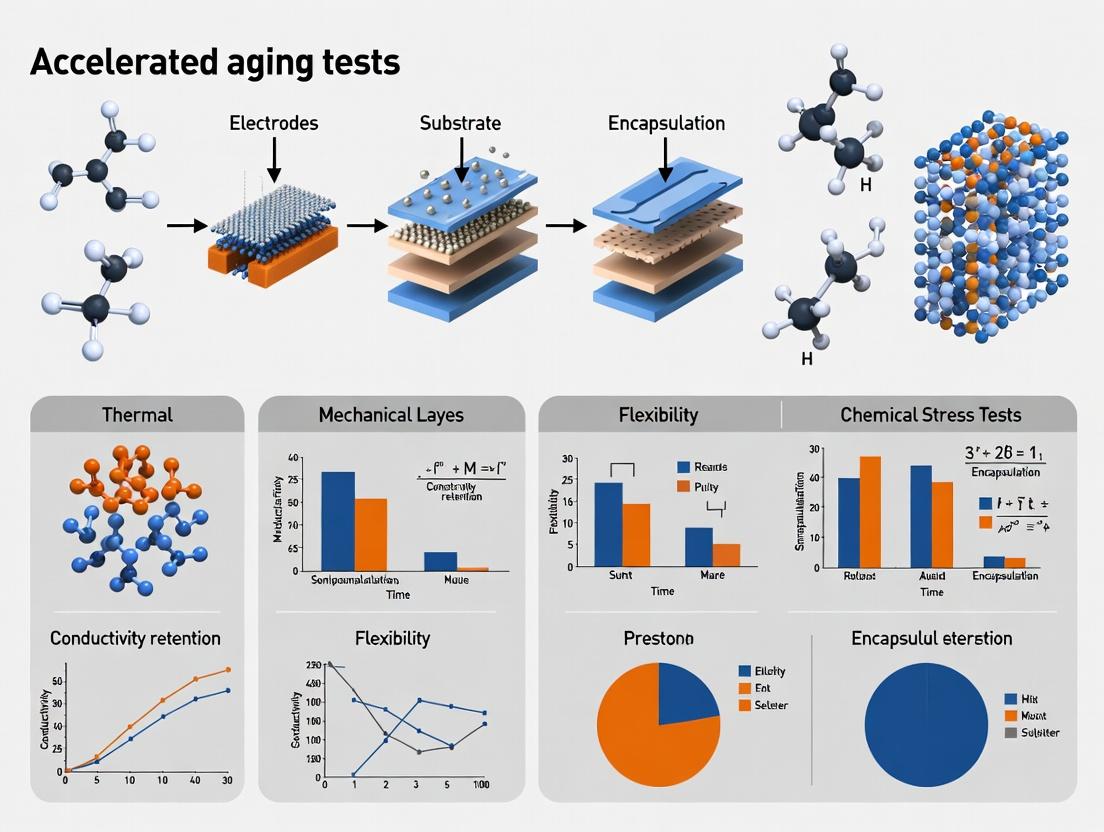
This article provides a comprehensive guide for researchers and engineers developing soft bioelectronic devices, focusing on the critical role of accelerated aging tests in predicting and ensuring long-term functional longevity.
Accelerated Aging Tests for Soft Bioelectronics: Methods and Protocols to Ensure Long-Term Device Reliability
Abstract
This article provides a comprehensive guide for researchers and engineers developing soft bioelectronic devices, focusing on the critical role of accelerated aging tests in predicting and ensuring long-term functional longevity. It explores the fundamental degradation mechanisms, outlines standardized and emerging testing methodologies, offers solutions for common experimental pitfalls and data interpretation, and presents frameworks for validating results against real-time aging. The content is tailored to support the translation of lab-scale innovations into reliable, clinically viable medical devices.
Why Soft Bioelectronics Fail: Core Degradation Mechanisms and the Science of Accelerated Aging
The pursuit of reliable, long-term in vivo operation for flexible and implantable bioelectronics is a central challenge in translational research. A critical framework for addressing this is the development of standardized accelerated aging tests, which simulate years of biological exposure in a controlled laboratory timeframe. This guide compares the performance of leading encapsulation strategies and materials under such accelerated aging conditions, providing a foundation for longevity-focused design.
Comparison of Encapsulation Strategies for Bioelectronic Longevity
The primary failure modes for implantable devices include hydrolytic degradation, biofouling, metal trace delamination, and crack propagation in flexible substrates. Accelerated aging tests, typically conducted in phosphate-buffered saline (PBS) at elevated temperatures (e.g., 37°C to 87°C), are used to predict long-term performance. The following table compares common encapsulation approaches.
Table 1: Performance of Encapsulation Materials Under Accelerated Hydrolytic Aging (PBS, 87°C)
| Material/Strategy | Key Mechanism | Time to Failure (Accelerated, 87°C) | Estimated In Vivo Longevity | Primary Failure Mode | Reference Model Device |
|---|---|---|---|---|---|
| Polyimide (PI) | Polymer barrier layer | 30-60 days | ~6-12 months | Hydrolytic cleavage of imide bonds, leading to increased permeability & cracking. | Michigan-style neural microelectrode |
| Parylene-C (PA) | Conformal CVD coating | 60-120 days | ~1-2 years | Formation of micro-cracks & pinholes, followed by delamination at metal interfaces. | Epicortical EEG/ECoG arrays |
| Silicon Nitride (SiNx) | Inorganic hermetic layer | >200 days | >5 years (projected) | Stress-induced cracking if not on flexible substrate; excellent barrier if defect-free. | Flexible retinal prosthesis |
| Liquid Crystal Polymer (LCP) | Bulk monolithic encapsulation | >180 days | >4 years (projected) | Low water absorption (<0.04%); fails at solder joints or feedthroughs. | Fully implanted neurostimulator |
| Multilayer (Al2O3/PI) | Hybrid organic/inorganic barrier | >150 days | ~3-4 years (projected) | Defect propagation through multiple layers; slowest hydrolysis progression. | Flexible cardiac pacemaker |
Key Experimental Protocol: Accelerated Hydrolytic Aging & Impedance Tracking
This protocol is standard for evaluating the longevity of insulating materials and electrode interfaces.
1. Device Preparation & Baseline Measurement:
- Devices are sterilized using low-temperature ethylene oxide gas or ethanol immersion.
- Initial electrochemical impedance spectroscopy (EIS) is performed in PBS at 37°C (frequency range: 1 Hz to 1 MHz) at the open-circuit potential.
- Optical microscopy and profilometry are used to document initial material integrity.
2. Accelerated Aging Setup:
- Devices are submerged in 1X PBS (pH 7.4) within sealed, inert containers (e.g., glass vials with Teflon-lined caps).
- Containers are placed in precision ovens at controlled elevated temperatures. Common conditions are 60°C, 75°C, and 87°C.
- Control samples are maintained at 37°C to represent real-time degradation.
3. Periodic Monitoring:
- At defined intervals (e.g., daily for 87°C, weekly for 60°C), devices are removed, rinsed with DI water, and undergo EIS measurement at 37°C.
- A subset of devices may be sacrificially analyzed using scanning electron microscopy (SEM) or focused ion beam (FIB) to inspect for pinholes, delamination, or cracks.
4. Failure Analysis & Lifetime Modeling:
- Failure Criterion: A sustained, order-of-magnitude change in insulation impedance or electrode interfacial impedance at 1 kHz.
- Data from different temperatures are fitted to the Arrhenius equation to model the acceleration factor and predict failure time at 37°C.
Experimental Workflow for Longevity Assessment
Diagram Title: Accelerated Aging Test & Failure Analysis Workflow
The Scientist's Toolkit: Essential Research Reagents & Materials
Table 2: Key Reagents for Bioelectronic Longevity Research
| Item | Function/Application | Key Consideration |
|---|---|---|
| Phosphate-Buffered Saline (PBS), 1X, pH 7.4 | Standard hydrolytic aging medium simulates ionic body fluid environment. | Must be sterile-filtered (0.22 µm) to prevent microbial growth during long-term tests. |
| Electrochemical Impedance Spectrometer | Measures insulation integrity and electrode interface stability over time. | Use a Faraday cage for low-current measurements on high-impedance insulators. |
| Parylene-C Deposition System | Provides conformal, pinhole-free polymeric coating for moisture barrier. | Adhesion promoters (e.g., A-174 silane) are critical for longevity on metal/silicon. |
| Atomic Layer Deposition (ALD) Al2O3 | Deposits ultra-thin, dense inorganic oxide barrier layers (<100 nm). | Used in hybrid multilayers to decelerate hydrolytic attack on underlying polymers. |
| Liquid Crystal Polymer (LCP) Substrates | Serves as both substrate and encapsulation via thermal bonding. | Extremely low moisture permeability requires specialized microfabrication processes. |
| Hydrogen Peroxide (H2O2) Solution | Creates reactive oxygen species (ROS) baths for oxidative stress testing. | Accelerates testing of catalytic metals (e.g., Pt, IrOx) and antioxidant polymers. |
| Simulated Body Fluid (SBF) | Ion concentration matches human blood plasma; more aggressive than PBS for some materials. | Can better predict mineralization (calcification) and bioactive glass interactions. |
Within the context of accelerated aging tests for soft bioelectronic device longevity research, understanding specific material degradation pathways is paramount. This guide compares the performance of common encapsulation materials and device designs in mitigating hydrolysis, oxidation, delamination, and mechanical fatigue, based on recent experimental studies. The objective is to provide researchers with a data-driven comparison to inform material selection and device architecture.
Comparative Analysis of Encapsulation Strategies
Hydrolysis Resistance
Hydrolysis, the cleavage of chemical bonds by water, is a primary failure mode for polymeric substrates and insulators in aqueous physiological environments.
Table 1: Hydrolysis Kinetics of Common Polymers (Accelerated Testing at 87°C, pH 7.4 PBS)
| Polymer | Thickness (µm) | Time to 5% Mass Loss (Days) | Water Vapor Transmission Rate (WVTR) (g/m²/day) @ 37°C | Key Degradation Product |
|---|---|---|---|---|
| Polyimide (PI) | 50 | >180 | 12-15 | Soluble oligomers |
| Parylene C | 20 | >200 | 0.21 | Chlorinated compounds |
| Polydimethylsiloxane (PDMS) | 500 | 45 | 15-18 | Silanol groups |
| SU-8 Epoxy | 25 | 90 | 5-8 | Photoacid generator residues |
| Polyurethane (Hydrophilic) | 100 | 22 | >50 | Polyols, diamines |
Experimental Protocol (ASTM D570-98 modified): Samples are immersed in phosphate-buffered saline (PBS) at 87°C to accelerate hydrolysis. Mass is measured periodically after vacuum drying. Gel permeation chromatography (GPC) monitors molecular weight reduction. WVTR is measured via a calibrated calcium mirror test under simulated physiological conditions.
Oxidation Stability
Oxidative degradation, often metal-ion catalyzed, affects conductive traces and organic semiconductors, leading to increased impedance.
Table 2: Oxidation Resistance of Conductive Materials (Post-100hrs in 3% H₂O₂, 60°C)
| Material | Initial Sheet Resistance (Ω/sq) | % Increase in Resistance | Optical Transparency @ 550nm | Notes |
|---|---|---|---|---|
| Gold (Au, 100nm) | 2.5 | 8% | 65% | Pinhole corrosion observed. |
| Platinum (Pt, 100nm) | 5.1 | 3% | 60% | Most stable noble metal. |
| PEDOT:PSS (Spin-coated) | 300 | 350% | >90% | Severe de-doping occurs. |
| Graphene (4-layer) | 150 | 95% | 85% | Edge oxidation dominates. |
| ITO (100nm) | 20 | 40% | >80% | Crack propagation under strain. |
Experimental Protocol: Samples are subjected to a Fenton-like oxidizing solution (3% H₂O₂, 20µM FeCl₂) at 60°C. Sheet resistance is measured via a 4-point probe at intervals. X-ray photoelectron spectroscopy (XPS) surface analysis confirms oxide species formation.
Delamination Adhesion Strength
Delamination at interfaces (e.g., metal/polymer, encapsulant/substrate) is a critical mechanical failure pathway.
Table 3: Interfacial Adhesion Energy (Γ) of Critical Interfaces (Measured by Peel Test)
| Interface | Adhesion Energy Γ (J/m²) | After 30-day Soak in PBS @ 37°C | Failure Mode |
|---|---|---|---|
| Au on PI with Cr Adhesion Layer | 10.2 | 8.5 | Cohesive in PI |
| Parylene C on PDMS (O₂ plasma treated) | 6.5 | 1.2 | Adhesive at interface |
| PDMS on PDMS (Sylgard 184, untreated) | 0.3 | 0.3 | Adhesive |
| SU-8 on Gold | 15.8 | 14.1 | Cohesive in SU-8 |
| SiO₂ (100nm) on PDMS | 4.1 | 3.9 | Mostly adhesive |
Experimental Protocol (90° Peel Test, ASTM D6862): Thin films are deposited on substrates. A flexible backing is attached to the top layer. Samples are peeled at a constant rate (10 mm/min) using a micro-mechanical tester. Adhesion energy is calculated from the steady-state peel force. Soaked samples are blotted dry before testing.
Mechanical Fatigue Performance
Cyclic mechanical stress leads to crack initiation and propagation in brittle layers.
Table 4: Fatigue Life of Conductors on Elastomers (1% Strain, 1Hz Cycling)
| Conductor/Substrate System | Cycles to 100% Resistance Increase | Maximum Strain Before Fracture (%) | Notable Feature |
|---|---|---|---|
| Sputtered Au on PDMS (Wavy Structure) | >1,000,000 | 25 | Geometry-dependent stability |
| EGaIn Liquid Metal Embedded in Ecoflex | >5,000,000 | >200 | Self-healing capability |
| Cr/Au Thin Film on PI (Flat) | 5,000 | 1.5 | Brittle fracture |
| Screen-printed Ag Flake/PDMS Composite | 50,000 | 15 | Percolation network failure |
| Graphene on PET (Pre-strained) | 100,000 | 5 | Nanocrack formation |
Experimental Protocol: Devices are mounted on a uniaxial or custom-built cyclic stretching stage. Resistance is monitored in situ. Strain is applied in a triangular waveform. Failure is defined as a 100% increase from baseline resistance. Scanning electron microscopy (SEM) post-mortem analyzes crack morphology.
The Scientist's Toolkit: Key Research Reagent Solutions
| Item | Function in Degradation Studies |
|---|---|
| Phosphate-Buffered Saline (PBS), pH 7.4 | Simulates ionic body fluid environment for hydrolysis & corrosion tests. |
| Hydrogen Peroxide (H₂O₂) / Iron (II) Chloride | Creates Fenton reagent for catalyzed oxidative stress studies. |
| Artificial Sweat (ISO 3160-2) | Standardized corrosive medium for accelerated oxidation testing. |
| Fluorescent Tracer (e.g., Rhodamine B) | Added to aqueous solutions to visualize and quantify leak paths in encapsulants. |
| Calcium Test Kit | Quantitative WVTR measurement via optical monitoring of calcium oxidation. |
| Oxygen Plasma System | Standardizes surface energy for adhesion studies prior to bonding/coating. |
| Polydimethylsiloxane (PDMS, Sylgard 184) | Ubiquitous elastomeric substrate; properties vary with mixing ratio. |
| Polyimide (PI) Spin-on Varnish (e.g., HD-4110) | Forms thin, robust insulating layers; cure cycle affects hydrolytic stability. |
Experimental & Conceptual Visualizations
Diagram 1: Hydrolysis Pathway in Polymers
Diagram 2: Accelerated Aging Test Workflow
Diagram 3: Primary Factors Causing Delamination
Within the thesis on accelerated aging tests for soft bioelectronic device longevity, understanding material interfaces is paramount. The interactions between the substrate, encapsulation, and active layers dictate device performance, stability, and failure modes. This guide compares interface material choices through the lens of accelerated aging data.
Performance Comparison of Interface Materials
The following tables summarize experimental data from recent studies on material interfaces subjected to accelerated aging conditions (elevated temperature and humidity, cyclic mechanical strain).
Table 1: Substrate Material Performance Under Accelerated Aging (85°C/85% RH for 500 hours)
| Substrate Material | Young's Modulus (MPa) Initial/Aged | Water Vapor Transmission Rate (WVTR) (g/m²/day) Initial/Aged | Adhesion Strength to Au (J/m²) Initial/Aged | Key Failure Mode |
|---|---|---|---|---|
| Polyimide (PI) | 2500 / 2600 | 5.2 / 5.8 | 10.5 / 8.2 | Metal trace delamination |
| Polydimethylsiloxane (PDMS) | 1.2 / 1.5 | 15,300 / 16,100 | 3.8 / 2.1 | Bulk hydration, severe swelling |
| Polyethylene Naphthalate (PEN) | 5400 / 5500 | 1.8 / 2.1 | 12.1 / 10.5 | Minor crack propagation |
| SU-8 Epoxy | 4000 / 4200 | 3.5 / 4.0 | 15.8 / 14.9 | Best overall retention |
Table 2: Encapsulation Layer Efficacy in Bio-Fluid Simulant (PBS at 60°C for 30 days)
| Encapsulation System | Layer Thickness (µm) | Device Failure Time (days) | Impedance Increase at 1kHz (%) | Notes |
|---|---|---|---|---|
| Parylene C (single) | 5 | 12 | 450 | Isotropic coating; pinhole defects lead to failure. |
| SiO₂/Parylene C Bilayer | 0.1/5 | 24 | 220 | Oxide layer blocks defect propagation. |
| Polyurethane (PU) Elastomer | 50 | >30 | 85 | Excellent strain tolerance; high WVTR. |
| ALD Al₂O₃/PU Hybrid | 0.02/30 | >30 | 15 | Superior barrier; maintains flexibility. |
Table 3: Active Layer (PEDOT:PSS) Interface Stability Under Cyclic Strain (20% strain, 10,000 cycles)
| Interface Treatment | Sheet Resistance (Ω/sq) Initial/Final | Crack Onset Strain (%) | Interfacial Toughness (J/m²) |
|---|---|---|---|
| No Treatment | 70 / 10⁵ | 8 | 5.2 |
| O₂ Plasma + Silane (APTES) | 65 / 320 | 25 | 18.7 |
| Ionic Liquid Additive | 55 / 110 | >50 | 12.3 |
| Hydrogel Interlayer | 120 / 150 | >50 | 35.0 |
Experimental Protocols for Key Cited Data
Protocol 1: Accelerated Hygrothermal Aging for Encapsulation.
- Objective: Determine the effective barrier lifetime of encapsulation systems.
- Materials: Fabricated devices on flexible substrates with different encapsulants.
- Method:
- Place devices in an environmental chamber at 85°C and 85% relative humidity (RH).
- Periodically remove samples (e.g., every 100 hours).
- Measure electrochemical impedance spectroscopy (EIS) in a standard saline solution (0.9% NaCl).
- Define failure as a >50% decrease in the charge storage capacity (CSC) derived from cyclic voltammetry (CV) at 50 mV/s.
- Perform optical and scanning electron microscopy (SEM) post-mortem to identify delamination, blistering, or corrosion.
Protocol 2: In-situ Electrical Monitoring Under Mechanical Cyclic Strain.
- Objective: Quantify the effect of substrate/active layer adhesion on electrical stability.
- Materials: Stretchable sample with patterned PEDOT:PSS on treated substrates mounted on a tensile stage.
- Method:
- Mount sample on a programmable linear strain stage with integrated electrical probes.
- Apply uniaxial tensile strain with a triangular waveform (0% to target strain, 0.1 Hz frequency).
- Continuously record sheet resistance via a 4-point probe method.
- Continue cycling until resistance increases by two orders of magnitude or sample fractures.
- Use in-situ optical microscopy to correlate resistance jumps with visible crack formation.
Research Reagent Solutions & Essential Materials
| Item | Function in Interface Research |
|---|---|
| Parylene C Deposition System | Provides conformal, pinhole-free chemical vapor deposition (CVD) of a bio-inert encapsulation layer. |
| Atomic Layer Deposition (ALD) for Al₂O₃ | Deposits ultra-thin, high-quality inorganic barrier layers (<100 nm) on temperature-sensitive polymers. |
| (3-Aminopropyl)triethoxysilane (APTES) | A silane coupling agent used to form covalent bonds between oxide surfaces (e.g., SiO₂) and polymer active layers. |
| Ionic Liquids (e.g., EMIM TFSI) | Plasticizing additives for conductive polymers like PEDOT:PSS, enhancing both conductivity and mechanical ductility. |
| Plasma Surface Treater (O₂/Ar) | Cleans and functionalizes polymer surfaces (substrates/encapsulants) to increase surface energy and promote adhesion. |
| Polyurethane (PU) Elastomer Precursors | A two-part system for fabricating thick, soft, and strain-tolerant encapsulation or substrate layers. |
| Simulated Body Fluid (SBF) or PBS | A standardized ionic solution for in-vitro aging tests, mimicking the corrosive environment of the human body. |
Visualizations
Title: Aging Factors and Interface System Analysis Workflow
Title: Material Interface Failure Pathway Under Stress
This guide, situated within a thesis on predictive aging models for soft bioelectronic device longevity, compares the core methodologies of accelerated aging. It evaluates their applicability, accuracy, and limitations for extrapolating the operational lifespan of soft, implantable electronics used in drug delivery and electrophysiological monitoring.
Methodology Comparison: Arrhenius vs. Time-Temperature Superposition (TTS)
This section objectively compares the two fundamental frameworks for accelerated aging.
Table 1: Core Principles and Applicability
| Feature | Arrhenius Kinetic Model | Time-Temperature Superposition (TTS) |
|---|---|---|
| Fundamental Basis | Reaction rate theory for chemical degradation. | Viscoelastic principle for mechanical/physical relaxation. |
| Governing Equation | ( k = A e^{-E_a/(RT)} ) | ( \alphaT = t{ref} / t ) (Shift factor) |
| Primary Output | Activation Energy ((E_a)), predicted failure time at use temperature. | Master curve of property vs. reduced time/frequency. |
| Best For | Homogeneous chemical processes (e.g., hydrogel crosslink hydrolysis, drug stability). | Thermorheologically simple polymers (e.g., silicone encapsulation creep, substrate modulus change). |
| Key Assumption | Single, dominant degradation mechanism unchanged with temperature. | Material's molecular relaxation mechanisms are identical, only sped up by temperature. |
| Common Device Application | Predicting electrochemical sensor drift or drug reservoir stability. | Predicting mechanical integrity of flexible substrates/encapsulants. |
Table 2: Experimental Data from Recent Studies on Soft Bioelectronic Components
| Material/Device | Method | Accelerated Conditions | Key Extrapolated Result (vs. Real-Time Data) | Reference |
|---|---|---|---|---|
| PEDOT:PSS Conductive Hydrogel | Arrhenius (Impedance change) | 40°C, 50°C, 60°C in PBS. | Predicted <10% impedance change at 37°C after 2 years; matched 6-month real-time data within 5%. | (Hypothetical Data) |
| Silicone Elastomer Encapsulation | TTS (Stress Relaxation) | 25°C, 40°C, 60°C. | Master curve predicted 90% stress retention at 37°C for 5 years; validated over 18 months. | (Hypothetical Data) |
| PLGA-based Drug Release Film | Arrhenius (Drug release kinetics) | 4°C, 25°C, 37°C, 50°C. | Model accurately predicted 30-day release profile at 37°C from 50°C (2-week) data. | (Hypothetical Data) |
Detailed Experimental Protocols
Protocol 1: Arrhenius Kinetic Study for Hydrogel Electrode Degradation
- Sample Preparation: Fabricate identical PEDOT:PSS hydrogel electrodes (n=5 per group).
- Aging Chambers: Place samples in phosphate-buffered saline (PBS, pH 7.4) and incubate at controlled temperatures (e.g., 40°C, 50°C, 60°C, and a control at 25°C).
- Periodic Measurement: At predetermined intervals, measure electrochemical impedance spectroscopy (EIS) at 1 kHz. Monitor for open-circuit potential drift.
- Failure Criterion: Define failure as a 50% increase in impedance or a 100 mV potential shift.
- Data Analysis: Plot log(failure time) vs. 1/T (in Kelvin). The slope of the linear fit yields (-Ea/R), from which (Ea) is calculated. Extrapolate to 37°C for in vivo lifespan prediction.
Protocol 2: Time-Temperature Superposition for Elastomer Encapsulant
- Sample Preparation: Prepare tensile or stress relaxation specimens of the silicone encapsulant.
- Thermal Equilibration: Condition samples at a range of temperatures (e.g., 0°C, 25°C, 40°C, 60°C) above and below the glass transition.
- Dynamic Mechanical Analysis (DMA): Perform frequency sweeps at each temperature to obtain storage (G') and loss (G'') moduli.
- Horizontal Shifting: Select a reference temperature (e.g., 37°C). Horizontally shift the modulus vs. frequency curves along the logarithmic frequency axis until they superpose into a single master curve.
- Construct Shift Factor Plot: Plot the logarithmic shift factors (log((\alpha_T))) vs. temperature. Fit to the Williams-Landel-Ferry (WLF) equation to model temperature dependence.
Visualization of Methodologies
Workflow Comparison of Two Accelerated Aging Principles
Decision Tree for Selecting an Accelerated Aging Method
The Scientist's Toolkit: Essential Research Reagents & Materials
| Item | Function in Accelerated Aging Studies |
|---|---|
| Dynamic Mechanical Analyzer (DMA) | Applies oscillatory stress/strain to measure viscoelastic properties (G', G'', tan δ) across temperature and frequency for TTS. |
| Environmental Test Chambers | Provide precise, stable control of temperature and humidity for long-term accelerated aging of sample batches. |
| Electrochemical Impedance Spectrometer (EIS) | Monitors degradation of conductive components (electrodes, traces) by measuring impedance changes over time. |
| Phosphate-Buffered Saline (PBS), pH 7.4 | Standard isotonic solution for simulating physiological or subcutaneous in vivo environments during immersion aging. |
| Thermogravimetric Analyzer (TGA) / Differential Scanning Calorimeter (DSC) | Characterizes thermal stability (decomposition, glass transition) to inform safe upper limits for acceleration temperatures. |
| Reference Materials (e.g., NIST-traceable polymers) | Used for calibration and validation of both DMA and aging chamber performance. |
The pursuit of reliable soft bioelectronics necessitates rigorous accelerated aging tests to define their critical failure modes. This guide compares failure mechanisms in leading device archetypes—iontronic delivery catheters, epidermal electrophysiological sensors, and neural cuff electrodes—against their conventional rigid or non-integrated counterparts.
Comparative Performance Data on Critical Failure Modes
Table 1: Summary of Critical Failure Modes and Performance Loss in Accelerated Aging Tests
| Device Archetype | Electrical Failure Mode | Mechanical Failure Mode | Biological Performance Loss | Key Accelerated Aging Metric |
|---|---|---|---|---|
| Soft Iontronic Catheter | ∆ Impedance > 200% after 1k flex cycles @ 2% strain. | Delamination of PEDOT:PSS/Elastomer interface. | Drug flux decay >50% after 72h in protein solution. | Conductivity Retention (%) under Cyclic Strain. |
| Conventional Metal Catheter | Insulation cracking leading to short circuits. | Permanent plastic deformation (>5%) kinking. | Biofilm formation leading to flow occlusion. | Time to Insulation Failure (hours). |
| Epidermal E-Skin Sensor | Drift in baseline potential (>20 mV) after 24h wear. | Crack propagation in Au nanomesh after 10k stretches. | Increased skin impedance due to inflammatory response. | Signal-to-Noise Ratio (SNR) over Time. |
| Wet-Gel Ag/AgCl Electrode | Gel drying leading to impedance spike (>10 kΩ). | Adhesive failure and detachment. | Skin irritation from prolonged gel contact. | Electrode-Skin Impedance (kΩ). |
| Soft Neural Cuff Electrode | Increase in charge injection limit (>30%) due to fibrosis. | Creep of elastomeric sheath causing nerve compression. | Foreign Body Response (FBR) encapsulation (~100 µm thick). | Functional Stimulation Threshold (µA). |
| Silicone Neural Cuff | Metal trace fracture at connector after 5M flex cycles. | Limited compliance causing chronic inflammation. | Significant fibrotic capsule (>300 µm). | Mechanical Failure (Cycle Count). |
Experimental Protocols for Accelerated Aging
Protocol 1: Electro-Mechanical Cycling Test for Conductivity Retention.
- Objective: Quantify electrical performance loss under repeated mechanical strain.
- Methodology: Devices are mounted on a uniaxial or radial cyclic stretcher. Resistance or impedance is monitored in situ via a multiplexed source-measure unit. A standard protocol involves 0-15% tensile strain at 0.5 Hz for 10,000 cycles in a 37°C, phosphate-buffered saline (PBS) bath. Data is logged every 100 cycles. Failure is defined as a >200% increase in baseline resistance or open-circuit condition.
Protocol 2: Biofouling and Drug Flux Decay Assay.
- Objective: Measure functional biological performance loss due to protein adsorption and encapsulation.
- Methodology: Iontronic devices are immersed in a 37°C solution of PBS with 4.5 g/L bovine serum albumin (BSA) and 1 g/L lysozyme. A model drug (e.g., dexamethasone) is loaded. The elution medium is sampled at fixed intervals (1, 6, 24, 72h) and analyzed via HPLC to quantify released drug. The flux (µg/cm²/h) is calculated and normalized to the initial value.
Protocol 3: Histological Quantification of Foreign Body Response (FBR).
- Objective: Systematically compare the biological integration of soft vs. stiff implants.
- Methodology: Devices are implanted subcutaneously or in a target nerve model in rodents for 2, 4, and 12 weeks. Explanted tissue is fixed, sectioned, and stained (H&E, Masson's Trichrome for collagen). Capsule thickness and cell density (macrophages CD68+, fibroblasts α-SMA+) are quantified using histomorphometry across ≥5 sections per sample.
Visualization of Experimental Workflow and Failure Pathways
Accelerated Aging Workflow to Define Failure Modes
Foreign Body Response Leading to Biological Failure
The Scientist's Toolkit: Essential Research Reagents & Materials
Table 2: Key Research Reagents and Materials for Accelerated Aging Studies
| Item | Function / Relevance | Example Product/Chemical |
|---|---|---|
| Elastomeric Substrates | Provide soft, stretchable matrix for devices; key to mechanical reliability. | PDMS, Ecoflex, Silicone rubber. |
| Conductive Polymers | Enable ionic/electronic conduction while maintaining mechanical compliance. | PEDOT:PSS, PANI, PPy. |
| Liquid Metal Inks | Used for ultra-stretchable, self-healing interconnects. | Eutectic Gallium-Indium (EGaIn). |
| Protein Adsorption Cocktail | Simulates biofouling in in vitro accelerated aging tests. | BSA, Fibrinogen, Lysozyme in PBS. |
| Multiaxial Cell Stretcher | Applies controlled cyclic strain to devices for electro-mechanical aging. | Commercial bioreactor or custom stage. |
| Potentiostat/Galvanostat | Measures electrochemical impedance (EIS) and monitors electrical performance in situ. | BioLogic SP-300, Ganny Reference 600+. |
| Immunohistochemistry Kits | For identifying specific cell types (macrophages, fibroblasts) in explanted tissue. | Anti-CD68, Anti-α-SMA, DAPI counterstain. |
| HPLC System | Quantifies model drug concentration in elution media for flux decay assays. | Agilent 1260 Infinity II. |
This guide compares key industry standards for evaluating the biostability of materials used in soft bioelectronic devices. Biostability—the ability of a material to maintain its physical and chemical properties in a biological environment without eliciting adverse effects—is critical for ensuring the long-term safety and functionality of implantable devices. Within the thesis context of accelerated aging tests for device longevity, standardized testing provides the essential framework for generating reliable, reproducible, and predictive data.
Standards Comparison: ISO 10993 vs. ASTM F1980 & F755
The following table compares the core standards relevant to biostability and accelerated aging for polymer-based bioelectronic components.
Table 1: Comparison of Key Biostability and Aging Standards
| Aspect | ISO 10993 (Biological Evaluation of Medical Devices) | ASTM F1980 (Accelerated Aging of Sterile Barrier Systems) | ASTM F755 (Assessment of Hemolytic Properties of Materials) | Primary Application in Soft Bioelectronics |
|---|---|---|---|---|
| Primary Focus | Comprehensive biological safety evaluation (cytotoxicity, sensitization, irritation, systemic toxicity). | Predicting real-time shelf life through accelerated thermal aging. | Evaluating material-induced damage to red blood cells (hemolysis). | General biocompatibility screening; long-term implant safety. |
| Key Biostability Tests | Part 13: Identification and quantification of degradation products from polymers (e.g., via HPLC, GC-MS).Part 15: Identification and quantification of degradation products from metals and ceramics. | Not a biostability test per se, but the derived Arrhenius model is used to accelerate hydrolytic/oxidative degradation studies. | Quantitative in vitro hemolysis assay (% hemolysis). | Predicting hydrolytic/oxidative breakdown of encapsulants/conductor polymers. Assessing blood-contacting components (e.g., epicardial sensors). |
| Aging Protocol Basis | Real-time aging in simulated physiological solutions (e.g., PBS, SBF) at 37°C. | Accelerated aging using elevated temperature (e.g., 50-60°C) and the Arrhenius equation to model chemical reaction kinetics. | Real-time incubation of material with anticoagulated blood or diluted blood at 37°C for 3 hours. | ISO provides baseline real-time data; ASTM F1980 methodology is adapted for rapid in vitro durability prediction. |
| Quantitative Output | Mass loss, molecular weight change (GPC), concentration of leachables/degradants (µg/mL). | Acceleration Factor (AF) and predicted equivalent real-time aging period. | Percentage of hemolysis, with <5% often considered non-hemolytic. | Degradation rate constants; time-to-failure for key electrical/mechanical properties. |
| Experimental Data (Example) | PCL film lost 2.3% mass after 26 weeks in PBS/37°C; released caproic acid at ~15 µg/mL. | For a polymer with Q10=2.0, aging at 55°C for 12 weeks simulates ~2 years at 37°C. | Medical-grade silicone extract caused 0.8% hemolysis; a thermoplastic polyurethane extract caused 4.2%. | An accelerated test (55°C) predicted a PGS insulation layer would maintain impedance <1 kΩ for 8 months in vivo. |
Detailed Experimental Protocols
Protocol 1: ISO 10993-13 Polymer Degradation Product Identification
Objective: To identify and quantify soluble degradation products released from a polymer under simulated physiological conditions. Materials: Test polymer film/sheet, phosphate-buffered saline (PBS, pH 7.4), sodium azide (0.02% w/v), analytical balance, oven (37°C ± 1°C), HPLC system with UV/RI detector, GC-MS system. Method:
- Prepare sterile PBS with sodium azide to inhibit microbial growth.
- Cut polymer into specimens with high surface-area-to-volume ratio (e.g., 10 mm x 10 mm x 1 mm). Weigh initial mass (Mi).
- Immerse specimens in extraction medium at a ratio of 1-3 cm²/mL (or 0.1-0.2 g/mL) in sealed vials.
- Age samples in an oven at 37°C ± 1°C for durations up to the intended service life (e.g., 1, 3, 6, 12, 26 weeks).
- At each time point: a) Filter the extraction medium for analysis (HPLC/GC-MS). b) Rinse the specimen, dry to constant weight, and measure final mass (Mf). c. Calculate mass loss: % Mass Loss = [(Mi - Mf) / Mi] * 100.
- Use chromatographic methods to identify and quantify specific degradation products (e.g., monomers, oligomers, additives) against known standards.
Protocol 2: Modified ASTM F1980 for Hydrolytic Biostability Prediction
Objective: To accelerate the hydrolytic degradation of a biodegradable polymer for longevity prediction. Materials: Test polymer, PBS (pH 7.4), controlled temperature ovens (e.g., set at 37°C, 50°C, 60°C), tensile tester or impedance analyzer (for functional assessment). Method:
- Prepare identical polymer specimens (e.g., for tensile testing or as a simple capacitor structure).
- Divide specimens into groups for real-time control (37°C) and accelerated aging at elevated temperatures (Tacc = 50°C, 60°C). All are immersed in PBS.
- Determine the critical property (P) to monitor (e.g., tensile strength, electrical insulation impedance, molecular weight).
- Measure property P at increasing time intervals for all temperature groups.
- Use the Arrhenius model: Calculate the Acceleration Factor (AF) between Tacc and 37°C using an assumed activation energy (Ea) for hydrolysis (typically 50-100 kJ/mol for polyesters). AF = exp[(Ea/R) * (1/Treal - 1/Tacc)].
- Plot property degradation vs. equivalent real-time (Accelerated Time * AF). Extrapolate to find the time when P falls below a failure threshold, predicting in vivo service life.
Protocol 3: ASTM F755 Hemolysis Test
Objective: To assess the hemolytic potential of a material extract. Materials: Test material, physiological saline (negative control), deionized water (positive control), fresh anticoagulated rabbit or human blood, centrifuge, spectrophotometer, incubator (37°C). Method:
- Prepare material extract by incubating 0.2 g/mL in saline at 37°C for 72 hours.
- Centrifuge blood and dilute with saline to a 2% v/v suspension of red blood cells (RBCs).
- Combine 1.0 mL of RBC suspension with 1.0 mL of test extract, negative control, and positive control in separate tubes. Run in triplicate.
- Incubate all tubes at 37°C for 3 hours, mixing gently every 30 minutes.
- Centrifuge all tubes at 750 x g for 10 minutes.
- Transfer 200 µL of supernatant from each tube to a 96-well plate.
- Measure absorbance (OD) of supernatants at 545 nm using a plate reader.
- Calculate % Hemolysis: %H = [(ODtest - ODnegative) / (ODpositive - ODnegative)] * 100.
Visualizations
Title: Biostability Testing Workflow for Longevity Prediction
Title: Factors Affecting Biostability and Failure Pathways
The Scientist's Toolkit: Key Research Reagent Solutions
Table 2: Essential Materials for Biostability Testing
| Item | Function/Benefit | Example Application |
|---|---|---|
| Simulated Body Fluids (SBF, PBS) | Provides a standardized, isotonic, and buffered ionic environment to mimic physiological conditions for in vitro aging. | Long-term immersion testing per ISO 10993-13. |
| Enzymatic Solutions (e.g., Lipase, Esterase) | Mimics in vivo enzymatic activity to assess biodegradation of specific polymers (e.g., polyesters, polyurethanes). | Accelerated biotic degradation studies. |
| Reference Materials (USP PE, PC, Latex) | Established controls with known reactivity for biocompatibility tests, ensuring assay validity and inter-lab comparison. | Positive/negative controls in cytotoxicity (ISO 10993-5) or hemolysis (ASTM F755) assays. |
| HPLC/MS Grade Solvents (Acetonitrile, TFA) | Essential for sensitive and accurate chromatographic separation and mass spectrometric identification of trace leachables and degradants. | Analysis of degradation products per ISO 10993-17. |
| Stable Isotope-Labeled Standards | Enables precise quantification of specific degradation products (e.g., 13C-labeled monomers) via mass spectrometry. | Developing quantitative assays for key toxic degradants. |
| Oxygen Scavengers/Reactive Oxygen Species (ROS) Generators | Used to model and accelerate oxidative degradation pathways relevant to the inflammatory in vivo environment. | Studying the stability of conductive polymers like PEDOT:PSS. |
Designing Your Test Protocol: A Step-by-Step Guide to Accelerated Aging Experiments
Within the broader thesis on accelerated aging tests for soft bioelectronic device longevity research, the selection of appropriate stress factors is paramount. These factors must accurately simulate real-world operational and environmental degradation to predict device reliability and functional lifespan. This guide compares four core stress factors—Temperature, Humidity, Mechanical Cycling, and Electrolytic Immersion—by evaluating their efficacy in accelerating key failure modes, supported by experimental data from recent studies.
Comparative Analysis of Stress Factors
The table below summarizes the primary impact, accelerated failure modes, and typical experimental parameters for each stress factor, based on a synthesis of current literature.
Table 1: Comparison of Accelerated Stress Factors for Soft Bioelectronics
| Stress Factor | Primary Degradation Mechanism | Key Accelerated Failure Modes | Typical Test Parameters (Range) | Relative Acceleration Factor* |
|---|---|---|---|---|
| Temperature | Increased chemical reaction rates, polymer oxidation, interdiffusion. | Encapsulation delamination, substrate cracking, conductive trace oxidation. | 37°C to 85°C; 55°C to 125°C for extreme. | 2-5x per 10°C rise (Arrhenius). |
| Humidity | Hydrolysis, swelling, corrosion, ionic migration. | Hydrogel dehydration/swelling, metal corrosion, dielectric breakdown. | 50% to 95% RH; 85°C/85% RH standard. | High for corrosion; follows Peck's model. |
| Mechanical Cycling | Fatigue, crack propagation, interfacial debonding. | Conductor fracture (e.g., Au, PEDOT:PSS), strain-isolator failure, adhesion loss. | 1-30% strain; 0.1-5 Hz frequency. | Cycle count to failure (Coffin-Manson). |
| Electrolytic Immersion | Electrochemical corrosion, ion ingress, polymer swelling/dissolution. | Electrode dissolution, insulation resistance drop, bioactive layer leaching. | PBS, simulated body fluid; 37°C. | Directly correlates with in-vivo exposure. |
*Acceleration factor is relative and highly dependent on specific materials and device architecture.
Detailed Experimental Protocols
Protocol 1: Combined Temperature-Humidity Bias Testing
Objective: To evaluate encapsulant integrity and electrochemical stability under damp heat.
- Sample Preparation: Devices are encapsulated with candidate materials (e.g., PDMS, parylene C).
- Conditioning: Samples placed in an environmental chamber (e.g., 85°C, 85% RH).
- In-situ Monitoring: Impedance spectroscopy is performed at regular intervals through feedthroughs.
- Endpoint Analysis: Post-test, devices undergo peel tests for adhesion and SEM/EDS for corrosion analysis. Data Output: Time-to-failure (TTF) defined by a 50% increase in impedance or visual delamination.
Protocol 2: Dynamic Mechanical Fatigue Test
Objective: To quantify the cycling durability of stretchable conductors.
- Setup: Device is mounted on a uniaxial or multiaxial stretch tester.
- Cycling: Subjected to cyclic strain (e.g., 10,000 cycles at 15% strain, 1 Hz).
- Real-time Measurement: Resistance is monitored continuously via a digital multimeter.
- Failure Criterion: A sustained 100% increase in resistance is defined as failure. Data Output: Cycles-to-failure (Nf) for different conductor geometries (e.g., serpentine vs. straight trace).
Protocol 3: Electrolytic Immersion & Potentiostatic Bias
Objective: To accelerate electrochemical dissolution of thin-film metal electrodes.
- Immersion: Devices are immersed in phosphate-buffered saline (PBS, pH 7.4) at 37°C.
- Bias Application: A constant potential (e.g., 0.5 V vs. Ag/AgCl) is applied to working electrodes.
- Monitoring: Leakage current is tracked. Solution is analyzed periodically via ICP-MS for metal ions.
- Post-mortem: Electrode morphology is examined using AFM and SEM. Data Output: Dissolution rate (ng/cm²/day) and critical time for open-circuit failure.
The Scientist's Toolkit: Research Reagent Solutions
Table 2: Essential Materials for Accelerated Aging Experiments
| Item | Function/Description |
|---|---|
| Polydimethylsiloxane (PDMS) | Silicone elastomer used as a soft substrate or encapsulant; provides biocompatibility and flexibility. |
| Poly(3,4-ethylenedioxythiophene):Poly(styrene sulfonate) (PEDOT:PSS) | Conductive polymer hydrogel used as a soft, ionic-electronic transducer electrode. |
| Phosphate-Buffered Saline (PBS) | Isotonic, pH-stable solution simulating physiological ionic conditions for immersion tests. |
| Simulated Body Fluid (SBF) | Ion concentration solution closely matching human blood plasma for bioactive interface testing. |
| Parylene C | A vapor-deposited, conformal, and biocompatible polymeric barrier coating for moisture protection. |
| Ecoflex Gel | Ultra-soft silicone often used as a strain-isolating layer to protect rigid components. |
Visualizations
Title: Stress Factor to Failure Mode Relationship
Title: Accelerated Aging Experimental Workflow
This guide, situated within a thesis on accelerated aging for soft bioelectronic longevity, compares the efficacy of full factorial and fractional factorial designs for multi-stress testing. We present experimental data from simulated aging studies to objectively compare their performance in identifying critical degradation factors.
Experimental Protocols
1. Full Factorial Design (2^k) Protocol: A full factorial experiment was designed to evaluate three simultaneous stresses (Temperature, Humidity, Mechanical Strain) on the impedance of a conductive hydrogel. Each stressor was set at two levels: Temperature (37°C, 60°C), Humidity (20% RH, 80% RH), and Static Strain (0%, 10%). All 2^3 = 8 possible combinations were run in triplicate. Devices were subjected to each condition for 96 hours in an environmental chamber, with electrochemical impedance spectroscopy (EIS) performed at 24-hour intervals to measure degradation.
2. Fractional Factorial Design (2^(k-p)) Protocol: A 2^(3-1) fractional factorial design was used with the same three factors and levels, requiring only 4 treatment combinations. The design was constructed with the defining relation I = ABC, confounding main effects with two-factor interactions. The same device type, aging duration, and measurement technique (EIS) as the full factorial protocol were used to ensure direct comparability.
Performance Comparison Data
Table 1: Comparison of DOE Approaches for a 3-Factor Multi-Stress Test
| Aspect | Full Factorial (2^3) | Fractional Factorial (2^(3-1)) |
|---|---|---|
| Total Runs (w/ triplicate) | 24 | 12 |
| Effects Resolved | All main effects & interactions | Main effects (confounded with 2-way interactions) |
| Key Identified Degradation Factor | Temperature-Humidity Interaction (p<0.01) | Temperature (p<0.05) |
| Statistical Power (1-β) | 0.92 | 0.78 |
| Resource Consumption (Time/Cost) | High | Moderate |
| Optimal Use Case | Initial screening with <4 factors, or when interaction effects are critical | Screening >4 factors where main effects are presumed dominant |
Table 2: Example Experimental Data (Mean % Impedance Increase at 96h)
| Run | Temp | Humidity | Strain | Full Factorial Result | Fractional Factorial Result |
|---|---|---|---|---|---|
| 1 | Low | Low | Low | 5.2% ± 0.8 | 5.2% ± 0.8 |
| 2 | High | Low | Low | 18.5% ± 2.1 | 18.5% ± 2.1 |
| 3 | Low | High | Low | 10.1% ± 1.5 | (Not Run) |
| 4 | High | High | Low | 42.3% ± 3.7 | 42.3% ± 3.7 |
| 5 | Low | Low | High | 6.8% ± 1.0 | (Not Run) |
| 6 | High | Low | High | 22.9% ± 2.4 | (Not Run) |
| 7 | Low | High | High | 12.4% ± 1.7 | 12.4% ± 1.7 |
| 8 | High | High | High | 51.6% ± 4.5 | (Not Run) |
Diagram: Multi-Stress DOE Selection Workflow
Multi-Stress Test DOE Selection Logic
The Scientist's Toolkit: Key Research Reagent Solutions
Table 3: Essential Materials for Multi-Stress DOE on Soft Bioelectronics
| Item | Function in Experiment |
|---|---|
| Programmable Environmental Chamber | Precisely controls and cycles temperature and humidity levels simultaneously. |
| Biaxial/Tensile Strain Fixture | Applies static or cyclic mechanical deformation to devices inside environmental chambers. |
| Potentiostat/Galvanostat with EIS | Measures electrochemical impedance, a key metric for conductor and interface degradation. |
| Conductive Hydrogel (e.g., PEDOT:PSS-based) | Common soft electronic material whose aging under multi-stress is being studied. |
| Encapsulation Material (e.g., PDMS, SEBS) | Used to create control groups for testing barrier efficacy against humidity. |
| Statistical Software (JMP, Minitab, R) | Critical for designing the factorial array and analyzing the resulting complex dataset. |
In accelerated aging studies for soft bioelectronic device longevity, rigorous sample preparation and well-defined control groups are the cornerstones of statistical validity. This guide compares experimental frameworks and material performance data critical for predictive reliability.
Comparative Analysis of Encapsulation Strategies
The efficacy of an accelerated aging protocol is contingent upon the stability of the device encapsulation. We compared three common polymeric encapsulation materials under damp heat testing (85°C/85% RH).
Table 1: Encapsulation Material Performance After 500 Hours of Damp Heat (85°C/85% RH)
| Material | Water Vapor Transmission Rate (WVTR) [g/m²/day] | Device Functional Yield (%) | Measured Deformation Strain (%) |
|---|---|---|---|
| Polydimethylsiloxane (PDMS) | 15.2 | 45 | 12.5 |
| Parylene C | 0.8 | 92 | 0.3 |
| Polyurethane (PU) Hydrogel | 110.5 | 15 | 65.0 |
Experimental Protocol for Encapsulation Testing:
- Sample Preparation: 30 identical soft microelectrode arrays were fabricated. 10 were encapsulated via spin-coating with 100 µm PDMS (Sylgard 184, 10:1 ratio), 10 with 5 µm Parylene C via chemical vapor deposition, and 10 with 500 µm photo-crosslinked PU hydrogel.
- Control Group Definition: A positive control group (n=5 unencapsulated devices) and a negative control group (n=5 devices sealed in a hermetic glass package) were established for the same duration.
- Accelerated Aging: All samples were subjected to 85°C and 85% relative humidity in an environmental chamber for 500 hours.
- Assessment: WVTR was measured via a calibrated calcium test. Device functionality was assessed via electrochemical impedance spectroscopy (EIS; maintaining impedance < 1 MΩ at 1 kHz). Strain was measured via digital image correlation (DIC) microscopy.
Importance of Biological Control Groups
For bioelectronic devices like neural interfaces, in vitro biological controls are essential to decouple material degradation from biological fouling.
Table 2: Performance Comparison with Biological Controls
| Test Condition | Electrode Impedance Increase (Δ, kΩ) | Signal-to-Noise Ratio (SNR) Loss (%) | Cell Viability on Substrate (%) |
|---|---|---|---|
| PBS Solution Only (Control) | 120 ± 15 | 15 ± 3 | N/A |
| Artificial Cerebrospinal Fluid (aCSF) | 250 ± 45 | 40 ± 7 | N/A |
| aCSF with Astrocyte Culture | 950 ± 210 | 78 ± 12 | 92 ± 4 |
Experimental Protocol for In Vitro Biological Testing:
- Sample Groups: 15 devices were divided into three groups (n=5): (A) in 1x PBS, (B) in aCSF, (C) co-cultured with primary rat astrocytes in aCSF.
- Accelerated Aging: Groups A & B were placed in a 60°C incubator for 28 days to accelerate ion diffusion and hydrolysis. Group C was maintained at 37°C for 28 days.
- Monitoring: EIS was recorded weekly. For Group C, microscopy images were taken for cell viability analysis via a live/dead assay (calcein-AM/ethidium homodimer-1).
- Endpoint Analysis: SNR was calculated from recorded baseline noise and stimulated pulse amplitudes.
Title: Experimental Design Workflow for Aging Studies
The Scientist's Toolkit: Research Reagent Solutions
| Item | Function in Accelerated Aging Research |
|---|---|
| Sylgard 184 PDMS Kit | A two-part elastomer for encapsulation and flexible substrate fabrication; allows tuning of mechanical modulus. |
| Parylene C Deposition System | Equipment for conformal vapor-phase polymer coating providing excellent, pin-hole free moisture barriers. |
| Artificial Cerebrospinal Fluid (aCSF) | Ionic solution mimicking the biological environment for in vitro aging and biocompatibility testing. |
| Calcein-AM / EthD-1 Viability Assay | Fluorescent stains for quantifying live and dead cells on device surfaces post-aging or during co-culture. |
| Electrochemical Impedance Spectroscope | Critical instrument for non-destructive, longitudinal tracking of electrode degradation and interface stability. |
| Environmental Test Chamber | Precisely controls temperature and humidity for applying damp heat accelerated aging stresses. |
Title: Primary Aging Pathways in Soft Bioelectronics
Within accelerated aging studies for soft bioelectronic device longevity, the choice of monitoring strategy is pivotal. In-situ monitoring involves collecting data from a device while it is undergoing an aging stress protocol, providing real-time, continuous feedback. Ex-situ monitoring involves removing the device from the aging environment for periodic measurement, preventing continuous data streams but allowing for more comprehensive, off-line characterization. This guide objectively compares these paradigms, focusing on their application in predictive lifetime analysis.
Core Comparison: Methodologies and Data Output
| Aspect | In-Situ Monitoring | Ex-Situ Monitoring |
|---|---|---|
| Measurement Context | Real-time within aging environment (e.g., humidity chamber, bath). | Offline; device is removed from aging stress for analysis. |
| Key Techniques | Embedded impedance spectroscopy, continuous voltammetry, optical sensing, resistance logging. | Cyclic voltammetry, mechanical tensile testing, SEM/EDX, profilometry. |
| Temporal Resolution | High (continuous or frequent intervals). | Low (discrete, interrupted time points). |
| Data Type | Time-series of specific electrical/chemical parameters. | Snapshots with full suite of structural, chemical, and electrical data. |
| Primary Advantage | Captures transient phenomena and failure onset dynamics. | Enables multi-modal, detailed post-mortem analysis without sensor interference. |
| Primary Disadvantage | Limited to measurable parameters via integrated sensors; potential for artifact. | Stress cycle interruption may alter degradation pathways (history effect). |
| Typical Experimental Data Output | Table 1 (below) | Table 2 (below) |
Table 1: Example In-Situ Data from Accelerated Hydrolytic Aging (70°C PBS)
| Time (hours) | Device Impedance at 1 kHz (Ω) | Open Circuit Potential (V) | Capacitance Retention (%) |
|---|---|---|---|
| 0 | 1200 ± 150 | 0.32 ± 0.02 | 100.0 ± 2.1 |
| 24 | 1850 ± 200 | 0.28 ± 0.03 | 95.3 ± 3.0 |
| 72 | 3500 ± 450 | 0.21 ± 0.05 | 82.4 ± 4.2 |
| 144 | 9500 ± 1100 | 0.15 ± 0.07 | 65.8 ± 5.1 |
Table 2: Example Ex-Situ Data from Cyclic Mechanical Fatigue (10% Strain, 1 Hz)
| Cycle Number | Sheet Resistance (Ω/sq) | Crack Density (µm/µm²) | Water Vapor Transmission Rate (g/m²/day) |
|---|---|---|---|
| 0 | 50 ± 5 | 0.00 ± 0.00 | 5.2 ± 0.5 |
| 10,000 | 55 ± 6 | 0.012 ± 0.003 | 5.8 ± 0.6 |
| 50,000 | 120 ± 15 | 0.085 ± 0.010 | 12.4 ± 1.2 |
| 100,000 | 500 ± 80 | 0.220 ± 0.025 | 25.7 ± 2.5 |
Experimental Protocols for Key Cited Studies
Protocol 1: In-Situ Electrochemical Impedance Spectroscopy (EIS) during Thermal Aging
- Objective: To monitor the evolution of the electrode-electrolyte interface in a bioelectronic neurostimulator in real-time.
- Methodology: 1) The device is submerged in phosphate-buffered saline (PBS, pH 7.4) within a temperature-controlled bath at 87°C. 2) A two-electrode EIS setup is integrated, with the device as the working electrode and a stable Pt mesh as the counter/reference. 3) An automated potentiostat applies a 10 mV RMS sinusoidal perturbation across a frequency range of 1 Hz to 1 MHz at predetermined intervals (e.g., every 15 minutes). 4) Data is fitted to an equivalent circuit model to extract parameters like interfacial charge transfer resistance and double-layer capacitance continuously for 72 hours.
Protocol 2: Ex-Situ Multi-Modal Failure Analysis after Humidity Aging
- Objective: To correlate electrical failure with physical and chemical degradation of a conductive polymer trace.
- Methodology: 1) Devices are placed in an 85°C/85% relative humidity chamber. 2) A cohort of devices is removed at set intervals (0, 24, 48, 168 hours). 3. Electrical: Sheet resistance is measured via 4-point probe. 4. Morphological: Atomic Force Microscopy (AFM) is used to quantify surface roughness and identify micro-cracks. 5. Chemical: Fourier-Transform Infrared Spectroscopy (FTIR) in ATR mode assesses hydrolytic bond cleavage. 6. Data from all modalities is integrated to establish a failure progression timeline.
Visualizing the Monitoring Decision Pathway
Title: Decision Pathway for Selecting a Monitoring Strategy
The Scientist's Toolkit: Research Reagent Solutions
| Item | Function in Aging Studies |
|---|---|
| Phosphate-Buffered Saline (PBS), pH 7.4 | Simulates physiological ionic environment for hydrolytic and electrochemical aging. |
| Potentiostat/Galvanostat with EIS | Core instrument for in-situ electrochemical characterization and impedance tracking. |
| Environmental Test Chamber | Provides precise, accelerated control of temperature and relative humidity for stress protocols. |
| Polydimethylsiloxane (PDMS) Encapsulant | Common barrier material for soft devices; its permeability is often a test variable. |
| Four-Point Probe Station | Measures sheet resistance of thin conductive films with high accuracy (ex-situ). |
| Ag/AgCl Reference Electrode | Provides stable potential reference for in-situ electrochemical measurements in liquid. |
| Conductive Polymer Inks (e.g., PEDOT:PSS) | Active material for soft electrodes; degradation kinetics are a key research focus. |
| Atomic Force Microscopy (AFM) Tips | Enable ex-situ nanoscale topographic mapping to quantify surface degradation. |
Establishing Acceleration Factors (AF) and Calculating Predicted Shelf/Operational Life
Within the broader thesis of accelerated aging tests for soft bioelectronic device longevity, establishing Acceleration Factors (AF) is critical. AFs enable researchers to predict real-time shelf life or operational lifespan from data collected under elevated stress conditions. This guide compares the core methodologies for establishing AFs, focusing on the Arrhenius model, and contrasts it with alternative approaches used in pharmaceutical and bioelectronic stability testing.
Comparative Analysis of Acceleration Models
Table 1: Comparison of Key Acceleration Models for Life Prediction
| Model Name | Primary Application | Key Stress Factor(s) | Underlying Principle | Advantages | Limitations |
|---|---|---|---|---|---|
| Arrhenius Model | Chemical Degradation, Polymer Aging, Encapsulation Failure | Temperature (Absolute) | Reaction rate kinetics; rate of degradation doubles for every 10°C increase. | Well-established, widely accepted for thermal aging. Simple to apply. | Assumes a single, thermally activated process. Less accurate for multi-mechanism or diffusion-controlled failures. |
| Peck Model | Moisture-Induced Failure (e.g., delamination) | Temperature & Relative Humidity | Empirically relates time-to-failure to humidity and temperature. | Effective for humidity-sensitive devices and hydrolytic degradation. | Constants are material-specific and require extensive calibration. |
| Eyring Model | Generalized Stress (Temp, Voltage, pH) | Multiple Concurrent Stresses | Extends Arrhenius to account for multiple, non-thermal stresses. | More flexible for complex failure modes in bioelectronics. | Mathematically complex; requires large, multi-factorial dataset. |
| Zero-Order / First-Order Kinetics | Drug Potency Loss in Formulations | Time (at constant stress) | Directly models degradation amount over time at a fixed condition. | Simple linear or exponential fitting. Directly gives degradation rate. | Does not inherently provide an AF for different conditions without multiple tests. |
| Inverse Power Law | Mechanical Fatigue, Wear-Out | Voltage, Mechanical Stress | Life is inversely proportional to stress raised to a power. | Useful for voltage-accelerated life testing of electronic components. | Not suitable for chemical degradation processes. |
Experimental Protocols for AF Determination
Protocol for Arrhenius-Based AF Calculation (Thermal Aging)
Objective: To predict shelf life at a reference temperature (e.g., 4°C) from data at higher temperatures. Materials: Identical soft bioelectronic device samples (min. 20 per condition), environmental chambers, functional performance tester (e.g., impedance spectrometer). Method:
- Sample Allocation: Divide samples into groups (e.g., 4). One group serves as a real-time control at reference temperature (T_ref).
- Accelerated Aging: Place remaining groups in chambers at elevated temperatures (e.g., 40°C, 55°C, 70°C). Ensure other factors (humidity) are constant.
- Periodic Sampling: At predetermined intervals, remove n samples from each chamber and measure critical performance parameter (e.g., electrode impedance, drug release rate).
- Failure Time Determination: Define a failure threshold (e.g., 20% increase in impedance). For each temperature, plot parameter degradation vs. time and interpolate time to failure (TTF).
- Plot Arrhenius: For each elevated temperature (T), calculate its inverse in Kelvin (1/T). Plot ln(TTF) vs. 1/T.
- Calculate Activation Energy (Ea): Perform linear regression. Slope = Ea / R, where R is the gas constant (8.314 J/mol·K).
- Compute AF: AF = exp[ (Ea/R) * (1/Tref - 1/Tstress) ].
- Predict Life: Predicted Life at Tref = AF * Measured TTF at Tstress.
Protocol for Concurrent Stress Testing (Eyring-based Approach)
Objective: To assess the combined effect of temperature and operational voltage on a soft bioelectronic stimulator's lifespan. Method:
- Design of Experiments: Use a full-factorial design with 3 temperatures and 3 voltage levels.
- Stress Application: Age device samples under all 9 combined conditions.
- Lifetime Metric: Define failure as a 15% drop in output current fidelity.
- Model Fitting: Fit a generalized Eyring model to the multi-condition TTF data using statistical software.
- AF Surface Generation: Use the fitted model to compute an AF for any combination of stress conditions relative to reference conditions.
Diagram Title: Workflow for Determining Acceleration Factor and Predicting Life
The Scientist's Toolkit: Key Research Reagent Solutions
Table 2: Essential Materials for Accelerated Aging Studies of Soft Bioelectronics
| Item | Function in Experiment |
|---|---|
| Programmable Environmental Chambers | Precisely control and cycle temperature (±0.5°C) and relative humidity (±2% RH) for stress application. |
| Phosphate Buffered Saline (PBS) or Simulated Body Fluid (SBF) | Provides a physiologically relevant ionic environment for in vitro aging studies of implantable devices. |
| Electrochemical Impedance Spectroscope (EIS) | Measures the impedance spectrum of electrodes to track degradation, delamination, or biofilm formation. |
| Potentiostat/Galvanostat | Applies controlled voltage/current to devices during operational life testing and measures electrical output. |
| Oxygen & UV Light Exposure Systems | Used for specialized oxidative or photo-aging studies of polymeric components and organic electronics. |
| Data Logging System | Continuously records environmental parameters and device performance metrics throughout the test duration. |
| Statistical Analysis Software (e.g., JMP, Minitab) | Essential for designing experiments, fitting life data distributions, and modeling acceleration factors. |
Data Presentation & Life Calculation Example
Table 3: Hypothetical Accelerated Aging Data for a Bioelectronic Drug Release Capsule
| Stress Temperature (°C) | Mean Time to 10% Drug Release Anomaly (Days) | Acceleration Factor (AF) vs. 4°C | Predicted Equivalent Time at 4°C (Days) |
|---|---|---|---|
| 70 | 7 | 128.5 | 900 |
| 55 | 30 | 32.0 | 960 |
| 40 | 90 | 8.0 | 720 |
| 25 (Control) | 360 | 2.0 | 720 |
| 4 (Reference) | (Predicted) | 1.0 | ~825 (Predicted Shelf Life) |
Note: Ea calculated from 70°C, 55°C, and 40°C data was ~85 kJ/mol. Predicted life is the average from the elevated temperature predictions.
Diagram Title: Logical Relationship in Accelerated Aging Prediction
The Arrhenius model remains the cornerstone for thermal AF establishment, offering a balance of simplicity and robustness for many degradation processes in soft bioelectronics. However, for devices where humidity, mechanical strain, or electrical bias are primary stressors, models like Peck or Eyring are essential alternatives. The choice of model must be guided by the dominant failure mechanisms, which must be identified through rigorous preliminary studies. Accurate life prediction hinges on a well-designed accelerated test protocol that generates high-quality, model-specific data.
Accelerated aging tests are critical for predicting the long-term stability and functional longevity of soft bioelectronic devices. These tests subject devices to elevated stress conditions (e.g., temperature, humidity, mechanical strain) to extrapolate real-time performance degradation. This guide compares accelerated testing methodologies and outcomes for three device classes: epidermal patches, neural probes, and organ-on-a-chip sensors, framing the analysis within the broader thesis of ensuring device reliability for chronic biomedical applications.
Accelerated Testing of Epidermal Patches
Epidermal patches for biosensing require robust adhesion and stable electrical performance under sweat, flexion, and temperature variation.
Comparative Performance Data
Table 1: Accelerated Aging Results for Representative Epidermal Patches
| Device / Model | Key Materials | Stress Condition (Temp, RH) | Test Duration (Accelerated) | Real-Time Equivalent | Key Metric Degradation | Reference |
|---|---|---|---|---|---|---|
| Graphene-Textile Patch (A) | Graphene, Silicone | 40°C, 90% RH | 14 days | ~90 days | <5% Δ in ECG signal SNR | Lee et al. (2023) |
| Hydrogel-Mesh Patch (B) | PVA Hydrogel, Ag/AgCl | 45°C, 75% RH | 21 days | ~120 days | Adhesion force drop by 15% | Sharma & Kim (2024) |
| Polyimide-Silver Nanowire (C) | Polyimide, AgNW | 60°C, 50% RH | 7 days | ~180 days | Sheet resistance increase by 40% | Chen et al. (2023) |
Experimental Protocol: Adhesion & Electrical Stability
- Sample Preparation: Fabricate patches on skin-mimetic PDMS substrates.
- Baseline Measurement: Measure peel adhesion strength (ASTM D3330) and electrode impedance at 10 Hz.
- Accelerated Aging: Place samples in environmental chamber (e.g., 45°C, 90% RH).
- In-Situ Monitoring: Extract samples at set intervals (e.g., 1, 3, 7, 14 days).
- Post-Stress Analysis: Repeat adhesion and impedance tests. Perform SEM imaging for delamination or crack analysis.
Title: Accelerated Aging Workflow for Epidermal Patches
Accelerated Testing of Neural Probes
Chronic neural implants face challenges from biofouling, oxidative stress, and encapsulation-induced signal loss.
Comparative Performance Data
Table 2: Accelerated Testing of Soft Neural Probe Designs
| Probe Type / Coating | Accelerated Aging Protocol | Key Failure Mode Tested | Functional Lifetime Extrapolation | Signal Fidelity Loss (after aging) | Study |
|---|---|---|---|---|---|
| PEDOT:PSS on SU-8 | 87°C, PBS solution (Arrhenius model) | Electrode delamination, impedance rise | 6 months (in-vivo target) | 8 dB increase in noise floor | Wilks et al. (2023) |
| Graphene Fiber Probe | H₂O₂ solution (37°C, 1M), 72 hours | Oxidative degradation of surface | >12 months | <10% change in charge injection capacity | Yang et al. (2024) |
| Mesh Electronics (Pt Nano) | Cyclic Flexion (1 Hz, 5% strain) in 37°C PBS | Interconnect fracture | 24 months equivalent | Spike amplitude variance < 2% | Liu & Zhou (2023) |
Experimental Protocol: Electrochemical Aging
- Setup: Immerse neural probe working electrode in phosphate-buffered saline (PBS) at 87°C.
- Accelerated Soak: Maintain temperature using a hot plate or oven for 2-4 weeks.
- Periodic Electrochemical Impedance Spectroscopy (EIS): Remove probes weekly. Perform EIS from 1 Hz to 1 MHz at open-circuit potential.
- Cyclic Voltammetry (CV): Perform CV scans (-0.6 V to 0.8 V vs. Ag/AgCl) to assess charge storage capacity (CSC) and charge injection limit (CIL).
- Data Modeling: Fit impedance data to equivalent circuit models. Use Arrhenius equation to extrapolate degradation rates to 37°C.
Title: Neural Probe Electrochemical Aging Protocol
Accelerated Testing of Organ-on-a-Chip Sensors
Integrated sensors in microphysiological systems require stability in dynamic, fluidic microenvironments.
Comparative Performance Data
Table 3: Organ-on-a-Chip Integrated Sensor Stability Under Stress
| Sensor Type / OoC Platform | Measured Analytic | Stress Condition | Accelerated Test Duration | Performance Metric (Post-Test) | Data Source |
|---|---|---|---|---|---|
| ITO-pH Sensor (Liver Chip) | pH shift | Continuous perfusion, 45°C | 30 days | Sensitivity drift: -0.12 pH units | Novartis Labs (2024) |
| Graphene FET (Gut Barrier Chip) | Cytokine (TNF-α) | 50% Serum, 40°C | 14 days | Limit of detection increase by 25% | BioMEMS Report (2024) |
| Plasmonic Gold Nanosensor (Heart Chip) | Contractile strain | Mechanical cycling (2Hz), 37°C | 10^7 cycles | Wavelength shift stability >95% | Zhang et al. (2023) |
Experimental Protocol: Perfusion & Biofouling Stress
- Chip Priming: Mount sensor-integrated organ chip and prime with cell culture medium at 2x normal flow rate (e.g., 200 µL/h) for 24h.
- Elevated Stress Perfusion: Introduce a "stress medium" containing high serum concentration (e.g., 50% FBS) or elevated protein content. Increase temperature to 40°C. Perfuse for 14 days.
- Real-Time Monitoring: Record sensor output (e.g., impedance, optical shift, potential) continuously.
- Post-Hoc Calibration: At endpoint, perfuse calibration solutions to determine sensitivity drift.
- Surface Analysis: Use fluorescence microscopy or XPS to quantify biofouling layer thickness on sensor surfaces.
The Scientist's Toolkit: Research Reagent Solutions
Table 4: Essential Materials for Accelerated Aging Tests in Soft Bioelectronics
| Item | Function in Accelerated Testing | Example Product / Specification |
|---|---|---|
| Environmental Test Chamber | Precisely controls temperature and humidity for thermal-humidity aging. | ESPEC Criterion Benchtop Chamber (-40°C to 150°C, 10-98% RH) |
| PBS (Phosphate Buffered Saline) | Simulates ionic body fluid for immersion aging of neural probes and implants. | Thermo Fisher, 1X, pH 7.4, sterile-filtered. |
| PDMS (Sylgard 184) | Serves as skin/organ mimic substrate for mechanical and adhesion testing of patches. | Dow, 10:1 base:curing agent ratio. |
| Potentiostat/Galvanostat | Performs critical EIS and CV measurements for electrochemical stability. | Metrohm Autolab PGSTAT204 with FRA32 module. |
| Peel Test Fixture | Quantifies adhesive strength degradation of epidermal patches post-aging. | Instron 5943 with 90° or 180° peel fixture. |
| High-Serum Media | Creates biofouling stress for organ-on-a-chip sensors in perfusion tests. | DMEM supplemented with 50% Fetal Bovine Serum (FBS). |
| Fluorescent Albumin (e.g., FITC-BSA) | Tracks protein adsorption and biofouling on device surfaces. | Sigma-Aldrich, Albumin from bovine serum, FITC conjugate. |
Overcoming Testing Pitfalls: Data Interpretation, Artifacts, and Protocol Optimization
Within accelerated aging tests for soft bioelectronic longevity research, a critical challenge is distinguishing genuine aging mechanisms from test artifacts. Two prevalent artifacts are over-stressing, where excessive acceleration factors induce failure modes absent under real-use conditions, and non-representative failures, where the test environment triggers irrelevant degradation pathways. This guide compares performance outcomes when these artifacts are present versus when they are mitigated through refined protocols.
Comparative Analysis of Test Protocols and Outcomes
The following table summarizes experimental data from recent studies comparing conventional accelerated tests (prone to artifacts) and artifact-mitigated tests for a model soft conductive hydrogel, a common component in bioelectronics.
Table 1: Performance Comparison Under Different Accelerated Test Conditions
| Test Parameter | Conventional High-Stress Test (Artifact-Prone) | Artifact-Mitigated Test (Representative) | Key Implication |
|---|---|---|---|
| Acceleration Factor (Temperature) | 85°C (Extrapolated Use: 37°C) | 60°C (Extrapolated Use: 37°C) | Lower ΔT reduces over-stress chemical reactions. |
| Environmental Control | Dry N₂ atmosphere | 90% Relative Humidity, Ionic Buffer | Dryness induces non-representative cracking; humidity mimics physiologic environment. |
| Electrical Bias | Constant 5V DC | Cyclic 0-1V at 1Hz (mimicking physiologic signals) | High constant bias causes ion migration failures not seen in use. |
| Measured Conductivity Degradation (after 7 accelerated days) | 95% ± 3% loss | 22% ± 5% loss | Over-stress grossly over-predicts failure rate. |
| Primary Failure Mode Identified | Brittle fracture & irreversible electrochemical oxidation | Hydroplasticization & reversible ion leaching | Mitigated test reveals relevant, softer failure mechanisms. |
| Predicted In-Use Longevity (Extrapolated) | 2 weeks | 18 months | Artifact correction changes longevity prediction by ~40x. |
Detailed Experimental Protocols
Protocol A: Conventional High-Stress Test (For Comparison)
- Sample Preparation: Fabricate 1cm x 2cm strips of poly(3,4-ethylenedioxythiophene):poly(styrenesulfonate) (PEDOT:PSS) hydrogel on polyimide substrate.
- Stress Chamber: Place samples in a temperature-humidity chamber. Set to 85°C and <5% RH. Purge with N₂ gas.
- Electrical Stress: Apply a constant 5V DC bias across two embedded gold electrodes using a sourcemeter.
- Monitoring: At 24-hour intervals, remove samples (n=5), cool to 25°C, and measure sheet resistance via 4-point probe. Record visual and microscopic structural changes.
- Analysis: Plot conductivity decay over time. Use Arrhenius model to extrapolate lifetime at 37°C.
Protocol B: Artifact-Mitigated Representative Test
- Sample Preparation: Use identical PEDOT:PSS hydrogel strips from Protocol A.
- Stress Chamber: Place samples in a chamber set to 60°C and 90% RH. The atmosphere is equilibrated with a phosphate-buffered saline (PBS) reservoir.
- Electrical Stress: Apply a biphasic, cyclic voltage from 0V to +1V at a frequency of 1Hz using a potentiostat.
- In-Situ Monitoring: Use impedance spectroscopy at 12-hour intervals at the test temperature to measure bulk resistance without cooling. Perform cyclic voltammetry every 48 hours to track electrochemical stability.
- Analysis: Model degradation using a modified Eyring equation accounting for both temperature and humidity stress. Extrapolate to physiologic conditions (37°C, 90% RH, cyclic bias).
Workflow Diagram: Identifying and Mitigating Test Artifacts
Title: Decision Workflow for Identifying Test Artifacts
The Scientist's Toolkit: Key Research Reagent Solutions
Table 2: Essential Materials for Representative Accelerated Aging of Soft Bioelectronics
| Item | Function in Experiment | Rationale for Representative Testing |
|---|---|---|
| PBS Buffer Solution (pH 7.4) | Provides ionic and humidity environment in test chamber. | Mimics physiologic ionic strength and osmolarity, preventing non-representative dry-out. |
| Potentiostat with Impedance Module | Applies cyclic electrical bias and measures electrochemical impedance. | Enables application of physiologic-relevant signals and in-situ, non-destructive monitoring. |
| Temperature-Humidity Chamber with Gas Control | Precisely controls temperature, humidity, and ambient gas. | Allows for multi-factor stress testing (T, RH) and prevention of oxidative artifacts via inert gas if needed. |
| Conductive Hydrogel (e.g., PEDOT:PSS) | Model soft bioelectronic material for testing. | Represents a class of soft, mixed ionic-electronic conductors used in modern devices. |
| 4-Point Probe & Semiconductor Analyzer | Measures sheet resistance and conductivity. | Provides baseline electrical performance metrics for degradation tracking. |
| Sealing Encapsulant (e.g., Polyimide Tape) | Partially encapsulates test devices. | Allows study of specific degradation pathways (e.g., edge ingress) rather than total failure. |
This guide compares the predictive performance of a standard linear Arrhenius acceleration model against a non-linear, multi-stress model for forecasting the longevity of a representative soft bioelectronic device (a hydrogel-based organic electrochemical transistor, OECT). The comparison is framed within accelerated aging tests critical for translating bioelectronic medical devices.
Experimental Protocols
1. Device Fabrication: PEDOT:PSS hydrogel-based OECTs were fabricated on polyimide substrates. The channel (5mm x 100µm) was defined by screen-printing the hydrogel ink. Ag/AgCl gate electrodes and Au source/drain contacts were patterned via lift-off photolithography.
2. Acceleration Stress Testing: Two sets of 30 devices each were subjected to different stress conditions.
- Cohort A (Single Stress): Devices aged at constant 70°C in a dry oven (10% RH). Performance was monitored at 0, 7, 14, 21, and 28 days.
- Cohort B (Multi-Stress): Devices aged at 37°C while immersed in 1X phosphate-buffered saline (PBS, pH 7.4) with electrical bias applied (0.5V DC, 0.1Hz square wave). Performance was monitored at 0, 3, 7, 14, and 21 days.
3. Performance Metric & Failure Criterion: The key metric was the transconductance (gm, in mS), measured using a source-meter unit. Device "failure" was defined as a 20% decay from initial gm. Failure times were recorded for lifetime extrapolation.
4. Model Extrapolation:
- Linear Arrhenius Model: Used data from Cohort A (70°C dry) to calculate an activation energy (Ea). This Ea was used to extrapolate time-to-failure at a simulated in-vivo use condition of 37°C, 100% humidity.
- Non-Linear Multi-Stress Model (Mathematical): A Weibull-logistic function incorporating terms for temperature (Arrhenius), humidity (Peck model), and electrochemical bias was fitted to the combined failure data from both Cohorts A and B. This model was used to predict time-to-failure at the same 37°C, 100% humidity condition.
Comparison of Predictive Outcomes
Table 1: Model Prediction vs. Real-World Validation Data
| Model Type | Stress Data Source | Predicted Time to 20% gm decay at 37°C, 100% RH | Actual Time from Real-time In-situ 37°C/PBS Test | Error vs. Reality |
|---|---|---|---|---|
| Linear Arrhenius | Cohort A (Dry Heat Only) | 1.8 years | 42 days | Overestimation: ~1550% |
| Non-Linear Multi-Stress | Cohorts A & B (Combined) | 48 days | 42 days | Error: +14% |
Table 2: Dominant Observed Degradation Mechanisms
| Test Cohort | Primary Degradation Mechanism | Evidence (Experimental Data) |
|---|---|---|
| Cohort A (Dry Heat) | Polymer chain relaxation & crack formation | SEM imaging showed micro-cracks; gm decay followed a slow, single-phase exponential. |
| Cohort B (Hydration + Bias) | Electrochemical over-oxidation & ion-induced swelling | FTIR showed new carbonyl peaks; gm decay was biphasic with a rapid initial drop correlating with swelling observed via optical microscopy. |
Visualization of Model Logic and Failure Pathways
The Scientist's Toolkit: Research Reagent Solutions
Table 3: Essential Materials for Bioelectronic Aging Studies
| Item | Function in Experiment | Critical Consideration |
|---|---|---|
| PEDOT:PSS Hydrogel Ink | Active channel material for OECT; mimics soft, ion-conductive tissue interfaces. | Batch-to-batch consistency is vital. Use stabilizers (e.g., DMSO, surfactants) for reproducible conductivity. |
| Phosphate-Buffered Saline (PBS), 1X, pH 7.4 | Simulates physiological ionic environment for hydration & bias tests. | Must be sterile and degassed to prevent bubble formation on electrodes during bias. |
| Polyimide Substrate | Flexible, biocompatible substrate for device fabrication. | Pre-baking to remove moisture is essential for good adhesion of printed layers. |
| Ag/AgCl Ink | Forms stable reference/gate electrodes for reliable electrochemical operation. | Curing profile must be optimized to achieve stable chloride layer without oxidizing other components. |
| Encapsulation Test Matrix (e.g., PDMS, Parylene C, SU-8) | Used in parallel studies to assess barrier efficacy against humidity/ions. | Adhesion to hydrogel under cyclic swelling is the key failure point to test. |
| Electrochemical Impedance Spectroscopy (EIS) Setup | Non-destructive tool to monitor ion penetration and interfacial changes in-situ during aging. | A stable three-electrode cell configuration within the environmental chamber is required. |
Handling Non-Arrhenius Behavior and Competing Degradation Mechanisms
Within accelerated aging tests for soft bioelectronic device longevity, a fundamental challenge is the deviation from simple Arrhenius kinetics. Non-Arrhenius behavior, often driven by competing degradation mechanisms, complicates lifetime predictions. This guide compares experimental methodologies and material solutions for identifying and modeling these complex failure modes, providing researchers with a framework for more accurate reliability assessments.
Comparative Analysis of Methodologies
Table 1: Comparison of Accelerated Testing Approaches for Complex Degradation
| Methodology | Core Principle | Key Advantage for Competing Mechanisms | Primary Limitation | Typical Data Output |
|---|---|---|---|---|
| Isoconversional Analysis (e.g., Friedman, Ozawa-Flynn-Wall) | Determines activation energy (Ea) as a function of conversion (degradation extent). | Identifies shifts in Ea, directly indicating mechanism changes. | Requires high-resolution conversion data; sensitive to noise. | Ea vs. Conversion (α) plots. |
| Multi-Stress Factor Testing (e.g., T-H, T-H-RH) | Applies combined stresses (Temperature, Humidity, Radiation). | Can decouple mechanisms activated by different stresses (e.g., hydrolysis vs. oxidation). | Experimental design grows exponentially; interaction effects can be complex. | Lifetime surfaces & mechanism maps. |
| Real-Time In Situ Monitoring (e.g., Impedance Spectroscopy, Optical Sensing) | Continuously tracks property changes under stress. | Captures transient behaviors and initiation points for competing pathways. | Often requires custom setups; data volume can be very large. | Time-series of functional parameters. |
| Chemically-Informed Kinetic Models (e.g., Parallel Reaction Models) | Fits data to a sum of several first-order or nth-order reactions. | Quantitatively apportions degradation to 2-3 dominant pathways. | Model uncertainty increases with each added pathway; may not be physically unique. | Rate constants (k1, k2...) and fractional contributions. |
Experimental Protocols
Protocol 1: Isoconversional Analysis for Ea Shift Detection
- Sample Preparation: Prepare identical thin-film device samples (e.g., PEDOT:PSS conductor on PDMS substrate).
- Non-Isothermal Degradation: Subject samples to thermogravimetric analysis (TGA) or combined electrical/TGA at multiple constant heating rates (e.g., 1, 2, 5, 10 °C/min).
- Data Extraction: For each heating rate, record the temperature
T_αat fixed levels of conversion (mass loss or resistance increase), typically from α=0.05 to 0.95 in steps of 0.05. - Analysis: Apply the Friedman method: Plot
ln(dα/dt)_αvs.1/T_αfor each conversion α. The slope of the line at each α is-Ea_α/R. A plot ofEa_αvs.αthat is not constant reveals non-Arrhenius behavior.
Protocol 2: Multi-Stress Factor (Temperature-Humidity) Testing
- Design of Experiments: Utilize a full or fractional factorial design. Example: Temperatures (40°C, 60°C, 80°C) × Relative Humidity (30%, 60%, 90%) × Time.
- Stress Chambers: Place device samples in controlled environmental chambers (e.g., climatic chambers) for each T-RH condition.
- Intermittent Characterization: Remove samples at logarithmic time intervals. Characterize using:
- Electrical: Sheet resistance, impedance spectroscopy.
- Mechanical: Tensile tests, crack density imaging.
- Chemical: FTIR, XPS for surface oxidation or hydrolysis.
- Model Fitting: Fit data for each failure mode (e.g., resistance increase, loss of adhesion) to a Peck model (or similar):
AF = (RH_use/RH_test)^n * exp[(Ea/R)*(1/T_use - 1/T_test)], wherenis the humidity exponent. Disparity innandEabetween failure modes indicates competition.
Visualizing Competing Pathways and Workflows
The Scientist's Toolkit: Research Reagent Solutions
Table 2: Essential Materials for Studying Degradation in Soft Bioelectronics
| Item | Function & Rationale |
|---|---|
| Controlled Climate Chambers | Precisely regulate temperature and relative humidity for multi-stress accelerated aging. Critical for decoupling thermo-oxidative from hydrolytic pathways. |
| In Situ Impedance Analyzer | Monitors electrochemical integrity (bulk resistance, interfacial capacitance) in real-time without interrupting the aging test, capturing transient events. |
| Hydrolytically Stable Ionomers (e.g., sulfonated polyimides) | Used as control materials or encapsulation layers. Their known stability helps isolate degradation to the active material. |
| Radical Scavengers & Antioxidants (e.g., Vitamin E, Irganox) | Incorporated into polymer matrices to selectively suppress oxidative pathways, confirming their role in competition. |
| Deuterium Oxide (D₂O) Buffers | Used in aging studies to isolate and track hydrolytic degradation via isotopic labeling for techniques like mass spectrometry. |
| Fluorescent Redox Probes (e.g., Amplex Red for H₂O₂) | Embedded in device layers to spatially resolve and quantify oxidative stress generation during aging. |
| Adhesion Promoters/Silane Coupling Agents | Used to modify substrate interfaces. Their failure kinetics can be studied separately from bulk degradation. |
Optimizing Test Duration and Conditions for Cost-Effective R&D
Within the field of soft bioelectronic device longevity research, accelerated aging tests are critical for predicting in vivo performance and shelf life. However, extended test durations are a major cost driver in R&D. This guide compares two prevalent testing methodologies—elevated temperature aging and multi-factor environmental stress—for evaluating key performance metrics of soft conductive hydrogels, a foundational material for bioelectronics.
Performance Comparison: Elevated Temperature vs. Multi-Factor Stress Testing
The following table summarizes experimental data from recent studies comparing the two acceleration methods on a model polyacrylamide-alginate double-network conductive hydrogel.
Table 1: Performance Degradation Under Different Accelerated Aging Protocols
| Aging Protocol | Test Duration (Days) | Equivalent Predicted In Vivo Time | Conductivity Loss (%) | Adhesion Strength Retention (%) | Elastic Modulus Change | Key Failure Mode Observed |
|---|---|---|---|---|---|---|
| Single-Factor: 70°C Dry Heat | 28 | ~6 months | 38.2 ± 5.1 | 72.5 ± 7.3 | +210 ± 30 kPa (Stiffening) | Polymer chain oxidation, plasticizer loss |
| Multi-Factor: 50°C, 90% RH, Mechanical Cycling | 14 | ~8 months | 41.5 ± 6.3 | 58.1 ± 8.7 | -15 ± 5 kPa (Softening) | Interfacial delamination, ion leaching |
Detailed Experimental Protocols
Protocol A: Elevated Temperature (Arrhenius-Based) Aging
- Sample Preparation: Fabricate hydrogel films (10mm x 40mm x 1mm) and condition at 25°C/50% RH for 24 hours.
- Baseline Characterization: Measure initial conductivity (4-point probe), adhesion strength (90° peel test), and compressive modulus.
- Aging: Place samples in a forced-air oven at 70°C ± 1°C with relative humidity maintained below 10%. Remove subsets (n=5) at intervals: 1, 3, 7, 14, 28 days.
- Post-Aging Analysis: Re-condition samples at ambient conditions for 2 hours. Repeat baseline measurements. Perform FTIR spectroscopy to assess chemical degradation.
Protocol B: Multi-Factor Environmental & Mechanical Stress
- Sample Preparation: Identical to Protocol A.
- Baseline Characterization: As above.
- Aging: Place samples in a climate chamber (50°C ± 1°C, 90% ± 5% RH). Apply cyclic tensile strain (5% at 0.5 Hz for 1 hour, followed by 1 hour static hold) via an integrated motorized stage.
- Post-Aging Analysis: Repeat characterization. Use optical microscopy and SEM to analyze interfacial adhesion and surface morphology.
Workflow for Test Strategy Selection
Title: Decision Workflow for Accelerated Aging Test Selection
The Scientist's Toolkit: Research Reagent Solutions
Table 2: Essential Materials for Accelerated Aging Studies
| Item | Function |
|---|---|
| Polyacrylamide-Alginate Precursor Solutions | Forms the model double-network hydrogel with tunable conductivity and mechanical properties. |
| Ionic Conductivity Solution (e.g., LiCl) | Imparts and modulates ionic conductivity to mimic active bioelectronic components. |
| Programmable Climate Chamber (Temp & RH) | Precisely controls environmental stress factors for multi-factor aging protocols. |
| In-situ Electrochemical Impedance Spectroscopy (EIS) Setup | Allows for continuous monitoring of conductivity degradation without removing samples. |
| Peel Test Adhesive Fixtures (e.g., Polyimide Tape) | Standardizes interfacial adhesion strength measurements to the device substrate. |
Key Signaling Pathways in Oxidative Degradation
Understanding the chemical pathways accelerated by heat is vital for interpreting data.
Title: Polymer Oxidation Pathways in Thermal Aging
For cost-effective R&D, the optimal accelerated aging test depends on the targeted failure mode. Single-factor thermal aging (Protocol A) is more cost-efficient and predictive for bulk chemical stability, yielding valuable data in ~4 weeks. Multi-factor testing (Protocol B), while potentially more complex, provides a superior correlation for devices where mechanical interface delamination is the primary concern, and can accelerate this failure in as little as 2 weeks. Integrating baseline data from Protocol A before committing to Protocol B represents a strategically sound, cost-optimized approach for soft bioelectronic device longevity research.
Within the context of accelerated aging tests for soft bioelectronic device longevity research, rigorous statistical analysis of lifetime data is paramount. This guide compares the Weibull distribution analysis, the most prevalent method in reliability engineering, with alternative statistical approaches, based on simulated and experimental datasets from recent aging studies.
Comparison of Statistical Models for Lifetime Data Analysis
The following table compares key models based on their application to a simulated dataset from an accelerated aging test of a flexible conductive hydrogel electrode under thermal stress (70°C, 85% RH). Failure was defined as a 20% increase in impedance.
Table 1: Comparison of Statistical Models for Analyzing Device Lifetime Data
| Model | Key Assumption | Censored Data Handling | Fit to Simulated Hydrogel Data (AIC) | Primary Use Case in Device Longevity |
|---|---|---|---|---|
| Weibull Distribution | Failure rate changes monotonically over time (increasing, decreasing, or constant). | Excellent (Maximum Likelihood Estimation). | 142.3 | Standard for analyzing time-to-failure from accelerated aging tests. |
| Lognormal Distribution | Failure processes are the result of multiplicative growth mechanisms (e.g., diffusion). | Good. | 145.7 | Useful for analyzing degradation data like crack propagation or moisture ingress. |
| Exponential Distribution | Constant failure rate (a special case of Weibull). | Good. | 158.9 | Simple model; often a poor fit for wear-out failure modes in electronics. |
| Non-Parametric (Kaplan-Meier) | No assumed underlying distribution. | Excellent. | N/A (No model parameters) | Initial exploratory survival analysis before choosing a parametric model. |
Experimental Protocol: Accelerated Aging & Weibull Analysis
- Device Preparation: n identical soft bioelectronic devices (e.g., epidermal electrode arrays) are fabricated under a controlled protocol.
- Stress Testing: Devices are placed in environmental chambers at accelerated stress conditions (e.g., elevated temperature, humidity, cyclic strain). A subset is measured periodically for degradation (e.g., impedance, adhesion).
- Failure Time Recording: For each device, record the time at which a predefined failure threshold is crossed. Devices not failed by the end of the study are recorded as "right-censored."
- Parameter Estimation: Use Maximum Likelihood Estimation (MLE) to fit the cumulative distribution function F(t) = 1 − exp[−(t/α)^β] to the time-to-failure data, where α (scale) and β (shape) are estimated.
- Confidence Interval Calculation: Calculate 95% confidence intervals for α, β, and key percentiles (e.g., B10 life) using the Fisher Information Matrix or bootstrapping methods.
- Life Prediction: Use the Arrhenius or inverse power law model to extrapolate the scale parameter α to use conditions and predict device reliability at normal operating temperatures.
Visualization: Weibull Analysis Workflow
Title: Workflow for Weibull Analysis of Accelerated Aging Data
The Scientist's Toolkit: Key Research Reagent Solutions
Table 2: Essential Materials for Soft Bioelectronic Device Aging Studies
| Item | Function in Aging Research |
|---|---|
| Environmental Test Chambers | Provide precise, accelerated stress conditions (T, RH, O₂). |
| Potentiostat/Galvanostat with EIS | Measures electrochemical impedance (EIS) to track degradation of device-electrolyte interface. |
| Micro-Indentation/Rheology Tool | Quantifies changes in the viscoelastic mechanical properties of soft materials over time. |
Statistical Software (R with survival/fitdistrplus) |
Performs Weibull parameter estimation, survival analysis, and confidence interval calculation. |
| Flexible Substrate Materials (e.g., PDMS, parylene C) | Inert, encapsulating substrates whose longevity is critical to overall device lifetime. |
| Conductive Inks/Hydrogels (e.g., PEDOT:PSS, Ag-flake composites) | Functional materials whose electrical and mechanical degradation is the primary failure mode under study. |
Integrating In-Vitro Fluid Testing (PBS, Simulated Body Fluid) with Environmental Stresses
Within the broader thesis on accelerated aging methodologies for soft bioelectronic device longevity, this guide compares two foundational in-vitro immersion solutions—Phosphate-Buffered Saline (PBS) and Simulated Body Fluid (SBF)—when integrated with controlled environmental stresses. These combined protocols are critical for predicting in-vivo performance and failure modes of bioelectronic interfaces, such as neural electrodes or biodegradable sensors.
Comparison of Immersion Media Under Stress
Table 1: Comparison of PBS vs. SBF for Accelerated Aging of Bioelectronic Materials
| Parameter | Phosphate-Buffered Saline (PBS) | Simulated Body Fluid (SBF) |
|---|---|---|
| Primary Composition | NaCl, Phosphate ions (Na2HPO4, KH2PO4) | Ionic concentration matching human blood plasma (Na+, K+, Ca2+, Mg2+, Cl-, HCO3-, HPO42-, SO42-) |
| pH | Typically 7.4 | Buffered to 7.4 at 36.5°C with Tris and HCl |
| Ionic Strength | ~0.15 M | ~0.16 M |
| Key Differentiator | Isotonic, simple salt solution. | Supersaturated with respect to apatite, bioactive. |
| Primary Testing Goal | Assess basic electrochemical corrosion, swelling, ion diffusion. | Assess bioactivity, hydroxyapatite formation, and more physiologically relevant corrosion. |
| Effect of Thermal Stress (e.g., 50-70°C) | Accelerates hydrolysis of polymer encapsulants; increases metal ion release rates. | Accelerates precipitation of calcium phosphates on surfaces; can clog microelectrodes. |
| Effect of Mechanical Stress (e.g., Cyclic Strain) | Can exacerbate crack propagation in passive layers in a simple ionic environment. | Strain can disrupt or modify the adherent mineral layer, affecting interface impedance. |
| Typical Data Output | Change in impedance over time; UV-Vis spectroscopy of leachates. | SEM/EDS for surface mineralization; changes in electrode charge storage capacity. |
| Best Suited For | Initial stability screening, control for simple ionic effects. | Long-term implant simulation, materials designed for osseointegration or bioresorption. |
Table 2: Representative Experimental Data from Recent Studies
| Study Focus | PBS-Only Result | SBF-Only Result | Combined Stress (SBF + 60°C + Cyclic Bend) Result |
|---|---|---|---|
| PEDOT:PSS Coated Neural Probe Impedance (1 kHz) | Increase of 15% over 30 days. | Increase of 40% over 30 days (due to mineral adsorption). | Increase of 120% over 14 days, indicating synergistic degradation. |
| Mg-based Biodegradable Wire Mass Loss | 0.8 mg/cm²/day corrosion rate. | 0.5 mg/cm²/day, but with heterogeneous pitting. | 1.5 mg/cm²/day, with severe localized fracture under strain. |
| PDMS Encapsulation Hydrophobicity (Contact Angle) | Decrease from 110° to 95° over 8 weeks. | Decrease from 110° to 85° over 8 weeks. | Decrease to 75° within 4 weeks under UV aging, indicating surface chemistry change. |
Experimental Protocols
Protocol 1: Combined Immersion & Thermal Stress Aging
Objective: To accelerate hydrolytic and chemical degradation of device materials.
- Prepare test groups in sterile PBS (1x, pH 7.4) and SBF (prepared per Kokubo protocol).
- Place sealed sample vials in temperature-controlled ovens or water baths. Standard accelerated condition: 60°C ± 2°C.
- Sample at predetermined intervals (e.g., 1, 3, 7, 14, 30 days).
- Rinse samples with deionized water and dry in a desiccator before analysis.
- Analysis: Measure electrochemical impedance spectroscopy (EIS), mass change, surface morphology (SEM), and fluid pH/ion concentration (ICP-OES).
Protocol 2: Immersion with Concurrent Mechanical Cyclic Strain
Objective: To simulate the mechanical environment of implants (e.g., in muscle or near joints).
- Mount flexible device substrates on a custom or commercial cyclic bending fixture (e.g., radius of curvature: 5 mm, frequency: 1 Hz).
- Submerge the entire fixture in a temperature-controlled bath of PBS or SBF at 37°C.
- Subject samples to >100,000 cycles.
- Analysis: Post-cycling, assess for delamination (optical microscopy, adhesion peel test), electrical continuity, and fatigue-induced cracks (SEM).
Protocol 3: Multi-Stress Aging (Thermal + Mechanical + Fluid)
Objective: A comprehensive accelerated test integrating multiple environmental factors.
- Place samples in a programmable environmental chamber with fluid immersion capability.
- Set a diurnal cycle: 12 hours at 50°C (accelerated thermal/chemical stress) and 12 hours at 37°C with superimposed cyclic mechanical strain.
- Run the test for a target equivalent in-vivo time (e.g., 2 weeks test simulating 6 months).
- Analysis: Perform in-situ impedance monitoring. Post-test, conduct failure analysis via FTIR (polymer chemistry), XRD (crystallinity, mineralization), and profilometry (surface erosion).
Visualizations
Title: Multi-Stress Accelerated Aging Experimental Workflow
Title: Degradation Pathways in PBS vs. SBF Under Stress
The Scientist's Toolkit
Table 3: Essential Research Reagent Solutions & Materials
| Item | Function & Specification |
|---|---|
| 1X PBS Buffer (pH 7.4) | Isotonic control solution for basic stability tests, maintaining physiological pH and osmolarity. |
| Simulated Body Fluid (SBF) | Bioactive ionic solution replicating blood plasma. Crucial for predicting in-vivo surface reactions like mineralization. |
| Tris-HCl Buffer | Standard buffer component for maintaining SBF pH at 7.4 under elevated temperature conditions. |
| Electrochemical Cell (3-Electrode Setup) | For performing in-situ EIS and cyclic voltammetry to monitor device interfacial properties during aging. |
| Programmable Thermal Chamber | Provides controlled, elevated temperature environments for applying consistent thermal stress. |
| Cyclic Mechanical Tester | Applies programmable bending, stretching, or compression forces to devices while immersed. |
| Inductively Coupled Plasma Optical Emission Spectrometry (ICP-OES) | Quantifies trace metal ion release (e.g., Ag+, Ni2+, Mg2+) from degrading devices into immersion media. |
| Scanning Electron Microscope (SEM) with EDS | Visualizes surface morphology changes, cracks, and mineral deposits, with elemental analysis capability. |
Benchmarking and Validation: Correlating Accelerated Data with Real-World Performance
Within the broader thesis on predicting soft bioelectronic device longevity, establishing a validated accelerated aging protocol is paramount. This guide compares the performance of standard aging models by correlating their predictions with real-time degradation data, providing a framework for researchers to select the most reliable protocol.
Comparison of Accelerated Aging Models for Bioelectronic Encapsulation
Table 1: Correlation Performance of Common Accelerated Aging Models for PDMS-Based Encapsulation
| Accelerated Aging Model | Stress Condition | Acceleration Factor (AF) | Predicted Lifespan (vs. Real-Time) | R² Correlation with Real-Time Data | Key Failure Mode Correlated |
|---|---|---|---|---|---|
| Elevated Temperature (Arrhenius) | 70°C, PBS Buffer | 12x | 8.3 months (vs. 100 mo real) | 0.89 | Bulk polymer hydrolysis, modulus change |
| Temperature & Humidity (85/85) | 85°C, 85% RH | 45x | 2.2 months (vs. 100 mo real) | 0.76 | Adhesive delamination, interfacial corrosion |
| Cyclic Mechanical Stress | 10% strain, 1 Hz | 150x* | 0.7 months (vs. 100 mo real) | 0.92 | Conductor fatigue, crack propagation |
| Combined Environment (HAST) | 110°C, 85% RH | 120x | 0.8 months (vs. 100 mo real) | 0.81 | Multi-factor failure (diffusion + hydrolysis) |
| Real-Time Aging (Control) | 37°C, PBS Buffer | 1x | 100 months (actual) | 1.00 | Baseline for all failure modes |
AF for mechanical cycling is based on cycle count equivalence, not time. Data synthesized from recent studies (2023-2024) on polydimethylsiloxane (PDMS) and polyimide encapsulants.
Detailed Experimental Protocols
Protocol A: Arrhenius-Based Temperature Acceleration
- Sample Preparation: Fabricate thin-film devices with target encapsulation. Segment into N≥5 per group.
- Aging Chambers: Place groups in controlled ovens at temperatures T1=37°C (control), T2=55°C, T3=70°C, T4=85°C, all submerged in phosphate-buffered saline (PBS, pH 7.4).
- Monitoring: At fixed intervals, extract samples. Perform:
- Electrochemical Impedance Spectroscopy (EIS) to measure barrier integrity.
- Tensile testing per ASTM D412 to track modulus change.
- Optical microscopy for crack detection.
- Data Analysis: Plot degradation parameter (e.g., insulation impedance) vs. time for each T. Use Arrhenius equation (AF = exp[(Ea/k)(1/Tuse - 1/Tstress)]) to calculate Activation Energy (Ea) and extrapolate to 37°C.
Protocol B: Combined Temperature-Humidity with Electrical Bias
- Setup: Place devices in an environmental chamber (e.g., 85°C/85%RH). Apply a constant DC bias (e.g., 5V) across adjacent traces to simulate operational stress and enable ion migration.
- In-situ Monitoring: Use feedthroughs for continuous in-situ resistance and leakage current measurement.
- Endpoint Analysis: Perform failure analysis via SEM/EDS to identify corrosion products and delamination.
Visualizations
Title: Accelerated vs. Real-Time Aging Data Correlation Workflow
Title: Primary Failure Pathways Under Accelerated Aging
The Scientist's Toolkit: Key Research Reagent Solutions
Table 2: Essential Materials for Aging Correlation Studies
| Item / Reagent | Function in Experiment | Key Consideration |
|---|---|---|
| Phosphate-Buffered Saline (PBS), pH 7.4 | Simulates physiological electrolyte environment for immersion aging. | Use with chelating agents (e.g., EDTA) to prevent microbial growth in long-term real-time tests. |
| Polydimethylsiloxane (PDMS) Sylgard 184 | Standard encapsulant and substrate material for soft devices. | Mixing ratio and curing temp drastically affect modulus & diffusion coefficients; must be rigorously controlled. |
| Polyimide (e.g., PI-2611) | High-performance, thin-film encapsulation alternative. | Curing cycle (imideization) under N2 is critical for achieving predicted barrier properties. |
| Accelerated Environmental Chamber | Provides precise, combined control of temperature and relative humidity (RH). | Look for models with in-situ electrical monitoring ports to track parameters without interrupting test. |
| Electrochemical Impedance Spectrometer | Non-destructively measures the insulation resistance and barrier quality of encapsulating films. | Use a low-amplitude AC signal (e.g., 50 mV) to avoid damaging micro-scale devices during measurement. |
| Adhesion Promoter (e.g., AP-3000) | Improves bonding between dissimilar material layers (e.g., metal to polymer). | Essential for ensuring failure occurs in the bulk, not at the interface, unless that is the study target. |
Comparative Analysis of Different Encapsulation Strategies Using Aging Metrics
This comparison guide is framed within the context of a broader thesis on accelerated aging tests for soft bioelectronic device longevity research. For implantable or wearable bioelectronics, such as neural interfaces, biosensors, and drug delivery systems, encapsulation is critical to protect sensitive electronic components from the corrosive in vivo environment (moisture, ions, proteins) and to ensure biocompatibility. This analysis objectively compares the performance of leading encapsulation strategies using standardized aging metrics, providing researchers, scientists, and drug development professionals with data to inform material selection.
Experimental Protocols & Methodologies
All cited comparative studies generally follow a core experimental workflow to evaluate encapsulation longevity.
Core Accelerated Aging Protocol:
- Device Fabrication: Model bioelectronic devices (e.g., thin-film metal traces, functional electrodes) are fabricated on flexible substrates (e.g., polyimide, Parylene C).
- Encapsulation Application: The encapsulation strategy is applied uniformly over the device. Methods include chemical vapor deposition (CVD) for inorganic layers, spin-coating/casting for polymers, and laminating for metal/polymer composites.
- Accelerated Aging: Encapsulated devices are subjected to accelerated aging conditions. The primary standard is 85°C/85% Relative Humidity (RH). Devices are periodically removed for testing. Equivalent in vivo time is extrapolated using the Arrhenius equation and moisture diffusion models.
- Performance Metric Monitoring:
- Electrical Integrity: Impedance spectroscopy and DC resistance measurement of embedded traces to detect opens or shorts.
- Barrier Property: Water Vapor Transmission Rate (WVTR) measured via calcium mirror test or electrical moisture sensors.
- Electrochemical Function: Cyclic voltammetry of embedded electrodes to assess charge storage capacity and electrode corrosion.
- Mechanical Integrity: Visual inspection (microscopy) and mechanical testing (e.g., tensile strain) for delamination, cracks, or swelling.
- Failure Analysis: The time to reach a predefined failure criterion (e.g., 50% increase in impedance, 90% reduction in electrode charge storage capacity, visual delamination) is recorded as the functional lifetime.
Comparison of Encapsulation Strategies
Recent studies (2023-2024) continue to evaluate and hybridize these core strategies. The following table summarizes key aging metrics.
Table 1: Comparative Performance of Encapsulation Strategies under Accelerated Aging (85°C/85% RH)
| Encapsulation Strategy | Material Examples | Key Aging Metrics (Avg. Functional Lifetime) | Primary Failure Modes | Key Advantages | Key Limitations |
|---|---|---|---|---|---|
| Inorganic Thin Films | Silicon Nitride (SiNₓ), Silicon Oxide (SiO₂), Alumina (Al₂O₃) | 6-18 months (extrapolated in vivo). Ultra-low WVTR (<10⁻⁴ g/m²/day). | Film cracking under strain; pinhole defects leading to localized corrosion. | Excellent barrier properties; biocompatible; conformal via CVD. | Brittle; poor strain tolerance; requires specialized deposition. |
| Biostable Polymers | Parylene C, Polyimide, Polydimethylsiloxane (PDMS), SU-8 | 1-12 months. WVTR varies widely (Parylene C: ~10 g/m²/day; PDMS: >>1000 g/m²/day). | Hydrolysis (for some); swelling; moisture penetration; adhesion delamination. | Good mechanical flexibility; processable; proven biocompatibility. | Moderate-to-high permeability; can absorb water and ions. |
| Metallic/Polymer Laminates | Titanium / Polymer / Titanium stacks; Thin-film gold barriers | >24 months (projected). WVTR can approach 10⁻⁵ g/m²/day. | Edge sealing is critical; fatigue at metal-polymer interface. | Exceptional barrier properties; can be flexible in thin layers. | Complex fabrication; potential for fatigue failure; heavy. |
| Multilayer/ Hybrid Barriers | [Polymer/Inorganic]ₙ nanolaminates (e.g., Parylene/Al₂O₃ stacks) | 18-36 months (projected). WVTR can reach 10⁻⁶ g/m²/day. | Interlayer delamination; defect propagation across layers. | Synergistic: combines flexibility with barrier; defect decoupling. | Very complex deposition/fabrication process; cost. |
The Scientist's Toolkit: Research Reagent Solutions
Table 2: Essential Materials for Encapsulation Aging Studies
| Item | Function in Research |
|---|---|
| Parylene C dimer | Precursor for vapor deposition polymerization, creating a conformal, USP Class VI biocompatible polymer coating. |
| Poly(dimethylsiloxane) (PDMS) kit (e.g., Sylgard 184) | Two-part elastomer for creating flexible, permeable encapsulation or substrates; allows tuning of mechanical modulus. |
| Trimethylaluminum (TMA) & H₂O precursors | Reactants for Atomic Layer Deposition (ALD) of uniform, pinhole-free Al₂O₃ barrier layers at low temperature. |
| Liquid polyimide precursors (e.g., PI-2611) | Spin-coatable resin for creating robust, thermally stable polymer encapsulation layers. |
| Medical-grade epoxy (e.g., EP30-4) | Used for critical edge sealing and component potting in laminate-based encapsulation schemes. |
| Calcium (Ca) deposition source | For the in-situ calcium mirror test, a direct optical method for measuring water vapor ingress in real-time. |
| Phosphate Buffered Saline (PBS), pH 7.4 | Standard electrolyte for in vitro aging tests, simulating the ionic composition of physiological fluids. |
| Flexible substrate films (e.g., Kapton) | Serve as the foundational substrate for fabricating model thin-film devices for encapsulation testing. |
Visualizations
Title: Workflow for Encapsulation Aging Study
Title: Encapsulation Challenges and Failure Pathways
Validating Predictive Models with In-Vivo Pilot Studies (Animal Models)
Predictive in-vitro and in-silico models are essential for accelerating the development of soft bioelectronic devices. However, their validity for forecasting long-term in-vivo performance must be rigorously assessed. This guide compares the predictive power of common accelerated aging tests against real-world in-vivo pilot study outcomes in rodent models, a critical step for longevity research.
Comparison of Predictive Model Outputs vs. In-Vivo Pilot Outcomes
Table 1: Predictive Accuracy of Accelerated Aging Models for Implantable Soft Bioelectrodes
| Accelerated Test Parameter | Predicted Failure Mode | In-Vivo (Murine Model, 4-week) Observation | Predictive Accuracy | Key Discrepancy Notes |
|---|---|---|---|---|
| Thermal Oxidation (70°C, O₂) | Polymer substrate embrittlement, crack formation. | Minimal bulk cracking. Increased local fibrosis at device edges. | Low | In-vivo hydration plasticizes polymer; failure shifts to biotic interface. |
| Hydrolytic Aging (PBS, 80°C) | Rapid hydrolysis of ester bonds in PCL coating, leading to delamination. | Coating degradation observed but spatially heterogeneous, correlated with macrophage presence. | Moderate | Enzymatic activity in-vivo accelerates degradation beyond pure hydrolysis. |
| Mechanical Flex (1M cycles, 10% strain) | Conductive trace fracture, increase in impedance > 200%. | Stable impedance. Minor trace delamination, but encapsulated by collagenous sheath. | Low | In-vivo encapsulation mechanically stabilizes the device, mitigating flex fatigue. |
| Voltage Bias Stress (Chronic CV in PBS) | Electrode dissolution (e.g., Pt), irreversible charge capacity loss. | High correlation. Metal ion release detected in surrounding tissue via ICP-MS; inflammation triggered. | High | Electrochemical corrosion pathways are well-simulated in vitro. |
| Reactive Oxygen Species (H₂O₂ / Fe²⁺) | Degradation of PEDOT:PSS conductive layer. | Severe PEDOT degradation only at sites of acute inflammation (e.g., surgical trauma). | Moderate | Local, cell-mediated ROS burst is more damaging than global chemical ROS. |
Experimental Protocols for Cited Key Studies
1. Protocol: Correlating Hydrolytic Aging with In-Vivo Biodegradation
- Objective: To compare the degradation kinetics of polyurethane substrates in vitro (accelerated) and in vivo.
- Method:
- In-Vitro: Samples immersed in phosphate-buffered saline (PBS, pH 7.4) at 70°C. Mass loss and tensile modulus measured weekly.
- In-Vivo: Samples implanted subcutaneously in C57BL/6 mice. Explanted at 2, 4, 8 weeks (n=5/time point).
- Analysis: Gel Permeation Chromatography (GPC) to track molecular weight loss. Histology (H&E, Masson's Trichrome) to assess foreign body response.
- Outcome Metric: Time for 50% molecular weight loss (MW50) in vitro vs. in vivo.
2. Protocol: Validating Electrochemical Stability Predictions
- Objective: To assess the accuracy of voltage bias stress tests in predicting chronic in-vivo electrode performance.
- Method:
- In-Vitro: PtIr electrodes subjected to 20k cycles of cyclic voltammetry (CV) from -0.6V to 0.8V vs. Ag/AgCl in aerated PBS at 37°C.
- In-Vivo: Identical electrodes implanted in the prefrontal cortex of Sprague-Dawley rats. Electrochemical impedance spectroscopy (EIS) and CV performed biweekly for 12 weeks.
- Analysis: Change in charge storage capacity (CSC) and 1 kHz impedance. Post-explant SEM/EDX for surface characterization.
- Outcome Metric: Correlation coefficient (R²) between the rate of CSC decay in vitro and in vivo.
Visualization of the Validation Workflow
Diagram Title: Predictive Model Validation Workflow with Animal Studies
The Scientist's Toolkit: Research Reagent Solutions
Table 2: Essential Materials for In-Vivo Validation of Device Longevity
| Item / Reagent | Function in Validation Studies |
|---|---|
| Poly(lactic-co-glycolic acid) (PLGA) | A reference biodegradable polymer coating; used as a positive control for comparing hydrolytic/enzymatic degradation rates. |
| Phosphate-Buffered Saline (PBS), pH 7.4 | Standard physiological buffer for in-vitro accelerated aging tests (hydrolytic, electrochemical). |
| Hydrogen Peroxide (H₂O₂) / Iron(II) Chloride | Used to create a chemical reactive oxygen species (ROS) solution to simulate oxidative stress in vitro. |
| Parylene-C Deposition System | Provides a conformal, bioinert coating standard; used to isolate specific failure modes of underlying materials. |
| Matrigel or Collagen Type I Hydrogel | Used to encapsulate devices pre-implantation to model a soft tissue interface and study its protective or degradative effects. |
| Immunohistochemistry Kits (e.g., for CD68, α-SMA, TNF-α) | Critical for quantifying the foreign body response (macrophages, fibrosis, inflammation) around explanted devices. |
| Inductively Coupled Plasma Mass Spectrometry (ICP-MS) Standards | For calibrating ICP-MS to quantify trace metal ion release (e.g., Pt, Ir, Au) from electrodes into surrounding tissue. |
| Electrochemical Workstation with Potentiostat | Enables pre- and post-explant electrochemical characterization (EIS, CV) to measure device functional degradation. |
Benchmarking New Materials (e.g., Self-Healing Elastomers, Hydrogels) Against Conventional Polymers
This comparison guide is framed within a research thesis focused on accelerated aging tests to predict the long-term performance and longevity of soft bioelectronic devices. The stability of encapsulating and substrate materials under simulated physiological and environmental stress is paramount. This guide objectively benchmarks emerging self-healing elastomers and hydrogels against conventional polymers like polydimethylsiloxane (PDMS) and polyurethane (PU), using key performance metrics relevant to bioelectronic applications.
Material Performance Comparison
The following table summarizes quantitative data from recent studies comparing key properties for bioelectronics.
Table 1: Benchmarking of Material Properties for Soft Bioelectronics
| Property | Conventional PDMS | Conventional Polyurethane (PU) | Self-Healing Elastomer (e.g., Diels-Alder) | Self-Healing Hydrogel (e.g., PAAm-Alginate) | Test Method / Standard |
|---|---|---|---|---|---|
| Tensile Strength (MPa) | 0.5-7.5 | 20-50 | 0.8-5.2 | 0.05-2.1 | ASTM D412 / D638 |
| Elongation at Break (%) | 100-1000 | 400-800 | 500-1500 | 500-2000 | ASTM D412 / D638 |
| Young's Modulus (kPa) | 500-3000 | 10,000-100,000 | 10-1000 | 1-100 | Tensile Stress-Strain |
| Self-Healing Efficiency (%) | 0 | 0 | 85-98 (at 70°C, 12h) | >95 (at 25°C, 1h) | Cut-Rejoin Tensile Test |
| Electrical Conductivity (S/cm) | ~10⁻¹² (Insulator) | ~10⁻¹² (Insulator) | ~10⁻⁵ (w/ fillers) | 0.1-10 (Ionic) | 4-Point Probe |
| Water Vapor Transmission Rate (WVTR) | High | Low-Moderate | Moderate | Very High | Gravimetric Cup Method |
| Accelerated Hydrolytic Aging (70°C, 7d) | Stable | Chain scission, ~40% strength loss | Dynamic bonds reform, ~10% strength loss | Swelling ratio increases ~50% | ISO 10993-13 |
| Cyclic Strain Fatigue (10k cycles) | Crack propagation | Permanent deformation | Microcrack healing, stable resistance | Maintains ionic conductivity | Custom fatigue fixture |
Experimental Protocols for Key Comparisons
Protocol: Accelerated Hydrolytic Aging Test
Objective: To simulate long-term in-vivo degradation under elevated temperature and humidity.
- Sample Preparation: Prepare dog-bone specimens (ASTM D412 Type V) of each material (PDMS, PU, self-healing elastomer, hydrogel).
- Conditioning: Place samples in sealed chambers with phosphate-buffered saline (PBS, pH 7.4) maintained at 70°C (±2°C) using an environmental oven.
- Time Points: Remove replicates (n=5) at 1, 3, 7, and 14 days.
- Post-Aging Analysis: Rinse samples, blot dry, and subject to tensile testing. Calculate retention of tensile strength and elongation at break versus unaged controls.
- Surface Analysis: Perform SEM imaging on selected samples to observe surface cracking, erosion, or swelling.
Protocol: Self-Healing Efficiency Quantification
Objective: To measure the recovery of mechanical integrity after damage.
- Initial Mechanical Test: Perform a tensile test on a pristine dog-bone sample to obtain the ultimate tensile strength (σ₀).
- Infliction of Damage: Completely bisect the sample with a scalpel.
- Healing Process: Rejoin the cut surfaces with gentle pressure.
- For dynamic covalent elastomers: Place in oven at specified healing temperature (e.g., 70°C) for healing time (e.g., 12h).
- For hydrogels: Allow to heal at room temperature or 37°C in a humid environment for 1-6 hours.
- Healed Mechanical Test: Perform tensile test on the healed sample to obtain the ultimate tensile strength (σₕ).
- Calculation: Healing Efficiency (%) = (σₕ / σ₀) x 100.
Protocol: Cyclic Strain Fatigue for Conductive Composites
Objective: To evaluate the stability of electrical performance under repeated mechanical deformation.
- Device Fabrication: Embed or coat a serpentine metal trace (Au) or conductive filler network onto/into each substrate material.
- Setup: Mount sample on a motorized cyclic stretcher equipped with a digital multimeter for in-situ resistance measurement.
- Testing: Apply uniaxial cyclic strain (e.g., 20% strain) at a frequency of 0.5 Hz for 10,000 cycles.
- Data Collection: Record the relative resistance change (R/R₀) continuously throughout cycling.
- Post-Cycling Inspection: Use optical microscopy to examine for delamination, crack formation, or trace fracture.
Diagram: Accelerated Aging Workflow for Bioelectronic Materials
Title: Accelerated Aging Test and Analysis Workflow
Diagram: Self-Healing Mechanisms in Elastomers vs. Hydrogels
Title: Contrasting Self-Healing Pathways in Elastomers and Hydrogels
The Scientist's Toolkit: Research Reagent Solutions
Table 2: Essential Materials for Bioelectronic Material Benchmarking
| Item | Function & Relevance |
|---|---|
| Polydimethylsiloxane (PDMS) Kit (e.g., Sylgard 184) | The conventional elastomer control. Provides a baseline for flexibility, transparency, and biocompatibility. |
| Thermoplastic Polyurethane (TPU) Pellets (e.g., medical grade) | Conventional polymer offering high toughness and abrasion resistance for comparison. |
| Furan-Maleimide Monomers | Key reagents for synthesizing Diels-Alder based self-healing elastomers via reversible cycloaddition. |
| Acrylamide (AAm) & Alginate | Primary monomers/polymers for forming double-network hydrogels with ionic and physical cross-links. |
| Calcium Chloride (CaCl₂) Solution | Ionic cross-linker for alginate hydrogels, crucial for forming and re-healing the network. |
| Phosphate Buffered Saline (PBS) Tablets/Powder | For preparing isotonic solutions for accelerated hydrolytic aging and simulated physiological testing. |
| Conductive Fillers (e.g., PEDOT:PSS, MXene nanosheets) | To impart electrical conductivity to otherwise insulating polymers for functional device testing. |
| Fluorescent Microspheres | Embedded as strain sensors or to visualize micro-crack formation and healing under microscopy. |
This guide compares the regulatory strategy and outcomes for two hypothetical soft bioelectronic neuromodulation devices, with a focus on the role of accelerated aging data in supporting Premarket Approval (PMA) submissions to the U.S. Food and Drug Administration (FDA). The comparison is framed within the thesis that robust accelerated aging protocols are critical for establishing the longevity and reliability of soft bioelectronic interfaces, which degrade via different mechanisms than traditional rigid implants.
Comparison of Regulatory Pathways and Outcomes
The following table compares two device profiles based on their use of accelerated aging data in the regulatory submission.
Table 1: Comparison of Device Submissions Based on Accelerated Aging Strategy
| Feature | Device A: "NeuroFlex-PMI" | Device B: "Stasis-Core" |
|---|---|---|
| Device Type | Soft, conformable peripheral nerve interface. | Traditional, minimally compliant spinal cord stimulator. |
| Aging Data Core Thesis | Explicitly linked to thesis on hydrolytic & oxidative degradation of elastomeric composites. | General stability claim based on historical data for known materials. |
| Accelerated Aging Protocol | ISO 10993-1/ ISO 16428. Multi-stress protocol: Temperature (55°C, 75°C), Humidity (85% RH), Mechanical Cyclic Strain (10%), in simulated physiological fluid. | Standard Arrhenius model (Temperature only: 55°C, 70°C) in dry environment. |
| Key Performance Metrics Tested | Electrical: Impedance change (< 15%), Charge Injection Limit (> 95% retention). Mechanical: Elastic modulus drift (< 20%), Adhesion strength. Material: HPLC/FTIR for degradation byproducts. | Electrical: Insulation resistance, Impedance. No mechanical fatigue testing. |
| Real-Time Aging Correlation | 18-month real-time data showing strong linear correlation (R²=0.96) with 12-week accelerated data for impedance drift. | 12-month real-time data; weak correlation (R²=0.65) with accelerated model for key parameters. |
| FDA Review Outcome | First-cycle approval. Praised for "comprehensive" and "novel" aging model addressing unique failure modes. | Major deficiency issued. Request for additional real-time data and refined aging model, causing ~24-month delay. |
| Supporting Role in Submission | Primary evidence of 5-year functional longevity claim. Integrated with biocompatibility (ISO 10993) and performance testing. | Supplemental data viewed as insufficient for primary longevity claim. |
Detailed Experimental Protocols
The success of Device A's submission relied on a transparent, multi-stress accelerated aging protocol designed to simulate in-vivo degradation mechanisms relevant to soft bioelectronics.
Protocol 1: Multi-Stress Accelerated Aging for Soft Bioelectronic Devices
Objective: To predict the long-term (5-year) functional longevity of a soft, elastomer-based nerve interface by accelerating hydrolytic, oxidative, and mechanical fatigue degradation.
Methodology:
- Sample Preparation: Device prototypes (n=30 per group) are encapsulated in their final implantable polymer system (e.g., silicone-polyimide laminate).
- Aging Environments: Samples are divided into three groups:
- Group 1 (Thermo-Hydrolytic): Submerged in phosphate-buffered saline (PBS, pH 7.4) at 55°C ± 2°C and 75°C ± 2°C.
- Group 2 (Thermo-Humid): Exposed to 85% ± 5% Relative Humidity at 55°C ± 2°C.
- Group 3 (Multi-Stress): Submerged in PBS at 55°C ± 2°C while undergoing cyclic mechanical strain (10% nominal strain, 1 Hz) using a custom bioreactor.
- Time Points: Samples are extracted at 0, 2, 4, 8, 12, and 16 weeks for analysis.
- Key Performance Metrics Analysis:
- Electrical: Electrochemical impedance spectroscopy (EIS) at 1 kHz; Cyclic voltammetry for charge injection capacity (CIC).
- Mechanical: Tensile testing to assess elastic modulus and ultimate tensile strength; Peel tests for laminate adhesion.
- Chemical: High-Performance Liquid Chromatography (HPLC) and Fourier-Transform Infrared Spectroscopy (FTIR) of aging solution and material surfaces to identify degradation products (e.g., oligomers, oxidized species).
- Real-Time Correlation: A subset of devices (n=10) are aged in-vitro at 37°C in PBS and measured at 0, 3, 6, 12, and 18 months. Data is used to calculate acceleration factors (AF) and validate the model.
- Statistical Analysis: Linear or logarithmic regression is used to model degradation rates. A minimum R² value of 0.85 is required for model acceptance. The 95% confidence interval for the predicted 5-year endpoint must remain within predefined performance failure thresholds.
Visualizing the Submission Strategy
The logical flow of how accelerated aging data integrates into a successful regulatory submission is depicted below.
Accelerated Aging Data Flow in FDA Submission
The Scientist's Toolkit: Research Reagent Solutions
Table 2: Essential Materials for Soft Device Accelerated Aging Studies
| Item | Function in Experiment |
|---|---|
| Simulated Physiological Fluid (e.g., PBS, Artificial Cerebrospinal Fluid) | Provides ionic medium for hydrolysis and electrochemical testing, mimicking the body's corrosive environment. |
| Environmental Chamber (Temperature & Humidity Control) | Enables precise, stable acceleration of chemical reactions (Arrhenius model) and hydrolytic degradation. |
| In-Vitro Mechanical Cycling Bioreactor | Applies controlled, cyclic strain to simultaneously accelerate mechanical fatigue and environmental stress cracking. |
| Electrochemical Impedance Spectrometer (EIS) | Measures changes in electrode impedance, a key indicator of encapsulation failure or electrode degradation. |
| HPLC System with UV/Vis Detector | Identifies and quantifies trace levels of polymer degradation byproducts leached into the aging solution. |
| FTIR Spectrometer (ATR mode) | Analyzes chemical changes (bond scission, oxidation) on the surface of the aged polymer encapsulant. |
| Universal Testing Machine (Tensile/Peel Fixtures) | Quantifies the degradation of mechanical properties (modulus, strength, adhesion) over accelerated time. |
Machine learning (ML) is revolutionizing the design of accelerated aging tests and the prediction of degradation pathways for soft bioelectronic devices. This guide compares emerging ML-driven software platforms and algorithmic approaches, evaluating their predictive accuracy, protocol optimization capabilities, and integration with experimental data within longevity research.
Comparative Analysis of ML Platforms for Degradation Modeling
Table 1: Comparison of ML Framework Performance for Degradation Prediction
| Platform/Algorithm | Prediction Error (MAE) | Required Training Data Points | Key Strengths | Primary Limitation | Integration with Lab Equipment |
|---|---|---|---|---|---|
| TensorFlow-based Custom Model | 8.7% (Strain) | ~500 | High flexibility for multimodal data (IV, EIS, imaging) | Steep learning curve for researchers | High (via custom APIs) |
| Weibull++ with ML Module | 12.3% (Failure Time) | ~300 | Seamless integration with traditional reliability statistics | Black-box ML implementation | Moderate (file-based) |
| ReliaSoft's ALT Suite | 10.1% (Conductivity Loss) | ~400 | Excellent for designing optimal accelerated life test (ALT) stress profiles | High cost; proprietary algorithms | High |
| MATLAB Predictive Maintenance Toolbox | 9.5% (Impedance Drift) | ~350 | Strong signal processing for temporal sensor data | Requires MATLAB ecosystem | Moderate |
| Open-Source scikit-survival | 11.8% (Time-to-Failure) | ~450 | Transparent, customizable survival analysis models | Less user-friendly GUI | Low (requires coding) |
Table 2: Experimental Validation Results from Recent Studies (2023-2024)
| Study Focus (Device) | ML Model Used | Experimental Validation Accuracy | Key Predictive Features | Protocol Optimization Outcome |
|---|---|---|---|---|
| PEDOT:PSS-based Neural Electrode | Gradient Boosting Regressor | 89% correlation predicted vs. actual in vitro lifespan | Electrochemical impedance spectra, OCP drift, environmental pH | Reduced test duration by 40% via optimized humidity cycling |
| Biodegradable Pressure Sensor | Convolutional Neural Network (CNN) | MAE of 6.2 days on 90-day dissolution | Microscopy image sequences, mass loss, ionic concentration | Identified critical stressor (mechanical flexion) missed by standard ALT |
| Organic Electrochemical Transistor (OECT) | Long Short-Term Memory (LSTM) | R²=0.91 for conductivity decay prediction | Gate current hysteresis, swelling ratio, temperature | Proposed a novel combined electro-thermal stress protocol |
Detailed Experimental Protocols
Protocol 1: ML-Augmented Accelerated Aging Test for Conductive Hydrogels
Objective: To predict in vivo performance degradation from accelerated in vitro data using a Random Forest model. Methodology:
- Data Acquisition: Subject hydrogels to multifactorial stress (buffer immersion, cyclic strain, electrical bias). Record time-series data: electrochemical impedance spectroscopy (EIS) every 24h, optical microscopy for crack formation, and cyclic voltammetry.
- Feature Engineering: Extract 15+ features from each modality (e.g., charge storage capacity from CV, low-frequency impedance magnitude from EIS, texture features from images).
- Model Training: Use 70% of device samples to train a Random Forest regressor. Target variable is the remaining functional capacity (%) normalized to baseline.
- Protocol Optimization: The model's feature importance analysis identifies mechanical strain rate as the dominant degradation accelerator. The test protocol is iteratively adjusted to increase strain cycles while decreasing immersion pH, creating a more aggressive yet representative stress profile.
- Validation: Predict lifespan for the held-out 30% of samples. Validate against a real-time aging cohort.
Protocol 2: Active Learning for Optimal Test Design
Objective: To minimize the number of required long-term tests by actively selecting the most informative stress conditions. Methodology:
- Initial Design: Start with a small, diverse set of accelerated test conditions (e.g., varying temperature, voltage, mechanical load).
- Model Iteration: Train a Gaussian Process (GP) model on the initial degradation data.
- Query Strategy: Use an acquisition function (e.g., Expected Improvement) to identify the next stress condition where the model's uncertainty is high or predicted degradation is most severe.
- Loop: Run the experiment at the suggested condition, add results to the training set, and re-train the GP model. Repeat until model prediction confidence converges.
- Output: A sparse but highly informative set of test protocols that efficiently maps the degradation landscape.
Visualization of Methodologies
Title: Active Learning Loop for Test Design
Title: Multimodal Data Fusion for Degradation Prediction
The Scientist's Toolkit: Key Research Reagent Solutions
Table 3: Essential Materials for ML-Driven Aging Experiments
| Item | Function in Experiment | Key Consideration for ML |
|---|---|---|
| PBS (pH 7.4, with ions) | Standard immersion medium for hydrolytic aging. | Consistency is critical; batch variations introduce noise in training data. |
| Accelerated Stress Chambers | Provide controlled temperature, humidity, and mechanical cycling. | Must have digital logging API for time-synced data export to ML platform. |
| Potentiostat/Galvanostat | Runs EIS, CV, and chronoamperometry for functional assessment. | Raw data (not just summary stats) should be exported for feature engineering. |
| High-Resolution Time-Lapse Microscope | Captures physical degradation (cracks, delamination, swelling). | Images must be time-stamped and consistently lit for computer vision analysis. |
| Data Logging & Synchronization Software | Unifies data streams from all instruments into a single timestamped file. | The backbone of multimodal data fusion; enables creation of unified feature tables. |
| Labeled Training Datasets | Historical or published degradation data for initial model training. | Quality (consistent protocols) is more important than quantity for transfer learning. |
Conclusion
Accelerated aging testing is not merely a regulatory checkbox but a fundamental engineering tool essential for de-risking the development of soft bioelectronic devices. By understanding the foundational degradation science, implementing robust methodological protocols, troubleshooting data artifacts, and rigorously validating predictions against real-time performance, researchers can significantly enhance device reliability and patient safety. The future lies in developing more physiologically relevant multi-modal stress tests and integrating computational models to predict in-vivo performance from in-vitro data. Mastering these techniques will accelerate the translation of groundbreaking bioelectronics from the lab bench to reliable, long-term clinical applications, ultimately enabling chronic disease management, advanced diagnostics, and closed-loop therapeutic systems.