Accelerated Aging Testing for Implantable Encapsulation Materials: Protocols, Challenges, and Best Practices for Medical Device Development
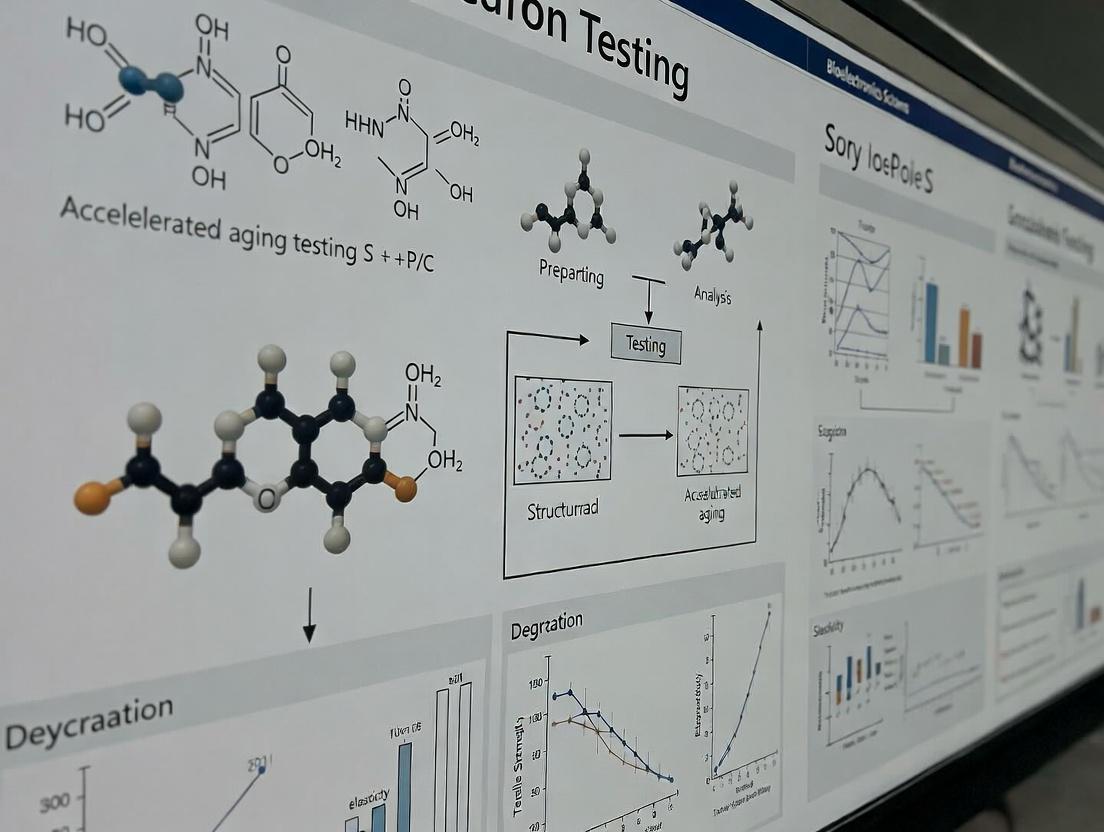
This article provides a comprehensive guide to accelerated aging testing for implantable encapsulation materials, crucial for predicting long-term stability and safety in medical devices and drug delivery systems.
Accelerated Aging Testing for Implantable Encapsulation Materials: Protocols, Challenges, and Best Practices for Medical Device Development
Abstract
This article provides a comprehensive guide to accelerated aging testing for implantable encapsulation materials, crucial for predicting long-term stability and safety in medical devices and drug delivery systems. Targeted at researchers, scientists, and development professionals, we explore the fundamental principles and rationale behind accelerated aging (ISO 11985, ASTM F1980), detailing standard methodologies including temperature-driven Arrhenius modeling and real-time degradation studies. We address common troubleshooting challenges such as material-specific failure modes, property drift, and test condition selection, offering optimization strategies for predictive accuracy. The content validates testing outcomes by comparing accelerated results with real-time data, examining case studies of silicone, parylene, and polyurethane, and discussing regulatory considerations for FDA/CE submissions. This resource synthesizes current industry practices to ensure reliable prediction of in-vivo performance and material longevity.
The Science of Simulating Time: Core Principles and Rationale for Accelerated Aging of Implantable Encapsulation Materials
The functional lifetime of an implantable medical device—from neurostimulators to drug-eluting implants—is dictated by the integrity of its encapsulation. Material degradation leads to catastrophic failure modes: moisture ingress, component corrosion, and uncontrolled drug release. Real-time aging studies are impractical for devices with 5-10+ year service lives. Therefore, accelerated aging, rooted in the Arrhenius model of chemical kinetics, is the foundational, non-negotiable methodology for predicting long-term stability and ensuring patient safety within feasible R&D timelines.
Core Principles & Quantitative Framework
Accelerated aging assumes that the dominant failure mechanisms remain consistent between accelerated and real-time conditions. For polymer encapsulation, hydrolytic degradation is the primary pathway. The Arrhenius equation provides the quantitative basis:
k = A * e^(-Ea/RT)
Where:
- k = degradation rate constant
- A = pre-exponential factor
- Ea = Activation energy (kJ/mol)
- R = Gas constant (8.314 J/mol·K)
- T = Absolute temperature (K)
The acceleration factor (AF) between a real-time storage temperature (Tuse) and an elevated temperature (Tstress) is:
AF = e^[(Ea/R) * (1/Tuse - 1/Tstress)]
Table 1: Calculated Acceleration Factors for Common Implant Conditions
| Assumed Ea (kJ/mol) | Use Condition (T_use) | Stress Condition (T_stress) | Acceleration Factor (AF) | Time at Tstress to simulate 1 year at Tuse |
|---|---|---|---|---|
| 70 | 37°C (310.15 K) | 57°C (330.15 K) | 7.6 | ~48 days |
| 70 | 37°C (310.15 K) | 67°C (340.15 K) | 18.5 | ~20 days |
| 85 | 37°C (310.15 K) | 57°C (330.15 K) | 12.5 | ~29 days |
| 85 | 37°C (310.15 K) | 67°C (340.15 K) | 35.9 | ~10 days |
Note: Ea must be empirically determined for the specific material system. ISO 11907-1 provides guidance. Extrapolation beyond 60°C is often discouraged due to potential for mechanistic shift.
Detailed Experimental Protocols
Protocol 1: Determination of Activation Energy (Ea) for Hydrolytic Degradation
Objective: To empirically determine the Ea for a silicone-polyimide laminate encapsulation system by tracking a key property (e.g., Water Vapor Transmission Rate - WVTR) at multiple elevated temperatures.
Materials: See "The Scientist's Toolkit" below.
Methodology:
- Sample Preparation: Fabricate or obtain standardized thin-film discs (e.g., 5 cm diameter) of the encapsulation laminate. Ensure uniform thickness (±5%).
- Conditioning: Dehydrate all samples in a vacuum desiccator (< 0.1 atm) at 40°C for 48 hours. Record initial dry mass (M_initial).
- Aging Setup: Place samples in controlled humidity chambers (e.g., 90% RH ± 2%) maintained at four distinct temperatures: 47°C, 57°C, 67°C, and 77°C. Use saturated salt solutions for RH control.
- Sampling & Measurement: At predetermined intervals (e.g., 24, 48, 96, 168, 336 hours), remove triplicate samples from each condition.
- Blot surface moisture.
- Immediately measure mass (M_wet).
- Return samples to desiccator for final dry mass (Mfinaldry).
- Data Analysis:
- Calculate moisture uptake: %Uptake = [(Mwet - Mfinaldry) / Minitial] * 100.
- Model the initial linear region of uptake vs. √time for each temperature to obtain the uptake rate constant (kT).
- Plot ln(kT) vs. 1/T (in Kelvin). Perform linear regression. The slope = -Ea/R.
- Calculate Ea = -slope * R.
Protocol 2: Full-System Accelerated Aging & Failure Point Analysis
Objective: To subject a complete, functional implantable device (e.g., a sealed pulse generator) to accelerated aging and monitor for electrical and barrier failure.
Materials: Functional implantable devices, impedance analyzer, helium leak tester, environmental chambers.
Methodology:
- Baseline Testing: For each device (n≥10 per group), record:
- Hermeticity via fine helium leak test (per ASTM F2391).
- Key electrical parameters (impedance, battery voltage, function output).
- Device mass.
- Aging Matrix: Place devices in phosphate-buffered saline (PBS, pH 7.4 ± 0.1) at 57°C and 87°C. Include a control group at 37°C for real-time correlation.
- In-Situ Monitoring: Use wired or wireless systems to log electrical parameters of submerged devices continuously or at frequent intervals.
- Destructive Endpoint Analysis: At scheduled time points (e.g., 4, 8, 12, 24 weeks at 87°C, correlating to multi-year equivalents), remove devices.
- Perform electrical function test.
- Conduct leak test.
- Perform destructive physical analysis (DPA): section device, inspect for corrosion, measure adhesive bond strength, analyze polymer chemistry via FTIR or DSC for changes in crystallinity/chain scission.
Visualizations
Diagram Title: Accelerated Aging Prediction Workflow (98 chars)
Diagram Title: Material Degradation Pathway to Failure (99 chars)
The Scientist's Toolkit: Research Reagent Solutions
Table 2: Essential Materials for Encapsulation Aging Studies
| Item / Reagent | Function / Relevance | Key Considerations |
|---|---|---|
| Medical Grade Silicone Elastomers (e.g., Nusil, Dow Silicones) | Primary encapsulation material; flexible, biocompatible barrier. | Lot consistency, purity (low leachables), cure kinetics. |
| Polyimide Substrates & Tapes | Provides mechanical support and electrical insulation in hybrid laminates. | Adhesion promotion, hydrolytic stability grade, thickness. |
| Phosphate-Buffered Saline (PBS), pH 7.4 | Simulates physiological ionic environment for in vitro aging. | Sterility, absence of microbial growth inhibitors that could skew chemistry. |
| Controlled Humidity Chambers | Enables precise relative humidity (RH) control for dry-state aging studies. | Use of saturated salt solutions (e.g., K₂SO₄ for 97% RH) for cost-effectiveness. |
| Water Vapor Transmission Rate (WVTR) Analyzer (e.g., gravimetric, coulometric) | Quantifies the primary barrier property of encapsulation films. | Sensitivity (needs to reach <10⁻³ g/m²/day for implants), temperature control. |
| Fine Helium Leak Detector | Measures hermetic seal integrity of final device packages per ASTM standards. | Detection limit must be ≤ 1x10⁻⁸ atm·cc/sec He. |
| Electrochemical Impedance Spectroscopy (EIS) Setup | Monitors insulation resistance and detects early-stage moisture ingress in situ. | Use of biocompatible electrodes (Pt, IrOx), relevant frequency range (0.1 Hz - 1 MHz). |
| Differential Scanning Calorimetry (DSC) | Analyzes polymer thermal transitions (Tg, Tm, crystallinity) post-aging to assess chain scission/crosslinking. | Small sample size (5-10 mg), need for hermetically sealed pans to contain moisture. |
Application Notes
Within the thesis on accelerated aging testing for implantable encapsulation materials, three primary regulatory and consensus standards form the framework for validating shelf-life claims. These documents guide the design, execution, and interpretation of accelerated aging protocols, ensuring data integrity and regulatory acceptance.
1. ASTM F1980-21: Standard Guide for Accelerated Aging of Sterile Medical Device Packages This is the foundational methodological guide. It details the use of the Arrhenius model for simulating real-time degradation via elevated temperature. It is directly applicable to packaging systems but is extensively used for the devices/materials themselves when assessing shelf-life. Key principles include:
- Q10 Approach: Establishes the acceleration factor (Q10), typically 2.0 for many polymers, though a conservative 1.8 may be used if material-specific data is unavailable.
- Real-Time Correlation: Mandates concurrent real-time aging studies to validate the accelerated model's predictions.
- Aging Temperature Cap: Recommends a maximum aging temperature no greater than 15°C below the material's glass transition or melting point to avoid inducing non-representative degradation pathways.
2. ISO 11985:2023 Ophthalmic optics — Contact lenses — Ageing by exposure to light While specific to contact lenses, this standard is critically instructive for encapsulation materials susceptible to photodegradation. It provides a complementary model to thermal aging for materials that will be transparent or exposed to light in vivo. It details:
- Light Source Specifications: Use of xenon-arc lamps simulating full-spectrum sunlight.
- Exposure Cycles: Defined cycles of light and dark periods, often with controlled temperature and humidity.
- Application to Implants: The protocol can be adapted for subcutaneous or intraocular implants where photochemical aging is a relevant failure mode alongside thermal- oxidative aging.
3. FDA Guidance: Container Closure Systems for Packaging Human Drugs and Biologics & Various Device Guidance Documents The FDA does not prescribe a single protocol but provides the regulatory expectations for shelf-life claims across multiple guidance documents. Core requirements include:
- Stability-Indicating Methods: Analytical methods must distinguish degradation products from the parent material.
- Statistical Confidence: Data must support the claimed shelf life with an acceptable confidence level (e.g., 95%).
- Worst-Case Selection: Testing must represent worst-case scenarios for storage, shipping, and use.
- Link to Performance: The tested critical-to-quality attributes (e.g., tensile strength, permeability, elongation) must be directly linked to the device's safety and performance.
Comparative Data Summary
| Document | Primary Scope | Key Quantitative Parameter | Typical Test Condition Range | Model Validation Requirement |
|---|---|---|---|---|
| ASTM F1980-21 | Medical Device/Package Aging | Acceleration Factor (Q10 = 1.8 - 2.2) | Temp: 50°C - 70°CHumidity: As required | Mandatory real-time aging correlation |
| ISO 11985:2023 | Photodegradation of Polymers | Light Irradiance (W/m²) & Total Dose (J/m²) | Xenon arc, 0.5 - 1.1 W/m² @ 420 nmControlled Temp (e.g., 35°C) | Correlation to real-time indoor/outdoor exposure |
| FDA Guidance | Drug/Device Shelf-Life Claims | Confidence Interval (e.g., 95%) & Acceptance Criteria | Condition-specific; based on ICH Q1A(R2) principles | Statistically justifiable projection from data |
Experimental Protocols
Protocol 1: Combined Thermal-Oxidative Accelerated Aging per ASTM F1980 Objective: To predict the 5-year shelf-life of a silicone-based encapsulation material.
- Determine Q10: Via literature review or preliminary DSC/TGA. Use Q10=2.0 for silicone.
- Calculate Aging Duration: For a 5-year (1825 days) claim and an aging temperature of 55°C (assuming 25°C ambient): Acceleration Factor (AF) = Q10^((Taging - Troom)/10) = 2.0^((55-25)/10) = 2.0^3 = 8. Required aging time = 1825 days / 8 = 228 days.
- Prepare Samples: Divide into three groups: A (Time Zero controls), B (Accelerated aging), C (Real-time aging at 25°C).
- Conditioning: Place Group B in an environmental chamber at 55°C ± 2°C and 50% ± 5% RH. Use forced-air ovens for uniformity.
- Interim Time Points: Remove samples at intervals (e.g., 1, 3, 6 months) for testing.
- Testing: Perform stability-indicating tests: tensile strength (ASTM D412), elongation at break, durometer hardness (ASTM D2240), and permeability assay.
- Validation: Compare Group B (accelerated) endpoint data to Group C (real-time) data at the correlated time point to validate the model.
Protocol 2: Supplemental Photodegradation Aging per ISO 11985 (Adapted) Objective: To assess light-induced degradation of a polyurethane encapsulation for an implantable sensor.
- Sample Mounting: Securely mount samples in exposure frames, ensuring uniform irradiance.
- Exposure Parameters: Use a xenon-arc light source with an appropriate daylight filter. Set irradiance to 0.8 W/m² measured at 420 nm. Maintain chamber temperature at 35°C ± 2°C and relative humidity at 50% ± 5%.
- Cycle: Employ a repeating cycle of 4 hours light followed by 2 hours dark (no irradiance, environmental controls maintained).
- Dosimetry: Continuously monitor and totalize the radiant exposure (J/m²).
- Duration: Calculate exposure time to simulate, e.g., 2 years of ambient indoor light exposure. Interim pulls at defined radiant exposure doses.
- Testing: Assess for yellowing (colorimetry), surface cracking (SEM), and changes in molecular weight (GPC).
Visualizations
Shelf-Life Validation Workflow for Encapsulation Materials
Arrhenius Model Calculation & Temperature Check
The Scientist's Toolkit: Key Research Reagent Solutions
| Item / Solution | Function in Accelerated Aging Research |
|---|---|
| Environmental Chamber | Precisely controls temperature (±0.5°C) and relative humidity (±2% RH) for ASTM F1980-compliant thermal-oxidative aging. |
| Xenon-Arc Weatherometer | Provides full-spectrum simulated sunlight with controlled irradiance, temperature, and humidity for photodegradation studies per ISO 11985. |
| Tensile Tester | Quantifies mechanical integrity (ultimate tensile strength, elongation at break) of aged vs. control encapsulation materials. |
| Gel Permeation Chromatograph (GPC) | Measures changes in polymer molecular weight distribution, a key indicator of chain scission or crosslinking degradation. |
| Fourier-Transform Infrared Spectrometer (FTIR) | Identifies chemical bond changes (e.g., oxidation, hydrolysis) on the surface and in the bulk of aged materials. |
| Stability-Indicating Assay | A custom analytical method (e.g., HPLC, permeability test) specifically designed to monitor the specific degradation products of the encapsulated active. |
| Data Loggers | Independent sensors placed within chambers to continuously verify and document time, temperature, and humidity conditions for regulatory audits. |
Within the critical field of implantable encapsulation materials research, predicting long-term material stability is paramount. Accelerated aging testing, a cornerstone methodology, relies fundamentally on the principles of chemical kinetics and the Arrhenius equation. This application note details the theoretical underpinnings, practical protocols, and key reagents for applying these concepts to model and predict the degradation kinetics of polymeric encapsulation barriers under accelerated conditions, thereby ensuring device safety and efficacy over multi-year implantation periods.
Core Theoretical Framework
The rate of a chemical reaction, including the degradation processes (e.g., hydrolysis, oxidation) in polymers, is temperature-dependent. The Arrhenius equation quantifies this relationship:
k = A e^(-Ea/RT)
Where:
- k = reaction rate constant
- A = pre-exponential factor (frequency factor)
- Ea = activation energy (J/mol)
- R = universal gas constant (8.314 J/mol·K)
- T = absolute temperature (K)
In accelerated aging studies for medical implants, materials are subjected to elevated temperatures to accelerate degradation mechanisms. Data from these conditions are extrapolated to predict real-time (e.g., 37°C body temperature) performance using the linearized form:
ln(k) = ln(A) - (Ea/R)(1/T)
A plot of ln(k) versus 1/T yields a straight line with a slope of -Ea/R, enabling the calculation of the activation energy and the prediction of the rate constant at the use temperature.
Key Quantitative Data in Encapsulation Aging
The following table summarizes typical activation energies for common degradation pathways relevant to implantable encapsulation materials, such as polyurethanes, silicones, and epoxies.
Table 1: Typical Activation Energies for Polymer Degradation Pathways
| Degradation Pathway | Typical Polymer Class | Activation Energy (Ea) Range (kJ/mol) | Key Notes for Encapsulation |
|---|---|---|---|
| Ester Hydrolysis | Poly(lactic-co-glycolic acid) (PLGA), Polyurethanes | 50 - 85 | Highly dependent on pH and local moisture permeability. Critical for bioresorbable coatings. |
| Oxidative Chain Scission | Polyethylene, Polypropylene | 80 - 120 | Relevant for materials exposed to inflammatory oxidative stress in vivo. |
| Siloxane Oxidation | Polydimethylsiloxane (Silicone) | 100 - 150 | Primary long-term aging mechanism for silicone elastomers. |
| Crosslinking (Post-Cure) | Epoxy resins, Polyurethanes | 70 - 110 | Can increase modulus and brittleness over time, leading to crack formation. |
Experimental Protocol: Determining Ea for Hydrolytic Degradation
This protocol outlines a method to determine the activation energy for the hydrolysis of a polyester-based encapsulation material.
Title: Accelerated Hydrolytic Aging of Polyester Films
Objective: To determine the activation energy (Ea) for the hydrolysis reaction of a model polyester film by measuring property loss (e.g., molecular weight) at multiple elevated temperatures.
Materials & Reagents (Scientist's Toolkit):
Table 2: Key Research Reagent Solutions & Materials
| Item | Function/Description |
|---|---|
| Polyester Test Films | Model encapsulation material, precisely cast to a standardized thickness (e.g., 100 ± 10 µm). |
| Phosphate Buffered Saline (PBS), 0.01M, pH 7.4 | Simulates physiological pH and ionic strength for hydrolysis. |
| pH-Stat Apparatus | For precise maintenance of pH during aging, or for monitoring acid release rate. |
| Gel Permeation Chromatography (GPC) System | For measuring the decline in number-average molecular weight (Mn) over time, the primary degradation metric. |
| Hermetic Aging Vessels | Sealed glass vials or reactors to contain samples in PBS at controlled temperatures. |
| Controlled-Temperature Ovens/Water Baths | For maintaining accurate accelerated aging temperatures (e.g., 50°C, 60°C, 70°C, 80°C). |
Procedure:
- Sample Preparation: Cut polyester films into identical discs (n≥5 per time point per temperature). Pre-weigh and measure initial thickness. Characterize initial molecular weight (Mn₀) via GPC.
- Accelerated Aging Setup: Place individual samples in aging vessels filled with excess PBS (to ensure sink conditions). Purge headspace with nitrogen to minimize oxidation. Seal hermetically.
- Temperature Array Incubation: Place sets of vessels in ovens pre-set at a minimum of four elevated temperatures (e.g., 50, 60, 70, 80°C). Include one set at the use temperature (37°C) for model validation.
- Sampling: At predetermined time intervals, remove replicate vessels (n=3-5) from each temperature. Rinse samples, dry under vacuum, and store in a desiccator until analysis.
- Analysis: Determine molecular weight (Mn_t) of aged samples via GPC.
- Data Modeling: Assume hydrolysis follows pseudo-first-order kinetics. For each temperature, plot ln(Mn_t/Mn₀) vs. time. The slope of the linear region is the apparent rate constant, k, for that temperature.
- Arrhenius Plot: Plot ln(k) versus 1/T (where T is in Kelvin) for all accelerated temperatures. Perform linear regression.
- Calculation: Calculate Ea = -Slope * R. Use the fitted equation to extrapolate k at 37°C and predict the time for 50% molecular weight loss in vivo.
Conceptual Diagrams
Diagram Title: Accelerated Aging Prediction Workflow
Diagram Title: Energy Diagram for Polymer Hydrolysis
Application Notes
The development of next-generation implantable medical devices—from pacemakers and neurostimulators to drug-eluting implants and biosensors—is contingent on advanced encapsulation materials. These materials must provide long-term, reliable protection for sensitive electronics and/or bioactive agents within the aggressive physiological environment. This document, framed within a broader thesis on accelerated aging methodologies, details the critical triad of material properties under evaluation: Barrier Function, Mechanical Integrity, and Biocompatibility. The protocols herein are designed for researchers to systematically assess these properties under simulated in vivo and accelerated aging conditions.
Barrier Function is the primary role of encapsulation, preventing the ingress of water, ions (Na⁺, Cl⁻, K⁺), and biological fluids that can cause device failure via corrosion, electrical shorting, or drug instability. Evaluation moves beyond simple water vapor transmission rates to include specific ion permeability under physiological conditions.
Mechanical Integrity ensures the encapsulation maintains its structural and protective role despite constant mechanical stress in vivo, including flexing, compression, and tensile forces from tissue movement. Properties like modulus, fracture toughness, and adhesion strength are monitored for degradation over time.
Biocompatibility assesses the local and systemic host response. It is not merely the inertness of the virgin material, but the biological response to its degradation products and altered surface morphology after aging. Chronic inflammation and fibrous encapsulation can impair device function.
Accelerated aging testing (AAT), utilizing elevated temperature and humidity per ASTM F1980, is employed to predict long-term performance. However, correlating accelerated conditions to real-time aging requires careful analysis of these three interdependent properties, as degradation in one often precipitates failure in another.
Protocols & Experimental Methodologies
Protocol 1: Quantitative Barrier Function Assessment via Electrochemical Impedance Spectroscopy (EIS)
Objective: To measure the ionic resistivity and defect density of thin-film encapsulation coatings on conductive substrates under simulated physiological saline (0.9% NaCl, 37°C) before and after accelerated aging.
Materials & Setup:
- Test Samples: Encapsulation material coated onto planar noble metal (e.g., platinum, gold) electrodes.
- Electrolyte: Phosphate Buffered Saline (PBS, pH 7.4) or 0.9% NaCl.
- Equipment: Potentiostat/Galvanostat with EIS capability, 3-electrode cell (sample as working electrode, Pt mesh as counter electrode, Ag/AgCl reference electrode), environmental chamber for temperature control.
- Aging: Samples aged per ASTM F1980 (e.g., 60°C, 80% RH for intervals equivalent to 1, 3, 6 months in vivo).
Procedure:
- Baseline Measurement: Immerse pristine sample in 37°C PBS. Apply a sinusoidal voltage perturbation (10 mV amplitude) over a frequency range from 100 kHz to 0.1 Hz at the open circuit potential.
- Aging: Subject samples to controlled accelerated aging conditions.
- Post-Aging Measurement: Repeat step 1 after each aging interval.
- Data Analysis: Fit the low-frequency impedance modulus (e.g., at 0.1 Hz, |Z|₀.₁Hz) or the impedance of the coating derived from a Randles circuit model. Calculate the coating's ionic resistivity (ρ) from the pore resistance (Rpo).
Quantitative Data Output: Table 1: EIS Barrier Function Data for Polymer Encapsulant X After Accelerated Aging (Equivalent to 12 months in vivo).
| Aging Interval (Equiv. Months) | Low-Freq Impedance | Z | ₀.₁Hz (Ω·cm²) | Pore Resistance Rpo (MΩ·cm²) | Calculated Ionic Resistivity (Ω·cm) | Visual Defect Density (#/cm²) |
|---|---|---|---|---|---|---|
| 0 (Pristine) | 5.2 × 10⁸ | 4.8 × 10⁸ | 1.2 × 10¹² | 0 | ||
| 3 | 3.1 × 10⁸ | 2.7 × 10⁸ | 6.8 × 10¹¹ | < 5 | ||
| 6 | 4.5 × 10⁷ | 3.9 × 10⁷ | 9.8 × 10¹⁰ | 15 | ||
| 12 | 1.8 × 10⁶ | 1.5 × 10⁶ | 3.8 × 10⁹ | 120 |
EIS Workflow for Barrier Assessment
Protocol 2: Mechanical Integrity Evaluation via Nanoindentation and Peel Adhesion Testing
Objective: To characterize the time-dependent evolution of key mechanical properties: hardness, reduced modulus, and interfacial adhesion strength post-aging.
Part A: Nanoindentation for Bulk Film Properties
- Equipment: Nanoindenter with Berkovich tip.
- Procedure: Perform grid indents (e.g., 5x5) on encapsulated surfaces. Use the Oliver-Pharr method to analyze load-displacement curves. Report hardness (H) and reduced modulus (Er).
- Aging Correlation: Monitor for softening (decrease in H, Er) due to plasticization by absorbed water or hardening due to continued cross-linking.
Part B: 90-Degree Peel Test for Adhesion Strength
- Sample Preparation: Fabricate samples per ASTM D6862: encapsulant laminated onto a rigid substrate (e.g., silicon, titanium) with a pre-defined non-adhesive tab.
- Equipment: Universal tensile testing machine.
- Procedure: Peel the encapsulant at a 90-degree angle at a constant crosshead speed (e.g., 25 mm/min). Record peel force (F) over a stable peeling region.
- Calculation: Adhesion energy (G, J/m²) = 2F / w, where w is the width of the peel strip.
Quantitative Data Output: Table 2: Mechanical Property Degradation of Silicone-Polyurethane Hybrid Encapsulant After Accelerated Aging.
| Aging Condition (60°C, 80% RH) | Hardness (H) [MPa] | Reduced Modulus (Er) [GPa] | Peel Adhesion Strength [N/cm] | Failure Mode |
|---|---|---|---|---|
| 0 days (Pristine) | 25.4 ± 1.2 | 2.8 ± 0.2 | 15.3 ± 1.5 | Cohesive (within encapsulant) |
| 14 days | 22.1 ± 1.5 | 2.5 ± 0.3 | 14.1 ± 1.8 | Mixed Cohesive/Adhesive |
| 28 days | 18.7 ± 2.1 | 2.1 ± 0.2 | 9.8 ± 2.2 | Adhesive (at substrate interface) |
| 56 days | 15.3 ± 2.8 | 1.7 ± 0.4 | 5.2 ± 1.7 | Complete Adhesive Failure |
Mechanical Degradation Pathways
Protocol 3: In Vitro Biocompatibility Assessment Post-Aging (ISO 10993-5/-12)
Objective: To evaluate the cytotoxic and inflammatory potential of encapsulation materials after leaching in simulated physiological fluids post-aging.
Part A: Direct Contact & Extract Elution Cytotoxicity Test
- Sample Preparation & Aging: Sterilize material samples (e.g., discs). Subject a subset to accelerated aging. Prepare extracts by incubating aged and non-aged samples in cell culture medium (e.g., DMEM) for 24h at 37°C.
- Cell Culture: Use L929 mouse fibroblast cells or human-relevant cell lines (e.g., THP-1 for monocytes).
- Assay: Expose cells to extracts or place materials in direct contact. After 24-48h, assess viability via MTT or AlamarBlue assay. Report viability relative to negative control.
Part B: Assessment of Inflammatory Response (THP-1 Monocyte Model)
- Differentiation: Differentiate THP-1 monocytes into macrophage-like cells using PMA.
- Exposure: Expose macrophages to material extracts (from Part A).
- Analysis: Quantify pro-inflammatory cytokines (IL-1β, IL-6, TNF-α) in supernatant via ELISA after 24h exposure.
Quantitative Data Output: Table 3: Biocompatibility Profile of Aged vs. Pristine Polyimide Film.
| Test Article | Cell Viability (% of Control) | IL-1β Release (pg/mL) | TNF-α Release (pg/mL) | Observation (Activation State) |
|---|---|---|---|---|
| Negative Control (HDPE) | 100 ± 5 | 15 ± 3 | 20 ± 4 | Non-activated, resting |
| Pristine Polyimide | 98 ± 4 | 25 ± 5 | 30 ± 6 | Mild, non-significant activation |
| Polyimide (Aged, 56 days) | 72 ± 8* | 185 ± 22* | 210 ± 25* | Significant pro-inflammatory activation |
| Positive Control (Latex) | 45 ± 10* | 450 ± 50* | 500 ± 55* | Severe activation |
( indicates statistically significant difference vs. Negative Control, p<0.01)*
The Scientist's Toolkit: Research Reagent Solutions
Table 4: Essential Materials for Encapsulation Material Testing.
| Item Name / Kit | Function / Application | Example Vendor(s) |
|---|---|---|
| Potentiostat/Galvanostat with EIS | Measures electrochemical impedance for quantitative barrier function assessment. | Metrohm, Biologic, Ganny |
| Nanoindentation System | Measures nanoscale hardness and reduced modulus of thin-film encapsulation materials. | Bruker, KLA, Anton Paar |
| Universal Tensile Tester | Quantifies peel adhesion strength and other macro-mechanical properties. | Instron, MTS, ZwickRoell |
| ISO 10993-12 Compliant Extraction Kit | Provides standardized containers and protocols for preparing material extracts for biocompatibility. | Nusil Technology, MilliporeSigma |
| Multiplex Cytokine ELISA Assay Kit (Human) | Quantifies multiple inflammatory cytokines (IL-1β, IL-6, TNF-α) from cell culture supernatants. | R&D Systems, BioLegend, Abcam |
| AlamarBlue Cell Viability Reagent | Fluorescent/colorimetric indicator for measuring in vitro cytotoxicity per ISO 10993-5. | Thermo Fisher Scientific |
| ASTM F1980 Compliant Accelerated Aging Chamber | Provides controlled elevated temperature and humidity for predictive aging studies. | CTS, Thermotron, ESPEC |
| Simulated Body Fluid (SBF) Solution * | Ionic solution mimicking human blood plasma for in vitro degradation and barrier testing. | Bioreliance, Sigma-Aldrich |
Within the broader thesis on accelerated aging testing for implantable encapsulation materials, this document addresses the central challenge of correlating short-term in-vitro degradation data with long-term in-vivo performance. The goal is to establish predictive models for material lifetimes, particularly for drug-eluting implants and bioelectronic interfaces, where encapsulation integrity over decades is critical.
Table 1: Primary Discrepancies Between In-Vitro and In-Vivo Environments
| Factor | Standard In-Vitro Condition | Typical In-Vivo Environment | Impact on Correlation |
|---|---|---|---|
| Solution Chemistry | Static PBS, pH 7.4, fixed ions | Dynamic interstitial fluid, variable pH (7.0-7.4), enzymes, proteins | Protein adsorption alters degradation kinetics; ions catalyze/passivate reactions. |
| Mechanical Stress | Often quiescent or simple cyclic strain. | Complex multiaxial stress (pulsatile, muscle movement). | Stress-corrosion cracking and fatigue not captured in static tests. |
| Inflammatory Response | Absent. | Foreign body response (FBR): macrophage adhesion, fusion, cytokine release. | Giant cells and reactive oxygen species (ROS) aggressively degrade materials. |
| Sample Retrieval & Analysis | Controlled, non-destructive sampling possible. | Requires sacrifice, explant; surface altered during retrieval. | Limits longitudinal data points per subject; introduces artifact risk. |
Table 2: Reported Acceleration Factors for Common Encapsulation Polymers
| Material | Standard In-Vivo Degradation Time (Yrs) | Common Accelerated In-Vitro Condition | Reported Acceleration Factor | Key Correlation Limitation |
|---|---|---|---|---|
| Polyimide | >10 (Insulation failure) | 87°C, PBS (hydrolytic) | ~10-20x | Neglects oxidative stress from FBR. |
| PDMS | 5-25 (Creep, calcification) | 70°C, H₂O₂ Solution (oxidative) | ~15-30x | Difficulty replicating calcification process. |
| Parylene-C | >20 (Delamination) | 120°C, High Humidity (hydrolytic) | ~50-100x | Does not simulate interfacial bio-adhesion. |
| Silicone Epoxy | 10-15 (Water uptake) | 85°C/85% RH (temperature/humidity bias) | ~20-50x | Immune cell-mediated degradation not accelerated. |
Detailed Experimental Protocols
Protocol 3.1: Multi-Stressor In-Vitro Accelerated Aging
Objective: To simulate combined hydrolytic, oxidative, and mechanical stress in-vitro. Materials: Test chambers, orbital shaker with temperature control, PBS (1x), Hydrogen Peroxide (H₂O₂, 0.1-1.0M), loading fixtures. Procedure:
- Prepare test samples of encapsulation material per ISO 10993-12.
- Prepare aging solutions: (A) PBS (control), (B) PBS + 0.3M H₂O₂ (oxidative).
- Place samples in solutions within sealed vials. Mount vials on orbital shaker platform to apply mild fluid shear stress.
- Place entire assembly in temperature-controlled oven at 70°C, 80°C, and 90°C (for Arrhenius analysis).
- Remove sample subsets at predetermined intervals (e.g., 1, 2, 4, 8 weeks).
- Perform characterization: Mass loss, water uptake, FTIR for chemical change, impedance spectroscopy (for coatings).
- Extract degradation rate constants (k) at each temperature. Use Arrhenius equation (ln(k) vs. 1/T) to extrapolate rate at 37°C.
Protocol 3.2: Ex-Vivo Analysis of Explanted Encapsulation Materials
Objective: To characterize materials retrieved from an in-vivo model and compare degradation modes to in-vitro predictions. Materials: Explanted devices, histological fixative, scanning electron microscope (SEM), X-ray photoelectron spectroscopy (XPS). Procedure:
- Explant: Sacrifice animal model at endpoint. Gently explant device with surrounding tissue intact.
- Gross Examination: Photograph device and tissue. Note adhesion, discoloration, visible defects.
- Tissue-Material Interface Processing: Fix tissue-device block in 4% PFA. Dehydrate and embed in resin (e.g., PMMA). Microtome cross-sections.
- Material Surface Analysis:
- SEM/EDS: Image surface morphology and analyze elemental composition of deposits.
- XPS: Analyze top 10 nm of surface chemistry for protein signatures, oxidation states.
- Correlative Analysis: Map degradation features (cracks, pits, biofilm) from ex-vivo samples to features seen in in-vitro samples subjected to Protocol 3.1.
Protocol 3.3: In-Vitro Foreign Body Response Simulation
Objective: To incorporate immune system components into in-vitro testing. Materials: Primary human macrophages or cell line (e.g., THP-1), cell culture media, LPS/IFN-γ for M1 polarization, IL-4/IL-13 for M2 polarization, fluorescent ROS probe (e.g., DCFDA). Procedure:
- Sterilize material samples (UV or ethanol).
- Seed macrophages onto material surfaces at high density (e.g., 50,000 cells/cm²).
- Polarize cells towards pro-inflammatory M1 phenotype using LPS (100 ng/mL) and IFN-γ (20 ng/mL) for 48 hours.
- Maintain co-culture for up to 14 days, refreshing media and cytokines every 2-3 days.
- Monitor ROS production: Incubate with DCFDA (10 µM) for 30 min, image fluorescence.
- At endpoint, analyze material surface via SEM and culture supernatant for cytokine levels (ELISA) to quantify inflammatory potency.
- Compare surface degradation to samples aged in H₂O₂ solutions alone.
Visualization: Pathways and Workflows
Title: The In-Vivo / In-Vitro Correlation Challenge Path
Title: Multi-Stressor Accelerated Aging Workflow
Title: Key Foreign Body Response Pathway Affecting Materials
The Scientist's Toolkit: Research Reagent Solutions
Table 3: Essential Materials for Correlation Studies
| Item / Reagent | Function / Role | Key Consideration for Correlation |
|---|---|---|
| Controlled-Temperature/Humidity Ovens | Provides thermal acceleration for hydrolytic degradation (Arrhenius model). | Must have precise RH control. High T may induce non-physical degradation modes. |
| Hydrogen Peroxide (H₂O₂) Solutions | Chemical oxidant to simulate reactive oxygen species (ROS) from immune cells. | Concentration (0.1-3%) must be calibrated; high levels can cause unrealistic blistering. |
| Simulated Body Fluid (SBF) | Ionic solution mimicking blood plasma for more realistic mineral deposition. | Better than PBS for predicting bioactivity and certain surface changes. |
| Macrophage Cell Lines (e.g., THP-1) | In-vitro model for the foreign body response and immune-mediated degradation. | Requires proper differentiation (PMA) and polarization (cytokines) to be relevant. |
| Electrochemical Impedance Spectroscopy (EIS) Setup | Non-destructive tracking of barrier property degradation of thin films in-situ. | Critical for functional coatings; can be used in both in-vitro and in-vivo models. |
| Multi-Axis Mechanical Testers | Applies cyclic flexural or tensile stress to simulate in-vivo mechanical loading. | Matching the correct strain amplitude and frequency is challenging but crucial. |
| X-ray Photoelectron Spectroscopy (XPS) | Surface-sensitive analysis (<10 nm) to detect oxidation states and protein fouling. | Gold standard for comparing surface chemistry changes from in-vitro vs. ex-vivo samples. |
| Fluorescent ROS Probes (e.g., DCFDA) | Quantifies reactive oxygen species production by cells on material surfaces. | Directly links immune cell activity to a quantifiable chemical stressor. |
Executing the Test: Standard Protocols, Environmental Stressors, and Real-Time Parallels for Accurate Aging Studies
Within the accelerated aging research for implantable encapsulation materials, the construction of a test matrix is a critical, hypothesis-driven exercise. It is not an arbitrary selection of conditions but a deliberate design to probe failure modes, predict service life, and understand degradation kinetics of materials such as silicones, polyurethanes, parylene, and epoxy resins used in drug-eluting implants, neurostimulators, and pacemakers. This protocol details the methodology for selecting and applying stress factors (temperature, humidity, pH, mechanical load) to simulate and accelerate real-world aging in a controlled laboratory environment.
Rationale for Stress Factor Selection
Accelerated aging relies on the principle of accelerating degradation mechanisms relevant to the implant's intended environment (e.g., subcutaneous, intravascular, cerebrospinal fluid). The Arrhenius model is fundamental for temperature acceleration, while humidity, chemical (pH), and mechanical stresses are selected based on the specific failure modes of interest, such as hydrogel swelling, polymer hydrolysis, drug diffusion rate changes, or adhesive delamination.
Core Stress Factors: Quantitative Ranges & Justification
Table 1: Primary Climatic Stress Factors & Typical Ranges
| Stress Factor | Typical Accelerated Test Range | Real-World Physiological Baseline | Acceleration Justification & Material Impact |
|---|---|---|---|
| Temperature | 40°C to 80°C | ~37°C (body temp) | Arrhenius kinetics; increases molecular mobility, reaction rates (hydrolysis, oxidation). Upper limit avoids inducing non-physical phase transitions. |
| Relative Humidity (RH) | 60% to 95% RH | Variable (subcutaneous ~80-100%) | Accelerates hydrolytic degradation, moisture ingress, and swelling. Critical for moisture-sensitive polymers (e.g., polyesters). |
| pH | 2.0 (acidic) to 9.0 (alkaline) | ~7.4 (physiological) | Probes chemical resistance to inflammatory response or metabolic byproducts. Can catalyze specific hydrolysis reactions. |
| Mechanical Load | Static: 100-500 kPaCyclic: 1-10 Hz, ±10-20% strain | Variable by site (e.g., cardiac pulsatile, joint load) | Accelerates fatigue, crack propagation, stress relaxation, and adhesion failure at material interfaces. |
Table 2: Example Test Matrix for a Silicone-based Drug Encapsulant
| Test Cell | Temperature | Humidity | pH Environment | Mechanical Stress | Duration (Planned) | Key Performance Indicators (KPIs) |
|---|---|---|---|---|---|---|
| A1 (Baseline Accelerated) | 70°C | 20% RH (dry) | N/A (dry air) | None | 0, 1, 3, 6 months | Mass, modulus, FTIR (oxidation) |
| A2 (Hydrolytic) | 70°C | 95% RH | Condensed water | None | 0, 1, 3, 6 months | Mass change, water uptake, OOTR |
| B1 (Chemical) | 50°C | Immersed | pH 7.4 PBS | None | 0, 2, 4, 8 weeks | Drug release kinetics, surface morphology |
| B2 (Chemical Acidic) | 50°C | Immersed | pH 2.0 buffer | None | 0, 2, 4, 8 weeks | Mass loss, byproduct analysis |
| C1 (Mechanical) | 37°C | 90% RH | N/A | Static Compression (200 kPa) | 0, 1, 4 weeks | Creep, permanent set |
| C2 (Mechanical Fatigue) | 37°C | 90% RH | N/A | Cyclic Strain (2 Hz, ±15%) | 0, 50k, 200k cycles | Crack initiation, fatigue life |
Detailed Experimental Protocols
Protocol 4.1: Constructing a Temperature-Humidity Matrix for Hydrolytic Aging
Objective: To determine the activation energy for hydrolytic degradation of a polyester-polyurethane encapsulant. Materials: See "Scientist's Toolkit" below. Procedure:
- Sample Preparation: Prepare 30 identical film samples (e.g., 50mm x 50mm x 0.5mm). Measure initial mass (M₀), thickness, and perform FTIR/DSC baseline.
- Matrix Definition: Create a 3x2 matrix: Temperatures (50°C, 60°C, 70°C) and RH levels (75% RH, 95% RH). Include 37°C/95% RH as a real-time control.
- Environmental Exposure: Place samples in controlled environmental chambers (e.g., humidity ovens). Use saturated salt solutions for RH validation within chambers.
- Sampling Schedule: Remove triplicate samples from each condition at intervals (e.g., 1, 2, 4, 8, 12 weeks).
- Analysis:
- Gravimetric Analysis: Pat dry, measure wet mass (Mw), then dry to constant mass (Md). Calculate Water Uptake (%) = [(Mw - Md)/M_d] * 100.
- Molecular Weight: Use GPC on dried samples to track Mn and Mw reduction.
- Mechanical Testing: Perform tensile tests per ASTM D412.
- Data Modeling: Fit molecular weight decay at each temperature to a kinetic model (e.g., first-order). Use Arrhenius plot (ln(k) vs. 1/T) to calculate activation energy (Eₐ) for hydrolysis.
Protocol 4.2: Combined Chemical (pH) and Mechanical Stress Testing
Objective: To evaluate the synergistic effect of pH and dynamic loading on a silicone adhesive bond. Materials: See "Scientist's Toolkit" below. Procedure:
- Bonded Sample Fabrication: Create lap-shear or peel test specimens per ASTM D3163 or D903, bonding the encapsulant to a representative substrate (e.g., titanium, glass).
- Environmental Pre-conditioning: Immerse subgroups of samples in three buffers: pH 2.0, pH 7.4, pH 9.0. Hold at 50°C for 48 hours.
- In-situ Mechanical Testing: Mount pre-conditioned samples (while wet) onto a mechanical tester equipped with an environmental chamber bath.
- Set bath to 37°C with relevant pH buffer.
- Apply a cyclic tensile load (e.g., 0-10 N at 1 Hz) for a set number of cycles (e.g., 10,000).
- Failure Analysis: Monitor for load drop indicating failure. Post-test, examine failure interface (cohesive vs. adhesive) using optical microscopy or SEM. Compare failure cycles and mode across pH groups.
Visualization: Test Matrix Design Logic
(Diagram Title: Accelerated Test Matrix Design Workflow)
The Scientist's Toolkit: Key Research Reagent Solutions
| Item Name / Category | Function in Encapsulation Aging Studies |
|---|---|
| Programmable Environmental Chambers | Precisely control temperature (±0.5°C) and relative humidity (±2% RH) for long-term stability studies. |
| Saturated Salt Solutions (e.g., NaCl, KCl, KNO₃) | Cost-effective method to generate specific, constant RH levels in desiccators for sub-ambient conditioning. |
| Phosphate Buffered Saline (PBS), pH 7.4 | Standard physiological immersion medium for simulating bodily fluid exposure. |
| Citrate (pH 2-6) & Borate (pH 8-9) Buffers | Used to probe chemical resistance under acidic (inflammatory) or alkaline conditions. |
| In-situ Mechanical Testers with Bath | Electrostatic or servo-hydraulic systems with environmental baths allow mechanical testing under fluid immersion at controlled temperature/pH. |
| Gel Permeation Chromatography (GPC) System | Measures changes in polymer molecular weight distribution, the gold standard for tracking chain scission (hydrolysis, oxidation). |
| Dynamic Vapor Sorption (DVS) Instrument | Precisely measures moisture uptake and diffusion coefficients of thin films as a function of RH. |
| Oxygen Permeation Analyzer (e.g., OX-TRAN) | Quantifies the oxygen transmission rate (OTR), critical for oxidation-prone materials and drug stability. |
| Adhesion Test Fixtures (Lap Shear, Peel, Blister) | Standardized fixtures for quantifying bond strength between encapsulant and substrate under various stresses. |
This application note presents a standardized protocol for the accelerated aging of three primary encapsulant materials used in implantable medical devices: medical-grade silicone elastomers (e.g., polydimethylsiloxane, PDMS), Parylene-C (poly(monochloro-para-xylylene)), and polyurethane (PU) elastomers. The protocol is designed to simulate long-term in vivo degradation within a controlled laboratory timeframe, supporting material selection and reliability predictions as part of a broader thesis on encapsulation materials research.
Research Rationale & Degradation Mechanisms
Accelerated aging tests apply elevated stress factors (temperature, hydration, chemical) to induce failure modes representative of in vivo performance. Key degradation pathways include:
- Silicone: Hydrolytic cleavage of siloxane bonds, loss of low molecular weight (LMW) silicones (bleed), and calcification.
- Parylene-C: Hydrolytic attack on the chloroalkyl group, leading to chlorine loss and chain scission, exacerbated by microcracks.
- Polyurethane: Hydrolytic or oxidative cleavage of ester/ether soft segments and urethane/urea hard segments, leading to chain scission and loss of mechanical integrity.
Experimental Protocol
Materials Preparation & Sample Fabrication
Research Reagent Solutions & Essential Materials:
| Material/Reagent | Function in Protocol |
|---|---|
| Medical-Grade Silicone Elastomer (e.g., Nusil MED-4211) | Primary test material; forms hermetic, flexible barrier. |
| Parylene-C Dimer (Dix-C) | Precursor for vapor deposition coating; conformal, pinhole-free barrier. |
| Medical Polyurethane (e.g., ChronoFlex AR, Elast-Eon 2A) | Primary test material; offers high tensile strength and biostability. |
| Phosphate Buffered Saline (PBS), 1X, pH 7.4 | Primary immersion medium simulates physiological ionic environment. |
| Simulated Body Fluid (SBF) | Alternative immersion medium for bioactive evaluation (e.g., calcification). |
| Demineralized & Deionized Water (ddH₂O) | Control immersion medium for pure hydrolytic studies. |
| Forced-Air Laboratory Oven | Provides stable, elevated temperature environment for aging. |
| Custom Sealed Vessels (e.g., glass jars with PTFE lids) | Contain samples and immersion medium, prevent evaporation. |
| Tensile Test System (e.g., Instron) | Quantifies post-aging mechanical properties (modulus, strength, elongation). |
| Electrochemical Impedance Spectroscopy (EIS) Setup | Measures electrical barrier property (impedance) of coated samples. |
| FTIR Spectrometer | Identifies chemical bond changes (e.g., Si-O-Si, C-Cl, C=O, N-H). |
Sample Fabrication Protocol:
- Silicone/Polyurethane: Mix per manufacturer instructions. Degas in vacuum desiccator. Pour into ASTM D412-F or D638-V dogbone molds. Cure as specified.
- Parylene-C: Deposit on pre-cleaned, planar substrates (e.g., silicon wafers, metal electrodes) and flat, cured silicone/PU samples. Use a standardized vapor deposition process (Gorham process) to achieve a uniform 5-20 µm coating. Verify thickness via profilometry.
Accelerated Aging Procedure
Protocol for Immersion Aging at Elevated Temperature:
- Baseline Characterization: Measure and record initial mass, dimensions, mechanical properties (for elastomers), and EIS spectra (for coated samples).
- Immersion: Place samples in individual sealed vessels containing 20x sample volume of pre-heated immersion medium (PBS, SBF, or ddH₂O). Ensure complete submersion.
- Incubation: Place vessels in a forced-air oven. The standard accelerated condition is 87°C ± 2°C. Rationale: This temperature accelerates hydrolytic reactions while remaining below water boiling point and material glass transition/softening points.
- Monitoring: Extract triplicate samples per material per time point. Rinse with ddH₂O, blot dry, and characterize.
- Time Points: Recommended intervals: 1, 3, 7, 14, 28, and 56 days.
Post-Aging Characterization Methods
Detailed Methodologies:
- Mass Change & Water Uptake: Weigh samples pre-immersion (W₀), post-extraction (Wwet), and after drying to constant mass at 70°C (Wdry). Calculate mass change (%) and water uptake (%).
- Tensile Testing (ASTM D412/D638): Perform uniaxial tensile tests on dogbone samples at a strain rate of 500 mm/min. Record elastic modulus (at 10-20% strain), ultimate tensile strength (UTS), and elongation at break (%).
- Electrochemical Impedance Spectroscopy (EIS): For Parylene-C coated metal electrodes, perform EIS in PBS at 37°C from 1 MHz to 0.1 Hz at 0 V vs. OCP. Fit data to a coating-capacitance model to extract coating impedance (|Z| at 1 Hz) and defect-related parameters.
- Fourier Transform Infrared (FTIR) Spectroscopy: Use ATR-FTIR in the range 4000-650 cm⁻¹. Monitor specific peak areas/ratios: Silicone (Si-O-Si at ~1010 cm⁻¹), Parylene-C (C-Cl at ~690 cm⁻¹), Polyurethane (C=O stretch at ~1730 cm⁻¹, N-H at ~3320 cm⁻¹).
Data Presentation & Expected Outcomes
Table 1: Representative Post-Aging Property Changes (56 Days at 87°C in PBS)
| Material | Mass Change (%) | Water Uptake (%) | UTS Retention (%) | Elongation at Break Retention (%) | Z | at 1 Hz (Ω) | |
|---|---|---|---|---|---|---|---|
| Medical Silicone | +0.8 to +1.5 | ~1.0 | 85-95 | 80-90 | N/A | ||
| Parylene-C (5µm on Si) | Negligible | N/A | N/A | N/A | 1x10⁸ to 1x10⁹ | ||
| Polyether-based PU | +2.0 to +4.0 | 1.5-3.5 | 70-85 | 60-80 | N/A | ||
| Polycarbonate-based PU | +1.0 to +2.0 | 0.8-1.8 | 90-98 | 85-95 | N/A |
Table 2: Key FTIR Degradation Indicators
| Material | Bond/Vibration | Wavenumber (cm⁻¹) | Change Indicative of Degradation |
|---|---|---|---|
| Silicone | Si-O-Si stretch | ~1010 | Broadening, decrease in peak area |
| Parylene-C | C-Cl stretch | ~690 | Decrease in peak intensity |
| Polyurethane | Urethane C=O | ~1730 | Decrease, shift |
| Polyurethane | Urethane N-H | ~3320 | Broadening, decrease |
Visualization of Workflow and Degradation Pathways
Accelerated Aging Experimental Workflow
Key Degradation Pathways for Three Encapsulants
Within the thesis on accelerated aging for implantable encapsulation materials, real-time aging (RTA) studies represent the indispensable gold standard. While predictive accelerated aging models are essential for development, only parallel, long-term RTA controls can validate their predictive accuracy and uncover unforeseen failure modes. These studies provide the baseline data against which all accelerated protocols are calibrated, ensuring regulatory acceptance and long-term patient safety. This document outlines the protocol for establishing such critical RTA studies alongside accelerated testing regimens.
Experimental Protocol: Parallel Real-Time and Accelerated Aging Study
Objective: To correlate degradation profiles of implantable encapsulation materials (e.g., silicone, polyurethane, parylene) under accelerated conditions with real-time performance, establishing predictive models.
2.1 Materials Preparation & Baseline Characterization
- Materials: Test encapsulation materials (as finished devices or representative coupons).
- Pre-conditioning: Sterilize per intended use (e.g., EtO, gamma irradiation). Record lot numbers and processing history.
- T₀ Testing: Perform full battery of characterization tests on a subset of samples (n≥5) prior to aging. See Table 1.
2.2 Study Arm Allocation & Storage Establish two parallel study arms with matched samples from the same production lots.
- Arm A: Real-Time Aging (RTA).
- Storage Condition: 37°C ± 1°C, in simulated physiological solution (e.g., PBS, pH 7.4 ± 0.1) or 97% RH (for dry-state control).
- Containers: Chemically inert vials (e.g., glass) with headspace minimized or controlled.
- Sample Size: n≥10 per time point per material variant to allow for destructive testing.
- Arm B: Accelerated Aging (AA).
- Storage Condition: Elevated temperature per Arrhenius methodology (e.g., 50°C, 65°C). Environment identical to Arm A (same solution or RH).
- Sample Size: n≥5 per time point per temperature.
2.3 Time Points & Sample Retrieval
- RTA Arm: Retrieve samples at biologically relevant intervals (e.g., 1, 3, 6, 12, 18, 24, 36, 60 months). Longer durations (5-10 years) are ideal.
- AA Arm: Retrieve samples at intervals calculated to theoretically match RTA timepoints based on the assumed activation energy (Ea). Example for an Ea of 0.7 eV is shown in Table 2.
2.4 Post-Aging Analysis Protocol Upon retrieval, samples are rinsed, dried (if appropriate), and analyzed. Tests must be identical for both arms.
- Visual Inspection: Under microscope for cracks, discoloration, delamination.
- Mass Change: Measure dry mass to calculate absorption or degradation.
- Thermal Analysis: DSC for Tg, Tm; TGA for decomposition.
- Mechanical Testing: Tensile test for ultimate strength, elongation, modulus.
- Chemical Analysis: FTIR for chemical structure changes, SEM-EDS for surface morphology/elemental analysis.
- Functional Testing: For encapsulated devices, perform electrical impedance or leak tests as applicable.
2.5 Data Analysis & Correlation
- Plot key degradation metrics (e.g., tensile strength retention) versus time for both RTA and AA arms.
- Calculate acceleration factors (AF) based on actual RTA data to refine predictive models.
- Use statistical methods (e.g., regression analysis) to assess correlation strength.
Data Presentation
Table 1: Baseline Characterization (T₀) Test Suite
| Test Category | Specific Test | Standard/ASTM Method | Key Parameters Measured |
|---|---|---|---|
| Physical | Density | D792 | Mass/Volume |
| Thermal | Differential Scanning Calorimetry (DSC) | D3418 | Glass Transition Temp (Tg), Melting Temp (Tm) |
| Thermal | Thermogravimetric Analysis (TGA) | E1131 | Decomposition Onset Temperature |
| Mechanical | Tensile Test | D412 | Ultimate Tensile Strength, Elongation at Break, Modulus |
| Surface | Fourier Transform Infrared Spectroscopy (FTIR) | E1252 | Chemical Functional Groups |
| Morphological | Scanning Electron Microscopy (SEM) | E986 | Surface Topography |
Table 2: Exemplary Accelerated Aging Timepoints (Based on Arrhenius, Assumed Ea=0.7 eV)
| Real-Time Condition | Accelerated Condition | Acceleration Factor (AF) | Real-Time Duration | Equivalent Accelerated Duration |
|---|---|---|---|---|
| 37°C / 97% RH | 50°C / 97% RH | ~3.1x | 36 months | ~11.6 months |
| 37°C / 97% RH | 50°C / 97% RH | ~3.1x | 60 months | ~19.4 months |
| 37°C / 97% RH | 65°C / 97% RH | ~8.7x | 36 months | ~4.1 months |
| 37°C / PBS | 55°C / PBS | ~4.5x | 24 months | ~5.3 months |
Visualizations
Title: Parallel Aging Study Workflow
Title: Logic of Model Validation via Real-Time Control
The Scientist's Toolkit: Key Research Reagent Solutions
| Item Name / Category | Function / Relevance in Aging Studies |
|---|---|
| Simulated Physiological Buffers (e.g., PBS, SBF) | Provides ionic and pH environment mimicking body fluids to study hydrolytic degradation and ion ingress. |
| Controlled Humidity Chambers | Enables precise long-term storage at specific relative humidity (e.g., 97% RH) for studying moisture-driven effects without full immersion. |
| Chemically Inert Vials (Type I Borosilicate Glass) | Prevents leachables/interactions that could confound material degradation results during long-term immersion studies. |
| Reference Standard Materials (e.g., known stability polymers) | Served as positive/negative controls to confirm stability of the aging environment and test methods over time. |
| Strain/Stress Jigs for Aged Mechanical Testing | Allows for mechanical testing of samples that may have become brittle or adhered, ensuring valid data capture post-aging. |
| Stability-Indicating Analytical Methods (e.g., HPLC for leachables, GPC for molecular weight) | Critical for quantifying chemical degradation products and changes in polymer chain length, directly measuring aging impact. |
Within accelerated aging studies for implantable encapsulation materials, systematic monitoring of physicochemical and mechanical property degradation is critical for predicting in vivo performance and shelf life. This note details standardized protocols for four core analytical techniques, providing a framework for generating comparable, quantitative degradation data.
Application Notes & Protocols
Fourier-Transform Infrared Spectroscopy (FTIR)
Application: Tracks chemical degradation mechanisms (e.g., hydrolysis, oxidation, chain scission) by identifying changes in functional groups and bond chemistry. Key Metrics: Shift in peak position (cm⁻¹), change in peak area/intensity (for carbonyl index, hydroxyl index), appearance/disappearance of specific peaks.
Protocol: FTIR Analysis of Degraded Polymer Films
Objective: To quantify oxidative or hydrolytic degradation in poly(lactic-co-glycolic acid) (PLGA) encapsulation films. Materials: Degraded polymer film samples, FTIR spectrometer with ATR accessory, force gauge, anhydrous ethanol, lint-free wipes. Procedure:
- Condition samples and spectrometer in a controlled atmosphere (e.g., 23°C, 50% RH) for 1 hour.
- Clean the ATR crystal thoroughly with ethanol and background scan.
- Place film on crystal, apply uniform pressure via instrument's torque arm.
- Acquire spectrum in range 4000-600 cm⁻¹, 32 scans, 4 cm⁻¹ resolution.
- Process spectra: baseline correct, normalize to a stable reference peak (e.g., C-H stretch at ~2950 cm⁻¹).
- Calculate degradation indices (e.g., Carbonyl Index = Area of C=O peak ~1750 cm⁻¹ / Area of reference peak).
Table 1: Representative FTIR Degradation Indices for PLGA (85:15) Under Accelerated Aging
| Aging Condition (70°C, 75% RH) | Carbonyl Index (Initial) | Carbonyl Index (8 Weeks) | Hydroxyl Index (Initial) | Hydroxyl Index (8 Weeks) |
|---|---|---|---|---|
| Control (0 Weeks) | 1.00 ± 0.05 | - | 0.15 ± 0.02 | - |
| Sample Batch A | - | 1.45 ± 0.08 | - | 0.41 ± 0.05 |
| Sample Batch B | - | 1.82 ± 0.10 | - | 0.58 ± 0.07 |
Differential Scanning Calorimetry (DSC)
Application: Monitors changes in thermal transitions (glass transition Tg, melting Tm, crystallization Tc, enthalpy) indicating chain mobility, crystallinity, and molecular weight changes.
Protocol: DSC for Thermal Transition Analysis
Objective: To determine the glass transition temperature (Tg) and degree of crystallinity in aged polyurethane encapsulation materials. Materials: DSC instrument, sealed aluminum Tzero pans/lids, microbalance, cooled chilling unit. Procedure:
- Precisely weigh 5-10 mg of sample into a pan and hermetically seal.
- Load sample and inert reference pan.
- Run heat/cool/heat cycle under N₂ purge (50 mL/min): Equilibrate at -80°C, heat to 250°C at 10°C/min (1st heat), cool to -80°C at 10°C/min, re-heat to 250°C at 10°C/min (2nd heat).
- Analyze the 2nd heating curve for Tg (midpoint), Tm (peak), and enthalpies (ΔHm).
- Calculate percent crystallinity: Xc(%) = [ΔHm / ΔHm°] * 100, where ΔHm° is enthalpy for 100% crystalline polymer.
Table 2: DSC Data for Polyurethane After In Vitro Hydrolytic Aging
| Aging Time (Weeks, 90°C PBS) | Tg (°C) | Tm (°C) | ΔHm (J/g) | Calculated Xc (%) |
|---|---|---|---|---|
| 0 (Control) | -25.2 ± 0.5 | 155.3 ± 1.2 | 12.5 ± 0.8 | 8.9 ± 0.6 |
| 2 | -22.1 ± 0.7 | 154.8 ± 1.5 | 15.1 ± 1.0 | 10.8 ± 0.7 |
| 4 | -18.5 ± 0.9 | 153.9 ± 1.8 | 18.7 ± 1.2 | 13.4 ± 0.9 |
| 8 | -15.0 ± 1.2 | 152.0 ± 2.1 | 20.5 ± 1.5 | 14.6 ± 1.1 |
Tensile Testing
Application: Quantifies the loss of mechanical integrity via ultimate tensile strength (UTS), elongation at break (EAB), and modulus.
Protocol: Uniaxial Tensile Test for Thin Films
Objective: To assess the embrittlement of silicone elastomer encapsulation sheets after thermal oxidative aging. Materials: Universal tensile tester, film micro-dogbone cutter (ASTM D1708), non-contact extensometer, calipers. Procedure:
- Die-cut 5+ dogbone specimens per sample group (gage dimensions: ~22 mm x 3.2 mm x 0.5 mm thick).
- Measure thickness at three points in gage section with digital micrometer.
- Mount specimen with pneumatic grips at a gauge length of 22 mm. Ensure alignment.
- Apply pre-tension of 0.01 N. Attach extensometer if required.
- Extend specimen at constant crosshead speed of 50 mm/min until fracture.
- Record stress-strain curve. Calculate UTS (MPa), EAB (%), and Young's Modulus (MPa) from linear elastic region.
Table 3: Tensile Properties of Medical-Grade Silicone After Thermal Aging
| Aging Condition (150°C, Air) | UTS (MPa) | Elongation at Break (%) | Young's Modulus (MPa) |
|---|---|---|---|
| 0 Days (Control) | 10.2 ± 0.8 | 850 ± 50 | 1.21 ± 0.15 |
| 3 Days | 9.5 ± 0.7 | 720 ± 45 | 1.35 ± 0.18 |
| 7 Days | 8.1 ± 0.9 | 550 ± 60 | 1.65 ± 0.20 |
| 14 Days | 6.3 ± 1.1 | 300 ± 70 | 2.10 ± 0.25 |
Permeability Testing
Application: Measures the change in barrier properties critical for protecting implanted electronics or drugs (e.g., water vapor transmission rate - WVTR).
Protocol: Coulometric Sensor Method for WVTR
Objective: To determine the increase in water vapor transmission rate of parylene C coatings on substrates. Materials: Coulometric sensor-based permeability tester (e.g., MOCON), test cells, dry nitrogen carrier gas, film specimens. Procedure:
- Cut film to cover test cell aperture (e.g., 50 cm²). Ensure no wrinkles or damage.
- Seal film in test cell using provided gasket. Apply uniform torque.
- Place cell in instrument. One side is exposed to a controlled humidified gas stream (e.g., 90% RH, 37°C), the other to dry N₂ carrier.
- Water vapor permeating is carried to a coulometric sensor. Measure until steady-state flux is achieved (≥ 3 consecutive stable readings).
- Calculate WVTR in g/(m²·day). Repeat for n≥3 samples.
Table 4: WVTR of Parylene C Films After Accelerated Aging (60°C/95% RH)
| Aging Duration (Months) | WVTR at 37°C, 90% RH (g/(m²·day)) | Permeability Increase Factor |
|---|---|---|
| 0 | 0.85 ± 0.10 | 1.0 |
| 3 | 1.12 ± 0.15 | 1.3 |
| 6 | 1.75 ± 0.20 | 2.1 |
| 9 | 2.90 ± 0.30 | 3.4 |
Visualizations
Diagram Title: Multi-Technique Degradation Tracking Workflow
Diagram Title: Degradation Modes and Corresponding Analytical Techniques
The Scientist's Toolkit: Key Research Reagent Solutions
Table 5: Essential Materials for Encapsulation Material Degradation Studies
| Item/Reagent | Function/Application in Protocols |
|---|---|
| Phosphate-Buffered Saline (PBS), pH 7.4 | Standard hydrolytic aging medium for simulating physiological conditions. |
| Anhydrous Ethanol (ACS Grade) | For cleaning ATR crystals and sample surfaces prior to FTIR/DSC. |
| Hermetic Tzero DSC Pans & Lids | Ensure no mass loss or contamination during DSC thermal cycles. |
| Standard Film Thickness Gauge (Digital Micrometer) | Critical for accurate cross-sectional area calculation in tensile testing. |
| Coulometric Desiccant (for Permeability Testers) | Regenerative desiccant in sensors for precise water vapor measurement. |
| ASTM-Calibrated Tensile Test Dumbbell Die | Ensures consistent, comparable specimen geometry per ASTM/ISO standards. |
| Inert Sealing Grease (e.g., high-vacuum silicone) | For creating reliable seals in custom permeability or aging fixtures. |
| Certified Reference Materials (e.g., Indium for DSC, PET films for WVTR) | For instrument calibration and validation of all quantitative methods. |
This application note provides a structured test plan for a novel bioresorbable encapsulation polymer, framed within a doctoral thesis on accelerated aging methodologies for implantable encapsulation materials. The primary objective is to establish a predictive framework correlating accelerated in vitro degradation with long-term in vivo performance, enabling efficient screening and qualification of next-generation encapsulation systems for drug delivery and medical devices.
Accelerated Degradation Testing Protocol
Objective
To simulate and predict the hydrolytic degradation profile of the novel polymer under accelerated conditions, establishing degradation rate constants and identifying potential failure modes.
Detailed Methodology
Materials:
- Polymer films or devices (e.g., 10 mm x 10 mm x 0.5 mm).
- Phosphate Buffered Saline (PBS), pH 7.4 ± 0.1.
- Sodium azide (0.02% w/v) as antimicrobial agent.
- Controlled temperature water baths or environmental chambers (37°C, 50°C, 70°C).
- Analytical balance (±0.01 mg).
- Gel Permeation Chromatography (GPC) system.
- Differential Scanning Calorimetry (DSC).
- Tensile tester.
Procedure:
- Sample Preparation: Pre-weigh (M₀) and measure initial dimensions of sterile polymer samples (n=6 per group).
- Immersion: Immerse samples in PBS containing sodium azide. Use a volume-to-surface area ratio ≥ 20 mL/cm².
- Incubation: Incubate samples at three temperatures: physiological (37°C) and accelerated (50°C, 70°C). Use hermetic sealing to prevent evaporation.
- Time Points: Remove samples at predetermined intervals (e.g., 1, 2, 4, 8, 12, 16, 20, 24 weeks).
- Analysis:
- Mass Loss: Rinse samples, dry to constant mass (Mₜ), calculate mass loss: ((M₀ - Mₜ)/M₀) * 100%.
- Molecular Weight: Analyze via GPC to track number-average molecular weight (Mₙ) decrease.
- Thermal Properties: Analyze via DSC for changes in glass transition (Tg) and crystallinity.
- Mechanical Properties: Perform tensile testing to monitor modulus, strength, and elongation-at-break.
- Data Modeling: Apply the Arrhenius equation to model the temperature dependence of degradation rate constants (e.g., for mass loss or Mₙ reduction) and predict shelf-life or functional life at 37°C.
Data Presentation: Degradation Kinetics
Table 1: Summary of Accelerated Hydrolytic Degradation Data for Polymer X
| Time Point (Weeks) | Condition (Temp.) | Avg. Mass Loss (%) | Avg. Mₙ Reduction (%) | Tensile Strength Retention (%) |
|---|---|---|---|---|
| 4 | 37°C | 1.2 ± 0.3 | 15 ± 2 | 98 ± 2 |
| 4 | 50°C | 5.8 ± 0.7 | 42 ± 4 | 85 ± 5 |
| 4 | 70°C | 22.5 ± 2.1 | 78 ± 6 | 45 ± 8 |
| 12 | 37°C | 4.5 ± 0.5 | 38 ± 3 | 90 ± 4 |
| 12 | 50°C | 18.3 ± 1.5 | 81 ± 5 | 30 ± 7 |
| 12 | 70°C | 95.0* ± 3.0 | 98* ± 1 | 5* ± 2 |
Note: Data based on simulated projections for a fast-degrading poly(lactide-co-glycolide) variant. *Indicates complete degradation/loss of integrity.
Biocompatibility and Bioresponse Assessment Protocol
Objective
To evaluate the in vitro cytotoxicity and inflammatory potential of polymer degradation products.
Detailed Methodology (ISO 10993-5 & -12)
Materials:
- Mouse fibroblast cell line (L929) or human primary macrophages.
- Complete cell culture medium.
- Extraction vehicle: Serum-free medium or PBS.
- MTT or PrestoBlue cell viability assay kit.
- ELISA kits for inflammatory cytokines (TNF-α, IL-1β, IL-6).
Procedure:
- Extract Preparation: Inc polymer samples in extraction vehicle at 37°C for 72h at a surface area-to-volume ratio of 3 cm²/mL. Use a 0.1% zinc diethyldithiocarbamate solution as a cytotoxic positive control.
- Cytotoxicity (MTT Assay):
- Seed L929 cells in a 96-well plate.
- After 24h, replace medium with sample extracts (100% concentration) or dilutions.
- Incubate for 24h. Add MTT reagent. Incubate for 4h.
- Solubilize formazan crystals with DMSO.
- Measure absorbance at 570 nm. Calculate viability relative to negative control.
- Macrophage Activation Assay:
- Seed THP-1 derived macrophages.
- Treat with degradation-conditioned medium (from Protocol 2.2).
- After 48h, collect supernatant.
- Quantify cytokine release via ELISA.
Data Presentation: Biocompatibility
Table 2: In Vitro Biocompatibility Assessment of Polymer X Degradation Products
| Assay Type | Test Article | Result (vs. Control) | Conclusion |
|---|---|---|---|
| Cytotoxicity | 24h Extract (100% conc.) | Cell Viability: 92% ± 5% | Non-cytotoxic (≥70% viability) |
| Cytotoxicity | 72h Extract (100% conc.) | Cell Viability: 85% ± 7% | Non-cytotoxic |
| Inflammation | Medium from 12wk/50°C Degradation | IL-6: 2.1x increase* | Mild inflammatory response detected |
| Inflammation | Medium from 4wk/37°C Degradation | IL-6: 1.2x increase* | Negligible response |
Note: *Fold-change vs. fresh medium control.
The Scientist's Toolkit: Research Reagent Solutions
Table 3: Essential Materials for Bioresorbable Polymer Testing
| Item (Supplier Example) | Function / Role in Experiments |
|---|---|
| Phosphate Buffered Saline (PBS), pH 7.4 (Thermo Fisher) | Primary immersion medium for hydrolytic degradation studies, simulating physiological ionic strength. |
| Sodium Azide (Sigma-Aldrich) | Antimicrobial agent added to degradation media to prevent microbial growth confounding results. |
| GPC/SEC Standards (e.g., Agilent, Waters) | Calibrants for Gel Permeation Chromatography to accurately determine polymer molecular weight. |
| DSC Crucibles (Aluminum, Tzero) (TA Instruments) | Hermetic pans for Differential Scanning Calorimetry to analyze thermal transitions without artefact. |
| MTT Cell Viability Assay Kit (Abcam) | Colorimetric assay to quantify metabolic activity and cytotoxicity of polymer extracts. |
| Human Cytokine ELISA Panel (R&D Systems) | Multiplexed quantification of inflammatory markers (TNF-α, IL-1β) released by immune cells. |
| Poly(lactide-co-glycolide) Controls (Evonik, Corbion) | Well-characterized reference materials for benchmarking degradation and performance. |
| Simulated Body Fluid (SBF) (Modified Kokubo Recipe) | Solution with ion concentrations similar to blood plasma, used for biomineralization studies. |
Visualized Workflows and Pathways
Diagram Title: Accelerated Aging & Biocompatibility Test Workflow
Diagram Title: Polymer Degradation Cascade & Bioresponse
Navigating Pitfalls: Common Challenges, Material-Specific Failures, and Strategies for Optimizing Test Validity
Application Notes
Accelerated aging testing, based on the Arrhenius equation, is the cornerstone of predicting the long-term stability and service life of implantable encapsulation materials (e.g., silicones, polyurethanes, parylene). The fundamental assumption is that temperature-dependent degradation modes (e.g., hydrolysis, oxidation) have a constant activation energy (Ea). Non-Arrhenius behavior occurs when this assumption fails, leading to inaccurate—and potentially unsafe—lifetime predictions. For encapsulation protecting active implantable medical devices or drug-eluting implants, such inaccuracies can result in catastrophic failure in vivo.
Key Indicators of Non-Arrhenius Behavior:
- Multi-Mechanism Degradation: At different temperature regimes, distinct physical or chemical processes dominate. For example, chain scission may dominate at high test temperatures, while plasticizer leaching or swelling-driven stress cracking governs lower, use-condition temperatures.
- Phase Transitions: The material undergoes a glass transition (Tg), crystallization, or melting within the accelerated test range, drastically altering diffusion kinetics and reaction rates.
- Diffusion-Limited Reactions: When the rate-controlling step shifts from chemical reaction kinetics at high temperature to water/oxygen diffusion at lower temperature.
- Environmental Stress Cracking: Synergistic effects of chemical agents (body fluids) and stress, which are not accurately accelerated by temperature alone.
- Relaxation of Internal Stresses: Processing-induced stresses relax during high-temperature aging, causing morphological changes not representative of real-time aging.
Consequences for Implant Research: Ignoring non-Arrhenius behavior can lead to both overly optimistic predictions (if a low-Ea process kicks in at body temperature) or overly pessimistic predictions (if a high-Ea process becomes irrelevant at use conditions). This directly impacts regulatory submissions (e.g., FDA, EMA), shelf-life assignment, and ultimately patient safety.
Experimental Protocols
Protocol 2.1: Multi-Temperature Regime Kinetic Analysis
Objective: To identify shifts in apparent activation energy (Ea) across a broad temperature range, indicating a change in the dominant degradation mechanism.
Materials: See Scientist's Toolkit. Method:
- Sample Preparation: Prepare identical test coupons (e.g., 1mm thick sheets) of the encapsulation material. Ensure consistent thermal history.
- Aging Chambers: Place samples in controlled environmental chambers at a minimum of four elevated temperatures (e.g., 55°C, 70°C, 85°C, 100°C) and a control (23°C). Humidity should be controlled to a relevant level (e.g., 95% RH for hydrolytic stability).
- Time Points: Remove replicates at predetermined intervals (e.g., 1, 2, 4, 8, 12, 16 weeks).
- Critical Property Measurement: At each interval, measure a property relevant to implant function:
- Tensile Strength & Elongation at Break: (ASTM D412)
- Water Vapor Transmission Rate (WVTR): (ASTM E96)
- Molecular Weight: Via Gel Permeation Chromatography (GPC).
- Surface Chemistry: Via ATR-FTIR.
- Data Modeling: For each temperature, plot the log of the property degradation rate (e.g., % tensile strength loss per week) against the inverse of absolute temperature (1/T). Perform linear regression for sequential temperature pairs.
Analysis: A single, straight line across all temperatures confirms Arrhenius behavior. A distinct break or curve in the Arrhenius plot indicates non-Arrhenius behavior, signifying a shift in Ea.
Title: Workflow for Identifying Non-Arrhenius Kinetics
Protocol 2.2: Failure Mode Comparison via Accelerated vs. Real-Time Aged Samples
Objective: To correlate failure modes observed at high-temperature acceleration with those occurring under real-time, use-condition aging.
Method:
- Parallel Aging: Age material samples in two regimes:
- Accelerated: 85°C / 85% RH for 6 months.
- Real-Time: 37°C in simulated physiological fluid (e.g., PBS, pH 7.4) for 2-3 years.
- Post-Aging Analysis: Subject aged samples from both regimes to identical, detailed analytical suites:
- Microscopy: SEM for surface cracking, delamination, pitting.
- Thermal Analysis: DSC to detect changes in Tg, crystallinity, or enthalpic relaxations.
- Chemical Analysis: FTIR and XPS to compare oxidation profiles or hydrolysis products.
- Mechanical Test: As in Protocol 2.1.
- Correlation Matrix: Create a table comparing the type, severity, and morphology of degradation features between the two regimes.
Analysis: A strong correlation supports the validity of the accelerated model. Divergent failure modes (e.g., bulk embrittlement at high temp vs. surface-localized cracking at 37°C) are definitive evidence of non-Arrhenius behavior and invalidate simple extrapolation.
Data Presentation
Table 1: Example Kinetic Data Showing Non-Arrhenius Behavior in Polyurethane Encapsulant
| Aging Temperature (°C) | Degradation Rate, k (%/week) - Tensile Loss | Apparent Activation Energy, Ea (kJ/mol) Calculated from adjacent T | Dominant Degradation Mode Identified |
|---|---|---|---|
| 100 | 1.25 | -- | Radical oxidation (chain scission) |
| 85 | 0.45 | 95 | Radical oxidation (chain scission) |
| 70 | 0.18 | 90 | Hydrolysis (ester group) |
| 55 | 0.09 | 55 | Hydrolysis (ester group) |
| 37 (Use) | 0.02 (extrapolated) | -- | INVALID EXTRAPOLATION |
| 37 (actual, 2 yr) | 0.01 (measured) | -- | Stress corrosion cracking |
Interpretation: The drop in apparent Ea between 85°C and 70°C indicates a shift from oxidation-dominated to hydrolysis-dominated degradation. Simple extrapolation from the high-T data (Ea=95 kJ/mol) predicts a rate of 0.02%/week at 37°C. The actual measured rate is half that, governed by a different (diffusion/Stress) mechanism, confirming non-Arrhenius behavior.
The Scientist's Toolkit: Research Reagent Solutions
| Item / Reagent | Function in Non-Arrhenius Studies |
|---|---|
| Controlled Climate Chambers | Provide precise, stable temperature and humidity for accelerated aging across multiple regimes. Critical for generating reliable kinetic data. |
| Simulated Physiological Fluids (e.g., PBS, SBF) | Realistic aging environment for real-time/low-temperature studies. Ionic composition can catalyze hydrolysis or stress cracking. |
| Gel Permeation Chromatography (GPC) System | Monitors changes in polymer molecular weight distribution, key for identifying chain scission (oxidation) or crosslinking. |
| Dynamic Mechanical Analyzer (DMA) | Detects subtle changes in viscoelastic properties and glass transition temperature (Tg), which can signal morphological shifts. |
| Attenuated Total Reflectance Fourier-Transform Infrared (ATR-FTIR) Spectrometer | In situ or post-aging surface chemical analysis to identify oxidation products (carbonyl growth) or hydrolysis (bond cleavage). |
| Scanning Electron Microscope (SEM) | High-resolution imaging of failure mode morphology (crack origin, ductile vs. brittle fracture) for correlation studies. |
| High-Precision Tensile Tester (with environmental chamber) | Measures the ultimate mechanical property degradation under simulated physiological conditions. |
Within implantable encapsulation materials research, accelerated aging testing is a cornerstone for predicting long-term in vivo performance and ensuring device safety. However, extrapolation of these results to real-world conditions is fraught with artifacts. This document addresses three critical artifacts: Over-Acceleration, which induces non-physiological failure modes; Unrealistic Degradation Pathways, which misrepresent the actual chemical breakdown of polymers; and Moisture Ingress, a complex, diffusion-limited process often poorly simulated. These artifacts undermine the validity of the broader thesis that accelerated testing can reliably predict the 20+ year lifespan of neurostimulator encapsulants and drug-eluting implant barriers.
Artifact 1: Over-Acceleration
Over-acceleration occurs when excessive stress (temperature, voltage, strain) is applied, activating degradation mechanisms not relevant under use conditions, while suppressing others that are.
Key Data and Observations
- Arrhenius Extrapolation Limits: The classic model relating reaction rate to temperature (k = A e^{-Ea/RT}) assumes a single, constant activation energy (Ea). For complex polymers like polyurethanes or silicones, Ea can change with temperature and phase transitions.
- Glass Transition Temperature (Tg): Testing above the polymer's Tg can dramatically alter permeability, mechanical properties, and degradation kinetics, creating a non-physiological state.
Table 1: Impact of Testing Temperature on Common Encapsulant Material Properties
| Material | Typical Tg (°C) | Standard Test Temp (°C) | Over-Accelerated Temp (°C) | Observed Artifact |
|---|---|---|---|---|
| Medical-Grade PDMS | -125 | 55°C, 85°C | >120°C | Enhanced oxidative crosslinking; unrealistic stiffening. |
| Poly(ether-urethane) | -50 to 0 | 70°C | >90°C | Phase separation; accelerated hydrolytic scission of ester links not seen at 37°C. |
| Parylene C | 80-110 | 110°C | >130°C | Crystallinity changes; crazing not observed in vivo. |
| Epoxy Novolac | ~150 | 130°C | >170°C | Post-curing; artificial increase in brittleness. |
Detailed Protocol: Identifying Over-Acceleration via Activation Energy Shift
Objective: To determine if a single activation energy (Ea) can be used across the tested temperature range for lifetime prediction.
Materials: See Scientist's Toolkit.
Method:
- Sample Preparation: Prepare identical film samples (e.g., 100 µm thick) of the encapsulant material.
- Stress Condition: Subject samples to isothermal aging at four temperatures (e.g., 55°C, 70°C, 85°C, 100°C) in a controlled humidity oven (e.g., 85% RH).
- Property Monitoring: At regular intervals, remove samples and measure a key property (e.g., molecular weight via GPC, tensile strength, water vapor transmission rate).
- Rate Calculation: For each temperature, plot the property change over time and calculate the degradation rate constant (k).
- Arrhenius Plot: Construct an Arrhenius plot (ln(k) vs. 1/T, where T is in Kelvin).
- Analysis: Perform linear regression for all data points. A high coefficient of determination (R² > 0.95) suggests a single mechanism dominates. A significant deviation (e.g., a clear break in slope) at a specific temperature indicates a mechanistic shift and defines the maximum valid acceleration temperature.
Diagram Title: Decision Pathway for Identifying Over-Acceleration Artifact
Artifact 2: Unrealistic Degradation Pathways
Accelerated conditions (e.g., extreme pH, potent oxidants) can force degradation via chemistries irrelevant to the physiological environment (pH ~7.4, mild oxidants).
Key Data and Observations
- Hydrolysis vs. Oxidation: In vivo, polyesters degrade primarily via hydrolysis. Strong oxidative agents (e.g., H₂O₂ > 3%) in vitro can create radical-mediated pathways, generating different byproducts.
- Enzymatic Catalysis: In vitro tests often ignore enzymatic activity (e.g., esterases) present in the inflammatory cascade, which can lower Ea for hydrolysis.
Table 2: Comparison of Degradation Pathways In Vitro vs. In Vivo
| Stress Factor | Common In Vitro Accelerant | Potential Artifact Pathway | Relevant In Vivo Pathway |
|---|---|---|---|
| Hydrolysis | 1M NaOH @ 60°C | Base-catalyzed bulk erosion, saponification. | Enzyme-mediated surface erosion; neutral pH hydrolysis. |
| Oxidation | 30% H₂O₂ @ 50°C | Radical-induced chain scission; excessive carbonyl formation. | Myeloperoxidase/H₂O₂/Cl⁻ system; metal ion catalyzed oxidation (MICO). |
| Physical | Agitation @ high shear | Mechano-chemical degradation from cavitation. | Low-shear stress from fluid flow; micromotion at tissue interface. |
Detailed Protocol: Validating Degradation Pathways via Byproduct Analysis
Objective: To compare degradation byproducts from accelerated tests to those from real-time in vivo or simulated physiological tests.
Materials: See Scientist's Toolkit.
Method:
- Controlled Degradation:
- Group A (Accelerated): Age samples in 3% H₂O₂ / 0.1M CoCl₂ (Fenton's reagent) at 50°C for 14 days.
- Group B (Physiological): Age samples in phosphate-buffered saline (PBS, pH 7.4) with 0.1 U/mL cholesterol esterase at 37°C for 180 days.
- Group C (Control): Store in dry N₂ at -20°C.
- Leachate Collection: Periodically collect and store the aging media from all groups at -80°C.
- Analysis: Analyze leachates using:
- Liquid Chromatography-Mass Spectrometry (LC-MS): To identify and quantify specific oligomeric and monomeric degradation products.
- Gas Chromatography (GC): For volatile byproducts.
- Pathway Mapping: Compare the chromatographic profiles. A high correlation between Group A and Group B indicates a valid accelerated pathway. Divergent major peaks indicate an unrealistic pathway.
Diagram Title: Polymer Degradation Pathways and Artifact Risk
Artifact 3: Moisture Ingress
Moisture permeability is a critical failure metric. Standard high-humidity tests ignore diffusion-limited kinetics, interfacial adhesion loss, and the time-dependent formation of a saturated layer at the polymer-metal interface.
Key Data and Observations
- Fickian vs. Non-Fickian Diffusion: Many biomedical polymers exhibit anomalous, non-Fickian diffusion where the diffusivity (D) depends on concentration and time.
- Interfacial Delamination: Stresses from absorbed water can weaken the adhesive bond between the encapsulant and underlying substrate (e.g., ceramic, metal), creating microchannels that accelerate failure.
Table 3: Moisture Ingress Test Methods and Limitations
| Test Method | Standard Condition | Key Metric | Potential Artifact & Limitation |
|---|---|---|---|
| Gravimetric Sorption | 85°C/85%RH | Mass gain over time (Mt/M∞) | Ignores interfacial adhesion; assumes uniform bulk absorption. |
| Calcium Mirror Test | 85°C/85%RH or 121°C/100%RH | Electrical resistance of Ca layer | Excellent for thin films but not representative of thick, multi-layer encapsulates. |
| Electrochemical Impedance Spectroscopy (EIS) | 37°C in saline | Low-frequency impedance drop | Correlates with barrier failure but does not distinguish diffusion from delamination. |
Detailed Protocol: Differentiating Bulk Diffusion from Interfacial Delamination
Objective: To decouple the contributions of bulk water absorption and adhesive failure to overall moisture ingress.
Materials: See Scientist's Toolkit.
Method:
- Sample Fabrication: Create two sample sets with the encapsulant material applied to a standard substrate (e.g., titanium coupon):
- Set 1 (Good Adhesion): Apply with optimal surface treatment (plasma, primer).
- Set 2 (Poor Adhesion): Apply to a contaminated or untreated surface.
- Parallel Testing: Subject both sets to 60°C/90%RH.
- In-Situ Monitoring:
- Gravimetric Analysis: Weigh samples periodically to track total mass gain (Mt), representing bulk absorption and interfacial water.
- EIS Measurement: On a separate but identical sample set with a patterned electrode underneath the encapsulant, perform daily EIS. Monitor the low-frequency (e.g., 0.1 Hz) impedance modulus (|Z|). A sharp drop signifies a continuous water path to the substrate.
- Data Correlation: Plot Mt and |Z| versus time. For Set 1 (good adhesion), |Z| will drop slowly, correlating with Fickian diffusion (Mt ∝ √t). For Set 2, a rapid drop in |Z| preceding significant Mt indicates failure is dominated by interfacial delamination—an artifact if adhesion in vivo is expected to be good.
Diagram Title: Moisture Ingress Pathways Leading to Valid or Artifact Outcomes
The Scientist's Toolkit
Table 4: Essential Research Reagent Solutions and Materials
| Item Name/Type | Function & Role in Troubleshooting | Example/Specification |
|---|---|---|
| Controlled Humidity Ovens | Provides precise, stable temperature and humidity for isothermal aging studies. Critical for generating reproducible acceleration data. | Chamber with ±0.5°C and ±2% RH control. |
| Electrochemical Impedance Spectrometer | Non-destructively monitors barrier property degradation by measuring electrical impedance of coated substrates over a frequency range. | Potentiostat with FRA module, frequency range 1 MHz to 0.1 Hz. |
| Gel Permeation Chromatography (GPC) | Measures molecular weight distribution of polymers. Primary tool for quantifying chain scission (decrease in Mw) from hydrolysis/oxidation. | System with refractive index (RI) and multi-angle light scattering (MALS) detectors. |
| LC-MS / GC-MS Systems | Identifies and quantifies low-concentration organic degradation byproducts in aging media, enabling pathway elucidation. | High-resolution mass spectrometer coupled to HPLC or GC. |
| Simulated Physiological Fluid | Aging medium that mimics the ionic strength, pH, and key reactive species of the body fluid. Reduces pathway artifacts. | Phosphate Buffered Saline (PBS), pH 7.4, with or without added enzymes (e.g., esterase, lipase). |
| Fenton's Reagent | A potent, homogeneous oxidative accelerant (H₂O₂ + Fe²⁺/Co²⁺ salt). Used to induce and study oxidative artifacts for comparison. | 3% w/v H₂O₂ + 0.1M CoCl₂ in aqueous solution. Caution: Highly reactive. |
| Calcium Mirror Test Kit | A highly sensitive, qualitative method for detecting minute amounts of water vapor transmission through thin barriers. | Glass substrates with patterned, vapor-deposited calcium layer. |
| Adhesion Promoter/Primer | Ensures strong bonding between encapsulant and substrate, allowing the study of bulk properties without confounding delamination. | e.g., Silane-based primers for silica/polymer interfaces. |
This document outlines critical failure modes for implantable encapsulation materials, framed within a research thesis on accelerated aging methodologies. Understanding plasticizer leaching, hydrolysis, oxidation, and cracking is essential for predicting long-term in vivo performance and ensuring device safety and efficacy.
Table 1: Common Failure Modes and Associated Materials
| Failure Mode | Primary Materials Affected | Key Environmental Stressors | Typical Accelerated Aging Test Conditions | Measurable Outputs |
|---|---|---|---|---|
| Plasticizer Leaching | PVC, DEHP-plasticized polymers | Aqueous fluids, Lipids | 70°C in PBS or 40°C in lipid solution | Weight loss, HPLC analysis of leachate, Modulus increase |
| Hydrolysis | Polyesters (PLA, PLGA), Polycarbonates, Polyurethanes | pH, Water concentration | PBS at 50-70°C, pH 1.0-10.0 | Molecular weight drop (GPC), Mass loss, Tensile strength loss |
| Oxidation | Polyolefins (PP, PE), Polyurethanes, Silicones | Reactive Oxygen Species, Metal ions | 0-100 ppm H2O2, 50-80°C, elevated pO2 | FTIR carbonyl index, OIT time, Crack initiation |
| Cracking | Most polymers under stress | Stress, Solvents, Cyclic fatigue | Strain jig in fluid at 37-70°C, Cyclic loading | Crack length/width, Time to failure, SEM imaging |
Table 2: Accelerated Aging Protocol Parameters
| Protocol Aim | Test Standard Reference | Temperature Range | Solution | Duration | Key Analytical Methods |
|---|---|---|---|---|---|
| Simulated Hydrolytic Aging | ISO 10993-13 | 50°C, 70°C | Phosphate Buffered Saline (PBS) | 1-12 weeks | GPC, DSC, Tensile Testing |
| Accelerated Oxidative Aging | ASTM F1980-21 (Appendix X2) | 70°C, 80°C | 3% H2O2 or CoCl2/EtOH | 2-8 weeks | FTIR, OIT, ESEM |
| Dynamic Mechanical Fatigue | ASTM D7791 | 37°C in fluid | Simulated Body Fluid | To failure | Cyclic strain monitoring, Micro-CT |
Detailed Experimental Protocols
Protocol 1: Assessing Plasticizer Leaching from Flexible PVC
Objective: To quantify the rate of di(2-ethylhexyl) phthalate (DEHP) leaching under simulated physiological conditions.
- Sample Preparation: Cut 10mm x 50mm strips of PVC tubing (n=6). Weigh accurately (W_initial).
- Immersion: Place each strip in 20 mL of extraction medium (PBS pH 7.4 or 10% ethanol in PBS as a lipid simulant) in sealed vials.
- Accelerated Aging: Incubate vials in ovens at 40°C, 60°C, and 70°C for intervals up to 30 days.
- Analysis:
- Gravimetric: Remove strips, dry, and reweigh (W_final). Calculate % mass loss.
- Chromatographic: Analyze extraction medium via HPLC-UV to quantify DEHP concentration. Use a C18 column, 70:30 acetonitrile:water mobile phase, detection at 224 nm.
- Mechanical Testing: Post-leaching, perform tensile testing per ASTM D638 to measure changes in modulus and elongation at break.
Protocol 2: Hydrolytic Degradation of Poly(L-lactide) (PLLA)
Objective: To determine the hydrolysis kinetics of PLLA sutures or films.
- Sample Preparation: Weigh and measure initial dimensions of pre-dried PLLA samples (n=5 per group).
- Immersion: Immerse in PBS (pH 7.4) at a 1:100 (w:v) ratio. Maintain vials at 50°C, 60°C, and 70°C.
- Sampling: Retrieve samples in triplicate at predetermined time points (e.g., 1, 2, 4, 8 weeks).
- Characterization:
- Molecular Weight: Rinse samples, dry in vacuo, and analyze by Gel Permeation Chromatography (GPC) using THF as eluent.
- Thermal Properties: Perform Differential Scanning Calorimetry (DSC) to monitor changes in glass transition (Tg) and crystallinity.
- Mass Loss: Dry samples to constant weight and calculate percentage mass loss.
- Data Fitting: Plot molecular weight vs. time. Fit data to a first-order kinetics model to obtain degradation rate constants (k) and estimate shelf life via the Arrhenius equation.
Protocol 3: Accelerated Oxidative Aging of Polyurethane
Objective: To induce and characterize oxidation in polyurethane elastomers.
- Sample Preparation: Prepare thin films (0.2-0.5 mm thick). Record initial FTIR spectrum (600-4000 cm-1).
- Exposure:
- Method A (Aqueous Oxidant): Immerse in 3% hydrogen peroxide solution at 70°C.
- Method B (Solid-State): Condition samples at 80°C in an oxygen-rich atmosphere (>90% O2 at 2 atm) or using a sealed jar with cobalt chloride/ethanol solution to generate peroxy radicals.
- Monitoring: At weekly intervals, remove samples, rinse, dry, and acquire FTIR spectra.
- Analysis: Calculate the Carbonyl Index (CI) as the ratio of the absorbance of the carbonyl stretch (~1720 cm-1) to that of a reference peak (e.g., CH stretch ~2950 cm-1). Plot CI vs. aging time.
- Supplementary Test: Perform Oxidation Induction Time (OIT) analysis via DSC per ASTM D3895 on aged samples.
Protocol 4: Environmental Stress Cracking (ESC) Evaluation
Objective: To assess the susceptibility of polypropylene to cracking under stress in a hostile medium.
- Fixture Preparation: Use a three-point bending fixture or a constant tensile strain jig designed to apply a fixed strain (e.g., 0.5%, 1%, 2%) to dog-bone samples.
- Sample Loading: Secure samples (n=4 per strain level) onto fixtures.
- Exposure: Submerge loaded fixtures in a surfactant solution (e.g., 10% Igepal CO-630 in water) at 50°C. Use an air oven for control.
- Inspection: Visually inspect samples daily under a low-power microscope for crack initiation.
- Endpoint: Record time to first crack and time to catastrophic failure. Perform SEM on fracture surfaces to characterize crack morphology.
Diagrams
Title: Hydrolytic Aging and Analysis Protocol
Title: Material Failure Pathways from Aging
The Scientist's Toolkit: Research Reagent Solutions
| Item | Function in Protocol |
|---|---|
| Phosphate Buffered Saline (PBS), pH 7.4 | Standard aqueous medium for simulating physiological conditions and hydrolytic aging. |
| Hydrogen Peroxide (3% Aqueous Solution) | Source of reactive oxygen species (ROS) for accelerated oxidative aging studies. |
| Igepal CO-630 (Nonylphenol Ethoxylate) | Surfactant used as a crack-promoting agent in Environmental Stress Cracking (ESC) tests. |
| Cobalt (II) Chloride / Ethanol Solution | Chemical system used to generate peroxyl radicals for solid-state oxidative aging. |
| Sodium Hydroxide & Hydrochloric Acid | For adjusting pH of aging media to study the effect of acidic/basic conditions on hydrolysis. |
| Deionized Water, 18.2 MΩ·cm | Base solvent for all solution preparation to eliminate confounding ionic effects. |
| Reference Materials (e.g., SRM 1475 PE) | Certified polymer standards for calibrating analytical equipment (FTIR, GPC, DSC). |
In accelerated aging studies for implantable encapsulation materials, the Q10 factor is a critical parameter used to model the temperature dependence of degradation reactions. The default assumption of Q10 = 2.0 (implying a reaction rate doubling per 10°C increase) is a simplification that can lead to significant errors in predicted shelf life. This document provides application notes and protocols for empirically determining accurate, material-specific Q10 values, framed within a thesis on reliable predictive aging for medical device materials.
The Q10 Principle and Its Significance
The Q10 temperature coefficient is defined as the factor by which a reaction rate increases for every 10°C rise in temperature. It is derived from the Arrhenius equation: k = A * e^(-Ea/RT), where:
- k = reaction rate constant
- A = pre-exponential factor
- Ea = activation energy (J/mol)
- R = universal gas constant (8.314 J/mol·K)
- T = absolute temperature (K)
The relationship is: Q10 = e^[(Ea/R) * (10/(T*(T+10)))] An assumed Q10 of 2.0 corresponds to an apparent activation energy (Ea) of approximately 52.6 kJ/mol at 25°C. Real-world degradation processes in polymers (e.g., hydrolysis, oxidation, chain scission) often have different activation energies, necessitating empirical determination.
Diagram: Q10 in Accelerated Aging Workflow
Quantitative Data: Reported Q10 and Ea for Encapsulation Materials
Table 1: Experimentally Determined Activation Parameters for Common Degradation Modes in Polymeric Encapsulants.
| Material Class | Degradation Mode | Reported Ea (kJ/mol) | Calculated Q10 (at 25°C) | Reference Key |
|---|---|---|---|---|
| Poly(lactic-co-glycolic acid) (PLGA) | Bulk Hydrolysis (Ester) | 50-65 | 1.9 - 2.5 | [1, 2] |
| Polyurethane (Biostable) | Oxidative Chain Scission | 80-110 | 3.2 - 5.8 | [3] |
| Polyethylene (UHMWPE) | Oxidation | 75-95 | 2.8 - 4.2 | [4] |
| Polyimide | Hydrolytic Imide Cleavage | 70-85 | 2.5 - 3.6 | [5] |
| Silicone Elastomer (PDMS) | Thermo-Oxidative Crosslinking | 100-130 | 4.2 - 7.5 | [6] |
| Default Assumption | N/A | ~52.6 | 2.0 | ASTM F1980 |
Experimental Protocol: Determining Q10 for Hydrolytic Degradation
Objective: Empirically determine the Q10 factor for the hydrolytic degradation of a model polyester encapsulation film by monitoring molecular weight loss.
Materials & Equipment (The Scientist's Toolkit)
Table 2: Key Research Reagent Solutions and Essential Materials.
| Item | Function / Specification |
|---|---|
| Test Material Films | Cast or compression-molded films of the encapsulant polymer (e.g., PLGA, PCL). Thickness: 100 ± 20 µm. |
| Phosphate Buffered Saline (PBS) | 0.01M, pH 7.4 ± 0.1. Simulates physiological ionic environment. |
| Accelerated Aging Ovens | Minimum 3 units, capable of stable control at T1, T2, T3 (e.g., 50°C, 60°C, 70°C). |
| Gel Permeation Chromatography (GPC) | System with RI/UV detector and appropriate columns for polymer Mw/Mn analysis. |
| Analytical Balance | Precision ± 0.01 mg. |
| Vacuum Desiccator | For drying samples to constant weight post-retrieval. |
Detailed Protocol
Step 1: Sample Preparation and Baseline Characterization
- Cut polymer films into uniform discs (e.g., 10 mm diameter).
- Weigh each disc (W₀) and record.
- Characterize initial molecular weight distribution (Mₙ, M𝓌, PDI) for 5 discs via GPC.
Step 2: Isothermal Aging Setup
- Prepare separate glass vials containing 20 mL of PBS per sample. Pre-equilibrate vials in ovens.
- Place samples in vials (n ≥ 5 per timepoint per temperature). Ensure full immersion.
- Place vials in ovens set at three distinct accelerated temperatures (e.g., T1=50°C, T2=60°C, T3=70°C). Include a control set at real-time condition (e.g., 37°C).
Step 3: Periodic Sampling and Analysis
- Remove sample vials (in triplicate) from each oven at predetermined time intervals (e.g., 1, 2, 4, 8 weeks).
- Rinse samples with DI water and dry in a vacuum desiccator to constant weight (Wₜ).
- Dissolve dried samples in appropriate GPC solvent (e.g., THF for PLGA) and analyze Mw.
Step 4: Data Analysis and Q10 Calculation
- Determine Degradation Rate Constant (k): For each temperature, plot the natural log of the remaining number-average molecular weight (ln(Mₙₜ)) versus time. The slope of the linear region is -k. Alternatively, plot mass loss or other property change based on determined kinetic model (zero-order, first-order, etc.).
- Construct Arrhenius Plot: Plot the natural logarithm of the rate constants (ln k) against the reciprocal of absolute temperature (1/T in K⁻¹).
- Perform Linear Regression: Fit data points (ln k vs. 1/T) to a line. The slope (m) equals -Ea/R.
- Calculate Ea and Q10: Ea (J/mol) = -slope * R. Calculate Q10 for a relevant temperature range (e.g., 25°C to 35°C) using: Q10 = e^[(Ea/R) * (10/(T1*T2))], where T1 and T2 are in Kelvin.
Advanced Protocol: Q10 for Complex, Multi-Step Degradation
For materials where a single property does not follow simple kinetics, a multi-property approach is required.
Diagram: Multi-Property Q10 Determination Logic
Protocol Steps:
- Follow aging and sampling as in the basic protocol.
- At each timepoint, characterize samples using multiple techniques: GPC (molecular weight), DSC (thermal transitions), FTIR (chemical bonding), and mechanical testing.
- Identify the property that shows the most consistent, modelable change correlated with functional failure (e.g., loss of elongation at break).
- Determine the rate law (zero, first, second order) that best fits the degradation of this critical property at each temperature.
- Use the rate constants from the dominant failure mechanism to calculate the operational Q10 value for shelf-life prediction.
- Never Assume Q10=2.0. It is a starting point, not a validated constant.
- Use at Least Three Temperatures. This is essential for statistical confidence in the Arrhenius plot.
- Stay Within the Model's Limits. Ensure aging temperatures do not induce new degradation mechanisms absent at use conditions (e.g., avoiding polymer melting or glass transition).
- Validate Extrapolation. Whenever possible, compare predictions from accelerated data with real-time (e.g., 37°C) data points to confirm the model's accuracy.
Accurate, material-specific Q10 determination transforms accelerated aging from a qualifying checklist into a powerful predictive tool, enabling robust design and lifetime assurance for implantable encapsulation materials.
This Application Note details the statistical frameworks required for designing and interpreting accelerated aging tests of implantable encapsulation materials. Within a broader thesis on material durability, rigorous statistical planning is critical to ensure that accelerated laboratory data provide reliable, predictive estimates of long-term in vivo performance. Failure to adequately consider sample size, confidence intervals, and extrapolation risks can lead to catastrophic underestimation of device failure rates.
Core Statistical Principles in Accelerated Aging
Sample Size Determination
Adequate sample size is necessary to achieve sufficient statistical power to detect material degradation. The required sample size (n) for a degradation study is calculated based on:
- The minimum detectable change in a key parameter (e.g., a 20% reduction in burst strength).
- The expected variance in the measurement (σ).
- The desired statistical power (1-β, typically 80% or 90%).
- The significance level (α, typically 0.05).
For a two-sample t-test comparing aged vs. control samples, the formula is:
n = 2 * [(Z_(1-α/2) + Z_(1-β)) * σ / Δ]^2
where Δ is the minimum detectable change.
Table 1: Example Sample Size Calculations for Burst Strength Testing
| Minimum Detectable Change (Δ) | Assumed Std Dev (σ) | Power (1-β) | Significance (α) | Required N per Group |
|---|---|---|---|---|
| 20% decrease | 15% of mean | 80% | 0.05 | 36 |
| 15% decrease | 10% of mean | 90% | 0.05 | 50 |
| 25% decrease | 18% of mean | 80% | 0.01 | 64 |
Confidence Intervals for Degradation Metrics
Reporting point estimates (e.g., mean strength after aging) without confidence intervals is insufficient. A 95% confidence interval for the mean degradation provides a range of plausible values for the true population mean. For a sample mean x̄, the interval is calculated as:
CI = x̄ ± t_(α/2, df) * (s / √n)
where s is the sample standard deviation and t is the critical t-value.
Table 2: Confidence Interval Data for Simulated Water Vapor Transmission Rate (WVTR) Study
| Aging Condition | Mean WVTR (g/m²/day) | Std Dev | Sample Size (n) | 95% CI Lower Bound | 95% CI Upper Bound |
|---|---|---|---|---|---|
| 60°C, 1 month | 0.15 | 0.02 | 15 | 0.138 | 0.162 |
| 60°C, 3 months | 0.23 | 0.04 | 15 | 0.208 | 0.252 |
| 80°C, 1 month | 0.31 | 0.05 | 10 | 0.274 | 0.346 |
Extrapolation Risks and Acceleration Factors
The primary risk lies in extrapolating high-temperature, short-term data to real-time, body-temperature conditions using the Arrhenius model. The uncertainty in the estimated activation energy (Eₐ) propagates dramatically, widening prediction intervals at use conditions.
Table 3: Impact of Eₐ Uncertainty on Predicted Service Life at 37°C
| Accelerated Temp | Test Duration | Assumed Eₐ (eV) | 95% CI for Eₐ (eV) | Predicted Life (Years) | 95% Prediction Interval (Years) |
|---|---|---|---|---|---|
| 85°C | 3 months | 0.80 | [0.70, 0.90] | 10.2 | [5.1, 20.5] |
| 75°C | 6 months | 0.80 | [0.75, 0.85] | 9.8 | [6.3, 15.2] |
| 65°C | 12 months | 0.80 | [0.78, 0.82] | 10.1 | [8.2, 12.4] |
Experimental Protocols
Protocol 1: Determining Minimum Sample Size for an Accelerated Aging Study
Objective: To calculate the required number of samples for detecting a significant change in adhesion strength post-aging. Materials: See "The Scientist's Toolkit" below. Procedure:
- Pilot Study: Conduct a small-scale aging experiment (e.g., n=5 per group) at a single accelerated condition.
- Variance Estimation: Calculate the standard deviation (σ) of adhesion strength in the control and aged groups from pilot data.
- Define Effect Size: Set the minimum clinically or functionally relevant change in adhesion strength (Δ). Consult relevant regulatory or product requirement documents.
- Set Statistical Parameters: Choose α (Type I error rate, typically 0.05) and β (Type II error rate, typically 0.2 for 80% power).
- Calculate Sample Size: Use the formula in Section 2.1 or statistical software (e.g., PASS, GPower) to compute *n per group. Increase n by 10-15% to account for potential attrition or invalid samples.
- Randomization: Randomly assign the calculated total number of samples to control and aging groups.
Protocol 2: Constructing Confidence Intervals for Degradation Kinetics
Objective: To estimate the Arrhenius activation energy (Eₐ) with confidence limits for moisture-induced hydrolysis. Procedure:
- Multi-Stress Testing: Age material samples at a minimum of three elevated temperatures (e.g., 55°C, 65°C, 75°C) with controlled humidity (e.g., 95% RH). Use sufficient samples at each condition (n≥10) for metric measurement (e.g., molecular weight via GPC).
- Degradation Rate Calculation: For each temperature, plot the inverse of the property (e.g., 1/Mₙ) versus time. The slope is the degradation rate constant (k) at that temperature.
- Arrhenius Plot: Plot
ln(k)against1/T(where T is in Kelvin). Perform linear regression. - Calculate Eₐ and CI: The slope is
-Eₐ/R. Use the standard error of the slope from the regression output to calculate the 95% confidence interval for the slope, then convert to a CI for Eₐ. - Extrapolation with Prediction Bands: When using the fitted Arrhenius line to predict degradation rates at 37°C, calculate prediction intervals (wider than confidence intervals) to account for the uncertainty of a future observation.
Visualizations
Sample Size Determination Workflow
Kinetic Extrapolation with Uncertainty
The Scientist's Toolkit: Essential Research Reagents & Materials
Table 4: Key Materials for Accelerated Aging & Statistical Validation Studies
| Item | Function / Rationale |
|---|---|
| Environmental Chambers | Precisely control temperature and relative humidity for accelerated aging studies. Multi-zone units allow parallel testing of multiple conditions. |
| Instron/Tensile Tester | Quantify key mechanical properties (burst strength, adhesion, modulus) with high precision to generate low-variance data for statistical tests. |
| Gel Permeation Chromatography (GPC) | Measure molecular weight distribution changes (Mn, Mw) to quantify hydrolytic or oxidative degradation kinetics. |
| Statistical Software | (e.g., R, SAS, JMP, Minitab) For sample size calculation, regression analysis, and confidence/prediction interval construction. Essential for robust data analysis. |
| Calibrated Hygrometers | Accurately monitor and verify relative humidity within aging chambers. Critical for ensuring the accuracy of the applied stress. |
| Reference Materials | Stable, well-characterized control materials aged under real-time conditions. Used to validate acceleration models and extrapolations. |
Proving Predictive Power: Validating Accelerated Data, Comparative Material Analysis, and Regulatory Submission Readiness
Application Notes: Framework for Predictive Correlation
Accelerated aging is a cornerstone of implantable medical device development, particularly for evaluating encapsulation materials (e.g., silicones, polyurethanes, parylene) that protect sensitive electronics or drug reservoirs. The core imperative is validating that accelerated conditions (elevated temperature, humidity, mechanical stress) accurately predict long-term, real-time in-vivo performance. Recent studies emphasize multi-modal stress protocols and advanced analytical techniques to bridge the correlation gap.
Key Physical & Chemical Degradation Modes
Degradation under accelerated conditions must mirror real-time aging mechanisms. Primary modes include:
- Polymer Chain Scission: Hydrolytic or oxidative cleavage reducing molecular weight.
- Cross-Linking: Increased cross-link density leading to embrittlement.
- Additive Leaching: Loss of plasticizers, stabilizers, or colorants.
- Interface Delamination: Loss of adhesion between coating and substrate.
- Water Vapor Transmission Rate (WVTR) Increase: Microcrack formation compromising barrier properties.
Correlation Metrics & Quantitative Benchmarks
Successful correlation is established when changes in critical material properties follow the same trend and mechanistic pathway under both accelerated and real-time conditions. The Arrhenius model is foundational for temperature acceleration, but its limitations for complex systems necessitate complementary data.
Table 1: Accelerated Aging Protocols & Correlation Metrics for Implantable Encapsulants
| Accelerated Stress Factor | Typical Test Conditions | Primary Measurable Outputs | Real-Time Correlation Checkpoint |
|---|---|---|---|
| Elevated Temperature | 55°C to 85°C in dry or humidified ovens. | Tensile Strength/Elongation at Break, Modulus, Gel Fraction. | Property change after 5-10 years at 37°C. |
| Humidity & Temperature | 85°C/85% RH (HAST), 55°C/95% RH. | WVTR, Mass Change, FTIR for Hydrolysis (e.g., Si-O-Si, ester bands). | Hydration levels & surface chemistry after 1-2 years in-vivo. |
| Mechanical Stress | Cyclic strain (e.g., 10-20% elongation at 1-5 Hz). | Crack Propagation, Fatigue Life, Adhesive Bond Strength. | Integrity after simulated long-term pulsatile motion. |
| Chemical (Oxidative) | Elevated pO₂ or reactive oxygen species exposure. | Surface Energy (Contact Angle), ATR-FTIR for oxidation products. | Explant analysis for surface oxidation. |
| Electrical Bias | DC bias in conductive saline at 37-67°C. | Insulation Resistance, Impedance Spectroscopy. | Chronic in-vivo device electrical performance. |
Table 2: Analytical Techniques for Mechanistic Correlation
| Analytical Technique | Function in Correlation | Key Measurable Parameters |
|---|---|---|
| ATR-FTIR Spectroscopy | Identify chemical bond changes (e.g., hydrolysis, oxidation). | Peak shift/intensity at ~1100 cm⁻¹ (Si-O-Si), ~1720 cm⁻¹ (C=O), ~3300 cm⁻¹ (O-H). |
| DSC (Differential Scanning Calorimetry) | Monitor thermal transitions indicating structural change. | Glass Transition Temp (Tg), Melting Temp (Tm), Cure Enthalpy. |
| GPC/SEC (Gel Permeation Chromatography) | Quantify polymer chain scission or cross-linking. | Molecular Weight (Mn, Mw), Polydispersity Index (PDI). |
| Surface Profilometry / AFM | Assess physical surface degradation. | Roughness (Ra), Crack Density, Delamination Area. |
Detailed Experimental Protocols
Protocol: Multi-Stress Accelerated Aging for Silicone Encapsulation
Objective: To correlate property degradation of medical-grade silicone under combined temperature-humidity-mechanical stress with real-time aging data.
Materials:
- Test specimens: Dumbbells (ISO 37), coated substrates, discs.
- Environmental chambers (Temp/RH control).
- Mechanical cycling bioreactor (if combining stress).
- Analytical balances, tensile tester, ATR-FTIR, thickness gauge.
Procedure:
- Baseline Characterization: Measure initial thickness, mass, tensile properties (strength, elongation), FTIR spectrum, and shore hardness. Record all data.
- Test Matrix Design: Assign specimens to groups:
- Group A: Real-time aging (37°C, PBS or simulated body fluid).
- Group B: Accelerated aging (70°C, 95% RH).
- Group C: Accelerated aging with cyclic mechanical strain (70°C, 95% RH, 2% strain at 1 Hz).
- Control: Ambient storage.
- Aging Execution:
- Place specimens in controlled environments. For Group C, use a custom bioreactor inside the environmental chamber.
- Remove subsets (n=5 per group) at intervals (e.g., 1, 3, 6 months for accelerated; 1, 2, 5 years for real-time).
- Post-Aging Analysis:
- Rinse and gently dry specimens.
- Measure mass change (±0.1 mg).
- Perform tensile testing per ASTM D412.
- Obtain ATR-FTIR spectra, focusing on Si-O-Si (~1100 cm⁻¹) and Si-CH₃ (~1260 cm⁻¹) peaks.
- Data Correlation:
- Plot property retention (%) vs. time for all groups.
- Calculate acceleration factors (AF) for each property using Arrhenius or Eyring models, comparing Group B to Group A.
- Use statistical models (e.g., linear regression, time-shift factors) to assess correlation strength.
Protocol: Electrochemical Impedance Spectroscopy (EIS) for Barrier Integrity
Objective: Monitor and correlate the degradation of a parylene coating's barrier property on a metallic implant electrode.
Materials:
- Parylene-coated planar gold electrodes.
- Potentiostat with EIS capability.
- Phosphate Buffered Saline (PBS), 37°C.
- Environmental chamber for accelerated aging (e.g., 67°C PBS).
Procedure:
- Baseline EIS: Immerse coated electrode in 37°C PBS. Perform EIS from 100 kHz to 0.1 Hz at open circuit potential with a 10 mV sinus amplitude. Record impedance magnitude at 1 Hz (|Z|₁Hz) as a key barrier metric.
- Aging: Age duplicate samples in:
- Real-time: 37°C PBS.
- Accelerated: 67°C PBS.
- Periodic Monitoring: At predetermined intervals (e.g., weekly for accelerated, quarterly for real-time), perform EIS on samples.
- Endpoint Analysis: Continue until |Z|₁Hz drops by one order of magnitude. Perform SEM on coating to correlate impedance drop with physical defects.
- Correlation: Plot log(|Z|₁Hz) vs. time for both conditions. Determine the time-shift factor (AF) required to superpose the accelerated curve onto the real-time curve.
Visualizations
Title: Correlation Workflow for Aging Data
Title: Degradation Pathways to Functional Failure
The Scientist's Toolkit: Research Reagent Solutions
Table 3: Essential Materials for Encapsulation Aging Studies
| Item / Reagent | Function / Role in Experiment |
|---|---|
| Medical Grade Silicone Elastomer (e.g., Nusil, Dow) | Primary encapsulant material; must be ISO 10993 certified for biocompatibility testing. |
| Parylene C Dimer | Precursor for vapor-deposited, conformal barrier coating. |
| Simulated Body Fluid (SBF) / PBS | Aging medium mimicking ionic composition of physiological fluids for in-vitro real-time studies. |
| Stabilizer/Antioxidant Additives (e.g., Irganox, Vit E) | Used to study controlled degradation or to formulate materials with enhanced stability. |
| Platinum-Cure Catalyst | For curing addition-cure silicones; trace amounts can affect biocompatibility and stability. |
| Adhesion Promoter (e.g., Silane A-174) | Ensures bonding between encapsulant and substrate (metal, ceramic); its stability is critical. |
| Fluorescent Dye (e.g., Rhodamine B) | Incorporated to visualize crack propagation and water ingress via fluorescence microscopy. |
| Conductive Carbon Black | Filler for creating conductive silicone substrates for impedance-based degradation monitoring. |
Application Notes
The long-term stability of implantable medical devices is critically dependent on the encapsulation material's ability to withstand the harsh in vivo environment. These Application Notes compare the intrinsic properties and in vitro accelerated aging performance of three primary material classes: silicone elastomers (e.g., PDMS), polyurethanes (PUs), and parylene-C thin-film conformal coatings.
In the context of accelerated aging research for implantable encapsulation, material selection is a trade-off between mechanical compliance, barrier efficacy, biostability, and processability. Silicones offer superior flexibility and biocompatibility but are permeable. Polyurethanes provide a strong, tough, and elastomeric alternative but are susceptible to hydrolytic and oxidative degradation. Parylene-C provides an excellent, pin-hole free moisture barrier but is thin and mechanically fragile. Accelerated aging tests (elevated temperature, saline immersion, applied strain) are essential to predict long-term (multi-year) performance.
Quantitative Performance Benchmarking
Table 1: Intrinsic Material Properties of Candidate Encapsulation Materials
| Property | Silicone Elastomer (PDMS) | Polyurethane (Medical Grade) | Parylene-C (Conformal Coating) |
|---|---|---|---|
| Young's Modulus (MPa) | 0.5 - 3 | 5 - 50 | 2,800 - 4,000 |
| Tensile Strength (MPa) | 2 - 10 | 25 - 60 | 45 - 75 |
| Elongation at Break (%) | 100 - 1200 | 300 - 600 | 10 - 200 |
| Water Vapor Transmission Rate (g·mm/m²·day) | 30 - 60 | 5 - 20 | 0.2 - 0.5 |
| Dielectric Strength (kV/mm) | 15 - 25 | 15 - 40 | 200 - 300 |
| Advantages | Highly flexible, biocompatible, easy to process | Tough, abrasion-resistant, good barrier | Excellent conformal barrier, chemically inert |
| Key Limitations | High permeability, can adsorb lipids | Hydrolytic/oxidative degradation, creep | Brittle, poor adhesion, stress cracking |
Table 2: Representative In Vitro Accelerated Aging Results (85°C, PBS Immersion)
| Metric & Test Duration | Silicone Elastomer | Polyurethane | Parylene-C |
|---|---|---|---|
| % Mass Change (28 days) | +0.8% | +2.5% | +0.1% |
| % Change in Modulus (56 days) | +15% | +120% (stiffening) | Not Applicable (delamination failure) |
| Visual/Chemical Failure Mode | Clouding, minor silicone leaching | Hydrolysis, oxidation, cracking | Delamination, pinhole formation |
| Estimated Barrier Lifetime* (Months at 37°C) | 12 - 24 | 24 - 60 | 60+ |
*Estimated based on Arrhenius model extrapolation, assuming moisture ingress as primary failure.
Detailed Experimental Protocols
Protocol 1: Accelerated Hydrolytic Aging and Water Uptake
- Objective: To assess mass change, mechanical property drift, and visual integrity under elevated temperature and hydration.
- Materials: Prepared film samples (0.5 mm thick), Phosphate Buffered Saline (PBS, pH 7.4), forced-air oven, analytical balance, tensile tester.
- Procedure:
- Dry and weigh initial mass (W₀) of each sample.
- Immerse samples in PBS in sealed vials. Place vials in ovens at accelerated temperatures (e.g., 55°C, 70°C, 85°C).
- At predefined intervals (e.g., 1, 7, 28, 56 days), remove samples (n=5 per group).
- Blot dry, weigh immediately (Wwet).
- Dry samples to constant mass under vacuum and re-weigh (Wdry).
- Calculate % Water Uptake = [(Wwet - Wdry)/W_dry] x 100.
- Perform tensile testing per ASTM D412.
- Inspect samples under optical microscopy for cracks, clouding, or delamination.
Protocol 2: Electrochemical Impedance Spectroscopy (EIS) for Barrier Integrity
- Objective: To non-destructively monitor the degradation of the electrical insulation property and formation of moisture pathways.
- Materials: Metal trace test structures (e.g., interdigitated electrodes) coated with candidate material, EIS potentiostat, environmental chamber.
- Procedure:
- Measure initial impedance magnitude (|Z|) at 1 Hz of coated samples in air.
- Immerse samples in 37°C PBS. Measure |Z| at 1 Hz periodically.
- A drop in |Z| by >2 orders of magnitude indicates significant barrier failure and fluid ingress to the metal surface.
- For accelerated aging, perform immersion at elevated temperatures (e.g., 57°C, 67°C) and track time-to-failure.
Protocol 3: Adhesion Testing via Tape-Pull and Lap-Shear after Aging
- Objective: Quantify adhesion strength degradation to substrate (e.g., titanium, glassy polymer).
- Materials: Coated substrates, standardized pressure-sensitive tape (e.g., 3M 610), lap-shear jig, tensile tester.
- Procedure (Tape-Pull per ASTM D3359):
- Make a cross-hatch pattern through coating to substrate.
- Apply and firmly remove tape.
- Rate adhesion from 5B (no removal) to 0B (>65% removal) under microscope.
- Perform test after progressive aging intervals to track degradation.
Diagrams and Workflows
Diagram 1: Accelerated Aging Research Workflow
Diagram 2: Degradation Pathways to Device Failure
The Scientist's Toolkit: Key Research Reagent Solutions
Table 3: Essential Materials for Encapsulation Aging Studies
| Item | Function / Rationale |
|---|---|
| Medical-Grade Silicone Elastomer Kit (e.g., NuSil MED-4211) | Two-part, ready-to-use, low-viscosity PDMS for reproducible, biocompatible film/coating fabrication. |
| Aliphatic Polyurethane Pellets (e.g., Tecoflex EG-93A) | Thermoplastic PU with high hydrolytic stability, suitable for solution casting or melt processing into test films. |
| Parylene-C Dimer & Deposition System | The raw material and specialized equipment required to apply conformal, pinhole-free parylene coatings in a vacuum chamber. |
| Phosphate Buffered Saline (PBS), pH 7.4 | Standard isotonic solution for simulating physiological fluid exposure during immersion aging studies. |
| Electrochemical Impedance Spectrometer | Critical instrument for non-destructive, quantitative monitoring of coating barrier integrity over time via impedance magnitude at low frequency. |
| Forced-Air Circulation Oven | Provides stable, elevated temperature environments (e.g., 55°C, 85°C) for accelerated thermal and hydrolytic aging tests. |
| Interdigitated Electrode (IDE) Test Chips | Standardized substrates with patterned metal traces for consistent EIS-based barrier quality assessment of coated samples. |
| FTIR Spectrometer with ATR accessory | For chemical analysis of aged surfaces to identify oxidation peaks (C=O) or hydrolysis products (e.g., chain scission). |
Application Notes
Note 1: Paradigms for Prediction Accuracy in Encapsulation
A critical review of literature from the past 15 years reveals a distinct pattern in the accuracy of predictive models for implantable encapsulation material lifetime. Successful predictions predominantly stem from models integrating multiple, concurrent degradation mechanisms (e.g., hydrolysis coupled with plasticizer loss and stress cracking). Failed predictions often result from oversimplified, single-mechanism extrapolations based on Arrhenius kinetics alone, neglecting synergistic effects and interfacial delamination.
Note 2: The Role ofIn SilicoModeling
The transition from purely empirical predictions to physics-based computational modeling marks a key differentiator between recent successes and past failures. Successful case studies leverage finite element analysis (FEA) coupled with moisture diffusion models and reactive molecular dynamics to predict localized failure points. Failed predictions from the early 2000s largely relied on bulk property changes, missing critical edge-case failures.
Data Presentation
Table 1: Comparative Analysis of Predicted vs. Actual In Vivo Lifetimes for Selected Encapsulation Materials
| Material System (Prediction Source) | Predicted Lifetime (Years) | Actual Validated Lifetime (Years) | Primary Degradation Mode | Prediction Accuracy | Key Reason for Success/Failure |
|---|---|---|---|---|---|
| Parylene C on Neural Probe (Academic, 2010) | >10 | ~2 | Adhesion failure, delamination | Failed | Underestimated interfacial stress & inflammatory response. |
| Silicone-Polyimide Hybrid (Industry, 2015) | 5-7 | ~6 | Minimal water ingress, stable interface | Successful | Accelerated tests included dynamic mechanical fatigue. |
| ALD Al₂O₃ on OLED (Academic, 2018) | >50,000 hrs (dry) | <10,000 hrs (humid) | Hydrolysis at pinhole defects | Failed | WVTR testing did not replicate physiological ion presence. |
| Hermetic Glass-Metal Feedthrough (Industry, 2020) | >25 | Pending (on track) | N/A | Likely Successful | Used multi-stress (T, H, V, Ionic) accelerated aging protocol. |
Table 2: Performance of Accelerated Aging Models for Poly(Lactic-co-Glycolic Acid) (PLGA)
| Model Type (Publication Year) | Accelerating Factors | Acceleration Factor (AF) Claimed | Correlation to Real-Time Aging Validated? | Outcome |
|---|---|---|---|---|
| Classic Arrhenius Hydrolysis (2005) | Temperature only | 12x | No. Degradation mechanism shift above 50°C. | Failed Prediction |
| Johnson-Mehl-Avrami-Kolmogorov (JMAK) Model (2015) | T, pH, Crystallinity | 8x | Yes, for mass loss <50%. Failed for mechanical integrity. | Partially Successful |
| Modular Degradation Pathway Model (2023) | T, pH, Enzymatic Activity, Stress | 15x (calibrated) | Yes, for both erosion profile and tensile strength loss. | Successful |
Experimental Protocols
Protocol 1: Multi-Stress Accelerated Aging for Hermetic Encapsulation
Objective: To predict in vivo lifetime of hermetic glass/metal encapsulants by applying combined environmental stresses. Materials: Test devices with hermetic encapsulants, environmental chamber, impedance spectroscopy setup, helium leak detector. Procedure:
- Sample Preparation: Divide devices into 5 groups (n=20/group). Maintain one group as a control (37°C, dry N₂).
- Stress Matrix Application: Expose groups to combined stresses per the following matrix in environmental chambers:
- Group A: 85°C / 85% RH / 0 V bias.
- Group B: 85°C / 85% RH / 5 V DC bias.
- Group C: 121°C / 100% RH (autoclave) / 0 V bias.
- Group D: 37°C / Phosphate-Buffered Saline (PBS) at pH 7.4.
- In-Situ Monitoring: At intervals (0, 24, 48, 96, 200 hrs), perform: a. Helium Leak Test on 4 samples per group (destructive). b. Impedance Spectroscopy (1 MHz to 0.1 Hz) on remaining samples to track seal resistance and capacitance.
- Failure Criteria: Define failure as Helium leak rate >1x10⁻⁸ atm·cc/sec OR a 3-order-of-magnitude drop in impedance.
- Model Fitting: Use inverse power law model for Group B & C data to extrapolate to physiological conditions (37°C, humid).
Protocol 2:In VitroHydrolytic and Oxidative Degradation of Polymer Films
Objective: To simulate and measure simultaneous hydrolytic and oxidative degradation of polyurethane encapsulants. Materials: Polyurethane films (50 μm thick), 0.1M CoCl₂ in 20% H₂O₂ (Fenton's reagent), PBS, tensile tester, GPC, FTIR. Procedure:
- Solution Preparation: Prepare three test solutions: (1) PBS pH 7.4, (2) 3% H₂O₂ in PBS, (3) Fenton's reagent (0.01M CoCl₂ + 3% H₂O₂ in PBS).
- Aging: Immerse pre-weighed and measured films (n=6 per solution) in 20 mL of each solution at 70°C. Control group in PBS at 37°C.
- Periodic Sampling: Remove one film from each group at 1, 2, 4, 8, and 12 weeks.
- Analysis: a. Gravimetric: Rinse, dry, and weigh to determine mass loss. b. Mechanical: Perform tensile testing to record Young's modulus and elongation at break. c. Chemical: Use FTIR-ATR to track carbonyl index (1715 cm⁻¹) and urethane bond degradation (1530 cm⁻¹). d. Structural: Use GPC to measure changes in molecular weight (Mw, Mn).
- Degradation Pathway Mapping: Correlate chemical changes (FTIR, GPC) with mechanical property loss to identify dominant mechanism per solution.
Diagrams
Title: Predictive Accuracy Workflow for Encapsulation Testing
Title: Combined Degradation Pathways Leading to Failure
The Scientist's Toolkit: Research Reagent Solutions
Table 3: Essential Materials for Advanced Accelerated Aging Studies
| Item | Function in Experiment | Key Consideration |
|---|---|---|
| Phosphate-Buffered Saline (PBS), Ion-Doped | Simulates ionic composition of extracellular fluid. Accelerates ion-driven corrosion and hydrolysis. | Must include Ca²⁺, Mg²⁺, and Cl⁻ at physiological levels, not just Na⁺/K⁺. |
| Fenton's Reagent (Fe²⁺/Co²⁺ + H₂O₂) | Generates reactive oxygen species (ROS) in situ to model oxidative stress in inflammatory response. | Concentration of metal catalyst must be carefully calibrated to avoid unrealistically rapid degradation. |
| Hydrogen Peroxide (H₂O₂) Solutions (1-3% v/v) | Provides a stable source of oxidants for screening material oxidative stability. | Degrades over time; requires frequent replacement and concentration verification. |
| Enzyme Solutions (e.g., Esterase, Lipase) | Catalyzes specific hydrolytic reactions for biodegradable polymers (PLGA, polyesters). | Activity is highly dependent on pH and temperature; requires activity assays during aging. |
| Fluorescent Tracers (e.g., FITC-Dextran) | Tags water molecules or simulates drug molecules to visualize and quantify diffusion pathways. | Molecular weight of the tracer must be selected to match the species of interest (H₂O, ions, APIs). |
| Impedance Spectroscopy Electrolyte (e.g., 0.9% NaCl) | Conducting medium for non-destructive, in-situ monitoring of barrier property integrity. | Must be inert to the electrode material to avoid confounding corrosion data. |
Within the broader thesis on accelerated aging for implantable encapsulation materials, compiling a regulatory compendium is the critical bridge between research and market approval. This document outlines the application notes and protocols necessary to transform laboratory data on material stability, permeability, and biocompatibility into a coherent evidence package that satisfies the structured assessments of regulatory bodies like the FDA (U.S.) and Notified Bodies (EU, under MDR/IVDR).
The core premise is that accelerated aging data must be validated by real-time aging correlations and supported by comprehensive material characterization and performance testing, all documented with traceability and statistical rigor.
Core Data Compendium: Structured Tables
Table 1: Accelerated Aging Study Parameters & Key Outputs
| Parameter | ASTM F1980 Standard Condition (Q10=2.0) | Test Condition for Silicone Encapsulant | Data Output (Example) | Acceptance Criterion |
|---|---|---|---|---|
| Aging Temperature | 55°C ± 2°C | 60°C | -- | Chamber uniformity ±1.5°C |
| Real-Time Equivalent | 1-2 years (depending on AAF) | 1.5 years per 30 days | Target: 10 years real-time | Correlation coefficient (r) > 0.95 vs. real-time data |
| Acceleration Factor (AF) | Calculated via Arrhenius | AF = 2.0^((60-22)/10) ≈ 14.5 | AF = 14.7 (calculated) | Must be justified by activation energy (Ea) |
| Sample Size (n) | Minimum per time point: 3 | n=5 per time point (T0, T1, T2…) | n=5 | Powered to detect 15% change in key property |
| Key Material Properties Monitored | Tensile Strength, Elongation, Modulus | Durometer (Shore A), Tear Strength, Permeability | Shore A change: +3 points at 10y equiv. | ∆Property ≤ 10% from baseline |
| Packaging Condition | Controlled humidity per real use | 75% RH, sealed foil pouch | -- | Representative of shelf storage |
Table 2: Essential Biocompatibility & Chemical Characterization Tests
| Test Type | Standard (e.g., ISO 10993) | Protocol Objective | Key Quantitative Metrics | Submission Requirement |
|---|---|---|---|---|
| Cytotoxicity | ISO 10993-5 | Assess leachable toxicity | Cell viability % (e.g., ≥ 70%) | Required for all patient-contacting components |
| Sensitization | ISO 10993-10 | Evaluate potential for allergic response | Magnitude scores (0-3); must be non-sensitizing | Required |
| Genotoxicity | ISO 10993-3 | Assess genetic damage potential | Ames test revertant counts; must be non-mutagenic | Required for materials with new chemistry |
| FTIR Analysis | ASTM E1252 | Chemical structure identification & degradation detection | Peak shift (cm⁻¹), new peak formation | Compare pre/post aging spectra |
| DSC/TGA | ASTM E1131 / D3850 | Glass transition (Tg), thermal stability, filler content | Tg shift (°C), weight loss % (≤ 1%) | Evidence of thermal stability within use range |
| Extractables & Leachables | USP <1663> | Identify & quantify released substances | Concentrations (µg/mL) per compound; report all > AET | Critical for long-term implantables |
Detailed Experimental Protocols
Protocol 3.1: Accelerated Aging Study for Encapsulation Materials
Objective: To predict the long-term (e.g., 10-year) physical and chemical stability of an implantable encapsulation material using elevated temperature conditions.
Materials:
- Test material samples (final sterilized form)
- Controlled temperature/humidity chamber
- Control samples stored at real-time conditions (22°C ± 2°C)
- Packaging identical to intended shelf packaging
Methodology:
- Baseline Testing (T0): Perform full characterization (Table 2) on samples (n=5 minimum).
- Accelerated Aging: a. Place samples in chambers at predetermined temperature (e.g., 60°C) per ASTM F1980. b. Include real-time controls at 22°C. c. Calculate test duration: Accelerated Time = (Desired Real-Time) / Acceleration Factor (AF). d. Remove samples at predetermined intervals (e.g., equivalent to 1, 2, 5, 10 years).
- Intermediate Time Point Testing: At each interval, perform predetermined subset of tests (e.g., physical properties, FTIR).
- Final Time Point Testing: Perform full characterization suite identical to T0.
- Data Correlation: Use linear regression to correlate accelerated aging data with real-time data (if available) to validate the acceleration factor.
Protocol 3.2: Permeability Assessment Post-Aging
Objective: To determine if accelerated aging alters the barrier properties of the encapsulation material against moisture or specific gases.
Materials:
- Aged and unaged material membranes
- Permeability test cell (e.g., Payne cup)
- Gravimetric analyzer or gas chromatograph
- Controlled humidity/temperature environment
Methodology:
- Mount material as a sealed barrier in the test cell.
- Expose one side to the test medium (e.g., water vapor, O₂). Maintain the other side as a dry carrier gas.
- Measure the mass transfer (for vapor) or concentration (for gas) across the membrane at set intervals.
- Calculate the permeability coefficient (P) using the steady-state flux.
- Compare P-values between aged and unaged samples. Statistically significant change indicates aging-induced barrier compromise.
Visualizations
Diagram 1: Accelerated Aging Evidence Generation Workflow
Diagram 2: Data Flow to Regulatory Submission
The Scientist's Toolkit: Research Reagent Solutions
| Item/Category | Function in Evidence Preparation | Example/Notes |
|---|---|---|
| Controlled Climate Chamber | Provides precise, stable temperature & humidity for accelerated aging studies. | Must be validated (IQ/OQ/PQ) and have continuous monitoring data logs for submission. |
| Instron/Tensile Tester | Measures mechanical properties (tensile strength, elongation, modulus) pre/post aging. | Data critical for demonstrating physical integrity over claimed shelf life. |
| FTIR Spectrometer | Identifies chemical functional groups and detects oxidative degradation or other chemical changes. | Spectral comparisons are direct evidence of chemical stability or degradation. |
| Differential Scanning Calorimeter (DSC) | Determines thermal transitions (Tg, Tm, Tc) which may shift with material aging. | A stable Tg indicates no significant change in polymer chain mobility or crystallinity. |
| Cytotoxicity Assay Kit | Standardized in vitro test to evaluate the toxicity of material extracts. | Required for biocompatibility dossier. Use validated methods per ISO 10993-5. |
| Standard Reference Materials | Certified materials used to calibrate equipment and validate test methods. | Essential for demonstrating the accuracy and traceability of all generated data. |
| Laboratory Information Management System (LIMS) | Tracks sample lifecycle, test parameters, and raw data, ensuring full traceability and data integrity. | Audit trails from LIMS are valuable during regulatory audits. |
| Statistical Analysis Software | Performs shelf-life extrapolation, correlation analyses, and determines statistical significance of changes. | Use of recognized methods (e.g., regression, ANOVA) is expected by reviewers. |
Application Notes
Rationale for Correlating Accelerated Aging to In-Vivo Failure
Implantable medical devices and combination products rely on encapsulation materials (e.g., silicone, polyurethanes, polyetheretherketone [PEEK], titanium) to protect internal components (electronics, drugs) from the physiological environment. Standard shelf-life (real-time) aging is insufficient for predicting long-term (10+ year) implant performance. Accelerated aging tests (AAT) subject materials to elevated stress conditions (temperature, humidity, chemical) to induce age-related changes in a compressed timeframe. The core thesis is that by modeling the kinetic degradation pathways revealed by AAT, one can extrapolate to in-vivo failure risks, such as:
- Loss of barrier function leading to moisture ingress and device failure.
- Polymer chain scission or cross-linking leading to brittle fracture or swelling.
- Leachable profile changes impacting biocompatibility.
- Adhesive delamination at material interfaces.
Key Aging Data Parameters for Modeling
Quantitative data from AAT must be multi-faceted to build robust in-vivo performance models. The following parameters are critical:
Table 1: Essential Aging Data Parameters and Measurement Techniques
| Parameter | Measurement Technique | Relevance to In-Vivo Performance Model |
|---|---|---|
| Water Vapor Transmission Rate (WVTR) | ASTM E96, MOCON PERMATRAN-W | Predicts moisture ingress, a key driver for corrosion and drug stability. |
| Tensile Strength & Elongation at Break | ASTM D412, D638 | Models mechanical integrity loss leading to fracture or creep. |
| Modulus (Elastic/Tensile) | DMA, Tensile Testing | Predicts stiffening (embrittlement) or softening, affecting implant-tissue mechanics. |
| Glass Transition Temperature (Tg) | Differential Scanning Calorimetry (DSC) | Indicates molecular mobility changes; shift can signal plasticization or cross-linking. |
| Hydrolysis/ Oxidation Products | FTIR, HPLC, GC-MS | Identifies chemical degradation pathways and quantifies harmful leachables. |
| Adhesive Peel Strength | ASTM D3330, F2256 | Models interface delamination risks at material junctions. |
| Surface Energy/ Chemistry | Contact Angle Goniometry, XPS | Predicts biofouling, tissue adhesion, or encapsulation cell response. |
Modeling In-Vivo Failure from Accelerated Data
The transition from AAT data to in-vivo prediction requires a two-step modeling approach:
- Degradation Kinetic Model: Apply the Arrhenius equation or other kinetic models (e.g., zero-order, first-order) to AAT data to estimate degradation rates at body temperature (37°C). The most common model for temperature acceleration is the Arrhenius model:
k = A * exp(-Ea/RT), where k is the degradation rate, Ea is the activation energy, R is the gas constant, and T is temperature. - Failure Risk Integration Model: Correlate the predicted degradation of key parameters (e.g., 20% loss in elongation) to specific failure modes (e.g., crack propagation under cyclic load) using probabilistic risk assessment (e.g., Weibull analysis) or finite element analysis (FEA) that incorporates the degraded material properties.
Experimental Protocols
Protocol 1: Comprehensive Accelerated Aging and Data Generation for Polymer Encapsulation
Objective: To generate kinetic degradation data for a silicone elastomer encapsulation material under multiple stress conditions.
Materials & Equipment:
- Test specimens: Silicone sheets (e.g., Nusil MED-4840) die-cut to ASTM D412 Type V.
- Environmental Chambers (for Temp/Humidity).
- Phosphate-Buffered Saline (PBS), pH 7.4, 37°C.
- Tensile Tester with environmental grips.
- Dynamic Mechanical Analyzer (DMA).
- FTIR Spectrometer (ATR accessory).
- Desiccators, analytical balance.
Procedure:
- Baseline Characterization: Measure tensile properties, DMA modulus/Tg, FTIR spectrum, and mass for all specimens (n≥10 per condition).
- Accelerated Aging Matrix:
- Condition A (Thermal Oxidation): Age specimens at 70°C, 80°C, and 90°C in dry air (<10% RH). Remove samples at intervals (e.g., 1, 2, 4, 8, 12 weeks).
- Condition B (Hydrolytic): Submerge specimens in PBS at 70°C, 80°C, and 90°C. Remove samples at same intervals, rinse, dry (blot), and measure wet mass before property testing.
- Control: Store specimens at -80°C (arrested aging) and at 37°C in PBS (real-time).
- Post-Aging Analysis: After each interval, repeat all baseline characterization tests on aged specimens. For hydrolytic samples, perform tensile testing in wet condition.
- Data Analysis:
- Plot property retention (%) vs. time for each temperature.
- Calculate degradation rate constants (k) for each property at each temperature.
- Construct Arrhenius plots (ln(k) vs. 1/T) for each property to determine Ea and extrapolate rate at 37°C.
- Perform FTIR peak analysis (e.g., Si-CH3 vs. Si-OH) to identify chemical pathways.
Protocol 2: Integrating Aged Material Properties into Finite Element Analysis (FEA) Failure Risk Model
Objective: To predict the in-vivo fatigue life of an encapsulated drug reservoir using aged material properties.
Materials & Equipment:
- FEA Software (e.g., ANSYS, Abaqus).
- 3D CAD model of the implantable reservoir and encapsulation.
- Material property data from Protocol 1 (modulus, ultimate strength) at predicted 5-, 10-, and 15-year equivalent aging at 37°C.
- Published data on physiological loading (cyclic pressure, strain).
Procedure:
- Model Setup: Import the CAD model. Mesh the encapsulation layer with appropriate element type (e.g., quadratic tetrahedral).
- Material Property Assignment:
- Create multiple material definitions corresponding to the degraded properties at each time-point (5, 10, 15 years).
- Input time-dependent elastic modulus and stress-strain curves (from tensile data).
- Load & Boundary Conditions: Apply a cyclic pressure load (e.g., 0-50 kPa, 1 Hz) to the interior reservoir wall to simulate in-vivo pressure fluctuations. Constrain the outer tissue-facing surfaces appropriately.
- Simulation & Analysis:
- Run a static structural analysis to identify areas of maximum stress (von Mises) for each "aged" material set.
- Run a fatigue analysis (e.g., using S-N curves derived from aged material data) to predict cycles-to-failure at the identified stress concentrators.
- Risk Output: Generate a plot of predicted fatigue life (cycles or years) versus in-vivo aging time. Define a failure threshold (e.g., 10 million cycles) to estimate service life.
Diagrams
Title: From Aging Data to Failure Risk Model
Title: Accelerated Aging Experimental Workflow
The Scientist's Toolkit
Table 2: Key Research Reagent Solutions for Encapsulation Aging Studies
| Item | Function / Rationale |
|---|---|
| Phosphate-Buffered Saline (PBS), pH 7.4 | Simulates physiological ionic environment for hydrolytic aging and leachable studies. |
| Simulated Body Fluid (SBF) | More advanced solution mimicking ionic concentration of blood plasma for bio-stability tests. |
| Lipid Emulsion (e.g., 20% Intralipid) | Models lipid absorption, a key degradation pathway for polymers like silicone and polyurethane. |
| Hydrogen Peroxide (H₂O₂) Solutions | Creates an oxidative stress environment to simulate inflammatory response (macrophage activity). |
| Enzyme Solutions (e.g., Cholesterol Esterase, Pancreatin) | Investigates enzymatically catalyzed hydrolysis of specific polymer bonds (e.g., polyurethane). |
| Standardized Leachable Mix | GC-MS/MS internal standard mix for quantifying and identifying unknown organic leachables. |
| FTIR Calibration Standards | Thin films of known polymers for verifying spectral shifts related to oxidation/hydrolysis. |
| Reference Materials (NIST SRMs) | Certified materials for calibrating DMA, TGA, and other analytical instruments for valid data. |
Conclusion
Accelerated aging testing remains an indispensable, though nuanced, tool for de-risking the long-term performance of implantable encapsulation materials. A successful strategy integrates a solid understanding of foundational chemical kinetics (Intent 1) with robust, standardized methodological execution (Intent 2). However, its predictive validity hinges on proactively troubleshooting material-specific behaviors and avoiding the pitfalls of over-extrapolation (Intent 3). Ultimately, confidence is built through rigorous validation against real-time data and comparative analysis, forming the critical evidence base for regulatory approval and clinical translation (Intent 4). Future directions point towards more sophisticated multi-stress models that better simulate the complex in-vivo environment, the integration of computational degradation modeling, and standardized approaches for emerging material classes like bioresorbable polymers and nanocomposites. For researchers and developers, mastering this discipline is key to accelerating the pipeline of safe, durable, and next-generation implantable medical devices and advanced drug delivery systems.