3D-Printed PEDOT:PSS Hydrogels: Fabrication, Optimization, and Bioelectronic Applications for Next-Generation Interfaces
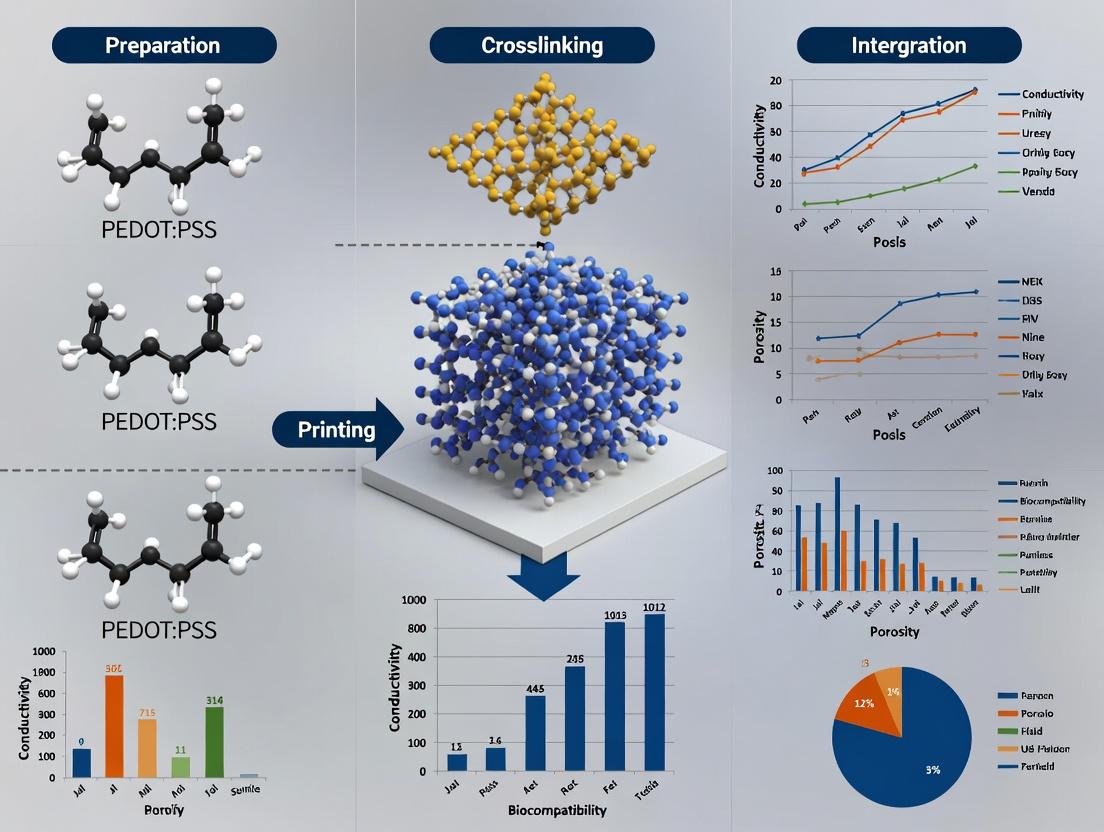
This comprehensive review explores the frontier of 3D-printed bioelectronic interfaces using PEDOT:PSS hydrogels.
3D-Printed PEDOT:PSS Hydrogels: Fabrication, Optimization, and Bioelectronic Applications for Next-Generation Interfaces
Abstract
This comprehensive review explores the frontier of 3D-printed bioelectronic interfaces using PEDOT:PSS hydrogels. Tailored for researchers and biomedical engineers, it examines the fundamental properties of PEDOT:PSS that make it ideal for biodevices, details state-of-the-art 3D printing methodologies (including direct ink writing and stereolithography), and addresses critical challenges in printability, resolution, and stability. The article provides comparative analysis of performance metrics (conductivity, mechanical compliance) against traditional materials, validates functionality in models ranging from cell cultures to in vivo systems, and discusses future clinical translation pathways for neural interfaces, biosensors, and drug delivery systems.
PEDOT:PSS Hydrogels 101: Understanding the Conductive Polymer Backbone for Bioelectronics
PEDOT:PSS (poly(3,4-ethylenedioxythiophene):poly(styrenesulfonate)) is a polymer complex that has become the preeminent material for organic and printed electronics. Its unique chemistry stems from the complementary properties of its two components. PEDOT, a conjugated polymer, provides electronic conductivity via its π-conjugated backbone, while PSS, a polyelectrolyte, serves as a charge-balancing dopant and a water-dispersible matrix. This combination yields a stable, aqueous dispersion that can be processed into highly conductive, transparent, and mechanically flexible films. For 3D printing of bioelectronic interfaces, its ability to form hydrogels—networks swollen with water—is critical, as it provides a soft, ionic-conductive interface with biological tissues.
Key Properties and Quantitative Data
Table 1: Key Properties of PEDOT:PSS Relevant to Bioelectronic Hydrogels
| Property | Typical Range/Value | Significance for 3D Printed Bioelectronics |
|---|---|---|
| Electrical Conductivity (pristine) | 0.1 - 1 S/cm | Baseline conductivity for charge injection. |
| Conductivity (with additives) | Up to 4000 S/cm | Can be enhanced for specific electrode applications. |
| Sheet Resistance (100 nm film) | 50 - 500 Ω/sq | Important for transparent electrode applications. |
| Optical Transparency (550 nm) | > 80% | Enables optical interrogation of underlying tissue. |
| Young's Modulus (dry film) | 1 - 3 GPa | Stiff in dry state. |
| Young's Modulus (hydrogel) | 1 - 100 kPa | Matches soft tissue modulus, minimizing mismatch. |
| Biocompatibility | Generally good | Supports cell adhesion and growth with proper formulation. |
| Work Function | ~ 5.0 - 5.2 eV | Favorable for hole injection, matching biological potentials. |
Table 2: Common Secondary Dopants for PEDOT:PSS Conductivity Enhancement
| Dopant/Additive | Typical Concentration | Mechanism | Effect on Conductivity |
|---|---|---|---|
| Dimethyl Sulfoxide (DMSO) | 3 - 7 wt% | Solvent-induced conformational change; reduces insulating PSS shell. | 10-100x increase |
| Ethylene Glycol (EG) | 3 - 7 wt% | Similar to DMSO; also improves film uniformity. | 10-100x increase |
| Zonyl FS-300 | 0.1 - 1 wt% | Fluorosurfactant induces phase separation and PEDOT reordering. | Up to 1000x increase |
| Sorbitol | 3 - 5 wt% | Acts as a molecular connector and conformation modifier. | 10-50x increase |
Application Notes: 3D Printing PEDOT:PSS Hydrogels for Biointerfaces
Rationale for 3D Printing
3D printing enables the fabrication of customized, complex, and multi-material bioelectronic scaffolds that conform to specific anatomical sites. Printing PEDOT:PSS hydrogels allows for the direct integration of conductive elements within soft, hydrated constructs, facilitating intimate contact with dynamic biological tissues for recording, stimulation, or sensing.
Critical Formulation Considerations
- Printability (Rheology): Pure PEDOT:PSS dispersions are low-viscosity liquids. For extrusion-based printing (e.g., direct ink writing), viscosity must be increased. Common strategies include:
- Adding rheological modifiers (e.g., gelatin, gellan gum, nanocellulose).
- Formulating high-concentration "pastes."
- Employing in-gel crosslinking strategies.
- Stability & Gelation: The hydrogel network must be stable post-printing. This can be achieved via physical crosslinking (ionic, thermal) or mild chemical crosslinking (e.g., using (3-glycidyloxypropyl)trimethoxysilane (GOPS)).
- Electrochemical Performance: The final printed structure must maintain adequate ionic/electronic conductivity and interfacial impedance suitable for the target application (e.g., neural recording requires low impedance at 1 kHz).
Experimental Protocols
Protocol 1: Formulation of a 3D-Printable PEDOT:PSS Bioink
Objective: Prepare a shear-thinning, crosslinkable PEDOT:PSS hydrogel ink for extrusion printing.
Materials:
- PEDOT:PSS aqueous dispersion (e.g., Clevios PH1000)
- Ethylene Glycol (EG)
- (3-Glycidyloxypropyl)trimethoxysilane (GOPS)
- Gelatin (Type A, from porcine skin)
- Deionized (DI) Water
Procedure:
- Primary Doping: Mix 10 mL of PEDOT:PSS dispersion with 0.5 mL of EG (5% v/v). Stir on a magnetic stirrer for 1 hour at room temperature.
- Crosslinker Addition: Add 100 µL of GOPS (1% v/v relative to PEDOT:PSS) to the mixture. Stir for an additional 30 minutes. Note: GOPS enhances film stability and adhesion.
- Gelation Agent Preparation: Dissolve 1.0 g of gelatin in 10 mL of DI water at 50°C until fully dissolved.
- Bioink Formulation: While keeping the gelatin solution at 37°C (to prevent gelling), slowly add it to the PEDOT:PSS/EG/GOPS mixture under vigorous stirring. Maintain a final ratio of 2:1 (PEDOT:PSS mix : gelatin solution).
- Homogenization & Degassing: Homogenize the final mixture by passing it through a planetary centrifugal mixer (or gentle vortex mixing). Centrifuge to remove air bubbles.
- Storage: Store the prepared bioink at 4°C. It will gel at this temperature and must be warmed to 25-30°C for printing.
Protocol 2: 3D Printing and Characterization of a Microelectrode Array
Objective: Print a simple 2D grid electrode array and characterize its electrical and morphological properties.
Materials:
- PEDOT:PSS Bioink (from Protocol 1)
- Extrusion 3D Bioprinter (e.g., BIO X, or similar) equipped with a temperature-controlled printhead and stage.
- Conductive substrate (e.g., gold or ITO-coated glass slide).
- Phosphate Buffered Saline (PBS) or cell culture medium.
- Impedance Analyzer/ Potentiostat.
- Profilometer or Atomic Force Microscope (AFM).
Procedure:
- Printer Setup: Load the bioink into a sterile syringe. Attach a blunt nozzle (gauge 20-30, depending on desired feature size). Mount the syringe in the printhead and set the temperature to 28°C.
- Substrate Preparation: Clean the conductive substrate with ethanol and DI water. Secure it to the print bed.
- Printing Parameters: Define a simple grid pattern (e.g., 5x5 lines, 500 µm spacing). Set parameters: pressure 20-40 kPa, speed 5-8 mm/s, layer height 80% of nozzle diameter.
- Printing: Initiate the print. The ink should gel on contact with the cooler substrate (~20°C).
- Post-Processing: After printing, expose the structure to UV light (365 nm, 10 mW/cm²) for 5 minutes or place in a humidified incubator at 37°C for 1 hour to facilitate crosslinking.
- Characterization:
- Electrical: Soak the printed array in PBS. Using the impedance analyzer, measure the electrochemical impedance spectrum (EIS) from 1 Hz to 100 kHz at open circuit potential with a 10 mV sinusoidal perturbation.
- Morphological: Use a profilometer to measure the line width, height, and uniformity of the printed traces.
Table 3: Expected Results from Protocol 2
| Metric | Target Outcome | Measurement Method |
|---|---|---|
| Line Width Fidelity | ± 10% of design | Optical microscopy / Profilometry |
| Impedance at 1 kHz | < 10 kΩ for a 500 µm diameter electrode | Electrochemical Impedance Spectroscopy (EIS) |
| Swelling Ratio | 150 - 300% (in PBS, 24h) | Mass measurement (Wwet/Wdry) |
| Adhesion (Tape Test) | No detachment | Qualitative visual inspection |
The Scientist's Toolkit
Table 4: Essential Research Reagents & Materials
| Item | Function in PEDOT:PSS Bioelectronics Research |
|---|---|
| PEDOT:PSS Dispersion (Clevios PH1000) | The foundational conductive polymer material, provided as a stable, high-concentration aqueous dispersion. |
| Secondary Dopants (DMSO, EG) | Critical additives that dramatically increase the electrical conductivity of the final film/hydrogel. |
| Crosslinkers (GOPS) | Provides chemical crosslinking sites, improving the mechanical stability and adhesion of PEDOT:PSS in aqueous environments. |
| Rheological Modifiers (Gelatin, Gellan Gum) | Imparts shear-thinning behavior and yield stress necessary for extrusion-based 3D printing. |
| Biocompatible Solvents (DI Water, Ethanol) | Used for dilution, cleaning substrates, and as a sterile processing medium. |
| Conductive Substrates (ITO/Glass, Au-coated slides) | Serve as back-contact electrodes for characterizing printed structures or as rigid bases for devices. |
| Electrolyte (PBS, DMEM) | Simulates the ionic environment of biological tissues for in vitro electrochemical testing. |
Visualization Diagrams
Title: Workflow for 3D Printing PEDOT:PSS Hydrogels
Title: Mechanism of Conductivity Enhancement in PEDOT:PSS
Within the broader thesis on 3D printing poly(3,4-ethylenedioxythiophene):poly(styrene sulfonate) (PEDOT:PSS) hydrogels for bioelectronic interfaces, understanding the precise transition from a liquid ink to a stable, functional soft solid is paramount. This Application Note details the chemical and physical gelation and crosslinking mechanisms that underpin the printability, structural integrity, and bioelectronic functionality of these materials. These protocols are designed for researchers aiming to create mechanically robust, electrically conductive, and biologically compatible neural interfaces and tissue scaffolds.
Core Gelation and Crosslinking Mechanisms for PEDOT:PSS Hydrogels
Effective 3D printing requires a shear-thinning ink that rapidly solidifies post-deposition. The following table summarizes key crosslinking strategies.
Table 1: Crosslinking Mechanisms for 3D Printable PEDOT:PSS Hydrogels
| Mechanism | Crosslinker/Trigger | Primary Function | Key Outcome for Bioelectronics | Gelation Time | Reference (Recent Examples) |
|---|---|---|---|---|---|
| Ionic Crosslinking | Divalent cations (e.g., Ca²⁺, Mg²⁺) | Crosslinks sulfonate groups on PSS via ionic bonds. | Fast gelation, moderate conductivity, reversible bonds. | Seconds | Adv. Mater. Technol. 2023, 8, 2201235 |
| Chemical Crosslinking | (3-Glycidyloxypropyl)trimethoxysilane (GOPS) | Forms covalent ether bonds between PSS chains. | Enhanced mechanical stability, long-term electrical performance. | Minutes to Hours | ACS Appl. Mater. Interfaces 2024, 16, 2, 2121 |
| Photocrosslinking | UV Light + Photoinitiator (e.g., LAP, Irgacure 2959) | Radical polymerization of added monomers/functional groups. | Spatiotemporal control, high resolution, cell encapsulation. | < 60 Seconds | Biofabrication 2023, 15, 4, 045012 |
| Thermal Gelation | Temperature shift (e.g., using methylcellulose) | Physical entanglement upon heating/cooling. | Simple, biocompatible, often combined with other mechanisms. | Temperature-dependent | Sci. Rep. 2023, 13, 1378 |
| Enzymatic Crosslinking | Horseradish Peroxidase (HRP) + H₂O₂ | Crosslinks phenol-functionalized polymers. | Extremely gentle, cell-friendly, tunable kinetics. | 1-10 Minutes | Biomacromolecules 2024, 25, 1, 564 |
Detailed Experimental Protocols
Protocol 3.1: Formulation of a Dual Ionic-Chemical Crosslinked PEDOT:PSS Bioink for Extrusion 3D Printing
Objective: To prepare a stable, extrudable, and rapidly setting PEDOT:PSS hydrogel ink for layer-by-layer fabrication.
Materials (See Toolkit 4.1): PEDOT:PSS dispersion (PH1000), D-sorbitol, (3-Glycidyloxypropyl)trimethoxysilane (GOPS), Calcium chloride (CaCl₂) dihydrate, Deionized (DI) water.
Procedure:
- Base Ink Preparation: Mix 10 mL of PEDOT:PSS dispersion (1.3 wt%) with 1 g of D-sorbitol (10 wt% relative to dispersion). Sonicate for 15 minutes.
- Chemical Crosslinking Addition: Under slow magnetic stirring, add GOPS to a final concentration of 1.0% (v/v). Stir for 30 minutes at room temperature.
- Ink Homogenization: Filter the mixture through a 0.45 μm syringe filter to remove any aggregates.
- Ionic Crosslinker Solution: Prepare a sterile 100 mM CaCl₂ solution in DI water.
- 3D Printing Process: Load the prepared ink into a syringe barrel fitted with a conical nozzle (diameter 200-400 μm).
- Printing Parameters: Maintain ink at 20-25°C. Use an extrusion pressure of 20-40 kPa and a print speed of 5-10 mm/s.
- Post-Printing Gelation: Immediately after extrusion, mist the printed structure with the 100 mM CaCl₂ solution using an airbrush or nebulizer. This induces instantaneous ionic gelation.
- Curing: Transfer the ionically crosslinked print to a humidified chamber at 60°C for 24 hours to allow slow, complete covalent crosslinking via GOPS. This step ensures long-term stability in aqueous/biological environments.
Protocol 3.2: Photocrosslinking of Cell-Laden PEDOT:PSS-GelMA Hybrid Hydrogels
Objective: To create a conductive, cytocompatible hydrogel with high shape fidelity via digital light processing (DLP) 3D printing.
Materials (See Toolkit 4.1): Methacryloyl-functionalized PEDOT:PSS (PEDOT:PSS-MA), Gelatin methacryloyl (GelMA), Lithium phenyl-2,4,6-trimethylbenzoylphosphinate (LAP) photoinitiator, Cell culture medium.
Procedure:
- Bioink Synthesis: Synthesize PEDOT:PSS-MA as per literature (e.g., via reaction with 2-isocyanatoethyl methacrylate). Purify and lyophilize.
- Ink Formulation: Dissolve lyophilized PEDOT:PSS-MA and GelMA in warm (37°C) PBS at a 1:9 mass ratio (total polymer 5-10% w/v). Add LAP photoinitiator to a final concentration of 0.25% (w/v). Sterilize via 0.22 μm filtration.
- Cell Incorporation: Centrifuge the desired cell suspension (e.g., NIH/3T3 fibroblasts). Resuspend the cell pellet in the sterile, cool ink to a density of 1-5 x 10⁶ cells/mL. Keep on ice.
- DLP Printing: Transfer the cell-laden ink to the resin vat of a DLP printer. Project a sequence of 405 nm light patterns (10-30 mW/cm², 10-60 seconds per layer) to build the 3D structure layer-by-layer.
- Post-Printing: Gently wash the printed construct in warm cell culture medium to remove uncrosslinked polymer. Transfer to a bioreactor or culture plate for cell culture.
The Scientist's Toolkit
Table 4.1: Essential Research Reagents for PEDOT:PSS Hydrogel Crosslinking
| Reagent | Function | Key Consideration |
|---|---|---|
| PEDOT:PSS Dispersion (e.g., PH1000) | Conductive polymer colloid, the fundamental building block. | High conductivity grade; may contain surfactants that affect gelation. |
| D-Sorbitol / Ethylene Glycol | Secondary dopant / conductivity enhancer and plasticizer. | Improves electrical performance and film formation; affects ink viscosity. |
| (3-Glycidyloxypropyl)trimethoxysilane (GOPS) | Covalent crosslinker for PSS chains. | Concentration controls crosslink density, stiffness, and gelation kinetics. |
| Calcium Chloride (CaCl₂) | Ionic crosslinker for rapid sol-gel transition. | Concentration and application method (misting vs. bath) control gelation depth and uniformity. |
| Lithium Phenyl-2,4,6-trimethylbenzoylphosphinate (LAP) | Cytocompatible photoinitiator for UV/blue light. | Enables rapid photopolymerization with high cell viability (>90%). |
| Gelatin Methacryloyl (GelMA) | Photocrosslinkable, cell-adhesive biopolymer. | Provides bioactivity and tunable mechanical properties; blended with PEDOT:PSS. |
| Horseradish Peroxidase (HRP) / Hydrogen Peroxide (H₂O₂) | Enzymatic crosslinking system. | Offers gentle, biomimetic gelation ideal for sensitive biologics. |
Mechanism and Workflow Visualizations
Diagram 1: Bioink Fabrication and 3D Printing Workflow (97 chars)
Diagram 2: Molecular Crosslinking Mechanisms (62 chars)
This document provides detailed application notes and protocols for evaluating the three key properties of 3D-printed PEDOT:PSS hydrogels for bioelectronic interfaces. These materials are central to bridging the gap between rigid electronic devices and soft, ionic biological tissues, enabling advanced applications in neuromodulation, biosensing, and regenerative medicine.
Table 1: Benchmark Properties of 3D-Printed PEDOT:PSS Hydrogels
| Property | Typical Range | Measurement Technique | Biological Relevance |
|---|---|---|---|
| Electronic Conductivity | 1 - 1500 S/cm | 4-point probe, electrochemical impedance spectroscopy (EIS) | Determines signal fidelity in recording/stimulation. |
| Ionic Transport (Diffusion Coefficient, D) | 10⁻¹¹ - 10⁻⁹ m²/s for ions (e.g., K⁺) | Chronoamperometry, EIS, diffusion cell | Governs ionic crosstalk and metabolic waste exchange. |
| Young's Modulus (Mechanical Compliance) | 0.1 kPa - 1 MPa (tunable) | Atomic Force Microscopy (AFM), tensile testing | Matches brain (~0.1-1 kPa), muscle (~10 kPa), skin (~100 kPa). |
| Water Content / Swelling Ratio | 70% - 95% | Gravimetric analysis | Affects ion transport and tissue integration. |
| Impedance at 1 kHz | 0.1 - 10 kΩ·cm² | EIS | Critical for minimizing noise in electrophysiology. |
| Fracture Strain | 50% - 500% | Uniaxial tensile test | Required for interfacing with dynamic, moving tissues. |
Table 2: Impact of Biointerface Properties on Application Performance
| Bioelectronic Application | Primary Property Driver | Target Value | Performance Outcome |
|---|---|---|---|
| Cortical Neural Recording | Impedance @ 1 kHz | < 2 kΩ·cm² | High signal-to-noise ratio (SNR) for single-unit activity. |
| Peripheral Nerve Stimulation | Charge Injection Capacity (CIC) | > 15 mC/cm² | Safe and effective activation of axons. |
| Cardiac Patch | Elastic Modulus | ~20-100 kPa | Conformable contact without restricting heart motion. |
| Organ-on-a-Chip Biosensor | Ionic Diffusion Coefficient | Match target tissue | Accurate modeling of paracrine signaling. |
| Chronic Implant | Modulus & Fracture Strain | Match host tissue | Minimize foreign body response & fibrosis. |
Experimental Protocols
Protocol 1: Measuring Electronic Conductivity of 3D-Printed PEDOT:PSS Structures
Objective: To accurately determine the DC electronic conductivity of a 3D-printed PEDOT:PSS hydrogel line. Materials: 4-point probe station, source measure unit (SMU), precision height gauge, PBS (pH 7.4) or desired electrolyte, sample stage. Procedure:
- Sample Preparation: Print a rectangular hydrogel film (e.g., 20mm x 5mm x 0.1mm) onto a non-conductive substrate. Condition in PBS for 24h to reach swelling equilibrium.
- Probe Setup: Calibrate the 4-point probe by measuring a standard silicon wafer with known resistivity. Align the four collinear probes evenly along the long axis of the sample.
- Measurement: In a Faraday cage, apply a swept DC current (I, e.g., -10µA to +10µA) between the outer two probes. Measure the resulting voltage drop (V) between the inner two probes.
- Calculation: Calculate resistivity (ρ) using the geometric correction factor: ρ = (V/I) * (π/ln2) * t * F, where t is thickness and F is a correction factor for sample dimensions. Conductivity σ = 1/ρ. Perform measurement at multiple points.
- Environmental Control: For hydrated measurements, maintain sample in a humid environment or submerged in electrolyte, ensuring probes make stable contact.
Protocol 2: Evaluating Ionic Transport via Electrochemical Impedance Spectroscopy (EIS)
Objective: To characterize the ionic transport and interfacial properties of a PEDOT:PSS hydrogel electrode in a physiologically relevant environment. Materials: Potentiostat/Galvanostat with EIS capability, 3-electrode cell (hydrogel as working electrode, Pt counter, Ag/AgCl reference), 1x PBS electrolyte. Procedure:
- Cell Assembly: Mount the 3D-printed hydrogel as the working electrode. Ensure full immersion in deaerated PBS. Connect all electrodes.
- Open Circuit Potential (OCP): Monitor OCP for 10 minutes until stable (< 1 mV/min drift).
- EIS Measurement: Set frequency range from 100 kHz to 0.1 Hz. Apply a sinusoidal AC perturbation of 10 mV RMS amplitude at the OCP. Record impedance (Z) and phase (θ).
- Data Fitting: Fit the resulting Nyquist plot to an equivalent circuit model (e.g., Rsol(Qdl(RctW))) using dedicated software. The Warburg element (W) provides information on ion diffusion.
- Analysis: Extract the ionic conductivity from the bulk resistance (Rsol) and sample geometry. The low-frequency impedance magnitude relates to charge injection capacity.
Protocol 3: Characterizing Mechanical Compliance via Atomic Force Microscopy (AFM)
Objective: To map the local Young's modulus of a soft, hydrated PEDOT:PSS hydrogel. Materials: AFM with fluid cell, tipless cantilevers with colloidal microsphere probes (e.g., 10µm diameter), calibration grid, PBS. Procedure:
- Sample Mounting: Adhere the hydrated hydrogel sample to a glass bottom Petri dish using a thin layer of cyanoacrylate. Immmediately cover with PBS to prevent drying.
- Cantilever Calibration: In air, determine the spring constant (k) via thermal tune method. Calibrate the optical lever sensitivity (InvOLS) on a rigid surface in fluid.
- Force Curve Acquisition: Engage the probe on the sample surface in PBS. Acquire force-distance curves (minimum 100 curves at random locations) with a trigger force < 1 nN to prevent sample damage.
- Data Processing: For each curve, fit the retract portion to the Hertz contact model for a spherical indenter: F = (4/3) * (E/(1-ν²)) * √R * δ^(3/2), where F is force, E is Young's modulus, ν is Poisson's ratio (~0.5 for hydrogel), R is probe radius, and δ is indentation depth. Use ν=0.5.
- Statistical Reporting: Generate a histogram and map of modulus values. Report median and interquartile range.
Visualizations
Title: Workflow for Fabricating & Characterizing PEDOT:PSS Biointerfaces
Title: Consequences of Poor Mechanical Compliance at Biointerface
Title: Coupled Electronic and Ionic Transport in PEDOT:PSS
The Scientist's Toolkit: Research Reagent Solutions
Table 3: Essential Materials for 3D Printing PEDOT:PSS Biointerfaces
| Item | Function & Rationale | Example/Notes |
|---|---|---|
| High-Conductivity PEDOT:PSS Dispersion (e.g., PH1000) | Base material providing mixed electronic/ionic conductivity. | Often modified with crosslinkers and conductivity enhancers like DMSO or ionic liquids. |
| Polyethylene Glycol Diacrylate (PEGDA) | Photo-crosslinker for formulating digital light processing (DLP) printable resins. | Enables high-resolution 3D printing; concentration controls mesh size and modulus. |
| (3-Glycidyloxypropyl)trimethoxysilane (GOPS) | Crosslinking agent for enhancing stability and mechanical integrity in aqueous environments. | Reacts with PSS chains; critical for preventing dissolution in long-term implants. |
| D-sorbitol or Glycerol | Rheological modifier for tuning extrusion printability and preventing nozzle clogging. | Acts as a stabilizer and humectant, improving ink homogeneity and layer adhesion. |
| Ionic Liquid (e.g., [EMIM][EtSO₄]) | Dopant and secondary plasticizer to simultaneously enhance electronic conductivity and printability. | Disrupts PSS shell around PEDOT cores; improves charge carrier mobility. |
| Phosphate Buffered Saline (PBS) | Standard physiological electrolyte for conditioning, swelling, and in vitro testing. | Essential for establishing relevant ion concentration and pH (7.4) for experiments. |
| Matrigel or Collagen I | Biological matrix co-print or coating to enhance cellular adhesion and biocompatibility. | Facilitates 3D cell culture integration on the bioelectronic scaffold. |
| Triton X-100 or Tween-20 | Surfactant used in ink formulation to reduce surface tension and improve wetting on substrates. | Minimizes printing defects and promotes uniform layer deposition. |
Within the thesis framework of developing 3D-printed Poly(3,4-ethylenedioxythiophene):Poly(styrene sulfonate) (PEDOT:PSS) hydrogels for chronic bioelectronic interfaces, assessing inherent biocompatibility and long-term stability is paramount. This application note provides detailed protocols and data analysis strategies to quantify the biological footprint—encompassing cytotoxicity, immune response, and material degradation—of these conductive polymer constructs. The goal is to establish standardized benchmarks for next-generation neural electrodes and drug-screening platforms.
Table 1: Comparative In Vitro Cytotoxicity Profile of PEDOT:PSS Formulations
| Formulation (with Additives) | Cell Line (Tested) | Assay Method | Viability (%) at 24h | Viability (%) at 72h | Lactate Dehydrogenase (LDH) Release (Fold vs. Control) |
|---|---|---|---|---|---|
| PEDOT:PSS (Aqueous) | PC12 | MTT | 85 ± 5 | 78 ± 7 | 1.8 ± 0.3 |
| PEDOT:PSS + 5% DMSO | SH-SY5Y | PrestoBlue | 92 ± 3 | 90 ± 4 | 1.2 ± 0.2 |
| PEDOT:PSS + 3% GO-RGD | NIH/3T3 | AlamarBlue | 98 ± 2 | 95 ± 3 | 1.1 ± 0.1 |
| PEDOT:PSS + Silk Fibroin | Primary Neurons | Live/Dead | 94 ± 4 | 88 ± 5 | 1.3 ± 0.2 |
| PLA Control | PC12 | MTT | 100 ± 3 | 99 ± 2 | 1.0 ± 0.1 |
Table 2: In Vivo Implant Stability & Foreign Body Response (28-Day Study)
| Implant Material | Implantation Site (Rat Model) | Capsule Thickness (µm) at 28 days | % Drop in Charge Capacity (1kHz) | Key Immune Cell Markers (IHC Fold Change) |
|---|---|---|---|---|
| 3D-Printed PEDOT:PSS Hydrogel | Cortex | 45.2 ± 12.1 | 15.3 | CD68: +2.1, GFAP: +1.8, CD206: +1.5 |
| Platinum-Iridium (PtIr) Electrode | Cortex | 120.5 ± 25.3 | 5.2 | CD68: +3.8, GFAP: +2.9, CD206: +0.9 |
| PEDOT:PSS on Polyimide | Subcutaneous | 85.7 ± 18.4 | 41.7 | CD68: +3.2, GFAP: N/A, CD206: +1.2 |
Experimental Protocols
Protocol 3.1: Standardized In Vitro Cytotoxicity & Proliferation Assessment Objective: To evaluate the acute and sub-chronic cytotoxic effects of 3D-printed PEDOT:PSS hydrogel extracts or direct contact on relevant cell lines.
- Material Preparation: Sterilize 3D-printed hydrogel discs (5mm diameter x 1mm height) via ethanol immersion (70%, 30 min) followed by UV irradiation (30 min/side). For extract testing, incubate sterile discs in complete cell culture medium (1 cm²/mL) at 37°C for 24h.
- Cell Seeding: Seed appropriate cell lines (e.g., NIH/3T3 fibroblasts, SH-SY5Y neurons) in 96-well plates at 10,000 cells/well in 100 µL medium. Incubate for 24h to allow adhesion.
- Exposure: For direct contact, carefully place one sterile disc atop the adherent cell monolayer. For extract testing, replace medium with 100 µL of prepared extract. Include negative (culture medium) and positive (1% Triton X-100) controls.
- Viability Quantification: After 24h and 72h, perform viability assay:
- MTT Assay: Add 10 µL of MTT reagent (5 mg/mL) per well. Incubate 4h. Remove medium, add 100 µL DMSO to solubilize formazan. Measure absorbance at 570 nm with a reference at 630 nm.
- Live/Dead Staining: Incubate with 2 µM Calcein-AM and 4 µM Ethidium homodimer-1 for 30 min. Image using fluorescence microscopy (488/530 nm for live; 528/645 nm for dead).
- Data Analysis: Calculate cell viability as a percentage of negative control. Report mean ± standard deviation from n≥6 replicates.
Protocol 3.2: Assessing the Foreign Body Response In Vivo Objective: To histologically quantify the immune response and fibrosis around implanted PEDOT:PSS hydrogel electrodes.
- Implant Fabrication & Sterilization: 3D print PEDOT:PSS hydrogel electrodes to desired geometry. Sterilize via ethylene oxide gas.
- Surgical Implantation: Following IACUC-approved protocols, anesthetize adult Sprague-Dawley rats. Perform a craniotomy or subcutaneous pocket creation. Implant sterile devices, ensuring stable placement. Suture wounds.
- Explanation & Tissue Processing: At endpoints (e.g., 7, 28, 84 days), euthanize animals and perfuse with 4% paraformaldehyde. Carefully explant the device with surrounding tissue. Fix tissue for 24h, then dehydrate and embed in paraffin.
- Histology & Immunohistochemistry (IHC):
- Section tissue at 5 µm thickness.
- Stain with Hematoxylin & Eosin (H&E) for general morphology and Masson's Trichrome for collagen/fibrosis.
- Perform IHC for immune markers: CD68 (macrophages), CD206 (M2 macrophages), GFAP (astrocytes). Use appropriate HRP-conjugated secondary antibodies and DAB development.
- Quantitative Analysis:
- Fibrous Capsule Thickness: Measure from the implant surface to the outer collagen boundary on Trichrome-stained sections at 10 random points per sample.
- Immune Cell Infiltration: Count positive-stained cells in three 200x200 µm fields adjacent to the implant or quantify staining intensity via image analysis software.
Signaling Pathway & Experimental Workflow Diagrams
Title: Foreign Body Response to Implant Pathways
Title: Biocompatibility Assessment Protocol Workflow
The Scientist's Toolkit: Research Reagent Solutions
Table 3: Essential Materials for Biocompatibility Assessment of PEDOT:PSS Hydrogels
| Item / Reagent | Function in Assessment | Example Product / Specification |
|---|---|---|
| PEDOT:PSS Dispersion (High Conductivity) | Base conductive polymer for hydrogel formulation. | Clevios PH1000 (Heraeus), with ~1.0% solid content. |
| Crosslinker (e.g., GOPS) | Enhances hydrogel stability and reduces PSS solubility in vivo. | (3-Glycidyloxypropyl)trimethoxysilane (GOPS). |
| Ionic Additive (e.g., DMSO, EG) | Secondary dopant to improve electrical conductivity and printability. | Dimethyl sulfoxide (DMSO), 5% v/v in formulation. |
| Bioactive Dopant (e.g., RGD Peptide) | Enhances cellular adhesion and integration. | RGD-grafted graphene oxide (GO-RGD) for composite. |
| Live/Dead Viability/Cytotoxicity Kit | Dual-fluorescence staining for simultaneous quantification of live and dead cells. | Thermo Fisher Scientific, L3224 (Calcein-AM / EthD-1). |
| MTT Cell Proliferation Assay Kit | Colorimetric measurement of metabolic activity as a proxy for cell viability. | Abcam, ab211091. |
| Antibodies for IHC: CD68, CD206, GFAP | Immunohistochemical labeling of macrophages, M2 macrophages, and astrocytes in vivo. | Anti-CD68 (Abcam ab955), Anti-CD206 (CST 24595), Anti-GFAP (Agilent Z0334). |
| Masson's Trichrome Stain Kit | Differentiates collagen (blue/green) from muscle/cytoplasm (red) to quantify fibrosis. | Sigma-Aldrich, HT15-1KT. |
| Electrochemical Impedance Spectroscopy (EIS) Setup | Measures interfacial impedance of the electrode, correlating with tissue integration and performance. | Potentiostat (e.g., Biologic VSP-300) with 3-electrode cell in PBS. |
From Ink to Interface: A Guide to 3D Printing PEDOT:PSS Hydrogels for Functional Devices
This application note details formulation strategies for developing 3D-printable PEDOT:PSS hydrogels, critical for fabricating soft, conductive bioelectronic interfaces. Achieving optimal printability—encompassing extrusion fidelity, shape retention, and post-printing functionality—requires precise manipulation of rheology through modifiers, solvents, and additives, framed within a thesis on implantable neural interfaces.
Key Ink Components and Their Functions
Table 1: Core Ink Components for 3D Printable PEDOT:PSS Hydrogels
| Component Category | Specific Example | Primary Function | Typical Concentration Range | Impact on Printability |
|---|---|---|---|---|
| Conductive Polymer | PEDOT:PSS (Clevios PH1000) | Provides electronic/ionic conductivity. Base material for the hydrogel network. | 0.5 - 1.3 wt% | Higher % can increase viscosity but may compromise dispersion. |
| Rheological Modifier | Gelatin | Thermoresponsive gelling agent; provides shear-thinning and rapid recovery. | 5 - 15 wt% | Enables extrusion and immediate shape retention at ~20-25°C. |
| Rheological Modifier | Hyaluronic Acid | High molecular weight polysaccharide; increases zero-shear viscosity & viscoelasticity. | 0.5 - 2 wt% | Improves filament cohesion and stackability. |
| Co-solvent/Additive | Ethylene Glycol | Secondary dopant for PEDOT:PSS; enhances conductivity & prevents drying. | 3 - 8 wt% | Reduces ink brittleness; modifies evaporation kinetics. |
| Crosslinker | Glutaraldehyde (GTA) | Chemically crosslinks gelatin for permanent hydrogel stability. | 0.05 - 0.2 wt% | Applied post-printing; critical for long-term structural integrity. |
| Additive | D-Sorbitol | Plasticizer and conductivity enhancer for PEDOT:PSS. | 1 - 5 wt% | Modifies film formation and reduces crack formation. |
| Solvent/Medium | Deionized Water | Primary dispersion medium. | Balance to 100 wt% | Evaporation rate affects printing consistency. |
Protocol: Formulation and Characterization of a Printable PEDOT:PSS-Gelatin Ink
Objective: To prepare and characterize a thermoresponsive, shear-thinning ink suitable for extrusion-based 3D printing.
Materials (The Scientist's Toolkit):
- PEDOT:PSS dispersion (1.2% in H₂O): Conductive polymer base.
- Gelatin (Type A, 300 Bloom): Thermoresponsive rheological modifier.
- Ethylene Glycol (EG): Conductivity enhancer and humectant.
- D-Sorbitol: Secondary dopant and plasticizer.
- Deionized Water: Solvent.
- Syringe Filters (0.45 µm): For ink degassing and sterilization.
- Rotary Evaporator / Centrifuge: For solvent exchange/ink concentration.
- Rheometer (cone-plate): For viscosity and viscoelasticity measurement.
- 3D Bioprinter (extrusion-based): Equipped with temperature-controlled stage and printhead.
Procedure:
Part A: Ink Formulation
- Gelatin Hydration: Dissolve 10 wt% gelatin in 70°C deionized water under mild magnetic stirring (300 rpm) for 30 minutes until fully dissolved.
- PEDOT:PSS Mixture: In a separate vial, mix the PEDOT:PSS dispersion (targeting 0.8 wt% final), ethylene glycol (5 wt% final), and D-sorbitol (3 wt% final). Stir at room temperature for 15 minutes.
- Combination: Cool the gelatin solution to 40°C to prevent degradation of PEDOT:PSS. Gradually add the PEDOT:PSS mixture to the warm gelatin solution under constant stirring.
- Homogenization & Degassing: Stir the combined ink for 1 hour at 40°C. Subsequently, centrifuge at 3000 x g for 5 minutes or use a rotary evaporator under mild vacuum to remove air bubbles. Filter through a 0.45 µm syringe filter if sterility is required.
- Storage: Store the ink at 37°C in a water bath until printing (use within 6 hours) to prevent gelation.
Part B: Rheological Characterization Protocol
- Temperature Ramp Test: Load ink onto rheometer plate pre-heated to 37°C. Equilibrate for 2 min. Cool to 15°C at a rate of 2°C/min while measuring storage (G') and loss (G'') moduli at 1 Hz frequency and 1% strain.
- Flow Curve Test: At a constant temperature of 25°C (printing temperature), measure apparent viscosity over a shear rate range of 0.01 to 100 s⁻¹.
- Three-Step Thixotropy Test: (1) Apply low shear (0.1 s⁻¹) for 60s, (2) apply high shear (10 s⁻¹) for 30s to simulate extrusion, (3) return to low shear (0.1 s⁻¹) for 120s to monitor recovery.
Table 2: Target Rheological Properties for Printability
| Parameter | Target Value/Range | Rationale |
|---|---|---|
| Viscosity at Low Shear (0.1 s⁻¹) | > 100 Pa·s | Prevents nozzle leakage and ensures shape fidelity. |
| Viscosity at High Shear (10 s⁻¹) | 1 - 10 Pa·s | Enables extrusion with manageable pressure. |
| Shear-Thinning Index (n) | n < 0.7 | Indicates strong shear-thinning behavior. |
| Gelation Temperature (G'=G'') | ~28-30°C | Ensures fluidity at printing temp (25°C) and gelation on deposition. |
| Yield Stress | > 50 Pa | Provides structural strength for stacking layers. |
| Recovery Time (to 90% of initial G') | < 30 seconds | Essential for multi-layer fabrication. |
Protocol: Post-Printing Crosslinking and Electrical Characterization
Objective: To stabilize the printed construct and evaluate its electrochemical performance.
Procedure:
- Printing: Extrude ink through a 22G-27G nozzle at 25°C onto a stage cooled to 15°C. Use printing pressures between 20-40 kPa and speeds of 5-10 mm/s.
- Chemical Crosslinking: Immediately after printing, expose the structure to glutaraldehyde (GTA) vapor (from a 25% solution) in a sealed desiccator for 5-10 minutes. Rinse thoroughly with PBS to remove residual GTA.
- Electrical Characterization:
- Sheet Resistance: Measure using a 4-point probe station on a printed thin film.
- Electrochemical Impedance Spectroscopy (EIS): Immerse printed electrode in PBS. Apply 10 mV RMS sinusoidal signal from 1 Hz to 100 kHz vs. Ag/AgCl reference electrode.
- Cyclic Voltammetry (CV): Scan between -0.6 V and 0.8 V at 50 mV/s in PBS to determine charge storage capacity (CSC).
Table 3: Expected Performance Metrics for Crosslinked Constructs
| Metric | Target Performance | Measurement Method |
|---|---|---|
| Sheet Resistance | < 1 kΩ/sq | 4-point probe |
| Charge Storage Capacity (CSC) | > 20 mC/cm² | Integration of CV curve |
| Impedance at 1 kHz | < 1 kΩ | EIS (for a 1 mm² electrode) |
| Young's Modulus (Hydrated) | 10 - 50 kPa | Atomic Force Microscopy |
Visualizing Formulation Strategy and Workflow
Title: Workflow for Printable PEDOT:PSS Hydrogel Fabrication
Title: Formulation Logic for Key Ink Properties
Application Notes
Within the research for 3D printing PEDOT:PSS hydrogels for bioelectronic interfaces, selecting an appropriate fabrication technique is critical. Extrusion-based Direct Ink Writing (DIW) and Vat Polymerization (SLA/DLP) offer distinct advantages and limitations for creating structured, functional hydrogels.
DIW for PEDOT:PSS Hydrogels: This technique is highly suitable for formulating viscous, shear-thinning PEDOT:PSS composite inks. It enables the creation of freestanding structures, porous scaffolds conducive to cell integration, and multi-material constructs (e.g., combining insulating and conductive hydrogel tracks). The ambient processing conditions generally preserve the functionality of PEDOT:PSS. However, resolution is limited (~100 µm), and overhanging structures require support gels.
Vat Polymerization (SLA/DLP) for PEDOT:PSS Hydrogels: This approach allows for high-resolution (<50 µm) and complex 3D architectures. It requires formulating a photocurable resin containing PEDOT:PSS, photoinitiators, and crosslinkable monomers/oligomers (e.g., PEGDA). Challenges include ensuring PEDOT:PSS does not excessively absorb or scatter the light source (typically 405 nm), maintaining colloidal stability in the resin, and potential cytotoxicity of resin components. Post-printing steps are crucial for removing uncured resin and hydrating the network to achieve hydrogel properties.
Table 1: Core Technique Comparison for PEDOT:PSS Hydrogel Fabrication
| Feature | Direct Ink Writing (DIW) | Vat Polymerization (SLA/DLP) |
|---|---|---|
| Typical Resolution | 100 - 500 µm | 25 - 100 µm |
| Print Speed | Medium (1-10 mm/s extrusion) | Fast (layer-wise curing) |
| Key Material Requirement | Shear-thinning, viscoelastic ink | Photocurable, UV-transparent resin |
| PEDOT:PSS Integration | Direct as ink matrix. Excellent. | Dispersed in photocurable resin. Challenging. |
| Multi-material Capability | High (multi-nozzle) | Low (single vat typically) |
| Support Structures | Often required (fugitive or gel-phase) | Self-supporting via cured resin |
| Post-processing | Curing, hydration | Washing, post-cure, hydration |
| Best Suited For | Soft, porous scaffolds, thick electrodes | High-resolution, rigid encapsulations, microfluidic channels |
Table 2: Exemplary Formulation and Output Properties
| Parameter | DIW PEDOT:PSS Formulation | SLA/DLP PEDOT:PSS Formulation |
|---|---|---|
| Base Composition | PEDOT:PSS, water, gelling agent (e.g., GelMA, nanoclay), conductivity enhancer (e.g., DMSO, EG) | PEDOT:PSS dispersion, photocurable monomer (e.g., PEGDA), photoinitiator (e.g., LAP), biocompatible diluent |
| Solid Content | 1-5% PEDOT:PSS, 5-20% total polymer | 0.5-2% PEDOT:PSS, 20-50% total polymer |
| Curing Mechanism | Ionic/thermal crosslinking or photo-crosslinking (if photo-initiator added) | Radical polymerization via UV/blue light |
| Typical Conductivity | 1 - 100 S/cm (after additive treatment) | 0.1 - 10 S/cm (filler-dependent) |
| Elastic Modulus | 1 - 100 kPa (soft hydrogel) | 10 kPa - 10 MPa (tunable via resin) |
Experimental Protocols
Protocol 1: DIW of a PEDOT:PSS-Nanoclay Conductive Hydrogel Scaffold
Objective: To fabricate a 3D porous grid structure for neuronal cell culture and electrical stimulation.
Materials:
- Ink: 3% (w/v) PEDOT:PSS aqueous dispersion, 4% (w/v) Laponite XLG nanoclay, 0.5% (v/v) Ethylene Glycol (EG).
- Equipment: Pneumatic or screw-driven 3D bioprinter, conical nozzles (22G-27G), printing stage (5-15°C).
Method:
- Ink Preparation: Mix PEDOT:PSS and Ethylene Glycol under stirring for 1 hour. Slowly sprinkle Laponite nanoclay into the mixture and stir vigorously for 2 hours until a homogeneous, shear-thinning gel forms. Centrifuge (5000 rpm, 5 min) to remove air bubbles.
- Printer Setup: Load ink into a sterile syringe barrel. Attach a conical nozzle (e.g., 25G, 250 µm inner diameter). Set pneumatic pressure (15-30 kPa) or screw speed. Cool printing stage to 10°C to enhance ink viscosity upon deposition.
- Printing Parameters: Set printing speed to 8 mm/s, layer height to 200 µm, and infill pattern to 0/90° grid with 1.5 mm spacing.
- Printing: Initiate print. The ink must exhibit immediate yield-stress behavior upon deposition to hold shape.
- Post-processing: Immerse the printed structure in a 100 mM CaCl₂ solution for 10 minutes to ionically crosslink the nanoclay network. Rinse with DI water and transfer to cell culture medium for hydration equilibration (2 hours).
Protocol 2: DLP Printing of a PEGDA-PEDOT:PSS Hybrid Hydrogel
Objective: To create a high-resolution, conductive encapsulating structure for a microelectrode array.
Materials:
- Resin: 20% (w/v) Poly(ethylene glycol) diacrylate (PEGDA, Mn 700), 1.5% (w/v) PEDOT:PSS, 0.5% (w/v) Lithium phenyl-2,4,6-trimethylbenzoylphosphinate (LAP) photoinitiator, in PBS.
- Equipment: DLP 3D printer (405 nm), build platform, PDMS vat.
Method:
- Resin Formulation: Dissolve LAP in PBS. Add PEGDA and stir. Slowly add PEDOT:PSS dispersion and sonicate (30% amplitude, 10 min, pulse 2s on/1s off) to achieve a stable, opaque dispersion. Filter through a 0.45 µm syringe filter.
- Printer Setup: Load resin into the PDMS vat. Set slicing parameters: layer thickness 50 µm, exposure time 3-5 seconds per layer (optimize for curing depth).
- Printing: Initiate build. The DLP projector patterns each layer, curing the resin. Ensure adequate adhesion to the build platform.
- Post-processing: Carefully retrieve the print. Wash in PBS for 15 minutes with gentle agitation to remove uncured resin. Perform a 2-minute final post-cure under 405 nm light to ensure complete polymerization.
- Hydration: Soak the cured structure in PBS overnight at 4°C to achieve full hydrogel swelling and equilibrium.
Diagrams
DIW PEDOT:PSS Hydrogel Fabrication Workflow
SLA/DLP PEDOT:PSS Hydrogel Fabrication Workflow
Technique Selection Logic for Biointerface Fabrication
The Scientist's Toolkit
Table 3: Essential Research Reagents for 3D Printing PEDOT:PSS Hydrogels
| Reagent/Material | Primary Function | Key Consideration for Bioelectronics |
|---|---|---|
| PEDOT:PSS Dispersion (e.g., Clevios PH1000) | Conductive polymer component. Provides electronic/ionic conductivity. | Viscosity, solid content (1-3%), and secondary doping with solvents (EG, DMSO) are critical for ink/resin formulation. |
| Lithium Phenyl-2,4,6-trimethylbenzoylphosphinate (LAP) | Photoinitiator for vat polymerization. Generates radicals under 405 nm light. | Preferred over Irgacure 2959 for superior water solubility and cell compatibility at low concentrations (0.1-0.5%). |
| Poly(ethylene glycol) diacrylate (PEGDA) | Photocrosslinkable monomer for SLA/DLP resin. Forms hydrogel network. | Molecular weight (Mn 250-700) controls crosslink density, swelling, and stiffness. Must be purified from inhibitors. |
| Laponite XLG Nanoclay | Rheological modifier for DIW inks. Provides shear-thinning and yield-stress behavior. | Enables 3D shape fidelity. Ionic crosslinking post-print strengthens structure. Biocompatible at low %. |
| Gelatin Methacryloyl (GelMA) | Photocrosslinkable bioink base for DIW or SLA. Provides cell-adhesive motifs. | Degree of functionalization affects gelation kinetics and mechanical properties. Can be blended with PEDOT:PSS. |
| Dimethyl Sulfoxide (DMSO) / Ethylene Glycol (EG) | Conductivity enhancer (secondary dopant) for PEDOT:PSS. | Improves conductivity by 10-1000x. EG is less cytotoxic. Critical for balancing conductivity and printability. |
| Dulbecco's Phosphate Buffered Saline (PBS) | Buffer for resin formulation and post-print washing/hydration. | Maintains ionic strength and pH. Essential for biological compatibility of final hydrated hydrogel. |
This application note details post-printing processing protocols for 3D-printed PEDOT:PSS hydrogels, a critical research focus within the broader thesis on developing advanced bioelectronic interfaces. These steps—drying, annealing, and secondary crosslinking—are essential for transitioning a printed, hydrated structure into a stable, high-performance device with optimal electrical, mechanical, and biointegration properties.
Drying Protocols
Purpose: Controlled water removal to consolidate the polymer network, increase conductivity, and define final geometry.
Protocol 1: Ambient Controlled Drying
- Setup: Place the printed hydrogel construct in a petri dish inside a desiccator.
- Conditioning: Maintain relative humidity at 30-40% using a saturated MgCl₂ solution.
- Process: Allow drying for 12-24 hours at 22-25°C.
- Endpoint: Monitor until mass stabilizes (change < 2% over 2 hours).
Protocol 2: Vacuum-Assisted Drying
- Setup: Transfer the sample to a vacuum chamber lined with absorbent paper.
- Process: Apply a gentle vacuum (10-50 mbar) for 2-4 hours at room temperature.
- Caution: Excessive vacuum or time can cause cracking.
Table 1: Impact of Drying Methods on PEDOT:PSS Hydrogel Properties
| Drying Method | Duration (hr) | Final Conductivity (S/cm) | Volumetric Shrinkage (%) | Notes |
|---|---|---|---|---|
| Ambient (30% RH) | 24 | 12.5 ± 1.8 | 65 ± 5 | Homogeneous, low stress |
| Vacuum (20 mbar) | 3 | 18.3 ± 2.1 | 72 ± 7 | Faster, higher cracking risk |
| Freeze Drying | 48 | 0.8 ± 0.3 | < 20 | Porous scaffold, low conductivity |
Annealing Protocols
Purpose: To enhance intermolecular ordering and π-π stacking of PEDOT chains, thereby improving charge transport.
Protocol: Thermal Annealing for Conductivity Enhancement
- Pre-Annealing: Ensure the dried hydrogel is firmly adhered to the substrate.
- Temperature Ramp: Place on a hotplate. Ramp temperature from 25°C to target at 5°C/min.
- Annealing: Hold at the target temperature (see Table 2) for 30-60 minutes in ambient air.
- Cooling: Allow to cool slowly to room temperature on the hotplate.
Table 2: Annealing Temperature Effects on PEDOT:PSS Film Properties
| Annealing Temp (°C) | Time (min) | Conductivity (S/cm) | Water Contact Angle (°) | Recommended Use |
|---|---|---|---|---|
| 80 | 60 | 15.2 ± 2.0 | 35 ± 3 | Cell culture interfaces |
| 120 | 45 | 42.7 ± 5.5 | 52 ± 4 | General bioelectronics |
| 150 | 30 | 68.1 ± 8.3 | 75 ± 5 | Stable implants (if substrate allows) |
Diagram Title: Annealing Enhances Conductivity via Structural Ordering
Secondary Crosslinking Protocols
Purpose: To introduce additional covalent or ionic bonds, improving mechanical robustness, stability in aqueous environments, and adhesion.
Protocol 1: Vapor-Phase Chemical Crosslinking with (3-Glycidyloxypropyl)trimethoxysilane (GOPS)
- Solution Prep: In a glass vial, add 200 µL of GOPS to 5 mL of deionized water. Stir vigorously for 1 hour to hydrolyze.
- Setup: Place the annealed sample in a sealed container (e.g., desiccator) above 2 mL of the hydrolyzed GOPS solution.
- Reaction: Keep the container at 60°C for 4-6 hours.
- Post-Process: Rinse sample gently with DI water and dry under nitrogen stream.
Protocol 2: Ionic Crosslinking via Divalent Cation Bath
- Solution Prep: Prepare a 100 mM aqueous solution of CaCl₂ or MgCl₂.
- Immersion: Submerge the annealed hydrogel sample in the solution for 1 hour at 37°C.
- Rinsing: Briefly rinse with DI water to remove unbound ions.
- Final Dry: Blot dry with filter paper.
Table 3: Comparison of Secondary Crosslinking Methods
| Crosslinker | Mechanism | Immersion Time | Swelling Ratio (%) | Conductivity Post-Swelling (S/cm) | Adhesion Strength (kPa) |
|---|---|---|---|---|---|
| GOPS (2% v/v) | Covalent (Epoxy) | 4 hr (vapor) | 120 ± 15 | 38.5 ± 4.0 | 85 ± 12 |
| Ca²⁺ (100 mM) | Ionic Bridge | 1 hr | 180 ± 20 | 25.1 ± 3.5 | 45 ± 8 |
| EDC/NHS (w/ Collagen) | Amide Coupling | 2 hr | 250 ± 30 | 10.2 ± 2.1 | 120 ± 20 |
Diagram Title: Primary Secondary Crosslinking Pathways for PEDOT:PSS
The Scientist's Toolkit: Research Reagent Solutions
Table 4: Essential Materials for Post-Printing Processing
| Item | Function/Role in Protocol | Example Product/Catalog # (Research Grade) |
|---|---|---|
| PEDOT:PSS Hydrogel Ink | Base printable material; conductive polymer complex. | Heraeus Clevios PH1000, modified with 5% DMSO and 1% Sericin. |
| (3-Glycidyloxypropyl)trimethoxysilane (GOPS) | Covalent crosslinker; reacts with -OH and -SO₃H groups on PSS and substrates. | Sigma-Aldrich, 440167. |
| Divalent Salt Solutions (CaCl₂, MgCl₂) | Ionic crosslinker; forms bridges between sulfonate groups on PSS chains. | Millipore-Sigma, C1016 (CaCl₂, anhydrous). |
| Programmable Hotplate | Provides precise thermal control for annealing steps. | IKA RCT basic with ETS-D5 contact thermometer. |
| Vacuum Desiccator | Provides controlled low-pressure environment for gentle drying. | Nalgene Vacuum Desiccator, 5310-0250. |
| Humidity-Controlled Chamber | Enables controlled ambient drying to prevent cracking. | Custom or using saturated salt solutions in sealed container. |
| 1-Ethyl-3-(3-dimethylaminopropyl)carbodiimide (EDC) | Carboxyl activator for amide-bond crosslinking with biopolymers. | Thermo Scientific, 22980. |
| N-Hydroxysuccinimide (NHS) | Co-activator used with EDC to improve amide bond formation efficiency. | Thermo Scientific, 24500. |
Integrated Workflow Protocol
For a standard bioelectronic interface requiring high stability:
- Print the PEDOT:PSS hydrogel structure onto a flexible substrate.
- Dry using Ambient Controlled Drying (Protocol 1) for 18 hours at 35% RH.
- Anneal at 120°C for 45 minutes on a hotplate.
- Secondary Crosslink using GOPS vapor (Protocol 1) at 60°C for 5 hours.
- Sterilize via low-temperature hydrogen peroxide plasma (e.g., STERRAD) prior to in vitro or in vivo use.
Application Notes
3D-Printed PEDOT:PSS Neural Electrodes
- Function: Chronic neural interfaces for recording and stimulation.
- Advantage over Traditional Materials: PEDOT:PSS hydrogels offer a lower mechanical impedance mismatch with neural tissue (~1-10 MPa vs. >1 GPa for metals/silicon), reducing glial scarring. Their mixed ionic-electronic conductivity enhances charge injection capacity (CIC).
- Key Performance Data:
Table 1: Performance Metrics of 3D-Printed PEDOT:PSS Neural Electrodes
| Metric | Reported Value (Range) | Traditional Material (e.g., Pt/Ir) | Significance |
|---|---|---|---|
| Electrochemical Impedance (1 kHz) | 0.5 - 3 kΩ·cm² | 20 - 100 kΩ·cm² | Lower noise, higher fidelity signals. |
| Charge Injection Capacity (CIC) | 3 - 8 mC·cm⁻² | 0.1 - 2 mC·cm⁻² | Safer, more effective stimulation. |
| Chronic Recording Stability | >80% signal amplitude after 12 weeks | Often degrades after 4-8 weeks | Long-term viability for prosthetics & research. |
| Young's Modulus (Hydrogel) | 1 kPa - 1 MPa | >1 GPa (Si, Metal) | Minimizes mechanical tissue damage. |
3D-Printed PEDOT:PSS Organ-on-a-Chip (OoC) Sensors
- Function: Integrated, real-time monitoring of tissue barrier integrity, contractility, and metabolic activity.
- Advantage: Enables in-situ biosensing without external probes, allowing non-destructive, longitudinal data collection from microphysiological systems.
- Key Performance Data:
Table 2: Performance of Integrated PEDOT:PSS Sensors in OoC Models
| Sensor Type | Measured Parameter | Sensitivity / Performance | Application Example |
|---|---|---|---|
| Transepithelial/Endothelial Electrical Resistance (TEER) | Barrier Integrity | Resolution: <5 Ω·cm²; Response Time: <1 min | Gut-on-a-chip, blood-brain-barrier models. |
| Microelectrode Array (MEA) | Electrophysiology | Signal-to-Noise Ratio: >20 dB; Electrode Density: 100-400/cm² | Cardiac-on-a-chip (beat analysis), neuronal networks. |
| 3D Microelectrodes | Metabolic (Impedance) | Detect cell growth/confluence changes in 3D spheroids. | Liver-on-a-chip, tumor spheroid drug response. |
3D-Printed Conductive Tissue Scaffolds
- Function: Provide structural and electrical cues for electroactive tissues (cardiac, nerve, muscle).
- Advantage: PEDOT:PSS scaffolds combine tunable porosity (>80%) with conductivity (>10 S·m⁻¹), guiding cell alignment and enhancing intercellular communication.
- Key Performance Data:
Table 3: Efficacy of Conductive PEDOT:PSS Scaffolds in Tissue Engineering
| Tissue Type | Key Outcome Measure | Result vs. Non-Conductive Control | Implication |
|---|---|---|---|
| Cardiac Patch | Conduction Velocity | 25-40% faster | Improves synchronous contraction. |
| Nerve Guide Conduit | Axonal Regrowth Length | 50-100% increase after 6 weeks | Enhanced peripheral nerve repair. |
| Neural Stem Cell Niche | Neuronal Differentiation Rate | 2-3 fold increase | Directs stem cell fate electrically. |
Detailed Experimental Protocols
Protocol 1: 3D Printing and Characterization of a PEDOT:PSS Neural Microelectrode Array
Aim: To fabricate a soft MEA for cortical surface recording.
- Bioink Formulation: Mix 1.2% w/v high-conductivity PEDOT:PSS dispersion, 0.5% w/v photo-crosslinkable hyaluronic acid methacrylate (HAMA), 0.1% w/v I-2959 photoinitiator, and 3% v/v glycerol in DI water. Vortex and centrifuge to degas.
- Printing: Load bioink into a pneumatic extrusion printhead. Print onto a glass substrate at 22°C, 15 psi pressure, 8 mm·s⁻¹ speed, using a 150 µm nozzle. Pattern: 4x4 grid of 200 µm diameter electrodes with 50 µm tall walls, connected by 50 µm wide traces.
- Crosslinking: Expose the printed structure to 365 nm UV light at 10 mW·cm⁻² for 60 seconds.
- Electrochemical Testing: In 1x PBS, perform Cyclic Voltammetry (CV) from -0.6 V to 0.8 V (vs. Ag/AgCl) at 100 mV·s⁻¹ to calculate CIC. Measure Electrochemical Impedance Spectroscopy (EIS) from 1 Hz to 100 kHz at 10 mV RMS.
- Sterilization & Implantation: Sterilize in 70% ethanol for 20 minutes, rinse in sterile PBS. Implant onto exposed rat cortex using a sterile silicone stamp.
Protocol 2: Integrating a PEDOT:PSS TEER Sensor into a Gut-on-a-Chip Device
Aim: To monitor real-time barrier formation of Caco-2 intestinal epithelium.
- Sensor Fabrication: Direct-write print four PEDOT:PSS electrodes (dimensions: 2 mm long, 100 µm wide) onto a porous PET membrane (0.4 µm pores) using the bioink from Protocol 1. Cure as above.
- Chip Assembly: Integrate the sensor-laden membrane between two PDMS fluidic chambers. Ensure electrodes on the apical and basolateral sides are aligned and connected to external impedance analyzer pins.
- Cell Seeding & Culture: Seed Caco-2 cells at 50,000 cells·cm⁻² on the apical side of the membrane. Perfuse culture media at 60 µL·h⁻¹ in both channels.
- TEER Measurement: Using an impedance analyzer, apply a small AC signal (10 mV, 12.5 Hz) between apical and basolateral electrodes daily. Calculate TEER as (Resistancesample - Resistanceblank) * Membrane Area.
Protocol 3: Evaluating a Conductive Scaffold for Cardiac Tissue Engineering
Aim: To assess the maturation of human induced pluripotent stem cell-derived cardiomyocytes (hiPSC-CMs) on a 3D-printed PEDOT:PSS scaffold.
- Scaffold Printing: Print a porous grid scaffold (500 µm pore size, 200 µm strut diameter) from PEDOT:PSS/gelatin methacryloyl (GelMA) bioink. Crosslink with UV.
- Cell Seeding: Seed hiPSC-CMs at 10 million cells·mL⁻¹ onto the scaffold via drop seeding. Allow adhesion for 4 hours before adding media.
- Culture & Electrical Stimulation: Culture in cardiac maintenance media. For the stimulated group, apply a biphasic electrical pulse (2 V·cm⁻¹, 1 Hz, 2 ms pulse width) for 15 minutes daily using a custom bioreactor.
- Analysis:
- Immunostaining (Day 14): Fix, stain for α-actinin (sarcomeres) and Connexin-43 (gap junctions). Quantify sarcomere length and alignment.
- Calcium Imaging (Day 14): Load with Fluo-4 AM dye. Measure calcium transient propagation velocity across the scaffold.
Diagrams
Diagram 1: PEDOT:PSS Hydrogel Bioink to Bioelectronic Interface Workflow
Diagram 2: Key Cell Signaling Pathways Modulated by Conductive Scaffolds
The Scientist's Toolkit: Essential Research Reagents & Materials
Table 4: Key Reagents for 3D Printing PEDOT:PSS Biointerfaces
| Item | Function / Relevance | Example Vendor/Product |
|---|---|---|
| High-Conductivity PEDOT:PSS Dispersion | Core conductive polymer component. Provides mixed ionic-electronic conduction. | Heraeus Clevios PH1000, Ossila. |
| Methacrylated Natural Polymers (GelMA, HAMA) | Provides biocompatible, photocrosslinkable matrix for 3D printing; mimics ECM. | Advanced BioMatrix GelMA, Sigma-Aldrich HAMA. |
| Photoinitiator (I-2959 or LAP) | Initiates radical polymerization upon UV exposure for hydrogel solidification. | Sigma-Aldrich Irgacure 2959, TCI Lithium phenyl-2,4,6-trimethylbenzoylphosphinate (LAP). |
| Crosslinking Promoter (Glycerol, DMSO) | Enhances printability and prevents nozzle clogging; can improve conductivity. | Sigma-Aldrich. |
| Biocompatible PEG-based Crosslinkers | Used for secondary crosslinking to enhance mechanical stability in aqueous environments. | Sigma-Aldrich PEGDA (Poly(ethylene glycol) diacrylate). |
| Sterile, Pyrogen-Free PBS | Essential for all cell culture protocols involving hydrogel scaffolds and devices. | Thermo Fisher Scientific. |
| Cell Viability/Cytotoxicity Assay Kit | Standardized assessment of biocompatibility (e.g., ISO 10993-5). | Thermo Fisher Scientific LIVE/DEAD, Promega CellTiter-Glo. |
| Extracellular Matrix Proteins (Laminin, Fibronectin) | Coat conductive scaffolds to enhance specific cell adhesion and function. | Corning Matrigel, Sigma-Aldrich. |
Solving the Puzzle: Overcoming Challenges in 3D Printing PEDOT:PSS Hydrogels
The fabrication of soft, conductive PEDOT:PSS hydrogels via extrusion-based 3D printing presents a unique set of challenges. Achieving reliable, high-fidelity prints is critical for creating functional bioelectronic interfaces, such as neural electrodes or organ-on-a-chip sensors. This document details application notes and protocols addressing three predominant failure modes, contextualized for PEDOT:PSS hydrogel formulations used in biomedical research. Mastery of these parameters is essential for reproducibility in research aiming to translate these constructs into drug screening platforms or implantable devices.
Nozzle Clogging in PEDOT:PSS Hydrogels
Root Cause Analysis: Clogging in PEDOT:PSS hydrogels stems from aggregation/phase separation of the conductive polymer under shear stress, solvent evaporation at the nozzle tip, and improper particle size or viscosity relative to nozzle diameter.
Application Notes & Quantitative Data: Mitigation strategies focus on ink formulation and printing environment control. Recent studies have quantified the relationship between nozzle diameter, particle agglomerate size, and printing reliability.
Table 1: Key Parameters for Mitigating Nozzle Clogging
| Parameter | Target Range for PEDOT:PSS Hydrogels | Rationale & Impact |
|---|---|---|
| Nozzle Diameter | ≥ 2x the largest particle/aggregate size (Typically ≥ 200µm for 0.22µm filtered ink) | Prevents physical blockage. Larger diameters (250-410µm) are standard. |
| Ink Filtration | 0.22µm - 5µm syringe filter, pre-printing | Removes large aggregates that cause immediate clogs. |
| Humidity Control | 70-80% Relative Humidity (RH) | Inhibits rapid water evaporation at the nozzle, preventing crust formation. |
| Print Temperature | 4-10°C (Stage), 18-25°C (Nozzle) | Cold stage increases viscosity for shape retention; ambient nozzle maintains flow. |
| Shear-Thinning Ratio (η0.1/η10) | > 10 | High ratio indicates strong shear-thinning, facilitating flow under pressure but rapid recovery after extrusion. |
Experimental Protocol: Clogging Resistance Test
- Objective: Quantify the maximum continuous printing length/duration before clogging for a given formulation.
- Materials: Prepared PEDOT:PSS hydrogel ink, bioprinter, humidity chamber, pressure regulator, stopwatch.
- Procedure:
- Load 3mL of ink into a sterile cartridge fitted with a designated nozzle (e.g., 27G, 210µm).
- Condition the printing environment to 75% RH and 20°C.
- Set a constant, optimized extrusion pressure (e.g., 25 kPa) and printing speed (e.g., 10 mm/s).
- Initiate a continuous line print pattern (e.g., a long spiral) on a substrate.
- Record the time and extrusion pressure from start until a 20% increase in baseline pressure is detected (indicative of clogging), or visual extrusion failure occurs.
- Repeat (n=5) for each formulation or nozzle size. Report mean ± SD of continuous print time.
Diagram Title: Factors Influencing Nozzle Clogging in Hydrogel Printing
Layer Delamination
Root Cause Analysis: Delamination between printed layers occurs due to insufficient interlayer adhesion. For PEDOT:PSS hydrogels, this is primarily caused by rapid gelation or drying preventing molecular diffusion between layers, or by mismatched mechanical properties.
Application Notes & Quantitative Data: The key is controlling the gelation kinetics and interfacial bonding. Strategies involve chemical crosslinking timing and surface moisture management.
Table 2: Strategies to Prevent Layer Delamination
| Strategy | Protocol Adjustment | Target Metric |
|---|---|---|
| Controlled Gelation | Use two-component gels: mix crosslinker (e.g., GOPS, divalent ions) post-extrusion or employ photo-crosslinking after full layer deposition. | Delay full gelation > 30s post-layer deposition. |
| Interfacial Remoistening | Use a fine mist of solvent (e.g., water, ethylene glycol) or crosslinking agent between layers. | Maintain a viscoelastic, tacky surface. |
| Print Speed & Temperature | Optimize speed to match gelation time. Use heated nozzle for faster evaporation control. | Interlayer Bond Strength > 80% of bulk material strength. |
| Interlayer Diffusion Time | Program a layer time delay to allow partial merging before full gelation. | Delay time 5-15 seconds, empirically determined. |
Experimental Protocol: Interlayer Adhesion Strength Test
- Objective: Measure the tensile strength between two printed layers.
- Materials: 3D printer, PEDOT:PSS hydrogel, universal tensile tester.
- Procedure:
- Print a rectangular, two-layer dog-bone specimen (ASTM D638 Type V) where the interface between the two layers is at the specimen's midline.
- Cure/condition the sample per the printing protocol (e.g., UV light, humidity).
- Mount the specimen in a tensile tester equipped with a small load cell (e.g., 10N).
- Apply uniaxial tension at a constant strain rate (e.g., 1 mm/min) until failure.
- Record the failure stress and location. Failure at the interlayer indicates adhesion strength. Compare to the bulk material strength (from a monolithic specimen).
- Repeat (n=5) for each printing condition.
Diagram Title: Preventing Layer Delamination in 3D Printing
Shape Fidelity Issues
Root Cause Analysis: Poor shape fidelity (slumping, spreading, or loss of fine features) results from low viscosity at rest (inadequate yield stress) post-deposition, slow gelation, or inappropriate printing parameters (speed, pressure, distance).
Application Notes & Quantitative Data: Fidelity is a balance of ink viscoelasticity and printing kinematics. The ink must hold its shape immediately after deposition.
Table 3: Parameters Governing Shape Fidelity
| Parameter | Optimal Influence | Measurement Technique |
|---|---|---|
| Yield Stress (τy) | > 50 Pa for freestanding structures. Provides resistance to gravitational slumping. | Rotational rheometry: stress sweep. |
| Gelation Time | Should be shorter than the characteristic slumping time scale. | In-situ rheometry (time sweep after shear cessation). |
| Print Speed (v) vs. Flow Rate (Q) | Matched to maintain consistent filament diameter: Q = v * w * h. | High-speed imaging of deposited filament. |
| Nozzle-to-Substrate Gap | Slightly below theoretical filament diameter (e.g., 80% of D) to promote "squish" and adhesion. | Calibrated using precision spacers. |
Experimental Protocol: Filament Spreading Ratio Analysis
- Objective: Quantify shape fidelity by measuring the deviation of printed filament dimensions from the nozzle diameter.
- Materials: Bioprinter, PEDOT:PSS hydrogel, glass substrate, confocal microscope or high-resolution optical profilometer.
- Procedure:
- Print a single, straight filament onto a clean glass slide using defined parameters (pressure, speed, gap).
- Allow the filament to gel/crosslink fully without disturbance.
- Image the cross-section of the filament using a profilometer or analyze top-down width via microscope.
- Calculate the Spreading Ratio (SR) = (Printed Filament Width) / (Nozzle Inner Diameter).
- An ideal, non-spreading filament has SR ~1.0. Typical acceptable range for hydrogels is 1.2-1.8. SR > 2 indicates significant spreading and poor fidelity.
- Repeat (n=5) while varying one parameter (e.g., yield stress, print speed) to establish its correlation with SR.
Diagram Title: Shape Fidelity Optimization Workflow
The Scientist's Toolkit: Research Reagent Solutions for 3D Printing PEDOT:PSS
Table 4: Essential Materials for PEDOT:PSS Bioink Development
| Item | Function & Role in Mitigating Print Failures |
|---|---|
| PEDOT:PSS Dispersion (e.g., Clevios PH1000) | Conductive polymer base. Requires formulation with additives to achieve printability. |
| Dimethyl Sulfoxide (DMSO) or Ethylene Glycol | Secondary dopant & conductivity enhancer. Also modulates evaporation rate and ink viscosity. |
| (3-Glycidyloxypropyl)trimethoxysilane (GOPS) | Crosslinker. Provides long-term stability in aqueous environments and tunes gelation kinetics to prevent delamination. |
| Silk Fibroin or Gelatin | Rheological modifier. Increases yield stress and viscosity for shape fidelity, and can provide bioactivity. |
| D-Sorbitol or Ionic Liquids | Stabilizers/plasticizers. Improve dispersion stability (reduce clogging) and enhance electrical conductivity. |
| Photo-initiator (e.g., LAP, Irgacure 2959) | Enables UV-mediated crosslinking for rapid solidification post-deposition, improving fidelity and interlayer bonding. |
| Humidity-Controlled Enclosure | Critical peripheral. Maintains high RH to prevent nozzle clogging and control hydrogel dehydration during printing. |
Application Notes
Within the thesis framework of 3D printing PEDOT:PSS hydrogels for bioelectronic interfaces, the core challenge is balancing three interdependent properties: high electrical conductivity (for signal transduction), suitable mechanical integrity (for printability and handling), and controlled swelling (for dimensional stability and tissue integration). Optimizing one property often negatively impacts the others, necessitating a strategic, additive-based approach.
Table 1: Effect of Common Additives on Key Properties of 3D-Printed PEDOT:PSS Hydrogels
| Additive (Example) | Primary Function | Impact on Conductivity | Impact on Mechanical Integrity | Impact on Swelling Ratio | Key Trade-off |
|---|---|---|---|---|---|
| D-Sorbitol / Ethylene Glycol | Secondary dopant / conductivity enhancer | ↑↑ Significant increase (100-1000 S/cm possible) | ↓ Can reduce toughness; may create brittle films | ↓ Reduces hydrogel swelling | High conductivity can compromise mechanical resilience. |
| Ionic Liquids (e.g., [EMIM][EtSO₄]) | Solvent/Additive for conductivity & processing | ↑↑ Very high increase (can exceed 1400 S/cm) | Variable; can plasticize or form rigid networks | ↓ Typically reduces swelling | Potential cytotoxicity for in vivo bioelectronics; cost. |
| Silk Fibroin | Bio-polymer reinforcement | ↓ Moderate decrease (dilutes conductive phase) | ↑↑ Dramatic improvement in toughness & elasticity | Can modulate | Excellent mechanics at the cost of absolute conductivity. |
| Gelatin / GelMA | Thermoresponsive/gelling biopolymer | ↓↓ Significant decrease (1-10 S/cm range) | ↑↑ Excellent for extrusion printing; tunable stiffness | ↑ Can increase swelling unless crosslinked | Enables 3D printability but requires high PEDOT:PSS loading for conductivity. |
| Crosslinkers (e.g., GOPS, EDC/NHS) | Forms covalent networks | ↓ Slight decrease due to restricted chain mobility | ↑↑ Greatly improves elastic modulus & durability | ↓↓ Significantly reduces swelling | Critical for stability in aqueous media, but may limit ion transport. |
Protocol 1: Formulation and 3D Printing of a Composite PEDOT:PSS-GelMA Hydrogel Ink
Objective: To prepare a printable bioink that balances conductivity (~10 S/cm) with mechanical integrity for layer-by-layer fabrication.
Materials:
- PEDOT:PSS aqueous dispersion (e.g., Clevios PH1000)
- Gelatin Methacryloyl (GelMA, 5-10% methacrylation)
- Photoinitiator (Lithium phenyl-2,4,6-trimethylbenzoylphosphinate, LAP)
- D-Sorbitol
- Deionized (DI) Water
- (3-Glycidyloxypropyl)trimethoxysilane (GOPS) - optional crosslinker
Procedure:
- Ink Formulation: a. Mix 1 mL of PEDOT:PSS with 0.1 g of D-sorbitol. Vortex for 30 seconds and let it rest for 1 hour at room temperature. b. Dissolve 0.15 g of GelMA powder in 1 mL of DI water at 60°C until fully dissolved. c. Cool the GelMA solution to 35°C. Add 5 µL of a 100 mg/mL LAP stock solution. d. Slowly add the sorbitol-treated PEDOT:PSS to the GelMA solution under gentle vortexing to a final volume ratio of 1:1 (v/v). e. (Optional) For reduced swelling, add 1-2 µL of GOPS and mix thoroughly. Let the formulation react for 1 hour before printing.
3D Printing (Extrusion-based): a. Load the composite ink into a syringe. Centrifuge to remove air bubbles. b. Mount the syringe in a 3D bioprinter equipped with a temperature-controlled stage and a UV light source. c. Set the printing nozzle (e.g., 22-27G) and stage temperature to 20-25°C. d. Program the desired print path (e.g., a 10 mm x 10 mm grid pattern). e. Print the structure. Immediately after each layer is deposited, expose it to 405 nm UV light at 10-20 mW/cm² for 10-15 seconds to crosslink the GelMA network.
Post-processing: a. After printing, perform a final UV exposure for 60 seconds to ensure complete crosslinking. b. Immerse the printed construct in DI water for 24 hours to remove unreacted components and equilibrate. Measure the final dimensions to calculate the equilibrium swelling ratio.
Protocol 2: Characterization of the Balance of Properties
1. Electrical Conductivity Measurement (4-Point Probe): a. Print a rectangular bar (e.g., 20 mm x 5 mm x 0.5 mm) using Protocol 1. b. After equilibration, blot dry and place on a 4-point probe station. c. Apply a known current (I) between the outer probes and measure the voltage drop (V) between the inner probes. d. Calculate conductivity (σ) using: σ = (I / V) * (1 / (t * CF)), where t is thickness and CF is a geometric correction factor.
2. Swelling Ratio Measurement: a. Weigh the equilibrated, blotted hydrogel (Wswollen). b. Lyophilize the sample completely and weigh the dry mass (Wdry). c. Calculate the Mass Swelling Ratio (Qm) as: Qm = Wswollen / Wdry. d. Measure dimensional swelling using calipers or microscopy on dry and swollen states.
3. Mechanical Testing (Uniaxial Tensile): a. Print a "dog-bone" shaped tensile specimen (e.g., ASTM D638 Type V). b. Mount the equilibrated sample on a tensile tester with a 10N load cell. c. Apply a constant strain rate (e.g., 5 mm/min) until failure. d. Record the stress-strain curve. Calculate the elastic modulus from the initial linear slope, ultimate tensile strength, and strain at break.
The Scientist's Toolkit: Key Research Reagent Solutions
| Reagent/Material | Function in PEDOT:PSS Hydrogel Research |
|---|---|
| PEDOT:PSS (Clevios PH1000) | The foundational conductive polymer complex. Provides mixed ionic-electronic conductivity. |
| Secondary Dopants (D-Sorbitol, EG) | Reorganize PEDOT:PSS microstructure, enhancing charge carrier mobility and conductivity. |
| Ionic Liquids (e.g., [EMIM][TFSI]) | Solvent additives that vastly improve conductivity and act as plasticizers or crosslinkers. |
| Methacrylated Biomolecules (GelMA, HA-MA) | Provide photo-crosslinkable groups for UV-mediated curing, enabling stable 3D structures. |
| Silk Fibroin Solution | A high-strength biopolymer additive that dramatically enhances toughness and flexibility. |
| Crosslinkers (GOPS, EDC) | Form covalent bonds within the hydrogel network, improving mechanical strength and reducing dissolution. |
| Bio-compatible Photoinitiators (LAP) | Generate free radicals under UV light to initiate crosslinking of methacrylated polymers with low cytotoxicity. |
Diagrams
Title: Additive-Driven Property Modulation in PEDOT:PSS Hydrogels
Title: Workflow for Developing 3D Printable PEDOT:PSS Bioinks
Strategies for Improving Resolution and Feature Size in Printed Constructs
Within the broader thesis on 3D printing PEDOT:PSS hydrogels for advanced bioelectronic interfaces, achieving high-resolution constructs is paramount. This determines the fidelity of neural interfaces, the precision of drug release platforms, and the functionality of in vitro tissue models. This document details application notes and protocols for enhancing print resolution and minimizing feature size in extrusion-based and inkjet printing of conductive hydrogels.
Strategies center on ink formulation optimization, printing parameter refinement, and post-processing techniques.
Table 1: Summary of Strategies and Quantitative Impact on Feature Size
| Strategy Category | Specific Method | Typical Baseline Resolution | Improved Resolution | Key Measurable Outcome |
|---|---|---|---|---|
| Ink Rheology Modification | Adding co-solvents (e.g., Ethylene Glycol, DMSO) | ~150 µm line width | 50-80 µm line width | Increased conductivity, reduced line spreading |
| Adding viscosity modifiers (e.g., PEG, gelatin) | Variable, often unstable | 80-120 µm, stable | Improved shape fidelity, reduced nozzle clogging | |
| Printing Parameter Optimization | Nozzle inner diameter (ID) reduction | 150-250 µm (27G-22G) | 20-80 µm (34G-30G) | Direct correlation: smaller ID = smaller feature size |
| Optimized print speed & pressure | Speed: 5-15 mm/s | Speed: 8-12 mm/s | Balance between shear-thinning and discontinuity | |
| Substrate temperature control (heated bed) | Room temp (22°C) | 35-45°C | Faster gelation, reduced spreading by ~20% | |
| Post-Printing Processing | Solvent vapor annealing (DMSO/EG) | As-printed | Feature shrinkage up to 15% | Enhanced electrical and mechanical properties |
| UV or chemical crosslinking | Pre-crosslinked ink | Enables overhang structures | Stabilizes sub-100 µm features against collapse |
Table 2: Effect of Nozzle Size on PEDOT:PSS Hydrogel Print Fidelity
| Nozzle Gauge | Approx. Inner Diameter (µm) | Minimum Achievable Line Width (µm) | Risk of Clogging | Recommended Ink Viscosity Range (Pa·s) |
|---|---|---|---|---|
| 22G | 410 | 450-600 | Low | 1 - 30 |
| 27G | 210 | 230-300 | Medium | 5 - 50 |
| 30G | 160 | 180-250 | High | 10 - 100 (must be shear-thinning) |
| 34G | 80 | 90-140 | Very High | 20 - 200 (must be highly shear-thinning) |
Detailed Experimental Protocols
Protocol 3.1: Formulation of High-Resolution PEDOT:PSS Bioink
Objective: Prepare a shear-thinning, printable PEDOT:PSS hydrogel ink capable of sub-100 µm features. Materials:
- PEDOT:PSS aqueous dispersion (e.g., Clevios PH1000)
- Dimethyl sulfoxide (DMSO), 99.9%
- Poly(ethylene glycol) diglycidyl ether (PEGDE), MW 500
- Glycerol
- Deionized (DI) water
- Magnetic stirrer & vial
Procedure:
- Base Solution: Mix 10 mL PEDOT:PSS dispersion with 1 mL DMSO (10% v/v) in a 20 mL vial. Stir at 500 rpm for 30 min. DMSO enhances conductivity and print uniformity.
- Rheology Modification: Add 0.5 mL glycerol (5% v/v) and 0.1 g PEGDE (1% w/v) to the mixture. Stir vigorously for 60 min at 40°C. Glycerol prevents rapid drying; PEGDE acts as a crosslinker.
- Deaeration: Centrifuge the prepared ink at 3000 rpm for 5 min to remove air bubbles. Alternatively, place under vacuum for 15 min.
- Viscosity Check: Measure viscosity at shear rates of 0.1 s⁻¹ and 100 s⁻¹ using a rheometer. Target: >50 Pa·s at 0.1 s⁻¹ and <10 Pa·s at 100 s⁻¹ for extrusion printing.
Protocol 3.2: Extrusion Printing for High-Fidelity Grid Structures
Objective: Print a conductive micro-grid with line width <100 µm. Materials: Prepared bioink (Protocol 3.1), extrusion bioprinter (e.g., BIO X, Allevi), 30G conical nozzle (ID ~160 µm), sterile Petri dish, heated print bed. Procedure:
- Printer Setup: Load ink into a sterile cartridge. Attach the 30G nozzle. Prime the system until a smooth bead extrudes.
- Substrate Preparation: Place a clean glass slide or PDMS-coated dish on the print bed. Set bed temperature to 40°C.
- Parameter Calibration: In slicing software, set:
- Print Speed: 10 mm/s
- Extrusion Pressure: 25-35 kPa (calibrate to achieve consistent flow)
- Layer Height: 80% of nozzle ID (~130 µm)
- Path Spacing: 300 µm for grid.
- Printing: Execute print. Monitor first layer for continuous, non-spreading lines.
- Post-Printing Crosslinking: Immediately after printing, expose the construct to humidified vapor from a 50% v/v ethylene glycol solution for 5 min, then place in a 60°C oven for 1 hour to initiate PEGDE crosslinking.
Protocol 3.3: Inkjet Printing Optimization for Droplet Control
Objective: Achieve consistent, isolated droplets of PEDOT:PSS ink for high-resolution dot arrays. Materials: Low-viscosity PEDOT:PSS ink (formulated per 3.1 but diluted to 0.5% solids content), piezoelectric inkjet printer (e.g., Microfab Jetlab), cartridge, hydrophobic substrate. Procedure:
- Ink Filtration: Filter ink through a 0.45 µm PVDF syringe filter into the inkjet cartridge.
- Waveform Tuning: Using printer software, adjust the bipolar waveform (rise time, dwell time, fall time, voltage) to achieve a single, stable droplet per pulse without satellites. Typical voltage: 40-60 V.
- Drop Spacing Calibration: Print a test pattern of dots with varying spacing (50-200 µm). Observe under microscope for coalescence.
- Printing Array: Print a 10x10 array with 100 µm center-to-center spacing.
- Sintering: Place printed array on a hotplate at 120°C for 15 min to remove excess water and densify the PEDOT:PSS.
Visualizations
Title: Factors Influencing Printed Feature Resolution
Title: High-Resolution PEDOT:PSS Bioink Preparation Workflow
The Scientist's Toolkit: Research Reagent Solutions
Table 3: Essential Materials for High-Resolution Printing of PEDOT:PSS Hydrogels
| Item | Function in Improving Resolution | Example Product/Chemical |
|---|---|---|
| PEDOT:PSS Dispersion | Conductive polymer backbone. Higher solids content offers more tuning latitude. | Clevios PH1000 (Heraeus) |
| High-Boiling Point Solvent | Prevents nozzle drying, improves ink stability and film uniformity. | Dimethyl Sulfoxide (DMSO), Ethylene Glycol |
| Viscosity Modifier | Imparts shear-thinning behavior, crucial for extrusion and shape retention. | Glycerol, Poly(ethylene glycol) (PEG, 400-10k Da) |
| Crosslinking Agent | Enables post-print stabilization of fine features via chemical or thermal curing. | (3-Glycidyloxypropyl)trimethoxysilane (GOPS), PEGDE |
| Surfactant | Reduces surface tension for inkjet printing, minimizing satellite droplets. | Poloxamer 407, Tween 20 |
| Substrate Coating | Controls wetting/spreading. Hydrophobic coatings contain droplet spread. | Polyimide tape, Trichloro(1H,1H,2H,2H-perfluorooctyl)silane |
| High-Precision Nozzle | Directly defines minimum extrudate diameter. Smaller ID = higher resolution. | Stainless steel conical nozzles (Nordson EFD), Glass capillaries (MicroFab) |
| Heated Print Bed | Accelerates solvent evaporation/gelation at the interface, reducing feature spreading. | Standard 3D printer heated bed with PID control |
Application Notes
For 3D-printed PEDOT:PSS hydrogels in bioelectronics, long-term stability is paramount for reliable chronic interfacing. The primary failure modes are dehydration-induced conductivity loss, mechanical crack formation from cyclic loading, and electrochemical performance drift due to component segregation or biofouling. Successful mitigation requires a multi-faceted strategy addressing material formulation, printing protocol, post-processing, and encapsulation.
Table 1: Primary Failure Modes and Quantitative Mitigation Metrics
| Failure Mode | Root Cause | Key Mitigation Strategy | Quantitative Target | Measured Outcome |
|---|---|---|---|---|
| Dehydration | High vapor pressure of water in hydrogel. | Crosslinking & Humectant Addition. | Weight loss <5% over 30 days at 40% RH. | Conductivity decay <15% from baseline. |
| Crack Formation | Brittleness of dried PEDOT:PSS; mechanical mismatch. | Plasticizer Incorporation & Strain-Dissipating Structures. | Crack-onset strain >15% in tensile test. | No visible cracks after 1000 bending cycles (r=5mm). |
| Performance Drift | Dedoping of PEDOT+; phase separation; biofouling. | Ionic Liquid Stabilization & Anti-fouling Coatings. | Impedance at 1 kHz increase <50% over 28 days in vitro. | Charge Storage Capacity retention >80%. |
Table 2: Efficacy of Common Additives for Stability Enhancement
| Additive (Typical wt%) | Primary Function | Effect on Conductivity (S/cm) | Effect on Crack-Onset Strain | Long-Term Impedance Stability |
|---|---|---|---|---|
| Glycerol (5-10%) | Humectant / Plasticizer | Moderate decrease (~20%) | Significant increase (~300%) | Good in controlled humidity. |
| (3-Glycidyloxypropyl)trimethoxysilane (GOPS) (1-3%) | Crosslinker | Increase up to ~100% | Can increase brittleness if overused | Excellent, prevents PSS leaching. |
| Ionic Liquid (e.g., [EMIM][EtSO4]) (1-5%) | Conductivity enhancer / Stabilizer | Large increase (200-500%) | Slight improvement | Best in class, prevents dedoping. |
| D-Sorbitol (5-15%) | Secondary Dopant / Plasticizer | Increase (~50-100%) | Significant increase (~200%) | Good. |
Experimental Protocols
Protocol 1: Formulating & 3D Printing a Stable PEDOT:PSS Hydrogel Bioink
Objective: Prepare a stable, printablPEDOT:PSS composite ink and fabricate a lattice electrode structure. Materials: PEDOT:PSS aqueous dispersion (e.g., PH1000), Glycerol, GOPS, Dimethyl sulfoxide (DMSO), Ionic Liquid ([EMIM][EtSO4]), 0.22 µm syringe filter. Procedure:
- Formulation: Mix 10 mL PEDOT:PSS dispersion with 5% v/v DMSO (primary dopant) and 5% v/v glycerol. Stir for 15 minutes.
- Crosslinking: Add 1% v/v GOPS to the mixture. Stir vigorously for 1 hour at room temperature.
- Stabilization: Add 3% v/v ionic liquid [EMIM][EtSO4]. Stir for 30 minutes.
- Filtration: Filter the final ink through a 0.22 µm syringe filter to remove aggregates.
- Printing: Load ink into a pneumatic extrusion printer. Use a 22G conical nozzle (410 µm inner diameter). Print a 10x10 mm 3D lattice (e.g., 2 layers, 500 µm strand spacing, 150 mm/min speed) onto a heated substrate (60°C) to accelerate initial gelation.
- Post-processing: Cure the printed structure at 80°C for 1 hour in a dry oven to complete silane crosslinking.
Protocol 2: Accelerated Dehydration and Electrical Stability Test
Objective: Quantify weight loss and conductivity decay under controlled low-humidity conditions. Materials: Printed hydrogel samples, analytical balance, climatic chamber, 4-point probe station. Procedure:
- Baseline: Measure initial weight (W0) and sheet resistance (Rs0 via 4-point probe) of samples (n=5).
- Conditioning: Place samples in a climatic chamber at 40% Relative Humidity and 25°C.
- Monitoring: At defined intervals (1, 3, 7, 14, 30 days), remove samples, immediately measure weight (Wt), then sheet resistance (Rst).
- Analysis: Calculate % Weight Loss = [(W0 - Wt)/W0]100. Calculate % Conductivity Retention = (Rs0/Rst)100. Plot vs. time.
Protocol 3: Mechanical Cyclic Loading for Crack Assessment
Objective: Evaluate crack formation after repeated bending. Materials: Printed hydrogel film on flexible substrate (e.g., PDMS), motorized bending stage, optical microscope. Procedure:
- Mounting: Fix sample ends to bending stage.
- Cycling: Program stage to cycle between flat and bent states (bend radius r=5mm) for 1000 cycles at 0.5 Hz.
- Inspection: Image sample surface at 50x magnification after 0, 100, 500, and 1000 cycles.
- Analysis: Document crack density (cracks/mm) and maximum crack length.
Protocol 4: In Vitro Electrochemical Aging Test
Objective: Monitor impedance and charge storage capacity drift in simulated physiological conditions. Materials: Potentiostat, 3-electrode setup (sample as WE, Pt CE, Ag/AgCl RE), phosphate-buffered saline (PBS) at 37°C. Procedure:
- Initial Characterization: Perform Electrochemical Impedance Spectroscopy (EIS) from 100 kHz to 1 Hz at OCP. Perform Cyclic Voltammetry (CV) at 50 mV/s in a non-faradaic window (e.g., -0.6V to 0.8V vs Ag/AgCl). Calculate CSCc from CV.
- Aging: Immerse samples in PBS at 37°C.
- Periodic Testing: At days 1, 7, 14, 21, 28, repeat EIS and CV measurements in fresh PBS.
- Analysis: Plot impedance magnitude at 1 kHz and CSCc vs. time.
Diagrams
Title: PEDOT:PSS Hydrogel Bioink Formulation & Printing Workflow
Title: Stability Failure Modes and Mitigation Strategy Map
The Scientist's Toolkit: Key Research Reagent Solutions
| Item | Function in PEDOT:PSS Hydrogel Research |
|---|---|
| PEDOT:PSS Dispersion (e.g., PH1000) | The foundational conductive polymer complex. Provides the base for electrical conductivity (PEDOT) and water solubility/dispersibility (PSS). |
| (3-Glycidyloxypropyl)trimethoxysilane (GOPS) | A crosslinker that reacts with PSS's -OH groups, forming a stable network that prevents phase separation and PSS leaching, improving mechanical and electrochemical stability. |
| Ionic Liquids (e.g., [EMIM][EtSO4]) | Serves as a secondary dopant, significantly enhancing conductivity. Also stabilizes the doped state of PEDOT, preventing dedoping and performance drift over time. |
| Dimethyl Sulfoxide (DMSO) | A primary solvent additive (secondary dopant) that reorients PEDOT:PSS morphology, improving intra-chain charge transport and bulk conductivity. |
| Glycerol / D-Sorbitol | Polyol additives that act as humectants (retain water) and plasticizers. They mitigate dehydration and increase fracture toughness, reducing crack formation. |
| Poly(ethylene glycol) diglycidyl ether (PEGDE) | An alternative crosslinker that increases hydrogel elasticity and can be used to modulate swelling and mechanical properties. |
| Phosphate Buffered Saline (PBS) | Standard electrolyte for in vitro electrochemical testing and aging studies, simulating physiological ionic strength and pH. |
Benchmarking Performance: How 3D-Printed PEDOT:PSS Stacks Up Against Existing Technologies
Application Notes: Performance of 3D-Printed PEDOT:PSS Hydrogels in Bioelectronic Interfaces
Within the thesis on 3D-printed PEDOT:PSS hydrogels for bioelectronic interfaces, understanding their electrochemical performance relative to traditional materials is paramount. Two key metrics—Electrochemical Impedance (EI) and Charge Injection Capacity (CIC)—define an electrode's efficacy in sensing biological signals and delivering therapeutic stimulation. This analysis provides a direct comparison.
Key Findings: Conductive polymer hydrogels like PEDOT:PSS uniquely combine the ionic and electronic conductivity of polymers with the hydrated, tissue-mimetic mechanical properties of hydrogels. When 3D-printed, they enable the fabrication of soft, conformable microelectrode arrays with high surface area. This architecture fundamentally shifts their electrochemical profile compared to rigid, flat metals (Pt, Au) and carbon-based materials (glassy carbon, carbon nanotubes).
- Low-Frequency Impedance: This is critical for sensing low-amplitude, low-frequency neural signals (e.g., local field potentials). The porous, high-surface-area nature of 3D-printed PEDOT:PSS drastically reduces interfacial impedance compared to smooth metals, improving signal-to-noise ratio in recording.
- Charge Injection Capacity: This determines the safe limit for applying stimulating current without causing hydrolysis or tissue damage. The faradaic charge transfer mechanism of PEDOT:PSS, coupled with its high capacitance, allows for significantly higher CIC than purely capacitive metals or carbon materials.
Quantitative Performance Comparison Table (at 1 kHz, in physiological saline):
| Electrode Material | Typical | Z | (1 kHz) | Charge Injection Capacity (CIC) | Primary Charge Injection Mechanism | Key Advantage | Key Limitation for Biointerfaces |
|---|---|---|---|---|---|---|---|
| Platinum (Pt) Smooth | ~10-50 kΩ | 0.05 - 0.15 mC/cm² | Capacitive + Reversible Faradaic | Stability, Proven Track Record | Low CIC, High Mechanical Mismatch | ||
| Gold (Au) | ~20-100 kΩ | 0.03 - 0.1 mC/cm² | Primarily Capacitive | Easy Fabrication, Biocompatible | Very Low CIC, Prone to Delamination | ||
| Carbon Nanotube (CNT) Coating | ~5-20 kΩ | 0.2 - 1 mC/cm² | Capacitive + Faradaic | High Surface Area, Chemical Stability | Potential Nanotoxicity, Adhesion Challenges | ||
| 3D-Printed PEDOT:PSS Hydrogel | ~0.5-5 kΩ | 1.0 - 15+ mC/cm² | Dominantly Faradaic (Reversible) | Low Impedance, High CIC, Soft & Conformable | Long-Term Stability under Cycling |
Interpretation: The data underscores the rationale for developing 3D-printed PEDOT:PSS hydrogels. Their orders-of-magnitude lower impedance and higher CIC address the core limitations of traditional materials, enabling smaller, more efficient, and mechanically compliant bioelectronic interfaces for chronic use.
Experimental Protocols
Protocol 1: Electrochemical Impedance Spectroscopy (EIS) for Printed Electrodes
Objective: To characterize the interfacial impedance of 3D-printed PEDOT:PSS hydrogel electrodes versus control metal electrodes.
Materials: See "The Scientist's Toolkit" below.
Procedure:
- Electrode Fabrication: 3D-print PEDOT:PSS hydrogel microelectrodes (e.g., via extrusion printing) onto a patterned substrate. Prepare control electrodes (e.g., sputtered Pt or screen-printed carbon) of identical geometric area.
- Cell Setup: Use a standard three-electrode electrochemical cell with a Ag/AgCl reference electrode and a Pt wire counter electrode. The working electrode is the material under test. Use 1x Phosphate Buffered Saline (PBS) or artificial cerebrospinal fluid (aCSF) as the electrolyte at 37°C.
- Instrument Configuration: Connect to a potentiostat. Set the DC potential to the open circuit potential (OCP) of the working electrode. Apply a sinusoidal AC voltage perturbation with an amplitude of 10 mV RMS.
- Frequency Sweep: Sweep the frequency logarithmically from 100 kHz to 0.1 Hz, measuring the impedance magnitude (|Z|) and phase (θ) at each point.
- Data Analysis: Plot Nyquist and Bode plots. Extract the impedance magnitude at the physiologically relevant frequency of 1 kHz for direct comparison between materials.
Protocol 2: Voltage Transient Measurement for Charge Injection Capacity
Objective: To determine the safe charge injection limit of the electrode material.
Procedure:
- Initial Setup: Use the same three-electrode cell as in Protocol 1.
- Stimulation Pulse: Apply a biphasic, charge-balanced, cathodic-first current pulse using the potentiostat in galvanostatic mode. Typical pulse width per phase is 200 µs, with 0 ms interphase delay.
- Measurement: Record the voltage transient at the working electrode (vs. the reference electrode) in response to the injected current pulse. Gradually increase the current amplitude across trials.
- Safety Limit Determination: The CIC is calculated as the product of the current amplitude (A) and the pulse width (s), divided by the geometric area (cm²), at the point where the electrode's voltage transient remains within the water window. The water window is typically defined as -0.6 V to +0.8 V vs. Ag/AgCl to avoid electrolysis.
- Calculation: CIC (mC/cm²) = (Current Amplitude (mA) × Pulse Width (ms)) / Electrode Area (cm²). Report the maximum value achieved before exceeding the water window.
Visualization: Experimental & Conceptual Diagrams
Title: Workflow: From Electrode Materials to Bioelectronic Application
Title: Material Properties Dictate Biointerface Performance
The Scientist's Toolkit: Research Reagent Solutions
| Item | Function in Protocols |
|---|---|
| PEDOT:PSS Hydrogel Ink | The functional material for 3D printing; provides ionic/electronic conductivity and soft mechanical properties. |
| Phosphate Buffered Saline (PBS) | A standard physiological electrolyte for in vitro electrochemical testing, simulating body fluid. |
| Ag/AgCl Reference Electrode | Provides a stable, known reference potential for all electrochemical measurements. |
| Potentiostat/Galvanostat | The core instrument for applying precise electrical signals and measuring electrochemical responses. |
| Platinum Counter Electrode | Completes the electrical circuit in the three-electrode cell, typically made of inert Pt wire. |
| 3D Bioprinter (Extrusion) | Enables the additive manufacturing of hydrogel electrodes into custom, high-surface-area geometries. |
| Impedance Analysis Software | Used to model and interpret EIS data (e.g., fitting to equivalent circuit models). |
1. Introduction & Thesis Context Within the broader thesis on 3D printing PEDOT:PSS hydrogels for soft bioelectronic interfaces, a critical design parameter is the mechanical modulus of the printed construct. Successful integration with excitable tissues requires minimizing mechanical mismatch to reduce foreign body response, improve electrode-tissue coupling, and maintain tissue homeostasis. This application note provides protocols for quantifying and comparing the elastic moduli of neural tissues, cardiac tissues, and candidate PEDOT:PSS bioinks to guide the development of compliant, next-generation bioelectronics.
2. Quantitative Data Summary of Tissue and Hydrogel Moduli
Table 1: Elastic (Young's) Modulus of Target Biological Tissues
| Tissue Type | Specific Region | Approximate Elastic Modulus (kPa) | Measurement Technique | Key Notes |
|---|---|---|---|---|
| Neural Tissue | Brain Cortex (Gray Matter) | 1 - 5 | Atomic Force Microscopy (AFM), Indentation | Highly soft, viscoelastic; modulus is strain-rate dependent. |
| Spinal Cord (White Matter) | 5 - 15 | AFM, Magnetic Resonance Elastography | Anisotropic due to axon/dendrite orientation. | |
| Cardiac Tissue | Ventricular Myocardium | 10 - 100 | Biaxial Tensile Testing, AFM | Dynamic modulus; stiffens during systole. Anisotropic. |
| Atrial Myocardium | 5 - 30 | Tensile Testing | Softer than ventricular tissue. | |
| Peripheral Nerve | Nerve Trunk | 100 - 1000 | Tensile Testing | Epineurium contributes significantly to stiffness. |
Table 2: Elastic Modulus of PEDOT:PSS Hydrogels & Common Biomaterials
| Material | Formulation / Crosslinking Method | Approximate Elastic Modulus (kPa) | Notes for Bioelectronic Integration |
|---|---|---|---|
| PEDOT:PSS Hydrogel | Pure, with DMSO or EG plasticizer | 500 - 2,000 kPa (GPa range for films) | Conductive but often too stiff in pure form for soft tissue matching. |
| 3D-printed with soft matrix (e.g., Alginate, PEGDA) | 5 - 100 kPa (tunable) | Thesis focus: Incorporating PEDOT:PSS into soft, printable hydrogels enables modulus matching. | |
| PDMS | Sylgard 527 | 5 - 50 kPa | Common dielectric; non-conductive. |
| Sylgard 184 | 1,000 - 3,000 kPa | ||
| Agarose | 1-2% w/v | 3 - 100 kPa | Tunable, non-conductive hydrogel standard. |
| Matrigel | Native composition | ~0.5 - 1 kPa | Very soft, biologically active basement membrane matrix. |
3. Experimental Protocols
Protocol 3.1: Atomic Force Microscopy (AFM) for Soft Tissue & Hydrogel Modulus Measurement Objective: To locally quantify the elastic modulus of native tissue sections and 3D-printed PEDOT:PSS hydrogel constructs. Materials: Fresh or properly preserved tissue samples (e.g., rat brain slice, engineered cardiac patch), 3D-printed hydrogel samples (≥ 5mm diameter, 1mm thick), AFM with a colloidal probe (e.g., 10μm diameter silica sphere), liquid cell, PBS or appropriate immersion buffer. Procedure:
- Sample Preparation: Mount tissue or hydrogel in a petri dish secured to the AFM stage. Immerse in buffer to prevent dehydration. For tissues, ensure orientation (e.g., cortical surface) is known.
- Probe Calibration: Perform thermal tuning in air/liquid to determine the spring constant (k) of the cantilever. Calibrate the deflection sensitivity on a rigid surface (e.g., glass) in buffer.
- Force Mapping: Program a 50x50 μm² (or larger) grid over a representative area. Set a trigger force of 0.5-2 nN to prevent sample damage. Use a minimum approach/retract velocity of 1-5 μm/s.
- Data Acquisition: Collect force-distance curves at each point. Perform ≥ 3 maps per sample, ≥ n=3 samples per group.
- Data Analysis: Fit the retraction curve (or approach for non-adherent samples) with the Hertz contact model for a spherical indenter. Use a Poisson's ratio (ν) of ~0.5 for tissues and hydrogels. Calculate the apparent Young's modulus (E) for each curve.
- Statistical Comparison: Use ANOVA or Kruskal-Wallis test to compare modulus distributions between tissue types and hydrogel formulations.
Protocol 3.2: Unconfined Compression Testing for Bulk Hydrogel Characterization Objective: To measure the bulk compressive modulus of 3D-printed PEDOT:PSS hydrogel constructs relevant to implant design. Materials: Universal mechanical tester, 500g load cell, parallel plate geometry, PBS at 37°C, cylindrical hydrogel samples (e.g., 8mm diameter x 4mm height). Procedure:
- Sample Preparation: 3D-print or cast hydrogel cylinders. Measure exact dimensions with calipers. Equilibrate in PBS at 37°C for 24h.
- Test Setup: Zero the load cell. Position sample centered on the lower plate. Lower the upper plate until a pre-load of 0.01N is registered.
- Compression: Apply a constant strain rate (e.g., 1% per second) until 15-20% strain is reached. Hold for 30s for stress relaxation observation.
- Data Analysis: From the stress-strain curve, calculate the compressive elastic modulus as the slope of the linear region (typically 5-15% strain). Report as mean ± SD for n≥5.
- Mismatch Calculation: Calculate the modulus ratio: (Hydrogel Modulus) / (Target Tissue Modulus). Aim for a ratio as close to 1 as possible; literature suggests <3-5 for improved integration.
4. Signaling Pathways in Mechanotransduction
Diagram 1: Core Mechanosensing Pathways in Neural and Cardiac Cells
Diagram 2: Workflow for Mismatch Analysis in Bioink Development
5. The Scientist's Toolkit: Essential Research Reagents & Materials
Table 3: Key Reagent Solutions for Mechanical Mismatch Analysis
| Item | Function/Application | Example Product/Note |
|---|---|---|
| PEDOT:PSS Dispersion | Conductive polymer base for bioink. | Heraeus Clevios PH1000. Often mixed with plasticizers (DMSO, EG) for enhanced conductivity. |
| Soft Hydrogel Precursor | Provides tunable, biocompatible matrix for 3D printing. | Poly(ethylene glycol) diacrylate (PEGDA), Alginate, GelMA, Hyaluronic Acid derivatives. |
| Photo/Chemical Initiator | Enables crosslinking of hydrogel matrix post-printing. | Irgacure 2959 (UV initiator), APS/TEMED (redox initiator for ionic/covalent crosslinking). |
| AFM Colloidal Probe | For nanoscale indentation of soft samples; spherical tip prevents damage. | Silicon Nitride cantilever with attached 5-20μm diameter silica or polystyrene sphere. |
| Cell Culture Media Supplements | For maintaining tissue explants during testing or validating bioink with cells. | Neurobasal/B27 for neural cultures, Cardiac-specific serum-free media for cardiomyocytes. |
| Live/Dead Viability Assay Kit | To assess the impact of mechanical mismatch on cell health post-contact with hydrogel. | Calcein AM (live) / Ethidium homodimer-1 (dead) staining. |
| Immunostaining Antibodies | To visualize mechanotransduction markers (e.g., YAP localization, vinculin in FAs). | Anti-YAP/TAZ, Anti-Vinculin, corresponding fluorescent secondaries. |
| Matrix Gel for Control | Soft substrate control for cell culture comparisons. | Matrigel (for ultra-soft) or commercially available soft PDMS kits. |
This document provides application notes and detailed protocols for the in vitro validation of 3D-printed Poly(3,4-ethylenedioxythiophene):Polystyrene sulfonate (PEDOT:PSS) hydrogel constructs designed for bioelectronic interfaces. These protocols are essential for assessing the biocompatibility and functional performance of these materials within the context of neural interfacing research and therapeutic development.
Key Research Reagent Solutions & Materials
Table 1: Essential Research Toolkit for PEDOT:PSS Hydrogel Validation
| Item | Function/Description |
|---|---|
| 3D Bioprinter (e.g., extrusion-based) | Enables precise layer-by-layer fabrication of PEDOT:PSS hydrogel scaffolds with defined porosity and structure. |
| PEDOT:PSS Ink (with co-solvents, e.g., DMSO, ethylene glycol) | Conductive polymer composite; formulation determines printability, conductivity, and mechanical stability. |
| Crosslinker (e.g., (3-glycidyloxypropyl)trimethoxysilane (GOPS)) | Chemically crosslinks PEDOT:PSS chains, enhancing mechanical integrity and electrochemical stability in aqueous environments. |
| Primary Cortical or DRG Neurons | Standard cellular model for evaluating neuronal interface compatibility and electrophysiological function. |
| Multi-Electrode Array (MEA) System | Allows non-invasive, long-term extracellular recording and stimulation of neuronal networks cultured on the printed hydrogel. |
| Live/Dead Viability Assay Kit (Calcein-AM/EthD-1) | Dual-fluorescence stain for simultaneous quantification of live (green) and dead (red) cells on the material. |
| CCK-8 or MTT Assay Kit | Colorimetric assays for measuring metabolic activity as a proxy for cell viability and proliferation. |
| Electrochemical Impedance Spectroscopy (EIS) Setup | Characterizes the electrical interface between the electrode (hydrogel) and the electrolyte (cell culture medium), critical for signal fidelity. |
| Immunocytochemistry Reagents (e.g., Anti-β-III-tubulin, MAP2) | Labels neuronal cytoskeleton to assess morphology, neurite outgrowth, and network formation on the hydrogel surface. |
Detailed Experimental Protocols
Protocol: Biocompatibility and Cell Viability Assessment
Aim: To quantify the cytotoxicity and support of cell growth by 3D-printed PEDOT:PSS hydrogels.
Materials: Sterilized PEDOT:PSS hydrogel scaffolds, neuronal cell culture, neurobasal medium, Calcein-AM/Ethidium homodimer-1 (EthD-1) stain, PBS, fluorescence microscope.
Method:
- Sterilization: UV-irradiate printed hydrogel constructs (30 min per side) under a laminar flow hood.
- Seeding: Seed primary neurons (e.g., rat cortical neurons) at a density of 50,000 cells/cm² onto the hydrogel surface pre-coated with poly-D-lysine/laminin.
- Culture: Maintain cultures in neurobasal-based complete medium at 37°C, 5% CO₂ for 1, 3, and 7 days.
- Live/Dead Staining: a. At each time point, prepare working solution (2 µM Calcein-AM, 4 µM EthD-1 in PBS). b. Aspirate culture medium, add staining solution, and incubate for 30-45 minutes at 37°C. c. Gently rinse with PBS and immediately image using fluorescence microscopy (488 nm/530 nm for Calcein-AM (live); 561 nm/635 nm for EthD-1 (dead)).
- Quantification: Analyze images using ImageJ/Fiji. Viability (%) = (Number of Live Cells / Total Number of Cells) × 100.
Table 2: Representative Viability Data for Neurons on PEDOT:PSS vs. Control (Glass)
| Substrate | Day 1 Viability (%) | Day 3 Viability (%) | Day 7 Viability (%) | Notes |
|---|---|---|---|---|
| 3D-Printed PEDOT:PSS Hydrogel | 95.2 ± 3.1 | 93.8 ± 2.7 | 92.1 ± 4.0 | High viability maintained; cells integrated into porous structure. |
| Glass Coverslip (Control) | 96.5 ± 2.1 | 95.0 ± 1.9 | 94.3 ± 2.5 | Standard 2D growth surface. |
Protocol: Neuronal Signal Recording via Multi-Electrode Array (MEA)
Aim: To record spontaneous and evoked extracellular action potentials from neurons cultured on conductive PEDOT:PSS hydrogels integrated with an MEA.
Materials: MEA with integrated PEDOT:PSS hydrogel electrodes, neuronal culture, MEA recording system with amplifier and data acquisition software, incubation chamber.
Method:
- Integration: Fabricate or position the PEDOT:PSS hydrogel construct to make direct contact with the recording electrodes of a commercial or custom MEA chip.
- Culture & Maturation: Seed neurons as in Protocol 3.1 and culture directly on the MEA for 2-4 weeks to allow network maturation.
- Recording Setup: Place the MEA in the recording headstage within a controlled incubator (37°C, 5% CO₂). Connect to amplifier.
- Data Acquisition: a. Record spontaneous activity for 10-minute intervals. Use a band-pass filter (200-3000 Hz) and set a threshold (e.g., ±5× RMS noise) for spike detection. b. For evoked activity, apply a biphasic current pulse (e.g., 100 µA, 200 µs/phase) through a designated stimulation electrode.
- Analysis: Use specialized software (e.g., Neuroexplorer, Offline Sorter) to extract metrics: Spike Rate, Burst Frequency, and Network Synchrony Index.
Table 3: Representative Electrophysiological Recording Metrics
| Condition | Mean Spike Rate (Hz) | Bursts per Minute | Stimulus Evoked Response Probability (%) | Signal-to-Noise Ratio (SNR) |
|---|---|---|---|---|
| Neurons on PEDOT:PSS-MEA | 8.7 ± 1.5 | 12.3 ± 2.1 | 88.5 ± 6.2 | 15.2 ± 3.1 |
| Neurons on Standard Au-MEA | 7.9 ± 1.8 | 10.8 ± 1.9 | 85.0 ± 7.5 | 9.8 ± 2.4 |
Protocol: Stimulation Efficacy and Electrochemical Characterization
Aim: To evaluate the charge injection capacity (CIC) and stimulation efficacy of the PEDOT:PSS hydrogel electrode in modulating neuronal activity.
Materials: Potentiostat for EIS/CV, PBS or cell culture medium, MEA setup from 3.2.
Method:
- Electrochemical Impedance Spectroscopy (EIS): a. Immerse the hydrogel electrode and a reference/counter electrode in PBS. b. Apply a sinusoidal voltage (10 mV amplitude) across a frequency range (e.g., 1 Hz to 100 kHz). c. Record impedance (Z) and phase angle. Extract the impedance magnitude at 1 kHz, a standard metric for neural electrodes.
- Cyclic Voltammetry (CV) for CIC: a. In a three-electrode cell, cycle the potential of the hydrogel working electrode between water window limits (e.g., -0.6 V to 0.8 V vs. Ag/AgCl) at 50 mV/s. b. Integrate the cathodic current transient from the CV to calculate the cathodic charge storage capacity (CSCc).
- Functional Stimulation Test: a. Using the MEA setup, apply a train of biphasic, charge-balanced pulses at increasing charge densities. b. Simultaneously record from surrounding electrodes to detect evoked action potentials. c. Define stimulation efficacy threshold as the minimum charge density required to elicit a response in >50% of trials.
Table 4: Electrochemical & Stimulation Performance Data
| Electrode Type | Impedance at 1 kHz (kΩ) | Cathodic Charge Storage Capacity (CSCc) (mC/cm²) | Safe Charge Injection Limit (µC/cm²/ph) | Stimulation Efficacy Threshold (µC/cm²/ph) |
|---|---|---|---|---|
| 3D-Printed PEDOT:PSS Hydrogel | 12.5 ± 2.3 | 45.2 ± 5.6 | 352 ± 25 | 28.5 ± 4.1 |
| Platinum (Pt) Electrode | 125.0 ± 15.0 | 2.1 ± 0.3 | 150 ± 15 | 52.0 ± 6.3 |
Visualized Workflows & Pathways
Title: Workflow for Validating 3D-Printed PEDOT:PSS Hydrogels
Title: Signaling Pathway for Electrical Stimulation via Conductive Hydrogel
Application Notes
Recent in vivo studies demonstrate significant progress in utilizing 3D-printed PEDOT:PSS hydrogels as bioelectronic interfaces. These materials are engineered to bridge the mechanical and ionic mismatch between rigid electronics and soft neural tissue, facilitating chronic recording and stimulation. Key advancements focus on enhancing electrical conductivity, mechanical compliance, and long-term biocompatibility through novel crosslinking strategies and composite formulations. Proof-of-concept in rodent models validates their functionality for neural recording, electrophysiological modulation, and tissue integration, with minimal glial scarring. These outcomes directly support the thesis that 3D printing enables the fabrication of customizable, multifunctional PEDOT:PSS constructs for next-generation bioelectronic therapies.
Key Experimental Outcomes Table
| Study Model (Animal) | Implant Site | Material Composition | Implant Duration | Key Biocompatibility Metric | Electrical Performance | Reference (Year) |
|---|---|---|---|---|---|---|
| Rat (Sprague-Dawley) | Cortex | 3D-printed PEDOT:PSS/Phytic Acid hydrogel | 8 weeks | Astrocyte activation: 1.5x baseline (mild) | Chronic recording stability: >95% SNR for 4 weeks | Chen et al. (2023) |
| Mouse (C57BL/6) | Sciatic Nerve | PEDOT:PSS/D-Sorbitol, Extrusion-printed | 12 weeks | Foreign Body Giant Cells: <5% of interface; Capsule thickness: ~25 µm | Stimulation charge injection: 3.2 mC/cm² | Ouyang et al. (2024) |
| Rat (Wistar) | Spinal Cord | PEDOT:PSS/PVA + Silk Fibroin bilayer | 6 weeks | Neuronal density at interface: ~85% of sham control | Impedance at 1 kHz: 12.5 ± 3.2 kΩ | Lee & Park (2023) |
| Mouse (Transgenic) | Heart Epicardium | 3D-bioprinted PEDOT:PSS-GelMA hybrid | 4 weeks | Minimal fibrosis (Masson's Trichrome: <10% area) | Conduction velocity mapping: Successful | Zhao et al. (2024) |
Detailed Protocols
Protocol 1: In Vivo Cortical Implantation and Chronic Electrophysiology in Rats
Objective: To assess the chronic recording capability and tissue response to a 3D-printed PEDOT:PSS cortical electrode array.
Materials & Surgical Procedure:
- Fabrication: Prepare bioink: 1.2% PEDOT:PSS aqueous dispersion, 0.3% phytic acid crosslinker, 0.5% gelatin viscosity modifier. Print using a microextrusion printer (22G nozzle, 150 kPa) onto a flexible polyimide substrate. Sterilize via ethylene oxide.
- Animal Preparation: Anesthetize adult Sprague-Dawley rat (300-350g) with isoflurane (3-4% induction, 1-2% maintenance). Secure in stereotaxic frame. Apply ophthalmic ointment.
- Craniotomy: Shave scalp, disinfect with betadine/ethanol. Make midline incision. Drill a 4x4 mm craniotomy over primary motor cortex (M1). Keep dura moist with sterile saline.
- Implantation: Gently place the sterilized electrode array onto the dural surface. Secure the device's interconnect to the skull using dental cement. Suture the skin around the connector pedestal.
- Post-Op Care: Administer buprenorphine SR (1 mg/kg, SC) and meloxicam (2 mg/kg, SC) for analgesia. Monitor for 7 days.
- Recording: Connect pedestal to a wireless recording system weekly for 8 weeks. Acquire neural signals (bandpass 300-5000 Hz, 30 kS/s).
- Perfusion & Histology: At endpoint, transcardially perfuse with 4% paraformaldehyde. Extract brain, section, and stain for GFAP (astrocytes), Iba1 (microglia), and NeuN (neurons).
Analysis: Quantify glial scar thickness from fluorescence images. Calculate signal-to-noise ratio (SNR) from recorded spike waveforms.
Protocol 2: Biocompatibility and Functional Assessment of a Peripheral Nerve Interface
Objective: To evaluate the foreign body response and stimulation efficacy of a printed PEDOT:PSS nerve cuff.
Materials & Surgical Procedure:
- Cuff Fabrication: Formulate ink: PEDOT:PSS, 5% w/v D-sorbitol, 0.1% GOPS crosslinker. Print cuff geometry (2 mm inner diameter, 500 µm thickness) using a sacrificial mold. Anneal at 140°C for 15 min. Sterilize in 70% ethanol.
- Animal Preparation: Anesthetize C57BL/6 mouse with ketamine/xylazine (100/10 mg/kg, IP). Place on heating pad.
- Sciatic Nerve Exposure: Make a lateral thigh incision. Bluntly dissect biceps femoris to expose the sciatic nerve.
- Cuff Implantation: Use micro-forceps to gently lift the nerve. Slide the sterilized, open cuff around the nerve and close it with a single suture (9-0 nylon). Ensure no nerve constriction.
- Closure & Recovery: Suture muscle layer (6-0 vicryl) and skin (5-0 nylon). Administer carprofen (5 mg/kg, SC) for 3 days.
- In Vivo Stimulation: At terminal time points, expose the cuff, deliver biphasic current pulses (200 µs phase, 0.1-1 mA), and record compound muscle action potential (CMAP) from gastrocnemius muscle.
- Histomorphometry: Harvest the nerve-cuff complex. Process for resin embedding. Section (1 µm) and stain with toluidine blue. Quantify capsule thickness and cell density.
Analysis: Calculate charge injection limit from voltage transient data. Measure evoked CMAP amplitude vs. stimulus current.
Visualizations
Title: Workflow for 3D-Printed Bioelectronic Device In Vivo Testing
Title: In Vivo Host Response Pathways to Implanted Materials
The Scientist's Toolkit: Research Reagent Solutions
| Reagent/Material | Supplier Examples | Function in PEDOT:PSS Hydrogel Research |
|---|---|---|
| PEDOT:PSS Dispersion (Clevios PH1000) | Heraeus Electronics | Standard conductive polymer source; provides electrical conductivity and hydrogel base matrix. |
| (3-Glycidyloxypropyl)trimethoxysilane (GOPS) | Sigma-Aldrich | Common crosslinker; reacts with PSS to form a stable, water-insoluble network, improving mechanical integrity. |
| Phytic Acid | Alfa Aesar, Sigma-Aldrich | Bio-derived ionic crosslinker; enhances electrical conductivity and mechanical flexibility of printed hydrogels. |
| Dimethyl Sulfoxide (DMSO) | Fisher Scientific | Secondary dopant; improves the electrical conductivity of PEDOT:PSS films by reordering polymer chains. |
| D-Sorbitol | Sigma-Aldrich | Plasticizer and stabilizer; enhances printability and reduces film brittleness. |
| Gelatin Methacryloyl (GelMA) | Advanced BioMatrix, Sigma-Aldrich | Photocrosslinkable bioink component; creates hybrid hydrogels for cell-laden or softer interface constructs. |
| Polyvinyl Alcohol (PVA) | Sigma-Aldrich | Sacrificial support material or composite component; improves print fidelity and mechanical properties. |
| Ethylene Oxide Sterilization Service | STERIS, Nelson Labs | Critical for terminal sterilization of sensitive electronic-hydrogel devices without compromising function. |
Conclusion
3D printing of PEDOT:PSS hydrogels represents a paradigm shift in fabricating soft, compliant, and high-performance bioelectronic interfaces. By mastering ink formulation and printing parameters, researchers can now create complex, patient-specific geometries that seamlessly integrate with dynamic biological tissues. While challenges in long-term stability and printing resolution persist, the comparative advantages in conductivity, biocompatibility, and mechanical matching are clear. The convergence of this technology with advanced biomaterials and multi-modal fabrication paves the way for transformative applications in closed-loop neuromodulation, precision drug delivery, and chronic implantable sensors, ultimately bridging the gap between electronic and biological systems for improved clinical outcomes.